

Spiritual Scientific Insight into the
Fundamental Impulses of Social Organization
GA 199
14 August 1920, Dornach
Translated by Steiner Online Library
Fourth Lecture
[ 1 ] You can probably gather from the context of some recent statements, along with various external reactions, that our anthroposophical movement has entered a stage that requires every individual who wishes to participate in it to approach that participation with a very serious sense of responsibility. I have, in fact, spoken about this on several occasions. Yet the context at hand is not always grasped in a penetrating way. Precisely because we are part of our movement, we must not lose sight of the immensely grave times in which European civilization, along with its American followers, currently finds itself. And even if we were to say nothing of our own accord—though it is absolutely necessary to speak out—about the connection between the impulses arising from anthroposophically oriented spiritual science and the contemporary historical events of the present: these current events would impact what we are engaged in and would, without a doubt, even without our intervention, engage with what lies within our field of study. The point is that we must not, in fact, turn a blind eye to the full significance of what is implied by such words.
[ 2 ] Perhaps it has now become clear to a number of friends—who had not yet realized this—precisely from Dr. Boos’s remarks yesterday, just how necessary and substantive the connection is between the idea of the threefold social order and everything that is intended on the basis of anthroposophically oriented spiritual science.
[ 3 ] The course of world events currently resembles an extraordinarily complex organism, and the direction this organism takes becomes apparent from the most diverse phenomena, which must be carefully observed. Many things are happening today that initially appear insignificant. Yet this seemingly insignificant—this apparently insignificant—sometimes signifies something extraordinarily decisive and far-reaching. There are also events that demonstrate, in the most profound sense, how extraordinarily difficult it is to rise above long-held notions and adopt a perspective appropriate to the present age.
[ 4 ] From various newspaper reports in recent days, you can see how what emanates from Dornach here has an impact on the world, how it is received in one way or another by this or that person, and one should take such events extremely seriously. One must be clear that, fundamentally, every word we utter today must be thoroughly considered, and that important words should not, in fact, be spoken without imposing upon oneself the obligation to gain an understanding of the general course of world events—which today constitute an extraordinarily complex organism. It will be my duty to address the matters at hand in the very near future; but I would like to begin today by noting that, precisely because of our movement’s connections to the general course of world events, it is our foremost duty to truly gain a full understanding that we can no longer conduct our movement in a sectarian manner. I have spoken about this fact on numerous occasions. The time has certainly come when we need to take on every single collaborator—but every single collaborator must bear the broad, full responsibility for what they represent in the spirit of our movement. And this responsibility should be structured in such a way that it is linked to a commitment not to say anything that, based on inner reasons, does not appear to be in proper context with the general course of today’s world events. Sectarian activity is the least in harmony with today’s world events. What is to be advocated today must be able to be advocated in full view of the entire world and must not have a sectarian or amateurish character, regardless of whether it is something spoken or something done. We must not shy away from navigating between Scylla and Charybdis.
[ 5 ] Certainly, some will say to themselves—and thereby allude to a certain Scylla—How am I supposed to keep myself informed about what is happening today, since the course of events has become so convoluted, and since it is so difficult today to infer the underlying dynamics of events from their outward signs? — But that is precisely not meant, I would say, to lead to Charybdis—that is, to inaction—but rather it should lead to navigating through it correctly, namely, to feeling the obligation to bring oneself, as best one can and with all available means, into harmony with the course of general world events. It is certainly easier to say to oneself: Here is anthroposophy; I will study it; on that foundation I will also reflect a little, explore one thing or another, and then present that to the world. — It is precisely through this that we fall into sectarianism if, so to speak, with blinders on in the face of the great and important events of the present, we simply want to proceed along the path I have just indicated without looking to the right or to the left. It is our duty to study the course of current events and, above all, to base this study on the judgments that can be derived from the facts that follow from anthroposophical spiritual science itself.
[ 6 ] Over the years, facts have been compiled here with the aim of enabling individuals to form their own judgments based on these facts. These facts must not be ignored if one wishes to form a judgment, based on our observations, about anything that is happening today. I would like to leave this at a general level for now and will go into more detail in this regard in the very near future.
[ 7 ] Today I would like to present some thoughts that will supplement what I said here last Sunday about the nature of the human sensory organism. And I would like to begin by presenting a contrast that I have often expressed right here in this very place. Today, without the general public being very aware of it—though they do tend to think along these lines—there is, I would say, on the one hand, an influence of the scientific way of thinking; and on the other hand, in some people there remains an old, traditional belief in moral or religious ideals, while in others there is now only skepticism and a tendency to doubt in this regard, and in still others, indifference, and so on. This great contrast, which essentially shakes and pierces all of humanity today: How does the inevitable course of natural events relate to the validity of ethical, moral, and religious ideals?
[ 8 ] Once again, I would like to mention what I have already presented to many of you: On the one hand, we have a scientific worldview; it believes that, through its facts, it can determine something about the course of the universe, specifically the course of the Earth. And even if it regards what it says as hypothetical, this nevertheless permeates the entire thinking, the entire sensibility, and the entire feeling of humanity. Our existence on Earth is traced back to a kind of nebulous state. Everything that has emerged from this nebulous state is then regarded as having been brought about by the pure necessity of natural laws, and we look toward the final state of our existence on Earth by again basing our understanding on rigid, necessary natural laws and forming ideas about how this Earth will come to an end. And by adopting such a view, one holds a fundamental notion—one that has already become quite widespread today and is taught to children in school— one holds the basic notion that the matter of the universe—regardless of whether one conceives it as consisting of atoms, ions, or the like—is indestructible; that is, that the matter was, so to speak, concentrated in a certain way at the starting point of Earth’s formation, then transformed and metamorphosed, but that, fundamentally speaking, the same matter exists today that existed at the beginning of the Earth’s development, and that the same matter will exist at the end of the Earth’s development, merely concentrated differently; that matter is indestructible; and that everything is merely a transformation of matter. To this view has been added the principle of the so-called conservation of energy, by assuming a certain sum of forces at the beginning, conceiving of them as transforming, and imagining that, in essence, the same sum of forces will exist again in the Earth’s final state.
[ 9 ] Only a few courageous minds have rebelled against such ideas. I have often cited one of them as a typical example: Herman Grimm, who said: People speak of a state of nebula, of the Kant-Laplacean nebular essence at the beginning of the Earth’s existence or the existence of the world; everything on our Earth, including humankind, is said to have coalesced from this through purely natural processes. And then it is supposed to undergo transformation until it finally falls back into the sun as slag. Herman Grimm believes that a carcass bone, around which a hungry dog circles, is a more appetizing sight than this Kant-Laplacean theory of the universe’s existence, and that it would be difficult for future generations to substantiate, from a cultural-historical perspective, how it could have been that the 19th and 20th centuries could have been seized by this disease of thinking such things. A few courageous minds, as I said, have rebelled against these ideas. But these ideas are taught today in such a way that when someone objects to them—even if it is a Herman Grimm—people say: “Well, a scholar of the arts doesn’t need to understand anything about the natural sciences.”—And if someone else says it—someone who does want to understand the natural sciences—they are considered a fool. Such things are taken for granted today, and very few people realize what this assumption of self-evidence actually means. If this view has even a shred of truth to it, then all talk of moral and religious ideals is meaningless; then moral and religious ideals are born out of people’s minds and rise up like bubbles — Social Democratic theorists call them an “ideology” to mock people — that have merely bubbled up from the transformations of matter and will vanish when our Earth reaches its final state. Everything we imagine in terms of moral and religious ideals is merely a bubble of foam, then. For the reality demanded by the scientific worldview is such that it does not permit a moral or religious worldview at all, if one accepts this scientific worldview as it is believed by the majority of people. Therefore, the issue is that the times—which are ripe today on the one hand—make it urgently necessary on the other hand to derive a worldview from sources entirely different from those of today’s education.
[ 10 ] The only sources that make it possible for a moral and religious worldview to coexist alongside the scientific worldview can be the sources of the humanities. But these sources of the humanities must be sought out where they speak with the utmost seriousness. Seeking out these sources is difficult for many people today. They would rather ignore the clear contradiction that I have once again presented to you today, because they lack the courage to grapple with the scientific worldview itself. One hears from those regarded as authorities that the law of conservation of matter and energy is certain, and that anyone who does not adhere to these laws is a dilettante. Faced with the immense burden of false authority that weighs upon humanity today, people simply cannot muster the courage to turn away from this authority and turn instead to the sources of spiritual science. |
[ 11 ] And the external facts also teach us that the salvation of Christianity—the salvation of a true understanding of the Mystery of Golgotha—depends on turning to the sources of spiritual science. The external course of events clearly shows this. Look at the so-called progressive theologians; look at what is being taught by the more progressive representatives of Christianity. Materialism has, after all, taken hold of religion as well. It is no longer possible to understand how the spiritual-divine principle, embodied in the name of Christ, is united with the human personality of Jesus of Nazareth, for this union can be known today only through the sources of spiritual science.
[ 12 ] And so it has come to pass that theology, too, has become materialistic, speaking only of the “simple man from Nazareth”—a man who is said to have taught greater things than others, but who is regarded merely as a greater teacher, and not in light of the very Being he bore in his body. And one of the most significant theologians of our time, Adolf Harnack, coined the phrase: “It is not Christ, but the Father who belongs in the Gospel”—that is to say, the Gospel should not speak of Christ, because theologians like Harnack, in essence, no longer know Christ at all, but only the teacher from Nazareth. They are still willing to accept the teaching of this man from Nazareth; the teaching about the Father, the Creator of the world, belongs in the Gospel, but not a teaching about Christ Jesus himself!
[ 13 ] Christianity would undoubtedly continue along this path of naturalization and materialization were it not for the emergence of a spiritual-scientific movement. From what humanity has inherited since time immemorial, it cannot, in any genuine sense, form a concept of the union of the divine and human natures in Christ Jesus. For this, the opening of new sources of spiritual science is necessary. And we need this opening for religious life; but we also need it for the restructuring of social conditions within our civilization, as demanded by current events. And above all, we need a complete restructuring of science, an infusion of spiritual-scientific sources into all branches of science. Without this, we cannot move forward. And anyone who believes that one need not concern oneself with the course of religious life, with the course of social life, with the course of public events across the civilized world, or with the course of scientific achievements—anyone who believes that one can practice anthroposophy in sectarian isolation before some motley group that then appears as a collection of strangers within this world—such a person is indeed caught in a grave error.
[ 14 ] Everything I say here is always grounded in a sense of responsibility toward the entire course of current world events. This responsibility underlies every single sentence, every single word. I must mention this because it is not always fully appreciated. If we continue today to speak of mysticism in the same way that many spoke of it during the 19th century, then this is no longer in harmony with what the world demands today. And if the content of the anthroposophical teaching is simply added to what is otherwise happening in the course of world events, that, too, is not in harmony with the demands of the present. Remember how the problem—the enigma—of human freedom has been at the center of the reflections I have been cultivating for decades. This problem of human freedom—we must place it today at the center of every truly spiritual-scientific reflection.
[ 15 ] We must do this for two reasons. First, because everything that has been brought forth from the ancient mysteries—everything that was presented to the world through the initiatory science of antiquity—stands there without a true understanding of the enigma of human freedom. The teachers of the ancient mysteries were able to bequeath something magnificent and awe-inspiring to humanity. Something magnificent and awe-inspiring lies in the mythical traditions of the various peoples, which may indeed be explained esoterically—though certainly not in the way it is often done. Something magnificent lies in the other traditions that have their source in the initiatory science of ancient times, provided they are understood in the right way. But one thing is not found in all of this; one thing is not found in the initiatory science of the ancient mysteries, nor in the myths of the various peoples—even when understood esoterically—nor in the traditions derived from this initiatory science: that is the enigma of human freedom. For whoever proceeds from a science of initiation, from an initiation of the present, who understands how the initiation of the present stands alongside the initiation of the past, knows that humanity, in its development across the Earth, is only now entering the stage of true freedom, and that it was simply not necessary earlier to give humanity a science of initiation that would be entirely imbued with the mystery of freedom. Very few people today have even the faintest inkling of what the mystery of freedom encompasses, or of the situation into which the human soul is placed when it finds the mystery of freedom laid upon it with complete clarity. All initiatory science must, after all, receive a new light through this mystery of human freedom. That is one side of the matter. We see how secret societies—carrying on from ancient times in direct continuity, I might say—continue to exist; some of them are quite deeply embedded in contemporary life, yet they merely preserve the old, merely imitate the old, and merely carry on in the spirit of the old, and which are, after all, nothing more than shadows of the past—nothing more than something that, when it exerts its influence today, cannot but be harmful to humanity.
[ 16 ] One must realize that even the greatest mysteries of the past, were anyone to teach them today, would be harmful to humanity. No one who understands the nature of present-day initiation can teach as something relevant today what was once taught in the Egyptian, Chaldean, Indian, or even Greek mysteries—which are still so close to us. But after all, everything that has been taught about Christianity up to now has been derived from these traditional teachings. And what we need is to understand the mystery of Golgotha anew through a new teaching. That, as I said, is on the one hand.
[ 17 ] On the other hand, we see the course of historical events. We see how, from subconscious, deep-seated motives within the human soul, the striving for freedom arises. We see how, in a sense, this call for freedom resonates throughout human striving in modern times. Yes, it resonates through this striving, but so much else resonates through human striving—things that are not clearly understood, that rise only from subconscious depths, and that must first be penetrated by clear understanding. One might say: Humanity yearns for freedom! The science of initiation knows that there must be a science of initiation illuminated by the light of freedom.
[ 18 ] And these two things—this striving of humanity and this bringing forth of initiatory wisdom, illuminated by the light of freedom—these two things must come together. They must come together in all areas. That is why, today, one must not speak of the social question from all sorts of old, underlying perspectives. Today, one can speak of it only if one views it in the light of spiritual science. This is precisely what is so difficult for humanity today. Why? — Yes, humanity strives for freedom, for the freedom of the individual, and it strives for this rightly. I say quite emphatically: rightly. People can no longer work with group souls in the sense of the old group system. People must develop individualities. But this striving to develop individualities seems to contradict listening to what comes from the science of initiation—which, of course, must first come through individual human beings. The ancient initiate had ways and means of selecting his disciples, imparting the wisdom of initiation to them, and also establishing recognition for them, as well as for himself and his place of mystery. The modern initiate cannot do this, for it would require acting out of certain forces and impulses associated with group soulhood, and that is not possible today. This is the state of humanity today: everyone wants to become an individual from the standpoint on which they currently stand. Naturally, they do not want to listen to what comes through human beings as the science of initiation. But until people realize that they can become individuals only by absorbing the content of the science of initiation through other human individuals, things cannot improve. This is not merely a matter of individual worldviews; it is connected to the fundamental character of our entire age and to the effects of this age in the spiritual, political, and economic spheres. Humanity thirsts for freedom. The science of initiation wishes to speak of freedom. But at the present stage of humanity’s development, we have actually only just reached the point where freedom can truly be understood through common sense. Today we must come to understand many things that you can glean from our anthroposophical literature and which I would like to briefly summarize here from certain perspectives. Today we must understand what kind of being the human being is. All the abstract chatter about monism completely misses the mark of true monism—a monism that must be attained after one has gone through certain experiences, but which cannot be proclaimed as a worldview from the outset.
[ 19 ] Human beings are dual beings. On the one hand, there is what one might call—the word leads to misunderstandings, but we have so few words in our language that truly and adequately express what one actually wishes to convey from the standpoint of spiritual science—what one might call the lower nature of the human being, the physical-bodily organization of which the human being is primarily composed. I described this physical-bodily organization to you last time in connection specifically with the sensory organization. Let us set that aside for now and return to the subject tomorrow. But anyone among you who has followed anthroposophical literature to any extent already has an idea of this physical-bodily organization of the human being and also of the fact that it is connected to what is, first and foremost, our environment. That which constitutes the world out there—that which lives out there in the mineral, plant, and animal kingdoms—also constitutes us human beings in a physical-bodily sense. We are, after all, a kind of synthesis, raised to a higher level, and one might figuratively say: the crown of creation. But in a physical-bodily sense, we are precisely a convergence of the forces and material processes occurring outside of us and of what appears before us through our sensory perceptions.
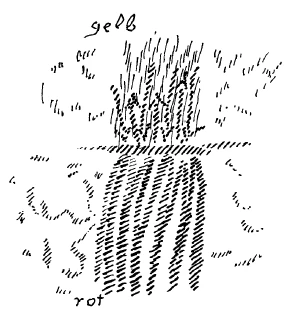
[ 20 ] Then there is our inner life. We have our will, our feelings, our thoughts, and our imagination. When we turn our attention inward, we can become aware of this willing, feeling, and thinking within us, and we can infuse this willing, feeling, and thinking with what we call our religious, moral, and other ideals. We arrive at something that one might call—and again, this can easily lead to misunderstandings—the soul-spiritual human being. One cannot find one’s way unless one turns one’s soul’s gaze, on the one hand, toward this soul-spiritual human being and, on the other hand, toward the physical-bodily human being. But it is necessary—whether through a truly unbiased examination of the facts of nature or through immersion in spiritual science—to bring oneself to the realization that this physical-bodily organization is not, in fact, initially present in what any human science, as it exists today in the exoteric world, can encompass. If I am to illustrate this schematically with a drawing, I would say: If I summarize everything that constitutes human physical organization and that is connected to the entire environment (see drawing, red), this extends to a certain point—I will mark this here with a line—and sharply distinct from it, despite all modern amateurish psychological objections, is what can be called the spiritual -soul nature of the human being (yellow), which in turn is connected to a world of the spiritual-soul, a world that seems very abstract to humanity today because it is understood only in terms of abstract moral or religious ideals, which have themselves become increasingly abstract concepts. However, with regard to both aspects of human nature, it must be said: what is regarded today as science encompasses neither the physical-bodily nor the spiritual-soul nature of the human being. The physical-bodily nature of the human being cannot be known. You can read the reasons why it cannot be known in my little book *Through the Spirit to a Real Understanding of the Mysteries of Humanity*. For if a person, in a process of introspection, were to see right through themselves—that is, were to look down to the very depths of what is actually taking place within—then they would be able to see exactly what is happening inside, in the very sense that modern science refers to “seeing something exactly.” But then a human being could not be the being that he is today, for he would then be unable to have a memory; he would have no capacity for recollection. As we look at the world, the images of the world remain with us as memories; that is to say, impressions of the world only penetrate as far as this boundary here (see drawing, arrows), and there they rebound into the soul, and we remember them. And what is reflected back from within us into memory is obscured by the physical, bodily interior of the human being. We cannot look inside there, for if we could look inside, every impression would be nothing more than a fleeting moment. Nothing but memory would be reflected back. It is only because this boundary here behaves like a mirror—we cannot look behind the mirror either, but the impressions are reflected back to us—that we cannot look into our inner being; the impressions are reflected back to us unless we ascend to spiritual science. And if they were not reflected back to us, we would not have the reflected impressions of memory in ordinary life either. As human beings, we must be organized in life in such a way that we have memories. But this very fact closes off our physical-bodily organization from us. Just as one cannot see through a mirror to what lies behind it, so, in a sense, one cannot look behind the mirror of memory or beneath it to see what the physical-bodily organization of the human being is.
[ 21 ] That is true psychology; that is the true nature of memory. And only when the methods of the humanities break through this mirror in such a way that—as I have already said in public lectures—they do not appeal to the power of memory, but instead work without memory and each time with new impressions, only then does one arrive at the physical-psychic realm, at its true form.
[ 22 ] The same is true on the other side. If we were to see the spiritual-soul aspect—which, as I showed you last Sunday, lies behind the physical world—not atoms or molecules lie behind it, but the spiritual-soul aspect is in truth there behind it— if we were to perceive this with our ordinary, everyday powers of cognition—if, so to speak, we were not stymied by the boundaries of natural science—then we would lack within ourselves that which we need for human life, that which we must cultivate here between birth and death; then we would lack the capacity for human love. Our capacity for human love is cultivated within us by the fact that, in this life between birth and death—unless we turn to spiritual science—we must first refrain from seeing through the veil of the senses and from looking into the spiritual world. And we can only possess the faculty of memory by refraining from looking into the physical-bodily realm. As a result, however, we are exposed to two great illusions. The dogmatic adherents of the natural-scientific worldview fall prey to one of these illusions. They do not heed the science of initiation and do not come to realize—in the way I explained to you last Sunday—that behind the veil of the senses there is not matter, not substance, not what natural science calls “force,” but rather a being that is spiritual and soul-like through and through. Even today, I must still emphasize with the utmost clarity what I highlighted in my commentary on the third volume of Goethe’s scientific writings, on Goethe’s *Theory of Colors*. Out there is the world’s tapestry of colors; out there are red, blue, and green; and out there are the other sensations. Behind these lie not atoms, not molecules; behind these lie spiritual beings. What is driven to the surface from these spiritual beings finds its expression in the world’s tapestry of colors, in the world’s interplay of tones and warmth, and in all the other sensations that the world conveys to us.
[ 23 ] But those who today are dogmatic adherents of the scientific worldview fail to see through this. They do not want to listen to the science of initiation. The result is that they begin to speculate about what lies behind colors, heat, and so on, and then arrive at a materialistic conception of the world. No matter how well-founded it may seem—such as the modern ion theory—it is always merely speculative, and one must not speculate beyond the sensory world; one may only have experiences beyond the sensory world through a higher, spiritual world; otherwise, one must remain confined to the phenomena. The sensory world is a sum of phenomena, and it must be understood as a sum of phenomena.
[ 24 ] Thus, we are presented today with a picture of nature that is then extended to encompass the Earth’s initial and final states—a picture of nature that, for the honest thinker, precludes any moral or religious worldview.
[ 25 ] Those who now look inward find themselves on the other cliff. They usually stop at what is reflected. The ordinary person in everyday life perceives the effects of memory; I would say, he remembers what he experienced yesterday and the day before, even if yesterday and the day before were years ago. The one who then becomes a mystic brings all sorts of things from within to the surface and adorns them with all sorts of beautiful mystical words and theories. But it is nothing other than what I hinted at here recently; it is nothing other than the boiling and bubbling of organic life within the human being. For if one penetrates this mirror, one does not arrive at what, say, Meister Eckhart or Johannes Tauler have in their mysticism, but rather at organic processes of which the world today has little inkling. And whatever else is presented with such beautiful mystical words relates to these organic processes no differently than the flame of a candle relates to its fuel: it is the product of these organic processes. The mysticism of John of the Cross, Mechthild of Magdeburg, and also Johannes Tauler and Meister Eckhart—it is beautiful, but it is nonetheless merely what bubbles up from organic life and is described in abstract forms only because one fails to grasp how this organic life is at work. One cannot come to know spiritual life without first coming to know this organic life. No one can become a spiritual scientist in the true sense of the word who reinterprets the innerly bubbling organic life as mysticism. Certainly, the words spoken are beautiful. But when speaking of these things, one must be able to adopt a perspective entirely different from that of the external world. One must not adopt the humanly arrogant perspective by saying: ‘Inner organic life is simply a lower form of life.’—It does not become higher simply by labeling its effects as mysticism; rather, one is driven into spiritual life precisely by seeing through this organic life in its organic effects—by knowing that the deeper one delves into the individual nature of the human being, the further one moves away from the spiritual; one does not come closer to it. One can only draw closer to the spiritual through spiritual science, not by delving into oneself. When one delves into oneself, one’s task is to investigate how mysticism arises through the interaction of the heart, liver, and kidneys, for that is what it does.
[ 26 ] I have often described this as the tragedy of modern materialism: that this modern materialism is ultimately unable to recognize material effects, that it does not even reach the level of material effects. After all, we have neither a true natural science nor a true psychology today; for a true natural science leads to the spirit, and a psychology that progresses in the sense we desire today leads to an understanding of the heart, liver, and kidneys—and not to the abstract concepts discussed by today’s amateurish psychology. For what is often called “willing,” “feeling,” and “thinking” today are abstract words; people lack a grasp of concrete things. And it is easy to accuse even genuinely serious spiritual science of materialism, precisely because it leads into the very essence of the material in order to lead to the spirit in this way.
[ 27 ] True spiritualism will have to reveal the very essence of the material world. Then it will be able to show how the spirit works within the material world. For this must be taken very seriously: spiritual science must not focus merely on the logical nature of knowledge, but must focus on knowledge as action. Something must be done in the act of knowing. What takes place in the act of knowing must intervene in the course of world events. It must be something real. This is precisely what I endeavored to point out last Sunday and in the days preceding it. It is, first of all, a matter of realizing that the spirit as such must be understood as a fact; a theory of the spirit must not be formulated. Theories are meant to lead to a living sense of the spirit. For this reason, it is necessary for the true spiritual scientist to speak in paradoxical terms so often. Today, one cannot continue to speak in conventional terms when discussing true spiritual science; otherwise, one ends up precisely where a pernicious ‘theosophy’ has led—one that speaks of all manner of aspects of human nature: the physical human being, the etheric human being, the astral human being; but these become ever ‘thinner.’ The physical human being is dense, the etheric is thinner, the astral is even thinner; then there are the very thin, the mental, and so on—it becomes thinner and thinner, a perceived mist, but it remains mist; it remains matter! That is not what matters. What matters is that one overcomes the material aspect within the substance. To do this, one must often use words that have a different connotation than is customary in everyday life.
[ 28 ] And so one really must say—tomorrow this matter will become even clearer to us—one really must say: Let’s take, on the one hand, a person who has a thoroughly materialistic outlook, who—let’s say—seduced by contemporary materialism, cannot rise to the conception of the spiritual, who is a thoroughgoing materialist in theory and regards everything claimed about the spiritual as nonsense, but suppose that what he says about matter were insightful—something that truly captured the essence of matter—then that man would possess a spirit. Although he would advocate materialism through his spirit, he would still possess a spirit.
[ 29 ] Let’s take another person who has joined some theosophical society and holds the view that there is the physical body, then the somewhat more subtle etheric body, the even more subtle astral body, the even more subtle mental body, and so on. It doesn’t take much intellect to make such a claim. One can have little intellect and still espouse such a theory. Essentially, one is merely pretending to believe in a spiritual world, for in reality one believes only in a material world that one describes in spiritual terms.
[ 30 ] Where will the person who is truly seeking the Spirit look for it—in the materialist theorist, who possesses the Spirit, albeit in a logical sense, or in the one who, so to speak, makes correct assertions but in his words speaks only of matter? — The true spiritualist will speak of the Spirit in the former—the one who holds a materialistic worldview—because the Spirit can indeed be present there, whereas in a spiritual worldview, the Spirit need not be present at all. And what matters is that the Spirit is at work, not that one speaks of the Spirit.
[ 31 ] I just wanted to say that today to explain some things that may seem paradoxical. The spirited materialist can be more imbued with spirit than someone who advocates a spiritual theory, if that person advocates it in a spiritless way. In true spiritual science, the possibility of merely arguing logically about worldviews comes to an end. That is where the necessity of grasping the spirit in its reality begins. This cannot be done without first clarifying preliminary concepts, such as those we have discussed today and will continue to discuss tomorrow.