

Correspondences Between the Microcosm and the Macrocosm
Man — A Hieroglyph of the Universe
GA 201
18 April 1920, Dornach
Translated by Steiner Online Library
Sixth Lecture
[ 1 ] We have seen how a harmony must be sought between what takes place within and with the human being and what takes place in the non-human universe. Let us briefly review once more what our discussion culminated in yesterday. We said that human beings must first be considered from four perspectives. First, from the perspective of the formative forces at work within them—that is, what shapes them into their true human form. Second, we considered everything corresponding to the inner movement of bodily fluids—the movements of which the blood circulation, the lymphatic system, and so on are examples; in other words, the inner forces of movement. You know that the formative forces are something that, so to speak, has come to rest in the fully grown human being, having taken on a fixed form. The forces of movement are in a constant flow, in a constant current. Third, we must consider the organ forces, and fourth, the actual metabolism.
1. Formative Forces
2. Internal Motive Forces
3. Organ Forces
4. Metabolism
[ 2 ] The point is that we must first consider everything that has to do with the formative forces. These must be the forces that act within the human being all the way to its outermost periphery, to the very limits of its extent. So that we can say: If we were to trace the outline of the human being from all sides, so to speak, we would grasp the outermost limits of the activity of these forces, which effectively build up the human being from within. Now it is easy to see that these forces, which shape the human being, must have something to do with other forces that also extend to the periphery of the human being—forces that are to be found at the periphery of the human being. And these are the forces that act in the senses. After all, a person’s senses lie at their periphery. They are, so to speak, merely differentiated across that periphery. But wherever you try to grasp what acts in the senses, you must seek it at the human periphery. So we can say that these formative forces must have something to do with sensory effects, insofar as the senses perceive. Perhaps we will understand each other better if we recall the phrase to which Goethe, as he says, draws our attention as coming from an ancient mystic:
If the eye were not like the sun,
It could never see the sun!
[ 3 ] Isn't it true that the effect of light that is always all around us cannot actually be what is meant when one speaks of the eye being sun-like or light-like? For this effect of light only becomes perceptible to the eye once the eye is fully formed. This effect of light, which becomes perceptible to the eye only once the eye is fully formed, cannot—as things stand now—be directly meant when we speak of the eye having been formed through it. We must conceive of the effect of light in a fundamentally different way when we consider the formation of the eye. Admittedly, one gains a certain sense of what underlies this process by following the human being through the period between death and a new birth. For during this time, what the human being experiences consists in part—only in part, of course—in perceiving how the forces formed in earlier lives are gradually transformed into the new life, how the limb-body is transformed into the form of the head. These are experiences just as rich as the ones we have here when, for example, we witness plants sprouting in the spring, plants withering in the fall, and so on.
[ 4 ] What develops within a human being between death and a new birth is a rich tapestry of events; it is not something that can be grasped as easily as the abstract idea of it. It is a rich tapestry of facts. And everything that happens during the time between death and a new birth—the process of transforming the formative forces of the limb body into the formative forces of the head for the next incarnation—and what the human being experiences during this time is something extraordinarily diverse. There, the human being experiences something similar to the formation of the eye. But they do not actually experience it in the same way as they did during the long period of evolution they themselves underwent in those stages of development that preceded our Earth—in the Lunar period, the Solar period, and so on. Back then, the forces of the starry sky acted differently upon human beings. That starry sky was, after all, structured differently. They acted upon human beings differently than they do now; and it is actually important to form a conception of these things.
[ 5 ] When we consider our perceptions today, what are they, really? Our perceptions today are, in fact, images that surround us. Behind these images, of course, lies the actual world. But the world that lies behind the images today is the very world that actually shaped us before we came to perceive these images. Today, we can perceive with our eyes the images of the world surrounding us. Behind these images of the world lies that which our eyes have built up. And in this respect, one can say: If the eye had not been built up by the forces lying behind the image of the sun, the eye could not have a perception of this image of the sun.
[ 6 ] In this respect, then, this statement must be modified somewhat, for today’s perception of light yields images, and what the organs first built up all the way to the periphery of the human being are not the images, but rather the realities; so that when we look around in the world, we behold that which has built us up—that is, our formative powers. But these have been drawn into us; what once acted outside of us, extending all the way to the Earth’s orbit, now acts within us. Let us bear this in mind for our upcoming reflections.
[ 7 ] And now let’s connect the first and fourth ones here (diagram, p. 86). Let’s take a look at metabolism. This metabolism has, in a certain sense, already become irregular for human beings; but there are also natural causes that keep human beings anchored to a regular metabolic rhythm. As you know, human beings are, in a certain sense, disrupted when their metabolism does not follow its natural rhythm. Humans can deviate from this; but they always try to return to a certain rhythm in their metabolism, and you know, of course, that this is an essential part of human health. This rhythm in metabolism is one that actually spans the day and the night. This metabolic rhythm completes a cycle within 24 hours. Just think about how, after you’ve had breakfast, you’ll feel hungry for breakfast again 24 hours later, and so on. Everything related to metabolism is also connected to the course of the day. Now compare how static your body’s periphery is, and how dynamic your metabolic life is. You can say: No changes are taking place in your body’s periphery, while your metabolism repeats itself every 24 hours. A great deal is happening within your organism, but your periphery remains unchanged. Now look for the external counterpart to this inner dynamism of the metabolism in relation to the unchanging exterior of the form: you’ll see that we find the equivalent in the starry sky, whose individual constellations shift just as little as the details of your body’s surface do. You will find that Aries, the constellation of Aries, is always a certain distance from the constellation of Taurus, just as your two eyes are a certain distance apart and do not shift. But apparently this starry sky shifts; apparently it orbits around the Earth. Well, humanity today is well aware of this illusion: it really is an illusion. Humanity attributes a rotation of the Earth around its axis.
[ 8 ] Various pieces of evidence have been sought to support this rotation of the Earth around its axis. It is only since the 1950s that we have had good reason to speak of this rotation—ever since the so-called Foucault pendulum experiment actually demonstrated the Earth’s rotation around its axis. But I do not wish to go into that today. This rotation is well-founded. It is something that repeats itself every 24 hours. In relation to the fixed, unchanging starry sky, it is the counterpart to the daily cycle of human metabolism in relation to the fixed outer form of the human body. So, if you understand these relationships clearly, you will find the most compelling evidence for the Earth’s motion in the processes of human metabolism.
[ 9] You see, in recent times there have been various so-called relativistic theories that claim one cannot, strictly speaking, speak of absolute motion; for if I look out the window of a train, I might at first believe that the objects outside are moving while the train continues to move with me—but it cannot be strictly proven at all that the outside world is not actually moving in the opposite direction. Well, all this talk isn’t really worth much, because if one person is running and another is standing in the distance, and the runner approaches the other person, the runner can say: Yes, certainly, it’s ultimately relative whether I say I’m approaching the person or the person is approaching me. — To the naked eye, it looks the same. Such considerations are, after all, also at the root of Einstein’s theories of relativity.
[ 10 ] But it is indeed possible to rigorously demonstrate motion in a certain way. Namely, the person who remains at rest does not grow tired; but the one who runs does grow tired. Through internal processes, one can prove the absolute reality of motion. There are no other proofs of the absoluteness of movement besides these inner processes. Accordingly, one must also be able to point to these inner processes when speaking of the absoluteness of a movement. And in the case of the Earth, one can speak of the absoluteness of movement because, little by little, through spiritual science, one comes to realize that it corresponds to the inner movement of metabolism in relation to the human being’s outer, solid form. Therefore, however, we should not speak so much of the Earth revolving around its axis, which gives rise to the apparent motion of the Sun; rather, we should relate this movement of the Earth to the entire starry sky. We should actually speak not so much of “solar days” as of “sidereal days,” which do not coincide—the solar day is longer than the sidereal day. A correction must always be made in the formulas when counting in solar days. Thus, we can speak of the Earth’s rotation around its axis as something derivable from the very nature of the human being. For the inner movement of the human metabolism is connected to this movement in relation to the fixed starry sky. So we can say: the relationship of the human metabolism to the human formative power is the same as the relationship of the Earth to the fixed starry sky, which we usually represent through the zodiac, which serves as the symbol of the fixed starry sky for us.
[ 11 ] So when we look at the zodiac, it represents for us the outer cosmic counterpart of our outer form (see diagram on p. 86). When we look at the Earth, it represents the inner counterpart of our metabolism. And the relationship of movement between the two is such that one corresponds to the other.
[ 12 ] Well, it is somewhat more difficult to find the appropriate relationship between the second and third (see diagram). But we can make sense of it. If you consider what the movements—the inner movements of the human organism—are, you will say to yourself: There is something within the human being that is by no means as solid as its outer, formed periphery. There is something in motion. But something else is connected to this movement. With this movement—which is carried out by the blood, the nervous fluid, the lymph, and so on; we need not list these movements in detail, for there are seven kinds in the human being—the individual organs are, after all, connected to the movement that takes place there. The movements have integrated the individual organs into their vascular systems, and we must see in what the individual organs do the results of these movements. I have often drawn attention recently to how the human heart actually functions. The materialistic worldview, as I told you, assumes that the human heart is a kind of pump that pumps blood throughout the entire body. This is not the case; rather, the blood is something that moves from within itself, possesses its own vitality, and the heartbeat is not the cause of blood circulation, but rather, on the contrary, the consequence, the effect of blood circulation. And so it is with the other organs. The functions performed by the organs are integrated into these living movements.
[ 13 ] If we look for an equivalent to this in the cosmos, we will find such an equivalent when we consider, on the one hand, the movements of the planets—namely, when we study the movements of the planets, including those of the Moon. As you know—and I have often spoken of this—the phenomena of ebb and flow are connected to the Moon’s orbit. Many other phenomena are also connected to the Moon’s orbit. If one were to study more closely the processes taking place in our earthly environment, one would find that light appears not only because the Sun rises, but one would also discover that other, even more material effects in our earthly environment are connected to the movements of the planets. And once there is a genuine, thorough study in this field, one will see that weather phenomena are in harmony with the movements of the planets. One will study the effects of the planets on the air, on water, and on the earth just as one must study, within the human being, the effects of the forces of movement—which are present in the blood circulation and in other circulatory systems—on the organs. One will observe a certain interaction between the elements and the movements of the planets, and a corresponding relationship between the functions of the organs and the internal forces of movement. Thus, one will indeed find a correspondence similar to that between the Earth and the fixed stars—between the elements of earth, water, air, and heat, and the planets—though we must, of course, include the Sun among the planets.
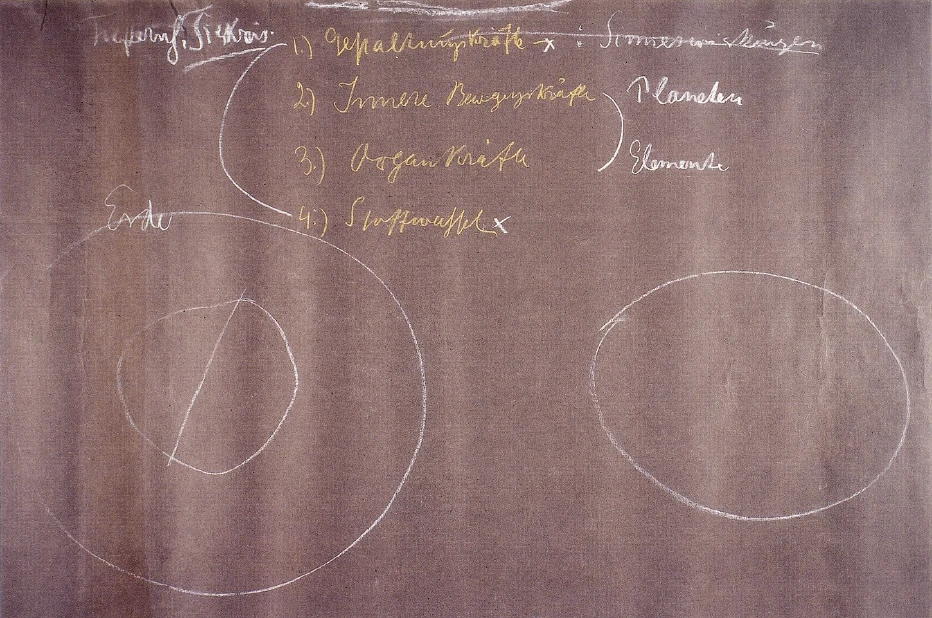
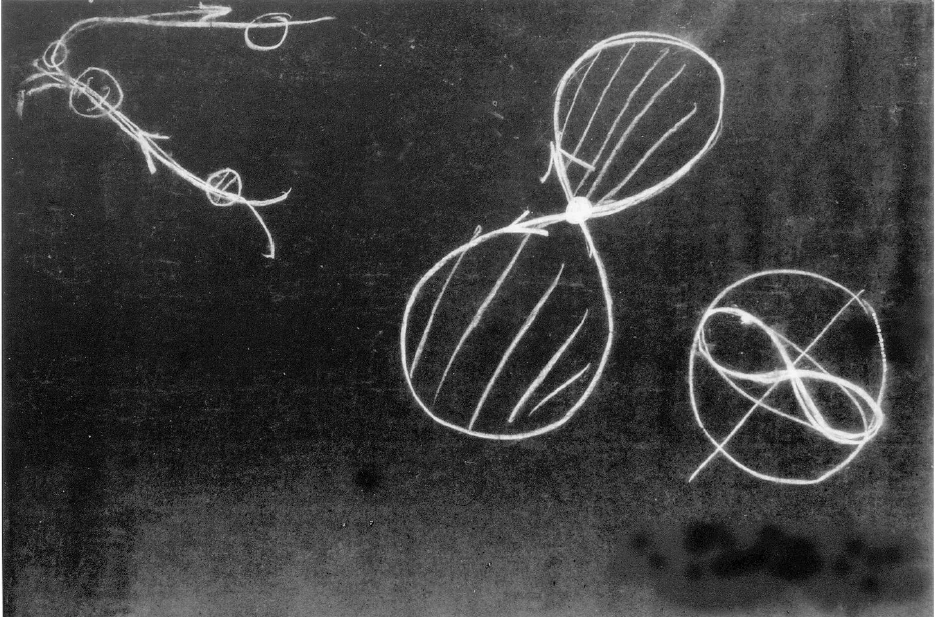
[ 14 ] As you can see, we are encountering certain relationships between what takes place within the human organism and what exists externally in the macrocosm. Now, however, you need only study how these organ forces function. How, then, are these organ forces developed in the human being? These organ forces are developed in the human being in such a way that, as we follow human life while the organs are being formed, we can see quite clearly that the development of the organ forces is related to the changing of the seasons just as metabolism is related to the course of the day. Metabolism is related to the course of the day. Observe the child, from conception onward, until it, as the saying goes, “sees the light of day”; but then the organs continue to develop, especially in the first few months, so that we are in fact—as we have already said—dealing with an annual cycle. Then we have another annual cycle until the teeth appear. In short, we have an annual cycle in organ development. But this annual cycle is in a similar harmony with the forces of movement within the human being as the annual weather conditions—the weather conditions of spring, summer, fall, and winter—are with the movements of the planets. We are certainly dealing here with something that, in the human being, corresponds to certain relationships in the macrocosm. These things cannot be studied in any other way than by comparing the details with one another. Today I can only point out certain relationships to you; otherwise, if we were to study every single one, it would take us a very long time. But you will find this harmony the more closely you examine certain relationships within the human being that exist in the development of the organs, as long as the organs are still developing; once they are complete, the human being simply breaks free from these forces. If you look at this and view it in connection with the forces of motion, you will find everywhere an analogous relationship to what takes place in the annual metamorphoses of the weather, in their relationship to the forces of motion of the planets. However, it is essential here not to assume that the heart is merely a pump, but rather to regard the heart, so to speak, as a product of the circulation of blood. One must place the heart within the living circulation of blood. In exactly the same way, one must also place the movement of the Sun within the movement of the planets. Simply observing the inner human conditions without prejudice shows us that we must indeed speak of the Earth’s rotation around its axis (Plate 11, left), which brings about the apparent movement of the starry sky—this corresponds to the movement of metabolism in relation to the human external form — but that, when we understand the human inner being, which is connected to the macrocosm, we cannot speak of the Earth’s revolution around the Sun over the course of the year, because we must not conceive of that which moves toward the heart in any way other than the other currents of movement within the human being. Therefore, it must be acknowledged that we are not dealing with a movement of the Earth around the Sun in an ellipse (right), but rather with a movement of the Earth over the course of the year that corresponds to a movement of the Sun. This means that the Earth and the Sun move together, not that one revolves around the other over the course of the year. It was only by looking at outward appearances that people arrived at this idea of the Earth revolving around the Sun over the course of the year. In reality, we are dealing with a movement of the two celestial bodies that proceeds in space in a certain relationship between them (Plate 12, left).
[ 15 ] This is something that must be fundamentally corrected in the so-called Copernican worldview for the future. But one must also understand the relationship between human beings and macrocosmic nature in a different way.
[ 16 ] How exactly does the daily process of metabolism actually take place? Only part of it occurs in a way that is accompanied by the emergence of our consciousness. Another part takes place while our consciousness is suspended, when we, with our “I” and our astral body, are outside the physical and etheric bodies. This must be clearly recognized. We must be aware that the human being does not experience both processes—that which occurs from waking to falling asleep and that which occurs from falling asleep to waking—in the same way. Just consider for a moment how the two moments of falling asleep and waking up relate to one another. You will arrive at a very clear understanding if you compare waking up and falling asleep without prejudice. As you fall asleep, you are actually—I would say—at the zero point of your being. When you sleep, the opposite state of wakefulness is actually present; it is not merely a state of rest—the opposite state of wakefulness is present. And when you wake up, you are actually, in relation to your life, in the same relationship to yourself and to the outside world as when you fall asleep; the moments of falling asleep and waking up are entirely analogous to one another; they “actually differ from one another only in their directions.” Upon waking, the movement is from sleep to wakefulness; upon falling asleep, from wakefulness to sleep. But apart from these two directions, the two states are completely identical. So if you want to represent the movement of metabolism with a line, you cannot represent it with a straight line or a circular line, because then you would not include waking and falling asleep within it. You must find a line that truly represents the movement of metabolism, and there is no other line—no matter how you think about it—when you consider metabolism, there is no other line than this lemniscate (Plate 12, center). Here you have the point of waking and falling asleep—sometimes in this direction, sometimes in that direction; sometimes in the direction of one arrow, sometimes in the direction of the other arrow—merely pointing in opposite directions, but otherwise identical in terms of the conditions of life. And you can then truly distinguish the cycle of the day from the cycle of the night.
[ 17 ] What follows from this? Once we have understood that the motion of daily metabolism corresponds to the motion of the Earth, we must not attribute to a single point a motion such that it moves in a circle. We must not do that; rather, we must imagine that this motion is of a different kind—that, in fact, the Earth moves forward in a certain way—so that when we consider the actual motion of this point, we obtain such a line (the lemniscate is drawn on the globe, Plate 12, right). It is not merely a rotation that takes place, but a complex motion of the Earth, such that every point on its surface describes a lemniscate, which then corresponds to the lemniscate that we must draw as the line representing metabolism.
[ 18 ] You can see from this that we cannot conceive of the Earth moving in such a way that we simply assume an axis and then let the Earth rotate around it; rather, we must conceive of the Earth in a more complex motion, such that every point on which you stand—in order for it to serve as the basis for the movement of your metabolism—actually describes such a lemniscate. It is absolutely necessary to seek the corresponding movements in the external world for what is taking place within the human being. For it is only through the changes within the human being that one can study what is taking place externally as movement; just as one can no longer speculate about whether a person is merely in a relative movement or in a real movement when he must set his legs in motion and becomes tired. In a real movement, one cannot say, “Perhaps the movement is only relative,” or “Perhaps the other person is approaching me, while I am constantly drawing closer to them.” One can no longer speak of the theory of relativity when the inner movement shows that a person is in motion. Therefore, you cannot prove the movements taking place within the Earth by anything other than the inner changes occurring within the human being himself. The inner movements of metabolism, for example, are the faithful reflection of what the Earth accomplishes as movement in space. And again, what occurs as organ-forming forces over the course of a year is precisely what reflects the annual movement that the Earth performs together with the Sun. We will discuss such matters further and will also be able to examine them in greater detail.
[ 19 ] You can see from this that we can indeed speak of the Earth’s daily rotation around its axis, but that we cannot speak of what is commonly called the Earth’s annual revolution around the Sun. For the Earth follows the Sun, and both perform the same revolutions.
[ 20 ] The fact that one should not speak of the Earth revolving around the Sun is evident from many other sources as well. It is already evident from the fact that—as I have, incidentally, mentioned before—it was necessary to simply suppress one of Copernicus’s propositions. The fact is that, if you simply take into account that the axis of rotation, due to its inertia, always remains parallel, the Earth—as it orbits the Sun—should actually show that, as it moves, this axis is constantly pointing toward different stars. It does not. If the Earth were truly revolving around the Sun, the Earth’s axis would not always point toward the North Star; rather, the point toward which it points would have to revolve around the North Star. It does not do this; instead, the axis always points toward the North Star. Precisely the line that one would expect to see—and which would correspond to the Earth’s progress relative to the Sun—is not visible. The Earth simply follows behind the Sun in a sort of helical path, burrowing, as it were, into outer space.
[ 21 ] But I have already hinted to you that there is a certain movement at work here, which is first manifested by the fact that the vernal equinox—the point where the sun rises in the spring—shifts, completing a full cycle through the zodiac once every 25,920 years. This also corresponds to a specific movement. What kind of movement is this? Can we find something corresponding to it in human beings? Yes, you see, from what I have already told you, you can draw a conclusion about this movement, my dear friends. It must be a movement that relates to the Sun’s position in relation to the fixed-star sky, for the Sun does indeed make this movement in relation to the fixed-star sky. Relative to its point of rising, it traverses the zodiac in 25,920 years. It is a movement that must correspond to something within the human being—a relationship between the inner forces of movement and the formative forces; but this must be of a long duration. The Sun moves in some way in relation to the rest of the fixed-star sky. The human inner forces of movement must change in some way, so that they are situated differently in relation to what lies at the periphery of the human being.
[ 22 ] Now, do you remember what I told you about—something that has been noticeable since the time of the ancient Greeks? I told you that the Greeks had the same word for yellow and green, that they did not actually see blue the way we do, and that—as even Roman writers tell us—they counted and painted with four colors, none of which included blue: yellow, red, black, and white. They perceived the world in terms of vivid colors. The Greeks did not see the sky as blue as we do. They saw it merely as a kind of darkness. This is something that can be stated with certainty; it can be established with certainty, particularly from the perspective of the humanities. Yes, my dear friends, this is a change that has taken place within human beings since ancient Greek times. If you consider that the constitution of the human eye has changed so significantly since ancient Greek times, you can certainly conceive of other changes in the human organism—changes that occur externally on the periphery—over longer periods of time. These changes, which take place at the periphery, must of course be connected to inner forces of movement, for it goes without saying that digestion or the organs alone cannot bring this about. Thus we see that the changes occurring at the human periphery correspond to the course of the vernal equinox of the Sun in the zodiac—that is, a period of 25,920 years. That is when the human race changes. We must by no means think that 25,920 years ago the human race was the same as it is now. Based on these physical conditions alone, it is completely absurd to speak of those figures in relation to the development of humanity, as modern geology does, because we can only include the human race within the period of 25,920 years—and that period still encompasses the future. For when the Sun has returned once more to the vernal equinox, such changes will have taken place within the entire human race that it will no longer bear any resemblance to its present form. I have spoken to you from other sources of knowledge about the future of the human race and its age. Here you can see how even a realistic consideration of physical conditions compels us to such insights.
[ 23 ] From all of this, however, you can see that the phenomena we refer to as the movements of the celestial bodies are not as simple as modern astronomy would like to make them out to be, but that we are dealing with extraordinarily complex relationships—relationships that can only be truly studied within the context of humanity’s connection to the macrocosm. I have already been able to point out specific aspects of these movements to you; over time, we will come to understand them more and more deeply from other perspectives. But one thing you can see is that human beings are not completely absorbed in this dependence on the macrocosm! You see, through what lies very deeply in the subconscious—through their metabolism—human beings are, in a certain way, but only in a certain way, bound to the Earth’s daily rotation on its axis; yet they can rise above it. Where does this come from? It stems from the fact that human beings, as they are now—as they are structured according to peripheral forces, inner forces of movement, organ functions, and metabolism—are complete in their dependence on external forces and can now, so to speak, with their fully developed organization, break free from this connection. Just as we have a reflection of day and night in our sleeping and waking, but we do not need to adhere to day and night—we have the inner rhythm of day and night, yet we do not always follow it so that this inner rhythm corresponds to the outer rhythm of day and night—in exactly the same way, human beings also break free from the rhythm of the macrocosm in the rest of their lives. Yet it is upon this that the possibility of human freedom rests. It is not humanity’s present development that is connected to the macrocosm, but rather its past development; and what human beings experience now is, in essence, a reflection of their past adaptation to the macrocosm. Thus, we now live within the images of our past. Yet it is within these images that we can develop freedom, and it is here that the moral world order—separate from natural necessity—is established. It is precisely when one gains a clearer understanding of how human beings are connected to the macrocosm that one comprehends how human freedom is possible.
[ 24 ] You can also take the following into account. You see, in the case of human beings, it is clear that their metabolism is still related in a certain way to the rhythm of daily life. The formative forces have become fixed. If you consider the animal kingdom instead of human beings, you will find a much greater dependence on the macrocosm in the animal kingdom than in human beings. Human beings have already outgrown this dependence. An ancient wisdom therefore spoke of what corresponds to the formative force not as the “circle of man,” but as the “zodiac.” The animal formative forces, which appear in many forms among animals, appear in human beings essentially in a single form for the entire human race. But these are the forces of animality. And as we grow beyond them to become human, we must go beyond the zodiac. Beyond the zodiac lies that upon which we, as human beings, depend to a greater degree than on anything within the zodiac—that is, within the sky of fixed stars. This is the essence that corresponds to our “I.”
[ 25 ] Through our astral body—which animals also possess—we are intrinsically connected to the macrocosm. Everything is shaped within the astral body according to the will of the stars. Through our “I,” we stand beyond the world of the stars, outside the zodiac.
[ 26 ] There we have the element through which we have set ourselves free. Within the zodiac, we cannot sin, any more than an animal can sin. But we begin to sin when we carry our behavior outside the zodiac. And we can do that. When we accomplish that which frees us from the structure of the world, we place ourselves in a relationship with that which lies outside the zodiac, outside the fixed-star sky. That is the essential content of our human “I.”
[ 27 ] You see, when we survey the world—insofar as it appears to us as a visible and temporal reality—when we survey everything that extends in space as far as the outermost fixed stars and all the movements that take place in time within this sky of fixed stars and planets, and when we grasp all of this in relation to the human being: something else takes place within the human being that occurs outside this space and this time, something that lies out there, even beyond what takes place in the astral realm. There, outside of this, there is no natural necessity; there lies only that which is connected with our moral nature, with our moral deeds. Within the fixed-star sky we cannot unfold our moral world, but by unfolding it, we inscribe it into the macrocosm beyond the zodiac. Everything we do remains in the world as an effect. What takes place within us—from our creative power right down to our metabolism—is the result of the past. But in the universe, the past does not predetermine the entire future, not the future that arises from human beings through their moral actions.
[ 28 ] Let's keep this point in mind. In these discussions, I can—I would say—only guide you step by step. Let's keep in mind what we discussed today; we'll then examine the matter from other angles.