

Correspondences Between the Microcosm and the Macrocosm
Man — A Hieroglyph of the Universe
GA 201
9 May 1920, Dornach
Translated by Steiner Online Library
Thirteenth Lecture
[ 1 ] We have now compiled a wide variety of insights that can help us gain a sense of the structure of the universe in its relationship to humankind. We have seen—and this must be emphasized time and again—that the universe cannot be understood without humanity; that is to say, it is not possible to understand the universe in and of itself without taking humanity into account and considering the relationship between the universe and humanity. If you wish to form—I would say—a very popular conception of how humanity is connected to the universe, then you need only think of what is the subject of the most elementary astronomy, namely the so-called obliquity of the ecliptic—that is, the oblique position of the Earth’s axis relative to the line, or curve, that can be drawn through the zodiac. This obliquity of the ecliptic—however one chooses to understand it, however one chooses to interpret it—in such interpretations it does not matter at first whether what one interprets corresponds to reality or not; rather, what matters is that one can thereby, so to speak, bring something closer to oneself. If, on the plane that can be drawn through the zodiacal ecliptic, the Earth’s axis—that is, the axis around which one can conceive of the Earth’s daily rotations—were perpendicular, then night and day would be equal throughout the entire Earth, all year round. If the Earth’s axis were located within the ecliptic, there would be day for half a year and night for half a year across the entire Earth. Both of these extremes are, in a certain sense, realized at the equator and at the poles. In between, however, lie those regions that experience days of varying lengths throughout the year. And if you just take a moment to reflect on this whole matter, you will immediately realize the immense significance that the Earth’s axial orientation in space has for the entire cultural development of the Earth. Just imagine for a moment that we would all be Eskimos spread across the entire Earth if the Earth’s axis were aligned with the ecliptic, and imagine that the entire Earth would be filled exclusively with the culture found at the equator if the Earth’s axis were perpendicular to the ecliptic.
[ 2 ] Of course, understanding reality depends on how one interprets things. But to grasp the connection between human beings, their culture and civilization, and the structure of the universe, any interpretation will suffice, and the fact—whatever it may be—that underlies this interpretation simply compels us to view human beings and the Earth as a unified whole—not to view human beings, insofar as they are physical beings, as something that can be considered in isolation. That is simply not possible. As a physical being, humanity is not a reality in and of itself, but rather a physical being in conjunction with the entire Earth. Just as you cannot regard a hand, severed from the human organism, as anything real—it withers away; it is conceivable only in connection with the organism— just as you cannot regard a rose that has been plucked as anything real—it withers; it is conceivable only in union with the entire rosebush rooted in the earth—just as, if one wishes to assess a human being in his wholeness and totality, one cannot regard him as confined merely within the limits of his skin.
[ 3 ] One must therefore consider what human beings experience on Earth in relation to the Earth’s axis, just as, in other respects, one already considers a certain kind of intelligence in relation to a person’s field of vision or visual angle. After all, what matters in a worldview grounded in reality is that what is only a partial reality not be regarded as a complete reality. And one is able to grasp the reality of that totality which the human being is as a spirit-soul being precisely when one does not regard the human being as a physical being as a reality closed in on itself. As a spirit-soul being, the human being is a reality, a self-contained reality, a true individuality. But what the human being inhabits between birth and death—the physical and etheric bodies—are not realities in themselves; they are parts of the earthly whole and, as we shall soon see, even of another whole.
[ 4 ] You see, this brings us to something that needs to be considered in even greater detail. I must point out one thing again and again: The ideas we form about human beings—I would say—almost always, unconsciously, tend to view the human being, at least to a large extent, as a kind of solid body. Of course, people are aware that a human being is not exactly a hard body, that it is, so to speak, a malleable body; but they usually do not realize that a human being consists of more than 75 percent liquid and can only be regarded, for the remainder, as a being that contains mineral solids within itself. In fact, 75 percent of a human being is actually a water-based being. Now, is it really appropriate, I ask you, to describe the human organism as is usually done—to use sharply defined images to say: here is this lobe of the brain, here is that organ, and so on—and then to act as if these clearly delineated organs, in their functioning, collectively bring about what is perceived as the activity of the entire human organism? That actually makes no sense at all, when you get right down to it. The point is that we must also consider that, within the confines of the human skin, the human being is something like surging water—that is, even what is merely an internally surging fluid has significance—and that we should therefore not describe the human being as if it were, more or less, a solid body. From a spiritual scientific perspective, this has a very profound significance. For precisely when we look at the solid element—which is connected in a certain way to the external mineral realm—this solid element in the human organism has a certain relationship to the Earth. We have established the various relationships between the human being and the environment; we now wish to establish the relationship between the human being’s solid element and the Earth. This relationship exists. But the watery element within the human being has, at first, no relationship to the Earth; rather, it has a relationship to the extraterrestrial planetary cosmos, and particularly to the Moon. Just as the Moon has—if not direct, then indirect—relationships to the occurrence of tides, that is, to certain configurations of the Earth’s liquid component, so too does the Moon have relationships to what takes place in the liquid component of the human organism. And when I described to you yesterday that, on the one hand, we have a certain kind of astronomy that applies to the Sun—and also to the Earth—we ourselves are integrated into this astronomy as an organism that contains solid matter within itself. But lunar astronomy is different. And we are integrated into this lunar astronomy in such a way that it relates to the liquid component of our organism. So you see, the forces of the cosmos act upon both our physically solid and our physically liquid bodies.
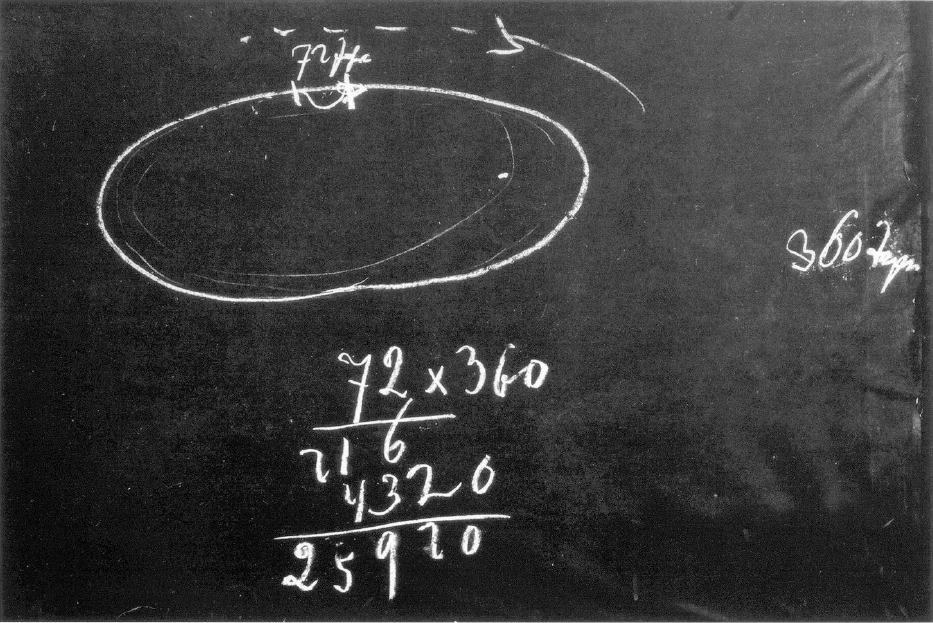
[ 5 ] But this has an even greater significance, which lies in the fact that, first of all, what we call our “I” has a direct influence on our solid human being, whereas what we call our astral body has a direct—direct, I say — influence from what we call our astral body; thus, what acts upon our organism from the soul-spiritual realm is connected, through our physicality, to all the forces and movements of the cosmos. ¼¼¼ movements of the cosmos have always been the subject of observation from a wide variety of worldview perspectives. If we look at Persian, specifically the ancient Persian culture—there were already studies there concerning the movements of the cosmos; there were such studies among the Chaldeans, and there were also such studies among the Egyptians. And it is not without interest—I have already mentioned something similar in reflections related to these—to examine the way the Egyptians related to the movements of the universe. The Egyptians, in particular, had reason—initially for what seemed to be entirely material reasons—to study the connection between the Earth and the extraterrestrial cosmos. For their land depended on the flooding of the Nile, and these floods occurred when the sun was in a specific position in the cosmos. And this position of the sun could be determined by the position of Sirius, so that the Egyptians had already come to form concepts about the sun’s position relative to the stars that we today call fixed stars. In particular, extensive research had been conducted in Egyptian priestly colonies and within the Egyptian priestly mysteries regarding the relationship of the sun to the other stars—the stars we today call fixed stars. As I just mentioned, the Egyptians already knew precisely that the sun appears to shift in position relative to the other stars in the sky each year. So when the Egyptians calculated that the stars—whether apparently or actually, it matters little to us—move across the sky, they noticed that the stars’ movement has a certain speed measured in days, and that the Sun’s movement also has a certain speed, though not quite as great as that of the other stars. The sun always lags slightly behind. The Egyptians knew and recorded that the sun lags behind by one day over the course of 72 years; that is, when a particular star—with which the sun rose simultaneously in a given year—rises again after 72 years, the sun does not rise at the same time as that star, but rather rises 24 hours later. The star, which belongs to the world of fixed stars, has, over the course of 72 years, raced ahead of the Sun by one day—a full day. This is the path that the stars follow and that the Sun follows (Plate 24, top). But the Sun lags behind by one day over the course of 72 years. If I multiply by 360, I get 25,920 years. This is the number we have encountered frequently. It is the time the Sun needs, due to its lag, to return to its starting point—that is, to complete a full circuit of the zodiac. Thus, over 72 years, it has lagged behind by exactly one degree, for, as you know, a circle has 360 degrees. Based on this, the Egyptians divided the Great Year—which actually spans 25,920 years—into 360 days. But such a day lasts 72 years, and 72 years—what does that amount to? On average, that is also the maximum human lifespan. Certainly, some individuals live longer, while others do not reach that age, but it represents an upper limit for human life. So one can say that this entire cosmic order is structured in such a way that it spans a human lifetime through a solar day that lasts 72 years. However, human beings are emancipated from this. They can be born at any time. They are free from being born at specific times, but their life here as physical human beings, between birth and death, is aligned with this solar day. If one looks back at history, one will usually find that the Egyptians also assumed the ordinary year to be 360 days, not 365 days as it actually is, until later, when the alignment with the movement of the stars became so inaccurate that the other five days were inserted. But how did it come about that the Egyptians originally assumed the year to consist of 360 days? A curious misunderstanding arose here. The misunderstanding arose that the priests spoke of a great world year. For this “world year,” one degree—that is, the 360th part—is indeed a “world day” of 72 years. Thus, it was taught in the Egyptian priestly mysteries that human beings are connected to the cosmos in such a way that the span of their lives is one day of the world year. In this way, human beings were linked to the cosmos; their relationship to the cosmos was made clear to them.
[ 6 ] But due to circumstances—rooted in the decadence of the entire development of the Egyptian people—the broad masses of the Egyptian people were not made aware of what constitutes the essence of the human being or of the human being’s connection to the cosmos; and this is what became most strikingly evident there. People said to themselves: Once all human beings know that they are beings so integrated into the entire cosmos that their own lifespan is a link in the lifespan of a solar cycle, then these people, who feel themselves to be integrated into the universe, will not allow themselves to be ruled; then everyone will regard themselves as a link in the universe. — Only those whom one believed to be called to lead were to know that this is so. The rest of humanity should not possess such knowledge of the universe, but rather knowledge of daily life. This is connected to the overall decadence of Egyptian cultural development. And what was indeed necessary in many other respects—not to initiate immature humanity into certain mysteries—was extended by Egyptian culture specifically to those things that gave power to the leaders and rulers.
[ 7 ] Much of what permeates the human soul today has come from Eastern sources. And traditional Christianity, too, contains much that originates from Eastern sources. But Roman Christianity, in particular, has been strongly influenced by Egyptian culture. Just as the Egyptian people were meant to remain uninformed about their connection to the cosmos, so too does the view prevail in certain circles of Roman Catholicism that the people must remain uninformed about their relationship to the cosmos, as it came about through the Mystery of Golgotha. — And that is why there is such a fierce struggle whenever, out of a cultural and inner necessity, attention is drawn to the fact that the event of Golgotha is not merely something that must be conceived of in isolation from the rest of the worldview, but that this event of Golgotha must be properly integrated into the rest of the worldview; when it is pointed out that what actually happened at Golgotha truly has something to do with the entire universe and its constitution. It is therefore regarded as the worst heresy when Christ is described, as we have done, as the Sun Spirit.
[ 8 ] One should not think, however, that certain people—primarily those in leadership positions—are unaware of what is at stake here, as they are fighting against precisely what I have just alluded to. They are, of course, well aware of it. But just as the Egyptian priests knew exactly that the common year has not 360 days but 365¼ days, so certain people know very well that the Christ Mystery is at the same time the Mystery of the Sun. But they want to prevent this knowledge—which is necessary for present-day humanity—from actually being communicated to present-day humanity. For what I said yesterday is certainly true: that side much prefers the materialistic worldview to spiritual science. For the materialistic worldview does, after all, have its practical consequences. It has practical consequences that, I would say, can in turn be studied by comparing the present age with ancient Egypt. I pointed out that the Egyptians, as such, were dependent on the course of the sun—that is, on the connection between the earthly and the heavenly in relation to their external culture. It conferred a certain power upon the waning Egyptian priesthood when knowledge of the connection between worldly phenomena and their effect on Egyptian agriculture was kept secret. As a result, anyone who was to work as a laborer in Egypt was dependent on receiving his instructions from the priests, who possessed the relevant knowledge.
[ 9 ] If the character of European and American civilization were to remain as it is, if only the materialistic Copernican worldview were to be retained along with its offshoot, the Kant-Laplacean theory, then a materialistic worldview would necessarily emerge even for earthly phenomena—biological, physical, and chemical phenomena. This materialistic worldview has no way of incorporating the moral world order into its structure. Nor does it have any way of incorporating the Christ event into its structure; for to be at once a proponent of the materialistic worldview and at the same time a Christian is an inner lie—it is something that cannot be if one is honest and sincere. Consequently, the practical consequences of this conflict between materialism on the one hand and the moral worldview—as well as the tenets of faith—which stand apart from the materialistic worldview, were bound to manifest themselves in European and American culture. And this consequence manifested itself in the fact that people who had no external reason to be inwardly dishonest cast their faith aside and established the materialistic worldview as the standard for human life as well. As a result, the materialistic worldview became the social worldview. However, as our European and American culture continued to develop, this would result in people having only a materialistic worldview and knowing nothing of the Earth’s connection to the cosmic forces, just as we have already considered several times yesterday and in recent hours. But a certain priestly caste would retain the knowledge of this connection to the cosmic order, just as the Egyptian priests retained the knowledge of the Platonic year, the great cosmic year, and the great cosmic day. And this priestly caste might hope to then rule over the people, who are barbarically degenerating under materialism.
[ 10 ] It is natural that such things are spoken of today only out of a sense of duty to the truth; but they must certainly be spoken of out of that sense of duty to the truth. The point today, my dear friends, is that a number of people come to realize that it is necessary to ascribe a cosmological significance to the Mystery of Golgotha. This cosmological significance must be understood by a number of people, who will then, in turn, assume a certain responsibility to ensure that the fact—that humanity on Earth is connected to an extraterrestrial spirit who walked in the person of Jesus in Palestine at the beginning of our era—is not kept hidden from humanity. It is necessary that this insight—into the entry of the Christ from extraterrestrial worlds into the human being Jesus of Nazareth—be grasped by a number of people. Indeed, such an understanding today actually requires overcoming the dishonesty that is, in fact, commonplace in matters of worldview and faith. For what do people do today? On the one hand, people are told that the Earth moves in an ellipse around the Sun and has evolved according to the Kant-Laplace theory, and they accept this; and then they are told that such-and-such took place in Palestine at the beginning of our era. They take these two things without relating them to one another; they accept them and think this has no consequences. It is not without consequence, for when a lie is consciously accepted, it is less harmful than when the lie operates unconsciously, degrading and barbarizing the human being. For when you consider the lie as it exists in consciousness, it leaves the physical and etheric bodies every time consciousness falls asleep; it is present in the spaceless, timeless Being, in the eternal Being, when a person is in dreamless sleep. There, everything that can arise from the lie in the future is prepared—that is, everything that can rectify the lie is prepared when the lie resides in consciousness. But when the lie is in the unconscious, it remains in bed with the physical and etheric bodies. There, while the human being does not inhabit his physical and etheric bodies, it belongs to the cosmos—not merely the earthly cosmos, but the entire cosmos. There it works toward the destruction of the cosmos, above all toward the destruction of all humanity, for that is where destruction begins within humanity itself.
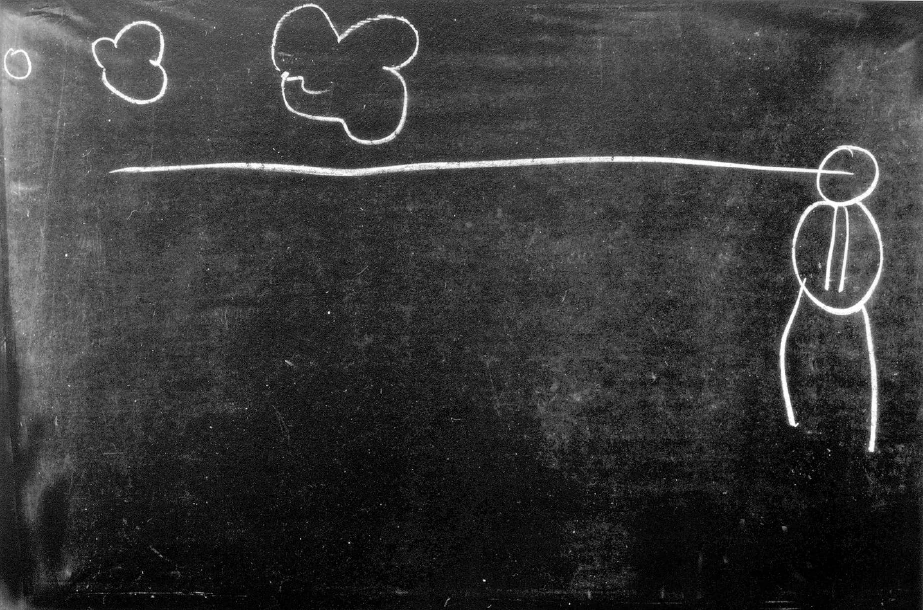
[ 11 ] The only way to escape what threatens humanity is by striving for inner truth with regard to such supreme questions of existence. So, in a sense, the impulses of our time are issuing a kind of call to humanity to recognize that a materialistic form of astronomy—one that is unaware that the event of Golgotha takes shape at a specific point in time—can no longer be allowed to exist. But any astronomy that includes the Moon in the structure of the world alongside the Sun and the Earth—instead of allowing the two to converge in their currents, yet in such a way that they remain distinct currents—any such astronomy is nothing other than pagan astronomy, not Christian astronomy. Therefore, from a Christian standpoint, any theory of evolution that depicts the world as, so to speak, a unified whole must be rejected. If you follow my *Secret Science*, you will see how, as I describe the Saturn era and the Sun era, the current divides into two currents that then interact with one another. There you have the two currents. But if one describes it as is commonly done, then one uses concepts that are entirely in line with the pagan conception of evolution. This extends right down to the details. Just consider this: when today’s evolutionary theorist—one with a distinctly Darwinian bent—describes the development of organic forms, he says: First there were simple organic forms, then more complex ones, then even more complex ones, and so on up to human beings (Plate 25, top). — That is not the case; rather, if you take the human being and divide it into three parts, only the head represents the development of the lower animal forms (drawing, right). What humans have as a head is the evolution of the lower animal forms. That which is attached to the head arose later. So we cannot say that we have something in our spinal cord that transforms into the head; rather, we must say: Our head certainly arose from earlier structures that were spine-like; but today’s spine has nothing to do with this development—it is a later addition; and what is now the head structure originated from a differently shaped spine.
[ 12 ] I mention this for those who have already studied the theory of descent to some extent. I mention this so that you may see that a direct line of cosmic observations leads to observations of what is happening in human evolution, and so that you may see that it is necessary for spiritual science to shed light on all individual areas of knowledge and life; that things simply cannot continue as they have in recent centuries, with science developing under the influence of the materialistic worldview—which is itself a product of the materialistic interpretation of Christianity. Materialism owes its existence to the materialization of the Christian worldview. The doctrine of the cosmic Christ must be restored in the face of the materialization of this doctrine. This is the most important task of our time. And until people realize that this is the most important task of our time, they will not be able to see clearly in any field.
[ 13 ] Today I wanted to present something to you that would allow you, I might say, to gain a deeper understanding of why malicious opponents are so vehemently opposed to what, out of an inner necessity, must now step forward into the world. And I had to link this entire line of thought, so to speak, to a kind of cosmology. We will continue with this cosmology here next Friday at 8:00 p.m.