

Human-Becoming, World-Soul and World-Spirit I
Human Beings as Physical and Spiritual Entities
in Their Relationship to the World
GA 206
20 August 1921, Dornach
Translated by Steiner Online Library
Twenty-fourth Lecture
[ 1 ] Yesterday, my aim was to show how the spiritual disposition—or state of consciousness—of humanity has changed over the course of historical and prehistoric times, and I wanted to demonstrate this so that people might more easily recognize the necessity of once again elevating themselves to a different spiritual state in order to gain true, essential knowledge. Namely, to a state of soul that differs from the one to which we have become accustomed—the one we cultivate today in everyday and scientific life—and which we recognize as something absolute that has existed as long as humans have existed and will continue to exist as long as we have grounds to speak of human beings walking the earth. For when one sees how, throughout the historical course of human development, the soul has already assumed a different inner constitution, it becomes easier to commit to a transformation of the present state of the soul as well.
[ 2 ] To follow up on what I said yesterday, I would now like to briefly summarize once again what can be inferred from my recent reflections. I said that humanity—insofar as it can be regarded as civilized humanity—has in reality only arrived at its present state of mind since the 15th century, and this state of mind is characterized, on the one hand, by our striving for an intellectualistic interpretation of the world, by our use of reason to comprehend what we call the world.
[ 3 ] This intellectualistic orientation toward the world corresponds to a very specific realm of the world that can thereby be grasped and understood. It is the world of mineral phenomena and mineral forms—the world that has not yet risen to the level of the living. It is widely believed today that even within a purely intellectual pursuit, the living might one day be grasped; but this is only because people fail to recognize the interconnectedness of the intellect within and the non-living in the external world. If we go back beyond the 15th century and enter the period that, counting backward, lasts roughly from the 15th century to the 8th century B.C., then we find a different orientation of the human soul. And this orientation is most characteristically revealed to us in the Greek spirit.
[ 4 ] Here we are not dealing with an intellectualistic state of mind; concepts are not yet separated from words in the strict sense of the term. The Greeks arrived at their inner life essentially because they did not mentally visualize concepts with a certain degree of abstraction, as we do, but rather heard them, so to speak, as sounds—even if not audibly—and sensed the inner sound of the words. What for us lives in the abstract nature of concepts was, for them, colored by the sound perceived spiritually—if I may pose this paradox—by the soundless, purely inwardly experienced sound. Just as we live in abstract concepts, so the Greeks lived in the outwardly soundless sound. This, however, enabled them to perceive the living world as an external reality in a vivid way. And we therefore see that wherever the Greeks, based on their presuppositions, wished to form—let us say—concepts about the universe or the cosmos, they did not, as we do today, use concepts derived from geology, physics, or chemistry, but rather employed that which had taken root in their souls through the growth, development, flourishing, coming into being, and passing away of the plant world.
[ 5 ] If we go back even further, however, we enter times that we can no longer consider “historical” in the strict sense of the word; we go back beyond the 8th century B.C., to a period extending roughly to the beginning of the 3rd millennium B.C. And if we look around at those peoples who could be considered civilized at that time, we find that the essence of spiritual life was no longer sought in words experienced inwardly, but rather in the imaginative shaping of the structure of words, the structure of language. Rhythm and thematic structure—that is, what strings sounds together, what penetrates the world of tones and also the world of sounds, so that we can only bring it to life in our souls when we rise to the poetic shaping of language—that was the very lifeblood of the, if I may use the term, cultured peoples of that time. And they were not satisfied by expressing, through words, some external thing or event, as the Greeks did, but rather by inwardly sensing, as it were, that which they believed to be alive everywhere in the world as rhythm and harmony.
Translate text Select source language. Currently selected: English (detected) Select target language. Currently selected: German Toolbar Source text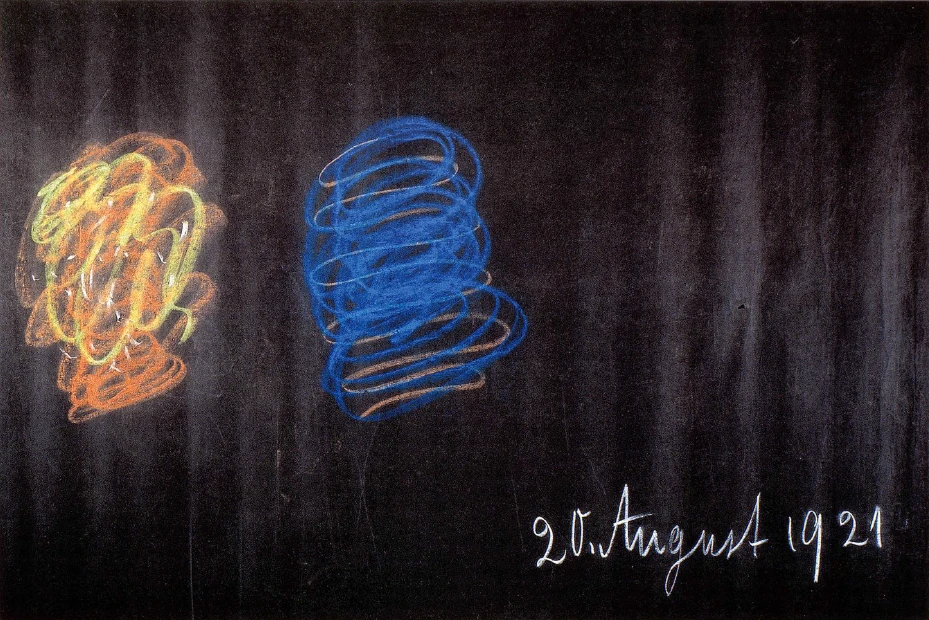
[ 6 ] Thus, inner rhythm and inner harmony were what defined the state of mind during the period described. And if we ask which realm could be permeated externally by such an inner state of mind, we come to the conclusion that it is the realm of that which is essential and capable of experiencing sensation within itself. Thus, what constitutes the animal world, what constitutes the sentient world—that which lives in the perception of the objective—came to life inwardly for the people of that ancient time in the state of mind of which I have spoken.
[ 7 ] And if we go back to even earlier times, you can surmise that, in a certain sense, there must have been an understanding of human beings themselves. In our own age, we have an understanding of inanimate nature; this was preceded by an understanding of living nature. And if we go back beyond this epoch, we arrive at those times of which, for certain underlying reasons, only those worldviews that have emerged from more or less enlightened Catholicism actually speak today. It is precisely those thinkers who have immersed themselves—not, of course, in the decadent state of Catholicism, but in what was once Catholic philosophy in earlier times—who speak of a primordial revelation to humanity. One must, after all, view many things in their proper light if one wishes to judge these matters appropriately. The Catholic Church has, after all, become something different from what it was, for example, in the times of the Catholic Church Fathers.
[ 8 ] One need only take a look at Origen to see how he, even in his time, sought to incorporate into Christian thought all the philosophical insights that had been gained. And so we also find among the early Church Fathers a clear awareness that there was once a primordial revelation among humanity. And those Catholic writers who have retained the better aspects of Catholicism still speak today of these primordial revelations, which only later disappeared amid a paganism that was increasingly heading toward decadence, so that this knowledge was lost. Thus, in these primordial revelations to an instinctive humanity, that which was later embodied by Christianity in its developed form had already been revealed.
[ 9 ] It is interesting when writers such as Otto Willmann speak of the primordial revelation, when they go back to the mysteries and beyond the mysteries and refer to such a primordial revelation through which people were inspired in those very times in the third millennium and beyond the third millennium of the pre-Christian era, when such a primordial revelation is sought. It is not necessary for us to delve into a more detailed description of what is said about this primordial revelation. But let us characterize, in a spiritual-scientific sense, what one can find when going back to these prehistoric times of human civilization, where—through what I will for now call an instinctive state of the soul—one can explore not only the sentient aspect but the human aspect itself: that which lives in the human being above the animal nature, the very essence of what is specifically human. Yes, there was indeed such a time when the corresponding insight was instinctive—not even something that would be regarded as insight today—when it was a kind of immediate experience, a dim, dreamlike experience, but an experience that certainly contained within itself something of the essence of the human being, so that, as if through an inner immersion into this human being, one could make tangible what a human being actually is. Historically, of course, this epoch cannot be considered, although historical remnants of it have certainly remained. How one should view these historical remnants will become clear to you from what I would now like to present as a characterization of this epoch itself.
[ 10 ] When we speak of that state of mind that we now regard as predominant in humanity—the intellectualistic one—we are speaking of something that lies within ordinary experience, within the ordinary life of the soul, as we define the soul today, more or less clearly or more or less trivially. Even when we consider the era characterized by the Greek way of seeing, we are speaking of an inner experience of the word—that is, once again, of something that lies within the soul. And even when we go back to the 9th and 10th centuries B.C., to the 2nd millennium, to the end of the 3rd millennium, we speak—by looking at the rhythm, the thematic processes, and the experiences of soul life—of something that takes place within the soul, although it must be acknowledged by anyone who knows these things intimately from personal experience that at the very moment when the soul experience steps out of the word and enters into this rhythmic experience—this experience of harmonies and, I would say, musical-imaginative themes—the physical aspect has always been quietly resonating alongside what is experienced in the soul. Just as one can sense that every time a person has a vivid dream, something takes place in their physical being that leads to the constitution of dreaming, so the people of the period described knew that when they brought to life within themselves the harmonious, the rhythmic, thematic elements—which were for them as if they were unveiling or revealing the mysteries of the world—something physical would gently move along with them. When we speak of our abstract, intellectualistic conception of the world, there is nothing in our consciousness of a physical resonance. We can devise theories about what might happen in the human nervous system when logical-intellectual thinking takes place. But such theories are, after all, merely theoretical; they are not something living, not something that is experienced.
[ 11 ] In exactly the same way, we must still speak of the Greek soul when we consider how the word lived within that soul. But as I said, we are already moving beyond the purely spiritual realm toward a subtle involvement of the physical as we go back to the preceding period. And we move even further from what we today call the soul into the physical realm when we go back to the ancient instinctive cognition that existed in the early centuries of the third millennium B.C. and even earlier. At that time, there was a direct soul experience that had the character of a physical experience. In those earlier times, people actually experienced a process that we today would definitely describe as physical—I do not wish to discuss here whether this is entirely correct or partly incorrect—a physically described process where, later on, what we call a soul experience was experienced.
[ 12 ] I would like to expressly note that when one encounters such experiences of humanity—so different from our own—one also finds it difficult to use words appropriately. The things themselves, after all, become different; they become very unlike what we experience today. Our languages are shaped by our present-day experiences, and one must try to use them in such a way that one can return to something that is no longer an immediate, present experience today—something that can therefore only be faintly grasped through the linguistic conventions we have today. That is why I must say that what we today call the “soul” did not actually exist in the inner state of mind of these ancient people. What actually lived within them was something we today describe as bodily, even as immediately physical—just as thinking or the inner hearing of a word is for people today. Thus, these ancient people did not experience inhaling, holding their breath, and exhaling in the same way we do, since we have outgrown the direct experience of the breathing process. They experienced this breathing in a way that we now experience only in abnormal states—such as when we go through states of anxiety in a dream and then wake up to find that our breathing is disturbed. In such pathological states, we catch a glimpse of this interplay between the breathing process and the emergence of images in our consciousness. We have outgrown the images that arise before our consciousness when the normal breathing process is taking place, because we have developed the ability to perceive the rhythmic, the harmonious, and the thematic aspects of language, as well as the inner coloring of the word; because in our time we have fully developed the capacity for abstract thinking, for intellectualistic thinking about the world.
[ 13 ] But these three periods were preceded by another, during which human beings still lived—if I may use the expression—down within what we today call their physicality, and their process of cognition was intertwined with inhaling, holding their breath, and exhaling. And what did human beings experience when they inhaled? Today, this can only be taught through imaginative insight, which I have discussed in my book How to Attain Knowledge of the Higher Worlds and in my Outline of Esoteric Science. For what was experienced during inhalation in that ancient epoch was essentially an imagination; the imagination of the human being itself, the imagination of the human being as a form, was experienced during inhalation. The human being felt this during inhalation—of course, they had to direct their attention to it; in everyday life, they did not always do so—but they could, so to speak, pause their everyday soul life and then experience it. They experienced it especially in moments when their everyday consciousness was somewhat subdued. That was necessary for it. We would say today that in states approaching sleep or waking, they experienced the human form as the breath drew in; as they held their breath, they experienced this form merging with the inner soul. In a sense, he had the opportunity to experience the human form as he inhaled, to experience the form becoming misty as he held his breath, and to perceive the connection between this auric misting of the form and the soul. Then, as he exhaled, he experienced the soul’s surrender to the outer world—the harmony of the human being with the outer world.
[ 14 ] I explicitly stated that a person could experience this at certain moments. He could, so to speak, focus his attention on the breathing process and then perceive it. Thus, they truly gained an instinctive insight—if one wishes to call it insight—through the observation of their breathing process, especially when they guided this breathing process somewhat inwardly, which came about through practice; they gained insight into the human being. It was, so to speak, a descent into physicality through which the human being could be brought to insight.
[ 15 ] Of course, one must not imagine that in those ancient times, people spent the entire day, from morning to evening, merely recognizing themselves. That is why I said: “when they directed their attention to it.” But this attention was, in fact, easy to draw out of the human being’s overall constitution.
[ 16 ] Well, I said that this does indeed go back to times long past; but historically, what has been preserved from those times is the method of knowledge practiced in certain schools in India—the breathing method, yogic breathing—which has certainly been carried over to a later period precisely because it was elementary and natural in earlier times. For a later period, certain preparations and certain techniques for managing the breathing process were necessary. In earlier times, these techniques arose as something that people simply learned in the course of their lives, just as one learns to speak today.
[ 17 ] What is called “yoga breathing” is a legacy from an earlier time, when the entire constitution of the soul was different from what it became later, and when, because of this different constitution, human beings related to the world in an instinctive way. For, of course, it was very instinctive to grasp—not through thinking or inner speech, but through breathing—the very essence, the mystery of things. Whereas today we ponder intellectually to piece together individual facts into overall phenomena and to discover laws of nature through the calculating intellect and so on, in those days people breathed in what was to emerge as the very essence of the human being itself—as instinctive knowledge within human nature.
[ 18 ] It is of great importance to realize that not every human epoch corresponds to each other in the same way. Just as the spiritual constitution of human beings has changed, so too has their physical constitution, albeit in a more subtle way. And it must be said that those who today believe they can, for example, through a breathing process, rekindle the ability to penetrate the mysteries of the world—just as such a breathing process was practiced in ancient times and as it has been preserved in people who are, after all, constituted differently from modern European people—are on the wrong path. It is indeed absolutely necessary that, in addition to tracing the external history of human development—which has, after all, become a matter particularly associated with the nineteenth century—we now accustom ourselves to an inner exploration of what has unfolded as the development of the soul in parallel with this external physical development. One does much greater justice to the portrayal of external-physical development when one can also look at spiritual and psychological development.
[ 19 ] You will be able to sense how the person to whom these four types of human soul states are now fully concrete perceives the soul in a special way. First, we have a state of the soul that is actually hardly a state of the soul at all, but rather a physical state that lives in the process of breathing; then there is the one that lives in rhythmic-harmonic and imaginative-thematic processes; then there is the one of the silent experience of the word; and finally, there is the one that lives in intellectual processes; and when one has all of this concretely before one, then one looks upon the soul in such a way that one must attribute to it the most diverse possibilities of relating to the world. And it is necessary for the present day to know that such diverse possibilities—let us say, such diverse kinds of consciousness—exist, and that for each state of consciousness, different levels of cosmic life and cosmic existence come to light.
[ 20 ] It is widely believed today that there is only one state of consciousness, which people then attempt to describe as something that can be considered in absolute isolation. But by limiting oneself to this one state of consciousness, one simultaneously limits oneself to a single level of cosmic existence and cosmic experience. And we can truly say of today’s state of consciousness that it is far removed from an understanding of the true human being. It clings to the idea of constructing a human being based on physiology and biology. For what we call psychology today is, after all, essentially a collection of worn-out words for something that no longer contains any real spiritual content.
[ 21 ] Humanity must once again advance to the point where it can grasp the living alongside the dead, the sentient alongside the living, and the human alongside mere sentient cognition. As I said, I have made these remarks to facilitate an understanding that leads to what is necessary today if we wish to approach an understanding of the human again, if we wish to get to know the human anew. For this human aspect does not reveal itself to a state of consciousness that is primarily attuned to the inanimate, to the mineral.
[ 22 ] We speak of the “I”; we believe we can speak of the “I.” The fact that we have a word for this “I” is, of course, no proof that this word also has any spiritual content. There are philosophers today who conceive of the “I” solely as a synthesis of what is experienced as a thought or a feeling. In a sense, only that which is drawn as connecting lines from one thought to another, from one sensation to another, or from sensation to thought—that which is itself entirely abstract—is often understood today as the “I.” But one could say that, in a certain sense, even this view has limited validity. For what is experienced in the soul—when one speaks of such an awareness of the “I”—is, strictly speaking, not even a content at all.
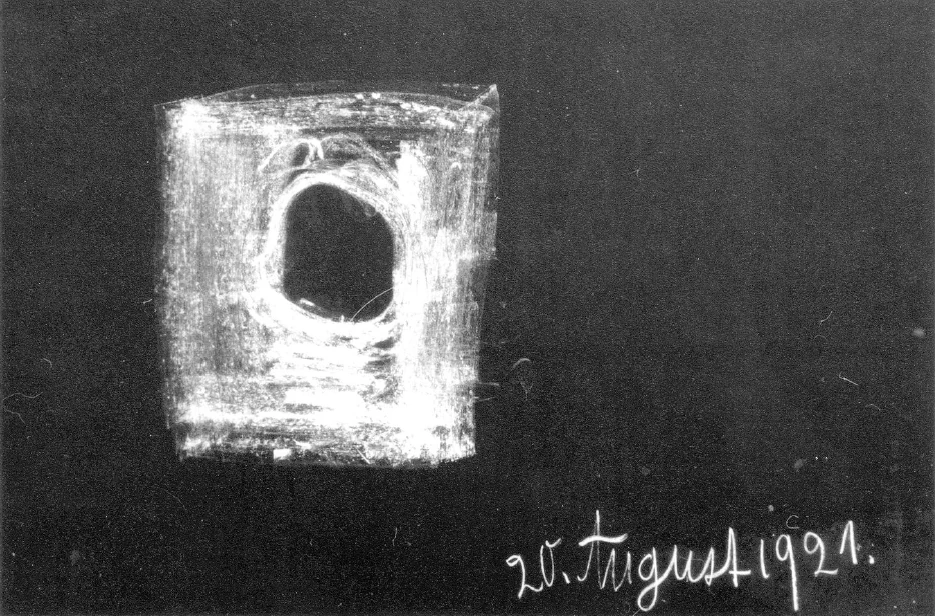
[ 23 ] Look, we can have a white area—we can talk about white—I’ve used this image many times before—we see the white, but we also see the black here in the middle. There is no white there; the white is missing, and yet we see the black through the white (it is drawn).
[ 24 ] Anyone who can truly analyze the life of the soul can see that what we experience in the soul today is comparable to this “white.” We experience pain and pleasure; we experience this or that sensation—love, hate, and so on. We experience ideas, even though they are something rather gray for ordinary consciousness when we try to relive them in reflection; but with this consciousness, we experience the “I” just as the black is experienced here within the white. Where we experience nothing—where, so to speak, we experience a hole in our consciousness—that is where we place the “I” for ordinary consciousness. No wonder we speak of the “I”; here, too, we speak of a black hole. The “I” is not contained in what a person experiences from waking up until falling asleep. The question may arise in our souls: How do we even come to have the possibility of forming concepts of the “I”? — Yes, anyone who is now earnestly seeking knowledge is led to something else. Everywhere in what surrounds us in the world, they find no point of reference for forming concepts of the “I.” As a rule, what surrounds us is sometimes outside and sometimes inside the soul. It is, after all, essentially the same thing. And if we find only a void within ourselves for the “I,” then under ordinary circumstances we cannot find an external point of reference either—a place where we can, so to speak, situate our “I.”
[ 25 ] Anyone who seriously strives for knowledge finds in the events of the world an opportunity to approach the self in only one instance: that of death. It is precisely when the human being ceases to exist with death—when, so to speak, the human body is surrendered to the external forces from which it had been shielded by the
[ 26 ] Plate 15: Birth, or from Conception to Death—now that we are finally able to form a conception of the human being, now that we no longer have any way of inferring the human being from the body, only then does the possibility for us to approach the “I” truly begin. We must begin with the phenomenon that is, in a sense, the most inexplicable among the external phenomena—the most inexplicable because it can no longer be grasped by ordinary consciousness and is the least amenable to being brought into consciousness.
[ 27 ] But if we can bring ourselves to view death in this way—if we approach the phenomenon of death in a manner similar to what I have described regarding the struggle with concepts in general, where mere abstract cognition becomes an inner experience—if we approach the phenomenon of death in this way, then we gradually come to realize that death, when it confronts us at the end of life, is actually nothing more than a sum—an integral, I might say—of individual processes that are constantly taking place within a person from the moment of birth. We are, in essence, always dying, but we die, so to speak, in very small portions. When we begin our life on earth, we also begin to die. But time and again, that which is bestowed upon us as vitality at birth overcomes death. Death always seeks to take effect within us. It always manages to exert only a very small portion of its influence and is then overcome. But what seems to be vividly condensed into a single moment in death actually takes place continuously throughout life, like differentials; it is a continuous, ongoing process.
[ 28 ] If we explore this further, we see that human inner organic processes do not consist solely of constructive processes. If only constructive processes were at work, we would never be able to attain a thinking consciousness, for that which merely lives, that which is merely vital, robs us of consciousness; it renders us unconscious. The processes of death within us—the processes of dying, the processes of destruction of the vital—which always take place differentially within us—are what bring us consciousness, what make us thinking, level-headed beings. We would always fall into a kind of thoughtlessness, a kind of unconsciousness, if we were merely to live. If it were true that life is at a certain level in plants, at a higher level in animals, and at an even higher level in humans—if, in other words, it were always merely a matter of an elevation, a potentiation of life—we would never develop thinking consciousness.
[ 29 ] Life exists in the plant. But as life ascends to the animal realm, it already begins to wane within the animal. In human beings, however, there is a continuous process of dying. This continuous process of dying, which not only dampens life but also undermines it—only to have it rebuilt again—is the organic process that underlies conscious thought. To the extent that we have this continuous process of dying within us, to that extent we have the ability to think in physical life.
[ 30 ] But if one learns to observe that there is a process of building up (see diagram, red)—the vital process of building up in the plant kingdom, which is also at work within us—and if one then learns to observe how this process of building up is dampened by the animal kingdom (green), yet how a continuous loss takes place (black), an inner decay—and when one finally rises to the level of recognizing this inner decay, then one also possesses that which constantly sustains itself in the face of this decay. One has the process of dying, but one also has an everlasting fighter against the process of dying; one has the process that constitutes the life of the “I.”
[ 31 ] That is where the “I” lives. By observing, through higher insight and higher perception, how a continuous process of deposition takes place through the human nervous system—how, so to speak, an inner sediment forms—one also sees how the “I” continually emerges from this sedimentation, from this inner sedimentation. One cannot gain insight into the true “I” until one is able to observe this inner sedimentation. The “I” naturally lives within the human being, but the human being perceives this “I” through experiencing the process of dying, the process of inner decomposition. And whoever has now grasped how the “I” is a constant fighter against this process of dying has grasped how the “I” is something that, as such, has nothing at all to do with death; that person has vividly grasped what is otherwise described dialectically or logically as immortality.
[ 32 ] But this is the way to behold immortality, for through it one reaches entities that belong to a different order of existence than that which falls away as sediment. One enters a realm where death has no meaning, where death loses the possibility of taking the form of an earthly sensation. Thus, we draw closer to the self when we study death. I have only hinted at this for now, for this study of death is a very detailed one, and to those who attach a certain value to it, it can also be said that observing this continuous sedimentation—this formation of sediment—appears as if there were a constant inner flickering of sparks of darkness—in contrast to sparks of light: sparks of darkness—within a uniform aura of light.
[ 33 ] But we must form other concepts if we are to approach what can, in turn, lead us to a kind of understanding of the human being. I must start from something else if I am to form this other concept. I had to direct your attention to death and its overcoming, since the aim was to approach the “I.” I would now like to direct your attention to the following: Consider the life of the plant, but first and foremost that of the truly annual plant. This is the annual plant, for in the perennial plant and in the tree we already encounter a complication that would require a separate examination. In the annual plant, you will find the emergence of growth from the seed, the sprouting of leaves, the progression of growth through to flowering and fertilization, and the development of the fruit, which contains the seed for the next plant. We see, so to speak, the result of the fruit, which in turn develops into the plant.
[ 34 ] You can easily imagine that as the plant develops from those early stages—where the leaf first forms—through to fertilization, it unfolds within itself forces that reach their culmination precisely at the moment of fertilization. But then the downward path begins, and the plant begins to decay once more. And as you observe this cycle of plant life, you will see the true nature of the plant. As I said, we will not concern ourselves here with perennial plants or those that leave behind a trunk, such as trees. What I said about the annual plant—which comes to an end upon a single fertilization—would simply be more complicated here; but we grasp the true nature of the plant through the nature of that plant which, in the very act of fertilization, simultaneously moves toward its end. Properly considered, the plant realm lies precisely in the life that culminates in fertilization and, by culminating in fertilization, descends to the other side. Therein lies the plant realm. If we seek the essence of the plant, we must seek it in much the same way as we must seek the human “I” in the process of continuous dying. We say of the human being that death—with which his physical being initially comes to an end—is actually always present within him as a force. When he is born, he begins to die; he begins, I might say, to develop “differentials of dying”; he dies continuously. It is the process of dying within him. In the plant, that which ultimately culminates is continually present. Just as we culminate in death, so does the plant culminate in fertilization. Just as we grasp our inner being, our “I,” precisely in death, so does one grasp the essence of the plant in fertilization. The plant comes to life in fertilization; what develops in the leaf is merely a metamorphosis, merely a preliminary stage of fertilization.
[ 35 ] When we come to animals, the situation is as follows: the animal is fertilized, but at first this fertilization does not mean withering away; rather, it can be fertilized again. Of course, we always encounter borderline cases here, but we want to grasp the living and sentient in certain characteristic key points. Just as the plant being—the true plant being—reaches its culmination with fertilization—and of course anyone may doubt that this is the true plant being, but we grasp the plant being precisely where it manifests itself—so the animal does not reach its culmination with fertilization, but rather overcomes it. That which constitutes the higher animal carries something else within itself. If it were to carry within itself only that which lives in fertilization, it would have to undergo the same process as the characteristic plant: it would have to die. But it carries something beyond fertilization. And when we ascend to the human being, he overcomes not only what the animal overcomes, but he overcomes death itself.
[ 36 ] The things I have just spoken of should not be taken dogmatically; nor should they be taken in such a way that one formulates definitions from them, for then one immediately goes down the wrong path; rather, they should be taken in such a way that one gains concepts from them. Now, anyone who says, “A plant is that which perishes in fertilization; an animal is that which retains something beyond fertilization”—such a person is formulating definitions instead of gaining concepts. One can only arrive at insight by gaining concepts for certain stages of life and existence. And just as one must gain the concept of the “I” by bringing the “I” face to face with death, so must one gain the concept of the animal by observing how fertilization is transcended into something that lives on in the animal beyond fertilization. One must observe the plant by viewing fertilization—or rather, what takes place during fertilization—as a continuous process.
[ 37 ] But once one has risen to such concepts, these concepts themselves become something alive in the life of the soul. And these concepts, once grasped, themselves enrich the life of the soul. So that we are now able not only to grasp the human “I,” but by assimilating what remains in the animal beyond fertilization, we gradually arrive at a concept of the human astral body. And when we assimilate that which lives on continuously throughout the process of fertilization, we also arrive at a concept of the human etheric body. If we grasp the true “I” as that which frees itself from this process of sedimentation, then we must conceive of the astral body in a different way. We must understand this astral body in the following way. Let us first regard that which grows, nourishes itself, and reproduces as not perishing. Here, we regard the entire physical being as perishing when we wish to arrive at the “I.” So let us now regard that which grows and reproduces not as perishing, but merely as being paralysed—continuously paralysed—so that there is not something here that triumphs over death, but rather something that triumphs over the paralysis of vitality; something that, whenever vitality declines, whips it back into action.
[ 38 ] Then, just as here (see drawing on page 195), where dark sparks spray out of the light, here (see drawing on page 200, red) there is a dark (blue) that continually billows—if I may put it that way—out of something shining in bright colors. One must use these expressions in order to form concepts in these realms of being. I would say that the “I” sparks darkly out of the light; it billows out darkly, tingeing—billowing and tingeing—a brightly tinted entity, when the astral, emerging from the etheric, triumphs over the dulling of vitality. I am trying to speak as precisely as possible, but you understand that these things—which are no longer accessible to intellectual understanding but only to the imaginative—cannot be expressed through intellectual concepts, but must be expressed through imaginations.
[ 39 ] It can happen, after all, can’t it, that people take such imaginings at face value and then don’t really understand the subject, as certain critics of anthroposophy do. But these people make the same mistake that someone would make—as paradoxical as it is, but it is so—who believes that when someone says the word “hedgehog,” they have a real, prickly hedgehog. The word “hedgehog” is, of course, not the hedgehog itself. Nor are these images the corresponding reality, but we can only penetrate through these images to what is truly there in the supersensible realm. After all, it is a process of making the supersensible tangible.
[ 40 ] Anyone who is familiar with the entire process, of course, does not need to be told what Bruhn says in his little book about anthroposophy: that anthroposophy confuses the supersensible with the sensible. That is about as sensible as accusing a mathematician of confusing what he writes on the blackboard with mathematics itself. But that is generally how criticism is written about things one does not want to understand, because one is unwilling to take the necessary steps to do so. So what this is really about is that we must rediscover the path to that which can once again place the human being before our soul. Imaginations once arose in the course of the breathing process; they must once again become imaginations through which we can approach the true essence of the human being. However, we cannot attain them through a breathing process, but rather through those processes I attempted to describe in my book How to Attain Knowledge of the Higher Worlds and in my Esoteric Science.
[ 41 ] My intention today was to offer you some insights into how, from today’s intellectualistic state of mind, we must seek yet another. This other state of mind is not, by any means, the same as the contemplative consciousness. It is not at all necessary to attain the contemplative consciousness, but one can possess this other state of mind. It develops within a truly intellectualistic inner formation—provided one is serious and sincere about this intellectualistic inner formation and knows where its limits lie. Then it will inevitably develop. And the person most likely to arrive at such a vision of an inner, metamorphosed state of mind is the one who is actively immersing themselves in the scientific concepts of modern times. For if one immerses oneself in them as one can live with them—not merely accepting them humbly, but truly living through them inwardly—then one is not led by them to an “ignorabimus,” but is instead led, precisely at the boundary where “ignorabimus” is otherwise placed and fixed, to a special experience, to a genuine struggle. That is precisely where this other state of mind is kindled. But everything depends on approaching the scientific concepts themselves in an honest and thoroughly genuine way. Then one does not content oneself with them; then they become seeds from which something else grows; then one does not stop at laying these scientific concepts side by side like beans and looking at them, but instead one plants these bean seeds in the earth—that is, the intellectualistic concepts of nature—into the innermost depths of the soul. There they blossom into a new state of the soul. What the past centuries have developed carries within it the potential to allow new seeds of knowledge to sprout. We must look toward an age that, in turn, reveals a different state of the soul than that which the age of Galileo—the 15th century—brought forth. We must advance toward a deeper understanding of the world by attaining a more intense experience within our own human inner being.