The Mystery of the Sun
and
The Mystery of Death and Resurrection
Exoteric and Esoteric Christianity
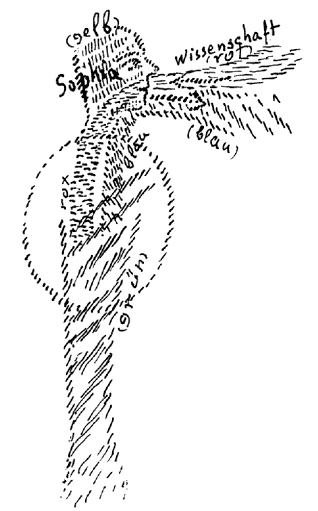
GA 211
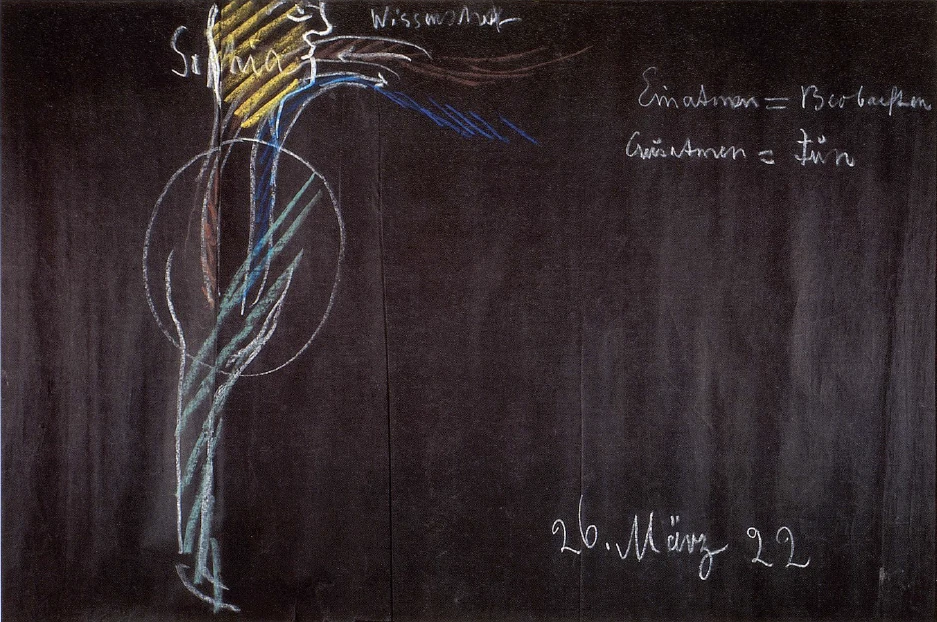
26 March 1922, Dornach
Translated by Steiner Online Library
4. Changes in the Experience of the Breathing Process Throughout History
[ 1 ] There is much talk in our time about the difference between faith and knowledge, and it is often claimed, in particular, that anthroposophy, based on what it has to say, must be described not as a science but as a matter of faith, as a religious conviction. Fundamentally, however, all distinctions made in this vein stem from the fact that people have very little understanding of what has emerged as faith in the course of human development, and that they actually do not have much understanding of what knowledge is either.
[ 2 ] All faith—everything associated with the word “faith”—actually dates back to very ancient times in human development. It dates back to those times when the process of breathing played a much greater role in human life than is the case today. People, with their current state of mind, do not really pay attention to their breathing. They inhale and exhale, but they do not perceive any particular experience in the process.
[ 3 ] The religious beliefs of earlier times have always emphasized the importance of breathing. One need only recall—as I have already pointed out in recent days—that in the Old Testament, the very creation of humankind is linked to the breathing in of the breath, and one need only recall what I have explained about that striving, which existed in ancient India, for example, to attain higher knowledge by regulating the breathing process in a specific way. This endeavor made sense in an era when people paid much more attention to their breathing. I have said that this endeavor took place in an era when human beings perceived around them not only the lifeless nature we perceive today, but also saw spiritual and soul forces at work in all natural phenomena and facts; an era in which they perceived spiritual and soul activity in every spring, every cloud, the river, and the wind. During this time, people strove to make their breathing more and more conscious: to regulate inhalation, holding the breath, and exhalation. And through this regulation of the breathing process, what might be called self-consciousness was brought about—the experience of the “I,” of “I am.” But it was a time when the perception and experience of breathing played a certain role in human life. People today, from their ordinary state of consciousness, cannot really imagine what that was like. I would like to give you an idea of what that was like.
[ 4 ] Isn’t it true that the breathing process consists of inhaling, holding one’s breath, and exhaling? This breathing process is initially governed by human nature. The yoga scholars I mentioned regulated it differently. Just as today, those who study develop a way of thinking that is different from everyday thinking, so too, in times when breathing played a special role in life, people developed a different way of breathing than in ordinary life. But for now, let’s set aside yogic breathing—that developed form of breathing—and consider ordinary breathing instead. I can best illustrate this for you schematically.
[ 5 ] If we assume that this represents the human chest, we can say: We distinguish between the inhalation process, the process of holding one’s breath—which I will not illustrate specifically—and the exhalation process. In earlier times, when a person inhaled, they experienced it as if, with the inhalation—that is, with the air drawn in from the external world—what was spiritual in the beings and events of the external world were also entering within. So in what I have indicated here in red as the inhalation current, people experienced, let us say, gnomes, nymphs—all that was spiritual and soulful in the surrounding nature. And as they exhaled (blue)—that is, as they sent the exhaled air outward—these beings became invisible again during exhalation. They were, so to speak, lost in the surrounding nature. One breathed in and knew: there is something spiritual and soulful out there in nature, for one sensed the effect of this spiritual and soulful aspect in the act of inhaling. In doing so, one felt connected to the spiritual and soul elements of the external natural world. This had—though this is only a relative comparison—a certain intoxicating effect on people in those ancient times. They became intoxicated by the spiritual and soul elements of their surroundings. And as they exhaled, they came down to earth. So they lived in a state of both intoxication and sobering up. And in this alternation between intoxication and sobering up, there was an interaction with the spiritual and soul aspects of the outside world. But there was something else as well. As people inhaled—as they, so to speak, became intoxicated by the spiritual and soul aspects—they felt these aspects gently rising into their heads through the flow of breath, filling them from within, uniting with their own physical being. So that what the human being sensed there can be expressed something like this: I breathe in the spiritual-soul aspects of the environment. They fill my head. I feel it, I perceive it. Then the breath is held. And as he exhales, the human being would say: I give back my perception of the spiritual-soul aspects.
[ 6 ] But this was intimately connected with life. Take just one very simple example: Here is some chalk. When you pick up this chalk today, you look at it, reach out, and pick it up. That is not how people in ancient times did it. We have the thought as we look at the chalk, and then we pick it up. That was not the case for people in ancient times; instead, they looked at it, inhaled what radiated spiritually from the chalk, exhaled, and only as they exhaled did they take hold of the chalk, so that for them, inhaling was equivalent to observing, and exhaling was equivalent to acting. This was at a time when human beings actually lived in a kind of rhythmic interaction with their environment. This rhythmic interaction has indeed been preserved for later times, but without the living, contemplative consciousness of the old days. Just imagine, for example, how grain was threshed by hand in the countryside during our youth: look, strike, look, strike—in rhythmic activity. This rhythmic activity corresponded to a certain breathing process.
[ 7 ] Inhaling = Observing
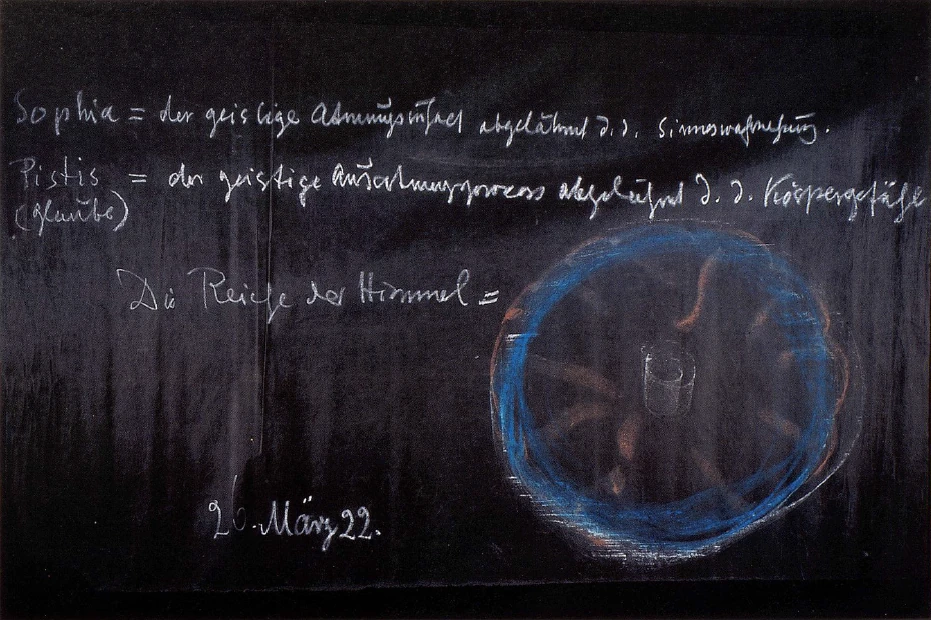
[ 8 ] Exhaling = Doing
[ 9 ] Regarding a later stage in human development, we can say: This experience of inhalation faded from human perception, and human beings perceived—or perceive—only what rises from the breath into their head. In ancient times, then, human beings perceived how what they inhaled—which was intoxicating to them—continued on into the head and there combined with sensory impressions. This was no longer the case later on. Later, human beings lost awareness of what takes place in their chest region. They no longer perceive this upward flow of the breath because sensory impressions become stronger. These impressions overshadow what rises with the breath. When you see or hear today, the process of breathing is present within the act of seeing and also within the act of hearing. In ancient times, breathing was strongly present in hearing and seeing; in modern people, seeing and hearing are so intense that the breath is completely muffled. So we can say that what was once perceived by the ancients in the breathing process within themselves—that intoxicating sensation flowing through the head—no longer exists, so that they would say: “Ah, the nymphs!” Ah, the gnomes! Nymphs swirling in the head like this, gnomes hammering in the head like this, undines undulating in the head like this! — Today, this hammering, undulating, and swirling is drowned out by what comes from seeing and hearing, and what now fills the head.
[ 10 ] There was, then, a time when human beings were more keenly aware of this flow of breath rising into their heads. This gave way to a time when human beings still perceived things in a confused manner, when they still sensed something of the aftereffects of the gnomic hammering, the undine-like undulating, and the nymph-like swirling—as they still perceived something of the connection between these aftereffects and their perceptions of sound, light, and color. But then everything they had still perceived of the breathing process was lost. And among those people who still retained a trace of awareness that breathing had once brought the spiritual-soul aspect of the world into human beings, what now remained—what had become established through sensory perception in connection with breathing—was called “Sophia.” But breathing was no longer perceived. Thus, the spiritual content of breathing was killed off—or rather, numbed—by sensory perception.
[ 11 ] This was felt particularly by the Greeks. The Greeks had no concept of science as we understand it today. If someone had told the Greeks about the kind of science taught in our universities today, it would have seemed to them as if someone were constantly piercing their brains with tiny pins. They would not have understood at all that this could give a person any satisfaction. If they had been asked to take in the kind of science we have today, they would have said: “That makes the brain sore; that wounds the brain; that stings.”—For they still wanted to perceive something of that blissful expansion of the intoxicating breath into which what is heard and seen pours forth as it flows in. So among the Greeks there was a perception of an inner life within the head—an inner life such as I am now describing to you. And this inner life, they called it Sophia. And those who loved to develop this Sophia within themselves, who had a special inclination to surrender to this Sophia, called themselves philosophers. The word “philosophy” certainly points to an inner experience. That dreadfully pedantic approach to philosophy—where one simply “crams” philosophy, as they say in student life—that familiarization with this discipline—was unknown in Greece. But the inner experience of “I love Sophia”—that is what finds expression in the word “philosophy.”
[ 12 ] But just as the head receives sensory perceptions, so too does the rest of the body receive what flows out as exhaled air. In the organism of the limbs and metabolism, just as sensory perceptions—what is heard and what is seen—flow into the head through the intoxicating effect of the inhaled air, so too do the physical sensations and experiences flow together with the exhaled air. The sobering quality of the exhaled air—which extinguishes perception—flowed together with the physical sensations aroused by walking and working. Activity, the act of doing, was linked to exhalation. And as a person was active, as they did something, they felt, in a sense, how their spiritual-soul aspect was flowing away from them. So that when they did anything, when they worked on anything, they felt as if they were allowing their spiritual-soul aspect to flow into things. I take in the spiritual-soul aspect: it intoxicates my head; it connects with what I have seen and heard. I do something; I exhale. The spiritual-soul aspect departs. It goes into what I am hammering, it goes into what I am grasping, it goes into everything I am working on. I release the spiritual-psychic from within me. I transfer it, for example, by churning milk, by doing something outwardly; I let the spiritual-psychic flow into things. — That was the feeling, that was the sensation. So that is how it was in ancient times.
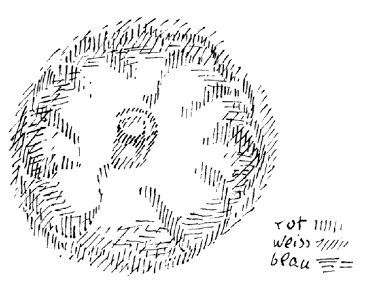
[ 13 ] But this awareness of the exhalation process, this awareness of disillusionment, simply ceased, and only a trace of it remained in the Greek era. In the Greek era, people still felt as if, through their actions, they were imparting something spiritual to things. But then everything that was present in the exhalation process was dulled by the bodily sensation, by the feeling of exertion and fatigue during work. Just as the inhalation process was dulled by the head, so too was the exhalation process dulled by the rest of the organism. This spiritual exhalation process was dulled by the bodily sensation—that is, by the feeling of exertion, of becoming heated, and so on—by what was alive within the person, so that he felt his own strength, which he applied by being active, by doing something. He no longer felt the exhalation process within himself as fatigue; he felt a force at work within him; he felt his body permeated with energy, with strength.
[ 14 ] This power that lived within a person was Pistis—faith, the sense of the divine, the divine power that drives one to work: Pistis, faith.
[ 15 ] Sophia = the spiritual content of breathing, dulled by sensory perception
[ 16 ] Pistis (faith) = the spiritual process of exhalation, inhibited by bodily sensations
[ 17 ] Thus, wisdom and faith converged within the human being. Wisdom flowed to the head, while faith lived throughout the whole person. Wisdom was merely the content of the idea. And faith was the power of that content. The two belonged together. Hence the sole Gnostic text preserved from antiquity: the Pistis Sophia text. Thus, in Sophia one found a rarefaction of the inhalation, and in faith a condensation of the exhalation. Then wisdom became further rarefied. And in this further dilution, wisdom became science. And then the inner power condensed further. Human beings could feel only their bodies: the awareness of what faith—Pistis—actually is slipped away from them. And so it came to pass that, because people could no longer sense the connection, they separated what—as mere content of faith—was meant to rise subjectively from within, so to speak, from that which is connected to external sensory perception. First there was Sophia, then Scientia—ordinary science, which is a diluted Sophia. One could also say: Originally, Sophia was a true spiritual being whom human beings felt as an inhabitant of their own minds. Today, all that remains of this spiritual being is a ghost. For science is the ghost of wisdom. This is something that should actually pass through the soul of modern humanity like a kind of meditation—that science is the ghost of wisdom. And similarly, on the other side, faith—which is commonly called that today; here one has not really grasped a specific distinction in the words—the faith that lives today is not the inwardly experienced faith of antiquity, Pistis, but rather it is the subjective that is closely linked to egoism. It is the condensed faith of ancient times. In the faith that had not yet become condensed, people still sensed the objective Divine within the human being. Today, faith is found only subjectively, rising, as it were, like smoke from the body. So one could say that just as science is the specter of wisdom, so today’s faith is the solidified remnant of former faith, the lump of former faith.
[ 18 ] One must simply keep these things in perspective; then one will no longer make such superficial judgments as many people do today, who say that anthroposophy is merely a matter of faith. Such people do not know what they are talking about, because they have never brought to consciousness—through the actual history of humanity—the entire connection between faith and wisdom, this inner experience of the oneness of faith and wisdom. Where, after all, does anyone speak of history today in the way we must describe it here? Where today does anyone speak of what the process of breathing once meant for human beings—how it represented an experience entirely different from what it is today? Where does one become aware of how abstract, on the one hand, and robustly material, on the other, that which was once a truly spiritual-psychic on the one hand and a truly psychic-physical on the other has become?
[ 19 ] When the development of faith had reached a certain point, it became necessary for humanity to incorporate something very specific into the content of that faith. In ancient times, human beings did indeed have the divine within the content of their faith. They experienced the divine in the process of exhalation. But the process of exhalation was lost to their consciousness. They no longer had the awareness that the divine passes out into the world. Humanity needed a revival of the divine for its consciousness, and it received this revival by taking into itself a concept that has no external reality on Earth. On Earth, there is no external reality to the idea that the dead rise from their graves. But the Mystery of Golgotha has no real substance for human beings if they merely describe the course of Jesus’ life up to his death. After all, that is nothing special. That is why Jesus is no longer anything special even for modern theology. For the fact that a human being goes through certain experiences and then dies—as modern theology portrays the life of Jesus—is, after all, nothing special. The mystery begins only with the Resurrection, with the living life of the Christ Being, after the physical body has passed through death. And—as is also in accordance with the words of Paul—whoever does not take this concept of the Resurrection into their consciousness has taken nothing at all from Christianity; hence modern theology is, in fact, merely a “Jesology,” and not Christianity at all. Christianity needs a conception that refers to a reality which does not take place on this earth as an immediate sensory perception, but which, as a concept, already lifts the human being up into the supersensible.
[ 20 ] Through an inner experience, the old human being was lifted up into the supersensible realm. I have described to you in recent days how the yoga student was guided toward the inner experience of being a baby. One experienced the first impressions of being a baby—that which shapes the human being in a vivid, tangible way. That which is otherwise unknown was brought into consciousness through the yoga exercises I have spoken to you about; and with it, at the same time, the entire prenatal period—that is, the life that lies before conception, when the human soul was in the spiritual world above before it descended and took on a physical body. Only a concept of this remained. This concept is also contained in the Gospels: “Unless you become like little children, you cannot enter the kingdoms of heaven.” — This saying refers to that, though at that time it no longer had any immediate vitality. It was, so to speak, a reminder that one could once transport oneself back to childhood and there experience the kingdoms of heaven from which one had descended through birth into physical existence. It is hardly the case today that when people hear about the kingdoms of heaven in the Gospels or in other ancient texts, they imagine anything significant by that term. They probably think: Well, yes, I’ve seen that here on earth—France, England, and so on; that is divided into kingdoms. What exists on earth in terms of kingdoms also exists up there; there, too, are the kingdoms of heaven. — Otherwise, people cannot really form a concrete idea of the kingdoms of heaven unless they can imagine what is down here as also existing up there. I believe they even say in English, if I’m not mistaken: “the kingdoms of heaven.” Yes, it’s hard to grasp what lies behind the now-modernized expression “the kingdoms of heaven.” The Gospel usually puts it in such a way that it’s even harder to grasp what it actually means; it even says: “the Kingdom of God.” Yet people hardly think of anything at all when they hear this—they just let the words ring out. But in ancient times, the heavens were precisely that which—if, for example, the Earth is here (center)—spread out as the sphere of the world (white, blue). And “kingdom”—what was that? Let us set aside all philology and turn instead to the observation that can be derived from the anthroposophical method itself. “Reich” = that which reaches out, that which extends all around, that which encircles—that is, the reaching, the resounding, the speaking—so that one must rise to the following conception: Through these heavens, for those who learn to perceive it, the spiritual-soul aspect resounds. They perceive not only the heavens, but the World Word that resounds through and permeates the heavens.
[ 21 ] Whoever cannot become like little children cannot perceive the Word of Heaven, the Word that speaks from the heavens everywhere. If one calls earthly kingdoms “kingdoms” and earthly rulers “rulers of these kingdoms,” one must surely harbor the secret notion that these rulers could speak or sing so loudly that their voice would resound throughout their entire kingdom. In older, legendary conceptions, there is also such a thing as the resounding of the kingdom. And symbolically, this was expressed by the enactment of laws that were proclaimed toward the regions of heaven with trumpets, thereby making the kingdom a reality. The kingdom was not the land on which people lived, but rather the kingdom was what the trumpeting angels carried out into the vast expanses as the content of the laws.
[ 22 ] But it was a memory. Another concept had to emerge, one that related more to the will—the previous one related to the idea, to the thought—to that which accompanies a person when he passes through the gate of death. For it is the will that remains as the development of one’s energy. It passes through the gate of death with the person, along with the content of world thought. The human will, filled with world thought, enters the spiritual worlds with the person when he or she dies. And it was to this will that the new concept of the risen Christ now turned—of the One who lives, even though He has died on earth. This was the powerful, mighty concept that did not merely recall childhood, that pointed to death, and that appealed to that within the human being which passes through the gate of death with him. Thus we find, quite justifiably within the development of humanity itself, the emergence of the Christ concept, of the entire Christ impulse.
[ 23 ] Now, however, one might say: Even today there are still many people on Earth who know nothing about Christ. Those who do know about him today usually have only a vague understanding, but they are learning something about Christ—even if, in keeping with the spirit of today’s materialism, the image of Christ and the sense of Christ they carry within themselves are not entirely accurate. But there are indeed many people on Earth who live within other, older forms of religion. And this raises the big question I already hinted at yesterday. I said that the Mystery of Golgotha is a fact. Christ died for all people. The Christ impulse has become a force for the whole earth. In this objective sense, apart from consciousness, Christ is present for Jews, Gentiles, Christians, Hindus, Buddhists, and so on. He is there. Since the Mystery of Golgotha, He has lived within the forces of the earth’s human evolution. But it does make a difference whether people live within a Christian context or a non-Christian one. One can only understand what difference this makes by recognizing the connection between the life a person unfolds between death and a new birth, and their earthly life. When a person has passed through death and was, let us say, a Buddhist or a Hindu in life—that is, when they have not absorbed any concept or sense of Christ—they take with them into the universe beyond death only what a human being can experience here on Earth from the external environment, from nature. One would know nothing of nature in the heavens if a person did not—when entering the realms of the heavens through death—bring news of the earth there. Human beings carry what they take in here on Earth over into the realm of the supersensible as they pass through death, for it is through this that the supersensible worlds first come to have any knowledge at all of the mineral, plant, and animal kingdoms on Earth. But the one who knows something of Christ—who, in particular, can hold the idea that Christ lives within him, who experiences the words of Paul: “Not I, but Christ in me”—such a person carries not merely the news of the Earth into the supersensible worlds, but the news of the earthly human being. Thus, both are carried there even by people today. Christians carry into the supersensible world the message of the earthly human being, of the physical earthly form of the human being. Hindus, Buddhists, and so on carry into the heavens the message of what surrounds the human being. Even today, human beings complement one another in what they contribute to the supersensible worlds as they pass through death. Of course, it is becoming more and more necessary that all the mysteries which human beings can experience within themselves and through themselves be carried into the heavens—that human beings, in other words, be increasingly permeated by Christ. But above all, it is important that what human beings experience here on Earth solely as human beings among other human beings be carried into the heavens through death by means of Christianity.
[ 24 ] Keep in mind that this is actually an extraordinarily important truth, a truly essential truth. Take, for example, the Hindu or the Buddhist. What they experience in observing the world, in perceiving the world, in feeling the world—what they experience in their thoughts about minerals, their perceptions of plants, and their feelings toward animals—they carry all of this through the gate of death and enrich the knowledge of the gods in the supersensible world with what they have thus experienced. What the Christian experiences by entering into social relationships with his fellow human beings, by developing social bonds—that is, what can only be experienced as a human being among humans, what is experienced in human brotherhood on earth—the Christian, for his part, carries through the gate of death. One might say: The Buddhist carries the beauty of the world through the gate of death; the Christian carries goodness through the gate of death. They already complement one another. But the progress of Christianity lies in the fact that it is precisely these social, earthly relationships that take on significance for the heavenly worlds.
[ 25 ] No matter how many people the Eastern tyrants might behead, this had, in a sense, little effect on the worlds beyond. It affected them only insofar as human beings thereby received external impressions: the external impressions of revulsion and so on, which were carried through the gate of death. What unfolds today as animosity between people due to wretched social conditions—what spreads on Earth as false socialism through a misunderstanding of social interrelationships—has great significance also for the supersensible worlds into which human beings enter through the gate of death. And when today, under the banner of realizing socialism in Eastern Europe, a terrible, destructive force is unleashed, what is experienced there is also carried into the worlds beyond as a terrible consequence. And when loveless conditions develop among people in this age of materialism, these are carried through the gate of death into the supersensible worlds, to the horror of the divine-spiritual realms.
[ 26 ] Through Christianity, human beings are meant to be able to carry the results of Earth’s evolution—which arise through them—into the supersensible worlds as well. Through the thought of the risen Christ—a living being who has passed through death and yet lives—human beings become capable of carrying into the spiritual worlds that which they themselves have developed on Earth.
[ 27 ] That is why even those people who do not wish for their social deeds to be carried forward through death are so horrified today at the thought of acknowledging the risen Christ. The sensory-physical world is indeed closely connected to the supersensory world, and one cannot understand one without understanding it in connection with the other. We must once again come to understand what is happening on Earth by understanding the spiritual events of the universe. We must learn not to speak abstractly of spirit and matter, but rather to look at human beings as they once sensed a connection, through the process of breathing, with the divine-spiritual-soul aspects of the world; and through this, we must come to experience the spiritual-soul aspects of the world ourselves in the way that we can experience them in our own time. There is no other way for the social conditions on Earth to be restored to health. People will cry out for social improvement, but they will achieve nothing; on the contrary, everything will slide ever further into decline unless this “permeation by Christ” takes root among human beings—a permeation that must be grounded in reality, not in the mere utterance of empty words that intoxicate people.
[ 28 ] The ancients were allowed to be intoxicated by the breath. The more recent ones must not be intoxicated by words. Words must not be an intoxicant for them, but rather something held in the spirit of Sophia, wisely permeating human beings.
[ 29 ] These are the things through which anthroposophy also points to what is important in social relations today. And it seeks to express something of this even in its name—this anthroposophy, Anthroposophia, which is, after all, a form of wisdom. During the time of the Greeks, the human being was something taken for granted. Sophia was already a human wisdom, because human beings were still full of light and wisdom. Today, when one says “Sophia,” people think only of the specter of Sophia—of science. That is why we must appeal to the human being we are calling upon, to the Anthropos: Anthroposophia. We must draw attention to the fact that this is something that comes from within the human being, that shines forth from within the human being, that blossoms from the best forces within the human being. We must certainly point this out. But in this way, anthroposophy also becomes something that enlivens human existence on earth. For it is something experienced by human beings in a more spiritual, yet no less concrete way than the ancient Sophia was experienced, and which is at the same time meant to help bring about that which was then present in the whole human being: the content of faith, Pistis. Anthroposophy is by no means a matter of faith, but rather a genuine body of knowledge—one that, however, gives human beings a strength that, in earlier times, was found only in faith.