

Earthly Knowledge and Heavenly Insight
GA 221
17 February 1923, Dornach
Translated by Steiner Online Library
8. Moral Motivations and Physical Effectiveness in Human Beings: Understanding a Spiritual Path
[ 1 ] Yesterday, using the example of Nietzsche—who wanted to be a moral philosopher—I attempted to explain how a person who lives entirely within today’s external civilization, yet, like Nietzsche, seeks moral impulses from the fullness of human nature, is bound to fail because the current mode of knowledge cannot reveal how moral impulses intervene in physical life. After all, we have a civilization today that, on the one hand, upholds the laws of natural science, which already shape our education in such a way that we absorb views about the interrelationships in nature from childhood onward. On the other hand, we have a moral worldview that stands on its own. We understand moral impulses as commandments or as conventional rules of conduct arising from the context of social human life. But we cannot conceive of moral life on the one hand and physical life on the other as being in an intimate connection. And as I pointed out yesterday, Nietzsche—starting from what he made his highest virtue, namely integrity and honesty toward himself and others—ultimately came to regard only the physical aspect of human beings as valid, and from that physical aspect, which he perceived as “all-too-human,” he then allowed the moral to emerge. Because he wanted to be honest with the worldview of his time, his moral philosophy failed because he was unable to see how the moral and the physical interact as one.
[ 2 ] Nor can one perceive this interaction unless one enters that realm which, in the true sense, is called the supersensible. One must be clear that it is only within human life itself that, in a sense, contact is established between what we perceive as moral impulses—between moral ideals for their own sake—and the physical effects, the physical processes within the human being itself. And the big question today is this: When I have a moral impulse—does it remain something entirely abstract, or can it influence the physical organism?
[ 3 ] I told you yesterday: When we stand before a machine, we can be certain that no moral impulse interferes with the machine’s mechanism. At first glance, there is no connection between the moral order of the world and the mechanism of the machine. If, as is increasingly the case in the modern scientific worldview, the human organism is also portrayed as machine-like, then this applies to human beings as well, and moral impulses remain illusions. At best, humans can hope that some being, revealed to them through divine revelation, will intervene in the moral world order, rewarding the good and punishing the wicked; but they cannot discern any connection between moral impulses and physical processes from within the world order itself.
[ 4 ] Today I would like to draw attention to the area where this connection—between what a person experiences within themselves as moral and the physical—actually occurs. To better understand the points I am about to make, let us first consider the animal.
[ 5 ] In animals, we find an interplay between the physical organism, an etheric organism of formative forces, and the astral organism. The actual “I” is not directly embodied in the animal organism itself, but rather intervenes in the animal organism from the outside as a group “I.” Now, when considering animals, we must be clear that two distinct aspects must be clearly distinguished within their organization. We see the animal’s head. Even in higher animals, as in humans, the head is the primary seat of the nervous-sensory organism. We see how everything the animal perceives from the external sensory world essentially enters the animal through the organs of its head.
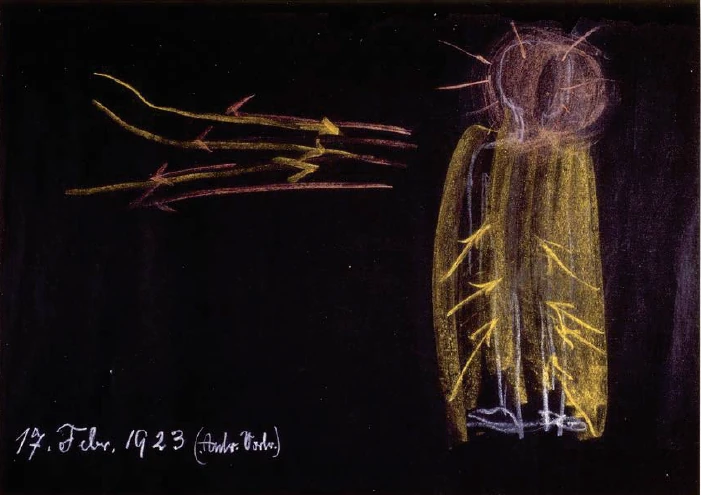
[ 6 ] Certainly, what I have repeatedly emphasized is absolutely true: we must not directly relate the structure of an organism to any single physical part of that organism. We must say: In a certain sense, the animal is entirely head, for it can perceive along its entire body. But primarily, the animal is a nervous-sensory organism centered in the head. It is there that it establishes its relationship to the external world. If we then consider the animal in its overall organization—that is, in relation to the rest of its organism, where it has, so to speak, the opposite pole of the head organization toward the tail end—then, when we examine the animal’s structure in its physical, etheric, and astral organizations, we find that, so to speak, the animal’s astral mobility flows from back to front. The astral currents—the flows of its astral organism—constantly move from back to front, and they encounter the impressions received by the senses at the head. Thus, we have an interflow from back to front and from front to back within the animal. I would like to schematically illustrate this intermingling of flows so that the astral currents in the animal flow from back to front (reddish arrows), while the sensory impressions flow toward them from the head toward the back (yellowish arrows). Between these two currents, there is an interaction in the animal that extends throughout the entire organism.
[ 7 ] You can clearly see this interaction in dogs. The dog sees its master and wags its tail. When the dog sees its master and wags its tail, this means that it has an impression of its master, and that this impression—which flows from front to back—is met by a counterflow from the astral realm within. And this counterflow of the entire organism from back to front is expressed in the dog’s wagging. There is a complete harmony. And anyone who wants to ask about the dog’s physiognomy when expressing joy should not so much look at the dog’s face when it gazes into its master’s eyes, but rather observe the wagging, welcoming movement of the tail: there is physiognomy in that.
[ 8 ] This is essentially the case with every animal. However, let’s say, when we look at fish, it isn’t noticed as much because the astral body has a high degree of independence there. But to the observing consciousness, it is all the more vivid. It becomes quite clear to the observing consciousness that when a fish perceives something coming toward it in the current through its nervous-sensory apparatus, it itself sends its own astral current toward it from back to front, and then there is a wondrous interplay of what the fish sees and what it sends in response. This intimate interplay between the astral current from the outside—for it is an astral current from the outside that a being receives through sensory impressions—and the astral current flowing from back to front is interrupted in human beings because humans are upright beings.
[ 9 ] Because human beings are upright creatures, they are not able to direct the astral current toward sensory impressions as directly as, say, a dog. A dog has a horizontal spine. The movement of the astral from back to front passes directly through its head. In humans, the head is raised. As a result, the entire relationship between those astral currents that flow from back to front—which constitute the actual inner being—and the harmonization of these currents with those that come through sensory impressions is not as straightforward as it is in animals. And precisely with regard to the moral nature of human beings, one must study what I have just described in detail in order to understand how the moral aspect intervenes in the physical realm in human beings. In animals, we do not speak of morality, precisely because in animals this flow of the astral from back to front and from front to back is uninterrupted by anything. In human beings, the following occurs.
[ 10 ] Indeed, the human being literally lifts his head out of the astral current that emanates from him and flows from back to front. This lifting of the head signifies precisely the embodiment of the true “I.” The fact that the blood, so to speak, does not merely follow a horizontal path, but must flow upward as the carrier of the inner “I” forces, is what enables a person to experience this “I” as their own “I,” as their individual “I.” But this also means that, in human beings, the head—that is, the primary receptor of sensory impressions—is initially entirely devoted to the external world. In fact, human beings are organized in such a way that their sense of touch is more loosely connected to their sense of sight, for example, than is the case with animals. In animals, there is an intimate connection between the sense of touch and the sense of sight. When an animal sees something, it immediately has the sensation that it is also touching what it sees. The tactile organs are also stimulated by sight. This stimulation of the tactile organs then converges, particularly with the current that flows from back to front. In humans, the head is set apart and purely devoted to the external world. This is expressed particularly through the sense of sight. The human sense of sight is, one might say, a kind of ethereal sense. After all, we only gradually learn, through judgment, to assess what constitutes, for example, distances or similar phenomena in the physical world. As human beings, we perceive primarily that which is expressed in color and in the nuances of color.
[ 11 ] Just consider that it was only during the period when intellectualism emerged that people also began to adopt perspective in painting. You won’t find spatial perspective in the works of older painters, because it was only during this period—through the detour of judgment and intellectualism—that the eyes became accustomed to seeing reality as expressed in perspective, that is, in terms of distances.
[ 12 ] The eye perceives primarily color, light and dark, and gradations of light and dark. But this—since it is spread out over objects—actually originates from outer space. The sun emits light, and as the light coming from outer space falls upon earthly objects and is reflected back, the eye does not actually perceive these objects through earthly forces, but rather through cosmic, universal forces.
[ 13 ] But this is, in fact, characteristic of the human head. It is more attuned to the etheric aspect of the world than to the physical. Human beings actually find their way into the physical world by walking around in it, by touching it. But they find their way into the physical world to a lesser extent through the senses of their head.
[ 14 ] Just think for a moment how ghostly the world would be—how ethereally ghostly—if we did not perceive spatiality through the sense of touch, but instead perceived only that aspect of spatiality which the eye conveys to us! The animal organism, as it relates to the head, is fundamentally different from the human organism. The animal organism is much more closely connected to physical reality through the head than the human organism is. When a human being takes in the perceptions of his head, there is something ideal—because it is ethereal—in them. He actually lives entirely in the etheric world through his head.
[ 15 ] Now, the head is also external—and what I am referring to here is not merely something superficial—but the human head is also externally modeled after the cosmos. Consider the various animal head forms. They are a direct expression of the animals’ own physical nature. You cannot find in animals that cosmic roundness of the human head’s form. The human being is indeed, in his head, a reflection of the cosmic-spherical, and he strives toward this reflection of the cosmic-spherical by the fact that his body line is not horizontal, as in the animal, but vertical; that he rises from the horizontal into the vertical.
[ 16 ] This is particularly evident, however, when one considers the entire human constitution. The physical constitution of the human head is linked to an etheric constitution that truly reflects the purity of the cosmos within itself. Throughout a person’s entire earthly life, the organization of the human head within the etheric body is something that is scarcely affected by earthly influences; in its etheric aspect—and even more so in its astral aspect—it remains thoroughly cosmic. It is also the case that when a human being passes from one earthly life to the next, the organization that lies outside the head—that is, what is below the head (since the head itself ceases to exist as a system of forces after death)—undergoes a transformation; not, of course, the physical matter, but the interplay of forces—it undergoes a metamorphosis and becomes the head in the next incarnation, in the next earthly life. Thus, in order to become the head organization, the human organization must first pass through the cosmos. On Earth, the human head organization cannot develop at all. Through the head, the human being is entirely devoted to the cosmic; it is only through the rest of the organism that the human being is bound to the earthly. Therefore, we can say: In animals, the entire configuration of the head arises from the rest of their organism; in human beings, the head stands out from the rest of the organism with a certain degree of independence. This rest of the organism, however, intrudes into the human head in everything that manifests as gestures and facial expressions. For when you experience an inner emotion—let us say a feeling of fear—what lies within the metabolic sphere, in the blood circulation system, is expressed through the forces of the human organism in the paleness of the face and in facial expressions. And the same is true of other inner emotions. We see in human beings that what is present in the rest of the organism pours into the head in a spiritual-soul aspect—that is, in an astral aspect—and is expressed physiognomically, one might say in a dynamic-physiognomic way, in the head, extending even to the color of the skin but especially to facial expressions, reflecting what lives astrally in the rest of the organism.
[ 17 ] It is a very interesting study, for example, to observe how a person accompanies what they say—which, after all, comes from their “I”—with certain facial expressions, and how what is alive in their astral body is expressed on their face. When you look into the face of a person who is speaking, you perceive, through the words they utter, their “I,” and through their facial expressions, the accompanying processes in their astral organism. But connected to this astral organism of the head, which brings facial expressions to life, is also the etheric organism of the head, and this etheric organism of the head is a marvelous reflection of the cosmos. It is a very remarkable experience to observe a speaking person through supersensible vision. One sees how the astral organism manifests itself everywhere in their facial expressions, yet how the etheric organism of the head is scarcely affected by these expressions. The etheric organism of the head resists incorporating these facial expressions into itself and its forms. It is very interesting to see that certain hymnal chants, for example, in which a person is permeated by a sense of holiness in their astral body, are easily absorbed into the etheric body of the head; indeed, the etheric body, facing the face, displays a play of light with every facial expression; but in the areas further back, the etheric body shows sharp resistance to absorbing any processes from the facial expressions.
[ 18 ] From this you can see that although the human head is related in a certain way to the rest of the organism, this relationship is subject to certain laws, because the etheric body is modeled after the cosmos and wishes to remain within this configuration of the cosmos, not allowing itself to be led astray—especially not by what arises from the passions, drives, and instincts of human nature.
[ 19 ] Now there is something else of the utmost significance. In the face, we see a certain play of expressions that manifests itself outwardly in human beings. This play of expressions depends on a person’s temperament, character, and various psychological and physical traits. But there is another expression of the face in human beings—indeed, a much more vivid one—only this expression does not lie within their consciousness but in the subconscious. It is of a supersensory nature. It lies in a realm that human beings cannot reach through their sensory observation. For when you observe the human astral body—not as it pertains to the head, but specifically as it pertains to the metabolic-limb organism—that is, when you observe the human astral body as it envelops and permeates the legs, as it envelops and permeates the lower abdomen, then, in this part of the astral organism, you will also see, through supersensible vision, a play of facial expressions—a very lively play of facial expressions, a physiognomy that is expressed there. And the remarkable thing is that this play of facial expressions, this physiognomy, reveals itself from the outside in. So while the facial expression that expresses human speech or otherwise the human interaction with the environment reveals itself outwardly, a facial expression that the human being does not have in their ordinary consciousness reveals itself inwardly. This is a very interesting fact.
[ 20 ] I would like to illustrate this for you schematically. Suppose you have the human being here. Then we have the astral body (red) here, which is the source of the facial expressions that are revealed to the outside world. We have the same astral body, but a different part of it here (yellow), and while here (above) in this astral body we have facial expressions manifesting outwardly, here (below) we have facial expressions that manifest entirely inwardly: this part of the astral body, so to speak, turns its face inward. In ordinary consciousness, people are unaware of this, but it is true. When we observe a child, we see how it constantly turns this facial expression inward from this part of the astral body, and when we observe a more mature person, these expressions even become more or less permanent. The human being thus develops an inward-facing physiognomy. And what is this play of facial expressions? Well, the following underlies this play of facial expressions.
[ 21 ] When a person is driven by an impulse that, in everyday life—and rightly so—is called a good deed or a moral act, the inner facial expression is different from when one is driven by an impulse to commit an evil act. It is, so to speak, an ugly expression—an ugly facial expression, if I may say so—on the inside when a person commits a selfish act. For, fundamentally, all moral acts boil down to selflessness, and all immoral acts to selfishness. It’s just that in everyday life, this true moral judgment is masked by the fact that someone may actually be very immoral—that is, thoroughly driven by selfish motives—yet conventionally follows certain moral rules. These are not his own at all. He is caught up in what he has been taught, or in what he does simply because he is embarrassed by what others might say. He is caught up as a link in a chain. But what is truly moral—that which is actually inherent in human individuality and lives within it—is such that goodness arises from the interest we have in other people; from that interest we can gain by being able to feel and experience what others feel and experience as if it were our own, whereas the immoral, at its core, is something in which a person closes themselves off, in which they do not empathize with what other people feel. Thinking good, fundamentally speaking, means being able to put oneself in other people’s shoes; thinking evil means being unable to put oneself in other people’s shoes. This can then become laws, conventional rules, or matters about which one feels embarrassed or does not feel embarrassed. Then what is actually selfish can be greatly suppressed by convention. But fundamentally, what a person does is not the decisive factor for moral evaluation; rather, one must look deeper into human character, into human nature, in order to be able to judge a person’s true moral worth.
[ 22 ] Moral value is expressed in the astral body in such a way that this part of the astral body turns a beautiful face inward when unselfish actions and altruistic impulses are present in a person, and turns an ugly facial expression inward when selfish, evil impulses are present in a person. Thus, a spirit that reads within the [astral] human being can judge just as accurately from this physiognomy whether a person is good or evil, just as one can judge a person by other characteristics in their facial expressions. None of this is present in ordinary consciousness, but it is inevitably there. There is no way that dishonesty does not penetrate deeply into such a person. One could imagine a cunning scoundrel who has complete control over his entire facial expression—that which is visible outwardly—who would have the most innocent face in the world while giving free rein to the most villainous impulses; but in what lies within his astral body—which gives him an inner physiognomy and facial expressions—he cannot be dishonest; there, he turns himself into a devil the very moment he harbors his immoral motives. Outwardly, he may look as innocent as a child; inwardly, within himself, he looks like a devil; and the pure egoist looks upon his own heart with a devilish grin. This is just as much a law as the laws of nature are laws.
[ 23 ] But now comes the decisive factor. If an ugly physiognomy develops here (below), then the head—accustomed to the cosmos—rejects this physiognomy, does not absorb it, and the human being forms in his etheric body a body such as that created by Ahriman, where the head is atrophied and reduced to instinct. Everything flows into the lower members of the etheric body. The head does not absorb this, and the human being becomes Ahrimanic in his lower etheric body, and then also permeates his head with what this Ahrimanic body still pushes into the head. For this is the remarkable thing: that in his head—already in the warmth ether of the head—the human being repels the physiognomy of the immoral, not allowing it to rise up. Thus, the immoral person carries within himself an etheric-Ahrimanic organism, and his head remains unaffected by what is within him. It does indeed remain a reflection of the cosmos, but it actually belongs to him less and less, because he cannot permeate it with his own being.
[ 24 ] An immoral person thus makes little progress beyond the life he led in his previous incarnation. Whatever became his head in the transformation from the rest of the body of his previous incarnation remains his head, and when he dies, he has not progressed very far at all in regard to his head. In contrast, what the moral imagination brings about inwardly flows up to the head in a human being. It brings about the vertical direction. For in the vertical direction, nothing immoral actually flows. Such forces gather together and Ahrimanize the human being. Only the moral flows in the vertical direction. And indeed, even in the ether—specifically, in the warmth ether of the blood—the physiognomy of the immoral is repelled in the vertical direction. The head does not absorb this. The moral, however, ascends with the warmth of the blood into the head already within the warmth ether, even more so in the light ether, and especially in the chemical and life ethers. The human being permeates his or her head with his or her own being.
[ 25 ] It is truly a case of the moral influencing the physical, in that one can say: the etheric organization of the human head has an affinity for what is moral in the human being, but not for what is immoral. And no one who limits themselves to mere physical and sensory observation of the world can grasp how moral impulses influence the physical realm indirectly through the etheric. One must consider the whole human being in terms of their etheric and astral organization; only then does one have the context in which to see how the moral realm intervenes in the entire human organization.
[ 26 ] Now you can imagine how different things look when a person dies. If the head has pushed back the forces of the rest of the organism, then in the etheric body—which the person sheds after a few days—there is actually nothing of the person left inside the head. Thus, the person makes no particular impression on the world. He does not contribute to the further development of the Earth, because he sends no forces into that which extends into the future. If a person has developed moral impulses within himself that his head has absorbed, then his etheric body leaves him as a human being. The immoral person is abandoned by his etheric body, which then truly takes on an Ahrimanic appearance. One gets a good impression of the Ahrimanic form—even without making an effort to encounter Ahriman himself—when one sees the etheric body of immoral people passing into the cosmos. Its form is Ahrimanized. In contrast, the etheric body that detaches itself from the astral body and the “I” two or three days after death in a person with moral impulses is humanized, humanly rounded, and serene.
[ 27 ] Such a person processes what he experiences as a human being on Earth in his head as well, not merely in the rest of his organism, and he transmits it to the cosmos through the head’s resemblance to the cosmos. The head, after all, resembles the cosmos, whereas the rest of the organism does not resemble the cosmos very much; after some time, once it has been conveyed to the cosmos, it disperses—one might say—like a cloud and more or less falls back to Earth, or is at least carried into currents that circle around the Earth. But what a person has imprinted in their head from their moral nature is poured out into the vastness of the cosmos; in this way, the person contributes to the reshaping of the cosmos. And so we can say: Through the way a person is moral or immoral, they contribute to the future of the Earth. The immoral human being hands over to the forces surrounding the Earth—and these are important for all activity, for the physical realm of the Earth later arises from the etheric—that which trickles down to Earth in an etheric form and reconnects with the Earth, or that which lives within the Earth’s orbit. The moral human being, on the other hand, having absorbed into his head the forces that develop precisely through moral impulses, bestows upon the entire cosmos what he has worked out on Earth.
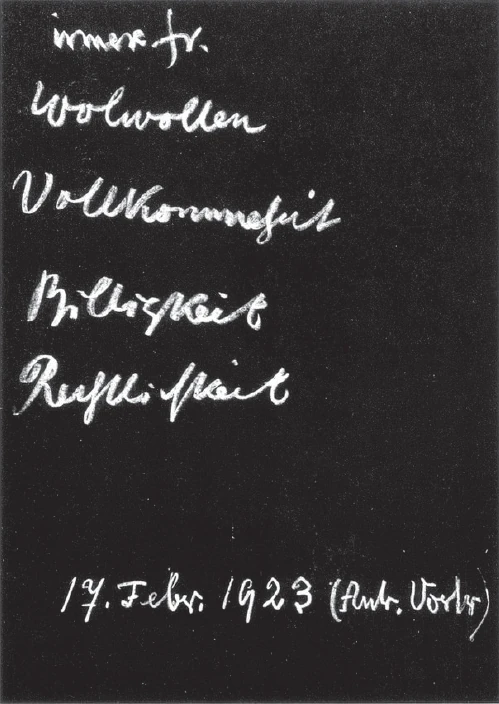
[ 28 ] On Earth, if one remains attached to it, one cannot see how moral impulses actually work; there, they remain abstractions. Take the moral impulses from any moral philosopher—let’s say, for example, Ferbart. He cites five moral impulses: inner freedom, benevolence, perfection, fairness, and righteousness. So if a person acts in accordance with these five virtues, he is a moral person. But Herbart cannot really specify what that is beyond an abstraction: he is simply a moral person. But what that means for the world, such a philosopher does not specify.
[ 29 ] Well, one can also name the virtues differently, depending on how one categorizes certain human impulses. Yesterday I cited Nietzsche’s four cardinal virtues, which he, in turn, groups somewhat differently. As I mentioned, he distinguishes between honesty toward oneself and one’s friends, courage toward one’s enemies, magnanimity toward the vanquished, and courtesy toward all people. And other moral philosophers, in turn, have identified different virtues. But all these virtues remain abstractions if one knows only the physical aspect of human beings. Then one stands before people with these virtues as impulses, just as one stands before a machine with a command: No matter how well you try to persuade a machine, it would never occur to it to accept any of your impulses. Likewise, human nature, as understood by today’s worldview, cannot accept any of these moral impulses. To grasp the reality and efficacy of morality, one must enter the realm of the supersensible.
[ 30 ] The supernatural is the inward-turned facial expression, the inward-turned gesture, which—depending on whether it is moral or immoral—is either accepted or rejected by the head and thereby passes into the world, or is shattered, broken, and splintered on earth.
[ 31 ] Thus, even a moral philosopher like Nietzsche, who relies entirely on that inner strength, finds himself completely adrift with his moral principles and can only achieve a sense of stability in the way I described to you yesterday. But that is no real consolidation. Despite everything in *Beyond Good and Evil*, he ultimately had to fall back on human physiology. That is where he failed. Thus, if one wishes to consider the efficacy of the moral, one must go beyond the mere physical order of the world, must enter the realm of the supersensible, and must be clear that while the moral may appear abstractly within the physical, its efficacy can only be perceived and judged in the supersensible.