

Humanity as the harmony of the
creative, formative, and shaping Word of the World
GA 230
19 October 1923, Dornach
Translate the original German text into any language:
Versions Available:
Humanity as the harmony of the creative, formative, and shaping Word, tr. SOL
Erster Vortrag
First Lecture
[ 1 ] Es ist in unseren Betrachtungen öfter gesagt worden und spielte auch in den letzten Vorträgen über den Jahreslauf und das Michael-Problem eine gewisse Rolle, daß der Mensch in seinem ganzen Bau, in seinen Lebensverhältnissen, eigentlich in allem, was er ist, eine kleine Welt darstellt, einen Mikrokosmos gegenüber dem Makrokosmos, daß er wirklich in sich enthält alle Gesetzmäßigkeit der Welt, alle Geheimnisse der Welt. Nur müssen Sie sich nicht vorstellen, daß das vollständige Verstehen dieses ja ganz abstrakten Satzes ein einfaches ist. Man muß schon sozusagen in die Mannigfaltigkeit der Weltengeheimnisse eindringen, um dann diese Geheimnisse im Menschen wiederzufinden.
[ 1 ] It has often been stated in our reflections—and it also played a certain role in the recent lectures on the course of the year and the Michael problem—that human beings, in their entire constitution, in their living conditions, indeed in everything they are, represent a small world, a microcosm in contrast to the macrocosm; that they truly contain within themselves all the laws of the world, all the mysteries of the world. However, you must not imagine that fully understanding this—admittedly quite abstract—statement is a simple matter. One must, so to speak, penetrate the diversity of the world’s mysteries in order to then rediscover these mysteries within the human being.
[ 2 ] Nun wollen wir heute einmal diese Sache so betrachten, daß wir auf der einen Seite von gewissen Ausgangspunkten aus uns die Welt anschauen und dann den Menschen anschauen, um zu finden, wie der Mensch als eine kleine Welt in der großen Welt darinnen ist. Natürlich ist dasjenige, was man von der großen Welt sagen kann, ja immer ein kleiner Ausschnitt. Es kann nie ein Vollständiges darstellen, sonst müßte man in der Betrachtung wenigstens die ganze Welt durchwandeln. Sehen wir zuerst einmal hin auf dasjenige, was sich uns am allernächsten Oberen, wenn ich so sagen darf, darstellt.
[ 2 ] Today, let’s look at this matter from the perspective of first examining the world from certain starting points and then looking at human beings, to discover how human beings, as a small world, exist within the larger world. Of course, what one can say about the larger world is always just a small fragment. It can never represent the whole; otherwise, one would have to traverse the entire world in one’s contemplation. Let us first look at what presents itself to us at the very nearest level above, if I may put it that way.
[ 3 ] Sehen wir auf diejenige menschliche Umgebung, die in der Tierreihe das Leben sozusagen in den Lüften hat, und zwar diejenige Klasse, welche in der auffallendsten Art das Leben in den Lüften hat: das ist das Vogelgeschlecht.
[ 3 ] Let us consider that human environment which, in the animal kingdom, lives—so to speak—in the air, and specifically that class which lives in the air in the most striking way: the bird genus.
[ 4 ] Es kann einem nicht entgehen, daß der Vogel, der in den Lüften wohnt, der aus den Lüften seine Daseinsbedingungen schöpft, als Tier wesentlich anders gebaut ist als die Tiere, die unmittelbar über dem Erdboden wohnen, oder die etwa gar unter dem Erdboden wohnen. Und wenn wir hinschauen auf das Vogelgeschlecht, so finden wir uns natürlich nach allgemeinen, menschlich üblichen Ansichten genötigt, beim Vogel auch von Kopf und Gliedmaßen und dergleichen zu sprechen. Aber das ist eigentlich im Grunde eine recht unkünstlerische Betrachtungsweise. Und darauf habe ich schon öfter aufmerksam gemacht, daß, wenn man die Welt eigentlich wirklich kennenlernen will, man bei dem intellektualistischen Begreifen nicht stehenbleiben kann, daß das Intellektualistische allmählich hinübergleiten muß in das künstlerische Auffassen der Welt.
[ 4 ] It cannot escape one’s notice that the bird, which dwells in the air and derives its means of existence from the air, is structurally quite different as an animal from those that live directly above the ground, or even those that live beneath the ground. And when we look at the bird kingdom, we naturally find ourselves compelled, according to common human perspectives, to speak of the bird in terms of head, limbs, and the like. But this is actually, at its core, a rather unartistic way of looking at things. And I have pointed out on more than one occasion that if one truly wishes to come to know the world, one cannot stop at intellectual understanding; rather, the intellectual must gradually give way to an artistic perception of the world.
[ 5 ] Nun, da werden Sie doch nicht den wirklich im Verhältnis zum Haupte, zum Kopfe der anderen Tiere doch außerordentlich verkrüppelten sogenannten Vogelkopf als einen wirklichen Kopf auffassen. Gewiß, äußerlich intellektualistisch betrachtet, kann man sagen: Der Vogel hat einen Kopf, einen Rumpf, der Vogel hat Gliedmaßen. Aber bedenken Sie, wie verkümmert, sagen wir zum Beispiel in bezug auf die Beine eines Kamels oder eines Elefanten die Vogelbeine sind, und wie verkümmert gegenüber meinetwillen dem Haupte eines Löwen, eines Hundes, der Vogelkopf ist. Es ist fast gar nichts Ordentliches darinnen in einem solchen Vogelkopf; es ist eigentlich im Grunde genommen kaum mehr darinnen als das, was beim Hund oder meinetwillen beim Elefanten oder bei der Katze die vordere Maulpartie ist. Ich möchte sagen, ein wenig komplizierter die Mundpartie eines Säugetieres, das ist der Vogelkopf. Und was die Gliedmaßen eines Säugetieres sind, das ist ja vollständig verkümmert beim Vogel. Gewiß, eine unkünstlerische Betrachtungsweise spricht einfach davon, die vorderen Gliedmaßen seien zu Flügeln umgestaltet. Aber das alles ist eben durchaus unkünstlerische Anschauung, unimaginative Anschauung. Will man die Natur wirklich verstehen, will man in den Kosmos wirklich eindringen, so muß man die Dinge schon tiefer, vor allen Dingen in ihren Gestaltungs- und Bildungskräften betrachten.
[ 5 ] Well, surely you wouldn’t consider the so-called bird’s head—which is, after all, extraordinarily stunted in comparison to the heads of other animals—to be a real head. Certainly, from an external, intellectual standpoint, one could say: The bird has a head, a torso, and limbs. But consider how stunted a bird’s legs are—compared, for example, to those of a camel or an elephant—and how stunted the bird’s head is compared, say, to the head of a lion or a dog. There is almost nothing substantial inside such a bird’s head; in fact, there is really hardly more inside it than what constitutes the front part of the mouth in a dog, or—for that matter—in an elephant or a cat. I would say the bird’s head is a slightly more complex version of a mammal’s mouth. And what constitutes the limbs of a mammal is completely atrophied in the bird. Certainly, an unartistic way of looking at it simply states that the front limbs have been transformed into wings. But all of that is precisely an unartistic, unimaginative view. If one truly wants to understand nature, if one truly wants to penetrate the cosmos, one must look at things more deeply, above all in terms of their formative and generative forces.
[ 6 ] Die Anschauung, daß einfach der Vogel auch einen Kopf und Rumpf und Gliedmaßen habe, führt niemals dazu, zum Beispiel die Anschauung des Ätherleibes eines Vogels wirklich begreifen zu können. Denn geht man über durch imaginative Anschauung von dem Sehen dessen, was am Vogel physisch ist, zu dem, was am Vogel ätherisch ist, so hat man eben im ätherischen Vogel nur einen Kopf. Vom ätherischen Vogel aus ist der Vogel nur Kopf; vom ätherischen Vogel aus begreift man sogleich, daß der Vogel sich nicht vergleichen läßt mit Kopf, Rumpf und Gliedmaßen anderer Tiere, sondern daß er aufzufassen ist als ein bloßer Kopf, der eben umgestaltet ist, der als Kopf umgestaltet ist. So daß der eigentliche Vogelkopf nur Gaumen und die vorderen Partien, die Mundpartien darstellt, und dasjenige, was weiter nach rückwärts geht, alle die rippenähnlich und rückgratähnlich aussehenden Teile des Skeletts, das ist anzusehen als zwar metamorphosierter, umgestalteter, aber doch als Kopf. Der ganze Vogel ist eigentlich Kopf. Das rührt davon her, daß in der Tat, wenn wir einen Vogel verstehen wollen, wir sehr, sehr weit zurückgehen müssen in der Erden-, in der planetarischen Erdenentwickelung.
[ 6 ] The notion that a bird simply has a head, a torso, and limbs will never lead one, for example, to truly comprehend the etheric body of a bird. For if one moves, through imaginative perception, from seeing what is physical in the bird to what is etheric in the bird, one finds that in the etheric bird there is only a head. From the perspective of the etheric bird, the bird is nothing but a head; from the perspective of the etheric bird, one immediately grasps that the bird cannot be compared to the head, torso, and limbs of other animals, but must be understood as a mere head that has been transformed—transformed into a head. Thus, the actual bird’s head consists only of the palate and the front parts—the mouth region—and what extends further back—all the rib-like and spine-like parts of the skeleton—must be regarded as a head, albeit a metamorphosed, transformed one. The entire bird is, in fact, a head. This stems from the fact that, indeed, if we want to understand a bird, we must go back very, very far in the Earth’s—in the planetary Earth’s—evolution.
[ 7 ] Der Vogel hat eine lange planetarische Geschichte hinter sich. Der Vogel hat eine viel längere planetarische Geschichte hinter sich als zum Beispiel, sagen wir das Kamel. Das Kamel ist ein viel später entstandenes Tier als jeglicher Vogel. Diejenigen Vögel, die zur Erde niedergezwungen sind wie der Strauß, das sind die spätest entstandenen Vögel. Diejenigen Vögel, die frei in den Lüften wohnen, Adler, Geier, sind sehr alte Erdentiere. Während sie in früheren Erdperioden, Mondperioden, Sonnenperioden eben durchaus noch alles das an sich hatten, was dann in sie übergegangen ist von innen nach auswärts bis zur Haut, hat sich später im Vogelgeschlecht im wesentlichen das ausgebildet, was Sie heute in den Federn sehen, was Sie im hornigen Schnabel sehen. Das Äußere des Vogels ist späteren Ursprungs, ist dadurch gekommen, daß der Vogel seine Kopfnatur verhältnismäßig früh ausgebildet hat, und unter den Bedingungen, in die er dann in späteren Zeiten der Erdenentwickelung hineingekommen ist, konnte er nur noch außen dasjenige hinzufügen, was in seinem Gefieder liegt. Dieses Gefieder ist dem Vogel zum Beispiel vom Mond und der Erde gegeben worden, während er seine übrige Natur aus viel früheren Zeiten hat.
[ 7 ] The bird has a long planetary history behind it. The bird has a much longer planetary history than, for example, the camel. The camel is an animal that evolved much later than any bird. Those birds that are confined to the ground, such as the ostrich, are the most recently evolved birds. Those birds that dwell freely in the air—eagles, vultures—are very ancient Earth creatures. While in earlier Earth periods, Moon periods, and Sun periods they still possessed everything that later passed into them from the inside out to the skin, what you see today in their feathers and in their horny beaks essentially developed later within the bird species. The bird’s external form is of later origin; it arose because the bird developed its head nature relatively early, and under the conditions into which it then entered during later stages of Earth’s evolution, it could only add to its exterior what is found in its plumage. This plumage, for example, was given to the bird by the Moon and the Earth, while the rest of its nature dates back to much earlier times.
[ 8 ] Aber die Sache hat noch eine viel tiefere Seite. Schauen wir uns einmal den Vogel in den Lüften, sagen wir, den majestätisch dahinfliegenden Adler an, dem gewissermaßen wie ein äußeres Gnadengeschenk die Sonnenstrahlen mit ihrer Wirkung sein Gefieder gegeben haben — ich werde die anderen Wirkungen noch nennen —, seinen hornigen Schnabel gegeben haben; schauen wir uns diesen Adler an, wie er in den Lüften fliegt. Da wirken auf ihn gewisse Kräfte. Die Sonne hat nicht nur jene physischen Licht- und Wärmekräfte, von denen wir gewöhnlich sprechen. Ich habe Sie aufmerksam gemacht damals, als ich über die Druidenmysterien sprach, daß von der Sonne auch geistige Kräfte ausgehen. Auf diese geistigen Kräfte müssen wir hinschauen. Sie sind es, welche den verschiedenen Vogelgeschlechtern ihre Vielfarbigkeit, die besondere Gestaltung ihres Gefieders geben. Wir begreifen, wenn wir dasjenige, was die Sonnenwirkungen sind, geistig durchschauen, warum der Adler gerade sein Gefieder hat.
[ 8 ] But there is a much deeper side to this matter. Let us take a look at the bird in the skies—let us say, the eagle soaring majestically through the air, to which the sun’s rays, as it were, have bestowed its plumage as an external gift of grace—I will mention the other effects later—and have given it its horny beak; let us look at this eagle as it flies through the skies. Certain forces are at work upon it. The sun possesses not only those physical forces of light and heat of which we usually speak. I drew your attention to this back when I spoke about the Druidic mysteries: spiritual forces also emanate from the sun. We must look to these spiritual forces. It is they that give the various species of birds their multicolored plumage and the distinctive form of their feathers. When we spiritually comprehend the nature of the sun’s effects, we understand why the eagle has its particular plumage.
[ 9 ] Dann, wenn wir uns so richtig versenken in diese Adlernatur, wenn wir verstehen, inneres künstlerisches Naturverständnis zu entwickeln, welches das Geistige mitenthält, wenn wir hinschauen können, wie künstlerisch herausgebildet wird aus den Sonnenimpulsen, die verstärkt sind durch andere Impulse, die ich nachher nennen werde, wenn wir das sehen, wie gleichsam diese Sonnenimpulse hinfluten über den Adler, schon bevor er aus dem Ei gekrochen ist, wie sie das Gefieder herauszaubern oder eigentlich, besser gesagt, hineinzaubern in seine Fleischesgestalt, und uns dann fragen: Was bedeutet denn das für den Menschen? — Ja, das bedeutet für den Menschen dasjenige, was sein Gehirn zum Träger der Gedanken macht. Und Sie sehen richtig hin in den Makrokosmos, in die große Natur, wenn Sie den Adler so ansehen, daß Sie sagen: Der Adler hat sein Gefieder, seine vielfarbigen, bunten Federn; in denen lebt dieselbe Kraft, die in dir lebt, indem sie dein Gehirn zum Gedankenträger macht. Dasjenige, was dein Gehirn faltet, was dein Gehirn fähig macht, jene innere Salzkraft aufzunehmen, die die Grundlage des Denkens ist, was dein Gehirn überhaupt dazu macht, dich zu einem Denker zu bilden, das ist dieselbe Kraft, die dem Adler in den Lüften sein Gefieder gibt. — So fühlen wir uns verwandt, indem wir denken, gewissermaßen den menschlichen Ersatz in uns fühlend für das Adlergefieder; unsere Gedanken strömen von dem Gehirn so aus, wie ausfluten von dem Adler die Federn.
[ 9 ] Then, when we truly immerse ourselves in this eagle-like nature, when we understand how to develop an inner, artistic understanding of nature that encompasses the spiritual, when we can observe how the artistic form is shaped from the solar impulses—which are intensified by other impulses I will mention later—when we see how, as it were, these solar impulses flood over the eagle even before it has hatched from the egg, how they conjure up the plumage—or rather, conjure it into its physical form—and then ask ourselves: What does this mean for human beings? — Yes, for human beings, this signifies precisely what makes the brain the bearer of thoughts. And you are looking correctly into the macrocosm, into the great natural world, when you observe the eagle in such a way that you say: The eagle has its plumage, its multicolored, vibrant feathers; within them lives the same force that lives within you, making your brain the bearer of thought. That which folds your brain, that which enables your brain to absorb that inner salt-like force that is the foundation of thought—that which makes your brain capable of shaping you into a thinker in the first place—is the same force that gives the eagle its plumage in the skies. — Thus we feel a kinship through our thinking, sensing, as it were, the human substitute within us for the eagle’s plumage; our thoughts flow out from the brain just as the feathers flow out from the eagle.
[ 10 ] Wenn wir von dem physischen Niveau heraufgehen in das astralische Niveau, dann müssen wir den paradoxen Satz aussprechen: Auf dem physischen Plan bewirken dieselben Kräfte die Federnbildung, die auf dem astralischen Plan die Gedankenbildung bewirken. Die Federnbildung geben sie dem Adler; das ist der physische Aspekt der Gedankenbildung. Dem Menschen geben sie die Gedanken; das ist der astralische Aspekt der Federnbildung. Solche Dinge liegen manchmal in einer wunderbaren Weise im Genius der Volkssprache ausgedrückt. Wenn man eine Feder oben abschneidet und herausnimmt das, was da drinnen ist, so nennt das Volk das die Seele. Gewiß werden manche eine äußerliche Bezeichnung in diesem Namen Seele sehen. Es ist keine äußere Bezeichnung, sondern eine Feder enthält für denjenigen, der die Sache durchschaut, etwas Ungeheures: sie enthält das Geheimnis der Gedankenbildung.
[ 10 ] When we ascend from the physical plane to the astral plane, we must state the following paradox: On the physical plane, the same forces that cause the formation of feathers are the ones that cause the formation of thoughts on the astral plane. They give the eagle its feathers; that is the physical aspect of thought formation. They give humans their thoughts; that is the astral aspect of feather formation. Such things are sometimes expressed in a marvelous way in the genius of the vernacular. If one cuts off the tip of a feather and removes what is inside, the common people call that the soul. Certainly, some will see an external designation in this name “soul.” It is not an external designation, but rather, for those who see through the matter, a feather contains something immense: it contains the secret of thought formation.
[ 11 ] Sehen wir jetzt weg von dem Adler, der in den Lüften wohnt, sehen wir, um wieder einen Repräsentanten zu haben, ein solches Säugetier wie den Löwen an. Man kann eigentlich den Löwen nur verstehen, wenn man ein Gefühl dafür entwickelt, welche Freude, welche innere Befriedigung der Löwe hat, mit seiner Umgebung zu leben. Es gibt eigentlich kein Tier, welches nicht löwenverwandt ist, das eine so wundervolle, geheimnisvolle Atmung hat. Es müssen überall beim tierischen Wesen die Atmungsrhythmen zusammenstimmen mit den Zirkulationsrhythmen, nur daß die Zirkulationsrhythmen schwer werden durch den an ihnen hängenden Verdauungsapparat, die Atmungsrhythmen leicht werden dadurch, daß sie anstreben, hinauf in die Leichtigkeit der Gehirnbildungen zu kommen. Es ist beim Vogel so, daß dasjenige, was in seinem Atmen lebt, eigentlich zugleich in seinem Kopfe lebt. Der Vogel ist ganz Kopf, und er trägt sozusagen den Kopf äußerlich für die Welt hin. Seine Gedanken sind die Formen seines Gefieders. Es gibt eigentlich für ein richtiges Naturgefühl, das in Schönheit leben kann, nichts Rührenderes, als die innige Verwandtschaft dessen zu fühlen, was Menschengedanke ist, wenn er so ganz konkret wird, wenn er so ganz innerlich lebendig wird, mit einem Vogelgefieder. Derjenige, der in solchen Dingen eine innere Praxis hat, der weiß ganz genau, wann er pfauenmäßig denkt und wann er adlermäßig denkt und wann er spatzenhaft denkt. Die Dinge sind durchaus so, daß mit Ausnahme davon, daß das eine astralisch, das andere physisch ist, sich die Dinge in einer wunderbaren Art entsprechen. Es ist so. So daß man sagen kann: Der Vogel hat ein so überwiegendes Leben in der Atmung, daß das andere, Blutzirkulation und so weiter, fast verschwindet. Alle Schwere der Verdauung, ja selbst die Schwere der Blutzirkulation ist eigentlich von dem In-sich-Fühlen beim Vogel weggefegt, ist nicht da. Beim Löwen ist das so, daß eine Art von Gleichgewicht besteht zwischen dem Atmen und der Blutzirkulation. Allerdings, die Blutzirkulation wird auch beim Löwen schwer gemacht, aber nicht so schwer wie, sagen wir bei dem Kamel oder bei dem Rind. Da ist die Verdauung etwas, was die Blutzirkulation ungemein belastet.
[ 11 ] Let us now turn our attention away from the eagle, which dwells in the skies, and, to find another representative, consider a mammal such as the lion. One can truly understand the lion only by developing a sense of the joy and inner satisfaction the lion derives from living in harmony with its surroundings. There is, in fact, no animal that is not related to the lion that possesses such a wonderful, mysterious way of breathing. In all animal beings, the rhythms of breathing must harmonize with the rhythms of circulation; however, the rhythms of circulation are weighed down by the digestive system attached to them, while the rhythms of breathing become light because they strive to rise up into the lightness of the brain’s structures. In the case of the bird, what lives in its breathing actually lives in its head at the same time. The bird is entirely head, and it carries its head, so to speak, outwardly toward the world. Its thoughts are the forms of its plumage. For a true sense of nature—one that can live in beauty—there is actually nothing more moving than to feel the intimate kinship between human thought, when it becomes so concrete, when it comes so vividly alive within, and a bird’s plumage. Anyone who has cultivated an inner practice in such matters knows exactly when they are thinking like a peacock, when like an eagle, and when like a sparrow. The reality is such that—apart from the fact that one is astral and the other physical—these things correspond to one another in a wondrous way. It is so. So much so that one can say: The bird’s life is so overwhelmingly centered on breathing that everything else—blood circulation and so on—almost disappears. All the heaviness of digestion, indeed even the heaviness of blood circulation, is actually swept away by the bird’s sense of being within itself; it is not there. In the case of the lion, there is a kind of balance between breathing and blood circulation. However, blood circulation is also made difficult in the lion, though not as much as, say, in the camel or the cow. There, digestion is something that places an immense strain on blood circulation.
[ 12 ] Beim Löwen, der einen verhältnismäßig sehr kurzen Verdauungsapparat hat und der ganz so gebaut ist, daß die Verdauung auch möglichst schnell sich vollzieht, ist das so, daß die Verdauung keine starke Belastung ist für die Zirkulation. Dagegen ist es wiederum so, daß nach der anderen Seite im Löwenkopf eine solche Entfaltung des Kopfmäßigen ist, daß die Atmung im Gleichgewichte mit dem Zirkulationsrhythmus gehalten ist. Der Löwe ist dasjenige Tier, das am allermeisten einen inneren Rhythmus des Atmens und einen Rhythmus des Herzschlages hat, die sich innerlich die Waage halten, die sich innerlich harmonisieren. Der Löwe hat deshalb auch, wenn wir, ich möchte sagen, auf sein subjektives Leben eingehen, diese eigentümliche Art, mit einer schier unbegrenzten Gier seine Nahrung zu verschlingen, weil er eigentlich froh ist, wenn er sie drunten hat. Er ist gierig auf die Nahrung, weil ihm natürlich der Hunger viel mehr Pein macht als einem anderen Tiere; er ist gierig auf die Nahrung, aber er ist nicht versessen darauf, ein besonderer Gourmand zu sein. Er ist gar nicht darauf versessen, viel zu schmecken, weil er ein Tier ist, das seine innere Befriedigung aus dem Gleichmaß von Atmung und Blutzirkulation hat. Erst wenn der Fraß beim Löwen übergegangen ist in das Blut, das den Herzschlag reguliert, und dieser Herzschlag in ein Wechselverhältnis kommt mit der Atmung, an der der Löwe wieder seine Freude hat, indem er den Atmungsstrom mit einer tiefen inneren Befriedigung in sich hereinnimmt, erst dann, wenn er in sich fühlt die Folge des Fraßes, dieses innere Gleichgewicht zwischen Atmung und Blutzirkulation, dann lebt der Löwe in seinem Elemente. Er lebt eigentlich ganz als Löwe, wenn er die tiefe innere Befriedigung hat, daß ihm sein Blut heraufschlägt, daß ihm seine Atmung hinunterpulsiert. Und in diesem gegenseitigen Berühren zweier Wellenschläge lebt der Löwe.
[ 12 ] In the case of the lion, which has a relatively short digestive tract and is built in such a way that digestion takes place as quickly as possible, digestion does not place a heavy burden on the circulatory system. On the other hand, however, there is such a development of the head-related aspects in the lion’s head that breathing is kept in balance with the rhythm of circulation. The lion is the animal that, more than any other, possesses an inner rhythm of breathing and a rhythm of the heartbeat that are internally balanced and harmonized. The lion therefore also has—if we, I might say, consider its subjective life—this peculiar way of devouring its food with an almost boundless greed, because it is actually glad when it has it inside. It is greedy for food because, naturally, hunger causes it much more distress than it does other animals; he is greedy for food, but he is not obsessed with being a particular gourmet. He is not at all obsessed with savoring a variety of flavors, because he is an animal that derives his inner satisfaction from the balance of breathing and blood circulation. Only when the food has passed into the lion’s bloodstream, which regulates the heartbeat, and this heartbeat enters into a reciprocal relationship with the breathing—from which the lion derives pleasure once more by drawing the flow of breath into himself with deep inner satisfaction—only then, when he feels within himself the effect of the meal, this inner balance between breathing and blood circulation, does the lion live in his element. He truly lives as a lion when he feels that deep inner satisfaction—the blood surging upward, his breath pulsing downward. And in this interplay of two waves, the lion lives.
[ 13 ] Sehen Sie sich ihn an, diesen Löwen, wie er läuft, wie er springt, wie er seinen Kopf hält, selbst wie er blickt, so werden Sie sehen, daß das alles zurückführt auf ein fortwährendes rhythmisches Wechselspiel von etwas Aus-dem-Gleichgewicht-Kommen und wieder Ins-Gleichgewicht-Kommen. Es gibt vielleicht kaum etwas, was so geheimnisvoll einen anmuten kann als dieser merkwürdige Löwenblick, der so viel aus sich herausschaut, der herausschaut aus sich etwas von innerlicher Bewältigung, von Bewältigung von entgegengesetzt Wirksamem. Das ist dasjenige, was der Löwenblick nach außen schaut: diese Bewältigung des Herzschlages durch den Atmungsrhythmus in einer schier ganz vollkommenen Weise.
[ 13 ] Look at him, this lion—how he runs, how he leaps, how he holds his head, even how he gazes—and you will see that all of this stems from a continuous, rhythmic interplay between losing balance and regaining it. There is perhaps hardly anything that can seem as mysterious as this peculiar lion’s gaze, which reveals so much of its inner self—a sense of inner mastery, of overcoming opposing forces. That is what the lion’s gaze reveals to the outside world: this mastery of the heartbeat through the rhythm of breathing in an almost perfectly complete manner.
[ 14 ] Und wiederum, wer Sinn für künstlerische Auffassung von Gestaltungen hat, der schaue sich das Maul des Löwen an, diesen Bau im Maul des Löwen, der so zeigt: der Herzschlag pulsiert herauf bis zu diesem Maul, aber die Atmung hält ihn zurück. Wenn Sie sich dieses Gegenseitig-sich-Berühren von Herzschlag und Atmung ausmalen, so kommen Sie auf das Löwenmaul.
[ 14 ] And again, anyone with a sense of the artistic conception of forms should look at the lion’s mouth—this structure within the lion’s mouth—which reveals that the heartbeat pulses upward toward this mouth, but the breath holds it back. If you imagine this mutual interplay between the heartbeat and breathing, you’ll arrive at the lion’s mouth.
[ 15 ] Der Löwe ist eben ganz Brustorgan. Er ist wirklich das Tier, welches in seiner äußeren Gestalt, in seiner Lebensweise das rhythmische System ganz zum Ausdrucke bringt. Der Löwe ist so organisiert, daß sich dieses Wechselspiel von Herzschlag und Atmen auch in dem gegenseitigen Verhältnis von seinem Herzen und seiner Lunge zum Ausdrucke bringt.
[ 15 ] The lion is, in essence, an organ of the chest. It is truly the animal whose outward form and way of life fully express the rhythmic system. The lion is organized in such a way that this interplay of heartbeat and breathing is also expressed in the mutual relationship between its heart and lungs.
[ 16 ] So daß wir wirklich sagen müssen: Wenn wir am Menschen etwas suchen, was dem Vogel am ähnlichsten ist, was nur metamorphosiert ist, so ist es der Menschenkopf; wenn wir am Menschen etwas suchen, was dem Löwen am ähnlichsten ist, so ist es die menschliche Brustgegend, da, wo die Rhythmen sich begegnen, die Rhythmen der Zirkulation und der Atmung.
[ 16 ] So we really have to say: If we look for something in the human being that most resembles a bird—something that has merely undergone metamorphosis—it is the human head; if we look for something in the human being that most resembles a lion, it is the human chest region, where the rhythms meet—the rhythms of circulation and respiration.
[ 17 ] Und jetzt lenken wir den Blick ab von alledem, was sich uns darbietet oben in den Lüften als das Vogelgeschlecht; was eigentlich, weil es in der Luft, die in der unmittelbaren Umgebung der Erde ist, mit dem Luftkreislauf lebt wie im Löwen; sehen wir uns das Rind an. Ich habe schon öfter in anderen Zusammenhängen darauf hingewiesen, wie reizvoll es ist, eine gesättigte Herde, hingelagert auf der Weide, zu betrachten, dieses Geschäft des Verdauens zu beobachten, das sich in der Lage wiederum, in dem Augenausdruck, in jeder Bewegung ausdrückt. Versuchen Sie es einmal, eine Kuh, die auf der Weide liegt, anzuschauen, wenn meinetwillen etwas da oder dort irgendein Geräusch gab. Es ist ja so wunderbar, zu sehen, wie die Kuh den Kopf hebt, wie in diesem Heben das Gefühl liegt, daß das alles schwer ist, daß man den Kopf nicht leicht heben kann, wie ein ganz Besonderes noch da drinnen liegt. Man kann, wenn man eine Kuh so in einer Störung auf der Weide den Kopf hochheben sieht, auf nichts anderes kommen, als sich sagen: Diese Kuh ist erstaunt darüber, daß sie den Kopf zu etwas anderem als zum Abgrasen heben soll. Warum hebe ich denn jetzt eigentlich den Kopf? Ich grase ja nicht, und es hat keinen Zweck, den Kopf zu heben, wenn ich nicht grase. — Sehen Sie nur, wie das ist! Das ist im Kopfheben des Tieres drinnen. Aber es ist nicht nur im Kopfheben des Tieres drinnen. Sie können sich nicht vorstellen, daß der Löwe den Kopf so hebt, wie die Kuh ihn hebt. Das ist in der Form des Kopfes drinnen. Und geht man weiter, geht man auf die ganze Form des Tieres ein — es ist ja das ganze Tier der, ich möchte sagen ausgewachsene Verdauungsapparat! Die Schwere der Verdauung lastet so auf der Blutzirkulation, daß das alles Kopf und Atmung überwältigt. Es ist ganz Verdauung, das Tier. Es ist wirklich, wenn man das nun geistig anschaut, unendlich wunderbar, wenn man den Blick hinaufwendet zum Vogel, und dann herunterschaut auf die Kuh.
[ 17 ] And now let us turn our attention away from all that presents itself to us high up in the skies as the bird kingdom—which, because it lives in the air immediately surrounding the Earth, is actually part of the air cycle, just as the lion is—and let us look at the cattle. I have often pointed out in other contexts how delightful it is to gaze upon a well-fed herd lying in the pasture, to observe the process of digestion, which is expressed in their posture, in the look in their eyes, and in every movement. Try it sometime: look at a cow lying in the pasture when—for my sake—some sound is made here or there. It is truly wonderful to see how the cow raises its head, how this lifting conveys the sense that it is all difficult, that one cannot raise one’s head easily, and how something quite special still lies within. When you see a cow raise its head like that in response to a disturbance in the pasture, you can’t help but think: This cow is surprised that it’s supposed to raise its head for something other than grazing. Why am I actually raising my head right now? I’m not grazing, and there’s no point in raising my head if I’m not grazing. — Just look at how it is! That is contained within the animal’s raising of its head. But it is not only contained within the animal’s raising of its head. You cannot imagine the lion raising its head the way the cow does. That is contained within the shape of the head. And if you go further, you consider the animal’s entire form—it is, after all, the entire animal that is, I would say, a fully developed digestive system! The burden of digestion weighs so heavily on the blood circulation that it overwhelms the head and the breathing. The animal is entirely digestion. It is truly, when you look at it spiritually, infinitely wonderful—to turn your gaze upward to the bird, and then look down at the cow.
[ 18 ] Natürlich, wenn man die Kuh physisch noch so hoch hebt, sie wird kein Vogel. Aber wenn man zu gleicher Zeit das Physische an der Kuh übergehen lassen könnte — zunächst indem man sie in die Lüfte bringt, die der Erde unmittelbar nahe sind, in das Luft-Feuchtige, und wenn man das zugleich überführen könnte in eine Verwandlung ihrer Äthergestalt, die nun angemessen wäre dem Feuchtigen, und sie dann weiterheben würde und würde sie bis zum Astralischen bringen können, dann würde hoch oben die Kuh ein Vogel. Astralisch würde sie ein Vogel.
[ 18 ] Of course, no matter how high you physically lift the cow, she will not become a bird. But if one could at the same time cause the physical aspect of the cow to transform—first by lifting her into the air immediately adjacent to the earth, into the air-moist, and if one could simultaneously bring about a transformation of her etheric form that would now be appropriate to the moist, and then lift her further and bring her up to the astral, then high above, the cow would become a bird. Astrally, she would become a bird.
[ 19 ] Sehen Sie, da drängt sich einem eben das Wunderbare auf, daß man sich sagt, wenn man das nun durchschaut: Was der Vogel da oben astralisch hat aus seinem Astralleib, was da arbeitet, wie ich gesagt habe, an der Gestaltung seines Gefieders, das hat die Kuh ins Fleisch, in die Muskeln, in die Knochen hineingebracht. Physisch geworden ist an der Kuh dasjenige, was astralisch ist am Vogel. Es sieht natürlich in der Astralität anders aus, aber es ist so.
[ 19 ] You see, that’s when the wonder of it all really strikes you—once you understand it: What the bird up there possesses astrally from its astral body—what, as I have said, works to shape its plumage—the cow has incorporated into its flesh, muscles, and bones. What is astral in the bird has become physical in the cow. Of course, it looks different in the astral realm, but that is how it is.
[ 20 ] Wiederum, wenn ich umgekehrt dasjenige, was der Astralität eines Vogels angehört, herunterfallen ließe, dabei die Umwandelung ins Ätherische und Physische vornehmen würde, dann würde der Adler eine Kuh werden, weil das, was astralisch am Adler ist, verfleischt, verkörperlicht ist in der Kuh, die am Boden liegt, wenn sie verdaut; denn es gehört zu diesem Verdauen bei der Kuh, eine wunderbare Astralität zu entwickeln. Die Kuh wird schön im Verdauen. Es liegt, astralisch angesehen, etwas ungeheuer Schönes darinnen in diesem Verdauen. Und wenn man so aus den gewöhnlichen Philisterbegriffen heraus eben in Philisteridealismus sich sagt: Das Verdauungsgeschäft ist das niedrigste —, dann wird man Lügen gestraft, wenn man von einer höheren Warte aus in geistiger Anschauung dieses Verdauungsgeschäft bei der Kuh anschaut. Das ist schön, das ist großartig, das ist etwas ungeheuer Geistiges.
[ 20 ] Conversely, if I were to let that which belongs to the astral nature of a bird fall down, thereby effecting its transformation into the ethereal and physical, then the eagle would become a cow, because what is astral in the eagle is embodied in the cow lying on the ground as she digests; for part of the cow’s digestion is the development of a wondrous astral quality. The cow becomes beautiful in the act of digestion. Viewed from an astral perspective, there is something immensely beautiful in this process of digestion. And if, based on ordinary philistine notions—and thus within philistine idealism—one says to oneself: “The process of digestion is the lowest thing”—then one is proven wrong when, from a higher vantage point and through spiritual contemplation, one observes this process of digestion in the cow. It is beautiful, it is magnificent, it is something immensely spiritual.
[ 21 ] Zu dieser Geistigkeit bringt es der Löwe nicht; der Vogel erst recht nicht. Beim Vogel ist das Verdauungsgeschäft fast etwas ganz Physisches. Man findet natürlich den Ätherleib im Verdauungsapparat des Vogels, aber man findet sehr wenig, fast gar nichts von Astralität in den Verdauungsvorgängen des Vogels. Dagegen bei der Kuh ist in den Verdauungsvorgängen etwas, was, astralisch angesehen, ganz großartig ist, eine ganze Welt ist. Und da hat man, wenn man jetzt das Ähnliche beim Menschen ansehen will, wiederum diese Korrespondenz zwischen dem, was die Kuh einseitig ausbildet, die physische Verfleischung eines gewissen Astralischen, da hat man das beim Menschen harmonisch zu dem anderen hinzuverwebt in seinen Verdauungsorganen und in ihrer Fortsetzung, in den Gliedmaßen. So daß wirklich das, was ich schaue hoch oben in den Lüften im Adler, was ich schaue da, wo das Tier sich unmittelbar an der Luft erfreut wie beim Löwen, was ich schaue dann, wenn das Tier verbunden ist mit den unterirdischen Erdenkräften, die weiterwirken in seinen Verdauungsorganen, wenn ich also statt in die Höhe, hinunter in die Tiefe schaue und verständnisvoll von da aus das Wesen der Kuh durchdringe, dann habe ich die drei Gestalten, die im Menschen zu einer Harmonie vereinigt sind und sich dadurch ausgleichen: die Metamorphose des Vogels im Menschenhaupt, die Metamorphose des Löwen in der Menschenbrust, die Metamorphose der Kuh in dem Verdauungs- und Gliedmaßenapparat des Menschen, natürlich im Gliedmaßenapparat wieder kolossal metamorphosiert, kolossal umgestaltet.
[ 21 ] The lion does not attain this level of spirituality; the bird certainly does not. In the case of the bird, the digestive process is almost entirely a physical matter. Of course, one finds the etheric body in the bird’s digestive system, but one finds very little—almost nothing—of the astral in the bird’s digestive processes. In contrast, in the cow’s digestive processes there is something that, viewed from an astral perspective, is truly magnificent—it is a whole world. And there, if one now wishes to observe the corresponding process in humans, one finds once again this correspondence between what the cow develops in a one-sided way—the physical embodiment of a certain astral quality—and what, in humans, is harmoniously interwoven with the other in their digestive organs and in their extension, the limbs. So that what I see high up in the skies in the eagle, what I see where the animal takes direct delight in the air, as with the lion, and what I see when the animal is connected to the subterranean earth forces that continue to work in its digestive organs—in other words, when instead of looking upward, look down into the depths and, from there, penetrate the essence of the cow with understanding—then I have the three forms that are united in harmony within the human being and thereby balance one another: the metamorphosis of the bird in the human head, the metamorphosis of the lion in the human chest, the metamorphosis of the cow in the human digestive and limb systems—naturally, in the limb systems, colossally metamorphosed and colossally transformed.
[ 22 ] Wenn man so heute hinschaut auf diese Dinge und wiederum darauf kommt, wie der Mensch eigentlich aus der ganzen Natur heraus geboren ist und in sich die ganze Natur wiederum trägt, so wie ich es dargestellt habe, wie er das Vogelreich, das Löwenreich, das Kuhwesen in sich trägt, dann bekommt man die einzelnen Bestandteile dessen, was der abstrakte Satz sagt: Der Mensch ist eine kleine Welt. — Er ist schon eine kleine Welt, und die große Welt ist in ihm, und all das Getier, welches in den Lüften wohnt, und das Getier, welches um die Erde herum in der kreisenden Luft sein hauptsächlichstes Element hat, und das Getier, welches unter dem Erdboden in den Kräften der Schwere sein hauptsächlichstes Element hat, sie wirken im Menschen zu einer harmonischen Ganzheit zusammen. Und der Mensch ist dann die Zusammenfassung von Adler, Löwe, Stier oder Kuh.
[ 22 ] When one looks at these things today and once again considers how human beings are actually born out of the whole of nature and in turn carry the whole of nature within themselves—just as I have described, how they carry within themselves the realm of birds, the realm of lions, and the essence of the cow—then one grasps the individual components of what the abstract statement says: “Man is a microcosm.” — He is indeed a microcosm, and the macrocosm is within him; and all the creatures that dwell in the air, and the creatures whose primary element is the air circling around the earth, and the creatures whose primary element is the forces of gravity beneath the earth—they all work together within man to form a harmonious whole. And man is thus the synthesis of the eagle, the lion, the bull, or the cow.
[ 23 ] Wenn man das wiederum aus neuerer Geisteswissenschaft heraus erforscht, durchschaut, dann bekommt man diesen großen Respekt, von dem ich öfter gesprochen habe, vor den alten instinktiven hellseherischen Einsichten in den Kosmos; dann bekommt man den großen Respekt zum Beispiel vor so etwas, wie das gewaltige Bild ist von dem Bestehen des Menschen aus Adler, Löwe, Kuh oder Stier, die zusammen, entsprechend sich harmonisierend, den Menschen als eine Ganzheit bilden.
[ 23 ] When one explores and comes to understand this from the perspective of modern spiritual science, one develops that deep respect—which I have often spoken of—for the ancient, instinctive, clairvoyant insights into the cosmos; then one develops a deep respect, for example, for something like the powerful image of human beings as consisting of an eagle, a lion, a cow, or a bull—which, harmonizing with one another, form the human being as a whole.
[ 24 ] Aber bevor ich übergehe dazu — das kann auch morgen sein —, die einzelnen Impulse zu besprechen, die zum Beispiel in den Kräften, die den Adler umschweben, sind, die in den Kräften sind, die den Löwen umschweben, welche die Kuh umschweben, möchte ich noch eine andere Korrespondenz des Innerlich-Menschlichen mit dem, was draußen im Kosmos ist, besprechen.
[ 24 ] But before I move on to that—which may also be tomorrow—to discuss the individual impulses found, for example, in the forces surrounding the eagle, the forces surrounding the lion, and those surrounding the cow, I would like to discuss yet another correspondence between the inner human being and what exists out there in the cosmos.
[ 25 ] Wir bekommen ja jetzt nach dem, was wir schon wissen, die Vorstellung davon. Das menschliche Haupt sucht das seiner Natur Entsprechende: es muß den Blick hinaufrichten zu dem Vogelgeschlecht. Die menschliche Brust, der Herzschlag, die Atmung muß, wenn es sich begreifen will als Geheimnis in den Naturgeheimnissen, hinwenden den Blick zu so etwas, was der Löwe ist. Der Mensch muß seinen Stoffwechselapparat versuchen zu verstehen aus der Konstitution, aus der Organisation des Rindes. Aber der Mensch hat in seinem Haupte die Träger seiner Gedanken, in seiner Brust die Träger seiner Gefühle, in seinem Stoffwechselapparat die Träger seines Willens. So daß also auch seelisch der Mensch ein Abbild ist der mit dem Vogelgeschlecht die Welt durchwebenden Vorstellungen, die sich im Gefieder der Vögel ausdrücken; der die Erde umkreisenden Gefühlswelt, die sich im inneren Ausgleichsleben zwischen Herzschlag und Atmung beim Löwen findet, die gemildert ist beim Menschen, die aber beim Menschen eben das innerliche Mutvolle — die griechische Sprache hatte das Wort mutvoll für die Herzenseigenschaften, für die Brusteigenschaften gebildet darstellt. Und wenn er seine Willensimpulse finden will, die vorzugsweise in seinem Stoffwechsel sitzen, wenn er diese äußerlich gestaltet, schaut er hin auf dasjenige, was fleischlich in der Kuh gestaltet ist.
[ 25 ] Based on what we already know, we are now beginning to grasp this idea. The human mind seeks what corresponds to its nature: it must turn its gaze upward toward the bird kingdom. The human chest, the heartbeat, and the breath—if they are to understand themselves as a mystery within the mysteries of nature—must turn their gaze toward something like the lion. Human beings must try to understand their metabolic system through the constitution and organization of the cow. But in his head, man has the bearers of his thoughts; in his chest, the bearers of his feelings; and in his metabolic system, the bearers of his will. Thus, even in his soul, man is a reflection of the ideas that, together with the bird kingdom, interweave the world—ideas expressed in the plumage of birds; the world of feeling that encircles the Earth, which is found in the inner balance between the lion’s heartbeat and breathing, which is tempered in human beings, but which in human beings represents precisely that inner courage—the Greek language had coined the word “courageous” to describe the qualities of the heart and the qualities of the chest. And when he seeks to find his impulses of will, which are primarily located in his metabolism, and when he gives these an outward form, he looks to that which is embodied in the cow.
[ 26 ] Das, was heute grotesk, paradox klingt, was vielleicht wahnsinnig erscheint für eine Zeit, die so gar kein Verständnis mehr hat für die geistigen Zusammenhänge der Welt, enthält aber doch eine Wahrheit, auf die alte Gebräuche hindeuten. Sehen Sie, es ist doch eine auffallende Erscheinung, daß jener Mahatma Gandhi, den jetzt mehr schlecht als recht Romain Rolland in einer wenig erfreulichen Schrift der Welt beschrieben hat, daß jener Mahatma Gandhi, der seine Tätigkeit zwar ganz nach außen gewendet hat, aber dabei, innerhalb des indischen Volkes, ich möchte sagen, wie ein nach Indien hinüber versetzter Aufklärer des 18. Jahrhunderts gegenüber der alten Hindureligion dasteht, daß der in seinem aufklärerischen Hinduismus aber eines bewahrt hat: die Verehrung der Kuh. Von der könne man nicht abkommen, sagt der Mahatma Gandhi, der, wie Sie wissen, von den Engländern sechs Jahre schweren Kerkers bekommen hat für seine politische Tätigkeit in Indien. Die Verehrung der Kuh behält er bei.
[ 26 ] What sounds grotesque and paradoxical today—what may seem insane to an age that no longer has any understanding of the spiritual interconnections of the world—nevertheless contains a truth to which ancient customs point. You see, it is indeed a striking phenomenon that Mahatma Gandhi—whom Romain Rolland has now described to the world, rather poorly, in a less-than-flattering work—that Mahatma Gandhi, who, while directing his activities entirely outward, nevertheless, within the Indian people, I would say, stood in relation to the ancient Hindu religion much like an 18th-century Enlightenment thinker transplanted to India—that in his Enlightenment-inspired Hinduism he nevertheless preserved one thing: the veneration of the cow. One cannot depart from this, says Mahatma Gandhi, who, as you know, was sentenced by the British to six years of harsh imprisonment for his political activities in India. He maintains the veneration of the cow.
[ 27 ] Solche Dinge, die mit einer Zähigkeit in geistigeren Kulturen sich erhalten haben, begreift man nur, wenn man diese Zusammenhänge kennt, wenn man wirklich weiß, welche ungeheuren Geheimnisse in dem Verdauungstier, der Kuh, leben, und wie man verehren kann, ich möchte sagen, ein irdisch gewordenes und deshalb nur niedrig gewordenes, ein irdisch gewordenes hoch Astralisches in der Kuh. Aus solchen Dingen heraus begreift man auch die religiöse Verehrung, die im Hinduismus der Kuh zukommt, während sie aus all dem rationalistischen und intellektualistischen Begriffsgestrüppe, das man daran hängt, niemals begriffen werden kann.
[ 27 ] Such things, which have persisted with tenacity in more spiritual cultures, can only be understood if one is familiar with these connections, if one truly knows what immense mysteries dwell within the ruminant, the cow, and how one can revere—I would say—a highly astral entity that has become earthly and is therefore only lowly, a highly astral entity that has become earthly in the cow. It is from such things that one also comes to understand the religious veneration accorded to the cow in Hinduism, whereas it can never be understood from all the rationalistic and intellectualistic tangle of concepts that people attach to it.
[ 28 ] Und so sehen wir eben, wie Wille, Gefühl, Gedanke gesucht werden können draußen im Kosmos, gesucht werden können im Mikrokosmos in ihrer Korrespondenz.
[ 28 ] And so we see how will, feeling, and thought can be sought out in the cosmos, and can be sought out in the microcosm in their correspondence.
[ 29 ] Aber sehen Sie, wir haben auch noch mancherlei andere Kräfte im Menschen, und wir haben mancherlei anderes in der Natur draußen. Da bitte ich Sie, einmal folgendes zu beachten. Beachten Sie einmal jene Metamorphose, die durchgemacht wird von dem Tiere, das dann ein Schmetterling wird.
[ 29 ] But you see, we also have many other forces within human beings, and there are many other things in nature out there. So I ask you to consider the following. Consider the metamorphosis undergone by the animal that eventually becomes a butterfly.
[ 30 ] Sie wissen, der Schmetterling legt sein Ei. Aus dem Ei kommt die Raupe heraus. Die Raupe also ist aus dem Ei herausgekommen; das Ei enthält ringsum geschlossen alles dasjenige, was Anlage des späteren Tieres ist. Nun kommt die Raupe aus dem Ei. Sie kommt an die lichtdurchflossene Luft. Das ist die Umgebung, in die sie hineinkommt, die Raupe. Da müssen Sie eben ins Auge fassen, wie eigentlich diese Raupe nun in der sonnendurchleuchteten Luft lebt. Das müssen Sie dann studieren, wenn Sie, sagen wir, des Nachts im Bette liegen, die Lampe angezündet haben und eine Motte nach der Lampe fliegt, dem Lichte zufliegt und den Tod findet im Lichte. Dieses Licht wirkt auf die Motte so, daß sie sich unterwirft dem Tod-Suchen. Damit haben wir schon die Wirkung des Lichtes auf das Lebendige.
[ 30 ] You know that the butterfly lays its egg. The caterpillar emerges from the egg. So the caterpillar has emerged from the egg; the egg contains, enclosed within itself, everything that constitutes the potential for the future animal. Now the caterpillar emerges from the egg. It enters the light-filled air. That is the environment into which the caterpillar enters. Here you must consider how this caterpillar actually lives in the sunlit air. You must study this when, say, you are lying in bed at night, have the lamp lit, and a moth flies toward the lamp, flies toward the light, and meets its death in the light. This light affects the moth in such a way that it submits to the quest for death. This already shows us the effect of light on living beings.
[ 31 ] Nun, die Raupe — ich deute diese Dinge nur aphoristisch an, wir werden sie morgen und übermorgen etwas genauer betrachten — kann nicht zur Lichtquelle hinauf, um sich hineinzustürzen, zur Sonne nämlich, aber sie möchte es; sie möchte es ebenso stark, wie es die Motte will, die sich in die Flamme neben Ihrem Bette wirft und darinnen umkommt. Die Motte wirft sich in die Flamme und findet den Tod im physischen Feuer. Die Raupe sucht ebenso die Flamme, jene Flamme, die ihr entgegenkommt von der Sonne. Aber sie kann sich nicht in die Sonne werfen; der Übergang ins Licht und in die Wärme bleibt bei ihr etwas Geistiges. Die ganze Sonnenwirkung geht auf sie über als eine geistige. Sie verfolgt jeden Sonnenstrahl, diese Raupe, sie geht bei Tag mit dem Sonnenstrahl mit. Geradeso wie sich die Motte einmal ins Licht stürzt und ihre ganze Mottenmaterie hingibt dem Lichte, so webt die Raupe ihre Raupenmaterie langsam in das Licht hinein, setzt bei Nacht ab, webt bei Tag weiter, und spinnt und webt um sich herum den ganzen Kokon. Und im Kokon, in den Kokonfäden haben wir darinnen dasjenige, was aus ihrer eigenen Materie die Raupe, indem sie fortspinnt im strömenden Sonnenlicht, aus sich heraus webt. Jetzt hat die Raupe, die zur Puppe geworden ist, sich die Sonnenstrahlen, die sie nur verkörperlicht hat, aus ihrer eigenen Raupensubstanz um sich herumgewoben. Die Motte verbrennt schnell im physischen Feuer. Die Raupe stürzt sich hinein, sich opfernd, in das Sonnenlicht, und webt um sich in der Richtung des jeweiligen Sonnenlichts, das sie verfolgt, die Fäden des Sonnenlichts. Wenn Sie den Kokon des Seidenspinners nehmen und sehen ihn an: das ist gewobenes Sonnenlicht, nur daß das Sonnenlicht verkörpert ist durch die Substanz der seidenspinnenden Raupe selber. Damit aber ist der Raum innerlich abgeschlossen. Das äußere Sonnenlicht ist überwunden gewissermaßen. Aber dasjenige, was vom Sonnenlichte, wie ich Ihnen gesagt habe, in die Kromlechs hineingeht — ich habe es Ihnen bei den Auseinandersetzungen über die Druidenmysterien gesagt —, das ist jetzt da innerlich. Und jetzt hat die Sonne, während sie früher die physische Gewalt ausübte und die Raupe zum Spinnen ihres eigenen Kokons veranlaßte, Gewalt über das Innerliche, schafft aus dem Innerlichen heraus den Schmetterling, der nun auskriecht. Und der Kreislauf beginnt von neuem. Sie haben auseinandergelegt vor sich dasjenige, was im Vogelei zusammengeschoben ist.
[ 31 ] Now, the caterpillar—I’m only hinting at these things aphoristically; we’ll examine them in a bit more detail tomorrow and the day after—cannot climb up to the source of light to throw itself into it, namely the sun, but it wants to; it wants it just as much as the moth that throws itself into the flame beside your bed and perishes there. The moth throws itself into the flame and meets its death in the physical fire. The caterpillar likewise seeks the flame—that flame which comes toward it from the sun. But it cannot throw itself into the sun; for it, the transition into light and warmth remains a spiritual one. The entire effect of the sun is experienced by it as a spiritual one. This caterpillar follows every ray of sunlight; by day, it moves along with the sun’s rays. Just as the moth once hurls itself into the light and surrenders its entire mothly substance to the light, so the caterpillar slowly weaves its caterpillar-like substance into the light, pausing at night, continuing to weave by day, and spinning and weaving the entire cocoon around itself. And within the cocoon, in the cocoon threads, we find that which the caterpillar weaves from its own substance—as it continues to spin in the streaming sunlight—drawing it out of itself. Now the caterpillar, which has become a pupa, has woven the sunbeams—which it had merely embodied—around itself from its own caterpillar substance. The moth burns quickly in the physical fire. The caterpillar throws itself sacrificially into the sunlight and weaves around itself, in the direction of the sunlight that pursues it, the threads of sunlight. If you take the silkworm’s cocoon and look at it: it is woven sunlight, only that the sunlight is embodied by the substance of the silkworm itself. But with this, the space is internally sealed off. The external sunlight is, so to speak, overcome. But that which, as I have told you, enters the cromlechs from the sunlight—I mentioned this to you during our discussions of the Druidic mysteries—is now present within. And now the sun, whereas it formerly exerted physical force and caused the caterpillar to spin its own cocoon, has power over the inner being; it creates from within the butterfly that now emerges. And the cycle begins anew. You have laid out before you that which is compressed within the bird’s egg.
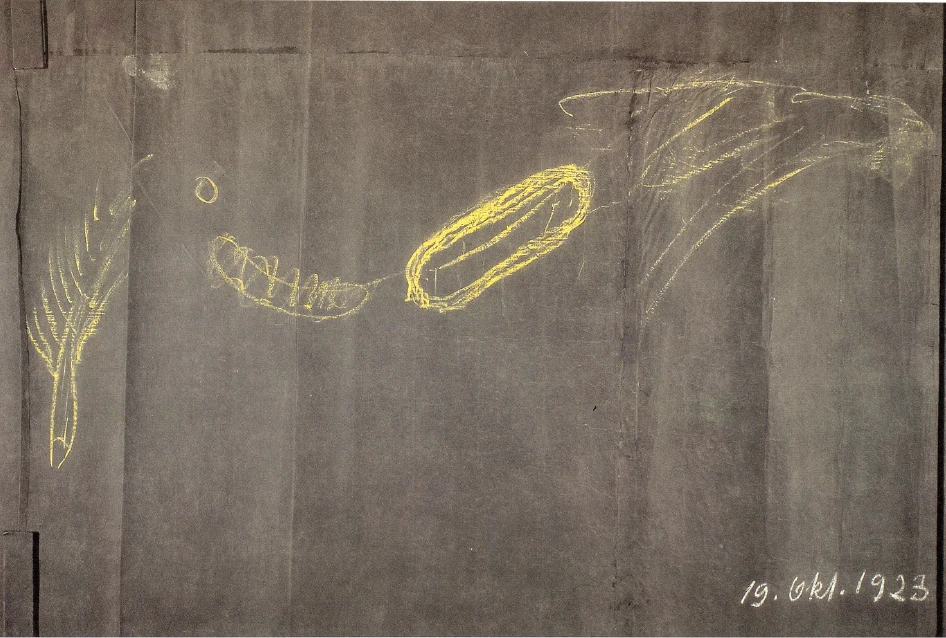
[ 32 ] Vergleichen Sie mit diesem ganzen Vorgang den Vorgang beim eierlegenden Vogel. Da wird innerhalb des Vogels selber noch durch einen Vorgang, der metamorphosiert ist, die Kalkschale herum gebildet. Da wird die Substanz des Kalkes von den Kräften des Sonnenlichtes verwendet, um eben den ganzen Prozeß desjenigen zusammenzuschieben, was hier auseinandergelegt ist in Ei, Raupe, Kokon. Das alles ist zusammengeschoben da, wo sich, wie zum Beispiel im Vogelei, direkt die harte Schale ringsherum bildet. Da, durch dieses Zusammenschieben eines auseinandergelegten Prozesses, ist der ganze Embryonalvorgang beim Vogel eben ein anderer. Beim Schmetterling haben Sie auseinandergelegt, was beim Vogel sich vollzieht bis hierher, bis zum dritten Stadium; das haben Sie auseinandergelegt beim Schmetterling in die Eibildung, Raupenbildung, Puppenbildung, Kokonbildung. Da können Sie es äußerlich anschauen. Und dann schlüpft der Schmetterling aus.
[ 32 ] Compare this entire process with what happens in a bird that lays eggs. There, within the bird itself, the calcareous shell is formed through a process that has undergone metamorphosis. There, the substance of the calcium is utilized by the forces of sunlight to bring together the entire process of what is here laid out in the egg, caterpillar, and cocoon. All of this is brought together where, as in the bird’s egg, for example, the hard shell forms directly around it. There, through this consolidation of a process that has been broken down, the entire embryonic process in the bird is, in fact, different. In the case of the butterfly, you have broken down what takes place in the bird up to this point—up to the third stage—into the formation of the egg, the caterpillar, the pupa, and the cocoon. There, you can observe it externally. And then the butterfly emerges.
[ 33 ] Wenn man jetzt den ganzen Vorgang astralisch verfolgt, was sieht man dann? Ja, dann stellt der Vogel in seiner ganzen Bildung einen menschlichen Kopf dar. Das Organ der Gedankenbildung stellt er dar. Was stellt der Schmetterling dar, der auch in den Lüften wohnt, aber in seiner Embryonalbildung etwas ungeheuer Komplizierteres ist? Man kommt darauf, daß der Schmetterling dasjenige darstellt, was sozusagen die Kopffunktion in ihrer Fortsetzung zeigt, die Kräfte des Kopfes gewissermaßen ausgedehnt auf den ganzen Menschen. Da geschieht dann etwas im ganzen Menschen, was einem anderen Vorgang in der Natur als der Vogelbildung entspricht.
[ 33 ] If we now observe the entire process from an astral perspective, what do we see? Yes, the bird, in its entirety, represents a human head. It represents the organ of thought formation. What does the butterfly represent—which also dwells in the air, but is, in its embryonic development, something immensely more complex? One comes to the conclusion that the butterfly represents, so to speak, the continuation of the head’s function—the powers of the head, as it were, extended to the whole human being. Something then takes place within the whole human being that corresponds to a different process in nature than the formation of the bird.
[ 34 ] Im menschlichen Haupte haben wir, wenn wir das Ätherische und Astralische dazunehmen, etwas sehr Ähnliches wie in der Eibildung, nur metamorphosiert. Aber wenn wir bloß die Funktion des Kopfes hätten, würden wir nur augenblickliche Gedanken bilden. Es würden sich nicht die Gedanken mehr in uns hinuntersetzen, den ganzen Menschen in Anspruch nehmen und dann als Erinnerungen wieder auftauchen. Schaue ich meine augenblicklichen Gedanken an, die ich mir an der Außenwelt bilde, und schaue zum Adler auf, dann sage ich: In dem Gefieder des Adlers sehe ich außer mir die verkörperten Gedanken; in mir werden es Gedanken, aber es werden die augenblicklichen Gedanken. Sehe ich auf dasjenige, was ich in mir trage als meine Erinnerungen, so geht ein komplizierterer Prozeß vor sich. Unten im physischen Leib geschieht, auf eine allerdings geistige Art, eine Art Eibildung, die allerdings etwas ganz anderes ist im Ätherischen, etwas, was äußerlich physisch der Raupenbildung ähnlich ist, im astralischen Leib, was innerlich ähnlich ist der Puppenbildung, der Kokonbildung; und dasjenige, was, wenn ich eine Wahrnehmung habe, in mir einen Gedanken auslöst, hinunterschiebt, das ist so, wie wenn der Schmetterling ein Ei legt. Die Umwandlung ist etwas Ähnliches wie das, was mit der Raupe vor sich geht: das Leben im Ätherleib opfert sich hin dem geistigen Lichte, umwebt gewissermaßen den Gedanken mit innerem, astralem Kokongewebe, und da schlüpfen die Erinnerungen aus. Wenn wir das Vogelgefieder sehen in den augenblicklichen Gedanken, so müssen wir den Schmetterlingsflügel, den in Farben schillernden Schmetterlingsflügel, auf geistige Art zustande gekommen sehen in unseren Erinnerungsgedanken.
[ 34 ] In the human head, when we include the etheric and astral bodies, we have something very similar to what occurs in the formation of an image, only in a metamorphosed form. But if we had only the function of the head, we would form only fleeting thoughts. Thoughts would no longer settle within us, engage the whole person, and then resurface as memories. When I look at my fleeting thoughts—which I form in response to the external world—and gaze up at the eagle, I say: In the eagle’s plumage I see, outside of myself, thoughts made visible; within me they become thoughts, but they are fleeting thoughts. When I look at what I carry within me as my memories, a more complex process takes place. Down in the physical body, in a spiritual sense, a kind of egg formation takes place—which is, however, something entirely different in the etheric body, something that outwardly resembles the formation of a caterpillar; in the astral body, it is inwardly similar to the formation of a chrysalis or a cocoon; and what, when I have a perception, triggers a thought within me and pushes it downward—that is like a butterfly laying an egg. The transformation is similar to what happens with the caterpillar: life in the etheric body sacrifices itself to the spiritual light, weaving the thought, as it were, with an inner, astral cocoon-like fabric, and from there the memories emerge. When we see the bird’s plumage in our fleeting thoughts, we must see the butterfly’s wing—the iridescent butterfly’s wing—as having come into being in a spiritual way within our memories.
[ 35 ] So blicken wir hinaus und fühlen die Natur ungeheuer verwandt mit uns. So denken wir und sehen die Welt des Gedankens in den fliegenden Vögeln. Und so erinnern wir uns, so haben wir ein Gedächtnis, und sehen die Welt der in uns lebenden Erinnerungsbilder in den im Sonnenlichte schimmernd flatternden Schmetterlingen. Ja, der Mensch ist ein Mikrokosmos und enthält die Geheimnisse der großen Welt draußen. Und es ist so, daß wir gewissermaßen dasjenige, was wir von innen anschauen, unsere Gedanken, unsere Gefühle, unseren Willen, unsere Erinnerungsvorstellungen, daß wir das, wenn wir es von der anderen Seite, von außen, makrokosmisch ansehen, in dem Reiche der Natur wiedererkennen.
[ 35 ] So we look out and feel a profound kinship with nature. So we think and see the world of thought in the flying birds. And so we remember—this is how we have memory—and see the world of the images of memory living within us in the butterflies fluttering and shimmering in the sunlight. Yes, the human being is a microcosm and contains the mysteries of the great world outside. And it is true that what we observe from within—our thoughts, our feelings, our will, our mental images—we recognize again in the realm of nature when we view it from the other side, from the outside, in a macrocosmic sense.
[ 36 ] Das heißt hinschauen auf die Wirklichkeit. Diese Wirklichkeit läßt sich mit bloßen Gedanken nicht begreifen, denn dem bloßen Gedanken ist die Wirklichkeit gleichgültig; er hält nur auf die Logik. Aber mit derselben Logik kann man das Verschiedenste in der Wirklichkeit belegen. Um das zu veranschaulichen, lassen Sie mich mit einem Bilde schließen, das dann den Übergang zu den morgigen Auseinandersetzungen bilden soll.
[ 36 ] This means looking closely at reality. This reality cannot be grasped by mere thought, for reality is indifferent to mere thought; it relies solely on logic. But using that same logic, one can substantiate the most diverse aspects of reality. To illustrate this, let me conclude with an image that will serve as a bridge to tomorrow’s discussions.
[ 37 ] Es gibt bei einem afrikanischen Negerstamme, den Fellatas, ein sehr schönes Bild, welches vieles darstellt. Es begaben sich einmal ein Löwe, ein Wolf und eine Hyäne auf die Wanderung. Sie trafen eine Antilope. Die Antilope wurde von einem der Tiere zerrissen. Sie waren gut miteinander befreundet, die drei Tiere, und nun handelte es sich darum, diese zerrissene Antilope zu teilen unter dem Löwen, dem Wolf und der Hyäne. Da sagte der Löwe zunächst zur Hyäne: Teile du. — Die Hyäne hatte ihre Logik. Sie ist dasjenige Tier, welches sich nicht an das Lebende hält, welches sich an das Tote hält. Ihre Logik wird wohl durch diese Art ihres Mutes, eher ihrer Feigheit, bestimmt sein. Je nachdem dieser Mut so oder so ist, geht er so oder so auf das Wirkliche. Die Hyäne sagte: Wir teilen die Antilope in drei gleiche Teile. Einen Teil bekommt der Löwe, einen Teil bekommt der Wolf, einen Teil bekommt die Hyäne, ich selber. — Da zerriß der Löwe die Hyäne, machte sie tot. Jetzt war sie weg. Und nun sollte geteilt werden. Da sagte der Löwe zum Wolf: Sieh einmal, mein lieber Wolf, jetzt müssen wir ja anders teilen. Teile du jetzt. Wie würdest du teilen? — Da sagte der Wolf: Ja, wir müssen jetzt anders teilen, es kann nicht mehr jeder dasselbe bekommen wie früher, und da du uns von der Hyäne befreit hast, mußt du selbstverständlich als Löwe bekommen das erste Drittel. Das zweite Drittel hättest du ja sowieso bekommen, wie die Hyäne sagte, und das dritte Drittel mußt du bekommen, weil du das weiseste und tapferste unter allen Tieren bist. — So teilte der Wolf nun. Da sagte der Löwe: Wer hat dich so teilen gelehrt? — Da sagte der Wolf: die Hyäne hat mich so teilen gelehrt! — Und der Löwe fraß den Wolf nicht auf und nahm die drei Teile nach der Logik des Wolfes.
[ 37 ] Among an African tribe, the Fellatas, there is a very beautiful story that conveys many things. Once upon a time, a lion, a wolf, and a hyena set out on a journey. They came across an antelope. The antelope was torn apart by one of the animals. The three animals were good friends, and now the question was how to divide the torn-apart antelope among the lion, the wolf, and the hyena. So the lion first said to the hyena: “You divide it.” — The hyena had her own logic. She is the animal that does not cling to the living, but to the dead. Her logic is likely determined by this kind of courage—or rather, cowardice. Depending on whether this courage is one way or the other, it affects reality in one way or another. The hyena said: “We’ll divide the antelope into three equal parts. One part goes to the lion, one part goes to the wolf, and one part goes to the hyena—myself.” — Then the lion tore the hyena apart and killed her. Now she was gone. And now it was time to divide the spoils. So the lion said to the wolf: “Look here, my dear wolf, now we’ll have to divide things differently. You divide it now. How would you divide it?” — Then the wolf said: “Yes, we have to divide it differently now; we can’t all get the same as before, and since you’ve rid us of the hyena, you, as the lion, must of course get the first third. You would have gotten the second third anyway, as the hyena said, and you must get the third third because you are the wisest and bravest of all the animals.” — So the wolf divided the prey. Then the lion said, “Who taught you to divide it that way?” — The wolf replied, “The hyena taught me to divide it that way!” — And the lion did not eat the wolf but took the three portions according to the wolf’s logic.
[ 38 ] Ja, die Mathematik, das Intellektualistische war gleich bei der Hyäne und beim Wolf. Sie machten eine Dreiteilung, sie dividierten. Aber sie wendeten diesen Intellekt, die Mathematik, in verschiedener Weise auf die Wirklichkeit an. Dadurch änderte sich auch dasSchicksal wesentlich. Die Hyäne wurde gefressen, weil sie in der Beziehung ihres Teilungsprinzipes zur Wirklichkeit eben etwas anderes gab als der Wolf, der nicht gefressen wurde, weil er in dem Verhältnis seiner Hyänenlogik er sagt ja selbst, die Hyäne habe es ihn gelehrt — diese Logik auf eine ganz andere Wirklichkeit bezog. Er bezog sie eben so auf die Wirklichkeit, daß der Löwe nicht mehr nötig hatte, auch ihn zu fressen.
[ 38 ] Yes, mathematics—that intellectual aspect—was present in both the hyena and the wolf. They made a tripartite division; they divided. But they applied this intellect, this mathematics, to reality in different ways. As a result, their fates also changed significantly. The hyena was eaten because, in the relationship between its principle of division and reality, it offered something different from the wolf, who was not eaten because—in the relationship between his hyena logic (as he himself says, the hyena taught him this)—he applied this logic to a completely different reality. He applied it to reality in such a way that the lion no longer needed to eat him as well.
[ 39 ] Sie sehen: Hyänenlogik da, Hyänenlogik auch beim Wolf; aber in der Anwendung auf die Wirklichkeit wird das Intellektualistische, das Logische ein ganz Verschiedenes.
[ 39 ] As you can see: hyena logic here, hyena logic there—even with the wolf; but when applied to reality, the intellectual and the logical take on an entirely different character.
[ 40 ] So ist es mit allen Abstraktionen. Sie können mit Abstraktionen alles in der Welt machen, je nachdem Sie sie in dieser oder jener Weise auf die Wirklichkeit anwenden. Daher muß man schon auf so etwas hinschauen können wie die Realität im Entsprechen des Menschen als Mikrokosmos mit dem Makrokosmos. Nicht nur logisch muß man den Menschen betrachten können, sondern in einem Sinne, der niemals ohne das Überführen des Intellektualismus in das Künstlerische der Welt zu erreichen ist. Dann aber, wenn Sie vom Intellektualistischen gewissermaßen die Metamorphose vollziehen können ins künstlerische Erfassen und das Künstlerische als Erkenntnisprinzip ausbilden können, dann finden Sie das, was im Menschen auf eine menschliche Art, nicht auf eine naturhafte Art lebt, im Makrokosmos draußen, in der großen Welt. Dann finden Sie die Verwandtschaft des Menschen mit der großen Welt in einem wahrhaften Sinne.
[ 40 ] This is true of all abstractions. You can do anything in the world with abstractions, depending on how you apply them to reality in one way or another. Therefore, one must be able to look at something like reality in terms of the correspondence between human beings as a microcosm and the macrocosm. One must be able to view human beings not only logically, but in a way that can never be achieved without transforming intellectualism into the artistic dimension of the world. But then, when you can, so to speak, effect a metamorphosis from the intellectual to artistic comprehension and develop the artistic as a principle of knowledge, then you will find what lives within the human being in a human way—not in a natural way—out there in the macrocosm, in the greater world. Then you will find the kinship between the human being and the greater world in a true sense.