

The Composition of the Mysteries
GA 232
14 December 1923, Dornach
Translate the original German text into any language:
Versions Available:
The Composition of the Mysteries, tr. SOL
Zehnter Vortrag
Tenth Lecture
[ 1 ] Stellen wir uns noch einmal vor die Seele, welche Bedeutung es hatte, daß jene Wahrheiten und Erkenntnisse, die, einbeschlossen waren in die Mysterien von Hybernia, in einem gewissen Sinne abgestumpft worden sind, das heißt zu keiner weiteren Wirkung gekommen sind bei ihrem Zug vom Westen nach Mitteleuropa — dem Osten, und daß an die Stelle des Spirituellen auch in Religionsdingen die äußere sinnenfällige Anschauung, wenigstens die Tradition, die Überlieferung von dieser sinnenfälligen Anschauung getreten ist. Das Bild, das sich uns ergeben hat am Ende der letzten Darstellung, dieses Bild wollen wir uns noch einmal vor die Seele hinstellen. Wir haben auf das Christus-Wesen hingedeutet in den Mysterien von Hybernia; wir haben auf es hingedeutet auch in der Zeit, in der dieses Mysterium von Golgatha abgelaufen ist. Da waren es die Initiatoren und ihre Schüler in Hybernia, welche, ohne daß in ihrer Mitte für ihre sinnliche Anschauung dieses Mysterium von Golgatha sich vollzogen hätte und ohne daß irgendeine Nachricht zu ihnen hätte kommen können, gleichzeitig als universelle Festlichkeit dieses Mysterium vollzogen haben, weil sie sich durch ihre Einsicht klar darüber waren, daß dieses Mysterium von Golgatha äußerlich gleichzeitig abläuft.
[ 1 ] Let us once again consider the soul and reflect on the significance of the fact that those truths and insights, which were enshrined in the Mysteries of Hybernia, had, in a certain sense, become dulled—that is, had failed to produce any further effect during their journey from the West to Central Europe—to the East, and that, even in matters of religion, the spiritual has been replaced by an external, sensory perception—or at least by the tradition and transmission of this sensory perception. Let us once again bring to mind the picture that emerged at the end of our last exposition. We have pointed to the Christ Being in the Mysteries of Hybernia; we have also pointed to it during the time when this Mystery of Golgotha took place. It was the initiators and their disciples in Hybernia who—without this Mystery of Golgotha having taken place in their midst for their sensory perception, and without any news having been able to reach them—celebrated this Mystery simultaneously as a universal festival, because they were clearly aware through their insight that this Mystery of Golgotha was unfolding externally at the same time.
[ 2 ] Es hatte sich also für die Initiatoren und ihre Schüler in Hybernia die Notwendigkeit ergeben, ein sinnlich wirkliches Ereignis nur auf eine geistige, auf eine spirituelle Art zu erleben. Und es war nicht nötig für jene Gesinnungen und Erkenntnisorientierungen, die in Hybernia üblich waren, mehr zu haben, als in der physischen Welt das Spirituelle.
[ 2 ] Thus, for the initiators and their students in Hybernia, the need had arisen to experience a sensually real event solely in a mental, spiritual way. And for the mindsets and perspectives on knowledge that were common in Hybernia, it was not necessary to have anything more than the spiritual in the physical world.
[ 3 ] Damit ist aber offenbar, daß in Hybernia überhaupt auf das Spirituelle, auf das Geistige vor allen Dingen gesehen worden ist. Allerdings, in allen möglichen verborgenen Strömungen des geistigen Lebens hat sich dasjenige, was in Hybernia inauguriert worden ist, herüberverpflanzt durch die britischen Inseln, durch die Bretagne, durch das heutige Holland und Belgien nach Mitteleuropa, auch noch durch das heutige Elsaß nach Mitteleuropa. Und wenn auch nicht in der allgemeinen Zivilisation, so finden wir doch in den ersten Jahrhunderten der christlichen Entwickelung durch alle die eben gekennzeichneten Gegenden überall da und dort einzelne individuelle Menschen, die in der Lage waren, zu verstehen, was da herüberkam aus den Mysterien von Hybernia. Aber wie gesagt, allgemeine Zivilisation wurde das nicht. Und man muß schon mit intimer Erkenntnissehnsucht an diese Dinge herangehen, um, in den ersten christlichen Jahrhunderten noch zahlreiche, in den späteren Jahrhunderten, namentlich vom achten, neunten ab bis in das fünfzehnte und sechzehnte Jahrhundert immer spärlicher und spärlicher die einzelnen Persönlichkeiten zu finden, Persönlichkeiten auch, die eine wenn auch geringe Schülerzahl um sich versammelten, durch welche fortgepflanzt worden ist im Stillen, abseits von der großen Welt und ihrer Zivilisation, was eben im europäischen Westen auf der hybernischen Insel initiiert worden ist.
[ 3 ] This makes it clear, however, that in Hybernia the spiritual realm was regarded as paramount above all else. Indeed, through all manner of hidden currents of spiritual life, what was inaugurated in Hybernia spread across the British Isles, through Brittany, through what is now the Netherlands and Belgium, and even through what is now Alsace, reaching Central Europe. And even if not within general civilization, we do find in the first centuries of Christian development, throughout all the regions just mentioned, here and there individual people who were able to understand what had come over from the mysteries of Hybernia. But as I said, it did not become part of mainstream civilization. And one must approach these matters with a deep thirst for knowledge in order to find these individual personalities—who were still numerous in the early Christian centuries but became increasingly scarce in later centuries, particularly from the eighth and ninth through the fifteenth and sixteenth centuries— personalities who, even if they gathered only a small number of disciples around them, quietly carried on—apart from the wider world and its civilization—what had been initiated on the Hybernian island in Western Europe.
[ 4 ] Im allgemeinen breitete sich in Europa dasjenige aus, wozu man ein unmittelbares spirituelles Anschauen nicht brauchte, wofür man anknüpfen konnte an die bloße historische Überlieferung, die einfach erzählte, was als physische Ereignisse in Palästina im Beginne der Zeitrechnung geschehen ist. Und gerade von dieser Strömung geht dasjenige aus, was sich immer mehr und mehr so heranbildete, daß man eben nur dasjenige gelten ließ, was sich im physischen Leben abspielte. Immer weniger und weniger ahnte man eigentlich, welch ein kolossaler Widerspruch darin liegt, dasjenige, was — wie das Mysterium von Golgatha — nur durch das tiefste spirituelle Leben begreifbar sein kann, nur in einer äußerlichen, ans Sinnliche anknüpfenden Gestalt zu haben. Aber es wurde das einmal der notwendige Kulturentwickelungsgang in Europa.
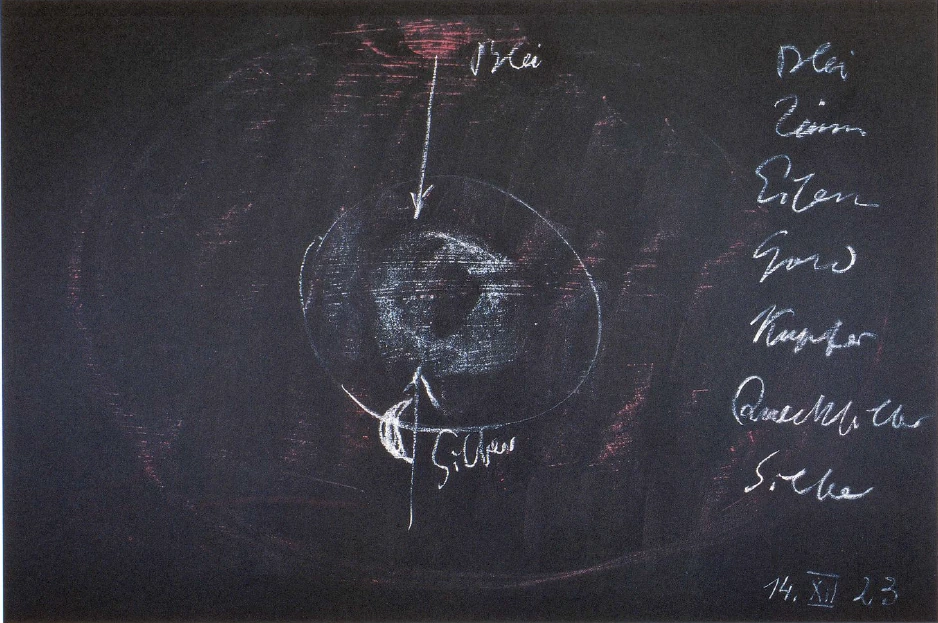
[ 4 ] In general, what spread throughout Europe was that which did not require direct spiritual insight, but could be based on mere historical tradition, which simply recounted what had occurred as physical events in Palestine at the beginning of the Christian era. And it is precisely from this current that what gradually took shape—the tendency to accept only what took place in physical life—originated. People became less and less aware of the colossal contradiction inherent in presenting that which—like the Mystery of Golgotha—can only be comprehended through the deepest spiritual life, solely in an external form tied to the sensory realm. Yet this became the necessary course of cultural development in Europe.
[ 5 ] Im Grunde genommen hatte sich ja das alles schon seit langer Zeit vorbereitet, und es konnte sich nur dadurch so ergeben, daß von dem alten Mysterienwesen, auch noch wie es in Griechenland war, viel, viel vergessen worden ist. Denn diese Mysterien von Griechenland, sie zerfielen ja eigentlich in zweierlei, in die einen, welche vorzugsweise sich damit beschäftigten, des Menschen Sinn hinaufzulenken nach den geistigen Welten, nach der eigentlichen Weltenlenkung und Weltenorientierung im Geiste, und in diejenigen, welche sich beschäftigten mit den Geheimnissen der Natur, mit den in der Natur waltenden, namentlich in den irdischen Gewalten liegenden Kräften und Wesenheiten. Ganz Einzuweihende gingen ja auch durch die beiden Arten von Mysterien. Und dann sagte man von ihnen, sie hätten sowohl die Geheimnisse des Vaters, die Zeusmysterien, in sich aufgenommen, wie auch die Geheimnisse der Mutter, die Geheimnisse der Demeter. Und wenn wir zurückschauen in diese Zeiten, so finden wir da noch neben einer in die höchsten Regionen, wenn auch schon mit einiger Abstraktheit, aber dennoch in die höchsten Regionen hinaufreichenden geistigen Anschauung eine in die Tiefen gehende Naturanschauung und vor allen Dingen, was besonders wichtig ist, die Verbindung von beiden.
[ 5 ] Essentially, all of this had been in the making for a long time, and it could only have come about because so much—so very much—of the ancient mystery traditions, even as they existed in Greece, had been forgotten. For these Greek mysteries were actually divided into two categories: those that were primarily concerned with directing the human mind toward the spiritual worlds—toward the actual guidance and orientation of the worlds in the spirit— and those that dealt with the mysteries of nature—with the forces and beings reigning in nature, particularly those residing in the earthly forces. Those who were to be fully initiated did, in fact, undergo both types of mysteries. And it was said of them that they had absorbed within themselves both the mysteries of the Father—the mysteries of Zeus—and the mysteries of the Mother—the mysteries of Demeter. And when we look back on those times, we find there—alongside a spiritual vision reaching into the highest realms, albeit with a certain degree of abstraction, but nevertheless reaching into the highest realms—a vision of nature that delves into the depths and, above all, what is particularly important, the connection between the two.
[ 6 ] Diese Verbindung von beiden, das, was heute wenig beachtet wird, daß der Mensch gewisse äußere Stoffe der Natur auch in sich trägt, gewisse andere Stoffe der Natur nicht in sich trägt, das wurde gerade in den chthonischen Mysterien in Griechenland im allertiefsten Sinne beachtet. Sie wissen ja, der Mensch trägt in sich organisiert das Eisen. Er trägt auch andere Metalle in sich; er trägt Kalzium, Natrium, Magnesium und so weiter, gewisse Metalle in sich. Aber er trägt gewisse Metalle gar nicht in sich, wenn man nur darauf Rücksicht nimmt, daß man diese Metalle finden sollte, indem man den Menschen mit den gewöhnlichen wissenschaftlichen Mitteln in bezug auf seine Stofflichkeit analysiert. Da trägt zum Beispiel in bezug auf diese äußere Untersuchung der Mensch kein Blei, kein Kupfer, kein Quecksilber, kein Zinn, kein Silber, kein Gold in sich.
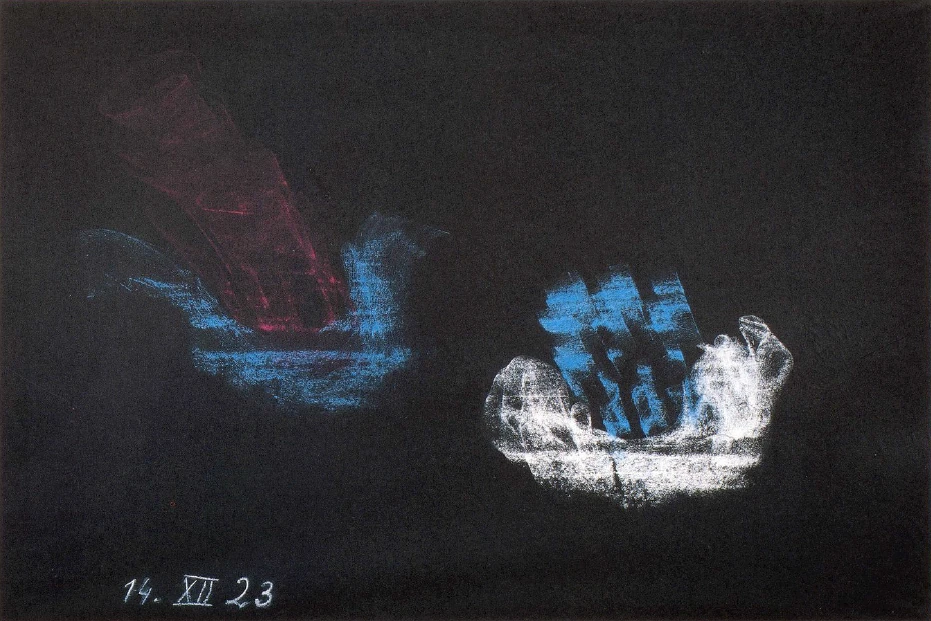
[ 6 ] This connection between the two—the fact that is little recognized today, namely that human beings contain certain external substances from nature within themselves but do not contain certain other substances from nature—was observed in the deepest sense precisely in the chthonic mysteries of Greece. As you know, human beings carry iron within them in an organized form. They also carry other metals within them; they carry calcium, sodium, magnesium, and so on—certain metals. But humans do not contain certain metals at all—if one considers only that these metals should be found by analyzing the human being’s physical composition using ordinary scientific methods. For example, according to this external examination, humans do not contain lead, copper, mercury, tin, silver, or gold.
[ 7 ] Das war das große Rätsel der in die griechischen Mysterien Einzuweihenden, das in der Frage gipfelte: Wie kommt es, daß der Mensch zum Beispiel das Eisen in sich trägt, das Kalzium, das Natrium in sich trägt, daß er andere Stoffe, die sich auch in der äußeren Natur finden lassen, in sich trägt, daß er aber zum Beispiel das Blei, das Zinn nicht in sich trägt? Man war tief überzeugt davon, der Mensch sei eine kleine Welt, sei ein Mikrokosmos. Und dennoch, es schien so, als ob der Mensch diese Metalle: Blei, Zinn, Quecksilber, Silber, Gold nicht in sich trüge.
[ 7 ] This was the great mystery for those to be initiated into the Greek mysteries, which culminated in the question: How is it that human beings, for example, contain iron, calcium, and sodium within themselves, that they contain other substances found in the external natural world, yet do not contain, for example, lead or tin? People were deeply convinced that the human being was a small world, a microcosm. And yet, it seemed as if the human being did not contain these metals: lead, tin, mercury, silver, and gold.
[ 8 ] Für die älteren Einzuweihenden in Griechenland kann man wirklich sagen, daß sie der Meinung waren: es scheint nur so. Denn sie waren doch von der Erkenntnis tief durchdrungen, daß der Mensch ein wirklicher Mikrokosmos ist, das heißt, daß er alles, was sich in der Welt offenbart, auch in sich trägt.
[ 8 ] As for the older initiates in Greece, one can truly say that they believed: “It only seems that way.” For they were deeply imbued with the realization that human beings are true microcosms—that is, that they carry within themselves everything that manifests in the world.
[ 9 ] Sehen wir einmal in das Gemüt eines in Griechenland Einzuweihenden ein wenig hinein. Er wurde zum Beispiel so unterrichtet — ich muß etwas, was sich über lange Unterrichtszeiten ausdehnte, in ein paar Sätzen zusammenfassen, allein Sie werden mich verstehen —, daß ihm gesagt wurde: Sieh einmal, genau so, wie heute die Erde in sich überall das Eisen birgt, das Eisen aber auch im Menschen ist, so barg einmal zu einer Zeit, in welcher die Erde noch nicht Erde, aber in einem vorhergehenden planetarischen Zustande war, so barg da diese Erde, die noch Mond oder gar Sonne war, in sich auch Blei, Zinn und so weiter, und alle Wesen, welche an dieser vorhergehenden Gestaltung der Erde teilnahmen, nahmen auch an diesen Metallen und deren Kräften teil, so wie der heutige Mensch teilnimmt an der Kraft des Eisens. Aber bei jenen Umwandelungen, welche die ältere Gestaltung der Erde erfahren hat, blieb nur das Eisen als etwas, das noch in einer solchen Stärke und Dichtigkeit vorhanden ist, daß der Mensch sich mit ihm durchdringen kann. Die anderen Metalle, die genannt worden sind, sind zwar in der Erde enthalten, aber sie sind in der Erde nicht mehr in einer solchen Art enthalten, daß der Mensch sich mit ihnen unmittelbar durchdringen könnte. Aber sie sind enthalten in ungeheurer Dünnheit im ganzen Weltenraum, der den Menschen angeht.
[ 9 ] Let’s take a brief look into the mind of someone about to be initiated in Greece. For example, he was taught—I must summarize in a few sentences something that spanned many hours of instruction, but you will understand me—that he was told: “Look, just as the Earth today contains iron everywhere within itself—and iron is also present in human beings—so too, at a time when the Earth was not yet the Earth but existed in a previous planetary state, this Earth—which was then still the Moon or even the Sun—also contained within itself lead, tin, and so on, and all beings that participated in this earlier form of the Earth also participated in these metals and their powers, just as modern humans participate in the power of iron. But during the transformations that the Earth’s earlier form underwent, only iron remained as a substance present in such strength and density that human beings can be permeated by it. The other metals mentioned are indeed contained within the Earth, but they are no longer present in a form that would allow human beings to penetrate them directly. However, they are contained in an incredibly稀薄 state throughout the entire cosmic space that pertains to human beings.
[ 10 ] Wenn ich ein Stückchen Blei ansehe, so ist es das bekannte grauweiße Metall. Es hat eine bestimmte Dichtigkeit. Man kann es angreifen. Aber dieses selbe Blei, das in den Bleierzen der Erde vorkommt, das ist in unendlich feiner Verdünnung im ganzen zum Menschen gehörigen Weltenraum vorhanden und hat da seine Bedeutung. Es hat im Weltenraum die Bedeutung, daß es überall, auch wo scheinbar gar kein Blei ist, seine Kräfte ausstrahlt, und der Mensch doch mit diesen Kräften des Bleies in Berührung kommt, aber in Berührung jetzt nicht mehr kommt durch seinen physischen Leib, sondern nur durch seinen ätherischen Leib. Denn außerhalb der Bleierz-Arten der Erde ist das Blei eben in solcher Verdünnung vorhanden, daß es nur noch auf den ätherischen Leib des Menschen wirken kann. Auf den wirkt es aber auch in diesem im ganzen Weltenraum in unendlicher Verdünnung ausgebreiteten Zustande.
[ 10 ] When I look at a small piece of lead, it is the familiar grayish-white metal. It has a certain density. You can touch it. But this same lead, which occurs in the lead ores of the Earth, is present in an infinitely fine dilution throughout the entire world space belonging to humankind and has its significance there. Its significance in the cosmos is that it radiates its forces everywhere—even where there appears to be no lead at all—and yet human beings come into contact with these forces of lead, though no longer through their physical body, but only through their etheric body. For outside of the Earth’s lead ores, lead is present in such a dilution that it can act only upon the human etheric body. And it does act upon the etheric body even in this state, in which it is spread throughout the entire world space in infinite dilution.
[ 11 ] Und dann lernte der Schüler der griechischen chthonischen Mysterien, daß ebenso, wie die Erde, die eigentlich unendlich reich ist an Eisen, die ein Planet ist, von dem ein Bewohner eines anderen Planeten sagen könnte, sie ist eisenreich — sie hat in diesem Eisenreichtum nur noch den Mars zu ihrem Verwandten —, daß geradeso, wie die Erde reich ist an Eisen, der Saturn reich ist an Blei. Was für die Erde das Eisen ist, ist für den Saturn das Blei. Und annehmen muß man — das lernte der Schüler der chthonischen Mysterien in Griechenland —, daß einstmals, als jene Trennung des Saturn von der allgemeinen planetatischen Gestalt, die die Erde einmal gehabt hat, wie es in meiner «Geheimwissenschaft » beschrieben ist, stattfand, daß diese besondere Verteilung mit Bezug auf das Blei auch damals geschehen ist, als von dieser allgemeinen Gestalt sich der Saturn abtrennte. Der Saturn hat sozusagen das Blei mit sich hinausgenommen und erhält es durch seine eigene planetarische Lebenskraft und durch seine eigene planetarische Wärme in einem solchen Zustande, daß er das ganze Planetensystem, zu dem auch unsere Erde gehört, durchdringen kann mit diesen fein verteilten Bleikräften.
[ 11 ] And then the student of the Greek chthonic mysteries learned that just as the Earth—which is in fact infinitely rich in iron, a planet of which an inhabitant of another planet might say, “It is rich in iron”—has only Mars as its counterpart in this abundance of iron—just as the Earth is rich in iron, so Saturn is rich in lead. What iron is to the Earth, lead is to Saturn. And one must assume —as the initiate into the Chthonic Mysteries in Greece learned—that once, when that separation of Saturn from the general planetary form that the Earth once possessed took place, as described in my Occult Science, this particular distribution with regard to lead also occurred at the time when Saturn separated from that general form. Saturn, so to speak, took the lead with it and, through its own planetary life force and its own planetary heat, maintains it in such a state that it can permeate the entire planetary system—to which our Earth also belongs—with these finely distributed lead forces.
[ 12 ] So daß man also sich vorzustellen hat: Die Erde, in den Weiten der Saturn, der aber erfüllend das ganze planetarische System mit dem feinen Blei, mit der feinen Bleisubstanz. Diese feine Bleisubstanz, sie wirkt auf den Menschen. Und auch davon können wir noch Spuren finden, daß der in Griechenland zu Initiierende davon Kunde erhielt, daß dieser Schüler verstehen lernte, wie dieses Blei wirkt. Er wußte: Unsere Sinne, namentlich der Sinn des Auges, würde den ganzen Menschen in Anspruch nehmen, ihn nicht zur Selbständigkeit kommen lassen. Der Mensch würde nur sehen, nicht über das Gesehene nachdenken können, nicht zurücktreten können von dem Gesehenen und sagen: Ich sehe. Er würde ganz vom Sehen überflutet sein, wenn nicht diese Bleiwirkung da wäre. Diese Bleiwirkung ist es, die den Menschen in sich selbständig macht, die ihn als Ich gegenüberstellt der Empfänglichkeit für die Außenwelt, die in ihm lebt. Und diese Bleikräfte sind es, die zuerst in den Ätherleib des Menschen eintreten, dann aber vom Ätherleib aus im Menschen den physischen Leib in einer gewissen Weise mit sich imprägnieren. Dadurch bekommt der Mensch die Fähigkeit der Erinnerungskraft, des Gedächtnisses.
[ 12 ] So one must imagine the following: Earth, in the vast expanses of Saturn, which, however, fills the entire planetary system with fine lead, with the fine lead substance. This fine lead substance has an effect on human beings. And we can still find traces of this as well—that the initiate in Greece was made aware of it, that this student came to understand how this lead works. He knew: Our senses, especially the sense of sight, would completely absorb the whole human being, preventing him from achieving independence. The human being would merely see, unable to reflect on what is seen, unable to step back from what is seen and say, “I see.” He would be completely overwhelmed by the act of seeing were it not for this effect of lead. It is this effect of lead that makes the human being independent within himself, that sets him, as the “I,” in opposition to the receptivity to the external world that lives within him. And it is these lead forces that first enter the human etheric body, but then, from the etheric body, permeate the physical body in a certain way. Through this, the human being acquires the capacity for recollection, for memory.
[ 13 ] Und es war immer ein großer Augenblick, wenn solch ein Schüler, wie der griechische Schüler der chthonischen Mysterien, nachdem er solche Dinge verstehen gelernt hatte, zu folgendem geführt wurde. Es wurde ihm mit möglichster Feierlichkeit die Substanz des Bleies gezeigt. Dann wurde sein Sinn hinaufgelenkt zum Saturn. Dann wurde ihm die Verwandtschaft des Saturn mit dem irdischen Blei vor die Seele geführt. Dann wurde ihm gesagt: So, wie du dieses Blei siehst, so birgt es die Erde. Aber die Erde in ihrem jetzigen Zustande ist nicht imstande, dem Blei unmittelbar eine solche Form zu geben, daß dieses Blei im Menschen wirken könnte. Aber der Saturn mit seinem ganz anderen Wärmezustand, mit seinen inneren Lebenskräften, versprüht das Blei im planetarischen Raum, und dadurch bist du ein selbständiger Mensch, bist du ein erinnerungsfähiger Mensch. Denke daran, daß du ein Mensch bist nur dadurch, daß du heute noch weißt, was du vor zehn, vor zwanzig Jahren gewußt hast. Denke nur daran, wie dein Menschliches Schaden leidet, wenn du nicht in dir trägst, was du vor zehn, zwanzig Jahren in dir getragen hast. Deine Ichkraft würde zersplittert werden, wenn die Erinnerungskraft nicht in vollem Maße vorhanden wäre. Das verdankst du dem, was dir vom fernen Saturn entgegenstrahlt. Es ist die Kraft, die im Blei der Erde zur Ruhe gekommen ist und in diesem Ruhezustand nicht mehr auf den Menschen wirken kann. So macht es des Saturn Bleikraft, daß in dir Gedanken sich festsetzen, daß sie nach gewissen Zeiten wiederum heraufkommen aus den Tiefen der Seele, daß du mit der äußeren Welt dauernd, nicht bloß vorübergehend leben kannst. Du verdankst es dieser Blei-Saturnkraft, daß du nicht bloß heute die Gegenstände um dich herum siehst und sie morgen vergessen hast, sondern, daß du sie behalten kannst, daß du dasjenige, was du vor Jahren erlebt hast, wiederum in deiner Seele regsam werden lassen kannst; du kannst dein inneres Seelisches so gestalten, wie zeit deines irdischen Lebens dasjenige war, was du in deiner Umgebung erlebt hast.
[ 13 ] And it was always a momentous occasion when such a student—like the Greek student of the chthonic mysteries—after having come to understand such things, was led to the following. The substance of lead was shown to him with the utmost solemnity. Then his mind was directed upward toward Saturn. Then the connection between Saturn and earthly lead was brought before his soul. Then he was told: Just as you see this lead, so does the earth contain it. But the earth, in its present state, is not capable of directly giving the lead a form such that it could act within the human being. But Saturn, with its entirely different thermal state and its inner life forces, radiates the lead into planetary space; and through this, you are an independent human being, a human being capable of memory. Remember that you are a human being only because you still know today what you knew ten or twenty years ago. Just think of how your humanity suffers if you do not carry within you what you carried ten or twenty years ago. Your sense of self would be fragmented if the power of memory were not fully present. You owe this to what radiates toward you from distant Saturn. It is the force that has come to rest in the Earth’s lead and, in this state of rest, can no longer act upon human beings. Thus, Saturn’s lead force ensures that thoughts take root within you, that they resurface from the depths of the soul after a certain time, and that you can live in a lasting, rather than merely temporary, relationship with the outer world. It is thanks to this lead-Saturn force that you do not merely see the objects around you today and forget them tomorrow, but that you can retain them; that you can allow what you experienced years ago to come alive again in your soul; you can shape your inner soul life in accordance with what you experienced in your surroundings during your earthly life.
[ 14 ] Das war zunächst ein gewaltiger Eindruck, den der Schüler dadurch bekam, daß ihm mit großer Feierlichkeit, aber mit einer ernsten, unsentimentalen Feierlichkeit eine solche Sache nahegebracht worden ist. Dann aber lernte er auch verstehen: Ja, wenn nur diese Blei-Saturnkraft wirken würde, wenn nur diese Blei-Saturnkraft dem Menschen die Ichfähigkeit, die Erinnerungsfähigkeit geben würde, dann würde der Mensch sich ja dem Kosmos vollständig entfremden. Wenn nur diese Saturnkraft da wäre, würde der Mensch zwar dasjenige, was er mit seinen physischen Augen gesehen hat, in seiner Erinnerungskraft aufnehmen können und es für das irdische Leben bleibend sein lassen, allein er würde sich entfremden dem Kosmos. Er würde gewissermaBen ein Eremit im Erdendasein werden, vom Saturn zur Erinnerungsfähigkeit inspiriert.
[ 14 ] At first, this made a tremendous impression on the student, because such a concept had been presented to him with great solemnity—but with a serious, unsentimental solemnity. But then he also came to understand: Yes, if only this lead-Saturn force were at work, if only this lead-Saturn force were to give human beings the capacity for an “I” and the capacity for memory, then human beings would indeed become completely alienated from the cosmos. If only this Saturn force were present, human beings would indeed be able to take in what they have seen with their physical eyes into their memory and make it permanent for earthly life; yet they would become estranged from the cosmos. They would, in a sense, become hermits in their earthly existence, inspired by Saturn to have the capacity for memory.
[ 15 ] Da lernte der Schüler erkennen, daß dieser Saturnkraft eine andere entgegengesetzt sein muß: das ist die Kraft des Mondes. Nehmen wir an, die beiden stünden gerade so, daß die Saturnkraft und die Mondenkraft von entgegengesetzter Seite, aber ineinanderfließend, an die Erde, also auch an den Menschen herankommen. Was der Saturn dem Menschen nimmt, gibt der Mond; was der Saturn dem Menschen gibt, nimmt der Mond. Und so, wie die Erde im Eisen eine Kraft hat, die der Mensch innerlich in sich verarbeiten kann, eine Kraft, die der Saturn in dem Blei hat, so hat der Mond diese selbe Kraft in dem Silber.
[ 15 ] There the student came to realize that this Saturn force must have an opposite: the force of the Moon. Let us assume that the two are positioned such that the power of Saturn and the power of the Moon, coming from opposite directions but flowing into one another, reach the Earth—and thus also humanity. What Saturn takes from human beings, the Moon gives; what Saturn gives to human beings, the Moon takes. And just as the Earth possesses a force in iron that human beings can process internally—a force that Saturn possesses in lead—so the Moon possesses this same force in silver.
[ 16 ] Auch das Silber, wie es in der Erde ist, es ist bereits bei einem Zustande angelangt, durch den es in den Menschen nicht hineinkommen kann. Aber die ganze Sphäre, die der Mond einnimmt, ist tatsächlich durchzogen von fein verteiltem Silber. Der Mond wirkt, namentlich wenn sein Schein in der Richtung vom Löwen herkommt, so, daß der Mensch durch diese Silberkraft des Mondes die entgegengesetzte Wirkung hat von der Bleikraft des Saturn, daß er also dem Makrokosmos nicht entfremdet wird, trotzdem er aus dem Weltenall herein gnadevoll mit der Erinnerungskraft inspiriert wird. Und es war dann ein besonders feierlicher Augenblick, wenn der griechische Schüler hingeführt wurde, wenn sich in dieser Weise Saturn und Mond gegenüberstanden und zu sehen waren, und dann in der Feierlichkeit der Nacht dem Schüler klar gemacht worden ist: Siehe hinauf zu dem ringumgebenen Saturn. Ihm verdankst du dasjenige, was du als in dir geschlossener Mensch bist. Und schaue nach der anderen Seite zu dem silberstrahlenden Monde. Ihm verdankst du, daß du die Saturnkraft ertragen kannst, ohne daß du dich vom Kosmos herauslösest.
[ 16 ] Silver, too, as it exists in the earth, has already reached a state in which it cannot enter the human body. But the entire sphere occupied by the Moon is in fact permeated by finely dispersed silver. The Moon exerts an influence—especially when its light comes from the direction of Leo—such that, through this silvery power of the Moon, the human being experiences the opposite effect of Saturn’s leaden power; that is, he is not alienated from the macrocosm, even though he is graciously inspired from the universe with the power of memory. And it was a particularly solemn moment when the Greek student was led there, when Saturn and the Moon stood opposite one another in this way and could be seen, and then, in the solemnity of the night, it was made clear to the student: Look up at Saturn, encircled by its rings. To it you owe what you are as a self-contained human being. And look toward the other side, at the silver-radiant Moon. It is thanks to the Moon that you can endure the power of Saturn without detaching yourself from the cosmos.
[ 17 ] Sehen Sie, in dieser Weise — in unmittelbarer Anknüpfung an den Zusammenhang des Menschen mit dem Kosmos — wurde in Griechenland dasjenige getrieben, was in späterer Karikatur die Astrologie genannt worden ist. Da war es eine wirkliche Weisheit, denn da sah man ja in dem Stern nicht bloß den da oben stehenden Lichtpunkt oder Lichtfleck, da sah man im Stern die geistig-lebendige Wesenheit und das Menschenwesen auf Erden in Verbindung mit dieser geistig-lebendigen Wesenheit. Da hatte man eine Naturwissenschaft, die hinaufging bis in das Himmlische, die hinausreichte in die Weltenweiten. Und dann, wenn der Schüler solche Lichtblicke, Lichtausblicke erhalten hatte, wenn sich ihm das tief in die Seele eingeschrieben hatte, dann wurde er zum Beispiel in den wahren Mysterien von Eleusis, wie das ja überhaupt üblich war — Sie haben es bei meinen Schilderungen anderer Mysterien, auch der hybernischen Mysterien gesehen —, hingeführt vor zwei Bildsäulen. Und die eine dieser Bildsäulen stellte ihm dar eine väterliche Gottheit, jene väterliche Gottheit, welche umgeben war von den Zeichen des Planetarischen und Sonnenhaften; jene väterliche Statue, welche ihm zum Beispiel darstellte den strahlenden Saturn, aber so strahlend, daß der Schüler erinnert wurde: Ja, das ist die Bleistrahlung des Kosmos; wie er beim Mond erinnert wurde: Ja, das ist die Silberstrahlung des Mondes, und so bei jedem einzelnen Planeten. So daß ihm in der Statue, die das Väterliche darstellte, erschien, was an Geheimnissen hereinstrahlte von der planetarischen Umgebung der Erde, was verwandt war den einzelnen Metallen der Erde, die aber innerhalb der Erde schon unbrauchbar geworden waren für das menschliche Innere.
[ 17 ] You see, in this way—in direct connection with humanity’s relationship to the cosmos—what was practiced in Greece came to be called “astrology” in later caricatures. It was true wisdom, for people did not merely see the star as a point of light or a speck of light up above; rather, they saw in the star a spiritually living being and the human being on Earth in connection with this spiritually living being. They had a natural science that reached up into the heavenly realms and extended out into the vastness of the universe. And then, once the student had gained such glimpses of light, such insights into the light, once this had been deeply inscribed in his soul, he was led—for example, in the true Mysteries of Eleusis, as was customary—before two statues, as you have seen in my descriptions of other Mysteries, including the Hybernian Mysteries. And one of these statues represented to him a fatherly deity, that fatherly deity who was surrounded by the signs of the planetary and solar realms; that fatherly statue, which represented to him, for example, the radiant Saturn, but so radiant that the student was reminded: “Yes, that is the leaden radiance of the cosmos”; just as he was reminded by the moon: Yes, that is the silver radiance of the Moon, and so on with each individual planet. Thus, in the statue representing the Fatherly, he perceived what mysteries radiated from the Earth’s planetary surroundings—mysteries related to the individual metals of the Earth, which, however, had already become useless to the human inner being within the Earth.
[ 18 ] Sieh, so wurde dem Schüler gesagt, da steht der Vater der Welt vor dir. Der Vater der Welt trägt im Saturn das Blei, im Jupiter das Zinn, im Mars das dem Erdenwesen verwandte Eisen — aber in einem ganz anderen Zustande —, in der Sonne das strahlende Gold, in der Venus das strahlend-strömende Kupfer, im Merkur das strahlende Quecksilber, im Monde das strahlende Silber. Du trägst in dir nur dasjenige vom Metallischen, was du dir aneignen konntest aus den planetarischen Zuständen, die die Erde früher einmal gehabt hat. Vom jetzigen Zustand kannst du dir nur das Eisen aneignen. Aber du bist als Erdenmensch nicht ein Ganzes. Das, was dir der Vater, der vor dir steht, zeigt in den Metallen, die nicht in dir selber heute aus dem Erdensein bestehen können, sondern die du heute vom Kosmos entnehmen mußt — in dem Vater hast du dein anderes, wenn du dich als Mensch nimmst, der durch planetarische Verwandlungen der Erde gegangen ist. Dann bist du erst ein ganzer Mensch. Hier auf Erden stehst du als Teil des Menschen. Das andere trägt der Vater um sein Haupt und in seinem Arm vor dich hin. Das, was hier vor dir steht, mit dem, was er trägt, das erst bist du. Du stehst auf der Erde. Aber diese Erde war nicht immer so, wie sie heute ist. Wäre sie immer so gewesen, du könntest als Mensch nicht auf ihr sein. Denn sie trägt in sich, wenn auch in einem abgestorbenen Zustande, auch das Blei des Saturn, das Zinn des Jupiter, das Eisen des Mars — eben in dem anderen Zustand —, das Gold der Sonne, das Silber des Mondes, das Kupfer der Venus, das Quecksilber des Merkur; sie trägt es in sich. Aber so wie sie es in sich trägt, so sind diese Metalle nur die Erinnerungen an die Art und Weise, wie einstmals schon das Silber während des Mondendaseins in der Erde gelebt hat, das Gold während des Sonnendaseins, das Blei während des Saturndaseins. Und was dir heute in den dichten metallischen Massen von Blei, Zinn, Eisen, Gold, Kupfer, Quecksilber, Silber erscheint — mit Ausnahme desjenigen Eisens, das du eigentlich kennst, das nicht das innerirdische Eisen ist, denn das ist marshaft —, das, was heute dir in diesen kompakten, dichten Metallen erscheint, das ergoß sich einstmals aus dem Kosmos in die Erde in einem ganz anderen Zustande. Diese Metalle, wie du sie heute von der Erde kennst, sind die Leichname der einstigen Metallwesen. Blei ist der Leichnam jenes Metallwesens, das während der Saturnzeit und später wiederum in einem anderen Grade während der Mondenzeit auf der Erde in ihrer alten Gestalt gespielt hat. Zinn hat mit dem Gold zusammen während der Sonnenzeit der Erde gespielt in einem ganz anderen Zustande — schaust du den im Geiste, dann wird dir diese Statue in dem, was sie dir entgegenträgt an Heutigem, zur wahrhaft väterlichen Statue. Und im Geiste, wie in einer realen Vision, wurde die Statue der wahren Mysterien in Eleusis lebendig und reichte der weiblichen Gestalt, die daneben stand, dasjenige, was dazumal die Metalle waren. Und die weibliche Gestalt nahm diese ehemalige Gestalt der Metalle entgegen in der Vision des Schülers und umzog sie mit demjenigen, was die Erde von sich aus, als sie Erde wurde, geben konnte.
[ 18 ] Behold, the disciple was told, there stands the Father of the World before you. The Father of the World bears lead in Saturn, tin in Jupiter, iron—which is akin to the earthly being, though in a completely different state—in Mars, radiant gold in the Sun, radiant, flowing copper in Venus, radiant mercury in Mercury, and radiant silver in the Moon. You carry within you only that part of the metallic element which you were able to assimilate from the planetary states that the Earth once possessed. From the present state, you can assimilate only iron. But as an earthly human being, you are not a whole. What the Father standing before you shows you in the metals—which cannot exist within you today as a result of your earthly existence, but which you must now draw from the cosmos—in the Father you have your other half, if you consider yourself a human being who has passed through the Earth’s planetary transformations. Only then are you a whole human being. Here on Earth, you stand as a part of the human being. The Father carries the other part before you, around his head and in his arms. What stands here before you, together with what he carries—that is what you truly are. You stand on Earth. But this Earth was not always as it is today. If it had always been this way, you could not exist on it as a human being. For it carries within itself—albeit in a dead state—the lead of Saturn, the tin of Jupiter, the iron of Mars—in a different state, that is—the gold of the Sun, the silver of the Moon, the copper of Venus, and the mercury of Mercury; it carries all of this within itself. But just as it contains them, these metals are merely memories of the way in which silver once lived within the Earth during the Moon’s existence, gold during the Sun’s existence, and lead during Saturn’s existence. And what appears to you today in the dense metallic masses of lead, tin, iron, gold, copper, mercury, and silver—with the exception of the iron you actually know, which is not the iron found deep within the Earth, for that is Martian in nature—what appears to you today in these compact, dense metals once poured forth from the cosmos into the Earth in an entirely different state. These metals, as you know them today from the Earth, are the corpses of the former metal beings. Lead is the corpse of that metal being which played out its role on Earth in its ancient form during the Saturn era and later, to a different degree, during the Moon era. Tin, together with gold, played a role on Earth during the Sun Age in a completely different state—if you behold it in spirit, then this statue, in what it presents to you today, becomes a truly fatherly statue. And in the spirit, as in a real vision, the statue of the true Mysteries at Eleusis came to life and handed to the female figure standing beside it that which the metals once were. And the female figure received this former form of the metals in the disciple’s vision and clothed it with that which the Earth, of its own accord, could give when it became Earth.
[ 19 ] So sah der Schüler diesen wunderbaren Prozeß, diesen wunderbaren Vorgang: Da strahlte einmal, so wie jetzt wiederum symbolisch, aus der väterlichen Statuenhand, da strahlte die Metallmasse, und dasjenige, was Erde war, trat, sagen wir zum Beispiel mit ihrem Kalk oder sonstigen Gestein entgegen dem, was da einstrahlte, und umgab das metallisch Einströmende mit irdischer Substanz, so wie die liebevoll von der einen mütterlichen Statue hinaufreichende Hand das jenige entgegennahm, was von der väterlichen Statue an metallischer Kraft der mütterlichen Statue gereicht wurde. Das war ein großer, gewaltiger Eindruck, denn man sah darinnen das Kosmische mit dem Irdischen zusammenwirken im Laufe der Äonen. Und man lernte dasjenige, was die Erde darbictet, in seiner richtigen Weise empfinden.
[ 19 ] This is how the student saw this wondrous process, this wondrous event: There, just as now once again symbolically, the metallic mass radiated from the father’s statue hand, and that which was earth—let us say, for example, its limestone or other rock—came into contact with what was radiating in, and surrounded the metallic inflow with earthly substance, just as the hand lovingly reaching upward from the one maternal statue received that which was bestowed upon the maternal statue by the paternal statue in the form of metallic power. This was a profound and powerful impression, for one could see within it the cosmic and the earthly interacting over the course of the eons. And one learned to perceive what the Earth offers in its true nature.
[ 20 ] Sehen Sie sich einmal manches, was in der Erde metallisch ist, an. Sie haben es kristallisiert. Sie haben es umgeben mit einer Art von Kruste, mit dem, was aus der Erde ist. Das Metallische ist vom Kosmos herein; dasjenige, was von der Erde ist, das nimmt wie liebevoll auf das, was vom Kosmos hereinkommt. Sie sehen es überall draußen, wo sie an den Fundstätten der Metalle herumgehen und um die Metalle sich bekümmern. Und dasjenige, was da dem Metall entgegenkam, man nannte es die Mutter. Und die wichtigsten dieser irdischen Substanzen, die sich dem Himmlisch-Metallischen entgegenstellten, um sie aufzunehmen, nannte man die Mütter.
[ 20 ] Take a look at some of the metallic substances found in the earth. They have crystallized them. They have surrounded them with a kind of crust, with that which comes from the earth. The metallic element comes from the cosmos; that which is of the earth lovingly receives what comes from the cosmos. You see this everywhere out there, where people walk around the sites where metals are found and tend to the metals. And that which met the metal there was called the Mother. And the most important of these earthly substances, which stood opposite the heavenly-metallic to receive it, were called the Mothers.
[ 21 ] Das ist auch ein Aspekt für jene « Mütter», zu denen Faust hinuntersteigt. Er steigt zu gleicher Zeit hinunter in vorirdische Zeiten der Erde, um da zu seen, wie die mütterliche Erde das vom Kosmos herein väterlich Gegebene in sich aufnimmt.
[ 21 ] This is also a aspect for those “mothers” to whom Faust descends. At the same time, he descends into the Earth’s pre-earthly times to witness there how the maternal Earth absorbs within itself that which is given to her from the cosmos in a fatherly manner.
[ 22 ] Durch alles das wurde in dem Schüler der eleusinischen Mysterien innerlich erregt ein Mitfühlen mit dem Kosmos, eine innerliche Herzenserkenntnis dessen, was eigentlich in Wirklichkeit die Naturprodukte und Naturvorgänge auf Erden sind.
[ 22 ] Through all of this, a sense of empathy with the cosmos was stirred within the initiate of the Eleusinian Mysteries—an inner, heartfelt understanding of what the products and processes of nature on Earth truly are.
[ 23 ] Meine lieben Freunde, wenn sich der heutige Mensch anschaut diese Naturvorgänge, anschaut diese Naturprodukte — es ist ja alles tot, es ist ja alles Leichnam. Und wenn wir in der Physik oder Chemie herumhantieren, was tun wir anderes, als mit der Natur dasselbe machen, was schließlich der Anatom macht, wenn er im Seziersaal die Leiche zerschneidet, wo er das Tote von dem hat, dessen Bestimmung das Leben ist. So schneiden wir mit unserer Chemie, mit unserer Physik in die lebendige Natur hinein. Aber dem griechischen Schüler war eben eine andere Naturwissenschaft gegeben: die Naturwissenschaft des Lebendigen, die ihn das heutige Blei anschauen ließ wie den Leichnam des Bleies. Man muß zurückgehen in die Zeiten, wo das Blei gelebt hat. Da wurde ihm die geheimnisvolle Beziehung des Menschen zum Weltenall, die geheimnisvolle Beziehung des Menschen zu dem, was um ihn herum ist im Irdischen, klar.
[ 23 ] My dear friends, when people today look at these natural processes, look at these products of nature—it’s all dead, it’s all just a corpse. And when we tinker with physics or chemistry, what are we doing other than doing to nature the very same thing that the anatomist ultimately does when he cuts open a corpse in the dissection room, where he has the dead body of that which is destined for life. In this way, with our chemistry and our physics, we cut into living nature. But the Greek student was given a different natural science: the natural science of the living, which made him view today’s lead as the corpse of lead. One must go back to the times when lead was alive. There, the mysterious relationship of the human being to the universe, the mysterious relationship of the human being to what surrounds him in the earthly realm, became clear to him.
[ 24 ] Und dann, wenn der Schüler solches durchgemacht hatte, wenn ihm solches seelisch vertieft worden war vor der väterlichen und der mütterlichen Statue, die die beiden einander entgegengesetzten Kräfte, die Kräfte des Kosmos, die Kräfte des Irdischen in seiner Seele vergegenwärtigten, dann wurde er sozusagen in das Allerheiligste geführt, auch in Griechenland. Da hatte er das Bild vor sich: die weibliche Gestalt, an ihrer Brust das Kind säugend. Dann wurde er eingeführt in das Verständnis der Worte: Und das ist der Gott Jakchos, der einst kommen wird. So lernte der griechische Schüler voraus das Christusmysterium verstehen.
[ 24 ] And then, once the student had gone through all this, once it had been deeply imprinted upon his soul before the statues of the father and the mother—which represented the two opposing forces, the forces of the cosmos and the forces of the earthly realm—within his soul, he was led, so to speak, into the Holy of Holies, even in Greece. There he saw the image before him: the female figure nursing the child at her breast. Then he was introduced to the meaning of the words: “And this is the god Jakchos, who will come one day.” In this way, the Greek student learned to understand the mystery of Christ in advance.
[ 25 ] Wiederum war in spiritueller Art der Christus auch vor den in Eleusis zu Initiierenden hingestellt worden. Aber es durften in jener Zeit die Menschen zunächst diesen Christus nur als den Zukünftigen kennenlernen, als den, der noch Kind war, Weltenkind, das erst erwachsen werden sollte im Kosmos. Telesten wurden ja die zu Initiierenden genannt: solche, die nach dem Ende, nach dem Ziele der Erdenentwickelung hinschauen sollten.
[ 25 ] Once again, Christ had been presented in a spiritual sense to those who were to be initiated at Eleusis. But at that time, people were initially only allowed to come to know this Christ as the One to come—as the One who was still a child, a child of the worlds, who was yet to come of age in the cosmos. Those to be initiated were called “telestoi”: those who were to look toward the end, toward the goal of Earth’s evolution.
[ 26 ] Und nun kam der große Umschwung. Es kam der Umschwung, der mit aller Schärfe eigentlich auch historisch ausgedrückt ist in dem Übergange von Plato zu Aristoteles.
[ 26 ] And now came the great turning point. It was the turning point that, in historical terms, is most clearly expressed in the transition from Plato to Aristotle.
[ 27 ] Sehen Sie, es ist ein Eigentümliches, meine lieben Freunde. Als das vierte Jahrhundert herankam in der griechischen Kulturentwickelung, da spielte sich der erste Umschwung zu dem Abstraktwerden hin ab. Und er spielte sich so ab, daß zwischen Plato und Aristoteles, als Plato schon im höchsten Alter war, als Plato eigentlich am Ende seiner Laufbahn war, daß zwischen Plato und Aristoteles folgende Szene stattfand. Plato sagte — ich muß das in Worte kleiden, was natürlich in viel komplizierterer Weise sich abgespielt hat — etwa das Folgende zu Aristoteles:
[ 27 ] You see, it is a peculiar thing, my dear friends. As the fourth century approached in the development of Greek culture, the first shift toward abstraction took place. And it took place in such a way that between Plato and Aristotle—when Plato was already very old, when Plato was actually nearing the end of his career—the following scene took place between Plato and Aristotle. Plato said—I must put this into words, though of course it unfolded in a much more complicated way—something like the following to Aristotle:
[ 28 ] Dir hat manches nicht so richtig geschienen, wie es von mir dir und den anderen Schülern vorgetragen worden ist. Was von mir dir und den anderen Schülern vorgetragen worden ist, ist aber schließlich der Extrakt uralt heiliger Mysterienweisheit. Aber die Menschen werden im Laufe ihrer Entwickelung eine Form, eine Gestalt, eine innere Organisation annehmen, die sie nach und nach zu etwas allerdings Höherem führen wird, als wir jetzt haben im Menschen, die aber unmöglich macht, daß der Mensch entgegennimmt dasjenige, was Naturwissenschaft, in der Art, wie ich es heute geschildert habe, bei den Griechen war. — Das machte Plato dem Aristoteles klar. — Und deshalb will ich mich eine Zeitlang zurückziehen, sagte Plato, und dich dir selbst überlassen. Versuche in der Gedankenwelt, für die du besonders veranlagt bist, und die die Gedankenwelt der Menschen durch viele Jahrhunderte werden soll, versuche in Gedanken auszubilden, was du hier in meiner Schule aufgenommen hast.
[ 28 ] Some things did not seem quite right to you as I presented them to you and the other students. But what I presented to you and the other students is, after all, the essence of ancient sacred mystery wisdom. But in the course of their evolution, human beings will take on a form, a shape, an inner organization that will gradually lead them to something indeed higher than what we now have in human beings—but which makes it impossible for human beings to accept what natural science, in the manner I have described today, was among the Greeks. — Plato made this clear to Aristotle. — “And that is why I intend to withdraw for a while,” said Plato, “and leave you to your own devices. Try, in the world of thought—for which you have a special aptitude, and which is to become the world of human thought over many centuries—try to develop in your mind what you have absorbed here in my school.”
[ 29 ] Aristoteles und Plato blieben getrennt, und Plato führte damit einen hohen geistigen Auftrag gerade durch Aristoteles aus.
[ 29 ] Aristotle and Plato remained apart, and Plato thus carried out a lofty intellectual mission precisely through Aristotle.
[ 30 ] Sehen Sie, meine lieben Freunde, die Szene muß ich Ihnen so schildern, wie ich sie eben jetzt geschildert habe. Sehen Sie aber in die Geschichtsbücher, so finden Sie diese Szene auch geschildert, und ich will sie Ihnen jetzt erzählen, wie sie in den Geschichtsbüchern, aus denen die Menschen lernen, geschildert ist. Da wird sie so geschildert: Aristoteles war eigentlich immer ein etwas widerspenstiger Schüler des Plato, so daß Plato einmal gesagt hätte, Aristoteles sei zwar ein begabter Schüler, aber er sei so, wie das Pferd, das von irgend jemandem abgerichtet wird, und das dann seinen Lehrmeister mit dem Hufe schlägt. Und was sich da zwischen Aristoteles und Plato abgespielt hätte, führte immer mehr und mehr dazu, daß Plato sich zurückzog von Aristoteles und böse war und gar nicht mehr in die Akademie ging, um zu lehren. Das steht in den Geschichtsbüchern.
[ 30 ] You see, my dear friends, I must describe this scene to you just as I have described it a moment ago. But if you look in the history books, you will find this scene described there as well, and I will now tell it to you as it is described in the history books from which people learn. There it is described as follows: Aristotle was actually always a somewhat wayward student of Plato, so much so that Plato is said to have remarked once that Aristotle was indeed a gifted student, but that he was like a horse being trained by someone who then kicks his trainer with his hoof. And whatever transpired between Aristotle and Plato led more and more to Plato distancing himself from Aristotle, becoming angry, and no longer going to the Academy to teach at all. That’s what the history books say.
[ 31 ] Das eine steht in den Geschichtsbüchern; das andere, was ich Ihnen erzählt habe, ist die Wahrheit und trägt in sich den Impuls für etwas sehr Bedeutsames. Denn sehen Sie, es gab zweierlei Arten von Schriften des Aristoteles. Die einen enthielten eine bedeutsame Naturwissenschaft, jene Naturwissenschaft, die die Naturwissenschaft von Bleusis war, und die auf dem Umwege durch Plato an Aristoteles herangekommen ist; und die andere Art von Schriften enthält die Gedanken, die abstrakten Gedanken, die im Auftrage des Plato, ja im Auftrage dessen, was Plato wiederum als Aufgabe hatte aus den eleusinischen Mysterien, dem Aristoteles darzustellen oblag.
[ 31 ] One account is found in the history books; the other—what I have told you—is the truth and holds within it the impetus for something very significant. For you see, there were two kinds of Aristotle’s writings. One contained significant natural science—the very natural science that was Bleusis’s natural science, which reached Aristotle indirectly through Plato; and the other type of writings contains the ideas—the abstract ideas—that Aristotle was charged with presenting, on Plato’s behalf, indeed on behalf of the task that Plato himself had been given by the Eleusinian Mysteries.
[ 32 ] Und auch einen zweifachen Weg nahm das, was Aristoteles eigentlich zu geben hatte. Das eine waren die sogenannten logischen Schriften, jene logischen Schriften, die die tragfähigsten Gedanken aus der alten eleusinischen Weisheit herausholten. Diese Schriften mit weniger Naturwissenschaft übergab Aristoteles seinem Schüler Theophrastus. Und auf dem Umwege durch Theophrastus und auf anderen Umwegen noch kamen sie über Griechenland und Rom herauf und bildeten das Mittelalter hindurch die Lehrweisheit für diejenigen, die eben in der Zivilisation tätig waren, für die Lehrer der Weltanschauungen in Mitteleuropa.
[ 32 ] And what Aristotle actually had to offer also took a twofold path. One was the so-called logical writings—those logical treatises that drew out the most enduring ideas from the ancient Eleusinian wisdom. Aristotle entrusted these writings, which contained less natural science, to his student Theophrastus. And via Theophrastus—and through other detours as well—they made their way through Greece and Rome, forming, throughout the Middle Ages, the body of teaching wisdom for those active in civilization, for the teachers of worldviews in Central Europe.
[ 33 ] Und was auf die Art gekommen war, wie ich es Ihnen das letzte Mal erzählt habe, was gekommen war dadurch, daß man zurückweisen mußte die Mysterienweisheit von Hybernia und nur an dasjenige anknüpfen konnte, was wiederum Tradition war des sinnlich sich Abspielenden im Beginne der Zeitrechnung, das verband sich mit dem, was ausgesondert wurde von der bei Aristoteles sich noch findenden Weisheit des Plato, bzw. Weisheit der eleusinischen Mysterien. Für das aber, was das eigentlich Naturwissenschaftliche war, was in sich noch den Geist trug der chthonischen Mysterien, die dann nur in die eleusinischen eingeflossen waren, was eine Naturwissenschaft war, die nach dem Himmel hinausreichte, die in die Weiten des Kosmos hinausschweifte, um das Irdische zu erklären, für diese Naturwissenschaft war in Griechenland die Zeit vorbei. Und so viel noch gerettet werden sollte von dieser Naturwissenschaft, so viel konnte nur auf die Art gerettet werden, daß Aristoteles der Lehrer des Alexander wurde, der seine Züge nach Asien hinüber machte, und der alles, was möglich war, einführte nach dem Oriente von aristotelischer Naturwissenschaft, die dann überging in die jüdischen, in die arabischen Schulen, von da aus über Afrika nach Spanien herüberkam und die in filtrierter Weise zum Teil in dasjenige hereinwirkte, was in Mitteleuropa so spielte, wie ich es Ihnen gezeigt habe, aus den hybernischen Mysterien heraus bei einzelnen einsamen Menschen. Theophrast hat den Kirchenlehrern des Mittelalters seinen Aristoteles gegeben. Alexander der Große hat nach Asien hinüber den andern Aristoteles getragen: jene eleusinische Weisheit, die in ungeheurer Abschwächung dann durch Afrika nach Spanien gekommen war und aufleuchtet im Mittelalter, trotz der allgemeinen Zivilisation sogar in einzelnen Klöstern gepflegt worden ist — zum Beispiel von dem, ich möchte sagen, in mythischer Form auf die Nachwelt gekommenen Basilius Valentinus. Das lebt da drinnen, das lebt, möchte ich sagen, unter der Oberfläche, während auf der Oberfläche eben diejenige Kultur lebt, von der ich Ihnen schon das letzte Mal gesprochen habe. Denn in alledem, was die allgemeine Zivilisation war, in alledem lebt nicht das, was eben auch noch zu Aristoteles Zeiten gelehrt werden konnte: Der Christus muß wirklich erkannt werden.
[ 33 ] And what had come about in the way I told you last time—what had come about because one had to reject the mystery wisdom of Hybernia and could only build upon what was, in turn, the tradition of what unfolded sensually at the beginning of the calendar—this was connected with what had been separated from the wisdom of Plato, which is still found in Aristotle, or rather, the wisdom of the Eleusinian Mysteries. But for what was truly natural science—which still bore within itself the spirit of the chthonic mysteries, which had subsequently flowed only into the Eleusinian mysteries; a natural science that reached out toward the heavens, that roamed the vastness of the cosmos to explain the earthly—for this natural science, the time had passed in Greece. And whatever was to be saved of this natural science could only be saved insofar as Aristotle became Alexander’s teacher, who led his campaigns into Asia, and who introduced as much of Aristotelian natural science as was possible to the East—a science that then passed into the Jewish and Arab schools, from there crossed over to Spain via Africa, and, in a filtered form, exerted a partial influence on what was unfolding in Central Europe, as I have shown you, emerging from the Iberian Mysteries among individual, solitary people. Theophrastus bequeathed his Aristotle to the Church Fathers of the Middle Ages. Alexander the Great carried the other Aristotle over to Asia: that Eleusinian wisdom, which had then reached Spain via Africa in a vastly diluted form and shone forth in the Middle Ages, having been cultivated—despite the prevailing civilization—even in individual monasteries—for example, by Basilius Valentinus, who, I might say, has come down to posterity in mythical form. That lives there within; that lives, I would say, beneath the surface, while on the surface lives precisely that culture of which I spoke to you last time. For in all that which constituted general civilization, in all of that, what could still be taught even in Aristotle’s time does not live: Christ must truly be recognized.
[ 34 ] Das dritte Bild, die weibliche Gestalt, die an der Brust das Kind trägt, das Jakchoskind, die muß auch verstanden werden. Das aber, was das Verständnis dieser dritten Gestalt bringen sollte, das muß in der Entwickelung der Menschheit erst kommen — so hatte ja oftmals, ohne es niederschreiben zu können, durch Verhältnisse, wie ich sie Ihnen eben jetzt dargestellt habe, gerade Aristoteles zu seinem Schüler, Alexander dem Großen, gesagt.
[ 34 ] The third image—the female figure carrying the child at her breast, the child of Jakcho—must also be understood. But what is needed to understand this third figure must first come about in the course of human development—this is precisely what Aristotle himself had often said to his student, Alexander the Great, through circumstances such as those I have just described to you, even though he was unable to put it into writing.
[ 35 ] Und so sehen wir, wie in der Zeiten Schoß die Aufforderung liegt, in ihrer ursprünglichen Wirklichkeit zu verstehen, was dann durch die christlichen Maler so schön hingestellt wurde: die Mutter mit dem Kinde an der Brust, was aber nicht in voller Art verstanden worden ist, weder in der Raffaelischen Madonna noch in der östlichen Ikone, was noch auf das Verständnis wartet.
[ 35 ] And so we see how the call lies within the bosom of the ages to understand, in its original reality, what was then so beautifully depicted by Christian painters: the mother with the child at her breast—yet this has not been fully understood, neither in Raphael’s Madonna nor in the Eastern icon, and it still awaits comprehension.
[ 36 ] Einiges von dem, was notwendig ist, um zu solchem Verständnis zu kommen, soll im Laufe der nächsten Zeit hier in diesen Vorträgen besprochen werden. Morgen werde ich den Weg zeichnen, der manche tiefen okkulten Geheimnisse über Arabien herüber nach Europa getragen hat, um damit eine gewisse historische Erscheinung festzulegen vor Ihren Seelen. Und in den Vorträgen, die ja die okkulte Grundlage des geschichtlichen Werdens der Menschheit darstellen sollen, und die zu Weihnachten vor den Delegierten gehalten werden, werde ich ja an der entsprechenden Stelle auch die ganze Bedeutung der Alexanderzüge in Verbindung mit dem Aristotelismus darzulegen haben.
[ 36 ] Some of what is necessary to arrive at such an understanding will be discussed here in these lectures over the coming period. Tomorrow I will trace the path that carried certain profound occult mysteries from Arabia to Europe, in order to establish a certain historical phenomenon in your minds. And in the lectures—which are intended to present the occult foundation of humanity’s historical development and which will be given to the delegates at Christmas—I will, of course, also have to explain, at the appropriate point, the full significance of Alexander’s campaigns in connection with Aristotelianism.