

The History and Circumstances of the Anthroposophical Movement
in relation to the Anthroposophical Society
An Impulse Towards Self-reflection
GA 258
14 June 1923, Dornach
Translated by Steiner Online Library
Fifth Lecture
[ 1 ] It is indeed significant to observe how, within the anthroposophical movement, so to speak, Christianity had to be “conquered” precisely among those who were, one might say, initially merely ordinary listeners. For the Theosophical Movement, drawing on the personality of H. P. Blavatsky, was certainly based on an anti-Christian orientation. And this anti-Christian orientation—which I have also linked to the same orientation in another figure, Friedrich Nietzsche—is something I would like to shed a little more light on for now.
[ 2 ] One must be clear about this—and it is evident from the wide variety of reflections that have recently been made within our circles regarding the Mystery of Golgotha—that the Mystery of Golgotha first established itself as a fact in the evolution of humanity on Earth. It must first be accepted as a fact. If you refer back to the account in my book *Christianity as a Mystical Fact*, you will find that an attempt is made there to understand the entire mystery tradition of ancient times in terms of its impulses, and then to show how the various forces at work in the individual mysteries united and harmonized, thereby making it possible for that which initially, in the mysteries, one might say, appeared to people in a hidden way, was presented to them openly as a historical fact. Thus, the Mystery of Golgotha represents, in an outward fact, the culmination of the entire ancient mystery tradition. I have attempted to show precisely in that book how the entire development of humanity had to take on a different character under the influences of the Mystery of Golgotha.
[ 3 ] Now, as I have often emphasized, at the time when the Mystery of Golgotha unfolded as a historical event, remnants of the ancient mystery wisdom still existed. With the help of these remnants of the ancient mystery wisdom—which have been incorporated into the Gospels, as I have described in that book—it was possible to approach this event, which is what actually gives meaning to the development of the Earth. The means of knowledge for understanding the Mystery of Golgotha could be drawn from the ancient mysteries. But at the same time, it must be noted that the mystery tradition, in the sense in which it existed in ancient times, is disappearing and has found its culmination in the Mystery of Golgotha.
[ 4 ] I have also mentioned how, in the 4th century A.D., the impulses of ancient knowledge that were still directly grasped by human beings began to fade, and how only more or less traditional elements of this ancient knowledge remained, so that here and there it is possible for these traditions to be revived by particular individuals, by particular personalities. But a continuous development of the mysteries, such as existed in antiquity, no longer takes place. Thus, the means to understand the Mystery of Golgotha has, in fact, been lost.
[ 5 ] The tradition has been preserved. The Gospels were there, initially kept secret by the church community, then made public to the various peoples. The cults were there. It was possible, in the ongoing history of Western humanity, to keep the mystery of Golgotha alive, as it were, in memory. But the possibility of keeping it alive ceased the moment intellectualism, along with what I called “modern education” yesterday, emerged in the fifth post-Atlantean epoch. Then a science of natural things entered humanity—a science from which, if it continues to develop its methods in the way it has done so far, an understanding of the spiritual world could never arise. These methods therefore had to be expanded in the way that anthroposophy does. But if one were to remain confined to the scientific methods merely introduced by Copernicus, Galileo, and others, then the Mystery of Golgotha would have no place within such a view of nature.
[ 6 ] Just consider the following: In all ancient religions, there was no conflict between the understanding of the world and, let’s say, the understanding of God. In a completely natural way, secular, profane science led into theology. All pagan religions share this: their unity lies in the way they explain nature and how, through their explanation of nature, they then ascend to an understanding of the divine—the manifold divine—which acts precisely through nature.
[ 7 ] Such abstract natural forces as we have today—as they are recognized with compelling authority—did not exist back then. Instead, there were natural beings who guided and directed nature in its various manifestations, to whom one could build a bridge from what lies within the human soul itself. Thus, there was nowhere in the ancient religions that rift which exists today between modern natural science and what is supposed to be the comprehension of the divine-spiritual.
[ 8 ] Now, anthroposophy will never claim that it in any way intends to act as the founder of a religion. But on the other hand, it is simply a human necessity that, even though religion must always be something independent—an independent spiritual current within humanity—there must nevertheless be harmony between what is knowledge and what is religion. One must be able to cross over into the religious realm from the realm of knowledge without leaping across an abyss, and one must be able to cross back from the religious realm into the realm of knowledge without having to leap across an abyss. This is not possible given the entire structure that modern knowledge has assumed. And this knowledge has become quite popular and exerts an immense authority over people. In this way, a bridge between this understanding and religious life is not possible; above all, it is not possible to discover the essence of Christ from a scientific standpoint. As modern science has approached the essence of Christ more and more, it has atomized it and lost it.
[ 9 ] If you keep this in mind, you will be able to understand what follows. I would like to begin by speaking of the Nietzsche who was furthest removed from Blavatsky. In Nietzsche, we find a man who grew up in a Central European Protestant parsonage—the son not only of devout people in the modern sense, but the son of a practicing pastor. He undergoes a modern education, initially as a college student. But since he is not what Schiller calls a “scholar for a living,” but rather a philosophical mind—as you know, Schiller sharply emphasized the difference between the philosophical mind and the scholar for a living in his inaugural address—his interests expand to encompass everything that can be understood through contemporary methods. Now he enters—but in a radical way—consciously into that conflict that all modern, educated minds actually find themselves in, though unconsciously, because they harbor illusions about it, because they shroud it in a fog. He arrives at a state of mind that I would like to characterize roughly as follows:
[ 10 ] He says: So here we have modern education. Nowhere does this modern education proceed in a straight line, without leaping across an abyss, toward a characterization of Christ Jesus. Now, within what modern education has become, there stands what remains of Christianity—which speaks in words that bear no relation whatsoever to the various formulations and characterizations derived from modern science. Fr. tells himself bluntly at first: If one is to somehow establish a relationship with modern science and then still, in any way, inwardly empathize with what is traditionally said about Christ, then one must lie. That is what he tells himself. And now he makes a decision. He chooses modern education and thereby arrives at a completely radical indictment of what he now knows of Christianity.
[ 11 ] No harsher words have ever been spoken about Christianity than those spoken by Nietzsche, the pastor’s son. And he feels this, I would say, truly with his whole being. One need only take a single statement of his—I am merely quoting; of course, I do not endorse what Nietzsche said, but I am quoting it—where he says: “Whatever a modern theologian holds to be true is certainly false.” Yes, one can practically make a criterion of truth out of this: In Nietzsche’s sense, one recognizes what is false when a modern theologian calls it true. That is roughly his definition—one of his definitions—of truth. And he believes that all of modern philosophy has too much “theological blood” in its veins. He then formulates this tremendous indictment against Christianity, which is, of course, blasphemy, but it is an honest blasphemy, and is therefore at least more worthy of consideration than the hypocrisy so prevalent in this field today. One must simply note that the point is that a figure like Nietzsche, who once seriously set out to understand the mystery of Golgotha, was simply unable to do so with the means at his disposal—including the Gospels, just as they are.
[ 12 ] Within our anthroposophy, we now have interpretations of all four Gospels. Theologians of all denominations categorically reject what these interpretations make of the Gospels. But Nietzsche did not yet have that. The most difficult thing for a scientific mind—and almost all people today are already, albeit in a primitive way, scientific minds in this sense—is to grasp the mystery of Golgotha. For what is necessary for this? Precisely in order to grasp the Mystery of Golgotha, what is necessary is not a renewal of the old mystery tradition, but the discovery of an entirely new mystery tradition. The discovery of the spiritual world in a completely new form—that is what is needed. For with the old mysteries, including Gnosticism, one could only stammer about the Mystery of Golgotha. People understood it only in a stammering way. And today we must turn this stammering into articulate speech.
[ 13 ] This urge to give voice to the ancient stammering was precisely what drove the many homeless souls I speak of in these reflections. Nietzsche, for his part, took it to the extreme, formulating not merely a rejection but a terrible indictment of Christianity. Blavatsky, too, drew her inspiration, in essence, from the ancient mystery traditions. If one considers Blavatsky’s entire “Esoteric Doctrine,” one must actually see in it something like a resurrection of the ancient mysteries—essentially, nothing new. The most important thing that emerges in Blavatsky’s works is precisely this resurrection of the ancient mysteries—the resurrection of those insights through which the divine-spiritual was recognized in the ancient mysteries.
[ 14 ] But all these mysteries can only grasp what serves as a preparation for Christ. Those who, even at the time of Christianity’s emergence, were in a certain sense familiar with the impulses of the ancient mysteries were able to relate positively to the event at Golgotha. Thus, well into the 4th century, people were still able to relate positively to the event at Golgotha. People truly understood the Greek Church Fathers—how they were connected in every way to the ancient mysteries, and how, when properly understood, they spoke in a completely different tone than the later Latin Church Fathers.
[ 15 ] What Blavatsky came to realize contained precisely that ancient wisdom that viewed nature and spirit as one. And just as, I would say, a soul beheld nature and spirit before the Mystery of Golgotha, so too did Blavatsky. There, she told herself, one arrives at the divine-spiritual; there, the view into the divine-spiritual opens up to the human being. From there, she then turned her gaze to what modern tradition and modern creeds say about Christ Jesus. Of course, she could not understand the Gospels in the way they are understood in anthroposophy, and the understanding that came from elsewhere was not sufficient to measure up to what Blavatsky was able to contribute in terms of spiritual insight. Hence her contempt for what was said in the outside world about the Mystery of Golgotha. She told herself, for example: What people say about the Mystery of Golgotha is on a much lower level than all the majestic wisdom brought by the ancient mysteries. So the Christian God stands on a lower level than what the ancient mysteries possessed.
[ 16 ] It was not the fault of the Christian God, but rather the fault of the interpretations of the Christian God. Blavatsky simply did not know the essence of the Mystery of Golgotha; she could only judge it based on what could be said about it. One must certainly view these matters with the utmost objectivity. For it is a fact that, after the ancient mystery traditions—along with the last remnants of Hellenism—had begun to fade in the 4th century A.D., Christianity was adopted by Roman culture. Roman culture was incapable of opening a true path to the spirit from within its external structure. Roman culture simply imposed an external aspect on Christianity. And Romanized Christianity—that is the form that, in essence, only Nietzsche and Blavatsky knew.
[ 17 ] Thus, one must understand that, because the souls I referred to as “homeless souls”—in whom past earthly lives shine through—were primarily concerned with finding their way back into the spiritual world, they initially accepted whatever presented itself to them. They simply wanted to enter the spiritual world, even at the risk of not being given Christianity. People sought a connection between the soul and the spirit. Thus, one encountered those people who initially sought their way into the Theosophical Society.
[ 18 ] Now one must simply be clear about the stance that emerging anthroposophy took toward these people, these homeless souls. Were they not searching souls, inquiring souls? And the first step was to recognize: What are these souls asking; what questions live within them in their deepest innermost being? — And when the anthroposophical side addressed these souls, it was because these souls had questions about matters to which anthroposophy believed it could provide answers. The other people of the present, after all, have no questions; they lack the questions.
[ 19 ] Anthroposophy, then, had no task whatsoever of seeking knowledge among the Theosophists. For it, the first “important fact” was what had entered the world with the appearance of Blavatsky. But what it had to observe was not the knowledge that came from that side, but rather, essentially, the need to become acquainted with the questions—the enigmatic questions—that existed within a number of souls.
[ 20 ] If one had even had the opportunity back then to express the matter clearly, one could have said: There is no need to concern oneself at all with what the leaders of the Theosophical Society have given to people, but one must concern oneself with what the souls are asking, what they want to know. That is why, nevertheless, these people were, at first, precisely the right people for anthroposophy.
[ 21 ] How were the answers supposed to be phrased? Well, look at the matter as positively, as realistically as possible. There were these inquiring souls. Their questions were evident. They believed that they would receive answers to their questions through something like what is contained, for example, in Annie Besant’s book *Ancient Wisdom*. Now you can very easily see for yourself: It would, of course, have been foolish to tell people that this or that in the book *Ancient Wisdom* is no longer suitable for modern times, because then one would not have offered these souls anything, but only taken something away from them. The only option was to truly answer their questions, since they were not receiving a clear answer from the other side. The real answer was introduced in such a way that, while at first *Ancient Wisdom* was, so to speak, a dogmatic book among these people, I paid little attention to *Ancient Wisdom* but wrote my book *Theosophy* and provided answers to the questions I knew would be asked. That was the positive answer. And there was no need to go any further. One now had to give people complete freedom: Do you want to continue to take up “Ancient Wisdom,” or do you want to take up “Theosophy”?
[ 22 ] In periods of world history when important decisions must be made, things cannot be as rationally straightforward as one usually has in their mental image. So I found it entirely understandable that, when Theosophists appeared at the founding of the German Section during my lecture series on anthroposophy at that time, these Theosophists said—as I have already pointed out to you in these reflections—‘Yes, but that does not correspond at all with what Mrs. Besant says.’
[ 23 ] Of course, it was not true—nor could it be—because the answer was to be found in what could be given from consciousness, from a deepened awareness of the present. And that is indeed how it turned out; if I may first—I would say—outline the major threads, then up until about 1907, every step for anthroposophy had to be won against the tradition of the Theosophical Society. At first, it was only possible to present these ideas to the members of the Theosophical Society. Every step had to be won. Polemics would have made no sense at all back then; rather, the only way forward was hope and building upon the process of selection.
[ 24 ] Things did not unfold without some inner reservations. Everything had to be done correctly in its proper place—at least in my opinion. I believe that in my *Theosophy* I did not go a single step beyond what was possible to publish for a number of people at that time. The circulation the book has since achieved shows that this was indeed a correct assumption. That was as far as one could go.
[ 25 ] Among those who sought more intensely—that is, those who had become part of the movement inspired by Blavatsky—it was possible to go further. There, one had to begin by taking the next step. I could describe each of these individual examples to you. But I want to single out just one—how the attempt was made, step by step, to move from what was wrongly traditional into what is truly contemporary, into what is being explored in the immediate present.
[ 26 ] It was customary within the Theosophical Society to describe what a person experiences after death in what was called Kamaloka. This description, as presented by the leading figures of the Theosophical Society, could only be avoided in my book *Theosophy* by initially disregarding the concept of time in that context. But within the circles of the Society, I wanted to take the correct concept of time into account.
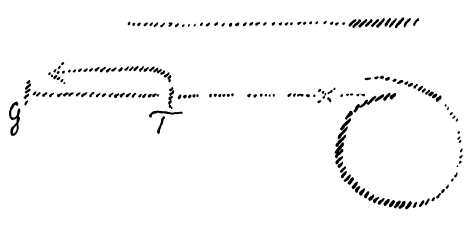
[ 27 ] And so it came to pass that, within what was then the Dutch section of the Theosophical Society, I gave lectures in various cities on life between death and a new birth, and there, for the first time—right at the very beginning of my work—I pointed out that it is, after all, nonsense to simply create a mental image of what this is—earthly life from birth to death—and assume that, if Kamaloka is experienced as if a piece were simply added to one’s consciousness, then Kamaloka is experienced as if a piece were simply added to one’s consciousness (see illustration above).
[ 28 ] I have shown that a mental image of time must be of it flowing backward there, and I described how life in Kamaloka is a life lived in reverse, stage by stage, only three times as fast as ordinary life on Earth or as life spent on Earth.
[ 29 ] In everyday life today, of course, no one has any mental image of the fact that this backward progression is a reality—a reality in the spiritual realm—because time is simply conceived as a straight line from beginning to end, and people today have absolutely no concept of a backward progression.
[ 30 ] Now, the leaders of the Theosophical Society claimed to be reviving the ancient teachings of wisdom. They built upon Blavatsky’s book. All sorts of writings appeared in connection with Blavatsky’s book. But everything was presented in a way that was entirely in line with the materialistic worldview of modern times. Why? Because if they had wanted to arrive at the truth, they would have had to recognize it anew—not merely revive old knowledge. The old ideas were always cited. The Wheel of Births of the Buddha and of ancient Eastern wisdom was also constantly cited. But people do not take into account that a wheel is not such that one can draw a straight line as a wheel, and that one can only draw a wheel if it curves back upon itself (see drawing). There was no life in this revival of ancient wisdom, precisely because there was no direct insight. In short, it was necessary for something to be created through direct insight that could then also shed light on the ancient wisdom.
[ 31 ] So, especially during the first seven years of anthroposophical work, what actually happened was that there were also people—well, who were quite content that, as they put it, there was no renewal in the field of theosophy. They said: “What is being said there is no different from the rest; the differences are insignificant.” So they were talked out of it. But what I brought about, so to speak, right at the beginning of the work within the Dutch Section of the Theosophical Society—by delivering these lectures from a living source, rather than simply parroting dogmatically, as the others did, what was written in the Theosophical Society’s dogmatic texts—that was never forgotten. It was never forgotten. Those who may recall those early days of our development need only think back to the year 1907, when the congress took place in Munich—at a time when we were still within the fold of the Theosophical Society—and the Dutch Theosophists arrived in a state of great agitation, furious that what they perceived as a foreign element had intruded. They did not sense that a living, present force was standing in opposition to something merely traditional; rather, they simply perceived it as a foreign element.
[ 32 ] But something else was bound to happen even back then. At that time, the conversation between Mrs. Besant and me had already taken place in Munich, during which it was established that what I represent—namely, anthroposophy—would operate completely independently, without regard to anything else that might otherwise assert itself within the Theosophical Society. At the time, I would say, this was established as a way of life.
[ 33 ] However, even back then, those absurdities that would eventually lead to the Theosophical Society’s downfall were already looming on the horizon. For today one can say that, even though it still has many registered members, it has destroyed itself as a society dedicated to a spiritual movement. Isn’t it true that things continue to exist as a corpse long after they have destroyed themselves? But what the Theosophical Society once was no longer exists today.
[ 34 ] One must simply be very clear about this: At the time when anthroposophy began to take effect, the Theosophical Society was imbued with a spirituality that, while traditional, was nonetheless well-founded and rich in content. What Blavatsky brought into the world was right there, and people were actually living within what Blavatsky had brought into the world.
[ 35 ] But Blavatsky had already been dead for a decade. One can only say: The atmosphere within the Theosophical Society—that which served as a continuation of Blavatsky’s work—was something quite solid in terms of cultural history, something that could truly offer people something. But ‘even back then, certain seeds of decay were already present. The question was simply whether these seeds of decay could be overcome, or whether they were bound to lead to a kind of complete disharmony between Anthroposophy and the old “Theosophical Society.”
[ 36 ] Now it must be said that one of the currents that had existed within the Theosophical Movement since Blavatsky’s time was, in fact, a terribly corrosive element. If one wishes to view the matter as I am doing now, one must simply distinguish between what Blavatsky introduced into modern life as spiritual content and what was brought about by the way in which Blavatsky was inspired to then convey this content in the manner I have described. For, to begin with, Blavatsky was a personality who was exactly as I have described her to you in recent days; who, simply when she was, so to speak, influenced from some quarter—say, through betrayal, as I have described—nonetheless created from within herself—as if recalling a previous incarnation on Earth, even if only as a revival of the old—and bequeathed wisdom to humanity in book form. This second fact must be kept entirely separate from the first, for through this second fact—that Blavatsky was inspired in a particular way to do what she did—elements entered this Theosophical Movement that were no longer what they should have been had the Theosophical Movement been intended to become a purely spiritual movement.
[ 37 ] That was not the case. For the truth of the matter was that Blavatsky first received inspiration from a source—which I do not wish to discuss further—and then produced on her own what is contained in *Isis Unveiled*. Then, through all sorts of machinations, it came to pass that Blavatsky came under a second influence from Eastern secret teachers, behind whom lay a cultural-political tendency of a self-serving nature. From the very beginning, there was a one-sided “Eastern policy” embedded in what people now sought to achieve indirectly through Blavatsky. Therein lay the tendency to show the materialistic West just how much more valuable the spiritual knowledge of the East is than the materialism of the West. There was a tendency to establish a kind of empire—initially spiritual, but later, in a broader sense, an empire of the East over the West—by first imparting Eastern wisdom to the spirituality of the West, or, if you will, to the lack of spirituality in the West. Hence, I would say, that shift took place from the thoroughly European perspective in *Isis Unveiled* to the thoroughly Oriental one in Blavatsky’s *The Secret Doctrine*.
[ 38 ] A wide variety of factors were at play there. But one of these factors was precisely the desire to integrate India into Asia in order to create an Asian-Indian empire with the help of the Russian Empire. And so this doctrine took on an Indian character, with the aim of spiritually defeating the West in this way. You see, this is a one-sided, self-serving, nationalistic slant. It was present from the very beginning and manifested itself in a symptomatically significant way. The first lecture I heard from Annie Besant was on Theosophy and Imperialism. And if one were to ask: Does the actual fundamental impulse of this lecture lie in the continuation of Blavatsky’s true spiritual teachings, or does the fundamental impulse of this lecture lie in the continuation of what had been running parallel to that? — one would have to say the latter.
[ 39 ] Annie Besant was often in the habit of saying things about which she certainly did not know the underlying reasons. She would throw herself into a cause without understanding its underlying reasons. The deeper connections were unknown to her. But if you read the lecture “Theosophy and Imperialism”—which has been published—carefully and with full understanding, taking into account all the underlying context, then you will realize: If anyone were to want to tear India away from England—in a certain sense, to tear it away spiritually—then the first, unnoticed step toward such a tendency, as expressed in that lecture, could be taken.
[ 40 ] That has always been the beginning of the end for such spiritual movements and spiritual societies: that they began to mix one-sided political elements into their sphere, whereas a spiritual movement today can only make headway in the world if it is universal, indeed, today one of the most essential conditions for the existence of a spiritual movement—one that is meant to lead into true, real spirituality—is that it be entirely universal. And anything that is not entirely universal, anything that in any way leads to the division of humanity, is from the outset a destructive element for a spiritual movement that is meant to lead into the true, real spiritual world.
[ 41 ] But just consider for a moment how deeply such things penetrate into the subconscious realms of the human being. It is simply part of the very nature of a spiritual movement—such as the anthroposophical movement, for example—that one must at least have the honest, earnest aspiration to rise above all the narrow interests of humanity and truly soar toward the universal interests of humanity. And that was the downfall of the Theosophical Movement: from the very beginning, it contained such an element within itself. Occasionally, such an element can also backfire: during the World War, this other tendency became very Anglo-chauvinistic. But it is precisely on such occasions that one must realize quite clearly that it is entirely impossible to bring a genuine spiritual movement to fruition if any form of particularism exists to such an extent that one is unwilling to move beyond it.
[ 42 ] Therefore, among the external dangers facing the anthroposophical movement today, the foremost is that people in this age—which is straying everywhere into nationalism—lack the courage to free themselves from nationalism.
[ 43 ] But where, then, does something like this one-sidedness have its roots? It stems from the fact that, as a society, one seeks to gain power through means other than the revelation of the spiritual itself. One can certainly say this: While there was still much that was healthy in terms of the development of a sense of power within the Theosophical Society at the turn of the 19th century, by 1906 this had almost entirely disappeared, and a strong striving for power had taken its place.
[ 44 ] It is necessary to truly understand how anthroposophy grew out of general human interests and to be clear that it was only because the questioners were there in the Theosophical Society that anthroposophy had to grow into the Theosophical Society—I would say, had to “take up residence” there for a time—because otherwise it would not have found a “home.”
[ 45 ] Isn’t it true that, shortly after the first period had come to an end, so to speak, the question of Christ in particular revealed the utter impossibility of the Theosophical Movement for Western life? For what was essentially a theory in Blavatsky’s case—albeit one driven by emotion—namely, the disparagement of Christianity—later became, within the Theosophical Movement, such a practical disparagement of Christianity that a boy was raised of whom it was said: “In him, the soul of the resurrected Christ will be nurtured.” One could hardly imagine anything more absurd. But an order was founded out of the Theosophical Society to bring about this “birth of Christ” in a boy who was, in fact, already there.
[ 46 ] Things very soon took a turn toward the utterly absurd. Naturally, in such matters, ambiguities arise very quickly that border terribly closely on untruth. In 1911, a congress of the Theosophical Society was to be held in Genoa. The conditions that led to such absurdities were already in full swing, and I was required to announce my lecture for this Genoa Congress: “From Buddha to Christ.” That should have led to a concise, clear debate, for what was present everywhere at the time would have had to play itself out. But lo and behold, the Genoa Congress was canceled. Of course, excuses can always be found for such things. All the arguments that were put forward really did look remarkably like excuses.
[ 47 ] Thus, one can say that the anthroposophical movement entered its second phase by following its own direct path, a path that was set in motion precisely by the fact that, right at the very beginning, I gave a lecture to a non-theosophical audience—of which only a single person—and no more! — has remained, who is still with us today, even though numerous people had attended the lecture at that time. The first lecture I gave—it was actually a lecture series—was titled “From Buddha to Christ.” In 1911, I wanted to give the series again: “From Buddha to Christ.” That was the straight line! But the Theosophical Movement had veered off into a dreadful zigzag course.
[ 48 ] If one does not take the history of the anthroposophical movement seriously and is unwilling to call these things by their proper names, then one will also be unable to respond appropriately to whatever those superficial people may once again put forward regarding the relationship between anthroposophy and theosophy—since they are absolutely unwilling to learn how anthroposophy was, from the very beginning, something entirely independent, but how it was only natural to respond with the answers it can give to the people who were there asking questions.
[ 49 ] One might say: The second period of the anthroposophical movement lasted until 1914. It actually did nothing in particular—at least as far as I am concerned—to settle its relationship with the Theosophical Movement. The Theosophical Society settled the matter by expelling the anthroposophists. But it didn’t really matter to us. Since we hadn’t been very interested in it from the start—even when we were included—it didn’t matter much to us now that we had been excluded. We simply carried on exactly as we had before. Being excluded didn’t change a thing about what had happened earlier, while we were still included.
[ 50 ] Just look at how things unfolded, and you will see that, with the exception of the completion of a few formalities within the anthroposophical movement, absolutely nothing happened until 1914; rather, everything that did happen was initiated by the Theosophical Society. I was first invited to give lectures there. That is what I did. I gave anthroposophical lectures. I continued to do so as well. I was invited as a result of those lectures, which have been reprinted in my book *Mysticism at the Dawn of Modern Spiritual Life*. I then elaborated on what is written in *Mysticism at the Dawn of Modern Spiritual Life* from a wide variety of perspectives.
[ 51 ] I—and, of course, my followers—were then excluded from this very same view of society. I was first included and later excluded entirely because of this very same matter. Yes, that is indeed how it is. One simply cannot understand the history of the anthroposophical movement unless one can truly grasp this fundamental fact: that, in contrast to the Theosophical Movement, it made no difference whether one was included or excluded.
[ 52 ] This is something I would like you to reflect on in a spirit of self-examination; that is what I ask of you. Based on that, I would like to outline tomorrow the final phase—the most difficult one, spanning from 1914 to the present—so that I can go into more detail later in the following lectures.