

Esoteric Considerations of Karmic Connections
Volume II
GA 272
23 January 1910, Strasbourg
Translated by Steiner Online Library
1. Goethe’s “Faust” from a Perspective of Spiritual Science
[ 1 ] The Spiritual Science that seeks to become part of the modern cultural current does not aim to be anything new, and it is precisely this that distinguishes it from the many worldviews and other intellectual movements that believe they can justify their existence by claiming to offer something new regarding this or that question of spiritual life. In contrast, what is called Spiritual Science seeks to emphasize that the sources of its insights and its life have always existed in the same way throughout history—ever since human beings have thought and striven to understand the highest questions and mysteries of existence. I have had the opportunity to emphasize this on several occasions, including here in this city, when I had the honor of speaking in previous lectures.
[ 2 ] It must now be particularly fascinating to view not only the various religious creeds and worldviews that have emerged in the course of human development from this perspective, but also to look at the people closest to us from this perspective for once. For if anything is to be true in Spiritual Science, then at least a core of that truth must be found in all those who have honestly and energetically strived for knowledge and for a life worthy of human dignity.
[ 3 ] When people speak of Spiritual Science today, a wide variety of opinions are expressed from one side or the other, and anyone who has not delved more deeply into the subject—who has gained only a superficial understanding from this or that lecture or pamphlet—will, depending on their point of view, regard the Spiritual Science as the fanciful mental images or daydreams of a few unworldly people who entertain curious notions about life and its underlying realities. It must certainly be admitted that, if one does not look more closely, such a judgment may seem understandable; for although this is not the subject of discussion today—since we are dealing with a specific topic—it is nevertheless worth pointing out some of the most important insights of the Spiritual Science. And as soon as these are named and characterized, a feeling may well arise quite honestly among our contemporaries: “Oh, what kind of strange stuff is this!”
[ 4 ] On the whole, Spiritual Science—if taken seriously—is based on the premise that what surrounds us in the sensory world, what we can perceive with our senses and comprehend with our intellect (which is bound to our senses), is not the whole world; rather, behind everything that is sensory lies a spiritual world. And this spiritual world is not in some indefinite hereafter, but is always around us, just as the phenomena of color and light are also around the person born blind. However, in order for us to know about something that is around us, we must have an organ with which to perceive it. And just as a person born blind cannot see color and light, so too, as a rule, people in our age, with their normal faculties, cannot perceive the spiritual realities and beings that surround us. But if we are fortunate enough to operate on someone born blind, there comes a moment when his eyes are opened, and what was not there for him—light and colors—now floods into his inner being. For him, this is a perceptible world from the moment of his operation onward. In the spiritual realm, too, there is a higher awakening—the awakening through which a person becomes an initiate into the spiritual world. To quote Goethe: there are spiritual eyes and ears, but human souls are generally not yet ready to make use of them. But when we apply the means and methods through which these powers come into being, then something takes place within us on a higher plane—much like for a person born blind who undergoes surgery and is then flooded by the world of colors and light. There, when his eyes and ears are opened, the person becomes awakened. A new world surrounds him—a world that has always been there, but which he can perceive only from the moment of his awakening. But then, when a person has reached this stage, he learns to make various insights his own—insights that illuminate life, insights that can give us strength and confidence for our work, and that enable us to glimpse the essence of the human destiny and the mysteries of fate.
[ 5 ] And merely by way of introduction, we shall discuss one of these insights—one of those insights that, if not crazy, must often seem strange and dreamlike to people today. It is a realization that is nothing other than a revival of an ancient process of insight, its continuation on a higher plane—a truth that was only recently attained on a lower plane. Humanity generally has a short memory when it comes to major events in the spiritual world, and that is why so few people today remember that in the 17th century, not only laypeople but even scholars believed that lower animals—even worms and fish—could develop from river mud. It was the great naturalist Francesco Redi who first pointed out that no earthworm, no fish, grows out of dead river mud unless an earthworm or fish embryo is already present within it. He stated that life can come only from life, and from this we can see that it is merely an inaccurate way of looking at things to believe that the living essence of a fish or a worm could grow out of lifeless river mud. Closer examination shows that we must go back to the living germ, and that this living germ can draw only from its surroundings the forces that are present there to bring what is living in the germ to its fullest development.
[ 6 ] What Redi said—that life can only arise from life—is now taken for granted in science. When Redi uttered those words back then, he narrowly escaped the fate of Giordano Bruno. Such is the course of human development. First, such a truth must be won in such a way that those who first articulate it are condemned as heretics; then it becomes self-evident, the common heritage of humanity. What Redi accomplished for the natural sciences is to be accomplished today for the spirit through Spiritual Science, by applying the very principle that Redi articulated for the natural sciences—drawn from the insights of the awakened spiritual eye and spiritual ear—to the realm of the soul. And in that context, the principle states: Spiritual-soul aspects can arise only from spiritual-soul aspects. — That is to say, it is an inaccurate way of looking at things when we see a human being come into existence and believe that everything that comes into life originates merely from the father, mother, and ancestors. Just as we must trace the developing earthworm back to the living earthworm germ, so too, when considering a human being who develops from a seed into a specific being, we must trace back to a previous spiritual existence and realize that this being, who enters existence through birth, draws from its physical ancestors only the power for its unfolding—just as the earthworm seed draws power from its inanimate surroundings. And to the same extent, this statement—“Life can only come from life”—leads to the other statement: “The present life, which comes into being through birth, leads back not only to physical ancestors but also, through the centuries, to a previous spiritual-soul life.” —- And if you delve deeper into this, you will see that it is demonstrated entirely scientifically that there is not just one, but repeated earthly lives; that what is now within us between birth and death is the repetition of a spiritual-psychic reality that was already present in earlier stages of existence; and that our present life, in turn, is the starting point for subsequent lives. Spiritual-soul aspects arise from spiritual-soul aspects and trace back to spiritual-soul aspects that existed before birth—aspects that descend from the spiritual world and find expression in physical incarnations. We now perceive things quite differently when, for example, as educators, we are faced with a child who is gradually unfolding these powers. At birth, we see an indeterminate quality on the child’s face, and how, from within, something unfolds with ever greater clarity—something that does not stem from heredity but comes from previous lives. We see how this center of the spiritual-soul aspect unfolds further and further through the child’s talents from the moment of birth.
[ 7 ] This is what Spiritual Science has to say today regarding repeated earthly lives. It may seem like a pipe dream today, just as what Francesco Redi said in the 17th century was considered a pipe dream. But what is regarded as a pipe dream today will become a matter of course in the not-too-distant future, and the statement—that “spiritual-soul aspects come from spiritual-soul aspects”—will become common knowledge among humanity.
[ 8 ] Today, heretics are no longer treated as they once were. They are no longer burned at the stake, but they are regarded as fools and dreamers who speak from arbitrary fantasy. They are ridiculed, and those who sit on the high throne of science claim that this is incompatible with true science, not realizing that it is true, genuine science that demands this truth. And now we could cite hundreds upon hundreds of such truths that would show us how Spiritual Science can shed light on life by demonstrating that an immortal core of being lies within the human being, which passes into the spiritual world through death, and once it has fulfilled its destiny there, returns once more to physical existence to gather new experiences, which it then carries upward through death into the spiritual worlds. We would see how the bonds formed between one person and another, between one soul and another, in all areas of life—those traits of the heart that pass from soul to soul and cannot otherwise be explained—can be explained by the fact that they were forged in previous lifetimes. And how the inner spiritual bonds we form today do not cease when death passes over our existence, but how these bonds of life that stretch from soul to soul are immortal like the human soul itself, how they live on through the spiritual world and will be revived again in other, future earthly circumstances and new incarnations. And it is merely a matter of development that human beings will also remember their past earthly experiences—what they have undergone spiritually and soulfully in previous earthly lives and states of existence.
[ 9 ] Such truths will, in the not-too-distant future, become an integral part of human life, and people will draw strength, hope, and confidence from these principles. Today we can only observe that a few individuals in the world, through their sound sense of truth, are drawn to what spiritual researchers have to proclaim based on their experiences in the spiritual world. But the insights of Spiritual Science will become the common heritage of humanity and will take root in a serious search for truth. And those who have walked the paths of serious truth-seekers have always, in all that they have offered to humanity, given form to the great wisdom and insights that Spiritual Science is now bringing back.
[ 10 ] Let us consider an example in the form of a figure closely associated with our modern way of life: the example of Goethe, and specifically the work that occupied him throughout his entire life as his most comprehensive and greatest achievement: his *Faust*.
[ 11 ] When we approach Goethe and attempt to shed light on his aspirations using what Spiritual Science has to offer, we can actually begin quite early. One might say that, from his very nature, one can see in Goethe how soul and spirit were present within him. Everything that drives one to seek the spiritual behind the phenomena of the sensory world was an early predisposition in him. There we see the seven-year-old boy Goethe, who could have absorbed ordinary mental images from his surroundings—as any boy might—to form his first mental image of the soul. That does not satisfy him; he recounts it himself in *Poetry and Truth*. There we see how the seven-year-old boy begins something quite remarkable to express his longing for the divine. He takes a music stand from his father’s collection and turns it into an altar by placing on it all manner of minerals, plants, and other products of nature through which the spirit of nature speaks. Intuitively, the boy’s soul builds an altar, places a small incense stick on it, takes a magnifying glass, waits until the morning sun rises, focuses the first rays of the rising sun with the magnifying glass, and directs them onto the incense stick so that the smoke rises. And in his twilight years, Goethe recalls how, as a boy, he wished to send his devout feelings upward to the great God of Nature, who speaks through minerals and plants and sends us His fire in the sun’s rays. This grows with Goethe. We see how, at a more mature stage—yet still springing from the yearning soul that lives within Goethe—after he arrives in Weimar and is appointed by the Duke as his advisor, this feeling for the Spirit that speaks through all beings of nature finds expression in the beautiful prose hymn. There he says: “Nature—we are surrounded and embraced by her, unable to step out of her, and unable to penetrate deeper into her. Unwarned and uninvited, she draws us into the circle of her dance and carries us along until we are weary and slip from her arms... It is not we who have done what we do; she has done it all; she thinks and ponders ceaselessly, gazing into the world with a thousand eyes.” And again later, in his beautiful book on Winckelmann, *Antiques*, he says: “When the healthy nature of man functions as a whole, when he feels himself in the world as part of a great, beautiful, dignified, and valuable whole, when harmonious contentment grants him pure, free delight: then the universe, if it could perceive itself, would, having reached its goal, exult and admire the pinnacle of its own becoming and being.” Goethe felt that everything living and weaving out there in nature celebrates a resurrection from within the human soul, and that a higher nature—a spiritual nature—is brought forth from the spirit and soul of man. But Goethe only slowly struggles to achieve complete clarity in his spiritual understanding of nature. And nowhere do we see more clearly and distinctly how Goethe was, throughout his entire life, a seeker who never rested or ceased striving—always reshaping his understanding to reach a higher level—than in his life’s epic, *Faust*.
[ 12 ] From his earliest youth, he had begun to pour everything that filled his yearning and intuitive soul into his poem; and as an old man in his twilight years, shortly before his death, he completed this poem, on which he had worked for over fifty years and into which he had poured the best of his life. The second part lay sealed at the time of his death, like the great testament he was to bequeath to humanity. It is a significant document. We can understand this document only if we follow Goethe a little as he himself sought to struggle his way to insight.
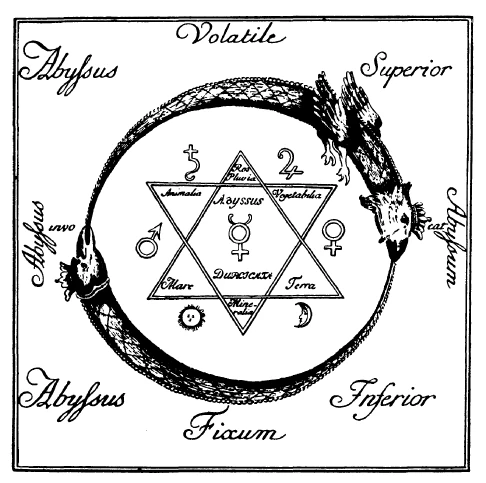
[ 13 ] There, for example, we find the student Goethe at the University of Leipzig. He is actually supposed to become a lawyer, but that is only a secondary concern for him. An invincible urge to uncover the secrets of the world, to explore the spiritual, was already alive in the young student back then. That is why he immersed himself in everything Leipzig had to offer in terms of the study of nature. He sought to listen to what nature had to say to us through its phenomena, to listen to the world’s mysteries of existence. But in order to transform what the natural sciences could offer him—to melt it down in his soul into that urge that permeates and weaves through all his inner strength, an urge that seeks not abstract knowledge but warm, heartfelt insight—Goethe needed a profound experience, an experience that truly leads a person to that insight which is the gate toward which we gaze with a sense of foreboding, the gateway that, for the average person today, closes off the invisible, the supersensible: the gateway of death. Death passed him by at the end of his student days in Leipzig. A serious illness had struck him down, bringing him close to death. He had lived through hours and days when he had to tell himself that at any moment he might pass through that mysterious gateway. And the mysterious, impetuous urge for knowledge demanded the utmost seriousness in the pursuit of insight. With this spirit of inquiry now fully developed, Goethe returned to his hometown of Frankfurt. There he found a circle of people led by a woman of great, profound talent: Susanne von Klettenberg. Goethe erected a wondrous monument to her in *Confessions of a Beautiful Soul*. He showed how, within the personality to whom he had come so close spiritually at that time, there lived something that can be described only by saying: In Susanne von Klettenberg lived a soul that sought to grasp the divine within herself in order to find, through the divine within herself, the spiritual that permeates the world. - At that time, Goethe was introduced by the circle to which this lady belonged to studies that, when one allows them to take effect on oneself today as a truly modern person, seem crazy. Goethe immersed himself in medieval writings. Anyone who picks them up today cannot make sense of them. When one sees the strange symbols contained within them, one wonders: What is the point of this in light of science’s modern quest for truth? — One book had a particular impact: *Aurea catena Homeri*, *The Golden Chain of Homer*. When you open it, you find a curious symbolic illustration: a dragon at the top of a semicircle, a dragon full of life, adjoining another dragon—a withering dragon, dying within itself. All manner of symbols are associated with it: symbolic keys, two intertwined triangles, and the signs of the zodiac. To our contemporaries, this is a flight of fancy; in the light of modern science, it is a flight of fancy, because we do not know what to make of these symbols. Goethe senses intuitively that they express something, that one can make sense of them when one contemplates them. They do not directly express something that can be found here or there in the world. But if one allows these symbols to take effect by imprinting them on one’s mind in such a way that one becomes, as it were, deaf and blind to one’s physical surroundings—allowing only these symbols to work within oneself—then one experiences something most peculiar; one experiences that the soul senses within itself something that had previously lain dormant, like a spiritual eye that opens. And if one has sufficient perseverance, one attains what one might call meditation or concentration, through which one develops one’s soul to such an extent that one actually undergoes something like a spiritual eye operation, through which a new world opens up. For Goethe, a new world had not yet opened up at that time; he had not yet reached that point. But what stirred within his soul was the inkling that there are keys to this spiritual world, that one can penetrate this spiritual world. One must bring this mood to mind; the living sensation, the living feeling: something is being stirred within me, something is coming to life; there must be something that leads into the spiritual world. But at the same time, he senses that he cannot yet enter it. If Goethe had ever been identical with Faust in his life, we would say: Goethe was in the same situation in which Faust appears to us at the beginning of the first part, where Faust, after having studied the most diverse fields of human knowledge, opens books containing such symbols and feels surrounded by a spiritual world, but cannot enter into that spiritual world. Goethe never felt identical with this Faust: a part of him was Faust, but he himself grew beyond what was only a part of himself. And so that which in Goethe went beyond Faust grew through the fact that, shunning no discomfort, he strove farther and farther and said to himself: One does not reach the mysteries of existence in a single leap, nor through incantations and formulas, but by gradually, step by step, in patient, energetic insight, truly penetrating—spiritually and soulfully—whatever constantly confronts one in the physical world. — It is easy to say: What constitutes higher knowledge must dawn in the soul. — This higher knowledge must indeed dawn in the soul, but it only dawns in its true form when we strive, with patience and perseverance, to come to know, step by step, the real phenomena of the physical world and then to seek the spiritual behind these phenomena of the physical world. But with what Goethe took with him from his time in Frankfurt, he was able to synthesize everything else; he was able to see everything in a different light.
[ 14 ] Goethe came to this city, Strasbourg, from Frankfurt. We could cite many things that elevated him here. What is particularly characteristic, however, is how what holds such great significance in this city—the cathedral—stood out in his mind. At that time, the idea of this marvelous structure took shape in Goethe’s mind, and he understood why every single line is the way it is. With spiritual insight—the insight he had gained through his deep reflection in Frankfurt—he saw every triangle, every single angle of this significant structure as belonging to the whole, and within his soul the architect’s great idea was reborn; Goethe believed he recognized what had flowed into this building as thought, as an idea. And so we could cite many instances where, within Goethe’s soul, a union took place between what had been gained by that soul as inner insight and what it absorbed from external worldly events. It is therefore not surprising that, when he later came to Weimar, he approached the natural sciences from a new perspective—botany, zoology, osteology, and so on—in order to view everything now as letters that together form the book of nature, leading into the mysteries of existence. This is how his studies on plant development and the animal world came about; he continued to pursue them later just as he had as a student, except that he sought the spirit behind the sensory phenomena of existence in everything. Thus we see how, especially during his trip to Italy, he contemplated art on the one hand and the works of nature on the other, and how he observed the plant world in order to recognize the spirit that reigns within it. The words he wrote to his friends while pursuing this kind of spiritual natural science are grand and beautiful. He said: “Oh, here everything presents itself to me in a new way; I would like to travel to India to view what has already been discovered in my own way.”—That is to say: as his development, according to the hints we have been able to give, demanded of him. And so we see how he also regarded the works of art that met him there. He writes in a letter: “This much is certain: the ancient artists possessed just as great a knowledge of nature and just as sure a conception of what can be imagined and how it must be represented as Homer did.” Unfortunately, the number of first-rate works of art is far too small. But when one beholds even these, one has nothing left to wish for but to recognize them properly and then depart in peace. These sublime works of art are at the same time the highest works of nature, brought forth by human beings according to true and natural laws. Everything arbitrary and fanciful falls away; there is necessity, there is God.” Just as the great spirit of nature had spoken to the seven-year-old boy from the altar he had built himself, so the great spirit of existence in the spiritual world spoke to him through these works of art, which he regarded as a unity. Thus Goethe came ever more to the contemplation of the individual through energetic, devoted work. Then he could calmly await the moment when a true understanding of the spiritual world would spring from his observations—a true Spiritual Science that then confronts us, artistically recast and transformed, in his *Faust*.
[ 15 ] Thus, the early sections of *Faust* that are written capture the mood of a person who senses the mysteries of existence but cannot penetrate them. There we see how Faust allows those signs to take effect that surround him with the spiritual, but we also see that he is not yet mature enough to truly perceive this spiritual realm. These are the passages where Faust, embodying the aura of Nostradamus, allows the signs of the macrocosm and the Earth Spirit to take effect upon him, where the Earth Spirit appears before him. Faust characterizes the Earth Spirit in wonderfully beautiful words. We see how he senses that what the planet Earth is, is not simply that physical sphere as viewed by natural science, but just as the body contains a soul, so the body of the Earth contains a spirit.
In the torrents of life, in the storm of deeds
I surge back and forth,
Weaving to and fro!
Birth and grave,
An eternal sea,
A shifting weave,
A blazing life,
Thus I create at the whirring loom of time
And weave a living garment for the Deity.
[ 16 ] This is what lives within the earth as the spirit of the earth, just as our spirit lives within us. But Goethe characterizes Faust as not yet mature, his spirit as still incomplete. He must turn away from the terrible sign like a worm cowering in fear. The spirit of the earth replies to him: “You resemble the spirit you comprehend, not me.” In Goethe’s soul lived the realization—even if at first it was only a vague intuition—that we must not declare ourselves satisfied at any stage, but must strive from every stage toward higher and ever higher stages; that we cannot say at any stage that we have achieved something, but must strive ever higher from every stage. Goethe’s diligent studies, moving from phenomenon to phenomenon, led him into these mysteries. And now we see him grow.
[ 17 ] Goethe has Faust address the very same spirit whom he had first summoned—and of whom he could only say, “What a dreadful face!”—after Goethe himself had reached a higher level following his trip to Italy, a journey I have characterized as one in which he sought to permeate all of nature and art with his own perspective. Now Faust is in the same frame of mind as Goethe himself was. Now Faust stands before the very same spirit, to whom he thus speaks:
Sublime Spirit, you gave me—you gave me everything
I asked for. You did not in vain
Turn your face toward me in the fire.
You gave me the magnificent natural world as my kingdom,
The power to feel it and enjoy it. You do not
Do you merely permit me to be a cold, marveling visitor,
But grant me to gaze into its deep bosom
As into the bosom of a friend.
You lead the procession of the living
Past me, and teach me to know my brothers
In the silent thicket, in air and water.
And when the storm roars and creaks in the forest,
The giant spruce, crashing down,
Crushing neighboring branches and trunks as it sweeps downward,
And the hill thunders with a dull, hollow roar at its fall;
Then you lead me to the safe cave, show me
Me to myself, and within my own breast
Secret, profound wonders unfold.
And before my eyes the pure moon rises
Soothingly across the sky: silver figures
From rocky cliffs, from the damp thicket
Of the ancient world float up to me,
And soothe the stern delight of contemplation.
[ 18 ] Goethe—and with him Faust—has reached the heights, no longer turning away from the Spirit he sought to attain in a single leap. Now the Spirit confronts him as that which he no longer needs to turn away from. Now he recognizes it in all living things, in all the realms of nature: in the forest and the water, in the quiet bush, in the giant spruce, in the storm and the thunder. And not only there. After it has appeared to him in the vastness of nature outside, he also recognizes it in his own heart: its secret, profound wonders open up.
[ 19 ] This represents a step forward in Goethe’s understanding of the spirit, and Goethe did not rest in his efforts to make further progress. We then see how he, likely spurred on by Schiller, sought to delve deeper into the subject, particularly in the 1790s. They provided him with what enabled him to move beyond the vague characterization of spiritual consciousness—that a spirit lives in everything. He succeeded in grasping this spirit in concrete terms. But Goethe needed much preparation before he was able to portray the life of the human spirit in this sense: what is spiritual-soul-related can only originate from the spiritual-soul-related. However, the fact that Goethe never failed to attempt to delve deeper is evident in many works he created before completing the second part of *Faust*. The second part of *Faust* shows just how far he had progressed. Some had already turned away from him when they encountered the introspective Goethe in *Pandora*. Even today we hear people say: The first part of *Faust* is full of life, exudes immediate naturalness, but the second part is a product of Goethe’s old age, full of symbols and affectations. — Such people have no idea what lies within him, what infinite wisdom is contained in this second part of *Faust*, which a life as rich as Goethe’s could only have produced in his twilight years, so that he left it behind as his testament. That is why we also understand why, in response to certain works that already embody the spirit of *Faust*, Goethe wrote the lines in which he is known to portray Faust as a struggling soul—a soul upon which something new has broken in. We recognize this in the anger he poured out on those who called *Faust* an inferior work of old age. He says of them:
There they praise Faust,
And whatever else
Rages in my writings,
In their favor;Good old Mick and Mack,
That makes them very happy;
The rabble thinks,
“We wouldn't be that anymore!”
[ 20 ] Goethe once put into words the sentiment he felt toward those who believe that only what Goethe accomplished in his younger years is valid, and who are unwilling to rise to the level of what he accomplished in his later years. |
[ 21 ] After Goethe has introduced his Faust into the life that immediately surrounds us—having him experience that wonderful tragedy of Gretchen—he leads him out into the world that, outwardly, is the “great world,” beginning with the world that, outwardly, is the “great one”: the world of the imperial court. Here, Goethe now seeks to show that Faust must truly penetrate, even spiritually, into the mysteries of this world. But then Faust should be introduced into the true spiritual world, into the supersensible world.
[ 22 ] Right at the beginning of the second part, we see how Goethe has Faust surrounded by all manner of spiritual beings. This is meant to express that Faust is not only to be led into an external, physical world, but that he is also to experience what can be experienced by one whose spiritual eye is opened and whose spiritual ear learns to perceive. That is why, in the second part, Goethe reveals to us, step by step, the nature of the human soul and human development. What is Faust to experience? He is to experience the insights of the supersensible world. He is to be initiated into the mysteries of the supersensible world. Where is this supersensible world?
[ 23 ] It is only on this occasion—when we consider the spiritual essence of *Faust*—that we can truly begin to grapple with the question of Mephistopheles, that spirit who surrounds Faust from the very beginning and plays a part in everything Faust undertakes. But it is only in the second part, when Faust is to be led into the spiritual world, that we see what role Mephistopheles plays. After Faust has gone through the events at the “Imperial Court,” he begins to see what is no longer present in the physical world: the spirit of Helena, who lived centuries and centuries ago. She is to be found for Faust. She cannot be found in the physical world. Faust must descend into the spiritual world. Mephistopheles holds the key to this world, but he cannot enter this spiritual world himself; he can only describe it intellectually. He can say: “You will descend”—one might also say, “you will ascend.” — He then actually describes the spiritual world into which Faust is to immerse himself in order to come to know it supersensually, to find within it the spirit, the immortal, the eternal—that which remains of Helena. A word resounds, a wondrous word: Faust is to descend to the Mothers. What are the “Mothers”? One could speak for hours if one wanted to characterize exactly what the Mothers are. We need only say here that, for Spiritual Science throughout the ages, the Mothers have been what a person comes to know when his spiritual eye is opened. When he looks into the physical world, he sees all things as limited. When he enters the spiritual world, he enters something from which all physical things emerge, just as ice emerges from a pond of water. Just as someone who could not see the water would say, “There is nothing but ice; it piles up out of nothing”—so says the one who does not know the spirit: “There are only physical things.” — He does not see the Spirit that lies between and behind the physical, sensory things, from which all physical, sensory things take shape, just as ice forms from water. There, where the source of physical things lies—which is no longer visible to the physical eyes—are the Mothers. Mephistopheles is the entity meant to represent that intellect which knows only what is outwardly manifested in space—an intellect that, while aware that a spiritual world exists, cannot penetrate it. Mephistopheles stands there beside Faust, just as the materialist thinker stands today beside the researcher in Spiritual Science, saying: “Oh, you researcher in Spiritual Science, you theosophist, you want to look into a spiritual world? There’s nothing in there at all—it’s all just a dream. It’s all nothing.” —To this materialist, who wants to build firmly on what the microscope and the telescope reveal, but who wants to deny everything that lies beyond physical phenomena, the spiritual researcher cries out: “In your nothingness I hope to find the universe.” Thus the materialistic thinker stands opposed to the spiritual person, who hopes to find the spirit precisely where the other sees nothing. These two forces will stand opposed to one another for all eternity. And from the very beginning, Mephisto stands opposite Faust as the spirit who can lead up to the door, but who cannot step through that threshold. The theosophist or Spiritual Scientist does not say: Material science is nothing; it is unnecessary. — He says: We must take this science seriously, study it, but it holds only the key; it leads us to where true spiritual life is to be found.
[ 24 ] Faust then descends into the realm of the mothers, into the spiritual world; he succeeds in bringing Helena’s spirit up to him. But he is not yet ready to truly unite this spirit with his own soul. Hence the scene in which passion stirs within Faust, in which he seeks to embrace the archetype of Helena with sensual passion. That is why he is repelled there. This is what happens to anyone who seeks to approach the spiritual world out of personal, selfish feelings. They are repelled, just as Faust is repelled when he has brought Helena’s spirit up from the realm of the mothers. Faust must first come of age, learn to recognize how the three members of human nature truly come together: the immortal spirit, which passes from life to life, from incarnation to incarnation; the body, which lives out its life between birth and death; and the soul, which stands within between the two. Body, soul, and spirit—how they are connected, how they belong together—this is what Faust must come to understand. Faust has already sought the archetype of Helena—the immortal, the eternal, that which passes from incarnation to incarnation, from life to life—but he was not yet ready. Now he must mature in order to become worthy of truly entering the spiritual world. To this end, Faust must learn how this immortal essence approaches human beings only when it can once again incarnate in physical existence in a new life between birth and death. That is why Goethe must show how the soul lives between spirit and body, how it positions itself between the immortal spirit and the body, which stands between birth and death. Goethe shows us this in the second part of *Faust*.
[ 25 ] In Goethe’s work, the soul is hidden within that wondrous entity about which Goethe scholars have little to say, but in which well-versed spiritual researchers recognize the archetype of the soul. This is none other than the wondrous entity of the homunculus, the little human being. This is an image of the human soul. What is the role of this soul? It is the mediator between body and spirit; it must draw upon the elements of the body from all the realms of nature in order to connect with them. Only then can it be united with the immortal spirit. Thus we see how Faust is led by this homunculus into the classic Walpurgis Night, all the way to the natural philosophers Anaxagoras and Thales, who pondered the origins of nature and life.
[ 26 ] Here, the true doctrine of evolution is presented, one that traces human evolution back to its roots—not merely an animal nature, but a spiritual nature that gathers the elements from nature in order to gradually build up the body. Therefore, the homunculus is advised: “You must begin with the lowest kingdom in order to ascend to higher and higher realms.” — The human soul is first directed to the mineral kingdom. Then it is told: “You must pass through the plant kingdom.” — There is a wonderful expression here: “It murmurs thus,” to describe the passage through the plant world, the lush greenery. There the soul gathers all the elements of the natural kingdoms in order to then ascend. It is explicitly stated: “And you have time until you reach the human being.” Then we see how the spirit of love, Eros, approaches after the soul has formed the body for itself from all the kingdoms of nature. There it unites with the spirit. Body, soul, and spirit are united. Here, that which is the soul of the homunculus—what it organizes as its body—unites with the spirit of Helena. That is why, in the third act of the second part, Helena can appear before us in the flesh. We see the doctrine of reincarnation artistically and poetically woven into the second part of *Faust*. One cannot unite with Helena by drawing her to oneself in stormy passion, but rather by truly living through the mysteries of existence—by living through true reincarnation.
[ 27 ] Goethe, in keeping with the spirit of his time, was not yet able to express the idea of repeated earthly lives as we can today. But he incorporated it into the second part of his *Faust*. That is why he was able to say to Eckermann: “I have written my *Faust* in such a way that it is suitable for the theater; so that the images it presents are outwardly and sensually interesting to those who wish to see only with the outer senses. But to the initiated, it will be evident that the deepest truths have been concealed within this second part of *Faust*.” - Thus Goethe explicitly pointed out that one can find his view of life and his spiritual outlook in this work of poetry. And so we now also understand that Goethe was able to illustrate to us, in this reunion of Faust and Helena, what true mysticism is.
[ 28 ] Faust connects with the spiritual world. What emerges is no ordinary child; what emerges is Euphorion, who is as real as he is poetic. He portrays for us, with equal reality, what comes to life in our soul when it connects with the spiritual world. When the soul penetrates the mysteries of the spiritual world, there is a moment of development within the soul that is of immense significance for that soul. Before the soul can proceed further, it first attains, for brief moments, a connection with the spiritual world—knowing, for very short periods, what the spiritual world is. Then it is as if a spiritual child were born out of spiritual knowledge. But then come again those moments in life when this spiritual child seems to have vanished into the spiritual world. One must grasp this vividly with the heart; then one senses how Euphorion, the mystic’s spiritual child, despite all poetic truth about life, sinks down into the spiritual world—a world into which Faust cannot yet fully enter—yet how he draws something else along with him. This is an experience of the spiritual researcher, the spiritual seeker, when our soul reaches that moment when it truly senses its relationship to the spiritual world, and when insight appears like a child born of a union with the spiritual world. Then it experiences this deeply as it sinks back into everyday life, and it is as if it were taking with it the very best we have. It is as if our own soul were slipping away and being drawn into the spiritual world. Once one has felt this, one hears the spiritual words of Euphorion, who has sunk down, echoing in one’s heart, and who cries out from the dark depths: “Do not leave me alone, Mother, in this gloomy realm.” The true mystic knows this voice—the voice of the spiritual child calling out to our soul as its mother.
[ 29 ] But this soul must move on. It must break free from what is merely personal passion. We must be able to devote ourselves to the spiritual world in an impersonal way. As long as there is still self-interest or self-will, we cannot comprehend the spiritual world. Only then can we grasp this spiritual world, when everything personal has been scrubbed away before the higher realm of the spiritual world; only then can we truly and permanently enter the spiritual world. But even then, there are still various moments—even after we have experienced that moment—that thrust us back into the physical world, moments that rob us of all mysticism for a long time. These are the moments of which we must say to ourselves: Yes, even if we have already overcome all self-interest and self-will, this or that still remains, just as it remained in Faust after he had already said: “I stand here on free ground; I want only to work, to gain everything from nature, to do something only for others.” — But he has not yet reached that point. By gazing at the hut of Philemon and Baucis—and by the fact that it disturbs his gaze—he reveals that the egoism which seeks delight in the sight has not yet been overcome. He wanted to create a possession, selflessly, but he still cannot bear what mars it: the hut of Philemon and Baucis. Then the spirit of evil approaches him once more. The hut is burned down. There he sees what is revealed to everyone who undergoes this development: the worry that befalls anyone who still harbors self-serving aspirations within themselves, and which prevents them from ascending into the spiritual world. There it stands before us, worry; there we learn to recognize it in its true form; then it becomes something that can lead us to the ultimate in true spiritual knowledge. The point is not to suggest that a person should become unworldly or hostile to the world, but rather to show how a person in the world should come to know that which prevents them from breaking free from the world. Through wise self-knowledge, we should let worry step aside so that we may become free from the selfishness of worry—not from worry itself—which is illustrated by the fact that worry says it sneaks in through a keyhole. When we come to know this worry—not merely feeling it, but learning to endure it—then we attain that stage of human development that opens our spiritual eye. This is illustrated by the fact that Faust goes blind in old age; he can no longer see with his physical, sensory eyes, but can look into the spiritual world. “The night seems to penetrate deeper and deeper.” Outwardly it is dark, but a bright inner light—the light that can illuminate the world—shines forth, the light in which the soul dwells between death and birth: the realm of the mothers. Only now can Faust embark on his journey into the spiritual world, where his ascension is so beautifully described.
[ 30 ] Goethe can then summarize what has become of Faust—from the intuitive striving of that man who despaired of science and turned away from it, to what he has become from that stage onward, reaching the highest spiritual knowledge. He can summarize this in the *Chorus mysticus*, whose very name indicates that it is meant to signify something deeper. In this *Chorus mysticus*, what provides the key to all the world’s mysteries—how everything transitory is merely a parable for the imperishable—is to be summarized once more, paradigmatically, in just a few words. What the physical eye can see is merely a parable for the spiritual, the immortal—of which Goethe has shown that one even attains knowledge of reincarnation upon entering this spiritual realm. It is to be shown, finally, that when a person enters the spiritual realm, everything that is a premonition or hope in the physical world becomes a truth there. What is strived for in the physical world becomes a reality in the spiritual world.
[ 31 ] It might seem almost pedantic for me to include here something that one needs to know in order to understand the concluding remarks.
[ 32 ] Goethe spoke somewhat indistinctly in his old age because he had no teeth. He dictated the second part of his *Faust* to a scribe. Since he still retained some traces of the Frankfurt dialect, some words and sounds came out somewhat indistinctly. Thus, the scribe sometimes wrote a *g* instead of a *ch*. For example, “Erreichnis” was written as “Ereignis.” When Goethe dictated the closing words of *Faust*, he said “Erreichnis.” Here, what is inadequate becomes something that can be achieved—an “Erreichnis”—that is, with two “r”s and “ch.” Everywhere, in all editions of Goethe’s works, you will find “Ereignis” written. Goethe scholars are just as incapable of penetrating the meaning. That which is inadequate in the physical world becomes an “Erreichnis” in the spiritual world. What cannot be described in the physical world is accomplished in the spiritual world. There it becomes a living deed.
[ 33 ] And finally, we experience the Great, which Goethe is allowed to express in the closing words of the second part of *Faust*: “The Eternal Feminine.” Oh, it is a disservice to Goethe to say that by these words he means the female sex. Goethe refers to that depth which the human soul represents in the face of the mystery of the world—that which yearns as the eternal within humanity: the eternal feminine, which draws the soul upward toward the eternally immortal, toward eternal wisdom, and which surrenders itself to the eternal masculine. The eternal feminine draws us upward toward that which is the eternal masculine. It does not refer to anything feminine in the ordinary sense. Therefore, we may certainly seek this eternal feminine in both men and women: the eternal feminine that strives toward the eternal masculine in the cosmos in order to unite, to become one with the divine-spiritual that interweaves and permeates the world—that which Faust strives for. — This mystery of humanity throughout the ages, toward which *Faust* has striven from the very beginning—this mystery to which Spiritual Science is meant to lead us in a modern sense—Goethe expresses in a paradigmatic and monumental way in those beautiful words at the end of the second part of *Faust*, which he presents as a mystical chorus of spirits: that everything physical that surrounds us in the sensory world is maya, an illusion, a deception—a parable of the spiritual. But we see this spiritual when we penetrate what veils it like a curtain. In this spiritual, we see achieved what cannot be achieved here on earth. We see what is indescribable to the mind bound to the senses transformed into reality when the human spirit unites with the spiritual world. “The indescribable—here it is accomplished.” And we see that which is significant where the soul unites and lives in harmony with the eternal Masculine of the great world, which permeates and weaves through this world. This is the great mystery that Goethe expresses with the words:
All that is fleeting
Is but a parable;
What is inadequate,
Here becomes an achievement;
What is indescribable,
Here is accomplished;
The eternal feminine
Draws us upward.
[ 34 ] Goethe could say to himself: Now I have accomplished my life’s work. It really doesn’t matter now what I accomplish on earth during the rest of my life. — Goethe sealed away the second part of his *Faust*. And this second part was not revealed to humanity until after his death, and humanity will have to draw upon all the Spiritual Sciences to penetrate the mysteries of this monumental work.
[ 35 ] Today, only a rough outline could be presented. One could spend hours and weeks, using every means of wisdom, shedding light on what Goethe bequeathed to humanity. May humanity uncover more and more of this testament! Seal by seal will fall as people increasingly find the will to penetrate the mysteries of the second part. The voices of those who say, “You are looking for something that Goethe never intended to include in his work,” will fall silent. — Those who speak thus do not know the depths of Goethe’s soul. Only those who see the highest in this work—and in what Goethe has condensed into the mystical chorus, which can encompass so many reflections intended to lead to the Spirit—can recognize them.