

The Art of Education
Methodology and Didactics
GA 294
21 August 1919, Stuttgart
Translate the original German text into any language:
Versions Available:
The Art of Education, tr. SOL
Erster Vortrag
First Lecture
[ 1 ] Meine lieben Freunde, wir werden trennen müssen die Vorträge, die wir in diesen Kurs einbeziehen wollen, in die allgemein-pädagogischen und in diese mehr speziell methodisch-didaktischen. Auch zu diesen Vorträgen möchte ich eine Art von Einleitung sprechen, denn auch in der eigentlichen Methode, die wir anzuwenden haben, werden wir uns in aller Bescheidenheit unterscheiden müssen von den Methoden, die sich heute aus ganz andern Voraussetzungen herausgebildet haben, als denjenigen, die wir machen müssen. Wahrhaftig nicht deshalb werden sich die Methoden, die wir anwenden, von denjenigen unterscheiden, die bisher eingehalten worden sind, weil wir aus Eigensinn etwas Neues oder Anderes haben wollen, sondern weil wir aus den Aufgaben unseres besonderen Zeitalters werden erkennen sollen, wie eben der Unterricht wird verlaufen müssen für die Menschheit, wenn sie ihren Entwickelungsimpulsen, die ihr einmal von der allgemeinen Weltenordnung vorgeschrieben sind, in der Zukunft wird entsprechen sollen.
[ 1 ] My dear friends, we will have to divide the lectures we wish to include in this course into those of a general pedagogical nature and those that are more specifically methodological and didactic. I would also like to offer a sort of introduction to these lectures, for even in the actual method we are to apply, we will—in all modesty—have to distinguish ourselves from the methods that have emerged today from premises entirely different from those we must work with. Truly, the methods we apply will differ from those followed thus far not because we stubbornly want something new or different, but because, based on the challenges of our particular age, we must recognize how instruction will need to proceed for humanity if it is to meet its developmental impulses—impulses that are ultimately prescribed by the general world order—in the future.
[ 2 ] Wir werden vor allen Dingen einmal in der Handhabung der Methode uns bewußt sein müssen, daß wir es mit einer Harmonisierung gewissermaßen des oberen Menschen, des Geist-Seelenmenschen, mit dem körperleiblichen Menschen, mit dem unteren Menschen zu tun haben werden. Sie werden ja die Unterrichtsgegenstände nicht so zu verwenden haben, wie sie bisher verwendet worden sind. Sie werden sie gewissermaßen als Mittel zu verwenden haben, um die Seelen- und Körperkräfte des Menschen in der rechten Weise zur Entwickelung zu bringen. Daher wird es sich für Sie nicht handeln um die Überlieferung eines Wissensstoffes als solchen, sondern um die Handhabung dieses Wissensstoffes zur Entwickelung der menschlichen Fähigkeiten. Da werden Sie vor allen Dingen unterscheiden müssen zwischen jenem Wissensstoff, der eigentlich auf Konvention beruht, auf menschlicher Übereinkunft — wenn das auch nicht ganz genau und deutlich gesprochen ist -, und demjenigen Wissensstoff, der auf der Erkenntnis der allgemeinen Menschennatur beruht.
[ 2 ] Above all, when applying this method, we must be aware that we are dealing, so to speak, with a harmonization of the higher human being—the spirit-soul human being—with the physical human being, the lower human being. After all, you will not be using the subjects of instruction in the same way they have been used up to now. You will, so to speak, have to use them as means to develop the soul and physical powers of the human being in the proper way. Therefore, your task will not be the transmission of a body of knowledge as such, but rather the application of this body of knowledge for the development of human abilities. Above all, you will have to distinguish between that body of knowledge which is actually based on convention, on human agreement—even if this is not expressed quite precisely or clearly—and that body of knowledge which is based on an understanding of general human nature.
[ 3 ] Betrachten Sie nur äußerlich, wenn Sie heute dem Kinde Lesen und Schreiben beibringen, wie dieses Lesen und Schreiben eigentlich in der allgemeinen Kultur drinnensteht. Wir lesen, aber die Kunst des Lesens hat sich ja im Laufe der Kulturentwickelung herausgebildet. Die Buchstabenformen, die entstanden sind, die Verbindung der Buchstabenformen untereinander, das alles ist eine auf Konvention beruhende Sache. Indem wir dem Kinde das Lesen in der heutigen Form beibringen, bringen wir ihm etwas bei, was, sobald wir absehen von dem Aufenthalt des Menschen innerhalb einer ganz bestimmten Kultur, für die Menschenwesenheit doch gar keine Bedeutung hat. Wir müssen uns bewußt sein, daß dasjenige, was wir in unserer physischen Kultur ausüben, für die überphysische Menschheit, für die überphysische Welt überhaupt keine unmittelbare Bedeutung hat. Es ist ganz unrichtig, wenn von manchen, namentlich spiritistischen Kreisen geglaubt wird, die Geister schrieben die Menschenschrift, um sie hineinzubringen in die physische Welt. Die Schrift der Menschen ist durch die Tätigkeit, durch die Konvention der Menschen auf dem physischen Plan entstanden. Die Geister haben gar kein Interesse daran, dieser physischen Konvention sich zu fügen. Es ist, auch wenn das Hereinsprechen der Geister richtig ist, eine besondere Übersetzung durch die mediale Tätigkeit des Menschen, es ist nicht etwas, was der Geist unmittelbar selbst ausführt, indem das, was in ihm lebt, in diese Schreibe- oder Leseform hereingeführt wird. Also was Sie dem Kinde beibringen als Lesen und Schreiben, beruht auf Konvention; das ist etwas, was entstanden ist innerhalb des physischen Lebens.
[ 3 ] When you teach a child to read and write today, just consider, even superficially, how reading and writing actually fit into general culture. We read, but the art of reading has, after all, evolved over the course of cultural development. The shapes of the letters that have emerged, the way the letter shapes are connected to one another—all of this is based on convention. By teaching a child to read in its present form, we are teaching them something that, once we set aside the fact that human beings exist within a very specific culture, has absolutely no significance for human existence. We must be aware that what we practice in our physical culture has no direct significance whatsoever for the supersensible human race or for the supersensible world. It is entirely incorrect to believe, as some do—particularly in spiritualist circles—that spirits wrote human writing in order to introduce it into the physical world. Human writing arose through human activity and convention on the physical plane. Spirits have absolutely no interest in conforming to this physical convention. Even if the spirits’ communication through speaking is accurate, it is a specific translation achieved through the mediumistic activity of humans; it is not something the spirit performs directly itself by conveying what lives within it into this written or read form. So what you teach a child—reading and writing—is based on convention; it is something that has arisen within physical life.
[ 4 ] Etwas ganz anderes ist es, wenn Sie dem Kinde Rechnen beibringen. Sie werden fühlen, daß da die Hauptsache nicht liegt in den Zifferformen, sondern in dem, was in den Zifferformen von Wirklichkeit lebt. Und dieses Leben hat schon mehr Bedeutung für die geistige Welt, als was im Lesen und Schreiben lebt. Und wenn wir gar dazu übergehen, gewisse künstlerisch zu nennende Betätigungen dem Kinde beizubringen, dann gehen wir damit in die Sphäre hinein, die durchaus eine ewige Bedeutung hat, die hinaufragt in die Betätigung des GeistigSeelischen des Menschen. Wir unterrichten im Gebiete des Allerphysischesten, indem wir den Kindern Lesen und Schreiben beibringen; wir unterrichten schon weniger physisch, wenn wir Rechnen unterrichten, und wir unterrichten eigentlich den Seelengeist oder die Geistseele, indem wir Musikalisches, Zeichnerisches und dergleichen dem Kinde beibringen.
[ 4 ] It is quite another matter when you teach a child arithmetic. You will sense that the main point here lies not in the shapes of the numbers, but in the reality that lives within those shapes. And this reality has even greater significance for the spiritual world than what lives in reading and writing. And when we move on to teaching the child certain activities that might be called artistic, we enter a sphere that has an eternal significance, one that reaches up into the spiritual-soul life of the human being. We teach in the realm of the most physical of all when we teach children to read and write; we teach in a less physical way when we teach arithmetic; and we actually teach the soul-spirit or the spirit-soul when we teach children music, drawing, and the like.
[ 5 ] Nun können wir aber im rationell betriebenen Unterricht diese drei Impulse des Überphysischen im Künstlerischen, des Halbüberphysischen im Rechnen und des Ganzphysischen im Lesen und Schreiben miteinander verbinden, und gerade dadurch werden wir die Harmonisierung des Menschen hervorrufen. Denken Sie, wir gehen zum Beispiel — heute ist alles nur Einleitung, wo nur aphoristisch einzelnes vorgebracht werden soll - an das Kind so heran, daß wir sagen: Du hast schon einen Fisch gesehen. Mache dir einmal klar, wie das ausgesehen hat, was du als Fisch gesehen hast. Wenn ich dir dieses hier (siehe Zeichnung links) vormache, so sieht das einem Fisch sehr ähnlich. Was du als Fisch gesehen hast, sieht etwa so aus, wie das, was du da an der Tafel siehst. Nun denke dir, du sprichst das Wort Fisch aus. Was du sagst, wenn du Fisch sagst, das liegt in diesem Zeichen (siehe Zeichnung links). Jetzt bemühe dich einmal, nicht Fisch zu sagen, sondern nur anzufangen, Fisch zu sagen. - Man bemüht sich nun, dem Kinde beizubringen, daß es nur anfangen soll, Fisch zu sagen: F-f-f-f-. — Sieh einmal, jetzt hast du angefangen, Fisch zu sagen; und nun bedenke, daß die Menschen nach und nach dazugekommen sind, das, was du da siehst, einfacher zu machen (siehe Zeichnung rechts). Indem du anfängst, Fisch zu sagen, F-f-f-f-, drückst du das so aus, indem du es niederschreibst, daß du nun dieses Zeichen machst. Und dieses Zeichen nennen die Menschen f. Du hast also kennengelernt, daß das, was du in dem Fisch aussprichst, beginnt mit dem f - und jetzt schreibst du das auf als f. Du hauchst immer F-f-f- mit deinem Atem, indem du anfängst, Fisch zu schreiben. Du lernst also kennen das Zeichen für das Fischsprechen im Anfange.
[ 5 ] In a rationally conducted lesson, however, we can combine these three impulses—the supraphysical in the arts, the semi-supraphysical in arithmetic, and the wholly physical in reading and writing—and it is precisely through this that we will bring about the harmonization of the human being. Imagine, for example—today is just an introduction, where only individual aphoristic points are to be presented—that we approach the child by saying: You have already seen a fish. Try to picture what it looked like, what you saw as a fish. When I draw this here (see drawing on the left), it looks very much like a fish. What you saw as a fish looks something like what you see there on the board. Now imagine you’re saying the word ‘fish.’ What you’re saying when you say ‘fish’ is contained in this symbol (see drawing on the left). Now try not to say ‘fish,’ but just to start saying ‘fish.’ - We now try to teach the child that they should just start to say “fish”: F-f-f-f-. — Look, now you’ve started to say “fish”; and now consider that people have gradually come to simplify what you see there (see drawing on the right). By starting to say “fish,” F-f-f-f-, you express this by writing it down—that is, by making this symbol. And people call this symbol “f.” So you’ve learned that what you pronounce in “fisch” begins with “f”—and now you write it down as “f.” You always breathe out “F-f-f-” as you begin to write “fisch.” So you’re learning the symbol for saying “fisch” right from the start.
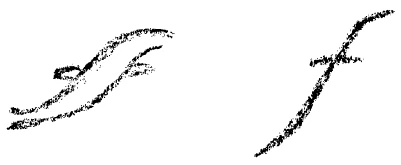
[ 6 ] Wenn Sie in dieser Weise beginnen, an die Natur des Kindes zu appellieren, so versetzen Sie das Kind richtig zurück in frühere Kulturepochen, denn so ist das Schreiben ursprünglich entstanden. Später ist der Vorgang nur in Konvention übergegangen, so daß wir heute nicht mehr den Zusammenhang erkennen zwischen den abstrakten Buchstabenformen und den Bildern, die rein zeichnerisch hervorgegangen sind aus der Anschauung und aus der Nachahmung der Anschauung. Alle Buchstabenformen sind aus solchen Bildformen entstanden. Und nun denken Sie sich, wenn Sie dem Kinde nur die Konvention beibringen: Du sollst das f so machen! — dann bringen Sie ihm etwas ganz Abgeleitetes bei, herausgehoben aus dem menschlichen Zusammenhang. Dann ist das Schreiben herausgehoben aus dem, woraus es entstanden ist: aus dem Künstlerischen. Und daher müssen wir, wenn wir Schreiben unterrichten, mit dem künstlerischen Zeichnen der Formen, der LautBuchstabenformen beginnen, wenn wir so weit zurückgehen wollen, daß das Kind ergriffen wird von dem Unterschiede der Formen. Es genügt nicht, daß wir das dem Kinde bloß mit dem Munde vorsagen, denn das macht die Menschen zu dem, wozu sie heute geworden sind. Indem wir die Schriftform herausheben aus dem, was heute Konvention ist und zeigen, woraus sie hervorgequollen ist, ergreifen wir den ganzen Menschen und machen aus ihm etwas ganz anderes, als wir aus ihm machen würden, wenn wir bloß an sein Erkennen appellieren. Daher dürfen wir nicht bloß in abstracto denken: Wir müssen Kunst lehren im Zeichnen und so weiter, wir müssen Seelisches lehren im Rechnen, und wir müssen auf künstlerische Art Konventionelles lehren im Lesen und Schreiben; wir müssen den ganzen Unterricht durchdringen mit einem künstlerischen Element. Daher werden wir von Anfang an einen großen Wert darauf zu legen haben, daß wir das Künstlerische im Kinde pflegen. Das Künstlerische wirkt ja ganz besonders auf die Willensnatur des Menschen. Dadurch dringen wir zu etwas vor, das mit dem ganzen Menschen zusammenhängt, während das, was mit dem Konventionellen zusammenhängt, nur mit dem Kopfmenschen zu tun hat. Daher werden wir so vorgehen, daß wir jedes Kind etwas Zeichnerisches und etwas Malerisches pflegen lassen. Wir beginnen also mit dem Zeichnerischen und Zeichnerisch-Malerischen in der einfachsten Weise. Aber auch mit Musikalischem beginnen wir, so daß das Kind sich von Anfang an gewöhnt, gleich irgendein Instrument zu handhaben, damit künstlerisches Gefühl in dem Kinde belebt werde. Dann wird es auch Gefühl dafür bekommen, etwas aus dem ganzen Menschen heraus zu fühlen, was sonst nur konventionell ist.
[ 6 ] When you begin in this way to appeal to the child’s nature, you are effectively transporting the child back to earlier cultural eras, for this is how writing originally came into being. Later, the process became merely a convention, so that today we no longer recognize the connection between the abstract letter forms and the images that emerged purely through drawing from observation and the imitation of observation. All letter forms originated from such pictorial forms. And now imagine: if you teach the child only the convention—“You must write the ‘f’ like this!” — then you are teaching them something entirely derived, isolated from its human context. Then writing is severed from that from which it arose: from the artistic. And that is why, when we teach writing, we must begin with the artistic drawing of the forms—the phonetic letter forms—if we wish to go back far enough for the child to be captivated by the distinction between the forms. It is not enough for us to merely tell the child this with our words, for that is what has made people what they have become today. By isolating the written form from what is now convention and showing from what it sprang, we engage the whole person and make of them something entirely different from what we would make of them if we appealed solely to their intellect. Therefore, we must not think merely in the abstract: we must teach art through drawing and so on; we must teach the spiritual through arithmetic; and we must teach conventional matters in an artistic way through reading and writing; we must infuse the entire curriculum with an artistic element. Therefore, from the very beginning, we will have to place great emphasis on nurturing the artistic in the child. After all, the artistic has a particularly strong effect on the human will. Through this, we penetrate to something connected with the whole human being, whereas what is connected with the conventional has to do only with the intellectual aspect of the human being. Therefore, we will proceed in such a way that we allow every child to cultivate something related to drawing and something related to painting. So we begin with drawing and drawing-and-painting in the simplest way possible. But we also begin with music, so that the child becomes accustomed from the very beginning to playing some kind of instrument, thereby awakening artistic feeling within the child. Then the child will also develop a sense of feeling something from the whole person that is otherwise merely conventional.
[ 7 ] Es wird in der Methodik unsere Aufgabe sein, daß wir immer den ganzen Menschen in Anspruch nehmen. Wir würden das nicht können, wenn wir nicht auf die Ausbildung eines im Menschen veranlagten künstlerischen Gefühls unser Augenmerk richten würden. Damit werden wir auch für später den Menschen geneigt machen, seiner ganzen Wesenheit nach Interesse für die ganze Welt zu gewinnen. Der Grundfehler war bisher immer der, daß sich die Menschen nur mit ihrem Kopfe in die Welt hineingestellt haben; den andern Teil haben sie nur nachgeschleppt. Und die Folge ist, daß sich jetzt die andern Teile nach ihren animalischen Trieben richten, sich emotionell ausleben — wie wir es jetzt an dem erleben, was sich in so merkwürdiger Weise vom Osten Europas her ausbreitet. Das tritt dadurch ein, daß nicht der ganze Mensch gepflegt worden ist. Aber nicht nur, daß das Künstlerische auch gepflegt werden muß, sondern es muß das Ganze des Unterrichts herausgeholt sein aus dem Künstlerischen. Ins Künstlerische muß alle Methodik getaucht werden. Das Erziehen und Unterrichten muß zu einer wirklichen Kunst werden. Das Wissen darf auch da nur zugrunde liegen.
[ 7 ] In our methodology, our task will be to always engage the whole person. We would not be able to do this if we did not focus our attention on cultivating the artistic sensibility inherent in human beings. In this way, we will also prepare people for the future, so that they may develop an interest in the whole world in accordance with their entire being. The fundamental mistake up to now has always been that people have engaged with the world using only their heads; they have merely dragged the rest of themselves along behind. And the consequence is that these other parts are now guided by their animal instincts, giving free rein to their emotions—as we are now witnessing in what is spreading in such a remarkable way from Eastern Europe. This occurs because the whole human being has not been nurtured. But it is not merely that the artistic must also be nurtured; rather, the entirety of education must be drawn from the artistic. All methodology must be immersed in the artistic. Education and teaching must become a true art. Knowledge, too, may only serve as a foundation here.
[ 8 ] So werden wir herausholen aus dem zeichnerischen Element zuerst die Schreibformen der Buchstaben, dann die Druckformen. Wir werden das Lesen aufbauen auf dem Zeichnen. Sie werden auf diese Weise schon sehen, daß wir damit eine Saite anschlagen, mit der die kindliche Seele sehr gerne mitschwingen wird, weil das Kind dann nicht nur ein äußerliches Interesse hat, weil es zum Beispiel das, was es im Hauch hat, tatsächlich im Lesen und Schreiben zum Ausdruck kommen sieht.
[ 8 ] In this way, we will first derive the handwritten forms of the letters from the drawing element, and then the printed forms. We will build reading on the foundation of drawing. In this way, you will already see that we are striking a chord that the child’s soul will be very happy to resonate with, because the child will then have more than just a superficial interest—for example, the child will actually see what is in their innermost being expressed through reading and writing.
[ 9 ] Dann werden wir manches umkehren müssen im Unterricht. Sie werden sehen, daß wir das, was wir heute erreichen wollen im Lesen und Schreiben, natürlich nicht restlos in dieser Weise aufbauen können, wie wir das hier angedeutet haben, sondern wir werden nur die Kräfte erwecken können zu einem solchen Aufbau. Denn würden wir in dem heutigen Leben den ganzen Unterricht so aufbauen wollen, daß wir aus dem Zeichnen herausholen wollten das Lesen und Schreiben, dann würden wir damit die Zeit bis zum 20. Lebensjahr brauchen, wir würden nicht in den Schuljahren damit auskommen. Wir können das also zunächst nur im Prinzip ausführen und müssen dann trotzdem weitergehen, aber im künstlerischen Element verbleiben. Wenn wir also eine Zeitlang in dieser Weise einzelnes herausgehoben haben aus dem ganzen Menschen, dann müssen wir dazu übergehen, dem Kinde begreiflich zu machen, daß nun die großen Menschen, wenn sie diese eigentümlichen Formen vor sich haben, darin einen Sinn entdecken. Indem das weiter ausgebildet wird, was das Kind so an Einzelheiten gelernt hat, gehen wir dazu über - ganz gleichgültig, ob das Kind das einzelne versteht oder nicht versteht -, Sätze aufzuschreiben. In diesen Sätzen wird dann das Kind solche Formen bemerken, wie es sie hier als f am Fisch kennengelernt hat. Es wird dann andere Formen daneben bemerken, die wir jetzt aus Mangel an Zeit nicht herausholen können. Wir werden dann daran gehen, an die Tafel zu zeichnen, wie der einzelne Buchstabe im Druck aussieht, und wir werden eines Tages einen langen Satz an die Tafel schreiben und dem Kinde sagen: Dies haben nun die Großen vor sich, indem sie das alles ausgebildet haben, was wir besprochen haben als das f beim Fisch und so weiter. -— Dann werden wir das Kind nachschreiben lehren. Wir werden darauf halten, daß das, was es sieht, ihm in die Hände übergeht, so daß es nicht nur liest mit dem Auge, sondern mit den Händen nachformt, und daß es weiß: alles was es auf der Tafel hat, kann es selbst auch so und so formen. Also es wird nicht lesen lernen, ohne daß es mit der Hand nachformt, was es sieht, auch die Druckbuchstaben. So erreichen wir also das außerordentlich Wichtige, daß nie mit dem bloßen Auge gelesen wird, sondern daß auf geheimnisvolle Weise die Augentätigkeit übergeht in die ganze Gliedertätigkeit des Menschen. Die Kinder fühlen dann unbewußt bis in die Beine hinein dasjenige, was sie sonst nur mit dem Auge überschauen. Das Interesse des ganzen Menschen bei dieser Tätigkeit ist das, was von uns angestrebt werden muß.
[ 9 ] Then we will have to reverse some things in our teaching. You will see that what we aim to achieve today in reading and writing cannot, of course, be built up entirely in the way we have suggested here, but we will only be able to awaken the capacities necessary for such a process. For if we were to structure all of today’s instruction in such a way that we sought to derive reading and writing from drawing, it would take until the age of 20—we could not accomplish this within the school years. So we can initially carry this out only in principle and must then move on, while still remaining within the artistic element. Once we have isolated individual aspects from the whole human being in this way for a time, we must proceed to help the child understand that great minds, when they have these distinctive forms before them, discover meaning in them. As we further develop what the child has learned in terms of these details, we move on—regardless of whether the child understands the individual elements or not—to writing down sentences. In these sentences, the child will then notice forms such as the “f” on the fish that they have learned here. They will then notice other forms alongside them that we cannot single out at this time due to lack of time. We will then proceed to draw on the blackboard what the individual letter looks like in print, and one day we will write a long sentence on the blackboard and tell the child: “This is what the older students have before them, having developed everything we have discussed—such as the ‘f’ in the fish and so on.” — Then we will teach the child to copy it. We will ensure that what the child sees is transferred to their hands, so that they do not merely read with their eyes but also form the shapes with their hands, and so that they know: everything on the blackboard, they can form themselves in this or that way. Thus, they will not learn to read without forming with their hands what they see—including the printed letters. In this way, we achieve the extraordinarily important goal that reading is never done with the naked eye alone, but that, in a mysterious way, the activity of the eye extends to the entire motor activity of the person. The children then unconsciously feel, right down to their legs, what they would otherwise only take in with their eyes. Engaging the whole person in this activity is what we must strive for.
[ 10 ] Dann gehen wir den umgekehrten Weg: Den Satz, den wir hingeschrieben haben, zergliedern wir, und die andern Buchstabenformen, die wir noch nicht aus ihren Elementen herausgeholt haben, zeigen wir durch Atomisieren der Worte, gehen von dem Ganzen zu dem Einzelnen. Zum Beispiel: hier steht KOPF. Jetzt lernt das Kind zuerst «KOPF» schreiben, malt es einfach nach. Und nun spalten wir das KOPF in K,O, P, F, holen die einzelnen Buchstaben aus dem Worte heraus; wir gehen also von dem Ganzen ins Einzelne.
[ 10 ] Then we take the opposite approach: We break down the sentence we’ve written, and we reveal the other letter forms—the ones we haven’t yet broken down into their constituent parts—by breaking the words down into their individual letters, moving from the whole to the parts. For example: here is the word KOPF. First, the child learns to write “KOPF” by simply tracing it. And now we break down KOPF into K, O, P, F, isolating the individual letters from the word; in other words, we move from the whole to the parts.
[ 11 ] Dieses Von-dem-Ganzen-ins-Einzelne-Gehen setzen wir überhaupt durch den ganzen Unterricht fort. Wir machen es so, daß wir vielleicht zu einer andern Zeit ein Stück Papier in eine Anzahl von kleinen Papierschnitzeln zerspalten. Wir zählen dann diese Papierschnitzel; sagen wir, es sind 24. Wir sagen dann dem Kinde: Sieh einmal, diese Papierschnitzel bezeichne ich mit dem, was ich da aufgeschrieben habe und nenne es: 24 Papierschnitzel. — Es könnten natürlich auch Bohnen sein. — Jetzt wirst du dir das merken. Nun nehme ich eine Anzahl Papierschnitzel weg, die gebe ich auf ein Häufchen, dort mache ich ein anderes Häufchen, dort ein drittes und hier ein viertes; jetzt habe ich aus den 24 Papierschnitzeln vier Häufchen gemacht. Nun sieh: jetzt zähle ich, das kannst du noch nicht, ich kann es, und das, was da auf dem einen Häufchen liegt, nenne ich 9, was auf dem zweiten liegt, nenne ich 5 Papierschnitzel, was auf dem dritten liegt, nenne ich 7 Papierschnitzel, und was auf dem vierten Häufchen liegt, nenne ich 3 Papierschnitzel. Siehst du, früher hatte ich einen einzigen Haufen: 24 Papierschnitzel; jetzt habe ich vier Häufchen: 9, 5, 7, 3 Papierschnitzel. Das ist ganz dasselbe Papier. Das eine Mal, wenn ich es zusammen habe, nenne ich es 24; jetzt habe ich es in vier Häufchen abgeteilt und nenne es das eine Mal 9, dann 5, dann 7 und dann 3 Papierschnitzel. — Jetzt sage ich: 24 Papierschnitzel sind zusammen 9 und 5 und 7 und 3. - Jetzt habe ich dem Kinde das Addieren gelehrt. Das heißt, ich bin nicht ausgegangen von den einzelnen Addenden und habe dann die Summe herausgebildet; das ist niemals der ursprünglichen Menschennatur entsprechend - ich verweise dabei auf meine «Erkenntnistheorie der Goetheschen Weltanschauung» -, sondern das Umgekehrte entspricht der Menschennatur: die Summe ist zuerst ins Auge zu fassen, und die ist dann zu spalten in die einzelnen Addenden. So daß wir das Addieren dem Kinde umgekehrt beibringen müssen, als es gewöhnlich gemacht wird: von der Summe ausgehend, zu den Addenden übergehend. Dann wird das Kind den Begriff des «Zusammens» besser begreifen, als wenn wir in der bisherigen Weise das einzelne zusammenklauben. Dadurch werden wir unseren Unterricht von dem bisherigen unterscheiden müssen, daß wir gewissermaßen umgekehrt dem Kinde das beibringen müssen, was Summe ist im Gegensatz zu den Addenden. Dann können wir darauf rechnen, daß ein ganz anderes Verständnis uns entgegengebracht wird, als wenn wir umgekehrt vorgehen. Das Wichtigste daran werden Sie eigentlich erst durch die Praxis durchschauen. Denn Sie werden ein ganz anderes Eingehen in die Sache, eine ganz andere Aufnahmefähigkeit des Kindes bemerken, wenn Sie den gekennzeichneten Weg einschlagen.
[ 11 ] We apply this approach of moving from the whole to the parts throughout the entire course. We do this by, for example, tearing a piece of paper into a number of small scraps at another time. We then count these scraps; let’s say there are 24. We then say to the child: Look, I’m labeling these scraps with what I’ve written down here and calling them: 24 scraps of paper. — Of course, they could also be beans. — Now you’re going to remember this. Now I’ll take away a number of paper scraps; I’ll put them in one pile, make another pile there, a third one there, and a fourth one here; now I’ve made four piles out of the 24 paper scraps. Now look: I’m going to count—you can’t do that yet, but I can—and what’s on one pile, I’ll call 9; what’s on the second, I’ll call 5 scraps of paper; what’s on the third, I’ll call 7 scraps of paper; and what’s on the fourth pile, I’ll call 3 scraps of paper. You see, before I had a single pile: 24 scraps of paper; now I have four little piles: 9, 5, 7, and 3 scraps of paper. It’s all the same paper. When I have it all together, I call it 24; now I’ve divided it into four piles and call it, in turn, 9, then 5, then 7, and then 3 scraps of paper. — Now I say: 24 scraps of paper together are 9 and 5 and 7 and 3. — Now I’ve taught the child how to add. That is to say, I did not start with the individual addends and then derive the sum; that never corresponds to original human nature—I refer here to my “Theory of Knowledge in Goethe’s worldview”—but rather the opposite corresponds to human nature: the sum must first be grasped, and it is then to be broken down into the individual addends. So we must teach the child addition in the opposite way than is usually done: starting from the sum and moving on to the addends. Then the child will grasp the concept of “the whole” better than if we were to piece together the individual parts in the conventional manner. Consequently, we will have to distinguish our teaching from the conventional approach in that we must, so to speak, teach the child in reverse what the sum is in contrast to the addends. Then we can expect to encounter a completely different level of understanding than if we were to proceed the other way around. You will actually only come to fully grasp the most important aspect of this through practice. For you will notice a completely different approach to the subject and a completely different receptiveness on the part of the child when you follow the path described here.
[ 12 ] Den umgekehrten Weg können Sie dann im weiteren Rechnen durchführen. Sie können sagen: Jetzt werfe ich diese Papierschnitzel alle wieder zusammen; nun nehme ich eine Anzahl davon wieder weg, mache zwei Häufchen, und ich nenne das Häufchen, das mir da abgesondert geblieben ist, 3. Wodurch habe ich diese 3 erhalten? Dadurch, daß ich sie von dem andern weggenommen habe. Wie es noch zusammen war, nannte ich es 24; jetzt habe ich 3 weggenommen und nenne nun das, was da zurückgeblieben ist, 21. - Auf diese Weise gehen Sie über zu dem Begriff des Subtrahierens. Das heißt, Sie gehen wieder nicht aus von Minuend und Subtrahend, sondern von dem Rest, der geblieben ist, und gehen von diesem über zu dem, woraus der Rest entstanden ist. Sie machen auch da den umgekehrten Weg. Und so können Sie es— wie wir in der speziellen Methodik noch sehen werden über die ganze Kunst des Rechnens ausdehnen, daß sie immer aus dem Ganzen ins Einzelne gehen. In dieser Beziehung werden wir uns schon angewöhnen müssen, einen ganz andern Lehrgang einzuhalten, als wir gewohnt sind. Wir gehen da so vor, daß wir mit der Anschauung - die wir durchaus nicht vernachlässigen dürfen, die aber heute einseitig herausgehoben wird — zugleich das Autoritätsgefühl pflegen. Denn wir sagen ja fortwährend: Das nenne ich 24, das nenne ich 9. — Indem ich in den anthroposophischen Vorträgen hervorhebe: zwischen dem 7. und dem 14. Jahre solle das Autoritätsgefühl gepflegt werden, soll man nicht denken an ein Abrichten zum Autoritätsgefühl, sondern was nötig ist, kann schon hineinfließen in die Methodik des Unterrichtes. Das waltet da wie ein Unterton. Das Kind hört: Aha, das nennt er 9, das nennt er 24 und so weiter. — Es gehorcht von selbst. Durch dieses Hinhören auf den, der diese Methode handhabt, infiltriert sich das Kind mit dem, was dann als das Autoritätsgefühl herauskommen soll. Das ist das Geheimnis. Jedes künstliche Abrichten zum Autoritätsgefühl soll durch das Methodische selbst ausgeschlossen werden.
[ 12 ] You can then perform the reverse process as you continue your calculations. You can say: Now I’ll put all these scraps of paper back together; then I’ll take some of them away again, make two piles, and call the pile that’s left over 3. How did I get this 3? By taking it away from the other pile. When they were still together, I called it 24; now I have taken away 3 and call what is left 21. — In this way, you move on to the concept of subtraction. That is, you do not start from the minuend and subtrahend, but from the remainder that is left, and proceed from this to what the remainder came from. Here, too, you take the reverse approach. And so you can—as we will see in the specific methodology—extend this to the entire art of arithmetic, always moving from the whole to the parts. In this regard, we will have to get used to following a completely different teaching approach than we are accustomed to. We proceed in such a way that, while cultivating intuition—which we must by no means neglect, but which is emphasized one-sidedly today—we simultaneously nurture a sense of authority. For we are constantly saying: “I call this 24, I call this 9.”—By emphasizing in the anthroposophical lectures that between the ages of 7 and 14 the sense of authority should be cultivated, we should not think of it as training for a sense of authority, but rather that what is necessary can already flow into the methodology of instruction. This resonates there like an undertone. The child hears: “Ah, he calls that 9, he calls that 24,” and so on. — The child obeys of its own accord. By listening to the one who applies this method, the child internalizes what will then emerge as a sense of authority. That is the secret. Any artificial indoctrination into a sense of authority should be ruled out by the method itself.
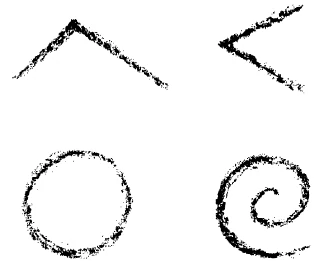
[ 13 ] Dann müssen wir uns ganz klar sein, daß wir immer zusammenwirken lassen wollen: Wollen, Fühlen und Denken. Indem wir so unterrichten, wirken Wollen, Fühlen und Denken schon zusammen. Es handelt sich nur darum, daß wir das Wollen nie durch falsche Mittel in die verkehrte Richtung bringen, sondern daß wir die Erstarkung des Wollens durch künstlerische Mittel richtig zum Ausdruck bringen. Dazu soll von Anfang an malerische, künstlerische Unterweisung dienen und auch musikalische. Wir werden dabei bemerken, daß gerade in der ersten Zeit der zweiten Lebensepoche das Kind für die autoritative Unterweisung durch das Künstlerische am allerempfänglichsten ist und daß wir da am meisten mit ihm erreichen können. Es wird wie von selbst hereinwachsen in das, was wir ihm übertragen wollen, und es wird seine denkbar größte Freude haben, wenn es zeichnerisch oder sogar malerisch dieses oder jenes auf das Papier bringen wird, wobei wir nur absehen müssen von allem bloß äußerlichen Nachahmen. Auch da werden wir uns im Unterrichten erinnern müssen, daß wir gewissermaßen das Kind zurückversetzen müssen in frühere Kulturepochen, aber daß wir nicht so verfahren können wie diese früheren Kulturepochen. Da waren die Menschen eben anders. Sie werden jetzt mit ganz anderem Seelen- und Geistesgestimmtsein das Kind in frühere Kulturepochen zurückversetzen. Daher werden wir im Zeichnen nicht darauf ausgehen, du sollst dieses oder jenes nachahmen, sondern wir werden ihm ursprüngliche Formen im Zeichnen beibringen, werden ihm beibringen, einen Winkel so zu machen, einen andern so; wir werden versuchen, ihm den Kreis, die Spirale beizubringen. Wir werden also von den in sich geschlossenen Formen ausgehen, nicht davon, ob die Form dieses oder jenes nachahmt, sondern wir werden sein Interesse an der Form selbst zu erwecken versuchen, — Erinnern Sie sich an den Vortrag, in welchem ich versucht habe, ein Gefühl zu erwecken für die Entstehung des Akanthusblattes. Ich habe darin ausgeführt, daß der Gedanke, man habe dabei das Blatt der Akanthuspflanze nachgeahmt in der Form, wie er in der Legende auftritt, ganz falsch ist, sondern das Akanthusblatt ist einfach entstanden aus einer inneren Formgebung heraus, und man hat nachträglich gefühlt: das sieht der Natur ähnlich. Man hat also nicht die Natur nachgeahmt. — Das werden wir beim zeichnerischen und malerischen Element zu berücksichtigen haben. Dann wird endlich das Furchtbare aufhören, was so sehr die Gemüter der Menschen verwüstet. Wenn ihnen etwas vom Menschen Gebildetes entgegentritt, dann sagen sie: Das ist natürlich, das ist unnatürlich. — Es kommt gar nicht darauf an, das Urteil zu fällen: Dies ist richtig nachgeahmt und so weiter. — Diese Ähnlichkeit mit der Außenwelt muß erst als ein Sekundäres aufleuchten. Was im Menschen leben muß, muß das innere Verwachsensein mit den Formen selbst sein. Also man muß, selbst wenn man eine Nase zeichnet, ein inneres Verwachsensein mit der Nasenform haben, und nachher erst stellt sich die Ähnlichkeit mit der Nase heraus. Das Gefühl für innere Gesetzmäßigkeit wird in der Zeit vom 7. bis zum 14. Jahre nie durch äußerliches Nachahmen erweckt. Denn dessen muß man sich bewußt sein: Was man zwischen dem 7. und dem 14. Jahre entwickeln kann, das kann man später nicht mehr entwickeln. Die Kräfte, die da walten, sterben dann ab; später kann man nur noch ein Surrogat davon haben, wenn nicht gerade eine solche Umgestaltung des Menschen zustande kommt, die man eine Einweihung nennt, natürlich oder unnatürlich.
[ 13 ] Then we must be absolutely clear that we always want to allow Will, Feeling, and Thinking to work together. By teaching in this way, Will, Feeling, and Thinking are already working together. The only thing that matters is that we never steer the will in the wrong direction through improper means, but rather that we properly express the strengthening of the will through artistic means. To this end, instruction in painting and the arts—as well as music—should be provided from the very beginning. We will notice that, especially in the early stages of the second stage of life, the child is most receptive to authoritative instruction through the arts, and that this is when we can achieve the most with the child. It will grow into what we wish to impart to them as if of its own accord, and it will experience the greatest possible joy when it puts this or that onto paper through drawing or even painting—though we must refrain from any mere external imitation. Here, too, we must remember in our teaching that we must, so to speak, transport the child back to earlier cultural epochs, but that we cannot proceed in the same way as those earlier cultural epochs did. People were simply different back then. You will now transport the child back to earlier cultural epochs with an entirely different state of mind and spirit. Therefore, in drawing, we will not focus on having the child imitate this or that, but rather we will teach them original forms in drawing; we will teach them to draw one angle this way and another that way; we will try to teach them the circle and the spiral. So we will start with self-contained forms, not with whether the form imitates this or that, but we will try to awaken his interest in the form itself—do you remember the lecture in which I tried to awaken a sense of how the acanthus leaf came into being? In that lecture, I explained that the idea that the acanthus leaf was imitated in the form in which it appears in legend is entirely false; rather, the acanthus leaf simply arose from an inner formative process, and people later felt: “This resembles nature.” So nature was not imitated. — We will have to take this into account when it comes to the elements of drawing and painting. Then, at last, the dreadful phenomenon that so devastates people’s minds will cease. When they encounter something created by human hands, they say: “That is natural; that is unnatural.” — It does not matter at all whether one passes judgment: “This is correctly imitated,” and so on. — This resemblance to the external world must first emerge as a secondary consideration. What must live within the human being is an inner fusion with the forms themselves. So even when drawing a nose, one must have an inner fusion with the shape of the nose, and only afterward does the resemblance to the nose become apparent. The sense of inner lawfulness is never awakened between the ages of 7 and 14 through external imitation. For one must be aware of this: what one can develop between the ages of 7 and 14 cannot be developed later on. The forces at work during this period then fade away; later on, one can only have a substitute for them, unless a transformation of the human being takes place—what is called an initiation, whether natural or unnatural.
[ 14 ] Ich werde jetzt etwas Aufßergewöhnliches sagen, aber wir müssen auf die Prinzipien der Menschennatur zurückgehen, wenn wir heute im richtigen Sinne Unterrichter sein wollen. Es gibt Ausnahmefälle, wo im späteren Lebensalter der Mensch noch etwas nachholen kann. Dann muß er aber durch eine schwere Krankheit durchgegangen sein, oder er muß sonstwie Deformationen erlitten haben, muß etwa ein Bein gebrochen haben, das dann nicht mehr richtig eingerenkt ist, muß also eine gewisse Loslösung des ätherischen Leibes vom physischen Leibe erlitten haben. Das ist natürlich eine gefährliche Sache. Wenn sie durch das Karma eintritt, muß man sie hinnehmen. Aber man kann nicht damit rechnen und eine gewisse Vorschrift geben für das öffentliche Leben, daß einer etwas Versäumtes auf diese Weise nachholen könnte — von andern Dingen gar nicht zu sprechen. Es ist dieEntwickelung des Menschen eine geheimnisvolle Sache, und was durch Unterricht und Erziehung angestrebt werden soll, darf nie mit dem Abnormen rechnen, sondern muß immer mit dem Normalen rechnen. Daher ist das Unterrichten immer eine soziale Sache. Daher muß immer damit gerechnet werden: In welches Lebensalter muß die Ausbildung gewisser Kräfte hineinfallen, damit diese Ausbildung den Menschen in der richtigen Art ins Leben hineinstellen kann? Wir müssen also damit rechnen, daß gewisse Fähigkeiten nur zwischen dem 7. und dem 14. Lebensjahre des Menschen so entwickelt werden können, daß der Mensch später den Lebenskampf bestehen kann. Würde man diese Fähigkeiten in dieser Zeit nicht ausbilden, so würden die Menschen später dem Lebenskampf nicht gewachsen sein, sondern ihm unterliegen müssen, was heute bei den meisten Menschen der Fall ist.
[ 14 ] I am going to say something rather unusual now, but we must go back to the principles of human nature if we want to be true teachers today. There are exceptional cases where a person can still make up for something later in life. But then they must have gone through a serious illness, or they must have suffered some other kind of deformation—perhaps they broke a leg that was not properly set—and thus must have experienced a certain detachment of the etheric body from the physical body. This is, of course, a dangerous thing. If it occurs as a result of karma, one must accept it. But one cannot count on it and establish a rule for public life that someone could make up for what they have missed in this way—not to mention other matters. Human development is a mysterious process, and whatever is to be aimed for through instruction and education must never take the abnormal into account, but must always take the normal into account. Therefore, teaching is always a social matter. Therefore, one must always consider: At what age must the development of certain faculties take place so that this development can properly prepare the individual for life? We must therefore take into account that certain abilities can only be developed between the ages of 7 and 14 in such a way that the individual can later succeed in the struggle of life. If these abilities were not cultivated during this period, people would later be unable to cope with the struggle of life and would have to succumb to it—which is the case for most people today.
[ 15 ] Diese Art, künstlerisch sich ins Weltengetriebe zu stellen, die ist es, welche wir als Erzieher dem Kinde angedeihen lassen müssen. Da werden wir bemerken, daß die Natur des Menschen so ist, daß er gewissermaßen als Musiker geboren ist. Würden die Menschen die richtige Leichtigkeit dazu haben, so würden sie mit allen kleinen Kindern tanzen, würden sich mit allen kleinen Kindern irgendwie bewegen. Der Mensch wird in die Welt so hereingeboren, daß er seine eigene Leiblichkeit in musikalischen Rhythmus, in musikalischen Zusammenhang mit der Welt bringen will, und am meisten ist diese innere musikalische Fähigkeit zwischen dem 3. und dem 4. Lebensjahre bei den Kindern vorhanden. Ungeheuer viel könnten Eltern tun, wenn sie dieses bemerkten und dann weniger an das äußere musikalische Gestimmtsein anknüpften, sondern an das Bestimmtsein des eigenen Leibes, an das Tänzerische. Und gerade in diesem Lebensalter könnte man durch das Durchdringen des Kinderleibes mit elementarer Eurythmie unendlich viel erreichen. Wenn die Eltern lernen würden, sich eurythmisch mit dem Kinde zu beschäftigen, so würde etwas ganz anderes in den Kindern entstehen, als es sonst der Fall ist. Sie würden eine gewisseSchwere, die in den Gliedern lebt, überwinden. Alle Menschen haben heute eine solche Schwere in ihren Gliedern; die würde überwunden werden. Und was dann übrigbliebe, wenn es zum Zahnwechsel kommt, das ist die Veranlagung für das gesamte Musikalische. Die einzelnen Sinne, das musikalisch gestimmte Ohr, das plastisch gestimmte Auge entstehen erst aus diesem Musikalischen; das ist eine Spezifizierung des ganzen musikalischen Menschen, was man das musikalische Ohr oder das zeichnerisch-plastische Auge nennt. Daher wird man den Gedanken durchaus hegen müssen, daß man gewissermaßen das, was im ganzen Menschen veranlagt ist, in den oberen Menschen, in den Nerven-Sinnesmenschen hineinnimmt, indem man zum Künstlerischen geht. Sie tragen die Empfindung in das Intellektuelle hinauf, indem Sie entweder des Mittels des Musikalischen oder des Mittels des Zeichnerisch-Plastischen sich bedienen. Das muß in der richtigen Weise geschehen. Heute schwimmt alles durcheinander, insbesondere wenn das Künstlerische gepflegt wird. Wir zeichnen mit der Hand und wir plastizieren auch mit der Hand — und dennoch ist beides völlig verschieden. Das kann insbesondere dann zum Ausdruck kommen, wenn wir Kinder in das Künstlerische hineinbringen. Wir müssen, wenn wir Kinder ins Plastische hineinbringen, möglichst darauf sehen, daß sie die Formen des Plastischen mit der Hand verfolgen. Indem das Kind sein eigenes Formen fühlt, indem es dieHand bewegt und zeichnerisch irgend etwas macht, können wir es dahin bringen, daß es mit dem Auge, aber mit dem durch das Auge gehenden Willen die Formen verfolgt. Es ist durchaus nicht etwas die Naivität des Kindes Verletzendes, wenn wir das Kind anweisen, selbst mit der hohlen Hand die Körperformen nachzufühlen, wenn wir es aufmerksam machen auf das Auge, indem es die Wendungen des Kreises zum Beispiel verfolgt, und ihm sagen: Du machst ja selbst mit deinem Auge einen Kreis. Das ist nicht eine Verletzung der Naivität des Kindes, sondern es ist ein Inanspruchnehmen des Interesses des ganzen Menschen. Daher müssen wir uns bewußt sein, daß wir das Untere des Menschen hinauftragen in das Obere, in das Nerven-Sinneswesen.
[ 15 ] This way of artistically placing oneself within the workings of the world is precisely what we, as educators, must instill in the child. We will then realize that human nature is such that people are, so to speak, born as musicians. If people possessed the right lightness of being for this, they would dance with all small children; they would move in some way with all small children. Human beings are born into the world with a desire to bring their own physicality into musical rhythm, into musical connection with the world, and this inner musical ability is most present in children between the ages of three and four. Parents could do an immense amount if they recognized this and then focused less on external musical sensibility and more on the child’s own bodily awareness—on the dance-like quality. And especially at this age, one could achieve an infinite amount by permeating the child’s body with elementary eurythmy. If parents were to learn to engage with their children through eurythmy, something quite different would develop in the children than is usually the case. They would overcome a certain heaviness that resides in their limbs. All people today have such heaviness in their limbs; this would be overcome. And what would then remain by the time the children’s teeth begin to fall out is the predisposition for the entirety of musicality. The individual senses—the musically attuned ear, the visually and sculpturally attuned eye—arise only from this musicality; what we call the musical ear or the eye attuned to drawing and sculpture is a specific manifestation of the whole musical human being. Therefore, one must certainly cherish the idea that, in a sense, what is predisposed in the whole human being is taken up into the higher human being—the nervous-sensory human being—by turning toward the artistic. You carry the feeling up into the intellectual realm by making use of either the means of music or the means of drawing and sculpture. This must be done in the right way. Today everything is jumbled together, especially when it comes to cultivating the artistic. We draw with our hands and we also create three-dimensional forms with our hands—and yet the two are completely different. This can become particularly evident when we introduce children to the artistic. When introducing children to sculpture, we must ensure as much as possible that they trace the forms of the sculpture with their hands. By allowing the child to feel the forms for themselves—by moving their hand and creating something through drawing—we can guide them to trace the forms with their eyes, but with the will that flows through the eyes. It in no way infringes upon a child’s naivety when we instruct the child to trace the shapes of objects with an open palm, when we draw their attention to the eye—for example, by having them follow the curves of a circle—and tell them: “You yourself are drawing a circle with your eye.” This is not an infringement on the child’s naivety, but rather a way of engaging the interest of the whole person. Therefore, we must be aware that we are carrying the lower aspects of the human being up into the higher, into the nervous-sensory being.
[ 16 ] So werden wir ein gewisses methodisches Grundgefühl gewinnen, das wir in uns ausbilden müssen als Erzieher und Unterrichter und das wir auf niemanden so unmittelbar übertragen können. Denken Sie, wir haben einen Menschen, den wir zu unterrichten und zu erziehen haben, also ein Kind vor uns. Heute verschwindet in der Erziehung ganz die Anschauung des werdenden Menschen, es geht alles durcheinander. Wir müssen uns aber angewöhnen, in der Anschauung dieses Kindes zu differenzieren. Wir müssen gewissermaßen das, was wir unterrichtend und erziehend tun, begleiten mit inneren Empfindungen, mit inneren Gefühlen, auch mit inneren Willensregungen, die gewissermaßen in einer unteren Oktave nur mitklingen, die nicht ausgeführt werden. Wir müssen uns bewußt werden: In dem werdenden Kinde entwickeln sich nach und nach das Ich und der astralische Leib; durch die Vererbung steht schon da der ätherische Leib und der physische Leib. Jetzt ist es gut, daß wir uns denken: Der physische Leib und der ätherische Leib sind etwas, was immer besonders gepflegt wird von dem Kopfe nach unten. Der Kopf strahlt aus, was den physischen Menschen eigentlich schafft. Machen wir die richtigen Erziehungsund Unterrichtsprozeduren mit dem Kopfe, dann dienen wir der Wachstumsorganisation am besten. Unterrichten wir das Kind so, daß wir aus dem ganzen Menschen das Kopfelement herausholen, dann geht das Richtige vom Kopfe in seine Glieder über: Der Mensch wächst besser, er lernt besser gehen und so weiter. Und so können wir sagen: Es strömt nach unten in das Physische und das Ätherische, wenn wir in sachgemäßer Weise alles, was sich auf den oberen Menschen bezieht, ausbilden. Haben wir das Gefühl, indem wir in mehr intellektueller Weise Lesen und Schreiben ausbilden, daß das Kind uns entgegenkommt, indem es das aufnimmt, was wir ihm beibringen, so werden wir das vom Kopfe aus in den übrigen Leib hineinschicken. Ich und astralischer Leib wird aber von unten herauf ausgebildet, wenn der ganze Mensch in die Erziehung hineingestellt wird. Ein kräftiges Ichgefühl würde zum Beispiel dann entstehen, wenn man zwischen dem 3. und 4. Lebensjahre elementare Eurythmie an das Kind heranbringen würde. Dann würde der Mensch davon in Anspruch genommen, und es würde ein rechtes Ichgefühl hineinstoßen in sein Wesen. Und wenn er viel erzählt bekommt, woran er sich freut oder auch woran er Schmerzen hat, dann bildet das von dem unteren Menschen aus den astralischen Leib aus. Bitte, reflektieren Sie da einmal auf Ihre eigenen Erlebnisse etwas intimer. Ich glaube, Sie werden alle eine Erfahrung gemacht haben: Wenn Sie auf der Straße gegangen sind und durch irgend etwas erschrocken sind, dann sind Sie nicht nur mit dem Kopfe und mit dem Herzen erschrocken, sondern dann sind Sie auch mit den Gliedern erschrocken und haben in ihnen den Schreck nachgefühlt. Daraus werden Sie den Schluß ziehen können, daß die Hingabe an etwas, was Gefühle und Affekte auslöst, den ganzen Menschen ergreift, nicht bloß Herz und Kopf.
[ 16 ] In this way, we will develop a certain fundamental sense of method—one that we must cultivate within ourselves as educators and teachers and that we cannot directly impart to anyone else. Imagine we have a person—a child—before us whom we are to teach and educate. Today, the perspective of the developing human being is entirely lost in education; everything is jumbled together. But we must accustom ourselves to differentiating in our view of this child. We must, so to speak, accompany what we do in teaching and educating with inner sensations, with inner feelings, and also with inner impulses of the will that, so to speak, resonate only in a lower octave and are not acted upon. We must become aware that in the developing child, the “I” and the astral body gradually develop; the etheric body and the physical body are already present through heredity. Now it is good for us to consider: The physical body and the etheric body are something that is always particularly nurtured from the head downward. The head radiates what actually creates the physical human being. If we employ the correct educational and teaching methods with the head, then we best serve the organization of growth. If we teach the child in such a way that we draw out the head element from the whole human being, then what is right flows from the head into the child’s limbs: the child grows better, learns to walk better, and so on. And so we can say: it flows downward into the physical and etheric bodies when we properly develop everything that pertains to the upper human being. If, by teaching reading and writing in a more intellectual way, we feel that the child is responding to us by absorbing what we teach them, then we will send this from the head into the rest of the body. The ego and the astral body, however, are developed from the bottom up when the whole human being is included in the education. A strong sense of self, for example, would develop if elementary eurythmy were introduced to the child between the ages of three and four. Then the child would be fully engaged in it, and a genuine sense of self would take root in their being. And when the child is told many things—things that bring them joy or even cause them pain—this shapes the astral body from the lower self. Please reflect a little more intimately on your own experiences in this regard. I believe you have all had this experience: When you were walking down the street and were startled by something, you were not only startled in your head and heart, but you were also startled in your limbs and felt the shock within them. From this you will be able to conclude that devotion to something that triggers feelings and emotions grips the whole person, not just the heart and the mind.
[ 17 ] Das ist eine Wahrheit, die der Erziehende und Unterrichtende ganz besonders ins Auge fassen muß. Er muß darauf sehen, daß der ganze Mensch ergriffen werden muß. Daher denken Sie von diesem Gesichtspunkte aus ans Legenden- und Märchenerzählen, und haben Sie ein richtiges Gefühl dafür, so daß Sie aus Ihrer eigenen Stimmung heraus dem Kinde Märchen erzählen, dann werden Sie so erzählen, daß das Kind etwas nachfühlt an dem Erzählten im ganzen Leibe. Sie wenden sich dann wirklich dabei an den astralischen Leib des Kindes. Von dem astralischen Leib strahlt etwas herauf in den Kopf, was das Kind dort erfühlen soll. Man muß das Gefühl haben, das ganze Kind zu ergreifen und daß erst aus den Gefühlen, aus den Affekten, die man erregt, das Verständnis für das Erzählte kommen müsse. Betrachten Sie es daher als ein Ideal, daß Sie, wenn Sie dem Kinde Märchen oder Legenden erzählen, oder wenn Sie mit ihm Malerisches, Zeichnerisches treiben, daß Sie dann nicht erklären, daß Sie nicht begriffsmäßig wirken, sondern den ganzen Menschen ergreifen lassen, und daß dann das Kind von Ihnen weggeht und erst nachher von sich selbst aus zum Verstehen der Dinge kommt. Versuchen Sie also, das Ich und den astralischen Leib von unten herauf zu erziehen, so daß dann Kopf und Herz erst nachkommen. Versuchen Sie nie so zu erzählen, daß Sie auf Kopf und Verstand reflektieren, sondern so zu erzählen, daß Sie in dem Kinde gewisse stille Schauer - in gewissen Grenzen — hervorrufen, daß Sie den ganzen Menschen ergreifende Lüste oder Unlüste hervorrufen, daß dies noch nachklingt, wenn das Kind weggegangen ist und daß es dann zu dem Verständnisse davon und zu dem Interesse daran erst übergeht. Versuchen Sie zu wirken durch Ihr ganzes Verbundensein mit den Kindern. Versuchen Sie nicht künstlich das Interesse zu erregen, indem Sie auf die Sensationen rechnen, sondern versuchen Sie dadurch, daß Sie eine innere Verbindung zu den Kindern herstellen, das Interesse aus der eigenen Wesenheit des Kindes entstehen zu lassen.
[ 17 ] This is a truth that educators and teachers must keep particularly in mind. They must ensure that the whole person is engaged. Therefore, consider storytelling—whether of legends or fairy tales—from this perspective; and if you have a true feel for it, so that you tell fairy tales to the child from your own inner mood, then you will tell them in such a way that the child feels what is being told with their whole being. In doing so, you are truly addressing the child’s astral body. Something radiates upward from the astral body into the head, which the child is meant to feel there. One must have the sense of engaging the whole child, and that understanding of the story can only arise from the feelings and emotions one evokes. Therefore, consider it an ideal that when you tell the child fairy tales or legends, or when you engage in painting or drawing with them, you do not explain things or rely on concepts, but rather allow the whole person to be engaged—so that the child then walks away from you and only later comes to understand things on their own. So try to nurture the “I” and the astral body from the bottom up, so that the head and heart follow only afterward. Never try to tell stories in a way that appeals to the head and intellect, but rather in a way that evokes certain quiet thrills in the child—within certain limits—that you evoke desires or aversions that move the whole person, so that this continues to resonate even after the child has left, and only then does the child move on to understanding it and taking an interest in it. Try to make an impact through your complete connection with the children. Do not try to artificially arouse interest by relying on sensationalism; rather, try to allow interest to arise from the child’s own nature by establishing an inner connection with the children.
[ 18 ] Wie kann man das mit einer ganzen Klasse machen? Mit einem einzelnen Kinde geht es verhältnismäßig leicht. Man braucht es nur gern zu haben, braucht nur das, was man mit ihm ausübt, in Liebe mit ihm zu vollbringen, dann ergreift es den ganzen Menschen, nicht bloß Herz und Kopf. Bei einer ganzen Klasse ist es nicht schwieriger, wenn man selbst von den Dingen ergriffen ist, wenn man nicht selbst bloß im Herzen und Kopfe ergriffen ist. Nehmen Sie das einfache Beispiel: Das Weiterleben der Seele nach dem Tode will ich dem Kinde klarmachen. Ich mache es dem Kinde nie klar, sondern täusche mir nur darüber etwas vor, indem ich ihm darüber Theorien beibringe. Keine Art von Begriff kann dem Kinde vor dem 14. Lebensjahre etwas beibringen über die Unsterblichkeit. Aber ich kann ihm sagen: Sieh dir einmal diese Schmetterlingspuppe an. Da ist nichts drinnen. Da war der Schmetterling drinnen, aber der ist herausgekrochen. — Ich kann ihm auch den Vorgang zeigen, und es ist gut, solche Metamorphosen dem Kinde vorzuführen. Ich kann nun den Vergleich ziehen: Denke dir, du bist jetzt selbst eine solche Puppe. Deine Seele ist in dir, die dringt später heraus, wird dann so herausdringen wie der Schmetterling aus der Puppe. — Das ist allerdings naiv gesprochen. Nun können Sie lange darüber reden. Wenn Sie aber nicht selbst daran glauben, daß der Schmetterling die Seele des Menschen darstellt, so werden Sie beim Kinde nicht viel mit einem solchen Vergleich erreichen. Sie werden auch nicht jene reine Unwahrheit hineinbringen dürfen, daß Sie die Sache nur als einen menschlich gemachten Vergleich ansehen. Es ist kein solcher Vergleich, sondern es ist eine von der göttlichen Weltenordnung hingestellte Tatsache. Die beiden Dinge sind nicht durch unseren Intellekt gemacht. Und wenn wir uns den Dingen gegenüber richtig verhalten, so lernen wir glauben an die Tatsache, daß die Natur überall Vergleiche für das Geistig-Seelische hat. Wenn wir eins werden mit dem, was wir dem Kinde beibringen, dann ergreift unser Wirken das ganze Kind. Das Nicht-mehr-mit-dem-Kinde-fühlen-Können, sondern glauben an das Nur-Umsetzen in irgendeine Ratio, an die wir selber nicht glauben, das macht es, daß wir dem Kinde so wenig beibringen. Wir müssen mit unserer eigenen Auffassung so zu den Tatsachen stehen, daß wir zum Beispiel mit dem Auskriechen des Schmetterlings aus der Puppe nicht ein willkürliches Bild, sondern ein von uns begriffenes und geglaubtes, von den göttlichen Weltenmächten gesetztes Beispiel in die Kinderseele hineinbringen. Das Kind muß nicht von Ohr zu Ohr, sondern von Seele zu Seele verstehen. Wenn Sie das beachten, werden Sie damit weiterkommen.
[ 18 ] How can this be done with an entire class? It’s relatively easy with a single child. You just need to care for the child; you just need to carry out what you do with the child out of love, and then it will touch the whole person—not just the heart and the mind. With an entire class, it is no more difficult if you yourself are moved by these things—if you are not merely moved in your heart and mind. Take this simple example: I want to make the continued life of the soul after death clear to the child. I never truly make it clear to the child; instead, I merely delude myself about it by teaching the child theories on the subject. No concept whatsoever can teach a child anything about immortality before the age of 14. But I can say to the child: “Take a look at this butterfly chrysalis. There’s nothing inside. The butterfly was inside, but it crawled out.” — I can also show the child the process, and it is good to demonstrate such metamorphoses to the child. I can now draw the comparison: Imagine that you yourself are such a chrysalis right now. Your soul is inside you; it will emerge later, just as the butterfly emerges from the chrysalis. — That is, of course, a simplistic way of putting it. Now you can talk about it at length. But if you yourself do not believe that the butterfly represents the human soul, you will not achieve much with such a comparison when speaking to a child. Nor should you introduce the outright falsehood that you view the matter merely as a human-made comparison. It is not such a comparison, but rather a fact established by the divine world order. Neither of these things is a product of our intellect. And when we relate to these things correctly, we learn to believe in the fact that nature provides comparisons for the spiritual and soul-related everywhere. When we become one with what we teach the child, then our influence encompasses the whole child. The inability to empathize with the child anymore—instead believing only in reducing everything to some kind of rationality that we ourselves do not believe in—is what causes us to teach the child so little. We must approach the facts with our own understanding in such a way that, for example, when a butterfly emerges from its chrysalis, we do not present a random image, but rather an example—one we understand and believe in, and which has been established by the divine powers of the world—into the child’s soul. The child must understand not from ear to ear, but from soul to soul. If you keep this in mind, you will make progress.