

The Art of Education
Methodology and Didactics
GA 294
21 August 1919, Stuttgart
Translated by Steiner Online Library
First Lecture
[ 1 ] My dear friends, we will have to divide the lectures we wish to include in this course into those of a general pedagogical nature and those that are more specifically methodological and didactic. I would also like to offer a sort of introduction to these lectures, for even in the actual method we are to apply, we will—in all modesty—have to distinguish ourselves from the methods that have emerged today from premises entirely different from those we must work with. Truly, the methods we apply will differ from those followed thus far not because we stubbornly want something new or different, but because, based on the challenges of our particular age, we must recognize how instruction will need to proceed for humanity if it is to meet its developmental impulses—impulses that are ultimately prescribed by the general world order—in the future.
[ 2 ] Above all, when applying this method, we must be aware that we are dealing, so to speak, with a harmonization of the higher human being—the spirit-soul human being—with the physical human being, the lower human being. After all, you will not be using the subjects of instruction in the same way they have been used up to now. You will, so to speak, have to use them as means to develop the soul and physical powers of the human being in the proper way. Therefore, your task will not be the transmission of a body of knowledge as such, but rather the application of this body of knowledge for the development of human abilities. Above all, you will have to distinguish between that body of knowledge which is actually based on convention, on human agreement—even if this is not expressed quite precisely or clearly—and that body of knowledge which is based on an understanding of general human nature.
[ 3 ] When you teach a child to read and write today, just consider, even superficially, how reading and writing actually fit into general culture. We read, but the art of reading has, after all, evolved over the course of cultural development. The shapes of the letters that have emerged, the way the letter shapes are connected to one another—all of this is based on convention. By teaching a child to read in its present form, we are teaching them something that, once we set aside the fact that human beings exist within a very specific culture, has absolutely no significance for human existence. We must be aware that what we practice in our physical culture has no direct significance whatsoever for the supersensible human race or for the supersensible world. It is entirely incorrect to believe, as some do—particularly in spiritualist circles—that spirits wrote human writing in order to introduce it into the physical world. Human writing arose through human activity and convention on the physical plane. Spirits have absolutely no interest in conforming to this physical convention. Even if the spirits’ communication through speaking is accurate, it is a specific translation achieved through the mediumistic activity of humans; it is not something the spirit performs directly itself by conveying what lives within it into this written or read form. So what you teach a child—reading and writing—is based on convention; it is something that has arisen within physical life.
[ 4 ] It is quite another matter when you teach a child arithmetic. You will sense that the main point here lies not in the shapes of the numbers, but in the reality that lives within those shapes. And this reality has even greater significance for the spiritual world than what lives in reading and writing. And when we move on to teaching the child certain activities that might be called artistic, we enter a sphere that has an eternal significance, one that reaches up into the spiritual-soul life of the human being. We teach in the realm of the most physical of all when we teach children to read and write; we teach in a less physical way when we teach arithmetic; and we actually teach the soul-spirit or the spirit-soul when we teach children music, drawing, and the like.
[ 5 ] In a rationally conducted lesson, however, we can combine these three impulses—the supraphysical in the arts, the semi-supraphysical in arithmetic, and the wholly physical in reading and writing—and it is precisely through this that we will bring about the harmonization of the human being. Imagine, for example—today is just an introduction, where only individual aphoristic points are to be presented—that we approach the child by saying: You have already seen a fish. Try to picture what it looked like, what you saw as a fish. When I draw this here (see drawing on the left), it looks very much like a fish. What you saw as a fish looks something like what you see there on the board. Now imagine you’re saying the word ‘fish.’ What you’re saying when you say ‘fish’ is contained in this symbol (see drawing on the left). Now try not to say ‘fish,’ but just to start saying ‘fish.’ - We now try to teach the child that they should just start to say “fish”: F-f-f-f-. — Look, now you’ve started to say “fish”; and now consider that people have gradually come to simplify what you see there (see drawing on the right). By starting to say “fish,” F-f-f-f-, you express this by writing it down—that is, by making this symbol. And people call this symbol “f.” So you’ve learned that what you pronounce in “fisch” begins with “f”—and now you write it down as “f.” You always breathe out “F-f-f-” as you begin to write “fisch.” So you’re learning the symbol for saying “fisch” right from the start.
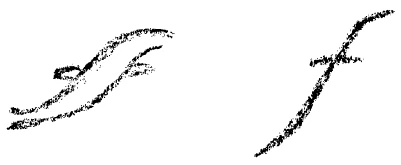
[ 6 ] When you begin in this way to appeal to the child’s nature, you are effectively transporting the child back to earlier cultural eras, for this is how writing originally came into being. Later, the process became merely a convention, so that today we no longer recognize the connection between the abstract letter forms and the images that emerged purely through drawing from observation and the imitation of observation. All letter forms originated from such pictorial forms. And now imagine: if you teach the child only the convention—“You must write the ‘f’ like this!” — then you are teaching them something entirely derived, isolated from its human context. Then writing is severed from that from which it arose: from the artistic. And that is why, when we teach writing, we must begin with the artistic drawing of the forms—the phonetic letter forms—if we wish to go back far enough for the child to be captivated by the distinction between the forms. It is not enough for us to merely tell the child this with our words, for that is what has made people what they have become today. By isolating the written form from what is now convention and showing from what it sprang, we engage the whole person and make of them something entirely different from what we would make of them if we appealed solely to their intellect. Therefore, we must not think merely in the abstract: we must teach art through drawing and so on; we must teach the spiritual through arithmetic; and we must teach conventional matters in an artistic way through reading and writing; we must infuse the entire curriculum with an artistic element. Therefore, from the very beginning, we will have to place great emphasis on nurturing the artistic in the child. After all, the artistic has a particularly strong effect on the human will. Through this, we penetrate to something connected with the whole human being, whereas what is connected with the conventional has to do only with the intellectual aspect of the human being. Therefore, we will proceed in such a way that we allow every child to cultivate something related to drawing and something related to painting. So we begin with drawing and drawing-and-painting in the simplest way possible. But we also begin with music, so that the child becomes accustomed from the very beginning to playing some kind of instrument, thereby awakening artistic feeling within the child. Then the child will also develop a sense of feeling something from the whole person that is otherwise merely conventional.
[ 7 ] In our methodology, our task will be to always engage the whole person. We would not be able to do this if we did not focus our attention on cultivating the artistic sensibility inherent in human beings. In this way, we will also prepare people for the future, so that they may develop an interest in the whole world in accordance with their entire being. The fundamental mistake up to now has always been that people have engaged with the world using only their heads; they have merely dragged the rest of themselves along behind. And the consequence is that these other parts are now guided by their animal instincts, giving free rein to their emotions—as we are now witnessing in what is spreading in such a remarkable way from Eastern Europe. This occurs because the whole human being has not been nurtured. But it is not merely that the artistic must also be nurtured; rather, the entirety of education must be drawn from the artistic. All methodology must be immersed in the artistic. Education and teaching must become a true art. Knowledge, too, may only serve as a foundation here.
[ 8 ] In this way, we will first derive the handwritten forms of the letters from the drawing element, and then the printed forms. We will build reading on the foundation of drawing. In this way, you will already see that we are striking a chord that the child’s soul will be very happy to resonate with, because the child will then have more than just a superficial interest—for example, the child will actually see what is in their innermost being expressed through reading and writing.
[ 9 ] Then we will have to reverse some things in our teaching. You will see that what we aim to achieve today in reading and writing cannot, of course, be built up entirely in the way we have suggested here, but we will only be able to awaken the capacities necessary for such a process. For if we were to structure all of today’s instruction in such a way that we sought to derive reading and writing from drawing, it would take until the age of 20—we could not accomplish this within the school years. So we can initially carry this out only in principle and must then move on, while still remaining within the artistic element. Once we have isolated individual aspects from the whole human being in this way for a time, we must proceed to help the child understand that great minds, when they have these distinctive forms before them, discover meaning in them. As we further develop what the child has learned in terms of these details, we move on—regardless of whether the child understands the individual elements or not—to writing down sentences. In these sentences, the child will then notice forms such as the “f” on the fish that they have learned here. They will then notice other forms alongside them that we cannot single out at this time due to lack of time. We will then proceed to draw on the blackboard what the individual letter looks like in print, and one day we will write a long sentence on the blackboard and tell the child: “This is what the older students have before them, having developed everything we have discussed—such as the ‘f’ in the fish and so on.” — Then we will teach the child to copy it. We will ensure that what the child sees is transferred to their hands, so that they do not merely read with their eyes but also form the shapes with their hands, and so that they know: everything on the blackboard, they can form themselves in this or that way. Thus, they will not learn to read without forming with their hands what they see—including the printed letters. In this way, we achieve the extraordinarily important goal that reading is never done with the naked eye alone, but that, in a mysterious way, the activity of the eye extends to the entire motor activity of the person. The children then unconsciously feel, right down to their legs, what they would otherwise only take in with their eyes. Engaging the whole person in this activity is what we must strive for.
[ 10 ] Then we take the opposite approach: We break down the sentence we’ve written, and we reveal the other letter forms—the ones we haven’t yet broken down into their constituent parts—by breaking the words down into their individual letters, moving from the whole to the parts. For example: here is the word KOPF. First, the child learns to write “KOPF” by simply tracing it. And now we break down KOPF into K, O, P, F, isolating the individual letters from the word; in other words, we move from the whole to the parts.
[ 11 ] We apply this approach of moving from the whole to the parts throughout the entire course. We do this by, for example, tearing a piece of paper into a number of small scraps at another time. We then count these scraps; let’s say there are 24. We then say to the child: Look, I’m labeling these scraps with what I’ve written down here and calling them: 24 scraps of paper. — Of course, they could also be beans. — Now you’re going to remember this. Now I’ll take away a number of paper scraps; I’ll put them in one pile, make another pile there, a third one there, and a fourth one here; now I’ve made four piles out of the 24 paper scraps. Now look: I’m going to count—you can’t do that yet, but I can—and what’s on one pile, I’ll call 9; what’s on the second, I’ll call 5 scraps of paper; what’s on the third, I’ll call 7 scraps of paper; and what’s on the fourth pile, I’ll call 3 scraps of paper. You see, before I had a single pile: 24 scraps of paper; now I have four little piles: 9, 5, 7, and 3 scraps of paper. It’s all the same paper. When I have it all together, I call it 24; now I’ve divided it into four piles and call it, in turn, 9, then 5, then 7, and then 3 scraps of paper. — Now I say: 24 scraps of paper together are 9 and 5 and 7 and 3. — Now I’ve taught the child how to add. That is to say, I did not start with the individual addends and then derive the sum; that never corresponds to original human nature—I refer here to my “Theory of Knowledge in Goethe’s worldview”—but rather the opposite corresponds to human nature: the sum must first be grasped, and it is then to be broken down into the individual addends. So we must teach the child addition in the opposite way than is usually done: starting from the sum and moving on to the addends. Then the child will grasp the concept of “the whole” better than if we were to piece together the individual parts in the conventional manner. Consequently, we will have to distinguish our teaching from the conventional approach in that we must, so to speak, teach the child in reverse what the sum is in contrast to the addends. Then we can expect to encounter a completely different level of understanding than if we were to proceed the other way around. You will actually only come to fully grasp the most important aspect of this through practice. For you will notice a completely different approach to the subject and a completely different receptiveness on the part of the child when you follow the path described here.
[ 12 ] You can then perform the reverse process as you continue your calculations. You can say: Now I’ll put all these scraps of paper back together; then I’ll take some of them away again, make two piles, and call the pile that’s left over 3. How did I get this 3? By taking it away from the other pile. When they were still together, I called it 24; now I have taken away 3 and call what is left 21. — In this way, you move on to the concept of subtraction. That is, you do not start from the minuend and subtrahend, but from the remainder that is left, and proceed from this to what the remainder came from. Here, too, you take the reverse approach. And so you can—as we will see in the specific methodology—extend this to the entire art of arithmetic, always moving from the whole to the parts. In this regard, we will have to get used to following a completely different teaching approach than we are accustomed to. We proceed in such a way that, while cultivating intuition—which we must by no means neglect, but which is emphasized one-sidedly today—we simultaneously nurture a sense of authority. For we are constantly saying: “I call this 24, I call this 9.”—By emphasizing in the anthroposophical lectures that between the ages of 7 and 14 the sense of authority should be cultivated, we should not think of it as training for a sense of authority, but rather that what is necessary can already flow into the methodology of instruction. This resonates there like an undertone. The child hears: “Ah, he calls that 9, he calls that 24,” and so on. — The child obeys of its own accord. By listening to the one who applies this method, the child internalizes what will then emerge as a sense of authority. That is the secret. Any artificial indoctrination into a sense of authority should be ruled out by the method itself.
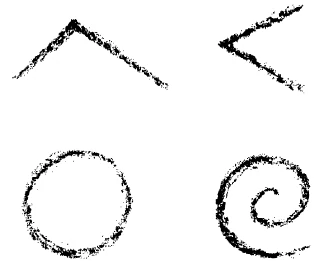
[ 13 ] Then we must be absolutely clear that we always want to allow Will, Feeling, and Thinking to work together. By teaching in this way, Will, Feeling, and Thinking are already working together. The only thing that matters is that we never steer the will in the wrong direction through improper means, but rather that we properly express the strengthening of the will through artistic means. To this end, instruction in painting and the arts—as well as music—should be provided from the very beginning. We will notice that, especially in the early stages of the second stage of life, the child is most receptive to authoritative instruction through the arts, and that this is when we can achieve the most with the child. It will grow into what we wish to impart to them as if of its own accord, and it will experience the greatest possible joy when it puts this or that onto paper through drawing or even painting—though we must refrain from any mere external imitation. Here, too, we must remember in our teaching that we must, so to speak, transport the child back to earlier cultural epochs, but that we cannot proceed in the same way as those earlier cultural epochs did. People were simply different back then. You will now transport the child back to earlier cultural epochs with an entirely different state of mind and spirit. Therefore, in drawing, we will not focus on having the child imitate this or that, but rather we will teach them original forms in drawing; we will teach them to draw one angle this way and another that way; we will try to teach them the circle and the spiral. So we will start with self-contained forms, not with whether the form imitates this or that, but we will try to awaken his interest in the form itself—do you remember the lecture in which I tried to awaken a sense of how the acanthus leaf came into being? In that lecture, I explained that the idea that the acanthus leaf was imitated in the form in which it appears in legend is entirely false; rather, the acanthus leaf simply arose from an inner formative process, and people later felt: “This resembles nature.” So nature was not imitated. — We will have to take this into account when it comes to the elements of drawing and painting. Then, at last, the dreadful phenomenon that so devastates people’s minds will cease. When they encounter something created by human hands, they say: “That is natural; that is unnatural.” — It does not matter at all whether one passes judgment: “This is correctly imitated,” and so on. — This resemblance to the external world must first emerge as a secondary consideration. What must live within the human being is an inner fusion with the forms themselves. So even when drawing a nose, one must have an inner fusion with the shape of the nose, and only afterward does the resemblance to the nose become apparent. The sense of inner lawfulness is never awakened between the ages of 7 and 14 through external imitation. For one must be aware of this: what one can develop between the ages of 7 and 14 cannot be developed later on. The forces at work during this period then fade away; later on, one can only have a substitute for them, unless a transformation of the human being takes place—what is called an initiation, whether natural or unnatural.
[ 14 ] I am going to say something rather unusual now, but we must go back to the principles of human nature if we want to be true teachers today. There are exceptional cases where a person can still make up for something later in life. But then they must have gone through a serious illness, or they must have suffered some other kind of deformation—perhaps they broke a leg that was not properly set—and thus must have experienced a certain detachment of the etheric body from the physical body. This is, of course, a dangerous thing. If it occurs as a result of karma, one must accept it. But one cannot count on it and establish a rule for public life that someone could make up for what they have missed in this way—not to mention other matters. Human development is a mysterious process, and whatever is to be aimed for through instruction and education must never take the abnormal into account, but must always take the normal into account. Therefore, teaching is always a social matter. Therefore, one must always consider: At what age must the development of certain faculties take place so that this development can properly prepare the individual for life? We must therefore take into account that certain abilities can only be developed between the ages of 7 and 14 in such a way that the individual can later succeed in the struggle of life. If these abilities were not cultivated during this period, people would later be unable to cope with the struggle of life and would have to succumb to it—which is the case for most people today.
[ 15 ] This way of artistically placing oneself within the workings of the world is precisely what we, as educators, must instill in the child. We will then realize that human nature is such that people are, so to speak, born as musicians. If people possessed the right lightness of being for this, they would dance with all small children; they would move in some way with all small children. Human beings are born into the world with a desire to bring their own physicality into musical rhythm, into musical connection with the world, and this inner musical ability is most present in children between the ages of three and four. Parents could do an immense amount if they recognized this and then focused less on external musical sensibility and more on the child’s own bodily awareness—on the dance-like quality. And especially at this age, one could achieve an infinite amount by permeating the child’s body with elementary eurythmy. If parents were to learn to engage with their children through eurythmy, something quite different would develop in the children than is usually the case. They would overcome a certain heaviness that resides in their limbs. All people today have such heaviness in their limbs; this would be overcome. And what would then remain by the time the children’s teeth begin to fall out is the predisposition for the entirety of musicality. The individual senses—the musically attuned ear, the visually and sculpturally attuned eye—arise only from this musicality; what we call the musical ear or the eye attuned to drawing and sculpture is a specific manifestation of the whole musical human being. Therefore, one must certainly cherish the idea that, in a sense, what is predisposed in the whole human being is taken up into the higher human being—the nervous-sensory human being—by turning toward the artistic. You carry the feeling up into the intellectual realm by making use of either the means of music or the means of drawing and sculpture. This must be done in the right way. Today everything is jumbled together, especially when it comes to cultivating the artistic. We draw with our hands and we also create three-dimensional forms with our hands—and yet the two are completely different. This can become particularly evident when we introduce children to the artistic. When introducing children to sculpture, we must ensure as much as possible that they trace the forms of the sculpture with their hands. By allowing the child to feel the forms for themselves—by moving their hand and creating something through drawing—we can guide them to trace the forms with their eyes, but with the will that flows through the eyes. It in no way infringes upon a child’s naivety when we instruct the child to trace the shapes of objects with an open palm, when we draw their attention to the eye—for example, by having them follow the curves of a circle—and tell them: “You yourself are drawing a circle with your eye.” This is not an infringement on the child’s naivety, but rather a way of engaging the interest of the whole person. Therefore, we must be aware that we are carrying the lower aspects of the human being up into the higher, into the nervous-sensory being.
[ 16 ] In this way, we will develop a certain fundamental sense of method—one that we must cultivate within ourselves as educators and teachers and that we cannot directly impart to anyone else. Imagine we have a person—a child—before us whom we are to teach and educate. Today, the perspective of the developing human being is entirely lost in education; everything is jumbled together. But we must accustom ourselves to differentiating in our view of this child. We must, so to speak, accompany what we do in teaching and educating with inner sensations, with inner feelings, and also with inner impulses of the will that, so to speak, resonate only in a lower octave and are not acted upon. We must become aware that in the developing child, the “I” and the astral body gradually develop; the etheric body and the physical body are already present through heredity. Now it is good for us to consider: The physical body and the etheric body are something that is always particularly nurtured from the head downward. The head radiates what actually creates the physical human being. If we employ the correct educational and teaching methods with the head, then we best serve the organization of growth. If we teach the child in such a way that we draw out the head element from the whole human being, then what is right flows from the head into the child’s limbs: the child grows better, learns to walk better, and so on. And so we can say: it flows downward into the physical and etheric bodies when we properly develop everything that pertains to the upper human being. If, by teaching reading and writing in a more intellectual way, we feel that the child is responding to us by absorbing what we teach them, then we will send this from the head into the rest of the body. The ego and the astral body, however, are developed from the bottom up when the whole human being is included in the education. A strong sense of self, for example, would develop if elementary eurythmy were introduced to the child between the ages of three and four. Then the child would be fully engaged in it, and a genuine sense of self would take root in their being. And when the child is told many things—things that bring them joy or even cause them pain—this shapes the astral body from the lower self. Please reflect a little more intimately on your own experiences in this regard. I believe you have all had this experience: When you were walking down the street and were startled by something, you were not only startled in your head and heart, but you were also startled in your limbs and felt the shock within them. From this you will be able to conclude that devotion to something that triggers feelings and emotions grips the whole person, not just the heart and the mind.
[ 17 ] This is a truth that educators and teachers must keep particularly in mind. They must ensure that the whole person is engaged. Therefore, consider storytelling—whether of legends or fairy tales—from this perspective; and if you have a true feel for it, so that you tell fairy tales to the child from your own inner mood, then you will tell them in such a way that the child feels what is being told with their whole being. In doing so, you are truly addressing the child’s astral body. Something radiates upward from the astral body into the head, which the child is meant to feel there. One must have the sense of engaging the whole child, and that understanding of the story can only arise from the feelings and emotions one evokes. Therefore, consider it an ideal that when you tell the child fairy tales or legends, or when you engage in painting or drawing with them, you do not explain things or rely on concepts, but rather allow the whole person to be engaged—so that the child then walks away from you and only later comes to understand things on their own. So try to nurture the “I” and the astral body from the bottom up, so that the head and heart follow only afterward. Never try to tell stories in a way that appeals to the head and intellect, but rather in a way that evokes certain quiet thrills in the child—within certain limits—that you evoke desires or aversions that move the whole person, so that this continues to resonate even after the child has left, and only then does the child move on to understanding it and taking an interest in it. Try to make an impact through your complete connection with the children. Do not try to artificially arouse interest by relying on sensationalism; rather, try to allow interest to arise from the child’s own nature by establishing an inner connection with the children.
[ 18 ] How can this be done with an entire class? It’s relatively easy with a single child. You just need to care for the child; you just need to carry out what you do with the child out of love, and then it will touch the whole person—not just the heart and the mind. With an entire class, it is no more difficult if you yourself are moved by these things—if you are not merely moved in your heart and mind. Take this simple example: I want to make the continued life of the soul after death clear to the child. I never truly make it clear to the child; instead, I merely delude myself about it by teaching the child theories on the subject. No concept whatsoever can teach a child anything about immortality before the age of 14. But I can say to the child: “Take a look at this butterfly chrysalis. There’s nothing inside. The butterfly was inside, but it crawled out.” — I can also show the child the process, and it is good to demonstrate such metamorphoses to the child. I can now draw the comparison: Imagine that you yourself are such a chrysalis right now. Your soul is inside you; it will emerge later, just as the butterfly emerges from the chrysalis. — That is, of course, a simplistic way of putting it. Now you can talk about it at length. But if you yourself do not believe that the butterfly represents the human soul, you will not achieve much with such a comparison when speaking to a child. Nor should you introduce the outright falsehood that you view the matter merely as a human-made comparison. It is not such a comparison, but rather a fact established by the divine world order. Neither of these things is a product of our intellect. And when we relate to these things correctly, we learn to believe in the fact that nature provides comparisons for the spiritual and soul-related everywhere. When we become one with what we teach the child, then our influence encompasses the whole child. The inability to empathize with the child anymore—instead believing only in reducing everything to some kind of rationality that we ourselves do not believe in—is what causes us to teach the child so little. We must approach the facts with our own understanding in such a way that, for example, when a butterfly emerges from its chrysalis, we do not present a random image, but rather an example—one we understand and believe in, and which has been established by the divine powers of the world—into the child’s soul. The child must understand not from ear to ear, but from soul to soul. If you keep this in mind, you will make progress.