

The Art of Education
Methodology and Didactics
GA 294
4 September 1919, Stuttgart
Translated by Steiner Online Library
Thirteenth Lecture
[ 1 ] You have seen that in these lectures, which are of a methodological and didactic nature, we have gradually approached the understanding that is intended to provide us with the actual curriculum. Now, I have already told you on several occasions that, with regard to what we include in our school and how we include it, we must make compromises with what already exists today. For, for the time being, we cannot create—in addition to the Waldorf school—the rest of the social world into which this Waldorf school actually belongs. And so, from this surrounding social world, there will emanate that which will continually interfere with even the Waldorf School’s eventual ideal curriculum. But we will only be good teachers at the Waldorf School if we understand the relationship between the ideal curriculum and what our curriculum must still be, for the time being, due to the influence of the external social world. Right at the beginning of elementary school, the most significant difficulties will arise among the students—the children—and these are the ones we must address first: among the students—the children—right at the beginning of elementary school and then again at the end. Right at the beginning of elementary school, difficulties will indeed arise because of the curricula imposed by the outside world. These curricula demand all sorts of learning objectives, and we cannot risk our children—once they have completed their first and second school years—not being on par with children educated and taught outside our school. By the time they reach the age of nine, our children will, according to our method, be in a much better position; but in the meantime, it could be that, say, our children are required at the end of the first school year to demonstrate their abilities in some way before a commission from the outside world. Now, it is not good for the children to be able to do precisely what a committee in the outside world demands today. And our ideal curriculum should actually be working toward something other than what such a committee requires. Thus, what is dictated by the outside world partially undermines our ideal curriculum. This is the case at the beginning of our instruction at the Waldorf School; in the upper grades of the Waldorf School, we are dealing with children—with students—who have already come from conventional schools, and who therefore have not been taught, methodologically and didactically, in the way they should have been.
[ 2 ] The most significant flaw in education today for children between the ages of 7 and 12 is, after all, that instruction is far too intellectually oriented. Even though there is constant criticism of intellectualism, the focus is far too much on the intellect. As a result, we end up with children who already exhibit a strongly senile quality—who possess far more of this senile quality than children aged 13 or 14 should have. This is also why—when our youth today take a reformist stance themselves, as in the Boy Scouts and similar movements, where they themselves demand how they should be raised and educated—they then bring to light the most ghastly abstractions, that is, things characteristic of old age. And precisely because our youth constantly demand—as the Wandervögel do—to be taught in a truly youthful way, they are actually demanding to be taught according to senile principles. We are indeed experiencing this firsthand. We experienced it quite vividly ourselves at a Cultural Council meeting, where such a young Wandervogel or member of a youth movement took the floor. He began reading off his utterly tedious abstractions about how the youth now demand to be taught and educated. This was too tedious for some, because it was all self-evident truths—but self-evident truths that suffered somewhat from senility. The audience grew restless, and the young speaker hurled into the crowd: “I observe that today, the older generation does not understand the youth.”—But the fact was simply that this half-child was far too senile due to a misguided upbringing and a misguided education.
[ 3 ] This is something that must be given special consideration, particularly with regard to the children who enter our schools at ages 12 to 14 and to whom we should, so to speak, give the finishing touches for the time being. At the beginning and end of the school year, we are faced with the big questions. We must do as much as possible to live up to our ideal curriculum, and we must do as much as possible to ensure that the children do not become too alienated from modern life.
[ 4 ] Now, something very problematic comes to light in the curriculum for the very first grade. It requires that children already achieve the goal of being able to read as much as possible, while at the same time they learn very little about writing. Writing is, so to speak, maintained at the beginning, and reading is to be brought to such a level already in the first year of school that the children can at least read passages—in both German and Latin script—that have already been read together with them or read aloud to them. But at least in German and Latin script, whereas relatively little is required in writing. If we could educate in an ideal way, we would, of course, start with the forms as we have discussed them, and the forms that the children develop on their own, we would gradually have them transform into printed letters. We will do this; we will not allow ourselves to be deterred from beginning with drawing and painting lessons and deriving the written letters from these drawing and painting lessons, and only then will we move on to block letters. Once the child has learned to recognize the written letters, we will move on to block letters. We will make a mistake here, because in the first grade we will not have the time to fully develop both scripts—German and Latin—and then also teach the children to read both German and Latin scripts. That would place too great a burden on the first school year. Therefore, we will have to make the transition from drawing to German handwriting, and then move from German cursive letters to German block letters in basic reading. We will then move from German cursive to Latin block letters without first having mastered the Latin letters through drawing. We will therefore structure this as a compromise: In order to do justice to true pedagogy, we will develop writing from drawing; but, on the other hand, to ensure that the child progresses as far as the curriculum requires, we will also teach them the basics of reading Latin print. This, then, will be our task with regard to writing and reading.
[ 5 ] I have already pointed out in these instructional lectures that once we have developed the shapes of the letters to a certain degree, we must proceed more quickly.
[ 6 ] Above all, then, we must ensure that the first year of school is devoted largely to simple conversation with the children. We read aloud to them as little as possible, but prepare ourselves so well that we can tell them everything we want to convey to them. We then try to ensure that the children can retell what we have told them and what they have heard. However, we do not use reading materials that fail to stimulate the imagination; rather, we use, as much as possible, reading materials that strongly stimulate the imagination—namely, fairy tales. As many fairy tales as possible. And by engaging in this storytelling and retelling with the child for a long time, we try to gradually guide them toward briefly recounting their own experiences. For example, we have the child tell us something that they enjoy telling on their own. Through all this storytelling, retelling, and recounting of personal experiences, we facilitate the transition from dialect to standard colloquial language without being pedantic, simply by correcting the mistakes the child makes—at first they make plenty of mistakes, but later on, fewer and fewer. Through storytelling and retelling, we help the child make the transition from speaking the dialect to standard colloquial language. We can do this, and the child will still have achieved the educational goal required of them by the end of the first school year.
[ 7 ] Then, however, we must introduce something that would be best left out in the very first year of school and that places a bit of a burden on the child’s mind: we must teach the child what a vowel is and what a consonant is. If we could follow the ideal curriculum, we would not do this in the first year of school. But then some inspector might come at the end of the first school year and ask the child what an “i” is and what an “l” is, and the child would not know that one is a vowel and the other a consonant. And we would be told: Well, this lack of knowledge is the result of anthroposophy. - That is why we must ensure that the child can distinguish vowels from consonants. We must also teach the child what a noun is and what an article is. And now we’re getting into quite a predicament. Because, according to the local curriculum, we’re supposed to use the German terms and not say “article.” So, according to the local regulations, we have to tell the child to say “gender word” instead of “article,” and that naturally leads to a predicament. It would be better if we weren’t so pedantic and could keep the word “article.” Now, I’ve already given you some hints on how to help the child distinguish between a noun and an adjective by guiding the child to see how the noun relates to what stands out in space, existing on its own. We must try to tell the child: “Look—a tree!” A tree is something that remains in space. But look at a tree in winter, look at a tree in spring, and look at it in summer. The tree is always there, but it looks different in winter, different in summer, and different in spring. In winter we say: It’s brown. In spring we say: It’s green. In summer we say: It’s colorful. These are its qualities. — So first we teach the child the difference between permanent characteristics and changing characteristics, and then we tell them: When we need a word for what remains constant, it’s a noun; when we need a word for what changes in that which remains constant, it’s an adjective. — Then we teach the child the concept of an action. Sit down on your chair. You’re a good child. “Good” is an adjective. But now stand up and run. You’re doing something. That’s an action. We describe this action with a verb. — So we try to introduce the child to the concept, and then we move from the concept to the words. In this way, without causing too much confusion, we’ll be able to teach the child what a noun, an article, an adjective, and a verb are. Understanding what an article is—that’s the very hardest part, because the child can’t yet fully grasp the relationship between the article and the noun. We’ll end up dabbling in rather abstract concepts if we try to teach the child what an article is. But the child simply has to learn it. And it is much better to dabbled in the abstract—since it is somewhat unnatural anyway—than to devise all sorts of artificial methods to explain the meaning and nature of the article to the child, which is impossible anyway.
[ 8 ] In short, it will be good enough for us if we teach with full awareness that we are introducing something new into the classroom. We will have ample opportunity to do so in the first school year. Much of this will still carry over into the second school year. But in the first school year, we will have plenty of material that is a great benefit to the growing child. In the first school year, we will not only include writing, but also elementary, basic painting and drawing, since these form the foundation for writing instruction. In the first school year, we will not only include singing but also a basic introduction to music through an instrument. From the very beginning, we will not only let the child sing but also guide them toward the instrument. This, in turn, will be a great benefit to the child. We will teach them the first elements of hearing tonal relationships. And we will try to maintain a balance between producing music through singing from within and hearing sounds from without, or producing sounds through an instrument.
[ 9 ] These activities—painting while drawing, drawing while painting, and immersing oneself in music—will provide us with a wonderful element for the development of the will, especially in the first year of school; a development of the will that is almost entirely absent from today’s schools. And if we then also transition the little ones from ordinary gymnastics to eurythmy, we will foster the development of the will in a very special way.
[ 10 ] I have been given a curriculum for the first grade. It includes:
[ 11 ] Religion: 2 hours
German: 11 hours
Writing—no number of hours is specified, but
writing is taught in detail in German class
, then
Local History: 2 hours
Math: 4 hours
Singing and Physical Education combined: 1 hour per week.
[ 12 ] We will not do that, because it would be too great a violation of the well-being of the growing child. Instead, we will, as best we can, move the singing, music, and gymnastics-eurythmy activities to the afternoon and the other activities to the morning, and we will—in moderation, of course, until we feel it is too much—practice singing, music, and gymnastics-eurythmy with the children in the afternoon. For devoting just one hour a week to this is downright ridiculous. This alone proves to you that the entire curriculum is geared toward the intellectual.
[ 13 ] Today, in the first year of elementary school, we are dealing with six-year-old children or with those who are at most a few months past their sixth birthday. With such children, one can quite effectively teach the basics of drawing and painting, music, and also engage in physical education and eurythmy; but if one teaches religion to them in the current style, then one is not providing them with religious instruction at all, but merely rote memorization—and that is still the best part of it. For it is simply nonsensical to speak to a six- or seven-year-old child about the concepts that play a role in religion. The child can only commit them to memory. Cultivating memory is certainly a good thing, but one must be aware that in doing so, one is actually presenting the child with all sorts of things for which it has not the slightest understanding at this stage.
[ 14 ] There is another aspect—which is already part of the first grade curriculum—that will lead us, at least in practical instruction, to adopt a different perspective on it than is usually held. In the second grade, it then appears in a special way, even as a separate subject: that is, calligraphy. By separating writing from drawing, we will not need to make a special distinction between “ugly handwriting” and “beautiful handwriting” when teaching children. We will strive to make no distinction between “sloppy handwriting” and “neat handwriting” and to structure all writing instruction—and we will be able to do this despite the external curriculum—in such a way that the child always writes neatly, as neatly as necessary, and never makes a distinction between “neat handwriting” and “sloppy handwriting.” And if we make an effort to tell the child stories at some length and let them retell them, while also striving to speak correctly, then we will initially need to correct spelling only as necessary. Thus, we will also not need to treat correct spelling and incorrect spelling as two distinct strands of writing instruction.
[ 15 ] You see, in this regard we must, of course, be very careful. For us Austrians, this poses a particular difficulty in the classroom. For in Austria, in addition to the two languages—the dialect and the educated colloquial language—there was a third. That was the special Austrian school language. In it, all long vowels were pronounced short and all short vowels long; and while in the dialect one correctly says “d’Sun,” the Austrian school language does not say “die Sonne” but rather “die Sohne,” and one gets used to this involuntarily. You keep falling back into it, just like a cat always lands on its feet. But it’s also very disruptive for the teacher. The further south you go from the north, the more you get caught up in this problem. In southern Austria, this problem is most rampant. The dialect correctly says “der Suu”; standard German teaches us to say “der Son.” So that one says “der Son” for the boy and “die Sohne” for what shines in the sky. That is just the most extreme example. But if we make an effort, when speaking, to keep everything long that is truly long and everything short that is short, everything sharp that is sharp, everything drawn-out that is drawn-out, and everything soft that is soft—and if we pay close attention to the child and continually correct them so that they speak correctly—then we will also create the prerequisites for them to write correctly. In the first year of school, we need do little more than establish these proper prerequisites. Thus, we do not yet need to have the child write out elongations and sharpenings—since the school curriculum permits this—but rather, with regard to spelling, we should remain as long as possible at the stage of mere speaking and only very gradually introduce writing into proper spelling. This is something we must keep in mind when it comes to treating children properly who are at the beginning of their school years.
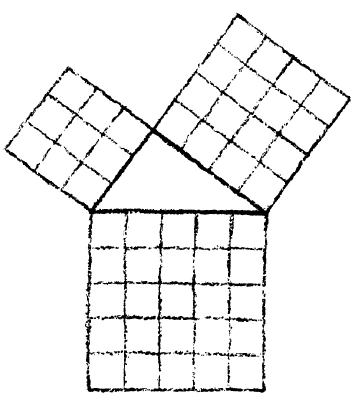
[ 16 ] The children who are nearing the end of their school years—the thirteen- to fourteen-year-olds—are being raised in an overly intellectualized manner. Too much emphasis has been placed on their intellectual development in the classroom. They have experienced far too little of the benefits of developing their will and character. Therefore, we will have to make up for what they have lacked, especially in these final years. We will therefore have to take every opportunity to integrate the will and the emotions into the purely intellectual, by transforming much of what the children have absorbed purely intellectually into something that appeals to the will and the emotions during this time. We can safely assume that the children we are receiving this year, for example, have learned the Pythagorean theorem incorrectly—that they have not learned it in the proper way, as we have discussed. The question is how we can remedy this so that we do not merely provide what the child has missed, but rather give them even more—so that certain faculties that have already withered and dried up may be revived, to the extent that they can be revived. Therefore, for example, we try to help the child recall the Pythagorean theorem once again. We say: You’ve learned it. Tell me, what is it called? — Look, you’ve just told me the Pythagorean theorem: the square of the hypotenuse is equal to the sum of the squares of the two legs. But what should be there in the child’s soul from learning this Pythagorean theorem is certainly not present. That is why I go a step further. I not only make the concept vivid for them, but I also make the visualization itself a process of discovery. I let the visualization arise in a very special way. I say: “Come on out, three of you. The first one covers this area here with chalk: make sure he uses only as much chalk as is necessary to cover the area.” The second one covers this area with chalk, using a different piece of chalk; the third one covers this one, again with a different piece of chalk. — And now I say to the boy or girl who covered the square of the hypotenuse: “Look, you used just as much chalk as the other two combined.” You’ve smeared as much chalk onto the square as the other two combined, because the square of the hypotenuse is equal to the sum of the squares of the legs. - So I let them grasp the concept through the use of chalk; this sinks even deeper into their minds when they also consider that some of the chalk has been scraped off—it’s no longer part of the chalk, but is now on the blackboard. And now I go on to say: Look, I’m dividing the squares—one into 16 squares, another into 9 squares, and another into 25. I’ll now place one of you in the center of each square, and you imagine that this is a field and you have to till the field. — The children who worked on the 25 small squares in this area have then done just as much work as those in the area with 16 squares and those in the area with 9 squares combined. But through your work, the square above the hypotenuse has been tilled; through your work, the one above one leg; and through your work, the one above the other leg. - In this way, I connect the Pythagorean theorem to something within the child that is volitional—something that at least evokes a mental image of the child being meaningfully engaged with the external world through its will—and I bring to life within the child what has entered its mind in a rather lifeless state.
[ 17 ] Let’s assume, then, that the child has already learned Latin and Greek. Now I try to guide the children so that they not only speak Latin and Greek, but also listen to one another—methodically listen—when one speaks Latin and the other speaks Greek. And I try to bring to life for them, in a vivid and concrete way, the difference between the nature of Greek and the nature of Latin. I wouldn’t need to do this in regular classes, because it emerges naturally in the ideal curriculum. But with the children we have, we need this because the child should feel: When speaking Greek, they actually speak only with the larynx and the chest; when speaking Latin, the whole person resonates. I must draw the child’s attention to this. I will also draw the child’s attention to the liveliness of French, which is very similar to Latin. When the child speaks English, they almost spit out the letters; the chest is less involved than when speaking French, and much, much is cast aside. In particular, some syllables are practically spat out before they have fully taken effect. You don’t need to tell the children “spit out,” but you will help them understand how the word dies away toward its end, particularly in the English language. In this way, you will try to incorporate the articulatory element particularly clearly into the language instruction for the 13- and 14-year-old children whom you have taken over from the current school.