

Anthroposophical Anthropology and Education
GA 304a
30 August 1924, London
Translate the original German text into any language:
Versions Available:
Anthroposophical Anthropology and Education, tr. SOL
10. Über Erziehungsfragen II
10. About Parenting Issues II
[ 1 ] Meine sehr verehrten Damen und Herren! Zuerst habe ich Mrs. Macmillan und Mrs. Mackenzie herzlich zu danken für die freundlichen, liebenswürdigen Worte, mit denen sie diesen Vortrag eingeleitet haben, für die schöne Art des Einleitens dessen, was ich hier auszuführen habe.
[ 1 ] Ladies and gentlemen! First of all, I would like to extend my heartfelt thanks to Mrs. Macmillan and Mrs. Mackenzie for the kind and gracious words with which they introduced this lecture, and for the lovely way in which they set the stage for what I am about to present here.
[ 2 ] Dann habe ich Sie alle um Entschuldigung dafür zu bitten, daß ich in deutscher und nicht in englischer Sprache hier spreche. Es wird das ja natürlich die Verständigung etwas erschweren, allein es ist mir eben nicht anders möglich.
[ 2 ] I would like to ask all of you to excuse me for speaking in German rather than English. Of course, this will make communication a bit more difficult, but I simply have no other choice.
[ 3 ] Dasjenige, was ich vorzubringen haben werde, ist nicht ein allgemeiner Reformgedanke, sind auch nicht einzelne Ideen über Erziehungs- und Unterrichtsziele, sondern es ist im wesentlichen die Schulpraxis, eine solche Schulpraxis, die eigentlich nur sich bewähren kann in der unmittelbaren Anwendung in der Schule mit den Kindern selbst. Aber diese Schulpraxis, die nun schon seit mehreren Jahren in der Waldorfschule ausgeübt wird und immerhin greifbare, merkbare Erfolge erzielt hat, die auch hier in England manche Anerkennung gefunden hat, durch die es möglich geworden ist zum Beispiel vor einiger Zeit unter der Protektorschaft von Mrs. Mackenzie in Oxford darüber Vorträge zu halten, diese Unterrichtsmethode ist durchaus herausgefunden aus demjenigen, was heute nicht bloß spirituelle Weltanschauung genannt werden muß, sondern spirituelle Forschungsmethode; eine spirituelle Forschungsmethode, welche zunächst zu einer Erkenntnis des Menschenwesens führt, dadurch zur Erkenntnis des werdenden Menschenwesens von der Kindheit bis zum Tode hin. Auf Grundlage einer spirituellen Forschung, die als Forschung allerdings nur möglich ist, wenn man zugibt, daß der Mensch imstande ist, in das Geistige, in das Spirituelle hineinzuschauen, nachdem er sich dafür seine Erkenntniskräfte ausgebildet hat. Es ist nicht möglich, in einer kurzen Betrachtung über Pädagogik dasjenige auseinanderzusetzen, was durch besondere Ausbildung der menschlichen Seele dazu führt, am Menschen und an der Natur nicht nur das Materielle mit den Sinnen zu schauen und mit dem Verstande zu begreifen, sondern auch das Geistige zu schauen, und es hereinzubekommen in die Seele, um es aufzunehmen in den Willen und um damit zu wirken. Aber man kann das. Geradeso wie man in der Lage ist, die Natur zu erforschen, wenn man sich für das äußere Experiment die Mittel verschafft, wenn man sich die Instrumente verschafft, Mikroskop, Teleskop, Spektroskop, durch die man sich das Sinnliche zubereitet, daß es mehr verrät, mehr ausdrückt, mehr offenbart, als es für die gewöhnlichen Sinne tut, ebenso kann man innerlich die Seelenkräfte erhöhen, intensiver machen. Dadurch kann man es dahin bringen, daß der ganze Mensch wahrnimmt durch dasjenige, was erst die Seele aus sich gemacht hat. Dann beginnt die Möglichkeit, das Geistige als solches wahrzunehmen. Dann aber entdeckt man auch am Menschen selber die volle Wesenheit dieses Menschen. Man entdeckt, daß dasjenige, was heute von dem allgemeinen Bewußtsein, von der sogenannten Wissenschaft am Menschen erkannt wird, daß das alles nur ein Teil ist, ein Glied an dem Menschen, und man entdeckt über dieses Physische hinausgehend zunächst dasjenige, was ich immer nenne - man braucht Namen, es kommt aber auf den Namen gar nicht an; man verwendet alte Namen, weil sie da und dort in der Literatur vorkommen, aber ich bitte, nicht an den Namen sich zu stoßen; sie entstammen keinem Aberglauben, sie entstammen durchaus exakter Forschung, ich könnte ebensogut einen anderen Namen geben -, das zweite also, was man an dem Menschen dann schaut, wenn man schon die Seele als vertieftes Erkenntniswerkzeug hat, so wie die äußeren Sinne hineinschauen, bewaffnet durch Mikroskop und Teleskop, es ist der ätherische Mensch, ein erster spiritueller Mensch, der sich als zweiter Mensch dem ersten eingliedert.
[ 3 ] What I have to present is not a general concept of reform, nor is it a collection of individual ideas about educational and instructional goals; rather, it is essentially school practice—a practice that can truly prove its worth only through direct application in the school setting with the children themselves. But this school practice, which has now been in use at the Waldorf School for several years and has, after all, achieved tangible, noticeable successes—successes that have also garnered some recognition here in England, making it possible, for example, to give lectures on the subject some time ago in Oxford under the patronage of Mrs. Mackenzie— this teaching method has been developed entirely from what today must be called not merely a spiritual worldview, but a spiritual method of research; a spiritual method of research that first leads to an understanding of the human being, and through this, to an understanding of the developing human being from childhood through to death. Based on spiritual research, which, however, is only possible as research if one acknowledges that human beings are capable of looking into the spiritual realm once they have developed the necessary powers of perception for this purpose. It is not possible, in a brief discussion of pedagogy, to elaborate on what—through the special training of the human soul—enables one to perceive in human beings and in nature not only the material aspect with the senses and to grasp it with the intellect, but also to perceive the spiritual aspect, to take it into the soul, to incorporate it into the will, and to act upon it. But it is possible to do so. Just as one is able to explore nature by acquiring the means for external experimentation—by obtaining instruments such as the microscope, telescope, and spectroscope—through which one prepares the sensory realm so that it reveals, expresses, and discloses more than it does to the ordinary senses, so too can one internally elevate the soul’s powers and make them more intense. Through this, one can bring about a state in which the whole human being perceives through that which the soul has first formed from within itself. Then the possibility arises of perceiving the spiritual as such. But then one also discovers, in the human being themselves, the full essence of that human being. One discovers that what is recognized today in human beings by general consciousness and by so-called science is, in fact, only a part, a member of the human being; and, going beyond this physical aspect, one first discovers what I always call—names are needed, but the name itself is of no consequence; one uses old terms because they appear here and there in the literature, but I ask that you not take offense at the terms; they do not stem from superstition, but from thoroughly exact research, I could just as well give it another name—so the second thing one then observes in the human being, once one already has the soul as a tool for deeper insight, just as the external senses look inward, armed with the microscope and the telescope, is the etheric human being, a first spiritual human being who, as a second human being, is integrated into the first.
[ 4 ] Wenn man den physischen Menschen studiert, so kann man ja, wenn man sich nur auf den Standpunkt der gewöhnlichen Wissenschaft stellt, eigentlich nicht begreifen, wie dieser Mensch sein ganzes Leben hindurch bestehen kann; denn in Wirklichkeit entfernen sich von unserem Leibe die meisten seiner Stoffe in einem Zeitraum von sieben bis acht Jahren. Sie sind alle nicht dieselben heute in Ihrem physischen Leibe, die sie waren vor sieben oder acht Jahren! Die Stoffe, die Sie dazumal in sich trugen, sind abgeworfen, andere haben sich angesetzt. Aber in dem ätherischen Leibe, in dem Ätherleibe haben wir das erste Reale, das einen beherrscht, durchdringt mit Wachstumskräften, Ernährungskräften.
[ 4 ] When one studies the physical human being, one cannot really understand—if one adopts only the perspective of conventional science—how this person can survive throughout his or her entire life; for in reality, most of the substances in our body are replaced over a period of seven to eight years. The substances in your physical body today are not the same as they were seven or eight years ago! The substances you carried within you back then have been shed; others have taken their place. But in the etheric body—the etheric body—we find the first reality that governs us, permeated with forces of growth and nourishment.
[ 5 ] In dem AÄtherleib haben wir den ersten übersinnlichen Leib. Diesen ersten übersinnlichen Leib hat der Mensch gemeinschaftlich mit den Pflanzen, nicht aber mit den Mineralien. Mit den Mineralien haben wir bloß den physischen Leib gemeinsam. Aber wir kommen durch dieses in der Seele herangezogene Schauen, durch die inneren Sinne bewaffnet, dazu, das dritte Glied zu erkennen - stoßen Sie sich wieder nicht an dem Namen -, den astralischen Leib. Den hat der Mensch mit dem Tier gemeinsam. Durch ihn kann er empfinden. Niemals braucht ein Wesen, das nur wachsen und sich ernähren kann wie die Pflanze, auch Empfindung zu haben. Der Mensch und die Tiere können empfinden. Das ist nicht etwas, was man mit einem abstrakten Worte bezeichnen kann, sondern das ist eine reale Wesenheit, der astralische Leib.
[ 5 ] The etheric body is our first supersensible body. Human beings share this first supersensible body with plants, but not with minerals. We share only the physical body with minerals. But through this inner vision cultivated in the soul, armed with the inner senses, we come to recognize the third member—please do not take offense at the name again—the astral body. Human beings share this with animals. Through it, they can feel. A being that can only grow and nourish itself, like a plant, never needs to have feelings. Human beings and animals can feel. This is not something that can be described with an abstract word; rather, it is a real entity: the astral body.
[ 6 ] Dann findet man etwas, was einen zum Träger macht seiner drei Leiber, was den physischen, den ätherischen, den astralischen Leib beherrscht: das ist die Ich-Organisation, das eigentliche innere Selbst des Menschen. Also: Erstens physischer Leib, zweitens ätherischer Leib, drittens astralischer Leib, viertens Ich-Organisation des Menschen.
[ 6 ] Then one finds something that makes one the bearer of one’s three bodies—the physical, etheric, and astral bodies—and that governs them: this is the “I” organization, the true inner self of the human being. So: First, the physical body; second, the etheric body; third, the astral body; fourth, the human “I”-organization.
[ 7 ] Wer nicht rechnet mit diesen vier Gliedern des Menschen, wer sich auf den Standpunkt stellt, daß die äußere Anschauung in der Anatomie und Physiologie den ganzen Menschen umfassen könne, der mag eine Weltanschauung begründen! Ideen behaupten kann man in der mannigfaltigsten Weise; sie mögen gelten oder nicht in der Welt; da mag der eine Spiritualist, Idealist, Materialist sein, Realist der andere. Weltanschauungen kann man begründen, denn man braucht sie nur auszusprechen, man braucht nur zu sagen, man glaube dies oder jenes; aber mit Weltanschauungen, die nicht den Wirklichkeiten, nicht den wirklichen Anschauungen, den wirklichen Erfahrungen entstammen, kann man weder beim äußerlich physischen Menschen etwas anfangen, noch in der Erziehung. Wenn Sie in bezug auf die Mechanik eine falsche Anschauung haben und Brückenbauer, Ingenieur werden, so wird Ihnen der erste Eisenbahnzug, der darüberfährt, diese Brücke einwerfen. Da zeigt sich, ob die Sache der Wirklichkeit entspricht. Ebenso zeigt sich das, wenn man in der Lebenspraxis mit dem Menschen zu tun hat. In Verhandlungen oder auch sonst, in Büchern, lassen sich Weltanschauungen, die man ausgedacht hat, gut verdauen. Erziehen kann man nicht mit ihnen; erziehen kann man nur mit wirklicher Menschenerkenntnis. Von dieser Menschenerkenntnis möchte ich sprechen, denn sie ist eigentlich die Vorbereitung für den Pädagogen. Alles übrige, was man noch so geistreich ausdenkt, daß man tun soll in der einen, in der anderen Weise, ist viel weniger wichtig, als daß der Pädagoge in jedem Augenblick hineinzuschauen vermag in die menschliche Wesenheit, und aus dem, was ihm die Kindesnatur selber sagt, seine Methode im Augenblicke aus der Liebe zur Erziehung, aus der Kunst zu erziehen, finden kann.
[ 7 ] Anyone who does not take these four aspects of the human being into account, anyone who takes the position that external observation in anatomy and physiology can encompass the whole human being, may go ahead and establish a worldview! Ideas can be asserted in the most diverse ways; they may or may not hold true in the world; one person may be a spiritualist, an idealist, or a materialist, while another may be a realist. One can establish worldviews, for one need only articulate them; one need only say that one believes this or that; but worldviews that do not stem from realities, from actual observations, or from real experiences are of no use either in relation to the outwardly physical human being or in education. If you hold a false view regarding mechanics and become a bridge builder or engineer, the very first train to cross that bridge will cause it to collapse. That is when it becomes clear whether the matter corresponds to reality. The same is true when dealing with people in everyday life. In negotiations or elsewhere, even in books, worldviews that one has devised can be easily digested. One cannot educate with them; one can only educate with a genuine understanding of human nature. I would like to speak about this understanding of human nature, for it is actually the preparation for the educator. Everything else—no matter how ingeniously one might devise what one ought to do in one way or another—is far less important than the educator’s ability to look into the human essence at every moment and, based on what the child’s nature itself tells him, to find his method in the moment out of a love for education and out of the art of educating.
[ 8 ] Nun stellt sich aber für denjenigen, der mit dieser, durch das Übersinnliche bewaffneten Menschenerkenntnis an das Kind herantritt, dar, daß man für die ersten sieben Lebensjahre, von der Geburt bis zum Zahnwechsel, im Kinde nicht deutlich unterscheiden kann dasjenige, was ich Ihnen deutlich nebeneinander angeführt habe. Man kann dem Kinde gegenüber nicht in derselben Weise sagen: es besteht aus physischem Leib, Ätherleib, Astralleib und Ich, wie man das beim erwachsenen Menschen sagen kann. Warum?
[ 8 ] However, it becomes clear to anyone who approaches the child with this understanding of human nature—one grounded in the supersensible—that during the first seven years of life, from birth until the child’s teeth begin to fall out, one cannot clearly distinguish within the child the elements that I have clearly listed side by side for you. One cannot say of a child in the same way—that it consists of a physical body, an etheric body, an astral body, and an “I”—as one can of an adult. Why?
[ 9 ] Das Kind, indem es geboren wird, ist ja wirklich das größte Wunder, das es überhaupt innerhalb des Erdenlebens geben kann. Man muß es als solches größtes Wunder anerkennen, wenn man unbefangenes Verständnis dafür hat. Da tritt das Kind in die Welt mit noch unbestimmten Gesichtszügen, mit der fast noch nichtssagenden Physiognomie, mit den ungeschickten, unorientierten Bewegungen, und wir sagen uns wohl, indem wir das mit einiger Geringschätzung tun: der Mensch ist ja noch nicht von dieser Welt; er paßt noch nicht hinein in diese Welt. Er greift noch, wenn er irgend etwas ergreifen will, ungeschickt. Er kann sich mit seinen Augen noch nicht orientieren, kann noch nicht in seinen Gliedern dasjenige ausdrücken, was in seinem Willen liegt. Aber das ist ja das Wunderbarste, was der Mensch erleben kann, wenn aus dem Zentrum der menschlichen Natur nach und nach herauskommt aus den inneren Kräften dasjenige, was der Physiognomie ihre göttergleichen Züge gibt, was die Bewegungen sich der Welt gemäß orientieren läßt und so weiter. Wenn man mit übersinnlichem Auge an das Kind herantritt, so kann man dem Kinde gegenüber nicht sagen, das Kind besteht aus physischem Leib, Ätherleib, Astralleib und Ich, so wie man dem Wasser gegenüber nicht sagen kann, so wie es ist, es bestehe aus Wasserstoff und Sauerstoff. Es besteht aus Wasserstoff und Sauerstoff, aber die beiden sind innig miteinander verbunden. So sind im kindlichen Organismus bis zum Zahnwechsel diese vier Glieder der menschlichen Wesenheit so innig miteinander verbunden, daß man sie zunächst nicht unterscheiden kann.
[ 9 ] A child, at the moment of birth, is truly the greatest miracle that can possibly occur in earthly life. One must acknowledge it as such—the greatest miracle—if one has an unbiased understanding of it. The child enters the world with features that are still undefined, with a physiognomy that is almost meaningless, with clumsy, disoriented movements, and we say to ourselves—often with a touch of disdain—that this human being is not yet of this world; he does not yet fit into this world. When he tries to grasp something, he still does so clumsily. It cannot yet orient itself with its eyes, nor can it yet express through its limbs what lies within its will. But this is indeed the most wondrous thing a human being can experience: when, little by little, from the center of human nature, the inner forces give rise to that which bestows godlike features upon the physiognomy, that which allows movements to orient themselves in accordance with the world, and so on. If one approaches the child with the supersensible eye, one cannot say to the child, “You consist of a physical body, an etheric body, an astral body, and an ‘I’”—just as one cannot say to water, as it is, that it consists of hydrogen and oxygen. It consists of hydrogen and oxygen, but the two are intimately connected with one another. Similarly, in the child’s organism up until the change of teeth, these four members of the human being are so intimately connected that one cannot initially distinguish them.
[ 10 ] Erst mit dem Zahnwechsel, dem siebenten Jahre ungefähr, wenn die Kinder in die Primarschule hereinkommen, tritt deutlich aus der menschlichen Organisation der Ätherleib auf, den der Mensch als die Grundlage des Wachstums, der Ernährung und so weiter hat, und zugleich als die Grundlage für die Phantasie, für die Gemütskräfte, für die Liebekräfte. Es ist so beim Kinde, daß wenn man es im siebenten Jahr, mit dem Zahnwechsel, beobachtet, so ist es für den übersinnlichen Blick, als ob herausträte, ich möchte sagen, eine übersinnlich ätherische Wolke, welche dieselben Kräfte enthält, die bis zum Zahnwechsel noch tief eingetaucht waren in den physischen Leib und ungeschickt im Kinde wirkten, weil sie nicht gewöhnt sind, im physischen Leib zu wirken. Jetzt, mit dem Zahnwechsel, werden sie gewöhnt, für sich zu wirken und nur einen Teil herunterzusenden in den physischen Leib. Jetzt wirken sie auf der einen Seite in Wachstum, Ernährung und so weiter; aber auch frei wirken sie in der kindlichen Phantasie, noch nicht im Intellekt, noch nicht im Nachdenken, in Ideen, wollen aber in der Liebe zu den Dingen, zu den Menschen auf einer höheren Stufe hervortreten. Die Seele im Ätherleib ist frei geworden im Kinde. Das Kind ist im . Grunde genommen ein anderes Wesen geworden, indem es den Zahnwechsel durchgemacht hat.
[ 10 ] It is only with the change of teeth, around the age of seven, when children enter elementary school, that the etheric body—which serves as the foundation for growth, nutrition, and so on, and at the same time as the foundation for the imagination, the emotional faculties, and the powers of love—becomes clearly evident in the human constitution. It is the case with the child that when one observes it in the seventh year, during the change of teeth, it appears to the supersensible eye as if I might say, a supersensible etheric cloud, which contains the very same forces that, up until the change of teeth, were still deeply immersed in the physical body and acted clumsily within the child because they were not accustomed to acting within the physical body. Now, with the change of teeth, they become accustomed to acting on their own and sending only a part of their power down into the physical body. Now they act, on the one hand, in growth, nutrition, and so on; but they also act freely in the child’s imagination—not yet in the intellect, not yet in reflection or in ideas—but they seek to emerge on a higher level in the love for things and for people. The soul in the etheric body has become free within the child. The child has, in essence, become a different being by going through the process of losing its baby teeth.
[ 11 ] Und dann ist eine andere Epoche, vom Zahnwechsel bis zur Geschlechtsreife. Indem das Kind geschlechtsreif wird, tritt jetzt, was man bisher wenig unterscheiden konnte, der Astralleib heraus. Man merkt nun, wie das Kind ein anderes Verhältnis zur Außenwelt gewinnt. Das ist deshalb, weil, je mehr sein Astralleib erst geboren wird, es ein anderes wird. Vorher steckte er im Grunde genommen drinnen in der physischen und ätherischen Organisation.
[ 11 ] And then there is another phase, from the change of teeth to sexual maturity. As the child reaches sexual maturity, the astral body—which until now could hardly be distinguished—begins to emerge. One now notices how the child develops a different relationship with the outside world. This is because, the more the astral body is born, the more the child changes. Before that, it was essentially contained within the physical and etheric organization.
[ 12 ] So daß wir sprechen können: Erstens von der physischen Geburt, wo das Kind den physischen Leib der Mutter verläßt. Zweitens von der Äthergeburt: da ringt sich los, richtig im Kinde geboren werdend, der ätherische Leib. Der macht, daß das Kind belehrt werden kann. Drittens, bei der Geschlechtsreife kommt heraus der astralische Leib. Der macht, daß es die Liebe nach außen tragen kann, daß es empfindet die Unterschiede von Menschen; denn es ist die Geschlechtsreife nicht bloß damit verknüpft, daß sie in die Geschlechtserkenntnis hineinführt, sondern in die Erkenntnis des Untertauchens in alle Dinge. Viertens, und die IchErkenntnis wird eigentlich erst mit dem einundzwanzigsten, zweiundzwanzigsten Jahre geboren. Der Mensch wird nicht früher ein vollständig selbständiges Ich.
[ 12 ] So we can speak of three stages: First, physical birth, when the child leaves the mother’s physical body. Second, etheric birth: here the etheric body breaks free, truly being born within the child. This enables the child to be taught. Third, at sexual maturity, the astral body emerges. This enables the child to express love outwardly and to perceive the differences between people; for sexual maturity is not merely linked to the acquisition of sexual knowledge, but to the realization of immersion in all things. Fourth, self-awareness is not truly born until the age of twenty-one or twenty-two. A person does not become a fully independent self before then.
[ 13 ] So kann man sprechen, wenn man spirituell vom Menschen spricht, von aufeinanderfolgenden Geburten. Und nur derjenige, der nun weiß, wie der Mensch ist unter dem Einflusse dieser aufeinanderfolgenden Verhältnisse seiner verschiedenen menschlichen Glieder, der kann Erziehung und Unterricht lenken. Denn, was bedeutet es denn, daß beim Kinde bis zum Zahnwechsel noch nicht unterschieden werden können physischer, ätherischer, astralischer Leib und Ich? Daß sie ineinanderstecken wie Wasserstoff und Sauerstoff, ununterschieden? Das bedeutet, daß das Kind eigentlich noch ganz Sinnesorgan ist. Für das Kind gibt es noch nichts, als daß es Sinnesorgan ist, und es nimmt alles, was es aufnimmt, so auf wie ein Sinnesorgan.
[ 13 ] When speaking of human beings from a spiritual perspective, one can speak of successive births. And only those who understand how human beings are shaped by the influence of these successive relationships among their various human aspects can guide their upbringing and education. For what does it mean that, until a child’s teeth have changed, the physical, etheric, and astral bodies and the “I” cannot yet be distinguished? That they are intertwined like hydrogen and oxygen, indistinguishable? This means that the child is, in fact, still entirely a sensory organ. For the child, there is nothing yet but the fact that it is a sensory organ, and it takes in everything it perceives in the same way as a sensory organ.
[ 14 ] Betrachten Sie das wunderbar gestaltete menschliche Auge: die ganze Welt ist dadrinnen, das Bild der ganzen Welt. Wir können sagen: draußen ist die Welt, drinnen ist die Welt. Beim Kinde ist es ebenso: draußen ist die Welt, drinnen ist die Welt; das Kind ist ganz Sinnesorgan. Wir Erwachsenen haben den Geschmack von Zucker durch Mund, Zunge, Gaumen. Das Kind durchdringt sich ganz mit Geschmack. Man habe nur Sinn dafür, ein Kind zu beobachten, wie es durch und durch Sinn ist, Geschmacksorgan. Und insofern es schaut, nimmt es ja Teil mit seinem ganzen Wesen am Schauen, es geht ganz in seiner Umgebung auf. Daher ist etwas Eigentümliches im Kinde vorhanden: es hat eine naturhafte Religiosität. Die Eltern, die Erzieher sind um das Kind herum, das Kind gibt sich hin, wie das Auge sich selbst hingibt. Wenn das Auge sich selber sehen würde, würde es das andere nicht sehen. Das Kind lebt ganz in der Umgebung; aber es nimmt sie auch ganz körperlich auf. Nehmen wir einen Fall: den Jähzornigen Vater neben dem Kinde. Der tut allerlei, die Wut drückt sich aus in seinen Gebärden. Ja, das Kind nimmt seine Gebärden ganz anders wahr, als der Mensch denkt. Das Kind sieht zugleich in den Gebärden die moralische Qualität des Vaters. Das was das Kind innerlich sieht, die Welt, wird moralisch durchleuchtet. So wird das Kind ganz innerlich durchsetzt von einem jähzornigen Vater, einer liebevollen Mutter, von irgend etwas bei irgend jemand anderem. Das breitet sich aus in dem Kinde bis in den physischen Körper hinein.
[ 14 ] Consider the wonderfully designed human eye: the whole world is inside it—the image of the entire world. We can say: the world is outside, the world is inside. It is the same with a child: the world is outside, the world is inside; the child is entirely a sensory organ. We adults experience the taste of sugar through our mouth, tongue, and palate. The child is completely imbued with taste. One need only have a sense for observing a child to see how it is, through and through, a sense, an organ of taste. And insofar as it looks, it participates in the act of looking with its whole being; it is completely absorbed in its surroundings. Therefore, there is something distinctive about the child: it possesses a natural religiosity. The parents and educators are all around the child; the child gives itself over, just as the eye gives itself over. If the eye were to see itself, it would not see the other. The child lives entirely within its surroundings; but it also takes them in entirely physically. Let’s take an example: the quick-tempered father standing next to the child. He does all sorts of things; his anger is expressed in his gestures. Yes, the child perceives his gestures quite differently than one might think. At the same time, the child sees the father’s moral character reflected in his gestures. What the child sees inwardly—the world—is examined through a moral lens. Thus, the child is permeated deep within by a quick-tempered father, a loving mother, or some quality in someone else. This permeates the child right down into the physical body.
[ 15 ] Wie wir in der Umgebung eines Kindes sind, das geht in das Kind hinein, geradeso wie das Kerzenlicht in das Auge hineingeht. Aber es breitet sich das, wie wir in der Umgebung eines Kindes sind, soweit aus, daß sein Blut in den Sinnen anders zirkuliert, in seinen Nerven, indem diese arbeiten, in seinen Muskeln, in den Gefäßsäften, mit denen die Sinne versorgt werden, daß das ganze Wesen des Kindes sich nach dem bildet, wie die äußeren Eindrücke sind. Und noch wenn der Mensch ein Greis ist, dann merkt er die Wirkung desjenigen, was die moralisch-religiöse Umgebung in der Verfassung des Kindes, in dem physischen Körper des Kindes bewirkt haben. Des ganzen menschlichen Erdenlebens Gesundheit und Krankheit hängt davon ab, ob wir imstande sind, richtig tief genug einzusehen, daß im Kinde sich alles spiegelt, was in der Umgebung vorgeht. Nicht nur das Physische, sondern auch das Moralische spiegelt sich. Das Moralische, das sich spiegelt, wird wirksam in bezug auf Gesundheit und Krankheit.
[ 15 ] The way we are in a child’s presence enters into the child, just as candlelight enters the eye. But the way we behave in a child’s presence extends so far that the child’s blood circulates differently in the senses, in the nerves as they function, in the muscles, and in the vascular fluids that supply the senses—so that the child’s entire being is shaped by the nature of these external impressions. And even when a person is an elderly individual, they still perceive the effect of what the moral-religious environment has wrought in the child’s constitution, in the child’s physical body. Health and illness throughout a person’s entire earthly life depend on whether we are able to perceive deeply enough that everything happening in the child’s surroundings is reflected within the child. Not only the physical, but also the moral is reflected. The moral aspect that is reflected has an effect on health and illness.
[ 16 ] Das Kind ist in den ersten sieben Lebensjahren, bis zum Zahnwechsel, ein rein nachahmendes Wesen, ein imitierendes Wesen. Wir können es nur dadurch erziehen, daß wir alles dasjenige, wovon wir meinen, daß es in dem Kinde entwickelt werden muß, in seiner Umgebung tun. Wir sollen nicht ausdenken: Was soll das Kind tun? - sondern wir sollen uns vor allen Dingen klar sein darüber, daß wir selbst es ihm vormachen müssen. Denn nichts anderes ist gesund für das Kind, als was wir ihm vormachen. Und nichts nimmt das Kind wahrhaftig in seine Organe auf, als was wir ihm vormachen.
[ 16 ] During the first seven years of life, until the child’s teeth begin to fall out, the child is a being who purely imitates; a being who mimics. We can only educate the child by doing, in the child’s environment, everything that we believe needs to be developed in the child. We should not ask ourselves, “What should the child do?”—but rather, we must first and foremost be clear that we ourselves must set an example for the child. For nothing is healthier for the child than what we model for them. And the child truly absorbs into their being nothing other than what we model for them.
[ 17 ] Darinnen kann man seine Erfahrungen machen! Es kam einmal ein Vater zu mir, der unglücklich war darüber, daß sein vier-, fünfjähriges Kind gestohlen haben sollte. Er sagte: Das wird doch ein schrecklicher Mensch, denn er hat gestohlen. - Ich erwiderte: Wollen wir erst untersuchen, ob er wirklich gestohlen hat. Und was stellte sich heraus? Der Junge hatte Geld genommen aus der Kommode, an die die Mutter auch immer geht, wenn sie Geld braucht. Die Mutter ist dasjenige Wesen, das er am meisten nachahmt. Es ist ihm selbstverständlich, daß er das auch tut, was die Mutter tut. Er tut dasselbe, nimmt auch Geld aus der Kommode. Es ist gar keine Rede davon, daß er stiehlt, sondern er machte das, was naturgemäß ist dem Kinde bis zum Zahnwechsel: das Nachahmen. Er ahmte nur nach, was die Mutter auch getan hatte.
[ 17 ] That’s where one can gain experience! Once, a father came to me who was distraught because his four- or five-year-old child was said to have stolen something. He said, “He’s going to turn out to be a terrible person, because he stole.” I replied, “Let’s first find out if he really did steal.” And what did we discover? The boy had taken money from the dresser, which his mother also always goes to when she needs money. The mother is the person he imitates the most. It’s only natural for him to do what his mother does. He does the same thing—he takes money from the dresser, too. There’s no question of him stealing; rather, he was doing what comes naturally to a child until they lose their baby teeth: imitating. He was simply imitating what his mother had done.
[ 18 ] Gerade aber wenn man diese Dinge durchschaut, wird man wissen: es handelt sich darum, daß Imitation beim Kinde dasjenige ist, was es beherrscht bis hinein in seine leiblich-seelische Entwickelung, und daß wir nötig haben darauf zu sehen als Erzieher, daß wir in diesen ersten sieben Lebensjahren die Gestalter sind von Leib, Seele und Geist. Die Erziehung für die ersten sieben Lebensjahre muß eine gestaltende sein. Und derjenige, der das wirklich durchschauen kann, der kann selbst später, wenn er dem Menschen begegnet und seine Physiognomie, seinen ganzen Habitus sieht, sieht, wie er auftreten, gehen oder nicht gehen kann, er kann ablesen davon, ob Jähzorn oder ob Sanftmut, Besonnenheit in der Umgebung des Kindes war und bis in das Blut, in die Blutzirkulation, bis in die Muskeleigenheit hinein gestaltend auf das Kind gewirkt hat. Leib, Seele und Geist werden gestaltet in diesen Jahren, und wir müssen wissen als Lehrer, daß sie in diesen Jahren gestaltet werden. Aus diesem Wissen, aus diesem Impuls, und aus dem daraus entspringenden Enthusiasmus geht dasjenige hervor, was dem Lehrer die Methode gibt, die Gefühls-, die Willensimpulse; die hingebende, opferwillige Gesinnung ist vor allen Dingen dasjenige, was zugrunde liegen muß den pädagogischen Methoden. Die schönste pädagogische Methode hat keinen Wert, wenn nicht Kindeserkenntnis vorliegt, wenn nicht vorliegt dasjenige, wodurch der Lehrer mit dem Kinde so in eins zusammenwachsen kann, daß das Kind ihn nachahmen kann, daß das Kind das gestalten darf in seinen eigenen Qualitäten.
[ 18 ] But precisely when one sees through these things, one will know: the point is that imitation is what dominates the child right down into its physical and soul development, and that we, as educators, must ensure that during these first seven years of life, we are the shapers of body, soul, and spirit. Education during the first seven years of life must be formative. And whoever can truly see through this will be able, even later on, when encountering a person and observing their physiognomy and their entire demeanor—seeing how they carry themselves, walk, or fail to walk— can discern from this whether a temperament of quick temper or gentleness and prudence was present in the child’s environment and has had a formative effect on the child, extending into the blood, the blood circulation, and even the nature of the muscles. Body, soul, and spirit are shaped during these years, and as teachers we must know that they are shaped during these years. From this knowledge, from this impulse, and from the enthusiasm that springs from it, emerges what gives the teacher the method—the impulses of feeling and will; above all, a devoted, self-sacrificing attitude is what must underlie pedagogical methods. Even the most beautiful pedagogical method is of no value if there is no understanding of the child, if there is not that which enables the teacher to grow so closely together with the child that the child can imitate him, that the child is allowed to shape this within his or her own qualities.
[ 19 ] Ich möchte aus dem Grunde, den ich erörtert habe, die Erziehung des Kindes bis zum Zahnwechsel hin die gestaltende Erziehung nennen, denn da läuft alles hinaus auf die Gestaltung des Leibes, der Seele, des Geistes des Kindes für das ganze Erdenleben. Man muß nur hineinschauen in diese Gestaltung. Ich habe das Beispiel vom jähzornigen Vater angeführt. Das Kind sieht in den Gebärden des Jähzorns noch die moralischen Qualitäten. Das wirkt auf das Kind so, daß die Dinge in die physische Konstitution übergehen. Wir erleben vielleicht, daß bei einem fünfzigjährigen Menschen die Starkrankheit beginnt, der graue Star, der dann operiert werden muß. Man nimmt solche Dinge hin im Leben, ja, eben in dem Sinne, wie man heute die Dinge ärztlich ansieht. Es gibt auch Starkrankheit, sagt man. Aber man schaut nicht auf das ganze Leben hin nach wirklich tieferer Menschenerkenntnis. Würde man das tun, so würde man oftmals erkennen, daß die Starkrankheit beim Menschen oft zurückführt zu jenen inneren Schocks, zu denen das Kind geführt worden ist durch den jähzornigen Vater. Es ist bei diesen Dingen so, daß bis in die Gefäße hinein dasjenige geht, was in der moralischen, religiösen Umgebung wirkt und Gesundheits- oder Krankheitsanlage wird. Das tritt oftmals im späteren Leben zutage. Der Arzt diagnostiziert nach dem heute im Leben eigentümlichen Standpunkt. In Wahrheit werden wir darauf zurückgeführt, daß zum Beispiel die Gicht, der Rheumatismus im fünfzigsten, sechzigsten Jahr davon herrührt, daß in der Umgebung des Kindes Nachlässigkeit, Ungeordnetheit, Disharmonie geherrscht haben, was das Kind aufgenommen hat. Es ist ganz in das Organische hineingegangen.
[ 19 ] For the reason I have discussed, I would like to refer to a child’s upbringing until the change of teeth as “formative education,” because everything ultimately comes down to shaping the child’s body, soul, and spirit for their entire earthly life. One need only look closely at this formative process. I have cited the example of the quick-tempered father. The child still perceives moral qualities in the gestures of this outburst of anger. This affects the child in such a way that these qualities become part of the child’s physical constitution. We may observe that a fifty-year-old person begins to suffer from a serious illness, such as cataracts, which then require surgery. We accept such things in life—yes, precisely in the sense in which we view them medically today. There is also what is called a serious illness, they say. But one does not look at the whole of a person’s life in search of a truly deeper understanding of the human being. If one were to do so, one would often recognize that serious illness in a person frequently traces back to those inner shocks to which the child was subjected by the quick-tempered father. The reality of these matters is that what takes effect in the moral and religious environment penetrates right down into the blood vessels, becoming a predisposition to health or illness. This often becomes apparent later in life. The doctor makes a diagnosis based on the perspective characteristic of life today. In truth, we are led to the conclusion that, for example, gout or rheumatism in one’s fifties or sixties stems from the fact that negligence, disorder, and disharmony prevailed in the child’s environment, which the child absorbed. It has penetrated deep into the organic system.
[ 20 ] So schaut man hinein in die Gestaltung, die der Mensch für das ganze Leben erhält, wenn man darauf hinschaut, was er als imitierendes Wesen bis zum Zahnwechsel aufnimmt. Wir müssen das Gestalten des Menschen beherrschen lernen, sonst haben alle Kleinkinderschulen gar keinen Wert, wenn wir nicht dasjenige in dem Kinde keimen lassen können, was gestaltend wirkt und das gesunde und kranke Leben beherrscht für das ganze Erdendasein.
[ 20 ] This is how we gain insight into the formative process that shapes a person for their entire life: by observing what they absorb—as imitative beings—up until the time their baby teeth fall out. We must learn to master the shaping of the human being; otherwise, all preschools are of no value whatsoever if we cannot allow that which has a formative effect—and which governs both healthy and diseased life throughout one’s entire earthly existence—to take root in the child.
[ 21 ] Nun, mit dem Zahnwechsel kommt der Ätherleib heraus, dasjenige, was enthält die Kräfte der Verdauung, der Ernährung, des Wachstums, aber was auch seelisch sich äußert, und jetzt beim Kinde sich zu äußern beginnt in dem Heraufkommen der Phantasie, des Gedächtnisses und so weiter. Hier müssen wir uns klar sein, was wir eigentlich erziehen zwischen dem Zahnwechsel und der Geschlechtsreife.
[ 21 ] Well, with the change of teeth, the etheric body emerges—that which contains the forces of digestion, nutrition, and growth, but which also expresses itself psychologically, and now begins to manifest in the child through the emergence of imagination, memory, and so on. Here we must be clear about what we are actually nurturing between the change of teeth and sexual maturity.
[ 22 ] Ja, was erziehen wir denn? Wir erziehen dieselben Kräfte, welche die richtige Verdauung bewirken, dieselben Kräfte, die den Menschen wachsen lassen, die den Menschen von Kind auf zum großen Menschen heranwachsen lassen, die innerliches und äußerliches Wachstum ermöglichen. Und dasjenige, was wir in der Seele erziehen, ist nur das seelische Gegenbild der Wachstumskräfte. Was gibt denn die Natur, was gibt die geistige Welt dem Menschen durch die Wachstumskräfte des Ätherleibes? Das Leben, richtig das Leben! Was müßten wir dem Kinde geben, wenn wir jetzt nicht wie die Natur auf die Wachstumskräfte wirken können unmittelbar, naturhaft, wie das geschieht in den ersten sieben Lebensjahren, sondern wenn wir auf den freigewordenen Ätherleib in seelischer Weise wirken sollten? Was müssen wir denn da dem Kinde geben? Wir müssen Leben geben. Leben gibt man dem Kinde nicht, wenn man an das Kind Begriffe jetzt schon heranbringt. Das Kind ist noch nicht reif für den Verstand, für den Intellekt, es ist reif für das Bild, für die Phantasie, und auch für das Gedächtnis. Und wenn man es erkennen und die Erziehung in den ersten sieben Jahren eine gestaltende nennen kann, wenn da gestaltet werden muß, so muß jetzt geformt, belebt werden. Und alles muß belebt werden! Zwischen dem Zahnwechsel und der Geschlechtsreife ist das belebende Prinzip des Unterrichts das Richtige. Alles was ich als Lehrer tue, muß beleben. Aber man ertötet vieles leicht, gerade in diesem Lebensalter.
[ 22 ] Yes, what exactly are we educating? We nurture the very same forces that bring about proper digestion, the very same forces that enable human beings to grow—that allow them to develop from childhood into fully grown adults—and that make inner and outer growth possible. And what we nurture in the soul is nothing other than the soul’s counterpart to these forces of growth. What, then, does nature give, what does the spiritual world give to human beings through the growth forces of the etheric body? Life—yes, life itself! What would we have to give the child if we could not now act upon the growth forces as nature does—directly, naturally, as happens during the first seven years of life—but instead had to act upon the now-liberated etheric body in a soulful way? What, then, must we give the child? We must give life. One does not give life to a child by introducing concepts to the child at this stage. The child is not yet ready for reason, for the intellect; it is ready for imagery, for imagination, and also for memory. And if we can recognize this and call the education during the first seven years a “shaping” process—if shaping is what is needed there—then now is the time to form and enliven. And everything must be enlivened! Between the change of teeth and sexual maturity, the enlivening principle of instruction is the right one. Everything I do as a teacher must enliven. But it is easy to stifle much of this, especially at this age.
[ 23 ] Sehen Sie, da müssen die Kinder ja, weil es in unserer Zivilisation selbstverständlich so berechtigt ist, herangebracht werden an das, was ja zum Lesen, zum Schreiben führt. Aber nun bedenken Sie: diese Buchstaben, die wir schreiben, die wir lesen, wie fremd sie eigentlich dem Menschen sind! Sie sind so fremd, daß, als die Europäer, diese «besseren Menschen» nach Amerika kamen - noch in den vierziger Jahren des 19. Jahrhunderts sind Beispiele davon vorhanden -, da sagten die Indianer: Die Europäer haben da solche merkwürdigen Dinge auf dem Papier stehen, und das schauen sie an, und dann sprechen sie aus dasjenige, was da auf dem Papier steht, das sind kleine Teufel! - sagten die Indianer, und die Europäer, «die Blaßgesichter» nennen sie sie ja, die bedienen sich dieser kleinen Teufel! - Für das Kind sind die Buchstaben genauso wie für die Indianer kleine Dämonen; denn das Kind hat keine Beziehung zu den Buchstaben. Und wir ertöten ungeheuer viel, wenn wir das Kind gleich zum Lesen führen.
[ 23 ] You see, children must—because it is, of course, a given in our civilization—be introduced to what ultimately leads to reading and writing. But now consider this: these letters that we write and read—how foreign they actually are to human beings! They are so foreign that when the Europeans—these “superior people”—came to America—there are examples of this dating back to the 1840s—the Native Americans said: “The Europeans have such strange things written on paper; they look at them, and then they speak out what is written on the paper—they are little devils!” —said the Native Americans, and the Europeans—whom they call “palefaces”—make use of these little devils! —For the child, letters are just as much little demons as they are for the Native Americans; for the child has no connection to the letters. And we destroy an immense amount when we teach the child to read right away.
[ 24 ] Es hat gar keinen Sinn für denjenigen, der die Dinge überschaut. Darum sagt eine auf das Wirkliche der Menschenerkenntnis gehende Erziehungsmethode: Schaue dir einmal an, wie die Menschen im alten Ägypten geschrieben haben, wo sie noch notiert haben, was sie gesehen haben, das haben sie ins Bild gebracht; daraus sind die ersten unserer heutigen Buchstaben entstanden. — Er schrieb nicht Buchstaben auf, er malte Bilderschrift. Die Keilschrift hat eine ganz ähnliche Grundlage. Der Sanskritschrift sieht man es heute noch an, wie sie aus dem Bild hervorgegangen ist. Denken Sie sich: das ist der Weg, den die Menschheit gemacht hat, um zu den heutigen abstrakten Buchstaben zu kommen! Nun führen wir das Kind an die heutigen abstrakten Buchstaben heran, zu denen es gar kein Verhältnis hat! Was hat man zu tun? Das hat man zu tun, daß man das Kind zunächst gar nicht mit Schreiben und Lesen plagt, sondern malendes Zeichnen, zeichnendes Malen an das Kind heranbringt. Es betätigt dabei den ganzen Leib, wenn man es anfangen läßt zu malen, es an die Farben und Formen heranbringt. Man lasse es in den einzelnen Formen nachahmen dasjenige, was es schaut, was es sieht; dann führt man hinüber dasjenige, was im Bilde ist, in dem Laut.
[ 24 ] It makes no sense at all to someone who sees the bigger picture. That is why an educational method based on the reality of human understanding says: Take a look at how people wrote in ancient Egypt, where they still recorded what they saw by depicting it in pictures; this is how the first of our modern letters came into being. — They did not write down letters; they painted pictographic writing. Cuneiform has a very similar basis. You can still see today in Sanskrit script how it emerged from pictures. Just think: this is the path humanity has taken to arrive at today’s abstract letters! Yet now we introduce the child to today’s abstract letters, to which the child has absolutely no connection! What should we do? What we must do is not to burden the child with reading and writing at all at first, but rather to introduce the child to drawing through painting and painting through drawing. In doing so, the child engages the whole body when we let it begin to paint and introduce it to colors and shapes. Let the child imitate, through individual shapes, what it observes and sees; then we guide it from what is in the image to the sound.
[ 25 ] Ein Beispiel. Sie haben ja auch das englische Wort «fish»: Fisch. Nehmen wir an, wir lassen das Kind dazu kommen, daß es den Fisch im malenden Zeichnen, im zeichnenden Malen, aus der Farbe heraus schafft (es wird gezeichnet): Fisch. Jetzt lasse ich das Kind das Wort «Fisch» ruhig aussprechen; «fange bloß an», sage ich dem Kinde: F. Es entsteht aus dem Bilde, das ich hingemalt habe für den Fisch, das F.
[ 25 ] Here’s an example. You also have the English word “fish”: fish. Let’s assume we let the child create the fish out of the paint through drawing-while-painting, painting-while-drawing (it is being drawn): fish. Now I let the child calmly say the word “fish”; “Just start,” I tell the child: F. The F emerges from the image I painted for the fish.
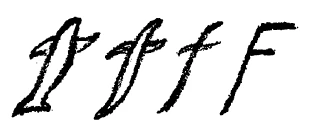
[ 26 ] So kann ich es machen für alles, was konsonantisch ist. Für die Selbstlaute finde ich, wenn ich das innere Seelenleben zu Hilfe nehme, wie ich das Bild überführen kann in den Buchstaben.
[ 26 ] This is how I can do it for everything that involves consonants. For the vowels, I find—by drawing on my inner spiritual life—how I can translate the image into the letter.
[ 27 ] Auf diese Weise lernen die Kinder vom siebenten, achten Lebensjahre ab malendes Zeichnen, zeichnendes Malen. Man muß allerdings mehr achtgeben; es ist nicht so bequem, man muß nachher aufräumen; die Kinder machen alles schmutzig mit den Farben, es muß gereinigt werden; aber diese Dinge werden eben hingenommen werden müssen. Und man lernt zuerst aus der Farbe und Form heraus Ähnlichkeiten schaffen mit den Dingen draußen. Dann geht man über auf das Schreiben. Zunächst lernt das Kind schreiben, weil es damit den ganzen Körper in Bewegung bringt, nicht einen Teil bloß. Und dann geht man über zu dem Lesen. Das Kind gelangt im neunten Jahre etwa dazu, aus dem Schreiben heraus, das es aus dem Malen gebildet hat, das Lesen zu lernen. Auf diese Weise schaut man der Natur des Kindes ab, wie man es zu führen hat, läßt es sich von dem Kinde selber diktieren. Dadurch aber ist man als Lehrer genötigt, selbst ein anderer Mensch zu sein, nicht bloß seine Lektionen zu lernen und dann in abstrakter Weise anzuwenden, sondern mit seinem ganzen Menschen vor der Klasse zu stehen und zu allem, was man zu treiben hat, das Bild zu finden, selber Phantasie zu haben. Dann geht in imponderabler Weise das von dem Lehrer auf das Kind über. Aber man muß selbst lebendig sein. Wenn man in dieser Weise nicht bloß Begriffe hat, sondern Bilder hat, dann kommt man an das Kind heran. Man kann selbst die moralisch-religiöse Erziehung ins Bild bringen. Ich will dem Kinde sprechen über die Unsterblichkeit der Seele. Ich spreche ihm von dem Schmetterling, der in der Schmetterlingspuppe zuerst drinnen ist. Die Puppe bekommt ein Loch: der Schmetterling fliegt heraus. Ich mache dem Kinde klar: so ist es mit der menschlichen Seele. Solange der Mensch auf Erden ist, ist der Mensch die Puppe, und der Schmetterling fliegt sozusagen heraus, wenn der Mensch stirbt, als die Seele. Den Schmetterling sieht man, wenn er aus der Puppe ausschlüpft; die Seele sieht man nicht, wenn sie ausfliegt beim Tode.
[ 27 ] In this way, children learn to paint by drawing and to draw by painting starting at the ages of seven and eight. One must, however, be more careful; it’s not so convenient—you have to clean up afterward; the children get everything dirty with the paints, and it has to be cleaned; but these things will simply have to be accepted. And at first, one learns to create similarities with the things outside through color and form. Then one moves on to writing. First, the child learns to write because this sets the whole body in motion, not just one part. And then one moves on to reading. Around the age of nine, the child begins to learn to read based on the writing skills it has developed through painting. In this way, one observes the child’s nature to determine how to guide it, allowing the child itself to dictate the process. But this requires the teacher to be a different kind of person—not merely to learn lessons and then apply them in an abstract way, but to stand before the class as a whole person and to find the image for everything one has to do, to possess imagination oneself. Then, in an incalculable way, this passes from the teacher to the child. But one must be alive oneself. When one has not merely concepts but images in this way, then one can reach the child. One can even bring moral and religious education to life through imagery. I want to speak to the child about the immortality of the soul. I tell the child about the butterfly that is first inside the chrysalis. A hole forms in the chrysalis: the butterfly flies out. I make it clear to the child: this is how it is with the human soul. As long as a person is on earth, they are the chrysalis, and the butterfly flies out, so to speak, when the person dies—as the soul. You can see the butterfly when it emerges from the chrysalis; you cannot see the soul when it flies out at death.
[ 28 ] Aber es gibt einen Unterschied. Nur ein Lehrer kann etwas erreichen damit, der nicht sich sagt: Ich bin so gescheit, so furchtbar gescheit, und das Kind ist dumm, ich muß etwas aussinnen, um die Sache zu veranschaulichen; ich selber glaube ja nicht an den ganzen Humbug von Schmetterling und Raupe, aber dem Kinde muß ich das so sagen. - Das wirkt gar nicht auf das Kind! Denn da sind unterseelische Kräfte zwischen dem Lehrer und dem Kind, die da wirken auf das Kind. Glaube ich selber daran, daß die geistigen Mächte in der Natur auf der Stufe des aus der Puppe ausfliegenden Schmetterlings ein Bild liefern für die Unsterblichkeit der Seele, stehe ich selber so darinnen, weiß ich, daß in der Natur überall Geist lebt, und daß der Schmetterling da ist, um den Menschen zu zeigen, daß da überall Geist ist, dann, wenn ich selber dran glaube, wirkt es auf das Kind. Dann ist es in der richtigen Weise keimend, auf das Kind wirkend.
[ 28 ] But there is a difference. Only a teacher who does not say to himself, “I am so smart, so incredibly smart, and the child is stupid; I have to come up with something to illustrate the point,” can achieve anything; I myself don’t believe in all that nonsense about butterflies and caterpillars, but I have to tell the child it that way.”—That has no effect on the child at all! For there are sub-soul forces between the teacher and the child that are at work on the child. If I myself believe that the spiritual forces in nature, at the stage of the butterfly emerging from the chrysalis, provide an image of the immortality of the soul; if I am truly immersed in this belief, if I know that spirit lives everywhere in nature, and that the butterfly is there to show human beings that spirit is everywhere—then, when I myself believe in it, it has an effect on the child. Then it takes root in the right way, having an effect on the child.
[ 29 ] Und auf diese Weise muß ich meine Begriffe beweglich halten. Da macht man ja die größten Fehler, wenn man gleich mit dem steifen Intellektuellen an das Kind herankommt.
[ 29 ] And that is why I must keep my concepts flexible. That is where the biggest mistakes are made—when you approach a child with the rigid mindset of an intellectual.
[ 30 ] Wenn man einem dreijährigen Kind Schuhe kauft, wird man nicht verlangen, daß es dieselben Schuhe mit neun Jahren tragen soll; es muß mit neun Jahren andere Schuhe tragen, die Schuhe müssen anders gemacht sein. Aber mit unseren Dingen, die wir dem Kinde lehren, machen wir es so. Wir lehren dem Kinde etwas; das mag so bleiben, und womöglich, wenn das Kind vierzig-, fünfzigjährig geworden ist, soll es immer noch so sein; wir geben Definitionen, die immer so bleiben sollen, und das ist geradeso wie die Schuhe, die es mit drei Jahren getragen hat und die später immer noch passen sollen! Wir sollen dem Kinde aus der Phantasie herausgeholte Bilder geben, die wachsen mit dem Kinde. Und darauf kommt es an, daß wir eine Erziehung geben, die die Seele so wachsen läßt, wie die Natur das fordert, wie der Leib wächst. Nur wenn wir selber als Lehrer solche Lebendigkeit haben, die Phantasie überall hineinzubringen, dann bringen wir dem Kinde lebendige Begriffe bei.
[ 30 ] When you buy shoes for a three-year-old child, you wouldn’t expect the child to still be wearing the same shoes at age nine; at age nine, the child must wear different shoes—shoes that are made differently. But with the things we teach the child, that is exactly what we do. We teach a child something; that may remain the same, and perhaps, when the child is forty or fifty years old, it should still be that way; we give definitions that are supposed to remain the same forever, and that is just like the shoes the child wore at age three and that are supposed to still fit later on! We should give the child images drawn from the imagination that grow with the child. And what matters is that we provide an education that allows the soul to grow as nature demands, just as the body grows. Only when we ourselves, as teachers, possess such vitality—the ability to infuse imagination into everything—can we teach the child living concepts.
[ 31 ] Belebende Erziehung zwischen Zahnwechsel und Geschlechtsreife ist das, um was es sich handelt. Denn da wird der Ätherleib frei. Da müssen wir auch so recht lebendig alles gestalten. Zum Beispiel, nehmen Sie das Wort «Mund», das ja auch im Englischen «mouth» ist: ich spreche nur den Anfangsbuchstaben: M aus — ich komme auf das:
[ 31 ] What is at stake here is a life-affirming upbringing during the period between the loss of baby teeth and sexual maturity. For that is when the etheric body becomes free. That is also when we must shape everything in a truly lively way. For example, take the word “Mund,” which is also “mouth” in English: I’ll just pronounce the first letter—M—and I arrive at this:
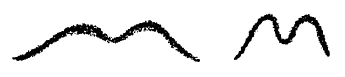
[ 32 ] Mund, mouth. Und so werden Sie überall aus dem Lebendigen heraus die Möglichkeit finden, zu schaffen dasjenige, was dann im Schreiben auftreten soll. Dann wachsen die in der Phantasie gebildeten Begriffe heran, wenn der Intellekt, der erst kommen soll mit der Geschlechtsreife, nicht zwei Jahre früher angesprochen wird; Definitionen sind für das Kind Gift. Da möchte man sich immer erinnern an dasjenige, was einmal in einer griechischen Philosophenschule definiert worden ist: Was ist ein Mensch?-Ein Mensch ist ein Wesen, das zwei Beine und keine Federn hat. - Eine Definition, wie viele unserer wissenschaftlichen Definitionen sind. - Ich weiß, daß ich eine Ketzerei ausspreche! Am nächsten Tag brachte einer derSchülereine Gans mit, der er die Federn ausgerissen hatte, mit der Behauptung: das sei ein Mensch, ein Wesen, das zwei Beine und keine Federn hat! - So ungefähr sind die armen, die intellektualistischen Begriffe, die wir dem Kinde so peinlich gern beibringen wollen. Reiche Begriffe brauchen wir, die wachsen, so wie das Kind selber, und im späteren Alter dem Menschen Wachstumskräfte lassen. Bringen wir dem Kinde nur abstrakte Begriffe in diesem Lebensalter bei: wir tragen früh die Spuren des Alterns an uns. Wir verlieren die Lebhaftigkeit, wir altern früh, wir können nicht mehr recht vorwärts. Es ist etwas, was wir, ich möchte sagen, furchtbar empfinden, wenn wir so erzogen sind, daß wir nicht mit der Phantasie, mit dem Bild aufgewachsen sind, das wächst und lebt und dem Ätherleib angepaßt ist, sondern mit dem, das eigentlich im Grunde ein Ertöten darstellt: dieses Abstrakte, Intellektuelle.
[ 32 ] Mund, mouth. And so, everywhere within the living world, you will find the opportunity to create that which is then to appear in writing. The concepts formed in the imagination will mature only if the intellect—which is not supposed to develop until puberty—is not stimulated two years too early; Definitions are poison for a child. One should always remember what was once defined in a Greek school of philosophy: What is a human being?—A human being is a creature that has two legs and no feathers. —A definition, just like so many of our scientific definitions. —I know I am uttering heresy! The next day, one of the students brought in a goose from which he had plucked the feathers, claiming: “This is a human being—a creature with two legs and no feathers!”—That is roughly the nature of those poor, intellectualistic concepts that we are so eager to teach the child. We need rich concepts that grow, just as the child itself grows, and that allow a person to continue developing even in later life. If we teach children only abstract concepts at this age, we will bear the signs of aging early on. We lose our vitality, we age prematurely, and we can no longer move forward properly. It is something that we—I would say—find terribly distressing when we have been raised not with imagination, not with the image that grows and lives and is attuned to the etheric body, but with that which, at its core, actually represents a form of death: this abstract, intellectual approach.
[ 33 ] So kann man, wenn man weiß, daß dieser Ätherleib da ist, daß dieser Ätherleib lebendig ist, wenn er nicht bloß abstrakte Theorie bleibt, sondern wenn man das Kind in seiner lebendigen Entwickelung anschaut, so kann man darauf kommen, dieses zweite, ich möchte sagen, goldene Prinzip der Erziehung in sich einzuschreiben. Für die ersten sieben Lebensjahre das goldene Prinzip: Gestalte den Menschen menschenwürdig, gesund; und in den zweiten sieben Jahren, von dem Zahnwechsel bis zur Geschlechtsreife, heißt das goldene Erziehungsprinzip: Belebe den Menschen, denn dir ist sein Ätherleib übergeben!
[ 33 ] Thus, if one knows that this etheric body exists, that this etheric body is alive—if it does not remain merely an abstract theory, but rather if one observes the child in its living development—then one can come to internalize this second, I would say, golden principle of education. For the first seven years of life, the golden principle is: Shape the human being to be dignified and healthy; and in the second seven years, from the change of teeth to sexual maturity, the golden principle of education is: Enliven the human being, for his etheric body has been entrusted to you!
[ 34 ] Mit der Geschlechtsreife wird nun wie durch eine neue Geburt dasjenige herausgelöst, was ich astralischen Leib genannt habe. Alles dasjenige, was als die innersten menschlichen Kräfte zugrunde liegt der eigenen Empfindung bis zur Geschlechtsreife, also gerade im primarschulmäßigen Alter, hat das Kind noch unvermischt, ungeteilt mit seinem physischen Leib und Ätherleib eben in diesem astralischen Leib beisammen; daher ist es naturgemäß hingegeben an die Empfindungen, an die Gefühlsweise, an die Phantasieweise des Lehrenden, des Erziehenden. Indem der astralische Leib frei wird von der physischen Organisation und also seelisch frei wirkt, erscheint das Kind erst herausgelöst auch aus dem, was bei ihm selbstverständlicher Autoritätsglaube sein muß. Denn all das, was ich beschrieben habe als die richtige Erziehung zwischen dem Zahnwechsel und der Geschlechtsreife, das muß unter dem Zeichen der selbstverständlichen Autortät stehen zwischen dem Kinde und dem Lehrenden, dem Erziehenden. Oh, es ist ein großes Glück für das Leben, wenn man gerade in diesem Kindesalter in selbstverständlicher Autorität zu dem Lehrenden, Erziehenden aufschauen kann, so aufschauen kann, daß einem das wahr ist, was wahr ist für den Lehrenden, den Erziehenden! Man unterscheidet noch nicht als Kind: Irgend etwas ist wahr, irgend etwas ist falsch; man verehrt die Wahrheit, weil etwas, was der Lehrer sagt, als wahr aufgefaßt wird; man verehrt die Güte, weil der Lehrer sie darstellt in dem, was er als die selbstverständliche Güte heranbringt; man verehrt die Schönheit, weil der Lehrer sie heranbringt. Die Wahrheit, die Güte, die Schönheit der Welt tritt in dem Erziehenden dem Kinde gegenüber.
[ 34 ] With the onset of puberty, what I have called the astral body is now separated, as if through a new birth. Everything that lies at the foundation of one’s own feelings as the innermost human forces up to sexual maturity—that is, precisely at the elementary school age—the child still possesses in an unadulterated, undivided state, together with its physical body and etheric body, precisely within this astral body; therefore, the child is naturally attuned to the feelings, the emotional manner, and the imaginative manner of the teacher or educator. As the astral body becomes free from the physical organism and thus acts freely in a soulful sense, the child only then appears to be detached from what must be a natural belief in authority within the child. For everything I have described as proper education between the change of teeth and puberty must be characterized by a natural sense of authority between the child and the teacher or educator. Oh, it is a great blessing in life when, precisely at this age, one can look up to the teacher and educator with a natural sense of authority—look up to them in such a way that what is true for the teacher and educator is also true for oneself! As a child, one does not yet distinguish between “something is true” and “something is false”; one reveres the truth because whatever the teacher says is accepted as true; one reveres goodness because the teacher embodies it in what he presents as self-evident goodness; one reveres beauty because the teacher presents it. The truth, the goodness, and the beauty of the world are embodied in the educator as the child encounters them.
[ 35 ] Man wird mir, der ich vor vielen Jahren eine «Philosophie der Freiheit» schrieb, nicht zumuten, daß ich für das Autoritätsprinzip etwa im sozialen Leben eintrete. Dasjenige, was ich hier meine, ist, daß das Kind in selbstverständlicher Autorität stehen muß zwischen dem Zahnwechsel und der Geschlechtsreife, und in dieser Zeit alles, wie ich es dargestellt habe, lebendig empfangen muß. Also der Erzieher ist die eigentliche Autorität in diesem Alter, und der Mensch wird erst fähig zur Freiheit, wenn er die selbstverständliche Autorität des Erziehers verehren und achten gelernt hat.
[ 35 ] As someone who wrote a *Philosophy of Freedom* many years ago, I surely cannot be expected to advocate for the principle of authority, for example, in social life. What I mean here is that the child must be subject to a natural authority between the time of losing baby teeth and reaching sexual maturity, and during this period must take everything in—as I have described—in a living way. Thus, the educator is the true authority at this age, and a person only becomes capable of freedom once they have learned to revere and respect the educator’s natural authority.
[ 36 ] Und ebenso wird er auch fähig, sich seines eigenen Urteils zu bedienen, nicht mehr des Urteils des Lehrers, des Erziehers, wenn er geschlechtsreif geworden ist und sein astralischer Leib der Träger des eigenen Urteils geworden ist.
[ 36 ] And in the same way, once he has reached sexual maturity and his astral body has become the bearer of his own judgment, he will also become capable of exercising his own judgment, rather than relying on the judgment of his teacher or educator.
[ 37 ] Da tritt nun das auf, was das dritte Element in der Erziehung sein muß. Das erste nannte ich das gestaltende, das zweite das belebende. In diesem dritten Element der Erziehung, das eintritt mit der Geschlechtsreife, finden wir nur dasjenige berechtigt, was ich nennen kann: die erweckende Erziehung. Alles, was über die Geschlechtsreife hinausgeht, muß so wirken auf den jungen Menschen, auf den jungen Mann, das junge Mädchen, daß die Entstehung des eigenen Urteils, diese innere Selbständigkeit, wie ein fortwährendes Aufwachen erscheint. Wenn man über die Geschlechtsreife hinaus jemandem etwas von außen beibringen will, tyrannisiert man ihn, man versklavt ihn. Wenn man die ganze Erziehung so leitet, daß man von diesem Lebensalter ab, von der Geschlechtsreife ab, alles aufnimmt so, wie wenn jemand aus dem Schlaf erweckt wird - der Mensch hat bis dahin geschlafen in bezug auf die Beurteilung von dem oder jenem, es kommt ihm jetzt vor, als ob er sein eigenes Wesen aus sich herausruft — dieses Gefühl, daß es sein eigenes Wesen ist, das aus ihm herauskommt, daß der Lehrer ihm nur der Anreger, der Erwecker ist, das kann man entwickeln, wenn man so vorgeht, wie ich es ausgeführt habe für die zwei ersten Lebensalter; dann wächst man hinein in den Gebrauch seines eigenen Urteils, dann wird die spätere Erziehung, der Unterricht ein erweckender. Und wenn man als Lehrer, als Erziehender, seiner Gesinnung nach tief durchdrungen ist von diesem Erweckenden, dann weiß man auch im Stil, in der Haltung, im Vortrag alles so zu gestalten, daß dasjenige, was nun eigenes Urteil sein soll desjenigen, der belehrt, der erzogen wird, daß das wirklich aus dem Betreffenden herauskommt, daß es in einer gewissen dramatischen Steigerung geht bis dahin, wo er selber nun einsetzt mit dem inneren Betätigen, das gerade im astralischen Leib lebt.
[ 37 ] Here, then, comes into play what must be the third element in education. I called the first the formative element, and the second the vitalizing element. In this third element of education, which begins with sexual maturity, we find that the only legitimate approach is what I can call “awakening education.” Everything that goes beyond sexual maturity must have such an effect on the young person—on the young man and the young woman—that the development of their own judgment, this inner independence, appears as a continuous awakening. If, beyond sexual maturity, one seeks to teach someone something from the outside, one tyrannizes them; one enslaves them. If one directs the entire process of education in such a way that, from this stage of life onward—from sexual maturity onward—one takes everything in as if being awakened from sleep—for up to that point, the person has been asleep with regard to judging this or that— it now seems to them as if they were calling their own being forth from within themselves—this feeling that it is their own being that comes forth from them, that the teacher is merely the inspirer, the awakener—this can be developed if one proceeds as I have described for the first two stages of life; then one grows into the use of one’s own judgment, and subsequent education and instruction become an awakening process. And when, as a teacher or educator, one is deeply imbued in one’s attitude with this awakening force, then one also knows, in one’s style and demeanor, in one’s presentation, to shape everything in such a way that what is now to be the independent judgment of the one being taught or educated truly emerges from within the individual, and that it proceeds in a certain dramatic crescendo to the point where the individual himself begins to engage in the inner activity that lives precisely in the astral body.
[ 38 ] Damit sprechen wir ja, indem wir in der richtigen Weise zum astralischen Leib sprechen, zu dem Unsterblichen des Menschen. Der physische Leib wird alle sieben Jahre ausgewechselt. Der ätherische Leib in seiner Kraft als dynamische Organisation geht von der Geburt bis zum Tode, beziehungsweise von der Konzeption bis zum Tode. Dasjenige, was unser astralischer Leib ist, der, wie gesagt, später herauskommt, ist der ewige Wesenskern des Menschen, der heruntersteigt, sich nur mit dem physischen und auch dem ätherischen Leib umkleidet und wieder durch die Pforte des Todes geht. Zu dem können wir in der richtigen Weise sprechen, wenn wir uns zuerst vor dem Zahnwechsel und der Geschlechtsreife in richtiger Weise hingestellt haben neben das, was der Mensch erst im Erdendasein empfängt: seinen Ätherleib, seinen physischen Leib. Erziehen wir da richtig in der Weise, wie es geschildert worden ist, dann entwickelt sich innerlich in wunderbarer Weise - nicht durch unsere Führung, sondern durch Führung der geistigen Welt selber dasjenige, was dann mit der Geschlechtsreife als der ewige Wesenskern des Menschen erwachen darf.
[ 38 ] In this way, by addressing the astral body in the proper manner, we are in fact addressing the immortal aspect of the human being. The physical body is renewed every seven years. The etheric body, in its capacity as a dynamic organism, extends from birth to death—or, more precisely, from conception to death. That which constitutes our astral body—which, as mentioned, emerges later—is the eternal core of the human being, which descends, clothes itself only in the physical and etheric bodies, and then passes through the gate of death once more. We can speak of this in the proper way if we have first, before the change of teeth and sexual maturity, correctly positioned ourselves alongside what the human being receives only in earthly life: his etheric body and his physical body. If we educate children correctly in the manner described, then what may awaken with sexual maturity as the eternal core of the human being develops inwardly in a wondrous way—not through our guidance, but through the guidance of the spiritual world itself.
[ 39 ] Dann können wir uns sagen: Wir haben die rechte Erziehung befolgt, denn wir haben nichts hineingegossen, hineingetrichtert; wir haben nicht unser Wesen auf das Kind übertragen, sondern wir haben uns nur hingestellt und haben die Hindernisse hinweggeräumt, so daß sich der ewige Wesenskern unter der Leitung der göttlichen Welt selber entfalten kann. Jetzt, wo er offen und frei hervortritt mit der Geschlechtsreife, jetzt machen wir die Erziehung selber zu einer erweckenden. Dann können wir uns auch in dieser Weise in der Schule hinstellen und können sagen: Wir sind die Pfleger der göttlich-geistigen Weltordnung, wir sind die Mitarbeiter, die das Ewige im Menschen pflegen wollen. - Und das müssen wir uns sagen, sonst müssen wir uns schämen in jedem einzelnen Falle: Vielleicht sitzen ein oder zwei Genies unter deinen Schülern, die einmal viel mehr wissen werden als du selber wissen kannst. Und was du tun kannst, um mit demjenigen, was du in dir hast, dich selber für berechtigt zu erklären, diejenigen zu erziehen, die einmal dich vielleicht an Geist und Seele, vielleicht auch an Körperhaftem überragen werden, über dir stehen werden -, was du tun kannst, ist, daß du dir sagst: Nur wenn du Geist und Seele pflegst; nicht überwältigst, sondern nur durch deine Erziehung pflegst, also nur die Veranlassung gibst, daß das, was von dem Göttlich-Geistigen in dem Kinde gepflanzt ist, nun wirklich herauskommen kann, nur dann wirst du das Richtige tun. - Das kann es auf die geschilderte Weise; dazu führt die entsprechende Einsicht in die . menschliche Wesenheit.
[ 39 ] Then we can say to ourselves: We have followed the right approach to education, for we have not poured anything into the child or forced anything upon it; we have not imposed our own nature on the child, but have simply stood by and cleared away the obstacles so that the eternal core of the child’s being can unfold on its own under the guidance of the divine world. Now, as the child emerges openly and freely with the onset of puberty, we ourselves transform education into a process of awakening. Then we can also stand in this way in the school and say: We are the guardians of the divine-spiritual world order; we are the co-workers who wish to nurture the eternal within the human being. — And we must tell ourselves this; otherwise, we must be ashamed in every single case: Perhaps there are one or two geniuses among your students who will one day know far more than you yourself can ever know. And what you can do—to justify yourself, with what you have within you, in educating those who may one day surpass you in spirit and soul, and perhaps even in physical form, who will stand above you—what you can do is tell yourself: Only if you nurture the spirit and soul—not by overwhelming them, but by nurturing them through your education, that is, by providing the conditions so that what is planted within the child from the divine-spiritual realm can truly emerge—only then will you be doing the right thing. —This is possible in the manner described; the corresponding insight into the human being leads to this.
[ 40 ] Nun können Sie noch sagen: Da wird nun diese Erziehungsmethode in der Waldorfschule geübt, ja, sind denn die Lehrer in der Waldorfschule alle so, daß man sagen kann, daß sie mit dem übersinnlichen Schauen ausgestattet sind, daß sie die Geburt des astralischen Leibes, des ätherischen Leibes, die Entfaltung der Kräfte in der menschlichen Wesenheit mit dem von der Seele aus bewaffneten Auge verfolgen können, wie man in der Experimentalpsychologie, wie man mit dem Mikroskop die Naturdinge schaut? Gewiß, nicht jeder der Lehrer in der Waldorfschule ist ein so hellsichtiger Mensch, daß er diese Dinge selber schaut; aber das braucht man nicht zu sein. Derjenige, der das kennt, was Geistesforschung liefert über den physischen, ätherischen und astralischen Menschen, über die Ich-Organisation, der braucht ja nur seine gesunde Menschenseele, seinen gesunden Menschenverstand anzuwenden, und dieses gibt ihm dasjenige, was es ihm möglich macht, nicht nur zu verstehen, was der Forscher auf geistigem Gebiet sagt, sondern es auch zu begreifen.
[ 40 ] Now you might say: This educational method is practiced in Waldorf schools, but are all the teachers at Waldorf schools such that one can say they are endowed with supersensible vision—that they can observe the birth of the astral body, the etheric body, and the unfolding of the forces within the human being with the eye armed by the soul, just as one observes natural phenomena in experimental psychology or through a microscope? Certainly, not every teacher at a Waldorf school is so clairvoyant that they see these things for themselves; but one need not be. Those who are familiar with what spiritual research reveals about the physical, etheric, and astral human beings, as well as about the organization of the “I,” need only apply their healthy human soul and their common sense—and this will provide them with what enables them not only to understand what the researcher in the spiritual realm says, but also to grasp it.
[ 41 ] Nun, man findet da manchmal sehr merkwürdige Ansichten, gerade in der Gegenwart. Ich habe einmal einen Vortrag gehalten - nachher ist er öffentlich besprochen worden -, ich habe in diesem Vortrage behauptet, dasjenige, was der Hellseher - ich meine das wörtlich, nicht im abergläubischen Sinne, sondern in dem Sinne, daß man sieht das Übersinnliche in der Menschennatur wie das Sinnliche in der Natur -, was der Hellseher erforschen kann, kann jeder Mensch mit gesunder Seelenverfassung verstehen, wenn er unbefangen genug dazu ist. Da erwiderte man mir in einer Bemerkung: der Steiner hätte das gesagt, aber das ist ja doch offenbar nicht wahr, denn derjenige, der behauptet, es gibt ein Übersinnlich-Geistiges und man könne es erkennen, der ist sicher nicht gesund an Verstand, denn derjenige, der gesund an Verstand ist, der behauptet so etwas nicht.
[ 41 ] Well, one sometimes comes across very strange views there, especially nowadays. I once gave a lecture—which was later discussed publicly— in which I asserted that what the clairvoyant—and I mean this literally, not in a superstitious sense, but in the sense that one perceives the supersensible in human nature just as one perceives the sensible in nature—what the clairvoyant can explore, any person with a sound state of mind can understand, provided they are open-minded enough. Then someone replied to me in a comment: “Steiner may have said that, but it’s obviously not true, because anyone who claims that there is a supersensible-spiritual realm and that it can be recognized is certainly not of sound mind, for anyone of sound mind would not make such a claim.”
[ 42 ] Sie sehen, im materialistischen Zeitalter hat man nur diese Eventualität! Aber diese Eventualität muß überwunden werden.
[ 42 ] As you can see, in this materialistic age, this is the only possibility we have! But this possibility must be overcome.
[ 43 ] Nicht jeder Waldorflehrer hat die Hellsichtigkeit, hineinzuschauen; aber jeder hat in sich aufgenommen mit vollem Verständnis, mit voller Seele dasjenige, was die Geistesforschung erforschen kann über den Menschen, und jeder Waldorflehrer wendet es mit voller Seele an, denn das Kind ist selber der größte Lehrer, indem man das Kind vor sich hat Tag für Tag, Woche für Woche, von Jahr zu Jahr diese wunderbare Entwickelung sieht, und durch nichts wird ihnen so geweckt wie durch das Kind, dasjenige, was notwendig ist. Und im täglichen Unterricht, in der Erziehung, im Umgang mit dem Kinde findet der Lehrer für die Lehrpraxis, für die Erziehungspraxis dasjenige, was ihm Geisteswissenschaft gibt, bewahrheitet, bekräftigt jeden Tag; er wächst jeden Tag in immer anschaulicherer Weise hinein. In dieser Art ist Erziehen und Unterrichten selber ein Leben. Die Schule ist ein Organismus, die Lehrerkonferenz die Seele, die aufstrahlt durch das fortwährende liiebevolle Studium und Aufgehen in die einzelnen Schüler der einzelnen Klassen und so weiter.
[ 43 ] Not every Waldorf teacher possesses the clairvoyance to look within; but every one has taken into themselves, with full understanding and with their whole soul, what spiritual science can uncover about the human being, and every Waldorf teacher applies it with their whole soul, for the child is the greatest teacher of all—as one has the child before one day after day, week after week, year after year, witnessing this wonderful development—and nothing awakens in them what is necessary as much as the child does. And in daily lessons, in education, and in interacting with the child, the teacher finds that what Spiritual Science provides for teaching and educational practice is confirmed and reinforced every day; the teacher grows into it more and more vividly each day. In this way, educating and teaching are a way of life in themselves. The school is an organism; the teachers’ conference is its soul, which radiates through the constant, loving study of and immersion in the individual students of the individual classes, and so on.
[ 44 ] Und wir sehen die Möglichkeit, durch diese drei Stufen des Unterrichts in die menschliche Zivilisation dasjenige hineinzubringen, was von der Menschennatur selber gefordert wird durch die drei Stufen, der gestaltenden Erziehung vor dem Zahnwechsel, der belebenden zwischen dem Zahnwechsel und der Geschlechtsreife, der erweckenden Erziehung nach der Geschlechtsreife, zum Entgegenführen dem vollen Leben, wo dann der Mensch sich immer vom Leben selber erwecken lassen muß.
[ 44 ] And we see the possibility, through these three stages of education, of bringing into human civilization that which human nature itself demands through the three stages: formative education before the change of teeth, vitalizing education between the change of teeth and sexual maturity, and awakening education after sexual maturity, to lead the individual toward a full life, where the human being must then always allow life itself to awaken them.
Gestaltende Erziehung = vor dem Zahnwechsel;
belebende Erziehung = zwischen dem Zahnwechsel und der Geschlechtsreife;
erweckende Erziehung = nach der Geschlechtsreife.
Formative Education = before the change of teeth;
Vitalizing Education = between the change of teeth and sexual maturity;
Awakening Education = after sexual maturity.
[ 45 ] Hinschauend auf das Kind in rechter Weise, können wir uns anregen lassen dadurch, daß wir uns sagen: eigentlich müssen wir im Lehren und Erziehen Priester werden. Denn dasjenige, was uns entgegentritt im Kinde, offenbart uns in äußerlicher Realität wohl am stärksten, großartigsten, intensivsten, was als göttlich-geistige Weltenordnung dem äußeren, physischen Materiellen zugrunde liegt; denn in der großartigsten Weise ist bei dem Kinde materiell ausgeführt, was die schöpferisch-geistigen Kräfte hinter der materiellen Weltordnung tragen. Wir aber sind hingestellt neben das Kind, um in der Materie den Geist zu seinem entsprechenden Keimen, Wachsen, Fruchten kommen zu lassen.
[ 45 ] By looking at the child in the right way, we can be inspired to tell ourselves: in teaching and raising children, we must, in a sense, become priests. For what we encounter in the child reveals to us, in outward reality, most powerfully, most magnificently, and most intensely, that which—as a divine-spiritual world order—underlies the outer, physical, material world; for in the child, what the creative-spiritual forces behind the material world order sustain is manifested in the most magnificent way. But we are placed beside the child so that, within matter, we may allow the spirit to sprout, grow, and bear fruit.
[ 46 ] Diese Gesinnung muß zugrunde liegen jeder Methode. Ausgedachte Methoden haben nur einen Sinn, wenn sie im Lichte dieser Ergebnisse betrachtet sind; sind sie aber im Lichte dieser Ergebnisse gewonnen, dann wird Leben in den Kindern einer Klasse sein, wenn der Lehrer die Klasse betritt, unter die Kinder tritt. Dann wird Lehren und Erziehen dasjenige werden, was das wichtigste Ferment, der wichtigste Impuls der Entwickelung ist. Wer die Zivilisation der Gegenwart mit ihren vielen Untergangstendenzen ins Auge faßt, der weiß, wie sehr unsere Zivilisation ein belebendes Element braucht.
[ 46 ] This mindset must underlie every method. Devised methods only make sense when viewed in light of these findings; but if they are derived from these findings, then there will be life in the children of a class when the teacher enters the classroom and mingles with the children. Then teaching and education will become the most important catalyst, the most important impetus for development. Anyone who looks at contemporary civilization, with its many tendencies toward decline, knows how much our civilization needs a revitalizing element.
[ 47 ] Nun, Schule und Erziehung kann das allerbelebendste Element sein. Daher sollte sie die Menschheit ergreifen in ihrer spirituellen Substantialität, in ihrer spirituellen Grundlage: beim Menschen. Beim Kinde angefangen, werden wir für den Menschen und die Menschheit dasjenige hervorbringen können, was die Zeichen der Zeit aus unserer Zivilisationsstufe heraus für die nächste Zukunft von uns fordern.
[ 47 ] Well, school and education can be the most life-giving element of all. Therefore, they should address humanity in its spiritual substance, in its spiritual foundation: the human being. Starting with the child, we will be able to bring forth for the individual and for humanity what the signs of the times, given our current stage of civilization, demand of us for the near future.