

Anthroposophical Anthropology and Education
GA 304a
30 August 1924, London
Translated by Steiner Online Library
10. About Parenting Issues II
[ 1 ] Ladies and gentlemen! First of all, I would like to extend my heartfelt thanks to Mrs. Macmillan and Mrs. Mackenzie for the kind and gracious words with which they introduced this lecture, and for the lovely way in which they set the stage for what I am about to present here.
[ 2 ] I would like to ask all of you to excuse me for speaking in German rather than English. Of course, this will make communication a bit more difficult, but I simply have no other choice.
[ 3 ] What I have to present is not a general concept of reform, nor is it a collection of individual ideas about educational and instructional goals; rather, it is essentially school practice—a practice that can truly prove its worth only through direct application in the school setting with the children themselves. But this school practice, which has now been in use at the Waldorf School for several years and has, after all, achieved tangible, noticeable successes—successes that have also garnered some recognition here in England, making it possible, for example, to give lectures on the subject some time ago in Oxford under the patronage of Mrs. Mackenzie— this teaching method has been developed entirely from what today must be called not merely a spiritual worldview, but a spiritual method of research; a spiritual method of research that first leads to an understanding of the human being, and through this, to an understanding of the developing human being from childhood through to death. Based on spiritual research, which, however, is only possible as research if one acknowledges that human beings are capable of looking into the spiritual realm once they have developed the necessary powers of perception for this purpose. It is not possible, in a brief discussion of pedagogy, to elaborate on what—through the special training of the human soul—enables one to perceive in human beings and in nature not only the material aspect with the senses and to grasp it with the intellect, but also to perceive the spiritual aspect, to take it into the soul, to incorporate it into the will, and to act upon it. But it is possible to do so. Just as one is able to explore nature by acquiring the means for external experimentation—by obtaining instruments such as the microscope, telescope, and spectroscope—through which one prepares the sensory realm so that it reveals, expresses, and discloses more than it does to the ordinary senses, so too can one internally elevate the soul’s powers and make them more intense. Through this, one can bring about a state in which the whole human being perceives through that which the soul has first formed from within itself. Then the possibility arises of perceiving the spiritual as such. But then one also discovers, in the human being themselves, the full essence of that human being. One discovers that what is recognized today in human beings by general consciousness and by so-called science is, in fact, only a part, a member of the human being; and, going beyond this physical aspect, one first discovers what I always call—names are needed, but the name itself is of no consequence; one uses old terms because they appear here and there in the literature, but I ask that you not take offense at the terms; they do not stem from superstition, but from thoroughly exact research, I could just as well give it another name—so the second thing one then observes in the human being, once one already has the soul as a tool for deeper insight, just as the external senses look inward, armed with the microscope and the telescope, is the etheric human being, a first spiritual human being who, as a second human being, is integrated into the first.
[ 4 ] When one studies the physical human being, one cannot really understand—if one adopts only the perspective of conventional science—how this person can survive throughout his or her entire life; for in reality, most of the substances in our body are replaced over a period of seven to eight years. The substances in your physical body today are not the same as they were seven or eight years ago! The substances you carried within you back then have been shed; others have taken their place. But in the etheric body—the etheric body—we find the first reality that governs us, permeated with forces of growth and nourishment.
[ 5 ] The etheric body is our first supersensible body. Human beings share this first supersensible body with plants, but not with minerals. We share only the physical body with minerals. But through this inner vision cultivated in the soul, armed with the inner senses, we come to recognize the third member—please do not take offense at the name again—the astral body. Human beings share this with animals. Through it, they can feel. A being that can only grow and nourish itself, like a plant, never needs to have feelings. Human beings and animals can feel. This is not something that can be described with an abstract word; rather, it is a real entity: the astral body.
[ 6 ] Then one finds something that makes one the bearer of one’s three bodies—the physical, etheric, and astral bodies—and that governs them: this is the “I” organization, the true inner self of the human being. So: First, the physical body; second, the etheric body; third, the astral body; fourth, the human “I”-organization.
[ 7 ] Anyone who does not take these four aspects of the human being into account, anyone who takes the position that external observation in anatomy and physiology can encompass the whole human being, may go ahead and establish a worldview! Ideas can be asserted in the most diverse ways; they may or may not hold true in the world; one person may be a spiritualist, an idealist, or a materialist, while another may be a realist. One can establish worldviews, for one need only articulate them; one need only say that one believes this or that; but worldviews that do not stem from realities, from actual observations, or from real experiences are of no use either in relation to the outwardly physical human being or in education. If you hold a false view regarding mechanics and become a bridge builder or engineer, the very first train to cross that bridge will cause it to collapse. That is when it becomes clear whether the matter corresponds to reality. The same is true when dealing with people in everyday life. In negotiations or elsewhere, even in books, worldviews that one has devised can be easily digested. One cannot educate with them; one can only educate with a genuine understanding of human nature. I would like to speak about this understanding of human nature, for it is actually the preparation for the educator. Everything else—no matter how ingeniously one might devise what one ought to do in one way or another—is far less important than the educator’s ability to look into the human essence at every moment and, based on what the child’s nature itself tells him, to find his method in the moment out of a love for education and out of the art of educating.
[ 8 ] However, it becomes clear to anyone who approaches the child with this understanding of human nature—one grounded in the supersensible—that during the first seven years of life, from birth until the child’s teeth begin to fall out, one cannot clearly distinguish within the child the elements that I have clearly listed side by side for you. One cannot say of a child in the same way—that it consists of a physical body, an etheric body, an astral body, and an “I”—as one can of an adult. Why?
[ 9 ] A child, at the moment of birth, is truly the greatest miracle that can possibly occur in earthly life. One must acknowledge it as such—the greatest miracle—if one has an unbiased understanding of it. The child enters the world with features that are still undefined, with a physiognomy that is almost meaningless, with clumsy, disoriented movements, and we say to ourselves—often with a touch of disdain—that this human being is not yet of this world; he does not yet fit into this world. When he tries to grasp something, he still does so clumsily. It cannot yet orient itself with its eyes, nor can it yet express through its limbs what lies within its will. But this is indeed the most wondrous thing a human being can experience: when, little by little, from the center of human nature, the inner forces give rise to that which bestows godlike features upon the physiognomy, that which allows movements to orient themselves in accordance with the world, and so on. If one approaches the child with the supersensible eye, one cannot say to the child, “You consist of a physical body, an etheric body, an astral body, and an ‘I’”—just as one cannot say to water, as it is, that it consists of hydrogen and oxygen. It consists of hydrogen and oxygen, but the two are intimately connected with one another. Similarly, in the child’s organism up until the change of teeth, these four members of the human being are so intimately connected that one cannot initially distinguish them.
[ 10 ] It is only with the change of teeth, around the age of seven, when children enter elementary school, that the etheric body—which serves as the foundation for growth, nutrition, and so on, and at the same time as the foundation for the imagination, the emotional faculties, and the powers of love—becomes clearly evident in the human constitution. It is the case with the child that when one observes it in the seventh year, during the change of teeth, it appears to the supersensible eye as if I might say, a supersensible etheric cloud, which contains the very same forces that, up until the change of teeth, were still deeply immersed in the physical body and acted clumsily within the child because they were not accustomed to acting within the physical body. Now, with the change of teeth, they become accustomed to acting on their own and sending only a part of their power down into the physical body. Now they act, on the one hand, in growth, nutrition, and so on; but they also act freely in the child’s imagination—not yet in the intellect, not yet in reflection or in ideas—but they seek to emerge on a higher level in the love for things and for people. The soul in the etheric body has become free within the child. The child has, in essence, become a different being by going through the process of losing its baby teeth.
[ 11 ] And then there is another phase, from the change of teeth to sexual maturity. As the child reaches sexual maturity, the astral body—which until now could hardly be distinguished—begins to emerge. One now notices how the child develops a different relationship with the outside world. This is because, the more the astral body is born, the more the child changes. Before that, it was essentially contained within the physical and etheric organization.
[ 12 ] So we can speak of three stages: First, physical birth, when the child leaves the mother’s physical body. Second, etheric birth: here the etheric body breaks free, truly being born within the child. This enables the child to be taught. Third, at sexual maturity, the astral body emerges. This enables the child to express love outwardly and to perceive the differences between people; for sexual maturity is not merely linked to the acquisition of sexual knowledge, but to the realization of immersion in all things. Fourth, self-awareness is not truly born until the age of twenty-one or twenty-two. A person does not become a fully independent self before then.
[ 13 ] When speaking of human beings from a spiritual perspective, one can speak of successive births. And only those who understand how human beings are shaped by the influence of these successive relationships among their various human aspects can guide their upbringing and education. For what does it mean that, until a child’s teeth have changed, the physical, etheric, and astral bodies and the “I” cannot yet be distinguished? That they are intertwined like hydrogen and oxygen, indistinguishable? This means that the child is, in fact, still entirely a sensory organ. For the child, there is nothing yet but the fact that it is a sensory organ, and it takes in everything it perceives in the same way as a sensory organ.
[ 14 ] Consider the wonderfully designed human eye: the whole world is inside it—the image of the entire world. We can say: the world is outside, the world is inside. It is the same with a child: the world is outside, the world is inside; the child is entirely a sensory organ. We adults experience the taste of sugar through our mouth, tongue, and palate. The child is completely imbued with taste. One need only have a sense for observing a child to see how it is, through and through, a sense, an organ of taste. And insofar as it looks, it participates in the act of looking with its whole being; it is completely absorbed in its surroundings. Therefore, there is something distinctive about the child: it possesses a natural religiosity. The parents and educators are all around the child; the child gives itself over, just as the eye gives itself over. If the eye were to see itself, it would not see the other. The child lives entirely within its surroundings; but it also takes them in entirely physically. Let’s take an example: the quick-tempered father standing next to the child. He does all sorts of things; his anger is expressed in his gestures. Yes, the child perceives his gestures quite differently than one might think. At the same time, the child sees the father’s moral character reflected in his gestures. What the child sees inwardly—the world—is examined through a moral lens. Thus, the child is permeated deep within by a quick-tempered father, a loving mother, or some quality in someone else. This permeates the child right down into the physical body.
[ 15 ] The way we are in a child’s presence enters into the child, just as candlelight enters the eye. But the way we behave in a child’s presence extends so far that the child’s blood circulates differently in the senses, in the nerves as they function, in the muscles, and in the vascular fluids that supply the senses—so that the child’s entire being is shaped by the nature of these external impressions. And even when a person is an elderly individual, they still perceive the effect of what the moral-religious environment has wrought in the child’s constitution, in the child’s physical body. Health and illness throughout a person’s entire earthly life depend on whether we are able to perceive deeply enough that everything happening in the child’s surroundings is reflected within the child. Not only the physical, but also the moral is reflected. The moral aspect that is reflected has an effect on health and illness.
[ 16 ] During the first seven years of life, until the child’s teeth begin to fall out, the child is a being who purely imitates; a being who mimics. We can only educate the child by doing, in the child’s environment, everything that we believe needs to be developed in the child. We should not ask ourselves, “What should the child do?”—but rather, we must first and foremost be clear that we ourselves must set an example for the child. For nothing is healthier for the child than what we model for them. And the child truly absorbs into their being nothing other than what we model for them.
[ 17 ] That’s where one can gain experience! Once, a father came to me who was distraught because his four- or five-year-old child was said to have stolen something. He said, “He’s going to turn out to be a terrible person, because he stole.” I replied, “Let’s first find out if he really did steal.” And what did we discover? The boy had taken money from the dresser, which his mother also always goes to when she needs money. The mother is the person he imitates the most. It’s only natural for him to do what his mother does. He does the same thing—he takes money from the dresser, too. There’s no question of him stealing; rather, he was doing what comes naturally to a child until they lose their baby teeth: imitating. He was simply imitating what his mother had done.
[ 18 ] But precisely when one sees through these things, one will know: the point is that imitation is what dominates the child right down into its physical and soul development, and that we, as educators, must ensure that during these first seven years of life, we are the shapers of body, soul, and spirit. Education during the first seven years of life must be formative. And whoever can truly see through this will be able, even later on, when encountering a person and observing their physiognomy and their entire demeanor—seeing how they carry themselves, walk, or fail to walk— can discern from this whether a temperament of quick temper or gentleness and prudence was present in the child’s environment and has had a formative effect on the child, extending into the blood, the blood circulation, and even the nature of the muscles. Body, soul, and spirit are shaped during these years, and as teachers we must know that they are shaped during these years. From this knowledge, from this impulse, and from the enthusiasm that springs from it, emerges what gives the teacher the method—the impulses of feeling and will; above all, a devoted, self-sacrificing attitude is what must underlie pedagogical methods. Even the most beautiful pedagogical method is of no value if there is no understanding of the child, if there is not that which enables the teacher to grow so closely together with the child that the child can imitate him, that the child is allowed to shape this within his or her own qualities.
[ 19 ] For the reason I have discussed, I would like to refer to a child’s upbringing until the change of teeth as “formative education,” because everything ultimately comes down to shaping the child’s body, soul, and spirit for their entire earthly life. One need only look closely at this formative process. I have cited the example of the quick-tempered father. The child still perceives moral qualities in the gestures of this outburst of anger. This affects the child in such a way that these qualities become part of the child’s physical constitution. We may observe that a fifty-year-old person begins to suffer from a serious illness, such as cataracts, which then require surgery. We accept such things in life—yes, precisely in the sense in which we view them medically today. There is also what is called a serious illness, they say. But one does not look at the whole of a person’s life in search of a truly deeper understanding of the human being. If one were to do so, one would often recognize that serious illness in a person frequently traces back to those inner shocks to which the child was subjected by the quick-tempered father. The reality of these matters is that what takes effect in the moral and religious environment penetrates right down into the blood vessels, becoming a predisposition to health or illness. This often becomes apparent later in life. The doctor makes a diagnosis based on the perspective characteristic of life today. In truth, we are led to the conclusion that, for example, gout or rheumatism in one’s fifties or sixties stems from the fact that negligence, disorder, and disharmony prevailed in the child’s environment, which the child absorbed. It has penetrated deep into the organic system.
[ 20 ] This is how we gain insight into the formative process that shapes a person for their entire life: by observing what they absorb—as imitative beings—up until the time their baby teeth fall out. We must learn to master the shaping of the human being; otherwise, all preschools are of no value whatsoever if we cannot allow that which has a formative effect—and which governs both healthy and diseased life throughout one’s entire earthly existence—to take root in the child.
[ 21 ] Well, with the change of teeth, the etheric body emerges—that which contains the forces of digestion, nutrition, and growth, but which also expresses itself psychologically, and now begins to manifest in the child through the emergence of imagination, memory, and so on. Here we must be clear about what we are actually nurturing between the change of teeth and sexual maturity.
[ 22 ] Yes, what exactly are we educating? We nurture the very same forces that bring about proper digestion, the very same forces that enable human beings to grow—that allow them to develop from childhood into fully grown adults—and that make inner and outer growth possible. And what we nurture in the soul is nothing other than the soul’s counterpart to these forces of growth. What, then, does nature give, what does the spiritual world give to human beings through the growth forces of the etheric body? Life—yes, life itself! What would we have to give the child if we could not now act upon the growth forces as nature does—directly, naturally, as happens during the first seven years of life—but instead had to act upon the now-liberated etheric body in a soulful way? What, then, must we give the child? We must give life. One does not give life to a child by introducing concepts to the child at this stage. The child is not yet ready for reason, for the intellect; it is ready for imagery, for imagination, and also for memory. And if we can recognize this and call the education during the first seven years a “shaping” process—if shaping is what is needed there—then now is the time to form and enliven. And everything must be enlivened! Between the change of teeth and sexual maturity, the enlivening principle of instruction is the right one. Everything I do as a teacher must enliven. But it is easy to stifle much of this, especially at this age.
[ 23 ] You see, children must—because it is, of course, a given in our civilization—be introduced to what ultimately leads to reading and writing. But now consider this: these letters that we write and read—how foreign they actually are to human beings! They are so foreign that when the Europeans—these “superior people”—came to America—there are examples of this dating back to the 1840s—the Native Americans said: “The Europeans have such strange things written on paper; they look at them, and then they speak out what is written on the paper—they are little devils!” —said the Native Americans, and the Europeans—whom they call “palefaces”—make use of these little devils! —For the child, letters are just as much little demons as they are for the Native Americans; for the child has no connection to the letters. And we destroy an immense amount when we teach the child to read right away.
[ 24 ] It makes no sense at all to someone who sees the bigger picture. That is why an educational method based on the reality of human understanding says: Take a look at how people wrote in ancient Egypt, where they still recorded what they saw by depicting it in pictures; this is how the first of our modern letters came into being. — They did not write down letters; they painted pictographic writing. Cuneiform has a very similar basis. You can still see today in Sanskrit script how it emerged from pictures. Just think: this is the path humanity has taken to arrive at today’s abstract letters! Yet now we introduce the child to today’s abstract letters, to which the child has absolutely no connection! What should we do? What we must do is not to burden the child with reading and writing at all at first, but rather to introduce the child to drawing through painting and painting through drawing. In doing so, the child engages the whole body when we let it begin to paint and introduce it to colors and shapes. Let the child imitate, through individual shapes, what it observes and sees; then we guide it from what is in the image to the sound.
[ 25 ] Here’s an example. You also have the English word “fish”: fish. Let’s assume we let the child create the fish out of the paint through drawing-while-painting, painting-while-drawing (it is being drawn): fish. Now I let the child calmly say the word “fish”; “Just start,” I tell the child: F. The F emerges from the image I painted for the fish.
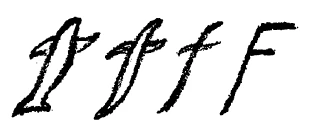
[ 26 ] This is how I can do it for everything that involves consonants. For the vowels, I find—by drawing on my inner spiritual life—how I can translate the image into the letter.
[ 27 ] In this way, children learn to paint by drawing and to draw by painting starting at the ages of seven and eight. One must, however, be more careful; it’s not so convenient—you have to clean up afterward; the children get everything dirty with the paints, and it has to be cleaned; but these things will simply have to be accepted. And at first, one learns to create similarities with the things outside through color and form. Then one moves on to writing. First, the child learns to write because this sets the whole body in motion, not just one part. And then one moves on to reading. Around the age of nine, the child begins to learn to read based on the writing skills it has developed through painting. In this way, one observes the child’s nature to determine how to guide it, allowing the child itself to dictate the process. But this requires the teacher to be a different kind of person—not merely to learn lessons and then apply them in an abstract way, but to stand before the class as a whole person and to find the image for everything one has to do, to possess imagination oneself. Then, in an incalculable way, this passes from the teacher to the child. But one must be alive oneself. When one has not merely concepts but images in this way, then one can reach the child. One can even bring moral and religious education to life through imagery. I want to speak to the child about the immortality of the soul. I tell the child about the butterfly that is first inside the chrysalis. A hole forms in the chrysalis: the butterfly flies out. I make it clear to the child: this is how it is with the human soul. As long as a person is on earth, they are the chrysalis, and the butterfly flies out, so to speak, when the person dies—as the soul. You can see the butterfly when it emerges from the chrysalis; you cannot see the soul when it flies out at death.
[ 28 ] But there is a difference. Only a teacher who does not say to himself, “I am so smart, so incredibly smart, and the child is stupid; I have to come up with something to illustrate the point,” can achieve anything; I myself don’t believe in all that nonsense about butterflies and caterpillars, but I have to tell the child it that way.”—That has no effect on the child at all! For there are sub-soul forces between the teacher and the child that are at work on the child. If I myself believe that the spiritual forces in nature, at the stage of the butterfly emerging from the chrysalis, provide an image of the immortality of the soul; if I am truly immersed in this belief, if I know that spirit lives everywhere in nature, and that the butterfly is there to show human beings that spirit is everywhere—then, when I myself believe in it, it has an effect on the child. Then it takes root in the right way, having an effect on the child.
[ 29 ] And that is why I must keep my concepts flexible. That is where the biggest mistakes are made—when you approach a child with the rigid mindset of an intellectual.
[ 30 ] When you buy shoes for a three-year-old child, you wouldn’t expect the child to still be wearing the same shoes at age nine; at age nine, the child must wear different shoes—shoes that are made differently. But with the things we teach the child, that is exactly what we do. We teach a child something; that may remain the same, and perhaps, when the child is forty or fifty years old, it should still be that way; we give definitions that are supposed to remain the same forever, and that is just like the shoes the child wore at age three and that are supposed to still fit later on! We should give the child images drawn from the imagination that grow with the child. And what matters is that we provide an education that allows the soul to grow as nature demands, just as the body grows. Only when we ourselves, as teachers, possess such vitality—the ability to infuse imagination into everything—can we teach the child living concepts.
[ 31 ] What is at stake here is a life-affirming upbringing during the period between the loss of baby teeth and sexual maturity. For that is when the etheric body becomes free. That is also when we must shape everything in a truly lively way. For example, take the word “Mund,” which is also “mouth” in English: I’ll just pronounce the first letter—M—and I arrive at this:

[ 32 ] Mund, mouth. And so, everywhere within the living world, you will find the opportunity to create that which is then to appear in writing. The concepts formed in the imagination will mature only if the intellect—which is not supposed to develop until puberty—is not stimulated two years too early; Definitions are poison for a child. One should always remember what was once defined in a Greek school of philosophy: What is a human being?—A human being is a creature that has two legs and no feathers. —A definition, just like so many of our scientific definitions. —I know I am uttering heresy! The next day, one of the students brought in a goose from which he had plucked the feathers, claiming: “This is a human being—a creature with two legs and no feathers!”—That is roughly the nature of those poor, intellectualistic concepts that we are so eager to teach the child. We need rich concepts that grow, just as the child itself grows, and that allow a person to continue developing even in later life. If we teach children only abstract concepts at this age, we will bear the signs of aging early on. We lose our vitality, we age prematurely, and we can no longer move forward properly. It is something that we—I would say—find terribly distressing when we have been raised not with imagination, not with the image that grows and lives and is attuned to the etheric body, but with that which, at its core, actually represents a form of death: this abstract, intellectual approach.
[ 33 ] Thus, if one knows that this etheric body exists, that this etheric body is alive—if it does not remain merely an abstract theory, but rather if one observes the child in its living development—then one can come to internalize this second, I would say, golden principle of education. For the first seven years of life, the golden principle is: Shape the human being to be dignified and healthy; and in the second seven years, from the change of teeth to sexual maturity, the golden principle of education is: Enliven the human being, for his etheric body has been entrusted to you!
[ 34 ] With the onset of puberty, what I have called the astral body is now separated, as if through a new birth. Everything that lies at the foundation of one’s own feelings as the innermost human forces up to sexual maturity—that is, precisely at the elementary school age—the child still possesses in an unadulterated, undivided state, together with its physical body and etheric body, precisely within this astral body; therefore, the child is naturally attuned to the feelings, the emotional manner, and the imaginative manner of the teacher or educator. As the astral body becomes free from the physical organism and thus acts freely in a soulful sense, the child only then appears to be detached from what must be a natural belief in authority within the child. For everything I have described as proper education between the change of teeth and puberty must be characterized by a natural sense of authority between the child and the teacher or educator. Oh, it is a great blessing in life when, precisely at this age, one can look up to the teacher and educator with a natural sense of authority—look up to them in such a way that what is true for the teacher and educator is also true for oneself! As a child, one does not yet distinguish between “something is true” and “something is false”; one reveres the truth because whatever the teacher says is accepted as true; one reveres goodness because the teacher embodies it in what he presents as self-evident goodness; one reveres beauty because the teacher presents it. The truth, the goodness, and the beauty of the world are embodied in the educator as the child encounters them.
[ 35 ] As someone who wrote a *Philosophy of Freedom* many years ago, I surely cannot be expected to advocate for the principle of authority, for example, in social life. What I mean here is that the child must be subject to a natural authority between the time of losing baby teeth and reaching sexual maturity, and during this period must take everything in—as I have described—in a living way. Thus, the educator is the true authority at this age, and a person only becomes capable of freedom once they have learned to revere and respect the educator’s natural authority.
[ 36 ] And in the same way, once he has reached sexual maturity and his astral body has become the bearer of his own judgment, he will also become capable of exercising his own judgment, rather than relying on the judgment of his teacher or educator.
[ 37 ] Here, then, comes into play what must be the third element in education. I called the first the formative element, and the second the vitalizing element. In this third element of education, which begins with sexual maturity, we find that the only legitimate approach is what I can call “awakening education.” Everything that goes beyond sexual maturity must have such an effect on the young person—on the young man and the young woman—that the development of their own judgment, this inner independence, appears as a continuous awakening. If, beyond sexual maturity, one seeks to teach someone something from the outside, one tyrannizes them; one enslaves them. If one directs the entire process of education in such a way that, from this stage of life onward—from sexual maturity onward—one takes everything in as if being awakened from sleep—for up to that point, the person has been asleep with regard to judging this or that— it now seems to them as if they were calling their own being forth from within themselves—this feeling that it is their own being that comes forth from them, that the teacher is merely the inspirer, the awakener—this can be developed if one proceeds as I have described for the first two stages of life; then one grows into the use of one’s own judgment, and subsequent education and instruction become an awakening process. And when, as a teacher or educator, one is deeply imbued in one’s attitude with this awakening force, then one also knows, in one’s style and demeanor, in one’s presentation, to shape everything in such a way that what is now to be the independent judgment of the one being taught or educated truly emerges from within the individual, and that it proceeds in a certain dramatic crescendo to the point where the individual himself begins to engage in the inner activity that lives precisely in the astral body.
[ 38 ] In this way, by addressing the astral body in the proper manner, we are in fact addressing the immortal aspect of the human being. The physical body is renewed every seven years. The etheric body, in its capacity as a dynamic organism, extends from birth to death—or, more precisely, from conception to death. That which constitutes our astral body—which, as mentioned, emerges later—is the eternal core of the human being, which descends, clothes itself only in the physical and etheric bodies, and then passes through the gate of death once more. We can speak of this in the proper way if we have first, before the change of teeth and sexual maturity, correctly positioned ourselves alongside what the human being receives only in earthly life: his etheric body and his physical body. If we educate children correctly in the manner described, then what may awaken with sexual maturity as the eternal core of the human being develops inwardly in a wondrous way—not through our guidance, but through the guidance of the spiritual world itself.
[ 39 ] Then we can say to ourselves: We have followed the right approach to education, for we have not poured anything into the child or forced anything upon it; we have not imposed our own nature on the child, but have simply stood by and cleared away the obstacles so that the eternal core of the child’s being can unfold on its own under the guidance of the divine world. Now, as the child emerges openly and freely with the onset of puberty, we ourselves transform education into a process of awakening. Then we can also stand in this way in the school and say: We are the guardians of the divine-spiritual world order; we are the co-workers who wish to nurture the eternal within the human being. — And we must tell ourselves this; otherwise, we must be ashamed in every single case: Perhaps there are one or two geniuses among your students who will one day know far more than you yourself can ever know. And what you can do—to justify yourself, with what you have within you, in educating those who may one day surpass you in spirit and soul, and perhaps even in physical form, who will stand above you—what you can do is tell yourself: Only if you nurture the spirit and soul—not by overwhelming them, but by nurturing them through your education, that is, by providing the conditions so that what is planted within the child from the divine-spiritual realm can truly emerge—only then will you be doing the right thing. —This is possible in the manner described; the corresponding insight into the human being leads to this.
[ 40 ] Now you might say: This educational method is practiced in Waldorf schools, but are all the teachers at Waldorf schools such that one can say they are endowed with supersensible vision—that they can observe the birth of the astral body, the etheric body, and the unfolding of the forces within the human being with the eye armed by the soul, just as one observes natural phenomena in experimental psychology or through a microscope? Certainly, not every teacher at a Waldorf school is so clairvoyant that they see these things for themselves; but one need not be. Those who are familiar with what spiritual research reveals about the physical, etheric, and astral human beings, as well as about the organization of the “I,” need only apply their healthy human soul and their common sense—and this will provide them with what enables them not only to understand what the researcher in the spiritual realm says, but also to grasp it.
[ 41 ] Well, one sometimes comes across very strange views there, especially nowadays. I once gave a lecture—which was later discussed publicly— in which I asserted that what the clairvoyant—and I mean this literally, not in a superstitious sense, but in the sense that one perceives the supersensible in human nature just as one perceives the sensible in nature—what the clairvoyant can explore, any person with a sound state of mind can understand, provided they are open-minded enough. Then someone replied to me in a comment: “Steiner may have said that, but it’s obviously not true, because anyone who claims that there is a supersensible-spiritual realm and that it can be recognized is certainly not of sound mind, for anyone of sound mind would not make such a claim.”
[ 42 ] As you can see, in this materialistic age, this is the only possibility we have! But this possibility must be overcome.
[ 43 ] Not every Waldorf teacher possesses the clairvoyance to look within; but every one has taken into themselves, with full understanding and with their whole soul, what spiritual science can uncover about the human being, and every Waldorf teacher applies it with their whole soul, for the child is the greatest teacher of all—as one has the child before one day after day, week after week, year after year, witnessing this wonderful development—and nothing awakens in them what is necessary as much as the child does. And in daily lessons, in education, and in interacting with the child, the teacher finds that what Spiritual Science provides for teaching and educational practice is confirmed and reinforced every day; the teacher grows into it more and more vividly each day. In this way, educating and teaching are a way of life in themselves. The school is an organism; the teachers’ conference is its soul, which radiates through the constant, loving study of and immersion in the individual students of the individual classes, and so on.
[ 44 ] And we see the possibility, through these three stages of education, of bringing into human civilization that which human nature itself demands through the three stages: formative education before the change of teeth, vitalizing education between the change of teeth and sexual maturity, and awakening education after sexual maturity, to lead the individual toward a full life, where the human being must then always allow life itself to awaken them.
Formative Education = before the change of teeth;
Vitalizing Education = between the change of teeth and sexual maturity;
Awakening Education = after sexual maturity.
[ 45 ] By looking at the child in the right way, we can be inspired to tell ourselves: in teaching and raising children, we must, in a sense, become priests. For what we encounter in the child reveals to us, in outward reality, most powerfully, most magnificently, and most intensely, that which—as a divine-spiritual world order—underlies the outer, physical, material world; for in the child, what the creative-spiritual forces behind the material world order sustain is manifested in the most magnificent way. But we are placed beside the child so that, within matter, we may allow the spirit to sprout, grow, and bear fruit.
[ 46 ] This mindset must underlie every method. Devised methods only make sense when viewed in light of these findings; but if they are derived from these findings, then there will be life in the children of a class when the teacher enters the classroom and mingles with the children. Then teaching and education will become the most important catalyst, the most important impetus for development. Anyone who looks at contemporary civilization, with its many tendencies toward decline, knows how much our civilization needs a revitalizing element.
[ 47 ] Well, school and education can be the most life-giving element of all. Therefore, they should address humanity in its spiritual substance, in its spiritual foundation: the human being. Starting with the child, we will be able to bring forth for the individual and for humanity what the signs of the times, given our current stage of civilization, demand of us for the near future.