

Spiritual Science and Medicine
GA 312
28 March 1920, Dornach
Translate the original German text into any language:
Versions Available:
Spiritual Science and Medicine, tr. SOL
Achter Vortrag
Eighth Lecture
[ 1 ] Die Ausdrucksweise, die wir ja schon, ich möchte sagen, mehr zur Verkürzung oder zur Vereinfachung unserer Ideen anwenden müssen, wenn wir sagen «Ätherleib», «Astralleib» und so weiter, kann durchaus zurückgeführt werden auf dasjenige, was sich von ihr gewissermaßen abdrückt im physischen Geschehen. Nur ist man heute nicht sehr geneigt, dasjenige, was sich im physischen Geschehen ausdrückt, wirklich in richtige Beziehung zu setzen zu der geistigen Grundlage des Daseins. Für eine Durchgeistigung des medizinischen Denkens und Anschauens wird aber das unbedingt geschehen müssen. Man wird unbedingt zum Beispiel darauf eingehen müssen, wie das Wechselspiel zwischen dem, was wir Ätherleib nennen, und dem, was wir physischen Leib nennen, eigentlich geschieht. Sie wissen, dieses Wechselspiel geschieht im Menschen, und wir haben gestern gesprochen von einer Seite dieses Wechselspiels, nämlich, wenn es in eine Art Unordnung kommt gegenüber den Einwirkungen des astralischen Leibes. Aber dieses Wechselspiel geschieht ja auch draußen in der außermenschlichen Natur.
[ 1 ] The terminology that we—I would say—must use to some extent to condense or simplify our ideas when we speak of the “etheric body,” “astral body,” and so on, can certainly be traced back to what, in a sense, is reflected in physical events. However, people today are not very inclined to truly relate what is expressed in physical events to the spiritual foundation of existence. Yet for medical thinking and perception to be imbued with spirituality, this will absolutely have to happen. For example, we will absolutely have to address how the interaction between what we call the etheric body and what we call the physical body actually takes place. As you know, this interaction occurs within the human being, and yesterday we spoke of one aspect of this interaction, namely, when a kind of disorder arises in relation to the influences of the astral body. But this interplay also takes place outside, in nature beyond the human realm.
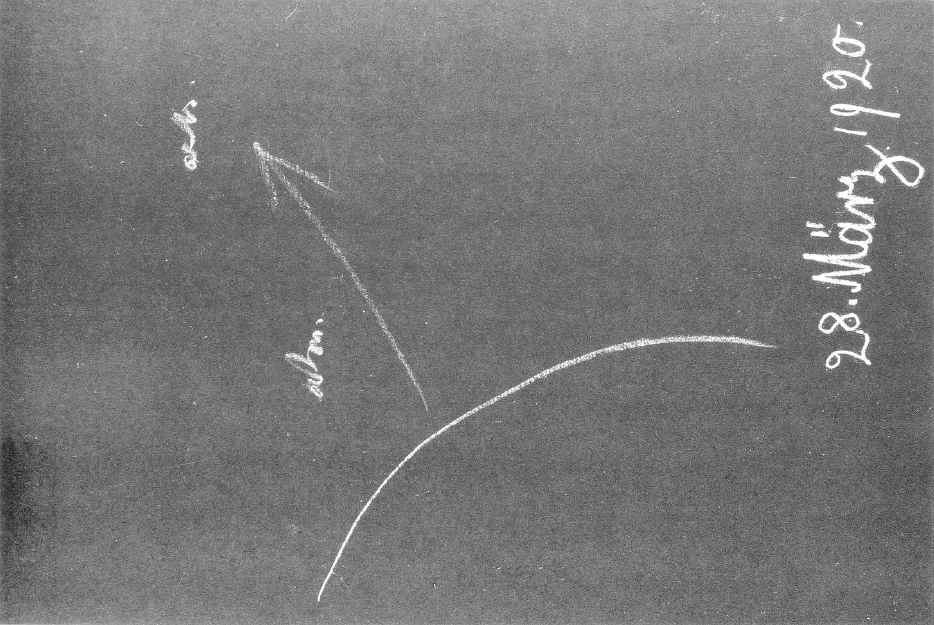
[ 2 ] Nun bedenken Sie, daß Sie, wenn Sie diesen Gedanken ordentlich zu Ende führen, dann eigentlich recht gründlich hineinschauen in den Zusammenhang des Menschen mit der außermenschlichen Natur. Sie schauen hinaus in die außermenschliche Natur. Sie haben um sich — halten wir zunächst heute daran fest — die ganze Flora mit allen ihren einzelnen Arten, und Sie werden diese Flora durch Ihre verschiedenen Sinne gewahr. So können Sie, wenn Sie da hinausschauen, mit Ihren verschiedenen Sinnen die Flora gewahr werden, mindestens ahnen ein Wechselspiel zwischen dieser Flora und alledem, was erstens in der irdischen Atmosphäre ist, und alledem, was dann außerhalb dieser irdischen Sphäre im Planetarischen, im Astralischen liegt. Wir können gewissermaßen sagen, wenn wir die Flora der Erde betrachten, wenn hier (siehe Zeichnung)
[ 2 ] Now consider that if you follow this line of thought through to its logical conclusion, you will actually gain a quite thorough insight into the relationship between human beings and non-human nature. You look out into non-human nature. You are surrounded—let’s focus on this for now—by the entire plant kingdom with all its individual species, and you perceive this plant kingdom through your various senses. So when you look out there, you can perceive the flora with your various senses and at least sense an interplay between this flora and, first, everything that is in the Earth’s atmosphere, and everything that lies outside this earthly sphere in the planetary and astral realms. We can say, in a sense, that when we look at the flora of the Earth—as shown here (see illustration on page 158), Plate 12
[ 3 ] die Erdoberfläche ist, so weist uns diese Flora hinaus auf das Atmosphärische, auf das Astralische, jetzt in diesem Sinne gemeint, daß es zu den Sternen hingeht, zu dem Außertellurischen, und wir können zunächst, auch wenn wir nicht auf Okkultes eingehen, ahnen, daß da draußen eine lebendige Wechselwirkung ist zwischen dem, was sich in der Flora, in dem Blüte- und dem Fruchtaufschießen zeigt, und dem, was da hereinwirkt aus dem ganzen weiten Weltenall.
[ 3 ] the Earth's surface, this flora points us toward the atmospheric, toward the astral, understood here in the sense that it extends toward the stars, toward the extra-terrestrial realm; and even without delving into the occult, we can at least sense that out there there is a living interaction between what is manifested in the flora—in the blossoming and fruiting—and what acts upon it from the vast expanse of the universe.
[ 4 ] Wenn wir dann von alledem wegsehen und den Gedanken hineinleiten in unser Inneres — allerdings müssen Sie versuchen, bei dieser Anschauung etwas Intuition zu Hilfe zu nehmen, aber ich habe schon gesagt, ohne Intuition geht es in der Medizin absolut nicht ab —, wenn wir diesen Gedanken ableiten von diesem Äußeren und in unser eigenes Inneres hineinschauen, so finden wir mit demjenigen, was da draußen ist, eine gewisse Verwandtschaft. Und da wir uns sagen müssen: In der Flora ist eng verbunden das Ätherische mit dem Physischen, so müssen wir auch ahnen eine gewisse Verwandtschaft dieser Art von Verbindung des Ätherischen mit dem Physischen in der Flora und der Art der Verbindung des Ätherischen mit dem Physischen im Menschen selbst.
[ 4 ] If we then turn our attention away from all of this and direct our thoughts inward—though you must try to draw on a little intuition in this contemplation, for as I have already said, medicine is absolutely impossible without intuition—if we turn our thoughts away from the external world and look into our own inner being, we find a certain kinship with what is out there. And since we must acknowledge that in the plant kingdom the ethereal is closely connected with the physical, we must also sense a certain kinship between this kind of connection between the ethereal and the physical in the plant kingdom and the nature of the connection between the ethereal and the physical in human beings themselves.
[ 5 ] Nun handelt es sich darum, daß wir uns Rechenschaft darüber geben, durch was wir äußerlich konkret sprechen können über diese Verwandtschaft des Ätherischen mit dem Physischen. Wir werden uns ja zunächst abstrakt sagen können: Das Ätherische steht dem Astralischen näher als dem Physischen, insofern es sich nach oben öffnet. Wir werden uns aber auch sagen müssen, daß das Ätherische irgendeine Beziehung zu dem Physischen hin hat. Wir werden also auf diese Doppelverwandtschaft hinschauen müssen, in der das Ätherische auf der einen Seite zu dem Physischen, auf der anderen Seite zu dem Astralischen steht, und wir werden etwas aufsuchen müssen, was uns gewissermaßen in diese Doppelverwandtschaft hineinführt. Nun möchte ich Ihnen zunächst möglichst konkret darstellen, wie Sie in diese Doppelverwandtschaft hineingeführt werden können.
[ 5 ] The point now is for us to consider what concrete, external evidence we have for this relationship between the etheric and the physical. We can, of course, begin by stating abstractly: The etheric is closer to the astral than to the physical, insofar as it opens upward. But we must also acknowledge that the ethereal has some kind of relationship to the physical. We will therefore have to look at this dual relationship, in which the etheric stands, on the one hand, in relation to the physical and, on the other hand, in relation to the astral, and we will have to seek out something that, so to speak, leads us into this dual relationship. Now I would like to begin by describing to you as concretely as possible how you can be led into this dual relationship.
[ 6 ] Gehen Sie einmal, sagen wir, durch eine Lindenblütenallee und versuchen Sie sich recht klarzumachen, wie Sie in dieser Lindenblütenallee durch den Duft der blühenden Linden hindurchgehen. Machen Sie sich klar, daß nun ein Prozeß sich abspielt zwischen all dem, was sich, sagen wir, nervenartig in Ihre Geruchsorgane ausbreitet, und diesem Lindenblütenduft. Dann haben Sie, wenn Sie auf diesen Prozeß des Wahrnehmens des Lindenblütenduftes hin Ihre Aufmerksamkeit wenden, gewissermaßen das Aufschießen des Innern, des Geruchsfähigen gegen den Lindenblütenduft, den Lindenblütengeruch, und Sie müssen sich sagen: Da spielt sich ein Prozeß ab, der ein Inneres einem Äußeren entgegenbringt, die irgendwie etwas miteinander vollbringen durch ihre innere Verwandtschaft. Und Sie müssen sich sagen: Dasjenige, was sich durch den Lindenblütenduft draußen zerstreut, was zweifellos auf einer Wechselwirkung der Flora mit der ganzen außerirdischen Umgebung beruht, der sich nach der außerirdischen Umgebung hin aufschlieBenden Flora, das wird gewissermaßen verinnerlicht in der Geruchswahrnehmung selber. Da haben Sie innerlich, weil Sie ja die Sache wahrnehmen, ganz zweifellos etwas gegeben, was vom Ätherleib aus auf den astralischen Leib wirkt, denn sonst könnten Sie nicht wahrnehmen, sonst wäre es ein bloßer Lebensprozeß. Der Geruchsvorgang selbst bezeugt einem, daß der astralische Leib daran beteiligt ist. Aber dasjenige, was Ihnen die Verwandtschaft enthüllt mit der Außenwelt, zeigt Ihnen zugleich, daß das Entstehen jenes süßlichen Geruches, den die Lindenblüten ausströmen, in einem gewissen Sinne verwandt ist, polarisch ist zu dem, was in Ihrem Geruchsorgan vor sich geht. Und in der Tat haben wir in diesem sich verbreitenden süßlichen Geruche der Lindenblüten die Wechselwirkung des Pflanzlich-Ätherischen mit dem Umliegenden gegeben, den allgemeinen Weltenraum durchfüllenden Astralischen. Wir haben daher in unserem Riechen einen Prozeß, der sich so abspielt, daß wir durch diesen Prozeß an dem teilnehmen, was verwandt ist in der Flora mit dem außertellurischen Astralischen.
[ 6 ] Let’s say you’re walking down an avenue lined with linden trees and try to really picture yourself walking through that avenue, surrounded by the scent of the blooming linden trees. Realize that a process is now taking place between everything that, let’s say, spreads like a nerve impulse into your olfactory organs, and this scent of linden blossoms. Then, when you turn your attention to this process of perceiving the scent of the linden blossoms, you will, so to speak, experience the emergence of the inner—the sense of smell—in response to the scent of the linden blossoms, and you must tell yourself: A process is taking place here that brings an inner aspect into contact with an outer one; through their inner kinship, they somehow accomplish something together. And you must tell yourself: That which is diffused outward through the scent of linden blossoms—which undoubtedly rests on an interaction between the flora and the entire external environment, the flora that opens itself up to the external environment—is, in a sense, internalized within the very act of olfactory perception itself. Since you perceive this, there is undoubtedly something within you that acts from the etheric body onto the astral body; otherwise, you could not perceive it—otherwise, it would be merely a life process. The process of smelling itself testifies to the fact that the astral body is involved. But what reveals to you the kinship with the outside world also shows you that the emergence of that sweet scent exuded by the linden blossoms is, in a certain sense, related—polar—to what is taking place in your olfactory organ. And indeed, in this spreading, sweet scent of the linden blossoms, we have the interaction of the plant-etheric with the surrounding astral, which permeates the entire world space. We therefore have in our sense of smell a process that unfolds in such a way that, through this process, we participate in what, in the plant kingdom, is related to the extra-terrestrial astral realm.
[ 7 ] Wenn wir nun nehmen irgendeinen Geschmack, sagen wir, um wiederum etwas dem eben Angeführten Verwandtes zum Beispiel zu haben, den Geschmack des Süßholzes oder den Geschmack süßer Weintrauben, da haben wir etwas Ähnliches. Da haben wir es aber zu tun mit einem Vorgang, der sich abspielt in unserem Geschmacksorgan im Gegensatz zu den Vorgängen, die sich abspielen in unseren Geruchsorganen. Sie wissen, wie nahe verwandt das Geschmacksorgan dem Geruchsorgan ist, und Sie werden daher ohne weiteres eine Vorstellung davon haben müssen, wie nahe verwandt auch in bezug auf das ganze natürliche Geschehen dasjenige ist, was im Schmecken vor sich geht, mit dem, was im Riechen vor sich geht. Aber Sie müssen sich zugleich klar sein, daß das Schmecken ein viel organisch-innerlicherer Prozeß ist als das Riechen. Das Riechen spielt sich mehr an der Oberfläche ab. Das Riechen nimmt teil an den Prozessen des Außermenschlichen, die sich gewissermaßen ausbreiten, die im Raume ausgebreitet sind. So ist es beim Schmecken nicht der Fall. Durch das Schmecken kommen Sie mehr auf gewisse Eigenschaften, die innerlich in den Substanzen liegen müssen, die also mit dem Substantiellen selber verbunden sein müssen. Sie kommen mehr durch das Schmecken als durch das Riechen darauf, was die Dinge, die Pflanzen also in diesem Falle, im Innern sind. Und Sie brauchen einfach ein wenig Ihre Intuition zu Hilfe zu nehmen, so werden Sie sich sagen, daß alles dasjenige, was mit dem Festwerden in den Pflanzen, mit den organischen Prozessen des Festwerdens in den Pflanzen zusammenhängt, sich enthüllt, sich offenbart durch das Schmecken alles desjenigen, was in der Pflanze ist. Nun wehrt sich aber dieses Pflanzliche gegen das Festwerden. Das tritt uns hervor in dem, was die Pflanze veranlaßt, riechbar zu werden. Daher werden Sie nicht eigentlich zweifeln können, daß der Geschmack ein Vorgang ist, der zusammenhängt mit den Beziehungen des Ätherischen zum Physischen.
[ 7 ] If we now take any taste—let’s say, to give another example related to what was just mentioned, the taste of licorice or the taste of sweet grapes—we have something similar. But here we are dealing with a process that takes place in our organ of taste, in contrast to the processes that take place in our olfactory organs. You know how closely related the organ of taste is to the organ of smell, and you will therefore readily be able to form a mental image of how closely related—in terms of the entire natural process—what takes place in tasting is to what takes place in smelling. But at the same time, you must realize that tasting is a much more organic and internal process than smelling. Smelling takes place more on the surface. Smelling participates in the processes of the non-human world, which, so to speak, spread out and are distributed throughout space. This is not the case with tasting. Through tasting, you gain insight into certain properties that must lie within the substances themselves—properties that are therefore connected to the substance itself. Through tasting, rather than through smelling, you discover what things—in this case, plants—are like on the inside. And you simply need to call upon your intuition a little; then you will tell yourself that everything connected with the process of solidification in plants—with the organic processes of solidification in plants—is revealed through the taste of everything that is within the plant. But this plant nature resists solidification. This becomes evident to us in what causes the plant to become fragrant. Therefore, you cannot really doubt that taste is a process connected with the relationship between the ethereal and the physical.
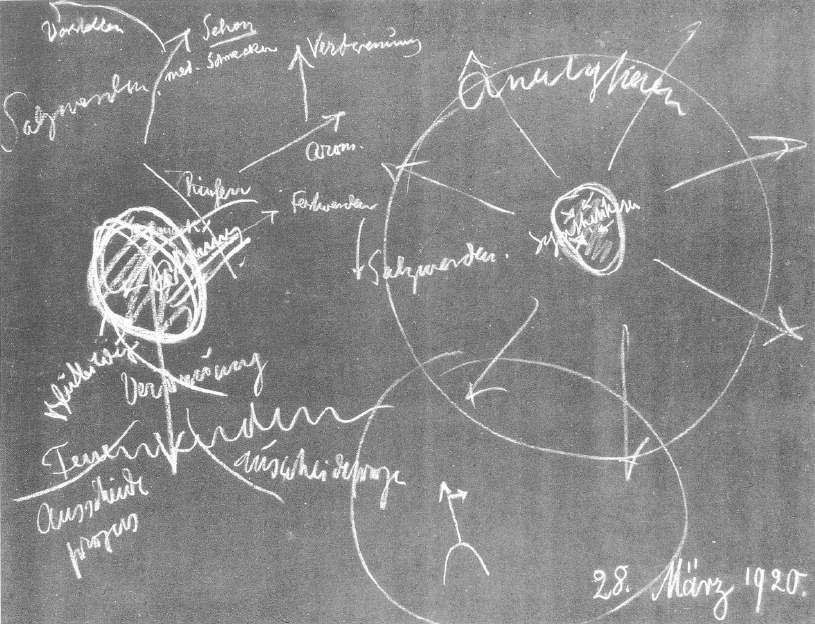
[ 8 ] Also nehmen Sie jetzt zusammen Riechen und Schmecken. Indem Sie im Riechen und Schmecken gegenüber der Flora leben, leben Sie eigentlich in jenen Beziehungen, welche das Ätherische nach den beiden Seiten hin hat, nach dem Astralischen und nach dem Physischen. Sie gehen so recht ins Ätherische hinein, das heißt in seinem Abdruck, wenn Sie zum Riechen und Schmecken mit Ihrer Aufmerksamkeit sich hinwenden. Da wo Riechen und Schmecken im Menschen ist, da ist im Grunde genommen eine in der physischen Welt befindliche Offenbarung des Ätherischen in seinen Beziehungen zum Astralischen und zum Physischen. Wir sind damit gewissermaßen selber an des Menschen Oberfläche, wenn wir so untersuchen, was sich im Riechen und Schmecken abspielt. Aber sehen Sie, es handelt sich wirklich heute darum, daß wir endlich zur Befruchtung der wirklichen Wissenschaft von seiten der Geisteswissenschaft über das Abstrakt-Mystische hinauskommen und zum konkreten Geist-Erfassen wirklich vordringen. Was nützt es denn wirklich, wenn die Leute immer fort und fort nur reden davon, es soll das Göttliche im Menschen erfaßt werden, wenn sie unter diesem Göttlichen höchstens irgendein ganz abstraktes Göttliches verstehen? Es wird diese Betrachtungsweise erst dann fruchtbar, wenn wir auf die konkreten Erscheinungen eingehen können, wenn wir in diesem konkreten Sinne das Innerlichwerden der äußeren Vorgänge betrachten, zum Beispiel also, indem wir im Riechen und Schmecken tatsächlich dasjenige, was äußerlich, verwandt dem Menschen, lebt, das Ätherische betrachten, wie das sich verinnerlicht, wie wir in diesem vielleicht gröbsten oberen Sinnesprozesse unmittelbar ein Innerlichwerden der äußeren Vorgänge sehen. Das ist für unsere Zeit so außerordentlich wichtig, hinauszukommen über das bloß Abstrakte, Mystische. Nun werden Sie aber sich klar sein darüber, daß in der Natur alles in fortwährendem Übergang zu etwas anderem ist, daß in der Natur alles so ist, daß ein Vorgang die Tendenz hat, in einen anderen überzugehen, sich zu metamorphosieren in einen anderen Vorgang hinein. Nehmen Sie also das, was wir eben gesagt haben: mehr an der Oberfläche gelegen das Riechen (siehe Zeichnung Seite 162), mehr in das Innere des Menschen hineinverlegt — alles das ist auf die Flora, die Pflanzen bezüglich — das Schmecken, den Geschmack, und diese, ich möchte sagen, verlaufend im Ätherischen, insofern sich das Ätherische gegen das Astralische aufschließt oder in das Physische hinein verfestigt, nach außen also gehend, nach alledem, was in der Flora geschieht im Verflüchtigen, im Aromatischwerden oder auch im sich dem Aromatischen Entziehen im Schmecken, alles dasjenige verinnerlichend, was im Außernführt zum Festwerden. Es fließen gewissermaßen zusammen das Äußerliche und das Innerliche, wenn wir die Aufmerksamkeit in bezug auf Riechen und Schmecken festhalten.
[ 8 ] So now combine smell and taste. By experiencing smell and taste in relation to the plant kingdom, you are actually living within those relationships that the etheric realm has with both the astral and the physical realms. You truly enter into the etheric realm—that is, into its imprint—when you turn your attention to the senses of smell and taste. Where the senses of smell and taste are present in the human being, there is, in essence, a manifestation of the etheric realm within the physical world, revealing its relationships to the astral and physical realms. In a sense, we are ourselves at the surface of the human being when we examine what takes place in the senses of smell and taste. But you see, the real issue today is that we must finally move beyond the abstract-mystical in order to enrich true science through Spiritual Science and truly advance toward a concrete grasp of the spiritual. What good does it really do if people go on and on talking about the need to grasp the divine in human beings, when by “divine” they mean, at most, some entirely abstract concept of the divine? This approach will only bear fruit when we can engage with concrete phenomena, when we observe, in this concrete sense, the internalization of external processes, for example, by actually observing in the senses of smell and taste—which are related to human beings—the etheric, how it becomes internalized, and how we see in these perhaps coarsest of the higher sensory processes an immediate “becoming internal” of external processes. This is so extraordinarily important for our time: to move beyond the merely abstract and mystical. Now, however, you will be aware that in nature everything is in a state of constant transition into something else, that in nature everything is such that one process tends to pass into another, to metamorphose into another process. So take what we have just said: the sense of smell, which is located more on the surface (see drawing on page 162), and taste—which is situated more deeply within the human being—all of this relates to the flora, the plants—and this, I would say, extends into the etheric, insofar as the etheric opens up toward the astral or solidifies into the physical—that is, moving outward—toward all that occurs in the plant kingdom in terms of volatilization, becoming aromatic, or even withdrawing from the aromatic in the act of tasting, internalizing everything that leads to solidification in the external world. In a sense, the external and the internal flow together when we focus our attention on smelling and tasting.


[ 9 ] Aber in der Natur geht immer ein Prozeß in den anderen über. Richten wir einmal unseren Sinn auf dieses Aromatische der Flora, auf alles dasjenige, wodurch die Flora sich gewissermaßen ihrem 'Festwerden entzieht, wo die Flora das Pflanzensein noch über sich hinaustreiben will, wo die Pflanze gewissermaßen noch — verzeihen Sie den Laienausdruck — ihre Geistigkeit hinaussetzt in die Atmosphäre, so daß die Atmosphäre in dem Riechstoff noch etwas von dem Pflanzensein in sich trägt. Es sind gewissermaßen noch die Schemen der Pflanzen in dem, was da draußen riecht. Nehmen Sie das. Was ist denn das eigentlich, was da draußen vorgeht, wenn die Pflanze ihre Riechschemen hinausschickt, wenn sie es nicht ganz zum verfestigten Pflanzensein kommen läßt, wenn sie aus der Blüte noch etwas hinaussendet, was zwar Blüte werden will, was sich aber diesem Blütewerden entzieht, was sich in dem Flüchtigsein erhält? Das ist nämlich nichts anderes als ein zurückgehaltener Verbrennungsprozeß. Sie kommen, wenn Sie sich dieses Aromatisieren metamorphosisch fortgesetzt denken, dahin, zu denken: dieses Aromatisieren ist eigentlich ein zurückgehaltener Verbrennungsprozeß. Sie sehen auf der einen Seite die Verbrennung und auf der anderen Seite das Aromatisieren der Pflanzenwelt an, dann erkennen Sie darinnen zwei Metamorphosen einer gemeinsamen Einheit. Ich möchte sagen: es ist einfach im Aromatisieren auf einer anderen Stufe das Verbrennen gegeben.
[ 9 ] But in nature, one process always flows into the next. Let us turn our attention to this aromatic aspect of the flora—to everything through which the flora, so to speak, eludes its “solidification,” where the flora still seeks to transcend its plant nature, where the plant, so to speak—forgive the layman’s expression—still projects its spirituality into the atmosphere, so that the atmosphere still carries within the fragrance something of the plant’s essence. In a sense, the phantoms of the plants are still present in what we smell out there. Consider this. What, in fact, is actually happening out there when the plant sends out its fragrant shadows, when it does not allow itself to fully become a solidified plant being, when it sends out from the flower something that, while it wants to become a flower, nevertheless eludes this process of becoming a flower and preserves itself in its transience? For this is nothing other than a restrained process of combustion. If you think of this aromatization as continuing metamorphically, you will come to conclude: this aromatization is actually a restrained process of combustion. When you look at combustion on the one hand and the aromatization of the plant world on the other, you will recognize in them two metamorphoses of a common unity. I would like to say: burning is simply present in aromatization at a different level.
[ 10 ] Jetzt schauen wir auf dasjenige bei der Pflanze, was Anregung gibt zum Schmecken, was also in der Pflanze tiefer drinnen liegt, was in der Pflanze dazu Veranlassung gibt, daß sie nun nicht ihre Pflanzenbildekraft wie ein Schemen aus sich heraustreibt in die Umgebung hinein, sondern daß sie sie in sich zusammenhält, daß sie sie zur inneren Bildung verwendet. Da kommen Sie, weil Sie dieses innere Bilden im Schmecken mitmachen, zu demselben Prozeß, der unterhalb des Festwerdens des Pflanzlichen liegt, der aber eine Metamorphose ist auf dieser anderen Stufe zum Salzwerden, aber natürlich zum Salzwerden der Pflanze, denn wir reden von der Flora (siehe Zeichnung).
[ 10 ] Now let us look at that aspect of the plant which stimulates the sense of taste—that is, what lies deeper within the plant, what causes the plant not to expel its formative power like a phantom into the surrounding environment, but rather to hold it together within itself and use it for inner formation. Since you participate in this inner formation through the sense of taste, you arrive at the same process that underlies the solidification of the plant—a process that is, at this other stage, a metamorphosis into salt, but of course into the salt of the plant, for we are speaking of the flora (see illustration on page 162).
[ 11 ] Denken Sie, Sie haben in der Pflanze eine merkwürdige Metamorphosierung gegeben. Sie haben in der Pflanze nach oben das Aromatisieren gegeben, das gewissermaßen ein zurückgehaltener Verbrennungsprozeß ist und schon auch zu dem Anfange der Verbrennungsprozesse führen kann; denn Prozesse des Blütigwerdens sind eben einfach Verbrennungsprozesse, die sich da hineingliedern. Nach unten haben Sie das Festwerden, das Salzwerden. Und das, was Sie in der Pflanze schmecken, ist dasjenige, was noch zurückgehaltenes Salzwerden ist. Aber wenn sich das Salz eingliedert und Sie das Salz in der Pflanze selber finden, also diese Pflanzensalze haben, so sind diese etwas, was in der Pflanze selbst über den Weg des Pflanzenwerdens hinausgeschritten ist, wo die Pflanze in ihr eigenes Wesen hineingepreßt ihren eigenen Schemen hat.
[ 11 ] Do you think there has been a strange metamorphosis within the plant? You have introduced the process of aromatization into the plant from above, which is, in a sense, a restrained combustion process and can already lead to the onset of combustion processes; for the processes of flowering are simply combustion processes that become integrated there. From below, you have the process of solidification, of becoming salt. And what you taste in the plant is precisely that which is still a restrained process of becoming salt. But when the salt integrates itself and you find the salt within the plant itself—that is, when the plant contains these plant salts—then these salts are something that has gone beyond the path of the plant’s development, where the plant, pressed into its own essence, has its own form.
[ 12 ] Da ist die Ratio für das Heilmittel erkannt, da beginnt es, ich möchte sagen, in einem gewissen Sinne Licht zu werden in der Flora, weil man hineinschaut in dasjenige, was da geschieht. Auf dieses, ich muß es immer wieder betonen, konkrete Hineinschauen kommt es an.
[ 12 ] Once the rationale for the remedy has been recognized, it begins—I would say—in a certain sense to become light within the flora, because one looks into what is happening there. It is this—and I must emphasize this again and again—concrete act of looking that matters.
[ 13 ] Nun brauchen Sie sich, um weiterzugehen, nur an folgendes zu erinnern: Ich will da, wo es geht, ich möchte sagen, rein aus höheren opportunistischen Gründen dasjenige, was auseinanderzusetzen ist, doch anknüpfen an das, was heute gang und gäbe ist, damit Sie auch in der Lage sind, die Brücke zu schlagen zwischen dem, was Geisteswissenschaft geben kann, und dem, was äußere Wissenschaft ist. Natürlich könnte ich jetzt auch das, was ich in den folgenden Sätzen auseinandersetzen werde, noch geisteswissenschaftlicher charakterisieren, aber ich will anknüpfen an gebräuchliche Vorstellungen der heutigen Wissenschaft, die eben schon da sind. Der Physiologe spricht heute von dem, was ihm vorliegt, was dem Geisteswissenschafter aus dem Grunde nicht vorzuliegen braucht, weil er nicht in diesem selben Sinne zu anatomisieren braucht. Aber knüpfen wir eben an die gebräuchlichen Vorstellungen an. Wir haben ja nicht nötig, die anatomisierenden Unfuge der anderen aufzunehmen, aber wir müssen doch mit dem Faktum rechnen, daß sie eben schon dagewesen sind und ihre Ergebnisse geliefert haben. Aufhören werden sie doch nur, wenn Naturwissenschaft etwas von Geisteswissenschaft befruchtet worden sein wird. Also prüfen wir einmal! Es wird dann aus der Geisteswissenschaft ganz klar werden, welch nahe Verwandtschaft, welch nahe Beziehung besteht zwischen jenem Prozeß, der sich im Auge abspielt, und dem Prozeß, der sich im Geruch und namentlich im Geschmack abspielt, in dem Ausbreiten des Geschmacksnervs in der übrigen Organsubstanz und in dem Ausbreiten des Augennervs im Auge. Da besteht eine so nahe Verwandtschaft, daß man eigentlich fast nicht umhin kann, wenn man das Innerliche des Sehvorganges charakterisiert, Analogien zum Geschmacksvorgang zu suchen. Natürlich, da beim Ausbreiten des Geschmacksnervs in der organischen Substanz sich nicht dasjenige anschließt, was die kunstvolle Bildung des Auges ist, die der Ausbreitung des Sehnervs in der organischen Substanz vorgelagert ist, so ist das Sehen etwas ganz anderes. Aber dasjenige, was gewissermaßen als Sehvorgang beginnt hinter dem kunstvollen Ausbau des physischen Auges, das ist schon sehr innerlich verwandt mit dem Geschmacksvorgang. Ich möchte sagen: Wir vollziehen im Sehen ein metamorphosiertes Schmecken, metamorphosiert dadurch, daß wir eben den Organvorgängen, die sich im Schmecken abspielen, all dasjenige vorgelagert haben, was durch den kunstvollen Bau des Auges bedingt ist.
[ 13 ] Now, to continue, you just need to keep the following in mind: Wherever possible—and I would say, purely for higher opportunistic reasons—I want to link what needs to be discussed to what is common practice today, so that you, too, will be able to bridge the gap between what Spiritual Science can offer and what constitutes external science. Of course, I could now characterize what I will discuss in the following sentences in even more Spiritual Science terms, but I want to build upon the common mental images of modern science that are already in place. Today, the physiologist speaks of what is before him—which, for that very reason, need not be before the spiritual scientist, since the latter does not need to dissect in the same sense. But let us simply build upon these common mental images. We certainly do not need to adopt the others’ anatomical nonsense, but we must nevertheless reckon with the fact that it has already existed and has yielded its results. It will only cease when the natural sciences have been enriched by Spiritual Science. So let us examine this! It will then become quite clear from Spiritual Science just how close a kinship, how close a relationship exists between the process that takes place in the eye and the process that takes place in smell and, in particular, in taste—in the extension of the taste nerve into the rest of the organ’s tissue and in the extension of the optic nerve within the eye. There is such a close relationship that one can hardly avoid seeking analogies to the process of tasting when characterizing the inner workings of the visual process. Of course, since the extension of the taste nerve within the organic substance is not preceded by the intricate structure of the eye—which precedes the extension of the optic nerve within the organic substance—seeing is something entirely different. But what, in a sense, begins as the process of seeing behind the intricate development of the physical eye is already very closely related to the process of tasting. I would like to say: In seeing, we carry out a metamorphosed form of tasting—metamorphosed in that we have placed before the organic processes that take place in tasting everything that is conditioned by the intricate structure of the eye.
[ 14 ] Nun müssen wir natürlich bei jedem Sinn unterscheiden zwischen dem, was unser Organismus der Außenwelt entgegenbringt, und dem, was die Außenwelt unserem Organismus entgegenbringt. Wir müssen also auf dasjenige hinschauen, was von innen als Vorgänge geschieht dadurch, daß das Blut ins Auge hineinstößt, daß also der Organismus ins Auge hineinwirkt. Das ist noch stärker bei gewissen Tieren, die zu unseren Organen hinzu noch im Auge den Fächer und den Schwertfortsatz haben, also Blutorgane, wodurch das Ego mehr hineingetrieben wird in den Augapfel, während bei uns sich das Ego zurückzieht und den Augapfel innerlich freiläßt. Aber es wirkt da hinein die ganze Organisation auf dem Umwege des Blutes durch das Auge in den ganzen Sinnenvorgang, und da drinnen im Sehvorgang ist gewissermaßen metamorphosiert der Geschmacksvorgang, so daß wir das Sehen ein metamorphosiertes Schmecken nennen können. Wir würden also gewissermaßen oberhalb des Schmeckens und Riechens das Sehen gelagert haben als metamorphosiertes Schmecken (siehe Zeichnung Seite 162). |
[ 14 ] Now, of course, with regard to each sense, we must distinguish between what our organism brings to the external world and what the external world brings to our organism. We must therefore look at what happens internally as processes resulting from the blood flowing into the eye—that is, from the organism’s action within the eye. This is even more pronounced in certain animals that, in addition to our organs, have the fan and the sword-like process in the eye—that is, blood organs—through which the ego is driven more deeply into the eyeball, whereas in us the ego withdraws and leaves the eyeball internally free. But the entire organism acts upon the entire sensory process through the eye via the circuitous route of the blood, and within the process of seeing, the process of tasting is, so to speak, metamorphosed, so that we can call seeing a metamorphosed form of tasting. We would thus, in a sense, have placed seeing above tasting and smelling as a metamorphosed form of tasting (see drawing on page 162). |
[ 15 ] Es entspricht also dem, was der gesamte Geschmacksvorgang sowohl wie Sehvorgang ist, etwas Äußeres, das mit dem Inneren zusammenwirkt. Es muß sich also der Vorgang gewissermaßen nach oben hin metamorphosieren. Eine Metamorphose des Schmeckvorganges ist der Sehvorgang. Aber es muß dann auch nach unten in den Körper hinein eine Metamorphose des Schmeckvorganges geben. Wir müssen, während wir im Sehvorgang mehr nach der Außenwelt steigen — das Auge ist eingeschlossen nur in der Knochenhöhle und wir kommen da nach außen, das Auge ist ein sehr äußerliches Organ, es wird der Sehvorgang mehr nach dem Äußeren hin organisiert —, jetzt nach der entgegengesetzten Seite uns die Metamorphose des Schmeckvorganges nach unten in den Organismus hineindenken. Wir kommen dann gewissermaßen zum anderen Pol des Sehens, zu dem, was im Organismus dem Sehvorgang entspricht, auf etwas, was uns ungeheuer viel Licht werfen wird in den folgenden Betrachtungen. Denn was ist nun da gegeben, wenn wir die Metamorphose des Geschmacksvorganges nach unten verfolgen? Da ist nämlich die Verdauung bedingt, und Sie kommen zu einem wirklichen innerlichen Verstehen der Verdauung nur, wenn Sie sich auf der einen Seite das Sehen als eine metamorphosierte Fortsetzung des Schmeckens vorstellen, auf der anderen Seite die Verdauung als metamorphosierte Fortsetzung des Schmeckens, aber so, daß Sie die Verdauung in ihrem vollen polarischen Gegensatz zu dem veräußerlichten Sehen aufzufassen vermögen, denn das veräußerlichte Sehen führt Sie gerade darauf hin, zu erkennen, was in der Außenwelt dieser Verdauung entspricht, von was die Verdauung organisch eine Verinnerlichung ist. Auf der anderen Seite werden Sie gewahr, wie der Verdauungsvorgang verwandt gedacht werden muß dem Schmeckvorgang. Sie können einfach die intimen Wirksamkeiten im menschlichen Organismus, insofern sie auf den Verdauungsprozeß hin lokalisiert sind, gar nicht verstehen, wenn Sie sich nicht den gesamten Verdauungsprozeß so vorstellen, daß das gute Verdauen auf einer Fähigkeit beruht, die gewissermaßen mit dem ganzen Verdauungstrakt zu schmecken versteht, daß das schlechte Verdauen gewissermaßen auf der Unfähigkeit beruht, mit dem ganzen Verdauungsapparat zu schmecken.
[ 15 ] It thus corresponds to what the entire process of taste—as well as the process of sight—is: something external that interacts with the internal. The process must therefore, in a sense, undergo a metamorphosis upward. The process of vision is a metamorphosis of the process of taste. But there must also be a metamorphosis of the process of taste downward into the body. While in the process of seeing we ascend more toward the external world—the eye is enclosed only within the bony socket, and from there we move outward; the eye is a very external organ, and the process of seeing is organized more toward the external—we must now conceive of the metamorphosis of the process of tasting in the opposite direction, downward into the organism. We then arrive, so to speak, at the other pole of vision—that which corresponds to the process of vision within the organism—something that will shed an immense amount of light on our subsequent considerations. For what is it that we encounter when we trace the metamorphosis of the process of tasting downward? For digestion is conditioned by this, and you will arrive at a true inner understanding of digestion only if you have in your mind the mental image of seeing as a metamorphosed continuation of tasting, and, on the other hand, of digestion as a metamorphosed continuation of tasting, but in such a way that you are able to grasp digestion in its full polar opposition to externalized seeing; for externalized seeing leads you precisely to recognize what in the external world corresponds to this digestion—of which digestion is, organically speaking, an internalization. On the other hand, you will become aware of how the process of digestion must be conceived as related to the process of tasting. You simply cannot understand the intimate processes within the human organism, insofar as they are localized within the digestive process, if you do not have in your mental image of the entire digestive process the idea that good digestion is based on an ability to “taste” with the entire digestive tract, so to speak, and that poor digestion is based, so to speak, on the inability to “taste” with the entire digestive system.
[ 16 ] Nun sondert sich der Vorgang, den wir da betrachtet haben, in Schmecken und Riechen. Da spaltet sich gewissermaßen ein Vorgang so, daß wir es einmal zu tun haben mit einem Prozeß, der mehr in Wechselwirkung des Ätherischen und des Physischen steht im Schmecken und auf der anderen Seite mit einem Vorgange, der mehr in den Beziehungen des Ätherischen zum Astralischen steht, was wir in dem Riechen vorliegen haben. Dasjenige, was wir als Fortsetzung des Schmeckens in den Organismus hinein haben, das haben wir der gleichen Spaltung unterworfen, indem wir auf der einen Seite das Verdauen hinneigend haben zu den Ausscheidungen durch den Darm, zu den fäkalen Ausscheidungen, und indem wir auf der anderen Seite die Ausscheidungen durch die Nieren, durch das Urinieren haben. Da haben Sie genau das Entsprechende in dem Unteren und in dem Oberen des Menschen. Sie haben ganz genau etwas, was vorliegt wie zwei polarische Gegensätze, indem Sie spalten zum Schmecken und Riechen und indem Sie spalten zum gewöhnlichen Verdauen und zu dem, was vom gewöhnlichen Verdauen sich abscheidet als alles dasjenige, was auf der intimeren Nierentätigkeit beruht, auf demjenigen, was der intimeren Nierentätigkeit zugeordnet ist.
[ 16 ] Now, the process we have been considering here divides into tasting and smelling. In a sense, a single process splits in such a way that, on the one hand, we are dealing with a process in tasting that is more a matter of the interaction between the etheric and the physical, and on the other hand, with a process in smelling that is more a matter of the relationship between the etheric and the astral. That which we have within the organism as a continuation of tasting, we have subjected to the same division: on the one hand, digestion tends toward excretion through the intestines—toward fecal excretion—and on the other hand, we have excretion through the kidneys—through urination. Here you have the exact counterpart in the lower and upper regions of the human being. You have precisely what appears as two polar opposites: on the one hand, the division into tasting and smelling; and on the other hand, the division into ordinary digestion and that which is separated from ordinary digestion—namely, everything based on the more intimate activity of the kidneys, that which is associated with the more intimate activity of the kidneys.
[ 17 ] Da haben wir gewissermaßen die Möglichkeit, dasjenige, was im Innern des Organismus durch die Haut begrenzt geschieht, als ein Verinnerlichtes des Äußerlichen zu betrachten. Denn mit alledem, was wir da nach oben fortsetzen, kommen wir eben mehr ins ÄAußerliche hinein; da schließt sich der Mensch nach dem Äußerlichen auf. Jetzt haben wir die Sache so weiter zu verfolgen, daß wir in dem, was gewissermaßen in uns seelisch lebt, aber an den Organismus eben gebunden ist, nicht im materialistischen Sinne, sondern in einem anderen Sinne, den Sie ja aus den Vorträgen kennen, ein metamorphosiertes Sehen haben, wiederum nach einer gewissen Seite nach dem Innern gelegen, im Denken, im Vorstellen (siehe Zeichnung Seite 162), wobei wir uns zu denken haben diejenigen Organe, die zugrunde liegen den Vorstellungen, also die des menschlichen Innenhauptes als metamorphosierte Sehorgane nach einer gewissen Richtung. Bitte, orientieren Sie sich nur darüber, wie die meisten Ihrer Vorstellungen, die im Denken leben, einfach Fortsetzungen sind der Sehvorstellungen, Sie brauchen ja nur das seelische Leben des Blindgeborenen, des Taubgeborenen zu vergleichen. Wir haben eine Fortsetzung des Sehens nach dem Inneren im Denken. Und wir kommen so dazu, uns zu sagen, daß auch ein Licht geworfen wird auf das merkwürdige Wechselwirken, das ja zwischen der Anatomie des Kopfes, des Gehirnes und dem Denkvorgang selber besteht. Es ist ja zum Beispiel sehr eigentümlich, daß, wenn man ordentlich zu Leibe geht unseren Denkvorgängen — ein schönes Kapitel für eine medizinische Dissertation übrigens — und untersuchen will, wie mit dem zusammenfassenden Denken die Organisation des Gehirnes zusammenhängt, man sonderbarerweise auf Strukturen kommt, die sich wie eine Umbildung des Riechnervs ausnehmen. So daß man sagen könnte: unser zerstreutes, analytisches Denken ist, innerlich angesehen, in seinem Gegenbilde sehr ähnlich dem Sehen. Aber das Zusammenfassen des Gesehenen, das Assoziieren der Vorstellungen, ist eigentlich, innerlich organisch angesehen, sehr ähnlich dem Riechen. Das drückt sich nämlich in der anatomischen Struktur des Gehirnes sogar in einer sehr bemerkenswerten Weise aus. Wir kommen also jedenfalls da zum Vorstellen, zum Denken nach der einen Seite.
[ 17 ] Here, in a sense, we have the opportunity to regard what takes place within the organism—bounded by the skin—as an internalization of the external. For with everything we continue to bring upward, we move further into the external; there, the human being opens up to the external. Now we must pursue this matter further in such a way that, in what lives within us, so to speak, as a soul force—yet is bound to the organism, not in a materialistic sense but in another sense that you are familiar with from the lectures—we have a metamorphosed form of vision, oriented in a certain respect toward the inner realm, in thinking and in the formation of mental images (see drawing on page 162), whereby we must conceive of those organs that underlie the mental images—that is, those of the human inner head—as metamorphosed organs of sight directed in a certain direction. Please simply consider how most of your mental images, which live in thought, are simply continuations of visual images; you need only compare the soul life of someone born blind or born deaf. We have an extension of inner vision in thinking. And this leads us to realize that light is also shed on the remarkable interplay that exists between the anatomy of the head and brain and the thought process itself. It is, for example, very peculiar that when one thoroughly examines our thought processes—a fine topic for a medical dissertation, by the way—and seeks to investigate how the organization of the brain relates to synthetic thinking, one strangely encounters structures that appear to be a transformation of the olfactory nerve. So one could say: our scattered, analytical thinking, viewed from within, is very similar in its inner structure to seeing. But the synthesis of what is seen—the association of mental images—is actually, from an inner organic perspective, very similar to smelling. This is expressed in the anatomical structure of the brain in a truly remarkable way. In any case, this brings us to the mental image and thinking on the one hand.
[ 18 ] Wohin kommen wir nun, wenn wir wiederum den innerlichen Prozeß suchen? Nicht wahr, im Vorstellen haben wir vom Sehen aus dasjenige, was veräußerlicht ist im Sehen, was wiederum gewissermaßen nach dem Inneren zurückstrahlt im Denken. Man bemüht sich, den Sehprozeß gewissermaßen umzukehren, nach dem Organismus wiederum zu leiten. Sein polarisch entgegengesetzter Prozeß wird daher darinnen bestehen, daß man sich nicht bemüht, dasjenige, was da Prozeß ist, nach dem Innern, sondern nach dem Äußeren zu leiten. Und das ist: der Verdauungsprozeß setzt sich fort in den Ausscheidungsprozeß (siehe Zeichnung Seite 162), der damit zum Gegenbilde des Vorstellens wird. Da haben Sie von einem anderen, intimeren Standpunkte aus das gesehen, was ich Ihnen mehr durch die vergleichende Anatomie gezeigt habe vor ein paar Tagen, wo ich Sie auch darauf hingewiesen habe, wie einfach der Bau des Menschen und namentlich das Auftreten der Darmflora in einer gewissen Weise darauf hindeuten, welch innige Verwandtschaft besteht zwischen den sogenannten geistigen Fähigkeiten des Menschen und seinem regulierten Ausscheideprozeß oder nichtregulierten Ausscheideprozeß. Da haben Sie das von einer anderen Seite. Da haben Sie also, wie wir nach innen eine Fortsetzung des Sehprozesses im Denkprozeß haben, nach außen eine Fortsetzung des Verdauungsprozesses im Ausscheidungsprozeß. Wenn wir nun zurückgehen auf dasjenige, was wir beobachtet haben vorhin gerade, daß das Aromatisieren ein zurückgehaltenes Verbrennen ist und das Festwerden der Pflanze ein zurückgehaltenes Salzwerden, so werden wir wiederum auf dasjenige Licht geworfen haben, was da nun im Innern geschieht, nur müssen wir uns klar sein darüber, daß ja eine Umkehrung geschieht. Hier (oben) ist eine Umkehrung des Sehens nach der Verinnerlichung, hier (unten) ist es eine Umkehrung nach der Veräußerlichung, daher werden wir hier (oben) zu der Anerkennung einer Verwandtschaft der Vorgänge mit dem Salzwerden kommen und hier (unten) zu einer Verwandtschaft der Vorgänge mit dem Feuerwerden oder mit dem Verbrennen, mit dem Feuer (siehe Zeichnung Seite 162). Leiten Sie also dasjenige, was geeignet ist, das Aromatisieren und den zurückgehaltenen Verbrennungsprozeß in den Pflanzen zu bewirken (siehe Hinweise), nach dem Unterleibe, so helfen Sie dem Unterleibe. Leiten Sie das, was in der Pflanze berufen ist, den Salzprozeß zurückzuhalten oder ihn in der Pflanze zu verinnerlichen, nach dem oberen Menschen, so helfen Sie den Vorgängen des oberen Menschen. Das werden wir im einzelnen dann durchzuführen haben.
[ 18 ] Where, then, do we end up when we once again seek the inner process? Is it not true that, in a mental image, we have—starting from seeing—that which is externalized in seeing, which in turn, in a sense, radiates back inward into thinking? One endeavors, as it were, to reverse the process of seeing and direct it back toward the organism. Its polar opposite process will therefore consist in not striving to direct what is a process toward the inner, but rather toward the outer. And that is: the digestive process continues into the excretory process (see diagram on page 162), which thus becomes the counterpart of a mental image. Here you have, from a different, more intimate perspective what I showed you a few days ago through comparative anatomy, where I also pointed out to you how the simple structure of the human body—and particularly the nature of the intestinal flora—in a certain way indicates the intimate relationship that exists between the so-called mental faculties of human beings and their regulated or unregulated excretory process. Here you have it from another angle. So just as we have, inwardly, a continuation of the visual process in the thought process, we have, outwardly, a continuation of the digestive process in the excretory process. If we now return to what we observed just a moment ago—that aromatization is a restrained process of burning and the solidification of the plant is a restrained process of becoming salt—we will once again have shed light on what is happening internally; we must simply be clear that a reversal is taking place. Here (above) there is a reversal of perception toward internalization; here (below) there is a reversal toward externalization. Therefore, here (above) we will come to recognize a connection between these processes and the formation of salt, and here (below) a connection between these processes and the formation of fire or combustion, with fire (see drawing on page 162). So if you direct that which is suitable for bringing about the aromatization and the restrained combustion process in the plants (see notes) toward the lower abdomen, you will be helping the lower abdomen. If you direct what is intended in the plant to hold back the salt process or to internalize it within the plant toward the upper human, you will support the processes of the upper human. We will then have to carry this out in detail.
[ 19 ] Da sehen Sie, wie gewissermaßen wieder auftreten kann das ganze Äußere im ganzen Inneren. Und je innerlicher wir in den Menschen hineinkommen, desto mehr müssen wir im Innern des Menschen das Äußerliche suchen. Wir müssen geradezu in dem, was sich in den Verdauungsorganen, namentlich in den Nieren, abspielt, etwas suchen, was sehr, sehr verwandt ist mit dem Aromatisierungs- und Verbrennungsprozeß, nur eben der andere Pol ist. Und wir müssen in dem, was sich abspielt in der Organisation des Menschen, von der Lunge angefangen nach oben durch Kehlkopf und Kopf, etwas suchen, was innerlich verwandt ist mit all dem, was in der Pflanze zum Salzwerden, was überhaupt in der menschlichen Natur zum Salzwerden hinneigt. Man möchte also sagen — das heißt, nicht nur man möchte es sagen, man kann es sagen: kennt man die verschiedenen Arten, wie die Pflanzen Salz in sich ansammeln, dann braucht man nur zu suchen das Entsprechende in der menschlichen Organisation. Im Großen haben wir es heute gesucht, im Speziellen werden wir es in den folgenden Vorträgen aufsuchen.
[ 19 ] There you can see how, in a sense, the entire outer world can reappear within the entire inner world. And the deeper we penetrate into the human being, the more we must seek the outer within the human being. We must look specifically within what takes place in the digestive organs—namely, in the kidneys—for something that is very, very closely related to the processes of aromatization and combustion, only at the opposite pole. And in what takes place in the human organism—starting from the lungs and moving upward through the larynx and head—we must seek something that is intrinsically related to all that in the plant tends toward becoming salt, and to everything in human nature that tends toward becoming salt. So one might say—that is, not only might one say it, but one can say it: if one knows the various ways in which plants accumulate salt within themselves, then one need only look for the corresponding process in the human organism. We have explored this in general terms today; we will examine it in more detail in the following lectures.
[ 20 ] Hier sehen Sie gewissermaßen die ganze Pflanzenheilkunde zunächst im Prinzip charakterisiert. Sie sehen, worauf sie beruht. Ich möchte sagen: Sie sehen in den ganzen realen Prozeß, der sich abspielt in seiner Wechselwirkung zwischen dem Inneren und dem Äußeren, hinein; Sie sehen aber auch ganz Spezielles schon. Nehmen Sie zum Beispiel diejenigen Gerüche, die, ich möchte sagen, schon als Gerüche mehr zum Geschmacklichen hinneigen, so daß man eigentlich, indem man die betreffende Pflanze kaut, erst auf den richtigen Geruch kommt und eigentlich eine Synthese zwischen Geruch und Geschmack wahrnimmt, wie bei der Melisse oder bei der Gundelrebe, dann finden wir, daß da drinnen schon etwas von Salzwerden liegt, daß da drinnen schon ein Zusammenwirken zwischen dem Salzwerden und dem Aromatisieren ist. Das weist uns darauf hin, daß die Organe, die zu diesen Pflanzen Verwandtschaft haben müssen, wie Melisse und so weiter, mehr nach dem Äußeren, nach der Brust zu liegen, während diejenigen Organe, die verwandt sein müssen mit dem, was stark aromatisch ist, wie, sagen wir, die Linde oder die Rose, verwandt sein müssen mit dem, was mehr in den Unterleib eingegraben ist oder mehr nach dem Unterleib hin liegt.
[ 20 ] Here, you can see, in a sense, the entire field of herbal medicine characterized in principle. You can see what it is based on. I would say: You can see into the entire real process that takes place in the interaction between the inner and the outer; but you can also already see something very specific. Take, for example, those odors which, I would say, even as smells, lean more toward the taste sensation, so that when you chew the plant in question, you actually first encounter the true smell and perceive a synthesis between smell and taste—as with lemon balm or ground ivy—then we find that there is already something of the process of becoming salty at work there, that there is already an interaction between becoming salty and becoming aromatic. This indicates to us that the organs that must be related to these plants, such as lemon balm and so on, tend to be located more toward the exterior, toward the chest, while those organs that must be related to what is strongly aromatic—such as, say, the linden or the rose—must be related to what is more deeply embedded in the lower abdomen or lies more toward the lower abdomen.
[ 21 ] Nun finden Sie, daß zwischen all dem, was da im oberen Menschen liegt in der Gegend des Riechens oder Schmeckens, organisch betrachtet, sich ein anderer Prozeß hineingliedert, der nun in einem etwas tieferen Sinne für den Menschen ein wichtiger Lebensprozeß ist; das ist der Atmungsprozeß, der sich hier hineingliedert (siehe Zeichnung Seite 162). Wir können zu diesem Atmungsprozeß nun auch den polarisch zugeordneten Prozeß suchen. Es muß derjenige Prozeß sein, der gewissermaßen sich so von dem Verdauungsprozeß abgliedert, insofern der Verdauungsprozeß zum Ausscheideprozeß führt und das Polarische ist zu dem organischen Vorstellungsprozeß. Es muß sich da auch etwas abgliedern, was noch naheliegt organisch dem Verdauungsprozeß, so wie naheliegt lokalisiert das Atmen dem Riech- oder Schmeckprozeß, organisch angesehen. Das ist alles das, was sich im Lymph- und Blutprozeß abspielt, im Blurbildungsprozeß, respektive was von der Verdauung nach innen geschoben wird, was also in den Organen liegt wie in den Lymphdrüsen und so weiter, in all den Organen, die an der Blutbildung beteiligt sind. Sie sehen also hier zwei polarische Prozesse, den einen abgespalten von der Verdauung, den anderen abgespalten von den mehr nach außen gelegenen Sinnesvorgängen, dasjenige, was gewissermaßen zurückliegt hinter den Sinnesvorgängen, die Atmung, und was vorgelagert ist der Verdauung, insofern diese Verdauung dann zur Ausscheidung führt, den Blutbildungs-Lymphbildungsprozeß. Es ist merkwürdig, wie wir da vom Prozesse aus in den ganzen Menschen hineinführen, währenddem man heute gewöhnlich nur von den vorliegenden Organen aus den Menschen betrachtet. Hier suchen wir von dem Prozesse aus und von dem ganzen Zusammenhang des Menschen mit der außermenschlichen Welt diesen Menschen zu erkennen, zu durchschauen, und wir finden in der Tat Zusammenhänge, die uns wirklich unmittelbar ein Bild sind des ganzen Ätherwirkens im Menschen, denn wir haben ja eigentlich in der heutigen Stunde die Ätherwirkung im Menschen studiert. Und die zwei Prozesse begegnen sich wiederum, Atmungsund Blutbildungsprozeß, und ihre Begegnung geschieht im menschlichen Herzen. Sie sehen, die ganze Außenwelt, insofern sie auch das Äußere des Menschen einschließt, tritt uns als eine Dualität entgegen, die sich im menschlichen Herzen staut, die im menschlichen Herzen zu einer Art von Ausgleich strebt.
[ 21 ] Now you will find that, from an organic point of view, another process is integrated into everything that lies within the higher human being in the realm of smell or taste—a process that, in a somewhat deeper sense, is an important life process for human beings; namely, the process of respiration, which is integrated here (see diagram on page 162). We can now also seek the process that is polar opposites to this respiratory process. It must be the process that, so to speak, branches off from the digestive process insofar as the digestive process leads to the excretory process, and the polar opposite is the organic process of imagination. Something must also be distinguished here that is still organically closely related to the digestive process, just as breathing is locally related to the processes of smell or taste, viewed organically. This encompasses everything that takes place in the lymphatic and blood processes, in the blood-formation process—that is, what is pushed inward from digestion, what thus lies within the organs such as the lymph glands and so on, in all the organs involved in blood formation. So here you see two polar processes: one separated from digestion, the other separated from the sensory processes located more toward the outside—that which, so to speak, lies behind the sensory processes, namely breathing, and that which precedes digestion—insofar as this digestion then leads to excretion—namely, the blood- and lymph-forming process. It is remarkable how we proceed from the process itself to gain an understanding of the whole human being, whereas today people usually view the human being solely from the perspective of the visible organs. Here, starting from the process and from the human being’s entire relationship with the world outside of humanity, we seek to recognize and understand this human being, and we do indeed find connections that truly provide us with an immediate picture of the entire etheric activity within the human being—for we have, after all, been studying the etheric activity in the human being in today’s lecture. And these two processes—the respiratory process and the process of blood formation—meet again, and their meeting takes place in the human heart. You see, the entire external world, insofar as it also includes the human exterior, presents itself to us as a duality that accumulates in the human heart, striving toward a kind of balance within the human heart.

[ 22 ] Und so können wir zu einem merkwürdigen Bilde kommen, zu dem Bilde des menschlichen Herzens mit seiner Innerlichkeit, mit seinem Synthetisieren desjenigen, was äußerlich auf uns nach dem ganzen Umfang des Leibes einwirkt, ein Synthetisieren, und in der Außenwelt ein Analysieren, ein überall Zerstreutsein desjenigen, was im Herzen, ich möchte sagen, zusammengeschoppt ist (siehe Zeichnung Seite 172). Sie kommen da zu der wichtigen Vorstellung, die man etwa so aussprechen könnte: Sie gucken in die Welt hinaus und sehen den Umkreis und fragen sich: Was ist da in diesem Umkreis, was wirkt aus diesem Umkreis herein? Wo finde ich irgend etwas in mir, was damit verwandt und gleicher Art ist? — Wenn ich in mein eigenes Herz hineinschaue! Da ist gewissermaßen der umgekehrte Himmel drinnen, das polarisch Entgegengesetzte. Während Sie hier das Peripherische haben, den, ich möchte sagen, ins Unendliche erweiterten Punkt, haben Sie den Kreis zusammengenommen im menschlichen Herzen. Die ganze Welt ist da drinnen. Wenn man ein grobes Bild gebraucht, so könnte man einfach sagen: Man denke sich, der Mensch steht auf einem Berge und guckt hinaus in den weiten Umkreis und sieht den weiten Umkreis der Welt. Und stellen Sie ein ganz winziges Zwerglein in das menschliche Herz hinein und versuchen sich zu vergegenwärtigen, was dieses Zwerglein da drinnen sieht, so sieht das da drinnen in Umkehrung das vollständige Bild der Welt zusammengezogen, synthetisiert. Das ist ja vielleicht eine bloß bildliche Vorstellung, eine Art von Imagination, allein, es ist zu gleicher Zeit dasjenige, was, wenn man es in der richtigen Weise aufnimmt, als ein ganz ordentliches, regulatives Bild, als regulatives Prinzip wirken kann und was uns anleiten kann, gerade das, was wir im einzelnen erkennen, in der richtigen Weise zusammenzufassen.
[ 22 ] And so we can arrive at a remarkable image—the image of the human heart with its inner life, with its synthesis of everything that acts upon us externally across the entire expanse of the body—a synthesis, and in the outer world, an analysis, a scattering everywhere of that which, I might say, has been gathered together in the heart (see drawing on page 172). There you arrive at an important mental image that could be expressed something like this: You look out into the world and see the surrounding sphere and ask yourself: What is there in this sphere, what acts inward from this sphere? Where do I find anything within myself that is related to it and of the same nature? — When I look into my own heart! There, in a sense, is the reversed heaven within—the polar opposite. While here you have the periphery—the point, I might say, expanded into infinity—you have the circle condensed within the human heart. The whole world is in there. To use a rough analogy, one could simply say: Imagine a person standing on a mountain, looking out into the vast expanse and seeing the vast expanse of the world. And if you place a tiny little dwarf inside the human heart and try to visualize what this little dwarf sees in there, what he sees in there is, in reverse, the complete image of the world condensed and synthesized. This may be merely a figurative mental image, a kind of imagination; yet at the same time, it is precisely what—if taken in the right way—can function as a quite proper, regulative image, as a regulative principle, and can guide us to synthesize in the right way precisely what we recognize in detail.
[ 23 ] Ich habe nun die meisten Grundlagen zu dem geschaffen, was spezielle Betrachtungen sein werden, was auch Grundlagen sein werden für die Beantwortung der mannigfaltig mir gestellten Fragen im einzelnen.
[ 23 ] I have now laid most of the groundwork for what will be specific considerations, which will also serve as the basis for answering in detail the many questions that have been posed to me.