

Therapeutic Eurythmy
GA 315
12 April 1921, Dornach
Translate the original German text into any language:
Versions Available:
Therapeutic Eurythmy, tr. SOL
Erster Vortrag
First Lecture
[ 1 ] Ich möchte mit diesen Nachmittagsstunden die ersten Keime - möchte ich sagen - einer Art Heil-Eurythmie andeuten. Wir werden dazu heute eine Art Einleitung haben, um dann dasjenige, was wir da gewinnen, überzuleiten in den nächsten Tagen in bestimmte Formen. Ich möchte einiges Prinzipielle zunächst bemerken. Dasjenige, was bisher getrieben worden ist als Eurythmie, ist Eurythmie als Kunst; und als eurythmische Kunst ist sie zu gleicher Zeit dasjenige, was auch von der Pädagogik und Didaktik als Eurythmie für Kinder akzeptiert werden muß. Denn dasjenige, was bisher entwickelt worden ist als Eurythmie, das ist durchaus hervorgeholt aus der Gestalt des gesunden Menschen. Und wir werden sehen, wie sich ergeben werden gewisse Anhaltspunkte, um ein Hygienisch-Therapeutisches aus dem Eurythmischen heraus zu gewinnen, wie sich manche künstlerische Formen werden nach der einen oder nach der andern Richtung metamorphosieren, um eben zu dem zu werden, was man eine Art Heileurythmie nennen kann.
[ 1 ] With these afternoon sessions, I would like to hint at—as it were—the first seeds of a kind of therapeutic eurythmy. We will begin with a sort of introduction today, and then, over the next few days, we will develop what we gain from this into specific forms. I would like to make a few fundamental remarks first. What has been practiced as eurythmy up to now is eurythmy as an art; and as an eurythmic art, it is at the same time what must also be accepted by pedagogy and didactics as eurythmy for children. For what has been developed as eurythmy up to now is derived entirely from the form of the healthy human being. And we shall see how certain points of reference will emerge for deriving a hygienic-therapeutic aspect from eurythmy, how certain artistic forms will undergo a metamorphosis in one direction or another to become precisely what one might call a kind of therapeutic eurythmy.
[ 2 ] Es wird natürlich prinzipiell notwendig sein zu betonen, daß diese künstlerische Eurythmie, die im wesentlichen ein Ausleben desjenigen ist, was elementar in der Gestalt und in den Bewegungstendenzen des menschlichen Körpers liegt, daß diese künstlerische Eurythmie sowohl für den Anblick, wie auch eben für die Ausbildung des gesunden menschlichen Organismus, für das seelisch-geistig-körperliche Ausbilden des gesunden menschlichen Organismus als das Richtige angesehen werden muß. Aber man kann eben hinarbeiten nach einer Heileurythmie, welche sehr weit gehen kann in der Behandlung von irgendwelchen chronischen und auch akuten Zuständen, die aber namentlich auch in dem Fall sich als sehr zweckmäßig und wichtig erweisen wird, wenn wir uns bemühen, heranrückende Krankheiten, Anlagen zu Krankheiten, gewissermaßen prophylaktisch eurythmisch zu behandeln. Da haben wir dann allerdings ein Element gegeben, wo das didaktisch-pädagogische Element der Eurythmie wird übergehen müssen allmählich in das hygienisch-therapeutische.
[ 2 ] It will, of course, be necessary in principle to emphasize that this artistic eurythmy—which is essentially an expression of what lies at the root of the human body’s form and movement tendencies—must be regarded as the right approach both for visual appreciation and for the development of the healthy human organism, for the soul-spiritual and physical development of the healthy human organism. But we can indeed work toward a therapeutic eurythmy that can go very far in the treatment of various chronic and even acute conditions; however, it will prove particularly appropriate and important when we endeavor to treat emerging illnesses and predispositions to illness, so to speak, prophylactically through eurythmy. Here, however, we have an area where the didactic-pedagogical aspect of eurythmy will have to gradually give way to the hygienic-therapeutic aspect.
[ 3 ] Für diejenigen aber, die künstlerische Eurythmie treiben wollen, möchte ich ausdrücklich betonen, daß sie in intensivster Weise, wenn sie eurythmische Kunst treiben wollen, das werden vergessen müssen, was sie sich in diesen Stunden hier aneignen. Denn gerade auf diesem Gebiet wird man im strengsten Sinne auseinanderhalten müssen dasjenige, was zu hygienisch-therapeutischem Ziel angestrebt wird, und dasjenige, was in der Eurythmie als das Künstlerische angestrebt werden muß. Und wer beides wird durcheinanderwerfen wollen, wird sich erstens seine eurythmische Künstlerschaft zerstören und zweitens in bezug auf das therapeutisch-hygienische Element nichts Besonderes erreichen können. Es wird ja ohnedies, wie die folgenden Stunden zeigen werden, notwendig sein, daß man, um das hygienisch-therapeutische Element der Eurythmie anzuwenden, dazu gewisse Kenntnisse, die wie in eine Art Gefühl für die Bildung des menschlichen Organismus übergehen, daß man solche physiologischen Kenntnisse beim Anwenden, beim praktischen Anwenden, durchaus wird haben müssen.
[ 3 ] For those, however, who wish to practice artistic eurythmy, I would like to emphasize explicitly that, if they wish to practice the art of eurythmy, they must, in the most intensive way possible, forget what they are learning here during these lessons. For it is precisely in this field that one must, in the strictest sense, distinguish between what is pursued for hygienic-therapeutic purposes and what must be pursued in eurythmy as an artistic endeavor. And anyone who tries to confuse the two will, first of all, destroy their own eurythmic artistry and, secondly, will not be able to achieve anything significant with regard to the therapeutic-hygienic element. As the following lessons will show, it will in any case be necessary—in order to apply the hygienic-therapeutic element of eurythmy—to possess certain knowledge that translates into a kind of feeling for the development of the human organism; one must absolutely possess such physiological knowledge when applying it in practice.
[ 4 ] Nun, nachdem ich das vorausgeschickt habe, möchte ich, wie es sich mir angemessen erweist, gerade für die Ziele, denen wir hier entgegenstreben, etwas genauer eingehen auf dasjenige, was nun der menschlichen Eurythmie überhaupt zugrunde zu legen ist. Wenn man verstehen will, was Eurythmie nach ihren verschiedensten Inhalten ist, muß man zunächst sich ein gewisses Verständnis erwerben für den menschlichen Kehlkopf. Die andern Sprachorgane werden wir gerade im Verlaufe unserer Übungen im Zusammenhang mit dem menschlichen Kehlkopf kennenlernen. Aber das erste, das wir uns aneignen müssen, wird sein müssen eine gewisse Kenntnis des menschlichen Kehlkopfes und seiner ganzen Bedeutung für die menschliche Organisation überhaupt. Man ist viel zu sehr geneigt, ein einzelnes menschliches Organ wie eine Sache für sich zu betrachten. Das ist es aber nicht. Das ist kein menschliches Organ. Jedes menschliche Organ ist ein Glied der Gesamtorganisation und zu gleicher Zeit eine metamorphosische Umänderung gewisser anderer Organe. Im Grunde genommen ist jedes für sich abgeschlossene menschliche Organ eine Metamorphose der andern für sich abgeschlossenen menschlichen Organe. Da haben wir allerdings die Sache so, daß gewisse menschliche Organe und Organgruppen sich erweisen als, genauer, präziser möchte ich sagen, den Charakter der Metamorphose mehr in sich tragend, andere weniger. Aber ein solches Beispiel, wo wir nur durch eine richtig verstandene Metamorphose eindringen können von einem Organ aus in das Wesen des menschlichen Organismus, das ist der Kehlkopf. Erinnern Sie sich nur einmal aus Ihren anatomischen und physiologischen Erkenntnissen, wie eigenartig dieses Organ des menschlichen Kehlkopfes gestaltet ist.
[ 4 ] Now that I have made this preliminary remark, I would like—as I believe is appropriate, especially for the goals we are striving toward here—to go into a little more detail about what actually forms the basis of human eurythmy. If one wishes to understand what eurythmy is in its various aspects, one must first acquire a certain understanding of the human larynx. We will become acquainted with the other speech organs in connection with the human larynx as we proceed with our exercises. But the first thing we must acquire is a certain knowledge of the human larynx and its overall significance for the human organism as a whole. People are far too inclined to view a single human organ as a thing in and of itself. But that is not the case. It is not a human organ in the strict sense. Every human organ is a part of the overall organism and, at the same time, a metamorphic transformation of certain other organs. Essentially, every self-contained human organ is a metamorphosis of other self-contained human organs. However, the situation is such that certain human organs and groups of organs prove to embody—more precisely, I would say—the nature of metamorphosis to a greater extent, while others do so to a lesser extent. But one such example—where we can penetrate the essence of the human organism from a single organ only through a correctly understood metamorphosis—is the larynx. Just recall, from your knowledge of anatomy and physiology, how uniquely structured this organ, the human larynx, is.
[ 5 ] Es ist dasjenige, was ich sagen will, nur durch ein, ich möchte schon sagen, goethehaftes Anschauen dieses menschlichen Kehlkopfes zu gewinnen. Aber wenn Sie sich bemühen, dieses goethehafte Anschauen der betreffenden Organe, auf die wir jetzt rekurrieren wollen, anzustreben, so werden Sie sehen, daß es damit geht. Wenn Sie den Kehlkopf zunächst nehmen als eine nach oben gerichtete Fortsetzung der Luftröhre, so werden Sie als Charakteristisches finden, wenn Sie ihn seinen Formen nach studieren, daß er ist ein umgewendetes, von vorne nach rückwärts gewendetes Stück der menschlichen Organisation; von einem andern Orte ein anderes Stück menschlicher Organisation umgewendert. Stellen Sie sich vor: das Hinterhaupt des Menschen, mit Einschluß der Gehörpartie; und denken Sie sich das, was Sie sich da vorstellen als Hinterhaupt des Menschen mit Einschluß der Gehörpartie, insofern sie in diesem Teil des Menschen lokalisiert ist, mit Ausschluß des Vorderhirns zunächst, und fortgesetzt nach unten so, daß es übergeht in den menschlichen Brustkorb mit seinen Rükkenwirbeln, aber mit dem Ansatz der Rippen, die vorne das viel weichere Brustbein haben, das überhaupt unten ganz wegfällt. Also, Sie stellen sich dieses Organsystem vor, das weniger genau abgegrenzt ist, das ich jetzt angeführt habe: der rückwärtige Teil des Kopfes, einschließlich der Gehörpartie, hinunter erweitert zum Brustkorb.
[ 5 ] This is precisely what I mean to say—that it can be gained only through what I would call a “Goethean” contemplation of this human larynx. But if you make an effort to adopt this Goethean approach to the organs in question, to which we now wish to turn, you will see that it works. If you first consider the larynx as an upward extension of the trachea, you will find—when you study its forms—that it is a reversed segment of the human organism, turned from front to back; a segment of the human organism reversed from another location. Imagine the back of the human head, including the ear region; and create a mental image of what you are imagining there—the back of the human head, including the ear region, insofar as it is located in this part of the human body—excluding the forebrain for now, and continuing downward so that it merges into the human ribcage with its thoracic vertebrae, but with the base of the ribs, which at the front have the much softer sternum, which disappears entirely at the bottom. So, imagine this organ system, which is less precisely defined, that I have just described: the rear part of the head, including the ear region, extending downward to the chest.
[ 6 ] Und nun denken Sie sich diese Partie etwas ummetamorphosiert; denken Sie sich namentlich sehr klein geworden den Durchmesser der Rippen. Denken Sie sich dasjenige, was sehr weit ist an den Rippen, am Brustkorb, hier zu einer Röhre verwandelt, das Knochige ins Knorpelige umgesetzt. Und denken Sie sich für dasjenige, was ich als Kopfpartie abgesondert habe, denken Sie sich ersetzt dasjenige, was im Kopf wirklich ausgefüllt ist mit einer flüssig-festen Masse. Das denken Sie sich ausgefüllt so, daß die weniger ausgefüllten Partien des Hauptes, daß die dort mehr löcherig gebliebenen Partien des Hauptes, daß diese ausgegossen wären und dann dasjenige wegbliebe, was jetzt ausgefüllt ist mit etwas dickerer Gewebemasse. Dann, wenn Sie sich diese Ummetamorphosierung denken dieses Teiles des menschlichen Organismus, dann bekommen Sie die Kehlkopfmetamorphose: ein umgedrehtes Hinterhaupt mit daran angesetztem Brustkorb. Die Fortsetzung in den Kehlkopf nach oben ist wirklich eine Art Hinterkopf, metamorphosiert. Es ist so, daß die Bildekräfte, die ätherischen Bildekräfte für den Kehlkopf tatsächlich ein Umwenden vollziehen, wenn wir sie vergleichen mit denjenigen, die die Bildekräfte sind für die angezeigte Partie des Hinterhauptes mit dem Brustkorb daran. Wir tragen gewissermaßen in unserer Brust, mit dem Kehlkopf, wenn wir die Sache ätherisch betrachten, einen zweiten Menschen, der allerdings in einer gewissen Weise verkümmert ist, aber die Ansätze, das Verkümmerte doch in einer gewissen Ausbildung zu haben, sogar in sich trägt.
[ 6 ] And now imagine this part somewhat transformed; imagine, in particular, that the diameter of the ribs has become very small. Imagine that the parts of the ribs and ribcage that are very wide have been transformed here into a tube, with the bony parts converted into cartilage. And imagine that the part I have set apart as the head has been replaced—imagine that what actually fills the head has been replaced with a liquid-solid mass. Imagine this filled in such a way that the less-filled parts of the head—the parts that have remained more porous—are filled in, leaving behind what is now filled with a slightly thicker tissue mass. Then, when you imagine this metamorphosis of this part of the human organism, you arrive at the laryngeal metamorphosis: an inverted occiput with a ribcage attached to it. The upward continuation into the larynx is truly a kind of occiput, metamorphosed. It is the case that the formative forces—the etheric formative forces for the larynx—actually undergo a reversal when we compare them to those that are the formative forces for the indicated part of the occiput with the ribcage attached to it. In a sense, when we view the matter from an etheric perspective, we carry within our chest—along with the larynx—a second human being who is, admittedly, atrophied in a certain way, but who nevertheless carries within himself the beginnings of that which, though atrophied, has nevertheless undergone a certain degree of development.

[ 7 ] Würde dasjenige, was ich Ihnen geschildert habe, wiederum zurückgewendet und als Hinterkopf erscheinen, so würden ja nach den Bildungskräften sich nach vorne ansetzen müssen die Vorderhirnpartien. Diese Tendenz, so etwas anzusetzen, ist beim Kehlkopf auch vorhanden. Deshalb hat der Kehlkopf in seiner Nachbarschaft die Schilddrüse. Und dasjenige, was Ihnen in der neueren Physiologie entgegentritt als die eigentümlichen Bedingungen der Schilddrüse, das werden Sie metamorphosisch verstehen, wenn Sie in der Schilddrüse sehen können eine Art dekadentes Vorderhirn, das gewissermaßen Funktionen hat, die es beim sprechenden Menschen dem Vorderhirn abnimmt. Es muß mittun die Schilddrüse mit dem Vorderhirn im Zusammenwirken. Wenn sie also in irgendeiner Weise krankhaft ist, so können Sie sich leicht vorstellen, was da für Zustände eintreten müssen, weil der Mensch, indem er eben die Schilddrüse hat, einfach daraufhin organisiert ist, sie als ein mehr dem Brustmenschen angehöriges Denkorgan mitzuverwenden.
[ 7 ] If what I have described to you were to turn back again and appear at the back of the head, then—according to the forces of formation—the frontal parts of the brain would have to be positioned at the front. This tendency to position such structures is also present in the larynx. That is why the larynx is located near the thyroid gland. And what you encounter in modern physiology as the peculiar characteristics of the thyroid gland—you will understand this in terms of metamorphosis if you can see in the thyroid gland a kind of decadent forebrain that, in a sense, takes over functions from the forebrain in the speaking human being. The thyroid gland must work in cooperation with the forebrain. So if it is diseased in any way, you can easily form a mental image of what kinds of conditions must arise, because human beings, by virtue of having a thyroid gland, are simply organized to use it as a thinking organ that belongs more to the “chest-oriented human.”
[ 8 ] Nun ist dasjenige, was ich als die ätherischen Bildekräfte bezeichnet habe, die da wirken, um diesen zweiten Menschen, der sich so umgekehrt in uns hineinsetzt, um diesen zweiten Menschen zustande zu bringen, diese ätherischen Bildekräfte, die sind in der Tat sehr differenziert. Und es ist so, daß, wenn in uns zustande kommt die Atmung und sich auslebt die Atmung im Sprechen oder Singen, wenn also diese - von einem gewissen Standpunkte aus muß man es durchaus so nennen - modifizierte Atmung im Sprechen und Singen, wenn sich diese auslebt, dann ist das ganze Organsystem des Menschen, das ich zuerst gezeichnet habe, im Hinterhaupte und so weiter bis in die Brust hinein in einer solchen inneren Bewegung, daf diese Bewegung ihre Reflexe erlebt in der Kehlkopforganisation. Und wir haben dann uns vorzustellen, daß dasjenige, was durch dieses ganze System - das ist auch nichts anderes mit dem Ohr zusammen als ein Kehlkopf, nur metamorphosiert, da ist ein Vorderhirn — daß dieses ganze System hier gewisse Wirkungen hervorruft, die sich reflektieren. So daß unser Kehlkopf dasjenige als Kräfte nach rückwärts eurythmisiert, was wir denken, fühlen und so weiter. Diese Eurythmie ist tatsächlich in uns vorhanden.
[ 8 ] Now, what I have called the etheric formative forces—which are at work to bring about this second human being, who is thus implanted within us in a reversed manner—these etheric formative forces are, in fact, highly differentiated. And it is the case that when breathing takes place within us and finds its full expression in speaking or singing—that is, when this—from a certain point of view, one must certainly call it that—modified breathing in speaking and singing finds its full expression—then the entire system of human organs that I first described, at the back of the head and so on, all the way into the chest, is set in such an inner movement that this movement experiences its reflexes in the laryngeal structure. And we must then form a mental image of what is brought about by this entire system—which, together with the ear, is nothing other than a larynx, only metamorphosed, with a forebrain—that this entire system here produces certain effects that are reflected. So that our larynx eurythmizes backward as forces what we think, feel, and so on. This eurythmy is indeed present within us.
[ 9 ] Unser Kehlkopf eurythmisiert, und wir haben dann die Aufgabe, dasjenige, was sinnlich-übersinnlich da durch diese Reflexion des Kehlkopfes zustande kommt, das wiederum umzudrehen und zu übertragen nun ins Sichtbare, so daß durch unsere Arme dasjenige zum Ausdruck kommt, was wiederum das Zurückübertragene ist. Wir haben es also da tatsächlich zu tun mit etwas, was aus der menschlichen Organisation unmittelbar hervorgehollt ist.
[ 9 ] Our larynx performs eurythmy, and our task is then to take what arises in the sensory-supersensory realm through this reflection of the larynx, to turn it around, and to transfer it into the visible realm, so that what is expressed through our arms is, in turn, what has been transferred back. We are thus indeed dealing here with something that is drawn directly from the human organism.
[ 10 ] Man muß sich nun bewußt werden, daß damit hingedeutet ist auf dasjenige Organ, welches gewissermaßen wie ein anderer Kopf mit seiner Fortsetzung nach unten in die rhythmische Organisation hineinverlegt ist. Unser gewöhnlicher Kopf, der mehr oder weniger denkerische Kopf, unser gewöhnlicher Kopf, der hat die Eigentümlichkeit, dasjenige, was als Rhythmisches in ihn heraufschlägt, namentlich durch den Arachnoidalraum, was eine Fortsetzung der Atmung ist, was da in ihn heraufschlägt, das zur Ruhe zu bringen, das in Ruhe zu verwandeln. Dadurch, daß das in Ruhe verwandelt wird, was unten Bewegung ist im rhythmischen System, daß also Gleichgewichtslage entsteht, Statisches entsteht aus dem Bewegten, sich gegenseitig in der Bewegung Bedingenden, aus dem Dynamischen, daß also Statisches entsteht in unserem Haupt aus dem Dynamischen, dadurch ist das Denken bedingt.
[ 10 ] One must now realize that this refers to the organ that is, so to speak, situated like a second head, with its extension reaching downward into the rhythmic organization. Our ordinary head—the more or less thinking head—has the peculiarity of calming down and transforming into stillness whatever rhythmic impulses rise up into it, particularly through the arachnoid space, which is a continuation of respiration. Thinking is conditioned by the fact that what is movement below in the rhythmic system is transformed into stillness—that is, a state of equilibrium arises; the static emerges from the dynamic, from that which mutually conditions one another in movement; the static thus arises in our head from the dynamic.
[ 11 ] Und umgekehrt wiederum, umgekehrt ist es so, daß dasjenige, was wir in der Ruhe des Hauptes entwickeln, in der Statik des Hauptes entwickeln, daß das zurückwirkt auf die Dynamik des rhythmischen Menschen und zwar im wesentlichen zunächst verlangsamend. Es ist in der Tat so, daß unnatürliche Anstrengung des Seelisch-Geistigen durch das Haupt verlangsamend wirkt auf die Zirkulation. Und eine weitere Folge davon ist, daß chaotisches Denken, schlampiges Denken, daß das die Rhythmie in Arhythmie verwandelt, den natürlichen Rhythmus, der sich im rhythmischen System des Menschen abspielen soll, in Arhythmisches verwandelt, sogar dann, wenn es ausartet, eben in Antirhythmisches. Und beobachten muß man den Zusammenhang, wenn man den Menschen verstehen will, zwischen dem Zirkulations- und Atmungssystem und dem schlampigen, chaotischen Denken und auch dem logischen Denken. Denn das logische Denken als solches hat in sich die Tendenz, den Rhythmus zu verlangsamen, träge zu machen. Das logische Denken hat den Eigensinn, aus dem Rhythmus herauszufallen. Daher wird dasjenige Seelenleben, das wiederum in den Rhythmus hineinfallen will, das wird über die bloße Logik hiinausstreben und wird versuchen, Sätze, Verse so zu gestalten, daß sie nicht im Sinne der Syntax, sondern im Sinne des Rhythmus ablaufen. Indem man von der Prosa, die die Feindin des Rhythmus ist, wenn sie nicht gerade rhythmische Prosa ist, in der Poesie wiederum zurückstrebt zum Rhythmus, versucht man wiederum menschlicher zu werden. Ich behaupte ja nicht, daß man nach der Tierseite hin durch das Logische sich entwikkelt. Sie können sich immerhin, wenn Sie wollen, vorstellen, daß man sich zum Engelhaften entwickele. Aber eben, wenn man wiederum vom Logischen zurückstrebt zum Menschlichen, so handelt es sich darum, daß man in die Aufeinanderfolge der Silben, in die Silbenbewegung, in die Lautbewegung, in die Satzgestaltung wiederum das hineinbringt, was nicht die Logik, nicht die Syntax fordert, sondern was der Rhythmus fordert. Wir müssen hören auf den rhythmischen Menschen, wenn wir in die Poesie zurück wollen, wir müssen hören auf den Kopfmenschen, wenn wir in die Prosa rücken wollen.
[ 11 ] And conversely, it is true that what we develop in the stillness of the head, in the static state of the head, has a reciprocal effect on the dynamics of the rhythmic human being—and, essentially, this effect is initially one of slowing down. It is indeed the case that unnatural exertion of the soul-spiritual through the head has a slowing effect on circulation. And a further consequence of this is that chaotic thinking, sloppy thinking, transforms rhythm into arrhythmia—it transforms the natural rhythm that is supposed to unfold in the human rhythmic system into something arrhythmic, and when it degenerates, even into something anti-rhythmic. And if one wishes to understand human beings, one must observe the connection between the circulatory and respiratory systems and sloppy, chaotic thinking—as well as logical thinking. For logical thinking, as such, has an inherent tendency to slow down the rhythm and make it sluggish. Logical thinking has a stubborn tendency to fall out of rhythm. Therefore, the inner life that seeks to return to rhythm will strive beyond mere logic and attempt to structure sentences and verses so that they flow not in the sense of syntax, but in the sense of rhythm. By moving away from prose—which is the enemy of rhythm unless it is itself rhythmic prose—and striving back toward rhythm in poetry, one attempts to become more human once again. I am not claiming that one develops toward the animal side through logic. After all, if you wish, you can create a mental image of one developing toward the angelic. But precisely when one strives back from the logical toward the human, the point is to reintroduce into the sequence of syllables, into the movement of syllables, into the movement of sounds, and into sentence structure—not what logic or syntax demands, but what rhythm demands. We must listen to the rhythmic human being if we want to return to poetry; we must listen to the intellectual human being if we want to move toward prose.
[ 12 ] Das wird Ihnen andeuten, wie in der Tat ein Zusammenhang ist zwischen dem ganz offenbaren Menschenteil, den ich Ihnen geschildert habe, und dem, der sich als eine Metamorphose dieses Menschenteiles etwas verbirgt. Aber in uns ist er, dieser Eurythmiker, der als Ätherleib des Kehlkopfes eine ganz deutliche Eurythmie ausführt, was aber, wie Sie aus alledem entnehmen können, das ich Ihnen dargestellt habe, innig nun zusammenhängt mit der normalen Ausbildung unseres Atmungssystems, unseres ganzen Zirkulationssystems und damit natürlich sogar auf dem Umwege durch das Zirkulationssystem mit dem Stoffwechselsystem.
[ 12 ] This will give you an idea of how there is, in fact, a connection between the very obvious part of the human being that I have described to you and the part that lies somewhat hidden as a metamorphosis of that part. But within us is this eurythmist, who, as the etheric body of the larynx, performs a very distinct form of eurythmy—which, as you can gather from everything I have described to you, is now intimately connected with the normal development of our respiratory system, our entire circulatory system, and thus, of course, even indirectly through the circulatory system, with the metabolic system.
[ 13 ] Nun handelt es sich darum, daß alle möglichen Anlässe gegeben sind, daß diese ganz komplizierte Einrichtung, auf die ich Sie hier hingewiesen habe, auf dieses Ineinanderpassen eines nach vorne strebenden und eines nach rückwärts 1«rückwärts» in Wien üblich für «hinten». strebenden Systems, daß diese Einrichtung sehr leicht aus den Fugen kommen kann. Man kann eigentlich sagen, sie ist bei den wenigsten Menschen unserer heutigen Kultur in den Fugen, und es wird nötig sein, sich in dieser Richtung eine gewisse Beobachtungsgabe anzueignen aus dem Grunde, weil, wenn zum Beispiel im kindlichen Alter die obere, die Kopforganisation des Menschen so gehandhabt wird, daß die Sünde wider die rhythmische Organisation zu groß wird, weil dann tatsächlich dadurch, indem sich in der menschlichen Organisation, ich möchte sagen, lawinenartig die kleinen Anlässe zu großen Wirkungen ausbilden, weil dadurch tatsächlich alles mögliche im späteren Alter entstehen kann, einfach durch eine Unregelmäßigkeit im Zusammenhang desjenigen, was ich jetzt geschildert habe.
[ 13 ] The point is that there are all sorts of circumstances in which this highly complex mechanism—which I have pointed out to you here—this interlocking of a forward-striving system and a backward-striving 1“backward” is the standard term in Vienna for “behind.” system—that this mechanism can very easily fall apart. One could actually say that it is functioning properly in very few people in our present-day culture, and it will be necessary to develop a certain capacity for observation in this regard for the reason that, if, for example, during childhood the upper, or head, organization of the human being is handled in such a way that the transgression against the rhythmic organization becomes too great, then—because, in fact, as a result—within the human organization, I would say, small causes develop into large effects like an avalanche—and as a result, all sorts of problems can indeed arise in later life, simply due to an irregularity in the context of what I have just described.
[ 14 ] Es ist zum Beispiel von einer außerordentlichen Bedeutung, wenn man einmal Kinder daraufhin ansieht, inwiefern sie das mehr unbewußte Leben in Rhythmen in ihrem ganzen Seelenleben vorherrschend haben gegenüber dem beruhigenden Element der Kopforganisation. Haben sie das, herrscht vor das rhythmische System, prädominiert es, dann muß man wirklich darauf aufmerksam werden, ob nicht da in der Erziehung des Kindes etwas zu geschehen habe. Zeigt sich das nach und nach wie habituell, dann ist es notwendig, daß etwas geschieht; nämlich dann ist notwendig, daß man mit dem Kind, das durch die Anomalie, auf die ich eben hingedeutet habe, immer aufgeregter und aufgeregter wird — wenn es immer zappeliger und zappeliger wird, wenn man nichts anfangen kann mit ihm -, dann ist es notwendig, daß man versucht, in seine ganze Organisation etwas Jambisches hineinzubringen. Und man kann das dadurch, daß man das Kind gehen läßt so, daß es immer mit vollem Bewußtsein - es muß dazu angeleitet werden - als erstes nach vorne bewegt den linken Arm und die linke Hand, nachher den rechten Arm, so daß das bewußter wird. Aber es muß das Bewußtsein haben: das ist der erste und ist der erste gewesen. Während der ganzen Übung muß das Bewußtsein vorherrschen: das war der erste und bleibt der erste; es hat angefangen mit dem Linken. Man kann dann das Ganze unterstützen dadurch, daß man es eben gehen läßt und ausschreiten läßt mit dem linken Bein und das rechte nachziehen läßt, so daß sich die Handübung - es kann ja das dann morgen noch hier geübt werden im Zusammenhang mit etwas anderem - so daß sich die Handübung und Armübung in der Tat anschließen der Beinübung und Fußübung,2Bisher: «... so daß sich der Handübung und Armübung in der Tat anschließen die Beinübung und Fußübung ...». die dann nur eine Unterstützung ist. Das Wesentliche, worauf es ankommt, das ist schon die Armübung. Man kann das Kind in dieser Weise jambisch, wie man es nennen kann, üben lassen, dann wird man sehen, wenn man solche Übungen lange genug fortsetzt, daß sie beruhigend wirken auf ein zappeliges Kind, auf ein aufgeregtes Kind und dergleichen.
[ 14 ] For example, it is of extraordinary importance to observe children to see to what extent their more unconscious, rhythm-based life predominates in their entire inner life over the calming element of mental organization. If this is the case—if the rhythmic system prevails and predominates—then one really must pay attention to whether something needs to be done in the child’s upbringing. If this gradually becomes a habitual pattern, then it is necessary that something be done; namely, it is necessary to work with the child who, due to the anomaly I have just alluded to, is becoming more and more agitated—if the child becomes increasingly restless, if one cannot get through to the child—then it is necessary to try to introduce something iambic into the child’s entire constitution. And this can be done by having the child walk in such a way that, with full awareness—they must be guided to do this—they first move their left arm and left hand forward, then their right arm, so that this becomes more conscious. But the child must be aware: this is the first one, and it was the first. Throughout the entire exercise, this awareness must prevail: that was the first and remains the first; it began with the left side. One can then support the whole process by simply letting it happen—letting the left leg step forward and the right leg follow—so that the hand exercise—which can, of course, be practiced here tomorrow in connection with something else—so that the hand and arm exercises do in fact follow the leg and foot exercises,2Previously: “... so that the hand and arm exercises are in fact followed by the leg and foot exercises ...”. which then serves only as a support. The essential point, what really matters, is the arm exercise. You can have the child practice in this “iambic” manner, as one might call it; then you will see, if you continue such exercises long enough, that they have a calming effect on a fidgety child, an agitated child, and the like.
[ 15 ] Aus Ihren eurythmischen Kenntnissen heraus könnten Sie etwa sagen: Sie lassen das Kind mit dem linken Arm ein halbes A machen und dann dieses halbe A abschließen zu einem ganzen A mit dem rechten Arm, und so fort, indem das Kind dabei in Bewegung ist und das A nicht auf einmal zustande kommt, sondern es eben nach und nach, aus Mitbewegendem bestehend, nacheinander zustande kommt.
[ 15 ] Based on your knowledge of eurythmy, you could say something like this: You have the child make a half “A” with the left arm and then complete this half “A” into a full “A” with the right arm, and so on, so that the child is in motion the whole time and the “A” does not come about all at once, but rather gradually, consisting of interconnected movements, one after the other.
[ 16 ] Haben Sie aber ein Kind, welches phlegmatisch ist, welches nichts auffassen will - unsere Waldorflehrer kennen diese Kinder sehr gut, sie können einen manchmal ganz leise zur Verzweiflung bringen, sie hören eigentlich alles nicht, was man ihnen sagt, es geht alles an ihnen vorbei -, dann würden wir gut tun, wenn man dieses Kind trochäisch behandelt, nämlich jetzt umgekehrt. Natürlich kann man nicht gleich vom Anfange an alles machen; das ist ein Element, das schon in die Waldorfpädagogik auch noch hineinkommen wird. — Man läßt dieses A entstehen so, daß das Kind weiß: Zuerst rechter Arm, linker Arm, rechter Arm, linker Arm, und dann wiederum: Rechtes Bein vorsetzen, linkes nachziehen, also die Armbewegung, die sich zum A formt, aber zum nacheinander entstehenden A formt, diese durch die Beinbewegung, Fußbewegung unterstützen lassen. Es ist ganz besonders darauf zu achten, daß diese Dinge so gemacht werden, daß sie im Bewußtsein des Kindes leben, daß das Kind also wirklich das Bewußtsein hat das eine Mal: der linke Arm war der erste, das andere Mal: der rechte Arm war der erste.
[ 16 ] But if you have a child who is phlegmatic, who doesn’t seem to grasp anything—our Waldorf teachers know these children very well; they can sometimes drive you to despair quite quietly; they don’t really hear anything you say to them; it all goes right over their heads—then we would do well to treat this child in a trochaic manner, that is, in the opposite way. Of course, you can’t do everything right from the start; this is an element that will eventually be incorporated into Waldorf education as well. — You let the “A” take shape in such a way that the child knows: first the right arm, then the left arm, right arm, left arm, and then again: step forward with the right leg, bring the left leg up behind it—that is, let the arm movement, which forms the “A” but forms it sequentially, be supported by the leg and foot movements. Particular care must be taken to ensure that these exercises are performed in such a way that they remain vivid in the child’s consciousness—that is, so that the child truly retains the awareness that in one instance the left arm came first, and in another instance the right arm came first.
[ 17 ] Sie werden finden, daß diese Dinge für einen dann schwer verständlich werden, für das innere Begreifen Schwierigkeiten bieten, wenn man ganz und gar im heutigen Sinne Physiologe ist. Wenn man im heutigen Sinne Physiologe ist und glaubt, alles Seelenleben des Menschen wäre durch das Nervensystem vermittelt, wenn man also nicht weiß, daß das Fühlen durch das rhythmische System vermittelt wird und nur das Vorstellen durch das Nerven-Sinnessystem, und durch das Stoffwechselsystem vermittelt wird das Wollen, wenn man diese Dinge nicht kennt, dann kann man sehr schwer sich zu der Vorstellung durchringen, was es für das ganze seelischgeistige Wesen und auf der andern Seite auch für das leiblich-physische Wesen beim Menschen für eine Bedeutung hat, was an irgendeiner Stelle des menschlichen Leibes geschieht. Derjenige, der auf einem solchen Felde wirklich sich Beobachtungsgabe aneignet, der weiß: Wenn einer ungeschickt ist in irgend einer Hand, daß er, wenn er ungeschickt ist in der Fingerbewegung und dergleichen, auch zeigt eine ganz bestimmte Denkart, die man vergleichen kann mit dem, was in den Fingern geschieht. Und sehr interessant ist wirklich, den Zusammenhang zu studieren zwischen der Art und Weise, wie jemand den Armmechanismus und die Fingerphysiognomie beherrscht, mit dem, wie er denkt. Denn dasjenige, was der Mensch geistig-seelisch darlebt, geht eben nicht bloß aus dem Gehirn und seinem Nervennetz hervor, sondern tatsächlich aus dem ganzen Menschen. Und man muß verstehen lernen: Man denkt nicht bloß mit dem Gehirn, man denkt auch mit seinem kleinen Finger und mit der großen Zehe. Es hat eine gewisse Bedeutung, Leichtigkeit gerade in den Gliedmaßen sich anzueignen; denn das gibt Leichtigkeit auch in bezug auf das Seelenleben. Aber diese Dinge können - wir werden das schon in den weiteren Stunden sehen - im Grunde genommen eigentlich nur dann getrieben werden, wenn man für die Schule die nötigen Mittel hat, um wirklich vollständig Schulhygiene neben dem Unterricht zu treiben. Es kann zum Beispiel durchaus vorkommen, daß ein Kind die besondere Eigentümlichkeit zeigt, daß es, sagen wir, nicht zu der Auffassung geometrischer Figuren kommt. Es kann nicht in der Anschauung zu der Auffassung geometrischer Figuren kommen. Sie werden dem Kinde dann einen großen Dienst tun, wenn Sie es, so schwer es geht, dazu veranlassen, zwischen der großen Zehe und der nächsten Zehe einen kleinen Bleistift zu nehmen, den zu halten und mit dem wirklich richtige Buchstaben aufzuschreiben. Das ist etwas, was eine gewisse Bedeutung hat, und was auf einen Zusammenhang im Menschen durchaus in ganz berechtigter Weise hinweist.
[ 17 ] You will find that these things become difficult to understand—and pose challenges to inner comprehension—if one is a physiologist in the modern sense of the term. If one is a physiologist in the modern sense and believes that all of a person’s soul life is mediated by the nervous system—that is, if one does not know that feeling is mediated by the rhythmic system and only mental images by the nervous-sensory system, and that volition is mediated by the metabolic system—if one does not know these things, then it is very difficult to bring oneself to form a mental image of the significance—for the entire soul-spiritual being and, on the other hand, also for the physical-bodily being of the human being—of what happens at any given point in the human body. Anyone who truly develops the power of observation in such a field knows that if a person is clumsy with one hand—if they are clumsy in their finger movements and the like—they also exhibit a very specific way of thinking that can be compared to what happens in the fingers. And it is truly very interesting to study the connection between the way someone masters the mechanics of the arm and the physiognomy of the fingers, and the way they think. For what a person experiences mentally and emotionally does not arise merely from the brain and its nervous system, but in fact from the whole person. And one must learn to understand: one does not think merely with the brain; one also thinks with one’s little finger and with one’s big toe. There is a certain significance in cultivating lightness, especially in the limbs; for this also brings lightness to one’s soul life. But these things—as we will see in the coming lessons—can, in essence, only be pursued if the school has the necessary resources to truly and fully implement school hygiene alongside instruction. It may well happen, for example, that a child exhibits the particular characteristic of, let’s say, being unable to grasp geometric figures. The child is unable to form a mental image of geometric figures through visual perception. You will be doing the child a great service if, as best you can, you encourage the child to place a small pencil between the big toe and the next toe, hold it there, and use it to write out the letters correctly. This is something that has a certain significance and that quite rightly points to a connection within the human being.
[ 18 ] Nun kann es sich gerade beim Kinde darum handeln, daß man sieht: Es schnappen gewissermaßen die drei Glieder des menschlichen Organismus nicht ordentlich ineinander ein. Es ist ja ein großer Teil der Anomalien des Lebens eigentlich beruhend auf einem solchen Nicht-ordentlich-Einschnappen. Vor allen Dingen: Die Kinder haben Kopfschmerzen; gleichzeitig merkt man, daß in der Verdauung etwas nicht in Ordnung ist, und so weiter. Die mannigfaltigsten Zustände können da auftreten. Wir werden noch weiter Andeutungen darüber zu machen haben anhand weiterer Übungen, die in den nächsten Tagen gezeigt werden sollen. Aber man kann, wenn man vor einer solchen Tatsache steht wie die eben angedeutete, man kann schon mit dem Kinde oder mit Kindern viel erreichen, wenn man sie die folgende Übung machen läßt: Ein eurythmisches - wie Sie es ja schon kennen - ein eurythmisches I, ein eurythmisches A und ein eurythmisches O, aber so, daß man mit den Kindern das I machen läßt mit dem ganzen Oberkörper. Ich möchte hier ausdrücklich betonen, damit namentlich unsere ärztlichen Freunde es wissen: Dasjenige, was in der Eurythmie das Wesentliche ist und wodurch auch für die Kunsteurythmie das Wesentliche bewirkt wird, das ist nicht die bloß von außen angeschaute Form des gestellten Gliedes, sondern das ist dasjenige, was zustande kommt, wenn in dem gestellten Gliede die Streckung des Gliedes oder Beugung des Gliedes gefühlt wird. Das in dem Gliede Gefühlte ist es, worauf es ankommt. Nehmen Sie also an, Sie machen durch beide Arme ein I, so erscheint auch nach außen dieses I nicht richtig, wenn Sie etwa bloß auf die Zeichnung schauen, auf den Formgehalt, sondern Sie müssen zugleich - und Sie sehen es dem Menschen an - das Gefühl haben: Er fühlt, während er das macht, die Streckekräfte. Ebenso wenn ein Mensch zum Beispiel das E macht, so kommt es nicht darauf an, daß er bloß dieses macht (kreuzen), sondern daß er fühlt, hier legt sich das eine Glied an das andere an. In dem Fühlen des einen Gliedes auf dem andern, darin liegt das E in Wirklichkeit. Und dasjenige, was man sieht, ist eben der Ausdruck für dieses Fühlen des einen Gliedes durch das andere. Denn das, was Sie da vollziehen, ist nichts anderes, als was Sie vollziehen, indem Sie schauen. Ein E führen Sie fortwährend aus, indem Sie die rechte Augenachse mit der linken kreuzen, um nun eine [...] 3Unleserliche Stelle im Stenogramm. Von Helene Finckh in der Übertragung mit Fragezeichen hinzugefügt: «... gekreuzte Linie zu bekommen?». Das ist eigentlich das Ur-E. Und dasjenige, was hier ausgeführt wird, ist ja im Grunde genommen die Nachahmung der Sache, aber es ist ja alles im Menschen Metamorphose, und es ist durchaus eine gerechtfertigte Nachahmung, die man in diesem E vollzieht; denn der Kehlkopf macht nach hinten beim E-Sprechen ganz genau dieselbe Form im Ätherischen.
[ 18 ] Now, especially in the case of children, one may observe that the three parts of the human organism, so to speak, do not fit together properly. Indeed, a large portion of life’s anomalies actually stems from this failure to fit together properly. Above all: children suffer from headaches; at the same time, one notices that something is amiss with their digestion, and so on. A wide variety of conditions can arise in such cases. We will have more to say about this based on further exercises that will be demonstrated in the coming days. But when faced with a situation such as the one just described, one can already achieve a great deal with a child or with children by having them perform the following exercise: A eurythmic—as you already know—a eurythmic “I,” a eurythmic “A,” and a eurythmic “O,” but in such a way that the children form the “I” with their entire upper body. I would like to emphasize this point explicitly, so that our medical friends in particular are aware of it: What is essential in eurythmy—and what also brings about the essence of artistic eurythmy—is not merely the outward form of the limb being positioned, but rather what arises when the stretching or bending of the limb is felt within the limb itself. What is felt within the limb is what matters. Suppose, for example, you form an “I” with both arms; this “I” will not appear correct from the outside if you merely look at the outline, at the form itself, but you must at the same time—and you can see this in the person—have the sense that, while doing this, they are feeling the forces of extension. Similarly, when a person makes the “E,” for example, what matters is not merely that they do this (crossing the arms), but that they feel one limb pressing against the other. In the sensation of one stroke resting upon the other—that is where the “E” truly lies. And what one sees is precisely the expression of this sensation of one stroke through the other. For what you are doing there is nothing other than what you do when you look. You are constantly performing an “E” by crossing the right eye axis with the left in order to obtain a [...] 3Illegible passage in the stenographic transcript. Added by Helene Finckh in the transcription with a question mark: “... crossed line?” That is actually the primordial “E.” And what is being performed here is, in essence, an imitation of that process, but everything in the human being is metamorphosis, and the imitation carried out in this “E” is entirely justified; for when pronouncing the “E,” the larynx takes on exactly the same shape in the etheric body.
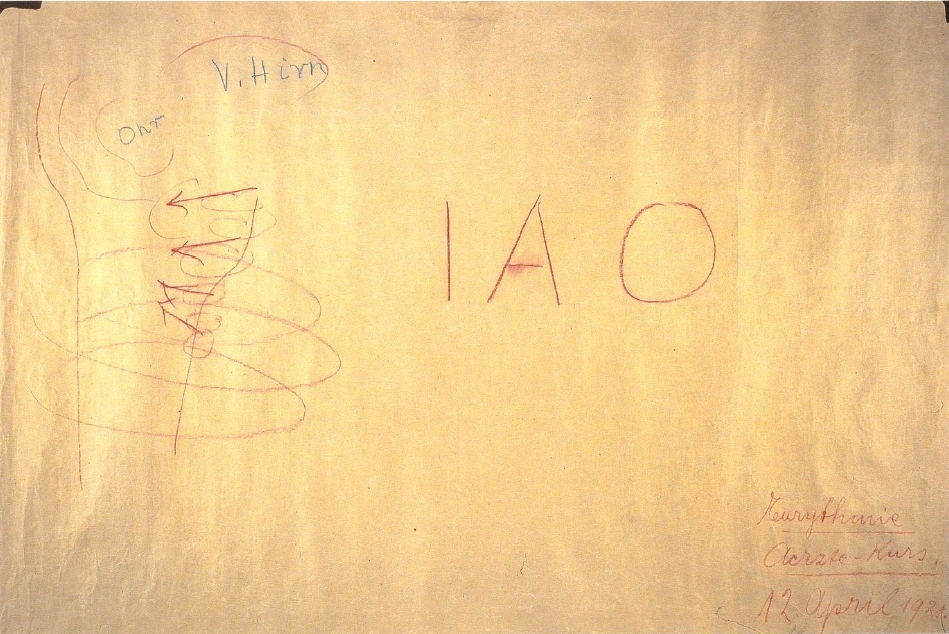
[ 19 ] Also es ist notwendig, sage ich, daß Sie dann die Übung mit dem Kinde machen, daß Sie das I mit dem Oberkörper machen lassen, das heißt, daß das Kind anfängt, den Oberkörper in Strecklage zu versetzen. Es fühlt den ganzen Oberkörper gestreckt. Es macht so, daß es mit den Beinen das A macht, und es macht das O, indem es die Arme so bewegt. Das aber lassen Sie das Kind möglichst rasch hintereinander machen: Strecken des Oberkörpers vertikal in die Höhe, Auseinander der Beine, O-Bewegung mit den Armen (vorne), wiederum ab, an, ab, an. Und man kann solch eine Sache durchaus auch im Chor mit den Kindern machen. Es ist natürlich dann festzuhalten, daß es ja im Grunde genommen nötig wäre, daß man, um solche Übungen auszuführen, nicht klassenmäßig die Übungen treibt. Die Kunsteurythmie und die Eurythmie, die wir sonst aus pädagogisch-didaktischen Gründen betreiben, die sollen klassenmäßig betrieben werden. Das gehört sich so; da gehören die Kinder gleichen Alters und so weiter zusammen. Aber man müßte, um nun übergehen zu lassen die gewöhnliche Klasseneurythmie in diese schon an die hygienisch-therapeutische Eurythmie anknüpfenden Sachen, man müsste nun aus den verschiedenen Klassen diejenigen herausnehmen, die man gerade durch ihre Besonderheiten, die ich vorhin charakterisiert habe, durch ihr Nichtzusammenstimmen der drei Glieder der menschlichen Wesenheit, für nötig befindet, daß sie eine solche Übung durchmachen. Man kann sie dann aus den verschiedensten Klassen herausnehmen und man kann dann mit diesen besonders dafür Geeigneten diese Übung machen. Aber das müßte eigentlich dann gemacht werden, wenn man tatsächlich hygienische Eurythmie, therapeutische Eurythmie in der Schule treiben wollte. Aber schon das, nicht wahr, bringt uns eigentlich im Grunde genommen auf den Weg, der in seiner weiteren Verfolgung eben dazu führen soll, daß wir hier durch bestimmte Bewegungen, die nur Metamorphosen sind des gewöhnlichen Eurythmischen, daß wir die studieren und in ihrer Wirkung auf die menschliche Organisation verfolgen werden. Sehen Sie, tatsächlich ist es so, daß wir im Inneren Organe haben [und] diese Organe haben gewisse Formen. In diesen Formen können Anomalien liegen. Jede Organform steht in einem gewissen Zusammenhang mit einer möglichen Bewegungsform des äußeren Menschen, so daß Sie sagen können: Nehmen wir an, irgendein Organ, meinetwillen die Galle, neigt zum Deformieren, zum Annehmen einer anomalen Form. Es gibt eine Bewegungsform, welche dem entgegenwirkt; und so für jedes Organ.
[ 19 ] So, I say, it is necessary that you then do the exercise with the child, letting the child form the letter “I” with their upper body—that is, the child begins to stretch their upper body. They feel their entire upper body stretched out. They form the “A” with their legs, and they form the “O” by moving their arms in this way. But have the child do these movements as quickly as possible one after the other: stretching the upper body vertically upward, spreading the legs apart, the “O” movement with the arms (in front), then down, up, down, up. And you can certainly do something like this in a group with the children. It should, of course, be noted that, fundamentally speaking, it would be necessary—in order to perform such exercises—not to conduct them in a classroom setting. Artistic eurythmy and the eurythmy we otherwise practice for pedagogical and didactic reasons should be practiced in a classroom setting. That is how it should be; children of the same age and so on belong together there. But in order to transition from ordinary classroom eurythmy to these activities that are already linked to hygienic-therapeutic eurythmy, one would have to select from the various classes those children whom, precisely because of their particular characteristics—which I described earlier—namely, the lack of harmony among the three members of the human being—one deems necessary to undergo such an exercise. One can then select them from a wide variety of classes and conduct this exercise with those who are particularly suited for it. But this would actually have to be done if one truly wished to practice hygienic eurythmy and therapeutic eurythmy in school. But even that, isn’t it true, actually sets us on the path which, when pursued further, is intended to lead us to study certain movements—which are merely metamorphoses of ordinary eurythmy—and to observe their effects on the human organism. You see, it is indeed the case that we have internal organs, and these organs have certain forms. Anomalies can lie within these forms. Every organ form is connected in a certain way to a possible form of movement in the outer human being, so that you can say: Let’s assume that some organ—the gallbladder, for example—tends to become deformed, to take on an anomalous form. There is a form of movement that counteracts this; and so it is for every organ.
[ 20 ] Nach dieser Richtung hin wollen wir dann das Weitere gestalten. Ich wollte dieses heute als Einleitung geben, um Sie zunächst auf den Weg zu bringen in dieser Sache.
[ 20 ] We will then proceed to shape the rest of the plan along these lines. I wanted to present this today as an introduction to get you started on this matter.