

An Anthroposophical Understanding
of Humanity and Medicine
GA 319
28 August 1923, Penmaenmawr
Translate the original German text into any language:
Versions Available:
An Anthroposophical Understanding of Humanity and Medicine, tr. SOL
Erster Vortrag
First Lecture
[ 1 ] Da gewünscht worden ist, daß ich über die aus der anthroposophischen Weltanschauung herausgewachsenen therapeutischen Prinzipien an einem unserer Abende spreche, so komme ich diesem Wunsche sehr gerne entgegen, allein es ist schwierig, gerade über diesen Gegenstand kurz zu sprechen. Es ist schwierig, weil der Gegenstand ein außerordentlich ausgebreiteter ist und man in einem ganz kurzen Vortrag, der doch nur aphoristisch sein kann, kaum eine richtige Vorstellung von dem hervorrufen kann, auf das es ankommt, und weil auf der anderen Seite zum Beispiel gewisse Betrachtungen, die dabei angestellt werden müssen, etwas für das allgemeine Menschenbewußtsein abgelegen sind. Dennoch will ich versuchen, die Dinge, auf die es ankommt, so allgemeinverständlich als es möglich ist, am heutigen Abende darzulegen.
[ 1 ] Since it has been requested that I speak at one of our evening gatherings about the therapeutic principles that have grown out of the anthroposophical worldview, I am very happy to comply with this request; however, it is difficult to speak briefly on this very subject. It is difficult because the subject is extraordinarily broad, and in a very short lecture—which can only be aphoristic—it is hardly possible to create a proper mental image of what is essential; and because, on the other hand, certain considerations that must be made in this context are somewhat remote from general human consciousness. Nevertheless, I will attempt to explain the essential points as clearly as possible this evening.
[ 2 ] Daß sich innerhalb der anthroposophischen Bewegung auch eine medizinische Strömung befindet, das rührt ganz gewiß nicht davon her, daß wir als Anthroposophen überall dabei sein wollen und überall gewissermaßen unsere Nase hineinstecken möchten. Das ist ganz gewiß nicht der Fall. Aber während die anthroposophische Bewegung ihren Weg durch die Welt zu machen suchte, fanden sich zu dieser Bewegung auch Ärzte hinzu, ernst strebende Ärzte, und eine große, verhältnismäßig große Anzahl solcher Ärzte war zu einem mehr oder weniger klaren Bewußtsein gekommen, wie schwankend eigentlich die Anschauungen der heute offiziell geltenden Medizin sind, wie für das eigentliche Verständnis der Krankheitsprozesse und ihrer Heilung vielfach die Grundlagen fehlen.
[ 2 ] The fact that there is also a medical strand within the anthroposophical movement certainly does not stem from our desire, as anthroposophists, to be involved in everything and, so to speak, to stick our noses into everything. That is certainly not the case. But as the anthroposophical movement sought to make its way in the world, doctors also joined this movement—serious, dedicated doctors— and a large—relatively large—number of these doctors had come to a more or less clear realization of just how uncertain the views of today’s officially accepted medicine actually are, and how the foundations for a true understanding of disease processes and their healing are often lacking.
[ 3 ] Diese Grundlagen fehlen der offiziellen Wissenschaft aus dem Grunde, weil dasjenige, was heute Geltung, wissenschaftliche Geltung haben will, sich eigentlich nur auf die heute allgemein gebräuchliche Naturwissenschaft stützen will. Und diese Naturwissenschaft wiederum, sie glaubt nur sicher mit demjenigen zu gehen, was sie auf mechanische, physikalische oder chemische Weise in der äußeren Natur feststellen kann. Und sie wendet dann dasjenige, was sie durch Physik, Chemie über äußere Naturvorgänge findet, auch da an, wo sie zum Verständnis des Menschen kommen will. Aber wenn auch im Menschen eine Art Konzentration, mikrokosmischer Konzentration aller Weltenprozesse enthalten ist, so sind doch die äußeren physischen und chemischen Prozesse im menschlichen Organismus selber niemals in der Form vorhanden, in der sie draußen in der Natur vor sich gehen. Der Mensch nimmt die Stoffe der Erde in sich auf, die ja nicht bloß passive Stoffe sind, sondern die eigentlich immer erfüllt sind von Naturprozessen, von Naturvorgängen. Ein Stoff sieht nur äußerlich so aus, als ob er etwas in sich Ruhendes wäre. In Wirklichkeit webt und lebt ja alles in dem Stoffe. Und so nimmt der Mensch auch diejenigen Vorgänge, dieses Weben und Leben, wie es sich chemisch und physisch abspielt in der Natur, in seinen Organismus auf, aber er verwandelt es also gleich in seinem Organismus, er macht es in seinem Organismus zu etwas anderem.
[ 3 ] Official science lacks these foundations for the simple reason that whatever claims scientific validity today seeks to base itself solely on the natural sciences commonly practiced today. And this natural science, in turn, believes it is on solid ground only with what it can observe in external nature through mechanical, physical, or chemical means. It then applies what it discovers through physics and chemistry about external natural processes even to its attempts to understand human beings. But even if human beings contain a kind of concentration—a microcosmic concentration of all worldly processes—the external physical and chemical processes within the human organism itself are never present in the same form as they occur out in nature. Human beings take in the substances of the earth, which are not merely passive substances but are in fact always filled with natural processes and phenomena. A substance only appears, on the surface, to be something at rest within itself. In reality, everything is weaving and living within the substance. And so the human being also takes in those processes—this weaving and living—as they unfold chemically and physically in nature, into his organism; but he immediately transforms them within his organism; he turns them into something else within his organism.
[ 4 ] Dieses andere, was aus den Naturprozessen im menschlichen Organismus wird, das kann man nur verstehen, wenn man zu einer wirklichen, wahren Menschenbeobachtung kommt. Aber die heutige Naturwissenschaft schließt eigentlich, indem sie sich einzig und allein auf das Physische, Chemische stützen will, dasjenige von ihrem Gebiete aus, was sich im Menschen als eigentlich Menschliches, auch zum Beispiel im physischen Körper des Menschen als eigentlich Menschliches abspielt. Denn im physischen Körper des Menschen spielt sich niemals etwas ab, was nicht zu gleicher Zeit unter dem Einflusse der ätherischen Vorgänge, der astralischen Vorgänge, der Ich-Vorgänge liegt. Aber indem die Naturwissenschaft ganz und gar absieht von diesen Ich-Vorgängen, diesen astralischen Prozessen, diesem ätherischen Leben und Weben, kommt sie eigentlich gar nicht an den Menschen heran. Daher kann diese Naturwissenschaft nicht eigentlich so in das menschliche Innere hineinschauen, daß ihr klar werden könnte, wie die äußeren chemischen und physischen Prozesse im Menschen dann weiter wirken, wie sie im gesunden Menschen weiter wirken, und wie sie im kranken Menschen weiter wirken.
[ 4 ] This other aspect—what emerges from natural processes within the human organism—can only be understood through genuine, true observation of human beings. But modern natural science, by relying solely on the physical and chemical, effectively excludes from its domain that which takes place within the human being as something truly human—including, for example, within the human physical body as something truly human. For nothing ever takes place in the human physical body that is not simultaneously under the influence of etheric processes, astral processes, and “I” processes. But by completely disregarding these “I” processes, these astral processes, and this etheric life and activity, modern science actually fails to truly grasp the human being. Consequently, natural science cannot truly look into the human interior in such a way that it could become clear to it how the external chemical and physical processes continue to operate within the human being—how they operate in a healthy person and how they operate in a sick person.
[ 5 ] Wie soll man denn aber die Wirkung eines Heilmittels in der richtigen Art beurteilen, wenn man sich nicht ein Verständnis dafür verschaffen kann, wie irgendein Naturding, das wir in den Organismus einführen, oder mit dem wir den Organismus behandeln, im menschlichen Organismus weiter wirkt.
[ 5 ] But how is one to properly assess the effect of a remedy if one cannot gain an understanding of how any natural substance that we introduce into the organism—or with which we treat the organism—continues to act within the human organism?
[ 6 ] Und so kann man sagen: Der denkbar größte Fortschritt auf medizinischem Gebiete in der neueren Zeit ist eigentlich nur gemacht worden auf dem Gebiete der Chirurgie, wo es sich um äußere, man möchte sagen, mechanische Handhabungen handelt.
[ 6 ] And so one might say: The greatest possible progress in the field of medicine in recent times has actually been made only in the field of surgery, which involves external—one might say—mechanical procedures.
[ 7 ] Dagegen herrscht auf dem Gebiete — nicht nach meinem Urteil, sondern eben gerade nach dem Urteil derjenigen Ärzte, die sich das alles zum Bewußtsein gebracht haben - der eigentlichen Therapie eine große Verwirrung, weil man den Zusammenhang zwischen irgendeinem Naturding und der Wirkung auf die Krankheit nicht durchschauen kann, wenn man durch die besondere Ansicht, die man über die Naturwissenschaft hat, eigentlich den Menschen selber ausschließt von der wissenschaftlichen Betrachtung.
[ 7 ] In contrast, in this field—not in my opinion, but precisely in the opinion of those physicians who have brought all of this to their attention — regarding the actual therapy, there is great confusion, because one cannot grasp the connection between any natural phenomenon and its effect on the disease if, due to one’s particular view of natural science, one effectively excludes human beings themselves from scientific consideration.
[ 8 ] Indem nun die Anthroposophie gerade darauf ausgeht, den Menschen in seinem innersten Wesen kennenzulernen, sowohl insofern er ein übersinnliches wie insofern er ein sinnliches Wesen ist, kann auch aus der Anthroposophie heraus eine Erkenntnis geschöpft werden über die Behandlung des Menschen mit diesen oder jenen Naturmitteln im Krankheitsfalle.
[ 8 ] Since anthroposophy is specifically aimed at understanding human beings in their innermost essence—both as supersensible and as sensory beings—insights can also be drawn from anthroposophy regarding the treatment of human beings with various natural remedies in cases of illness.
[ 9 ] Im Grunde steht man heute schon vor einer gewissen Erkenntnisgrenze in der Medizin, wenn man nur nach dem eigentlichen Wesen der Krankheit frägt. Was ist die Krankheit? Aus den heutigen wissenschaftlichen Erkenntnissen läßt sich diese Frage: Was ist die Krankheit? — gar nicht beantworten. Denn, was ist nach diesen naturwissenschaftlichen Anschauungen die Summe all der Vorgänge, die im gesunden Menschen sich abspielen? Vom Kopf, vom äußersten Kopfende bis zum letzten Zehenende am Fuße sind das die Naturprozesse. Aber was sind denn die Prozesse, die sich während der Krankheit abspielen in der Leber, in der Niere, im Kopf, im Herzen, wo immer, was sind denn das für Prozesse? Naturprozesse sind es. Alles, was gesunde Prozesse sind, sind Naturprozesse; alles, was Krankheitsprozesse sind, sind ja auch Naturprozesse. Warum ist denn der Mensch unter der einen Sorte von Prozessen gesund und unter der anderen Sorte von Prozessen krank?
[ 9 ] Essentially, medicine today has already reached a certain limit of understanding when it comes to inquiring into the very nature of disease. What is disease? Based on current scientific knowledge, this question—What is disease?—cannot be answered at all. For, according to these scientific views, what is the sum of all the processes that take place in a healthy human being? From the head—from the very top of the head—to the very tip of the toes on the feet, these are natural processes. But what, then, are the processes that take place during illness in the liver, in the kidneys, in the head, in the heart—wherever they occur—what kind of processes are these? They are natural processes. All healthy processes are natural processes; all disease processes are, after all, natural processes as well. Why, then, is a person healthy under one type of process and sick under another?
[ 10 ] Es handelt sich gerade darum, daß man nicht im Allgemeinen herumspricht, so nebulos herumspricht: Nun ja, die gesunden Naturprozesse sind normal, die kranken Naturprozesse sind nicht normal. — Da stellt wirklich «zur rechten Zeit», wenn man nichts weiß, «ein Wort» sich ein!
[ 10 ] The point is precisely that one shouldn’t go around making general, vague statements like: “Well, healthy natural processes are normal, while unhealthy natural processes are not normal.” — That’s when, if you don’t know anything, a “word” really does pop up “at just the right time”!
[ 11 ] Es handelt sich darum, daß man dann, wenn man nur die allgemeine Naturwissenschaft, wie sie heute üblich ist, anwendet, an den Menschen so herangeht: am liebsten nicht an den lebenden Menschen, sondern an die Leiche; man nimmt da oder dort irgendein Stück des Organismus und macht sich Vorstellungen darüber, was da nun für gesunde oder kranke Naturprozesse drinnen vorgehen. Und so ist es einem eigentlich gleichgültig, ob man irgendein Gewebe aus dem Kopf oder aus der Leber oder aus der großen Zehe nimmt oder dergleichen. Alles wird eben zuletzt zurückgeführt, ich will sagen, auf die Zelle. Es ist eigentlich nach und nach die bestausgebildete Menschenlehre die Histologie, die Gewebelehre geworden. Nun ja, wenn man in die kleinsten Teile hineingeht und alle Kräftezusammenhänge wegläßt, dann sind, so wie in der Nacht alle Kühe grau sind, alle Organe dann im Menschen gleich. Aber man bekommt dann eben eine nächtliche «Graue-Kuh-Wissenschaft», nicht eine wirkliche Wissenschaft, die sich der Spezifität der einzelnen Organe im Menschen annimmt.
[ 11 ] The point is that when one applies only general natural science, as is customary today, one approaches human beings in this way: preferably not living human beings, but corpses; one takes some part of the organism here or there and forms mental images about what healthy or diseased natural processes are taking place within it. And so one is actually indifferent as to whether one takes some tissue from the head or from the liver or from the big toe or the like. In the end, everything is reduced—I mean—to the cell. Gradually, histology—the study of tissues—has become the most highly developed branch of human science. Well, if one delves into the smallest parts and disregards all interrelationships of forces, then—just as all cows are gray at night—all organs in the human body are the same. But then one ends up with a nocturnal “gray-cow science,” not a true science that addresses the specificity of the individual organs in the human body.
[ 12 ] Dasjenige, was da zur Grundlage dienen muß, das habe ich eigentlich erst vor einigen Jahren auszusprechen gewagt, obwohl es mich beschäftigt hat seit jetzt reichlich mehr als dreißig bis fünfunddreißig Jahren. Aber man stellt sich gewöhnlich nur vor, daß Geisteswissenschaft so leicht zu ihren Resultaten kommt. Man braucht nur hineinzuschauen in die geistige Welt, dann bekommt man das alles heraus, während man es schwierig hat, wenn man in Laboratorien arbeiten muß, in physikalischen Kabinetten oder auf der Klinik; da müsse man sich Mühe geben — so denkt man nämlich -, in der Geisteswissenschaft handle es sich nur darum, daß man hineinschaue in die Welt des Geistes, dann kriege man alles heraus. So ist es eben nicht. Gerade die gewissenhafte Geistesforschung erfordert mehr Mühe und vor allen Dingen mehr Verantwortung als das Hantieren in den Laboratorien oder auf der Klinik oder der Sternwarte. Und so ist es, daß zwar die erste Konzeption dessen, was ich jetzt kurz prinzipiell andeuten will, vor mir stand vor fünfunddreißig Jahren etwa, daß ich das aber erst vor einigen Jahren aussprechen konnte, nachdem alles verarbeitet worden ist und vor allen Dingen auch an der gesamten offiziellen Naturwissenschaft der Gegenwart verifiziert worden ist. Und gerade unter dem Einflusse dieser Prinzipien über die Gliederung des Menschen ist dasjenige entstanden, von dem ich eben erzählte, diese therapeutische Strömung innerhalb unserer anthroposophischen Bewegung.
[ 12 ] I actually didn’t dare to articulate what must serve as the foundation for this until a few years ago, even though it has occupied my thoughts for well over thirty to thirty-five years now. But people usually imagine that Spiritual Science arrives at its results so easily. One need only look into the spiritual world, and then one gets all the answers, whereas it is difficult when one has to work in laboratories, in physics labs, or in a clinic; there, one has to make an effort—or so people think—whereas in Spiritual Science, it is simply a matter of looking into the world of the spirit, and then one gets all the answers. That is simply not the case. Conscientious spiritual research, in particular, requires more effort and, above all, more responsibility than working in laboratories, clinics, or observatories. And so it is that, although the initial conception of what I now wish to briefly outline in principle came to me some thirty-five years ago, I was only able to articulate it a few years ago, after everything had been thoroughly processed and, above all, verified by the entirety of contemporary official natural science. And it was precisely under the influence of these principles regarding the structure of the human being that what I have just described—this therapeutic movement within our anthroposophical movement—came into being.
[ 13 ] Wir müssen im Menschen einfach, wenn wir ihn auch als physischen Menschen vor uns haben, durchaus drei voneinander verschiedene Glieder unterscheiden. Diese drei verschiedenen Glieder kann man in der verschiedensten Art benennen. Aber man kommt am besten an sie heran, wenn man sie so charakterisiert, daß man sagt: Der Mensch hat als das eine System seines auch physischen Wesens das NervenSinnessystem, das hauptsächlich im Kopfe lokalisiert ist.
[ 13 ] Even when we have a physical human being before us, we must still distinguish three distinct parts within that person. These three distinct parts can be named in a variety of ways. But the best way to approach them is to characterize them by saying: As one system of the human being’s physical nature, there is the nervous-sensory system, which is primarily located in the head.
[ 14 ] Der Mensch hat als zweites System das rhythmische System; das umfaßt die Atmung, das umfaßt die Blutzirkulation. Es umfaßt aber auch zum Beispiel die rhythmischen Tätigkeiten der Verdauung und so weiter. Das ist das zweite System des Menschen.
[ 14 ] The human being has a second system, the rhythmic system; this includes breathing and blood circulation. But it also includes, for example, the rhythmic processes of digestion and so on. This is the human being’s second system.
[ 15 ] Und das dritte System des Menschen ist der Zusammenhang zwischen dem Bewegungssystem, Gliedmaßensystem und dem eigentlichen Stoffwechselsystem. Dieser Zusammenhang wird Ihnen sofort klar sein, wenn Sie daran denken, daß ja gerade durch die Bewegung der Glieder der Stoffwechsel befördert wird, und daß eigentlich nach innen die Gliedmaßen ganz organisch immer mit den Stoffwechselorganen zusammenhängen. Das wird Ihnen auch die Anatomie unmittelbar zeigen. Sehen Sie nur, wie die Beine nach innen sich fortsetzen in den Stoffwechselorganen und ebenso die Arme sich fortsetzen nach innen. So daß wir am Menschen unterscheiden können drei Systeme: Das Nerven-Sinnessystem, vorzugsweise im Kopfe lokalisiert, das rhythmische System, vorzugsweise in der Brust, um das Herz herum lokalisiert, das Stoffwechsel-Gliedmaßensystem, das vorzugsweise in den Gliedmaßen und in den daran anhängenden Stoffwechselorganen lokalisiert ist.
[ 15 ] And the third system in the human body is the connection between the musculoskeletal system, the limb system, and the metabolic system itself. This connection will become immediately clear to you when you consider that it is precisely through the movement of the limbs that metabolism is stimulated, and that, internally, the limbs are in fact organically connected to the metabolic organs. Anatomy will also demonstrate this to you directly. Just look at how the legs continue inward into the metabolic organs, and likewise how the arms continue inward. Thus, we can distinguish three systems in the human being: the nervous-sensory system, located primarily in the head; the rhythmic system, located primarily in the chest, around the heart; and the metabolic-limb system, located primarily in the limbs and the metabolic organs attached to them.
[ 16 ] Aber man darf sich. diese Gliederung des Menschen nicht so vorstellen, wie - um die anthroposophische Bewegung möglichst anzuschwärzen — einmal ein Professor tat. Der versuchte nicht einzudringen in dasjenige, was damit eigentlich gemeint ist mit dieser Gliederung, sondern er versuchte diese Gliederung des Menschen anzuschwärzen und sagte: Diese Anthroposophen behaupten, der Mensch bestünde aus drei Systemen, aus dem Kopf, dem Rumpf — Brust und Bauch -— und aus den Gliedmaßen. — Ja, man kann natürlich auf diese Art eine Sache sofort lächerlich machen.
[ 16 ] But one must not form a mental image of this division of the human being in the way that—in an attempt to discredit the anthroposophical movement as much as possible—a certain professor once did. He did not attempt to delve into what is actually meant by this division, but rather sought to discredit it, saying: “These anthroposophists claim that the human being consists of three systems: the head, the torso—chest and abdomen—and the limbs.” — Yes, of course, one can immediately make a mockery of something in this way.
[ 17 ] Denn es handelt sich nicht darum, daß das Nerven-Sinnessystem nur im Kopfe ist. Es ist hauptsächlich im Kopfe, aber es dehnt sich dann über den ganzen Organismus aus, so daß der Mensch seine Kopforganisation über den ganzen Organismus verbreitet hat. Ebenso dehnt sich das rhythmische System nach oben und unten über den ganzen Organismus aus. Der Mensch ist also wiederum räumlich ganz rhythmisches System, ebenso ganz Stoffwechsel-Gliedmaßensystem. Wenn Sie die Augen bewegen, sind die Augen Gliedmaßen. Also nicht nebeneinander stehen diese Systeme räumlich, sondern sie sind ineinander gegliedert. Sie stecken ineinander, und man muß sich schon ein wenig an ein exaktes Denken gewöhnen, wenn man diese Gliederung des Menschen im richtigen Sinne beurteilen will.
[ 17 ] For the point is not that the nervous-sensory system is located only in the head. It is primarily in the head, but it then extends throughout the entire organism, so that the human being has spread the organization of the head throughout the entire organism. Similarly, the rhythmic system extends upward and downward throughout the entire organism. The human being is thus, spatially speaking, entirely a rhythmic system, just as it is entirely a metabolic-limb system. When you move your eyes, the eyes are limbs. So these systems do not stand side by side spatially; rather, they are structured within one another. They are interlocked, and one must become somewhat accustomed to precise thinking if one wishes to assess this structure of the human being in the proper sense.
[ 18 ] Nun sind die beiden Systeme, das erste und das dritte, das NervenSinnessystem und das Gliedmaßen-Stoffwechselsystem, einander eigentlich polarisch entgegengesetzt. Was das eine erzeugt, zerstört das andere; was das andere zerstört, erzeugt das eine. Sie wirken also ganz im entgegengesetzten Sinne. Und das mittlere System, das rhythmische System, stellt die Beziehung zwischen beiden her. Da wird gewissermaßen zwischen beiden hin- und hergependelt, damit ein Einklang zwischen dem Zerstören des einen Systems und dem Aufbauen des anderen Systems immer stattfinden kann. Wenn wir zum Beispiel das Stoffwechselsystem ins Auge fassen, so wirkt das Stoffwechselsystem mit seiner größten Intensität natürlich im menschlichen Unterleibe. Aber dasjenige, was da im menschlichen Unterleibe vor sich geht, das muß eine polarisch entgegengesetzte Tätigkeit hervorrufen im Haupte des Menschen, im Nerven-Sinnessystem, wenn der Mensch gesund sein soll.
[ 18 ] Now, the two systems—the first and the third, the nervous-sensory system and the limb-metabolic system—are, in fact, polar opposites. What one produces, the other destroys; what the other destroys, the one produces. They thus act in completely opposite ways. And the middle system—the rhythmic system—establishes the relationship between the two. It oscillates, as it were, back and forth between them, so that a balance can always be maintained between the destructive activity of one system and the constructive activity of the other. If we consider, for example, the metabolic system, it naturally operates with its greatest intensity in the human abdomen. But what takes place there in the human abdomen must elicit a polar opposite activity in the human head—in the nervous-sensory system—if the person is to be healthy.
[ 19 ] Denken Sie nun, daß jene intensive Tätigkeit, die eigentlich die Tätigkeit des menschlichen Verdauungssystemes ist, sich durch eine zu starke, zu große Intensität bis nach dem Nerven-Sinnessystem ausdehnt, so daß also diejenige Tätigkeit, die eigentlich im Stoffwechselsystem sein sollte, auf das Nerven-Sinnessystem übergreift, dann haben Sie zwei, allerdings Naturprozesse meinetwillen, aber Sie sehen gleich, wie der eine Naturprozeß zum Abnormen wird. Er gehört eben nur hinein in das Stoffwechselsystem, und er bricht gewissermaßen nach oben durch in das Nerven-Sinnessystem.
[ 19 ] Now, suppose that this intense activity—which is actually the activity of the human digestive system—spreads, due to excessive intensity, all the way to the nervous and sensory system, so that the activity that should actually take place in the metabolic system spills over into the nervous and sensory system. Then you have two, admittedly natural processes, as far as I’m concerned, but you can see right away how one of these natural processes becomes abnormal. It belongs solely within the metabolic system, and it breaks through, so to speak, into the nervous-sensory system.
[ 20 ] Dadurch entstehen die verschiedenen Formen einer zwar von der Medizin heute etwas als Quantite negligeable behandelten Krankheit, aber, ich möchte sagen, von einem großen Teil der Menschheit weniger so behandelten Krankheit, denn es sind überall diese verschiedenen Krankheitsformen bekannt. Dadurch entsteht dasjenige, was unter den verschiedenen Formen der Migräne bekannt ist. Und man muß, um die Migräne in ihren verschiedenen Formen zu verstehen, diesen Prozeß begreifen, der eigentlich in seiner Intensität, so wie er da ist, sich im Stoffwechselsystem abspielen soll, und der nach dem NervenSinnessystem hin durchbricht, so daß die Nerven und die Sinne selber so behandelt werden, daß der Stoffwechsel in sie hineinschießt, statt daß er an seinem eigentlichen Orte bleibt.
[ 20 ] This gives rise to the various forms of a disease that, while treated by modern medicine as something of “negligible quantity,” is—I would say—not treated as such by a large portion of humanity, since these various forms of the disease are known everywhere. This is what gives rise to what is known as the various forms of migraine. And in order to understand migraine in its various forms, one must grasp this process, which—in its actual intensity—is supposed to take place within the metabolic system and breaks through into the nervous and sensory systems, so that the nerves and the senses themselves are affected in such a way that the metabolic processes surge into them instead of remaining in their proper place.
[ 21 ] Das Umgekehrte kann stattfinden. Der Prozeß, der am intensivsten sein soll im Nerven-Sinnessystem, der ganz entgegengesetzt ist dem Stoffwechselprozeß, der kann wiederum in einer gewissen Weise nach dem Stoffwechselsystem durchbrechen. So daß im Stoffwechselsystem, statt daß dort nur ein ganz untergeordneter Nerven-Sinnesprozeß vor sich geht, ein gesteigerter Nerven-Sinnesprozeß sich abspielt, daß gewissermaßen dasjenige, was dem Kopf gehört, durchbricht und in dem Unterleibe auftritt, die Kopftätigkeit also im Unterleibe auftritt. Wenn dies geschieht, dann entsteht im Menschen die gefährliche Krankheit des abdominalen Typhus.
[ 21 ] The opposite can occur. The process that is supposed to be most intense in the nervous-sensory system—which is entirely opposite to the metabolic process—can, in turn, break through into the metabolic system in a certain way. So that in the metabolic system, instead of only a very minor nervous-sensory process taking place there, an intensified nervous-sensory process occurs—in a sense, what belongs to the head breaks through and manifests in the abdomen; that is, the activity of the head manifests in the abdomen. When this happens, the dangerous disease of abdominal typhoid develops in the human being.
[ 22 ] So sieht man in der Tat dadurch, daß man diesen dreigliedrigen Menschen von Grund aus versteht, wie im menschlichen Organismus der Krankheitsprozeß aus dem gesunden Prozeß heraus sich entwickelt. Wäre unser Kopf mit seinem Nerven-Sinnessystem nicht so organisiert, wie er organisiert ist, dann könnten wir nie einen Typhus haben. Wäre unser Unterleib nicht so organisiert, wie er ist, könnten wir niemals eine Migräne haben. Aber die Kopftätigkeit soll im Kopfe, die Unterleibstätigkeit im Unterleibe bleiben. Brechen sie durch, so entstehen eben solche Krankheitsformen.
[ 22 ] In fact, by thoroughly understanding this threefold human being, we can see how the disease process develops within the human organism out of the healthy process. If our head, with its nervous and sensory system, were not organized the way it is, we could never have typhoid fever. If our abdomen were not organized as it is, we could never have a migraine. But mental activity should remain in the head, and abdominal activity in the abdomen. If they break through, such forms of illness arise.
[ 23 ] Und wie auf diese zwei besonders charakteristischen Krankheitsformen, so kann man auf andere Krankheitsformen hindeuten, die immer dadurch entstehen, daß eine gewisse Tätigkeit, die in ein gewisses Organsystem gehört, an einem anderen Orte, in einem anderen Organsystem sich geltend macht.
[ 23 ] And just as with these two particularly characteristic forms of disease, one can point to other forms of disease that always arise when a certain activity—which belongs to a specific organ system—manifests itself in a different location, within a different organ system.
[ 24 ] Geht man nur anatomisch vor, so sieht man eben, wie die kleinsten Teile im Gewebe des Organismus drinnen sind. Aber man sieht dieses Wirken von polarisch entgegengesetzter Tätigkeit nicht. An der Nervenzelle können Sie nur studieren, daß sie entgegengesetzt organisiert ist, sagen wir der Leberzelle. Wenn Sie ins Ganze des Organismus so hineinschauen können, daß er Ihnen eben in seiner Dreigliederung erscheint, dann merken Sie auch, wie die Nervenzelle eine Zelle ist, die fortwährend sich auflösen will, die fortwährend abgebaut sein will, wenn sie gesund sein soll, und wie eine Leberzelle etwas ist, was fortwährend aufgebaut sein will, wenn sie gesund sein soll. Das sind polarische Tätigkeiten. Sie wirken in der richtigen Weise aufeinander, wenn sie entsprechend verteilt sind im Organismus, sie wirken in der unrichtigen Weise ineinander, wenn sie ineinander eindringen.
[ 24 ] If one takes an exclusively anatomical approach, one sees only how the smallest parts are embedded within the organism’s tissue. But one does not see this interplay of oppositely polarized activity. In the case of the nerve cell, you can only observe that it is organized in a manner opposite to, say, the liver cell. If you can look into the organism as a whole in such a way that it appears to you in its threefold structure, then you will also notice how the nerve cell is a cell that constantly seeks to dissolve, that constantly seeks to be broken down if it is to be healthy, and how a liver cell is something that constantly seeks to be built up if it is to be healthy. These are polar activities. They interact with one another in the proper way when they are distributed appropriately throughout the organism; they interact in the wrong way when they intrude upon one another.
[ 25 ] Das rhythmische System steht in der Mitte und will eben immer den Ausgleich schaffen zwischen den einander entgegengesetzten polarischen Tätigkeiten des Nerven-Sinnessystems und des StoffwechselGliedmaßensystems.
[ 25 ] The rhythmic system is at the center and always seeks to create a balance between the opposing, polar activities of the nervous-sensory system and the metabolic-limb system.
[ 26 ] Ich möchte nun ein besonderes Beispiel herauswählen, um Sie gewiissermaßen hineinschauen zu lassen — ich kann natürlich alles nur aphoristisch erörtern —, wie man die Beziehung des aus der Natur genommenen Heilmittels mit seinen Kräften zu den im Inneren des Menschen wirkenden Gesundungs- und Erkrankungskräften finden kann.
[ 26 ] I would now like to single out a specific example to give you, so to speak, a glimpse into—though, of course, I can only discuss this in aphoristic terms—how one can discern the relationship between a remedy derived from nature, with its inherent powers, and the forces of healing and disease at work within the human being.
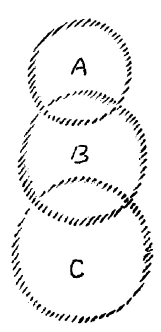
[ 27 ] Wollen wir einmal unseren Blick hinwenden auf ein ganz bestimmtes Erz, das sich in der Natur findet, das sogenannte Antimonerz. Antimon hat, wenn man es schon äußerlich betrachtet, eine außerordentlich interessante Eigenschaft. Es formt sich in der Natur so, daß gewissermaßen Spieße entstehen, stangenförmige, spießartige Gliederungen, die sich aneinanderlegen, so daß man das Antimonerz in der Natur so findet, daß man es, wenn ich es schematisch aufzeichne, etwa so aufzeichnen könnte. Fast wie ein mineralisches Moos oder eine mineralische Flechte wächst das. Man sieht, daß gewissermaßen dieses Mineral sich fadenförmig anordnen will. Man sieht noch viel deutlicher, wie sich dieses Mineral, dieses Erz fadenförmig anordnen will, wenn man es einem gewissen physikalisch-chemischen Prozeß unterwirft. Dann wird es noch dünnfaseriger. Es ordnet sich ganz dünnfaserig an. Besonders bedeutsam aber ist das, was auftritt, wenn man dieses Antimon einer gewissen Art von Verbrennungsprozeß unterwirft. Man bekommt einen weißen Rauch, der sich an Wände anlegen kann und dann glänzend, spiegelartig wird.* Man nennt das den Antimonspiegel. Er wird heute wenig mehr respektiert, wurde aber in der alten Medizin außerordentlich viel angewendet, eben aus alten Erkenntniskräften heraus, von denen ich Ihnen in den Vormittagsvorträgen wiederholt gesprochen habe. Dieser Antimonspiegel, also das, was sich erst aus dem Verbrennungsprozeß heraus entwickelt und sich an Wänden ablagern kann, so daß es spiegelglänzend wird, ist eben etwas außerordentlich Wichtiges.
[ 27 ] Let us now turn our attention to a very specific ore found in nature, known as antimony ore. Even when viewed from the outside, antimony has an extraordinarily interesting property. It forms in nature in such a way that, so to speak, spikes are created—rod-shaped, spike-like structures that lie side by side—so that antimony ore is found in nature in a way that, if I were to sketch it schematically, I could depict it something like this. It grows almost like a mineral moss or a mineral lichen. One can see that, in a sense, this mineral tends to arrange itself in filamentous strands. One sees even more clearly how this mineral, this ore, tends to arrange itself in filaments when subjected to a certain physicochemical process. Then it becomes even more finely fibrous. It arranges itself in very fine fibers. Particularly significant, however, is what occurs when this antimony is subjected to a certain type of combustion process. A white smoke is produced that can settle on walls and then become shiny and mirror-like.* This is called antimony mirror. It is scarcely respected today, but was used extensively in ancient medicine—precisely because of the ancient powers of insight I have repeatedly spoken to you about in the morning lectures. This antimony mirror—that is, what develops from the combustion process and can deposit itself on walls, becoming mirror-like—is indeed something extraordinarily important.
[ 28 ] Zu alledem gesellt sich eine andere Eigenschaft. Ich will nur dies hervorheben: Wenn man das Antimon gewissen elektrolytischen Prozessen unterwirft und es an die sogenannte elektrolytische Kathode bringt, so braucht man nur, nachdem man das Antimon herangebracht und dem elektrolytischen Prozeß unterworfen hat an der Kathode, einen kleinen Einfluß auszuüben, und man bekommt eine kleine Antimonexplosion. Kurz, dieses Antimon hat die denkbar interessantesten Eigenschaften.
[ 28 ] Added to all this is another property. I just want to emphasize this: If one subjects antimony to certain electrolytic processes and brings it to the so-called electrolytic cathode, then—after bringing the antimony to the cathode and subjecting it to the electrolytic process—one need only exert a slight influence to produce a small antimony explosion. In short, this antimony possesses the most fascinating properties imaginable.
[ 29 ] Wenn man in einer gewissen mäßigen Dosierung das Antimon in den menschlichen Organismus einführt, so kann man an den verschiedenen Vorgängen studieren, wie in der Tat dieselben Kräfte, die sich so verhalten, wie ich es jetzt geschildert habe am Antimon, im menschlichen Organismus ihre Fortsetzung erfahren, und wie sie da allerlei Kräfteformen, allerlei Wirkungsformen annehmen.
[ 29 ] If antimony is introduced into the human organism in a certain moderate dosage, one can study, through the various processes that occur, how the very same forces—which behave as I have just described with regard to antimony—continue to operate within the human organism, and how they take on all manner of forms of force and all manner of forms of action there.
[ 30 ] Diese Wirkungsformen - ich kann natürlich die Einzelheiten, die Belege hier nicht auseinandersetzen, will Ihnen nur dasjenige, was eben innerer Zusammenhang ist, kurz skizzieren -, diese Prozesse also, die da im menschlichen Organismus auftreten, treten zum Beispiel besonders stark überall da auf, wo Blut gerinnt. Also sie verstärken, sie befördern das Blutgerinnen. Aber untersucht man nun mit denjenigen Methoden, die eben auch zu der Dreigliederung des menschlichen Organismus gehören, die uns allmählich in die menschliche Wesenheit hineinschauen lassen und erkennen lassen, wie die einzelnen Systeme in den verschiedenen Organen sich verhalten, schaut man so in den menschlichen Organismus hinein, so findet man, daß dasjenige, was im Antimon lebt, nicht bloß draußen im mineralischen Antimon lebt, sondern daß das tatsächlich ein Kräftezusammenhang ist, der im menschlichen Organismus selber lebt, der immer im menschlichen Organismus, im gesunden Organismus vorhanden ist, und der nun im kranken menschlichen Organismus auch Formen annimmt von der Art, wie ich es Ihnen jetzt auseinandergesetzt habe.
[ 30 ] These forms of action—I cannot, of course, go into the details or provide evidence here; I merely wish to briefly outline what constitutes the inner connection—these processes, then, that occur in the human organism, are particularly pronounced, for example, wherever blood coagulates. So they intensify and promote blood clotting. But if one examines the human organism using the methods that are part of the threefold division of the human organism—methods that gradually allow us to look into the human being and recognize how the individual systems function in the various organs—if one looks into the human organism in this way, one finds that what lives in antimony does not merely exist externally in mineral antimony, but that it is in fact a network of forces that lives within the human organism itself, that is always present in the human organism—in the healthy organism—and that now, in the diseased human organism, also takes on forms of the kind I have just explained to you.
[ 31 ] Dieser, ich möchte sagen, im menschlichen Organismus selber vorhandene Antimonprozeß, ist einem anderen Prozeß polarisch entgegengesetzt. Er ist entgegengesetzt dem Prozesse, der überall da auftritt, wo die plastisch tätigen Kräfte, zum Beispiel die zellenbildenden Kräfte auftreten, die zellenrundenden Kräfte, wo also dasjenige auftritt, was eigentlich die Zellsubstanz des menschlichen Organismus bildet. Ich möchte diese Kräfte, weil sie vorzugsweise zum Beispiel in der Eiweißsubstanz enthalten sind, die albuminisierenden Kräfte nennen. Und so haben wir im menschlichen Organismus die Kräfte, die wir draußen in der Natur, im Antimon namentlich, dann finden, wenn wir das Antimon zum Beispiel der Verbrennung unterwerfen und bis zum Antimonspiegel bringen. Die Kräfte, die draußen im Antimon wirken, die haben wir also im menschlichen Organismus auch wirkend. Wir haben aber auch die entgegengesetzten Kräfte wirksam, die albuminisierenden Kräfte, welche die Antimonkräfte zum Stillstand bringen, wegschaffen.
[ 31 ] This antimony process—which, I would say, exists within the human organism itself—is polar opposites to another process. It is opposed to the process that occurs wherever the plastic forces—for example, the cell-forming forces and the cell-rounding forces—are at work; in other words, wherever that which actually constitutes the cellular substance of the human organism is present. Since these forces are found primarily in protein substances, for example, I would like to call them the albuminizing forces. And so, in the human organism, we have the forces that we find outside in nature—specifically in antimony—when, for example, we subject antimony to combustion and reduce it to antimony(IV). The forces that act in antimony are thus also at work in the human organism. However, we also have the opposing forces at work—the albuminizing forces—which bring the antimony forces to a halt and eliminate them.
[ 32 ] Diese zwei Kräftesysteme, albuminisierende und antimonisierende Kräfte, die wirken nun einander so entgegen, daß sie im menschlichen Organismus in einem gewissen Gleichgewicht stehen müssen. Man muß nun erkennen, daß zum Beispiel jener Prozeß, den ich Ihnen vorhin prinzipiell geschildert habe und der zugrunde liegt dem abdominalen Typhus, im wesentlichen darauf beruht, daß das Gleichgewicht zwischen diesen beiden Kräftesystemen gestört ist.
[ 32 ] These two systems of forces—albuminizing and antimonic forces—counteract each other in such a way that they must be in a certain balance within the human organism. One must now recognize that, for example, the process I described to you earlier in general terms—and which underlies abdominal typhoid—is essentially based on the fact that the balance between these two systems of forces has been disrupted.
[ 33 ] Um nun recht in den menschlichen Organismus hineinzuschauen, muß man dasjenige zu Hilfe nehmen können, was ich Ihnen gerade von den verschiedensten - allerdings nicht medizinischen - Gesichtspunkten aus in diesen Morgenvorträgen während dieses Kursus auseinandergesetzt habe.
[ 33 ] In order to gain a true insight into the human organism, one must be able to draw upon what I have just explained to you from a wide variety of perspectives—albeit not medical ones—in these morning lectures throughout this course.
[ 34 ] Da haben wir gesehen, wie der Mensch nicht bloß diesen physischen Körper hat, sondern einen ätherischen oder Bildekräftekörper, einen astralischen Körper, eine Ich-Organisation. Und gerade gestern war ich in der Lage, Ihnen auseinanderzusetzen, wie einen innigen Zusammenhang der physische Körper und der Bildekräftekörper auf der einen Seite haben, das Ich und der astralische Körper auf der anderen Seite, wie aber einen loseren Zusammenhang der astralische Leib und der Bildekräfteleib oder Atherleib haben, denn die trennen sich jede Nacht.
[ 34 ] There we saw how human beings have not only this physical body, but also an etheric body or body of formative forces, an astral body, and an “I” organization. And just yesterday I was able to explain to you how the physical body and the body of formative forces, on the one hand, and the “I” and the astral body, on the other, are intimately connected; yet how the astral body and the body of formative forces—or etheric body—are more loosely connected, for they separate every night.
[ 35 ] Dieser Zusammenhang, der in einem Ineinanderspielen der Kräfte des astralischen Leibes und des Ätherleibes besteht, ist nun radikal gestört beim abdominalen Typhus. Bei diesem abdominalen Typhus tritt das ein, daß der astralische Leib schwach wird, nicht in der entsprechenden intensiven Weise in den physischen Leib hineinwirken kann, dadurch, weil er für sich wirkt, jenes Übergewicht hervorruft, was gewissermaßen die Nerven-Sinnesorganisation, die hauptsächlich dem Astralleibe unterliegt, hinunterdrängt. Statt daß sie sich nun verwandelt in der Stoffwechselorganisation, bleibt sie als solche, als astralische Tätigkeit vorhanden. Der Astralleib wirkt für sich. Er wirkt nicht ordentlich hinein in den Ätherleib. Dadurch entstehen die Krankheitssymptome, die eben das Symptomenbild des Typhus geben.
[ 35 ] This connection, which consists of an interplay between the forces of the astral body and the etheric body, is radically disrupted in abdominal typhoid. In abdominal typhoid, the astral body becomes weakened and is unable to exert its usual intense influence on the physical body; because it acts independently, it creates an imbalance that, in a sense, suppresses the nervous-sensory system, which is primarily governed by the astral body. Instead of being transformed within the metabolic system, it remains as such—as astral activity. The astral body acts on its own. It does not act properly into the etheric body. This gives rise to the symptoms of the disease, which constitute the characteristic symptom picture of typhoid fever.
[ 36 ] Nun wirkt dasjenige, was gerade im Antimon so auftritt, daß das Antimon gewissermaßen die mineralische Natur verleugnet, kristallinisch spießig wird, daß sogar der Antimonspiegel, wo er sich ablagert, wie die Schneeblumen am Fenster erscheint, also auch die innere Kristallisationskraft wie in der Natur aufweist, diese Kristallisationskraft also, die im Antimon wirksam wird, wirkt, wenn wir sie nun in entsprechender Weise als Arznei verarbeiten und in den Organismus einführen, so, daß sie diesen Organismus unterstützt, damit er seinen Astralleib mit seinen Kräften wiederum in der richtigen Weise in den Atherleib hineinschieben, diese Leiber wieder in den richtigen Zusammenhang bringen kann.
[ 36 ] Now, what occurs specifically in antimony is that antimony, as it were, denies its mineral nature and becomes crystalline and rigid; indeed, even antimony mirror, where it deposits, appears like snowflakes on a window, thus also exhibiting the inner power of crystallization as found in nature; this crystallizing force, then, which becomes active in antimony—when we process it appropriately as a remedy and introduce it into the organism—supports that organism so that it can once again properly insert its astral body, with all its forces, into the etheric body, thereby restoring the proper relationship between these bodies.
[ 37 ] Wir unterstützen mit dem aus dem Antimon in der entsprechenden Weise hergestellten Heilmittel denjenigen Prozeß, der dem typhösen Prozeß entgegengesetzt ist. Und dadurch kann man gerade mit dem Antimonheilmittel — dem, je nachdem die Krankheit diesen oder jenen Verlauf nimmt, andere Stoffe beigemischt sein müssen, die wiederum in einer ähnlichen Beziehung zum menschlichen Organismus stehen -, man kann mit diesem Heilmittel, dem andere Stoffe beigemischt sind, gerade die Krankheit bekämpfen, indem man die Prozesse im Organismus erregt und unterstützt, damit er seine eigene, ich möchte sagen, antimonisierende Kraft entfaltet, die dann dahin geht, den richtigen Rhythmus im Zusammenwirken von ätherischem Leib und astralischem Leib hervorzurufen.
[ 37 ] With the remedy prepared from antimony in the appropriate manner, we support the process that is opposite to the typhoid process. And thus, precisely with the antimony remedy—to which, depending on the course the disease takes, other substances may need to be added, substances that in turn have a similar relationship to the human organism— with this remedy, to which other substances have been added, one can combat the disease precisely by stimulating and supporting the processes in the organism so that it unfolds its own—I would say—antimonizing power, which then serves to bring about the proper rhythm in the interaction between the etheric body and the astral body.
[ 38 ] So führt die anthroposophische Betrachtung dazu, das Verhältnis zu sehen zwischen dem, was draußen in der Natur, im Naturding wirkt, wie ich es Ihnen an dem Beispiel des Antimons gezeigt habe, und dem, was im Inneren des menschlichen Organismus wirkt. Sie können diese albuminisierende, also plastisch rundende, und die nach Linien wirkende Kraft bis in die Keimzelle hinein verfolgen.
[ 38 ] Thus, the anthroposophical perspective leads us to see the relationship between what is at work outside in nature, in natural phenomena—as I have shown you using the example of antimony—and what is at work within the human organism. You can trace this albuminizing—that is, plastically rounding—force and the force that acts along lines all the way into the germ cell.
[ 39 ] Demjenigen, der wirklich Erkenntnisse auf diesem Gebiete erworben hat — so unangenehm es ihm ist, es so zu sagen, weil er ja weiß, daß er den Haß und die Antipathie der entsprechenden Leute hervorruft - und der so hineinsieht in das Getriebe des menschlichen Organismus, dem kommen die wirklich sonst wunderbarsten mikroskopierenden Untersuchungen über die Eizelle, über die Keimzelle, außerordentlich dilettantisch vor. Da beobachten die Leute äußerlich die Eizelle als solche, die Entstehung der sogenannten Zentrosomen - Sie können ja das in irgendeiner Embryologie nachlesen -, ohne zu wissen, wie diese albuminisierenden Kräfte, die auch den Gesamtorganismus beherrschen, entgegengesetzt, polarisch entgegengesetzt den antimonisierenden Kräften wirken. Die Rundung der Eizelle als solche wird hervorgerufen durch die albuminisierende Kraft; die Zentrosomen nach der Befruchtung werden hervorgerufen durch die antimonisierenden Prozesse.
[ 39 ] To anyone who has truly gained insight in this field—as unpleasant as it may be for him to to put it that way, since he knows full well that he provokes the hatred and antipathy of the people in question—and who thus gains such insight into the workings of the human organism—to him, even the most otherwise marvelous microscopic examinations of the egg cell and the germ cell appear extraordinarily amateurish. People observe the egg cell as such from the outside, the formation of the so-called centrosomes—you can read about this in any embryology textbook—without knowing how these albuminizing forces, which also govern the entire organism, act in opposition, in polar opposition, to the antimonizing forces. The rounding of the egg cell as such is brought about by the albuminizing force; the centrosomes after fertilization are brought about by the antimonizing processes.
[ 40 ] Das aber geht in dem ganzen menschlichen Leibe vor sich. Und indem man in der richtigen Weise das Heilmittel bereitet und durch die Diagnose weiß, worinnen man den menschlichen Organismus unterstützen muß, führt man diejenigen Kräfte diesem menschlichen Organismus zu, die er braucht, um einem Krankheitsprozesse entgegenzuarbeiten.
[ 40 ] But this is what takes place throughout the entire human body. And by preparing the remedy in the correct manner and knowing, through diagnosis, where the human organism needs support, one supplies that organism with the forces it needs to counteract a disease process.
[ 41 ] Indem man die anthroposophischen Gesichtspunkte in die Medizin hineinbringt, wird eigentlich eben das bewirkt, daß die wirkliche richtige Beziehung des Makrokosmos, der ganzen Welt zum Menschen dabei ins Auge gefaßt wird. Und geradeso wie ich Sie auf das Antimon gewiesen habe - ich müßte natürlich über das Antimon viel sagen, wenn ich das nun im einzelnen wissenschaftlich auseinandersetzen wollte, aber ich will ja nur das Prinzipielle andeuten - und auf die Prozesse, die es aus sich hervorgehen lassen kann, die es in sich hat, wenn man es so oder so behandelt, so könnte ich Ihnen nun zum Beispiel auch das ganze Verhalten innerhalb der Natur und ihrer Prozesse zeigen, sagen wir für dasjenige, was man als Mineral Quarz nennt, Kieselsäure, Silicea, was dem Granit als einem seiner Bestandteile beigemischt ist, was in seinen Vorkommen durchsichtig kristallisiert und so hart ist, so daß man es nicht mehr mit dem Messer ritzen kann, eben ein Bestandteil des Granits ist. Wenn man diesen Stoff in entsprechender Weise behandelt, so bekommt er, wenn er dem Organismus beigebracht wird - in der richtigen Dosierung selbstverständlich, das muß dann die Diagnose ergeben -, die Eigenschaft, dasjenige, was im Nerven-Sinnessystem wirken soll, was der Organismus im NervenSinnessystem als die Eigenkräfte dieses Nerven-Sinnessystems aufbringen soll, zu unterstützen. So daß man sagen kann: was eigentlich die Sinne tun sollen, das unterstützt man, wenn man in der rechten Weise dieses Heilmittel, das aus Silizium, aus dem Quarz bereitet ist, dem Menschen beibringt. Man muß dann, je nachdem die Nebensymptome sind, andere Stoffe wiederum beimischen, aber in der Hauptsache handelt es sich hier um die Wirkung desjenigen, was im Kieselsäurebildungsprozeß liegt. Wenn man also diesen Kieselsäurebildungsprozeß in den menschlichen Organismus hineinbringt, so wird eine zu schwach wirkende Tätigkeit im Nerven-Sinnessystem unterstützt. Sie wirkt dann in der richtigen Stärke. Nun, wenn diese Nerven-Sinnestätigkeit zu schwach wird, so bricht die Verdauungstätigkeit eben nach dem Kopfe durch. Die migräneartigen Zustände entstehen. Unterstützt man nun die Sinnestätigkeit, die Nerven-Sinnestätigkeit in der richtigen Weise mit einem Heilmittel, das in rechter Art aus der Kieselsäure, aus dem Quarz, Silicea, erzeugt ist, dann wird das Nerven-Sinnessystem bei dem Migränekranken so stark, daß es wiederum den durchgebrochenen Verdauungsprozeß zurückdrängen kann.
[ 41 ] By incorporating anthroposophical perspectives into medicine, what actually happens is that the true, proper relationship between the macrocosm—the entire world—and the human being is brought into focus. And just as I have pointed out antimony to you—I would, of course, have to say a great deal about antimony if I were to discuss it in scientific detail, but I only wish to hint at the principles—and the processes it can give rise to, the processes it possesses when treated in one way or another, so I could now, for example, also show you the entire behavior within nature and its processes—let’s say, for what is called the mineral quartz, silicic acid, Silicea, which is mixed into granite as one of its constituents, which crystallizes transparently in its deposits and is so hard that it can no longer be scratched with a knife—it is, in fact, a constituent of granite. If this substance is prepared in the appropriate manner, then when it is administered to the organism—in the correct dosage, of course, which must be determined by the diagnosis—it acquires the property of supporting that which is intended to act within the nervous-sensory system, namely, the inherent forces that the organism is meant to mobilize within that system. So one can say: what the senses are actually supposed to do is supported when this remedy—prepared from silicon, from quartz—is administered to the person in the proper manner. Depending on the accompanying symptoms, other substances must then be added, but essentially, what is at work here is the effect of the process of silicic acid formation. So when this process of silicic acid formation is introduced into the human organism, it supports an activity in the nervous-sensory system that is otherwise too weak. It then functions with the proper intensity. Now, when this nervous-sensory activity becomes too weak, digestive activity breaks through, starting in the head. Migraine-like conditions arise. If, however, one supports the sensory activity—the nervous-sensory activity—in the proper way with a remedy that is correctly prepared from silicic acid, from quartz (Silicea), then the nervous-sensory system in the migraine sufferer becomes strong enough to push back the digestive process that has broken through.
[ 42 ] Ich schildere Ihnen diese Dinge natürlich etwas grob, aber Sie werden daraus sehen, worauf es ankommt. Es kommt darauf an, den gesunden und kranken menschlichen Organismus wirklich zu durchschauen, nicht bloß nach seiner Zellenzusammensetzung, sondern nach dem, was als Kräfte in gleichem Sinne oder polarisch oder rhythmisch in diesem menschlichen Organismus wirkt, um dann dasjenige in der Natur aufzusuchen, was beim Naturwirken im menschlichen Organismus diesen oder jenen krankhaften Prozeß bekämpfen kann.
[ 42 ] Of course, I am describing these things to you in somewhat general terms, but you will see from this what is important. What matters is truly understanding the healthy and diseased human organism—not merely in terms of its cellular composition, but in terms of the forces acting within it in a like, polar, or rhythmic manner—so that we may then seek out in nature those forces that, through their natural action within the human organism, can combat this or that pathological process.
[ 43 ] So kann man zum Beispiel finden, wie derjenige Prozeß, der im Phosphor enthalten ist, in der äußeren Natur ein Prozeß ist, der, wenn man ihn in den menschlichen Organismus hinüberführt, unterstützend auf eine gewisse Art inneren Unvermögens des menschlichen Organismus wirkt: dann nämlich, wenn der menschliche Organismus in bezug auf gewisse Kräfte, die in seinem Inneren, wenn er gesund ist, immer wirken sollen, unfähig wird, diese Kräfte in der richtigen Weise wirken zu lassen, wenn er zu wenig Kraft hat, um gewisse Kräfte in sich wirken zu lassen, die eigentlich eine Art organischen Verbrennungsprozesses sind, der immer da ist bei der Umbildung der Stoffe im menschlichen Organismus. Bei jeder Bewegung, bei allem, was der Mensch tut, auch bei demjenigen, was innerlich ausgeführt wird, geschehen ja organische Verbrennungsprozesse. Nun kann der menschliche Organismus zu schwach werden, um diese organischen Verbrennungsprozesse in der richtigen Weise zu regeln. Sie müssen nämlich in einer gewissen Weise gehemmt werden. Werden sie zu wenig gehemmt, dann entwickeln sie sich in vehementer Art. Die organischen Verbrennungsprozesse haben eigentlich durch sich selbst immer eine unermeßliche, unbegrenzte Intensität, sonst würde sogleich da oder dort eine zu große Ermüdung eintreten, oder man würde überhaupt nicht weiterkönnen, als sich bewegender Mensch. Diese organischen Verbrennungsprozesse haben eigentlich eine, ich will sagen, unbegrenzte Intensität, und der Organismus muß fortwährend die Möglichkeit haben, sie zu hemmen.
[ 43 ] For example, one can see how the process contained in phosphorus is, in the external natural world, a process that—when transferred into the human organism—has a supportive effect on a certain kind of inner incapacity of the human organism: namely, when the human organism—with regard to certain forces that are supposed to be constantly at work within it when it is healthy—becomes incapable of allowing these forces to function properly, or when it lacks the strength to allow certain forces to operate within it, forces that are actually a kind of organic combustion process always present during the transformation of substances in the human organism. Organic combustion processes occur with every movement, with everything a person does—including those actions carried out internally. Now, the human organism can become too weak to regulate these organic combustion processes properly. They must, in fact, be inhibited to a certain extent. If they are not inhibited enough, they develop in a vehement manner. These organic combustion processes actually possess, by their very nature, an immeasurable, unlimited intensity; otherwise, excessive fatigue would immediately set in here or there, or one would be unable to continue moving at all as a human being. These organic combustion processes actually possess—I would say—unlimited intensity, and the organism must constantly have the ability to inhibit them.
[ 44 ] Wenn nun entweder in einem Organsystem oder im ganzen Organismus diese hemmenden Kräfte nicht da sind, wenn der Organismus zu schwach geworden ist, um seine organischen Verbrennungsprozesse in der richtigen Weise zu hemmen, dann entsteht dasjenige, was in den verschiedensten Formen die Tuberkulose ist. Es wird nur durch die organische Ohnmacht, möchte ich sagen, durch das Nichthemmenkönnen der Verbrennungsprozesse der geeignete Nährboden für die Bazillen geschaffen; diese können sich dann auf diesem Nährboden finden.
[ 44 ] If, however, these inhibitory forces are absent—either in a single organ system or in the entire organism—if the organism has become too weak to properly inhibit its organic metabolic processes, then what arises is what we call tuberculosis in its various forms. It is only through organic weakness—I would say—through the inability to inhibit the metabolic processes that the suitable breeding ground for the bacilli is created; these bacilli can then find a home in this breeding ground.
[ 45 ] Es soll gar nichts hier gegen die Bazillentheorie gesagt werden. Die Bazillentheorie ist sehr nützlich. Aus der verschiedenen Art, wie die Bazillen da oder dort auftreten, erkennt man natürlich verschiedenes; für die Diagnose erkennt man daraus überhaupt außerordentlich viel. Es soll von mir selbst aus überhaupt nicht gegen die offizielle Medizin aufgetreten werden, sondern sie soll eigentlich nur da fortgesetzt werden, wo sie an gewisse Grenzen kommt. Und so fortgesetzt kann sie werden, indem eben gerade die Gesichtspunkte der Anthroposophie auf sie angewendet werden.
[ 45 ] I do not intend to say anything here against the germ theory. The germ theory is very useful. From the various ways in which germs appear here and there, one can of course discern various things; for the purpose of diagnosis, one can glean an extraordinary amount of information from this. It is not my intention at all to oppose official medicine, but rather to continue it precisely where it reaches certain limits. And it can be continued in this way by applying the perspectives of anthroposophy to it.
[ 46 ] Führt man dem Organismus nun Phosphor zu, dann unterstützt man diese Fähigkeiten, die organischen Verbrennungsprozesse zu hemmen. Aber damuß man Rücksicht darauf nehmen, daß diese Hemmung von den verschiedensten Organsystemen ausgehen kann. Geht sie zum Beispiel, sagen wir von dem System, das in den Knochen vorzugsweise arbeitet, aus, dann muß man die Phosphorwirkung im menschlichen Organismus dadurch unterstützen, daß man sie gewissermaßen gerade nach der Knochenseite hin spezialisiert. Das geschieht, indem man das Heilmittel des Phosphors verbindet in irgendeiner Weise, die sich eben dann durch das genauere Studium der Sache ergibt, mit Kalzium oder Kalziumsalz. Hat man es mit einer Dünndarmtuberkulose zu tun, so wird man irgendwelche Kupferverbindungen in der richtigen Dosierung dem Phosphor beimischen. Hat man es mit einer Lungentuberkulose zu tun, so wird man zum Beispiel Eisen zu dem Phosphor hinzugeben. Aber es kommen dann, da die Lungentuberkulose eine äußerst komplizierte Erkrankung ist, unter Umständen noch andere Beimischungen in Betracht. So sehen Sie also, daß die Möglichkeit einer wirklichen Therapie darauf beruht, wie die chemischen und physikalischen Prozesse im menschlichen Organismus sich fortsetzen, wie sie da drinnen weiterwirken.
[ 46 ] If phosphorus is supplied to the organism, this supports its ability to inhibit organic metabolic processes. However, one must take into account that this inhibition can originate from a wide variety of organ systems. If, for example, it originates—let us say—from the system that is primarily active in the bones, then one must support the action of phosphorus in the human organism by, so to speak, specializing it specifically toward the bones. This is achieved by combining the phosphorus remedy in some way—a method determined by a detailed study of the matter—with calcium or a calcium salt. If one is dealing with small-intestinal tuberculosis, one will add certain copper compounds in the correct dosage to the phosphorus. If one is dealing with pulmonary tuberculosis, one will, for example, add iron to the phosphorus. However, since pulmonary tuberculosis is an extremely complex disease, other additives may also be considered under certain circumstances. So you see that the possibility of a genuine therapy depends on how the chemical and physical processes in the human organism proceed, how they continue to work within it.
[ 47 ] Die offizielle Medizin geht eben vielfach von der Ansicht aus, daß so, wie die Antimonkräfte draußen im Antimon wirken, sie auch im menschlichen Organismus wirken. Das ist nicht der Fall. Man muß sich klar sein darüber, wie diese Prozesse im menschlichen Organismus weiter wirken. Und das kann man namentlich sehen, wenn man eben die eigentlich anthroposophischen Erkenntnisse auf die Versuche anwendet, um die es sich dabei handelt.
[ 47 ] Conventional medicine often assumes that the forces of antimony act in the human organism in the same way they do in antimony itself. That is not the case. One must be clear about how these processes continue to work within the human organism. And this can be seen, in particular, when one applies the actual anthroposophical insights to the experiments in question.
[ 48 ] Haben wir beim Antimon und seinen Kräften gesehen, daß das Antimon den Rhythmus herstellt zwischen astralischem Körper und Atherkörper oder Bildekräftekörper, so kann man bei den Kräften, die in der Kieselsäure, im Quarz, in der Silicea wirken, sehen, daß sie besonders dazu geeignet sind, das richtige Verhältnis zwischen dem Ich und dem astralischen Leib, wenn es gestört wird, herzustellen, um dadurch auf das Nerven-Sinnessystem gesundend zu wirken. Während es beim Kalk so ist - insbesondere bei dem Kalk, der von Kalkabsonderungen der Tiere verwendet wird —, daß man Heilmittel bekommt, die das richtige Verhältnis herstellen zwischen dem Bildekräfteleib und dem physischen Leib.
[ 48 ] We have seen, in the case of antimony and its forces, that antimony establishes the rhythm between the astral body and the etheric body—or the body of formative forces— so, with regard to the forces at work in silicic acid, quartz, and Silicea, we can see that they are particularly suited to restoring the proper balance between the ego and the astral body when it is disturbed, thereby exerting a healing effect on the nervous-sensory system. Whereas with lime—especially the lime derived from animal calcifications—one obtains remedies that restore the proper relationship between the formative body and the physical body.
[ 49 ] So daß man sagen kann: Es führt einen die richtige Anschauung des Menschen dazu, Kalk oder überhaupt Ähnliches, namentlich also vom tierischen Organismus Abgesondertes, Austernschalen zum Beispiel zu verwenden, um das richtige Verhältnis herzustellen, wenn es gestört ist, was sich immer dann auch in physischen Prozessen ausdrückt, in Krankheitsprozessen. Um das richtige Verhältnis zwischen dem Atherleib und dem physischen Leib herzustellen. Darauf hat man bei solchen kalkigen oder ähnlichen Absonderungen bei der Heilmittelbereitung zu reflektieren.
[ 49 ] So one can say: A correct view of the human being leads one to use lime or similar substances—namely, substances secreted by the animal organism, such as oyster shells—to restore the proper balance when it is disturbed, which is always expressed in physical processes, namely in disease processes. To restore the proper balance between the etheric body and the physical body. This is what one must consider when using such calcareous or similar secretions in the preparation of remedies.
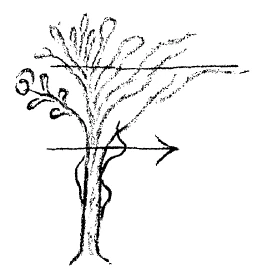
[ 50 ] Hat man es zu tun mit einem arrhythmischen Zusammenwirken des Bildekräfteleibes und des astralischen Leibes, so muß man auf solche Dinge sehen, wie sie beispielsweise im Antimon, aber noch in zahlreichen anderen Metallen vorhanden sind, insbesondere aber auch in den Bestandteilen, die im mittleren Teile der Pflanzen enthalten sind, also in den Blättern und in dem Stamme namentlich stark vorhanden sind, während diejenigen Kräfte, die dem Phosphorprozeß entsprechen, vorzugsweise in den Blütenorganen der Pflanzen enthalten sind, und diejenigen Prozesse, die dem Kieselsäureprozeß entsprechen, in den Wurzelorganen der Pflanzen. So daß man auch die Beziehung finden kann zwischen den Kräften, die in den verschiedenen Teilen der Pflanzen sind. Die Wurzelkräfte haben eine entschiedene Verwandtschaft und Beziehung zum menschlichen Kopf und zum Nerven-Sinnessystem. Die Blätter und die Stammorgane haben eine besondere Beziehung zu dem rhythmischen System und die Blütenorgane eine besondere Beziehung zum Unterleibs-, zum Stoffwechselsystem. Wenn man daher oftmals in einer einfachen Weise dem Verdauungs-, dem Stoffwechselsystem zu Hilfe kommen will, so gelingt das sehr häufig einfach dadurch, daß man, nachdem man in der richtigen Weise diagnostiziert hat, bestimmte Blütenorgane wählt, die man zu Tee bereitet. Auf diese Weise kommt man den Verdauungsorganen bei. Während man die Salze der Wurzeln ausziehen muß durch einen besonderen Ausziehungsprozef, wenn man ein Heilmittel gewinnen will, das zum Beispiel auf den Nerven-Sinnesprozeß, auf die Kopforgane besonders wirkt.
[ 50 ] When dealing with an arrhythmic interaction between the form-forming body and the astral body, one must consider such elements as those found, for example, in antimony, but also in numerous other metals, and especially in the constituents found in the middle parts of plants—namely, the leaves and stems, where they are particularly abundant—while the forces corresponding to the phosphoric process are found primarily in the floral organs of plants, and those corresponding to the silicic acid process are found in the root organs of plants. Thus, one can also discern the relationship between the forces present in the various parts of plants. The root forces have a distinct affinity and relationship to the human head and to the nervous-sensory system. The leaves and stem organs have a special relationship to the rhythmic system, and the floral organs have a special relationship to the abdominal and metabolic systems. Therefore, when one wishes to support the digestive and metabolic systems in a simple way, this is very often achieved simply by selecting, after making a proper diagnosis, certain floral organs and preparing them as tea. In this way, one supports the digestive organs. Whereas the salts from the roots must be extracted through a special extraction process if one wishes to obtain a remedy that acts specifically on, for example, the nervous-sensory system or the organs of the head.
[ 51 ] Und so muß man auf der einen Seite die Natur, auf der anderen Seite den menschlichen Organismus durchschauen. Dann kann man in der Natur wirklich die Heilmittel so finden, daß man sehen kann, wie die beiden Dinge zusammenhängen, daß man nicht bloß klinisch probieren muß: Wie wirkt das? - Und dann, nicht wahr, eine Reihe von Fällen aufzeichnet, von denen neunzig Prozent oder siebzig Prozent irgendwie ein günstiges Resultat zeigen, wobei man sich außerdem in vierzig Fällen dann geirrt hat. Dann wird die Sache statistisch behandelt, und je nachdem die Statistik das oder jenes ergibt, wird die Sache dann als Heilmittel oder nicht als ein Heilmittel betrachtet.
[ 51 ] And so one must understand nature on the one hand and the human organism on the other. Then one can truly find remedies in nature in such a way that one can see how the two are connected, so that one does not merely have to test them clinically: How does this work? - And then, of course, one records a series of cases, ninety or seventy percent of which show some kind of favorable result, while in forty cases one was mistaken. Then the matter is treated statistically, and depending on what the statistics show, the substance is then regarded as a remedy or not.
[ 52 ] Ich kann diese Dinge eben wirklich nur in der Kürze aphoristisch behandeln, um Ihnen zu zeigen, wie in der Tat, ohne irgendwie in einen Dilettantismus oder in eine ärztliche Sektiererei zu verfallen, streng wissenschaftlich vorgegangen werden kann, um den Erkrankungsprozessen durch Heilmittel, die aus der menschlichen Anschauung stammen, beizukommen.
[ 52 ] I can really only address these matters briefly and aphoristically to show you how, in fact, it is possible to proceed in a strictly scientific manner—without falling into amateurism or medical dogmatism—in order to combat disease processes using remedies derived from human insight.
[ 53 ] Ebenso wie die Erkenntnis des richtigen Naturstoffes und Naturprozesses wichtig ist, die zum Heilmittel verarbeitet werden müssen, ebenso wichtig ist dann die besondere Art der Anwendung.
[ 53 ] Just as it is important to identify the correct natural substance and natural process that must be processed into a remedy, the specific method of application is equally important.
[ 54 ] Gerade dadurch, daß man entweder auf das Nerven-Sinnessystem wirken kann, um in der angedeuteten Weise von ihm aus in der rechten Art die Gesundung herbeizuführen, oder auf das rhythmische System, oder auf das Stoffwechsel-Gliedmaßensystem, gerade dadurch, daß man auf diese einzelnen Systeme wirken muß, ist es wichtig, ist es wesentlich, auch zu wissen, wie die Behandlungsmethode nun eintreten soll. Denn fast jedes Heilmittel kann man wiederum in dreierlei Art anwenden. Entweder wird es dem Menschen durch den Mund in den Magen und so weiter eingeführt, man rechnet also bei der Art und Weise, wie der Mensch das Heilmittel aufnimmt, auf den Stoffwechsel des Menschen, auf das Stoffwechselsystem und darauf, wie das Stoffwechselsystem dann auf die anderen Systeme wirkt. Daher hat man Heilmittel, die insbesondere in dieser Art gebraucht werden, daß sie dem Menschen durch Mund und Magen eingeführt werden und so weiter.
[ 54 ] Precisely because one can act either on the nervous-sensory system—in order to bring about healing in the proper way from that system, as indicated—or on the rhythmic system, or on the metabolic-limb system—precisely because one must act on these individual systems—it is important, indeed essential, to also know how the treatment method should be applied. For almost every remedy can be administered in three different ways. Either it is introduced into the person’s stomach through the mouth and so on; in this case, one takes into account—based on the way the person absorbs the remedy—the person’s metabolism, the metabolic system, and how the metabolic system then affects the other systems. That is why there are remedies that are specifically used in this way—administered to the patient through the mouth and into the stomach, and so on.
[ 55 ] Dann aber gibt es auch Heilmittel, die im eminentesten Sinne so verwendet werden müssen, daß sie schon durch ihre Verwendungsweise auf das rhythmische System wirken. In dieser Beziehung wird Antimon ganz besonders dazu berufen sein, die richtige Behandlungsmethode in bezug auf diesen Punkt zu finden. Denn da treten die Injizierungen, die Injektionsmethoden ein. Und das Heilmittel, das dem Blute eingeimpft wird, oder in anderer Weise injiziert wird, das ist dasjenige, bei dem vor allen Dingen wiederum darauf gerechnet wird, daß es auf den rhythmischen Prozeß des Menschen wirkt.
[ 55 ] However, there are also remedies that, in the truest sense, must be used in such a way that their very method of administration affects the rhythmic system. In this regard, antimony is particularly well-suited to finding the correct treatment method with respect to this point. For this is where injections and injection methods come into play. And the remedy that is introduced into the blood or injected in some other way is the one for which, above all else, it is expected to act upon the human rhythmic process.
[ 56 ] Bei denjenigen Heilmitteln, die man als Bäder und in Salben verwendet, oder selbst da, wo es darauf ankommt, äußerlich mechanisch den menschlichen Organismus zu behandeln, sagen wir in Massageprozessen oder dergleichen, also da, wo es sich darum handelt, in einer mehr äußerlichen Weise das Heilmittel oder den Heilprozeß an den Menschen heranzubringen, da rechnet man darauf, daß die Heilmethode auf das Nerven-Sinnessystem wirkt.
[ 56 ] In the case of remedies used in baths and ointments, or even where it is necessary to treat the human organism externally and mechanically—for example, in massage or similar procedures—that is, where the aim is to apply the remedy or the healing process to the person in a more external manner, it is expected that the therapeutic method will act upon the nervous-sensory system.
[ 57 ] Und so kann man wiederum durch jedes andere System in der verschiedensten Weise eben wieder zum Heilprozeß hinarbeiten. Nehmen wir an, wir haben Silicea, ein Quarz. Es ist etwas anderes, ob wir zum Beispiel ein Heilmittel haben, das wir zubereiten, und das durch den Mund genommen werden soll, oder ob es injiziert wird. Rechnen wir darauf, daß es durch den Mund genommen wird, so wollen wir durch die Art und Weise, wie es im Verdauungssystem verarbeitet wird und das Verdauungssystem wiederum die Kräfte in das Nerven-Sinnessystem schickt, also auf dem Umwege durch das Verdauungssystem die Quarzprozesse hereinführen. Rechnen wir aber damit, daß sie mehr hineingeschickt werden sollen in das Nerven-Sinnessystem, dadurch daß sie eingefügt werden dem Blutorganismus, dem Atmungsrhythmus, wodurch wiederum auf dem Umweg durch diesen Rhythmus geheilt werden kann, wenn wir also dies beabsichtigen, so injizieren wir.
[ 57 ] And so, in turn, one can work toward the healing process in a wide variety of ways through any other system. Let’s assume we have Silicea, a form of quartz. It makes a difference whether, for example, we have a remedy that we prepare and that is to be taken orally, or whether it is injected. If we assume it is taken orally, then we want to introduce the quartz processes indirectly through the digestive system—via the way it is processed there and the way the digestive system, in turn, sends these forces to the nervous-sensory system. If, however, we expect that these forces should be directed more toward the nervous-sensory system—by incorporating them into the blood system and the respiratory rhythm, through which healing can in turn take place indirectly via this rhythm—then, if this is our intention, we administer the remedy by injection.
[ 58 ] Wenn wir beabsichtigen, durch das Verdauungsorgan irgendwie aromatisch-ätherische Substanz, wie sie in der Pflanzenblüte enthalten ist, zur Wirksamkeit zu bringen, so machen wir einen Tee, den wir durch den Mund in den Magen einführen. Wollen wir dadurch wirken, daß wir das ätherische Ol, das in aromatischer Weise auf das NervenSinnessystem wirkt, direkt zur Wirksamkeit bringen oder durch das Nerven-Sinnessystem auf den rhythmischen Prozeß, dann machen wir aus den Säften dieser Blüten meinetwillen irgendein Bad, indem wir den Saft dieser Blüten dem Wasser beimischen und ein Bad daraus bereiten. Da wirken wir auf das Nerven-Sinnessystem.
[ 58 ] If we intend to activate, through the digestive system, some kind of aromatic-etheric substance—such as that contained in plant blossoms—we make a tea that we introduce into the stomach through the mouth. If we wish to achieve an effect by allowing the essential oil—which acts aromatically on the nervous-sensory system—to take effect directly, or by influencing the rhythmic process through the nervous-sensory system, then we prepare a bath from the juices of these flowers—for my part—by mixing the juice of these flowers with water and preparing a bath from it. In this way, we act on the nervous-sensory system.
[ 59 ] Und so sehen Sie, wie wiederum auch von den Behandlungsweisen, die man den einzelnen Stoffen in ihrem Verhältnis zum Menschen angedeihen läßt, eben die Heilwirkung abhängt.
[ 59 ] And so you can see how the therapeutic effect depends, once again, on the methods of treatment applied to the individual substances in relation to human beings.
[ 60 ] Alle diese Dinge werden in einer wirklich durchsichtigen Weise erst zum Vorschein kommen, wenn anthroposophische Erkenntnis immer mehr und mehr auf die Beziehung der Naturwirkungen zum Menschen angewendet wird, wenn also durch Anthroposophie herauskommt, welche Heilmittel man anwenden soll, und wie man sie auf den Menschen anwenden soll.
[ 60 ] All these things will only come to light in a truly transparent way when anthroposophical knowledge is applied more and more to the relationship between natural forces and human beings—that is, when anthroposophy reveals which remedies should be used and how they should be applied to human beings.
[ 61 ] Damit auf diese Weise etwas bewirkt werden kann, sind durch Ärzte, die sich hinzugefunden haben zu unserer anthroposophischen Bewegung, unsere Klinisch-Therapeutischen Institute mit ihren entsprechenden Laboratorien und sonstigen Unternehmungen gegründet worden, damit auf der einen Seite Heilmittel und Heilmethoden ausprobiert werden können, auf der anderen Seite die Heilmittel hergestellt werden können. Solche klinischen sowohl wie chemisch-pharmazeutischen Institute haben wir in Arlesheim bei Dornach und Stuttgart.
[ 61 ] To achieve results in this way, doctors who have joined our anthroposophical movement have established our clinical-therapeutic institutes, along with their corresponding laboratories and other facilities, so that, on the one hand, remedies and therapeutic methods can be tested and, on the other hand, the remedies can be manufactured. We have such clinical as well as chemical-pharmaceutical institutes in Arlesheim near Dornach and in Stuttgart.
[ 62 ] Insbesondere soll hier hingewiesen werden auf das Klinisch-Therapeutische Institut in Arlesheim, das ja unter der ausgezeichneten Leitung von Frau Dr. Wegman steht, die insbesondere eine segensreiche Wirksamkeit für dieses Institut dadurch entfaltet, daß sie dasjenige hat, was ich den Mut des Heilens nennen möchte. Denn es gehört gerade, wenn man einerseits hineinblickt in die Kompliziertheit der Naturvorgänge, aus denen die Heilungsprozesse hervorgeholt werden sollen, auf der anderen Seite in die ungeheure Kompliziertheit der Gesundheits- und Krankheitsprozesse im Menschen, es gehört, wenn man dieses unermeßliche Feld vor sich hat — und man hat immer dieses unermeßliche Feld vor sich, auch wenn man eben nur eine bestimmte Anzahl von Patienten hat —, dann zum Heilen der Mut des Heilens.
[ 62 ] In particular, I would like to draw attention here to the Clinical-Therapeutic Institute in Arlesheim, which is under the excellent leadership of Dr. Wegman, who has a particularly beneficial impact on this institute because she possesses what I would like to call the “courage to heal.” For it is precisely when one looks, on the one hand, into the complexity of the natural processes from which healing processes are to be drawn, and, on the other hand, into the immense complexity of the processes of health and illness in human beings, it is essential—when one faces this immeasurable field—and one always faces this immeasurable field, even when one has only a certain number of patients—that one possess the courage to heal.
[ 63 ] Angegliedert ist diesem Arlesheimer Institut ein Internationales Pharmazeutisches Laboratorium, in dem die Heilmittel hergestellt werden. Sie können heute in der ganzen Welt verwendet werden, wenn man nur die richtigen Mittel und Wege sucht. Das Laboratorium stellt die Mittel her; es müssen nur die Leute die Mittel und Wege zu dem Laboratorium finden, darum handelt es sich. Es müssen die Leute die richtigen Mittel und Wege finden, in welcher Weise man zu den Heilmitteln kommt. Nicht auf dilettantische Weise wird gearbeitet, nicht verleugnet wird die heutige Wissenschaft, sondern die heutige Wissenschaft wird nur fortgesetzt.
[ 63 ] Affiliated with this Arlesheim Institute is an International Pharmaceutical Laboratory where the remedies are manufactured. Today, they can be used all over the world—one need only seek the right means and ways. The laboratory produces the remedies; people simply need to find the means and ways to reach the laboratory—that is the crux of the matter. People must find the right means and ways to obtain the remedies. The work is not carried out in an amateurish manner, nor is modern science denied; rather, modern science is simply carried forward.
[ 64 ] Wird diese Erkenntnis einmal reifen in weitesten Kreisen, dann können wir um das Gelingen einer solchen Bewegung, wie es das Internationale Pharmazeutische Laboratorium in Arlesheim ist, wirklich ganz unbesorgt sein. Aber es ist schwierig, gegenüber der heutigen rein materialistischen Richtung eine auf voller Menschenerkenntnis beruhende Therapie mit ihren Heilmitteln in der Welt auch wirklich zur Geltung bringen zu können. Hier müßte man eigentlich auf die Einsicht jedes Menschen rechnen, dem die Gesundheit seiner Mitmenschen am Herzen liegt.
[ 64 ] Once this realization takes hold in the broadest circles, we can truly rest assured that a movement such as the International Pharmaceutical Laboratory in Arlesheim will succeed. But it is difficult to truly establish in the world a therapy based on a full understanding of human nature—with its remedies—in the face of today’s purely materialistic trend. Here, one would actually have to count on the insight of every person who cares deeply about the health of their fellow human beings.
[ 65 ] Nun, indem man so zunächst hinzuweisen hat auf dasjenige, was durch Naturheilmittel erreicht werden kann und ihre entsprechende Verwendung, wird natürlich nicht ausgeschlossen, was auf dem Wege, ich möchte sagen, mehr geistig-seelischer Prozesse in der Heilung erreicht werden kann. Auf diesem Gebiete macht man ja ganz besonders fruchtbare Beobachtungen. Wenn man nun das Hygienisch-Therapeutische, wie man es ja immer muß in einer richtigen Pädagogik, in die Schule hineinzutragen hat, sieht man, wie die Art und Weise, wie man seelisch-geistig im Unterricht auf die Kinder wirkt - wenn ich pädagogische Vorträge halte, so setze ich ja diese Dinge auseinander -, zwar vielleicht manchmal nicht sofort, aber im Verlauf des Lebensprozesses, die mannigfaltigsten gesundenden und krankmachenden Wirkungen haben kann. Ich will nur eines erwähnen. Der Lehrer kann zum Beispiel mit Bezug auf das Gedächtnis des Kindes in der richtigen Weise vorgehen, indem er ihm nicht zuviel und nicht zuwenig zumutet. Geht er unrichtig vor, mutet er dem Gedächtnis zuviel zu im achten, neunten, zehnten, elften Lebensjahre, hat er nicht den richtigen pädagogischen Takt nach dieser Richtung, dann wird dasjenige, was da die Seele vollbringen muß in einer übermäßigen Erinnerungstätigkeit, in einer künstlich gezüchteten Erinnerungstätigkeit, sich später im Leben ausleben als allerlei physische Erkrankungen. Man kann nachweisen den Zusammenhang zwischen dem Diabetes und falschen Gedächtnismethoden im Unterricht. Während auch wiederum das Stören des Gedächtnisses nach einer anderen Seite in einer ungünstigen Weise durchaus auf das Kind wirken kann.
[ 65 ] Now, while one must first point out what can be achieved through natural remedies and their proper use, this naturally does not rule out what can be achieved in healing through, I would say, more spiritual-psychic processes. In this area, one is indeed making particularly fruitful observations. When one brings hygienic and therapeutic principles—as one must always do in proper pedagogy—into the school, one sees how the way one influences children mentally and spiritually in the classroom—when I give lectures on pedagogy, I explain these things in detail—may not always have an immediate effect, but over the course of life—can have the most diverse effects, both healing and harmful. I’ll mention just one example. The teacher can, for instance, approach the child’s memory in the right way by not demanding too much or too little of the child. If the teacher proceeds incorrectly—if he demands too much of the child’s memory in the eighth, ninth, tenth, or eleventh year of life, or lacks the proper pedagogical tact in this regard—then what the soul must accomplish through excessive or artificially induced memorization will manifest later in life as all manner of physical illnesses. One can demonstrate the connection between diabetes and incorrect memory-training methods in the classroom. Conversely, disrupting memory in an unfavorable way can also have a detrimental effect on the child.
[ 66 ] Ich kann das nur prinzipiell erwähnen, denn die Zeit ist ja schon so sehr vorgeschritten. Aber man sieht daraus, wie nicht nur an Gesundheit und Krankheit die natürlichen Heilmittel arbeiten, sondern wie die besondere Art, wie die Seele selber arbeitet, für Gesundheit und Krankheit von ganz besonderer Wichtigkeit ist.
[ 66 ] I can only mention this in general terms, since so much time has already passed. But it shows not only how natural remedies work in relation to health and illness, but also how the specific way the soul itself functions is of particular importance for health and illness.
[ 67 ] Und von da ausgehend kann man dann auch den Weg hinüberfinden zu denjenigen Methoden, wo wir versuchen, durch rein geistig-seelische Einflüsse von Mensch zu Mensch, die ich heute natürlich der Kürze der Zeit halber nicht im einzelnen beschreiben kann, Gesundungsprozesse herbeizuführen. Gerade auf diesem Gebiete kann man sich aber sehr leicht einem Dilettantismus hingeben. Man kann zum Beispiel den Glauben hegen, daß die sogenannten Geisteskrankheiten am leichtesten durch geistige Einflüsse zu heilen sind. Gerade die Geisteskrankheiten zeichnen sich dadurch aus, daß man den Kranken eigentlich seelisch-geistig kaum beikommen kann. Das ist es ja gerade, daß bei sogenannten Geisteskrankheiten die Seele sich gegen äußere Einflüsse abschließt. Aber man wird immer finden, daß gerade bei den sogenannten Geisteskrankheiten, die eigentlich ihren Namen mit Unrecht führen, physische Krankheitsprozesse irgendwo verborgen vorliegen. Ehe man dilettantisch gerade bei Geisteskrankheiten herumhantieren will, soll man eigentlich den physischen Krankheitsherd, der sich manchmal sehr verbirgt, diagnostisch richtig finden, dann wird man gerade wohltätig wirken durch entsprechende Heilung des physischen Organismus.
[ 67 ] And starting from there, one can then also find the path to those methods in which we attempt to bring about healing processes through purely spiritual and psychological influences from person to person—which, of course, I cannot describe in detail today due to time constraints. It is precisely in this area, however, that one can very easily succumb to amateurism. One might, for example, harbor the belief that so-called mental illnesses are most easily cured through spiritual influences. Mental illnesses, in particular, are characterized by the fact that one can hardly reach the patient on a psychological or spiritual level. That is precisely the point: in so-called mental illnesses, the soul closes itself off from external influences. But one will always find that, especially in so-called mental illnesses—which actually bear their name unjustly—physical disease processes lie hidden somewhere. Before attempting to treat mental illnesses in an amateurish manner, one should first correctly diagnose the physical source of the disease—which is sometimes very well concealed—and then one will have a beneficial effect by providing appropriate treatment for the physical organism.
[ 68 ] Viel eher wird es sich gerade bei physischen Krankheiten darum handeln, daß man durch allerlei geistig-seelische Einflüsse, die heute meist sehr dilettantisch betrieben werden — darauf will ich jetzt nicht eingehen -, hilft. Gerade bei physischen Krankheiten wird in dieser Beziehung viel Segen gestiftet werden können, in mancherlei Weise der äußere Prozeß, der durch Heilmittel herbeigeführt werden soll und dergleichen mehr, unterstützt werden können.
[ 68 ] Rather, when it comes to physical illnesses in particular, the focus will be on providing help through all kinds of spiritual and psychological influences—which are mostly practiced in a very amateurish way today—but I won’t go into that now. It is precisely in the case of physical illnesses that much good can be done in this regard, and the external process—which is to be brought about by remedies and the like—can be supported in various ways.
[ 69 ] Ich kann das nur andeuten. Diejenigen Methoden, die auf dem Boden der Anthroposophie fußen, schließen ganz gewiß therapeutische seelisch-geistige Einflüsse nicht aus, sondern ein. Das beweisen wir ja dadurch, daß Sie im Klinisch-Therapeutischen Institut in ArlesheimDornach neben den physischen Heilmethoden die sogenannte Heileurythmie finden können.
[ 69 ] I can only hint at this. The methods based on anthroposophy certainly do not exclude therapeutic psychological and spiritual influences; rather, they include them. We demonstrate this by the fact that at the Clinical-Therapeutic Institute in Arlesheim-Dornach, you can find what is known as curative eurythmy alongside physical healing methods.
[ 70 ] Diese Heileurythmie besteht darin, daß man dasjenige, was Sie hier als Kunsteurythmie sehen, an dem bewegten Menschen, dem Menschen in seiner Gliederung, aber sich bewegend im Raume, umformt, das Vokalisierende so umformt, daß sich der Mensch in gesunden Bewegungen, die aber aus der Eurythmie herausgeholt sind, bewegt, daß man die vokalisierenden Bewegungen so anwendet, daß man gerade die Kräfte, die ich vorhin die albuminisierenden Kräfte im Menschen genannt habe, dadurch unterstützt. Während durch die konsonantisierenden Kräfte vielfach die antimonisierenden Kräfte unterstützt werden.
[ 70 ] This therapeutic eurythmy consists in taking what you see here as artistic eurythmy and applying it to the moving human being—the human being in his physical structure— but moving through space, transforming the vocalization in such a way that the person moves with healthy movements—movements derived from eurythmy—and applying the vocalizing movements in such a way as to support precisely those forces I referred to earlier as the “albuminizing” forces in the human being. Whereas the consonantizing forces often support the “antimonizing” forces.
[ 71 ] So kann man auch durch das Zusammenwirken von konsonantischer und vokalischer Heileurythmie das Gleichgewicht zwischen diesen beiden Kräftearten herbeiführen. Und namentlich kann es sich da zeigen, wenn die Dinge richtig, nicht dilettantisch gemacht werden, wie andere Heilprozesse, namentlich auch bei chronischen Erkrankungen, ungeheuer unterstützt werden können durch diese Heileurythmie.
[ 71 ] In this way, the balance between these two types of forces can also be achieved through the interplay of consonantal and vocal therapeutic eurythmy. And in particular, when done correctly—not in an amateurish way—it can be seen how other healing processes, especially in cases of chronic illness, can be immensely supported by this therapeutic eurythmy.
[ 72 ] Diese Heileurythmie beruht eigentlich darauf, daß gerade seelisch-geistige Vorgänge wachgerufen werden durch dasjenige, was der Mensch mit den Gliedern seines Körpers ausführt. Wenn man weiß, welche Bewegungen aus dem gesunden Menschenorganismus unmittelbar hervorgehen wollen, dann kann man auch die entsprechenden Bewegungen finden, die heilend wirken, wenn von den Gliedmaßen aus, von der menschlichen Bewegung aus zurückgewirkt wird auf den Prozeß der inneren Organe.
[ 72 ] This therapeutic eurythmy is actually based on the fact that precisely those soul-spiritual processes are evoked by what a person does with the limbs of their body. If one knows which movements arise directly from the healthy human organism, then one can also find the corresponding movements that have a healing effect when, starting from the limbs and human movement, an effect is exerted back on the processes of the internal organs.
[ 73 ] So gibt es gerade in dem Klinisch-Therapeutischen Institut in Arlesheim die Möglichkeit, diese Heileurythmie aufzusuchen und zu sehen, wie sie als Therapie nun ein besonderer Zweig innerhalb der ganzen Heilprozesse sein kann, die eben aus wirklicher Menschenerkenntnis heraus auf anthroposophischem Boden gefunden werden können.
[ 73 ] At the Clinical-Therapeutic Institute in Arlesheim, in particular, there is an opportunity to experience this curative eurythmy and to see how it, as a form of therapy, can be a special branch within the entire range of healing processes that can be developed on an anthroposophical foundation based on a genuine understanding of the human being.
[ 74 ] Es würde natürlich zu weit gehen, gerade auf diesem Gebiete Einzelheiten auszuführen. Das Prinzip ist eigentlich in dem gegeben, was ich dargestellt habe.
[ 74 ] It would, of course, be going too far to go into details specifically in this area. The principle is essentially contained in what I have outlined.
[ 75 ] So ist es eben gekommen, daß wir in der mannigfaltigsten Weise, weil sozusagen Heilkundige an uns herangekommen sind, diese therapeutische Strömung innerhalb der anthroposophischen Bewegung ausbilden mußten. Sie hat sich aus den Zeitverhältnissen heraus ergeben. Sie ist sozusagen von der gegenwärtigen Zivilisation gefordert worden. Anthroposophie hat ja im Grunde genommen nur die Antwort gegeben auf Fragen, die an sie gestellt worden sind.
[ 75 ] And so it came to pass that, in the most diverse ways—because, so to speak, practitioners of healing arts approached us—we had to develop this therapeutic movement within the anthroposophical movement. It arose out of the circumstances of the time. It was, so to speak, demanded by our present civilization. After all, anthroposophy has essentially only provided answers to the questions that have been posed to it.
[ 76 ] Ich konnte Ihnen heute wirklich nur aphoristisch die Prinzipien auseinandersetzen; mehr ist in dieser ja schon allzulang gewordenen Zeit nicht möglich. Und wollte ich auch nur einiges ausführen, so daß es, ich möchte sagen, in seiner Ganzheit dastünde, dann müßte ich etwas ähnliches tun, was ich auch vorgestern bei dem eurythmischen Vortrage abgelehnt habe, ich müßte Sie einladen, über Nacht dazubleiben und mir zuzuhören bis morgen früh, bis wir dann zu dem morgigen Vormittagsvortrag zusammenkommen. Das ist etwas Krankmachendes, und es kann doch wirklich nicht jemand, der über das Gesundmachen reden will, auf diese Weise die Leute krank machen! Daher muß man sie zu gesundem Schlafe schon lieber durch kürzere Darstellung nach Hause schicken.
[ 76 ] Today I was really only able to explain the principles to you in aphoristic terms; more is not possible in this session, which has already gone on far too long. And even if I wanted to elaborate on just a few points so that, I might say, the whole picture would be presented, I would have to do something similar to what I refused to do the day before yesterday during the eurythmy lecture: I would have to invite you to stay overnight and listen to me until tomorrow morning, until we meet again for tomorrow’s morning lecture. That is something that makes people sick, and surely someone who wants to talk about healing cannot make people sick in this way! Therefore, it is better to send them home for a healthy night’s sleep with a shorter presentation.