

An Anthroposophical Understanding
of Humanity and Medicine
GA 319
28 August 1923, Penmaenmawr
Translated by Steiner Online Library
First Lecture
[ 1 ] Since it has been requested that I speak at one of our evening gatherings about the therapeutic principles that have grown out of the anthroposophical worldview, I am very happy to comply with this request; however, it is difficult to speak briefly on this very subject. It is difficult because the subject is extraordinarily broad, and in a very short lecture—which can only be aphoristic—it is hardly possible to create a proper mental image of what is essential; and because, on the other hand, certain considerations that must be made in this context are somewhat remote from general human consciousness. Nevertheless, I will attempt to explain the essential points as clearly as possible this evening.
[ 2 ] The fact that there is also a medical strand within the anthroposophical movement certainly does not stem from our desire, as anthroposophists, to be involved in everything and, so to speak, to stick our noses into everything. That is certainly not the case. But as the anthroposophical movement sought to make its way in the world, doctors also joined this movement—serious, dedicated doctors— and a large—relatively large—number of these doctors had come to a more or less clear realization of just how uncertain the views of today’s officially accepted medicine actually are, and how the foundations for a true understanding of disease processes and their healing are often lacking.
[ 3 ] Official science lacks these foundations for the simple reason that whatever claims scientific validity today seeks to base itself solely on the natural sciences commonly practiced today. And this natural science, in turn, believes it is on solid ground only with what it can observe in external nature through mechanical, physical, or chemical means. It then applies what it discovers through physics and chemistry about external natural processes even to its attempts to understand human beings. But even if human beings contain a kind of concentration—a microcosmic concentration of all worldly processes—the external physical and chemical processes within the human organism itself are never present in the same form as they occur out in nature. Human beings take in the substances of the earth, which are not merely passive substances but are in fact always filled with natural processes and phenomena. A substance only appears, on the surface, to be something at rest within itself. In reality, everything is weaving and living within the substance. And so the human being also takes in those processes—this weaving and living—as they unfold chemically and physically in nature, into his organism; but he immediately transforms them within his organism; he turns them into something else within his organism.
[ 4 ] This other aspect—what emerges from natural processes within the human organism—can only be understood through genuine, true observation of human beings. But modern natural science, by relying solely on the physical and chemical, effectively excludes from its domain that which takes place within the human being as something truly human—including, for example, within the human physical body as something truly human. For nothing ever takes place in the human physical body that is not simultaneously under the influence of etheric processes, astral processes, and “I” processes. But by completely disregarding these “I” processes, these astral processes, and this etheric life and activity, modern science actually fails to truly grasp the human being. Consequently, natural science cannot truly look into the human interior in such a way that it could become clear to it how the external chemical and physical processes continue to operate within the human being—how they operate in a healthy person and how they operate in a sick person.
[ 5 ] But how is one to properly assess the effect of a remedy if one cannot gain an understanding of how any natural substance that we introduce into the organism—or with which we treat the organism—continues to act within the human organism?
[ 6 ] And so one might say: The greatest possible progress in the field of medicine in recent times has actually been made only in the field of surgery, which involves external—one might say—mechanical procedures.
[ 7 ] In contrast, in this field—not in my opinion, but precisely in the opinion of those physicians who have brought all of this to their attention — regarding the actual therapy, there is great confusion, because one cannot grasp the connection between any natural phenomenon and its effect on the disease if, due to one’s particular view of natural science, one effectively excludes human beings themselves from scientific consideration.
[ 8 ] Since anthroposophy is specifically aimed at understanding human beings in their innermost essence—both as supersensible and as sensory beings—insights can also be drawn from anthroposophy regarding the treatment of human beings with various natural remedies in cases of illness.
[ 9 ] Essentially, medicine today has already reached a certain limit of understanding when it comes to inquiring into the very nature of disease. What is disease? Based on current scientific knowledge, this question—What is disease?—cannot be answered at all. For, according to these scientific views, what is the sum of all the processes that take place in a healthy human being? From the head—from the very top of the head—to the very tip of the toes on the feet, these are natural processes. But what, then, are the processes that take place during illness in the liver, in the kidneys, in the head, in the heart—wherever they occur—what kind of processes are these? They are natural processes. All healthy processes are natural processes; all disease processes are, after all, natural processes as well. Why, then, is a person healthy under one type of process and sick under another?
[ 10 ] The point is precisely that one shouldn’t go around making general, vague statements like: “Well, healthy natural processes are normal, while unhealthy natural processes are not normal.” — That’s when, if you don’t know anything, a “word” really does pop up “at just the right time”!
[ 11 ] The point is that when one applies only general natural science, as is customary today, one approaches human beings in this way: preferably not living human beings, but corpses; one takes some part of the organism here or there and forms mental images about what healthy or diseased natural processes are taking place within it. And so one is actually indifferent as to whether one takes some tissue from the head or from the liver or from the big toe or the like. In the end, everything is reduced—I mean—to the cell. Gradually, histology—the study of tissues—has become the most highly developed branch of human science. Well, if one delves into the smallest parts and disregards all interrelationships of forces, then—just as all cows are gray at night—all organs in the human body are the same. But then one ends up with a nocturnal “gray-cow science,” not a true science that addresses the specificity of the individual organs in the human body.
[ 12 ] I actually didn’t dare to articulate what must serve as the foundation for this until a few years ago, even though it has occupied my thoughts for well over thirty to thirty-five years now. But people usually imagine that Spiritual Science arrives at its results so easily. One need only look into the spiritual world, and then one gets all the answers, whereas it is difficult when one has to work in laboratories, in physics labs, or in a clinic; there, one has to make an effort—or so people think—whereas in Spiritual Science, it is simply a matter of looking into the world of the spirit, and then one gets all the answers. That is simply not the case. Conscientious spiritual research, in particular, requires more effort and, above all, more responsibility than working in laboratories, clinics, or observatories. And so it is that, although the initial conception of what I now wish to briefly outline in principle came to me some thirty-five years ago, I was only able to articulate it a few years ago, after everything had been thoroughly processed and, above all, verified by the entirety of contemporary official natural science. And it was precisely under the influence of these principles regarding the structure of the human being that what I have just described—this therapeutic movement within our anthroposophical movement—came into being.
[ 13 ] Even when we have a physical human being before us, we must still distinguish three distinct parts within that person. These three distinct parts can be named in a variety of ways. But the best way to approach them is to characterize them by saying: As one system of the human being’s physical nature, there is the nervous-sensory system, which is primarily located in the head.
[ 14 ] The human being has a second system, the rhythmic system; this includes breathing and blood circulation. But it also includes, for example, the rhythmic processes of digestion and so on. This is the human being’s second system.
[ 15 ] And the third system in the human body is the connection between the musculoskeletal system, the limb system, and the metabolic system itself. This connection will become immediately clear to you when you consider that it is precisely through the movement of the limbs that metabolism is stimulated, and that, internally, the limbs are in fact organically connected to the metabolic organs. Anatomy will also demonstrate this to you directly. Just look at how the legs continue inward into the metabolic organs, and likewise how the arms continue inward. Thus, we can distinguish three systems in the human being: the nervous-sensory system, located primarily in the head; the rhythmic system, located primarily in the chest, around the heart; and the metabolic-limb system, located primarily in the limbs and the metabolic organs attached to them.
[ 16 ] But one must not form a mental image of this division of the human being in the way that—in an attempt to discredit the anthroposophical movement as much as possible—a certain professor once did. He did not attempt to delve into what is actually meant by this division, but rather sought to discredit it, saying: “These anthroposophists claim that the human being consists of three systems: the head, the torso—chest and abdomen—and the limbs.” — Yes, of course, one can immediately make a mockery of something in this way.
[ 17 ] For the point is not that the nervous-sensory system is located only in the head. It is primarily in the head, but it then extends throughout the entire organism, so that the human being has spread the organization of the head throughout the entire organism. Similarly, the rhythmic system extends upward and downward throughout the entire organism. The human being is thus, spatially speaking, entirely a rhythmic system, just as it is entirely a metabolic-limb system. When you move your eyes, the eyes are limbs. So these systems do not stand side by side spatially; rather, they are structured within one another. They are interlocked, and one must become somewhat accustomed to precise thinking if one wishes to assess this structure of the human being in the proper sense.
[ 18 ] Now, the two systems—the first and the third, the nervous-sensory system and the limb-metabolic system—are, in fact, polar opposites. What one produces, the other destroys; what the other destroys, the one produces. They thus act in completely opposite ways. And the middle system—the rhythmic system—establishes the relationship between the two. It oscillates, as it were, back and forth between them, so that a balance can always be maintained between the destructive activity of one system and the constructive activity of the other. If we consider, for example, the metabolic system, it naturally operates with its greatest intensity in the human abdomen. But what takes place there in the human abdomen must elicit a polar opposite activity in the human head—in the nervous-sensory system—if the person is to be healthy.
[ 19 ] Now, suppose that this intense activity—which is actually the activity of the human digestive system—spreads, due to excessive intensity, all the way to the nervous and sensory system, so that the activity that should actually take place in the metabolic system spills over into the nervous and sensory system. Then you have two, admittedly natural processes, as far as I’m concerned, but you can see right away how one of these natural processes becomes abnormal. It belongs solely within the metabolic system, and it breaks through, so to speak, into the nervous-sensory system.
[ 20 ] This gives rise to the various forms of a disease that, while treated by modern medicine as something of “negligible quantity,” is—I would say—not treated as such by a large portion of humanity, since these various forms of the disease are known everywhere. This is what gives rise to what is known as the various forms of migraine. And in order to understand migraine in its various forms, one must grasp this process, which—in its actual intensity—is supposed to take place within the metabolic system and breaks through into the nervous and sensory systems, so that the nerves and the senses themselves are affected in such a way that the metabolic processes surge into them instead of remaining in their proper place.
[ 21 ] The opposite can occur. The process that is supposed to be most intense in the nervous-sensory system—which is entirely opposite to the metabolic process—can, in turn, break through into the metabolic system in a certain way. So that in the metabolic system, instead of only a very minor nervous-sensory process taking place there, an intensified nervous-sensory process occurs—in a sense, what belongs to the head breaks through and manifests in the abdomen; that is, the activity of the head manifests in the abdomen. When this happens, the dangerous disease of abdominal typhoid develops in the human being.
[ 22 ] In fact, by thoroughly understanding this threefold human being, we can see how the disease process develops within the human organism out of the healthy process. If our head, with its nervous and sensory system, were not organized the way it is, we could never have typhoid fever. If our abdomen were not organized as it is, we could never have a migraine. But mental activity should remain in the head, and abdominal activity in the abdomen. If they break through, such forms of illness arise.
[ 23 ] And just as with these two particularly characteristic forms of disease, one can point to other forms of disease that always arise when a certain activity—which belongs to a specific organ system—manifests itself in a different location, within a different organ system.
[ 24 ] If one takes an exclusively anatomical approach, one sees only how the smallest parts are embedded within the organism’s tissue. But one does not see this interplay of oppositely polarized activity. In the case of the nerve cell, you can only observe that it is organized in a manner opposite to, say, the liver cell. If you can look into the organism as a whole in such a way that it appears to you in its threefold structure, then you will also notice how the nerve cell is a cell that constantly seeks to dissolve, that constantly seeks to be broken down if it is to be healthy, and how a liver cell is something that constantly seeks to be built up if it is to be healthy. These are polar activities. They interact with one another in the proper way when they are distributed appropriately throughout the organism; they interact in the wrong way when they intrude upon one another.
[ 25 ] The rhythmic system is at the center and always seeks to create a balance between the opposing, polar activities of the nervous-sensory system and the metabolic-limb system.
[ 26 ] I would now like to single out a specific example to give you, so to speak, a glimpse into—though, of course, I can only discuss this in aphoristic terms—how one can discern the relationship between a remedy derived from nature, with its inherent powers, and the forces of healing and disease at work within the human being.
[ 27 ] Let us now turn our attention to a very specific ore found in nature, known as antimony ore. Even when viewed from the outside, antimony has an extraordinarily interesting property. It forms in nature in such a way that, so to speak, spikes are created—rod-shaped, spike-like structures that lie side by side—so that antimony ore is found in nature in a way that, if I were to sketch it schematically, I could depict it something like this. It grows almost like a mineral moss or a mineral lichen. One can see that, in a sense, this mineral tends to arrange itself in filamentous strands. One sees even more clearly how this mineral, this ore, tends to arrange itself in filaments when subjected to a certain physicochemical process. Then it becomes even more finely fibrous. It arranges itself in very fine fibers. Particularly significant, however, is what occurs when this antimony is subjected to a certain type of combustion process. A white smoke is produced that can settle on walls and then become shiny and mirror-like.* This is called antimony mirror. It is scarcely respected today, but was used extensively in ancient medicine—precisely because of the ancient powers of insight I have repeatedly spoken to you about in the morning lectures. This antimony mirror—that is, what develops from the combustion process and can deposit itself on walls, becoming mirror-like—is indeed something extraordinarily important.
[ 28 ] Added to all this is another property. I just want to emphasize this: If one subjects antimony to certain electrolytic processes and brings it to the so-called electrolytic cathode, then—after bringing the antimony to the cathode and subjecting it to the electrolytic process—one need only exert a slight influence to produce a small antimony explosion. In short, this antimony possesses the most fascinating properties imaginable.
[ 29 ] If antimony is introduced into the human organism in a certain moderate dosage, one can study, through the various processes that occur, how the very same forces—which behave as I have just described with regard to antimony—continue to operate within the human organism, and how they take on all manner of forms of force and all manner of forms of action there.
[ 30 ] These forms of action—I cannot, of course, go into the details or provide evidence here; I merely wish to briefly outline what constitutes the inner connection—these processes, then, that occur in the human organism, are particularly pronounced, for example, wherever blood coagulates. So they intensify and promote blood clotting. But if one examines the human organism using the methods that are part of the threefold division of the human organism—methods that gradually allow us to look into the human being and recognize how the individual systems function in the various organs—if one looks into the human organism in this way, one finds that what lives in antimony does not merely exist externally in mineral antimony, but that it is in fact a network of forces that lives within the human organism itself, that is always present in the human organism—in the healthy organism—and that now, in the diseased human organism, also takes on forms of the kind I have just explained to you.
[ 31 ] This antimony process—which, I would say, exists within the human organism itself—is polar opposites to another process. It is opposed to the process that occurs wherever the plastic forces—for example, the cell-forming forces and the cell-rounding forces—are at work; in other words, wherever that which actually constitutes the cellular substance of the human organism is present. Since these forces are found primarily in protein substances, for example, I would like to call them the albuminizing forces. And so, in the human organism, we have the forces that we find outside in nature—specifically in antimony—when, for example, we subject antimony to combustion and reduce it to antimony(IV). The forces that act in antimony are thus also at work in the human organism. However, we also have the opposing forces at work—the albuminizing forces—which bring the antimony forces to a halt and eliminate them.
[ 32 ] These two systems of forces—albuminizing and antimonic forces—counteract each other in such a way that they must be in a certain balance within the human organism. One must now recognize that, for example, the process I described to you earlier in general terms—and which underlies abdominal typhoid—is essentially based on the fact that the balance between these two systems of forces has been disrupted.
[ 33 ] In order to gain a true insight into the human organism, one must be able to draw upon what I have just explained to you from a wide variety of perspectives—albeit not medical ones—in these morning lectures throughout this course.
[ 34 ] There we saw how human beings have not only this physical body, but also an etheric body or body of formative forces, an astral body, and an “I” organization. And just yesterday I was able to explain to you how the physical body and the body of formative forces, on the one hand, and the “I” and the astral body, on the other, are intimately connected; yet how the astral body and the body of formative forces—or etheric body—are more loosely connected, for they separate every night.
[ 35 ] This connection, which consists of an interplay between the forces of the astral body and the etheric body, is radically disrupted in abdominal typhoid. In abdominal typhoid, the astral body becomes weakened and is unable to exert its usual intense influence on the physical body; because it acts independently, it creates an imbalance that, in a sense, suppresses the nervous-sensory system, which is primarily governed by the astral body. Instead of being transformed within the metabolic system, it remains as such—as astral activity. The astral body acts on its own. It does not act properly into the etheric body. This gives rise to the symptoms of the disease, which constitute the characteristic symptom picture of typhoid fever.
[ 36 ] Now, what occurs specifically in antimony is that antimony, as it were, denies its mineral nature and becomes crystalline and rigid; indeed, even antimony mirror, where it deposits, appears like snowflakes on a window, thus also exhibiting the inner power of crystallization as found in nature; this crystallizing force, then, which becomes active in antimony—when we process it appropriately as a remedy and introduce it into the organism—supports that organism so that it can once again properly insert its astral body, with all its forces, into the etheric body, thereby restoring the proper relationship between these bodies.
[ 37 ] With the remedy prepared from antimony in the appropriate manner, we support the process that is opposite to the typhoid process. And thus, precisely with the antimony remedy—to which, depending on the course the disease takes, other substances may need to be added, substances that in turn have a similar relationship to the human organism— with this remedy, to which other substances have been added, one can combat the disease precisely by stimulating and supporting the processes in the organism so that it unfolds its own—I would say—antimonizing power, which then serves to bring about the proper rhythm in the interaction between the etheric body and the astral body.
[ 38 ] Thus, the anthroposophical perspective leads us to see the relationship between what is at work outside in nature, in natural phenomena—as I have shown you using the example of antimony—and what is at work within the human organism. You can trace this albuminizing—that is, plastically rounding—force and the force that acts along lines all the way into the germ cell.
[ 39 ] To anyone who has truly gained insight in this field—as unpleasant as it may be for him to to put it that way, since he knows full well that he provokes the hatred and antipathy of the people in question—and who thus gains such insight into the workings of the human organism—to him, even the most otherwise marvelous microscopic examinations of the egg cell and the germ cell appear extraordinarily amateurish. People observe the egg cell as such from the outside, the formation of the so-called centrosomes—you can read about this in any embryology textbook—without knowing how these albuminizing forces, which also govern the entire organism, act in opposition, in polar opposition, to the antimonizing forces. The rounding of the egg cell as such is brought about by the albuminizing force; the centrosomes after fertilization are brought about by the antimonizing processes.
[ 40 ] But this is what takes place throughout the entire human body. And by preparing the remedy in the correct manner and knowing, through diagnosis, where the human organism needs support, one supplies that organism with the forces it needs to counteract a disease process.
[ 41 ] By incorporating anthroposophical perspectives into medicine, what actually happens is that the true, proper relationship between the macrocosm—the entire world—and the human being is brought into focus. And just as I have pointed out antimony to you—I would, of course, have to say a great deal about antimony if I were to discuss it in scientific detail, but I only wish to hint at the principles—and the processes it can give rise to, the processes it possesses when treated in one way or another, so I could now, for example, also show you the entire behavior within nature and its processes—let’s say, for what is called the mineral quartz, silicic acid, Silicea, which is mixed into granite as one of its constituents, which crystallizes transparently in its deposits and is so hard that it can no longer be scratched with a knife—it is, in fact, a constituent of granite. If this substance is prepared in the appropriate manner, then when it is administered to the organism—in the correct dosage, of course, which must be determined by the diagnosis—it acquires the property of supporting that which is intended to act within the nervous-sensory system, namely, the inherent forces that the organism is meant to mobilize within that system. So one can say: what the senses are actually supposed to do is supported when this remedy—prepared from silicon, from quartz—is administered to the person in the proper manner. Depending on the accompanying symptoms, other substances must then be added, but essentially, what is at work here is the effect of the process of silicic acid formation. So when this process of silicic acid formation is introduced into the human organism, it supports an activity in the nervous-sensory system that is otherwise too weak. It then functions with the proper intensity. Now, when this nervous-sensory activity becomes too weak, digestive activity breaks through, starting in the head. Migraine-like conditions arise. If, however, one supports the sensory activity—the nervous-sensory activity—in the proper way with a remedy that is correctly prepared from silicic acid, from quartz (Silicea), then the nervous-sensory system in the migraine sufferer becomes strong enough to push back the digestive process that has broken through.
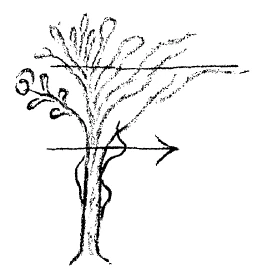
[ 42 ] Of course, I am describing these things to you in somewhat general terms, but you will see from this what is important. What matters is truly understanding the healthy and diseased human organism—not merely in terms of its cellular composition, but in terms of the forces acting within it in a like, polar, or rhythmic manner—so that we may then seek out in nature those forces that, through their natural action within the human organism, can combat this or that pathological process.
[ 43 ] For example, one can see how the process contained in phosphorus is, in the external natural world, a process that—when transferred into the human organism—has a supportive effect on a certain kind of inner incapacity of the human organism: namely, when the human organism—with regard to certain forces that are supposed to be constantly at work within it when it is healthy—becomes incapable of allowing these forces to function properly, or when it lacks the strength to allow certain forces to operate within it, forces that are actually a kind of organic combustion process always present during the transformation of substances in the human organism. Organic combustion processes occur with every movement, with everything a person does—including those actions carried out internally. Now, the human organism can become too weak to regulate these organic combustion processes properly. They must, in fact, be inhibited to a certain extent. If they are not inhibited enough, they develop in a vehement manner. These organic combustion processes actually possess, by their very nature, an immeasurable, unlimited intensity; otherwise, excessive fatigue would immediately set in here or there, or one would be unable to continue moving at all as a human being. These organic combustion processes actually possess—I would say—unlimited intensity, and the organism must constantly have the ability to inhibit them.
[ 44 ] If, however, these inhibitory forces are absent—either in a single organ system or in the entire organism—if the organism has become too weak to properly inhibit its organic metabolic processes, then what arises is what we call tuberculosis in its various forms. It is only through organic weakness—I would say—through the inability to inhibit the metabolic processes that the suitable breeding ground for the bacilli is created; these bacilli can then find a home in this breeding ground.
[ 45 ] I do not intend to say anything here against the germ theory. The germ theory is very useful. From the various ways in which germs appear here and there, one can of course discern various things; for the purpose of diagnosis, one can glean an extraordinary amount of information from this. It is not my intention at all to oppose official medicine, but rather to continue it precisely where it reaches certain limits. And it can be continued in this way by applying the perspectives of anthroposophy to it.
[ 46 ] If phosphorus is supplied to the organism, this supports its ability to inhibit organic metabolic processes. However, one must take into account that this inhibition can originate from a wide variety of organ systems. If, for example, it originates—let us say—from the system that is primarily active in the bones, then one must support the action of phosphorus in the human organism by, so to speak, specializing it specifically toward the bones. This is achieved by combining the phosphorus remedy in some way—a method determined by a detailed study of the matter—with calcium or a calcium salt. If one is dealing with small-intestinal tuberculosis, one will add certain copper compounds in the correct dosage to the phosphorus. If one is dealing with pulmonary tuberculosis, one will, for example, add iron to the phosphorus. However, since pulmonary tuberculosis is an extremely complex disease, other additives may also be considered under certain circumstances. So you see that the possibility of a genuine therapy depends on how the chemical and physical processes in the human organism proceed, how they continue to work within it.
[ 47 ] Conventional medicine often assumes that the forces of antimony act in the human organism in the same way they do in antimony itself. That is not the case. One must be clear about how these processes continue to work within the human organism. And this can be seen, in particular, when one applies the actual anthroposophical insights to the experiments in question.
[ 48 ] We have seen, in the case of antimony and its forces, that antimony establishes the rhythm between the astral body and the etheric body—or the body of formative forces— so, with regard to the forces at work in silicic acid, quartz, and Silicea, we can see that they are particularly suited to restoring the proper balance between the ego and the astral body when it is disturbed, thereby exerting a healing effect on the nervous-sensory system. Whereas with lime—especially the lime derived from animal calcifications—one obtains remedies that restore the proper relationship between the formative body and the physical body.
[ 49 ] So one can say: A correct view of the human being leads one to use lime or similar substances—namely, substances secreted by the animal organism, such as oyster shells—to restore the proper balance when it is disturbed, which is always expressed in physical processes, namely in disease processes. To restore the proper balance between the etheric body and the physical body. This is what one must consider when using such calcareous or similar secretions in the preparation of remedies.
[ 50 ] When dealing with an arrhythmic interaction between the form-forming body and the astral body, one must consider such elements as those found, for example, in antimony, but also in numerous other metals, and especially in the constituents found in the middle parts of plants—namely, the leaves and stems, where they are particularly abundant—while the forces corresponding to the phosphoric process are found primarily in the floral organs of plants, and those corresponding to the silicic acid process are found in the root organs of plants. Thus, one can also discern the relationship between the forces present in the various parts of plants. The root forces have a distinct affinity and relationship to the human head and to the nervous-sensory system. The leaves and stem organs have a special relationship to the rhythmic system, and the floral organs have a special relationship to the abdominal and metabolic systems. Therefore, when one wishes to support the digestive and metabolic systems in a simple way, this is very often achieved simply by selecting, after making a proper diagnosis, certain floral organs and preparing them as tea. In this way, one supports the digestive organs. Whereas the salts from the roots must be extracted through a special extraction process if one wishes to obtain a remedy that acts specifically on, for example, the nervous-sensory system or the organs of the head.
[ 51 ] And so one must understand nature on the one hand and the human organism on the other. Then one can truly find remedies in nature in such a way that one can see how the two are connected, so that one does not merely have to test them clinically: How does this work? - And then, of course, one records a series of cases, ninety or seventy percent of which show some kind of favorable result, while in forty cases one was mistaken. Then the matter is treated statistically, and depending on what the statistics show, the substance is then regarded as a remedy or not.
[ 52 ] I can really only address these matters briefly and aphoristically to show you how, in fact, it is possible to proceed in a strictly scientific manner—without falling into amateurism or medical dogmatism—in order to combat disease processes using remedies derived from human insight.
[ 53 ] Just as it is important to identify the correct natural substance and natural process that must be processed into a remedy, the specific method of application is equally important.
[ 54 ] Precisely because one can act either on the nervous-sensory system—in order to bring about healing in the proper way from that system, as indicated—or on the rhythmic system, or on the metabolic-limb system—precisely because one must act on these individual systems—it is important, indeed essential, to also know how the treatment method should be applied. For almost every remedy can be administered in three different ways. Either it is introduced into the person’s stomach through the mouth and so on; in this case, one takes into account—based on the way the person absorbs the remedy—the person’s metabolism, the metabolic system, and how the metabolic system then affects the other systems. That is why there are remedies that are specifically used in this way—administered to the patient through the mouth and into the stomach, and so on.
[ 55 ] However, there are also remedies that, in the truest sense, must be used in such a way that their very method of administration affects the rhythmic system. In this regard, antimony is particularly well-suited to finding the correct treatment method with respect to this point. For this is where injections and injection methods come into play. And the remedy that is introduced into the blood or injected in some other way is the one for which, above all else, it is expected to act upon the human rhythmic process.
[ 56 ] In the case of remedies used in baths and ointments, or even where it is necessary to treat the human organism externally and mechanically—for example, in massage or similar procedures—that is, where the aim is to apply the remedy or the healing process to the person in a more external manner, it is expected that the therapeutic method will act upon the nervous-sensory system.
[ 57 ] And so, in turn, one can work toward the healing process in a wide variety of ways through any other system. Let’s assume we have Silicea, a form of quartz. It makes a difference whether, for example, we have a remedy that we prepare and that is to be taken orally, or whether it is injected. If we assume it is taken orally, then we want to introduce the quartz processes indirectly through the digestive system—via the way it is processed there and the way the digestive system, in turn, sends these forces to the nervous-sensory system. If, however, we expect that these forces should be directed more toward the nervous-sensory system—by incorporating them into the blood system and the respiratory rhythm, through which healing can in turn take place indirectly via this rhythm—then, if this is our intention, we administer the remedy by injection.
[ 58 ] If we intend to activate, through the digestive system, some kind of aromatic-etheric substance—such as that contained in plant blossoms—we make a tea that we introduce into the stomach through the mouth. If we wish to achieve an effect by allowing the essential oil—which acts aromatically on the nervous-sensory system—to take effect directly, or by influencing the rhythmic process through the nervous-sensory system, then we prepare a bath from the juices of these flowers—for my part—by mixing the juice of these flowers with water and preparing a bath from it. In this way, we act on the nervous-sensory system.
[ 59 ] And so you can see how the therapeutic effect depends, once again, on the methods of treatment applied to the individual substances in relation to human beings.
[ 60 ] All these things will only come to light in a truly transparent way when anthroposophical knowledge is applied more and more to the relationship between natural forces and human beings—that is, when anthroposophy reveals which remedies should be used and how they should be applied to human beings.
[ 61 ] To achieve results in this way, doctors who have joined our anthroposophical movement have established our clinical-therapeutic institutes, along with their corresponding laboratories and other facilities, so that, on the one hand, remedies and therapeutic methods can be tested and, on the other hand, the remedies can be manufactured. We have such clinical as well as chemical-pharmaceutical institutes in Arlesheim near Dornach and in Stuttgart.
[ 62 ] In particular, I would like to draw attention here to the Clinical-Therapeutic Institute in Arlesheim, which is under the excellent leadership of Dr. Wegman, who has a particularly beneficial impact on this institute because she possesses what I would like to call the “courage to heal.” For it is precisely when one looks, on the one hand, into the complexity of the natural processes from which healing processes are to be drawn, and, on the other hand, into the immense complexity of the processes of health and illness in human beings, it is essential—when one faces this immeasurable field—and one always faces this immeasurable field, even when one has only a certain number of patients—that one possess the courage to heal.
[ 63 ] Affiliated with this Arlesheim Institute is an International Pharmaceutical Laboratory where the remedies are manufactured. Today, they can be used all over the world—one need only seek the right means and ways. The laboratory produces the remedies; people simply need to find the means and ways to reach the laboratory—that is the crux of the matter. People must find the right means and ways to obtain the remedies. The work is not carried out in an amateurish manner, nor is modern science denied; rather, modern science is simply carried forward.
[ 64 ] Once this realization takes hold in the broadest circles, we can truly rest assured that a movement such as the International Pharmaceutical Laboratory in Arlesheim will succeed. But it is difficult to truly establish in the world a therapy based on a full understanding of human nature—with its remedies—in the face of today’s purely materialistic trend. Here, one would actually have to count on the insight of every person who cares deeply about the health of their fellow human beings.
[ 65 ] Now, while one must first point out what can be achieved through natural remedies and their proper use, this naturally does not rule out what can be achieved in healing through, I would say, more spiritual-psychic processes. In this area, one is indeed making particularly fruitful observations. When one brings hygienic and therapeutic principles—as one must always do in proper pedagogy—into the school, one sees how the way one influences children mentally and spiritually in the classroom—when I give lectures on pedagogy, I explain these things in detail—may not always have an immediate effect, but over the course of life—can have the most diverse effects, both healing and harmful. I’ll mention just one example. The teacher can, for instance, approach the child’s memory in the right way by not demanding too much or too little of the child. If the teacher proceeds incorrectly—if he demands too much of the child’s memory in the eighth, ninth, tenth, or eleventh year of life, or lacks the proper pedagogical tact in this regard—then what the soul must accomplish through excessive or artificially induced memorization will manifest later in life as all manner of physical illnesses. One can demonstrate the connection between diabetes and incorrect memory-training methods in the classroom. Conversely, disrupting memory in an unfavorable way can also have a detrimental effect on the child.
[ 66 ] I can only mention this in general terms, since so much time has already passed. But it shows not only how natural remedies work in relation to health and illness, but also how the specific way the soul itself functions is of particular importance for health and illness.
[ 67 ] And starting from there, one can then also find the path to those methods in which we attempt to bring about healing processes through purely spiritual and psychological influences from person to person—which, of course, I cannot describe in detail today due to time constraints. It is precisely in this area, however, that one can very easily succumb to amateurism. One might, for example, harbor the belief that so-called mental illnesses are most easily cured through spiritual influences. Mental illnesses, in particular, are characterized by the fact that one can hardly reach the patient on a psychological or spiritual level. That is precisely the point: in so-called mental illnesses, the soul closes itself off from external influences. But one will always find that, especially in so-called mental illnesses—which actually bear their name unjustly—physical disease processes lie hidden somewhere. Before attempting to treat mental illnesses in an amateurish manner, one should first correctly diagnose the physical source of the disease—which is sometimes very well concealed—and then one will have a beneficial effect by providing appropriate treatment for the physical organism.
[ 68 ] Rather, when it comes to physical illnesses in particular, the focus will be on providing help through all kinds of spiritual and psychological influences—which are mostly practiced in a very amateurish way today—but I won’t go into that now. It is precisely in the case of physical illnesses that much good can be done in this regard, and the external process—which is to be brought about by remedies and the like—can be supported in various ways.
[ 69 ] I can only hint at this. The methods based on anthroposophy certainly do not exclude therapeutic psychological and spiritual influences; rather, they include them. We demonstrate this by the fact that at the Clinical-Therapeutic Institute in Arlesheim-Dornach, you can find what is known as curative eurythmy alongside physical healing methods.
[ 70 ] This therapeutic eurythmy consists in taking what you see here as artistic eurythmy and applying it to the moving human being—the human being in his physical structure— but moving through space, transforming the vocalization in such a way that the person moves with healthy movements—movements derived from eurythmy—and applying the vocalizing movements in such a way as to support precisely those forces I referred to earlier as the “albuminizing” forces in the human being. Whereas the consonantizing forces often support the “antimonizing” forces.
[ 71 ] In this way, the balance between these two types of forces can also be achieved through the interplay of consonantal and vocal therapeutic eurythmy. And in particular, when done correctly—not in an amateurish way—it can be seen how other healing processes, especially in cases of chronic illness, can be immensely supported by this therapeutic eurythmy.
[ 72 ] This therapeutic eurythmy is actually based on the fact that precisely those soul-spiritual processes are evoked by what a person does with the limbs of their body. If one knows which movements arise directly from the healthy human organism, then one can also find the corresponding movements that have a healing effect when, starting from the limbs and human movement, an effect is exerted back on the processes of the internal organs.
[ 73 ] At the Clinical-Therapeutic Institute in Arlesheim, in particular, there is an opportunity to experience this curative eurythmy and to see how it, as a form of therapy, can be a special branch within the entire range of healing processes that can be developed on an anthroposophical foundation based on a genuine understanding of the human being.
[ 74 ] It would, of course, be going too far to go into details specifically in this area. The principle is essentially contained in what I have outlined.
[ 75 ] And so it came to pass that, in the most diverse ways—because, so to speak, practitioners of healing arts approached us—we had to develop this therapeutic movement within the anthroposophical movement. It arose out of the circumstances of the time. It was, so to speak, demanded by our present civilization. After all, anthroposophy has essentially only provided answers to the questions that have been posed to it.
[ 76 ] Today I was really only able to explain the principles to you in aphoristic terms; more is not possible in this session, which has already gone on far too long. And even if I wanted to elaborate on just a few points so that, I might say, the whole picture would be presented, I would have to do something similar to what I refused to do the day before yesterday during the eurythmy lecture: I would have to invite you to stay overnight and listen to me until tomorrow morning, until we meet again for tomorrow’s morning lecture. That is something that makes people sick, and surely someone who wants to talk about healing cannot make people sick in this way! Therefore, it is better to send them home for a healthy night’s sleep with a shorter presentation.