

An Anthroposophical Understanding
of Humanity and Medicine
GA 319
29 August 1924, Arnheim
Translate the original German text into any language:
Versions Available:
An Anthroposophical Understanding of Humanity and Medicine, tr. SOL
Elfter Vortrag
Eleventh Lecture
[ 1 ] Gestern durfte ich davon sprechen, wie durch die Erkenntnis der übersinnlichen Wesenheit des Menschen Licht verbreitet werden kann über den gesunden und kranken Zustand dieses Menschen. Ich konnte zeigen, wie die physische, die ätherische, die astralische und Ich-Wesenheit im gesunden Menschen ganz bestimmte Relationen haben müssen, die allerdings nicht einem exakten, strikten Gleichgewicht entsprechen, sondern einem mehr labilen, wie aber dennoch von einer beträchtlichen Abweichung von dem gesunden Verhältnis dieser vier Glieder der menschlichen Natur das Werden der Krankheit im Menschen abhängt. Und ich habe zwei Beispiele zunächst herausgegriffen, an denen ich zeigen konnte, was sich einer geisteswissenschaftlichen Forschung, einer spirituellen Anschauung ergibt über die Krankheitsnatur aus der Erkenntnis des ätherischen Organismus, die da liefert eine bestimmte Einsicht zum Beispiel in das Karzinom, Cancer, und ich habe dann darauf hingewiesen, wie die Einsicht in das Wesen des astralischen Organismus dazu führen kann, so etwas wie den komplizierten Symptomkomplex von Morbus Basedow, der Basedowschen Krankheit, zu überblicken.
[ 1 ] Yesterday I had the opportunity to speak about how, through an understanding of the supersensible nature of the human being, light can be shed on that person’s state of health and illness. I was able to show how the physical, etheric, astral, and ego essences in a healthy human being must have very specific relationships—relationships that do not, however, correspond to an exact, strict equilibrium, but rather to a more unstable one—and yet how the development of illness in a human being depends on a considerable deviation from the healthy balance of these four aspects of human nature. And I began by selecting two examples through which I was able to demonstrate what Spiritual Science and a spiritual perspective reveal about the nature of disease based on an understanding of the etheric organism—which provides specific insight, for example, into carcinoma, Cancer, and I then pointed out how insight into the nature of the astral organism can lead to an understanding of something like the complex set of symptoms associated with Graves’ disease.
[ 2 ] Wenn man nun weitergehen will aus dem Pathologischen ins Therapeutische hinein — und das wollen wir zunächst veranschaulichen an diesen beiden Beispielen —, so muß ich dazu zunächst etwas Prinzipielles noch geben, um zu zeigen, wie überhaupt eine Wirkung entsteht durch die Aufnahme äußerer Natursubstanzen in den menschlichen Organismus.
[ 2 ] If we now wish to move from the pathological to the therapeutic—and we will first illustrate this using these two examples—I must first provide some fundamental principles to show how an effect arises in the first place through the absorption of external natural substances into the human organism.
[ 3 ] Das ganze Verhältnis der sogenannten Natur zum menschlichen Organismus begreift man nämlich erst, wenn man durchschaut, wie nicht nur dieser menschliche Organismus ein Physisch-Seelisch-Geistiges in physischem Leib, ätherischem Leib, astralischem Leib und IchOrganisation ist, sondern wenn man des weiteren begreift, was ich ja gestern schon für die Kieselsäure und Kohlensäure gezeigt habe, daß sich überall da, wo Natursubstanzen, Naturprozesse sich finden, als Grundlage dieser Natursubstanzen und Naturprozesse für die geistige Anschauung konkret ergreifbares Geistiges da ist. Aber man muß eben dann auch in das Konkret-Geistige eingehen. So wie man im Physischen unterscheiden muß zwischen einem Mineral und einer Pflanze, so muß man auch dasjenige, was die Wesen der Welt Geistiges, Spirituelles in sich tragen, in seiner Konkretheit erkennen.
[ 3 ] One can only truly understand the entire relationship between so-called nature and the human organism when one realizes not only that this human organism is a unity of physical, soul, and spiritual aspects within the physical body, an etheric body, an astral body, and an “I” organization, but also when one further grasps—as I already demonstrated yesterday with regard to silicic acid and carbonic acid—that wherever natural substances and natural processes are found, there exists, as the foundation of these natural substances and processes, a spiritual element that is concretely graspable to spiritual perception. But then one must also delve into the concrete spiritual. Just as one must distinguish in the physical realm between a mineral and a plant, so too must one recognize in its concreteness that which the beings of the world carry within themselves as spiritual and ethereal.
[ 4 ] Nun kann ich die Dinge natürlich nur summarisch darstellen, aber ich möchte doch wenigstens auf Hauptkategorien eingehen. Nehmen wir zunächst die mineralische Natur. Wir nehmen ja aus der mineralischen Natur einen beträchtlichen Teil unserer Heilmittel, und auch dasjenige, was als spirituelle Grundlage der Medizin geschaffen werden kann, wird einen beträchtlichen Teil der Heilmittel aus dem Mineralreiche entnehmen müssen.
[ 4 ] Of course, I can only present these matters in a summary form, but I would still like to at least touch on the main categories. Let us first consider the mineral kingdom. After all, we derive a considerable portion of our remedies from the mineral kingdom, and even that which can be created as the spiritual foundation of medicine will have to draw a considerable portion of its remedies from the mineral kingdom.
[ 5 ] Schauen wir uns um im ganzen Mineralreich und wir werden finden, daß dasjenige, was im Mineralreich vorhanden ist, das Geistige in sich so gebunden enthält, daß eine gewisse Verwandtschaft des Mineralischen gerade mit der menschlichen Ich-Organisation vorhanden ist, und zwar so: Man könnte glauben, wenn man dem Menschen irgendwie, sei es durch den Mund, sei es durch Injektion, Mineralisches beibringt, dann wirke das Mineralische hauptsächlich auf den menschlichen Organismus und mache ihn gesund oder krank. Nun ist es aber in Wirklichkeit so, daß das Physisch-Mineralische als solches, dasjenige, das der Chemiker untersucht, mit dem es der Physiker zu tun hat, in seinen Gedanken zu tun hat, eigentlich gerade als Physisches auf den menschlichen Organismus nicht wirkt, sondern so bleibt, wie es ist. Gerade das Physische zeigt für die geistige Anschauung, wenn es aus der Außenwelt in den menschlichen Organismus übergeführt wird, kaum eine beträchtliche Metamorphose. Dagegen wirkt das im Physischen vorhandene Geistige beim Mineralischen ganz besonders stark auf die Ich-Organisation des Menschen. So daß wir sagen können: Der Geist eines solchen Bergkristalls zum Beispiel, er wirkt besonders stark auf die Ich-Organisation des Menschen. So daß die IchOrganisation des Menschen, indem sie zum Beispiel das Kieselige in sich trägt, das Geistige der Kieselsäure, also des Quarzes, in sich beherrscht. Das ist das Bedeutsame.
[ 5 ] If we look around the entire mineral kingdom, we will find that what exists in the mineral kingdom contains the spiritual within itself in such a way that there is a certain kinship between the mineral realm and the human “I” organization, namely: One might think that if one were to administer minerals to a human being in some way—whether orally or by injection—the mineral substance would primarily affect the human organism and make it healthy or sick. In reality, however, the physical-mineral substance as such—that which the chemist examines and with which the physicist deals in his thoughts—does not actually affect the human organism as a physical entity, but remains as it is. It is precisely the physical aspect that, from the spiritual perspective, undergoes hardly any significant metamorphosis when it is transferred from the external world into the human organism. In contrast, the spiritual element present within the physical aspect of minerals exerts a particularly strong influence on the human ego-organization. So we can say: The spirit of such a rock crystal, for example, exerts a particularly strong influence on the human ego-organization. Thus, by carrying, for example, the siliceous element within itself, the human “I” organization masters the spiritual aspect of silicic acid—that is, of quartz. This is what is significant.
[ 6 ] Gehen wir vom Mineralischen zum Pflanzlichen. Die Pflanzen haben nicht nur einen physischen Leib, sie haben auch dasjenige, was ich gestern als einen Ätherleib charakterisiert habe. Wenn wir nun wiederum Pflanzliches dem Menschen, sei es durch Injektion, sei es durch den Mund beibringen, so wirkt das Pflanzliche im allgemeinen die Dinge, die ich jetzt sage, sind summarisch im allgemeinen, es finden überall Ausnahmen statt, die können dann auch studiert werden, aber dies gilt im allgemeinen -, so wirkt alles Pflanzliche, das dem Menschen beigebracht wird, unmittelbar auf seinen astralischen Leib. Alles Tierische, also alle diejenigen Essenzen, irgendwie Flüssigkeiten, verarbeitete Stoffe, die wir aus dem Tierreich gewinnen und dem menschlichen Organismus beibringen, die wirken im menschlichen Organismus auf den ätherischen Leib.
[ 6 ] Let us move from the mineral realm to the plant realm. Plants not only have a physical body; they also have what I described yesterday as an etheric body. Now, when we administer plant substances to a human being—whether by injection or orally—the plant substances generally have the following effects: what I am about to say is a general summary; there are exceptions everywhere, which can then be studied, but this applies in general—all plant substances administered to a human being act directly on their astral body. All animal substances—that is, all those essences, liquids, or processed substances that we obtain from the animal kingdom and introduce into the human organism—act upon the etheric body within the human organism.
[ 7 ] Das ist ganz besonders deshalb interessant, weil in der gestern erwähnten, spirituell fundierten Medizin schon für gewisse Krankheitsfälle Produkte aus dem tierischen Reiche genommen werden, zum Beispiel das Sekret der Hypophysis cerebri, des Gehirnanhanges, das mit Erfolg angewendet wird bei rachitischen Kindern oder bei Deformationen von Gliedmaßen im kindlichen Alter und dergleichen. Aber nicht nur dieses Sekret, auch andere Produkte des tierischen Organismus wirken auf den ätherischen Leib des Menschen, verstärken ihn oder schwächen ihn, kurz, haben da ihre hauptsächlichste Wirkung.
[ 7 ] This is particularly interesting because in the spiritually based medicine mentioned yesterday, products from the animal kingdom are already used for certain medical conditions—for example, the secretion of the pituitary gland, which is successfully applied to treat children with rickets or deformities of the limbs in childhood, and the like. But it is not only this secretion; other products of the animal organism also act upon the human etheric body, strengthening or weakening it—in short, exerting their primary effect there.
[ 8 ] Dasjenige, was vom Menschen etwa direkt hinübergeimpft wird auf den anderen Menschen, das hat nur eine Bedeutung für die physische Organisation des Menschen. Es kommt lediglich bei dem eine bloß physische Wirkung in Betracht, was von einem Menschen auf den anderen hinübergeimpft wird. Das ist sehr interessant. Denn wenn zum Beispiel von einem Menschen zu dem anderen Blut hinübergebracht wird, so hat man bloß mit dem zu rechnen, was Blut auf den Organismus als physische Wirkung hervorbringen kann.
[ 8 ] That which is, so to speak, directly transmitted from one person to another has significance only for the physical organization of the human being. Only a purely physical effect comes into play when something is transferred from one person to another. This is very interesting. For example, when blood is transferred from one person to another, one need only consider the physical effects that blood can have on the organism.
[ 9 ] Das war besonders gut zu studieren in der Zeit, als der Übergang gemacht worden ist von der Pockenimpfung mit menschlicher Flüssigkeit zu der Kuhpockenimpfung, wo man direkt verfolgen konnte, wie die Wirkung vom physischen Leib bei dem früheren vom Menschen genommenen Impfstoff sozusagen hinaufrückte, dadurch daß man den tierischen Impfstoff verwendete, in den ätherischen Leib.
[ 9 ] This was particularly easy to study during the period when the transition was made from smallpox vaccination with human fluid to cowpox vaccination, when one could directly observe how the effect of the physical body—in the case of the earlier vaccine derived from humans—was, so to speak, transferred upward into the etheric body through the use of the animal-derived vaccine.
[ 10 ] So können wir sagen: Wir vermögen zu überschauen, wenn wir das spirituelle Anschauen in uns entwickeln, wie stufenweise die Natur auf den Menschen wirkt, wie der Mensch durch seine Ich-Organisation gewissermaßen den Geist des Mineralreiches in sich hereinzieht, wie er durch seine astralische Organisation den Geist des Pflanzenreiches in sich hereinzieht, durch seine ätherische Organisation den Geist, das Spirituelle des Tierreiches und durch seine physische Organisation lediglich das Physische des Menschen. Da können wir nicht mehr vom Geist sprechen. Schon bei der tierischen Organisation, die auf den Ätherleib wirkt, können wir nicht eigentlich mehr vom Geistigen, sondern nur vom Ätherischen im Tiere selber sprechen.
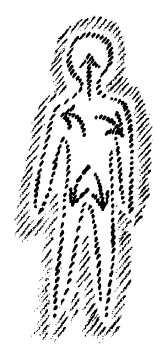
[ 10 ] So we can say: If we develop spiritual perception within ourselves, we can grasp how nature acts upon the human being in stages; how the human being, through his “I” organization, draws into himself, as it were, the spirit of the mineral kingdom; how, through his astral organization, he draws in the spirit of the plant kingdom; and through his etheric organization, the spirit, the spiritual aspect of the animal kingdom, and through his physical organization, merely the physical aspect of the human being. Here we can no longer speak of the spirit. Even with regard to the animal organization, which acts upon the etheric body, we can no longer strictly speaking speak of the spiritual, but only of the etheric within the animal itself.
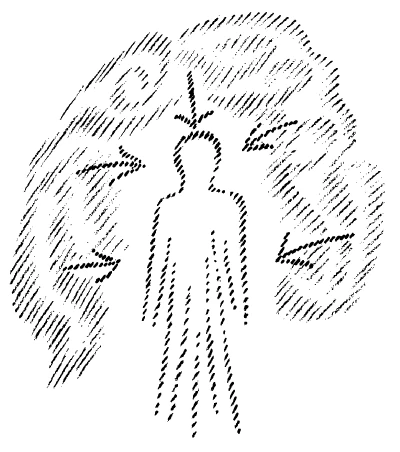
[ 11 ] Auf diese Zusammenhänge zu kommen, gibt wirklich eigentlich erst eine wahre Anschauung von der ganzen Art und Weise, wie der Mensch im gesunden und kranken Zustande in die Natur hineingestellt ist. Aber man bekommt auch ein innerliches Schauen von der Fortwirkung des Natürlichen im menschlichen Organismus. Und wenn man dann weiterzugehen hat, zu fragen hat: Wie hat man sich also zum Beispiel zu verhalten bei so etwas wie dem Karzinom, Cancer? — Wir haben gestern gesehen, der ätherische Leib entwickelt an der Stelle irgendeines Organs eine zu starke Kraft von sich aus. Die zentrifugalen Kräfte, das heißt, die in den Kosmos hinauswollenden Kräfte werden zu stark. Der astralische Leib und die Ich-Organisation sind nicht in der Lage, dem in genügender Art entgegenzuwirken. Nun wird man geleitet durch dasjenige, was man spirituell erkannt hat. Man sagt sich, jetzt kann man versuchen: entweder man muß den astralischen Leib stärker machen, dann muß man sich ans Pflanzenreich wenden, oder man muß den ätherischen Leib zurückdrängen in seiner Wirksamkeit, dann müßte man sich an das Tierreich wenden.
[ 11 ] Only by grasping these connections can one truly gain a genuine insight into the entire nature of how the human being is situated within nature, both in a healthy and in a sick state. But one also gains an inner insight into the continuing influence of the natural world on the human organism. And when one must then go further and ask: How, for example, should one deal with something like carcinoma, or cancer? — We saw yesterday that the etheric body develops an excessively strong force of its own at the site of a particular organ. The centrifugal forces—that is, the forces striving outward into the cosmos—become too strong. The astral body and the ego organization are unable to counteract this sufficiently. Now one is guided by what one has spiritually recognized. One tells oneself: now one can try one of two things—either one must strengthen the astral body, in which case one must turn to the plant kingdom, or one must curb the activity of the etheric body, in which case one would have to turn to the animal kingdom.
[ 12 ] Uns hat nun zunächst die spirituelle Forschung dazu geführt, jenen Weg zu betreten, der an den astralischen Leib herangeht, um die Heilung des Karzinoms zu erreichen, so daß der astralische Leib in seiner Kraft verstärkt werde,
[ 12 ] Spiritual research has now led us, as a first step, to embark on the path that addresses the astral body in order to achieve the healing of cancer, so that the astral body may be strengthened in its power,
[ 13 ] Wenn man sich nun für den astralischen Leib um ein Heilmittel bemühen will, so kann es sich nur darum handeln, es zunächst im Pflanzenreiche zu suchen. Im Pflanzenreiche — kann man nun sagen — hat sich dieses Heilmittel auch wirklich gefunden.
[ 13 ] If one now wishes to seek a remedy for the astral body, the only course of action is to look for it first in the plant kingdom. In the plant kingdom—one might say—this remedy has indeed been found.
[ 14 ] Man hat uns vorgeworfen, daß dabei allerlei laienhafte Vorstellungen mitspielten und dergleichen, indem wir eine parasitäre Pflanze, die Mistel, die sonst in der Medizin höchstens bei der Heilung der Epilepsie und ähnlichen Erkrankungen verwendet wird, in besonders präparierter Weise anwenden, um den Weg zu betreten, der zur Heilung des Karzinoms führt.
[ 14 ] We have been accused of relying on all sorts of layman’s mental images and the like, in that we use a parasitic plant—mistletoe, which is otherwise used in medicine at most for the treatment of epilepsy and similar conditions—in a specially prepared form to embark on the path leading to the cure of carcinoma.
[ 15 ] Aber die Mistel ist eben etwas ganz Besonderes. Wenn Sie sich jemals Bäume angesehen haben, welche diese merkwürdigen Rindenauswüchse haben, Stammauswüchse so wie Geschwülste, namentlich wenn Sie sie im Schnitt, im Durchschnitt angesehen haben, dann werden Sie bemerken, daß da etwas Eigentümliches eintritt.
[ 15 ] But mistletoe is something truly special. If you’ve ever looked at trees that have these strange growths on their bark—trunk growths that look like tumors—especially if you’ve looked at them on average, then you’ll notice that something peculiar is happening.

[ 16 ] Die ganze Tendenz des Wachstums, die sonst eine vertikale Richtung hat, bekommt an der Stelle eine Ablenkung im rechten Winkel, eine Horizontalrichtung; es drängt alles so hinaus, wie wenn ein zweiter Stamm nach außen wachsen würde, und Sie bekommen etwas, was wie ein aus der Pflanze selber herausgeholtes Parasitäres ist.
[ 16 ] The entire growth pattern, which otherwise follows a vertical direction, is deflected at that point at a right angle, taking on a horizontal direction; everything is pushed outward as if a second stem were growing outward, and you end up with something that resembles a parasitic growth extracted from the plant itself.
[ 17 ] Studiert man es genauer, dann findet man, wenn der Baum einen solchen Auswuchs bekommt, daß dann das Folgende eintritt: Irgendwie ist der physische Leib des Baumes gehemmt. Es ist nicht überall genügend physische Materie hergegeben, um dem ätherischen Leib in seiner Wachstumskraft nachzukommen. Er bleibt zurück, der physische Leib. Der ätherische Leib, der sonst bestrebt ist, die physische Materie zentrifugal hinauszuschleudern in das Weltenall, der ist gewissermaßen, wenn hier der erste Auswuchs ist, von da ab alleingelassen für einen gewissen Teil. (Es wird gezeichnet.) Zu wenig physische Materie geht hindurch oder wenigstens Materie, die zu wenig physische Kraft hat. Die Folge davon ist, daß der Ätherleib die Wendung herunternimmt zu der mit stärkerer Kraft ausgerüsteten unteren Partie des Baumes. Es ist also im wesentlichen wiederum der Ätherleib, der stark wird.
[ 17 ] If one examines it more closely, one finds that when a tree develops such a growth, the following occurs: In some way, the tree’s physical body is inhibited. There is not enough physical matter available everywhere to keep up with the growth force of the etheric body. The physical body lags behind. The etheric body, which otherwise strives to fling physical matter centrifugally out into the universe, is, so to speak, left to its own devices to a certain extent from the point where the first growth spur appears. (A diagram is drawn.) Too little physical matter passes through, or at least matter that lacks sufficient physical force. The result is that the etheric body shifts its focus downward toward the lower part of the tree, which is endowed with greater force. Thus, it is essentially the etheric body once again that becomes strong.

[ 18 ] Nun stellen Sie sich aber vor, das geschieht nicht, sondern es setzt sich hier die parasitäre Mistelpflanze auf, dann geschieht durch eine zweite Pflanze, die nun einen eigenen Ätherleib in sich trägt, dasselbe, was sonst mit dem eigenen Ätherleib des Baumes geschieht. Dadurch entsteht ein ganz besonderes Verhältnis der Mistel zu dem Baum. Der Baum, der direkt in der Erde fundiert ist, verarbeitet in sich die der Erde entnommenen Kräfte. Die Mistel, die an dem Baume aufgesetzt ist, verarbeitet dasjenige, was ihr der Baum gibt, benützt gewissermaßen den Baum als Erde. Sie also verursacht dasjenige künstlich, was bei den Auswüchsen ein Überwuchern der Ätherorganisation ist, wenn es ohne die Mistel auftritt. Die Mistel nimmt dem Baume dasjenige weg, was er nur hergibt, wenn er zu wenig physische Materie hat, wenn das Ätherische in ihm überwuchert. Ein überwucherndes Ätherisches zieht sich von dem Baum aus in die Mistel hinein. Dieses innerlich durchschaut, sagt uns — die Mistel in entsprechender Weise nun so verarbeitet, daß sie dieses dem Baum entrissene Ätherische wirklich auf den Menschen übertragen kann, was unter gewissen Umständen durch Injektionen geschieht -, dieses sagt uns: Die Mistel übernimmt als äußere Substanz dasjenige, was wuchernde Äthersubstanz beim Karzinom ist, verstärkt dadurch, daß sie die physische Substanz zurückdrängt, die Wirkung des astralischen Leibes und bringt dadurch den Tumor des Karzinoms zum Aufbröckeln, zum In-sich-Zerfallen. So daß, wenn wir die Mistelsubstanz in den menschlichen Organismus hineinbringen, wir tatsächlich die Äthersubstanz des Baumes in den Menschen hineinbringen, und die Äthersubstanz des Baumes also, auf dem Wege durch den Mistelträger in den Menschen übergeführt, wirkt verstärkend auf den astralischen Leib des Menschen.
[ 18 ] But now imagine that this does not happen; instead, the parasitic mistletoe takes root here. Then, through this second plant—which now carries its own etheric body within it—the same process occurs that would otherwise take place with the tree’s own etheric body. This creates a very special relationship between the mistletoe and the tree. The tree, which is rooted directly in the earth, processes within itself the forces drawn from the earth. The mistletoe, which is attached to the tree, processes what the tree gives it; in a sense, it uses the tree as earth. It thus artificially causes what, in the case of growths, is an overgrowth of the etheric organization when it occurs without the mistletoe. Mistletoe takes from the tree what it gives only when it lacks physical matter, when the etheric within it is overgrown. An overgrown etheric element draws itself from the tree into the mistletoe. Understanding this inwardly, it tells us—the mistletoe, now processed in an appropriate way so that it can truly transfer this etheric element, wrested from the tree, to the human being (which, under certain circumstances, occurs through injections)—it tells us: The mistletoe, as an external substance, takes on what is the proliferating etheric substance in carcinoma; by pushing back the physical substance, it intensifies the effect of the astral body and thereby causes the carcinoma tumor to crumble and disintegrate within itself. Thus, when we introduce the mistletoe substance into the human organism, we are in fact introducing the etheric substance of the tree into the human being, and the etheric substance of the tree—transferred to the human being via the mistletoe carrier—thereby has a strengthening effect on the human astral body.
[ 19 ] Das ist ein Weg, der sich nur ergeben kann, wenn wir Einsicht haben, wie der Ätherleib der Pflanze auf den astralischen Leib des Menschen wirkt, wenn wir Einsicht haben, wie eben das Geistige der Pflanze, das hier durch die parasitäre Pflanze aus dem Baum herausgezogen wird, auf das Astralische des Menschen wirkt.
[ 19 ] This is a path that can only emerge if we understand how the plant’s etheric body affects the human astral body, and if we understand how the plant’s spiritual essence—which is drawn out of the tree by the parasitic plant—affects the human astral body.
[ 20 ] Sie sehen, auch im Konkreten bewahrheitet sich das, was ich gestern gesagt habe: Es handelt sich darum, daß wir, wenn wir Heilstoffe anwenden, nicht allein dasjenige anwenden, was der Chemiker denkt dabei, wovon der Chemiker spricht, sondern daß wir dasjenige anwenden, was Geistiges, Spirituelles in den Dingen drinnen ist.
[ 20 ] As you can see, what I said yesterday holds true even in concrete terms: The point is that when we use remedies, we do not merely apply what the chemist thinks about them or what the chemist speaks of, but rather we apply what is spiritual and ethereal within them.
[ 21 ] Nun, ich konnte Ihnen darstellen, daß bei Morbus Basedow der astralische Leib sich versteift, die Ich-Organisation diesen astralischen Leib nicht beherrschen kann. Der ganze Symptomkomplex stellt sich, wie ich gestern darstellte, als solches dar. Worauf wird es ankommen? Es wird darauf ankommen, daß man die Kraft der Ich-Organisation verstärkt. Hier handelt es sich darum, daß wir einmal den Blick auf dasjenige werfen, was im gewöhnlichen Verkehre des Menschen mit der Außenwelt eine geringe Rolle spielt. Der Mensch ißt ja manches, hat so manches zu seinen Nahrungsmitteln, aber gewisse Metalle zum Beispiel gehören nicht zu den Nahrungsmitteln. Kupfer oder Kupfererz zum Beispiel, Kupferglanz oder Cuprit gehört nicht zu den Nahrungsmitteln.
[ 21 ] Well, I was able to explain to you that in Graves’ disease, the astral body becomes rigid, and the ego-organization is unable to control this astral body. The entire complex of symptoms presents itself, as I described yesterday, in this way. What will be crucial? It will be crucial to strengthen the power of the ego-organization. Here, it is a matter of turning our attention to something that plays a minor role in a person’s ordinary interaction with the outside world. People eat many things and consume many different foods, but certain metals, for example, are not part of the diet. Copper or copper ore, for example—chalcocite or cuprite—are not part of the diet.
[ 22 ] Gerade diejenigen Substanzen, welche im gewöhnlichen Verkehre des Menschen mit der Natur nicht eine Rolle spielen, das sind diejenigen, die nun in ihrem geistigen Teil die größte Wirkung haben auf die mehr geistige Wesenheit des Menschen. Zum Beispiel finden wir gerade, daß der Kupferglanz, Kupfer und Schwefel, die denkbar stärkste Wirkung hat auf die Ich-Organisation des Menschen, die IchOrganisation wirklich verstärkt.
[ 22 ] It is precisely those substances that play no role in human beings’ ordinary interaction with nature that, in their spiritual aspect, have the greatest effect on the more spiritual nature of human beings. For example, we find that copper gloss—copper and sulfur—has the strongest conceivable effect on the human ego-organization; it truly strengthens the ego-organization.
[ 23 ] Wenn man nun bei Morbus Basedow dem Menschen im entsprechenden Präparat Kupferglanz beibringt, dann stellt man dem Ihnen gestern beschriebenen, sich versteifenden astralischen Leib gegenüber eine diesen astralischen Leib beherrschende Ich-Organisation, denn der Kupferglanz kommt der Ich-Organisation mit seiner inneren Kraft zu Hilfe, und man stellt das Gleichgewicht her zwischen dem astralischen Leib und der Ich-Organisation, das notwendig ist.
[ 23 ] If, in the case of Graves’ disease, one teaches the person the “copper sheen” in the corresponding preparation, then one counteracts the stiffening astral body described to you yesterday with an “I-organization” that governs this astral body; for the “copper sheen,” with its inner power, comes to the aid of the “I-organization,” and one restores the necessary balance between the astral body and the “I-organization.”
[ 24 ] Ich habe diese Beispiele zunächst gewählt aus dem Grunde, um Ihnen innerlich zu zeigen, wie in jedem Produkt der Natur, das wir um uns herum haben, studiert werden kann: Wie wirkt das auf den physischen Leib des Menschen? Wie wirkt das auf den Ätherleib des Menschen? Wie wirkt das auf den astralischen Leib, auf die Ich-Organisation?
[ 24 ] I chose these examples initially for the purpose of showing you from within how every product of nature that surrounds us can be studied: How does it affect the human physical body? How does it affect the human etheric body? How does it affect the astral body and the “I”-organization?
[ 25 ] Ich habe Ihnen an dem Beispiel der Mistel gezeigt, Viscum, entweder Viscum pini oder Viscum mali, wie die Mistel wirkt auf das Verhältnis des ätherischen Leibes zum astralischen Leibe, das ja besonders berücksichtigt werden muß bei einem therapeutischen Weg, der zur Bekämpfung des Karzinoms führt.
[ 25 ] Using the example of mistletoe, Viscum—either Viscum pini or Viscum mali—I have shown you how mistletoe affects the relationship between the etheric body and the astral body, a factor that must be given special consideration in a therapeutic approach aimed at combating carcinoma.
[ 26 ] Ich habe Ihnen gezeigt, wie der Kupferglanz wirkt auf die IchOrganisation. Ich habe Ihnen gezeigt, was bei Morbus Basedow in Betracht kommt, so daß man sagen kann: Ist man in der Lage, hinzuschauen auf den Menschen auf der einen Seite, wie da ineinander webt und lebt physischer, ätherischer, astralischer Leib und Ich, wie das abnorm wird im kranken Zustande, durchschaut man dann auch dasjenige, was draußen in der Natur ist, so hat man zum Beispiel folgende Anschauung: Da ist die Ich-Organisation zu schwach bei Morbus Basedow. Draußen habe ich den Kupferglanz. Dieser Kupferglanz, mit der Ich-Organisation zusammengebracht, verstärkt sie wesentlich. Sehen Sie, wenn Sie so etwas in Betracht ziehen, so ergibt sich ja ein wunderbares Erkennen des Zusammenhanges zwischen Mensch und Natur. Die große, wunderbar wirkende Frage beantwortet sich uns: Warum nimmt der Mensch so viele Substanzen in seine Nahrungsmittel auf? Warum spielen andere eine so geringfügige Rolle? Im gesunden Menschen spielen die letzteren allerdings keine besondere Rolle, im kranken Menschen beginnen sie eine besondere Rolle zu spielen, weil gerade diejenigen Substanzen, die nicht in den Nahrungsmitteln enthalten sind, auf den geistigen Teil des Menschen besonders stark wirken; die nicht in der Nahrung wirkenden Mineralien, Pflanzen, auch tierischen Produkte, sie sind es, die zum Ich, zu der astralischen Organisation ihre besondere Verwandtschaft haben.
[ 26 ] I have shown you how the coppery sheen affects the organization of the “I.” I have shown you what is at play in Graves’ disease, so that one can say: If one is able to look at the human being on the one hand—how the physical, etheric, and astral bodies and the “I” are interwoven and live together, and how this becomes abnormal in a state of illness—and if one then also perceives what exists out there in nature, one gains, for example, the following insight: In Graves’ disease, the “I” organization is too weak. Out there, I have the coppery sheen. This coppery sheen, when brought into connection with the “I” organization, strengthens it significantly. You see, when you consider something like this, a wonderful understanding of the connection between the human being and nature emerges. The great, wonderfully revealing question answers itself for us: Why does the human being take in so many substances through their food? Why do others play such a minor role? In a healthy person, the latter do not play a special role; in a sick person, however, they begin to play a special role, because it is precisely those substances not contained in food that have a particularly strong effect on the spiritual aspect of the human being; the minerals, plants, and even animal products that do not act through food—it is these that have a special affinity with the “I” and the astral organization.
[ 27 ] Und so handelt es sich wirklich bei diesen Dingen um das Hineinschauen in tiefe Geheimnisse der Natur. Dieses Hineinschauen in tiefe Geheimnisse der Natur, ich möchte sagen, in die Mysterien der Natur, führt eigentlich erst zu der Möglichkeit, die Anschauung des kranken Menschen unmittelbar zu verbinden mit der Anschauung des wirkenden Heilmittels. So wie ich weiß, der Magnet zieht das Eisen an, und wenn ich einen Magneten habe und Eisenfeilspäne in die Nähe bringe, werden die Eisenfeilspäne angezogen, wenn ich erkenne die Wirkung des Magnets auf die Eisenfeilspäne, so weiß ich, was geschieht. Kenne ich in derselben Weise die Art und Weise, wie spirituell der Kupferglanz ist, auf der anderen Seite dasjenige, was dem Menschen fehlt, wenn er die Symptome von Morbus Basedow hat, so ist das dasjenige, was heißt, Medizin zu durchdringen mit spiritueller Anschauung.
[ 27 ] And so these matters truly involve looking into the deep secrets of nature. This insight into the deep secrets of nature—I would say, into the mysteries of nature—is actually what first makes it possible to directly connect the observation of the sick person with the observation of the remedy at work. Just as I know that a magnet attracts iron, and if I have a magnet and bring iron filings near it, the iron filings are attracted—when I recognize the effect of the magnet on the iron filings, I know what is happening. If, in the same way, I understand the spiritual nature of the coppery sheen, and, on the other hand, what is lacking in a person who exhibits the symptoms of Graves’ disease, then that is what it means to imbue medicine with spiritual insight.
[ 28 ] Erst dann, wenn man auf den ganzen Zusammenhang zwischen den vier Gliedern der menschlichen Wesenheit eingeht, wird man den Weg finden, diese Beziehungen, die ich nun schon angedeutet habe, zwischen außermenschlichen Substanzen, natürlichen Substanzen, und dem gesunden und kranken Menschen selber zu finden. Da muß man aber zunächst darauf hinschauen, wie sich diese vier Glieder der menschlichen Wesenheit, physischer Leib, ätherischer Leib, astralischer Leib und Ich, ganz verschieden verhalten in den zwei Wechselzuständen, in denen der Mensch in seinem Erdendasein lebt, in den beiden Zuständen von Wachen und Schlafen. Im Wachen haben wir unsere physische Organisation durchdrungen von der ätherischen Organisation. Darinnen breitet sich gewissermaßen, beide Organisationen innerlich ausfüllend, die astralische Organisation aus. Und das ganze durchdringt wiederum die Ich-Organisation, so daß wir uns, wenn wir uns schematisch das vorstellen wollen, sagen können: Den wachenden Menschen können wir in diesem Schema uns vorstellen, physische und ätherische Organisation, ihn ausfüllend, auch etwas über ihn hervordringend, die astralische und die Ich-Organisation, die ich hier mit anderer Farbe andeute. (Es wird gezeichnet.)
[ 28 ] Only when one examines the entire relationship between the four members of the human being will one find the way to uncover these connections—which I have already hinted at—between non-human substances, natural substances, and the healthy and sick human being themselves. But first we must examine how these four members of the human being—the physical body, the etheric body, the astral body, and the ego—behave quite differently in the two alternating states in which the human being lives during their earthly existence: the states of waking and sleeping. In the waking state, our physical organization is permeated by the etheric organization. Within this, the astral organization spreads out, so to speak, filling both organizations from within. And the whole is in turn permeated by the “I” organization, so that if we wish to create a mental image of this in a schematic manner, we can say: In this diagram, we can create a mental image of the waking human being with the physical and etheric organizations filling him out and even protruding slightly beyond him, while the astral and “I” organizations—which I am indicating here in a different color—are superimposed upon them. (A diagram is drawn.)
[ 29 ] Haben wir dagegen den schlafenden Menschen vor uns, so haben wir im Bette liegend den physischen Leib und den ätherischen Leib. Der Mensch kommt nur dahin, in einer zwar nicht pflanzlichen Organisation, eine mineralische und pflanzliche Tätigkeit zu entwickeln, wie das die Pflanze tut. Wir haben im Bette liegen den physischen Leib und den ätherischen Leib. Dagegen haben wir den astralischen Leib und die Ich-Organisation außerhalb des physischen und des ätherischen Leibes. Und schematisch kann ich das so zeichnen, daß nunmehr der astralische Leib und die Ich-Organisation (rot) den Ätherleib und den physischen Leib wie eine Art Wolke, die sich aber ins Unbestimmte verliert, größer und größer wird, umgeben. Aber es ist nun nicht so, daß wir sagen können: Bei Tag, im Wachen, wirken in uns astralischer Leib und Ich-Organisation, und im Schlaf umgekehrt, ist das Ich und die astralische Organisation nicht in dem physischen Leib und Ätherleib; das ist nicht so. Wir können nur sagen: Im Wachen wirkt von innen aus nach allen Seiten, überallhin, wo die Organe respektive die Kräfte der Organe dynamisch das hinführen, Ich-Organisation und astralischer Leib im physischen Leib und Ätherleib. Im Schlafe wirken sie von außen. Gewissermaßen so, wie sonst die Wirkungen des Kosmos in unsere Sinne eindringen und zum Inhalte unseres Bewußtseins werden als Sinneswahrnehmungen und Ideen, so sind wir schlafend eingehüllt von unserem astralischen Leib und unserer Ich-Organisation. Die senken sich außer uns in den Geist des Kosmos ein und wirken durch Augen, durch Ohren, durch alles mögliche, was peripherisch menschliche Organisation ist.
[ 29 ] When, on the other hand, we have a sleeping person before us, we see the physical body and the etheric body lying in bed. The human being is only capable of developing mineral and plant-like activity—though not within a plant-like organization—just as a plant does. We have the physical body and the etheric body lying in bed. In contrast, we have the astral body and the “I”-organization outside the physical and etheric bodies. Schematically, I can illustrate this by showing that the astral body and the “I”-organization (red) now surround the etheric body and the physical body like a kind of cloud—one that, however, fades into the indefinite and grows larger and larger. But it is not the case that we can say: During the day, while awake, the astral body and the “I”-organization are active within us, and during sleep, conversely, the “I” and the astral body are not in the physical body and the etheric body; that is not the case. We can only say: While awake, the “I” organization and the astral body act from within, in all directions, wherever the organs—or rather, the forces of the organs—dynamically direct them, within the physical and etheric bodies. During sleep, they act from the outside. In a sense, just as the effects of the cosmos otherwise penetrate our senses and become the content of our consciousness as sensory perceptions and ideas, so too are we, while asleep, enveloped by our astral body and our “I” organization. These sink outside of us into the spirit of the cosmos and act through the eyes, through the ears, through everything that constitutes the peripheral aspects of the human organism.
[ 30 ] So haben wir den Unterschied zwischen Wachzustand und Schlafzustand dadurch charakterisiert, daß wir sagen können: Unser Ich und unser astralischer Leib wirken von innen aus nach allen Richtungen im Wachzustande. Unser Ich und unser astralischer Leib wirken von außen mit den spirituellen Kräften des Kosmos auf uns zurück im Schlafzustande. Wir haben also die Möglichkeit, einzusehen, daß sowohl von außen wie von innen Wirkungen auf unseren Ätherleib und in unserem physischen Leib durch unsere geistige Organisation stattfinden können.
[ 30 ] We have thus characterized the difference between the waking state and the sleeping state by saying that our “I” and our astral body act from within in all directions while we are awake. Our “I” and our astral body, in turn, act back upon us from the outside, in conjunction with the spiritual forces of the cosmos, during sleep. We can thus see that influences can act upon our etheric body and within our physical body—both from the outside and from the inside—through our spiritual organization.
[ 31 ] Nun kommen wir, wenn wir dies durchschauen, darauf, wie wiederum zu diesen Vorgängen, die ja den Menschen konstituieren als schlafenden und als wachenden, in Beziehung stehen die spirituellen Essenzen der Naturprodukte. Zum Beispiel ist es eigentümlich, daß, wenn wir nun wiederum eine Substanz, die nicht in dem gewöhnlichen Nahrungsmittelsystem darinnen ist, das Blei, in irgendeiner Weise in uns aufnehmen, dieses Blei immer die Wirkung hat, daß es sozusagen zuerst den Menschen dazu drängt, seinen astralischen Leib nach außen zu fördern, geradeso wie es im Schlaf geschieht. Das Blei hat eigentlich die Wirkung, den Menschen in den Schlafzustand zu versetzen, astralischen Leib und Ich-Organisation nach außen zu drängen. Stellen Sie sich das nur lebhaft vor. Der Mensch will schlafen, wenn er Blei genießt. Es kommt aber nicht zum Schlaf in Wirklichkeit. Es kommt nur dazu, daß Ich und astralischer Leib herausbefördert werden. Aber das Blei verhindert zu gleicher Zeit, daß die Wirkungen von außen eintreten. Das Blei fördert den astralischen Leib und die Ich-Organisation zentrifugal nach außen, aber es verhindert die zentripetalen, die nach innen wirkenden Kräfte. Der Mensch kommt halb ins Schlafen, kann aber nicht ganz schlafen, weil die Wirkung von außen behindert wird durch den Bleigenuß.
[ 31 ] Now, once we understand this, we come to see how the spiritual essences of natural products are related to these processes, which, after all, constitute human beings as both sleeping and waking beings. For example, it is peculiar that when we ingest a substance—such as lead—that is not part of the ordinary food system, this lead always has the effect of, so to speak, first compelling the human being to project his astral body outward, just as happens during sleep. Lead actually has the effect of putting a person into a state of sleep, propelling the astral body and the “I”-organization outward. Just imagine this vividly. A person wants to sleep when they ingest lead. But sleep does not actually occur. What happens is simply that the “I” and the astral body are propelled outward. At the same time, however, the lead prevents external influences from taking effect. The lead propels the astral body and the “I”-organization centrifugally outward, but it blocks the centripetal forces—those acting inward. The person falls into a half-sleep but cannot sleep completely because the influence from the outside is hindered by the consumption of lead.
[ 32 ] Die Folge davon ist, daß unter normalen Verhältnissen, wenn der gesunde Mensch Blei in sich bekommt, er nicht schlafend wird, sondern Schwindel ihn überfällt, er ohnmächtig wird, und alle diejenigen Zustände eintreten, die mit dem Nachlassen des Ich und der astralischen Organisation bei dem physischen Leib und Ätherleib eintreten müssen.
[ 32 ] The consequence of this is that, under normal circumstances, when a healthy person ingests lead, they do not fall asleep, but are overcome by dizziness, lose consciousness, and experience all those conditions that must occur with the weakening of the ego and the astral organization in relation to the physical and etheric bodies.
[ 33 ] Nehmen wir aber an, in der menschlichen Organisation ist eine solche Anormalität eingetreten, daß, wenn der Mensch nun in Schlaf versetzt wird, oder sich in Schlaf versetzt, die Ich-Organisation und der astralische Leib zu stark sich einwurzeln in der äußeren Welt, das heißt, zuviel von der Spiritualität des außermenschlichen Kosmos aufnehmen, so daß also diese Wirkungen zu stark werden, daß der Mensch also jedesmal, wenn er in Schlaf kommt, zu starke Wirkungen von außen bekommt, zu starke geistige Wirkungen von außen bekommt, spirituelle Wirkungen. Dann verfällt er in die Sklerose.
[ 33 ] But let us suppose that such an abnormality has arisen in the human organism that, when a person is put to sleep or falls asleep, the ego-organism and the astral body become too deeply rooted in the external world, that is, they absorb too much of the spirituality of the extra-human cosmos, so that these influences become too strong; thus, every time the person falls asleep, they are subjected to excessive external influences—excessive mental and spiritual influences from the outside. Then they fall into sclerosis.
[ 34 ] Das ist die wirkliche Ursache der Sklerose, daß der Mensch, statt daß er sich innerlich durchorganisieren würde, zu starke Wirkungen von außen bekommt, und zwar dann, wenn er gerade im Schlafzustande ist. Zuweilen weigert sich der menschliche Organismus, wenn er älter wird und diese Wirkungen eintreten können, durch die Schlaflosigkeit gegen dieses zu starke Wirken von außen. Aber man kann ja nicht bei der Schlaflosigkeit verbleiben. Die Folge davon ist, daß, wenn man alt wird und doch schlafen muß, der im Alter heraustretende, aus physischem Leib und ätherischem Leib heraustretende astralische Leib und die Ich-Organisation zuviel Wirkungen von außen einnehmen und zu stark zurückwirken auf den Organismus. Was finden wir nun, wenn man alt wird und doch schlafen muß und der im Alter heraustretende astralische Leib und die Ich-Organisation zuviel Wirkungen von außen einnehmen und zu stark zurückwirken auf den Organismus? Wir finden, wenn wir dem menschlichen Organismus nunmehr Blei beibringen, so tritt nicht Schwindel und Ohnmacht ein, sondern es werden nur abgehalten die sklerotisierenden Kräfte unter Umständen, indem man das Blei zu einem entsprechenden Heilmittel präpariert, es werden die astralischen Kräfte von außen und die IchKräfte von außen, die sklerotisierenden Kräfte dadurch abgehalten, weil der Mensch dann auch Zustände durchmacht, in denen er nicht in den Schlaf kommt, sondern in denen nur durch das Blei sein astralischer Leib und die Ich-Organisation herausgetrieben werden, aber die zu starken Kräfte von außen abgehalten werden.
[ 34 ] This is the true cause of sclerosis: that instead of organizing itself internally, the human being is subjected to excessive external influences, particularly when it is in a state of sleep. At times, as the human organism ages and these influences are able to take effect, it resists this excessive external influence through insomnia. But one cannot, of course, remain in a state of insomnia. The consequence of this is that, as one grows old and must still sleep, the astral body—which emerges in old age from the physical and etheric bodies—and the “I”-organization absorb too many external influences and exert too strong a counter-effect on the organism. What do we find, then, when one grows old and must still sleep, and the astral body—which emerges in old age from the physical and etheric bodies—and the “I”-organization absorb too many external influences and exert too strong a counter-effect on the organism? We find that if we now introduce lead into the human organism, dizziness and fainting do not occur; rather, the sclerosing forces are merely held in check—under certain circumstances—by preparing the lead as an appropriate remedy, the astral forces from outside and the “I” forces from outside—the sclerosing forces—are thereby held at bay, because the person then also goes through states in which they do not fall asleep, but in which only through the lead are their astral body and “I” organization driven out, while the excessively strong forces from outside are held at bay.
[ 35 ] Man kommt auf diese Weise dazu, durch ein Durchschauen dessen, was das Verhältnis ist zwischen physischem Leib, Ätherleib, astralischem Leib und Ich, ganz durch und durch einzusehen, worauf Bleiwirkung beruhen kann, wie Bleiwirkung eine Gegenwirkung gegen sklerotisierende Wirkung sein kann.
[ 35 ] In this way, by gaining insight into the relationship between the physical body, the etheric body, the astral body, and the “I,” one comes to fully understand the basis of the “lead effect” and how it can act as a counterforce to sclerotic processes.
[ 36 ] Das ist eben Durchschauen der menschlichen Organisation, Durchschauen der äußeren Natur nach ihren spirituellen Grundlagen, dadurch in die Möglichkeit kommen, die beiden in Wechselwirkung zu bringen und dadurch auf Gesundheit und Krankheit den entsprechenden Einfluß zu haben.
[ 36 ] This is precisely a matter of understanding human organization and understanding the external natural world in terms of its spiritual foundations, thereby gaining the ability to bring the two into interaction and thus exert the appropriate influence on health and illness.
[ 37 ] Nun handelt es sich natürlich aber darum, daß man in die Lage kommen muß, die verschiedenen Wirkungen zu kombinieren. Ich habe Ihnen auseinandergesetzt, daß Kieselsäure zu den Sinnesorganen, zu der ganzen Peripherie des menschlichen Organismus Beziehung hat und wiederum zu der Ich-Organisation. Vom Blei haben wir jetzt auch kennengelernt, wie es zur Ich-Organisation eine bestimmte Beziehung hat. Dadurch, daß man nun in entsprechender Weise ein Heilmittel hervorbringt, das man präpariert in der gehörigen Art aus Kieselsäure und Blei zusammen, dadurch verstärkt man unter Umständen die zentrifugale Kraft des Bleis, oder man vermindert die zentripetale Kraft der Kieselsäure, so bekommt man ein Heilmittel, das eigentlich eine innere Lebendigkeit hat, die man durchschaut, von der man weiß, wie sie nun im menschlichen Organismus wirkt.
[ 37 ] Of course, the point is that one must be able to combine the various effects. I have explained to you that silicic acid is related to the sensory organs, to the entire periphery of the human organism, and, in turn, to the “I” organization. We have now also learned how lead has a specific relationship to the “I” organization. By producing a remedy in an appropriate manner—one that is properly prepared from a combination of silicic acid and lead— one may, under certain circumstances, either strengthen the centrifugal force of lead or reduce the centripetal force of silicic acid; in this way, one obtains a remedy that actually possesses an inner vitality—one that is transparent, and whose effects within the human organism are clearly understood.
[ 38 ] Das ist das Wesentliche derjenigen Heilmittel, die auf Grundlage einer solchen spirituellen Fundierung der Medizin hergestellt werden können. Sie werden mit vollständigem Durchschauen desjenigen, was eigentlich stattfindet inner- und außerhalb des Menschen, hergestellt; und sie werden so hergestellt, daß es nun darauf ankommt, daß der Betreffende, der sie inauguriert, der sie in die Welt führt, die geistigen Zusammenhänge, die diesen Heilmitteln mitgegeben werden, überschaut. Es handelt sich also darum, daß man neben den Heilmitteln, bei denen man bloß auf die chemischen Kräfte sieht, die nun einmal in unserer materialistisch gearteten Chemie angeführt werden, auch solche herstellen kann, von denen man sagen kann: Da hinein in dieses Heilmittel ist die Spiritualität der Welt in dieser bestimmten Weise geleitet worden.
[ 38 ] This is the essence of those remedies that can be produced on the basis of such a spiritual foundation of medicine. They are produced with a complete understanding of what is actually taking place both within and outside the human being; and they are produced in such a way that it is now essential for the person who initiates them—who brings them into the world—to grasp the spiritual connections that are imbued in these remedies. It is therefore a matter of being able to produce, alongside remedies in which one focuses merely on the chemical forces—which are, after all, cited in our materialistic chemistry—remedies of which one can say: “The spirituality of the world has been channeled into this remedy in this specific way.”
[ 39 ] Das wird das Wesen der Heilmittel sein, die hergestellt werden, wenn der Medizin diese spirituelle Grundlage gegeben werden wird. Man wird wissen, bei diesen Heilmitteln kommt es darauf an, daß ihnen von ihrer Präparierung her nicht bloß dasjenige, was der Chemiker durchschaut, beigegeben ist, sondern daß ihnen die spirituellen Kräfte der Welt mitgegeben sind. Es wird unmittelbar der Geist selber, die Spiritualität, in der Therapie angewendet. Darauf kommt es an bei diesen Dingen.
[ 39 ] This will be the essence of the remedies that are produced once medicine is given this spiritual foundation. It will be understood that what matters with these remedies is not merely that they contain, in their preparation, what the chemist can discern, but that they are imbued with the spiritual forces of the world. It is the Spirit itself—spirituality—that is directly applied in therapy. That is what matters in these matters.
[ 40 ] Sehen Sie, man kann in dieser Richtung noch weitergehen. Man kann ja, indem man in der Art, wie ich es gestern geschildert habe, die menschliche Organisation durchschaut, darauf kommen, streng exakt — hier kann ich es nur andeuten -, wie der physische und der Ätherleib dasjenige sind, was dem Menschen in der Vererbungsströmung mitgegeben wird, was also abstammt von Vater, Mutter, Großvater, Großmutter und so weiter, wie aber in der Ich-Organisation und im astralischen Leib dasjenige liegt, was aus der geistigen Welt herunterkommt, in den menschlichen physischen und Ätherleib sich einsenkt und wiederum durch die Pforte des Todes hinausgeht in die geistige Welt, was also als das Dauernde, das den physischen Leib Überdauernde, im Menschen lebt und west, sein eigentliches Unsterbliches.
[ 40 ] You see, one can go even further in this direction. By gaining insight into the human constitution in the way I described yesterday, one can arrive at a strictly precise understanding—I can only hint at this here—of how the physical and etheric bodies are what are imparted to the human being through the stream of heredity, that is, what is inherited from the father, mother, grandfather, grandmother, and so on; whereas in the ego-organization and the astral body lies that which descends from the spiritual world, sinks into the human physical and etheric bodies, and in turn passes through the gate of death back into the spiritual world—that which lives and endures in the human being as the enduring element, the element that outlives the physical body, its true immortality.
[ 41 ] Aber wir dürfen, wenn wir wissenschaftlich sprechen, nicht bloß Unsterbliches sagen, sondern wir müssen zu dem Unsterblichen das andere dazu haben. Geradeso wie das, was im Ich und in der IchOrganisation und im astralischen Leib durch die Pforte des Todes geht, in die geistige Welt hineingeht, wie das in dieser Art den eigentlichen Kern der menschlichen Wesenheit darstellt, das aber dynamisch eingreift in seine physische und Ätherorganisation, so ist dieses auch vor der Geburt respektive Konzeption vorhanden. Es kommt aus der geistigen Welt, konstituiert, arbeitet, baut mit am physischen und Ätherleib. Wir müssen auch vom Ungeborensein sprechen.
[ 41 ] But when we speak scientifically, we must not merely speak of the immortal; rather, we must include the other aspect alongside the immortal. Just as that which passes through the gate of death in the “I,” in the “I” organization, and in the astral body—and enters the spiritual world—represents in this way the very core of the human being, yet dynamically intervenes in its physical and etheric organization, so too is this present before birth or conception. It comes from the spiritual world, takes shape, works, and helps build the physical and etheric bodies. We must also speak of the unborn state.
[ 42 ] Man ist in der Naturerkenntnis so weit abgekommen von der Wahrheit auf diesem Gebiete, daß man zwar aus gewissen religiös egoistischen Gründen heraus, weil der Mensch wissen möchte, wie es ihm nach dem Tode geht, von Unsterblichkeit spricht, weil der Mensch aber schon da ist, interessiert ihn das nicht, was vor der Geburt lag oder vor der Konzeption. Will man aber wissenschaftlich sprechen, so muß man ebensogut von Ungeborenheit sprechen wie von Unsterblichkeit, denn erst die Ungeborenheit und die Unsterblichkeit zusammen machen die Ewigkeit aus.
[ 42 ] In the study of nature, we have strayed so far from the truth in this area that, while we speak of immortality for certain religiously self-serving reasons—because humans want to know what happens to them after death—since humans already exist, they are not interested in what came before birth or before conception. But if one wishes to speak scientifically, one must speak of “pre-birth” just as much as of “immortality,” for it is only the combination of pre-birth and immortality that constitutes eternity.
[ 43 ] So können wir sagen: Dasjenige, was so dieser ewige Wesenskern des Menschen ist, der untertaucht durch Konzeption, Embryonalentwickelung, Geburt, in den physischen und Ätherleib, was wiederum verläßt diese physische und ätherische Organisation im Tode, das muß sich, indem es untertaucht in physische und ätherische Organisation, anpassen an diesen physischen und ätherischen Leib.
[ 43 ] Thus we can say: That which is the eternal essence of the human being—which descends through conception, embryonic development, and birth into the physical and etheric bodies, and which in turn leaves this physical and etheric organization at death—must, as it descends into the physical and etheric organization, adapt itself to this physical and etheric body.
[ 44 ] Das ist nun in der menschlichen Entwickelung nicht immer ohne weiteres vorhanden. Da findet durchaus ein innerer Kampf statt. Indem das Kind in die Welt tritt, kommt von der geistigen Welt her der astralische Leib und das Ich, aus der Vererbung von den Voreltern der physische Leib und der Ätherleib. Die müssen sich kämpfend ineinanderfügen. Diesen Prozeß des sich kämpfend Ineinanderfügens schauen Sie äußerlich an, in einer äußerlichen Offenbarung, indem Sie die verschiedenen Arten von Kinderkrankheiten anschauen.
[ 44 ] This is not always readily present in human development. An inner struggle certainly takes place. As the child enters the world, the astral body and the “I” come from the spiritual world, while the physical body and the etheric body come from the heredity of the ancestors. These must struggle to fit together. You can observe this process of struggling to fit together externally, in an outward manifestation, by looking at the various types of childhood illnesses.
[ 45 ] Auf die Kinderkrankheiten wird erst das richtige Licht geworfen, wenn man sie so ansieht, daß der ewige Wesenskern des Menschen, die eigentliche spirituelle Grundlage, sich anzupassen hat demjenigen, was durch die Vererbung gegeben ist. Und insbesondere ist es so, daß wenn der ätherische Leib sich schwer anpaßt dem astralischen Leib und der Ich-Organisation, denen er sich doch anpassen muß, aber sich schwer anpaßt, so sehen wir eine Krankheit entstehen, die gerade davon herrührt, daß der ätherische Leib sich prädominierend geltend macht gegenüber dem herandrängenden Ich und der herandrängenden Astralorganisation. Und dieses prädominierende Geltendmachen des ätherischen Leibes, dieses gewissermaßen sich Entgegenstemmen, das drückt sich aus in der Rachitis.
[ 45 ] Childhood illnesses can only be properly understood when viewed from the perspective that the eternal core of the human being—the true spiritual foundation—must adapt to what is given through heredity. And in particular, when the etheric body has difficulty adapting to the astral body and the “I” organization—to which it must adapt, yet finds it difficult to do so—we see a disease arise that stems precisely from the fact that the etheric body asserts itself predominantly against the encroaching “I” and the encroaching astral organization. And this predominant assertion of the etheric body—this resistance, so to speak—manifests itself in rickets.
[ 46 ] Nun kommt man wiederum darauf, indem man zu dem Physischen das Spirituelle hinzuverfolgt, sich die Frage auf eine besondere Art beantworten zu können: Wie kann ich denn diesem ätherischen Leibe, der sich gewissermaßen stauend entgegenstellt dem astralischen Leibe, wie kann ich dem denn seine entgegenwirkende Kraft nehmen? Was benimmt ihm denn diese Kraft in der normalen Weise, wenn der Mensch aus der geistigen Welt in die physische Welt allmählich herantritt während seiner Embryonalzeit?
[ 46 ] Now, by tracing the spiritual back to the physical, we once again arrive at a way to answer the question in a particular way: How can I remove the counteracting force from this etheric body, which, in a sense, stands in opposition to the astral body? What normally deprives it of this power as the human being gradually approaches the physical world from the spiritual world during the embryonic period?
[ 47 ] Da kommt man dazu, zu studieren, wie der Mensch in der Embryonalzeit hereintritt aus der geistigen Welt in die physische Welt, und da findet man, daß eine besondere Relation besteht zwischen den Kräften, die im Phosphor oder in Phosphorverbindungen vorhanden sind, und denjenigen Kräften, die im Uterus vorhanden sind und im Uterus sich entgegenstellen der Embryonalentwickelung. Wären diese Kräfte im Uterus nicht vorhanden, so würde einfach bei jedem Menschen Rachitis eintreten. Der Uterus ist zu gleicher Zeit ein fortwährender Arzt gegen die Rachitis, indem er Kräfte in sich enthält, die im Organismus von derselben Art sind wie die Kräfte, die in der äußeren Natur in der Mineralsubstanz Phosphor oder in Phosphorverbindungen vorhanden sind.
[ 47 ] This leads one to study how the human being enters the physical world from the spiritual world during the embryonic stage, and one finds that there is a special relationship between the forces present in phosphorus or phosphorus compounds and those forces present in the uterus that counteract embryonic development. If these forces were not present in the uterus, every human being would simply develop rickets. The uterus is, at the same time, a constant remedy against rickets, in that it contains forces that are of the same nature in the organism as the forces found in the mineral substance phosphorus or in phosphorus compounds in the external natural world.
[ 48 ] So enthüllen sich die Mysterien, so daß, wenn man nun dem Menschen, der rachitisch geworden ist, eine Phosphorbehandlung angedeihen läßt, man die mangelnde Phosphorwirkung des Uterus in der Außenwelt nach der Geburt nachholt.
[ 48 ] This is how the mysteries are revealed: when a person who has developed rickets is given phosphorus treatment, the lack of phosphorus’s effect in the womb is compensated for in the external world after birth.
[ 49 ] Und so kann man exakt tatsächlich, wenn man die innere spirituelle Natur desjenigen durchschaut, was am Menschen und im Wechselverkehr vom Menschen mit der Natur geschieht, dazu kommen, Krankheitsprozesse, die eben da sind, in der entsprechenden Weise durch ihre Gegenwirkung zu paralysieren.
[ 49 ] And so, in fact, if one penetrates to the inner spiritual nature of what happens in human beings and in their interaction with nature, one can indeed paralyze existing disease processes in the appropriate way by counteracting them.
[ 50 ] Sehen Sie, das ist das Prinzip, das jener spirituellen Fundierung der Medizin zugrundeliegt, von der ich gestern gesprochen habe, die eine erste Bearbeitung durch das Buch von Frau Dr. Wegman und mir finden soll und die nicht auftreten will mit laienhafter Kritik der wissenschaftlichen Medizin, sondern nur dasjenige, was ebenso exakt wissenschaftlich sein kann, nur eben in die geistige Welt eindringt, hinzufügen will zu dem, was in richtiger Wissenschaftlichkeit da ist.
[ 50 ] You see, this is the principle underlying that spiritual foundation of medicine I spoke of yesterday—a foundation that is to be explored for the first time in the book by Dr. Wegman and myself, and which does not seek to offer layman’s criticism of scientific medicine, but rather to present that which can be just as scientifically precise, only that it penetrates into the spiritual world, and aims to add to what already exists in true scientific rigor.
[ 51 ] Und man kann sagen: Gerade derjenige, der recht gut bekannt ist mit den Grundlagen der heutigen wissenschaftlichen Medizin und der diese Grundlagen der heutigen wissenschaftlichen Medizin nur etwas weiterverfolgt, der kommt schon dazu, die Erweiterung nach der spirituellen Seite hin zu suchen.
[ 51 ] And one could say: It is precisely those who are quite familiar with the fundamentals of modern scientific medicine and who simply take these fundamentals a step further who end up seeking an expansion into the spiritual realm.
[ 52 ] Und in einer gewissen Beziehung sind für denjenigen Menschen, der nach dem Geistigen im Menschen sucht, die Krankheiten eigentlich, so unerwünscht und unerfreulich und unsympathisch sie natürlich vom Standpunkte des Lebens sind, sie sind für denjenigen, der spirituelle Aufklärung über den Menschen sucht, tatsächlich unendlich Licht verbreitend. Denn in der Krankheit zeigt sich, wie auf abnorme Weise, durch Verstärkung oder Schwächung dasjenige wirkt, was im Menschen fortwährend wirken muß, damit der Mensch überhaupt ein geistiges Wesen sein kann.
[ 52 ] And in a certain sense, for those who seek the spiritual in human beings, illnesses—as undesirable, unpleasant, and unsympathetic as they naturally are from the standpoint of life—actually shed infinite light on the human being for those seeking spiritual insight into humanity. For in illness, it becomes apparent—albeit in an abnormal way, through intensification or weakening—how that which must continually be at work within a person operates so that the person can be a spiritual being at all.
[ 53 ] Denken Sie nur, wenn der Mensch nicht in sich, ohne daß er Blei unmittelbar in sich hat, die Bleiwirkungen hätte, wäre er kein denkendes Wesen. Es würde sich fortwährend durch eine latente Sklerotisierung der Denkprozeß stumpf erweisen. Weiß man das, dann wirkt der Prozeß, der hier eintritt, den ich hier beschrieben habe, der der Sklerose entgegenwirkende Bleiprozeß, der wirkt wie erhellend auf die Art und Weise, wie das Denken im Menschen überhaupt zustande kommt.
[ 53 ] Just consider: if human beings did not possess within themselves—without having lead directly within them—the effects of lead, they would not be thinking beings. The thought process would continually prove to be dulled by a latent sclerosis. Once one knows this, the process that takes place here—the one I have described, the lead process that counteracts sclerosis—sheds light on the very way in which human thought comes about in the first place.
[ 54 ] Psychologie oder Seelenwissenschaft kann ungeheuer viel lernen von der Pathologie und von der Therapie.
[ 54 ] Psychology, or the science of the mind, has an immense amount to learn from pathology and therapy.
[ 55 ] Das eröffnet aber den Ausblick gerade darauf, daß durch die Verbindung von geistiger Betrachtungsweise mit Medizin unsere Weltanschauung wiederum zu einer etwas universelleren gemacht werden kann, als sie heute in ihrer Spezialisierung ist.
[ 55 ] This, however, opens up the prospect that, by combining a spiritual perspective with medicine, our worldview can once again become somewhat more universal than it is today, given its current specialization.
[ 56 ] Nur noch ein paar Worte möchte ich zu dem, was ich gesagt habe, nachdem dieses übersetzt ist, am Schlusse hinzufügen.
[ 56 ] I would like to add just a few more words at the end regarding what I said, once this has been translated.
[ 57 ] Man kann auf die Entwickelung der Menschheit zurückblicken, namentlich auf die Entwickelung des Geistes, der die menschliche Zivilisation und die einzelnen Zivilisationen getragen hat, der auch hervorgebracht hat dasjenige, was man Erkenntnis, was man Wissenschaft nennt.
[ 57 ] One can look back on the development of humanity, particularly on the development of the spirit that has sustained human civilization and individual civilizations, and that has also produced what is called knowledge and science.
[ 58 ] Sieht man zurück in sehr alte Zeiten, in Zeiten, die eigentlich heute auch nur mit dem Blicke der geistigen Forschung, wie ich ihn gestern charakterisiert habe, zu verfolgen sind, so hat man — ich habe das gestern schon angedeutet — Erkenntnisstätten, die nicht so waren wie unsere Schulen, zu suchen, sondern Erkenntnisstätten, in denen der Mensch erst herangeführt wurde an das Durchschauen der Natur, an das Durchschauen des Menschen, nachdem seine Seele vorbereitet worden ist dazu, auch in das Geistige des Äußerlichen hineinzuschauen. Jene Erkenntnisstätten, die man dann gewohnt worden ist, Mysterien zu nennen, sie waren eben nicht einseitig Schulen, sondern sie waren im Grunde genommen das zugleich, was heute getrennt auftritt in der Welt, sie waren religiöse Kultstätten, sie waren Pflegestätten der Künste, sie waren zur gleichen Zeit Pflegestätten der Erkenntnis auf den verschiedensten Gebieten des menschlichen Lebens.
[ 58 ] If we look back to very ancient times—times that, in fact, can only be traced today through the lens of spiritual research, as I characterized it yesterday—then we find—as I already hinted at yesterday — one must look for places of knowledge that were not like our schools, but rather places where human beings were first introduced to the task of penetrating nature and human beings, after their souls had been prepared to look into the spiritual aspect of the external world. Those centers of knowledge, which people have come to call “mysteries,” were not merely schools; rather, they were, in essence, what today appears as separate entities in the world: they were places of religious worship, they were centers for the cultivation of the arts, and they were, at the same time, centers for the cultivation of knowledge in the most diverse areas of human life.
[ 59 ] Diese alten Mysterien waren so eingerichtet, daß diejenigen, welche zu lehren hatten, zunächst nicht dasjenige bloß in abstrakten Begriffen vorbrachten, was sie den Menschen mitzuteilen hatten, sondern in Bildern, in Bildern, die aber in ihrer inneren Konfiguration die wirklichen Verhältnisse darstellten, die wirklichen Wirkungen in der Welt. Dadurch waren sie imstande, diese Bilder darzustellen in dem, was wir heute kultusartig nennen würden.
[ 59 ] These ancient mysteries were structured in such a way that those who were to teach did not initially present what they had to convey to people merely in abstract terms, but rather in images—images whose inner configuration, however, represented the actual conditions and the actual effects in the world. This enabled them to present these images in what we would today call a ritualistic form.
[ 60 ] Das verzweigte sich dann nach einer gewissen Richtung hin dazu, dieses Bildhafte in der Weise zu gestalten, daß es die Schönheit in sich trug. Kunstartig wurde der Kultus nach bestimmten Richtungen hin.
[ 60 ] This then branched off in a certain direction, shaping this pictorial quality in such a way that it embodied beauty. The cult took on an artistic character in certain directions.
[ 61 ] Und dann, wenn man dasjenige, was nicht aus einer willkürlichen Phantasie gewonnen wurde, sondern aus jenen Bildern heraus, die abgeschaut wurden den Geheimnissen der Welt selber, in Ideen darstellte, so war das dazumal Wissenschaft. Dasselbe dargestellt so, daß es in seinen Bildern aufrief den Extrakt des menschlichen Willens als Frömmigkeit, war religiöser Kultus. Dasselbe dargestellt so, daß es den menschlichen Sinn entzückte und erhob, anmutig berührte, erhaben hinaufzog zum Schönen, war Kunst. Und die Kunststätte war unmittelbar vereinigt mit der Kultusstätte. Dasselbe dargestellt in Form von Ideen, war Erkenntnis, war Wissenschaft.
[ 61 ] And then, when one represented in ideas that which was not derived from arbitrary imagination but from those images that were drawn from the mysteries of the world itself, that was science in those days. The same thing, when presented in such a way that its images evoked the essence of human will as piety, was religious worship. The same thing, when presented in such a way that it delighted and uplifted the human spirit, touched it with grace, and raised it sublimely toward beauty, was art. And the place of art was directly united with the place of worship. The same thing, presented in the form of ideas, was knowledge; it was science.
[ 62 ] Das aber wendete sich nicht einseitig an den menschlichen Verstand, an die Sinnesbeobachtung, an das äußere sinnliche Experiment, das wendete sich an den ganzen Menschen nach Leib, Seele und Geist. Aber es drang auch vor bis zu denjenigen Tiefen in den Wesenheiten der Dinge, wo sich dasjenige offenbart, was Realität ist nach der einen Seite hin so, daß es göttlich zur Frömmigkeit stimmt, auf der anderen Seite so, daß es sich im wahrhaftigen Ideenzusammenhang ausdrückt. Diese Art, die Wahrheit, die Schönheit und auch das Moralische der Menschennatur zu verfolgen, nannte man, kann man heute noch nennen: den Weg zu den Initien, zu den Anfängen der Dinge. Denn man war sich bewußt, man lebte in den Anfängen der Dinge, indem man sie hineinzauberte, diese Anfänge, in die Kultushandlung, in die schöne Offenbarung, in die wahrhaftig gestaltete Ideenwelt. Und man nannte dann ein solches Sich-Stellen zu den Dingen der Welt Initiationserkenntnis, die Erkenntnis der Anfänge, aus denen heraus alle Dinge begriffen, alle Dinge durch unseren Willen erst behandelt werden können. Initiationswissenschaft, die in die Mysterien der Welt, in die Anfänge eindrang, das war dasjenige, was man eigentlich suchte.
[ 62 ] But this did not address only the human intellect, sensory observation, or external sensory experimentation; rather, it addressed the whole human being—body, soul, and spirit. But it also penetrated to those depths within the essence of things where that which is reality reveals itself—on the one hand, in a way that divinely inspires piety, and on the other, in a way that expresses itself within the true context of ideas. This way of pursuing the truth, beauty, and also the moral aspect of human nature was called—and can still be called today—the path to the initiations, to the beginnings of things. For people were aware that they lived within the beginnings of things by conjuring these beginnings into the ritual act, into the beautiful revelation, and into the truthfully shaped world of ideas. And such an approach to the things of the world was then called initiatory knowledge—the knowledge of the beginnings from which all things are understood, and through which all things can first be addressed by our will. Initiatory science, which penetrated the mysteries of the world and the beginnings—that was what people were actually seeking.
[ 63 ] Es mußte eine Zeit in der Menschheitsentwickelung kommen, wo diese Initiationswissenschaft zurücktrat, wo der Mensch seine Geisteskraft dazu verwenden mußte, um mehr in sich selber real bewußt zu werden. Der Mensch bekam die alte Initiationswissenschaft wie träumend, wie instinktiv. Von einer Entwickelung des Menschen zur Freiheit war nicht die Rede. Eine Entwickelung zur Freiheit ist nur dadurch gekommen, daß der Mensch eine Zeitlang abgetrieben worden ist von den Anfängen, verloren hat eine Zeitlang die Initiationsanschauung und nicht an die Anfänge gegangen ist, sondern an dasjenige, was mehr die Enden sind, die äußere sinnliche Offenbarung, und dasjenige, was an den Enden mit dem Experiment erforscht werden kann.
[ 63 ] There had to come a time in human evolution when this science of initiation receded, when human beings had to use their spiritual powers to become more truly conscious within themselves. Human beings received the ancient science of initiation as if in a dream, as if instinctively. There was no question of human beings evolving toward freedom. An evolution toward freedom came about only because human beings were led away from the beginnings for a time, lost the initiatory worldview for a while, and did not turn to the beginnings but rather to what are more the ends—the outer, sensory revelation—and to that which can be explored through experimentation at the ends.
[ 64 ] Heute ist wieder die Zeit gekommen, wo wir nach einer unermeßlich weiten, ich möchte sagen, Endenwissenschaft, Oberflächenwissenschaft, die auch nur ein äußerliches Verhältnis zur Kunst und zur Religion haben kann, die Initiationswissenschaft mit Bewußtsein wiederum suchen müssen, mit jenem Bewußtsein, das wir uns anerzogen haben an der exakten Wissenschaft, mit jenem Bewußtsein, das in dieser neueren Initiationswissenschaft nicht weniger exakt sein kann als in der exakten Wissenschaft.
[ 64 ] Today the time has come once again when, after an immeasurably vast—I would say, science of endings, a superficial science that can have only an external relationship to art and religion—we must once again seek the science of initiation with consciousness, with that consciousness we have cultivated through the exact sciences, with that consciousness which, in this newer science of initiation, can be no less exact than in the exact sciences.
[ 65 ] Da aber wird wiederum die Brücke hinübergeschlagen werden von demjenigen, was als Weltanschauung auftritt, um in der innerlichen Ideenbildung die menschliche Seele zusammenzubringen mit ihrem Ursprunge, zu demjenigen, was in der praktischen Handhabung desjenigen, was in der Idee geschaut wird, besteht. In den alten Mysterien war daher vereinigt mit demjenigen, was in dieser Weise Initiationsanschauung war, vor allen Dingen dasjenige, was sich auf das Heilen der Menschen bezog, die Kunst zu heilen. Denn das war auch eine Kunst, die Kunst zu heilen, die zugleich aufrief den Menschen dazu, in dem Heilungsvorgange einen Opfervorgang zu sehen. Sie wird wiederum eine engere Verbindung schließen müssen mit demjenigen, was in mehr oder weniger philosophischer Form als Weltanschauung auftritt, um die menschliche Seele in ihren inneren Bedürfnissen zu befriedigen. Das ist es, was, ich möchte sagen, in der Erkenntnis dessen, was die Zeit von uns fordert, gesucht wird in der anthroposophischen Bewegung.
[ 65 ] But here, once again, a bridge will be built from what appears as a worldview—which brings the human soul together with its origin in the inner formation of ideas—to that which consists in the practical application of what is perceived in the idea. In the ancient mysteries, therefore, what was in this way an initiatory worldview was united above all with that which related to the healing of human beings—the art of healing. For that, too, was an art—the art of healing—which at the same time called upon human beings to see the healing process as a sacrificial act. It will, in turn, have to forge a closer connection with what appears, in a more or less philosophical form, as a worldview, in order to satisfy the inner needs of the human soul. This is what, I would say, is being sought in the anthroposophical movement in recognition of what the times demand of us.
[ 66 ] Diese anthroposophische Bewegung, die ihren Mittelpunkt am Goetheanum in Dornach in der Schweiz hat, sie will nicht irgend etwas Willkürliches in die Welt setzen, sie will auch nicht etwas weltfremd Abstraktes, nebulos Mystisches nur leisten, sie will unmittelbar eingreifen in alles praktische Wirken, in alle praktische Betätigung des Menschen. Sie will wiederum dasjenige in vollbewußter Weise anstreben, was in alten, primitiven Zeiten instinktiv angestrebt worden ist.
[ 66 ] This anthroposophical movement, which has its center at the Goetheanum in Dornach, Switzerland, does not seek to introduce something arbitrary into the world, nor does it seek merely to produce something abstract, unworldly, or nebulously mystical; rather, it seeks to intervene directly in all practical work and in all practical human activity. Rather, it seeks to strive, in a fully conscious manner, toward what was instinctively sought in ancient, primitive times.
[ 67 ] Wenn das auch nur zunächst ein Anfang ist, so ist doch dasjenige, was in der engen Verbindung der Stätte, die nach Weltanschauung strebt im spirituellen Sinne, des Goetheanum mit der Klinik von Frau Dr. Wegman gegeben ist, das, was möglich macht, auch das wiederum herzustellen, was in alten Zeiten, als die Erkenntnis Mysterienerkenntnis war, eine Selbstverständlichkeit bedeutete: Die Medizin in engsten Zusammenhang zu bringen mit dem spirituellen Schauen. Und das ist dasjenige, was aus den Forderungen der Zeit heraus die anthroposophische Bewegung erfüllen möchte. Daher dürfen wir die Hoffnung haben, daß aus diesem Zusammenarbeiten von Weltanschaulichem und Klinischem, aus diesem Arbeiten nach den Initien hin, Leben entstehen kann und, neben einer den modernen Anforderungen entsprechenden Initiationserkenntnis, auch wiederum eine initiierte Medizin, eine Medizin als Initiationswissenschaft. Wie das in den Anfängen mit den ersten Schritten gesucht wird, das habe ich in diesen zwei Stunden versucht, mit wenigen Strichen anzudeuten.
[ 67 ] Even if this is only a beginning for now, what exists in the close connection between the Goetheanum—a place that strives for a spiritual worldview—and Dr. Wegman’s clinic is precisely what makes it possible to reestablish what was once taken for granted in ancient times, when knowledge was mystical knowledge: Bringing medicine into the closest possible connection with spiritual insight. And this is what the anthroposophical movement seeks to fulfill in response to the demands of our time. Therefore, we may hope that from this collaboration between the worldview and the clinical, from this work toward the initiations, life can emerge—and, alongside an initiatory knowledge that meets modern requirements, also once again an initiated medicine, a medicine as an initiatory science. I have attempted in these two hours to sketch out in a few broad strokes how this is being sought in the early stages with the first steps.
[ 68 ] Ich weiß, wie wenig getan werden kann mit solchen Andeutungen in wenigen Strichen. Um so dankbarer muß ich sein, daß es mir möglich geworden ist, durch die Liebenswürdigkeit von Mrs. und Dr. Larkins diese Andeutungen hier vor Ihnen zu geben. Ich danke daher Mrs. und Dr. Larkins für ihre so liebenswürdige Bereitwilligkeit, dieses Zusammensein zu ermöglichen. Ich danke Ihnen für Ihre Aufmerksamkeit, die ich zu würdigen weiß, da dasjenige, was ich Ihnen vorzubringen habe, wirklich nicht bloß ein theoretisch Angestrebtes ist, sondern etwas, woran man, wenn man es in der heutigen Zeit vertreten will, wirklich mit den innersten Fasern seines Herzens hängen muß.
[ 68 ] I know how little can be accomplished with such brief remarks. I am all the more grateful, then, that, thanks to the kindness of Mrs. and Dr. Larkins, I have been able to share these remarks with you here today. I therefore thank Mrs. and Dr. Larkins for their kind willingness to make this gathering possible. I thank you for your attention, which I deeply appreciate, since what I have to present to you is truly not merely a theoretical aspiration, but something to which one must be deeply committed—with every fiber of one’s heart—if one wishes to advocate for it in today’s world.