

The Agricultural Course
Spiritual Science Foundations
for the Prosperity of Agriculture
GA 327
16 June 1924, Koberwitz
Translate the original German text into any language:
Versions Available:
Landwirtschaftlicher Kurs
Achter Vortrag
Achter Vortrag
Meine lieben Freunde!
Meine lieben Freunde!
[ 1 ] Rudolf Steiner:In dieser letzten Vortragsstunde, die ja noch durch einiges vielleicht nach Ihren Bedürfnissen in der darauffolgenden Diskussion wird ergänzt werden können, möchte ich, so viel es möglich ist in der kurzen Zeit, manches Ergänzende vorbringen und noch einige praktische Winke. Es wird sich heute aber gerade um solches Praktische handeln, das in einer außerordentlich schwierigen Weise allgemein in Formeln und dergleichen gegeben werden kann, das vielmehr in einem ganz ausgiebigen Maße der Individualisierung und der persönlichen Behandlung unterliegt. Und gerade aus diesem Grunde wird es notwendig sein, dass man auf diesem Gebiete besonders die geisteswissenschaftlichen Einsichten schafft, Einsichten, die dann in verständiger Weise eben zur Individualisierung in den Maßnahmen führen können.
[ 1 ] Rudolf Steiner:In dieser letzten Vortragsstunde, die ja noch durch einiges vielleicht nach Ihren Bedürfnissen in der darauffolgenden Diskussion wird ergänzt werden können, möchte ich, so viel es möglich ist in der kurzen Zeit, manches Ergänzende vorbringen und noch einige praktische Winke. Es wird sich heute aber gerade um solches Praktische handeln, das in einer außerordentlich schwierigen Weise allgemein in Formeln und dergleichen gegeben werden kann, das vielmehr in einem ganz ausgiebigen Maße der Individualisierung und der persönlichen Behandlung unterliegt. Und gerade aus diesem Grunde wird es notwendig sein, dass man auf diesem Gebiete besonders die geisteswissenschaftlichen Einsichten schafft, Einsichten, die dann in verständiger Weise eben zur Individualisierung in den Maßnahmen führen können.
[ 2 ] Rudolf Steiner:Bedenken Sie nur, dass ja heute wenig Einsicht gerade auf einem der allerwichtigsten Gebiete vorhanden ist: Das ist auf dem Gebiete der Fütterung unserer landwirtschaftlichen Tiere. Das lässt sich eigentlich auch nicht viel verbessern, wenn man auch noch so viele gerade nach dieser Richtung hin orientierte Angaben macht: Wie soll man füttern? — Es lässt sich aber meiner Überzeugung nach ganz wesentlich verbessern, wenn der landwirtschaftliche Unterricht immer mehr und mehr darauf hinauslaufen wird, Einsichten zu entwickeln, worin eigentlich das Wesen der Fütterung besteht. Dazu möchte ich heute einiges zunächst tun.
[ 2 ] Rudolf Steiner:Bedenken Sie nur, dass ja heute wenig Einsicht gerade auf einem der allerwichtigsten Gebiete vorhanden ist: Das ist auf dem Gebiete der Fütterung unserer landwirtschaftlichen Tiere. Das lässt sich eigentlich auch nicht viel verbessern, wenn man auch noch so viele gerade nach dieser Richtung hin orientierte Angaben macht: Wie soll man füttern? — Es lässt sich aber meiner Überzeugung nach ganz wesentlich verbessern, wenn der landwirtschaftliche Unterricht immer mehr und mehr darauf hinauslaufen wird, Einsichten zu entwickeln, worin eigentlich das Wesen der Fütterung besteht. Dazu möchte ich heute einiges zunächst tun.
[ 3 ] Rudolf Steiner:Sehen Sie — ich habe es ja schon angedeutet —, dasjenige, was die Nahrung für das Tier und auch für den Menschen bedeutet, wird ja immer durchaus falsch angesehen. Es handelt sich nicht darum, dass das Grobe geschieht, dass Nahrungsstoffe von außen aufgenommen werden und dann — wie man sich doch immer mehr oder weniger vorstellt, wenn man dabei auch an allerlei Umwandlungen denkt abgelagert werden im Organismus. Man stellt sich im Rohen, Groben doch vor, nun ja, da draußen sind die Nahrungsmittel; das Tier nimmt sie auf, lagert dasjenige, was es brauchen kann, in sich ab, scheidet dasjenige, was es nicht brauchen kann, aus. Und man muss dann auf Verschiedenes sehen, darauf sehen zum Beispiel, dass das Tier nicht überladen wird, dass es möglichst Nahrhaftes bekommt, sodass es vieles brauchen kann von demjenigen, was in den Nahrungsstoffen enthalten ist. Und man unterscheidet ja, wenn man die Dinge sehr gerne auf diesem Gebiete auch materialistisch unterscheidet, auch wohl zwischen eigentlichen Nahrungsmitteln und solchen Stoffen, die die Verbrennungsvorgänge, wie man sagt, im Organismus befördern, und gründet darauf allerlei Theorien, die man dann auch praktisch anwendet, wobei man immer natürlich konstatieren muss, dass einiges stimmt und manches gerade nicht stimmt, oder nach einiger Zeit nicht stimmt, oder sich durch das oder jenes modifiziert. Und wie sollte man denn auch erwarten, dass das anders ist!
[ 3 ] Rudolf Steiner:Sehen Sie — ich habe es ja schon angedeutet —, dasjenige, was die Nahrung für das Tier und auch für den Menschen bedeutet, wird ja immer durchaus falsch angesehen. Es handelt sich nicht darum, dass das Grobe geschieht, dass Nahrungsstoffe von außen aufgenommen werden und dann — wie man sich doch immer mehr oder weniger vorstellt, wenn man dabei auch an allerlei Umwandlungen denkt abgelagert werden im Organismus. Man stellt sich im Rohen, Groben doch vor, nun ja, da draußen sind die Nahrungsmittel; das Tier nimmt sie auf, lagert dasjenige, was es brauchen kann, in sich ab, scheidet dasjenige, was es nicht brauchen kann, aus. Und man muss dann auf Verschiedenes sehen, darauf sehen zum Beispiel, dass das Tier nicht überladen wird, dass es möglichst Nahrhaftes bekommt, sodass es vieles brauchen kann von demjenigen, was in den Nahrungsstoffen enthalten ist. Und man unterscheidet ja, wenn man die Dinge sehr gerne auf diesem Gebiete auch materialistisch unterscheidet, auch wohl zwischen eigentlichen Nahrungsmitteln und solchen Stoffen, die die Verbrennungsvorgänge, wie man sagt, im Organismus befördern, und gründet darauf allerlei Theorien, die man dann auch praktisch anwendet, wobei man immer natürlich konstatieren muss, dass einiges stimmt und manches gerade nicht stimmt, oder nach einiger Zeit nicht stimmt, oder sich durch das oder jenes modifiziert. Und wie sollte man denn auch erwarten, dass das anders ist!
[ 4 ] Rudolf Steiner:Denn sehen Sie: Man redet von Verbrennungsvorgängen im Organismus. Im Organismus ist natürlich kein einziger Verbrennungsvorgang, und die Verbindung irgendeines Stoffes mit Sauerstoff bedeutet im Organismus etwas ganz anderes als einen Verbrennungsvorgang. Eine Verbrennung ist ein Vorgang in der mineralisch unbelebten Natur. Aber außerdem, so wie ein Organismus etwas anderes ist als ein Quarzkristall, so ist auch dasjenige, was man als Verbrennung bezeichnet im Organismus, nicht der tote Verbrennungsprozess, der im äußeren abläuft, sondern er ist etwas Lebendiges, er ist sogar etwas Empfindendes.
[ 4 ] Rudolf Steiner:Denn sehen Sie: Man redet von Verbrennungsvorgängen im Organismus. Im Organismus ist natürlich kein einziger Verbrennungsvorgang, und die Verbindung irgendeines Stoffes mit Sauerstoff bedeutet im Organismus etwas ganz anderes als einen Verbrennungsvorgang. Eine Verbrennung ist ein Vorgang in der mineralisch unbelebten Natur. Aber außerdem, so wie ein Organismus etwas anderes ist als ein Quarzkristall, so ist auch dasjenige, was man als Verbrennung bezeichnet im Organismus, nicht der tote Verbrennungsprozess, der im äußeren abläuft, sondern er ist etwas Lebendiges, er ist sogar etwas Empfindendes.
[ 5 ] Rudolf Steiner:Gerade dadurch, dass man in obiger Weise sich ausdrückt und die Gedanken dabei in eine gewisse Richtung bringt, gerade dadurch wird weitgehendster Unfug angerichtet. Denn der eine, der redet nur schlampig, wenn er von Verbrennung im Organismus spricht. Wenn er dann das Richtige im Auge hat, so schadet es nichts, wenn er schlampig redet und doch die Dinge halbwegs richtig nach Instinkt oder Tradition tut. Aber wenn dann nach und nach über diese schlampigen Reden die Psychopathia professoralis — ich habe diesen Ausdruck schon vielfach angewendet — über diese Dinge kommt, dann macht sie aus demjenigen, was bloß schlampig gesprochen ist, geistreiche — ich meine es in Wirklichkeit —, geistreiche Theorien. Und dann handelt man so, dass man nach diesen Theorien handelt, aber überhaupt die Sache gar nicht mehr trifft. Es ist dasjenige, über das man redet, etwas ganz anderes als dasjenige, was in den Pflanzen und Tieren vorkommt. Das ist die charakteristische Erscheinung von heute, man tut etwas ganz anderes, als zu demjenigen passt, was da in der Natur geschieht. Daher muss man schon ein wenig gerade auf diesem Gebiete hinschauen auf dasjenige, um was es sich handelt.
[ 5 ] Rudolf Steiner:Gerade dadurch, dass man in obiger Weise sich ausdrückt und die Gedanken dabei in eine gewisse Richtung bringt, gerade dadurch wird weitgehendster Unfug angerichtet. Denn der eine, der redet nur schlampig, wenn er von Verbrennung im Organismus spricht. Wenn er dann das Richtige im Auge hat, so schadet es nichts, wenn er schlampig redet und doch die Dinge halbwegs richtig nach Instinkt oder Tradition tut. Aber wenn dann nach und nach über diese schlampigen Reden die Psychopathia professoralis — ich habe diesen Ausdruck schon vielfach angewendet — über diese Dinge kommt, dann macht sie aus demjenigen, was bloß schlampig gesprochen ist, geistreiche — ich meine es in Wirklichkeit —, geistreiche Theorien. Und dann handelt man so, dass man nach diesen Theorien handelt, aber überhaupt die Sache gar nicht mehr trifft. Es ist dasjenige, über das man redet, etwas ganz anderes als dasjenige, was in den Pflanzen und Tieren vorkommt. Das ist die charakteristische Erscheinung von heute, man tut etwas ganz anderes, als zu demjenigen passt, was da in der Natur geschieht. Daher muss man schon ein wenig gerade auf diesem Gebiete hinschauen auf dasjenige, um was es sich handelt.
[ 6 ] Rudolf Steiner:Betrachten wir nun die Dinge, in die unsere Betrachtungen gestern ausgelaufen sind, dass die Pflanze physischen und Ätherleib hat und oben mehr oder weniger wie umschwebt ist von dem Astralischen. Die Pflanze bringt es nicht zu dem Astralischen, aber sie ist wie umschwebt von dem Astralischen. Tritt sie in eine ganz bestimmte Verbindung mit dem Astralischen, wie das bei der Obstbildung der Fall ist, so wird eben etwas zur Nahrung erzeugt, was dann das Astralische im tierischen und menschlichen Organismus unterstützt. Sieht man in den Vorgang hinein, dann wird man es einfach irgendeiner Pflanze oder irgendetwas anderem ansehen, ob es irgendetwas im tierischen Organismus unterstützen soll oder nicht. Aber ich meine, auch den entgegengesetzten Pol müsste man ansehen. Da liegt nämlich etwas vor, was außerordentlich wichtig ist. Ich habe es schon berührt, aber hier, wo Grundlagen geschaffen werden sollen für die Fütterungsvorgänge, muss es noch einmal besonders herausgestellt werden.
[ 6 ] Rudolf Steiner:Betrachten wir nun die Dinge, in die unsere Betrachtungen gestern ausgelaufen sind, dass die Pflanze physischen und Ätherleib hat und oben mehr oder weniger wie umschwebt ist von dem Astralischen. Die Pflanze bringt es nicht zu dem Astralischen, aber sie ist wie umschwebt von dem Astralischen. Tritt sie in eine ganz bestimmte Verbindung mit dem Astralischen, wie das bei der Obstbildung der Fall ist, so wird eben etwas zur Nahrung erzeugt, was dann das Astralische im tierischen und menschlichen Organismus unterstützt. Sieht man in den Vorgang hinein, dann wird man es einfach irgendeiner Pflanze oder irgendetwas anderem ansehen, ob es irgendetwas im tierischen Organismus unterstützen soll oder nicht. Aber ich meine, auch den entgegengesetzten Pol müsste man ansehen. Da liegt nämlich etwas vor, was außerordentlich wichtig ist. Ich habe es schon berührt, aber hier, wo Grundlagen geschaffen werden sollen für die Fütterungsvorgänge, muss es noch einmal besonders herausgestellt werden.
[ 7 ] Rudolf Steiner:Gehen wir, weil es sich um die Fütterung handelt, vom Tier aus. Beim Tier haben wir nicht eine so scharfe Dreigliederung des Organismus wie beim Menschen. Wir haben beim Tiere auch ausgesprochen den Nerven-Sinnes-Organismus und den Stoffwechsel-Gliedmaßen-Organismus. Die sind scharf voneinander getrennt, aber der mittlere, der rhythmische Organismus ist bei verschiedenen Tieren verschwommen. Es geht etwas hinein in den rhythmischen Organismus, was noch aus dem Sinnesorganismus stammt, und noch etwas, was aus dem Stoffwechselorganismus stammt, sodass man eigentlich beim Tier anders reden sollte als beim Menschen. Beim Menschen redet man ganz exakt von dieser Dreigliederung des Organismus. Aber beim Tier sollte man sprechen von der im Kopfe vorzugsweise lokalisierten Nerven-Sinnes-Organisation und von der im Hinterleib und in den Gliedmaßen organisierten, aber wiederum den ganzen Organismus durchdringenden Stoffwechsel-Gliedmaßen-Organisation. Und in der Mitte, da wird beim Tier der Stoffwechsel rhythmischer als beim Menschen, und auch die Nerven-Sinnes-Organisation wird rhythmischer und die beiden schwimmen ineinander, sodass das Rhythmische nicht als so stark Selbstständiges entsteht beim Tier. Es ist ein mehr undeutliches Ineinanderklingen von den beiden äußersven Polen. Beim Tiere sollte man also eigentlich von einer Zweigliederung des Organismus sprechen, sodass aber die beiden Glieder in der Mitte sich miteinander vermischen und dadurch die [gesamte] tierische Organisation entsteht.
[ 7 ] Rudolf Steiner:Gehen wir, weil es sich um die Fütterung handelt, vom Tier aus. Beim Tier haben wir nicht eine so scharfe Dreigliederung des Organismus wie beim Menschen. Wir haben beim Tiere auch ausgesprochen den Nerven-Sinnes-Organismus und den Stoffwechsel-Gliedmaßen-Organismus. Die sind scharf voneinander getrennt, aber der mittlere, der rhythmische Organismus ist bei verschiedenen Tieren verschwommen. Es geht etwas hinein in den rhythmischen Organismus, was noch aus dem Sinnesorganismus stammt, und noch etwas, was aus dem Stoffwechselorganismus stammt, sodass man eigentlich beim Tier anders reden sollte als beim Menschen. Beim Menschen redet man ganz exakt von dieser Dreigliederung des Organismus. Aber beim Tier sollte man sprechen von der im Kopfe vorzugsweise lokalisierten Nerven-Sinnes-Organisation und von der im Hinterleib und in den Gliedmaßen organisierten, aber wiederum den ganzen Organismus durchdringenden Stoffwechsel-Gliedmaßen-Organisation. Und in der Mitte, da wird beim Tier der Stoffwechsel rhythmischer als beim Menschen, und auch die Nerven-Sinnes-Organisation wird rhythmischer und die beiden schwimmen ineinander, sodass das Rhythmische nicht als so stark Selbstständiges entsteht beim Tier. Es ist ein mehr undeutliches Ineinanderklingen von den beiden äußersven Polen. Beim Tiere sollte man also eigentlich von einer Zweigliederung des Organismus sprechen, sodass aber die beiden Glieder in der Mitte sich miteinander vermischen und dadurch die [gesamte] tierische Organisation entsteht.
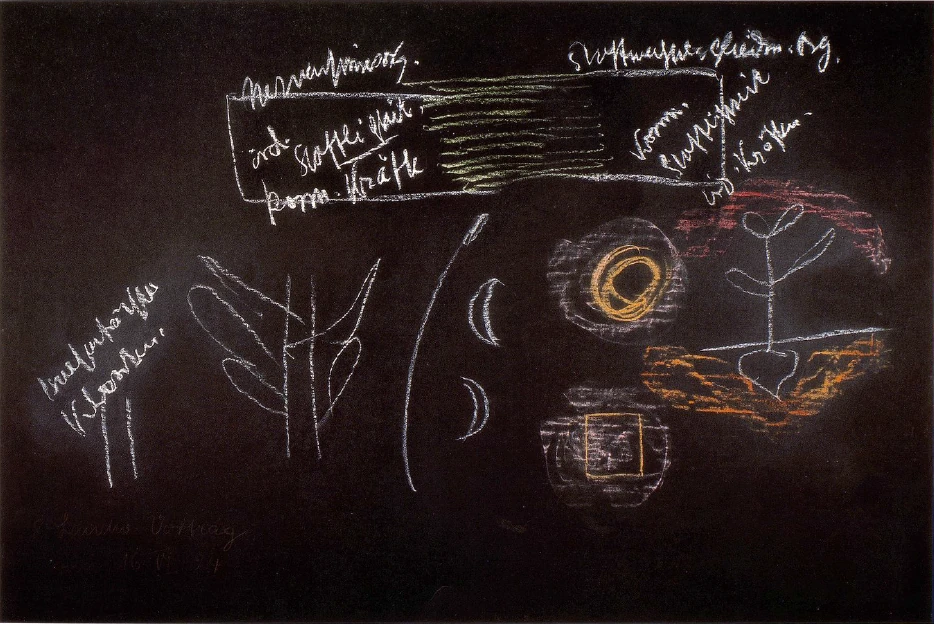
[ 8 ] Rudolf Steiner:Nun, alles dasjenige, was an Substanzen in der Kopforganisation ist — das ist ja beim Menschen auch so, aber bleiben wir beim Tiere —, was in der Kopforganisation ist, das ist von irdischer Materie. Was da an Materie drinnen ist im Kopf, ist von irdischer Materie. Schon im Embryonalen wird irdische Materie hineingeleitet in die Kopforganisation. Die Organisation des Embryos muss so eingerichtet sein, dass der Kopf seine Stoffe bekommt von der Erde aus. Also da drinnen haben wir Irdisch-Stoffliches. Dagegen alles, was wir an Stofflichkeit haben in der Stoffwechsel-Gliedmaßen-Organisation, was da unsere Därme, unsere Gliedmaßen, unsere Muskeln, unsere Knochen und so weiter durchsetzt, das stammt nicht von der Erde, sondern das stammt von demjenigen, was aus der Luft und aus der Wärme über der Erde aufgenommen wird. Das ist kosmische Stofflichkeit. Es ist wichtig, dass Sie nicht eine Klaue so ansehen, als ob sie sich bildete dadurch, dass die physische Materie, die das Tier frisst, bis zur Klaue käme und sich dort ablagerte. Das ist eben nicht wahr, sondern durch Sinne und Atmung wird aufgenommen die kosmische Materie.
[ 8 ] Rudolf Steiner:Nun, alles dasjenige, was an Substanzen in der Kopforganisation ist — das ist ja beim Menschen auch so, aber bleiben wir beim Tiere —, was in der Kopforganisation ist, das ist von irdischer Materie. Was da an Materie drinnen ist im Kopf, ist von irdischer Materie. Schon im Embryonalen wird irdische Materie hineingeleitet in die Kopforganisation. Die Organisation des Embryos muss so eingerichtet sein, dass der Kopf seine Stoffe bekommt von der Erde aus. Also da drinnen haben wir Irdisch-Stoffliches. Dagegen alles, was wir an Stofflichkeit haben in der Stoffwechsel-Gliedmaßen-Organisation, was da unsere Därme, unsere Gliedmaßen, unsere Muskeln, unsere Knochen und so weiter durchsetzt, das stammt nicht von der Erde, sondern das stammt von demjenigen, was aus der Luft und aus der Wärme über der Erde aufgenommen wird. Das ist kosmische Stofflichkeit. Es ist wichtig, dass Sie nicht eine Klaue so ansehen, als ob sie sich bildete dadurch, dass die physische Materie, die das Tier frisst, bis zur Klaue käme und sich dort ablagerte. Das ist eben nicht wahr, sondern durch Sinne und Atmung wird aufgenommen die kosmische Materie.
[ 9 ] Rudolf Steiner:Und dasjenige, was das Tier frisst, ist bloß dazu da, die Bewegungskräfte im Tier zu entwickeln, dass das Kosmische in die Stoffwechsel-Gliedmaßen-Organisation, also zur Klaue hineingetrieben werden kann, sodass hier überall kosmische Stofflichkeit ist. Dagegen mit den Kräften ist es umgekehrt. Da haben wir es im Kopfe, gerade weil da die Sinne vorzugsweise stationiert sind und die Sinne aus dem Kosmos wahrnehmen, mit kosmischen Kräften zu tun. In der Stoffwechsel-Gliedmaßen-Organisation, da haben wir es — denken Sie nur daran, wenn man geht, schaltet man sich fortwährend in die Erdenschwere ein, und so ist alles, was man mit den Gliedmaßen tut, an das Irdische gebunden —, da hat man es mit erdigen, irdischen Kräften zu tun, also mit kosmischen Stoffen und mit irdischen Kräften.
[ 9 ] Rudolf Steiner:Und dasjenige, was das Tier frisst, ist bloß dazu da, die Bewegungskräfte im Tier zu entwickeln, dass das Kosmische in die Stoffwechsel-Gliedmaßen-Organisation, also zur Klaue hineingetrieben werden kann, sodass hier überall kosmische Stofflichkeit ist. Dagegen mit den Kräften ist es umgekehrt. Da haben wir es im Kopfe, gerade weil da die Sinne vorzugsweise stationiert sind und die Sinne aus dem Kosmos wahrnehmen, mit kosmischen Kräften zu tun. In der Stoffwechsel-Gliedmaßen-Organisation, da haben wir es — denken Sie nur daran, wenn man geht, schaltet man sich fortwährend in die Erdenschwere ein, und so ist alles, was man mit den Gliedmaßen tut, an das Irdische gebunden —, da hat man es mit erdigen, irdischen Kräften zu tun, also mit kosmischen Stoffen und mit irdischen Kräften.
[ 10 ] Rudolf Steiner:Es ist wirklich nicht gleichgültig, [ob man weiß,] dass die Kuh mit ihren Gliedmaßen, die sie braucht zur Arbeit, wenn sie ein Arbeitstier werden soll, oder ein Ochse, wenn er ein Arbeitstier werden soll, dass sie so gefüttert werden, dass sie möglichst viel von der kosmischen Stofflichkeit in sich hineinkriegen und dass die Nahrung, die durch den Magen geht, so eingerichtet werden muss, dass sie viele Kräfte entwickelt, um diese kosmische Stofflichkeit überall in die Glieder, Muskeln, in die Knochen hineinzuleiten. Ebenso muss man wissen, dass man dasjenige, was man brauchen kann an Substanzen im Kopfe, gerade durch die Nahrung beziehen muss und dass in den Kopf geleitet werden müssen die verarbeiteten, durch den Magen geleiteten Nahrungsmittel. Der Kopf ist gerade auf den Magen angewiesen, nicht die große Zehe in dieser Beziehung; und man muss sich klar sein, dass der Kopf diese Nahrung, die er aus dem Leibe bekommt, nur verarbeiten kann, wenn er in entsprechender Weise die Kräfte aus dem Kosmos beziehen kann, [wenn] man also die Tiere nicht einfach in dumpfen Ställen abschließt, wo keine kosmischen Kräfte zu ihnen fließen können, sondern, [wenn] man sie über die Weide führt und überhaupt ihnen Gelegenheit gibt, auch sinnlichwahrnehmungsmäßig in Beziehung zu treten zur Umwelt. Sehen Sie, da muss man Folgendes zum Beispiel beachten:
[ 10 ] Rudolf Steiner:Es ist wirklich nicht gleichgültig, [ob man weiß,] dass die Kuh mit ihren Gliedmaßen, die sie braucht zur Arbeit, wenn sie ein Arbeitstier werden soll, oder ein Ochse, wenn er ein Arbeitstier werden soll, dass sie so gefüttert werden, dass sie möglichst viel von der kosmischen Stofflichkeit in sich hineinkriegen und dass die Nahrung, die durch den Magen geht, so eingerichtet werden muss, dass sie viele Kräfte entwickelt, um diese kosmische Stofflichkeit überall in die Glieder, Muskeln, in die Knochen hineinzuleiten. Ebenso muss man wissen, dass man dasjenige, was man brauchen kann an Substanzen im Kopfe, gerade durch die Nahrung beziehen muss und dass in den Kopf geleitet werden müssen die verarbeiteten, durch den Magen geleiteten Nahrungsmittel. Der Kopf ist gerade auf den Magen angewiesen, nicht die große Zehe in dieser Beziehung; und man muss sich klar sein, dass der Kopf diese Nahrung, die er aus dem Leibe bekommt, nur verarbeiten kann, wenn er in entsprechender Weise die Kräfte aus dem Kosmos beziehen kann, [wenn] man also die Tiere nicht einfach in dumpfen Ställen abschließt, wo keine kosmischen Kräfte zu ihnen fließen können, sondern, [wenn] man sie über die Weide führt und überhaupt ihnen Gelegenheit gibt, auch sinnlichwahrnehmungsmäßig in Beziehung zu treten zur Umwelt. Sehen Sie, da muss man Folgendes zum Beispiel beachten:
[ 11 ] Rudolf Steiner:Stellen Sie sich einmal ein Tier vor, das im dumpfen Stall an dem Futtertrog steht und dasjenige zubemessen erhält, was die Weisheit der Menschen in diesen Futtertrog tut. Ja, dieses Tier weist einen groRen Unterschied auf, wenn es nicht Abwechslung drin hat — es kann sie ja nur im Freien haben —, von dem andern Tier, das sich seiner Sinne, zum Beispiel seines Geruchsorgans bedient, sich in Freiheit draußen seine Nahrung selber sucht, dem Geruchsorgan nachgeht, nach Maßgabe des Geruchsorgans den kosmischen Kräften nachgeht, sich die Nahrung aufsucht, sie sich da selber nimmt, seine ganze Aktivität in diesem Nehmen der Nahrung drinnen entwickelt.
[ 11 ] Rudolf Steiner:Stellen Sie sich einmal ein Tier vor, das im dumpfen Stall an dem Futtertrog steht und dasjenige zubemessen erhält, was die Weisheit der Menschen in diesen Futtertrog tut. Ja, dieses Tier weist einen groRen Unterschied auf, wenn es nicht Abwechslung drin hat — es kann sie ja nur im Freien haben —, von dem andern Tier, das sich seiner Sinne, zum Beispiel seines Geruchsorgans bedient, sich in Freiheit draußen seine Nahrung selber sucht, dem Geruchsorgan nachgeht, nach Maßgabe des Geruchsorgans den kosmischen Kräften nachgeht, sich die Nahrung aufsucht, sie sich da selber nimmt, seine ganze Aktivität in diesem Nehmen der Nahrung drinnen entwickelt.
[ 12 ] Rudolf Steiner:Ein Tier, das man an den Futtertrog stellt, wird — die Dinge vererben sich ja — nicht gleich zeigen, dass es keine kosmischen Kräfte in sich hat; es vererbt sie noch, aber es erzeugt allmählich Nachkommen, welchen die kosmischen Kräfte nicht mehr in dieser Weise angeboren sind, die sie nicht mehr haben. Und das Tier wird vom Kopf aus schwach, das heißt, es kann nicht mehr den Körper ernähren, weil es nicht aufnehmen kann die kosmischen Stoffe, die gerade wieder in den Körper hineinkommen sollen. Diese Dinge zeigen Ihnen schon an, dass man eben einfach nicht im Allgemeinen sagen sollte: «Füttert in diesem Falle das, füttert in jenem Falle jenes», sondern dass man eine Vorstellung davon hervorrufen sollte, was bestimmte Fütterungsmethoden für einen Wert haben für das ganze Wesen der tierischen Organisation.
[ 12 ] Rudolf Steiner:Ein Tier, das man an den Futtertrog stellt, wird — die Dinge vererben sich ja — nicht gleich zeigen, dass es keine kosmischen Kräfte in sich hat; es vererbt sie noch, aber es erzeugt allmählich Nachkommen, welchen die kosmischen Kräfte nicht mehr in dieser Weise angeboren sind, die sie nicht mehr haben. Und das Tier wird vom Kopf aus schwach, das heißt, es kann nicht mehr den Körper ernähren, weil es nicht aufnehmen kann die kosmischen Stoffe, die gerade wieder in den Körper hineinkommen sollen. Diese Dinge zeigen Ihnen schon an, dass man eben einfach nicht im Allgemeinen sagen sollte: «Füttert in diesem Falle das, füttert in jenem Falle jenes», sondern dass man eine Vorstellung davon hervorrufen sollte, was bestimmte Fütterungsmethoden für einen Wert haben für das ganze Wesen der tierischen Organisation.
[ 13 ] Rudolf Steiner:Nun gehen wir aber weiter. Was ist denn nun eigentlich im Kopfe enthalten? Irdische Stofflichkeit. Wenn man also das edelste Organ herausschneidet aus dem Tier, das Gehirn, man hat drinnen irdische Stofflichkeit. Beim Menschen hat man im Gehirn irdische Stofflichkeit, nur die Kräfte sind kosmisch, die Stofflichkeit ist eine irdische. Wozu dient dieses Gehirn? Es dient als Unterlage für das Ich. Das Tier hat noch nicht das Ich. Halten wir das ganz richtig fest: Das Gehirn dient als Unterlage für das Ich, das Tier hat noch nicht das Ich, [es] ist erst auf dem Wege zur Ich-Bildung. Beim Menschen geht das immer weiter zu der Ich-Bildung hin. Das Tier hat also ein Gehirn; auf welche Weise ist es entstanden?
[ 13 ] Rudolf Steiner:Nun gehen wir aber weiter. Was ist denn nun eigentlich im Kopfe enthalten? Irdische Stofflichkeit. Wenn man also das edelste Organ herausschneidet aus dem Tier, das Gehirn, man hat drinnen irdische Stofflichkeit. Beim Menschen hat man im Gehirn irdische Stofflichkeit, nur die Kräfte sind kosmisch, die Stofflichkeit ist eine irdische. Wozu dient dieses Gehirn? Es dient als Unterlage für das Ich. Das Tier hat noch nicht das Ich. Halten wir das ganz richtig fest: Das Gehirn dient als Unterlage für das Ich, das Tier hat noch nicht das Ich, [es] ist erst auf dem Wege zur Ich-Bildung. Beim Menschen geht das immer weiter zu der Ich-Bildung hin. Das Tier hat also ein Gehirn; auf welche Weise ist es entstanden?
[ 14 ] Rudolf Steiner:Nehmen Sie den ganzen organischen Prozess. Alles dasjenige, was da vorgeht, dasjenige, was im Gehirn zum Vorschein kommt als Irdisch-Materielles, wird einfach ausgeschieden, ist Ausscheidung aus dem organischen Prozesse. Da wird irdische Materie ausgeschieden, um als Grundlage für das Ich zu dienen. Nun ist eine bestimmte Menge irdischer Materie auf der Grundlage des Prozesses, der von der Nahrungsaufnahme durch die Verdauungsverteilung im Stoffwechsel-Gliedmaßen-System sich bildet, fähig, um von da die irdischen Nahrungsmittel hineinzuleiten in den Kopf und das Gehirn, da ist eine bestimmte Menge irdischer Stofflichkeit, welche diesen Weg durchmacht, und die dann im Gehirn richtig abgeschieden wird. Aber es wird diese Nahrungsstofflichkeit nicht nur abgeschieden im Gehirn, sondern schon auf dem Wege im Darm. Dasjenige, was nicht weiterverarbeitet werden kann, wird im Darm abgeschieden, und hier tritt Ihnen eine Verwandtschaft entgegen, die Sie außerordentlich paradox finden werden, die aber nicht übersehen werden darf, wenn man verstehen will die tierische und auch die menschliche Organisation. Was ist die Hirnmasse? Die Hirnmasse ist einfach zu Ende geführte Darmmasse. Verfrühte Gehirnabscheidung geht durch den Darm. Der Darminhalt ist seinen Prozessen nach durchaus verwandt dem Hirninhalt.
[ 14 ] Rudolf Steiner:Nehmen Sie den ganzen organischen Prozess. Alles dasjenige, was da vorgeht, dasjenige, was im Gehirn zum Vorschein kommt als Irdisch-Materielles, wird einfach ausgeschieden, ist Ausscheidung aus dem organischen Prozesse. Da wird irdische Materie ausgeschieden, um als Grundlage für das Ich zu dienen. Nun ist eine bestimmte Menge irdischer Materie auf der Grundlage des Prozesses, der von der Nahrungsaufnahme durch die Verdauungsverteilung im Stoffwechsel-Gliedmaßen-System sich bildet, fähig, um von da die irdischen Nahrungsmittel hineinzuleiten in den Kopf und das Gehirn, da ist eine bestimmte Menge irdischer Stofflichkeit, welche diesen Weg durchmacht, und die dann im Gehirn richtig abgeschieden wird. Aber es wird diese Nahrungsstofflichkeit nicht nur abgeschieden im Gehirn, sondern schon auf dem Wege im Darm. Dasjenige, was nicht weiterverarbeitet werden kann, wird im Darm abgeschieden, und hier tritt Ihnen eine Verwandtschaft entgegen, die Sie außerordentlich paradox finden werden, die aber nicht übersehen werden darf, wenn man verstehen will die tierische und auch die menschliche Organisation. Was ist die Hirnmasse? Die Hirnmasse ist einfach zu Ende geführte Darmmasse. Verfrühte Gehirnabscheidung geht durch den Darm. Der Darminhalt ist seinen Prozessen nach durchaus verwandt dem Hirninhalt.
[ 15 ] Rudolf Steiner:Wenn ich grotesk rede, würde ich sagen, ein fortgeschrittener Dunghaufen ist das im Gehirn sich Ausbreitende; aber es ist sachlich durchaus richtig. Der Dung ist es, der durch den eigenen organischen Prozess in die Edelmasse des Gehirns umgesetzt wird und da zur Grundlage für die Ich-Entwicklung wird. Beim Menschen wird möglichst viel umgesetzt von Bauchdünger in Gehirndünger, weil der Mensch ja sein Ich auf der Erde trägt; beim Tier weniger, daher bleibt mehr drinnen in dem Bauchdünger, der dann zum wirklichen Dünger verwendet wird. Da bleibt mehr Ich in der Anlage drinnen. Weil es das Tier nicht zum Ich bringt, bleibt da mehr Ich in der Anlage drinnen. Daher sind tierischer Mist und menschlicher Mist zwei ganz verschiedene Dinge. Tierischer Mist enthält noch die Ich-Anlage. Und wir finden, wenn wir misten, wenn wir Dünger von außen her an die Wurzel, das Ich an die Wurzel, an die Pflanzen herangebracht haben, dass wir, wenn wir vollständig die Pflanze zeichnen hier unten die Wurzel haben, oben die sich entwickelnden Blätter und Blüten haben, dass sich hier das Astralische hinzuentwickelt durch den Verkehr mit der Luft, hier sich entwickelt durch den Verkehr mit dem Dünger die Ich-Anlage der Pflanze.
[ 15 ] Rudolf Steiner:Wenn ich grotesk rede, würde ich sagen, ein fortgeschrittener Dunghaufen ist das im Gehirn sich Ausbreitende; aber es ist sachlich durchaus richtig. Der Dung ist es, der durch den eigenen organischen Prozess in die Edelmasse des Gehirns umgesetzt wird und da zur Grundlage für die Ich-Entwicklung wird. Beim Menschen wird möglichst viel umgesetzt von Bauchdünger in Gehirndünger, weil der Mensch ja sein Ich auf der Erde trägt; beim Tier weniger, daher bleibt mehr drinnen in dem Bauchdünger, der dann zum wirklichen Dünger verwendet wird. Da bleibt mehr Ich in der Anlage drinnen. Weil es das Tier nicht zum Ich bringt, bleibt da mehr Ich in der Anlage drinnen. Daher sind tierischer Mist und menschlicher Mist zwei ganz verschiedene Dinge. Tierischer Mist enthält noch die Ich-Anlage. Und wir finden, wenn wir misten, wenn wir Dünger von außen her an die Wurzel, das Ich an die Wurzel, an die Pflanzen herangebracht haben, dass wir, wenn wir vollständig die Pflanze zeichnen hier unten die Wurzel haben, oben die sich entwickelnden Blätter und Blüten haben, dass sich hier das Astralische hinzuentwickelt durch den Verkehr mit der Luft, hier sich entwickelt durch den Verkehr mit dem Dünger die Ich-Anlage der Pflanze.
[ 16 ] Rudolf Steiner:Es ist wirklich solch eine Landwirtschaft ein Organismus. Da entwickelt er sein Astralisches oben, und das Vorhandensein von Obst und Wald entwickelt das Astralische. Wenn von dem, was dann über der Erde ist, die Tiere richtig fressen, dann entwickeln sie in demjenigen, was von ihnen als Dünger kommt, die richtigen Ich-Kräfte, die wiederum aus der Wurzel heraus die Pflanzen in der richtigen Weise in der Richtung der Schwerkraft wachsen lassen. Es ist eine wunderbare Wechselwirkung. Aber diese Wechselwirkung muss man vorschreitend verstehen.
[ 16 ] Rudolf Steiner:Es ist wirklich solch eine Landwirtschaft ein Organismus. Da entwickelt er sein Astralisches oben, und das Vorhandensein von Obst und Wald entwickelt das Astralische. Wenn von dem, was dann über der Erde ist, die Tiere richtig fressen, dann entwickeln sie in demjenigen, was von ihnen als Dünger kommt, die richtigen Ich-Kräfte, die wiederum aus der Wurzel heraus die Pflanzen in der richtigen Weise in der Richtung der Schwerkraft wachsen lassen. Es ist eine wunderbare Wechselwirkung. Aber diese Wechselwirkung muss man vorschreitend verstehen.
[ 17 ] Rudolf Steiner:Nun sehen Sie, dadurch, dass das so ist, ist eine Landwirtschaft eine Art Individualität.
[ 17 ] Rudolf Steiner:Nun sehen Sie, dadurch, dass das so ist, ist eine Landwirtschaft eine Art Individualität.
[ 18 ] Rudolf Steiner:Und man wird schon daraus die Einsicht bekommen, dass die Tiere mehr oder weniger in dieser Wechselwirkung drinnen erhalten sein sollen, und auch die Pflanzen mehr oder weniger in dieser Wechselwirkung erhalten werden sollen. Daher ist es in einem gewissen Sinne schon eine Beeinträchtigung der Natur, wenn man den Dünger nicht bezieht von den Tieren, die zur Landwirtschaft gehören, sondern diese Tiere abschafft und von Chile den Dunginhalt bezieht. Denn da geht man über das hinweg, dass das ein in sich selbst geschlossener Kreislauf ist, etwas ist, was in sich selbst sich erhalten soll. Natürlich muss man dann die Sache so einrichten, dass es in sich selbst sich erhalten kann. Man muss einfach so viele Tiere und solche Tiere in der Landwirtschaft haben, dass man in der Landwirtschaft genügend und richtigen Mist erhält. Und man muss wiederum darauf sehen, dass man solches anpflanzt, was die Tiere, die man haben will, durch ihren Instinkt fressen wollen, was sie sich suchen.
[ 18 ] Rudolf Steiner:Und man wird schon daraus die Einsicht bekommen, dass die Tiere mehr oder weniger in dieser Wechselwirkung drinnen erhalten sein sollen, und auch die Pflanzen mehr oder weniger in dieser Wechselwirkung erhalten werden sollen. Daher ist es in einem gewissen Sinne schon eine Beeinträchtigung der Natur, wenn man den Dünger nicht bezieht von den Tieren, die zur Landwirtschaft gehören, sondern diese Tiere abschafft und von Chile den Dunginhalt bezieht. Denn da geht man über das hinweg, dass das ein in sich selbst geschlossener Kreislauf ist, etwas ist, was in sich selbst sich erhalten soll. Natürlich muss man dann die Sache so einrichten, dass es in sich selbst sich erhalten kann. Man muss einfach so viele Tiere und solche Tiere in der Landwirtschaft haben, dass man in der Landwirtschaft genügend und richtigen Mist erhält. Und man muss wiederum darauf sehen, dass man solches anpflanzt, was die Tiere, die man haben will, durch ihren Instinkt fressen wollen, was sie sich suchen.
[ 19 ] Rudolf Steiner:Da werden natürlich die Versuche kompliziert, weil sie individuell werden. Aber da gerade handelt es sich darum, Richtungen anzugeben, wie die Versuche angestellt werden müssen. Und da wird vieles versucht werden. Dann werden sich Gebrauchsregeln ergeben, aber alle diese Gebrauchsregeln sollten aus der Richtschnur hervorgehen, dass man die Landwirtschaft möglichst so in sich abschließt, dass sich selber tragen kann. Allerdings nicht ganz. Warum? Durch eine sachliche Betrachtung in geisteswissenschaftlichem Sinne wird man niemals Fanatiker. Ganz lässt sich das innerhalb unserer heutigen Wirtschaftsordnung außen nicht erreichen. Aber so viel es möglich ist, sollte man es zu erreichen suchen. Nun sehen Sie, wenn man das nun hat, dann kann man im Konkreteren die Beziehungen des tierischen Organismus zum pflanzlichen Organismus, das heißt zum Futterorganismus, finden. Wollen wir es zunächst im großen Ganzen, im Allgemeinen anschauen.
[ 19 ] Rudolf Steiner:Da werden natürlich die Versuche kompliziert, weil sie individuell werden. Aber da gerade handelt es sich darum, Richtungen anzugeben, wie die Versuche angestellt werden müssen. Und da wird vieles versucht werden. Dann werden sich Gebrauchsregeln ergeben, aber alle diese Gebrauchsregeln sollten aus der Richtschnur hervorgehen, dass man die Landwirtschaft möglichst so in sich abschließt, dass sich selber tragen kann. Allerdings nicht ganz. Warum? Durch eine sachliche Betrachtung in geisteswissenschaftlichem Sinne wird man niemals Fanatiker. Ganz lässt sich das innerhalb unserer heutigen Wirtschaftsordnung außen nicht erreichen. Aber so viel es möglich ist, sollte man es zu erreichen suchen. Nun sehen Sie, wenn man das nun hat, dann kann man im Konkreteren die Beziehungen des tierischen Organismus zum pflanzlichen Organismus, das heißt zum Futterorganismus, finden. Wollen wir es zunächst im großen Ganzen, im Allgemeinen anschauen.
[ 20 ] Rudolf Steiner:Sehen wir uns die Wurzel an: Die Wurzel, die in der Regel in der Erde sich drinnen entwickelt, die durch den Dünger von einer werdenden Ich-Kraft durchzogen ist, sie absorbiert die werdende Ich-Kraft durch die ganze Art, wie sie in der Erde drinnen ist, und wird unterstützt im Absorbieren dieser Ich-Kraft, wenn die richtige Salzmenge von ihr gefunden werden kann in der Erde.
[ 20 ] Rudolf Steiner:Sehen wir uns die Wurzel an: Die Wurzel, die in der Regel in der Erde sich drinnen entwickelt, die durch den Dünger von einer werdenden Ich-Kraft durchzogen ist, sie absorbiert die werdende Ich-Kraft durch die ganze Art, wie sie in der Erde drinnen ist, und wird unterstützt im Absorbieren dieser Ich-Kraft, wenn die richtige Salzmenge von ihr gefunden werden kann in der Erde.
[ 21 ] Rudolf Steiner:Nehmen wir an, wir haben diese Wurzel einfach aus den Betrachtungen, die wir angestellt haben. Wir müssen nun die Wurzeln erklären als diejenigen Nahrungsmittel, die am leichtesten, wenn sie in den menschlichen Organismus hineinkommen, den Weg zum Kopfe finden durch die Verdauung. Die Wurzelnahrung werden wir daher da anwenden, wo wir die Voraussetzung machen müssen, dass wir Substanz, materielle Stoffe dem Kopfe geben wollen, damit die kosmischen Kräfte, die durch den Kopf wirken, eben den richtigen Stoff zu ihrer plastischen Tätigkeit finden. Denken Sie, es spricht einer den Satz aus: Ich muss Wurzelnahrung geben einem Tier, das nötig hat, nach dem Kopfe hin Substanz zu leiten, um in möglichst regsamer Sinnesbeziehung, das heißt kosmischer Beziehung zu der kosmischen Umgebung zu treten. — Ja, denken Sie denn da nicht gleich an das Kalb und an die Möhre? Wenn das Kalb die Möhre frisst, so haben Sie ja den ganzen Prozess erfüllt. In dem Augenblick, wo Sie so etwas aussprechen und nun wissen, wie die Dinge ausschauen und wie sie leben, lenken Sie ja Ihren Blick auf dasjenige, was geschehen soll. Sie brauchen nur zu wissen, wie dieser Wechselprozess da ist.
[ 21 ] Rudolf Steiner:Nehmen wir an, wir haben diese Wurzel einfach aus den Betrachtungen, die wir angestellt haben. Wir müssen nun die Wurzeln erklären als diejenigen Nahrungsmittel, die am leichtesten, wenn sie in den menschlichen Organismus hineinkommen, den Weg zum Kopfe finden durch die Verdauung. Die Wurzelnahrung werden wir daher da anwenden, wo wir die Voraussetzung machen müssen, dass wir Substanz, materielle Stoffe dem Kopfe geben wollen, damit die kosmischen Kräfte, die durch den Kopf wirken, eben den richtigen Stoff zu ihrer plastischen Tätigkeit finden. Denken Sie, es spricht einer den Satz aus: Ich muss Wurzelnahrung geben einem Tier, das nötig hat, nach dem Kopfe hin Substanz zu leiten, um in möglichst regsamer Sinnesbeziehung, das heißt kosmischer Beziehung zu der kosmischen Umgebung zu treten. — Ja, denken Sie denn da nicht gleich an das Kalb und an die Möhre? Wenn das Kalb die Möhre frisst, so haben Sie ja den ganzen Prozess erfüllt. In dem Augenblick, wo Sie so etwas aussprechen und nun wissen, wie die Dinge ausschauen und wie sie leben, lenken Sie ja Ihren Blick auf dasjenige, was geschehen soll. Sie brauchen nur zu wissen, wie dieser Wechselprozess da ist.
[ 22 ] Rudolf Steiner:Und gehen wir weiter. Jetzt muss, wenn nun wirklich die Substanz in den Kopf hineingeleitet ist, wenn wir dem Kalb mit der Möhre gedient haben, der umgekehrte Prozess beginnen können, das heißt, es muss der Kopf nun arbeiten können, willenshaft, und dadurch auch Kräfte erzeugen können im Organismus, sodass wiederum in den Organismus solche Kräfte hineinverarbeitet werden können. Es darf nicht bloß der Möhrenmist im Kopfe abgelagert werden, sondern es müssen von demjenigen, was da abgelagert, das heißt im Abbau begriffen ist, Kräfteausstrahlungen in den Organismus hineinkommen, das heißt, Sie müssen ein zweites Nahrungsmittel haben, was, nachdem einem Gliede des Körpers, also hier dem Kopfe, gedient ist, dieses Glied wiederum in der richtigen Weise an dem übrigen Organismus arbeiten lässt.
[ 22 ] Rudolf Steiner:Und gehen wir weiter. Jetzt muss, wenn nun wirklich die Substanz in den Kopf hineingeleitet ist, wenn wir dem Kalb mit der Möhre gedient haben, der umgekehrte Prozess beginnen können, das heißt, es muss der Kopf nun arbeiten können, willenshaft, und dadurch auch Kräfte erzeugen können im Organismus, sodass wiederum in den Organismus solche Kräfte hineinverarbeitet werden können. Es darf nicht bloß der Möhrenmist im Kopfe abgelagert werden, sondern es müssen von demjenigen, was da abgelagert, das heißt im Abbau begriffen ist, Kräfteausstrahlungen in den Organismus hineinkommen, das heißt, Sie müssen ein zweites Nahrungsmittel haben, was, nachdem einem Gliede des Körpers, also hier dem Kopfe, gedient ist, dieses Glied wiederum in der richtigen Weise an dem übrigen Organismus arbeiten lässt.
[ 23 ] Rudolf Steiner:Nun sehen Sie einmal an: Ich habe die Möhre gegeben. Ich will, dass jetzt richtig der Körper von den Kräften, die sich vom Kopfe aus entwickeln können, durchsetzt wird. Da brauche ich dasjenige, was strahlige Form hat in der Natur, oder diese strahlige Form richtig zusammensammelt in, sagen wir, konzentrierter Bildung zusammensammelt. Was braucht man da? Da braucht man als zweites Futter zu der Möhre so etwas, was in der Pflanze ins Strahlige übergeht und diese strahlende Kraft wieder zusammenfasst. Der Blick wird dann gelenkt auf Leinsamen und dergleichen. Und wenn Sie das zusammenfüttern bei Jungvieh, Möhre und Leinsamen oder etwas, was in anderer Weise so zusammenpasst, wie, sagen wir, frisches Heu mit Möhren auch, dann kriegen Sie heraus dasjenige, was wirklich in das ganze Tier beherrschend hereinwirkt, was das Tier einfach auf den Weg bringt, zu dem es veranlagt ist. Sodass wir eben werden versuchen müssen, bei Jungvieh solche Nahrung zu geben, welche auf der einen Seite die Ich-Kraft fördert und auf der anderen Seite dasjenige, was von oben nach unten geht, die astralischen Ausfüllungen fördert. Das ist insbesondere der Fall bei alle demjenigen, was langstängelig ist und in dieser Langstängeligkeit einfach überlassen wird der eigenen Entwicklung, also langstängelig ist und Heu wird. So schaut man hier auf die Sache, und so sollte man die ganze Landwirtschaft anschauen, von jedem Dinge wissen, was denn mit ihm geschieht, wenn es nun den Weg nimmt entweder vom Tier in den Boden oder von der Pflanze in das Tier hinein.
[ 23 ] Rudolf Steiner:Nun sehen Sie einmal an: Ich habe die Möhre gegeben. Ich will, dass jetzt richtig der Körper von den Kräften, die sich vom Kopfe aus entwickeln können, durchsetzt wird. Da brauche ich dasjenige, was strahlige Form hat in der Natur, oder diese strahlige Form richtig zusammensammelt in, sagen wir, konzentrierter Bildung zusammensammelt. Was braucht man da? Da braucht man als zweites Futter zu der Möhre so etwas, was in der Pflanze ins Strahlige übergeht und diese strahlende Kraft wieder zusammenfasst. Der Blick wird dann gelenkt auf Leinsamen und dergleichen. Und wenn Sie das zusammenfüttern bei Jungvieh, Möhre und Leinsamen oder etwas, was in anderer Weise so zusammenpasst, wie, sagen wir, frisches Heu mit Möhren auch, dann kriegen Sie heraus dasjenige, was wirklich in das ganze Tier beherrschend hereinwirkt, was das Tier einfach auf den Weg bringt, zu dem es veranlagt ist. Sodass wir eben werden versuchen müssen, bei Jungvieh solche Nahrung zu geben, welche auf der einen Seite die Ich-Kraft fördert und auf der anderen Seite dasjenige, was von oben nach unten geht, die astralischen Ausfüllungen fördert. Das ist insbesondere der Fall bei alle demjenigen, was langstängelig ist und in dieser Langstängeligkeit einfach überlassen wird der eigenen Entwicklung, also langstängelig ist und Heu wird. So schaut man hier auf die Sache, und so sollte man die ganze Landwirtschaft anschauen, von jedem Dinge wissen, was denn mit ihm geschieht, wenn es nun den Weg nimmt entweder vom Tier in den Boden oder von der Pflanze in das Tier hinein.
[ 24 ] Rudolf Steiner:Gehen wir weiter in dieser Sache. Nehmen wir ein Tier, das gerade in diesem Mittelgebiete stark werden soll, wo da die Kopforganisation, die Nerven-Sinnes-Organisation, sich mehr nach der Atmung hin entwickelt und wiederum, wo die Stoffwechsel-[Gliedmaßen-]Organisation sich mehr nach dem Rhythmischen hin entwickelt, wo das dann durcheinander geht. Was sind das für Tiere, die da stark werden sollen? Das sind gerade die Milchtiere. Die sollen da stark werden. In der Milchproduktion wird einfach die Forderung erfüllt, dass die Tiere in diesem Gebiet stark werden. Ja, worauf müssen wir denn da sehen? Da müssen wir darauf sehen, dass in der Strömung, die vom Kopfe nach hinten geht, die vorzugsweise eine Kräfteströmung ist, und in der Strömung, die von hinten nach vorn geht, die vorzugsweise eine Stoffströmung ist, dass da das richtige Zusammenwirken geschieht. Geschieht dieses richtige Zusammenwirken so, dass dasjenige, was von hinten nach vorn strömt, möglichst gut durchgearbeitet wird durch die Kräfte, die von vorn nach hinten strömen, dann entsteht die gute Milch und die reichliche Milch. Denn in der guten Milch ist enthalten dasjenige, was im Stoffwechsel besonders ausgebildet ist, ist enthalten eine solche stoffliche Präparierung, die noch nicht durch das Sexualsystem durchgegangen ist, aber möglichst ähnlich geworden ist im Verdauungsprozess, dem [Sexualprozess]. Die Milch ist einfach umgewandeltes Sexualdrüsensekret, umgewandelt durch dasjenige, was einem auf dem Wege zum Sexualsekret befindlichen Stoffe entgegengebracht wird von den Kopfkräften, die da hineinwirken. Man kann da ganz hineinschauen in den Prozess, der da eigentlich vor sich geht, durchaus hineinschauen kann man.
[ 24 ] Rudolf Steiner:Gehen wir weiter in dieser Sache. Nehmen wir ein Tier, das gerade in diesem Mittelgebiete stark werden soll, wo da die Kopforganisation, die Nerven-Sinnes-Organisation, sich mehr nach der Atmung hin entwickelt und wiederum, wo die Stoffwechsel-[Gliedmaßen-]Organisation sich mehr nach dem Rhythmischen hin entwickelt, wo das dann durcheinander geht. Was sind das für Tiere, die da stark werden sollen? Das sind gerade die Milchtiere. Die sollen da stark werden. In der Milchproduktion wird einfach die Forderung erfüllt, dass die Tiere in diesem Gebiet stark werden. Ja, worauf müssen wir denn da sehen? Da müssen wir darauf sehen, dass in der Strömung, die vom Kopfe nach hinten geht, die vorzugsweise eine Kräfteströmung ist, und in der Strömung, die von hinten nach vorn geht, die vorzugsweise eine Stoffströmung ist, dass da das richtige Zusammenwirken geschieht. Geschieht dieses richtige Zusammenwirken so, dass dasjenige, was von hinten nach vorn strömt, möglichst gut durchgearbeitet wird durch die Kräfte, die von vorn nach hinten strömen, dann entsteht die gute Milch und die reichliche Milch. Denn in der guten Milch ist enthalten dasjenige, was im Stoffwechsel besonders ausgebildet ist, ist enthalten eine solche stoffliche Präparierung, die noch nicht durch das Sexualsystem durchgegangen ist, aber möglichst ähnlich geworden ist im Verdauungsprozess, dem [Sexualprozess]. Die Milch ist einfach umgewandeltes Sexualdrüsensekret, umgewandelt durch dasjenige, was einem auf dem Wege zum Sexualsekret befindlichen Stoffe entgegengebracht wird von den Kopfkräften, die da hineinwirken. Man kann da ganz hineinschauen in den Prozess, der da eigentlich vor sich geht, durchaus hineinschauen kann man.
[ 25 ] Rudolf Steiner:Nun, für alle solche Prozesse, die sich bilden sollen in der Weise, müssen wir suchen diejenigen Nahrungsmittel, welche weniger nach dem Kopfe hinwirken als die Wurzeln, die die Ich-Kraft aufgenommen haben. Aber wir dürfen auch nicht, weil es ja der Sexualkraft verwandt bleiben soll, nicht zu viel Astralisches haben soll, nicht zu viel von dem nehmen, was gegen die Blüte und Frucht hin liegt. Das heißt, wir müssen, wenn es sich um die Milchproduktion handelt, auf dasjenige sehen, was zwischen Blüte und Wurzeln drinnen liegt, auf das Grüne und Blattartige, und auf alles dasjenige, was sich in Blatt und Kraut entfaltet.
[ 25 ] Rudolf Steiner:Nun, für alle solche Prozesse, die sich bilden sollen in der Weise, müssen wir suchen diejenigen Nahrungsmittel, welche weniger nach dem Kopfe hinwirken als die Wurzeln, die die Ich-Kraft aufgenommen haben. Aber wir dürfen auch nicht, weil es ja der Sexualkraft verwandt bleiben soll, nicht zu viel Astralisches haben soll, nicht zu viel von dem nehmen, was gegen die Blüte und Frucht hin liegt. Das heißt, wir müssen, wenn es sich um die Milchproduktion handelt, auf dasjenige sehen, was zwischen Blüte und Wurzeln drinnen liegt, auf das Grüne und Blattartige, und auf alles dasjenige, was sich in Blatt und Kraut entfaltet.
[ 26 ] Rudolf Steiner:Wir werden insbesondere in einem Fall, wo wir die Milch fördern wollen, von der wir glauben bei einem Tier, dass sie noch vermehrt werden könnte, diese Vermehrung sicher erreichen, wenn wir das Folgende tun.
[ 26 ] Rudolf Steiner:Wir werden insbesondere in einem Fall, wo wir die Milch fördern wollen, von der wir glauben bei einem Tier, dass sie noch vermehrt werden könnte, diese Vermehrung sicher erreichen, wenn wir das Folgende tun.
[ 27 ] Rudolf Steiner:Nehmen Sie an, ich füttere zunächst, weil es die Verhältnisse so geben, irgendeine Milchkuh mit Kraut-, Laubartigem. Ich will die Milchproduktion vermehren. Ich stelle mir vor, dass ich die Milchproduktion vermehren kann. Was tue ich dann? Ich verwende jetzt Pflanzen, welche den Fruchtprozess, das, was in Blüten und in der Befruchtung sich abspielt, hereinholen in den Laub- und in den Krautprozess. Das tun zum Beispiel die Hülsenfrüchte oder namentlich die Kleearten. Im Stofflichen des Klees entwickelt sich verschiedenes, das fruchtartig ist, gerade wie ein Kraut. Man wird, wenn man die Kuh so behandelt, an ihr selbst noch nicht viel sehen; aber wenn die Kuh dann kalbt — das Ganze geht gewöhnlich durch eine Generation durch, was man so durch Fütterung reformiert —, dann wird das Kalb eine gut milchende Kuh.
[ 27 ] Rudolf Steiner:Nehmen Sie an, ich füttere zunächst, weil es die Verhältnisse so geben, irgendeine Milchkuh mit Kraut-, Laubartigem. Ich will die Milchproduktion vermehren. Ich stelle mir vor, dass ich die Milchproduktion vermehren kann. Was tue ich dann? Ich verwende jetzt Pflanzen, welche den Fruchtprozess, das, was in Blüten und in der Befruchtung sich abspielt, hereinholen in den Laub- und in den Krautprozess. Das tun zum Beispiel die Hülsenfrüchte oder namentlich die Kleearten. Im Stofflichen des Klees entwickelt sich verschiedenes, das fruchtartig ist, gerade wie ein Kraut. Man wird, wenn man die Kuh so behandelt, an ihr selbst noch nicht viel sehen; aber wenn die Kuh dann kalbt — das Ganze geht gewöhnlich durch eine Generation durch, was man so durch Fütterung reformiert —, dann wird das Kalb eine gut milchende Kuh.
[ 28 ] Rudolf Steiner:Nun wird man da auf eins bei diesen Dingen ganz besonders sehen müssen. Man hat ja zumeist, als die alten Traditionen aus der instinkthaften Weisheit auf diesem Gebiete geschwunden sind, einiges festgehalten, wie die Ärzte einige Heilmittel festgehalten haben, obwohl sie nicht mehr wissen warum; aber sie haben sie festgehalten, weil sie immer geholfen haben. So weiß man einiges von alten "Traditionen, man weiß zwar nicht, warum man es anwendet, und im Übrigen probiert man, gibt nun die Menge an, die man ausprobiert, die man also dem Mastvieh, dem Milchvieh und so weiter gibt. Und nun geht es ja wirklich bei dieser Sache oftmals so, wie es halt beim menschlichen Herumprobieren überhaupt geht, besonders wenn dieses Herumprobieren ganz dem Zufall überlassen ist. Denken Sie, was einem passiert, wenn man irgendwo, wenn man unter vielen Menschen ist, Halsweh hat, man kriegt von jedem Menschen, wenn der einen lieb hat, irgendetwas. Man hat dann in einer halben Stunde eine ganze Apotheke zusammen. Würde man das nehmen, so würde eins das andere aufheben, und man würde sich gewiss den Magen recht gründlich verderben, aber die Halsschmerzen würden nicht besser. Da wird einfach durch die Verhältnisse das Einfache, was geschehen soll, in ein ganz Kompliziertes verwandelt.
[ 28 ] Rudolf Steiner:Nun wird man da auf eins bei diesen Dingen ganz besonders sehen müssen. Man hat ja zumeist, als die alten Traditionen aus der instinkthaften Weisheit auf diesem Gebiete geschwunden sind, einiges festgehalten, wie die Ärzte einige Heilmittel festgehalten haben, obwohl sie nicht mehr wissen warum; aber sie haben sie festgehalten, weil sie immer geholfen haben. So weiß man einiges von alten "Traditionen, man weiß zwar nicht, warum man es anwendet, und im Übrigen probiert man, gibt nun die Menge an, die man ausprobiert, die man also dem Mastvieh, dem Milchvieh und so weiter gibt. Und nun geht es ja wirklich bei dieser Sache oftmals so, wie es halt beim menschlichen Herumprobieren überhaupt geht, besonders wenn dieses Herumprobieren ganz dem Zufall überlassen ist. Denken Sie, was einem passiert, wenn man irgendwo, wenn man unter vielen Menschen ist, Halsweh hat, man kriegt von jedem Menschen, wenn der einen lieb hat, irgendetwas. Man hat dann in einer halben Stunde eine ganze Apotheke zusammen. Würde man das nehmen, so würde eins das andere aufheben, und man würde sich gewiss den Magen recht gründlich verderben, aber die Halsschmerzen würden nicht besser. Da wird einfach durch die Verhältnisse das Einfache, was geschehen soll, in ein ganz Kompliziertes verwandelt.
[ 29 ] Rudolf Steiner:Aber etwas ganz Ähnliches geht vor, wenn man mit Futtermitteln herumprobiert. Denn, nicht wahr, man wendet etwas an, das stimmt in einer gewissen Richtung, in einer anderen nicht. Jetzt wendet man ein zweites an, tut das wieder dazu, und so bekommt man hieraus eine Anzahl von Futtermitteln, von denen jedes eine gewisse Bedeutung hat für Jungvieh oder Mastvieh; aber es wird alles so kompliziert, dass man es ja jetzt überhaupt nicht mehr überschauen kann, weil man die Kräfteverhältnisse nicht mehr überschauen kann. Oder aber es wird sich gegenseitig aufheben in seiner Wirkungsweise. Das ist dasjenige, was in der Tat vielfach eintritt und was insbesondere bei denjenigen eintritt, die die Landwirtschaft so mit einer halben Studiertheit betreiben. Die schauen in den Büchern nach, oder sie erinnern sich an dasjenige, was sie gelernt haben: «Jungvieh muss man so füttern, Mastvieh so.» Da schauen sie nach. Aber dabei kann nicht sehr viel herauskommen, weil ja unter Umständen dasjenige, was man da aus den Büchern herausliest, in unrichtiger Weise widersprechen kann demjenigen, was man ohnedies auch schon gibt. Rationell wird man nur vorgehen, wenn man von solcher Denkweise ausgeht, wie ich sie angedeutet habe, und wenn man ausgeht von solcher Denkweise, die die Ernährung des Tieres mannigfach vereinfacht, sodass man sie überschauen kann.
[ 29 ] Rudolf Steiner:Aber etwas ganz Ähnliches geht vor, wenn man mit Futtermitteln herumprobiert. Denn, nicht wahr, man wendet etwas an, das stimmt in einer gewissen Richtung, in einer anderen nicht. Jetzt wendet man ein zweites an, tut das wieder dazu, und so bekommt man hieraus eine Anzahl von Futtermitteln, von denen jedes eine gewisse Bedeutung hat für Jungvieh oder Mastvieh; aber es wird alles so kompliziert, dass man es ja jetzt überhaupt nicht mehr überschauen kann, weil man die Kräfteverhältnisse nicht mehr überschauen kann. Oder aber es wird sich gegenseitig aufheben in seiner Wirkungsweise. Das ist dasjenige, was in der Tat vielfach eintritt und was insbesondere bei denjenigen eintritt, die die Landwirtschaft so mit einer halben Studiertheit betreiben. Die schauen in den Büchern nach, oder sie erinnern sich an dasjenige, was sie gelernt haben: «Jungvieh muss man so füttern, Mastvieh so.» Da schauen sie nach. Aber dabei kann nicht sehr viel herauskommen, weil ja unter Umständen dasjenige, was man da aus den Büchern herausliest, in unrichtiger Weise widersprechen kann demjenigen, was man ohnedies auch schon gibt. Rationell wird man nur vorgehen, wenn man von solcher Denkweise ausgeht, wie ich sie angedeutet habe, und wenn man ausgeht von solcher Denkweise, die die Ernährung des Tieres mannigfach vereinfacht, sodass man sie überschauen kann.
[ 30 ] Rudolf Steiner:Sagen wir, man kann überschauen: Gelbe Rüben oder Möhren und Leinsamen, die wirken in dieser Weise. Man überschaut das. Man puddelt jetzt nicht alles durcheinander. Man überschaut dasjenige, was man gibt, in seiner Wirkung. Denken Sie, wie man da in der Landwirtschaft darinnen steht, wenn man das so macht, ganz bewusst, ganz besonnen. Und so wird man Erkenntnisse nicht für die Komplizierung, sondern für [die] Vereinfachung der Fütterungsweise gewinnen. Manches, sogar sehr vieles, ist richtig von demjenigen, was allmählich durch Probieren herausgefunden worden ist, aber es ist unsystematisch und unexakt. Gerade diese Art von Exaktheit, die man heute anwendet, ist in Wirklichkeit unexakt, weil die Dinge durcheinandergepuddelt werden und man sie nicht durchschaut, während man so etwas, wie ich es vorgebracht habe, in seiner Einfachheit und einfachen Wirkungsweise aufeinander bis in den tierischen Organismus hinein gut verfolgen kann. Nehmen wir ein anderes.
[ 30 ] Rudolf Steiner:Sagen wir, man kann überschauen: Gelbe Rüben oder Möhren und Leinsamen, die wirken in dieser Weise. Man überschaut das. Man puddelt jetzt nicht alles durcheinander. Man überschaut dasjenige, was man gibt, in seiner Wirkung. Denken Sie, wie man da in der Landwirtschaft darinnen steht, wenn man das so macht, ganz bewusst, ganz besonnen. Und so wird man Erkenntnisse nicht für die Komplizierung, sondern für [die] Vereinfachung der Fütterungsweise gewinnen. Manches, sogar sehr vieles, ist richtig von demjenigen, was allmählich durch Probieren herausgefunden worden ist, aber es ist unsystematisch und unexakt. Gerade diese Art von Exaktheit, die man heute anwendet, ist in Wirklichkeit unexakt, weil die Dinge durcheinandergepuddelt werden und man sie nicht durchschaut, während man so etwas, wie ich es vorgebracht habe, in seiner Einfachheit und einfachen Wirkungsweise aufeinander bis in den tierischen Organismus hinein gut verfolgen kann. Nehmen wir ein anderes.
[ 31 ] Rudolf Steiner:Nehmen wir einmal die Sache so, dass wir nach dem mehr Blütenhaften sehen, nach dem, was fruchtend wirkt in der Blüte. Aber da müssen wir noch weitergehen, da müssen wir auch auf das Fruchtende sehen im übrigen Teil der Pflanze. Die Pflanze hat ja etwas, wodurch sie insbesondere Goethe so gefallen hat. Sie hat in ihrem ganzen Leibe wiederum Anlage von dem, was sonst spezialisiert ist. Nicht wahr, bei anderen Pflanzen geben wir dasjenige, was als die Fruchtanlage in der Blüte erscheint, in die Erde, um neue Pflanzen zu erhalten, bei der Kartoffel machen wir es nicht so. Da verwenden wir die Augen der Knollen. Bei vielen Pflanzen machen wir es nicht so, da ist das Fruchtende da. Nun kann man dieses Fruchtende, was noch nicht bis zu seinem Letzten getrieben ist in der Natur — es wird nicht alles bis zum Letzten getrieben in der Natur —, in seiner Wirkungsweise immer steigern durch diejenigen Prozesse, die der äußeren Verbrennung äußerlich irgendwie ähnlich sind.
[ 31 ] Rudolf Steiner:Nehmen wir einmal die Sache so, dass wir nach dem mehr Blütenhaften sehen, nach dem, was fruchtend wirkt in der Blüte. Aber da müssen wir noch weitergehen, da müssen wir auch auf das Fruchtende sehen im übrigen Teil der Pflanze. Die Pflanze hat ja etwas, wodurch sie insbesondere Goethe so gefallen hat. Sie hat in ihrem ganzen Leibe wiederum Anlage von dem, was sonst spezialisiert ist. Nicht wahr, bei anderen Pflanzen geben wir dasjenige, was als die Fruchtanlage in der Blüte erscheint, in die Erde, um neue Pflanzen zu erhalten, bei der Kartoffel machen wir es nicht so. Da verwenden wir die Augen der Knollen. Bei vielen Pflanzen machen wir es nicht so, da ist das Fruchtende da. Nun kann man dieses Fruchtende, was noch nicht bis zu seinem Letzten getrieben ist in der Natur — es wird nicht alles bis zum Letzten getrieben in der Natur —, in seiner Wirkungsweise immer steigern durch diejenigen Prozesse, die der äußeren Verbrennung äußerlich irgendwie ähnlich sind.
[ 32 ] Rudolf Steiner:Dasjenige also, was etwa von der Pflanze in Trockenschnitzeln hereinkommt, wird erhöht in seiner Wirksamkeit, wenn man es etwas dämpfen lässt im Sonnenlicht ausgebreitet, da wird der Prozess, der veranlagt ist, etwas weiter geführt nach der Frukuifizierung hin. Da liegt eigentlich ein wunderbarer Instinkt zugrunde. Wenn man die Welt verständig betrachtet, dann fragt man sich wirklich eigentlich: Warum sind denn die Menschen auf das Kochen der Nahrungsmittel gekommen? Es ist schon eine Frage. Man frägt nur das gewöhnlich nicht, was alltäglich um einen ist. Warum sind die Menschen aufs Kochen der Nahrungsmittel gekommen? Sie sind aufs Kochen der Nahrungsmittel gekommen, weil sie eben nach und nach gefunden haben, dass in alledem, was nach dem Fruchtenden hinwirkt, eine Rolle spielen die Prozesse, die im Kochen liegen, die in dem Verbrennungsprozess, Erwärmungsprozess, Trocknungsprozess, Dämpfungsprozess liegen, weil alle diese Prozesse vor allen Dingen das Blütenhafte und Samenhafte, aber dann indirekt auch die übrigen Teile der Pflanze, namentlich die nach oben gelegenen, geeignet machen, in besonders starker Weise die Kräfte zu entwickeln, die entwickelt werden sollen im Stoffwechsel-Gliedmaßen-System des Tieres. Schon wenn wir die Blüte, den Samen nehmen, so wirken Blüte und Samenteile der Pflanze so auf das Stoffwechselsystem, auf das Verdauungssystem des Tieres, dass sie dort vorzugsweise durch ihre Kraftentwicklung wirken, nicht durch ihre Stofflichkeit. Denn irdische Kräfte braucht das Stoffwechsel-Gliedmaßen-System. Und in demselben Maße, wie es sie braucht, muss es sie bekommen.
[ 32 ] Rudolf Steiner:Dasjenige also, was etwa von der Pflanze in Trockenschnitzeln hereinkommt, wird erhöht in seiner Wirksamkeit, wenn man es etwas dämpfen lässt im Sonnenlicht ausgebreitet, da wird der Prozess, der veranlagt ist, etwas weiter geführt nach der Frukuifizierung hin. Da liegt eigentlich ein wunderbarer Instinkt zugrunde. Wenn man die Welt verständig betrachtet, dann fragt man sich wirklich eigentlich: Warum sind denn die Menschen auf das Kochen der Nahrungsmittel gekommen? Es ist schon eine Frage. Man frägt nur das gewöhnlich nicht, was alltäglich um einen ist. Warum sind die Menschen aufs Kochen der Nahrungsmittel gekommen? Sie sind aufs Kochen der Nahrungsmittel gekommen, weil sie eben nach und nach gefunden haben, dass in alledem, was nach dem Fruchtenden hinwirkt, eine Rolle spielen die Prozesse, die im Kochen liegen, die in dem Verbrennungsprozess, Erwärmungsprozess, Trocknungsprozess, Dämpfungsprozess liegen, weil alle diese Prozesse vor allen Dingen das Blütenhafte und Samenhafte, aber dann indirekt auch die übrigen Teile der Pflanze, namentlich die nach oben gelegenen, geeignet machen, in besonders starker Weise die Kräfte zu entwickeln, die entwickelt werden sollen im Stoffwechsel-Gliedmaßen-System des Tieres. Schon wenn wir die Blüte, den Samen nehmen, so wirken Blüte und Samenteile der Pflanze so auf das Stoffwechselsystem, auf das Verdauungssystem des Tieres, dass sie dort vorzugsweise durch ihre Kraftentwicklung wirken, nicht durch ihre Stofflichkeit. Denn irdische Kräfte braucht das Stoffwechsel-Gliedmaßen-System. Und in demselben Maße, wie es sie braucht, muss es sie bekommen.
[ 33 ] Rudolf Steiner:Nehmen wir auf Alpen weidende Tiere überhaupt. Die sind ja nicht so, wie die in der Ebene befindlichen, sondern die müssen herumgehen unter schwierigen Verhältnissen. Die Verhältnisse sind noch dadurch schwierig, dass der Erdboden nicht eben ist. Es ist etwas anderes, ob sie auf einem ebenen oder geneigten Erdboden herumgehen. So müssen solche Tiere in sich bekommen dasjenige, was die durch den Willen anzuspannenden Kräfte in der GliedmaRengegend entwickelt. Sonst würden sie weder gute Arbeits-, noch Milch-, noch Masttiere. Man muss daher sorgen, dass sie genügend Nahrung bekommen, die aus den aromatischen Alpenkräutern stammt, wo durch den Sonnenkochprozess gegen die Blüten hin das Fruchtende, Blühende, weiter behandelt worden ist, sogar durch die Natur selber. Aber auch durch das künstliche Weiterbehandeln wird Kraft in die Glieder hineingebracht, namentlich wenn dieses künstliche Behandeln auf Kochen, Sieden und so weiter sich bezieht. Am besten ist, was aus Fruchtendem, Blühendem der Pflanze stammt, und namentlich dann, wenn so behandelt werden Pflanzen, die von vornherein sich stark auf das Blühen und Fruchten einstellen, die wenig Krautartiges und Blattartiges entwickeln, sondern dazu übergehen, um gleich zu blühen und Frucht zu tragen. Alles das, was wenig Wert legt auf das Krautartigwerden, was wuchert im Blühen, im Fruchttragen, das sollen wir kochen.
[ 33 ] Rudolf Steiner:Nehmen wir auf Alpen weidende Tiere überhaupt. Die sind ja nicht so, wie die in der Ebene befindlichen, sondern die müssen herumgehen unter schwierigen Verhältnissen. Die Verhältnisse sind noch dadurch schwierig, dass der Erdboden nicht eben ist. Es ist etwas anderes, ob sie auf einem ebenen oder geneigten Erdboden herumgehen. So müssen solche Tiere in sich bekommen dasjenige, was die durch den Willen anzuspannenden Kräfte in der GliedmaRengegend entwickelt. Sonst würden sie weder gute Arbeits-, noch Milch-, noch Masttiere. Man muss daher sorgen, dass sie genügend Nahrung bekommen, die aus den aromatischen Alpenkräutern stammt, wo durch den Sonnenkochprozess gegen die Blüten hin das Fruchtende, Blühende, weiter behandelt worden ist, sogar durch die Natur selber. Aber auch durch das künstliche Weiterbehandeln wird Kraft in die Glieder hineingebracht, namentlich wenn dieses künstliche Behandeln auf Kochen, Sieden und so weiter sich bezieht. Am besten ist, was aus Fruchtendem, Blühendem der Pflanze stammt, und namentlich dann, wenn so behandelt werden Pflanzen, die von vornherein sich stark auf das Blühen und Fruchten einstellen, die wenig Krautartiges und Blattartiges entwickeln, sondern dazu übergehen, um gleich zu blühen und Frucht zu tragen. Alles das, was wenig Wert legt auf das Krautartigwerden, was wuchert im Blühen, im Fruchttragen, das sollen wir kochen.
[ 34 ] Rudolf Steiner:Und die Menschen werden sehr guttun, auch für sich manchmal solche Dinge zu beachten, sonst würden nicht die Dinge herauskommen, die von Menschen ausgehen, die auf der schiefen Ebene sind des Trägewerdens, also Faulwerdens. Denn auf dieser schiefen Ebene kann man sein, daher kann man ganz gut sich sagen, wenn ich da den ganzen Tag herumhantiere, da kann ich doch kein richtiger Mystiker werden. Richtiger Mystiker kann ich nur werden, wenn ich ganz ruhig werde, wenn ich nicht immer Veranlassung habe, nicht durch mich selbst, nicht durch meine Umgebung, mich rege zu machen, wenn ich so werde, dass ich meiner Umgebung sagen kann: Ich habe nicht die Kräfte zum Herumarbeiten, dann werde ich schon ein richtiger Mystiker werden. Also ich versuche auch meine Nahrung so einzurichten, dass ich ein richtiger Mystiker werde. Nun, da wird man Rohkostler, da kocht man sich nichts mehr, wird man richtiger Rohkostler. Aber nun sehen Sie: Die Dinge kaschieren sich ja alle, sie kommen nicht in der ordentlichen Weise heraus. Denn natürlich ist es wieder so, dass, wenn einer Rohkostler wird, der stark auf der schiefen Ebene zur Mystik ist auf diese Art, und ist er von vornherein eine physisch schwache Natur, dann kommt er schon weiter, dann wird er große Fortschritte machen, er wird immer träger und träger, das heißt immer mystischer. Was beim Menschen eintritt, können wir durchaus auf das Tier anwenden, werden also wissen, wie wir das Tier regsam machen müssen.
[ 34 ] Rudolf Steiner:Und die Menschen werden sehr guttun, auch für sich manchmal solche Dinge zu beachten, sonst würden nicht die Dinge herauskommen, die von Menschen ausgehen, die auf der schiefen Ebene sind des Trägewerdens, also Faulwerdens. Denn auf dieser schiefen Ebene kann man sein, daher kann man ganz gut sich sagen, wenn ich da den ganzen Tag herumhantiere, da kann ich doch kein richtiger Mystiker werden. Richtiger Mystiker kann ich nur werden, wenn ich ganz ruhig werde, wenn ich nicht immer Veranlassung habe, nicht durch mich selbst, nicht durch meine Umgebung, mich rege zu machen, wenn ich so werde, dass ich meiner Umgebung sagen kann: Ich habe nicht die Kräfte zum Herumarbeiten, dann werde ich schon ein richtiger Mystiker werden. Also ich versuche auch meine Nahrung so einzurichten, dass ich ein richtiger Mystiker werde. Nun, da wird man Rohkostler, da kocht man sich nichts mehr, wird man richtiger Rohkostler. Aber nun sehen Sie: Die Dinge kaschieren sich ja alle, sie kommen nicht in der ordentlichen Weise heraus. Denn natürlich ist es wieder so, dass, wenn einer Rohkostler wird, der stark auf der schiefen Ebene zur Mystik ist auf diese Art, und ist er von vornherein eine physisch schwache Natur, dann kommt er schon weiter, dann wird er große Fortschritte machen, er wird immer träger und träger, das heißt immer mystischer. Was beim Menschen eintritt, können wir durchaus auf das Tier anwenden, werden also wissen, wie wir das Tier regsam machen müssen.
[ 35 ] Rudolf Steiner:Es kann auch der andere Fall beim Menschen da sein. Er kann eine starke physische Natur sein und erst später die Verschrobenheit bekommen haben, ein Mystiker zu werden. Er kann starke physische Kräfte in sich haben. Dann werden einfach in ihm jene Prozesse, die er hat, und dazu die Kräfte, die die Rohkost, die er gegessen hat, da drinnen weiterbearbeiten, entwickelt. Dann kann es ihm wenig schaden. Und wenn er dann die Kräfte aufruft, die sonst unten bleiben und die den Rheumatismus und die Gicht erzeugen, wenn er die Kräfte aufruft und weiterverarbeitet, der Rohkostler, dann wird er umso stärker wiederum.
[ 35 ] Rudolf Steiner:Es kann auch der andere Fall beim Menschen da sein. Er kann eine starke physische Natur sein und erst später die Verschrobenheit bekommen haben, ein Mystiker zu werden. Er kann starke physische Kräfte in sich haben. Dann werden einfach in ihm jene Prozesse, die er hat, und dazu die Kräfte, die die Rohkost, die er gegessen hat, da drinnen weiterbearbeiten, entwickelt. Dann kann es ihm wenig schaden. Und wenn er dann die Kräfte aufruft, die sonst unten bleiben und die den Rheumatismus und die Gicht erzeugen, wenn er die Kräfte aufruft und weiterverarbeitet, der Rohkostler, dann wird er umso stärker wiederum.
[ 36 ] Rudolf Steiner:Alle die Dinge haben zwei Seiten, so wie die Waage zwei Waagschalen hat. Deshalb muss man es verstehen, wie sie sich individualisieren. Man kann nicht allgemeine Prinzipien geben. Und das ist der Vorteil der vegetarischen Lebensweise, dass sie einen aus dem Grunde stärker macht, weil man Kräfte, die man sonst brachliegen lässt im Organismus und die wirklich dieselben Kräfte sind wie diejenigen, die Gicht, Rheumatismus, Diabetes und so weiter erzeugen, herausholt aus dem Organismus. Und wenn man die Pflanzenkost nur hat, so müssen diese Kräfte die Pflanzen für den Menschen reif machen. Wenn man aber gleich die Tiere isst, so werden diese Kräfte in den Organismus hinein abgelagert, bleiben ohne Verwendung und verwenden sich dann selber, indem sie die Stoffwechselprodukte ablagern an den verschiedensten Stellen, oder aus den Organen notwendige Dinge heraustreiben, für sich in Anspruch nehmen, die der Mensch haben sollte, wie bei Diabetes und so weiter. Man versteht diese Dinge nur, wenn man in die Sache hineinsieht.
[ 36 ] Rudolf Steiner:Alle die Dinge haben zwei Seiten, so wie die Waage zwei Waagschalen hat. Deshalb muss man es verstehen, wie sie sich individualisieren. Man kann nicht allgemeine Prinzipien geben. Und das ist der Vorteil der vegetarischen Lebensweise, dass sie einen aus dem Grunde stärker macht, weil man Kräfte, die man sonst brachliegen lässt im Organismus und die wirklich dieselben Kräfte sind wie diejenigen, die Gicht, Rheumatismus, Diabetes und so weiter erzeugen, herausholt aus dem Organismus. Und wenn man die Pflanzenkost nur hat, so müssen diese Kräfte die Pflanzen für den Menschen reif machen. Wenn man aber gleich die Tiere isst, so werden diese Kräfte in den Organismus hinein abgelagert, bleiben ohne Verwendung und verwenden sich dann selber, indem sie die Stoffwechselprodukte ablagern an den verschiedensten Stellen, oder aus den Organen notwendige Dinge heraustreiben, für sich in Anspruch nehmen, die der Mensch haben sollte, wie bei Diabetes und so weiter. Man versteht diese Dinge nur, wenn man in die Sache hineinsieht.
[ 37 ] Rudolf Steiner:Und dann wird es sich darum handeln, die Frage, wie man Tiere mästet, so zu behandeln, dass man sich sagt: Da muss das geschehen, dass wie in einen Sack möglichst viel von kosmischer Substanz hineingetragen wird. Ach, die Schweine, die fetten, sind ja so himmlische Tiere! Denn in ihrem fetten Leibe, da haben sie ja, insofern es nicht Nerven-Sinnes-System ist, ganz kosmische Substanz, nicht irdische. Sie brauchen ja dasjenige, was sie genießen, nur dazu, um diese ganze Fülle von kosmischer Substanz, die von allen Seiten aufgenommen werden muss von den Schweinen, wiederum in dem Körper zu verteilen. Das Schwein muss das fressen, damit es diese Substanz, die aus dem Kosmos gezogen werden muss, verteilen kann. Die Kräfte muss es in sich haben, dass es sie verteilen kann, ebenso andere Masttiere. Daher werden Sie sehen, dass diese Masttiere fett werden, wenn Sie ihnen Fruchtendes, möglichst in weiterbehandeltem, durch Kochen oder Dämpfen weiterbehandeltem Zustande geben, und wenn Sie ihnen solches geben, was schon das Fruchtende in sich hat, aber etwas gesteigert in sich hat, möglichst also, sagen wir, Rüben, die schon vergrößert sind durch eine Art von weitergehendem Prozess, als der ist, den sie ursprünglich hatten, Rüben, die schon durch die weitere Kultivierung größer geworden sind, als sie früher waren im wilden Zustand.
[ 37 ] Rudolf Steiner:Und dann wird es sich darum handeln, die Frage, wie man Tiere mästet, so zu behandeln, dass man sich sagt: Da muss das geschehen, dass wie in einen Sack möglichst viel von kosmischer Substanz hineingetragen wird. Ach, die Schweine, die fetten, sind ja so himmlische Tiere! Denn in ihrem fetten Leibe, da haben sie ja, insofern es nicht Nerven-Sinnes-System ist, ganz kosmische Substanz, nicht irdische. Sie brauchen ja dasjenige, was sie genießen, nur dazu, um diese ganze Fülle von kosmischer Substanz, die von allen Seiten aufgenommen werden muss von den Schweinen, wiederum in dem Körper zu verteilen. Das Schwein muss das fressen, damit es diese Substanz, die aus dem Kosmos gezogen werden muss, verteilen kann. Die Kräfte muss es in sich haben, dass es sie verteilen kann, ebenso andere Masttiere. Daher werden Sie sehen, dass diese Masttiere fett werden, wenn Sie ihnen Fruchtendes, möglichst in weiterbehandeltem, durch Kochen oder Dämpfen weiterbehandeltem Zustande geben, und wenn Sie ihnen solches geben, was schon das Fruchtende in sich hat, aber etwas gesteigert in sich hat, möglichst also, sagen wir, Rüben, die schon vergrößert sind durch eine Art von weitergehendem Prozess, als der ist, den sie ursprünglich hatten, Rüben, die schon durch die weitere Kultivierung größer geworden sind, als sie früher waren im wilden Zustand.
[ 38 ] Rudolf Steiner:Und auf diese Weise kann man wiederum sich fragen, was muss man also zum Beispiel einem Masttier geben? Etwas, was möglichst zur Verteilung der kosmischen Substanz beiträgt, also dasjenige, was erstens gegen das Fruchtende zu liegt und dann außerdem noch behandelt worden ist in der richtigen Weise. Solch eine Bedingung ist im Wesentlichen erfüllt bei gewissen Ölkuchen und dergleichen. Aber wir müssen auch das wiederum haben, dass bei einem solchen Tier der Kopf nicht ganz unversorgt bleibt, dass durch eine solche Mastkur doch noch etwas durchgeht in den Kopf hinauf an Substanzen des Irdischen. Wir müssen also dem Vorigen etwas entgegenstellen, was wir nun in kleiner Menge geben müssen, weil ja der Kopf dann nicht so viel braucht. Also wir müssen es in kleinen Mengen geben. Daher sollte man Masttieren dennoch, wenn auch in kleiner Dosierung, dem Futter beimischen Wurzelhaftes.
[ 38 ] Rudolf Steiner:Und auf diese Weise kann man wiederum sich fragen, was muss man also zum Beispiel einem Masttier geben? Etwas, was möglichst zur Verteilung der kosmischen Substanz beiträgt, also dasjenige, was erstens gegen das Fruchtende zu liegt und dann außerdem noch behandelt worden ist in der richtigen Weise. Solch eine Bedingung ist im Wesentlichen erfüllt bei gewissen Ölkuchen und dergleichen. Aber wir müssen auch das wiederum haben, dass bei einem solchen Tier der Kopf nicht ganz unversorgt bleibt, dass durch eine solche Mastkur doch noch etwas durchgeht in den Kopf hinauf an Substanzen des Irdischen. Wir müssen also dem Vorigen etwas entgegenstellen, was wir nun in kleiner Menge geben müssen, weil ja der Kopf dann nicht so viel braucht. Also wir müssen es in kleinen Mengen geben. Daher sollte man Masttieren dennoch, wenn auch in kleiner Dosierung, dem Futter beimischen Wurzelhaftes.
[ 39 ] Rudolf Steiner:Sehen Sie, nun gibt es eine Stoffart — der reine Stoff —, die keine spezielle Aufgabe hat. Im Allgemeinen kann man sagen, das Wurzelhafte hat die Aufgabe gegenüber dem Kopf, das Blütenhafte hat die Aufgabe gegenüber dem Stoffwechsel-Gliedmaßen-System, das Laubartige, Krautartige gegenüber dem rhythmischen System mit seiner Substanzialität im menschlichen Organismus. Dasjenige, durch das man nachhelfen muss, weil es auf alle Glieder der tierischen Organisation Bezug hat, das ist das Salzartige. Und da die Nahrung zum wenigsten aus Salz besteht, sowohl beim Menschen wie beim Tier, so sehen Sie daraus, gerade aus dem Zusatz von Salz, dass nicht immer die Menge es ausmacht, sondern die richtige [Qualität], dass es sich darum handelt, dass auch die kleinen Mengen in der richtigen [Quantität] durchaus ihren Zweck erfüllen.
[ 39 ] Rudolf Steiner:Sehen Sie, nun gibt es eine Stoffart — der reine Stoff —, die keine spezielle Aufgabe hat. Im Allgemeinen kann man sagen, das Wurzelhafte hat die Aufgabe gegenüber dem Kopf, das Blütenhafte hat die Aufgabe gegenüber dem Stoffwechsel-Gliedmaßen-System, das Laubartige, Krautartige gegenüber dem rhythmischen System mit seiner Substanzialität im menschlichen Organismus. Dasjenige, durch das man nachhelfen muss, weil es auf alle Glieder der tierischen Organisation Bezug hat, das ist das Salzartige. Und da die Nahrung zum wenigsten aus Salz besteht, sowohl beim Menschen wie beim Tier, so sehen Sie daraus, gerade aus dem Zusatz von Salz, dass nicht immer die Menge es ausmacht, sondern die richtige [Qualität], dass es sich darum handelt, dass auch die kleinen Mengen in der richtigen [Quantität] durchaus ihren Zweck erfüllen.
[ 40 ] Rudolf Steiner:Nun ist noch auf ein besonders Wichtiges hinzuweisen, bei dem ich bitten würde, richtig exakt Versuche zu machen, die auch ausgedehnt werden können auf die Beobachtung des Menschen, wenn er zu dem betreffenden Nahrungsmittel hinneigt. Sie wissen ja, dass in neuerer Zeit, verhältnismäßig erst seit kurzer Zeit, die Tomate als eine Art Nahrungsmittel eingeführt ist. Sie ist bei vielen sehr beliebt. Sie ist aber auch ein außerordentlich wichtiges Studienobjekt. Man kann an der 'Tomatenproduktion und der Tomatenverzehrung außerordentlich viel lernen. Diejenigen Menschen — und es gibt heute durchaus solche —, die über diese Dinge ein wenig nachdenken, die finden ja, und zwar ganz mit Recht, dass der Tomatengenuss eine große Bedeutung hat beim Menschen — und man kann das durchaus auf das Tier ausdehnen, könnte Tiere an Tomaten gewöhnen —, eine große Bedeutung hat für alles dasjenige im Organismus, was im Organismus am meisten aus dem Organismus herausfällt und eine eigene Organisation im Organismus annimmt, Sehen Sie, daraus folgt zweierlei. Die Bestätigung der von einem Amerikaner gemachten Angabe, dass unter Umständen der Tomatengenuss als diätetisches Mittel günstig wirkt auf die krankhafte Neigung der menschlichen Leber, weil die Leber dasjenige Organ ist, das am meisten in Selbstständigkeit wirkt im menschlichen Organismus, sodass man Leberkrankheiten, die mehr Erkrankungen sind der tierischen Leber, auch im allgemeinen eben durch die Tomate bekämpfen könnte.
[ 40 ] Rudolf Steiner:Nun ist noch auf ein besonders Wichtiges hinzuweisen, bei dem ich bitten würde, richtig exakt Versuche zu machen, die auch ausgedehnt werden können auf die Beobachtung des Menschen, wenn er zu dem betreffenden Nahrungsmittel hinneigt. Sie wissen ja, dass in neuerer Zeit, verhältnismäßig erst seit kurzer Zeit, die Tomate als eine Art Nahrungsmittel eingeführt ist. Sie ist bei vielen sehr beliebt. Sie ist aber auch ein außerordentlich wichtiges Studienobjekt. Man kann an der 'Tomatenproduktion und der Tomatenverzehrung außerordentlich viel lernen. Diejenigen Menschen — und es gibt heute durchaus solche —, die über diese Dinge ein wenig nachdenken, die finden ja, und zwar ganz mit Recht, dass der Tomatengenuss eine große Bedeutung hat beim Menschen — und man kann das durchaus auf das Tier ausdehnen, könnte Tiere an Tomaten gewöhnen —, eine große Bedeutung hat für alles dasjenige im Organismus, was im Organismus am meisten aus dem Organismus herausfällt und eine eigene Organisation im Organismus annimmt, Sehen Sie, daraus folgt zweierlei. Die Bestätigung der von einem Amerikaner gemachten Angabe, dass unter Umständen der Tomatengenuss als diätetisches Mittel günstig wirkt auf die krankhafte Neigung der menschlichen Leber, weil die Leber dasjenige Organ ist, das am meisten in Selbstständigkeit wirkt im menschlichen Organismus, sodass man Leberkrankheiten, die mehr Erkrankungen sind der tierischen Leber, auch im allgemeinen eben durch die Tomate bekämpfen könnte.
[ 41 ] Rudolf Steiner:Sie sehen, da schaut man hinein zunächst in den Zusammenhang zwischen der Pflanze und dem Tier. Man sollte daher — das will ich in Parenthese sagen — demjenigen, der an einem Karzinom leidet, das also von vornherein ein gewisses Gebiet selbstständig macht im menschlichen Organismus, im tierischen Organismus, man sollte einem Menschen, der an einem Karzinom leidet, sofort den Tomatengenuss verbieten. Aber nun fragen wir uns: Wie kommt denn das, womit hängt denn das zusammen, dass die Tomate ganz. besonders auf dasjenige wirkt, was selbstständig ist im Organismus, was sich so herausspezialisiert im Organismus?
[ 41 ] Rudolf Steiner:Sie sehen, da schaut man hinein zunächst in den Zusammenhang zwischen der Pflanze und dem Tier. Man sollte daher — das will ich in Parenthese sagen — demjenigen, der an einem Karzinom leidet, das also von vornherein ein gewisses Gebiet selbstständig macht im menschlichen Organismus, im tierischen Organismus, man sollte einem Menschen, der an einem Karzinom leidet, sofort den Tomatengenuss verbieten. Aber nun fragen wir uns: Wie kommt denn das, womit hängt denn das zusammen, dass die Tomate ganz. besonders auf dasjenige wirkt, was selbstständig ist im Organismus, was sich so herausspezialisiert im Organismus?
[ 42 ] Rudolf Steiner:Das hängt damit zusammen, was die Tomate zu ihrer eigentlichen Entstehung will und braucht. Die Tomate fühlt sich am wohlsten in ihrer Entstehung, wenn sie möglichst solchen Dünger hat, der noch seine ursprüngliche Gestalt hat, wie er sich vom Tier abgesondert hat, und wie er sich von etwas anderem abgesondert hat. Wenn der Dünger nicht lange sich durcharbeiten kann in der Natur, wenn er so ganz wilder Dünger ist, wenn Sie irgendwo Abfälle zusammenwerfen und Sie würden einen ganz ungeordneten Düngerhaufen, Komposthaufen bekommen, wo möglichst viel drinnen liegt, wie es eben entstanden ist, noch gar nicht weiter verarbeitet und präpariert, wenn Sie da Tomaten ansetzen, dann werden Sie sehen, die schönsten Tomaten bilden sich. Und wenn Sie gar verwenden würden Komposthaufen, die aus dem Tomatenkraut selber entstanden sind, wenn Sie also die Tomate auf ihrem eigenen Mist wachsen lassen, so entwickelt sie sich ganz glänzend. Die Tomate will gar nicht aus sich herausgehen, gar nicht aus dem starken Lebendigen herausgehen. Sie will darinnen stehen bleiben. Die Tomate ist das ungeselligste Wesen im Pflanzenreich. Sie will nichts von Fremden irgendwie hernehmen. Sie weist vor allen Dingen dasjenige, was einmal einen Prozess durchgemacht hat als Dünger, von sich zurück, sie will das nicht. Und damit hängt dies zusammen, dass sie wieder auf die selbsiständige Organisation im menschlichen und tierischen Organismus wirken kann.
[ 42 ] Rudolf Steiner:Das hängt damit zusammen, was die Tomate zu ihrer eigentlichen Entstehung will und braucht. Die Tomate fühlt sich am wohlsten in ihrer Entstehung, wenn sie möglichst solchen Dünger hat, der noch seine ursprüngliche Gestalt hat, wie er sich vom Tier abgesondert hat, und wie er sich von etwas anderem abgesondert hat. Wenn der Dünger nicht lange sich durcharbeiten kann in der Natur, wenn er so ganz wilder Dünger ist, wenn Sie irgendwo Abfälle zusammenwerfen und Sie würden einen ganz ungeordneten Düngerhaufen, Komposthaufen bekommen, wo möglichst viel drinnen liegt, wie es eben entstanden ist, noch gar nicht weiter verarbeitet und präpariert, wenn Sie da Tomaten ansetzen, dann werden Sie sehen, die schönsten Tomaten bilden sich. Und wenn Sie gar verwenden würden Komposthaufen, die aus dem Tomatenkraut selber entstanden sind, wenn Sie also die Tomate auf ihrem eigenen Mist wachsen lassen, so entwickelt sie sich ganz glänzend. Die Tomate will gar nicht aus sich herausgehen, gar nicht aus dem starken Lebendigen herausgehen. Sie will darinnen stehen bleiben. Die Tomate ist das ungeselligste Wesen im Pflanzenreich. Sie will nichts von Fremden irgendwie hernehmen. Sie weist vor allen Dingen dasjenige, was einmal einen Prozess durchgemacht hat als Dünger, von sich zurück, sie will das nicht. Und damit hängt dies zusammen, dass sie wieder auf die selbsiständige Organisation im menschlichen und tierischen Organismus wirken kann.
[ 43 ] Rudolf Steiner:Und verwandt mit der Tomate ist in gewisser Beziehung nach der angedeuteten Richtung die Kartoffel. Die wirkt auch stark selbstständig, allerdings so selbstständig, dass sie vorzugsweise leicht durchgeht den ganzen Verdauungsprozess und ins Gehirn eindringt und das Gehirn dann selbstständig macht, selbstständig sogar von der Wirkung der übrigen menschlichen Organe. Und unter demjenigen, was die Menschen und Tiere seit der Erfindung des Kartoffelbaus in Europa materialistisch gemacht hat, ist gerade der übertriebene Kartoffelgenuss. Der Kartoffelgenuss darf nur so weit gehen, dass er in uns anregt das Gehirnmäßige, das Kopfmäßige. Aber man darf gerade den Kartoffelgenuss nicht übertreiben.
[ 43 ] Rudolf Steiner:Und verwandt mit der Tomate ist in gewisser Beziehung nach der angedeuteten Richtung die Kartoffel. Die wirkt auch stark selbstständig, allerdings so selbstständig, dass sie vorzugsweise leicht durchgeht den ganzen Verdauungsprozess und ins Gehirn eindringt und das Gehirn dann selbstständig macht, selbstständig sogar von der Wirkung der übrigen menschlichen Organe. Und unter demjenigen, was die Menschen und Tiere seit der Erfindung des Kartoffelbaus in Europa materialistisch gemacht hat, ist gerade der übertriebene Kartoffelgenuss. Der Kartoffelgenuss darf nur so weit gehen, dass er in uns anregt das Gehirnmäßige, das Kopfmäßige. Aber man darf gerade den Kartoffelgenuss nicht übertreiben.
[ 44 ] Rudolf Steiner:Das sind alles Dinge, durch deren Erkenntnis die Landwirtschaft im Innersten zusammenhängt dann mit dem sozialen Leben eben in sachlicher Weise. Und das ist so unendlich wichtig, dass die Landwirtschaft mit dem ganzen sozialen Leben zusammenhängt.
[ 44 ] Rudolf Steiner:Das sind alles Dinge, durch deren Erkenntnis die Landwirtschaft im Innersten zusammenhängt dann mit dem sozialen Leben eben in sachlicher Weise. Und das ist so unendlich wichtig, dass die Landwirtschaft mit dem ganzen sozialen Leben zusammenhängt.
[ 45 ] Rudolf Steiner:Ich konnte natürlich über diese Dinge nur einzelne Richtlinien geben, die aber eine lange Zeit hindurch gerade auf diesem Gebiete Grundlagen für die mannigfaltigsten Versuche sein können. Da werden glänzende Dinge herauskommen, wenn man sie jetzt sehr versuchsmäßig hineinverarbeitet. Das soll ja auch die Richtschnur dafür abgeben, wie wir behandeln dasjenige, was in diesem Kursus hier gegeben worden ist. Ich bin vollständig einverstanden mit demjenigen, was die in diesem Kursus anwesenden Landwirte beschlossen haben, streng beschlossen haben: dass dasjenige, was an diese Kursusteilnehmer herangetreten ist, zunächst in dem Kreise der Landwirte verbleibt, dass es gesteigert wird zu Versuchen, und dass dann die Gemeinschaft der Landwirte, dieser Ring, den Zeitpunkt feststellt, wenn er glaubt, dass er mit seinen Versuchen so weit ist, dass die Sachen veröffentlicht werden können.
[ 45 ] Rudolf Steiner:Ich konnte natürlich über diese Dinge nur einzelne Richtlinien geben, die aber eine lange Zeit hindurch gerade auf diesem Gebiete Grundlagen für die mannigfaltigsten Versuche sein können. Da werden glänzende Dinge herauskommen, wenn man sie jetzt sehr versuchsmäßig hineinverarbeitet. Das soll ja auch die Richtschnur dafür abgeben, wie wir behandeln dasjenige, was in diesem Kursus hier gegeben worden ist. Ich bin vollständig einverstanden mit demjenigen, was die in diesem Kursus anwesenden Landwirte beschlossen haben, streng beschlossen haben: dass dasjenige, was an diese Kursusteilnehmer herangetreten ist, zunächst in dem Kreise der Landwirte verbleibt, dass es gesteigert wird zu Versuchen, und dass dann die Gemeinschaft der Landwirte, dieser Ring, den Zeitpunkt feststellt, wenn er glaubt, dass er mit seinen Versuchen so weit ist, dass die Sachen veröffentlicht werden können.
[ 46 ] Rudolf Steiner:Aus der so anerkennenswerten Toleranz, die entwickelt worden ist, haben ja eine Anzahl von Interessenten, die nicht direkt Landwirte sind, teilnehmen können an diesem Kurse. Die werden also sich an die bekannte Oper erinnern, ein Schloss anlegen am Munde und nicht in den allgemeinen anthroposophischen Fehler verfallen, nun alle diese Dinge so weithin zu verkünden, als man nur irgend kann. Denn gerade durch das ist uns oft so vielfach geschadet worden, dass von Persönlichkeiten, die nicht eigentlich aus einem Impetus heraus eine Sache zu sagen haben, der sachlich ist, sondern die einfach nachreden, dass aus diesem Impetus heraus die Dinge weitergetragen werden.
[ 46 ] Rudolf Steiner:Aus der so anerkennenswerten Toleranz, die entwickelt worden ist, haben ja eine Anzahl von Interessenten, die nicht direkt Landwirte sind, teilnehmen können an diesem Kurse. Die werden also sich an die bekannte Oper erinnern, ein Schloss anlegen am Munde und nicht in den allgemeinen anthroposophischen Fehler verfallen, nun alle diese Dinge so weithin zu verkünden, als man nur irgend kann. Denn gerade durch das ist uns oft so vielfach geschadet worden, dass von Persönlichkeiten, die nicht eigentlich aus einem Impetus heraus eine Sache zu sagen haben, der sachlich ist, sondern die einfach nachreden, dass aus diesem Impetus heraus die Dinge weitergetragen werden.
[ 47 ] Rudolf Steiner:Es ist ein großer Unterschied, ob über diese Dinge ein Landwirt redet oder einer, der ganz ferne steht der Landwirtschaft. Es macht eben einen Unterschied, man kann das auch gleich erkennen. Aber was würde herauskommen, wenn einfach durch die Nichtlandwirte alles das weitergetragen würde als ein interessantes anthroposophisches Lehrkapitel? Es würde herauskommen, was gegenüber verschiedenen Zyklen vorgekommen ist, dass einfach die Leute, auch Landwirte, das von anderen Seiten hören würden. Landwirte, nun ja, wenn sie es hören von den Landwirten, sagen sic halt, es ist ja schade, dass der so verrückt geworden ist. Aber das sagen sie vielleicht das erste und das zweite Mal. Aber wenn dann ein Landwirt etwas sieht, da ist es ihm doch nicht so ganz geheuer, das abzuweisen. Aber wenn sie es von einer Seite hören, die nicht dazu berufen ist, sondern sich nur dafür interessiert, dann natürlich, dann ist die Sache überhaupt aufgeschmissen. Dann kann die Sache nicht weiterwirken, weil sie ja diskreditiert ist. Es ist notwendig, dass diejenigen Freunde, die nur aus Interesse teilnehmen durften, die nicht im landwirtschaftlichen Ringe sind, dass sie eben Zurückhaltung bewahren, die Sache für sich bewahren und sie nicht überall hintragen, wie man es sonst mit Anthroposophie so gerne macht. Das ist von dem landwirtschaftlichen Ring beschlossen worden, heute von unserem sehr verehrten Herrn Grafen Keyserlingk mitgeteilt worden, und ich kann mich damit im vollsten Sinne des Wortes für einverstanden erklären.
[ 47 ] Rudolf Steiner:Es ist ein großer Unterschied, ob über diese Dinge ein Landwirt redet oder einer, der ganz ferne steht der Landwirtschaft. Es macht eben einen Unterschied, man kann das auch gleich erkennen. Aber was würde herauskommen, wenn einfach durch die Nichtlandwirte alles das weitergetragen würde als ein interessantes anthroposophisches Lehrkapitel? Es würde herauskommen, was gegenüber verschiedenen Zyklen vorgekommen ist, dass einfach die Leute, auch Landwirte, das von anderen Seiten hören würden. Landwirte, nun ja, wenn sie es hören von den Landwirten, sagen sic halt, es ist ja schade, dass der so verrückt geworden ist. Aber das sagen sie vielleicht das erste und das zweite Mal. Aber wenn dann ein Landwirt etwas sieht, da ist es ihm doch nicht so ganz geheuer, das abzuweisen. Aber wenn sie es von einer Seite hören, die nicht dazu berufen ist, sondern sich nur dafür interessiert, dann natürlich, dann ist die Sache überhaupt aufgeschmissen. Dann kann die Sache nicht weiterwirken, weil sie ja diskreditiert ist. Es ist notwendig, dass diejenigen Freunde, die nur aus Interesse teilnehmen durften, die nicht im landwirtschaftlichen Ringe sind, dass sie eben Zurückhaltung bewahren, die Sache für sich bewahren und sie nicht überall hintragen, wie man es sonst mit Anthroposophie so gerne macht. Das ist von dem landwirtschaftlichen Ring beschlossen worden, heute von unserem sehr verehrten Herrn Grafen Keyserlingk mitgeteilt worden, und ich kann mich damit im vollsten Sinne des Wortes für einverstanden erklären.
[ 48 ] Rudolf Steiner:Im übrigen darf ich wohl, da wir jetzt mit Ausnahme der Diskussionsstunde, die dann folgen wird, am Ende dieser Vorträge stehen, Ihnen zuerst meine Befriedigung ausdrücken, dass Sie hierher haben kommen wollen und teilnehmen wollen an demjenigen, was hier gesagt werden konnte, und an demjenigen, was dann daraus werden soll, was sich weiterentwickeln soll. Und auf der anderen Seite darf ich wohl zum Ausdruck bringen, dass ich mit Ihnen allen übereinstimme, wenn ich sage, dasjenige, was sich hier abgespielt hat, soll nützliche Arbeit sein und hat als solche einen intensiv inneren Wert. Aber denken Sie nur einmal an zwei Dinge: Was alles war notwendig an Energie des Grafen Keyserlingk, der Gräfin Keyserlingk, der Mitglieder des Hauses Keyserlingk, um das alles hier so zustande zu bringen, wie dieser Kursus geworden ist. Dazu gehören Energie, Zielbewusstheit, anthroposophischer Wirklichkeitssinn, reines Drinnenstehen in der Sache der Anthroposophie, Opferwilligkeit und alles Mögliche. Und dadurch ist ja auch noch das geworden, dass für Sie alle wahrscheinlich dasjenige, was viele Arbeit war, eine Arbeit, die sogar nach großen, fruchtbaren Zielen für die ganze Menschheit hinstreben soll, dass sich das hingestellt hat, während wir hier waren, in den Rahmen eines, ja, eines wirklichen Festes, so wie die Dinge hier getrieben worden sind. Gleich nach fünf Minuten werden Sie wieder ein kleines Beispiel haben können. Und alles andere, was sich daran angereiht hat, nicht zuletzt die außerordentliche herzliche Liebenswürdigkeit aller Hausleute, all das hat ja ganz eingeschlossen diese Arbeit in den Rahmen eines ganz wunderbaren Festes, und wir haben mit einer landwirtschaftlichen Tagung ein ganz richtiges landwirtschaftliches Fest hier gefeiert und werden dann auch in der richtigen Weise herzinniglich der Gräfin und dem Grafen Keyserlingk und dem ganzen Keyserlingk’schen Hause unseren tiefgefühlten Dank darbringen für alles dasjenige, was sie in diesen zehn Tagen im Dienste der Sache und für die freundschaftliche, liebenswürdige Art des Aufenthalts hier an uns allen getan haben.
[ 48 ] Rudolf Steiner:Im übrigen darf ich wohl, da wir jetzt mit Ausnahme der Diskussionsstunde, die dann folgen wird, am Ende dieser Vorträge stehen, Ihnen zuerst meine Befriedigung ausdrücken, dass Sie hierher haben kommen wollen und teilnehmen wollen an demjenigen, was hier gesagt werden konnte, und an demjenigen, was dann daraus werden soll, was sich weiterentwickeln soll. Und auf der anderen Seite darf ich wohl zum Ausdruck bringen, dass ich mit Ihnen allen übereinstimme, wenn ich sage, dasjenige, was sich hier abgespielt hat, soll nützliche Arbeit sein und hat als solche einen intensiv inneren Wert. Aber denken Sie nur einmal an zwei Dinge: Was alles war notwendig an Energie des Grafen Keyserlingk, der Gräfin Keyserlingk, der Mitglieder des Hauses Keyserlingk, um das alles hier so zustande zu bringen, wie dieser Kursus geworden ist. Dazu gehören Energie, Zielbewusstheit, anthroposophischer Wirklichkeitssinn, reines Drinnenstehen in der Sache der Anthroposophie, Opferwilligkeit und alles Mögliche. Und dadurch ist ja auch noch das geworden, dass für Sie alle wahrscheinlich dasjenige, was viele Arbeit war, eine Arbeit, die sogar nach großen, fruchtbaren Zielen für die ganze Menschheit hinstreben soll, dass sich das hingestellt hat, während wir hier waren, in den Rahmen eines, ja, eines wirklichen Festes, so wie die Dinge hier getrieben worden sind. Gleich nach fünf Minuten werden Sie wieder ein kleines Beispiel haben können. Und alles andere, was sich daran angereiht hat, nicht zuletzt die außerordentliche herzliche Liebenswürdigkeit aller Hausleute, all das hat ja ganz eingeschlossen diese Arbeit in den Rahmen eines ganz wunderbaren Festes, und wir haben mit einer landwirtschaftlichen Tagung ein ganz richtiges landwirtschaftliches Fest hier gefeiert und werden dann auch in der richtigen Weise herzinniglich der Gräfin und dem Grafen Keyserlingk und dem ganzen Keyserlingk’schen Hause unseren tiefgefühlten Dank darbringen für alles dasjenige, was sie in diesen zehn Tagen im Dienste der Sache und für die freundschaftliche, liebenswürdige Art des Aufenthalts hier an uns allen getan haben.
Vierte Fragenbeantwortung
Vierte Fragenbeantwortung
Hat Jauche die gleiche Ich-Organisationskraft wie der Dung?
Hat Jauche die gleiche Ich-Organisationskraft wie der Dung?
[ 49 ] Rudolf Steiner: Es kommt natürlich bei der Frage im Wesentlichen darauf an, dass man Jauche und Dung in entsprechender Vereinigung verwendet, also sie verwendet so, dass beide zu der Organisationskraft des Bodens zusammenwirken. Dieser Zusammenhang mit dem Ich gilt ganz für den Dung. [Aber nicht im Allgemeinen gilt das für den Dünger.] Denn ein jedes Ich, auch in der Anlage, wie es im Dung ist, muss wiederum im Zusammenhange wirken mit etwas Astralischem, und der Dung würde keine Astralität haben, wenn nicht die Jauche dabei wäre. Die Jauche unterstützt das. Sie hat stärkere astralische Kraft. Der Dung hat stärkere Ich-Kraft. Der Dung ist mehr Gehirn und die Jauche ist mehr Gehirnsekret, astralische Kraft, mehr das, was flüssig ist am Gehirn, mehr Gehirnwasser.
[ 49 ] Rudolf Steiner: Es kommt natürlich bei der Frage im Wesentlichen darauf an, dass man Jauche und Dung in entsprechender Vereinigung verwendet, also sie verwendet so, dass beide zu der Organisationskraft des Bodens zusammenwirken. Dieser Zusammenhang mit dem Ich gilt ganz für den Dung. [Aber nicht im Allgemeinen gilt das für den Dünger.] Denn ein jedes Ich, auch in der Anlage, wie es im Dung ist, muss wiederum im Zusammenhange wirken mit etwas Astralischem, und der Dung würde keine Astralität haben, wenn nicht die Jauche dabei wäre. Die Jauche unterstützt das. Sie hat stärkere astralische Kraft. Der Dung hat stärkere Ich-Kraft. Der Dung ist mehr Gehirn und die Jauche ist mehr Gehirnsekret, astralische Kraft, mehr das, was flüssig ist am Gehirn, mehr Gehirnwasser.
Könnten hier die Angaben gemacht werden für die Gestirnkonstellationen zur Herstellung der Verbrennungspräparate?
Könnten hier die Angaben gemacht werden für die Gestirnkonstellationen zur Herstellung der Verbrennungspräparate?
Dr. [Elisabeth] Vreede: Die genauen Angaben können hier nicht gemacht werden. Hierzu sind noch Berechnungen notwendig, die im Augenblicke nicht gemacht werden können. Im Allgemeinen gilt für die Insektenverbrennung die Zeit von Anfang Februar bis in den August hinein. Für die Feldmausvertilgung würde in diesem Jahre die Perioden verschieben sich von Jahr zu Jahr — die Zeit von zweite Hälfte November bis erste Hälfte Dezember infrage kommen.
Dr. [Elisabeth] Vreede: Die genauen Angaben können hier nicht gemacht werden. Hierzu sind noch Berechnungen notwendig, die im Augenblicke nicht gemacht werden können. Im Allgemeinen gilt für die Insektenverbrennung die Zeit von Anfang Februar bis in den August hinein. Für die Feldmausvertilgung würde in diesem Jahre die Perioden verschieben sich von Jahr zu Jahr — die Zeit von zweite Hälfte November bis erste Hälfte Dezember infrage kommen.
[ 50 ] Rudolf Steiner: Die Prinzipien des anthroposophischen Kalenders, wie er dazumal veranlagt war, müssten genauer ausgeführt werden, dann könnte man sich nach solchem Kalender ganz genau richten.
[ 50 ] Rudolf Steiner: Die Prinzipien des anthroposophischen Kalenders, wie er dazumal veranlagt war, müssten genauer ausgeführt werden, dann könnte man sich nach solchem Kalender ganz genau richten.
Wenn von Vollmond und Neumond die Rede ist, ist nur der Tag des Voll- oder des Neumondes gemeint, oder ist da auch die Zeit kurz vor oder kurz nachher gemeint?
Wenn von Vollmond und Neumond die Rede ist, ist nur der Tag des Voll- oder des Neumondes gemeint, oder ist da auch die Zeit kurz vor oder kurz nachher gemeint?
[ 51 ] Da rechnet man den Neumond vom Momente ab, wo ungefähr dieses Bild auftritt. Dieses Bild ist da, es verschwindet da. [Wo der Mond nur als schmale Sichel da ist und dann verschwindet. Vollmond rechnet man von der Zeit ab, wo dieses Bild auftritt.] Ungefähr zwölf bis vierzehn Tage immer.
[ 51 ] Da rechnet man den Neumond vom Momente ab, wo ungefähr dieses Bild auftritt. Dieses Bild ist da, es verschwindet da. [Wo der Mond nur als schmale Sichel da ist und dann verschwindet. Vollmond rechnet man von der Zeit ab, wo dieses Bild auftritt.] Ungefähr zwölf bis vierzehn Tage immer.
Kann man die Insekten, die in der Zeit der betreffenden Konstellationen nicht zu haben sind, aufbewahren bis zur Verbrennung?
Kann man die Insekten, die in der Zeit der betreffenden Konstellationen nicht zu haben sind, aufbewahren bis zur Verbrennung?
[ 52 ] Wann die Präparate hergestellt werden sollen, werden wir noch genauer feststellen. Man kann die einzelnen Insektenformen aufbewahren.
[ 52 ] Wann die Präparate hergestellt werden sollen, werden wir noch genauer feststellen. Man kann die einzelnen Insektenformen aufbewahren.
Muss die Verbrennung des Unkrautsamens im Sommer oder kann sie zu jeder beliebigen Zeit erfolgen?
Muss die Verbrennung des Unkrautsamens im Sommer oder kann sie zu jeder beliebigen Zeit erfolgen?
[ 53 ] Nicht allzu lange danach, wenn man sie erhalten hat.
[ 53 ] Nicht allzu lange danach, wenn man sie erhalten hat.
Wie ist es mit dem Ausstrenen von diesem Insektenpfeffer, der von Insekten stammt, die eigentlich gar nicht mit der Erde in Berührung kommen?
Wie ist es mit dem Ausstrenen von diesem Insektenpfeffer, der von Insekten stammt, die eigentlich gar nicht mit der Erde in Berührung kommen?
[ 54 ] Doch, auch in die Erde. Es handelt sich dabei darum, dass es auf die physische Berührung beim Insekt durchaus nicht ankommt, sondern auf die Eigenschaft, die in dieser homöopathischen Dosis gegeben wird. Das Insekt hat eine ganz andere Art von Sensitivität, und es flieht gerade dasjenige, was da entsteht, wenn man das Betreffende zum Ausstreuen in die Erde verwendet. Das hindert gar nicht, dass das Insekt nicht mit der Erde in Berührung kommt.
[ 54 ] Doch, auch in die Erde. Es handelt sich dabei darum, dass es auf die physische Berührung beim Insekt durchaus nicht ankommt, sondern auf die Eigenschaft, die in dieser homöopathischen Dosis gegeben wird. Das Insekt hat eine ganz andere Art von Sensitivität, und es flieht gerade dasjenige, was da entsteht, wenn man das Betreffende zum Ausstreuen in die Erde verwendet. Das hindert gar nicht, dass das Insekt nicht mit der Erde in Berührung kommt.
Wie verhält es sich mit der Schädlichkeit des Frostes für die Landwirtschaft, insbesondere für die Tomate? Und in welchem kosmischen Zusammenhang ist der Frost zu verstehen?
Wie verhält es sich mit der Schädlichkeit des Frostes für die Landwirtschaft, insbesondere für die Tomate? Und in welchem kosmischen Zusammenhang ist der Frost zu verstehen?
[ 55 ] Wenn die Tomate schön und groß werden soll, ist sie im Warmen zu halten. Sie leidet sehr unter Frost. Was den Frost im Allgemeinen anbelangt, so müssen Sie sich nur klarmachen, was in den Frostwirkungen zum Ausdrucke kommt. Frostwirkungen sind immer eine wesentliche Verstärkung des kosmischen Einflusses, der in der Erde tätig ist. Nun hat dieser kosmische Einfluss ein normales Mittel, wenn wir bestimmte Temperaturgrade haben. Bei bestimmten Temperaturgraden ist dieser Einfluss gerade derjenige, den die Pflanze braucht. Wenn wir nun einmal dauernden und auch zu intensiven, zu tief gehenden Frost haben, so ist die Einwirkung des Himmels auf die Erde zu stark, und wir bekommen in den Pflanzen die Tendenz, heraus nach den verschiedenen Richtungen hin zu verstängeln, Faden zu bilden, also sich in Dünnheit auszubreiten, und das wird auch natürlich unter Umständen, weil es wiederum dünn ist, durch den außen bestehenden Frost sogleich in Empfang genommen und wird vernichtet, sodass wir in dem Frost, der zu weit geht, haben würden eine Erscheinung, die schon dem Pflanzenwachstum außerordentlich schädlich sein muss, weil eben zu viel Himmel da in den Erdboden hineinkommt.
[ 55 ] Wenn die Tomate schön und groß werden soll, ist sie im Warmen zu halten. Sie leidet sehr unter Frost. Was den Frost im Allgemeinen anbelangt, so müssen Sie sich nur klarmachen, was in den Frostwirkungen zum Ausdrucke kommt. Frostwirkungen sind immer eine wesentliche Verstärkung des kosmischen Einflusses, der in der Erde tätig ist. Nun hat dieser kosmische Einfluss ein normales Mittel, wenn wir bestimmte Temperaturgrade haben. Bei bestimmten Temperaturgraden ist dieser Einfluss gerade derjenige, den die Pflanze braucht. Wenn wir nun einmal dauernden und auch zu intensiven, zu tief gehenden Frost haben, so ist die Einwirkung des Himmels auf die Erde zu stark, und wir bekommen in den Pflanzen die Tendenz, heraus nach den verschiedenen Richtungen hin zu verstängeln, Faden zu bilden, also sich in Dünnheit auszubreiten, und das wird auch natürlich unter Umständen, weil es wiederum dünn ist, durch den außen bestehenden Frost sogleich in Empfang genommen und wird vernichtet, sodass wir in dem Frost, der zu weit geht, haben würden eine Erscheinung, die schon dem Pflanzenwachstum außerordentlich schädlich sein muss, weil eben zu viel Himmel da in den Erdboden hineinkommt.
Soll man mit den Verbrennungsrückständen der Bremsen etwa den Tierkörper behandeln oder diese Rückstände nur auf Wiesen und Weiden ausstreuen?
Soll man mit den Verbrennungsrückständen der Bremsen etwa den Tierkörper behandeln oder diese Rückstände nur auf Wiesen und Weiden ausstreuen?
[ 56 ] Wo das Tier frisst. Man streut diese tierischen Überreste auf den Feldern aus. Sie sind alle als Zusatz zu dem Dünger gedacht.
[ 56 ] Wo das Tier frisst. Man streut diese tierischen Überreste auf den Feldern aus. Sie sind alle als Zusatz zu dem Dünger gedacht.
Wie kann man wohl am besten die Quecke bekämpfen? Es ist sehr schwer, den Queckensamen zu bekommen.
Wie kann man wohl am besten die Quecke bekämpfen? Es ist sehr schwer, den Queckensamen zu bekommen.
[ 57 ] Diese Art und Weise der Vermehrung der Quecke, die Sie gemeint haben, wo man nicht zum Samen kommt, die hebt sich zum Schlusse selber auf. Wenn man keinen Samen kriegt, so hat man sie in Wirklichkeit auch nicht. Wenn sie sich so einrichtet, dass sie sich versenkt und dann weiter wuchert, dann kann man sie auch bekämpfen. So viel Samen, wie man braucht, findet man schon, da man nur sehr wenig nötig hat. Man findet ja auch vierblätterige Kleeblätter.
[ 57 ] Diese Art und Weise der Vermehrung der Quecke, die Sie gemeint haben, wo man nicht zum Samen kommt, die hebt sich zum Schlusse selber auf. Wenn man keinen Samen kriegt, so hat man sie in Wirklichkeit auch nicht. Wenn sie sich so einrichtet, dass sie sich versenkt und dann weiter wuchert, dann kann man sie auch bekämpfen. So viel Samen, wie man braucht, findet man schon, da man nur sehr wenig nötig hat. Man findet ja auch vierblätterige Kleeblätter.
Ist es überhaupt erlaubt, Futtermassen durch den elektrischen Strom zu konservieren?
Ist es überhaupt erlaubt, Futtermassen durch den elektrischen Strom zu konservieren?
[ 58 ] Was möchten Sie dadurch erreichen? Da muss man natürlich hinblicken auf die ganze Rolle der Elektrizität überhaupt in der Natur. Es ist doch, ich möchte sagen, trostvoll, dass jetzt schon von Amerika herüber, wo überhaupt eine bessere Beobachtungsgabe auftritt wie in Europa, dass von Amerika herüber Stimmen kommen, welche dahin gehen, dass gesagt wird, die Menschen können nicht in derselben Weise sich weiterentwickeln, in einer Atmosphäre, die nach allen Seiten von elektrischen Strömen und Strahlungen durchzogen ist, sondern das hat einen Einfluss auf die ganze Entwicklung des Menschen. Das Seelenleben wird ein anderes werden, wenn diese Dinge so weit getrieben werden, wie man es eigentlich vorhat. Es ist schon ein Unterschied, ob Sie irgendein Gebiet mit Dampfmaschinen, Dampflokomotiven für die Eisenbahn versehen, oder ob Sie es elektrifizieren. Der Dampf wirkt hier mehr bewusst, die Elektrizität wirkt furchtbar unbewusst ein, und die Menschen wissen gar nicht, woher gewisse Dinge kommen. Ganz zweifellos geht da eine Entwicklung in der folgenden Richtung, wenn ich jetzt berücksichtige, dass die Elektrizität ja oberirdisch verwendet wird als strahlende Elektrizität, aber auch als leitende Elektrizität, um möglichst rasch Nachrichten zu bringen von einem Ort zum anderen; dieses Leben des Menschen, namentlich in der strahlenden Elektrizität, wird bewirken, dass die Menschen nicht mehr kapieren können diese Nachrichten, die sie so schnell kriegen. Es wirkt auslöschend auf das Kapieren. Es sind heute schon Wirkungen bemerkbar. Sie können heute schon die Bemerkung machen, dass die Menschen Sachen viel schwerer kapieren, die ihnen zukommen, als das noch vor Jahrzehnten der Fall war. Es ist trostvoll, dass man schon immerhin von Amerika her Einsichten verbreitet findet über diese Sachen. Nun ist es ja schon einmal so, wenn irgendwas aufkommt, dann gewöhnlich ist es zuerst auch ein Heilmittel. Nachher aber bedienen sich die Propheten auch der Sache. Es ist merkwürdig, dass, wenn irgendwas auftritt, dann werden die hellsichtigen Dinge auch auf die menschlichen Dinge reduziert. Da ist ein solcher, der prophezeit den Menschen wild von der Heilkraft der Elektrizität, während es ihm früher gar nicht eingefallen wäre. Und so kommen die Dinge in die Mode. Ebenso wenig hat man an Heilungen durch Elektrizität denken können, solange sie nicht da war. Jetzt auf einmal, nicht allein aus dem Grunde, weil sie eben da ist, sondern weil die Dinge in die Mode gekommen sind, deshalb ist sie plötzlich ein Heilmittel. Die Elektrizität ist manchmal nicht viel mehr Heilmittel, wenn man sie als strahlende anwendet, als es ein Heilmittel sein kann, wenn man kleine dünne Nadeln nimmt und sticht, Es ist nicht die Elektrizität, die heilt, sondern die Schockwirkung ist es, die da heilend wirkt. Nun aber darf man nicht vergessen, dass die Elektrizität immer besonders einwirkt auf die höhere Organisation, die Kopforganisation des Menschen und des Tieres, dementsprechend bei den Pflanzen auf die Organisation der Wurzel in außerordentlich starker Weise einwirkt. Wenn man also Elektrizität verwendet in der Weise, dass man da die Nahrungsmittel durchelektrisiert, dann erzeugt man Nahrungsmittel, die allmählich dazu führen müssen, das Tier, das sie genießt, zu sklerotisieren. Das ist ein langsamer Prozess — man wird es zunächst nicht gleich bemerken —, man wird zunächst bemerken, dass in irgendeiner Weise diese Tiere früher verenden, als sie es sollten. Man wird nicht auf die Elektrizität als Ursache kommen, man wird es allem Möglichen zuschreiben.
[ 58 ] Was möchten Sie dadurch erreichen? Da muss man natürlich hinblicken auf die ganze Rolle der Elektrizität überhaupt in der Natur. Es ist doch, ich möchte sagen, trostvoll, dass jetzt schon von Amerika herüber, wo überhaupt eine bessere Beobachtungsgabe auftritt wie in Europa, dass von Amerika herüber Stimmen kommen, welche dahin gehen, dass gesagt wird, die Menschen können nicht in derselben Weise sich weiterentwickeln, in einer Atmosphäre, die nach allen Seiten von elektrischen Strömen und Strahlungen durchzogen ist, sondern das hat einen Einfluss auf die ganze Entwicklung des Menschen. Das Seelenleben wird ein anderes werden, wenn diese Dinge so weit getrieben werden, wie man es eigentlich vorhat. Es ist schon ein Unterschied, ob Sie irgendein Gebiet mit Dampfmaschinen, Dampflokomotiven für die Eisenbahn versehen, oder ob Sie es elektrifizieren. Der Dampf wirkt hier mehr bewusst, die Elektrizität wirkt furchtbar unbewusst ein, und die Menschen wissen gar nicht, woher gewisse Dinge kommen. Ganz zweifellos geht da eine Entwicklung in der folgenden Richtung, wenn ich jetzt berücksichtige, dass die Elektrizität ja oberirdisch verwendet wird als strahlende Elektrizität, aber auch als leitende Elektrizität, um möglichst rasch Nachrichten zu bringen von einem Ort zum anderen; dieses Leben des Menschen, namentlich in der strahlenden Elektrizität, wird bewirken, dass die Menschen nicht mehr kapieren können diese Nachrichten, die sie so schnell kriegen. Es wirkt auslöschend auf das Kapieren. Es sind heute schon Wirkungen bemerkbar. Sie können heute schon die Bemerkung machen, dass die Menschen Sachen viel schwerer kapieren, die ihnen zukommen, als das noch vor Jahrzehnten der Fall war. Es ist trostvoll, dass man schon immerhin von Amerika her Einsichten verbreitet findet über diese Sachen. Nun ist es ja schon einmal so, wenn irgendwas aufkommt, dann gewöhnlich ist es zuerst auch ein Heilmittel. Nachher aber bedienen sich die Propheten auch der Sache. Es ist merkwürdig, dass, wenn irgendwas auftritt, dann werden die hellsichtigen Dinge auch auf die menschlichen Dinge reduziert. Da ist ein solcher, der prophezeit den Menschen wild von der Heilkraft der Elektrizität, während es ihm früher gar nicht eingefallen wäre. Und so kommen die Dinge in die Mode. Ebenso wenig hat man an Heilungen durch Elektrizität denken können, solange sie nicht da war. Jetzt auf einmal, nicht allein aus dem Grunde, weil sie eben da ist, sondern weil die Dinge in die Mode gekommen sind, deshalb ist sie plötzlich ein Heilmittel. Die Elektrizität ist manchmal nicht viel mehr Heilmittel, wenn man sie als strahlende anwendet, als es ein Heilmittel sein kann, wenn man kleine dünne Nadeln nimmt und sticht, Es ist nicht die Elektrizität, die heilt, sondern die Schockwirkung ist es, die da heilend wirkt. Nun aber darf man nicht vergessen, dass die Elektrizität immer besonders einwirkt auf die höhere Organisation, die Kopforganisation des Menschen und des Tieres, dementsprechend bei den Pflanzen auf die Organisation der Wurzel in außerordentlich starker Weise einwirkt. Wenn man also Elektrizität verwendet in der Weise, dass man da die Nahrungsmittel durchelektrisiert, dann erzeugt man Nahrungsmittel, die allmählich dazu führen müssen, das Tier, das sie genießt, zu sklerotisieren. Das ist ein langsamer Prozess — man wird es zunächst nicht gleich bemerken —, man wird zunächst bemerken, dass in irgendeiner Weise diese Tiere früher verenden, als sie es sollten. Man wird nicht auf die Elektrizität als Ursache kommen, man wird es allem Möglichen zuschreiben.
[ 59 ] Elektrizität ist aber doch einmal nichts, was in das Lebendige hereinwirken sollte und das Lebendige besonders fördern sollte; denn es kann es nicht. Wenn man eben weiß, dass Elektrizität ein Niveau tiefer liegt als das Lebendige, und das Lebendige bestrebt ist, je höher es ist, desto mehr, die Elektrizität abzustoßen — es ist ein Abstoßen —, wenn man das Lebendige nun dazu anleitet, Abwehrmittel dann anzuwenden, wenn gar nichts abzuwehren ist, dann wird das Lebendige nervös und zapplig und sklerotisch nach und nach.
[ 59 ] Elektrizität ist aber doch einmal nichts, was in das Lebendige hereinwirken sollte und das Lebendige besonders fördern sollte; denn es kann es nicht. Wenn man eben weiß, dass Elektrizität ein Niveau tiefer liegt als das Lebendige, und das Lebendige bestrebt ist, je höher es ist, desto mehr, die Elektrizität abzustoßen — es ist ein Abstoßen —, wenn man das Lebendige nun dazu anleitet, Abwehrmittel dann anzuwenden, wenn gar nichts abzuwehren ist, dann wird das Lebendige nervös und zapplig und sklerotisch nach und nach.
Was sagt die Geisteswissenschaft zu der Konservierung der Futtermittel durch Säuerung, zum Säuerungsverfahren im Allgemeinen?
Was sagt die Geisteswissenschaft zu der Konservierung der Futtermittel durch Säuerung, zum Säuerungsverfahren im Allgemeinen?
[ 60 ] Wenn man Salzartiges überhaupt anwendet in diesem Prozess in seinem weiteren Sinne, ob man nun schließlich Salzzusätze macht beim unmittelbaren Genießen, ob man den Salzzusatz macht beim Futtermittel, das macht keinen so großen Unterschied. Wenn man Futtermittel hat, die zu wenig Salzgehalt haben, um gewissermaßen an die Stellen des Organismus getrieben zu werden, wo sie wirken sollen, dann ist die Säuerung dieses Futtermittels dasjenige, was auch das ganz Richtige ist. Sagen wir, wir haben in irgendeiner Gegend Rüben. Wir haben gesehen, die sind besonders geeignet, auf die Kopforganisation in der richtigen Weise zu wirken. Sie sind also für gewisse Tiere, zum Beispiel das Jungvieh, ein vorzügliches Mittel. Wenn man dagegen in irgendeiner Gegend merkt, dass sie das Tier dazu bringen, dass es zu früh und zu stark haart, Haare lässt, nun, dann wird man die Futtermittel salzen, weil man weiß, sie werden nicht genügend an der Stelle abgelagert, wo sie hinkommen sollen. Sie kommen nicht so weit. Das Salz ist dasjenige, was im Allgemeinen ungeheuer stark wirkt darauf, dass im Organismus ein Nahrungsmittel an die Stelle hinkommt, wo es wirken soll.
[ 60 ] Wenn man Salzartiges überhaupt anwendet in diesem Prozess in seinem weiteren Sinne, ob man nun schließlich Salzzusätze macht beim unmittelbaren Genießen, ob man den Salzzusatz macht beim Futtermittel, das macht keinen so großen Unterschied. Wenn man Futtermittel hat, die zu wenig Salzgehalt haben, um gewissermaßen an die Stellen des Organismus getrieben zu werden, wo sie wirken sollen, dann ist die Säuerung dieses Futtermittels dasjenige, was auch das ganz Richtige ist. Sagen wir, wir haben in irgendeiner Gegend Rüben. Wir haben gesehen, die sind besonders geeignet, auf die Kopforganisation in der richtigen Weise zu wirken. Sie sind also für gewisse Tiere, zum Beispiel das Jungvieh, ein vorzügliches Mittel. Wenn man dagegen in irgendeiner Gegend merkt, dass sie das Tier dazu bringen, dass es zu früh und zu stark haart, Haare lässt, nun, dann wird man die Futtermittel salzen, weil man weiß, sie werden nicht genügend an der Stelle abgelagert, wo sie hinkommen sollen. Sie kommen nicht so weit. Das Salz ist dasjenige, was im Allgemeinen ungeheuer stark wirkt darauf, dass im Organismus ein Nahrungsmittel an die Stelle hinkommt, wo es wirken soll.
Wie stellt sich die Geisteswissenschaft zum Einsänerungsverfahren von Rübenblättern und anderen grünen Futtermitteln?
Wie stellt sich die Geisteswissenschaft zum Einsänerungsverfahren von Rübenblättern und anderen grünen Futtermitteln?
[ 61 ] Man sollte in diesem Falle darauf sehen, dieses Optimum herauszukriegen, das nicht überschritten werden soll in Bezug auf das Säuerungsmittel. Die Säuerung im Allgemeinen wird nicht schädlich wirken können, wenn sie nicht im Übermaße durch zu vielen Zusatz bewirkt wird, weil gerade die salzartigen Bestandteile ja diejenigen sind, die am meisten im Organismus so bleiben, wie sie eigentlich sind. Im Allgemeinen ist der Organismus so veranlagt, der tierische Organismus auch, der menschliche noch mehr, dass er alles, was er aufnimmt, in der mannigfaltigsten Weise verändert. Es ist ein Vorurteil, wenn man glaubt, dass zum Beispiel irgendetwas von dem Eiweiß, das man durch den Magen sich einführt, in derselben Gestalt, wie man es sich da einführt, noch weiter verwendbar ist. Dieses Eiweiß muss zuerst vollständig in tote Substanz umgewandelt werden und muss dann wiederum vom eigenen Ätherleib des Menschen in Eiweiß zurückverwandelt werden, das jetzt spezifisch menschliches, tierisches Eiweiß ist. Es muss sich schon alles, was überhaupt in den Organismus eindringt, verändern. Das gilt, was ich jetz sage, sogar schon von der gewöhnlichen Wärme. Wenn ich das schematisch zeichnen soll, nehmen Sie an: Hier hätten Sie einen Organismus, und hier hätten Sie Wärme in der Umgebung. Nehmen Sie an, hier hätten Sie totes Holz, das zwar auch von Organischem herkommt, aber schon tot ist; wiederum Wärme von der Umgebung. Wenn das ein Organismus ist, so dringt diese Wärme nicht einfach ein Stückchen in den Organismus ein, und sie durchdringt ihn nicht, sondern sofort, wenn die Wärme in den Bereich des Organismus kommt, wird sie vom Organismus bearbeitet, wandelt sich um in vom Organismus selbst verarbeitete Wärme — anders darf es gar nicht sein —, während in das Holz die Wärme einfach eindringt und als Wärme darinnen dasselbe ist wie draußen im mineralischen Erdreich. In dem Augenblick, wo Wärme in uns selbst unverändert eindringt, wie sie in ein Stück Holz eindringt, in dem Augenblick erkälten wir uns. Es darf nicht das, was von außen in den Organismus eindringt, so bleiben, wie es selber ist, sondern muss sofort verwandelt werden. Dieser Vorgang findet am wenigsten in dem Salz statt. Daher kann man mit den Salzen, die man natürlich so verwendet, wie Sie es angegeben haben, zur Einsäuerung der Futterstoffe, wenn man ein wenig nur vernünftig ist und nicht zu viel gibt — denn es wird schon vom Geschmack zurückgewiesen —, kann man ein großes Unheil ja nicht anrichten. Wenn es notwendig ist zur Konservierung, dann ist das ein Zeichen dafür, dass es ein bis zu einem gewissen Grade richtiger Prozess ist.
[ 61 ] Man sollte in diesem Falle darauf sehen, dieses Optimum herauszukriegen, das nicht überschritten werden soll in Bezug auf das Säuerungsmittel. Die Säuerung im Allgemeinen wird nicht schädlich wirken können, wenn sie nicht im Übermaße durch zu vielen Zusatz bewirkt wird, weil gerade die salzartigen Bestandteile ja diejenigen sind, die am meisten im Organismus so bleiben, wie sie eigentlich sind. Im Allgemeinen ist der Organismus so veranlagt, der tierische Organismus auch, der menschliche noch mehr, dass er alles, was er aufnimmt, in der mannigfaltigsten Weise verändert. Es ist ein Vorurteil, wenn man glaubt, dass zum Beispiel irgendetwas von dem Eiweiß, das man durch den Magen sich einführt, in derselben Gestalt, wie man es sich da einführt, noch weiter verwendbar ist. Dieses Eiweiß muss zuerst vollständig in tote Substanz umgewandelt werden und muss dann wiederum vom eigenen Ätherleib des Menschen in Eiweiß zurückverwandelt werden, das jetzt spezifisch menschliches, tierisches Eiweiß ist. Es muss sich schon alles, was überhaupt in den Organismus eindringt, verändern. Das gilt, was ich jetz sage, sogar schon von der gewöhnlichen Wärme. Wenn ich das schematisch zeichnen soll, nehmen Sie an: Hier hätten Sie einen Organismus, und hier hätten Sie Wärme in der Umgebung. Nehmen Sie an, hier hätten Sie totes Holz, das zwar auch von Organischem herkommt, aber schon tot ist; wiederum Wärme von der Umgebung. Wenn das ein Organismus ist, so dringt diese Wärme nicht einfach ein Stückchen in den Organismus ein, und sie durchdringt ihn nicht, sondern sofort, wenn die Wärme in den Bereich des Organismus kommt, wird sie vom Organismus bearbeitet, wandelt sich um in vom Organismus selbst verarbeitete Wärme — anders darf es gar nicht sein —, während in das Holz die Wärme einfach eindringt und als Wärme darinnen dasselbe ist wie draußen im mineralischen Erdreich. In dem Augenblick, wo Wärme in uns selbst unverändert eindringt, wie sie in ein Stück Holz eindringt, in dem Augenblick erkälten wir uns. Es darf nicht das, was von außen in den Organismus eindringt, so bleiben, wie es selber ist, sondern muss sofort verwandelt werden. Dieser Vorgang findet am wenigsten in dem Salz statt. Daher kann man mit den Salzen, die man natürlich so verwendet, wie Sie es angegeben haben, zur Einsäuerung der Futterstoffe, wenn man ein wenig nur vernünftig ist und nicht zu viel gibt — denn es wird schon vom Geschmack zurückgewiesen —, kann man ein großes Unheil ja nicht anrichten. Wenn es notwendig ist zur Konservierung, dann ist das ein Zeichen dafür, dass es ein bis zu einem gewissen Grade richtiger Prozess ist.
Ist die Einsäuerung der Futtermittel ohne Salz ratsam?
Ist die Einsäuerung der Futtermittel ohne Salz ratsam?
[ 62 ] Das ist ein Prozess, der zu weit vorgeschritten ist. Er ist, ich möchte sagen, ein überorganischer Prozess, es ist unter Umständen, wenn der Prozess zu weit vorgeschritten ist, ungeheuer schädlich.
[ 62 ] Das ist ein Prozess, der zu weit vorgeschritten ist. Er ist, ich möchte sagen, ein überorganischer Prozess, es ist unter Umständen, wenn der Prozess zu weit vorgeschritten ist, ungeheuer schädlich.
Ist die zur Dämpfung der Säuerungswirkungen verwendete Schlämmkreide den Tieren schädlich?
Ist die zur Dämpfung der Säuerungswirkungen verwendete Schlämmkreide den Tieren schädlich?
[ 63 ] Schlämmkreide werden gewisse Tiere überhaupt nicht vertragen. [Sie werden nicht verdauen.] Sie werden krank. Einzelne Tiere vertragen sie, aber in diesem Augenblicke kann ich nicht gerade sagen, welche Tiere sie vertragen. Aber im Allgemeinen wird sie nicht viel den Tieren zu ihrem Nutzen gereichen, sondern sie werden krank.
[ 63 ] Schlämmkreide werden gewisse Tiere überhaupt nicht vertragen. [Sie werden nicht verdauen.] Sie werden krank. Einzelne Tiere vertragen sie, aber in diesem Augenblicke kann ich nicht gerade sagen, welche Tiere sie vertragen. Aber im Allgemeinen wird sie nicht viel den Tieren zu ihrem Nutzen gereichen, sondern sie werden krank.
Ich meine, dass der Magensaft noch abgestumpft wird durch die Schlämmkreide?
Ich meine, dass der Magensaft noch abgestumpft wird durch die Schlämmkreide?
[ 64 ] Der Magensaft wird unbrauchbar gemacht.
[ 64 ] Der Magensaft wird unbrauchbar gemacht.
Ich möchte fragen, ob es nicht von großer Bedeutung ist, in welcher Gesinnung man an die einzelnen Sachen herangeht. Ein großer Unterschied ist, ob man Getreide aussät oder ob man ausstreut, was zur Vernichtung dient. Es muss die Einstellung in Betracht kommen. Wenn man mit solchen Mitteln, die hier angegeben werden, gegen Insekten wirkt, hat das nicht eine ungeheuer größere Wirkung für das Karma, als wenn man etwa in einzelnen Fällen Tiere mit einem mechanischen Werkzeug beseitigt?
Ich möchte fragen, ob es nicht von großer Bedeutung ist, in welcher Gesinnung man an die einzelnen Sachen herangeht. Ein großer Unterschied ist, ob man Getreide aussät oder ob man ausstreut, was zur Vernichtung dient. Es muss die Einstellung in Betracht kommen. Wenn man mit solchen Mitteln, die hier angegeben werden, gegen Insekten wirkt, hat das nicht eine ungeheuer größere Wirkung für das Karma, als wenn man etwa in einzelnen Fällen Tiere mit einem mechanischen Werkzeug beseitigt?
[ 65 ] Je nun, nicht wahr, bei der Gesinnung kommt es doch darauf an im Wesentlichen, ob sie eine gute oder eine böse Gesinnung ist. Und wie meinen Sie «wenn man zerstört»? Nehmen Sie die ganze Art, wie man über die Dinge ja schon denken muss. Sehen Sie, wenn Sie den heutigen Vortrag in der Art, wie er gehalten ist, bedenken, zum Beispiel, wo ich darauf aufmerksam machte: Man weiß etwas über eine Sache und sieht es ihr auch äußerlich an, sieht es dem Leinsamen und der Möhre an, was sie im Tier für einen Prozess durchmachen, so ist das eine solche Objektivierung, die man da durchmacht, wenn sie Wirklichkeit wird, dass das tatsächlich eigentlich gar nicht denkbar ist, ohne sich mit einer gewissen Frömmigkeit zu durchdringen. Und Sie werden das gewinnen, das im Dienste der Menschheit, im Dienste des Universums zu tun. Es würde sich nur darum handeln, dass man die Schädlichkeiten, die dabei durch die Gesinnung entstehen könnten, in einer direkt bösen Absicht einführte. Da müsste man schon böse Absichten haben. Sodass ich mir nicht gut vorstellen kann, wenn die Moralität zugleich im Allgemeinen gefördert wird, dass es in irgendeiner Weise schlimm wirken soll. Und Sie meinen also einfach, dem Tiere nachlaufen und es töten, das würde weniger Schlimmes bedeuten?
[ 65 ] Je nun, nicht wahr, bei der Gesinnung kommt es doch darauf an im Wesentlichen, ob sie eine gute oder eine böse Gesinnung ist. Und wie meinen Sie «wenn man zerstört»? Nehmen Sie die ganze Art, wie man über die Dinge ja schon denken muss. Sehen Sie, wenn Sie den heutigen Vortrag in der Art, wie er gehalten ist, bedenken, zum Beispiel, wo ich darauf aufmerksam machte: Man weiß etwas über eine Sache und sieht es ihr auch äußerlich an, sieht es dem Leinsamen und der Möhre an, was sie im Tier für einen Prozess durchmachen, so ist das eine solche Objektivierung, die man da durchmacht, wenn sie Wirklichkeit wird, dass das tatsächlich eigentlich gar nicht denkbar ist, ohne sich mit einer gewissen Frömmigkeit zu durchdringen. Und Sie werden das gewinnen, das im Dienste der Menschheit, im Dienste des Universums zu tun. Es würde sich nur darum handeln, dass man die Schädlichkeiten, die dabei durch die Gesinnung entstehen könnten, in einer direkt bösen Absicht einführte. Da müsste man schon böse Absichten haben. Sodass ich mir nicht gut vorstellen kann, wenn die Moralität zugleich im Allgemeinen gefördert wird, dass es in irgendeiner Weise schlimm wirken soll. Und Sie meinen also einfach, dem Tiere nachlaufen und es töten, das würde weniger Schlimmes bedeuten?
Ich meinte, ob die Art, wie man zerstört, ob die Zerstörung mit mechanischen Mitteln, oder wenn wir kosmisch wirken, ob das ein Unterschied ist?
Ich meinte, ob die Art, wie man zerstört, ob die Zerstörung mit mechanischen Mitteln, oder wenn wir kosmisch wirken, ob das ein Unterschied ist?
[ 66 ] Ja, sehen Sie, da kommen sehr komplizierte Dinge in Betracht, deren Verständnis wiederum davon abhängt, ob man sie aus größeren Zusammenhängen heraus sieht. Nehmen Sie an, Sie ziehen einen Fisch aus dem Meere heraus und töten ihn. Da haben Sie etwas getötet, Sie haben einen Prozess vollzogen, der auf einem gewissen Niveau geschieht. Nehmen wir aber jetzt an, Sie fischen sich zu irgendeinem Zweck ein Gefäß voll Meerwasser, in dem sehr viele Samen von Fischen darinnen sind, damit ist also gleich ein ganzes Heer von Leben vernichtet. Dann haben Sie doch etwas ganz anderes getan, als diesen Fisch vernichtet. Sie haben doch etwas ganz anderes getan, Sie haben nämlich einen Vorgang auf einem ganz anderen Niveau vollzogen. Und wenn etwas nun, was in der Natur vorhanden ist, übergeht bis zum fertigen Fisch, dann hat es einen Weg genommen. Wenn Sie den jetzt rückgängig machen, dann bringen Sie etwas in Unordnung. Wenn ich aber den Prozess, wenn er nicht beendet ist, oder wenn er nicht landet in der Sackgasse des fertigen Organismus, vorher aufhalte, so habe ich nicht dasselbe getan, nicht wahr, was ich tue, wenn ich es eben am fertigen Organismus vollziehe. So muss ich die Frage, die Sie stellen, reduzieren darauf: Welches ist das Unrecht, das ich begehe, wenn ich mir den Pfeffer verschaffe? Denn dasjenige, was ich durch den Pfeffer vernichte, das kommt nicht mehr in Betracht, das bewegt sich auf einer anderen Zone. Es würde sich nur darum handeln, was ich nötig habe, um mir den Pfeffer zu verschaffen. Da wird es sich in den meisten Fällen herausstellen, dass ich viel weniger Tiere vernichte, als wenn ich diese Tierarten zusammenlesen muss und sie alle irgendwie töten muss. Ich glaube, wenn Sie die Frage praktisch durchdenken, nicht so abstrakt, dann wird sie Ihnen nicht mehr so ungeheuerlich erscheinen.
[ 66 ] Ja, sehen Sie, da kommen sehr komplizierte Dinge in Betracht, deren Verständnis wiederum davon abhängt, ob man sie aus größeren Zusammenhängen heraus sieht. Nehmen Sie an, Sie ziehen einen Fisch aus dem Meere heraus und töten ihn. Da haben Sie etwas getötet, Sie haben einen Prozess vollzogen, der auf einem gewissen Niveau geschieht. Nehmen wir aber jetzt an, Sie fischen sich zu irgendeinem Zweck ein Gefäß voll Meerwasser, in dem sehr viele Samen von Fischen darinnen sind, damit ist also gleich ein ganzes Heer von Leben vernichtet. Dann haben Sie doch etwas ganz anderes getan, als diesen Fisch vernichtet. Sie haben doch etwas ganz anderes getan, Sie haben nämlich einen Vorgang auf einem ganz anderen Niveau vollzogen. Und wenn etwas nun, was in der Natur vorhanden ist, übergeht bis zum fertigen Fisch, dann hat es einen Weg genommen. Wenn Sie den jetzt rückgängig machen, dann bringen Sie etwas in Unordnung. Wenn ich aber den Prozess, wenn er nicht beendet ist, oder wenn er nicht landet in der Sackgasse des fertigen Organismus, vorher aufhalte, so habe ich nicht dasselbe getan, nicht wahr, was ich tue, wenn ich es eben am fertigen Organismus vollziehe. So muss ich die Frage, die Sie stellen, reduzieren darauf: Welches ist das Unrecht, das ich begehe, wenn ich mir den Pfeffer verschaffe? Denn dasjenige, was ich durch den Pfeffer vernichte, das kommt nicht mehr in Betracht, das bewegt sich auf einer anderen Zone. Es würde sich nur darum handeln, was ich nötig habe, um mir den Pfeffer zu verschaffen. Da wird es sich in den meisten Fällen herausstellen, dass ich viel weniger Tiere vernichte, als wenn ich diese Tierarten zusammenlesen muss und sie alle irgendwie töten muss. Ich glaube, wenn Sie die Frage praktisch durchdenken, nicht so abstrakt, dann wird sie Ihnen nicht mehr so ungeheuerlich erscheinen.
[Friedrich Schyre:] Können menschliche Fäkalien verwendet werden, und welcher Behandlung müssen sie vor der Verwendung unterworfen werden?
[Friedrich Schyre:] Können menschliche Fäkalien verwendet werden, und welcher Behandlung müssen sie vor der Verwendung unterworfen werden?
[ 67 ] Natürlich so wenig als möglich. Denn sie bewirken äußerst wenig im Sinne des Düngens, und sie sind viel mehr schädlich, als irgendein anderer Dünger schädlich sein kann. Nun, wenn man sie verwenden will, so ist dasjenige durchaus ausreichend, was in einer normalen Landwirtschaft unter den Dünger sich von selber hereindrängt. Also nicht wahr, man wird ein Maß dann gerade haben, was nicht schädlich ist, wenn man weiß, so und so viele Menschen sind auf einer Landwirtschaft, und auch zu alledem, was kommt von den Tieren und auf sonstige Weise an Dünger, wenn sich zu dem das noch hinzumischt, was eben von den Menschen kommt, dann ist das Maximum dessen erreicht, was verwendet werden kann. Es ist der größte Unfug, wenn man in der Nähe von Großstädten Menschendünger verwendet, weil in den Großstädten so viel dieses Menschendüngers sich findet, dass er für eine Landwirtschaft ausreichen müsste, die ungeheuer ist. Aber denken Sie einmal, man kann doch nicht der ganz verrückten Idee verfallen, dass man auch in der Nähe der Großstädte, auf einem kleinen Territorium den Menschendung zum Beispiel von ganz Berlin verwendet. Sie brauchen nur diejenigen Pflanzen zu genießen, die dort wachsen, die können Ihnen das zeigen. Machen Sie es mit Spargel, mit irgendetwas, was ziemlich ehrlich und aufrichtig bleibt, dann werden Sie schon sehen, was da der Fall ist. Und nun müssen Sie bedenken, wenn Sie diesen Dung verwenden wiederum zu Dingen, die die Tiere fressen, dann ist das, was aus solchen Dingen hervorkommt, ganz besonders schädlich. Denn bei denen bleibt eben vieles auf dieser Stufe stehen. Nicht wahr, es bleibt beim Durchgang durch den Organismus vieles auf der Stufe stehen, die einhält der Spargel, wenn er durch den menschlichen Organismus geht. In dieser Beziehung ist es die krasseste Unwissenheit, die den furchtbaren Unfug auf diesem Gebiete getrieben hat.
[ 67 ] Natürlich so wenig als möglich. Denn sie bewirken äußerst wenig im Sinne des Düngens, und sie sind viel mehr schädlich, als irgendein anderer Dünger schädlich sein kann. Nun, wenn man sie verwenden will, so ist dasjenige durchaus ausreichend, was in einer normalen Landwirtschaft unter den Dünger sich von selber hereindrängt. Also nicht wahr, man wird ein Maß dann gerade haben, was nicht schädlich ist, wenn man weiß, so und so viele Menschen sind auf einer Landwirtschaft, und auch zu alledem, was kommt von den Tieren und auf sonstige Weise an Dünger, wenn sich zu dem das noch hinzumischt, was eben von den Menschen kommt, dann ist das Maximum dessen erreicht, was verwendet werden kann. Es ist der größte Unfug, wenn man in der Nähe von Großstädten Menschendünger verwendet, weil in den Großstädten so viel dieses Menschendüngers sich findet, dass er für eine Landwirtschaft ausreichen müsste, die ungeheuer ist. Aber denken Sie einmal, man kann doch nicht der ganz verrückten Idee verfallen, dass man auch in der Nähe der Großstädte, auf einem kleinen Territorium den Menschendung zum Beispiel von ganz Berlin verwendet. Sie brauchen nur diejenigen Pflanzen zu genießen, die dort wachsen, die können Ihnen das zeigen. Machen Sie es mit Spargel, mit irgendetwas, was ziemlich ehrlich und aufrichtig bleibt, dann werden Sie schon sehen, was da der Fall ist. Und nun müssen Sie bedenken, wenn Sie diesen Dung verwenden wiederum zu Dingen, die die Tiere fressen, dann ist das, was aus solchen Dingen hervorkommt, ganz besonders schädlich. Denn bei denen bleibt eben vieles auf dieser Stufe stehen. Nicht wahr, es bleibt beim Durchgang durch den Organismus vieles auf der Stufe stehen, die einhält der Spargel, wenn er durch den menschlichen Organismus geht. In dieser Beziehung ist es die krasseste Unwissenheit, die den furchtbaren Unfug auf diesem Gebiete getrieben hat.
Wie kann man die Rotlaufseuche bei den Schweinen bekämpfen?
Wie kann man die Rotlaufseuche bei den Schweinen bekämpfen?
[ 68 ] Ja nun, das ist ja eine tierärztliche Frage, und da wird es sich darum handeln — ich habe den Fall mir nicht vorlegen müssen, weil mich noch niemand um Rat gefragt hat —, aber ich glaube, dass man das wohl wird behandeln können, wenn man eben in einer gewissen Dosis eine Einreibung mit grauer Spießglanzblende, Antimonblende, vornimmt. Das gehört ins Gebiet der Heilkunde, das ist ja eine wirkliche Krankheit.
[ 68 ] Ja nun, das ist ja eine tierärztliche Frage, und da wird es sich darum handeln — ich habe den Fall mir nicht vorlegen müssen, weil mich noch niemand um Rat gefragt hat —, aber ich glaube, dass man das wohl wird behandeln können, wenn man eben in einer gewissen Dosis eine Einreibung mit grauer Spießglanzblende, Antimonblende, vornimmt. Das gehört ins Gebiet der Heilkunde, das ist ja eine wirkliche Krankheit.
Kann man Hederich, der ein Bastard ist, auch mit diesem Pulver bekämpfen?
Kann man Hederich, der ein Bastard ist, auch mit diesem Pulver bekämpfen?
[ 69 ] Diese Pulver, von denen ich gesprochen habe, sind nur wirksam spezifisch für diejenigen Pflanzenarten, von denen sie hergenommen sind. So müssten also Pflanzen, falls da wirklich eine Kreuzung und so weiter stattfindet mit anderen Arten, eigentlich nicht betroffen werden können. Symbiosen werden dadurch nicht beeinflusst.
[ 69 ] Diese Pulver, von denen ich gesprochen habe, sind nur wirksam spezifisch für diejenigen Pflanzenarten, von denen sie hergenommen sind. So müssten also Pflanzen, falls da wirklich eine Kreuzung und so weiter stattfindet mit anderen Arten, eigentlich nicht betroffen werden können. Symbiosen werden dadurch nicht beeinflusst.
Was wäre über die Gründüngung zu sagen?
Was wäre über die Gründüngung zu sagen?
[ 70 ] Die hat nun auch ihre guten Seiten, wenn man sie namentlich mehr für obstartige Kulturen verwendet. Man kann die Dinge nicht generaliter durchführen. Für gewisse Dinge hat die Gründüngung ihren Nutzen. Man muss sie anwenden bei denjenigen Pflanzen, bei denen man eine starke Wirkung hervorrufen will wiederum auf die Krautbildung. Wenn man diese beabsichtigen würde, so würde man ein wenig Gründüngerzusatz machen können.
[ 70 ] Die hat nun auch ihre guten Seiten, wenn man sie namentlich mehr für obstartige Kulturen verwendet. Man kann die Dinge nicht generaliter durchführen. Für gewisse Dinge hat die Gründüngung ihren Nutzen. Man muss sie anwenden bei denjenigen Pflanzen, bei denen man eine starke Wirkung hervorrufen will wiederum auf die Krautbildung. Wenn man diese beabsichtigen würde, so würde man ein wenig Gründüngerzusatz machen können.