

Understanding Human Beings
in Terms of Body, Soul, and Spirit.
Early Conditions on Earth
GA 347
30 September 1922, Dornach
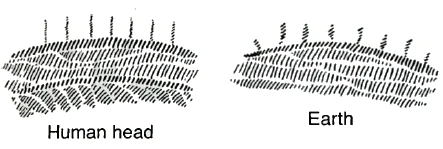
Translate the original German text into any language:
Versions Available:
Understanding Human Beings in Terms of Body, Soul, and Spirit, tr. SOL
10. Adam Kadmon in Lemurien
10. Adam Kadmon in Lemuria
[ 1 ] Frage: In bezug darauf, daß die Sonne in der Erde drinnen war, war ich sehr erstaunt; darüber habe ich noch nie etwas gehört. So wie ich die letzten Vorträge verstanden habe, ist die Erde nichts anderes gewesen als der Mensch, und daß die Tiere eigentlich von alledem abstammen. Wie erklärt man es dazu im Gegensatz, daß der Mensch vom Affen abstamme?
[ 1 ] Question: I was very surprised to hear that the sun was inside the Earth; I’ve never heard anything like that before. As I understood the last lectures, the Earth was nothing other than the human being, and that animals actually descend from all of that. How does this contrast with the idea that humans descend from apes?
[ 2 ] Dr. Steiner: Ich bin sehr erfreut, daß Sie die Frage stellen, denn wir können gerade dadurch, daß wir diese Frage beantworten, ein gutes Stück weiterkommen.
[ 2 ] Dr. Steiner: I'm very glad you asked that question, because by answering it, we can make significant progress.
[ 3 ] Wenn Sie den heutigen Menschenkopf für sich nehmen, so wie er ist, was finden Sie an diesem Menschenkopf? Diesen Menschenkopf finden Sie zunächst von außen nach innen von oben umhüllt mit einer ziemlich harten, knöchernen Schale. Ja, meine Herren, wenn Sie diese knöcherne Schale, die ja im Verhältnis zum ganzen Kopf dünn ist, nehmen und sie vergleichen mit demjenigen, was Sie zum Beispiel finden, wenn Sie in das Juragebirge hineingehen, so finden Sie da eine ganz merkwürdige Ähnlichkeit. Es ist nämlich dasjenige, was knöcherne Kopfschale ist, im wesentlichen aus ganz ähnlichen Bestandteilen bestehend wie die Kalkablagerung, Kalkkruste, die Sie da finden, wenn Sie in das Juragebirge hineingehen.
[ 3 ] If you take a look at the human head as it is today, what do you find? First of all, you’ll find that this human head is enveloped from the outside in and from the top down by a fairly hard, bony shell. Yes, gentlemen, if you take this bony shell—which is, after all, thin in relation to the entire head—and compare it to what you find, for example, when you go into the Jura Mountains, you will discover a very remarkable similarity. For this bony skull is essentially composed of components very similar to the limestone deposits—the limestone crust—that you find there when you go into the Jura Mountains.
[ 4 ] Nun finden Sie überhaupt solche Ablagerungen zumeist auf der Oberfläche der Erde. Natürlich, in diesen Kalkablagerungen, da könnte man nicht gerade sehr gut Früchte anbauen. Aber das kann dann geschehen in einer Schichte, die nicht aus Kalk besteht, sondern eben aus Ackererde, und die sich über dem Kalkboden noch auflagert.
[ 4 ] Now, you’ll usually find such deposits on the Earth’s surface. Of course, it’s not exactly ideal for growing fruit in these limestone deposits. But that can happen in a layer that isn’t made of limestone, but rather of topsoil, which lies on top of the limestone.
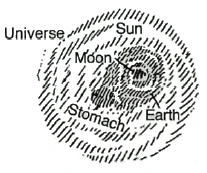
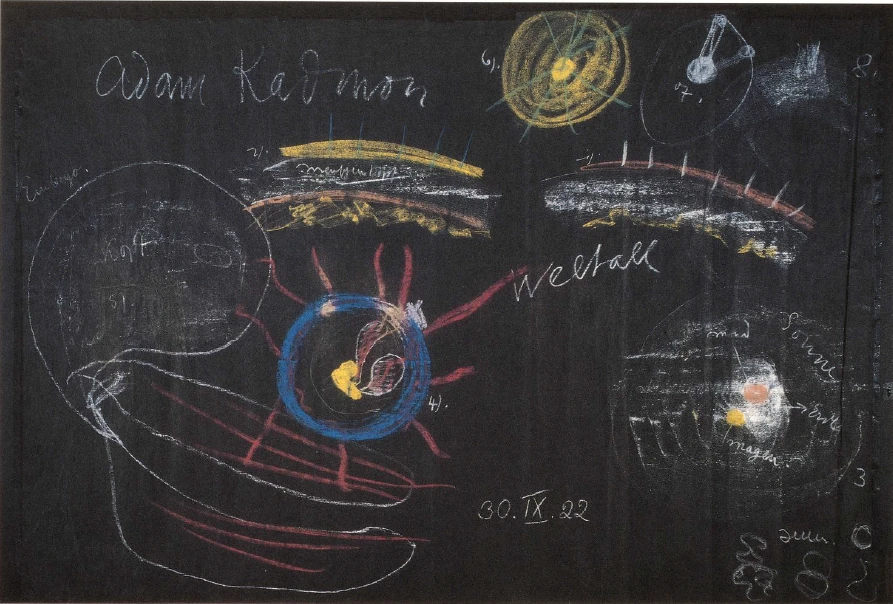
[ 5 ] Nun, meine Herren, Sie werden ja schon gesehen haben: Wenn man von der Natur spricht, so muß man alles berühren. Und Sie wissen ja, daß der Kopf des Menschen, wenigstens nach außen hin, sich auch mit einer Haut bedeckt, die sich sogar abschuppt, so daß über der kalkhaltigen Kopfschale, über dem Kopfskelett außen die Haut liegt. Wenn man diese Haut wiederum studiert, so hat sie große Ähnlichkeit mit dem, was Ackererde ist. In der Kopfhaut wachsen die Haare. Die Haare haben wiederum eine große Ähnlichkeit mit dem, was als Pflanzen herauswächst aus der Ackererde. Wenn man es schematisch zeichnet, bildhaft, so können wir eigentlich sagen: An gewissen Stellen der Erde, da ist oben Kalkablagerung; darüber ist die Ackererde, und aus der Ackererde wachsen die Pflanzen heraus. Beim Menschen haben wir nach außen diese kalkhaltige Schale, darüber die Haut, und aus der Haut wachsen die Haare heraus.
[ 5 ] Well, gentlemen, as you have surely already observed: when speaking of nature, one must consider everything. And you know, of course, that the human head—at least on the outside—is also covered with skin that even sheds, so that the skin lies over the calcareous skull, over the external skeletal structure of the head. If one studies this skin, it bears a strong resemblance to what we call topsoil. Hair grows from the scalp. The hair, in turn, bears a strong resemblance to the plants that grow out of the topsoil. If we were to draw a schematic, pictorial representation, we could actually say: In certain places on Earth, there are limestone deposits at the top; above them is the topsoil, and plants grow out of the topsoil. In humans, we have this calcareous shell on the outside, with the skin over it, and hair grows out of the skin.
[ 6 ] Jetzt erinnern Sie sich an etwas anderes. Da kann ich also ähnlich zeichnen kurioserweise, wenn ich die Erde oder den Menschenkopf aufzeichne. Nun erinnern Sie sich aber, daß ich Ihnen ja noch etwas gesagt habe. Ich habe Ihnen gesagt, daß, wenn man tiefer in die Erde hineingeht und dasjenige studiert, was da tiefer in der Erde ist, man in der Erde Überreste von alten Lebewesen, von alten Tieren und Pflanzen findet. Ich habe Ihnen gesagt, wie diese Tiere und Pflanzen früher ausgeschaut haben. Ichthyosaurier, Plesiosaurier und so weiter, das waren recht große Viecher. Aber wenn wir jetzt ins Innere des Menschenkopfes hineingehen, was habe ich Ihnen da gesagt? Ich habe Ihnen gesagt: Im Blut schwimmen die weißen Blutkörperchen, und das sind eigentlich auch kleine Tiere. Im Menschenkopf drinnen, da sind diese kleinen Tiere immerfort im Absterben, sind gewissermaßen halb tot, werden nur in der Nacht immer wiederum lebendig gemacht, aber sie sind auf dem Weg zum Absterben. Und je weiter man zum Kopfe kommt, desto mehr stirbt der Kopf ab. Unter der Kopfschale, zwischen dem Gehirn und der äußeren Knochenschale, ist eine recht abgestorbene Haut. So daß, wenn man in den Kopf hineingeht, man auch etwas findet, was im Absterben ist.
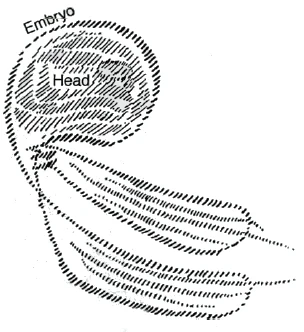
[ 6 ] Now you’re thinking of something else. Curiously enough, I can draw something similar when I sketch the Earth or a human head. But now remember that I told you something else. I told you that if you go deeper into the Earth and study what lies deeper within it, you’ll find the remains of ancient living beings—ancient animals and plants—in the Earth. I told you what these animals and plants used to look like. Ichthyosaurs, plesiosaurs, and so on—those were quite large creatures. But if we now go inside the human head, what did I tell you about that? I told you: White blood cells float in the blood, and these are actually small animals as well. Inside the human head, these little animals are constantly dying off; they are, so to speak, half-dead, only to be brought back to life again at night, but they are on their way to dying. And the closer one gets to the head, the more the head is dying off. Beneath the skull, between the brain and the outer bony shell, there is a layer of skin that is quite dead. So that when one enters the head, one also finds something that is in the process of dying.
[ 7 ] Also kann man sagen: Wenn der Mensch stirbt, und man nimmt nachher seinen Kopf — was ja vorzugsweise die Wissenschaft tut, die sich nicht gern mit dem lebendigen Menschen befaßt, sondern mit dem toten Menschen auf dem Seziertisch —, ja, meine Herren, da hat man in der Tat diese abgestorbenen Gehirnzellen, die eigentlich versteinerte Blutzellen sind, und außen die harte Schale. Da wird die Geschichte ganz ähnlich der Erde. So daß wir gar nicht anders sagen können, als: Wenn wir da durch diese harte Gehirnhaut — man nennt sie sogar deshalb die «harte Gehirnhaut», weil sie schon ganz abgestorben ist — in das eigentliche Gehirn hereinkommen, so sehen wir da auch fortwährend Versteinerungen. Auf der Erde findet man überall diese Versteinerungen. Wenn wir die Erde heute anschauen, so gleicht sie nämlich aufs Haar, könnte man sagen, einem abgestorbenen Menschenkopf. Der ist natürlich nur kleiner. Die Erde ist größer, daher nimmt sich alles anders aus. Die Erde gleicht einem abgestorbenen Menschenkopf. Wer also die Erde heute studiert, der muß eigentlich sich sagen: Die Erde ist ein riesiger Menschenschädel, und zwar ein solcher, der gestorben ist.
[ 7 ] So one could say: When a person dies, and one subsequently removes their head—which is, after all, what science tends to do, since it prefers to deal not with living people but with dead ones on the dissection table—well, gentlemen, there one indeed finds these dead brain cells, which are actually fossilized blood cells, and on the outside, the hard shell. Here, the story becomes very similar to that of the Earth. So that we can’t help but say: When we penetrate through this hard meninges—it’s even called the “hard meninges” precisely because it’s already completely dead—into the actual brain, we see fossilizations there as well. On Earth, these fossilizations are found everywhere. When we look at the Earth today, it resembles—one might say to a T—a dead human head. Of course, it is only smaller. The Earth is larger, which is why everything looks different. The Earth resembles a dead human head. So anyone who studies the Earth today must actually say to themselves: The Earth is a gigantic human skull—one that has died.
[ 8 ] Nun, meine Herren, Sie werden sich niemals vorstellen können, daß etwas gestorben sein kann, wenn es nicht vorher gelebt hat. Nicht wahr, das gibt es nicht. Das behauptet nur die Wissenschaft. Aber ich glaube, Sie würden sich selber für dumm halten, wenn Sie irgendwo einen toten Menschenkopf finden würden und Sie sagen würden: Das hat sich halt gebildet aus Materie. — Das werden Sie doch nie sagen, sondern Sie werden sagen: Dasjenige, was so ausschaut, das muß einmal einem lebendigen Menschen gehört haben, das muß einmal lebendig gewesen sein; denn was abgestorben ist, muß einmal lebendig gewesen sein. — So daß also, wenn einer vernünftig nachdenkt darüber, wenn er heute die Erde studiert und er einen abgestorbenen Menschenkopf findet, er sich natürlich vorstellen muß — sonst wäre er einfach, ich möchte sagen, dumm —, daß das einmal gelebt hat, daß also die Erde einmal ein lebendiger Menschenkopf war, daß sie im Weltenall gelebt hat, wie heute der Mensch auf der Erde lebt.
[ 8 ] Well, gentlemen, you can never imagine that something could have died if it hadn’t lived first. Isn’t that right? That’s impossible. Only science claims that. But I believe you would consider yourselves foolish if you were to find a dead human head somewhere and say, “It just formed out of matter.”—You would never say that; instead, you would say: “That which looks like this must once have belonged to a living human being; it must once have been alive; for what has died must once have been alive.” — So that, if one thinks about it rationally, if one studies the Earth today and finds a dead human head, one must naturally imagine—otherwise one would simply be, I might say, stupid—that it once lived, that the Earth was once a living human head, that it lived in the universe just as humans live on Earth today.
[ 9 ] Nun, der Menschenkopf, der könnte aber nicht leben, könnte unmöglich leben, wenn er nicht sein Blut vom Menschenkörper bekäme. Der Menschenkopf allein, der kann höchstens zum Spaß einmal gezeigt werden. Als ich ein kleiner Bub war und im Dorf gewohnt habe, da haben sich manchmal solche herumziehenden Wandertruppen niedergelassen und eine Bude aufgerichtet. Wenn man da vorbeigegangen ist, ist immer einer herausgekommen: Meine Herrschaften, bitte eintreten, es beginnt gleich die Vorstellung! Hier ist der lebend sprechende Menschenkopf zu sehen! — Also die haben einen lebend sprechenden Menschenkopf gezeigt. Sie wissen, das wird durch allerlei Spiegelapparate gemacht, daß man den Körper nicht sieht, nur den Kopf. Aber sonst gibt es natürlich nicht den Kopf allein, sondern sein Blut und alles das, was ihn ernährt, muß er vom Menschenleib bekommen. So muß die Erde auch einmal so gewesen sein, daß sie sich aus dem Weltenraum heraus hätte ernähren können. Ja, könnte man denn auch dafür Gründe anführen, daß die Erde wirklich einmal so etwas wie ein Mensch war und sich aus dem Weltenraum heraus hat ernähren können?
[ 9 ] Well, a human head—it couldn’t possibly live if it didn’t receive blood from a human body. A human head on its own can, at most, be shown once for fun. When I was a little boy living in the village, traveling troupes like that would sometimes set up camp and put up a tent. Whenever you walked by, someone would always come out: “Ladies and gentlemen, please come in—the show is about to begin! Here you can see the living, talking human head!”—So they showed a living, talking human head. You know, that’s done with all kinds of mirror tricks so that you don’t see the body, just the head. But of course, it’s not just the head on its own; it needs its blood and everything that nourishes it, which it must receive from the human body. So the Earth must once have been in a state where it could have sustained itself from outer space. Yes, could one also cite reasons to suggest that the Earth was once really something like a human being and was able to sustain itself from outer space?
[ 10 ] Viel ist nachgedacht worden darüber, wie es eigentlich kommt, daß die Sonne — letzthin habe ich es gezeigt — einmal mit der Erde verbunden war. Aber das ist ja schon lange her. Seit jener Zeit ist die Sonne außerhalb der Erde und gibt der Erde Licht und Wärme. Sogar die Wärme, die in der Erde selbst drinnen ist, ist ja von der Sonne, bleibt nur im Winter aufgespart. Nun kann man wirklich berechnen, wieviel das beträgt, was die Sonne alljährlich an Wärme ausgibt. Das ist sehr viel, was die Sonne an Wärme ausgibt. Und die Physiker haben solche Rechnungen auch angestellt. Das sind Millionen und Millionen Kalorien. Aber, meine Herren, bei dieser Rechnung ist den Physikern wirklich angst und bange geworden, denn sie haben zwar dabei herausbekommen, wieviel die Sonne in jedem Jahr an Wärme ausgibt; sie haben aber auch herausbekommen, daß, wenn das richtig wäre, die Sonne längst erkaltet sein müßte und wir alle erfroren sein müßten. Die Rechnung ist also richtig angestellt, aber sie stimmt doch nicht. Das gibt es nämlich. Man kann rechnen, es kann etwas aufs allerschönste berechnet sein, aber die Rechnung stimmt doch nicht, gerade weil sie so schön ist.
[ 10 ] Much thought has been given to how it actually came to be that the Sun—as I recently demonstrated—was once connected to the Earth. But that was a long time ago. Since then, the Sun has been outside the Earth, providing it with light and heat. Even the heat that is inside the Earth itself comes from the Sun; it is simply stored up during the winter. Now, it is actually possible to calculate exactly how much heat the Sun emits each year. The amount of heat the Sun emits is enormous. And physicists have made such calculations as well. We’re talking about millions and millions of calories. But, gentlemen, this calculation really gave the physicists cause for alarm, because while they did figure out how much heat the Sun emits each year, they also discovered that, if that were true, the Sun would have cooled down long ago and we would all have frozen to death. So the calculation is done correctly, but it’s still not right. That’s just how it is. You can calculate—something can be calculated perfectly beautifully—but the calculation is still wrong, precisely because it’s so beautiful.
[ 11 ] Nun war ein Physiker da, ein Schwabe, Julius Robert Mayer heißt er, der hat tatsächlich ganz interessante Gedanken gehabt, so in der Mitte des 19. Jahrhunderts. Dieser Julius Robert Mayer, der in Heilbronn in Württemberg ansässig war, war Arzt und hat in ähnlicher Weise wie Darwin auf seiner Weltreise seine Entdeckungen gemacht, hat nämlich da ganz interessante Beobachtungen gemacht bei einer Reise nach dem südlichen Asien, auf den Inseln dort, wie durch den Einfluß der Wärme das Menschenblut anders aussieht als in etwas kälteren Gegenden und ist durch diese Beobachtungen zu interessanten Tatsachen gekommen. Diese Beobachtungen hat er dann zusammengefaßt und zunächst aufgeschrieben in einem ganz kurzen Aufsatz. Den hat er dazumal an die bedeutendste deutsche naturwissenschaftliche Zeitschrift geschickt. Das war 1841. Und diese naturwissenschaftliche Zeitschrift hat ihm den Aufsatz zurückgeschickt, weil die Leute gesagt haben: Das ist alles unbedeutendes Zeug, dilettantisch, dumm. — Heute sehen dieselben Leute, das heißt ihre Nachfolger natürlich, das für eine der größten Entdeckungen im 19. Jahrhundert an!
[ 11 ] Now there was a physicist, a Swabian named Julius Robert Mayer, who actually had some very interesting ideas back in the mid-19th century. This Julius Robert Mayer, who lived in Heilbronn in Württemberg, was a physician and, much like Darwin on his voyage around the world, made his discoveries while traveling—specifically, he made some very interesting observations during a trip to South Asia, on the islands there, noting how the influence of heat caused human blood to look different than in somewhat colder regions, and these observations led him to some interesting conclusions. He then summarized these observations and initially wrote them down in a very short essay. At the time, he sent it to the most prominent German scientific journal. That was in 1841. And this scientific journal sent the essay back to him because the editors said: “This is all trivial stuff—amateurish, stupid.” — Today, those same people—that is, their successors, of course—consider it one of the greatest discoveries of the 19th century!
[ 12 ] Aber von den Poggendorffschen «Annalen für Physik und Chemie», die dazumal die berühmteste deutsche naturwissenschaftliche Zeitschrift war, hat man dem Julius Robert Mayer nicht bloß dazumal diese Abhandlung zurückgeschickt, wo die Geschichte drinnenstand, sondern man hat ihn noch außerdem — ins Irrenhaus gesperrt! Weil er wirklich sehr begeistert war von seiner Wissenschaft — sie ist nicht ganz richtig, aber er war sehr begeistert für seine Wissenschaft —, hat er sich ein bißchen anders benommen als die anderen Menschen — die anderen haben ja auch nicht gerade dasselbe gewußt wie er —, und das haben dann seine Ärztekollegen und die anderen Ärzte bemerkt, und dafür ist er ins Irrenhaus gekommen! So daß Sie da auf eine wissenschaftliche Entdeckung kommen, die herrührt von einem Menschen, der dafür ins Irrenhaus gesperrt worden ist. Wenn Sie heute nach Heilbronn kommen ins Schwabenland, finden Sie dort auf dem wichtigsten Platze ein Denkmal von Julius Robert Mayer. Aber das ist nachträglich gemacht worden! Das ist nur ein Beispiel, wie die Leute umgehen mit solchen Leuten, die so ein bißchen Gedanken im Kopfe haben.
[ 12 ] But the Annalen für Physik und Chemie (Poggendorff’s Annals of Physics and Chemistry), which was the most famous German scientific journal at the time, not only rejected Julius Robert Mayer’s paper—which contained this story—but also had him committed to a mental institution! Because he was truly very passionate about his science—it isn’t entirely correct, but he was very passionate about his science—he behaved a little differently than other people—after all, the others didn’t exactly know the same things he did—and his fellow doctors and other physicians noticed this, and that’s why he ended up in the asylum! So you end up with a scientific discovery that comes from a man who was locked up in a mental hospital for it. If you go to Heilbronn in Swabia today, you’ll find a monument to Julius Robert Mayer in the main square. But that was erected after the fact! This is just one example of how people treat those who have a few unusual ideas in their heads.
[ 13 ] Nun, sehen Sie, dieser Julius Robert Mayer, der sich über diesen Einfluß, den er da von der Wärme auf das Blut gekannt hat, Gedanken gemacht hat, hat sich auch Gedanken gemacht, wie denn die Sonne zu der Wärme kommen kann. Die anderen rechnen bloß aus, wieviel sie hergibt. Aber Julius Robert Mayer fragte sich auch: Ja, wo kommt denn das alles her? — Was tut die Physik? Man möchte sagen, die Physik, die rechnet gerade so, wie man bei einem Menschen rechnen würde: Der hat einmal gegessen und jetzt ist er satt geworden, aber außerdem speichert sich noch etwas auf in seinem eigenen Fett und seinen Muskeln.Wenn er jetzt nichts mehr essen kann, so nimmt er das aus seinem Fett und seinen Muskeln. Und da kann er vierzig, sechzig Tage leben, aber nachher stirbt er, wenn er nichts zu essen kriegt. Das haben die Physiker auch bei der Sonne berechnet, was sie jeden Tag hergibt, nachdem sie eben einmal auf wunderbare Weise diese Wärme gehabt hat. Wie sie dazumal gegessen hat, wurde zwar nicht beachtet, aber jedenfalls ausgerechnet, wieviel sie hergibt.
[ 13 ] Well, you see, this Julius Robert Mayer, who pondered the effect he had observed that heat has on blood, also wondered how the sun could produce that heat. The others merely calculate how much heat it emits. But Julius Robert Mayer also asked himself: Well, where does all of that come from? — What does physics do? One might say that physics calculates just as one would with a human being: He ate once and is now full, but in addition, something is still being stored in his own fat and muscles. If he can’t eat anymore, he draws on that from his fat and muscles. And he can live for forty or sixty days that way, but eventually he’ll die if he doesn’t get anything to eat. Physicists have calculated the same thing for the sun—how much it gives off every day, after having, in a marvelous way, acquired this heat in the first place. Although no one considered how it “ate” back then, they did calculate exactly how much it gives off.
[ 14 ] Aber woher sie das nimmt, das hat doch der Julius Robert Mayer gefragt. Und da hat er herausbekommen, daß jedes Jahr so und so viele Himmelskörper in die Sonne hereinfliegen, die wie die Kometen sind. Sehen Sie, das ist die Speise der Sonne. Aber wenn wir heute noch auf die Sonne heraufschauen, so können wir ja sehen: Die hat einen guten Magen, die frißt jährlich eine ungeheure Anzahl von Kometen. So wie wir unsere Mitragsmahlzeit verzehren und dadurch unsere Wärme entwickeln, so entwickelt die Sonne Wärme, indem sie in ihren guten Magen hinein Kometen frißt.
[ 14 ] But where does it get that from? That’s what Julius Robert Mayer asked. And he found out that every year, a certain number of celestial bodies—like comets—fly into the Sun. You see, that is the Sun’s food. But when we look up at the Sun today, we can see: It has a hearty appetite; it devours a tremendous number of comets every year. Just as we consume our midday meal and thereby generate heat, so the Sun generates heat by devouring comets into its hearty appetite.
[ 15 ] Nun, meine Herren, das heißt: Wenn die Kometen schon ganz zersplittert sind und herunterfallen, so sind sie allerdings harte Eisenkerne, aber es fällt eben nur das Eisen herunter. Der Mensch hat ja auch Eisen in seinem Blut. Wenn der Mensch irgendwo aufgelöst würde und nur das Eisen herunterfallen würde, so würden die Menschen wahrscheinlich sagen: Da oben ist etwas, das hat geleuchtet, und das besteht aus Eisen. — Weil also die Meteorsteine, in die sich die Kometen auflösen, aus Eisen bestehen, sagt man, die Kometen sind aus Eisen. Das ist aber ein Unsinn, geradeso wie es ein Unsinn wäre zu glauben, daß der Mensch aus Eisen besteht, weil er Eisen in seinem Blute hat und man da einen ganz kleinen Eisenbatzen finden würde. So findet man eben die Meteorsteine; die sind zerfallene Kometen. Die Kometen sind eben etwas ganz anderes, die Kometen leben! Und die Sonne lebt eben auch, hat einen Magen, frißt nicht nur die Kometen, sondern nährt sich geradeso wie wir. In unserem Magen ist auch Eisen drinnen. Wenn einer Spinat ißt, so merkt er nicht, daß da sehr viel Eisen drinnen ist, im allgemeinen natürlich. Trotzdem ist es gut, wenn man gerade blutarmen Menschen sehr viel zu Spinatessen rät, weil sie dadurch viel sicherer Eisen ins Blut kriegen, als wenn man ihnen einfach Eisen in den Magen hineintut, das ja doch meistens durch die Därme wieder abgeht.
[ 15 ] Well, gentlemen, that means: When comets have already completely shattered and are falling to Earth, they are indeed hard iron cores, but it is only the iron that falls. After all, humans also have iron in their blood. If a human were to disintegrate somewhere and only the iron were to fall, people would probably say: “There’s something up there that was glowing, and it’s made of iron.” — So, because the meteorites into which comets disintegrate are made of iron, people say that comets are made of iron. But that’s nonsense, just as it would be nonsense to believe that humans are made of iron simply because they have iron in their blood and one might find a tiny speck of iron there. That’s how we find meteorites; they are disintegrated comets. Comets, however, are something entirely different—comets are alive! And the sun is alive, too; it has a stomach, and it doesn’t just devour comets but nourishes itself just as we do. There’s iron in our stomachs, too. When someone eats spinach, they don’t realize that it contains a great deal of iron—generally speaking, of course. Nevertheless, it’s a good idea to advise people with anemia in particular to eat plenty of spinach, because that way they get iron into their blood much more reliably than if you simply put iron into their stomachs, which usually just passes right through the intestines anyway.
[ 16 ] Wenn die Kometen bloß aus Eisen bestehen und in die Sonne hereinfallen würden, da sollten Sie nur einmal sehen, wie das alles wieder abgeht! Da würde man einen ganz anderen Prozeß sehen. Da würde man wahrscheinlich im Himmelsraum ein Riesenklosett aufrichten müssen, wenn das richtig wäre! Die Sache ist natürlich ganz anders. Die Kometen bestehen nur zum geringsten Teil aus Eisen; aber die Sonne frißt sie.
[ 16 ] If comets were made entirely of iron and fell into the Sun, just imagine what a spectacle that would be! We’d see a completely different process. We’d probably have to set up a giant outhouse in space if that were true! Of course, the reality is quite different. Comets consist of only a very small amount of iron; but the Sun devours them.
[ 17 ] Nun denken Sie zurück, daß die Erde selber einmal die Sonne in sich gehabt hat. Da hat die Sonne dasselbe gemacht, was sie jetzt allein tut; da hat sie auch Kometen gefressen. Und Sie haben jetzt den Grund, warum dieser Riesenkopf, der die Erde ist, leben konnte: weil die Sonne seinen Ernährungsapparat darstellte. Solange die Sonne bei der Erde war, ernährte sich aus dem Weltenall heraus die Erde durch die Sonne, wie wir uns jetzt ernähren von der Erde durch unseren Ernährungsapparat.
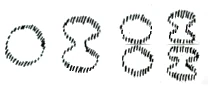
[ 17 ] Now think back to a time when the Earth itself once contained the Sun. Back then, the Sun did the same thing it does now on its own; back then, it also devoured comets. And now you have the reason why this giant head, which is the Earth, was able to live: because the Sun served as its digestive system. As long as the Sun was with the Earth, the Earth fed itself from the universe through the Sun, just as we now feed ourselves from the Earth through our digestive system.
[ 18 ] Also dafür war schon gesorgt, daß die Erde doch, als noch die Sonne bei ihr war, sich ernähren konnte. Nur müssen Sie sich natürlich vorstellen, daß die Sonne riesig viel größer als die Erde ist, und daß also die Sonne, indem sie da drinnen war in der Erde, eigentlich nicht in der Erde drinnen war, sondern die Erde war in der Sonne drinnen. So daß man sich die Sache so vorstellen muß (siehe Zeichnung $. 176), daß damals hier die Sonne war, da war die Erde drinnen und in der Erde erst wiederum der Mond. Also: Sonne, in der Sonne die Erde und in der Erde der Mond. In einem gewissen Sinne war das ja umgekehrt wie beim Menschen. Aber das ist ja beim Menschen auch nur scheinbar, daß er den kleinen Magen hat; der kleine Magen allein könnte ja nicht viel machen. Der kleine Magen, den der Mensch hat — darüber werden wir später noch sprechen —, der steht überall in Beziehung zur Außenwelt. Eigentlich ist der Mensch in der Erde drinnen, so wie die Erde einmal in der Sonne drinnen war. Und der eigentliche Erdenmagen, der war dann der Mittelpunkt der Sonne. Wenn das die Sonne ist (siehe Zeichnung), das die Erde, so war eben der Magen hier (in der Mitte), und die Sonne, die hat nur überall diese Kometen herangezogen und hat sie dann dem Magen überliefert, so daß die Verdauung der Erde doch innerhalb der Erde geschehen ist.
[ 18 ] So arrangements had already been made to ensure that the Earth could sustain itself while the Sun was still with it. Of course, you have to imagine that the Sun is vastly larger than the Earth, and that so, while the Sun was “inside” the Earth, it wasn’t actually inside the Earth—rather, the Earth was inside the Sun. So you have to picture it this way (see drawing $. 176): back then, the Sun was here, the Earth was inside it, and inside the Earth was the Moon. So: the Sun, the Earth within the Sun, and the Moon within the Earth. In a certain sense, this was the reverse of what happens with human beings. But even in human beings, it is only seemingly the case that they have a small stomach; the small stomach alone could not accomplish much. The small stomach that humans have—we’ll talk more about that later—is connected to the outside world in every way. Actually, humans are inside the Earth, just as the Earth was once inside the Sun. And the actual stomach of the Earth was then the center of the Sun. If this is the Sun (see drawing) and this is the Earth, then the stomach was right here (in the center), and the Sun simply drew these comets in from all directions and then delivered them to the stomach, so that the Earth’s digestion actually took place within the Earth.
[ 19 ] Nun können Sie wiederum sagen: Dem widerspricht ja, daß der menschliche Kopf nicht selber verdaut. — Das ist ganz richtig. Aber es hat sich ja die Geschichte auch verändert. Ein bißchen verdaut nämlich dennoch der menschliche Kopf. Sehen Sie, ich habe Ihnen beschrieben: Wenn wir die Speisen essen, dann kommen sie ja zunächst auf die Zunge, an den Gaumen heran. Da werden sie zuerst eingespeichelt mit Ptyalin, und dann gehen sie durch die Speiseröhre. Aber nicht alle Speisen gehen durch die Speiseröhre, sondern der Mensch ist ja im Grunde eine Wassersäule — es ist ja alles weich, es sind ja nur die festen Teile eingelagert —, so daß schon im Mund etwas von den Speisen aufgesogen wird im Kopf. Eine direkte Ernährung geht vom Gaumen aus in den Kopf hinein. Das ist so. Sehen Sie, daß die Dinge nicht so grob sind, wie man gewöhnlich glaubt, das können Sie ja einfach daraus entnehmen, wenn Sie vergleichen. Ein Menschenei, das können Sie nicht an die Luft bringen, damit es dort äußerlich ausgebrütet wird. Beim Vogelei können Sie das. Das kommt an die Luft und wird erst außen ausgebrütet. So ist es natürlich — in ähnlicher Weise — auch mit dem menschlichen Kopf. Der heutige Menschenkopf könnte sich von dem bißchen Nahrung, das er bloß vom Gaumen aus kriegt, nicht ernähren. Aber die Erde war eben anders eingerichtet. Die hat in sich einen Magen, der zugleich Mund war, gehabt, und hat sich eben ganz von diesem Munde aus ernährt. So daß wir sagen können: Solange die Sonne mit der Erde verbunden war, hatte dieses riesige Wesen die Möglichkeit, sich aus dem Weltenall heraus zu ernähren.
[ 19 ] Now you might say: But isn’t that contradicted by the fact that the human head doesn’t digest food on its own? — That’s quite correct. But the situation has changed, after all. In fact, the human head does digest food to some extent. You see, I’ve described this to you: When we eat food, it first comes into contact with the tongue and the palate. There it is first mixed with ptyalin from saliva, and then it passes through the esophagus. But not all food passes through the esophagus; rather, the human being is essentially a column of water—everything is soft, with only the solid parts embedded—so that some of the food is already absorbed into the head while still in the mouth. Nutrients are absorbed directly from the palate into the head. That is how it is. You can see that things are not as crude as is commonly believed; you can easily deduce this simply by comparing. You cannot expose a human egg to the air so that it is incubated externally. With a bird’s egg, you can do that. It is placed in the air and is first incubated from the outside. Naturally—in a similar way—this is also true of the human head. The human head of today could not sustain itself on the small amount of nourishment it receives solely from the palate. But the Earth was structured differently. It had a stomach within itself that also served as a mouth, and it nourished itself entirely through this mouth. So we can say: As long as the Sun was connected to the Earth, this gigantic being had the ability to nourish itself from the cosmos.
[ 20 ] Nun habe ich Ihnen aber gesagt: Wenn man heute die Erde studiert, so ist sie wie ein abgestorbener Menschenkopf. Ja, ein abgestorbener Menschenkopf, der muß aber einmal gelebt haben. Also muß die Erde eben einmal gelebt haben. Sie hat sich ernährt durch die Sonne.
[ 20 ] But I have already told you: When you study the Earth today, it is like a dead human head. Yes, a dead human head—but it must have once been alive. So the Earth, too, must have once been alive. It drew its nourishment from the sun.
[ 21 ] Nun, meine Herren, will ich Ihnen noch etwas anderes sagen. Sehen Sie, wenn Sie in einer bestimmten Zeit den Menschenkeim im Mutterleibe anschauen, also nach der Befruchtung, ich will sagen, zwei, drei, vier Wochen nach der Befruchtung anschauen, da schaut dieser Menschenkeim außerordentlich interessant aus. Da ist zunächst im mütterlichen Leibe, rundherum im Mutterkörper, den man Uterus nennt, eine Haut, die viele Blutgefäße hat. Und die Blutgefäße, die da im mütterlichen Leibe drinnen extra sind — die sind ja natürlich dann im Menschenleibe nicht, wenn nicht gerade ein Kind getragen wird —, diese Blutgefäße stehen in Verbindung mit den anderen Blutgefäßen, die die Mutter hat. Die gehen da überall in die Blutadern hinein. So daß also die Mutter in ihr eigenes Blutsystem diese Kugel da eingeschaltet hat (siehe Zeichnung) und während sonst das Blut im Leibe zirkuliert, rinnt das Blut extra noch in diese Kugel hinein, nur in die äußere Kugel.
[ 21 ] Well, gentlemen, I’d like to tell you something else. You see, if you look at the human embryo in the womb at a certain stage—that is, after fertilization, say, two, three, or four weeks after fertilization—it looks extraordinarily interesting. First of all, inside the mother’s body—all around the uterus—there is a membrane that contains many blood vessels. And the blood vessels that are present specifically within the mother’s body—which, of course, are not normally present in the human body unless a child is being carried—are connected to the mother’s other blood vessels. They branch off into the blood vessels everywhere. So the mother has effectively incorporated this sphere into her own circulatory system (see drawing), and while the blood normally circulates throughout her body, it also flows specifically into this sphere—only into the outer sphere.
[ 22 ] Nun, meine Herren, da finden Sie innerhalb dieser Kugel alle Organe. Da ist zum Beispiel ein Organ, das sieht aus wie ein Sack, und daneben wiederum eines, das ist ein kleinerer Sack. In diese Säcke, in die setzen sich auch diese Blutadern fort, die sonst, wenn die Mutter kein Kind trägt, gar nicht da sind, weil ja die ganze Kugel dann fehlt; da hinein setzen sich auch diese Adern dann fort. So daß wir sagen können: Diese Adern gehen überall da hinein und das alles, was ich Ihnen bis jetzt aufgezeichnet habe, das ist da, wenn sich das Kind in den ersten Wochen entwickelt; das ist da, und ganz klein hängt daran, also winzigklein hängt daran hier das Kind. Ganz winzigklein hängt es daran!
[ 22 ] Well, gentlemen, inside this sphere you will find all the organs. For example, there is an organ that looks like a sac, and next to it is another one—a smaller sac. These blood vessels also extend into these sacs; otherwise, when the mother is not carrying a child, they aren’t there at all, because the entire sphere is missing; these vessels then extend into them as well. So we can say: These veins extend into all of that, and everything I have described to you so far is present as the child develops during the first few weeks; it is there, and the child hangs from it—very small, so tiny—hangs from it here. It hangs from it, so tiny!
[ 23 ] Und kurioserweise, wenn ich Ihnen das Kind jetzt groß aufzeichnen würde, wie es in der nächsten Zeit ist, dann müßte ich das so zeichnen: das Kind nämlich ist fast nur ein Kopf, das andere ist ganz winzig daran. Sie sehen, da habe ich zwei solche Stetzelchen hingezeichnet, das werden später die Arme. Die Beine sind fast gar nicht da. Dafür aber setzen sich dann eben an das Kind diese zwei Taschen, die ich da gezeichnet habe, und in diese zwei Taschen gehen die Blutgefäße hinein. Und diese Blutgefäße bringen die Nahrung mit, und der Kopf wird ernährt. Ein Magen ist ja noch gar nicht da, und ein Herz auch nicht. Eine eigene Blutzirkulation hat das Kind in den ersten Wochen gar nicht. Das Kind ist ja nur ein Kopf. Und das wächst und wächst allmählich so heran, daß es im zweiten, dritten Monat menschenähnlich wird, daß sich die anderen Organe ansetzen. Aber ernährt wird das Kind immer noch von außen, von demjenigen, was da als Taschen ist. Und dann speichert sich da Nahrung ringsherum so auf (es wird gezeichnet). Aber Blut wird zugeführt. Atmen kann ja das Kind noch nicht, es bekommt nur Luft auf dem Umwege durch die Mutter. Das Kind ist also eigentlich ein Menschenkopf, und die anderen Organe dienen ihm noch gar nicht besonders. Mit den Lungen kann es nichts anfangen. Mit dem Magen kann es nichts anfangen. Essen kann es noch nicht; es muß also alle Nahrung nur so bekommen, daß sein Kopf ernährt wird. Atmen kann es noch nicht. Eine Nase hat es auch noch nicht. Die Organe entwickeln sich zwar, aber es kann sie noch nicht gebrauchen. Also das Kind ist im mütterlichen Leibe ja ein Kopf; nur ist alles weich. Das spätere Gehirn, das ist furchtbar weich hier drinnen, ganz weich und furchtbar lebendig, ganz lebendig. Und wenn Sie ein Riesenmikroskop nehmen könnten und könnten gerade einen Kinderkopf anschauen, der meinetwillen aus der zweiten oder dritten Woche nach der Befruchtung ist, so würde der recht ähnlich ausschauen dem, was ich Ihnen von der Erde gesagt habe, wie sie einmal war, als da die Ichthyosaurier und Plesiosaurier und so weiter herumgewatet sind. Ganz verflucht ähnlich würde das ausschauen, nur in der Größe unterschieden.
[ 23 ] And curiously enough, if I were to draw the child for you now as it will be in the near future, I would have to draw it like this: the child is almost entirely head; the rest of the body is very tiny in comparison. As you can see, I’ve drawn two little sticks there—those will become the arms later. The legs are practically nonexistent. Instead, these two pouches that I’ve drawn here attach to the child, and the blood vessels enter these two pouches. These blood vessels carry nutrients, and the head is nourished. There isn’t a stomach yet, nor a heart. The child doesn’t have its own blood circulation at all during the first few weeks. The child is really just a head. And it gradually grows and develops so that by the second or third month it begins to resemble a human being, as the other organs begin to form. But the child is still nourished from the outside, from what are essentially these “pockets.” And then nourishment accumulates all around it like this (it is drawn). But blood is supplied. The child cannot breathe yet; it receives air only indirectly through the mother. So the child is actually a human head, and the other organs do not yet serve it in any significant way. It cannot do anything with its lungs. It cannot do anything with its stomach. It cannot eat yet; so it must receive all its nourishment in such a way that its head is nourished. It cannot breathe yet. It does not even have a nose yet. The organs are developing, but it cannot use them yet. So the child in the mother’s womb is essentially a head; it’s just that everything is soft. The future brain—it’s incredibly soft in here, completely soft and incredibly alive, completely alive. And if you could take a giant microscope and look directly at a child’s head—say, from the second or third week after fertilization—it would look quite similar to what I’ve told you about the Earth as it once was, when the ichthyosaurs and plesiosaurs and so on were wading about. It would look incredibly similar—the only difference being the size.
[ 24 ] So daß man sagen kann: Wo gibt es ein Bild von der Erde, die einmal da war, heute noch? Im Menschenkopf, wenn der Menschenkopf eben noch ungeboren ist und als Keim vorhanden ist, Dieser Menschenkopf ist nämlich ein deutliches Abbild von der Erde.
[ 24 ] So one might ask: Where can we still find an image of the Earth as it once was? In the human head—when that head is still unborn and exists only as a seed. For this human head is, in fact, a clear reflection of the Earth.
[ 25 ] Und all das, was da dran sein muß, diese Taschen am Leibe, das, was da herum ist, das wird als die sogenannte Nachgeburt, nachdem es ganz brüchig geworden ist, abgeworfen, und der Mensch bleibt übrig, wird geboren. Also von dem, was als Nachgeburt abgeworfen wird, von dem bekommt man eigentlich die Nahrung als Kind im Murterleibe - die Nachgeburt besteht aus den zerfetzten Blutgefäßen. Diese sogenannte Allantois und dieses Amnion — das also sind die zerfetzten Organe —, die sind uns, solange wir im Mutterleibe sind, außerordentlich wichtig, weil sie den Magen und die Atmungsorgane ersetzen. Aber wenn wir sie nicht mehr gebrauchen, wenn wir geboren werden, selber atmen und essen können, wird das als Nachgeburt abgeworfen.
[ 25 ] And everything that needs to be there—those sacs attached to the body, everything surrounding it—is cast off as what is called the afterbirth once it has become completely brittle, and the human being remains, is born. So, what is cast off as the afterbirth is actually what nourishes the child in the mother’s womb—the afterbirth consists of torn blood vessels. This so-called allantois and this amnion—which are, in fact, the torn-up organs—are extremely important to us as long as we are in the womb, because they take the place of the stomach and the respiratory organs. But when we no longer need them, when we are born and can breathe and eat on our own, they are cast off as the afterbirth.
[ 26 ] Nun, meine Herren, wenn Sie sich so etwas anschauen, wie ich es Ihnen da aufgezeichnet habe, so brauchen Sie sich nur vorzustellen: Da wäre das Weltall, hier wäre die Erde, und da drinnen der Menschenkopf und ringsherum ganz fein die Sonne (siehe Zeichnung $. 177). Und nun kommt die Geburt, das heißt, es hört das auf, was einmal da war. Die Sonne und der Mond fliegen heraus, und die Geburt der Erde ist da. Die Erde muß sich selber weiterhelfen.
[ 26 ] Well, gentlemen, when you look at something like what I have drawn for you here, all you need to do is imagine: there is the universe, here is the Earth, and inside it is the human head, with the sun delicately surrounding it (see drawing $177). And now comes birth—that is, what once was comes to an end. The sun and the moon fly out, and the birth of the Earth takes place. The Earth must help itself along.
[ 27 ] Man kann zweierlei beschreiben. Zunächst konnte ich Ihnen das so beschreiben, daß ich Ihnen gesagt habe: Die Erde hat einmal so ausgeschaut — da waren Ichthyosaurier, Plesiosaurier drinnen und so weiter, Jetzt könnte ich Ihnen aber ebensogut den Menschenkeim beschreiben. Es ist nur alles kleiner, aber ich müßte dasselbe reden. So daß Sie heute sagen können: Die Erde war einmal der Keim eines Riesenmenschen.
[ 27 ] There are two things one can describe. First, I could have described it to you by saying: The Earth once looked like this—there were ichthyosaurs, plesiosaurs, and so on. But now I could just as easily describe the human embryo to you. Everything is just smaller, but I would have to say the same thing. So that today you can say: The Earth was once the embryo of a giant human.
[ 28 ] Da ist wiederum außerordentlich interessant, daß in früheren Zeiten die Menschen auf eine merkwürdige Weise — darüber wollen wir noch reden — mehr gewußt haben als die späteren Menschen. Die späteren Menschen haben nämlich zumeist aus der mißverstandenen hebräischen Urkunde, aus dem mißverstandenen Alten Testament gelernt, und die haben sich vorgestellt, nicht wahr: Da war die Erde und irgendwo das Paradies, und da ist der fertige Adam im Paradies als so ein kleiner Knirps darauf gestanden. Diese Vorstellung, die sich die Menschen aus dem mißverstandenen Alten Testament gemacht haben, die ist ungefähr gerade so, wie wenn sich heute einer vorstellen würde: Der Mensch kommt nicht von dem kleinen Ding, was da von den Allantois- und Amniontaschen da ist, von dieser Haut und so weiter — davon käme nicht der Mensch, sondern das alles, das wäre eine Sache für sich; aber im mütterlichen Leibe, da sitzt eben ein kleinwinziger Floh, und aus diesem kleinen Floh kommt der Mensch. So ungefähr ist es, wenn man sich vorstellt: Die Erde war da, der Adam und die Eva lebten gleich Flöhen daraufsitzend, und nachher das Menschengeschlecht. Das ist eben aus einem Mißverständnis des Alten Testaments entstanden, währenddem diejenigen, die in alten Zeiten etwas gewußt haben, nicht von Adam geredet haben, sondern von Adam Kadmon. Und der Adam Kadmon, der ist etwas anderes als der Adam. Der ist dieser Riesenkopf, der die Erde einmal war. Und das ist eine natürliche Vorstellung. Zum Erdenfloh ist dieser Adam Kadmon erst geworden, als sich die Menschen nicht mehr vorstellen konnten, daß ein Menschenkopf so groß werden kann wie die Erde, als sie nicht mehr daran geglaubt haben, und da haben sie sich die abnorme Vorstellung gebildet, als wenn es zum Spaß da sei, daß die ganzen neun Monate im mütterlichen Leibe vor sich gehen, und aus dieser mütterlichen Kugel der Mensch geboren wird.
[ 28 ] It is, again, extremely interesting that in earlier times people, in a curious way—we’ll talk more about that later—knew more than people in later times. For the people of later times learned mostly from the misunderstood Hebrew text, from the misunderstood Old Testament, and they imagined—didn’t they?—that there was the Earth and somewhere Paradise, and there stood the fully formed Adam in Paradise as a little tyke. This idea that people formed from the misunderstood Old Testament is roughly the same as if someone today were to imagine: Human beings do not come from that little thing—the allantois and amniotic sacs, the membrane, and so on—human beings do not come from that; rather, all of that is a separate entity; but in the mother’s womb, there’s just a tiny little flea, and from this little flea comes a human being. That’s roughly what it’s like when one imagines: The Earth was there, Adam and Eve lived on it like fleas perched upon it, and afterward came the human race. This arose precisely from a misunderstanding of the Old Testament, whereas those who knew something in ancient times did not speak of Adam, but of Adam Kadmon. And Adam Kadmon is something other than Adam. He is that giant head that the Earth once was. And that is a natural conception. This Adam Kadmon only became the “earth flea” when people could no longer imagine that a human head could become as large as the Earth, when they no longer believed in it, and that is when they formed the abnormal notion—as if it were just for fun—that the entire nine months take place within the mother’s womb, and that the human being is born from this maternal sphere.
[ 29 ] In Wirklichkeit müssen wir uns vorstellen, daß der Mensch einmal die ganze Erde war — die ganze Erde. Und die Erde war viel lebendiger. Aber, meine Herren, das ist ja gar nicht anders; sehen Sie, wenn ich Ihnen die Erde heute zeichne, so ist sie ein abgestorbenes Wesen, wie der menschliche Kopf im Absterben begriffen ist, und wenn wir zurückgehen zu diesem menschlichen Kopfe, der da im mütterlichen Leibe ist, so ist der durch und durch lebendig. Der ist so, wie die Erde einmal war. Und die Erde ist heute gestorben. Aber sie war einmal durch und durch lebendig.
[ 29 ] In reality, we must imagine that human beings were once the entire Earth—the entire Earth. And the Earth was much more alive. But, gentlemen, it is really no different; you see, if I were to draw the Earth for you today, it would be a lifeless entity, just as the human head is in the process of dying; and if we go back to that human head, which is there in the mother’s womb, it is alive through and through. It is just as the Earth once was. And the Earth is dead today. But it was once alive through and through.
[ 30 ] Sehen Sie, wenn die Menschen alles zusammenhalten könnten, was die Wissenschaft gibt, so würden sie auf manches kommen. Die Wissenschaft ist schon recht, nur die Menschen, die die heutige Wissenschaft verwalten, die können mit der Wissenschaft nicht viel anfangen. Wenn heute einer sich diese Erdenoberfläche anschaut, so muß er sagen: Das ist ja wie ein abgestorbener Menschenkopf. Wir gehen ja eigentlich auf Totem herum, das einmal gelebt haben muß. Das habe ich Ihnen gesagt; aber ich sage Ihnen auch alles dasjenige noch, was daraus folgt.
[ 30 ] You see, if people could bring together everything that science has to offer, they would come to some interesting conclusions. Science is all well and good, but the people who manage science today don’t really know what to do with it. If someone were to look at the Earth’s surface today, they would have to say: It’s just like a dead human head. We’re actually walking on corpses that must once have been alive. I’ve told you that; but I’ll also tell you everything else that follows from it.
[ 31 ] Nun war in Wien noch zu meiner Jugendzeit einmal ein sehr berühmter Geologe, das ist Erdenkundiger. Der hat ein großes Buch geschrieben: «Das Antlitz der Erde.» Da steht das drinnen: Wir gehen heute, wenn wir über die Erdschollen von Böhmen oder Westfalen gehen, über abgestorbene Sachen. Das war einmal lebendig. — Die Einzelheiten ahnt die Wissenschaft schon, aber sie kann die Sachen nicht zusammenreimen. Das, was ich Ihnen sage, widerspricht nirgends der Wissenschaft. Sie können das überall, wenn Sie die Wissenschaft verfolgen, bestätigt finden. Aber die Wissenschafter kommen selber nicht draus aus demjenigen, was da aus den Sachen folgt.
[ 31 ] Now, back in my youth, there was once a very famous geologist in Vienna—that is, an earth scientist. He wrote a major book: The Face of the Earth. It says in there: When we walk today over the earth’s crust in Bohemia or Westphalia, we are walking over dead matter. That was once alive. — Science already has a hunch about the details, but it cannot piece the facts together. What I am telling you does not contradict science in any way. You can find confirmation of this everywhere if you follow scientific research. But the scientists themselves cannot make sense of what follows from these facts.
[ 32 ] Also kommen wir wirklich dazu, zu sagen: Die Erde war einmal ein Riesenmensch. Das war sie. Und sie ist gestorben, und heute wandeln wir auf der gestorbenen Erde herum.
[ 32 ] So we really do have to say: The Earth was once a giant human. That is what it was. And it died, and today we walk around on the dead Earth.
[ 33 ] Nun, sehen Sie, da bleiben jetzt wichtige Fragen übrig, zwei wichtige Fragen durch die Frage des Herrn Burle. Die eine ist diese: Wenn wir zurückgehen, so sieht man, daß die Erde ein Riesenmensch war. Woher kommen die Tiere? Und die zweite Frage ist: Die Erde war also ein Riesenmensch. Woher kommt es, daß der Mensch heute so ein kleiner Floh auf der Erde ist? Woher kommt es, daß er so klein geworden ist? Diese zwei Fragen sind tatsächlich wichtige Fragen.
[ 33 ] Well, you see, Mr. Burle’s question has left us with two important questions. One is this: If we go back in time, we see that the Earth was a giant human being. Where did the animals come from? And the second question is: So the Earth was a giant human being. How is it that humans today are such tiny fleas on the Earth? How is it that they have become so small? These two questions are indeed important ones.
[ 34 ] Die erste ist eigentlich gar nicht so schwer zu beantworten; man muß sie nur nicht aus allerlei phantastischen Spielereien heraus beantworten wollen, sondern muß sie aus den Tatsachen beantworten.
[ 34 ] The first one isn't actually that hard to answer; you just have to avoid trying to answer it with all sorts of fanciful tricks, but instead answer it based on the facts.
[ 35 ] Meine Herren, was glauben Sie, wenn nun ein Weib während der Schwangerschaft stirbt, solange die Geschichte da drinnen noch so ausschaut, wie ich sie Ihnen auf der Tafel hergezeichnet habe, und Sie sezieren diese Kugel heraus, in der dann diejenigen Dinge drinnen sind, die mit der Nachgeburt abfallen, und in der der Embryo drinnen ist, der später der Mensch würde — nehmen Sie an, wir nehmen das alles heraus und geben das nicht in Spiritus, in dem es sich ja halten würde, sondern wir lassen das so irgendwo liegen, besonders wo es feucht ist, und wir gehen nach einiger Zeit wiederum hin —, was glauben Sie, was wir da sehen würden? Ja, meine Herren, wenn wir da nach einiger Zeit wiederum hingehen und dann anfangen würden das zu zerschneiden, da würde lauter Getier herauslaufen; lauter kleine Viecher laufen da heraus. Der ganze Menschenkopf, der im Mutterleibe lebendig war, stirbt ab. Und indem er abstirbt — wir brauchen ihn nur auseinanderzuschneiden, um es zu sehen —, da läuft alles mögliche Getier heraus.
[ 35 ] Gentlemen, what do you think would happen if a woman were to die during pregnancy, while the situation inside still looks the way I’ve drawn it for you on the board, and you were to dissect out this sphere—which contains the parts that are expelled with the afterbirth, as well as the embryo that would later become a human being—suppose we take all of that out and don’t place it in formaldehyde—where it would, of course, be preserved—but instead leave it lying around somewhere, especially where it’s damp, and return to it after some time—what do you think we would see there? Yes, gentlemen, if we were to return there after some time and then begin to cut it open, all sorts of little creatures would come running out; all sorts of little creatures would come running out. The entire human head, which was alive in the womb, dies. And as it dies—we only need to cut it open to see it—all sorts of creatures come running out.
[ 36 ] Ja, meine Herren, denken Sie sich, die Erde war einmal ein solcher Menschenkopf im Weltenraum und ist abgestorben. Brauchen Sie sich zu verwundern, daß da alles mögliche Getier herauslief? Das tut es ja heute noch. Wenn Sie das in Betracht ziehen, da haben Sie die Entstehung der Tiere. Sie können das heute noch beobachten.
[ 36 ] Yes, gentlemen, just imagine: the Earth was once such a human head in outer space, and it died. Is it any wonder that all kinds of creatures emerged from it? That’s still happening today. If you consider that, you have the origin of animals. You can still observe that today.
[ 37 ] Das ist die eine Frage. Wir werden darüber noch weiter reden, wie die einzelnen Tierformen entstanden sind. Aber im Prinzip haben Sie da, daß ja die Tiere da sein müssen. Ich kann diese Frage heute nur andeuten, später werde ich sie noch ausführlich beantworten.
[ 37 ] That is the question. We will talk more about how the individual animal forms came into being. But in principle, the fact remains that the animals must be there. I can only touch on this question today; I will answer it in detail later.
[ 38 ] Jetzt bleibt die andere Frage: Warum ist der Mensch heute ein so kleiner Knirps? Nun, da müssen Sie wiederum alles zusammennehmen, was Sie wissen können. Erstens können Sie fragen: Ja, aber da hat einmal ein Mensch gelebt im Weltenraum, der heute Erde ist, abgestorben ist und heute Erde ist. Hat denn der nicht geboren? Hat sich denn der nicht vermehrt? — Auf diese Frage braucht man ja nicht weiter einzugehen; wenn er sich vermehrt hat, so sind dazumal die anderen im Weltenraum irgendwo zu anderem aufgerufen worden. Also wir brauchen uns erst zu interessieren, als ein bestimmter Punkt der Vermehrung eintrat.
[ 38 ] Now the other question remains: Why is a human being such a tiny little thing today? Well, here again you have to take into account everything you can possibly know. First, you might ask: Yes, but there once lived a human being in outer space—in the space that is now Earth—who died and is now part of the Earth. Didn’t that person give birth? Didn’t that person reproduce? — There’s no need to go into this question any further; if that person reproduced, then at that time the others in outer space were called to something else somewhere else. So we need to focus only on the point at which reproduction occurred.
[ 39 ] Ja, meine Herren, wenn Sie heute noch verfolgen, wie eine kleine Zelle sich vermehrt, so ist sie zuerst so (siehe Zeichnung), dann ist sie so, dann werden zwei daraus. Dann werden aus jeder wiederum zwei; das sind schon vier. Und so wird der ganze Menschenkörper aufgebaut, so daß er zuletzt aus lauter kleinen einzelnen, im Blut lebenden und im Kopf abgestorbenen kleinen Viechern besteht, die alle aus einer einzigen Zelle hervorkommen. So ist aus einem Teil der ursprünglichen Erde, geradeso wie heute der Mensch nicht nur aus einem ganzen Menschen herausgeboren wird, sondern aus einem Teil des Menschen — die heutige Erde entstanden. Es frägt sich nur: Warum kommt er heute nicht mehr heraus? Weil die Erde nicht mehr so in Verbindung steht mit dem Weltall, seitdem die Sonne herausgegangen ist. Jetzt bleiben alle diese Wesen drinnen. Sie wurden von der Sonne außen beschienen, als die Sonne herausgegangen war, während sie früher drinnen war. — Sie müssen alles zusammennehmen, was Sie wissen können.
[ 39 ] Yes, gentlemen, if you observe today how a small cell multiplies, it starts out like this (see drawing), then it looks like this, and then it becomes two. Then each of those becomes two again; that makes four. And this is how the entire human body is built up, so that in the end it consists entirely of tiny individual creatures that live in the blood and die in the head, all of which originate from a single cell. Thus, the present-day Earth arose from a part of the original Earth, just as today a human being is born not only from a whole human being but from a part of a human being. The only question is: Why doesn’t it emerge anymore today? Because the Earth is no longer connected to the universe in the same way since the Sun moved out. Now all these beings remain inside. They were illuminated from the outside by the Sun when the Sun had moved out, whereas before it had been inside. — You must take everything you can know into account.
[ 40 ] Meine Herren, wissen Sie aber vielleicht, daß man die Hunde, die ja im allgemeinen eine bestimmte Größe haben, unter die sie nicht heruntergehen, aber doch so klein züchten kann, daß sie manchmal fast nicht größer sind als große Ratten. Wenn man den Hunden zum Beispiel Alkohol zu saufen gibt, so bleiben sie klein — das hängt ja ab von dem, was da wirkt auf das Wesen, wie groß es wird —; allerdings werden diese Hunde furchtbar nervös.
[ 40 ] Gentlemen, are you perhaps aware that dogs—which generally have a certain size below which they do not fall—can nevertheless be bred to be so small that they are sometimes almost no larger than large rats? For example, if you make the dogs drink alcohol, they remain small—after all, how large an animal grows depends on what influences its nature—; however, these dogs become terribly nervous.
[ 41 ] Es waren wirklich — wenn auch nicht die ganze Welt voll Alkohol war —, aber es waren die Stoffwirkungen ganz andere geworden, als die Sonne von der Erde weggegangen war. Als sie noch in der Erde war, ist eben eine ganz andere Wirkung dagewesen als später, als die Sonne draußen war. Und während der Mensch zuerst so groß war wie die Erde selber, ist er durch diese Rieseneinwirkung eben klein geworden. Aber das war ein Glück für ihn, denn als er noch so groß war wie die Erde, da mußten alle anderen, die geboren wurden, in den Weltenraum hinausfliegen. Wir werden später einmal hören, was mit denen geschehen ist. Jetzt konnten sie in der Erde drinnen bleiben, weil sie miteinander auf der Erde herumwandeln können. Und jetzt entstand statt des einen Menschen das Menschengeschlecht, weil die Menschen klein blieben.
[ 41 ] It was truly the case—even if the entire world wasn’t filled with alcohol—that the effects of substances had become quite different once the sun had moved away from the Earth. When it was still within the Earth, the effect was quite different from what it was later, once the sun was outside. And while human beings were at first as large as the Earth itself, they became small as a result of this immense influence. But that was a blessing for them, because when they were still as large as the Earth, everyone else who was born had to fly out into outer space. We will hear later what happened to them. Now they could remain inside the Earth because they can walk around on it together. And now, instead of that one human being, the human race came into being, because humans remained small.
[ 42 ] Ja, meine Herren, wahr ist es: Wir stammen alle von einem Menschen ab! Das ist ja auch schließlich begreiflich, nicht wahr. Aber dieser eine Mensch war nicht so ein kleiner Erdenfloh, wie jetzt die Menschen sind, sondern er war die Erde selber. Nur, als die Sonne herausging, da ist auf der einen Seite die Erde abgestorben, und da krochen die Tiere heraus, wie jetzt auch noch die Tiere herauskriechen, wenn etwas abgestorben ist. Und auf der anderen Seite blieben noch die Kräfte zurück. Nur wurden sie jetzt nicht von innen durch die Sonne angeregt, sondern von außen, und der Mensch wurde klein und konnte zu vielen Menschen werden.
[ 42 ] Yes, gentlemen, it is true: We are all descended from a single human being! After all, that’s only natural, isn’t it? But this one human being was not some tiny earth flea, as humans are today, but was the Earth itself. However, when the sun rose, the Earth died on one side, and the animals crawled out—just as animals still crawl out today when something has died. And on the other side, the forces remained. Only now they were no longer stimulated from within by the sun, but from without, and the human being became small and was able to multiply into many people.
[ 43 ] Dadurch also, daß die Sonne von außen wirkt, läßt sie den Menschen klein. Das kann Ihnen ja auch ganz gut begreiflich sein. Denn denken Sie nur einmal, wenn das die Erde ist — ich will die Erde jetzt ganz klein zeichnen — und früher die Sonne das war, wo die Erde also drinnensteckte, da strahlten ja alle Kräfte so heraus, und wenn sich die Erde bewegte, da ging ja immer die Sonne mit; es war ja eines und dasselbe (Zeichnung links). Jetzt, da die Sonne heraußen ist, ist die Geschichte so: Da ist ja die Sonne und da die Erde, die geht um die Sonne herum. Wenn die Erde da ist, dann kriegt sie diese Strahlen; wenn sie dort ist, kriegt sie jene Strahlen (Zeichnung rechts). Sie sehen nur immer Tafel 9 eine kleine Parzelle von Strahlen. Wenn die Sonne draußen ist, kriegt die Erde nur noch wenige Strahlen. Als die Sonne noch in der Erde war, kam noch immer von innen heraus die ganze Wirkung der Sonne. Kein Wunder, daß wenn die Sonne so herumkreist, sie auf jedem einzelnen Punkt der Erde einen Menschen beleuchten kann, während sie früher, als sie drinnen war und vom Mittelpunkt ausstrahlen mußte, nur einen Menschen bestrahlen konnte. Als die Sonne anfing, vom Umkreis her zu wirken, da verkleinerte sie den Menschen.
[ 43 ] So, by acting from the outside, the sun makes humans seem small. You can probably understand that quite well. Just think about it: if this were the Earth—I’ll draw the Earth very small now—and the Sun used to be where the Earth was inside it, then all the forces would have radiated out from there, and whenever the Earth moved, the Sun would always move with it; they were one and the same (drawing on the left). Now that the sun is on the outside, the situation is this: there is the sun, and there is the Earth, which orbits the sun. When the Earth is here, it receives these rays; when it is there, it receives those rays (drawing on the right). You only ever see a small portion of the rays on Plate 9. When the sun is on the outside, the Earth receives only a few rays. When the sun was still inside the Earth, the sun’s full effect still came from within. No wonder that when the sun orbits like this, it can illuminate a person at every single point on Earth, whereas before, when it was inside and had to radiate from the center, it could only illuminate one person. When the sun began to exert its influence from the periphery, it made people smaller.
[ 44 ] Es ist schon interessant, wirklich interessant, daß nicht nur die asiatischen Gelehrten, als schon längst das Alte Testament mißverstanden wurde und so ausgelegt wurde, wie es später ausgelegt worden ist, noch von dem Adam Kadmon geredet haben, der eigentlich ein Mensch ist, der die ganze Erde ist, sondern die Vorfahren der jetzigen mitteleuropäischen Menschen, die überall sind, in der Schweiz, in Deutschland, die haben eine Sage gehabt, in der gesagt wurde: Die Erde war einmal ein Riesenmensch, der Riese Ymir. Und die Erde ist befruchtet worden.
[ 44 ] It is truly interesting—really interesting—that not only did Asian scholars, even long after the Old Testament had been misunderstood and interpreted as it later came to be, still speak of Adam Kadmon—who is actually a human being who embodies the entire Earth—but also the ancestors of today’s Central Europeans, who are found everywhere—in Switzerland, in Germany—also had a legend that said: The Earth was once a giant man, the giant Ymir. And the Earth was fertilized.
[ 45 ] Also sie haben so geredet von der Erde, wie man heute von einem Menschen reden muß. Und das ist natürlich später nicht mehr verstanden worden, weil an die Stelle dieser ja allerdings bildhaften, richtigen Sagenbilder — sie sind ja furchtbar wahr —, weil an die Stelle dieser wahren Bilder die falsche lateinische Auslegung des Alten Testaments getreten ist. Also die alten Germanen hier in Europa — es war ja bildlich, wie wenn sie geträumt hätten, aber der Traum war viel richtiger als später, wo man das Alte Testament mißverstand und statt von der ganzen Erde, von dem Adam Kadmon zu reden, von dem kleinen Adam redete — hatten noch eine alte, allerdings bloß traumhafte bildliche Wissenschaft.
[ 45 ] So they spoke of the Earth in the same way that one must speak of a human being today. And of course, this was no longer understood later on, because in place of these—admittedly figurative, yet true—mythical images—they are, after all, terribly true—in place of these true images, the false Latin interpretation of the Old Testament took hold. So the ancient Germanic peoples here in Europe—it was figurative, as if they had been dreaming, but the dream was much more accurate than later, when the Old Testament was misunderstood and, instead of speaking of the whole Earth, of Adam Kadmon, people spoke of the little Adam—still possessed an ancient, albeit purely dreamlike, figurative science.
[ 46 ] Ja, sehen Sie, man bekommt schon einen Riesenrespekt vor dem, was einmal ausgerottet worden ist an alter, allerdings bloß traumhafter bildlicher Wissenschaft. Aber die war da, und die ist ausgerottet worden. Es braucht einen nicht zu wundern. In einer bestimmten Zeit kam eben diese allgemeine Ausrottung. Und wenn ich Ihnen erzählen würde, was zum Beispiel in Kleinasien, in Vorderasien, in Nordafrika, in Südeuropa, in Griechenland, Italien einmal vorhanden war — ja, meine Herren, im 1., 2., 3. Jahrhundert, da es schon das Christentum gegeben hat, da konnten Sie überall, wenn Sie in Asien oder Afrika auf dem Acker gingen, merkwürdige Statuen finden; die waren überall da. Und in diesen Statuen drückten die Menschen, die noch nicht lesen und schreiben konnten, aus, wie es einmal war auf der Erde. Aus diesen Statuen hätte man studieren können, wie das einmal war auf der Erde. Es war in der Form, in der Bildhauerei ausgedrückt, daß einmal die Erde ein lebendiges Wesen war.
[ 46 ] Yes, you see, one does develop a tremendous respect for what was once eradicated—that ancient, albeit purely fantastical, pictorial science. But it existed, and it was eradicated. This should come as no surprise. At a certain point in history, this widespread eradication simply took place. And if I were to tell you what once existed, for example, in Asia Minor, the Near East, North Africa, Southern Europe, Greece, and Italy—yes, gentlemen, in the 1st, 2nd, and 3rd centuries, when Christianity already existed—you could find strange statues everywhere if you walked through the fields in Asia or Africa; they were everywhere. And through these statues, people who could not yet read or write expressed what life on Earth was once like. From these statues, one could have studied what life on Earth was once like. It was expressed in the form of sculpture that the Earth was once a living being.
[ 47 ] Und dann haben die Leute eben diese Rage, diese Wut gekriegt, und es ist in kurzer Zeit all das, was an solchen Statuen vorhanden war, einfach weggemacht worden. Es ist ja riesig viel zerstört worden, woraus man riesig viel hätte entnehmen können. Dasjenige, was heute noch gefunden wird von alten Denkmälern, das ist ja das wenigst wichtige, denn in den ersten Jahrhunderten, da hat man gut gewußt, welches das Wichtigere ist. Das hat man wegrasiert.
[ 47 ] And then people were seized by this rage, this fury, and in a short time, everything that had been left of such statues was simply destroyed. A tremendous amount was destroyed—things from which we could have learned a great deal. What remains of ancient monuments today is, after all, the least important part, because in the early centuries, people knew very well what was most important. That’s what was razed to the ground.
[ 48 ] Also das ist schon so, daß die Menschheit einmal ein wunderbares Wissen gehabt hat; aber sie haben das eben geträumt, diese Menschen. Und sehen Sie, das ist eine außerordentlich interessante Tatsache, daß einmal die Menschen, statt daß sie nachgedacht haben — was sie heute müssen —, eigentlich geträumt haben auf der Erde. Sie haben es eigentlich mehr in der Nacht gemacht als beim Tage. Denn alles das, was Sie von der älteren Menschenweisheit erfahren, ist durchsetzt davon, daß man sieht: Diese Menschen haben in der Nacht viel beobachtet. Die Hirten auf dem Felde haben in der Nacht viel beobachtet. Und diese alte Weisheit war bei den Deutschen also vorhanden, bei den Germanen, indem sie von einem riesigen Menschen geredet haben. Und nachher gab es auch noch einen riesigen Menschen. Der Mensch ist wirklich nicht auf einmal kleiner geworden. Und zuletzt ist er eben so geworden, wie die Menschen jetzt sind.
[ 48 ] Well, it is true that humanity once possessed a marvelous body of knowledge; but those people simply dreamed it. And you see, it’s an extraordinarily interesting fact that people once—instead of thinking, as they must today—actually dreamed on Earth. They actually did this more at night than during the day. For everything you learn about ancient human wisdom is permeated by the realization that these people observed a great deal at night. The shepherds in the fields observed a great deal at night. And this ancient wisdom was present among the Germans—the Germanic peoples—in that they spoke of a giant human being. And later on, there was indeed a giant human being. Human beings did not suddenly become smaller. And eventually, they simply became what people are today.
[ 49 ] Von dem Punkte aus, meine Herren, wollen wir, wenn ich wieder einmal bei Ihnen sein kann, weiterreden. Sie schen, solch eine Frage gibt immer die Anregung, über recht vieles zu reden. Ich muß jetzt wiederum nach Deutschland reisen, nach Stuttgart. Danach können wir ja weiterreden. Bereiten Sie inzwischen recht schöne Fragen vor. Ich werde Ihnen dann sagen, wann die nächste Stunde ist.
[ 49 ] Gentlemen, let’s continue this discussion from this point when I’m able to visit you again. You see, a question like this always provides food for thought on quite a few topics. I must now travel back to Germany, to Stuttgart. After that, we can certainly continue our discussion. In the meantime, please prepare some really good questions. I’ll let you know when our next session will be.