

Understanding Human Beings
in Terms of Body, Soul, and Spirit.
Early Conditions on Earth
GA 347
30 September 1924, Dornach
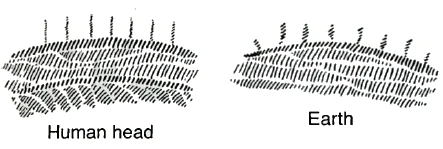
Translated by Steiner Online Library
10. Adam Kadmon in Lemuria
[ 1 ] Question: I was very surprised to hear that the sun was inside the Earth; I’ve never heard anything like that before. As I understood the last lectures, the Earth was nothing other than the human being, and that animals actually descend from all of that. How does this contrast with the idea that humans descend from apes?
[ 2 ] Dr. Steiner: I'm very glad you asked that question, because by answering it, we can make significant progress.
[ 3 ] If you take a look at the human head as it is today, what do you find? First of all, you’ll find that this human head is enveloped from the outside in and from the top down by a fairly hard, bony shell. Yes, gentlemen, if you take this bony shell—which is, after all, thin in relation to the entire head—and compare it to what you find, for example, when you go into the Jura Mountains, you will discover a very remarkable similarity. For this bony skull is essentially composed of components very similar to the limestone deposits—the limestone crust—that you find there when you go into the Jura Mountains.
[ 4 ] Now, you’ll usually find such deposits on the Earth’s surface. Of course, it’s not exactly ideal for growing fruit in these limestone deposits. But that can happen in a layer that isn’t made of limestone, but rather of topsoil, which lies on top of the limestone.
[ 5 ] Well, gentlemen, as you have surely already observed: when speaking of nature, one must consider everything. And you know, of course, that the human head—at least on the outside—is also covered with skin that even sheds, so that the skin lies over the calcareous skull, over the external skeletal structure of the head. If one studies this skin, it bears a strong resemblance to what we call topsoil. Hair grows from the scalp. The hair, in turn, bears a strong resemblance to the plants that grow out of the topsoil. If we were to draw a schematic, pictorial representation, we could actually say: In certain places on Earth, there are limestone deposits at the top; above them is the topsoil, and plants grow out of the topsoil. In humans, we have this calcareous shell on the outside, with the skin over it, and hair grows out of the skin.
[ 6 ] Now you’re thinking of something else. Curiously enough, I can draw something similar when I sketch the Earth or a human head. But now remember that I told you something else. I told you that if you go deeper into the Earth and study what lies deeper within it, you’ll find the remains of ancient living beings—ancient animals and plants—in the Earth. I told you what these animals and plants used to look like. Ichthyosaurs, plesiosaurs, and so on—those were quite large creatures. But if we now go inside the human head, what did I tell you about that? I told you: White blood cells float in the blood, and these are actually small animals as well. Inside the human head, these little animals are constantly dying off; they are, so to speak, half-dead, only to be brought back to life again at night, but they are on their way to dying. And the closer one gets to the head, the more the head is dying off. Beneath the skull, between the brain and the outer bony shell, there is a layer of skin that is quite dead. So that when one enters the head, one also finds something that is in the process of dying.
[ 7 ] So one could say: When a person dies, and one subsequently removes their head—which is, after all, what science tends to do, since it prefers to deal not with living people but with dead ones on the dissection table—well, gentlemen, there one indeed finds these dead brain cells, which are actually fossilized blood cells, and on the outside, the hard shell. Here, the story becomes very similar to that of the Earth. So that we can’t help but say: When we penetrate through this hard meninges—it’s even called the “hard meninges” precisely because it’s already completely dead—into the actual brain, we see fossilizations there as well. On Earth, these fossilizations are found everywhere. When we look at the Earth today, it resembles—one might say to a T—a dead human head. Of course, it is only smaller. The Earth is larger, which is why everything looks different. The Earth resembles a dead human head. So anyone who studies the Earth today must actually say to themselves: The Earth is a gigantic human skull—one that has died.
[ 8 ] Well, gentlemen, you can never imagine that something could have died if it hadn’t lived first. Isn’t that right? That’s impossible. Only science claims that. But I believe you would consider yourselves foolish if you were to find a dead human head somewhere and say, “It just formed out of matter.”—You would never say that; instead, you would say: “That which looks like this must once have belonged to a living human being; it must once have been alive; for what has died must once have been alive.” — So that, if one thinks about it rationally, if one studies the Earth today and finds a dead human head, one must naturally imagine—otherwise one would simply be, I might say, stupid—that it once lived, that the Earth was once a living human head, that it lived in the universe just as humans live on Earth today.
[ 9 ] Well, a human head—it couldn’t possibly live if it didn’t receive blood from a human body. A human head on its own can, at most, be shown once for fun. When I was a little boy living in the village, traveling troupes like that would sometimes set up camp and put up a tent. Whenever you walked by, someone would always come out: “Ladies and gentlemen, please come in—the show is about to begin! Here you can see the living, talking human head!”—So they showed a living, talking human head. You know, that’s done with all kinds of mirror tricks so that you don’t see the body, just the head. But of course, it’s not just the head on its own; it needs its blood and everything that nourishes it, which it must receive from the human body. So the Earth must once have been in a state where it could have sustained itself from outer space. Yes, could one also cite reasons to suggest that the Earth was once really something like a human being and was able to sustain itself from outer space?
[ 10 ] Much thought has been given to how it actually came to be that the Sun—as I recently demonstrated—was once connected to the Earth. But that was a long time ago. Since then, the Sun has been outside the Earth, providing it with light and heat. Even the heat that is inside the Earth itself comes from the Sun; it is simply stored up during the winter. Now, it is actually possible to calculate exactly how much heat the Sun emits each year. The amount of heat the Sun emits is enormous. And physicists have made such calculations as well. We’re talking about millions and millions of calories. But, gentlemen, this calculation really gave the physicists cause for alarm, because while they did figure out how much heat the Sun emits each year, they also discovered that, if that were true, the Sun would have cooled down long ago and we would all have frozen to death. So the calculation is done correctly, but it’s still not right. That’s just how it is. You can calculate—something can be calculated perfectly beautifully—but the calculation is still wrong, precisely because it’s so beautiful.
[ 11 ] Now there was a physicist, a Swabian named Julius Robert Mayer, who actually had some very interesting ideas back in the mid-19th century. This Julius Robert Mayer, who lived in Heilbronn in Württemberg, was a physician and, much like Darwin on his voyage around the world, made his discoveries while traveling—specifically, he made some very interesting observations during a trip to South Asia, on the islands there, noting how the influence of heat caused human blood to look different than in somewhat colder regions, and these observations led him to some interesting conclusions. He then summarized these observations and initially wrote them down in a very short essay. At the time, he sent it to the most prominent German scientific journal. That was in 1841. And this scientific journal sent the essay back to him because the editors said: “This is all trivial stuff—amateurish, stupid.” — Today, those same people—that is, their successors, of course—consider it one of the greatest discoveries of the 19th century!
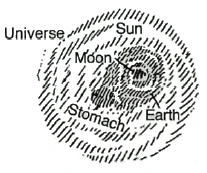
[ 12 ] But the Annalen für Physik und Chemie (Poggendorff’s Annals of Physics and Chemistry), which was the most famous German scientific journal at the time, not only rejected Julius Robert Mayer’s paper—which contained this story—but also had him committed to a mental institution! Because he was truly very passionate about his science—it isn’t entirely correct, but he was very passionate about his science—he behaved a little differently than other people—after all, the others didn’t exactly know the same things he did—and his fellow doctors and other physicians noticed this, and that’s why he ended up in the asylum! So you end up with a scientific discovery that comes from a man who was locked up in a mental hospital for it. If you go to Heilbronn in Swabia today, you’ll find a monument to Julius Robert Mayer in the main square. But that was erected after the fact! This is just one example of how people treat those who have a few unusual ideas in their heads.
[ 13 ] Well, you see, this Julius Robert Mayer, who pondered the effect he had observed that heat has on blood, also wondered how the sun could produce that heat. The others merely calculate how much heat it emits. But Julius Robert Mayer also asked himself: Well, where does all of that come from? — What does physics do? One might say that physics calculates just as one would with a human being: He ate once and is now full, but in addition, something is still being stored in his own fat and muscles. If he can’t eat anymore, he draws on that from his fat and muscles. And he can live for forty or sixty days that way, but eventually he’ll die if he doesn’t get anything to eat. Physicists have calculated the same thing for the sun—how much it gives off every day, after having, in a marvelous way, acquired this heat in the first place. Although no one considered how it “ate” back then, they did calculate exactly how much it gives off.
[ 14 ] But where does it get that from? That’s what Julius Robert Mayer asked. And he found out that every year, a certain number of celestial bodies—like comets—fly into the Sun. You see, that is the Sun’s food. But when we look up at the Sun today, we can see: It has a hearty appetite; it devours a tremendous number of comets every year. Just as we consume our midday meal and thereby generate heat, so the Sun generates heat by devouring comets into its hearty appetite.
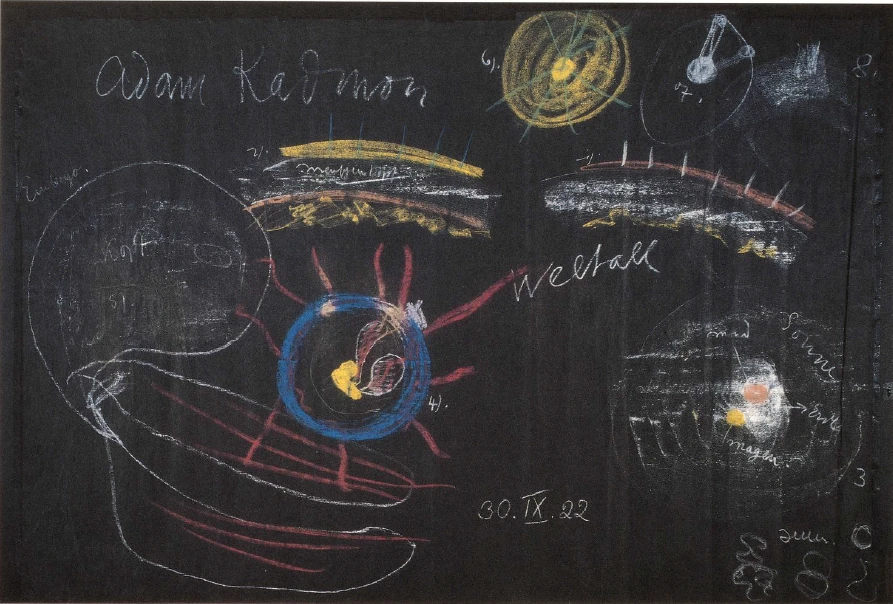
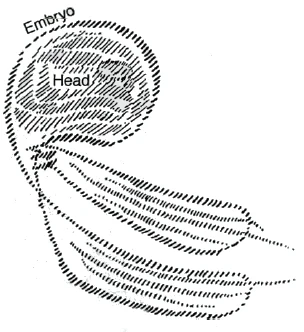
[ 15 ] Well, gentlemen, that means: When comets have already completely shattered and are falling to Earth, they are indeed hard iron cores, but it is only the iron that falls. After all, humans also have iron in their blood. If a human were to disintegrate somewhere and only the iron were to fall, people would probably say: “There’s something up there that was glowing, and it’s made of iron.” — So, because the meteorites into which comets disintegrate are made of iron, people say that comets are made of iron. But that’s nonsense, just as it would be nonsense to believe that humans are made of iron simply because they have iron in their blood and one might find a tiny speck of iron there. That’s how we find meteorites; they are disintegrated comets. Comets, however, are something entirely different—comets are alive! And the sun is alive, too; it has a stomach, and it doesn’t just devour comets but nourishes itself just as we do. There’s iron in our stomachs, too. When someone eats spinach, they don’t realize that it contains a great deal of iron—generally speaking, of course. Nevertheless, it’s a good idea to advise people with anemia in particular to eat plenty of spinach, because that way they get iron into their blood much more reliably than if you simply put iron into their stomachs, which usually just passes right through the intestines anyway.
[ 16 ] If comets were made entirely of iron and fell into the Sun, just imagine what a spectacle that would be! We’d see a completely different process. We’d probably have to set up a giant outhouse in space if that were true! Of course, the reality is quite different. Comets consist of only a very small amount of iron; but the Sun devours them.
[ 17 ] Now think back to a time when the Earth itself once contained the Sun. Back then, the Sun did the same thing it does now on its own; back then, it also devoured comets. And now you have the reason why this giant head, which is the Earth, was able to live: because the Sun served as its digestive system. As long as the Sun was with the Earth, the Earth fed itself from the universe through the Sun, just as we now feed ourselves from the Earth through our digestive system.
[ 18 ] So arrangements had already been made to ensure that the Earth could sustain itself while the Sun was still with it. Of course, you have to imagine that the Sun is vastly larger than the Earth, and that so, while the Sun was “inside” the Earth, it wasn’t actually inside the Earth—rather, the Earth was inside the Sun. So you have to picture it this way (see drawing $. 176): back then, the Sun was here, the Earth was inside it, and inside the Earth was the Moon. So: the Sun, the Earth within the Sun, and the Moon within the Earth. In a certain sense, this was the reverse of what happens with human beings. But even in human beings, it is only seemingly the case that they have a small stomach; the small stomach alone could not accomplish much. The small stomach that humans have—we’ll talk more about that later—is connected to the outside world in every way. Actually, humans are inside the Earth, just as the Earth was once inside the Sun. And the actual stomach of the Earth was then the center of the Sun. If this is the Sun (see drawing) and this is the Earth, then the stomach was right here (in the center), and the Sun simply drew these comets in from all directions and then delivered them to the stomach, so that the Earth’s digestion actually took place within the Earth.
[ 19 ] Now you might say: But isn’t that contradicted by the fact that the human head doesn’t digest food on its own? — That’s quite correct. But the situation has changed, after all. In fact, the human head does digest food to some extent. You see, I’ve described this to you: When we eat food, it first comes into contact with the tongue and the palate. There it is first mixed with ptyalin from saliva, and then it passes through the esophagus. But not all food passes through the esophagus; rather, the human being is essentially a column of water—everything is soft, with only the solid parts embedded—so that some of the food is already absorbed into the head while still in the mouth. Nutrients are absorbed directly from the palate into the head. That is how it is. You can see that things are not as crude as is commonly believed; you can easily deduce this simply by comparing. You cannot expose a human egg to the air so that it is incubated externally. With a bird’s egg, you can do that. It is placed in the air and is first incubated from the outside. Naturally—in a similar way—this is also true of the human head. The human head of today could not sustain itself on the small amount of nourishment it receives solely from the palate. But the Earth was structured differently. It had a stomach within itself that also served as a mouth, and it nourished itself entirely through this mouth. So we can say: As long as the Sun was connected to the Earth, this gigantic being had the ability to nourish itself from the cosmos.
[ 20 ] But I have already told you: When you study the Earth today, it is like a dead human head. Yes, a dead human head—but it must have once been alive. So the Earth, too, must have once been alive. It drew its nourishment from the sun.
[ 21 ] Well, gentlemen, I’d like to tell you something else. You see, if you look at the human embryo in the womb at a certain stage—that is, after fertilization, say, two, three, or four weeks after fertilization—it looks extraordinarily interesting. First of all, inside the mother’s body—all around the uterus—there is a membrane that contains many blood vessels. And the blood vessels that are present specifically within the mother’s body—which, of course, are not normally present in the human body unless a child is being carried—are connected to the mother’s other blood vessels. They branch off into the blood vessels everywhere. So the mother has effectively incorporated this sphere into her own circulatory system (see drawing), and while the blood normally circulates throughout her body, it also flows specifically into this sphere—only into the outer sphere.
[ 22 ] Well, gentlemen, inside this sphere you will find all the organs. For example, there is an organ that looks like a sac, and next to it is another one—a smaller sac. These blood vessels also extend into these sacs; otherwise, when the mother is not carrying a child, they aren’t there at all, because the entire sphere is missing; these vessels then extend into them as well. So we can say: These veins extend into all of that, and everything I have described to you so far is present as the child develops during the first few weeks; it is there, and the child hangs from it—very small, so tiny—hangs from it here. It hangs from it, so tiny!
[ 23 ] And curiously enough, if I were to draw the child for you now as it will be in the near future, I would have to draw it like this: the child is almost entirely head; the rest of the body is very tiny in comparison. As you can see, I’ve drawn two little sticks there—those will become the arms later. The legs are practically nonexistent. Instead, these two pouches that I’ve drawn here attach to the child, and the blood vessels enter these two pouches. These blood vessels carry nutrients, and the head is nourished. There isn’t a stomach yet, nor a heart. The child doesn’t have its own blood circulation at all during the first few weeks. The child is really just a head. And it gradually grows and develops so that by the second or third month it begins to resemble a human being, as the other organs begin to form. But the child is still nourished from the outside, from what are essentially these “pockets.” And then nourishment accumulates all around it like this (it is drawn). But blood is supplied. The child cannot breathe yet; it receives air only indirectly through the mother. So the child is actually a human head, and the other organs do not yet serve it in any significant way. It cannot do anything with its lungs. It cannot do anything with its stomach. It cannot eat yet; so it must receive all its nourishment in such a way that its head is nourished. It cannot breathe yet. It does not even have a nose yet. The organs are developing, but it cannot use them yet. So the child in the mother’s womb is essentially a head; it’s just that everything is soft. The future brain—it’s incredibly soft in here, completely soft and incredibly alive, completely alive. And if you could take a giant microscope and look directly at a child’s head—say, from the second or third week after fertilization—it would look quite similar to what I’ve told you about the Earth as it once was, when the ichthyosaurs and plesiosaurs and so on were wading about. It would look incredibly similar—the only difference being the size.
[ 24 ] So one might ask: Where can we still find an image of the Earth as it once was? In the human head—when that head is still unborn and exists only as a seed. For this human head is, in fact, a clear reflection of the Earth.
[ 25 ] And everything that needs to be there—those sacs attached to the body, everything surrounding it—is cast off as what is called the afterbirth once it has become completely brittle, and the human being remains, is born. So, what is cast off as the afterbirth is actually what nourishes the child in the mother’s womb—the afterbirth consists of torn blood vessels. This so-called allantois and this amnion—which are, in fact, the torn-up organs—are extremely important to us as long as we are in the womb, because they take the place of the stomach and the respiratory organs. But when we no longer need them, when we are born and can breathe and eat on our own, they are cast off as the afterbirth.
[ 26 ] Well, gentlemen, when you look at something like what I have drawn for you here, all you need to do is imagine: there is the universe, here is the Earth, and inside it is the human head, with the sun delicately surrounding it (see drawing $177). And now comes birth—that is, what once was comes to an end. The sun and the moon fly out, and the birth of the Earth takes place. The Earth must help itself along.
[ 27 ] There are two things one can describe. First, I could have described it to you by saying: The Earth once looked like this—there were ichthyosaurs, plesiosaurs, and so on. But now I could just as easily describe the human embryo to you. Everything is just smaller, but I would have to say the same thing. So that today you can say: The Earth was once the embryo of a giant human.
[ 28 ] It is, again, extremely interesting that in earlier times people, in a curious way—we’ll talk more about that later—knew more than people in later times. For the people of later times learned mostly from the misunderstood Hebrew text, from the misunderstood Old Testament, and they imagined—didn’t they?—that there was the Earth and somewhere Paradise, and there stood the fully formed Adam in Paradise as a little tyke. This idea that people formed from the misunderstood Old Testament is roughly the same as if someone today were to imagine: Human beings do not come from that little thing—the allantois and amniotic sacs, the membrane, and so on—human beings do not come from that; rather, all of that is a separate entity; but in the mother’s womb, there’s just a tiny little flea, and from this little flea comes a human being. That’s roughly what it’s like when one imagines: The Earth was there, Adam and Eve lived on it like fleas perched upon it, and afterward came the human race. This arose precisely from a misunderstanding of the Old Testament, whereas those who knew something in ancient times did not speak of Adam, but of Adam Kadmon. And Adam Kadmon is something other than Adam. He is that giant head that the Earth once was. And that is a natural conception. This Adam Kadmon only became the “earth flea” when people could no longer imagine that a human head could become as large as the Earth, when they no longer believed in it, and that is when they formed the abnormal notion—as if it were just for fun—that the entire nine months take place within the mother’s womb, and that the human being is born from this maternal sphere.
[ 29 ] In reality, we must imagine that human beings were once the entire Earth—the entire Earth. And the Earth was much more alive. But, gentlemen, it is really no different; you see, if I were to draw the Earth for you today, it would be a lifeless entity, just as the human head is in the process of dying; and if we go back to that human head, which is there in the mother’s womb, it is alive through and through. It is just as the Earth once was. And the Earth is dead today. But it was once alive through and through.
[ 30 ] You see, if people could bring together everything that science has to offer, they would come to some interesting conclusions. Science is all well and good, but the people who manage science today don’t really know what to do with it. If someone were to look at the Earth’s surface today, they would have to say: It’s just like a dead human head. We’re actually walking on corpses that must once have been alive. I’ve told you that; but I’ll also tell you everything else that follows from it.
[ 31 ] Now, back in my youth, there was once a very famous geologist in Vienna—that is, an earth scientist. He wrote a major book: The Face of the Earth. It says in there: When we walk today over the earth’s crust in Bohemia or Westphalia, we are walking over dead matter. That was once alive. — Science already has a hunch about the details, but it cannot piece the facts together. What I am telling you does not contradict science in any way. You can find confirmation of this everywhere if you follow scientific research. But the scientists themselves cannot make sense of what follows from these facts.
[ 32 ] So we really do have to say: The Earth was once a giant human. That is what it was. And it died, and today we walk around on the dead Earth.
[ 33 ] Well, you see, Mr. Burle’s question has left us with two important questions. One is this: If we go back in time, we see that the Earth was a giant human being. Where did the animals come from? And the second question is: So the Earth was a giant human being. How is it that humans today are such tiny fleas on the Earth? How is it that they have become so small? These two questions are indeed important ones.
[ 34 ] The first one isn't actually that hard to answer; you just have to avoid trying to answer it with all sorts of fanciful tricks, but instead answer it based on the facts.
[ 35 ] Gentlemen, what do you think would happen if a woman were to die during pregnancy, while the situation inside still looks the way I’ve drawn it for you on the board, and you were to dissect out this sphere—which contains the parts that are expelled with the afterbirth, as well as the embryo that would later become a human being—suppose we take all of that out and don’t place it in formaldehyde—where it would, of course, be preserved—but instead leave it lying around somewhere, especially where it’s damp, and return to it after some time—what do you think we would see there? Yes, gentlemen, if we were to return there after some time and then begin to cut it open, all sorts of little creatures would come running out; all sorts of little creatures would come running out. The entire human head, which was alive in the womb, dies. And as it dies—we only need to cut it open to see it—all sorts of creatures come running out.
[ 36 ] Yes, gentlemen, just imagine: the Earth was once such a human head in outer space, and it died. Is it any wonder that all kinds of creatures emerged from it? That’s still happening today. If you consider that, you have the origin of animals. You can still observe that today.
[ 37 ] That is the question. We will talk more about how the individual animal forms came into being. But in principle, the fact remains that the animals must be there. I can only touch on this question today; I will answer it in detail later.
[ 38 ] Now the other question remains: Why is a human being such a tiny little thing today? Well, here again you have to take into account everything you can possibly know. First, you might ask: Yes, but there once lived a human being in outer space—in the space that is now Earth—who died and is now part of the Earth. Didn’t that person give birth? Didn’t that person reproduce? — There’s no need to go into this question any further; if that person reproduced, then at that time the others in outer space were called to something else somewhere else. So we need to focus only on the point at which reproduction occurred.
[ 39 ] Yes, gentlemen, if you observe today how a small cell multiplies, it starts out like this (see drawing), then it looks like this, and then it becomes two. Then each of those becomes two again; that makes four. And this is how the entire human body is built up, so that in the end it consists entirely of tiny individual creatures that live in the blood and die in the head, all of which originate from a single cell. Thus, the present-day Earth arose from a part of the original Earth, just as today a human being is born not only from a whole human being but from a part of a human being. The only question is: Why doesn’t it emerge anymore today? Because the Earth is no longer connected to the universe in the same way since the Sun moved out. Now all these beings remain inside. They were illuminated from the outside by the Sun when the Sun had moved out, whereas before it had been inside. — You must take everything you can know into account.
[ 40 ] Gentlemen, are you perhaps aware that dogs—which generally have a certain size below which they do not fall—can nevertheless be bred to be so small that they are sometimes almost no larger than large rats? For example, if you make the dogs drink alcohol, they remain small—after all, how large an animal grows depends on what influences its nature—; however, these dogs become terribly nervous.
[ 41 ] It was truly the case—even if the entire world wasn’t filled with alcohol—that the effects of substances had become quite different once the sun had moved away from the Earth. When it was still within the Earth, the effect was quite different from what it was later, once the sun was outside. And while human beings were at first as large as the Earth itself, they became small as a result of this immense influence. But that was a blessing for them, because when they were still as large as the Earth, everyone else who was born had to fly out into outer space. We will hear later what happened to them. Now they could remain inside the Earth because they can walk around on it together. And now, instead of that one human being, the human race came into being, because humans remained small.
[ 42 ] Yes, gentlemen, it is true: We are all descended from a single human being! After all, that’s only natural, isn’t it? But this one human being was not some tiny earth flea, as humans are today, but was the Earth itself. However, when the sun rose, the Earth died on one side, and the animals crawled out—just as animals still crawl out today when something has died. And on the other side, the forces remained. Only now they were no longer stimulated from within by the sun, but from without, and the human being became small and was able to multiply into many people.
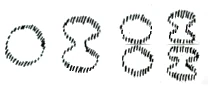
[ 43 ] So, by acting from the outside, the sun makes humans seem small. You can probably understand that quite well. Just think about it: if this were the Earth—I’ll draw the Earth very small now—and the Sun used to be where the Earth was inside it, then all the forces would have radiated out from there, and whenever the Earth moved, the Sun would always move with it; they were one and the same (drawing on the left). Now that the sun is on the outside, the situation is this: there is the sun, and there is the Earth, which orbits the sun. When the Earth is here, it receives these rays; when it is there, it receives those rays (drawing on the right). You only ever see a small portion of the rays on Plate 9. When the sun is on the outside, the Earth receives only a few rays. When the sun was still inside the Earth, the sun’s full effect still came from within. No wonder that when the sun orbits like this, it can illuminate a person at every single point on Earth, whereas before, when it was inside and had to radiate from the center, it could only illuminate one person. When the sun began to exert its influence from the periphery, it made people smaller.
[ 44 ] It is truly interesting—really interesting—that not only did Asian scholars, even long after the Old Testament had been misunderstood and interpreted as it later came to be, still speak of Adam Kadmon—who is actually a human being who embodies the entire Earth—but also the ancestors of today’s Central Europeans, who are found everywhere—in Switzerland, in Germany—also had a legend that said: The Earth was once a giant man, the giant Ymir. And the Earth was fertilized.
[ 45 ] So they spoke of the Earth in the same way that one must speak of a human being today. And of course, this was no longer understood later on, because in place of these—admittedly figurative, yet true—mythical images—they are, after all, terribly true—in place of these true images, the false Latin interpretation of the Old Testament took hold. So the ancient Germanic peoples here in Europe—it was figurative, as if they had been dreaming, but the dream was much more accurate than later, when the Old Testament was misunderstood and, instead of speaking of the whole Earth, of Adam Kadmon, people spoke of the little Adam—still possessed an ancient, albeit purely dreamlike, figurative science.
[ 46 ] Yes, you see, one does develop a tremendous respect for what was once eradicated—that ancient, albeit purely fantastical, pictorial science. But it existed, and it was eradicated. This should come as no surprise. At a certain point in history, this widespread eradication simply took place. And if I were to tell you what once existed, for example, in Asia Minor, the Near East, North Africa, Southern Europe, Greece, and Italy—yes, gentlemen, in the 1st, 2nd, and 3rd centuries, when Christianity already existed—you could find strange statues everywhere if you walked through the fields in Asia or Africa; they were everywhere. And through these statues, people who could not yet read or write expressed what life on Earth was once like. From these statues, one could have studied what life on Earth was once like. It was expressed in the form of sculpture that the Earth was once a living being.
[ 47 ] And then people were seized by this rage, this fury, and in a short time, everything that had been left of such statues was simply destroyed. A tremendous amount was destroyed—things from which we could have learned a great deal. What remains of ancient monuments today is, after all, the least important part, because in the early centuries, people knew very well what was most important. That’s what was razed to the ground.
[ 48 ] Well, it is true that humanity once possessed a marvelous body of knowledge; but those people simply dreamed it. And you see, it’s an extraordinarily interesting fact that people once—instead of thinking, as they must today—actually dreamed on Earth. They actually did this more at night than during the day. For everything you learn about ancient human wisdom is permeated by the realization that these people observed a great deal at night. The shepherds in the fields observed a great deal at night. And this ancient wisdom was present among the Germans—the Germanic peoples—in that they spoke of a giant human being. And later on, there was indeed a giant human being. Human beings did not suddenly become smaller. And eventually, they simply became what people are today.
[ 49 ] Gentlemen, let’s continue this discussion from this point when I’m able to visit you again. You see, a question like this always provides food for thought on quite a few topics. I must now travel back to Germany, to Stuttgart. After that, we can certainly continue our discussion. In the meantime, please prepare some really good questions. I’ll let you know when our next session will be.