

A Spiritual Scientific View
of Nature and Man
GA 352
16 February 1924, Dornach
Translate the original German text into any language:
Versions Available:
A Spiritual Scientific View of Nature and Man, tr. SOL
7. Über die Wirkung von Arsen und Alkohol im Körper
7. The Effects of Arsenic and Alcohol on the Body
[ 1 ] Guten Morgen, meine Herren! Haben Sie etwas Besonderes heute da als Wunsch?
[ 1 ] Good morning, gentlemen! Do you have anything special in mind today?
[ 2 ] Herr Müller: Ja, eine kleine Anfrage. Neulich hat Herr Doktor über Arsenik gespro‚chen und über die dickleibigen Kinder. Vor längeren Jahren sah ich auf der Messe immer so dickleibige Kinder. Es ist mir nachträglich aufgefallen, daß die Kinder, die auf der Messe gezeigt wurden, im Alter von höchstens acht, zwölf oder sechzehn Jahren sind. Die Kinder, die dafür künstlich aufgezogen wurden, kamen manchmal aus Ungarn. Und nachdem Herr Doktor sagte, daß man das Arsenik dort so leicht findet im Gestein, möchte ich die Frage aufwerfen, wie alt derartige Kinder werden können, die so künstlich mit Arsenik aufgezogen wurden, um dick zu werden? Wäre es nicht möglich, gegen der
[ 2 ] Mr. Müller: Yes, a quick question. The other day, the doctor spoke about arsenic and about the overweight children. Many years ago, I used to see such overweight children at the fair. It occurred to me later that the children who were shown at the fair were no older than eight, twelve, or sixteen years old. The children who were artificially fattened up for this purpose sometimes came from Hungary. And since the doctor said that arsenic is so easily found in the rock there, I would like to ask: How old can such children live to be—children who were artificially fattened up with arsenic to make them fat? Wouldn’t it be possible to take action against the
[ 3 ] artige Personen, die Kinder mit Arsenik aufziehen, gerichtlich vorzugehen und zu erreichen, daß das Gesetz verbietet, es zu betreiben? Oder wird das nur als Geschäftsquell ganz im geheimen benützt?
[ 3 ] Should we take legal action against people like this who raise children on arsenic, and work to ensure that the law prohibits this practice? Or is this simply being used in secret as a source of income?
[ 4 ] Herr Doktor hat erwähnt, daß Leute, die in einem bestimmten Stadium innehalten konnten mit Arsen, wieder herunterkamen. Mit diesen Kindern war das nicht der Fall; es waren Kinder, die annähernd zwei Zentner gewogen haben, obwohl sie erst etwa sechzehn Jahre gezählt haben. Ob diese nicht doch einer schlimmen Periode entgegengehen?
[ 4 ] The doctor mentioned that people who were able to stop taking arsenic at a certain stage were able to lose weight again. That was not the case with these children; they were children who weighed nearly two centner, even though they were only about sixteen years old. Could it be that they are heading toward a difficult period after all?
[ 5 ] Sodann sprach Herr Doktor über Alkohol, daß wir auch Alkohol selber im Körper erzeugen, und über die verschiedenen Wirkungen des Alkohols. Der eine ist furchtbar aufgebracht, schlägt Radau und so weiter, und der andere ist ganz ruhig. Dem nächsten schlägt es auf die Augen, so wie es bei mir der Fall ist. Nach ein, zwei, drei Gläsern habe ich am anderen Morgen harte Körner in den Augen, die man kaum mit den Fingern zerdrücken kann, als die Wirkung von Alkohol.
[ 5 ] Then the doctor spoke about alcohol, explaining that our bodies actually produce alcohol on their own, and about the various effects of alcohol. One person gets terribly agitated, makes a racket, and so on, while another remains completely calm. For yet another, it affects their eyes, as is the case with me. After one, two, or three glasses, the next morning I have hard lumps in my eyes that are almost impossible to crush with my fingers—that’s the effect of alcohol.
[ 6 ] Dann sagte Herr Doktor, daß man gewissermaßen sämtliche Krankheiten an den Augen ablesen könnte. Jetzt gibt es auch verschiedene Personen, die, wenn sie nur den Urin sehen, meinen, daß sie dann sämtliche Krankheiten erkennen wollen. In Basel hat man auch so einen; ob das seine Richtigkeit hat? Ich kann das nicht glauben.
[ 6 ] Then the doctor said that, in a sense, one could diagnose all diseases simply by looking at the eyes. Nowadays, there are also various people who, just by looking at urine, claim they can identify all diseases. There’s someone like that in Basel, too; is there any truth to that? I can’t believe it.
[ 7 ] Dann möchte ich noch fragen, ob etwas daran ist, wenn Leute irgendwo eine Medizin kriegen und sie haben einen festen Glauben daran, ob das zur Heilung beiträgt?
[ 7 ] I'd also like to ask: Is there any truth to the idea that when people receive a medicine somewhere and have a strong belief in it, does that contribute to their healing?
[ 8 ] Dann komme ich noch auf die vorletzte Ausführung von Herrn Doktor mit dem Süßwasser zu sprechen. Es gibt einen Teich bei Darmstadt, wo von der chemischen Industrie immer heißes Wasser hereinläuft — er dampft sogar —, und in diesem Teich sind Tausende und Tausende von Goldfischen, und alle vollständig dunkelrot. Wie kommt das? Sie sind vollständig dunkelrot.
[ 8 ] Next, I’d like to address the doctor’s penultimate point regarding freshwater. There is a pond near Darmstadt into which hot water from the chemical industry constantly flows—it’s even steaming—and in this pond there are thousands upon thousands of goldfish, all of them completely dark red. How is that possible? They are completely dark red.
[ 9 ] Dr. Steiner: Also das erste betrifft die verfetteten Kinder. Die Sache ist schon so, wie Sie richtig vermutet haben, daß diese Kinder, die also in allerlei Schaubuden einfach gezeigt werden als be sondere Merkwürdigkeiten, durch Arsenik oder ähnliche Stoffe - nicht wahr, dem Arsenik sind viele Stoffe ähnlich — künstlich fettgemacht werden. Sie sind ja auch, wie man leicht prüfen könnte, dann nicht besonders stark, sondern sie sind eigentlich nur fett, dick.
[ 9 ] Dr. Steiner: So the first point concerns children who are overweight. The fact is, as you correctly surmised, that these children—who are simply paraded around in all sorts of sideshows as peculiar curiosities—are artificially fattened using arsenic or similar substances—after all, many substances are similar to arsenic—. As one could easily verify, they are not particularly strong; rather, they are actually just fat and plump.
[ 10 ] Nun sehen Sie, das ist aber noch etwas viel Komplizierteres als das, was ich Ihnen in bezug auf den Arsenikgenuß von Erwachsenen neulich sagte. Das, was ich damals gesagt habe, bezieht sich eben auf den Erwachsenen. Der kommt durch den Einfluß des Arsenik in die Zustände, von denen ich damals gesprochen habe. Bei diesen Kindern, an denen ja tatsächlich eine Art Verbrechen begangen wird — das ist ja nicht zu leugnen —, beruht aber die Wirkung des Arsenik oder ähnlicher Stoffe noch auf etwas anderem. Diese Kinder müssen behandelt werden in dieser verbrecherischen Art so ungefähr in dem Lebensalter, das ich Ihnen ja immer als einen wichtigen Lebensabschnitt angegeben habe: in dem Lebensalter zwischen dem Zahnwechsel, also dem siebenten, achten Jahre und der Geschlechtsreife, das ist dem vierzehnten, fünfzehnten Jahre. Und, nicht wahr, in diesem Lebensalter ist das Kind nicht nur so, daß man es in die Schule schickt, in die gewöhnliche Volksschule, weil es da am besten eben durch die menschliche Entwickelung lernen kann, sondern in diesem Lebensalter findet noch etwas ganz anderes statt.
[ 10 ] Now, you see, this is actually much more complicated than what I told you recently regarding arsenic ingestion in adults. What I said back then referred specifically to adults. Under the influence of arsenic, they develop the conditions I described at that time. In the case of these children—against whom a kind of crime is indeed being committed, as cannot be denied—the effects of arsenic or similar substances, however, are based on something else entirely. These children are subjected to this criminal treatment roughly during the age range that I have always described to you as an important stage of life: the period between the change of teeth—that is, the ages of seven and eight—and puberty, which is around the ages of fourteen and fifteen. And, isn’t it true that at this age, a child is not merely someone you send to school—to the ordinary elementary school—because that is where they can learn best through human development, but at this age something entirely different also takes place.
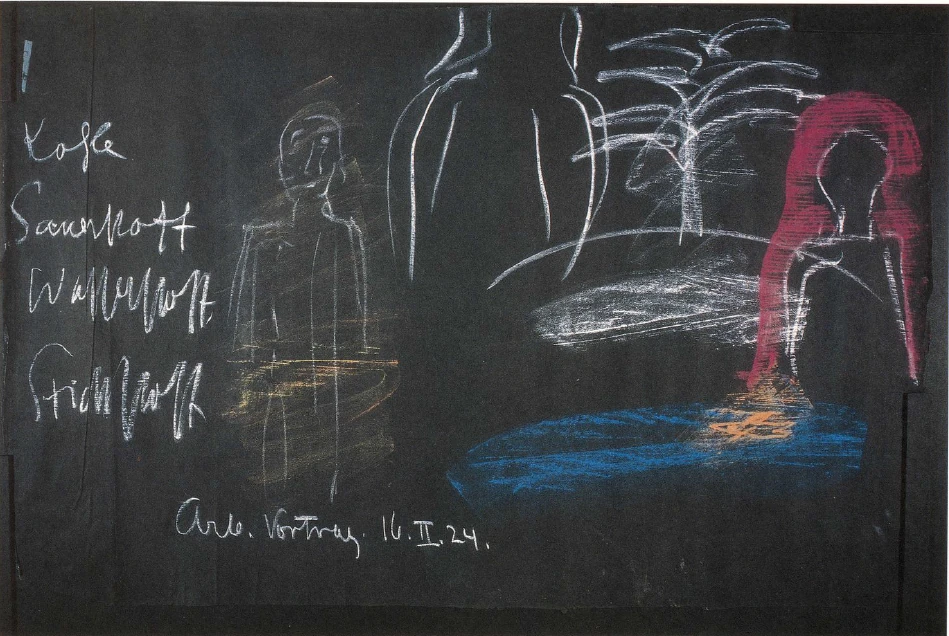
[ 11 ] Erinnern Sie sich, meine Herren, ich habe Ihnen gesagt, der Mensch besteht nicht bloß aus diesem physischen Leib, den man da sieht mit den Augen, den man mit den Händen berühren kann, sondern der Mensch besteht auch aus übersinnlichen, seelisch-geistigen Gliedern. Nun gibt es einen feinen Leib des Menschen, den ich Ihnen genannt habe als den Ätherleib des Menschen. Auf diesen Ätherleib muß man in der menschlichen Entwickelung ebenso hinschauen wie auf den physischen Leib. Wenn ich es Ihnen ganz schematisch aufzeichnen soll, so haben wir also den Menschen (siehe Zeichnung) seinem physischen Leib nach; aber um diesen physischen Leib herum und auch drinnen ist nun dieser feine Leib, der Ätherleib. Und weiter haben wir außer diesem physischen Leib und Ätherleib, von denen man schon den Ätherleib ja nicht sieht mit gewöhnlichen Augen, im Menschen den astralischen Leib, der empfinden kann. Die Pflanze hat noch einen Ätherleib, sie kann wachsen; das kommt vom Ätherleib. Der Mensch und die Tiere haben einen astralischen Leib; sie können empfinden, fühlen. Das kann die Pflanze nicht. Ich habe Ihnen gesagt, daß manche Leute glauben, die Pflanze könne fühlen; sie kann es eben nicht!
[ 11 ] Remember, gentlemen, I have told you that a human being does not consist merely of this physical body that one sees with the eyes and can touch with the hands, but that a human being also consists of supersensible, soul-spiritual members. Now there is a subtle body of the human being, which I have referred to as the etheric body. In human development, one must pay just as much attention to this etheric body as to the physical body. If I were to sketch this out for you very schematically, we have the human being (see drawing) as regards his physical body; but surrounding this physical body—and also within it—is this subtle body, the etheric body. Furthermore, in addition to this physical body and etheric body—the etheric body, of course, cannot be seen with ordinary eyes—the human being possesses the astral body, which is capable of sensation. The plant also has an etheric body; it can grow—that comes from the etheric body. Human beings and animals have an astral body; they can perceive and feel. The plant cannot do that. I have told you that some people believe the plant can feel; but it simply cannot!
[ 12 ] Sehen Sie, meine Herren, man muß sich bei jedem Stoff, der auf den Menschen wirkt, fragen: Auf welches von diesen Gliedern wirkt der betreffende Stoff? Das Arsenik nun wirkt ganz besonders auf den astralischen Leib und auf die Atmung ganz besonders stark. Die Atmung ist eben vom astralischen Leib abhängig. Wenn man also einem Menschen Arsenik gibt, entstehen alle diejenigen Folgen, die durch das Arsenik kommen, auf dem Umweg durch den astralischen Leib.
[ 12 ] You see, gentlemen, with every substance that affects a person, one must ask: On which of these bodies does the substance in question act? Arsenic, now, acts particularly on the astral body and has a particularly strong effect on respiration. Breathing is, after all, dependent on the astral body. So when one gives a person arsenic, all the effects caused by the arsenic arise indirectly through the astral body.
[ 13 ] Wenn der Mensch seine ersten Lebensjahre durchmacht, von der Geburt, sagen wir bis zum Zahnwechsel im siebenten, achten Lebensjahre, da entwickelt sich vorzugsweise der physische Menschenleib. Sie können das sehen, wie sich dieser physische Menschenleib entwickelt. Betrachten Sie ein ganz kleines Kind, das kurz vorher erst geboren ist, Sie werden da noch wenig sagen können, ob es nun dem Vater oder der Mutter ähnlich sieht. Da kommen ja, nicht wahr, die Tanten und Onkel, wenn so ein Kind geboren wird. Der eine sagt: Ach, das ist der Mutter wie aus dem Gesicht geschnitten — besonders die Füße! — der andere kommt und sagt: Das sieht dem Vater aber zum Verwechseln ähnlich! - Es ist eben so: Das kleine Kind ist noch ganz unentschieden entwickelt in bezug auf seinen physischen Leib, und erst später sieht man, wem es ähnlich wird. Betrachten Sie nur einmal ein so ausdrucksvolles Organ beim Kind, wie es zum Beispiel die Nase ist. Die Nase kann beim kleinen Kind ganz anders aussehen, als sie später wird. Bei manchen kommt es natürlich erst später, aber in der Regel ist es so, daß wenn der Zahnwechsel eintritt, die Nase, die sich verhältnismäßig am spätesten zu ihrer rechten Form, ihrer rechten Gestalt entwickelt, dann schon die gehörige Form hat.
[ 13 ] As a person goes through the first years of life—from birth, let’s say, until the teeth begin to fall out around the ages of seven or eight—it is primarily the physical body that develops. You can see how this physical body develops. Look at a very young child who was just born; at that point, you can’t really tell yet whether the child resembles the father or the mother. That’s when, isn’t it, the aunts and uncles come around when a child like that is born. One says, “Oh, the child is the spitting image of the mother—especially the feet!” Another comes along and says, “But the child looks just like the father—you could hardly tell them apart!” - The fact is: The small child’s physical body is still in a very indeterminate stage of development, and only later can one see whom it resembles. Just consider an organ as expressive in a child as the nose, for example. A young child’s nose can look quite different from what it will look like later on. For some, of course, this change comes later, but as a rule, by the time the teeth begin to fall out, the nose—which develops relatively late in reaching its proper shape and form—has already taken on its proper form.
[ 14 ] Später, nach dem siebenten, achten Jahre, wird eigentlich der physische Leib nur noch größer, in den Muskeln stärker, aber seine eigentliche Form, seine eigentliche Gestalt hat er schon mit dem siebenten Jahre. Also es ist so, daß sich zwischen dem ersten und siebenten Lebensjahr besonders der physische Leib ausdrückt. Und zwischen dem Zahnwechsel und der Geschlechtsreife, zwischen dem siebenten, achten und dem vierzehnten, fünfzehnten Jahre, da bildet sich vorzugsweise der Ätherleib aus, in dem die Ernährungs- und Wachstumskräfte stekken. Und der astralische Leib bildet sich erst aus zwischen dem vierzehnten, fünfzehnten und dem zwanzigsten, einundzwanzigsten Jahre. Da erst bildet sich so richtig der astralische Leib aus. Nicht als ob er vorher nicht da wäre — der Mensch hat ihn schon von seiner Geburt an -, aber die eigentliche Ausbildung des astralischen Leibes geschieht erst nach dem vierzehnten, fünfzehnten Lebensjahre.
[ 14 ] Later, after the seventh and eighth years, the physical body actually only grows larger and becomes stronger in its muscles, but it already has its true form, its true shape, by the seventh year. So it is the case that between the first and seventh years of life, the physical body in particular comes to the fore. And between the change of teeth and sexual maturity—between the seventh, eighth, and the fourteenth, fifteenth years—the etheric body, in which the forces of nutrition and growth are contained, develops primarily. And the astral body does not begin to develop until between the ages of fourteen or fifteen and twenty or twenty-one. Only then does the astral body truly take shape. Not that it isn’t there before—a person has it from birth—but the actual development of the astral body does not occur until after the age of fourteen or fifteen.
[ 15 ] Wenn ein Erwachsener, der das vierzehnte, fünfzehnte Jahr überschritten hat, Arsenik kriegt, so hat er seinen astralischen Leib ausgebildet. Das Arsenik wirkt zwar jetzt auch in ihm, aber der Organismus kann sich doch ein bißchen dagegen wehren. Wenn aber ein Kind zwischen dem siebenten und fünfzehnten Jahre Arsenik kriegt, ist der astralische Leib noch nicht ausgebildet, da wirkt das Arsenik mit aller Kraft auf das Kind ein. Da gibt es gar keine Gegenwirkung im menschlichen Organismus. Und die Folge davon ist, daß die Arsenikwirkung, die also vorzugsweise dahingeht, daß im Menschen die Fettmassen sich ansetzen, alles ins Fett geht, verursacht, daß alles ins Kugelige geht, ins Breite geht zwischen dem siebenten und dem vierzehnten, fünfzehnten Jahre.
[ 15 ] When an adult who is over fourteen or fifteen years of age ingests arsenic, his astral body has already developed. Although the arsenic now also affects them, their organism is still able to defend itself against it to some extent. But if a child between the ages of seven and fifteen is given arsenic, the astral body is not yet fully developed, so the arsenic affects the child with full force. There is no counteraction whatsoever in the human organism. And the consequence of this is that the effect of arsenic—which primarily causes fat deposits to accumulate in the human body, so that everything turns to fat—results in the body becoming more rounded and broader between the ages of seven and fourteen or fifteen.
[ 16 ] Sie müssen bedenken, die Dinge, die ich Ihnen da sage, die haben für das Leben eine ungeheuer große Bedeutung! Nicht wahr, jeder von Ihnen kann sagen: Nun ja, du erzählst uns da, daß das Arsenik, wenn man es dem Kinde zwischen dem siebenten und vierzehnten, fünfzehnten Jahre beibringt, eine große Bedeutung hat, das Kind fett macht, kugelig macht; aber ich kenne Menschen, die auch, ohne daß man ihnen extra Arsenik beibringt, von Kindheit auf schon furchtbar dick wurden! - Ja, meine Herren, Sie müssen nur bedenken, daß die Stoffe, die es in der Natur gibt, überall wenigstens in kleinen Mengen vorhanden sind. Und man kann sagen: Der Mensch kann überhaupt sich nicht nähren, oder das Kind kann sich auch nicht nähren, ohne daß es etwas nimmt, wo Arsenik drinnen ist. Arsenik ist eben in den Nahrungsmitteln auch drinnen.
[ 16 ] You must keep in mind that the things I’m telling you here are of immense importance for life! Isn’t that right? Each of you might say: “Well, you’re telling us that arsenic, if administered to a child between the ages of seven and fourteen or fifteen, is very important—it makes the child fat and round; but I know people who, even without being given arsenic, became terribly fat right from childhood!” - Yes, gentlemen, you just have to consider that the substances found in nature are present everywhere, at least in small quantities. And one could say: A person cannot nourish themselves at all—nor can a child—without consuming something that contains arsenic. Arsenic is simply present in food as well.
[ 17 ] Nun wissen Sie ja, daß die Kinder verschiedenen Geschmack, verschiedenen Gusto haben; das eine Kind ißt dies gern, das andere jenes. Und nun gibt es eben Kinder, die lieben diejenigen Speisen besonders, die arsenikhaltig sind. Im späteren Lebensalter kommt es auch noch vor, daß man just dick von dem wird, was einem schmeckt. Wenn Sie Zeug essen, das Ihnen nicht schmeckt, so werden Sie spindeldürr. Wenn Sie Zeug essen, das Ihnen gut schmeckt und Sie auch noch Zeit haben, sich dem hinzugeben, so werden Sie dick und fett. Bei Kindern ist es aber ganz besonders der Fall; und ganz besonders ist es der Fall bei Kindern in diesem Wachstumsalter zwischen dem siebenten und dem vierzehnten, fünfzehnten Jahre. Wenn also Kinder einen solchen Gusto haben auf Speisen, die Arsenik enthalten, so werden sie dick und fett. Aber bei denjenigen Kindern, die ausgestellt werden in Schaubuden, auf Messen und dergleichen — wie der Fragesteller erwähnt hat -, ist das Arsenik künstlich beigebracht, geradeso wie in den Alpenländern, und in Ungarn ist es ebenso der Fall, wo das Arsen in den Gesteinen derGebirge enthalten ist. Man bringt diesen Kindern also das Arsenik bei, und die Hauptsache ist, daß das Kind gerade in diesem Alter Geschmack am Arsenik kriegt. Es ist abscheulich, aber es ist so: Das Kind fängt allmählich an, nach diesem Arsenik zu begehren, wie wenn es Zucker wäre, nimmt es zu sich, und dadurch geschieht es, daß, bevor noch der astralische Leib richtig ausgebildet ist, das Kind dick und fett wird. Solche Kinder kann man eben dann zeigen, weil sie etwas Abnormes sind und furchtbar schwer werden. Und dann finden die Leute, daß das etwas Merkwürdiges ist. Die Leute wollen ja immer etwas Absonderliches sehen, und was tut man nicht alles in der Welt, um den Leuten einen Genuß zu bereiten! Es gibt ja noch ganz andersgeartete Dinge, die darauf ausgehen, den Leuten einen Genuß zu bereiten. Es gibt zum Beispiel das, daß man in demselben Alter mit Knaben noch etwas ganz anderes macht!
[ 17 ] Now, as you know, children have different tastes; one child likes to eat this, another that. And there are indeed children who particularly love foods that contain arsenic. Later in life, it also happens that you gain weight precisely from the foods you enjoy. If you eat things you don’t like, you’ll become skinny as a rail. If you eat things you enjoy and also have the time to indulge in them, you’ll get fat and plump. But this is especially true for children; and it is particularly true for children in this growth phase between the ages of seven and fourteen or fifteen. So if children have such a taste for foods that contain arsenic, they become plump and fat. But in the case of those children who are exhibited in show booths, at fairs, and the like—as the questioner mentioned—the arsenic is artificially introduced, just as it is in the Alpine countries, and the same is true in Hungary, where arsenic is contained in the rocks of the mountains. So these children are taught to consume arsenic, and the main point is that the child develops a taste for arsenic precisely at this age. It is abhorrent, but it is true: the child gradually begins to crave this arsenic as if it were sugar, consumes it, and as a result, even before the astral body is properly developed, the child becomes plump and fat. Such children can then be paraded around precisely because they are abnormal and become terribly heavy. And then people find this to be something strange. People always want to see something out of the ordinary, and what wouldn’t one do in this world to give people pleasure! There are, after all, things of a completely different nature that are aimed at giving people pleasure. For example, there is the fact that with boys of the same age, people do something completely different!
[ 18 ] Sie wissen ja, in diesem Geschlechtsreifealter, mit dem vierzehnten, fünfzehnten Jahre, ändert sich auch die menschliche Stimme. Daraus sehen Sie, daß die Geschlechtsreife einen Zusammenhang hat mit der menschlichen Stimme. Bei Knaben ändert sie sich, bei den Mädchen geht das mehr auf die Brustbildung und so weiter über. Aber bei Knaben ändert sich die Stimme. Nun gibt es den Unfug — und zwar wurde er in Rom mit grosser Kunst betrieben —, daß man, um die Stimme knabenhaft zu erhalten, eine richtig hohe Stimme zu erhalten, die Knaben kastriert, das heißt, ihnen die Geschlechtsorgane herausschneidet. Das gibt die berühmten Chorknaben mit ihren ungeheuer hohen Stimmen. Nun, sehen Sie, das ist ja ein noch größerer Unfug. Aber er wird eben unter dem Deckmantel der Heiligkeit gemacht. Ich weiß nicht, ob Sie ihn kennen oder nicht? Nicht wahr, diese Sachen, die gibt es eben auch, und man muß sich nur ganz klar sein darüber, daß es so etwas auch schon in der Welt gegeben hat, und daß wirklich von den Menschen alles mögliche gemacht wird, um sogar die menschliche Natur zur Schaustellung auszunützen.
[ 18 ] As you know, at the age of puberty—around fourteen or fifteen—the human voice also changes. From this you can see that puberty is connected to the human voice. In boys, the voice changes; in girls, the changes are more related to breast development and so on. But in boys, the voice does change. Now there is this absurd practice—and it was carried out with great skill in Rome—where, in order to preserve a boyish voice, that is, to maintain a very high-pitched voice, boys are castrated; in other words, their sexual organs are surgically removed. This results in the famous choirboys with their incredibly high voices. Well, you see, that’s an even greater absurdity. But it’s done under the guise of holiness. I don’t know if you’re familiar with it or not? Isn’t it true that these things do exist, and one simply has to be very clear about the fact that such things have already existed in the world, and that people really will do all sorts of things to exploit even human nature for spectacle.
[ 19 ] Bedenkt man nun die Folgen von so etwas, so ist es ja so, daß wenn man nun dem Menschen dieses Arsenik beigebracht hat in jungen Jahren und er dann, nachdem er dick und fett geworden ist, seinen astralischen Leib ausbilden soll, er für den dicken Körper nun viel zu klein ist! Er ist viel zu klein und kraftlos. Und die Folge davon ist, daß wenn dann mit der Geschlechtsreife der astralische Leib anfangen soll sich auszubilden, dieser astralische Leib in der Tat viel zu klein und kraftlos ist für den dicken, verfetteten Körper. Und solche Kinder, die auf diese Weise mit Arsenik gefüttert und durch Schaubuden herumgeschleppt worden sind, die haben dann einen zu kleinen astralischen Leib. Und die Folge davon ist wieder, daß sich gewisse Organe überhaupt nicht ausbilden können. Die Organe werden dann schlaff, ganz schlaff. Und insbesondere werden bei solchen Kindern die Lungen schlaff. Das ist manchmal ein furchtbarer Jammer, denn diese Kinder kommen in einen Zustand, wo sie eigentlich dann mit dem zwanzigsten Jahre oder schon noch früher nicht mehr atmen können. Das ist nicht bloß deshalb, weil die Lungen im Fett drinnen versulzen, sondern das ist aus dem Grunde, weil die Lungen dann schlaff werden, sie haben keine Kraft mehr. Und dann kommt der Zustand, wo für die Lunge etwas ganz Besonderes eintritt. Sehen Sie, meine Herren, die Lunge ist nicht bloß ein Atmungsorgan, die Lunge ist auch ein wichtiges Ernährungsorgan, und die Lunge muß richtig ernährt werden, wenn der Mensch in der richtigen Weise leben soll. Die meisten Lungenkrankheiten beruhen gar nicht darauf, daß die Atmung nicht gesund ist, sondern sie beruhen darauf, daß die Lunge nicht ordentlich ernährt wird.
[ 19 ] If we now consider the consequences of such a thing, the fact is that once a person has been imbued with this arsenic at a young age and is then supposed to develop his astral body after becoming fat and obese, that astral body is far too small for the obese physical body! It is far too small and weak. And the result of this is that when, upon reaching sexual maturity, the astral body is supposed to begin to develop, this astral body is in fact far too small and weak for the fat, obese body. And such children, who have been fed arsenic in this way and paraded around in sideshows, end up with an astral body that is too small. And the result of this, in turn, is that certain organs cannot develop at all. The organs then become flaccid, completely flaccid. And in particular, the lungs become flaccid in such children. This is sometimes a terrible tragedy, for these children reach a state where, by the age of twenty—or even earlier—they can no longer breathe. This is not merely because the lungs are suffocating inside the fat, but rather because the lungs become flaccid; they no longer have any strength. And then comes the stage where something very special happens to the lungs. You see, gentlemen, the lungs are not merely a respiratory organ; they are also an important organ of nutrition, and the lungs must be properly nourished if a person is to live a healthy life. Most lung diseases are not caused by unhealthy breathing at all, but rather by the fact that the lungs are not being properly nourished.
[ 20 ] Nun wird sie bei diesen Kindern vom siebzehnten, achtzehnten Jahre an überhaupt nicht mehr ordentlich ernährt, weil durch die Verfettung aller Organe die Nahrungsstoffe gar nicht bis zu der Lunge kommen. Sie kommen nämlich zu der Lunge sozusagen zuletzt, trotzdem sie ernährt werden muß. Die Nahrungsmittel machen nämlich im menschlichen Körper, wie ich Ihnen ja auch auseinandergesetzt habe, alle möglichen Verwandlungen durch. Sechs bis sieben Verwandlungen machen sie durch. Und die Lunge braucht diese siebenmal verwandelten Nahrungsstoffe, die edelsten Dinge. Bei diesen Kindern kommt es aber gar nicht mehr bis zu dieser Verwandlung. Daher sterben solche Kinder mindestens im Anfang der Zwanzigerjahre. Und man kann unbedingt sagen, daß solche Kinder, die in dieser Weise in Schaubuden ausgestellt werden, in einem Lebensalter Anfang der Zwanzigerjahre sterben müssen. Sie sterben entweder an Entkräftung oder sie werden lungenkrank. Sie sterben zumeist an Lungenkrankheit. Damit hängt zusammen, was Sie sagten, daß man solche Menschen später nicht mehr sieht, weil sie eben früher sterben.
[ 20 ] Now, starting around the ages of seventeen or eighteen, these children are no longer properly nourished at all, because the fatty deposits in all their organs prevent the nutrients from even reaching the lungs. In fact, the lungs are the last to receive them, so to speak, even though they must be nourished. As I have already explained to you, nutrients undergo all kinds of transformations in the human body. They undergo six to seven transformations. And the lungs need these nutrients that have been transformed seven times—the finest substances. But in these children, the nutrients never even reach the stage of this final transformation. That is why such children die by the early twenties at the latest. And it can be said with certainty that such children, who are exhibited in this way in show booths, are bound to die in their early twenties. They either die of exhaustion or develop lung disease. They usually die of lung disease. This ties in with what you said—that such people are no longer seen later in life because they simply die earlier.
[ 21 ] Es ist nun natürlich schwer, gegen solche Dinge gleich gerichtlich vorzugehen. Dafür sollten die Menschen sorgen, daß es aufhört, wie überhaupt die Menschen selber mehr beitragen sollten zum richtigen sozialen Leben, als überall gleich nach dem Gesetz zu schreien. Das ist nicht das Richtige, gleich nach dem Gesetz zu schreien. Aber ich bin auch überzeugt, daß ja das, was ich Ihnen zum Beispiel jetzt gesagt habe, die wenigsten Menschen wissen. Die wenigsten Menschen wissen, wie viel schädlicher das Arsenik in dem Alter gerade ist, in welchem man es diesen Kindern beibringt, als zum Beispiel selbst in späterem Lebensalter. Und ich habe noch immer den Glauben: Wenn man die Menschen aufklärt über diese Sachen, dann wird die Sache auch ohne das Gesetz, ohne Zwang, ohne überall den Knüppel dahinter zu haben, besser. Aber wie können die Sachen besser werden, wenn man nicht aufklären kann!
[ 21 ] Of course, it is difficult to take immediate legal action against such things. People should make sure that this stops; in general, people themselves should contribute more to a healthy social life rather than constantly calling for the law to be enforced everywhere. It is not the right thing to do to constantly call for the law to be enforced. But I am also convinced that very few people know what I have just told you, for example. Very few people know how much more harmful arsenic is at the very age at which it is taught to these children than, for example, even at a later age. And I still believe that if you educate people about these matters, then things will improve even without the law, without coercion, without having the stick hanging over everyone’s head. But how can things get better if you can’t educate people!
[ 22 ] Nicht wahr, Sie sagen: Nun ja, wir haben wenig gelernt, wir können das nicht wissen;das werden schon dieUniversitätsprofessoren wissen. — Ja, aber die wissen es erst recht nicht. Die wissen es halt eben nicht. Und daher kommt es, daß solche Dinge nicht verbreitet werden. Und das ist wichtig, daß solches wirklich in weitesten Kreisen eingesehen wird. Solche Dinge muß man unbedingt wissen.
[ 22 ] Don't you say: Well, we haven’t learned much, we can’t know that; the university professors will surely know. — Yes, but they certainly don’t know it either. They simply don’t know it. And that is why such things are not widely known. And it is important that this be truly understood by the broadest possible audience. Such things are absolutely essential to know.
[ 23 ] Nun, etwas ähnliches, aber doch wiederum ganz verschieden, ist ja der Fall beim Alkohol. Über den Alkohol haben wir ja schon früher gesprochen. Aber nicht wahr, bei dieser Arsenikvergiftung, die also in einer Verfettung dann besteht, bringt es natürlich der andere den Kindern erst bei, und wenn einer als Erwachsener sich Arsenik beibringt, so tut er es eigentlich mit vollem Bewußtsein. Und man muß schon sagen: Da würde doch die Aufklärung ungeheuer stark wirken. So zum Beispiel könnte man schon sagen, daß einer, der nur einfach aus Eitelkeit, wie ich es Ihnen erzählt habe, sich Arsenik beibringt, aufgeklärt werden könnte; er würde es wahrscheinlich, wenn er die Folgen ganz genau kennen würde, unterlassen. Beim Alkohol dagegen ist ja die Sache deshalb schlimm, weil die Aufklärung da nicht gerade außerordentlich viel nützt, wenn sie nicht dahin führt, daß der Mensch gar keinen Alkohol trinkt. Denn wenn er anfängt ein, zwei Gläser zu trinken, dann kommt er eben in einen Zustand, wo die Aufklärung nachläßt, ihre Wirksamkeit zu tun, und dann trinkt er weiter. Deshalb ist es gerade beim Alkohol so außerordentlich schwer, mit der Aufklärung sehr viel zu machen. Nicht wahr, es müßte schon auch die Aufklärung wirken, und daß gerade da so viel zum Gesetz gegriffen wird, ist eigentlich eine traurige Tatsache für die Kraft der Menschheit. Es gibt heute schon Länder - denken Sie nur an Nordamerika -, da werden geradezu Alkoholeinfuhrverbote erlassen, damit die Menschen vernünftig bleiben. Ja, wenn es dahin kommt mit der Menschheit, daß die Menschheit nur noch vernünftig bleibt, überhaupt brauchbar bleibt, wenn man ihr alles einzelne vom Gesetz vorschreibt, dann ist eigentlich die Menschheit auf der Erde nicht mehr viel wert.
[ 23 ] Well, something similar—yet quite different—is the case with alcohol. We’ve already talked about alcohol before. But isn’t it true that, in the case of arsenic poisoning—which, after all, manifests as obesity—it is, of course, someone else who first teaches the children to do it, and when an adult ingests arsenic, they actually do so with full awareness. And one really has to say: Education would have an immensely powerful effect here. For example, one could say that someone who ingests arsenic simply out of vanity—as I’ve told you—could be educated; he would probably refrain from doing so if he knew the consequences exactly. With alcohol, on the other hand, the problem is that education isn’t particularly effective unless it leads the person to abstain from drinking alcohol entirely. For once they start drinking one or two glasses, they enter a state where education loses its effectiveness, and then they continue drinking. That is why it is so extraordinarily difficult to achieve much through education when it comes to alcohol. Isn’t it true that education would have to be effective as well, and the fact that we resort to legislation so often in this very area is actually a sad reflection on the strength of humanity? There are already countries today—just think of North America—where outright bans on alcohol imports are being enacted so that people can remain reasonable. Yes, if humanity has come to the point where it can only remain sane—indeed, remain functional at all—if every single detail is prescribed by law, then humanity on Earth is actually no longer worth much.
[ 24 ] Mit dem Alkohol ist es ja so: Ich habe Ihnen gesagt, der Mensch erzeugt selber Alkohol in seinem Leib. Das ist ja deshalb, weil der Mensch zu seiner Konservierung Alkohol braucht. Und Sie können schon sicher sein, meine Herren, von dem Alkohol, den Sie in sich selber erzeugen, werden Sie niemals besoffen! Der hat gerade diejenige Menge, die Sie brauchen, um die Nahrungsmittel in sich zu konservieren, um alles dasjenige dauerhaft zu erhalten, was der Mensch dauerhaft braucht. Sie können sich ja denken, nicht wahr, wozu man den Alkohol braucht, den man selber erzeugt. Sie werden auch schon da oder dort einmal gesehen haben, daß wenn man ein totes Tier aufbewahren will oder irgendein menschliches Glied aufbewahren will, so kann man es nicht an die Luft stellen, sondern man setzt es in Spiritus, in Alkohol. Also der Alkohol, der erhält das totgewordene Lebendige in seiner Gestalt. Das ist ja überhaupt ein sehr wichtiges Gesetz der Natur. Wenn Sie das totgewordene Lebendige der gewöhnlichen Natur überlassen, was geschieht damit? Der menschliche Leib geht in dem Augenblick, wo er der Erde überlassen ist, zugrunde, wird aufgelöst. Und so ist es mit allem Lebendigen. In dem Augenblick, wo der Ätherleib aus dem Lebendigen heraußen ist, wird das Lebendige zerstört; nur dann nicht, wenn ein solches Mittel angewendet wird wie der Alkohol. Der Alkohol hat also in sich die Kraft, die anderen Kräfte, die ein lebendiges Glied zusammenhalten, eben auch seinerseits zusammenzuhalten.
[ 24 ] Here’s the thing about alcohol: I’ve told you that the human body produces alcohol on its own. That’s because humans need alcohol for their own preservation. And you can be sure of this, gentlemen: you will never get drunk from the alcohol your own bodies produce! It’s exactly the amount you need to preserve the food within you, to sustain everything that a person needs on a long-term basis. You can well imagine, can’t you, what the alcohol you produce yourselves is needed for. You’ve probably seen here and there that if you want to preserve a dead animal or a human limb, you can’t just leave it out in the open—instead, you place it in alcohol. So alcohol preserves the form of that which has ceased to be alive. This is, in fact, a very important law of nature. If you leave that which has ceased to be alive to the forces of ordinary nature, what happens to it? The human body perishes the moment it is left to the earth; it disintegrates. And so it is with all living things. The moment the etheric body leaves the living being, the living being is destroyed—unless a substance such as alcohol is used. Alcohol thus possesses the power to hold together, in turn, the other forces that bind a living organism together.
[ 25 ] Daraus können Sie schon sehen, der Alkohol ist nichts Irdisches. Ja, das können Sie aber auch noch aus etwas anderem sehen, daß der Alkohol eigentlich nichts gewöhnlich Irdisches ist. Der menschliche Leib und der tierische Leib und der pflanzliche Leib werden vom Irdischen zerstört; aber vom Alkohol werden sie, wie man sagt, konserviert, erhalten, bewahrt vor der Zerstörung.
[ 25 ] From this you can already see that alcohol is not something of this world. Yes, but you can also see from something else that alcohol is actually not an ordinary earthly substance. The human body, the animal body, and the plant body are destroyed by earthly forces; but alcohol, as they say, preserves them, sustains them, and protects them from destruction.
[ 26 ] Aber wie entsteht denn der Alkohol? Nun, da brauchen Sie sich ja nur den Weinstock anzuschauen. Der Alkohol entsteht gerade dort, wo die Sonne am besten den Weinstock bescheinen kann. Und Sie wissen ja, in Norddeutschland gedeihen keine Weine, weil es da schon zu kalt wird, weil da schon die Sonne nicht mehr die entsprechende Kraft hat. Wenn Sie bei Grünberg in Schlesien eine Linie ziehen, parallel dem Äquator -, von dem Grünberger werden die wenigsten Leute betrunken, weil der so sauer ist, als er nur sein kann! Nur da, wo die Sonne die Kraft ausübt auf die Pflanzen, da kann der Wein entstehen. Also wird der Wein erzeugt nicht von dem Irdischen, sondern gerade von dem Außerirdischen, dem Sonnenhaften, von dem, was außerhalb der Erde ist. Der Mensch muß überhaupt sehr vorsichtig sein, wenn er dasjenige, was außerhalb der Erde ist, in sich aufnimmt.
[ 26 ] But how is alcohol actually produced? Well, you just need to look at the grapevine. Alcohol is produced right where the sun can shine on the vine most effectively. And as you know, wine doesn’t thrive in northern Germany because it gets too cold there—the sun simply doesn’t have enough strength. If you draw a line at Grünberg in Silesia, parallel to the equator—very few people get drunk on Grünberg wine because it’s as sour as it can possibly be! Only where the sun exerts its power on the plants can wine be produced. Thus, wine is not produced by the earthly, but precisely by the extraterrestrial, the solar, by that which is outside the Earth. Human beings must be very careful indeed when they take into themselves that which is outside the Earth.
[ 27 ] Wie kommt das nun zustande, wenn der Mensch selber seinen Alkohol in sich erzeugt? Das kommt auf die folgende Weise zustande, und da werde ich Ihnen etwas sagen, was Sie wahrscheinlich ganz besonders interessieren wird, nur muß man ein bißchen aufpassen, um es zu verstehen. Sehen Sie, wo ist Sonnenkraft, meine Herren? Ja, Sonnenkraft ist überall, wo die Sonne hinscheint. Aber nicht nur da, wo die Sonne hinscheint, ist Sonnenkraft, sondern die Sonnenkraft kann ja in einer anderen Weise noch da sein. Beobachten Sie einmal - machen wir es recht anschaulich: An einem recht heißen Sommertag stelle ich den Stuhl da in die brennende Sonne hinaus, lasse ihn da draußen ein paar Stunden stehen, und dann lade ich Sie ein, sich auf den Stuhl zu setzen. Sie setzen sich drauf. Donnerwetter, denken Sie, der ist aber warm geworden! Nun, nicht wahr, da ist es nicht so, daß Ihnen die Sonne auf das betreffende Organ scheint und Sie warm macht. Wenn Sie sich so lange hingestellt hätten in der entsprechenden Positur, so wäre es Ihnen dann an dem entsprechenden Organ auch so warm geworden, wie es dem Stuhl geworden ist; da hätten Sie es dann an Ihrem eigenen Leib erlebt. Aber das ist ja nicht der Fall; der Stuhl ist warm geworden. Also sehen Sie, da ist ein ganz gewöhnlicher lebloser Körper, der hat die Sonnenwärme in sich aufgenommen und gibt sie nachher an Sie ab.
[ 27 ] So how does this happen if humans produce alcohol within themselves? It happens in the following way, and I’m going to tell you something that will probably interest you quite a bit—but you’ll have to pay close attention to understand it. You see, where is the power of the sun, gentlemen? Yes, the power of the sun is everywhere the sun shines. But the power of the sun isn’t just where the sun shines—it can also be present in another way. Let’s observe this—let’s make it very clear: On a really hot summer day, I’ll put this chair out in the blazing sun, leave it out there for a few hours, and then I’ll invite you to sit down on the chair. You sit down on it. “Good heavens,” you think, “it’s gotten really warm!” Well, isn’t it true that it’s not the case that the sun is shining directly on that particular part of your body and warming you up? If you had stood there in that position for that long, the corresponding part of your body would have become just as warm as the chair did; you would have experienced it firsthand. But that’s not the case; the chair is the one that got warm. So you see, this is just an ordinary inanimate object that absorbed the sun’s heat and then transfers it to you.
[ 28 ] Bei der Steinkohle ist das schr viel komplizierter. Die Steinkohle hat einmal vor Tausenden und aber Tausenden von Jahren als Palmbaum oder als anderer Baum dagestanden. Wie ist das geworden? Nun, da war die Erde (siehe Zeichnung), da war der Palmbaum oder so ein palmenähnlicher Baum, der ist von der Sonne beschienen worden. Nachher ist er zugrunde gegangen, in die Erde hineingekommen. Aber geradeso, wie bei dem Stuhl die Sonnenwärme bleibt, so bleibt da drinnen in dem Palmbaum die Sonnenwärme, geht mit unter die Erde.
[ 28 ] With coal, it’s much more complicated. Thousands upon thousands of years ago, coal was once a palm tree or some other kind of tree. How did that happen? Well, there was the Earth (see drawing), and there was the palm tree—or some kind of palm-like tree—which was bathed in sunlight. Later, it died and sank into the ground. But just as the sun’s heat remains in the chair, so too does the sun’s heat remain inside the palm tree, going down into the ground with it.
[ 29 ] Der Palmbaum verkohlt; die Sonnenwärme bleibt drinnen. Und nach Jahrtausenden graben Sie die Kohle so aus der Erde heraus, geben Sie sie in Ihren Ofen, und die Sonnenwärme kommt Ihnen zurück. Sie heizen ja heute mit derjenigen Sonnenwärme, die vor Jahrtausenden auf die Erde geschienen hat. Das bedenkt man oftmals nicht. Bei dem Stuhl, der Ihnen das Gesäß erwärmt, wenn Sie sich draufsetzen, da merken Sie es noch, daß die Sonne etwas zurückgelassen hat von ihrer Kraft. Bei der Steinkohle merken Sie es nicht mehr. Sie müssen also sagen: Wo in der Erde Steinkohle drinnen ist, überall wo die Steinkohle drinnen ist, da ist ganz alte Sonnenkraft. In den Steinkohlenlagern liegt überall ganz alte Sonnenkraft.
[ 29 ] The palm tree turns to charcoal; the sun’s heat remains inside. And after millennia, you dig the coal out of the ground, put it in your stove, and the sun’s heat comes back to you. After all, you’re heating your home today with the very same solar heat that shone down on the Earth millennia ago. People often don’t stop to think about that. With the chair that warms your bottom when you sit on it, you can still sense that the sun has left some of its power behind. With coal, you no longer notice it. So you have to say: Wherever there is coal in the earth—everywhere coal is found—there is very ancient solar power. Very ancient solar power lies everywhere in the coal deposits.
[ 30 ] Ja, meine Herren, Sie essen aber Pflanzen. Da tun Sie die Pflanzen in sich hinein. Ihr eigener Organismus wirkt schneller als die Erde; da wird sehr schnell mit Leben begabte Kohle aus den Pflanzen verwandelt, und Sie bekommen nämlich dann in Ihrem eigenen Leibe sehr kohlehaltige Kohlensäure. Diese Kohlensäure, die Sie da drinnen haben, die verkohlt nur nicht so wie die Steinkohle in der Erde, sondern sie bleibt Kohlensäure. Nun haben Sie in der Kohlensäure Kohle, die tragen Sie in sich, und Sauerstoff, der ja aus der Luft kommt und auch aus den Nahrungsmitteln. Kohlenstoff und Sauerstoff heißt er. Aber im menschlichen Körper haben Sie auch Wasserstoff drinnen, Sie trinken zum Beispiel Wasser. Dieser Wasserstoff verbindet sich mit dem Kohlenstoff und dem Sauerstoff. Und Sie brauchen nur an dasjenige zu denken, was auch im menschlichen Leibe ist, und was unter gewissen Bedingungen anfängt stinkig zu werden. Sie brauchen ja nur an das, was vom tierischen Leib ist als Eier, zu denken - wir haben ja neulich davon gesprochen -, die werden stinkig. Das ist der Stickstoff. Nur stinkt er da nicht in der Luft, weil er mit anderen Stoffen in entsprechender Weise verbunden ist.
[ 30 ] Yes, gentlemen, but you do eat plants. You take those plants into your bodies. Your own organism works faster than the earth; the carbon endowed with life from the plants is transformed very quickly, and you then end up with carbon dioxide—which is very rich in carbon—inside your own bodies. This carbon dioxide that you have inside you doesn’t turn into coal like the coal in the ground, but remains carbon dioxide. Now, in that carbon dioxide, you have carbon—which you carry within you—and oxygen, which comes from the air and also from your food. It’s called carbon and oxygen. But in the human body, you also have hydrogen; you drink water, for example. This hydrogen combines with the carbon and the oxygen. And you need only think of what’s also in the human body and what, under certain conditions, begins to stink. You need only think of what comes from the animal body, such as eggs—we spoke of this recently—which start to stink. That’s the nitrogen. It just doesn’t stink in the air there because it’s combined with other substances in a certain way.
[ 31 ] Nun, sehen Sie, meine Herren, Sie gehen da herum, brauchen zu Ihrem Leben Sauerstoff, Kohlenstoff, Stickstoff, und bilden drinnen in Ihrem Organismus Alkohol. Der Alkohol wird im menschlichen Organismus deshalb gebildet, damit wir nicht immer innerlich zerfallen. Der Leib würde sich ja auflösen, wie er sich als Leichnam auflöst, wenn nicht Alkohol und alkoholähnliche Stoffe entwickelt würden. Das ist natürlich so. Nun müssen wir aber fragen: Auf welche von diesen Leibern wirkt denn der Alkohol eigentlich? Sehen Sie, auf den physischen Leib wirkt ja der Alkohol außerordentlich gut zunächst, wenn er in mäßiger Weise getrunken wird, denn dann kann sich der Mensch, wenn er selber zuwenig Alkohol erzeugt, ein gutes Erhaltungsmittel im Alkohol beilegen, und dem physischen Leib schadet der Alkohol eigentlich gar nicht. Auf den physischen Leib wirkt der Alkohol im Grunde genommen gar nicht schlimm ein. Wenn der Alkohol — das bedenken die Leute zu wenig - dem physischen Leib schaden würde, dann würde es um den Weinstock schlecht stehen, denn der Weinstock hat ja auch einen physischen Leib. Der Weinstock ist nun ganz besoffen — das ist er doch, weil er lauter Alkohol in sich hat -, aber sein physischer Leib leidet gar nicht darunter. Nun ja, aber der Ätherleib, der leidet auch nicht unter dem Alkohol. Es ist nur der astralische Leib, der beim Erwachsenen unter dem Alkohol leidet. Beim Kind ist es deshalb so schädlich, wie ich gleich erwähnen werde, weil da noch etwas anderes geschieht. Aber beim Erwachsenen wirkt der Alkohol auf den astralischen Leib wiederum ein, geradeso wie das Arsenik, und namentlich auf das Ich selber. Und das Ich lebt in der Blutzirkulation. So daß der Alkohol auf die Blutzirkulation ungeheuer stark einwirkt.
[ 31 ] Well, you see, gentlemen, you go about your business, needing oxygen, carbon, and nitrogen to live, and inside your bodies you produce alcohol. Alcohol is produced in the human body so that we do not constantly decay from within. The body would indeed disintegrate, just as a corpse does, if alcohol and alcohol-like substances were not produced. That is, of course, the case. But now we must ask: On which of these bodies does alcohol actually have an effect? You see, alcohol actually has an extraordinarily beneficial effect on the physical body at first, when consumed in moderation, because then a person who doesn’t produce enough alcohol on their own can supplement their needs with alcohol as a good preservative, and alcohol doesn’t actually harm the physical body at all. Basically, alcohol does not have a harmful effect on the physical body at all. If alcohol—and people don’t think about this enough—were to harm the physical body, then the grapevine would be in a bad way, for the grapevine, after all, also has a physical body. The grapevine is now completely drunk—it certainly is, since it’s full of alcohol—but its physical body does not suffer from it at all. Well, yes, but the etheric body doesn’t suffer from alcohol either. It is only the astral body that suffers from alcohol in adults. In children, it is so harmful—as I will mention in a moment—because something else is happening there as well. But in adults, alcohol in turn affects the astral body, just like arsenic, and specifically the “I” itself. And the “I” lives in the blood circulation. So alcohol has an immensely strong effect on the blood circulation.
[ 32 ] Bei Kindern ist es deshalb schlimm, weil der Alkohol schon in sich einen astralischen Leib enthält. Die Pflanze hat nur einen Ätherleib, aber der Alkohol, der im Weinstock ist, hat schon einen astralischen Leib. Der wirkt so wie dasjenige, was im Blute brodelt. Kann man das nicht verstehen? Nicht wahr, das kann man doch verstehen: Der wirkt schon wie dasjenige, was im Blute brodelt. Und daher kommt es, daß das Kind, wenn es früh Alkohol trinkt, eigentlich einen astralischen Leib kriegt, den es erst mit dem vierzehnten, fünfzehnten Jahre ganz ausgebildet kriegen soll; und es hat ihn nicht in seiner Gewalt. Daher ist der Alkohol für das Kind ganz besonders schädlich, weil das Kind unter dem Einfluß des Alkohols gleich einen astralischen Leib kriegt.
[ 32 ] It is particularly harmful for children because alcohol itself contains an astral body. The plant has only an etheric body, but the alcohol in the grapevine already has an astral body. It acts just like what is bubbling in the blood. Can’t you understand that? Surely you can understand this: It already acts like what is bubbling in the blood. And that is why, when a child drinks alcohol at an early age, it effectively acquires an astral body that is not supposed to be fully developed until the age of fourteen or fifteen; and the child has no control over it. That is why alcohol is particularly harmful to children, because under the influence of alcohol, a child immediately acquires an astral body.
[ 33 ] Daraus aber ersehen Sie, daß der Alkohol eigentlich so richtig in dem Seelischen, in dem Geistigen des Menschen wirkt. Da wirkt er. Da zerstört er die Atmung, die Blutzirkulation, die ja vom Geistig-Seelischen ausgehen. Da wirkt der Alkohol hinein.
[ 33 ] From this, however, you can see that alcohol actually exerts its effect within the soul and spirit of the human being. That is where it acts. There it disrupts respiration and blood circulation, which, after all, originate in the spiritual and soul aspects. That is where alcohol exerts its effect.
[ 34 ] Jetzt müssen Sie es sich ja nicht so vorstellen, als ob der Kopf beim Menschen ein Organ für sich wäre, und die Brust ein Organ für sich wäre, sondern es geht, obzwar der Mensch dreigliedrig ist, doch alles wieder ineinander. Nicht nur der Unterleib des Menschen muß ernährt werden, sondern der Kopf des Menschen muß ganz besonders ernährt werden. Und wenn nun der eine Mensch Alkohol trinkt und er hat einen solchen Unterleib, daß der Alkohol ganz besonders gut verarbeitet wird im Unterleib -, sagen wir einmal, ein Mensch ist ein solcher, der ganz gut zwei, drei Gläschen Alkohol vertragen kann. Ich weiß nicht, ob Herr Müller das von sich sagen wollte? Aber wahrscheinlich vertragen Sie eine geringe Menge Alkohol ganz gut?
[ 34 ] Now, you shouldn’t have a mental image of the head as an organ in and of itself, or of the chest as an organ in and of itself; rather, even though the human being is divided into three parts, everything is interconnected. It is not only the lower abdomen that must be nourished, but the head in particular must be nourished. And now, if a person drinks alcohol and has a lower body that processes alcohol particularly well—let’s say, for example, a person who can tolerate two or three small glasses of alcohol quite well. I don’t know if Mr. Müller meant to say that about himself? But you probably tolerate a small amount of alcohol quite well?
[ 35 ] Herr Müller verneint es, indem er sagt, daß schon beim ersten Glas Bier bei ihm sich die Körner in den Augen am andern Morgen bildeten.
[ 35 ] Mr. Müller denies this, saying that even after just one glass of beer, he would have grit in his eyes the next morning.
[ 36 ] Also dann ist es eigentlich das Gegenteil bei Ihnen; Sie vertragen eigentlich gar keinen Alkohol?
[ 36 ] So in your case, it's actually the opposite; you can't handle alcohol at all?
[ 37 ] Wird bestätigt von Herrn Müller.
[ 37 ] Confirmed by Mr. Müller.
[ 38 ] Nun ja, dann sind Sie ein Beispiel für diejenigen, die den Alkohol nicht außerordentlich gut vertragen. Nun, nicht wahr, wenn einer den Alkohol nicht gut verträgt, den Alkohol also eigentlich nicht ganz gut verdaut, dann kommt der Alkohol unverdaut bis in den Kopf herein, beeinflußt dann auch die Augen und bewirkt, daß die Schleimmassen heraufdrängen nach dem Kopf. Ebenso, wie sonst beim guten Alkoholtrinker das Blut in Wallungen kommt, so kommen da bei demjenigen, der wenig verträgt, die Schleimmassen in Wallungen, und die verdichten sich außen, so daß sie eben körnig werden. Das sind Schleimmassen, die dicht geworden sind. So kann es demjenigen gehen, der den Alkohol eigentlich schon mit dem ersten Gläschen wenig verträgt. Nehmen wir aber an, es verträgt ihn einer gut, Dann tritt auch das ein, daß die Sache in den Kopf geht, aber dann geht das ins Blut hinein; und dann kommen nicht diese Körnchen, sondern dann wird die ganze Blutzirkulation des Kopfes angeregt, und es sondert die ganze Blutzirkulation des Kopfes Stoffe ab, die schädlich sind. Dann kommt der allgemeine Dusel, der allgemeine Katzenjammer, und der Mensch kommt eben in den Zustand, wo er immer weitertrinkt. Das ist also dasjenige, wobei man die Wirkung des Alkohols auf den einen oder auf den anderen Menschen unterscheiden kann.
[ 38 ] Well then, you’re an example of someone who doesn’t handle alcohol particularly well. Well, isn’t it true that when someone doesn’t tolerate alcohol well—that is, doesn’t actually digest it very well—the undigested alcohol reaches the head, affects the eyes, and causes mucus to rise up toward the head? Just as the blood begins to surge in a heavy drinker, so too do the mucus masses surge in someone who can’t handle much alcohol, and they condense on the outside, becoming grainy. These are mucus masses that have become dense. This is what can happen to someone who actually has a low tolerance for alcohol, even after just the first glass. But let’s suppose someone tolerates it well. Then the substance also goes to the head, but it enters the bloodstream; and instead of these granules forming, the entire blood circulation of the head is stimulated, and the entire blood circulation of the head secretes substances that are harmful. Then comes the general drowsiness, the general hangover, and the person simply enters a state where they keep drinking more and more. This, then, is what allows us to distinguish the effect of alcohol on one person versus another.
[ 39 ] Nicht wahr, man möchte sagen: Eigentlich sollte man diese Unterscheidungen gar nicht nötig haben, so furchtbar stark aufzusuchen, denn unter allen Umständen sollte man, wo eine besonders abnorme Wirkung des Alkohols eintritt, eigentlich den Alkohol mehr lassen. Es ist nicht gut, wenn man irgendeine Wirkung vom Alkohol hat, daß man ihn dann weitertrinkt.
[ 39 ] Isn't it true that one might say: Actually, there shouldn't be any need to make such a strong distinction, because under any circumstances, whenever alcohol has a particularly abnormal effect, one should really cut back on drinking. It’s not good to keep drinking when you’re already feeling any effects from alcohol.
[ 40 ] Aber wie gesagt, es wirkt heute der Alkohol auf den astralischen Leib und auf das Ich. Das Ich fühlt sich angeregt. Dem Menschen schmeckt der Alkohol, und deshalb fühlt er geradezu, daß er vom Alkohol etwas hat, was ihn über das Irdische hinaushebt. Dieses Gefühl, das ist nämlich eigentlich sehr interessant; denn ich mußte Ihnen ja sagen: Der Alkohol kommt nicht vom Irdischen, sondern er kommt vom Nichtirdischen. Deshalb fühlt sich auch der Mensch über das Irdische hinausgehoben. Der Alkohol wird ein Sorgenbrecher, nicht wahr. Also der Mensch kommt eigentlich durch den Alkohol ein bißchen aus sich heraus, und das tut dem Menschen außerordentlich wohl, wenn er ein bißchen über sich hinauskommt. Und das ist dasjenige, was nun auch zu dem Alkoholunfug im weitesten Maße führt.
[ 40 ] But as I said, alcohol today affects the astral body and the ego. The ego feels stimulated. People enjoy the taste of alcohol, and that is why they feel, as it were, that it gives them something that lifts them above the earthly realm. This feeling is actually very interesting; for as I had to tell you: Alcohol does not come from the earthly realm, but from the non-earthly realm. That is why people also feel lifted above the earthly realm. Alcohol becomes a way to forget one’s worries, doesn’t it? So, through alcohol, a person actually steps outside of themselves a little, and it does them a world of good to transcend themselves a bit. And that is precisely what leads to alcohol abuse on a massive scale.
[ 41 ] Nun war noch eine Frage, die wir behandeln müssen. Das ist diese, daß Herr Müller davon gesprochen hat, daß in der Nähe von Darmstadt, wenn ich Sie richtig verstanden habe, ein Teich sich befinde, und daß dort warme Industrieabwässer diesen Teich durchziehen? Aus dem, was ich schon gesagt habe, können Sie entnehmen, um was es sich handelt. Ich habe schon das vorletzte Mal versucht, Ihnen klarzumachen, daß, wenn ich sage, die Fische in dem Meer haben nicht die direkte Sonne, man natürlich nicht glauben darf, diese Fische hätten nun gar keine Sonnenwirkung; sondern geradeso, wie die Kohle nach Jahrtausenden und aber Jahrtausenden noch die Sonnenwirkung in der Erde drinnen hat, so hat das Wasser schon auch noch die Sonnenwirkung in sich. Und da, muß man sagen, muß der Fisch nur anders eingerichtet sein als die Tiere, die auf dem Land leben. Nun, das sehen Sie ja auch, daß die Fische anders eingerichtet sind. Wenn die Fische solche Lungen hätten wie die übrigen Tiere und der Mensch, da könnten sie ja natürlich im Wasser nicht leben. Sie wissen ja, daß die höheren Tiere und der Mensch, wenn sie dauernd im Wasser leben, eben ersaufen. Die können also da drinnen nicht leben. Die Fische können darinnen leben, weil sie nicht Lungen, sondern Kiemen haben; dadurch bringen sie die Luft, die im Wasser drinnen ist und die immer die Sonnenkräfte noch in sich enthält, in sich herein.
[ 41 ] Now there is one more question we need to address. It is this: Mr. Müller mentioned that, if I understood you correctly, there is a pond near Darmstadt, and that warm industrial wastewater flows through it? From what I have already said, you can deduce what this is all about. I already tried to explain to you the time before last that when I say fish in the ocean are not exposed to direct sunlight, one must not assume that these fish are completely unaffected by the sun’s influence; rather, just as coal—after millennia upon millennia—still retains the sun’s influence deep within the earth, so too does water still retain the sun’s influence within it. And so, it must be said, fish simply have to be built differently than animals that live on land. Well, you can see for yourself that fish are built differently. If fish had lungs like other animals and humans, they naturally could not live in water. You know, after all, that higher animals and humans drown if they live in water continuously. So they cannot live in there. Fish can live in water because they have gills instead of lungs; through them, they draw in the air that is present in the water—air that still contains the energy of the sun.
[ 42 ] Nun wissen Sie ja, wie man Goldfischchen zieht. Man kann Goldfische nicht im gewöhnlichen Wasser ziehen, da kriegt man einfach keine Goldfische. Im Schatten können Sie Goldfische höchstens fortpflanzen, aber nicht ziehen. Da nehmen dann die Kinder von den alten Goldfischen ihre lebendige Farbe, wenn Sie sie ohne Sonne ziehen wollen; aber Sie merken dann, wenn Sie die Goldfische im sonnenlosen Wasser halten, daß sie nach drei bis vier Monaten ganz blaß werden. Richtig ihre lebhafte Farbe bekommen die Goldfischchen, wenn sie unmittelbar Sonne ins Wasser hineinbekommen. Das ist ein Unterschied. Nicht wahr, wenn ich hier einen Teich oder auch nur ein kleines Bassin habe, und da scheint mir die Sonne hinein (siehe Zeichnung), so ist für den Fisch an derselben Stelle etwas anderes, als an einer andern Stelle ist: Dahier muß er alte Sonnenkräfte benützen, die länger schon im Wasser sind; hier kriegt er neue Sonnenkräfte, die kürzer im Wasser sind.
[ 42 ] Now you know how to raise goldfish. You can’t raise goldfish in ordinary water—you simply won’t get any goldfish that way. In the shade, you can at most breed goldfish, but not raise them. The offspring of the older goldfish will take on their vibrant color if you try to raise them without sunlight; but you’ll notice that if you keep the goldfish in water without sunlight, they’ll become completely pale after three to four months. The goldfish really get their vibrant color when direct sunlight reaches the water. That’s the difference. Isn’t it true that if I have a pond here—or even just a small basin—and the sun shines into it (see drawing), then for the fish, that spot is different from another spot: here, it must use old solar energy that has been in the water for a longer time; there, it receives new solar energy that has been in the water for a shorter time.
[ 43 ] Nun, bei der Darmstädter Fabrik, die ihre warmen Wasser in den Teich hineinfließen läßt, da ist es aber noch etwas ganz Besonderes. Sie werden ja zugeben, daß dasjenige, was lange Zeit unter einem gewissen Zwang gelebt hat in bezug auf sein Leben, wenn es wiederum zu freiem Leben kommt, ganz besonders stark zappelt und sich entwickelt. Denken Sie nur einmal, wie es wäre, wenn Sie einen Menschen lange angebunden hätten. Er kann kein Glied bewegen, wenn man ihn einsperrt. Wenn er wiederum frei wird, da erfreut er sich seines Lebens, da genießt er sein Leben ganz besonders. Und jetzt denken Sie an das Wasser, das von der Darmstädter Fabrik in den Teich hineinfließt. Dieses Wasser, das hat seine Sonnenwirkung auf ganz besondere Art bekommen. Diese Darmstädter Fabrik ist ja zunächst auch mit Kohle betrieben, es geht ja alles auf die Kohle zurück. Diese Wärme, die da drinnen ist, die ist aus der Kohle. Die Kohle hat jahrtausende- und aberjahrtausendealte Sonnenkräfte aufbewahrt. Diese Sonnenkräfte fließen nun als warmes Wasser in den Teich hinein. Und es ist schon so, daß diese Sonnenkräfte, die wieder herausgeholt werden aus der Kohle, nachdem sie Jahrtausende in dem Gefängnis der Kohle gesessen haben, ganz besonders wirksam sind. Sie können also nichts Besseres tun, als diese wirksamen Sonnenkräfte mit dem warmen Wasser in den Teich hineinfließen zu lassen. Ja man könnte das sogar ganz künstlich ausbilden. Man könnte es so künstlich ausbilden, daß man überhaupt in die Bassins, in denen man die Goldfische zieht, gewärmtes Wasser hineingießt. Und namentlich wenn man es strömen läßt, wenn also die Sonnenkräfte in Bewegung kommen, dann wirken sie besonders anregend auf die Goldfische, und die bekommen die lebendigste Farbe.
[ 43 ] Well, at the Darmstadt factory, which lets its warm water flow into the pond, there’s something quite special going on. You must admit that something that has lived for a long time under a certain constraint—in terms of its life—will struggle and develop with particular vigor once it regains its freedom. Just think for a moment what it would be like if you had kept a person tied up for a long time. He cannot move a limb when he is locked up. When he is set free again, he rejoices in his life; he enjoys his life in a very special way. And now think of the water flowing from the Darmstadt factory into the pond. This water has been imbued with the sun’s energy in a very special way. After all, this Darmstadt factory is initially powered by coal—everything traces back to the coal. The heat contained within it comes from the coal. The coal has stored solar forces dating back thousands upon thousands of years. These solar forces now flow into the pond as warm water. And it’s true that these solar forces—which are extracted from the coal after having been imprisoned within it for millennia—are particularly potent. So there’s nothing better you can do than let these potent solar forces flow into the pond along with the warm water. Yes, one could even create this artificially. One could set it up artificially by pouring heated water into the tanks where the goldfish are kept. And especially when the water is allowed to flow—that is, when the solar energy is set in motion—it has a particularly stimulating effect on the goldfish, causing them to take on the most vibrant colors.
[ 44 ] Sie können folgenden Versuch machen. Denken Sie sich einmal, Sie nehmen ein großes Bassin; da lassen Sie zuerst langsam warmes Wasser einfließen unten, ruhig stehend, und dann das gewöhnliche Wasser drüber; und dann geben Sie Goldfische hinein. Dann nehmen Sie ein zweites Bassin, lassen warmes Wasser hinein, aber lassen ständig einen Strom von Wasser hineinfließen, und dann probieren Sie, welche Fische lebhaftere goldgelbe Farbe bekommen haben: nicht diejenigen, die im ruhigen Wasser sind, sondern die, welche das ständig durchgehende warme Wasser haben, denn das hält die Kräfte lebendig.
[ 44 ] You can try the following experiment. Imagine you take a large basin; first, let warm water flow in slowly at the bottom, standing still, and then pour ordinary water over it; then put goldfish into it. Then take a second basin, fill it with warm water, but let a steady stream of water flow into it continuously, and then see which fish have taken on a more vibrant golden-yellow color: not the ones in the still water, but the ones with the continuously flowing warm water, because that keeps their vitality alive.
[ 45 ] Das wirkt ja alles bei dem Industrieunternehmen auf selbständige Weise, denn da fließen immer neue warme Wasser hinein. Es ist also gar nicht wunderbar, daß da die Goldfische ganz besonders gedeihen. So sind eben einmal diese Naturwirkungen. Nur wenn man diese Dinge wirklich richtig versteht, kommt man auf diese Naturwirkungen drauf.
[ 45 ] All of this works independently at the industrial plant, because new warm water is constantly flowing in. So it’s not at all surprising that the goldfish thrive there particularly well. That’s just how these natural processes work. Only when you truly understand these things can you grasp these natural processes.
[ 46 ] Sie werden sich jetzt sagen: Ja, was ist es denn eigentlich, was da in den Sonnenstrahlen wirkt? — Ja, meine Herren, das ist eben gerade der Ather, der auch in unserem eigenen Ätherleib wirkt! Was in den Sonnenstrahlen wirkt, das ist der Äther. Und wie bei uns der Äther erst das Astralische anregt, so ist es auch da draußen in der Natur.
[ 46 ] You are probably asking yourselves now: Well, what exactly is it that is at work in the sun’s rays? — Yes, gentlemen, it is precisely the ether that is also at work in our own etheric body! What is at work in the sun’s rays is the ether. And just as the ether first stimulates the astral in us, so it is out there in nature as well.
[ 47 ] Der Weinstock selber hat den Ätherleib in sich; aber dadurch, daß er sich mit der Sonnenwärme berührt, wird im Weinstock schon etwas Astralisches, etwas eigentlich Außerirdisches ausgebildet, und das wirkt als Alkohol. Und so kommt man eigentlich nur dadurch auf ein Verständnis der Dinge, daß man sowohl im Menschen wie draußen in der Natur auf den Menschen Rücksicht nimmt.
[ 47 ] The grapevine itself contains the etheric body; but through its contact with the sun’s warmth, something astral—something truly extraterrestrial—is formed within the vine, and this acts as alcohol. And so one can truly come to an understanding of these things only by taking the human being into account—both within the human being and out in nature.
[ 48 ] Und da komme ich jetzt in eine ganz andere Sache hinein, in eine kleine Ergänzung, die ich Ihnen jetzt im letzten Augenblick noch geben will in bezug auf Herrn Burles Frage über die Kleidung. Sehen Sie, ich habe Ihnen ja das verschiedenste über die Kleidung gesagt, aber es ist nämlich interessant, daß die Kleidung wirklich aus dem Instinkt der Menschen heraus so entstanden ist, daß sie dem ganzen Wesen des Menschen, der ganzen Natur des Menschen entspricht. Der Mensch hat drei Glieder schon als physischer Mensch. Er hat seinen Kopf, seine Brustorgane, wo vorzugsweise Atmung und Blutzirkulation sind, also innere Bewegung, und er hat die äußere Bewegung in den Gliedmaßen. Der Mensch besteht also schon seinem physischen Leibe nach aus drei Teilen: aus dem Kopf, aus dem Brustsystem - ich nenne es immer das rhythmische System, weil sich alles im Rhythmus bewegt — und der äuReren Bewegung der Organe, der äußeren Bewegungsorganisation.
[ 48 ] And now I’m going to move on to a completely different topic—a brief addition I’d like to share with you at the very last moment regarding Mr. Burle’s question about clothing. You see, I’ve told you all sorts of things about clothing, but it’s actually interesting that clothing really did arise from human instinct in such a way that it corresponds to the whole being of the human being, to the whole nature of the human being. Even as a physical being, the human being has three parts. There is the head, the chest region—where respiration and blood circulation, that is, inner movement, are primarily located—and the limbs, which represent outer movement. Thus, even in terms of their physical body, human beings consist of three parts: the head, the chest system—which I always call the rhythmic system because everything moves in rhythm—and the outer movement of the limbs, the outer motor system.
[ 49 ] Nun, sehen Sie, wirksam ist im Kopf ganz besonders der Ätherleib, in der Brust, in der Blutzirkulation und in der Atmung der astralische Leib und in den willkürlichen Bewegungen das Ich. Wenn Sie alle Kleidung, mit Ausnahme der etwas gar zu einfachen Kleidung der wilden Menschen - nicht wahr, der ganz Wilden — betrachten: Sie können immer sehen, was auch für Firlefanz darauf gemacht ist, im wesentlichen besteht alle Kleidung aus drei Stücken, irgendwie aus drei Stücken. Es ist natürlich überall etwas verändert; Sie müssen nur bedenken, daß das im Laufe der geschichtlichen Entwickelung der Menschheit sich furchtbar verändert hat, es ist Firlefanz dazugebracht worden, Wischiwaschi dazugebracht worden, aber eigentlich besteht jede Kleidung aus drei Teilen. Das eine ist dasjenige, was ursprünglich aus dem Schurzfell entstanden ist — und die Männer bei den alten Ägyptern haben im wesentlichen nur Schurzfelle getragen. Wofür ist das die Kleidung beim Menschen? Für die Gliedmaßen. Der Mensch hat ausgedrückt, daß er mit den Füßen gehen kann, indem er die Füße bedeckt hat. Die Kraft der Füße, der Bewegungsorganisation, sollte mit dem Schurzfell ausgedrückt werden.
[ 49 ] Well, you see, the etheric body is particularly active in the head; the astral body is active in the chest, in blood circulation, and in breathing; and the “I” is active in voluntary movements. If you look at all clothing—with the exception of the somewhat overly simple clothing of wild people—isn’t that right, the truly wild ones—you can always see that no matter what frills are added, essentially all clothing consists of three pieces, somehow three pieces. Of course, it has changed somewhat everywhere; you just have to bear in mind that, in the course of humanity’s historical development, it has changed tremendously—frills have been added, frivolous embellishments have been added—but essentially, every garment consists of three parts. One of these is what originally developed from the loincloth—and the men among the ancient Egyptians essentially wore nothing but loincloths. What is the purpose of clothing for human beings? To cover the limbs. Human beings have expressed their ability to walk by covering their feet. The power of the feet—the power of movement—was meant to be expressed through the loincloth.
[ 50 ] Interessant ist, daß solche Dinge sich dann forterben, und daß die Freimaurer bei ihren Versammlungen das Schurzfell als eine besondere Auszeichnung tragen. Das ist eine alte ägyptische Erbschaft. Geradesowenig meistens, wie die Leute heute wissen, warum sie sich Orden anheften, ebensowenig wissen die Leute, warum sie sich das Schurzfell anlegen. Das Schurzfell wird angezogen als Zeichen, daß man mit seinen Gliedmaßen besonders stark wirken soll. Und aus dem Schurzfell ist alles entstanden, was in irgendeinder Weise die Gliedmaßen betrifft, zum Beispiel unsere Hosen, allerdings so stark verändert, daß sie uns eher hindern am Gang, als fördern. Das bezieht sich also auf die Gliedmaßen. Das Schurzfell haben die Ägypter besonders künstlich ausgebildet, das sie in besonderer Weise anliegend gemacht haben an die Gliedmaßen; sie haben die Arme dann hineingestreckt, und es ist so das Schurzfell entstanden, das heraufgeht, Brustlatz kriegt, Ärmel, so daß auch die oberen Gliedmaßen darin eingespannt werden.
[ 50 ] It is interesting that such traditions are passed down, and that Freemasons wear the apron as a special insignia at their meetings. This is an ancient Egyptian legacy. Just as people today generally do not know why they pin medals on themselves, they are equally unaware of why they put on the apron. The apron is worn as a sign that one is to exert a particularly strong influence with one’s limbs. And from the apron has arisen everything that in any way concerns the limbs—for example, our pants—though so greatly altered that they hinder our gait rather than aid it. This, then, relates to the limbs. The Egyptians developed the apron-like garment in a particularly artificial way, making it fit closely to the limbs; they then slipped their arms into it, and this is how the apron-like garment came into being—one that extends upward, featuring a chest flap and sleeves, so that the upper limbs are also secured within it.
[ 51 ] Das zweite, meine Herren, das ist, daß der Mensch das Brustsystem in der Kleidung zum Ausdruck bringt. Und dieses Brustsystem bringt er am besten in alledem zum Ausdruck, was hemdartig ist und über den Kopf gezogen wird. Das war besonders bei den alten Assyrern ausgebildet. Da wurde das hemdartige Kleidungsstück ausgebildet, wo man oben durchschlüpft und was dann glatt hinuntergeht. Das ist der Ausdruck für das Brustsystem, für die innere Bewegung. Daher werden auch die Falten so gemacht. Die Griechen haben dann das übernommen von Asien herüber und haben diesen künstlichen Faltenwurf hinzugefügt, der gewissermaßen sogar die Blutadern nachahmen sollte in ihrem wichtigsten Verlauf. Es war so gehalten, daß die wichtigste Blutzirkulation und die Strömung da drinnen nachgemacht wurde.
[ 51 ] The second point, gentlemen, is that human beings express the chest system through their clothing. And this chest system is best expressed in everything that is shirt-like and pulled over the head. This was particularly developed among the ancient Assyrians. There, the shirt-like garment was developed—one that you slip on from the top and which then falls smoothly down. This is the expression of the chest system, of the inner movement. That is why the folds are made that way. The Greeks then adopted this from Asia and added this artificial draping, which was even intended, in a sense, to mimic the blood vessels in their most important course. It was designed in such a way that the most important blood circulation and the flow within were imitated.
[ 52 ] Das dritte ist der Mantel, der Mantel, der übergeworfen wird. Nun, der Mantel, der übergeworfen wird, der ist ursprünglich nicht bloß über die Schultern geworfen worden, sondern auch über den Kopf. Sie können das in gewissen Landesgegenden sehen, da wird es noch in derselben Art gemacht. Der Mantel wird so über den Kopf geworfen, daß er auch den Kopf bedeckt. Im Mantelwurf, da drückt sich wiederum der Gedanke für alles, was aus dem Kopf kommt, aus; im Schurzfell mehr der Wille, der in den Gliedern lebt; in dem Hemdartigen, das wir haben — nicht wahr, es ist nur noch wenig in unserer Weste enthalten, aber bei dem Priesterkleid, bei dem Kleid der katholischen Priester können Sie es noch sehr gut ausgebildet finden —, das ja in der weiblichen Kleidung noch immer vorliegt, da ist die Brustkleidung. Und die Kopfkleidung ist der Mantel, Nur natürlich hat das Wandlungen durchgemacht. Denken Sie sich den Mantel, der geworfen wird um die Schultern und auch über den Kopf, da herübergeworfen wird (siehe Zeichnung), er bedeckte ursprünglich den Kopf. Wenn es ein roter Mantel ist, ist es sehr schön. Die rote Farbe, die ist so, daß man gar nicht danach trachtet, sie zu entstellen. Es ist dann die Zeit gekommen, von der ich das letzte Mal gesprochen habe, wo die Menschen nicht mehr aufmerksam sind auf die Farben. Da haben sie sich auch einen schwarzen Mantel oder einen blauen gemacht, Und was haben sie getan? Sie haben den Mantel hier abgeschnitten und die Kopfbedeckung extra gemacht! Der Hut ist daraus geworden. Das kann man ihm natürlich heute nicht mehr ansehen. Aber ich muß doch noch sagen: Wenn ich einen Menschen mit Frack und Zylinderhut daherkommen sehe, so sage ich mir immer: Donnerwetter, wie hast du dich verändert! - denn ursprünglich war Frack und Zylinderhut ein Mantel. Dann ist der Mantel heruntergeschnitten worden, hat seine schreckliche Form bekommen vom Frack, und oben ist der Zylinderhut geblieben, der bedeckt den Kopf. Da kann man es ursprünglich noch sehen. Sehen Sie einmal einen Zylinderhut mit einem Frack zusammen, und versuchen Sie dann den Zylinderhut vorne auseinanderzuschneiden, daß Sie das ganze über den Kopf werfen können, dann haben Sie das, woraus Frack und Zylinder entstanden ist. So muß man zurückgehen auf die alte Kleidung, dann kriegt man heraus, woraus die Kleidung entsteht; obwohl ich nicht glaube, daß Herr Burle so viel Frack und Zylinder trägt, daß er aus dem Grunde gefragt hat, wie es sich verhält. (Heiterkeit.) Aber es sieht schon so aus bei den Leuten, als ob der Kopf selber abgeschnitten wäre, wenn sie in Frack und Zylinderhut herumgehen. Nächsten Mittwoch neun Uhr früh dann die Fortsetzung.
[ 52 ] The third is the cloak, the cloak that is thrown over one’s shoulders. Well, the cloak that is thrown over one’s shoulders was originally not merely thrown over the shoulders, but also over the head. You can see this in certain regions; there, it is still done in the same way. The cloak is thrown over the head in such a way that it also covers the head. In the way the cloak is thrown, the idea of everything that comes from the head is expressed; in the fur apron, it is more the will that lives in the limbs; in the shirt-like garment we have—isn’t it true that only a little of it remains in our vest, but in the priest’s robe, in the vestments of Catholic priests, you can still find it very well developed—which is still present in women’s clothing as the bodice. And the head covering is the cloak. Of course, this has undergone changes. Imagine the cloak that is thrown over the shoulders and also over the head, draped this way (see drawing); it originally covered the head. If it is a red cloak, it is very beautiful. The color red is such that one does not even seek to distort it. Then came the time I spoke of last time, when people were no longer attentive to colors. So they made themselves a black cloak or a blue one, and what did they do? They cut the cloak off here and made the head covering separately! That’s how the hat came to be. Of course, you can’t tell that anymore today. But I must still say this: Whenever I see someone walking by in a tailcoat and top hat, I always say to myself, “Good heavens, how you’ve changed!”—because originally, the tailcoat and top hat were a single coat. Then the coat was cut down, took on the tailcoat’s dreadful shape, and the top hat remained at the top, covering the head. You can still see its original form there. Take a look at a top hat together with a tailcoat, and then try cutting the top hat open at the front so you can throw the whole thing over your head—then you’ll have what the tailcoat and top hat evolved from. So you have to go back to the old clothing—then you’ll figure out where modern clothing comes from; though I don’t think Mr. Burle wears tailcoats and top hats so often that that’s why he asked how things stand. (Laughter.) But it really does look as if people’s heads have been cut off when they walk around in tailcoats and top hats. The continuation will follow next Wednesday at nine o’clock in the morning.