

Morality and Equanimity
Rudolf Steiner advocated individual freedom with awareness of spiritual consequences. Despite criticism, he also advocated equanimity and avoiding defending oneself and one's ideals when possible.
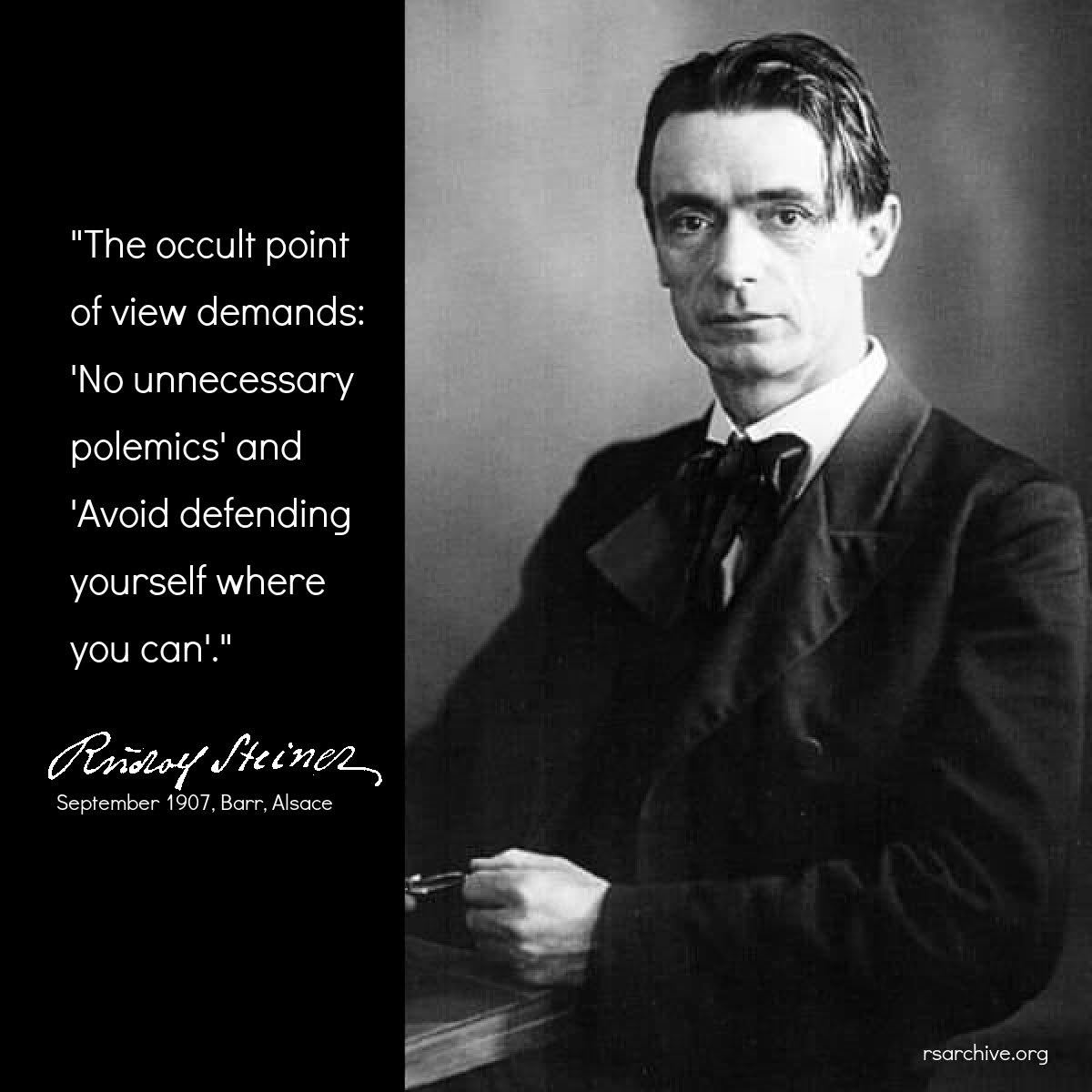
In 1892, Rudolf Steiner published in Die Zukunft, a biting essay denouncing the Society for Ethical Culture which was founded to promote the "morality common to all good people" — an idea Steiner viewed as nonsense. Steiner's unabashed article resulted in sharp criticism and the publication of pamphlet against Steiner entitled Nietzcshe-Narren (Nietzsche Fool). However, he held the occult point of view that demanded "No unnecessary polemics" and that one must "avoid defending yourself where you can." See Barr Document (linked below).
Ernst Haeckel contacted him immediately and two weeks later published an article himself in Zunkunft in which he agreed with Steiner that "ethics can only arise on the basis of a worldview." Steiner also articulated these thoughts on individual freedom and ethics in an article published in Literarischer Merkur a few weeks prior. In it, he expressed relief such "general morality" is not possible since, "Otherwise, the individual expression of national and human natures, of ages and individuals would be replaced by the template-like actions of moral puppets, which would always be strung up on the strings of the general human moral doctrine."
Read more: Rudolf Steiner, Notes Written for Edouard Schuré, GA 262, September 1907, Barr, Alsace.