

Scientific Disciplines and Anthroposophy
GA 73a
27 March 1920, Dornach
Translated by Steiner Online Library
4. The Worldview of Modern Science
[ 1 ] My dear friends! The series of lectures being given by our friends gathered here today is, of course, of some importance for the course of events here at the Goetheanum. It is an attempt at meaningful collaboration on the part of our friends; and this is indeed something our movement must strive for—that cooperation within our movement take place from the most diverse perspectives of contemporary life. Only in this way will the first seeds be sown to meet the fierce onslaught that is becoming increasingly evident in the current opposition directed against our movement. Therefore, since I also wish to highlight the full significance of this undertaking by our friends, today’s lecture in this series of reflections is intended to be a sort of interlude. It arises, so to speak, from the need to continue speaking today in the vein of the fundamental scientific questions that have been raised here in recent days by our friends, and to resume other anthroposophical reflections only tomorrow.
[ 2 ] We have, after all, had the opportunity these past few days to hear from our friends accurate, important, and essential insights—from various perspectives—regarding the fundamental principles of contemporary science, and
[ 3 ] 82 We will hear more about this later. Today, continuing in this general vein, I would like to present a few points that will also shed light on the methodological aspects of the current scientific worldview, insofar as these methodological aspects reveal the actual state of this scientific worldview when it attempts to examine its experimental observational results more closely. You have heard, in particular from the few remarks made yesterday by Dr. Kolisko following Dr. Husemann’s impressive lecture, what the situation actually is regarding the—so to speak—psychological value of what is today the prevailing scientific view, the scientific worldview.
[ 4 ] But one must actually say the following: This atomistic-molecularist foundation of natural science does indeed feature within those circles that speak of natural science today and that already interweave their fanciful atomic theories into the description of phenomena, as was described yesterday by Dr. Kolisko; but this atomistic-molecularist foundation of natural science features even more prominently when laypeople or semi-laypeople discuss worldview issues today in a wide variety of monist and similar associations, through which one seeks to popularize worldviews that are supposed to be based on real science, but which in fact are based only on what has long since been discredited by the facts of modern science. One can say “discredited,” even if not “refuted,” for refutation would require spiritual science, which would first have to be accepted by broader circles. The situation within contemporary spiritual life—which, after all, dominates our world—is indeed a rather bleak one.
[ 5 ] On the one hand, we have a scientific foundation for our worldview that has gradually—I would say quite ineffectively—become obsolete. And on the other hand, we have all sorts of philosophers who—and this is particularly characteristic of our time—are greatly admired, but who are certainly unable to provide any real, substantial content for a worldview. For it can hardly be long before people realize that philosophical drivel of the Eucken variety or the like cannot be regarded as anything true or valuable. If we look back a few decades at the development of worldviews as they have taken shape out of the natural sciences, we find that just a few decades ago, I would say, the heyday of atomistic-molecularist thinking was upon us. At that time, it was taken for granted to conceive of the material world in such a way that one assumed material substances were fundamentally composed of atoms and molecules in various configurations and positions relative to one another. And people brought together everything that was readily and conveniently available from the fields of physics and chemistry, which served to reinforce this atomistic-molecularist way of thinking.
[ 6 ] What existed as a healthy opposition to this way of thinking—such as Goethe’s worldview—was simply ignored during that time; it was regarded as a kind of dilettantism. People devised a world system that they demanded be composed of the simplest possible elements: space, time, motion, mass—these were the basic concepts they assumed, and from which they essentially sought to construct an entire world system. Such world systems sprang up like mushrooms, varying in their details but converging in the broader sense that they all sought to be based solely on the most elementary, most primitive concepts—concepts such as space, time, motion, and mass. The ideal was to reduce the complex form of movement of the cell—from which, in turn, one imagined the entire organism to be constructed—to space, time, motion, and mass, in order thereby to conceive of all organic phenomena as arising from mere space, time, motion, and mass, which represent matter. This way of looking at things is, after all, by no means derived from the facts of the world itself, but is thoroughly contrived. Anyone who has been involved in what came about in this way knows how these things were, in fact, all contrived worldviews; certain basic assumptions were made, and these basic assumptions were then used as a foundation.
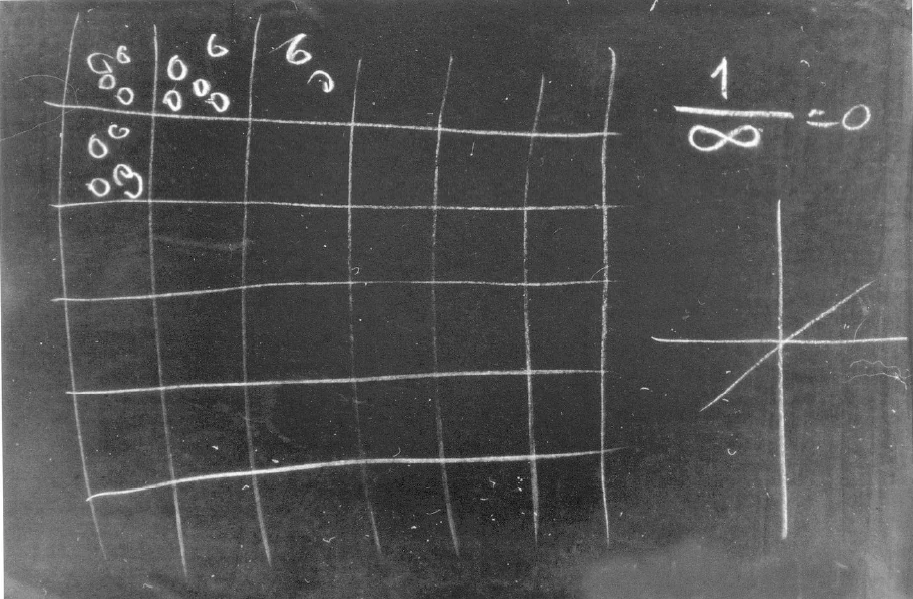
[ 7 ] I have often recounted in my lectures how, even as a very young boy, a world system of this kind occurred to me—one that, while not extending all the way to the organic realm, did at least reach the chemical realm—a system that had been devised by my school principal at the time, who thought entirely in keeping with the spirit of the age and who took the following as his basis. He said: Let’s take the simplest thing—space, to begin with—and within that space, matter distributed in an atomistic arrangement. — He conceived of space as infinite, and he divided it into countless spatial cubes. Space is filled with matter. Now he said: One can imagine that matter is distributed in a certain way within these various cubes. If one tries to form a mental picture of how matter is distributed within these various cubes, one can say the following: Under certain circumstances, it could indeed be distributed such that there would be the same number of atoms in each of the infinitely many cubes. But since we have an infinite number of spatial cubes and no assumption compels us to choose a specific number of atoms in a single spatial cube, it is merely a probability that one part of space contains as many atoms as another part of space. Because there are infinite possibilities, it is likely that one part of space contains as many atoms as the other parts: one divided by infinity is zero, so each part of space contains a different number of atoms. But if we now introduce time, there is no reason to assume that the situation would not be the same in the next time interval—namely, that the probability would be zero that a particular spatial region would contain the same number of atoms as the previous one. Therefore, the number of atoms in the successive time intervals will differ across the spatial regions. This means: matter is in motion.
[ 8 ] We have now derived the motion of matter from probability theory and the division of space into cubes. But since it is unlikely that the atomistic material particles would intermingle—this contradicts what we observe in natural phenomena—we must assume that the material particles exert resistance against one another, that is, that they possess mass. The simplest assumption is that they are rigid masses. And with that, we have time, space, motion, and mass, and now we can begin to calculate what results from their mutual collisions. And here we soon encounter something highly treacherous for minds of this sort: namely, we can now calculate, and we can imagine the results of these calculations as correlates—as representatives of what is happening within matter. And indeed, through these mathematical sleights of hand, one can then uncover the processes—just as the [school director] did—all the way down to the chemical processes. All chemical processes can still be derived through calculation. And if someone is an even greater magician in this field, they will certainly succeed in deriving and calculating the organic processes within the cell as well. An entire worldview is constructed from the most primitive concepts of space, time, motion, and mass.
[ 9 ] This is something that actually began to haunt people’s minds more and more as 19th-century thought progressed. And it was not until the turn of the 19th to the 20th century that a breach was made in this entire way of thinking. I have already hinted at how this breach was opened from a wide variety of angles. You see, the man I have been speaking of here is merely a representative of this way of thinking; I cite him as a representative because he crossed my path back then when I was a twelve-year-old boy, and at the time I was surprised by the way in which an entire worldview could be conjured up from space, time, motion, and mass through mathematical calculation. Those who thought similarly all believed that one was dealing with the matter that gives rise to the phenomena of solid, liquid, and gaseous bodies, and then also with everything that one must now attribute—as this man put it—to a much finer cosmic gas spreading everywhere; others called it the ether. Thus, their worldview included the universal cosmic ether, through whose motion light propagates—or in whose motion light was even said to consist—and, floating within this ether, ponderable matter—the matter that has weight and which then receives the effects of these etheric processes, intermingles with them, and so on. Of course, in such a worldview there is actually no room anywhere for the concept of anything spiritual. One can certainly indulge in illusions in this regard; one can say that one adheres to this worldview for physics and chemistry—and possibly also for organic chemistry—while simultaneously assuming the existence of something spiritual. But then one might ask how, exactly, the mediation is supposed to take place between this spiritual element and what one conceives of—without this spiritual element—as a mere effect of space, time, motion, and mass.
[ 10 ] Now, however, one was compelled to take into account not only these imaginative conceptions—which, as mentioned, had been developed in the most diverse ways—but also what the facts of the phenomenal world itself had to offer. In such a worldview, there is truly nothing that a person sees through their senses. For within it are small, moving particles that possess none of the properties of the sensory world; there are small, moving particles, a colliding, a pressing, but nothing of what the sensory world presents. It did, however, occur to some individuals—Mach, for example—that something had been imagined here. He therefore returned to the world of pure sensory perceptions, and he sought to construct the entire physical worldview solely from the temporal sequence and spatial juxtaposition of sensory perceptions. However, even this Machian approach is not sufficient, for if one merely presents sensory perceptions, these perceptions remain, so to speak, neutral and juxtaposed. If one lacks the ability to perceive anything essential in the sensory perceptions, then one can, at most, only relate them to one another in terms of space and time, not in terms of intensity or quality. In short, even using Mach’s method, one’s thinking cannot approach the rich world of our sensory experiences. But one thing can certainly be said: such thinking is extraordinarily captivating.
[ 11 ] I know, my dear friends, that there are many among you who do not find such thinking captivating. But that is only because those who do not find it captivating have not undergone a very rigorous mathematical education and therefore cannot appreciate the fascination of calculating all phenomena in the world. There is a kind of magic in transforming the entire world, in one’s mind and imagination, into a machine that functions with such precision—as happens through such a worldview—and there is indeed something captivating about it. And it did not arise, I might say, out of some petty mischief or because one wanted to deceive the world—although the world might appear to be deceived by this worldview— it really did not arise merely out of cynicism, but rather because there is an inner urge in human beings to delude themselves about the phenomena that unfold in such a way as one can only do so by following the mathematical imaginings of one’s inner spiritual life. This urge was already present; a completely sincere, honest urge lay at the foundation of this terribly empty worldview, of the very formation of this terribly empty worldview. And today, when we so keenly recognize the necessity of abandoning this worldview—abandoning it thoroughly—and replacing it with another, one based on spiritual science, today this question must already be asked: Where, then, does the allure of this mechanistic worldview come from?
[ 12 ] Perhaps the best way to properly answer the question of where the appeal of this mechanistic worldview stems from is to take a look at the revolution in this worldview, which actually took place only in the last two decades of the 19th century and since the turn of the 19th to the 20th century. You see, whereas it was once thought that there was empty space, and within that empty space there were movements—movements of matter, both heavy matter and the ether—there were no limits to certain conceptions. Whatever was dancing from one cube to another within those spatial cubes could be imagined moving at any speed whatsoever. And it was also conceived of as rigid, even as unchanging. Such a particle was even thought of as unchanging and was treated as unchanging in calculations. People were bound by nothing other than what their imagined concepts of space, time, motion, and mass imposed upon them.
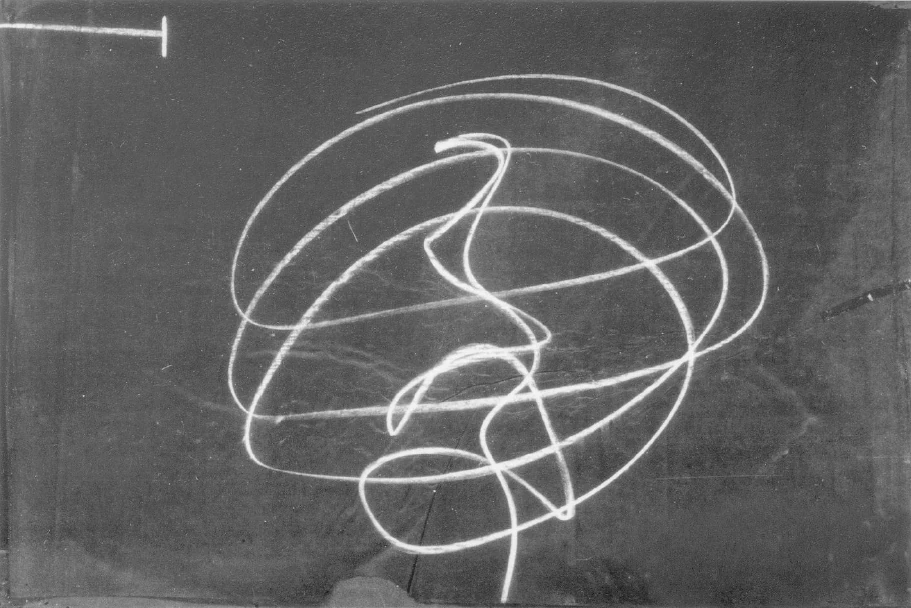
[ 13 ] In particular, many theories of the ether were devised under the influence of these ideas. The ether was sometimes conceived as a rigid body that was simply weightless, sometimes as a liquid, sometimes as a collection of vortices of matter, and so on. People imagined all manner of forms and configurations within this ether. Models were also created to illustrate how the ether actually behaves in certain parts of space. In England in particular—because people there were keen on visualizing everything spatially—many such ether models were constructed. We in Central Europe could still hear the echoes of these ether model constructions when we got to know the old Theosophists. The Theosophists had, in fact, imitated these ether model constructions, and I knew one such old German Theosophist who had, however, learned his entire theory from England. He once took me up to his attic, and it was filled with ether models—huge ether models. There you could see how strangely the twists and movements took place—this way and then that way again, intertwining—all sorts of things were intertwined there. They were terribly complicated, yet finely conceived interweavings of what was supposed to be happening in the ether. The people who devised such models were, in part, far removed from what actually exists in reality.
[ 14 ] But little by little, people were compelled to take this reality into account, and this endeavor gave rise to such things as Einstein’s theory—the so-called theory of relativity—as well as the theories of Mie, Nordström, Hilbert, and so on; after all, there is now a rich body of literature on this theory of relativity. I would like to present just two concepts from this theory of relativity to your inner eye, and then we will see where we have arrived now that we have at least attempted to move beyond a worldview based purely on imagination. The first thing people felt compelled to do—under the influence of Lorentz’s experiments and Einstein’s dreadfully dreary, abstract thinking, though still with some regard for reality—was to disregard this worldview and these beautiful models entirely. To characterize what one arrived at when trying to break free from it, I will tell you how one came to regard the speed of light, so to speak, as the primordial speed—the primordial speed in space.
[ 15 ] Anyone who imagines things this way (see Figure 1) has no need to think about any “primordial speed,” because these little fellows inside the space cubes can move at any speed or slowness—and, of course, even faster than light. You just have to accept that.
[ 16 ] But certain phenomena that had to be taken into account necessitated assuming—I won’t say that this is correct, but in any case, it was stated and eventually accepted—that light is the speed beyond which there can be no further increase in speed, so that nothing can be faster than light. Everything else, then, that exists in terms of speed in the world must be measured against the speed of light.
[ 17 ] Well, such an assumption was no longer compatible with the concept of the ether as it had been posited by the prevailing worldview up to that point. For if one assumed that light traveled at the speed of light and compared everything else to the speed of light, then one could not accommodate the entire set of concepts associated with the ether within this worldview. And so it came to pass that, for example, Einstein completely omitted the ether, and now no ether is assumed at all. In Einstein’s theory of relativity, you have a worldview without the ether. Thus, light travels through empty space at the maximum speed possible. Everything else must conform to the light. If one takes this way of thinking as a basis, one arrives at a significant conclusion. For the only issue here is that a solid body moves fast enough. It can, of course, continuously increase its speed; it simply cannot increase it beyond the speed of light. So now we are no longer dealing with the motion of a solid body through the ether. Since the ether is no longer assumed to exist, we now speak of motion as such—which is also performed by solid bodies—and we note that this motion is not without effect, for example, on the dimensions, say, the length of a solid body. And so Einstein arrived at the idea that a solid body of a certain length simply becomes shorter by virtue of its motion—that is, by nothing other than the fact that it is moving.
[ 18 ] Just consider this: Insofar as you yourselves are solid bodies—if you were to move through space at a certain speed, you would become thinner and thinner in the direction of your motion, and eventually you would become as thin as a sheet of paper. Thus, by omitting the ether, certain changes in the worldview became necessary. And these following two propositions play an extraordinarily important role in the epistemology of physics today: first, that the speed of light is the maximum speed—that is, one must not assume a speed greater than that of light anywhere, meaning that light possesses the fundamental speed; and second, the assumption that solid bodies change their dimensions simply by moving—that is, that motion itself can be a cause for the change in size, in the very dimensions, of solid bodies.
[ 19 ] If you take these two concepts and consider how different they are from everything we as humans imagine based on our experiences of the world around us, you will at the same time be able to form an opinion about what Einstein, Mie, Nordström, and others were compelled to accept within the physical worldview. You see, there is already a physical worldview—one that has even been accepted by a whole host of people—which relies on these concepts of the maximum speed of light and of expansion and change caused by motion, even in solid bodies. This worldview has nothing to do with the one we were accustomed to in our youth and that still haunts laypeople when they spout worldviews. This worldview has, in fact, fundamentally revolutionized all the old concepts in physics. It is interesting that this worldview even seeks to revolutionize the old Newtonian view of gravity, of weight, and of the gravitational pull of mass—that is, that Newton’s law, stating that masses attract one another in proportion to the inverse square of the distance, no longer applies. But what, according to Einstein’s theory, manifests as a change in mass is, in essence, merely a mathematical result. One should therefore also calculate only those effects that were previously attributed to gravity and so on. However, Einstein is compelled to conceive of a different geometry for his worldview. What is this different geometry? That can be explained very simply. In our geometry, the Pythagorean theorem holds, and it is true that if two lines are parallel, they do not intersect even at infinite distance. In our geometry, the theorem that the three angles of a triangle add up to 180 degrees also holds. In the geometry assumed [by Einstein], such theorems no longer apply. For example, under certain conditions, the three angles of a triangle may be greater than 180 degrees, or even less than 180 degrees. However, this is only possible if one conceives of space in a completely different way than one usually has—namely, that in this worldview, space is conceived of as an empty vacuum.
[ 20 ] You see, a sort of compromise was reached between those who had moved beyond the old Euclidean geometry and replaced it with a different kind of geometry—Lobachevsky, Riemann, Gauss, and so on—who introduced calculations involving more than three dimensions. And Einstein, too, has no choice but to introduce multidimensional manifold. So simply by introducing multidimensional space, one can, in a sense, incorporate gravity into this multidimensional space. It’s actually incredibly simple.
[ 21 ] You see, if you assume three-dimensional space and perform calculations within that three-dimensional space, then the effects of gravity are not included. In that case, you have to make a separate assumption for gravity—namely, a force emanating from the masses through which they attract each other or exert pressure or something similar—pressure forces that cause the masses to collide or the like. But if you assume a fourth dimension in addition to these three and know nothing other than what the calculation yields, then you have a good opportunity to incorporate gravity as well. For as long as one calculates only with three dimensions, one must assume something extra for gravity; but if one already incorporates what one would otherwise have calculated for gravity into space by imposing an additional dimension on it, this can also yield the result that one would otherwise have calculated for gravity. In any case, you can see that something suddenly emerges that completely upends the old concepts. Suddenly, something like the paradoxical idea arises that a body can become smaller simply by moving. A mere solid body—I don’t even want to mention an animal, which one might assume shrinks due to exertion or something of the sort—a mere solid body does not become smaller by being cooled, but by being moved. One is compelled to acknowledge this. Suddenly, the worldview one had believed so firmly in is turned upside down, and one arrives at entirely opposite ideas. For it is indeed very strange when, from a psychologist’s perspective, one considers such a thing as I have described to you.
[ 22 ] This conception of the vacuum of space, of time, which in a sense extends from a non-beginning to a non-end—if one compares this rigid worldview, which has something terribly rigid about it, with Einstein’s, then Einstein’s worldview—I would say—suddenly becomes something like slimy. The former is extraordinarily dry; it can be grasped and felt everywhere as something extraordinarily dry, and now it suddenly becomes slimy—bodies cease to retain their extension; through mere movement, they become mollusks. This is actually a tremendous shift in the fundamental concept of physics over the last two decades. The world has not yet given it the recognition it deserves, even though it is repeatedly held up from many quarters as one of the greatest achievements of modern thought. Alas, my dear friends, it already seems as if modern humanity has become too stupid to think at all. That is why it pays no attention to it whatsoever. Today, even the newspapers are talking about Einstein’s theory, which actually overturns everything that people still believe when they live within the popular worldview. Well, it makes no impression on people; they read about this Einsteinian revolution in physics just as casually as they read that, well, let’s say, milk has gone up another 10 centimes. There is no longer anything in humanity that would indicate that these people are still experiencing what some among them are thinking.
[ 23 ] This revolution in physics has already taken place, and the worldview that was still firmly established just four decades ago has, so to speak, given way to a set of ideas that are now of an entirely different nature. Anyone today who allows the ideas originating from Einstein, Mie, and Nordström to sink in is confronted with something entirely different from what theoretical physicists presented to us in universities four decades ago. Of course, the concept has not yet found its way into the various branches of the individual sciences, but that is on the way; for one can already find a kind of bridge even to cell biology, and this will certainly come to pass: Einstein’s theory will also take hold in cell biology, then it will enter organic chemistry, and so on.
[ 24 ] You see, for anyone who cares deeply about the fate of humanity, such a shift in worldview is of extraordinarily profound significance, for they must ask themselves: Where does something like this come from in the entire course of modern human development? What, then, does something like this actually depend on? You see, in the times that preceded the great shift—this leap in the development of humanity, which took place in the middle of the 15th century but was, in fact, a natural one—in such times preceding this shift, one could have had neither this physical worldview nor Einstein’s theory of relativity. Back then, before the time of Galileo, people naturally thought as well, but they thought even more in images—images that were more akin to the forces present in reality. The abstract concepts through which we seek to grasp the laws of nature today are, in fact, quite unlike the actual forces. In the past, people’s concepts were still imbued with certain imaginative elements. They still had the ability to establish connections with reality. They possessed this ability because something of the aftereffects of their pre-birth spiritual and soul life—the life between death and a new birth—had still remained with them. The fact that these concepts did not become abstract, but remained concrete and interwoven with imagery, is precisely due to the influence of what had been experienced between the last death and this new birth. This ability was lost, and all that remained was abstract thinking—which, however, has real value only when it is still imbued with the echoes of the forces active between death and a new birth. This was gradually distilled out entirely, so to speak, and in the 19th century this worldview remained because everything in it that had previously had a spiritual origin was emptied out. The forces applied to this worldview actually have meaning only if they draw their content from the spiritual world; otherwise, it is empty formalism. And this formalism was applied to the external sensory world, to which it did not fit at all, for which it was not at all suited. One succumbed, I would say, to a terrible fate: applying to the external world that which could have come alive brightly in an inner experience.
[ 25 ] I believe you can get a sense of what I actually mean here if you open a book by Novalis and find in his aphorisms true hymns—for example, to mathematics, to pure mathematics, which he calls a great poem, a wonderful poem, a most marvelous creation of the imagination. I don’t know how many people today can relate to Novalis in this regard, but it is possible to relate to him. One can understand him if one knows that Novalis had a sense of how mathematics suddenly becomes something marvelous when one does not merely apply it to the external sensory world—where it becomes purely formalistic—but rather elevates it into the spiritual world, allowing it to be filled with the imaginings of that spiritual world. For if one applies it to the external sensory world, one really takes no pleasure in all the talk about this sensory world. One is no longer speaking of this real world at all; one is actually speaking of something quite absurd. As was noted yesterday, one cannot construct such a worldview without hypocrisy, for it takes no account of what one otherwise truly conceives of in life. One discards everything as if it were not there. One cannot at all imagine such a world—one that is neither red nor blue, neither warm nor cold, neither thick nor thin, neither loud nor silent—one cannot imagine it in reality. One can calculate it, but one cannot imagine it. One transforms the entire world into an empty formalism.
[ 26 ] That stops immediately when you take this mathematics up into the spiritual world. There it becomes evident; there it becomes something great. And now, you see, the world today stands at a crossroads. On the one hand, it must stop expanding this formalistic worldview—for that is nothing more than a squeezed-out lemon—and it must bring itself to find a spiritual substance by another path, not by devising atoms and their interactions, but by seeking the spirit in the phenomena that surround us. That is what we should do. We should become flexible; we should be able to penetrate the organic.
[ 27 ] The day before yesterday, Dr. Unger so beautifully explained to you how necessary it is for scientific thinking to become internally flexible, to move toward internal metamorphosis, so that this thinking can keep pace with the metamorphosis of organic forms. Yes, this is what humanity ought to do. But under the influence of this new worldview, it has become neurasthenic. Under the influence of this rigid, arid worldview of time, motion, space, and mass, it has become completely neurasthenic—fidgety, terribly fidgety. And instead of using its thinking to empathize with the metamorphosing organic world, instead of thinking acting in a truly organic, metamorphosing way, this thinking becomes mollusk-like. And instead of conceiving of Goethean metamorphosis, people think in a neurasthenic way about how a solid body becomes shorter merely by moving. There you have the increasing mobility of thought under the aegis of our conception of time. There you have what is rightly demanded, but which our age fulfills only in a neurasthenic manner. There you have, as it were, a preliminary announcement of what was to come, but it comes in a neurasthenic manner.
[ 28 ] One must certainly take these things into account, my dear friends, if one wishes to understand the present. Einstein, Mie, Nordström, Hilbert, and so on—they stand, I might say, under the influence of the approaching intellectual wave. But they are all neurasthenics—worldview neurasthenics—who set out against the very kind of thinking that must be demanded by true modern epistemology; they fulfill it in a neurasthenic manner. They cannot conceive of the Goethean metamorphosis; but the old, dry, rigid worldview—the one that, I might say, made one feel cold right down to one’s fingertips when one touched its aridity—they turn into something slimy, mollusk-like. Of course, thinking is “flexible” when it can imagine that a human being, if only flying fast enough through space, becomes as flat as a sheet of paper. There they have “flexible” thinking, but flexible thinking as seen through the eyes of the neurasthenics, through the eyes of those suffering from worldview neurasthenia; this worldview neurasthenia, to which you have often been referred, lies very deep within our worldviews. That is what must be brought before people’s souls today. We are indeed witnessing a process of neurasthenic transformation in our worldview today. Spiritual science is meant to heal this neurasthenia. This, too, is a demand of our time.
[ 29 ] Well, tomorrow, after we've gone through this episode, we'll return to some more anthroposophical reflections.