

Scientific Disciplines and Anthroposophy
GA 73a
11 May 1920, Dornach
Translated by Steiner Online Library
17. Closing Remarks Following Paula Matthes’s Lecture on the Question “What Can Philosophy Still Offer People Today?”
Preliminary Note: Paula Matthes’s lecture was not transcribed. Nor did the stenographer record the question—posed either by her or by one of the audience members—regarding the relationship between imagination, inspiration, and intuition and ordinary consciousness.
[ 1 ] Rudolf Steiner: As I understand it, the best way to resolve this is to think of the scale of imagination, inspiration, and intuition not as a hierarchy, but rather as structured in the following way:
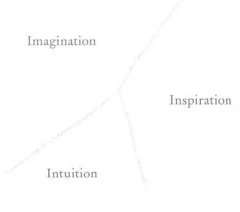
[ 2 ] And if we were to imagine ordinary consciousness wandering about—if, for example, we were to develop in this way—then we would have imagination, inspiration, and intuition. We do, however, experience an ascent to intuition; but when we rise to this level, which truly takes place in the spiritual world, we simultaneously have a kind of projection of it into our ordinary life—for those faculties of ordinary consciousness that play a role in the ethical realm. In the ethical realm, the elements of ordinary consciousness are, I would say, instinctive and intuitive. This is also what leads to the popular use of the word “intuition.” Today, people will sharply reject the word “inspiration” because inspiration, in a certain sense, lies somewhat further back; yet the word “intuition” is accepted because the moral elements of consciousness, as they appear in ordinary consciousness, do have something akin to intuition—but they are, precisely, instinctive. As a result, the word “intuition” occurs very frequently and is sometimes used with a certain degree of justification. And so, if one proceeds in a straightforward manner—as I did in *The Philosophy of Freedom*—to move from thinking into the realm of living morality, and if one wishes to speak of intuition by bypassing imagination and inspiration, one can take ordinary moral consciousness as a point of reference.

[ 3 ] Perhaps I may add a few remarks at this point—not, of course, to comment in any way on Miss Matthes’s lecture, which was in itself quite self-contained and very beautiful. She has presented a thoroughly coherent picture that is well-suited to shedding light on the relationship—one that would be desirable today—between the general consciousness of the times and what one might gain from philosophy. However, the point is, of course, that a wide variety of circumstances have interacted to bring about the current state of affairs, which Miss Matthes has so excellently characterized.
[ 4 ] You see, it is quite true that in recent years, prompted by the tragic state of the world in our Europe, something has emerged: a heightened interest in philosophy among young people. However, we may only be able to fully assess this interest from a psychological perspective once we trace how, over the course of time—throughout the 19th century and even at the beginning of the 20th century—young people’s interest in philosophy did, after all, flare up wherever the opportunity arose. I would like to cite a few facts to illustrate this. For example, in the 1860s and 1870s in Vienna, the generally prevailing philosophical view was that of the Herbartian school. The leading representative of this Herbartian school in Vienna at that time was Robert Zimmermann. Robert Zimmermann—and this is quite remarkable—usually had one of the largest lecture halls at the University of Vienna for his practical philosophy course—which was, in fact, a required course—during the first two or three lectures; it was completely full, even overflowing. But then the audience dwindled very quickly, and usually only seven or eight of the several hundred who had originally attended would stick with the course until the end. Robert Zimmermann himself, who spoke very eloquently and measuredly, often said of his courses on practical philosophy: “At first the entire lecture hall is full—a large class—then the numbers dwindle, and finally, when it comes time for the exam, when people need the signatures, then they all come back.” — This was not solely due to the students and their lack of interest. For in 1874, Franz Brentano was summoned to Vienna, where he had an exceptionally loyal audience. Brentano’s lectures in Vienna, just as they had been previously in Würzburg, were very well attended. One cannot say that this was due to the students, simply because it was a required course; rather, the lectures remained consistently well-attended even when Brentano—who had initially been appointed as a full professor in Vienna—became a private lecturer again due to his personal circumstances: as a former Catholic priest, he had married and was therefore forced to resign from his professorship in Vienna. He always hoped that he would be reappointed, but that could not happen, even though his seminar was always overflowing and the lectures of the other professors—who were then responsible for administering the exams—were just as empty as Zimmermann’s. Brentano was repeatedly nominated by his colleagues as the top candidate for the full professorship, but there was always the obstacle that he had been excommunicated as a clergyman because he had married—and, moreover, a Jewish woman; the Church claims the authority to rule in this matter even over those it has excommunicated. And when the emperor at the time—to whom the matter had been repeatedly brought—heard that Brentano, as a former clergyman, had married a Jewish woman, he said to the Minister of Culture and Education, who had presented the matter to him and who himself had advocated that Brentano should once again hold the full professorship: “Is she at least ‘clean,’ this Jewish woman?” [“clean” means “pretty” in Austrian German]. And since no one could say that in good conscience—she was, incidentally, a daughter of Professor von Lieben in Vienna—the emperor said, “No, that won’t work.”—And this went on until Brentano left the lectern as a private lecturer in the 1890s.
[ 5 ] So you could see that whenever truly stimulating topics were discussed, the students were interested. Brentano had also had a full lecture hall at the Auditorium Maximum in Würzburg, where, when he first entered it, the students’ verdict on his predecessor was posted: “Sulfur Shack”! — It had been completely empty before that. Brentano was able to fill that very same Auditorium Maximum—the one on which the students had written “Sulfur Shack”—because, whatever one may think of his philosophy, he was, after all, a very engaging personality.
[ 6 ] It is certainly true that intellectual development in the 19th century and at the beginning of the 20th century actually increasingly stifled the active engagement in intellectual life that arose from ideas and the like. This suppression of genuine intellectual production became increasingly pronounced. And, of course, the spread of the natural-scientific approach is entirely to blame for this. All of this has, in fact, led to a sort of impossible situation. And out of this impossible situation, in turn, individual movements have emerged that have endeavored to at least resume philosophical activity.
[ 7 ] Now, Miss Matthes has just presented the German schools of thought to you here in an excellent manner. As for Switzerland, I have the feeling that these four German schools of thought are, for the time being, of lesser significance. Here, after all, Bergson’s school of thought has gained a certain influence in wider circles. And these four German schools of thought have penetrated the philosophical life of Switzerland only to a lesser extent. Nor is the situation in Switzerland likely to be the same as it is said to have been at German universities in recent years. In a certain sense, the emptiness that settled over people’s souls was already present before the war, when at least someone—albeit in a, I would say, more rambling manner—had a stimulating effect, such as Eucken in Jena, to whose lectures the students trudged. Eucken’s seminar wasn’t particularly well-attended, but it did have some attendees. And then came the war, with its devastating effects even on moral life and on one’s entire outlook on life—effects that nevertheless led people to a certain longing to hear, somehow, about that which is, after all, the defining and sustaining force in life.
[ 8 ] Well, these four schools of thought, as characterized by Miss Matthes, had in fact all existed even before the war, and it is precisely in them that the bleakness of the intellectual substance of our present age can perhaps be most clearly discerned. The Marburg School has rightly been cited, as it is based primarily on Cohen’s highly incisive thinking. Cohen certainly had the most significant influence on the Marburg School, and much can be attributed to his incisive thinking. One could also say that during a time when, in German philosophy, perhaps only Otto Liebmann—aside from the Marburg School—was a truly astute thinker, the Marburg School actually served a disciplining and educational function in fostering a certain kind of astute thinking. This Marburg School, however, is in fact entirely dependent on a certain one-sided interpretation of Kantianism. One might say that it was precisely through Cohen that the Marburg School came to realize that thought as such should not be viewed merely in its passivity, but must be considered in its activity. And of course, the era was by no means suited to perceiving the inner validity of thought as something extra-human, as, say, Fichte did; rather, modern thinkers have, to a greater or lesser extent, treated thought—albeit with a claim to objective validity—as at least a subjective process; I won’t say “conceived,” but rather “elaborated.” And it is this active aspect of thought that people arrived at. This was at a time when it was impossible to fathom the actual objective nature of the world’s process, when it was hardly possible to look toward anything other than this activity of thought.
[ 9 ] I would like to pose the following question to all philosophers who think along the lines of the Marburg School—though what I am saying is meant to be nothing more than a few aphoristic remarks—: What is your position on seeing a real being in thought, when the thinking subject—that is, the human being—has interrupted this activity of thought every single time, from falling asleep to waking up? — This is a fundamental question that must be posed to the entire Marburg School. The point is that, after all, the Marburg School is essentially a consistent elaboration of Descartes’s maxim “I think, therefore I am,” but this rests solely on a particular judgment of the present moment regarding thought. For it cannot be denied: even when we are not thinking, we exist in ordinary consciousness between falling asleep and waking up. And when we think backward, our retrospective view is divided into periods in which we think and periods in which we do not think, then think again, and so on; and in the meantime, we exist without thinking. Herein lies the fundamental problem that not only the Marburg School fails to resolve, but also, for example, Bergson and certain American schools of thought that are, after all, worthy of attention. The influence of Descartes’ “I think, therefore I am” must first be overcome.
[ 10 ] It is therefore necessary to bring into the scope of human consciousness that which encompasses, on the one hand, the activity of thought and, on the other hand, the discontinuity of thought. This is the very issue that must be raised as a problem with regard to this school, and it is a problem that has not even been touched upon by the Marburg School. There is not even an awareness that this problem exists, just as there is not, for example, in the case of Bergson and the current trend in epistemology; I do not mean James—who developed pragmatism—but rather some other American schools of thought. The problem is not really addressed, and even when it is raised, there is no awareness of how to deal with it, not even from an epistemological perspective.
[ 11 ] Then, of course, there is Husserl’s school of thought, but it does not play a very significant role. In my view, he is a student of Franz Brentano. With Franz Brentano, it is evident throughout that he is a highly trained Aristotelian and a highly trained Thomist—a good, thorough connoisseur of Thomism—so that much has been passed on to Husserl from both Aristotelianism and Thomism. Of course, a modern philosopher like Husserl cannot readily admit this, but one can trace it in his psychology and in everything that comes to light in his work.
[ 12 ] Now, I don’t know what Miss Matthes thinks about this—I must admit that when I was drafting the new edition of my *Rätsel der Philosophie* and trying to incorporate some of these newer trends, I kept coming back to the same question: What are we actually supposed to do with Husserl? — The fact is, no matter how hard one tries to bring something into the picture in order to somehow get to the bottom of it, to grasp it, one can’t quite manage it; nothing particularly meaningful comes of it. It struck me so strongly how Husserl, at the core of his thought, rummages through words; how, even with all his “insight into essence” and so on, he remains entirely dependent on the secondary content of words; and how he cannot arrive at a genuine perception of even the simplest states of consciousness. For Husserl, for example, it seems impossible to grasp the difference between the image of Cologne Cathedral—which I have retained in my consciousness only as a memory, yet in every detail—and the image I have before me when I actually stand in front of Cologne Cathedral and truly look at it. So I wouldn’t know where, within the entire structure of Husserl’s philosophy, one could actually find a fundamental difference between these two images. And if I’m not mistaken, Husserl himself once used this image of Cologne Cathedral in these two contexts—I believe for illustrative purposes. In fact, one never arrives at anything tangible through all the possible debates in his tangled web of ideas.
[ 13 ] I have this same feeling when I look at Scheler’s essays, which are indeed quite beautiful at times. Scheler is a gifted man, but I always find myself wondering why Scheler—who, for example, has written very beautiful treatises on the immediate perception of feeling, that is, on the immediate experience of empathy—why doesn’t he manage to actually develop an independent worldview of some kind? Why does he lean so heavily on Catholicism? Why does he seek to draw on traditional Catholicism? That is something that shows me, after all, that these philosophers are Brentano’s students.
[ 14 ] Brentano achieved only [... gap in the stenographer's notes] from his philosophy because he was unable to find a way into a true science of the spirit. He did not want to, nor was he able to. And isn’t it true that Brentano was, after all, strong enough that he himself did not turn to Catholicism, but his students actually lean very heavily toward Catholicism when they seek a foundation for their worldview.
[ 15 ] As for the Baden school—Windelband, Rickert, and a few others—it seems to me that the whole matter rests on a terrible one-sidedness in their conception of reality. Isn’t it true that people no longer know what to do with philosophy and would like to save themselves by even isolating the problem of value? They isolate it in such a way that they then do not need to form any kind of view regarding the relationship of value to themselves. They, so to speak, isolate the problem of value from the broader scope of world problems and draw on John Mackay, without feeling any obligation to integrate value into the currents of being in any way. This will also be entirely impossible as long as we do not, in the very near future, overcome the stifling law of the conservation of energy and matter. For one must realize that value represents something that serves as a seed for future values—something that remains even after the present has passed away; one must therefore come to conceive of matter and energy as transient and regard the fruits and seeds they contain as values—only then will one be able to gain a broader perspective on these problems, on problems of value. Today, there is a lack of courage to do this. Of course, people completely lack the courage to challenge the law of conservation of energy and matter in any way. There are isolated, tentative attempts—Drews, for instance, occasionally points out that the law of conservation of energy and matter is, after all, merely a kind of empirical problem, and so on—but one will hardly find any profound insight in this area.
[ 16 ] With regard to Nelson and his school of thought, one should perhaps not overlook the fact that these people drew their inspiration from Hegel and from Fries, whom Hegel regarded as the “father of all superficiality”; after all, they were all initially followers of Fries, weren’t they? It was, in fact, initially a Friesian school. And now we must not forget that what I have repeatedly emphasized is highly relevant here: One can be an extraordinarily astute logician—which Nelson undoubtedly is—but when it comes to real-life problems, that is by no means sufficient. I must say, when he spoke at the Bologna Congress in 1911, among all the various illustrious philosophers—including Bergson—he was actually the most outstanding in terms of dialectical power and a solid, craftsmanlike mastery of thought. But then, especially when I saw Nelson again recently in Bern, I did get the feeling that it’s simply not enough for real-life problems; it leads to an abstractness—which is actually quite appalling, but which was excellently characterized by Miss Matthes—in that he tries to derive a three-volume work on ethics from a single abstract proposition. After all, that’s possible; one can be an excellent dialectician without having the slightest sense of reality. This is also evident in the way Nelson treats the problem of knowledge, isn’t it? After all, he doesn’t really care whether one treats the problem of knowledge the way many Neo-Kantians do, who actually start from entirely secondary matters.
[ 17 ] You see, it was perhaps in 1888 when I was once sitting with Eduard von Hartmann in Berlin, and the conversation actually revolved almost entirely around the fundamental questions of epistemology. Well, it was really impossible to get Eduard von Hartmann to go along with this line of thought. So I took the view that, when speaking of a concept, one can certainly say—for my sake, at least—that a concept is something subjective, but that it is not possible to stick with that view once one moves on to intuitions. Isn’t that right? I compared it to this the other day when I said: If someone takes a letter—E or something—they cannot raise the abstract question of what this single letter means in and of itself. But when you have letters that combine to form words, and the words combine to form sentences, then the whole thing comes together. And so one can say: Certainly, if one takes just a small thing out of phenomenology, the problem of how this individual element relates to the thing-in-itself—and so on—becomes, time and again, a kind of existential problem. But when one connects the phenomena with one another, a certain structure emerges, and one can no longer think of a certain sphere of phenomena in relation to reality in the same way one can think of individual phenomena. Non-epistemologists like Nelson completely miss the point when it comes to such matters. It really doesn’t matter at all whether, on the one hand, one argues against epistemology, as Hegel did: “One cannot know without knowing, for that would be the same as trying to learn to swim without getting into the water”—or whether, on the other hand, one says: “To raise a problem of knowledge, there would already have to be some knowledge.”—The point here is really to recognize that the problem of knowledge could still be a perfectly valid problem, even though it already presupposes a certain degree of knowledge. For cognition could first be practiced, and then it could be examined afterward, and one could subsequently determine critically—or however one wishes to call it—whether that cognition is valid or not. Thus, a theory of knowledge could never be disproved by Nelson’s arguments.
[ 18 ] So these things are there. Other examples could be given, and a few other notable philosophical schools could be mentioned. I’ll just mention, for example, that pragmatism also has a very large following in Germany, and that neo-Thomism, too, has a certain significance today—particularly among philosophers who are turning to Catholicism—even if it goes unnoticed, because divisions exist and because people don’t care about what one group produces when they live within the circle of the other.
[ 19 ] But all of these schools of thought are actually faced today with the necessity of finding a way to move beyond the merely formal and into reality. When you listen to or read Eucken—every book by Eucken says more or less the same thing—it really is as if someone were not standing on the ground but were constantly floating in the air, pulling themselves up by their own hair. It is just rambling out of thin air. This is particularly striking in Eucken’s case. And one must say that when one looks at what is there—and what simply cannot connect with reality—one can understand that young people, who truly have a tendency to absorb an understanding of the world’s interconnectedness, cannot find their place and must ultimately be truly disappointed and become disillusioned. It is actually quite a sad state of affairs when one sees how little of what has been brought to the surface from the most recent developments is inclined to meet this longing of the youth. Isn’t it true that students may be happy to hear something, but what they can hear there is really not worth listening to. And what happens next is, in essence, terrible.
[ 20 ] So at a German university, they tried to get a man—who was actually well-meaning but who had, after all, come from the entire previous system—they tried to get him interested in the threefold order. At that time, in order to familiarize himself with the threefold order, he decided to assign a dissertation on the threefold order to a student who wanted to take his exam, since this would save him from having to read the *Key Points* himself. He then graded the dissertation and believed that, by becoming familiar with the ideas in the “Key Points” in the course of his professional duties, he would in this way come to understand the threefold social order; for otherwise, he would not do so directly. This vividly reminds me of how, once at a university, a student asked his professor about Soloviev. Well, the professor barely knew the name, but he thought to himself: Here is the perfect opportunity for me to get to know him as well. [And to the student he said:] Write a dissertation on that. — So that’s how it is at a German university when a dissertation on Soloviev is to be written. At the very moment he assigned the dissertation, the professor had no idea about Soloviev—nor did he later on; he knew no more than what he had gleaned from the dissertation itself.
[ 21 ] It is almost impossible to describe the state into which we have gradually slipped. And the subordination of the spiritual realms to the state structure is closely linked to these conditions. The only thing that can help is a truly emancipated, free spiritual life. Only on the foundation of a free spiritual life can anything of what students are actually seeking today—when the need is so great—be achieved. Here in Switzerland, people don’t know this; they are unaware of the need. It is truly much more difficult, much worse, than one thinks. And that is what I always try to explain to our friends, even in my anthroposophical reflections: that it is much worse than one thinks. If it were somehow possible to imbue a sufficiently large number of people, on the one hand, with the ideas of spiritual science, and on the other hand with what is necessary for the public introduction of spiritual science—namely, the ideas of the threefold social order—then we could truly take a significant step forward.
[ 22 ] What Miss Matthes presented today can also serve as clear proof to you that a completely new direction is necessary, that we cannot simply muddle through with what has developed so far. We need a new direction in our public life; without it, we will not make any progress.
[ 23 ] The break [in intellectual life] actually occurred relatively early on. You see, it may be worth pointing out after all that the great philosophers no longer found any great disciples. Take all of Hegel’s disciples—the Hennings and Marheinekes and so on, one of whom is named Michelet—take them all; they can be gathered, first of all, from among those who edited Hegel’s posthumous works, and then consider what emerged at the same time—the reactionary course taken by these sages—or take Immanuel Hermann Fichte, and then, in philosophy, take all those who were philosophers like Carrière and so on, even Friedrich Theodor Vischer, who was a go-getter in many respects—one must still say: A sharp rupture took place in intellectual life as such in the middle of the 19th century. And instead of a genuine immersion in intellectual life having taken place in the latter half of the 19th century in Germany—where it would naturally have been expected—German philosophy in particular was inundated with all manner of things that fell short of German philosophy. Intellectuality was actually present; what was lacking was a sense of reality.
[ 24 ] You see, I knew a philosopher who didn’t really play any significant role, but who was truly smarter than many who did—that was Gregor Itelson. As a dialectician, he actually outshone everyone, and you can be sure he would easily outshine even Nelson in a discussion. When he wanted to, Gregor Itelson could brilliantly outwit anyone who spoke in the manner of, say, Father Wasman. When he once appeared in Berlin—it was in connection with the “Life of Jesus” movement, in 1905 or so, at any rate in the early 20th century—Gregor Itelson delivered a brilliant speech against the Jesuit Father Wasman. But I have also heard it said again recently that when a monist was defending his worldview, Gregor Itelson did everything in the most brilliant way to bring that monist down. Yet I have never heard that Gregor Itelson ever put forward any positive ideas of his own. A brilliant dialectician—but no positive ideas of any kind! I once had a discussion with him, perhaps in 1901 or 1902. I said something like: “What you’ve said again today is all well and good, but why haven’t you ever said anything that represents your own viewpoint?”—“Yes,” he said, “I’m working on that; I’ve been working on a revision of logic since my youth, but I’m not finished yet.”—“When you hear people talking today, everywhere—whether they’re natural scientists or theologians and so on”—he was right; you can indeed point out logical errors in what they say everywhere. And he said: “We don’t need a revolution in logic; we just need a revision of logic.” — Then he added, as we continued talking: “But this revision of logic—it’s actually not that difficult; you could write it down on two quarto pages.” — I said: “Yes, why don’t you finally write those two quarto pages? Why does it have to be exactly two quarto pages?” — But he still hasn’t written them to this day; at least, I haven’t come across them in any way.
[ 25 ] There is no lack of logic, no lack of dialectics. Isn't that right? Back when I knew Itelson, he would get up at 10 in the morning, then go to the coffeehouse, read his newspapers; then he’d go to lunch, then he’d go back to the coffeehouse, and if you happened to stop by the coffeehouse after a lecture, you’d find him there again. He was a loiterer, but he could still talk—even at midnight, for example—about the impossibility of Maeterlinck’s ideas in an extraordinarily stimulating way. And a man like Nelson differs from dialecticians such as Itelson only in that he is more brazen—that is, he stands on his own two feet more firmly, presents himself with greater audacity, is no loiterer, but a hardworking man and a intellectual force. In a certain sense, Nelson has a brutal, not very nuanced [way of thinking]; there is not the slightest finesse in his thinking. It is actually quite sad, when you get right down to it, that a whole number of young people today allow themselves to be led in Nelson’s wake.
[ 26 ] This also includes people like Mühlestein, who spoke up during a discussion following a lecture in Basel and claimed that the threefold social order was not possible after all, and that everything must be united into a single entity. I replied that justice is already present in spiritual life and economic life as well; I said: Yes, unity is, for example, a farming family, which includes the farmer, the farmer’s wife, the children, the farmhands, and even the cows. If the cows produce milk properly, the whole family will have milk. Therefore, there is no need to demand that every member of the family produce milk. And so it is with the threefold social order: if the political state alone provides for justice, then economic life and spiritual life will already have justice as well. Just as the farmer’s wife or the farmer himself need not produce milk in order for the family to be uniformly supplied with milk, so too economic life and spiritual life need not produce justice. — Such thoughts as these, when examined with a little common sense, are very easily refuted. And this is also true of most of Nelson’s ideas, especially his ethical and political views.
[ 27 ] What, then, every such consideration ultimately points to is that what we need above all else today is the courage to cross the river and truly delve into spiritual science. Then, as Miss Matthes quite rightly said, philosophy, too, will once again be able to become something very fruitful. Philosophy, of course, without spiritual science will always remain something that, at the very least, cannot intervene in the practical realities of life and that cannot demonstrate that it has a solid foundation. Philosophy without spiritual science today amounts to nothing more than empty formalism; it lacks substance.
[ 28 ] That is what I might like to add to what Miss Matthes said. We certainly have every reason to be very grateful to Miss Matthes for raising this very topic before us today in such an excellent and vivid manner.