

What was the Purpose of the Goetheanum and of Anthroposophy?
GA 84
15 April 1923, Dornach
Translate the original German text into any language:
Versions Available:
What was the purpose of the Goetheanum, and of Anthroposophy?, tr. SOL
3. Das Seelenleben des Menschen und seine Entwickelung zur Imagination, Inspiration und Intuition
3. The Life of the Human Soul and Its Development Toward Imagination, Inspiration, and Intuition
[ 1 ] Ich habe gestern versucht, über die Wesenheit des Menschen und die Wesenheit des menschlichen Lebens einiges von dem Gesichtspunkte aus zu betrachten, der sich ergibt, wenn man das menschliche Leben in seiner Vollständigkeit vor die Seele hinstellt. Ich sagte, es verfließt dieses menschliche Leben nicht bloß während des Tagwachens, sondern ungefähr ein Drittel des menschlichen Gesamtlebens verfließt im Schlafe. Und wir stehen zunächst, wenn wir nur das gewöhnliche menschliche Bewußtsein ins Auge fassen, so vor diesem Menschenleben, daß, wenn wir erinnerungsgemäß ins Erdendasein zurückblicken, wir eigentlich nur immer die Tage, diejenigen Zeiten unseres Lebens, die wir wachend zubringen, im Gedächtnisse haben. Wir übersehen gewissermaßen immer dasjenige, was in der Zeit verläuft, die wir verschlafen haben. Nun muß ja allerdings gesagt werden: Für das, was wir äußerlich für die Erdenkultur, das Erdenleben zu schaffen haben, kommt unser waches Tagesleben in Betracht; es handelt sich aber darum, ob auch nach dem Innern,des Menschen hinein nur diejenigen Vorstellungen in Betracht kommen, die sich im wachen Tagesleben vor dem gewöhnlichen Bewußtsein abspielen.
[ 1 ] Yesterday I attempted to consider the nature of the human being and the nature of human life from the perspective that arises when one places human life in its entirety before the soul. I said that this human life does not merely pass during waking hours, but that approximately one-third of a person’s entire life is spent in sleep. And when we consider only ordinary human consciousness, we initially stand before this human life in such a way that, when we look back on our earthly existence from memory, we actually only ever have in mind the days—those periods of our lives that we spend awake. In a sense, we always overlook what passes during the time we have spent asleep. Now, of course, it must be said: Our waking daily life is what counts for what we have to create externally for earthly culture and earthly life; but the question is whether, when it comes to the inner life of the human being, only those perceptions are taken into account that unfold before ordinary consciousness during waking daily life.
[ 2 ] Daß das nicht der Fall ist, kann schon eine oberflächliche Betrachtung lehren. Allein diejenigen Betrachtungen, die ich heute und in den letzten Tagen dieser Woche anstellen will, werden zeigen, daß allerdings die Ereignisse, die die menschliche Seele vom Einschlafen bis zum Aufwachen erlebt, verborgen bleiben, daß diese Ereignisse aber für das Innere des Menschenwesens auf Erden ungleich wichtiger noch sind als die Ereignisse, welche sich während des Tages abspielen.
[ 2 ] Even a cursory examination shows that this is not the case. The reflections I intend to offer today and in the remaining days of this week will show that, while the events the human soul experiences from falling asleep to waking up remain hidden, these events are, in fact, far more important for the inner life of the human being on Earth than the events that take place during the day.
[ 3 ] Heute wollen wir zunächst in Fortsetzung des gestern Ausgeführten einiges betrachten, was sich wiederum aus einem Vergleiche des Schlafeslebens und des gewöhnlichen wachenden Lebens ergibt. Das Schlafesleben verläuft ja zum Teil in vollständigem traumlosen Schlaf. Da ist dann die Zeit, die wir mit unserem Erdenleben während dieses traumlosen Schlafes zubringen, falls sie Ereignisse für unser Leben enthält, ganz unbewußt. Aus dieser Unbewußtheit, aus dieser vollständigen Finsternis des Bewußtseins tauchen dann die Träume herauf, und aus den Träumen wachen wir entweder auf zum gewöhnlichen Bewußtsein, indem uns durch die Sinneswahrnehmung und durch die Verstandeskombination die irdische Wirklichkeit gegeben ist, oder auch wir schlafen aus dieser Wirklichkeit durch den Traum in das traumlose Bewußtsein hinein.
[ 3 ] Today, continuing where we left off yesterday, we will first consider some aspects that arise from a comparison of the life of sleep and ordinary waking life. The life of sleep, after all, consists in part of completely dreamless sleep. The time we spend in our earthly life during this dreamless sleep—if it contains events relevant to our lives—is entirely unconscious. From this unconsciousness, from this complete darkness of consciousness, dreams then emerge; and from the dreams we either awaken to ordinary consciousness—in which earthly reality is presented to us through sensory perception and intellectual synthesis—or we drift from this reality, through the dream, into dreamless consciousness.
[ 4 ] Machen wir uns noch einmal klar, worin eigentlich für die gewöhnliche äußere Beobachtung der Unterschied des Träumens von der äußeren Sinnesbeobachtung, die in Bildern und Verstandesbegriffen lebt, besteht.
[ 4 ] Let us once again clarify what, from the perspective of ordinary external observation, constitutes the difference between dreaming and external sensory perception, which takes the form of images and concepts of the intellect.
[ 5 ] Wir können sagen: Für viele Menschen enthält der Traum seinem Inhalte nach eine oftmals lebendigere Wirklichkeit, als diejenige ist, die im wachen Tagesleben abläuft. Aber es ist dies eine Bildwirklichkeit, der wir nicht mit unserem Willen, sondern zwangsmäßig mit der Seele folgen. Und wir können den Unterschied zwischen dem Verfolgen dieser Traumesbilder und dem Verfolgen der gewöhnlichen Wirklichkeitsbilder des wachen Tageslebens ganz genau angeben. Auf besondere philosophische Spekulationen wollen wir uns dabei nicht einlassen. Die könnten auch angestellt werden, wir wollen sie aber jetzt unterlassen. Wir wollen nur auf das hinschauen, was das ganz populäre Bewußtsein gibt. Da können wir sagen: Die Traumesbilder sind so, daß wir in ihnen leben. Wir leben in den Bildern selbst. Wir leben mit den Bildern. Beim wachen Tagesleben haben wir natürlich Farbenbilder, Tonbilder und so weiter in derselben Art vor uns wie im träumenden Erleben. Aber wir sind genötigt, diese Bilder, seien sie Gesichtsbilder, seien sie Tonbilder, Wärmebilder, Tastbilder und so weiter, gewissermaßen auf die harte Wirklichkeit zu beziehen. Wir sehen in der Tageswirklichkeit überall die Notwendigkeit, gewissermaßen auch mit unserem Willen auf das zu stoßen, was uns das Bild zeigt.
[ 5 ] We can say that, for many people, the content of a dream often constitutes a more vivid reality than that which unfolds in waking daily life. But this is a reality of images that we follow not by our own will, but compulsively with our soul. And we can very precisely point out the difference between following these dream images and following the ordinary images of reality in waking daily life. We do not wish to engage in specific philosophical speculations here. Such speculations could be made, but we will refrain from them for now. We simply wish to focus on what is evident in common consciousness. Here we can say: The dream images are such that we live within them. We live in the images themselves. We live with the images. In waking daily life, of course, we have images of color, sound, and so on before us in the same way as in the experience of dreaming. But we are compelled to relate these images—whether they be visual images, auditory images, thermal images, tactile images, and so on—to hard reality, so to speak. In everyday reality, we see everywhere the necessity of, in a sense, also engaging with our will what the image shows us.
[ 6 ] Das ist nicht der Fall bei der, nun, sagen wir Traumeswirklichkeit. Die Traumeswirklichkeit ist gewissermaßen, wenn ich mich grob ausdrücken darf, überall zu durchstoßen. Wir können den Gesichtspunkt, von dem aus wir die Wirklichkeitsbedeutung des Traumes beurteilen, nur innerhalb des wachen Tageslebens finden. Solange wir träumen, halten wir den Traum für Wirklichkeit, und wenn wir unser ganzes Leben träumen würden, so würde die Traumeswirklichkeit die einzige Wirklichkeit für uns sein. Wir brauchen uns gar nicht vorzustellen, daß dann das äußere Leben anders verliefe, als es jetzt verläuft. Wir könnten uns ja vorstellen, die einzelnen Menschen begegneten sich im Leben nicht durch ihren Willen, sondern durch Naturkräfte wie automatisch zueinander geschoben oder auch durch irgendwelche höheren Wesen zueinander geschoben. Wir könnten uns auch vorstellen, die Menschen würden an ihre Arbeit getrieben, von höheren Wesen oder von Naturkräften geschoben. Kurz, alles, was wir so im wachen Tagesleben vor uns haben, könnte geschehen. Wir brauchten nichts davon zu wissen. Wenn wir nur träumten, würden wir eine Traumeswirklichkeit vor uns haben. Wir würden gar nicht darauf kommen, irgendwie durch diese Wirklichkeit durchstoßen zu wollen auf eine andere Wirklichkeit. Wir wachen durch die naturgemäße Organisation unseres Organismus auf und gewinnen dann innerhalb der Sinneswirklichkeit den Gesichtspunkt, um den anderen relativen Wirklichkeitswert des Traumes zu beurteilen.
[ 6 ] That is not the case with, well, let’s call it “dream reality.” Dream reality is, so to speak—if I may put it bluntly—permeable from all sides. We can find the perspective from which to assess the reality of a dream only within our waking daily life. As long as we are dreaming, we regard the dream as reality, and if we were to dream our entire lives, dream reality would be the only reality for us. We need not even imagine that external life would then unfold any differently than it does now. We could, of course, imagine that individual people did not encounter one another in life through their own will, but were drawn toward one another automatically by natural forces—or even by some higher beings. We could also imagine that people were driven to their work, propelled by higher beings or by natural forces. In short, everything we experience in our waking daily life could happen. We would need to know nothing of this. If we were merely dreaming, we would have a dream reality before us. It would not even occur to us to want to break through this reality in any way to reach another reality. We wake up through the natural organization of our organism and then, within sensory reality, gain the perspective needed to assess the other, relative reality of the dream.
[ 7 ] Also erst wenn wir diesen Lebensruck durchmachen vom Träumen zum Wachen, gewinnen wir den Gesichtspunkt, um den relativen Wirklichkeitswert des Traumes zu beurteilen.
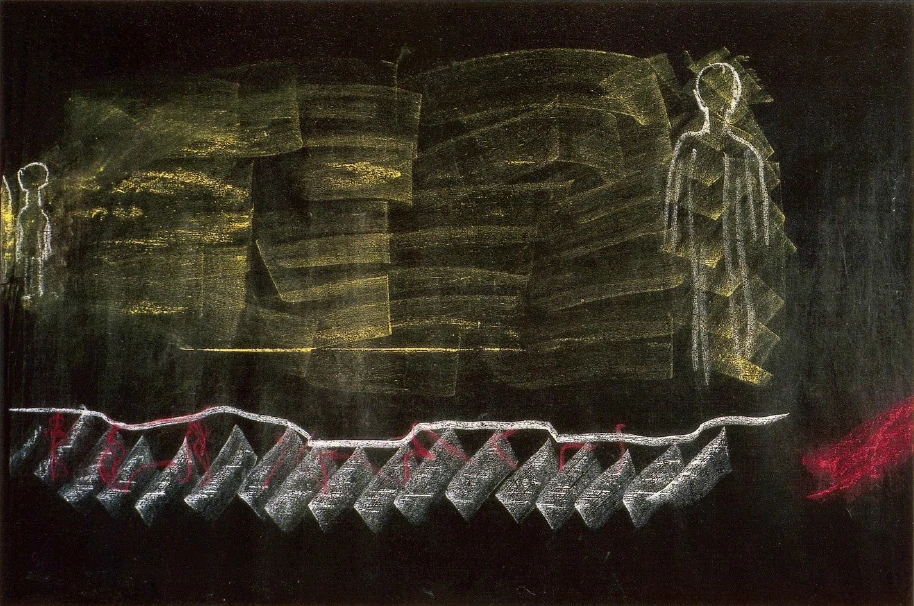
[ 7 ] Only when we go through this transition from dreaming to waking do we gain the perspective needed to assess the relative reality of the dream.
[ 8 ] Wir müssen uns nun aber fragen: Ist alles das, was wir während des Tagwachens erleben, wirklich wacher Zustand? Nun, ich habe gestern im einzelnen ausgeführt, daß das nicht der Fall ist. Ich habe im einzelnen ausgeführt, daß eigentlich nur unsere Vorstellungen, aber diese auch nur insofern sie die äußere Wirklichkeit abbilden, uns ins Wachen versetzen. So daß wir eigentlich nur in unseren Vorstellungen wachen. In unseren Gefühlen haben wir keine andere Wirklichkeit in bezug auf die Seelenverfassung vor uns als im Traume; nur daß der Traum uns in Bildern erscheint, die Gefühle in jener Unbestimmtheit, mit der sie eben aus den Tiefen des Seelenlebens heraufkommen.
[ 8 ] But we must now ask ourselves: Is everything we experience while awake truly a waking state? Well, I explained in detail yesterday that this is not the case. I explained in detail that it is actually only our ideas—and even then, only to the extent that they reflect external reality—that bring us into a waking state. So that we are, in fact, awake only within our ideas. In our feelings, we face no different reality with regard to the state of the soul than we do in a dream; the only difference is that the dream appears to us in images, while feelings arise from the depths of the soul’s life with that very vagueness.
[ 9 ] Ist man aber nicht ein gewöhnlicher Psychologe, der alles nach irgendwelchen Vorurteilen zurechtschmiedet, sondern geht man unbefangen beobachtend auf den Gefühlsinhalt der Seele, so sieht man, wie die Gefühle, die ja allerdings gegen das Vorstellungsleben, wenn ich mich so ausdrücken darf, heraufschießen, eine Verschwommenheit, ein fluktuierendes Ineinanderübergehen zeigen wie die Traumbilder. Fühlend träumen wir auch, wenn wir wachen. Nur weil, ich möchte sagen, die Substanz, in der die Traumbilder erscheinen, anders ist als die Substanz der Gefühle, kommen wir nicht darauf, daß eigentlich alles Fühlen nur die Wirklichkeitsbedeutung hat, die der Traum auch hat. So daß, während wir wirklich wachend vorstellen, unsere Vorstellungen fortwährend durchflutet werden von den unbestimmten subjektiven Gefühlsinhalten.
[ 9 ] But if one is not just an ordinary psychologist who forces everything to fit some preconceived notions, but instead approaches the emotional content of the soul with an unbiased, observant eye, one sees how the feelings—which, admittedly, “shoot up” against the life of the imagination, if I may put it that way—exhibit a blurriness, a fluctuating intermingling, just like dream images. We also dream through feeling when we are awake. Simply because—I would say—the substance in which dream images appear is different from the substance of feelings, we do not realize that, in fact, all feeling has only the same reality as a dream. So that, while we are truly imagining while awake, our ideas are constantly permeated by indeterminate subjective emotional contents.
[ 10 ] Stellen Sie sich lebhaft vor, wie beim Aufwachen hereinspielen die Traumbilder in das wache Tagesbewußtsein, wie in den Traumbildern alles fluktuierend vergrößert, verkleinert ist — je nachdem —, so werden Sie sich sagen können: Da kommt, scheinbar natürlich, in Bildern etwas an den Menschen heran, was sonst im Gefühlsleben wiederum verschwommen, die Dinge subjektiv vergrößernd, verkleinernd, von innen heraus an den Menschen herankommt.
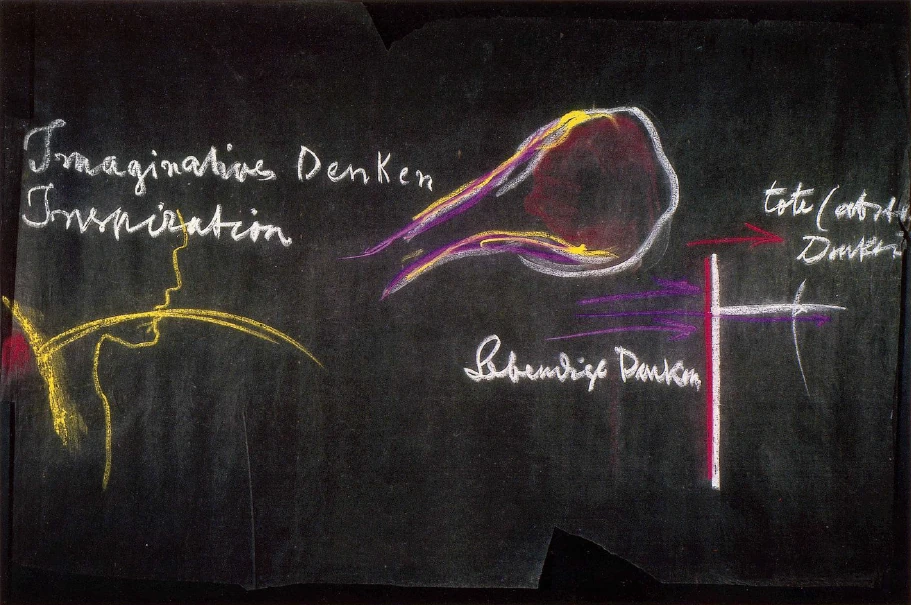
[ 10 ] Imagine vividly how, upon waking, the images of your dreams flow into your waking consciousness, how in those dream images everything is fluctuating—enlarged or reduced, as the case may be—and you will be able to say to yourself: Something approaches people—seemingly naturally—in images, something that otherwise, in emotional life, approaches them from within in a blurred way, subjectively magnifying or minimizing things.
[ 11 ] Und mit Bezug auf unser Wollen sind wir auch im Wachen im tiefen Schlaf. Wir wissen ja vom Wollen nur die Absichten. Das sind aber Gedanken, Vorstellungen. Wenn ich einen Spaziergang machen will, habe ich zunächst die Vorstellung, diesen Spaziergang zu machen. Dies ist meine Absicht. Wie nun diese Absicht stetig in meinen Organismus hineingeht, das zeigt ja das gewöhnliche Bewußtsein ebensowenig, wie es das zeigt, was vom Einschlafen bis zum Aufwachen verfließt. Den Erfolg kann ich wiederum erst an der Bewegung ermessen, die ich mache, an der Veränderung der Aspekte, die vor mir auftreten, wenn ich den Spaziergang mache — also wiederum an Vorstellungen. Was zwischen der Vorstellung der Absicht und der Vorstellung des Erfolges eigentlich im Organismus vor sich geht, das verschlafe ich für das gewöhnliche Bewußtsein ebenso, wie ich das verschlafe, was sich abspielt vom Einschlafen bis zum Aufwachen.
[ 11 ] And as far as our will is concerned, we are in a deep sleep even while awake. After all, all we know about the will are our intentions. But these are merely thoughts and ideas. When I want to go for a walk, I first have the idea of taking that walk. This is my intention. How this intention steadily enters my organism is just as much beyond the grasp of ordinary consciousness as is what transpires from the moment I fall asleep until I wake up. I can, in turn, only gauge the success of this intention by the movement I make, by the change in the aspects that appear before me as I take the walk—that is, once again, by mental images. What actually takes place within my organism between the idea of the intention and the idea of the success—I am just as unaware of this to ordinary consciousness as I am of what unfolds from the moment I fall asleep until I wake up.
[ 12 ] So können wir sagen, daß der Mensch wollend, auch wenn er wacht, im tiefen traumlosen Schlaf ist, daß er fühlend träumend ist, auch wenn er wacht, und daß er nur in einer gewissen Weise wach ist, wenn er in Vorstellungen lebt. Aber wenn der Mensch wirklich ehrlich nach seinem Innern hinschaut, so merkt er: diese Vorstellungen sind auch nur wach in bezug auf die äußere Natur, nicht in bezug auf ihr eigenes Leben. In bezug auf das eigene Leben der Vorstellung kann der Mensch nicht zu einem rechten Wachen kommen. Man muß sich nur klar sein darüber, wie ja für die meisten Menschen, wenn sie nichts Außerliches vorstellen können, eine vorstellende Tätigkeit überhaupt nicht mehr vorhanden ist. Aber das ist ja eigentlich nur deshalb, weil insbesondere in der heutigen Kultur der Mensch an die Außenwelt hingegeben ist, so daß wir dieses Hingegebensein vergleichen können mit dem Dasein in einer tosenden, brausenden Welt.
[ 12 ] Thus we can say that, in terms of volition, a person is in a deep, dreamless sleep even when awake; that, in terms of feeling, a person is dreaming even when awake; and that a person is awake—in a certain sense—only when living in the realm of ideas. But when a person looks honestly into their inner self, they realize: these images are awake only in relation to external nature, not in relation to their own life. In relation to the image’s own life, a person cannot attain true wakefulness. One need only be clear about the fact that, for most people, when they cannot imagine anything external, the activity of imagination ceases to exist altogether. But this is really only because, particularly in today’s culture, human beings are so absorbed in the external world that we can compare this absorption to existing in a roaring, tumultuous world.
[ 13 ] Denken Sie sich einmal, hier spiele jemand Piano oder irgendein Instrument, und da draußen tosten die Maschinen in einer ganz außerordentlichen Weise. Sie würden die Maschinen hören. Das Piano würden Sie wenig wahrnehmen können, besonders wenn Sie etwas weiter weg davon wären. So ist es im Grunde genommen auch gegenüber dem, was eigentlich im Innern des Menschen von der Denktätigkeit lebt. Nur müssen wir da den Vergleich richtig gebrauchen. Wenn wir heute die äußere Naturwissenschaft lernen, wenn wir da alle die Begriffe aufnehmen, die in der äußeren Evolutionslehre dem Menschen gebracht werden, dann ist das im Grunde genommen ein Denkgetöse, ein Denklärm. Und dieser Denklärm, dem sich der heutige Mensch, insbesondere auch wenn er Wissenschafter ist, hingibt, stört ihm die feinere Wahrnehmung der inneren Denktätigkeit. Daher verschläft er auch die innere Denktätigkeit.
[ 13 ] Just imagine someone playing the piano or some other instrument here, while out there the machines are roaring in a truly extraordinary way. You would hear the machines. You would hardly be able to make out the piano, especially if you were a little further away from it. That’s basically how it is with what actually lives within a person through the activity of thought. We just have to use the comparison correctly. When we study the external natural sciences today, when we take in all the concepts presented to us in the external theory of evolution, it is essentially a clamour of thought, a din of thought. And this din of thought, to which modern people—especially scientists—surrender themselves, interferes with their finer perception of inner thought activity. That is why they also overlook their inner thought activity.
[ 14 ] Ich habe in meiner «Philosophie der Freiheit» auf dieses reine Denken, das nicht etwas Äußerliches denkt, sondern das ganz im Innern des Menschen verläuft, hingewiesen. Aber ich bin mir auch bewußt, daß ich mit diesem reinen Denken eigentlich etwas geschildert habe, von dem viele unserer Zeitgenossen sagen, das gibt es ja gar nicht; so wie derjenige, der das Getöse von Maschinen da draußen hören würde und das Piano nicht, sagen würde, das gibt es ja gar nicht.
[ 14 ] In my *Philosophy of Freedom*, I referred to this pure thinking, which does not think of anything external but takes place entirely within the human being. But I am also aware that, in describing this pure thinking, I have actually depicted something that many of our contemporaries say does not exist at all—just as someone who hears the roar of machines out there but not the piano would say, “That doesn’t exist at all.”
[ 15 ] Aber wenn das so ist, können wir etwas außerordentlich Wichtiges daraus ersehen, nämlich dieses, daß wir eigentlich nur für das Denken, insofern es einen äußeren Naturinhalt hat, wachen, daß wir aber in bezug auf die innere Tätigkeit, die wir da vollbringen, schon höchstens träumen. Außerdem träumen wir die Gefühle und verschlafen den Willen. Also die Seelentätigkeit, dasjenige, was uns im Innern lebt, das ist im Grunde genommen nicht erwacht, wenn wir für die Sinneswelt wachen. Wir schlafen fort, auch während des Tagwachens, für unsere Denktätigkeit, für das Fühlen, für das Wollen. Wir wachen nur für die äußere Natur auf. Und dieses Aufwachen, das bilden wir ja noch durch Instrumente, durch Experimentiermethoden aus und gelangen dadurch gerade zu der bedeutungsvollen Naturwissenschaft der Gegenwart. Die muß entstehen, indem sich die äußeren Vorgänge gewissermaßen in den Vorstellungen spiegeln. Aber wir wachen nicht in demselben Maße für unser Denken, Fühlen und Wollen auf. Und wer unbefangen betrachten kann, wie sich eigentlich der Traum von der äußeren physisch-sinnlichen Wahrnehmungswelt unterscheidet, der wird das Seelenleben nach Denken, Fühlen und Wollen nichtähnlich finden demjenigen, was äußere sinnliche Wahrnehmungseindrücke sind, sondern er wird dieses Seelenleben höchstens ähnlich finden seinem bedeutsamsten Elemente, dem Träumen. Mit Bezug auf unseren Seeleninhalt träumen und schlafen wir eigentlich fortwährend. Wir wachen nur zum Naturinhalte auf. Wir wachen gar nicht zu unserem Seeleninhalt auf im gewöhnlichen Bewußtsein, da schlafen wir sanft fort. Und wir sagten ja: Die Traumesbilder sind gewissermaßen so, daß man sie durchstoßen kann, daß sie nicht auf einer harten äußeren Wirklichkeit aufliegen, die dem Willen unterliegt. So ist aber unser Seeleninhalt auch. Er lebt in Bildern. Und wer die Fähigkeit hat, Qualitäten zu vergleichen, nicht bloß Quantitäten, der wird schon finden, daß, wenn er dem Trauminhalt Bildcharakter beilegt, der zunächst nicht auf eine Wirklichkeit weist, er dem eigenen Seeleninhalt auch Bildcharakter beilegen muß.
[ 15 ] But if that is the case, we can discern something extraordinarily important from it, namely this: that we are actually awake only for thinking, insofar as it has an external, natural content; whereas, with regard to the inner activity we are carrying out there, we are, at most, merely dreaming. Furthermore, we dream our feelings and remain asleep in our will. So the activity of the soul—that which lives within us—is, in essence, not awake when we are awake to the sensory world. We continue to sleep, even while awake during the day, with regard to our thinking, feeling, and willing. We are awake only to the external natural world. And this awakening we still cultivate through instruments and experimental methods, thereby arriving precisely at the significant natural science of the present day. This must arise as external processes are, so to speak, reflected in our concepts. But we do not awaken to the same extent to our thinking, feeling, and willing. And anyone who can observe impartially how the dream actually differs from the external world of physical-sensory perception will find that the inner life of thinking, feeling, and willing is not similar to what external sensory impressions are; rather, they will find this inner life, at most, similar to its most significant element: dreaming. With regard to the content of our soul, we are actually dreaming and sleeping continuously. We awaken only to the content of nature. We do not awaken at all to the content of our soul in ordinary consciousness; there we continue to sleep gently. And as we said: Dream images are, in a sense, such that one can pierce through them; they do not rest upon a hard, external reality that is subject to the will. But the content of our soul is the same. It lives in images. And anyone who has the ability to compare qualities—not merely quantities—will find that if they attribute an “imaginative character” to the content of a dream—which at first does not point to a reality—they must also attribute an “imaginative character” to the content of their own soul.
[ 16 ] Dann aber entsteht daraus gerade eine bedeutungsvolle Frage. Lebe ich in Träumen, so wache ich zu der physischen Wirklichkeit auf, fühle mich dann dadurch, daß ich mit meinem Willen in meinen Leib eingeschaltet bin, mit der physischen Wirklichkeit als mit einer Realität verbunden, und ich spreche vom Gesichtspunkte dieser physischen Wirklichkeit aus dem Traum höchstens eine relative, eine ganz andersartige Realität zu.
[ 16 ] But this raises a significant question. If I am living in dreams, I wake up to physical reality; and because I am connected to my body through my will, I feel connected to physical reality as a reality, and from the perspective of this physical reality, I attribute to the dream, at most, a relative reality—one that is entirely different.
[ 17 ] Kann ich nun — so ist die Frage — in derselben Weise für das Seelenleben aufwachen, wie ich für die Natur aufwache? Kann ich mich einschalten, wie ich durch meinen Willen, den ich in meinen Leib hineinrücke, die Traumesbilder einschalte in das, was die Struktur der Wirklichkeit ist, kann ich ebenso das Denken, Fühlen und Wollen durch ein höheres Erwachen einschalten in eine entsprechende Wirklichkeit? Das, sehen Sie, ist die Frage: Kann ich für das Seelenleben ebenso aufwachen, wie ich für die Natur aufwache? Der Naturinhalt, den ich als Mensch während des Erdendaseins mit der äußeren physisch-sinnlichen Wirklichkeit erlebe, erscheint mir bildhaft im’ Traume. Aber das ganze Seelenleben erscheint mir auch nur bildhaft wie im Traume. Also, kann ich für das Seelenleben aufwachen?
[ 17 ] The question is: Can I now awaken to the life of the soul in the same way that I awaken to nature? Can I engage myself—just as I use my will, which I direct into my body, to engage the images of dreams within the structure of reality—can I likewise, through a higher awakening, engage thinking, feeling, and willing within a corresponding reality? That, you see, is the question: Can I awaken to the life of the soul in the same way that I awaken to nature? The content of nature that I, as a human being, experience during my earthly existence through external physical-sensory reality appears to me in images in my dreams. But the entire life of the soul also appears to me only in images, as in a dream. So, can I awaken to the life of the soul?
[ 18 ] Ja, man kann aufwachen. Man kann dadurch aufwachen, daß man sich eben durch solche Übungen, wie ich sie angegeben habe in dem Buche «Wie erlangt man Erkenntnisse der höheren Welten?» und in meiner «Geheimwissenschaft», zunächst das Denken verschärft, verinnerlicht, daß man nicht bloß sich anregen läßt zu einem Gedankeninhalt von . außen, sondern daß man sich einen überschaubaren Gedankeninhalt, der einem nicht suggeriert wird, von innen gibt, dann auf diesem Gedankeninhalt ruht, sich konzentriert auf einen solchen aktiv von innen der Seele gegebenen Gedankeninhalt. Dann kommt man auf diese Weise nach und nach zum wirklichen Bewußtsein des Denkens.
[ 18 ] Yes, one can awaken. One can awaken by engaging in exercises such as those I have described in the book *How Does One Attain Knowledge of the Higher Worlds?* and in my *Secret Science*, one first sharpens and internalizes one’s thinking—so that one is not merely stimulated by thought content from the outside, but rather gives oneself from within a manageable thought content that is not suggested to one, then rests upon this thought content, and concentrates on such thought content actively given from within the soul. In this way, one gradually arrives at a true consciousness of thinking.
[ 19 ] Man hat ja gar nicht das Bewußtsein des Denkens, wenn man sich für die Vorstellungen nur von außen anregen läßt. Nur wenn man immer wieder und wiederum sich von innen zum Denken anregt durch Meditation, durch Konzentration auf Gedankeninhalte, dann wird man sich gewahr innerhalb des Denkens. Dann geht einem auf, daß man eigentlich in diesem Denken lebt, aber daß man es nur nicht weiß, wenn man sich allein von außen anregen läßt. Das Denken wird auf diese Weise lebendig, während es sonst abstrakt und tot ist. Das Denken wird etwas, was nicht bloß in den Denkschatten besteht, die wir von außen bekommen, sondern etwas, was sich wie ein Seelenblut innerlich regt. Man wird wie ausgefüllt mit einer zweiten Menschlichkeit.
[ 19 ] One is not even aware of one’s own thinking if one allows oneself to be stimulated by ideas solely from the outside. Only when one repeatedly stimulates one’s own thinking from within—through meditation, through concentration on the content of thoughts—does one become aware within the act of thinking. Then it dawns on one that one actually lives within this thinking, but that one simply does not realize it when one allows oneself to be stimulated solely from the outside. In this way, thinking comes alive, whereas otherwise it is abstract and lifeless. Thinking becomes something that does not merely consist of the shadows of thought we receive from the outside, but something that stirs within us like the blood of the soul. One is, as it were, filled with a second humanity.
[ 20 ] Die Gedanken werden lebendige Kräfte, Bildekräfte, wie ich sie auch in meinem Buche «Theosophie» genannt habe. Und man wird gewahr, daß man das Denken eigentlich als einen zweiten Leib in sich trägt, als den Ätherleib, als den Bildekräfteleib; denn man wird gewahr, daß dasjenige, was sonst nur abgeschattet in Gedanken besteht, eigentlich dieselben Kräfte sind, die unser Wachstum bewirken. Man zieht sich zurück in das Wachstum seines menschlichen Wesens, und man kommt darauf, wie das, was als die Prozesse, die sonst bloß chemisch verlaufen würden nach Maßgabe der Eigentümlichkeiten der Stoffe, die wir aufnehmen, wie das durch dieselbe innere Geistleiblichkeit, ätherische Leiblichkeit, die unsere Gedanken bildet, verarbeitet wird, wie wir ein einheitlicher innerer Mensch werden durch diese innerlich lebendigen, sich regenden Gedanken. Man lernt also in sich einen zweiten Menschen auf diese Weise kennen.
[ 20 ] Thoughts become living forces, formative forces, as I have also called them in my book *Theosophy*. And one becomes aware that one actually carries thinking within oneself as a second body—the etheric body, the body of formative forces—for one realizes that what otherwise exists only as a shadow in thought is in fact the very same forces that bring about our growth. One withdraws into the growth of one’s human being, and one comes to realize how the processes that would otherwise proceed merely chemically, according to the properties of the substances we take in, are transformed by the very same inner spiritual corporeality, the etheric corporeality that forms our thoughts; how we become a unified inner human being through these inwardly living, active thoughts. In this way, one comes to know a second human being within oneself.
[ 21 ] Aber man kommt noch auf etwas anderes. Dieser zweite Mensch, den man da kennenlernt, der ist nicht etwa bloß eine Wolke, die den räumlichen physischen Leib unbestimmt ausfüllt. Dieser zweite Mensch ist eigentlich in fortwährender Bewegung, und es ist gar nicht möglich, ihn in einem Momente festzuhalten. Sehen Sie, da ist es eigentlich so: Wenn wir den physischen Leib des Menschen in einem bestimmten Punkte des Lebens haben, dann können wir das, was wir so erleben, und was mit unserem Denken identisch ist — nur daß wir im gewöhnlichen Denken die Schatten der Gedanken haben, nicht die lebendigen Gedanken selbst — für einen Moment da hinzeichnen (siehe Zeichnung). Was als ein solcher zweiter Äther- oder Bildekräfteleib den Menschen durchzieht, ist eben nur für einen Augenblick festzuhalten. Im vorigen Augenblick war das ganz anders; im nächsten Augenblick wird es wieder anders sein, und so weiter zurück und weiter vorwärts.
[ 21 ] But there is something else to consider. This second human being that one comes to know is not merely a cloud that vaguely fills the physical, spatial body. This second human being is actually in constant motion, and it is not at all possible to capture him or her in a single moment. You see, it’s actually like this: When we have a person’s physical body at a specific point in life, then we can sketch—for a moment—what we experience in this way, and what is identical to our thinking—except that in ordinary thinking we have the shadows of thoughts, not the living thoughts themselves (see drawing). What permeates the human being as such a second etheric or formative body can be captured only for an instant. In the previous moment, it was quite different; in the next moment, it will be different again, and so on, backward and forward.
[ 22 ] Dadurch aber ergibt sich, wenn man im inneren, anschauenden Erleben darauf kommt, daß dieser Bildekräfteleib, der sich für das gewöhnlicheBewußstsein alsdie schattenhaften abstrakten Gedanken durchdrückt, überhaupt nichts Räumliches ist, daß er etwas ist, was in der Zeit verläuft. Das führt uns zurück als ein lebendiges Tableau bis zu einem gewissen Momente unserer ersten Kindheit. Ich will jetzt das schematisch zeichnen.
[ 22 ] But this leads us, when we come to realize through inner, contemplative experience, that this body of formative forces—which manifests itself to ordinary consciousness as shadowy, abstract thoughts—is not at all spatial, but rather something that unfolds in time. This takes us back, like a living tableau, to a certain moment in our earliest childhood. I will now sketch this schematically.
[ 23 ] Stellen wir uns vor, wir seien schon ein älterer Mensch in dieser Zeit; aber dieser Bildekräfteleib ist nicht auf eine Zeit beschränkt, sondern führt zurück bis in unsere Kindheit. Wir überschauen unser Leben nicht erinnerungsgemäß, sondern wie ein Tableau auf einmal. Was ich hier räumlich zeichne, ist zeitlich. Das führt jetzt zurück bis in unsere Kindheit, bis zu dem Zeitpunkt in unserer Kindheit, bis zu dem wir uns in der Regel erinnern.
[ 23 ] Let’s imagine we are already an older person in this moment; but this body of imagery is not limited to a single moment in time—it extends all the way back to our childhood. We do not survey our lives through memories, but rather as a single tableau. What I am depicting here spatially is temporal. This now leads back to our childhood, to the point in our childhood up to which we generally remember.
[ 24 ] Da ist jetzt auch dieser Ätherleib, dieser Bildekräfteleib. Aber wenn man durch sorgfältige Übungen die Fähigkeit erwirbt, bis dahin zurückzuschauen, dann kommt man bis zu dem Zeitpunkt, wo man als kleines Kind denken gelernt hat. Da ist es so, wie wenn man mit dem Denken, zunächst mit dem gewöhnlichen Denken, an eine Grenze käme. Für das gewöhnliche Bewußtsein, für die gewöhnliche Erinnerung kommt man an diese Grenze. In der Imagination kommt man weiter zurück an die andere Seite. Man schaut in denjenigen Seeleninhalt des Kindes hinein, den man gehabt hat, als man noch nicht hat denken können, als man als Kind sich hereingeträumt hat in die Welt. Denn in einem bestimmten Momente ist ja erst das Denken, und zwar nach dem Sprechen, aufgetreten.
[ 24 ] There is also this etheric body, this body of formative forces. But if, through careful exercises, one acquires the ability to look back that far, one reaches the point in time when, as a small child, one first learned to think. It is as if, through thinking—initially through ordinary thinking—one were to reach a limit. For ordinary consciousness, for ordinary memory, one reaches this limit. Through imagination, one can go further back, to the other side. One looks into that part of the child’s soul that one possessed when one was not yet able to think, when, as a child, one dreamed one’s way into the world. For it was only at a certain moment that thinking first arose—namely, after speech.
[ 25 ] Nun sieht man dadurch in die Zeit hinein, sieht, wie es war in der Seele, bevor man die schattenhaften abstrakten Gedanken gehabt hat. Da hat man eben noch das lebendige Denken gehabt. Und das lebendige Denken hat wuchtig plastizierend gearbeitet an dem menschlichen Gehirn, an der ganzen menschlichen Organisation. Später, wenn vieles von diesem Denken in die Abstraktheit hineingenommen wird, in das Tote hinein, da sind auch nur noch Reste für die Bearbeitung der menschlichen physischen Organisation da. Während man als Kind träumt, noch nicht denken kann, da ist das Denken regsam. Eben weil man im späteren Leben durch das Getöse der Welt nicht auf solches Denken hinschauen kann, kommt es auch gar nicht vor, daß man da in das Denken, das noch regsam tätig war, zurückblickt. Jetzt kann man zurückschauen. Und dann erscheint dieses Denken als die Summe der Kräfte, die einen eigentlich menschlich aufgebaut hat, als Wachstumskräfte, als Ernährungskräfte und so weiter. Man merkt, wie aus dem Ather der Welt, denn darinnen liegen diese Kräfte, die menschliche Organisation herausgebaut wird. Man kommt an den Ätherleib immer mehr und mehr heran. Man weiß, wie dieser Atherleib am tätigsten ist von außen herein in das Kind in den allerersten Jahren, wenn das Kind noch nicht denken kann, wenn es das Leben noch träumend verbringt. So rückt man zur Imagination vor.
[ 25 ] Now, through this, one can look back into time and see what it was like in the soul before one had those shadowy, abstract thoughts. Back then, one still possessed living thought. And living thought worked powerfully and creatively on the human brain, on the entire human organism. Later, when much of this thinking is absorbed into abstraction, into the lifeless, only remnants remain to shape the human physical organism. While a child dreams, not yet able to think, thinking is still active. Precisely because, in later life, the clamor of the world prevents us from observing such thinking, it never occurs to us to look back at the thinking that was still actively at work. Now we can look back. And then this thinking appears as the sum of the forces that actually built us up as human beings—as forces of growth, as nourishing forces, and so on. One notices how the human organism is built up out of the ether of the world, for these forces lie within it. One comes closer and closer to the etheric body. One knows how this etheric body is most active from the outside into the child during the very earliest years, when the child cannot yet think, when it still spends its life dreaming. Thus one advances toward imagination.
[ 26 ] Aber etwas kann einem bleiben. Man merkt es nicht, wenn man eben nicht unserer heutigen, in ihrer Wissenschaftlichkeit tosenden Kultur gegenüber Übungen macht, wie ich sie in den genannten Büchern angegeben habe. Dann aber kommt man darauf, daß einem etwas geblieben ist von diesem Denken von der anderen Seite her, wie man es als kleines Kind gehabt hat. Dieses Denken, das aufbauend, bildend ist für den Organismus, dem man seinen äußeren physischen Organismus erst verdankt, dieses regsame Denken habe ich in meinen Büchern das imaginative Denken genannt. Aber es bleibt einem eben etwas von diesem imaginativen Denken, und durch Übung kann man es auch im späteren Leben wieder erforschen, so daß man an den Ätherleib heran kann.
[ 26 ] But something can remain with you. You don’t notice it unless you engage in the exercises I’ve described in the books mentioned—exercises that stand in contrast to our present-day culture, which is so overwhelmingly focused on scientific rigor. But then you realize that something of this way of thinking—from the other side, as you experienced it as a small child—has remained with you. This way of thinking, which is constructive and formative for the organism to which one owes one’s external physical body in the first place—this active thinking—I have called “imaginative thinking” in my books. But something of this imaginative thinking does indeed remain with one, and through practice, one can rediscover it even in later life, so that one can approach the etheric body.
[ 27 ] Ich habe schon gestern darauf aufmerksam gemacht, aber da nicht alle da waren, möchte ich noch einmal darauf hinweisen: Nehmen Sie das menschliche Auge, von dem menschlichen Auge den Sehnerv, der nach innen geht, sich im Auge ausbreitet. Wenn Sie mit dem Bildekräfteleib (lilarot), der im wesentlichen den äußeren physischen Nervenvorgängen (gelb) folgt, so weit gehen, daß Sie herankommen an diejenigen Vorgänge (rot), wo sich durch das Auge die Außenwelt spiegelt, dann haben Sie Wahrnehmung der äußeren Welt. Und was dann im Nerv sich festlegt — ich will jetzt nur dieses approximativ bezeichnen, es würde zuviel Zeit in Anspruch nehmen, wenn ich den genauen Vorgang schildern würde — das, was sich durch den Nerv festlegt im Bildekräfteleib, das kann dann immer wiederum zur Tätigkeit angeregt werden. Da kommt man mit der Tätigkeit des Bildekräfteleibes, des Nervensystems, bis dahin, wo die Nerven endigen (gelb). Man durchstößt gewissermaßen nicht den Nerv bis hinein zu den Vorgängen, die die äußere Welt spiegeln, man gibt nur dem, was in ihnen lebt im Bildekräfteleib, einen Anstoß, stößt diesen Bildekräfteleib bis dahin, wo die Nervenstumpfe auslaufen, dann bekommt man den Erinnerungseindruck. Der Erinnerungseindruck besteht im wesentlichen darin, daß man mit der inneren Tätigkeit bloß bis zu den Nervenendigungen kommt; während man für die Sinneseindrücke die Nervenendigungen durchstößt und bis an die hauptsächlich durch das Blut bewirkten Vorgänge in den Sinnen vorrückt.
[ 27 ] I already pointed this out yesterday, but since not everyone was there, I’d like to mention it again: Take the human eye; from the human eye, take the optic nerve, which runs inward and branches out within the eye. If you follow the form-forming body (purple-red)—which essentially follows the outer physical nerve processes (yellow)—far enough to reach those processes (red) where the outer world is reflected through the eye, then you have perception of the outer world. And what is then fixed in the nerve—I will now only describe this approximately, as it would take too much time to describe the exact process—that which is fixed through the nerve in the form-forming body can then always be stimulated into activity again. Through the activity of the form-forming body, the nervous system, one reaches the point where the nerves end (yellow). One does not, so to speak, penetrate the nerve all the way to the processes that mirror the external world; one merely gives an impulse to what lives within them in the body of formative forces, propels this body of formative forces to the point where the nerve stumps terminate—and then one obtains the memory impression. The memory impression essentially consists in the fact that one’s inner activity reaches only as far as the nerve endings; whereas, in the case of sensory impressions, one penetrates the nerve endings and advances to the processes in the senses that are primarily brought about by the blood.
[ 28 ] Da sehen Sie die lebendige Tätigkeit des Bildekräfteleibes. Aber alles das, was Sie da in die Erinnerung hineinschieben, das muß ja ins Nervensystem hineingegangen sein, also rührt es her erst seit jener Zeit, seit wir denken gelernt haben als ganz kleines Kind. Was vorher war, das ist nun so — und wenn man jetzt durch Übungen das Denken geschult hat und zurückblickt, so sieht man dieses im Rückblick durch den zeitlich verlaufenden zweiten Menschen —: Da wird man gewahr, wie auf denselben Wegen, auf denen sonst die außen hineingehenden Eindrücke wiederum umkehren durch das Gedächtnis im Erinnerungsvermögen, wie da gewissermaßen von hinten hereinkommt dasjenige, was nun auch Tätigkeit des Bildekräfteleibes ist. Fortwährend hat man eigentlich diese zwei Tätigkeiten. Nur weiß der Mensch im gewöhnlichen Bewußtsein nur von der einen, von der Erinnerung. Man hat aber diese zwei Tätigkeiten: Das, was herrührt von den äußeren Sinneswahrnehmungen, die zurückgeschoben werden, wiederum bis an die Nervenstumpfe vorgeschoben werden können, so daß eben die Erinnerungsbilder auftauchen; man hat aber auch etwas, was gewissermaßen menschenschöpferisch von derjenigen Seite her in das ganze Nervensystem sich ergießt, wo man eben nicht in derselben Stärke wie an der Vorderseite des Körpers sinnlich wahrnimmt.
[ 28 ] There you see the lively activity of the body of formative forces. But everything you are now pushing into your memory must have entered the nervous system; thus, it originates from that time, from when we first learned to think as very young children. What came before is now like this—and when, having trained one’s thinking through exercises, one looks back, one sees this in retrospect through the second human being, who unfolds over time—: There one becomes aware of how, along the very same paths that impressions from the outside normally take to enter, they now reverse course through memory into the faculty of recollection; how, as it were, from behind, that which is now also the activity of the body of formative forces enters. In fact, one constantly has these two activities. It is just that in ordinary consciousness, a person is aware of only one of them—memory. But one does have these two activities: that which arises from external sensory perceptions—which are pushed back and can in turn be pushed forward to the nerve endings, so that the images of memory emerge; but there is also something that, in a sense, flows creatively from that side into the entire nervous system—a side where sensory perception does not occur with the same intensity as on the front of the body.
[ 29 ] Von rückwärts — es ist das natürlich nicht ganz genau gesprochen — kommen die schöpferischen Kräfte in den Menschen herein: In der ersten Kindheit, wo man noch nicht denken kann, ganz mächtig, später schwächer. Das ist das Denken, das nicht aus der Sinneswelt, das aus dem gesamten Weltall genommen ist, das aus dem Weltenäther genommen ist, das wir uns aneignen, indem wir vom vorirdischen Dasein in das irdische heruntersteigen, das wir noch übermenschlich behalten bis zu dem Momente, wo wir denken lernen. In dem Momente, wo wir denken lernen, machen wir gewissermaßen nach dem fortlaufenden Strom unseres Lebens hin das Tor zu für dieses regsame Denken, für diese Entwickelung der menschlichen Bildekräfte im Bildekräfteleib, im Ätherleib. Für die äußere Sinneswelt denken lernen heißt: das Tor für die universellen weltenbildenden Gedankenkräfte zumachen.
[ 29 ] From the past—though, of course, this is not entirely accurate—the creative forces enter into human beings: very powerfully in early childhood, when one is not yet able to think, and later more weakly. This is the kind of thinking that does not originate in the sensory world, but is drawn from the entire universe, from the world-ether—a faculty we acquire as we descend from our pre-earthly existence into our earthly one, and which we retain in a superhuman form until the moment we learn to think. At the moment we learn to think, we effectively close the door—in accordance with the ongoing flow of our life—to this active thinking, to this development of the human formative powers in the formative body, in the etheric body. To learn to think in relation to the external sensory world means to close the door to the universal, world-forming powers of thought.
[ 30 ] Wir haben also, als wir in der Kindheit waren, das Tor für die weltenbildenden Gedankenkräfte zugemacht. Sie bleiben aber in uns, denn wir brauchen diese Bildekräfte in der ersten Zeit unseres Lebens fortwährend, solange wir wachsen als Wachstumskräfte, später als die Verarbeitungskräfte für das, was wir als Ernährung und so weiter in uns aufnehmen. Aber wir bemerken sie nicht. Wir bemerken nur dasjenige, was der Bildekräfteleib spiegelt aus den aufgenommenen Eindrücken, die dann in den Erinnerungen bis an die Nervenendigungen stoßen.
[ 30 ] So, when we were children, we closed the door to the thought forces that shape our worldview. Yet they remain within us, for we need these formative forces continuously in the early stages of our lives—first as growth forces, and later as the forces that process what we take into ourselves, such as nourishment and so on. But we do not notice them. We notice only what the body of formative forces reflects from the impressions we have taken in, which then reach all the way to the nerve endings in our memories.
[ 31 ] Aber wir können durch Übungen der Konzentration und Meditation dasjenige gewahr werden, was uns nun selbst aus dem Weltenätherischen herein bildet. Da werden wir in unserer Selbstwahrnehmung Vorgänge gewahr, welche auch in der Zeit verlaufen, die wir nicht aufgenommen haben durch äußere Eindrücke, sondern die nur den Strom nach der einen Seite haben. Wenn wir diese dann verfolgen bis zu dem Punkt, wo die Nerven auslaufen, wo wir sonst die Erinnerungen von äußeren Eindrücken haben, dann bekommen wir nicht nur das Bild unseres Ätherleibes, sondern das Bild davon, wie wir als Mensch im ganzen Weltenäther drinnen enthalten sind. Wir werden uns als zweiter Mensch gewahr. Wir lernen erkennen, wie die Ätherkräfte aus- und einziehen, und wie alles, was da als universelles Spiel der Weltenkräfte überall draußen ist und in uns hineinzieht, wie das dasselbe ist, was im Schattenbild das Weben der Gedanken in uns ist. Wir werden gewahr, wie die Gedanken in uns das Schattenbild des Ätherleibes sind, wie der Atherleib eigentlich ein Lebendiges ist, wie er ein Glied im ganzen Weltenäther ist. Wir haben die erste Stufe der übersinnlichen Erkenntnis erstiegen.
[ 31 ] But through exercises in concentration and meditation, we can become aware of that which now shapes us from within the world-etheric. There, in our self-perception, we become aware of processes that also unfold in time—processes that we have not absorbed through external impressions, but which flow in only one direction. If we then trace these processes to the point where the nerves terminate—where we would otherwise have memories of external impressions—we gain not only an image of our etheric body, but also an image of how we, as human beings, are contained within the entire world ether. We become aware of ourselves as a second human being. We learn to recognize how the etheric forces ebb and flow, and how everything that exists out there as the universal interplay of the world’s forces—and draws into us—is the very same as the weaving of thoughts within us, as seen in a shadow image. We become aware of how the thoughts within us are the shadow image of the etheric body, how the etheric body is actually a living entity, and how it is a link in the entire world ether. We have ascended to the first stage of supersensible knowledge.
[ 32 ] Man könnte sagen: Was im Denken zum Vorschein kommt, ist eigentlich wie durch einen Spiegel gebildet (siehe Zeichnung). Da ist der Belag des Spiegels. So ist der Spiegel nach vorn, nach den Sinnen gerichtet (roter Pfeil). Das, was durch die Sinne aufgenommen wird, wird zurückgeworfen, kommt zum Bewußtsein, wenn es eben an die Nervenstumpfe kommt. Aber es gibt eben auch eine innere Tätigkeit, welche nicht so verläuft, sondern welche durch den Spiegel durchgeht (lila Pfeile). Verfolgen wir diese, dann haben wir einen Bildekräfteleib, der ein Teil der Bildekräfte des ganzen Universums ist. Dadurch aber sind wir gewissermaßen für das Denken an die andere Seite gekommen.
[ 32 ] One might say: What emerges in thought is actually formed as if through a mirror (see drawing). There is the surface of the mirror. Thus, the mirror is directed forward, toward the senses (red arrow). What is perceived by the senses is reflected back and enters consciousness the moment it reaches the nerve endings. But there is also an inner activity that does not proceed in this way, but rather passes through the mirror (purple arrows). If we follow this, we find a body of formative forces that is part of the formative forces of the entire universe. Through this, however, we have, so to speak, crossed over to the other side for the sake of thinking.
[ 33 ] Was ist denn eigentlich dieses Üben, damit man zum imaginativen Denken kommt? Es besteht darin, daß, während man sonst immer bloß bis zum Spiegel seines Innern sieht, zu dem, was innen herausgespiegelt ist, was aber nichts anderes ist als die äußere Natur, man sich jetzt die Fähigkeit erwirbt, hinter den Spiegel zu sehen. Da ist nicht dasselbe, wie in der äußeren Natur; da sind die menschenschöpferischen Kräfte. Das ist die andere Seite des Denkens. Hier ist das tote Denken, auch abstraktes Denken genannt. Da ist das lebendige Denken. Und im lebendigen Denken sind die Gedanken Kräfte.
[ 33 ] What, exactly, is this practice that leads to imaginative thinking? It consists in this: whereas one usually sees only as far as the mirror of one’s inner self—that which is reflected from within, but which is nothing other than external nature—one now acquires the ability to see beyond the mirror. What lies there is not the same as in external nature; there lie the creative powers of the human being. This is the other side of thinking. Here is dead thinking, also called abstract thinking. There is living thinking. And in living thinking, thoughts are forces.
[ 34 ] Das ist eben das Geheimnis bezüglich des Denkens, daß dasjenige, was man im gewöhnlichen Denken eigentlich in sich hat, nur das Schattenbild dessen ist, was das wahre Denken ist. Aber das wahre Denken durchzieht die Welt, ist als Kräftestruktur in der Welt, nicht bloß im Menschen.
[ 34 ] The secret of thinking is precisely this: what we actually possess in our ordinary thinking is merely a shadow of what true thinking is. But true thinking pervades the world; it exists as a structure of forces in the world, not merely within human beings.
[ 35 ] Es ist gar nicht sehr gescheit, wenn der Mensch glaubt, das Denken sei nur in ihm. Das ist ungefähr so, wie wenn er Wasser aus einem Bache schöpft und das trinkt und nun die Meinung hat: Ja, meine Zunge, die hat fortwährend das Wasser hervorgebracht. Wir schöpfen das Wasser aus dem gesamten Wasservorrat der Erde. Wir geben uns dabei natürlich nicht der Illusion hin, daß unsere Zunge das Wasser hervorbringe. Nur beim Denken tun wir das. Da reden wir davon, daß das Gehirn das Denken hervorbringt, während wir bloß aus dem Gesamtdenken, das in der Welt universal ausgebreitet ist, schöpfen, was wir dann in uns als Gedankensumme haben.
[ 35 ] It is not at all wise for a person to believe that thinking exists only within them. It is roughly like someone who scoops water from a stream, drinks it, and then thinks: “Yes, my tongue—it is the one that has been producing the water all along.” We draw water from the Earth’s entire water supply. Of course, we do not succumb to the illusion that our tongue produces the water. Yet we do exactly that when it comes to thinking. We speak of the brain producing thought, whereas we are merely drawing from the totality of thought that is universally spread throughout the world—which we then possess within ourselves as a sum of thoughts.
[ 36 ] Der Mensch gibt sich ja noch einer anderen Illusion hin, wenn er an sein Vorstellen denkt, einer Illusion, die ich mit folgendem vergleichen kann. Denken Sie sich einmal, hier wäre ein Weg, wie jetzt ungefähr der nach Arlesheim und Dornach hinunter, so ein weicher Weg! Da gehe ich nun drüber. Sie sehen dann dieSpuren meiner Füße (siehe Zeichnung, rot). Jetzt kommt einer vom Mars, hat niemals so etwas auf der Erde gesehen, sieht da die Spuren. Menschen kennt er nicht, denn er kommt eben vom Mars, und es ist zu einer Tageszeit, wo noch keiner gegangen ist. Da sieht er die Spuren. Aha, denkt er, da ist die Erde, da sind die Spuren; da unten ist Erde, das da ist Substanz — das weiß er schon vom Mars her —, da unten in der Erdensubstanz sind allerlei Kräfte, schwingende Kräfte, oder was immer, meinetwillen Ionen oder Elektronen, was es halt sein kann. Diese Kräfte, die spielen unten, und die bewirken hier die Spuren, und deshalb sieht man die Spuren.
[ 36 ] When people think about their imagination, they succumb to yet another illusion—one that I can compare to the following. Imagine there is a path here, something like the one leading down to Arlesheim and Dornach—a soft path! So I walk along it. You can then see the tracks of my feet (see drawing, in red). Now someone comes from Mars, having never seen anything like this on Earth, and sees the footprints. He doesn’t know any humans, because he’s just come from Mars, and it’s a time of day when no one has walked there yet. So he sees the footprints. Aha, he thinks, there’s the Earth, there are the footprints; down there is Earth, that’s substance—he already knows that from Mars—down there in the Earth’s substance are all kinds of forces, vibrating forces, or whatever—for my sake, ions or electrons, whatever it may be. These forces are at work down there, and they’re what cause the footprints here, and that’s why you can see the footprints.
[ 37 ] Der gute Marsbewohner irrt sich aber, er beachtet nicht, daß ich da drüber gegangen bin und die Erde gar nichts getan hat, diese Erde bis hinunter nach Arlesheim höchst unschuldig ist an diesen Spuren. Da unten sind keine Kräfte, die das bewirkt haben, daß sie konfiguriert worden ist, sondern das kam von außen.
[ 37 ] But the good Martian is mistaken; he fails to realize that I walked right over that area and the Earth did absolutely nothing—this Earth, all the way down to Arlesheim, is completely innocent of these tracks. There are no forces down there that could have caused them to form; rather, they came from outside.
[ 38 ] Der Mensch gibt sich auch diesen Illusionen hin in bezug auf das Gehirn. Es sind auch solche Strukturen da, und er meint, daß von innen heraus diese Strukturen bewirkt werden, und daß das dann in den Gedanken erscheine. Aber es sind die von außen gemachten Spuren. Wir finden wirklich in dem Gehirn einen vollständigen Abdruck des Denkens. Man kann gar nichts Besseres tun als zu verfolgen, wie das Denken eines Menschen bis ins kleinste hinein in den Formen des Gehirnes abgebildet ist. Aber ebensowenig, wie die Fußspuren in der Erde da von unten herauf entstanden sind, ebensowenig sind diese Formationen des Gehirns von etwas anderem als von Eindrücken entstanden, die das lebendige Denken, das aus dem Weltenäther stammt, das im Weltenäther west und lebt, hineingegraben hat.
[ 38 ] People also succumb to these illusions when it comes to the brain. Such structures do exist, and people believe that these structures are generated from within and that this then manifests itself in thoughts. But these are traces made from the outside. We truly find in the brain a complete imprint of thought. There is nothing better one can do than to trace how a person’s thinking is reflected, down to the smallest detail, in the forms of the brain. But just as the footprints in the earth did not arise from below, so too these formations in the brain did not arise from anything other than impressions that living thought—which originates in the world-ether, which dwells and lives in the world-ether—has carved into it.
[ 39 ] Das, was ich Ihnen jetzt sage, wird eben lebendige Anschauung, wenn man zu diesem imaginativen Denken vordringt. Und ebenso, wie man das Denken gewissermaßen von der anderen Seite erfassen kann, so kann man jetzt ein anderes Element, das man im normalen Menschenleben etwas früher erlebt, das Sprechen, auch gewissermaßen von hinten, von der anderen Seite erfassen.
[ 39 ] What I am about to tell you becomes a living perception when one advances to this imaginative thinking. And just as one can, in a sense, grasp thinking from the other side, so too can one now grasp another element—speaking, which one experiences somewhat earlier in ordinary human life—from behind, so to speak, from the other side.
[ 40 ] Denken Sie sich einmal, Sie lassen die Luft durch Ihre Lunge, durch den Kehlkopf und durch die anderen Sprachorgane nach innen strömen. Durch die Formation des Kehlkopfes, durch die Formation der Zunge, des Gaumens und so weiter bilden sich nach außen die Laute. Wenn Sie diesen ganzen Vorgang von einem bestimmten Punkte des Organismus an verfolgen, so haben Sie nach außen gehend das Sprechen. Aber denken Sie sich, Sie verfolgen das Sprechen nicht von den Sprachorganen nach außen, sondern Sie verfolgen die Sache rückwärts (siehe Zeichnung, rot) bis zum Sprechen hin. Das kann man wieder nicht mit dem gewöhnlichen Bewußtsein, das muß man durch Übungen erreichen, daß man bis zu dem Punkt, wo das Sprechen des irdischen Lebens nach außen hin sich bildet, daß man bis zu diesem Punkte hin, wo die Sprache sich erst bildet, das Innere verfolgt. Das findet man nicht im physischen und nicht im ätherischen Leib, das findet man nun in einem noch höheren Gliede des menschlichen Organismus, als der Ätherleib oder der Bildekräfteleib ist, das findet man in dem, was ich in meinen Büchern den astralischen Leib genannt habe.
[ 40 ] Imagine that you let air flow inward through your lungs, through your larynx, and through the other speech organs. The sounds are formed outwardly through the configuration of the larynx, the tongue, the palate, and so on. If you trace this entire process from a specific point in the body, you have speech as it moves outward. But imagine that you are not tracing speech outward from the speech organs, but rather tracing the process backward (see diagram, red) all the way to the point where speech arises. This, again, cannot be achieved with ordinary consciousness; it must be attained through exercises, so that one traces the inner process all the way to the point where speech in earthly life takes shape outwardly—to the very point where language first begins to form. This is not found in the physical body or the etheric body; it is found in a part of the human organism that is even higher than the etheric body or the body of formative forces—it is found in what I have called the astral body in my books.
[ 41 ] Was nach außen gesprochen wird, ist Sprache für das Erdenleben. Was gewissermaßen von hinten an den Menschen herankommt, was bis zu den Sprachorganen kommt, was nicht als Sprache nach außen tönt, sondern was da hereinspricht, das also, was nicht vom Kehlkopf nach außen als irdisch hörbare Sprache entsteht, sondern was von hinten kommt, am Kehlkopf aufhört, da stumm wird, statt daß da die Sprache beginnt, die eben irdisch hinausgeht: das ist eine geistige Sprache. Das ist etwas, was man die geistige Sprache nennen kann, die zu uns aus der geistigen Welt gesprochen wird.
[ 41 ] What is spoken outwardly is language for earthly life. What, so to speak, approaches a person from behind, what reaches the speech organs, what does not resound outward as speech but rather speaks inward—that is, what does not arise from the larynx as earthly, audible speech, but rather comes from behind, stops at the larynx, and falls silent there, instead of giving rise to the speech that goes out into the earthly world: that is a spiritual language. That is something that can be called spiritual language, spoken to us from the spiritual world.
[ 42 ] Die Beeindruckung, die man dadurch erhält, das ist die Inspiration, in ganz rationellem Sinne jetzt gemeint. Diese Inspiration muß man dadurch herbeiführen, daß man das Bewußtsein, wiederum durch die Übungen, die ich in den genannten Büchern geschildert habe, abzieht von dem Hingegebensein an die äußeren Worte. Besonders stark war wiederum das, was da bis an den Kehlkopf beziehungsweise die Sprachorgane herandringt, und was aus der Welt zu uns spricht, während wir sonst durch unsere Sprachorgane zur Welt sprechen — besonders stark war dieses Inspirierende in der Kindheit, bis wir sprechen gelernt haben. Indem wir die äußere Sprache gelernt haben, haben diese Kräfte aufgehört, so zu wirken. Die sind jetzt nur noch in uns vorhanden, und wir erlangen sie, wenn wir uns zu der Gabe der Inspiration aufschwingen.
[ 42 ] The impression one gains from this is inspiration, understood in a purely rational sense. One must bring about this inspiration by diverting one’s consciousness—again through the exercises I have described in the books mentioned—away from being absorbed in external words. Particularly strong, again, was what reaches down to the larynx or the speech organs, and what speaks to us from the world, while we otherwise speak to the world through our speech organs—this inspiring force was particularly strong in childhood, before we learned to speak. As we learned external language, these forces ceased to act in this way. They now exist only within us, and we regain them when we rise to the gift of inspiration.
[ 43 ] Dann werden wir ein drittes Element in uns gewahr, einen dritten Menschen, der nun nicht dem Raum und der Zeit angehört, der aber in uns kräftig und bildend ist. Das ist der astralische Leib. Das ist der astralische Leib, in dem die Vorgänge Inspirationen sind, wo wir erfahren, was eigentlich in Wirklichkeit hinter unserem Gefühlsleben sitzt. Das Gefühlsleben ist das Träumen von dem, was da inspirierend in uns einfließt. Und dieses Gefühlsleben hängt innig zusammen mit dem Atmungs- und Sprechprozeß.
[ 43 ] Then we become aware of a third element within us, a third being that does not belong to space and time, but which is powerful and formative within us. This is the astral body. This is the astral body, in which the processes are inspirations, where we experience what actually underlies our emotional life. The emotional life is the dreaming of what flows into us as inspiration. And this emotional life is intimately connected with the processes of breathing and speaking.
[ 44 ] Daher hat man in älteren Zeiten, wo man auf andere Weise in die geistige Welt hinaufwollte, auf diesen Atmungsprozeß, den innerlichen Atmungsprozeß eingewirkt durch Übungen. Und die alten Yoga-Übungen waren darauf berechnet, eben die Aufmerksamkeit hinzulenken auf das, was hinter der Sprache sitzt. Dadurch, daß man ein künstliches Atmen an die Stelle des natürlichen setzte, wurde man das gewahr, wie man überall etwas gewahr wird, wenn man vom Gewöhnlichen abweicht.
[ 44 ] That is why, in earlier times, when people sought to ascend into the spiritual world by other means, they influenced this breathing process—the inner breathing process—through exercises. And the ancient yoga exercises were designed precisely to direct one’s attention to what lies beyond language. By substituting artificial breathing for natural breathing, one became aware of this—just as one becomes aware of anything when one deviates from the ordinary.
[ 45 ] Denken Sie nur einmal, daß Sie in verschiedener Weise das Wasser in einem Flusse um sich herum wahrnehmen, wenn Sie mit der Schnelligkeit des fließenden Wassers schwimmen, oder wenn Sie langsamer oder schneller schwimmen. Wenn Sie mit der Schnelligkeit des fließenden Wassers schwimmen, so nehmen Sie einen gewissen Gegendruck nicht wahr. Wenn Sie langsamer schwimmen, nehmen Sie ihn wahr. Dadurch, daß der indische Yogi das Atmen in einer anderen Weise gestaltet, als es natürlich verläuft, dadurch nimmt er dasjenige wahr, was da im Atmungsstrom als Geistiges darinnen ist, jenes Geistige, wodurch wir unseren astralischen Leib haben, und wodurch wir wiederum in eine höhere Welt, als die Ätherwelt ist, hineinragen.
[ 45 ] Just think for a moment about how you perceive the water in a river differently depending on whether you are swimming at the same speed as the current, or swimming slower or faster. When you swim at the same speed as the current, you do not perceive a certain amount of resistance. When you swim more slowly, you do perceive it. By shaping their breathing differently from how it occurs naturally, Indian yogis perceive what is spiritual within the stream of breath—that spiritual element through which we possess our astral body and through which we, in turn, extend into a world higher than the etheric world.
[ 46 ] Für uns sind diese Übungen die richtigen — denn die Menschheit schreitet vorwärts —, die ich in «Wie erlangt man Erkenntnisse der höheren Welten?» geschildert habe. Aber Sie sehen, überall kann man hinweisen auf die konkreten Vorgänge, welche dem zugrunde liegen, was die Außenwelt so phantastisch findet, wenn in der Anthroposophie davon gesprochen wird, der Mensch bestehe nicht aus dem physischen Leib allein, sondern aus physischem Leib, ätherischem Leib, astralischem Leib und Ich. Wir werden davon dann das nächstemal reden. Aber diese Dinge sind nicht aus den Fingern gesogen, diese Dinge sind auch nicht erspekuliert, sondern durch ein sorgfältiges Forschen, das gerade die naturwissenschaftliche Methode weiterführt bis an den Menschen heran, bis an das Gesamtwesen des Menschen, zustande gekommen — allerdings ein Forschen, das davon abhängig ist, daß man die menschlichen Erkenntnisfähigkeiten immer mehr und mehr erhöht.
[ 46 ] For us, these exercises—which I described in *How Does One Attain Knowledge of the Higher Worlds?*—are the right ones, for humanity is moving forward. But you see, everywhere one can point to the concrete processes that underlie what the outside world finds so fantastical when anthroposophy speaks of the human being as consisting not only of the physical body, but of the physical body, the etheric body, the astral body, and the I. We will speak of this next time. But these things are not plucked out of thin air, nor are they mere speculations; rather, they have come about through careful research that takes the scientific method a step further—all the way to the human being, to the human being’s entire being—though this research depends on the human capacity for knowledge being raised higher and higher.
[ 47 ] Worin besteht also die Imagination, durch die man in die Ätherwelt und in das eigentliche Atherleben eindringt? Diese Imagination besteht darin, daß man nicht nur bis in die Sinne hineinverfolgt die Vorgänge, die durch die Sinne erst nach rückwärts gestoßen sind und dann wiederum bis an die Nervenendigungen nach vorne gestoßen werden können, sondern daß man dasjenige, was aus dem Universum, aus dem Kosmos, von gleicher Art wie die Sinneswahrnehmungen ist, aber jetzt der übersinnlichen Welt angehört, daß man das gewahr wird, wie sonst nur die Erinnerungen.
[ 47 ] So what is the nature of the imagination through which one penetrates into the etheric world and into the very essence of etheric life? This imagination consists not only in tracing back through the senses the processes that have first been pushed backward through the senses and can then be pushed forward again to the nerve endings, but also in perceiving that which comes from the universe, from the cosmos—and is of the same nature as sensory perceptions— but now belongs to the supersensible world—that one becomes aware of this, as is otherwise possible only through memories.
[ 48 ] Wird man die weltschöpferischen Kräfte gewahr, wie man sonst die Erinnerungen wahrnimmt, dann hat man imaginatives Wesen, dann erlebt man das Ätherwesen der Welt. Wird man gewahr hinter der Sprache dasjenige, was nun nicht vom Kehlkopf nach vorne hinausgeht, sondern von der anderen Seite aus dem Universum, aus dem Kosmos hereinspricht, aber an dem Kehlkopf verstummt, dann wird man durch Inspiration eine weitere Welt gewahr, der wir mit unserem dritten menschlichen Organismus, mit dem astralischen Leibe angehören.
[ 48 ] If one becomes aware of the world-creating forces in the same way one otherwise perceives memories, then one possesses an imaginative nature; then one experiences the etheric essence of the world. If one becomes aware, behind language, of that which does not come forth from the larynx but speaks in from the other side—from the universe, from the cosmos—yet falls silent at the larynx, then through inspiration one becomes aware of another world to which we belong with our third human organism, the astral body.
[ 49 ] Dabei zeigt sich allerdings eines. Hier in der physischsinnlichen Welthaben wir auf der einen Seite die physischen Vorgänge und auf der andern Seite die moralischen Impulse, die aus unserem Innern aufsteigen. Die stehen so nebeneinander, daß heute schon die Theologie gerne möchte, daß die Sinnenwelt nur sinnlich aufgefaßt werden sollte, und für die moralische Welt eine ganz andere Erkenntnisart da wäre. In dem Augenblick, wo man bis zur Inspiration vorrückt, wo man nicht nur in der Welt lebt, in der man spricht vom Kehlkopf vorwärts, sondern wo man in der Welt lebt, die da durch unseren ganzen Menschen hindurch spricht, aber am Kehlkopf verstummt, weil wir da das Tor vorschieben, wenn wir die äußere Sprache erlernen, so daß wir die äußere Sprache als ein Ersatzmittel gegen die Himmelssprache erleben — in dem Augenblick, wo wir uns in diese Welt hineinleben, die nun am Kehlkopf aufhört, dann erleben wir den Inspirationsinhalt der Welt, dann erleben wir die Geheimnisse der Welt, und dann erleben wir nicht bloß eine Natur, an die die moralischen Impulse nicht herankönnen, sondern wir erleben hinter dem natürlichen Dasein eine Welt, wo Naturimpulse, Naturgesetzmäßigkeiten und moralische Gesetzmäßigkeiten ineinander verwoben sind, wo sie eins sind. Wir haben den Schleier gehoben und haben eine Welt gefunden, in der Moralisches und Physisches ineinanderklingt. Und wir werden sehen, daß das die Welt ist, in der wir im vorirdischen Dasein waren, bevor wir zur Erde heruntergestiegen sind, in die wir wieder eintreten, nachdem wir durch die Pforte des Todes gegangen sind.
[ 49 ] One thing becomes clear, however. Here in the physical, sensory world, we have, on the one hand, physical processes and, on the other, moral impulses that arise from within us. These stand in such a relationship to one another that even today theology would prefer that the sensory world be perceived solely through the senses, while for the moral world there would be an entirely different kind of knowledge. The moment we advance to the realm of inspiration—where we no longer live merely in the world of speech that originates from the larynx onward, but rather in the world that speaks through our entire being, yet falls silent at the larynx because we erect a barrier there when we learn external language, so that we experience external language as a substitute for the language of the heavens — at the very moment we immerse ourselves in this world, which now ends at the larynx, we experience the world’s inspirational content; we experience the world’s mysteries; and we experience not merely a nature that moral impulses cannot reach, but we experience, behind natural existence, a world where natural impulses, natural laws, and moral laws are interwoven, where they are one. We have lifted the veil and found a world in which the moral and the physical resonate together. And we shall see that this is the world in which we lived in our pre-earthly existence before we descended to Earth, and into which we re-enter after we have passed through the gate of death.