

The Polarity of Duration and Development in Human Life
GA 184
20 September 1918, Dornach
Translate the original German text into any language:
Versions Available:
The Polarity of Duration and Development in Human Life, tr. SOL
Siebenter Vortrag
Seventh Lecture
[ 1 ] Im besonderen heute Gedanken an die Fünfjahrfeier der Grundsteinlegung unseres Baues zu knüpfen, ist ja nicht nötig. Es ist insbesondere nicht nötig innerhalb desjenigen Kreises, der durch diese fünf Jahre hindurch mit dem Bau mehr oder weniger räumlich verbunden war. Auch ist in dieser katastrophalen Epoche wahrhaftig nicht die Zeit zu besonderen Feierlichkeiten, und es soll auch nicht gerade das Gedenktagfeiern ein Gebrauch innerhalb unserer Bewegung werden. Nur die paar Worte seien heute zu Ihnen gesprochen.
[ 1 ] There is certainly no need to mark today specifically as the fifth anniversary of the laying of the cornerstone for our building. It is especially unnecessary among those who, over the course of these five years, have been more or less physically connected to the construction site. Nor is this catastrophic era truly a time for special celebrations, and commemorating anniversaries should not become a customary practice within our movement. Let me just say a few words to you today.
[ 2 ] Der Bau, er konnte nicht in der Zeit vollendet werden, in der es sich vielleicht mancher vorgestellt hat, der dazumal die Grundsteinlegung mitgemacht hat, oder an der Grundsteinlegung irgendwie in Gedanken oder sonst beteiligt war. Aber das ist ja zunächst nicht das Wesentliche. Das Wesentliche ist bei diesem Bau, auch wenn er heute unfertig vor uns steht, daß er überhaupt da ist. Selbst wenn er noch unfertiger wäre, wäre das Wesentliche, daß er da ist, und daß man aus seinen Formen sieht, aus welchem Geiste heraus er da sein soll. Über sein inneres Gefüge, über sein Wesen haben wir ja öfter gesprochen. Daß der Bau da ist, das wollen wir aber gründlich verzeichnen für uns selber als eine Tatsache, als eine Tatsache, die uns in einer gewissen Weise auch verpflichtet. Es ist eben doch nicht ein und dasselbe, ob diese letzten fünf Jahre die Anthroposophische Gesellschaft oder unsere geisteswissenschaftliche Bewegung ohne diesen Bau bestanden hätte, oder ob sie mit diesem Bau besteht. Es ist nicht dasselbe, ganz und gar nicht dasselbe. Dieser Bau ist vor allen Dingen ein Wahrzeichen für diese Bewegung. Dieser Bau ist dasjenige, was in gewissem Sinne den Menschen weithin sichtbar macht, daß eine solche Bewegung in der Welt zu sein hat. Daß der Bau uns verpflichtet, zeigt uns ja auch das Verhalten der Außenwelt zu diesem Bau. Diese Außenwelt wäre weit weniger auf unsere ganze Bewegung aufmerksam geworden, wenn dieser Bau nicht da wäre. Es ist in der heutigen Zeit, abgesehen von allem übrigen, schon einmal so, daß das sichtbare Zeichen für die Menschen heute viel bedeutet. Bei dem Umstande, daß ja wohl ein gut Stück des Wirkens für die geisteswissenschaftliche Bewegung in der nächsten Zeit Kampf sein wird gegen feindliche Bewegungen, muß gar wohl bedacht werden, daß der Bau als Tatsache nicht wenig dazu beiträgt, daß in kräftiger Weise feindliche Bewegungen da sind. Man würde sich weniger um uns kümmern, wenn dieser Bau nicht da wäre. Daher genügt es nicht, wenn wir eine gewisse Befriedigung darüber haben, daß der Bau hat entstehen können, sondern es ist notwendig, mit dieser Befriedigung auch das Gefühl zu verbinden, daß es, wie der Südpol zum Nordpol oder der Nordpol zum Südpol, zu dem Hinschauen auf diesen Bau als unsere Sache gehört, daß wit in der rechten Art für die anthroposophische Sache eintreten. Ich möchte sagen, wir dürften eigentlich keine Freude, keine Befriedigung haben an dem Bau, wenn wir nicht zu gleicher Zeit alle Kraft daransetzen würden, für die anthroposophische Sache einzutreten. Denn der Bau würde die Veranlassung sein für die Zerstörung unserer Sache, wenn sich nicht genügend verteidigende Kraft finden würde. Ich möchte sagen, wenn wir keinen Bau hätten, könnten wir uns den Luxus gönnen, der anthroposophischen Sache nur anzugehören, denn sie hätte eben nicht das sichtbare Zeichen, das auch diejenigen Menschen aufmerksam macht, die sichtbare Zeichen brauchen. Aber wenn wir Freude haben am Bau, wenn wir Befriedigung haben über den Bau, dann müssen wir auch damit eine gewisse Verpflichtung verbinden, für die anthroposophische Sache einzutreten.
[ 2 ] The building could not be completed within the time frame that some might have imagined—those who attended the laying of the cornerstone back then, or who were somehow involved in the ceremony, whether in spirit or otherwise. But that is not the essential point, at least not at first. The essential thing about this building—even though it stands before us today as unfinished—is that it is there at all. Even if it were even more unfinished, the essential thing would still be that it is there, and that its forms reveal the spirit from which it is meant to exist. We have, of course, spoken often about its inner structure, about its essence. But the fact that the building is there—that is what we want to thoroughly take note of for ourselves as a fact, as a fact that, in a certain way, also imposes an obligation upon us. It is simply not the same thing whether the Anthroposophical Society or our spiritual scientific movement would have existed over the past five years without this building, or whether it exists with this building. It is not the same; it is by no means the same. Above all, this building is a landmark for this movement. This building is what, in a certain sense, makes it visible to people far and wide that such a movement must exist in the world. The fact that the building imposes an obligation on us is also evident from the outside world’s attitude toward it. The outside world would have paid far less attention to our entire movement if this building were not there. In this day and age, apart from everything else, it is simply the case that visible symbols mean a great deal to people today. Given that a significant part of the work for the spiritual science movement in the near future will likely involve a struggle against hostile movements, it must be carefully considered that the building, as a tangible reality, contributes in no small measure to the vigorous presence of these hostile movements. People would pay less attention to us if this building were not there. Therefore, it is not enough for us to take a certain satisfaction in the fact that the building was able to be constructed; rather, it is necessary to combine this satisfaction with the awareness that—just as the South Pole relates to the North Pole or the North Pole to the South Pole—looking upon this building as our own is part of our commitment to the anthroposophical cause in the right way. I would like to say that we should not actually derive any joy or satisfaction from the building unless we simultaneously devote all our energy to championing the anthroposophical cause. For the building would be the cause of our cause’s destruction if there were not sufficient defensive strength to be found. I would like to say that if we did not have a building, we could afford the luxury of simply belonging to the anthroposophical cause, for it would simply lack the visible sign that also draws the attention of those people who need visible signs. But if we take joy in the building, if we derive satisfaction from it, then we must also associate with that a certain obligation to stand up for the anthroposophical cause.
[ 3 ] Gewiß, die hauptsächlichsten Mißverständnisse knüpfen sich an die anthroposophische Sache selbst, aber auch über den Bau wird man unzählig die gröbsten Mißverständnisse heute noch hören. Man braucht nur immer wieder und wieder die Bekanntschaft von dem oder jenem zu machen, der diesen Bau besucht oder der von diesem Bau spricht, so wird man schon sehen, welche Mißverständnisse herrschen. Wir sollten uns bemühen, solche Mißverständnisse richtigzustellen. Mannigfaltiges anderes zeigt ja auch, wie das Positive wirkt, und dieser Bau ist eben auch ein Positives. Wir werden mit manchem negativen Zurechtrückenwollen böswilliger Angriffe wahrhaftig nicht sehr weit kommen; aber wir werden weit kommen, wenn wir uns bemühen, das Positive vor der Welt in das rechte Licht zu rücken. Leute, die am Bau gewesen sind — dafür gibt es Zeugnisse —, die den Bau auf sich haben wirken lassen, sie haben eben Positives gesehen, und sie haben, wenigstens mancher, keine schlechte Meinung über die Sache, die mit diesem Bau verbunden ist, bekommen. Wir müssen uns nur hüten, gerade an diesen Bau, wenn die Leute ihn besuchen, anzuknüpfen alle möglichen Mystizismen. Dasjenige, was der Bau ist, kann wirken, wenn wir objektiv als künstlerische Auswirkung der geisteswissenschaftlichen Grundtatsachen und Grundbeobachtungen den Bau interpretieren. Den Leuten allerlei Mystisches aufbinden wollen, das wird ganz gewiß den Bau und unsere ganze Sache kompromittieren.
[ 3 ] Certainly, the most significant misunderstandings are connected to the anthroposophical cause itself, but even today one still hears countless gross misunderstandings about the building. One need only repeatedly come into contact with this or that person who visits this building or speaks about it to see what misunderstandings prevail. We should strive to correct such misunderstandings. Many other things also show how the positive works, and this building is indeed a positive force. We will truly not get very far by trying to correct every negative aspect of malicious attacks; but we will get far if we strive to present the positive to the world in its proper light. People who have visited the building—and there is evidence of this—who have allowed the building to make an impression on them, have indeed seen the positive aspects, and—at least some of them—have not formed a negative opinion about the matter associated with this building. We must simply be careful not to attach all sorts of mysticism to this particular building when people visit it. The building can have an effect if we interpret it objectively as an artistic expression of the fundamental facts and observations of spiritual science. Trying to foist all sorts of mystical ideas on people will most certainly compromise the building and our entire cause.
[ 4 ] An ein paar solche praktische Gedanken wollte ich heute anknüpfen. Das Wichtigste ist, daß wir gedenken der vor fünf Jahren erfolgten Grundsteinlegung, der Wesensbedeutung dieses Baues, die ja aus der inneren Natur der anthroposophischen Sache heraus als allerlebendigste Empfindung vor unserer Seele stehen soll. Gedanken über den Bau haben wir oftmals geäußert, werden wir bei den mannigfaltigsten Gelegenheiten auch künftig äußern. Heute hüllen wir in ein an den Bau uns treu bindendes Gefühl die Gedanken, die uns in der Seele erstehen, wenn wir zurückblicken auf die Zeit, da wir hier auf diesem Hügel vor fünf Jahren den Grundstein legten.
[ 4 ] Today I would like to pick up on a few such practical thoughts. The most important thing is that we commemorate the laying of the cornerstone five years ago and the essential significance of this building, which, arising from the inner nature of the anthroposophical cause, should stand before our souls as the most vivid of feelings. We have often expressed thoughts about the building, and we will continue to do so on a wide variety of occasions in the future. Today, we envelop in a feeling of loyalty to the building the thoughts that arise in our souls when we look back on the time five years ago when we laid the cornerstone here on this hill.
[ 5 ] Oftmals habe ich Ihnen davon gesprochen, wie die menschliche Seele sich im Laufe der Menschheitsentfaltung verwandelt hat, wie kurzsichtig es ist, zu glauben, daß die Seelenverfassung von heute verstanden werden könne, wenn man nicht zurückblicken will auf die verschiedenen Verwandlungsformen, welche diese menschliche Seele durchgemacht hat. Wir blicken — ich brauche das nicht zu wiederholen — zurück auf die verschiedensten Epochen der Erdenentwickelung, haben insbesondere öfter charakterisiert die nachatlantische Epoche, um darauf hinzuweisen, wie sich die Seelenverfassung der Menschen in dieser nachatlantischen Epoche fortwährend verändert hat. Man muß, gerade wenn man von diesen Dingen spricht, vom Abstrakten zum Konkreten fortschreiten. Man muß versuchen, immer intensiver und intensiver die Frage zu beantworten: Wie hat es denn in vorzeitlichen Epochen in dieser Menschenseele eigentlich ausgesehen? Wir blicken ja zurück zu einer Urepoche, in welcher — man darf es von ihr mehr als im bildlichen Sinne sagen — göttliche Lehrer selber die Menschen unterrichteten über die heiligen Geheimnisse des Daseins. Und wir wissen, daß sich von dieser Urepoche an in der mannigfaltigsten Weise die Menschen dann bekanntgemacht haben mit diesen Geheimnissen des Daseins. Von Epoche zu Epoche sind eben wirklich die Vorstellungen der menschlichen Seele andere und andere geworden. Vorstellungen, die wir heute auch haben in der Weise, daß wir sie alle Augenblicke mit Worten benennen, sie leben in uns, sie lebten auch in früheren Verfassungen unserer Seele; aber sie lebten in früheren Verfassungen unserer Seele ganz, ganz anders. Viele unserer landläufigsten Begriffe lebten gar sehr anders. Und ich will heute von scheinbar recht landläufigen Begriffen sprechen, zwei Begriffen, die heute in der menschlichen Seele leben. Wenigstens bezeichnet sie alle Augenblicke der Mensch aus seinem Sprachschatz heraus durch Worte, die früher auch lebten in der menschlichen Seele, aber ganz, ganz anders. Ich will von den zwei Vorstellungen Raum und Zeit sprechen.
[ 5 ] I have often spoken to you about how the human soul has transformed over the course of human evolution, and how short-sighted it is to believe that today’s state of the soul can be understood without looking back at the various forms of transformation that the human soul has undergone. We look back—I need not repeat this—at the most diverse epochs of Earth’s development; in particular, we have frequently characterized the post-Atlantean epoch to point out how the state of the human soul has continually changed during this post-Atlantean epoch. Precisely when speaking of these things, one must proceed from the abstract to the concrete. We must strive to answer the question with ever greater intensity: What was the human soul actually like in prehistoric epochs? We look back, after all, to a primeval epoch in which—and this can be said of it in more than just a figurative sense—divine teachers themselves instructed human beings in the sacred mysteries of existence. And we know that from this primordial epoch onward, human beings have become acquainted with these mysteries of existence in the most diverse ways. From epoch to epoch, the concepts within the human soul have indeed become ever different. Concepts that we also have today—in the sense that we name them with words at every moment—live within us; they also lived in earlier states of our soul; but they lived quite, quite differently in those earlier states. Many of our most common concepts existed in a very different way. And today I want to speak of seemingly quite common concepts—two concepts that live in the human soul today. At the very least, people constantly express them through words drawn from their vocabulary—words that also lived in the human soul in the past, but in a completely, completely different way. I want to speak of the two concepts of space and time.
[ 6 ] Der Raum, er ist heute für die Menschen das denkbar Abstrakteste. Was stellen sich die Menschen heute viel unter Raum vor! Drei aufeinander senkrecht stehende Dimensionen, oder, wenn man Philosophielehrbücher durchliest, das Ausgedehntsein der physischen Gegenstände, oder noch andere Definitionen des Raumes gibt es. Aber das alles — denken Sie, wie nüchtern, kalt, abstrakt das alles ist! Drei aufeinander senkrecht stehende Dimensionen, oder alles dasjenige selbst, was über den Raum die Geometrie lehrt: wie furchtbar abstrakt, wie nüchtern begriffsmäßig! So begriffsmäßig, daß der ganze Raum — mit der Zeit übrigens — für Kant zum subjektiven Schatten, zur bloßen Anschauungsform der sinnlichen Erscheinungen geworden ist. Dieses Abstraktum Raum, von dem der heutige Mensch kaum viel mehr weiß, als daß es Länge, Breite und Höhe hat, dieses Abstraktum Raum war eine ganz, ganz andere Vorstellung in ferner Vergangenheit, eine Vorstellung, von der allerdings einiges bei besonders empfindenden Menschen heute noch vorhanden ist; doch nur eine Spur davon ist heute noch vorhanden. Man muß aber gar nicht so außerordentlich weit zurückgehen — bis ins 6., 7., 8. vorchristliche Jahrhundert — und man darf schon behaupten: In dieser Zeit war Raum, so wie man Raum erlebte, etwas ganz anderes für die Menschenseele als dieses nüchterne Abstraktum, das der Raum heute für die Menschenseele ist. Die Menschenseele erlebte noch in der frühgriechischen Zeit, indem sie den Raum erlebte, etwas, womit sie sich lebendig verbunden fühlte. Sie empfand sich hineingestellt in ein lebendiges Etwas, indem sie sich in den Raum hineingestellt empfand.
[ 6 ] Space is the most abstract concept imaginable for people today. People today have so many different ideas about what space is! Three mutually perpendicular dimensions, or—if one reads philosophy textbooks—the extension of physical objects, or yet other definitions of space. But all of that—just think how dry, cold, and abstract it all is! Three mutually perpendicular dimensions, or everything that geometry teaches us about space: how terribly abstract, how dryly conceptual! So conceptual, in fact, that for Kant, space as a whole—along with time, incidentally—has become a subjective shadow, a mere form of intuition of sensory phenomena. This abstract concept of space, about which modern people know little more than that it has length, width, and height—this abstract concept of space was a completely, completely different notion in the distant past, a notion of which, admittedly, some traces still remain today among particularly sensitive people; yet only a trace of it remains today. But one need not go back all that far—to the 6th, 7th, or 8th centuries B.C.—to be able to say: In those times, space—as it was experienced—was something entirely different for the human soul than this sober abstraction that space is for the human soul today. Even in early Greek times, by experiencing space, the human soul still experienced something with which it felt a living connection. It felt placed within a living entity when it perceived itself as situated within space.
[ 7 ] Davon hat der Mensch heute höchstens noch eine Spur von Empfindung; einige Menschen haben Spuren von Empfindungen — davon will ich gleich nachher sprechen — von diesem mit der Persönlichkeit selber, mit dem menschlichen Wesen Darinnenstehen im Raume. Aber der Mensch der Vorzeit sagte etwas aus, womit er eine bedeutsame Beziehung von sich zum Weltenall meinte, wenn er unterschied oben und unten, rechts und links, vorne und hinten. Von unseren abstrakten drei Dimensionen, die sich mit sonst gar nichts beschäftigen, als daß sie aufeinander senkrecht stehen — was eine sehr einförmige Beschäftigung durch die Ewigkeit sein würde, wenn man gar nichts anderes täte, als senkrecht aufeinanderstehen wie die drei Dimensionen der Geometrie —, mit diesen drei Dimensionen hat das Lebendige, das man meinte, wenn man in alten Zeiten von oben und unten, von rechts und links, von vorne und hinten sprach, eigentlich furchtbar wenig zu tun.
[ 7 ] Today, people have at most only a trace of this sensation left; some people have traces of sensations—I will speak of this shortly—of this sense of being situated in space, which is connected to the personality itself, to the human being within. But the people of antiquity expressed something by which they meant a significant relationship between themselves and the universe when they distinguished between up and down, right and left, front and back. As for our abstract three dimensions, which concern themselves with nothing else but being perpendicular to one another—which would be a very monotonous occupation throughout eternity if one did nothing else but stand perpendicular to one another like the three dimensions of geometry—these three dimensions had, in fact, very little to do with the living reality that people had in mind when, in ancient times, they spoke of above and below, of right and left, front and back—actually has very little to do.
[ 8 ] Oben und unten: es war etwas Lebendiges, als der Mensch noch in alten Zeiten empfand, wie er zuerst ein kleines Kind war und sich von unten nach oben aufrichtete, als er empfand, wie der Lebenslauf besteht in einer Entfaltung in der Richtung von oben und unten. Der Lebenslauf besteht im Erleben der Richtung des Oben und Unten. Nur ein kleines Stück Weges von der Erde weg legt man im normalen Leben von der Erde nach aufwärts im Wachsen zurück, wenn man nicht in der ahrimanischen Zeit der Luftschiffe lebt oder in der atlantischen Zeit — aber da war es nicht sehr hoch über der Erde, Sie wissen das aus meiner Beschreibung der Atlantis —, und empfindet sich dabei erlebend im Oben und Unten, im Gegensatze von oben und unten, Aber dieser Gegensatz von oben und unten, er war empfunden in den alten Zeiten als der Gegensatz der Bewußtseinswelt und der objektiven Welt, der bewußten und der unbewußten Welt. Wie sich Subjekt zum Objekt verhält, das wurde tief empfunden, wenn man oben und unten empfand. Oben, und immer weiter und weiter nach oben kommen die Götterwelten, nach unten die Welten, die den Göttern gegensätzlich sind, und der Mensch ist hineingestellt in das Oben und Unten.
[ 8 ] Above and below: it was a living experience when, in ancient times, human beings sensed how they had first been small children and had raised themselves up from below, when they sensed how the course of life consists of an unfolding in the direction of above and below. The course of life consists in experiencing the direction of up and down. In normal life, one travels only a short distance away from the earth—upward as one grows—unless one lives in the Ahrimanic age of airships or in the Atlantean age—but even then it was not very high above the earth, as you know from my description of Atlantis—and in doing so one experiences oneself in the above and below, in the contrast between above and below. But this contrast between above and below was perceived in ancient times as the contrast between the world of consciousness and the objective world, between the conscious and the unconscious world. The relationship between subject and object was deeply felt when one perceived above and below. Above—and ever higher and higher—lie the worlds of the gods; below lie the worlds that are opposed to the gods; and human beings are placed within this above and below.
[ 9 ] Bis zu solchen Menschen wie Goethe — Sie brauchen nur seinen «Faust» zu studieren — finden Sie noch Reste des Bewußtseins von oben und unten. Und zu diesem Oben und Unten empfand dann der Mensch hinzu das Rechts und Links. Abstraktionen müssen wir gebrauchen, wenn wir heute von rechts und links sprechen. Dem Menschen der Vorzeit war ein Erleben in rechts und links wirkliche Erfahrung, man möchte sagen, eine wirkliche Beobachtungswelt. Das Oben und Unten ist die Linie von Unendlichkeit zu Unendlichkeit oder vom Bewußten zum Unbewußten. Rechts und links: man empfand, indem man rechts und links empfand, den Zusammenhang in der Welt zwischen Sinn und Gestalt, zwischen Weisheit und Form. Sie brauchen sich nur einmal eine Symmetrieachse zu zeichnen; dasjenige, was rechts davon und links davon ist, gibt zusammen die Form, und Sie können nicht das Rechts und Links verbinden, ohne sinnvoll es zu verbinden, ohne es aufeinander zu beziehen.
[ 9 ] Even in figures such as Goethe—you need only study his Faust—you can still find remnants of an awareness of up and down. And in addition to this up and down, human beings then came to perceive right and left. We must resort to abstractions when we speak of right and left today. For people of ancient times, experiencing right and left was a real experience—one might say, a real world of observation. Up and down is the line from infinity to infinity, or from the conscious to the unconscious. Right and left: by perceiving right and left, people sensed the connection in the world between meaning and form, between wisdom and shape. You need only draw an axis of symmetry once; what lies to the right and to the left of it together constitute the form, and you cannot connect right and left without connecting them meaningfully, without relating them to one another.
[ 10 ] Ist oben und unten hinweisend auf des Menschen geheimnisvolle Beziehung zu den geistigen und materiellen Welten, so ist die Erfahrung des Rechts und Links die Beziehung des Menschen zu der in der Form sich ausbreitenden Welt. Und indem er die Form im Rechts und Links aufeinander bezieht, indem er Weisheit walten läßt in den symmetrisch rechts und links angeordneten Formen, empfindet er sich in diesem zweiten Elemente des Raumes. Dieses Erleben des Sinnes in der Gestalt, der Weisheit in der Form, in allen möglichen Variationen, dieses Sich-drinnen-Fühlen in diesem Zusammenklange von Sinn und Gestalt, von Weisheit und Form, das erlebte der alte Mensch als dasjenige, was uns heute die abstrakte zweite Dimension ist. Und das Oben und Unten und das Rechts und Links verband sich zu dem, was die Ebene ist, was die Fläche ist, was noch nicht im Sinnenfälligen existieren kann, was Dicke braucht, Vorne und Hinten braucht, wenn es im Sinnenfälligen existieren soll.
[ 10 ] While “up” and “down” point to humanity’s mysterious relationship to the spiritual and material worlds, the experience of “right” and “left” represents humanity’s relationship to the world as it unfolds in form. And by relating the forms on the right and left to one another, by applying wisdom to the forms arranged symmetrically on the right and left, he perceives himself within this second element of space. This experience of meaning in shape, of wisdom in form, in all possible variations—this feeling of being immersed in this harmony of meaning and shape, of wisdom and form—is what ancient humanity experienced as what we today call the abstract second dimension. And the above and below, the right and left, merged into what the plane is, what the surface is—something that cannot yet exist in the realm of the sensible, something that requires thickness, requires front and back, if it is to exist in the realm of the sensible.
[ 11 ] Und in diesem dritten, in dem Vorne und Hinten, da empfand der alte Mensch das Hereinspringen des Materiellen in das Geistige.
[ 11 ] And in this third stage—in which the front and the back—the old man sensed the material intruding into the spiritual.
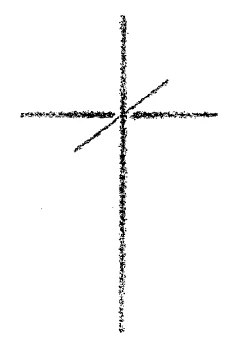
[ 12 ] Oben und unten, links und rechts empfand er noch als Geistiges. Es kann kein materielles Dasein haben, wenn etwas bloß oben und unten ist, und rechts und links; es ist bloß Bild, muß bloß Bild sein im Raume. Erst durch die Dicke wird es materiell. Und der Mensch empfand in alten Zeiten lebhaft: Indem du wächst, machst du wenige Schritte vom Erdboden nach aufwärts in der Richtung des Oben und Unten. Indem du gehst, kannst du dich frei bewegen, du bist in dem Elemente deines Willens: vorne und hinten. Dazwischen steht das Sich-völlig-frei-Bewegen rechts und links beim Stehenbleiben.
[ 12 ] He still perceived up and down, left and right as spiritual concepts. Something that is merely up and down, or left and right, cannot have a material existence; it is merely an image, must be merely an image in space. Only through thickness does it become material. And in ancient times, people vividly perceived this: As you grow, you take a few steps upward from the ground in the direction of up and down. As you walk, you can move freely; you are in the realm of your will: forward and backward. In between lies the ability to move completely freely to the right and left while standing still.
[ 13 ] Diesen dreifachen Gegensatz als in das All hineingestellt in seinem Wesen, empfand der alte Mensch: dieses Stehenbleiben gegenüber dem Rechts und Links, dieses Hineinschreiten in die Welt gegenüber dem Vorne und Hinten, dieses sich langsam von unten nach oben Bewegen in der Richtung oben-unten. So empfand der alte Mensch. Und er empfand, indem er das Oben und Unten erlebte, im Weltenall webend alles dasjenige, was wir heute die Intelligenz, die Vernunft des Weltenalls nennen. Ihm war dem Raume einverwoben mit dem Oben und Unten alles dasjenige, was an Intelligenz waltet im Weltenall; und dadurch, daß er teilnehmen kann in seinem Wachsen von unten nach oben an dieser Intelligenz des Weltenalls, fühlte sich der Mensch selbst intelligent. Die Teilnahme an dem Oben und Unten war ihm zu gleicher Zeit die Teilnahme an der Weltenintelligenz. Und die Teilnahme an dem Rechts und Links, an dem Zusammen-Verwobensein von Sinn und Gestalt, von Weisheit und Form, war ihm das Gefühl, das durch die Welt webt. Und sein Verhalten im ruhigen Stehen, die Welt überschauen, war ihm sein Verbundensein in bezug auf sein eigenes Gefühl mit dem Weltengefühl. Und sein Schreiten durch den Raum in der Richtung vorne und hinten war ihm die Entfaltung seines Willens, das Sich-Hineinstellen in das Weltenall, in den Weltenwillen, mit seinem eigenen Willen. So empfand er sein Lebendigsein wie verwoben mit dem Oben und Unten, mit dem Rechts und Links, mit dem Vorne und Hinten. Bewußtes und Unbewußtes — oben und unten; Weisheit und Form — rechts und links; Geist und Materie — vorne und hinten. So empfand der alte Mensch.
[ 13 ] Ancient man perceived this threefold opposition as inherent in the nature of the universe: this standing still in relation to right and left, this stepping into the world in relation to front and back, this slow movement from bottom to top along the up-down axis. This is how ancient man perceived it. And as he experienced the above and below, he sensed, weaving throughout the universe, all that which we today call the intelligence, the reason of the universe. To him, everything that reigns as intelligence in the universe was interwoven with space and with up and down; and because he could participate in this intelligence of the universe as he grew from below to above, humanity felt itself to be intelligent. Participation in up and down was, at the same time, participation in the intelligence of the universe. And participation in right and left—in the interweaving of meaning and form, of wisdom and shape—was for him the feeling that weaves through the world. And his posture of standing calmly, surveying the world, was for him his connection, in terms of his own feeling, with the feeling of the universe. And his walking through space in the directions of front and back was, for him, the unfolding of his will, the placing of himself within the universe, within the will of the world, with his own will. Thus he perceived his aliveness as interwoven with above and below, with right and left, with front and back. Conscious and unconscious—above and below; wisdom and form—right and left; spirit and matter—front and back. This is how the ancient human being perceived things.
[ 14 ] Aber er empfand zu gleicher Zeit unbestimmt — ich drücke mich kraß aus —: Stellt man sich auf den Kopf, so ist das Unten oben, und das Oben unten. Aber so ist es auch bei den Gegenfüßlern, und wenn man sich selber mit zur Erde rechnet: das Unten oben, das Oben unten. Und so kann man sich auch vorstellen, daß einmal durch irgend etwas anderes das, was sonst rechts ist, vorne, und was sonst links ist, hinten ist. Diese Richtungen, sie sind ebenso webend und lebend im Raume, wie sie in einer gewissen Beziehung ununterscheidbar sind, wie sie ineinanderwebend sind. Der alte Mensch empfand, indem er also sich in dem dreigeteilten Raume drinnen erlebte, daß das Göttliche in dieser Dreiteilung waltet. Das Göttliche im Raume waltend, wies den Menschen auf das Göttliche in der Dauer.
[ 14 ] But at the same time he felt, in a vague way—to put it bluntly—that if you stand on your head, what is below becomes above, and what is above becomes below. But this is also true for those who walk on their feet: if you include yourself as part of the earth, what is below becomes above, and what is above becomes below. And so one can also imagine that, through some other influence, what is normally on the right might be in front, and what is normally on the left might be behind. These directions are just as interwoven and alive in space as they are, in a certain sense, indistinguishable—just as they are interwoven with one another. The ancient human, experiencing himself within this tripartite space, sensed that the Divine reigns within this tripartite division. The Divine reigning in space pointed humanity toward the Divine in duration.
[ 15 ] Und er erlebte — und das, was ich jetzt sage, erlebte der Mensch wirklich — im Raume das Göttliche in seiner Offenbarung dreigeteilt waltend. Und ihm war es das Abbild des dreifaltigen Gottes: Vater, Sohn und Geist, oder wie sonst der dreigeteilte Gott hieß. Die Dreifaltigkeit ist wahrhaftig nicht im Gedanken ausgesonnen, ist nicht im Gedanken erfunden. Die Dreifaltigkeit mit all ihren Eigentümlichkeiten, sie war erlebt im Abbilde, als der alte Mensch den dreigeteilten Raum lebendig erfuhr.
[ 15 ] And he experienced—and what I am about to say, that person truly experienced—the Divine reigning in space, divided into three parts in its manifestation. And to him, it was the image of the Triune God: Father, Son, and Holy Spirit, or whatever else the triune God was called. The Trinity is truly not a figment of the imagination; it was not invented by the mind. The Trinity, with all its characteristics, was experienced in this image when the ancient human being vividly perceived the threefold space.
[ 16 ] Und so wie Unklarheit in einer gewissen Beziehung herrschen kann über das Oben und Unten, wie rechts und links auch vorne und hinten werden kann, so kann unter Umständen auch Unklarheit hineinkommen in die Wechselbeziehungen von Gott, Sohn und Geist. Aber indem im Gebiete der Vergänglichkeit, im Gebiete des Raumes der Mensch in den drei Dimensionen, nicht abstrakt, nicht geometrisch wie wir, sondern konkret erlebte, wie sich im Raume das Göttliche auslebt, und indem er dies erlebte, auch das Vergängliche erlebte, da bezog er dieses Vergängliche auf das Element der Dauer, und es wurde ihm der dreigeteilte Raum das Abbild der dreigeteilten Geistigkeit.
[ 16 ] And just as ambiguity can prevail in a certain sense regarding up and down—just as right and left can also become front and back—so, under certain circumstances, ambiguity can also creep into the interrelationships between God, the Son, and the Holy Spirit. But in the realm of transience, in the realm of space—where human beings, in the three dimensions, experienced—not abstractly, not geometrically as we do, but concretely—how the Divine manifests itself in space, and as he experienced this, he also experienced the transitory; thus he related this transitory to the element of permanence, and the tripartite space became for him the image of the tripartite spirituality.
[ 17 ] Lebe ich hier unten auf der Erde, so lebe ich eben in der Dreifaltigkeit des Raumes; aber diese Dreifaltigkeit des Raumes, sie ist der abbildliche Beweis für die Dreifaltigkeit des göttlichen Ursprungs der Welt. Das ist ungefähr die Idee des alten Menschen. Heute ist der Raum ein Abstraktum geworden, und nur einige Menschen empfinden die Tiefendimension, die Dickendimension, wie sie entstehen: Oben und unten, vorne, hinten; rechts und links die Ebenendimension. Davon ist auch bei Philosophen heute nicht viel Erlebnis zu finden. Aber darum kommen doch einige Menschen, die sich die Dinge überlegen, die nicht ganz schlafen, darauf, daß die Tiefendimension eigentlich erst in der gar nicht sehr weit unter dem Bewußtsein liegenden unbewußten Beobachtung zustande kommt. Das Tiefesehen erleben noch die Menschen, aber das ist der letzte schattenhafte Rest des Raumeserlebens.
[ 17 ] When I live here on Earth, I live within the Trinity of space; but this Trinity of space is the symbolic proof of the Trinity of the divine origin of the world. That is, roughly speaking, the idea of the ancient man. Today, space has become an abstraction, and only a few people perceive the dimensions of depth and thickness as they arise: up and down, front and back; right and left—the plane dimension. Even among philosophers today, there is little experience of this. But that is why some people—those who reflect on these things, who are not entirely asleep—come to realize that the dimension of depth actually arises only in unconscious observation, which lies not very far below the level of consciousness. People still experience this “deep seeing,” but it is the last, shadowy remnant of the experience of space.
[ 18 ] In den entwickelten Religionen ist nun vorangegangen dem wirklichen Verständnis der Dreifaltigkeit das Verständnis für die Einheit des Gottes. Das Verständnis für die Einheit des Gottes hat einen ähnlichen Ursprung wie das Verständnis für die Dreifaltigkeit des Gottes durch den Raum.
[ 18 ] In developed religions, the understanding of the unity of God has preceded the true understanding of the Trinity. The understanding of the unity of God has a similar origin to the understanding of the Trinity of God as it relates to space.
[ 19 ] Geisteswissenschaft, sie sucht ihre Dinge aus den göttlichen Tatsachen selbst heraus. Törichte Menschen kommen dann und sagen, es gäbe diese oder jene äußeren Belege nicht. Nun ja, darüber haben wir schon manches erzählt, ich könnte noch vieles erzählen, es soll uns heute nicht beschäftigen. Nur darauf will ich hinweisen, daß es vielfach nur die Unwissenschaftlichkeit der heutigen sogenannten Wissenschaft ist, wenn man die Belege nicht finden kann. Ich will Ihnen nur ein einziges sagen, gewissermaßen auch als äußeren Beleg dafür, daß der alte Mensch so empfunden hat, wie ich es Ihnen heute dargestellt habe. Warum haben denn die alten Rabbiner Gott auch Raum genannt? Weil sie das so empfunden haben in älteren Zeiten, auch innerhalb des Judentums, was ich Ihnen eben für die Menschheit dargestellt habe. Könnte auf verschiedenen Gebieten die Wissenschaft wirklich denken, so würde sie unzählige Rätsel finden, die aber zu gleicher Zeit wahrhaftige Beweise sind, äußere Beweise für dasjenige, was die Geisteswissenschaft, allerdings aus den geistigen Tatsachen heraus, zu finden hat. Einer der Gottesnamen bei den Rabbinern ist auch Raum; Raum und Gott ist dasselbe.
[ 19 ] The humanities draw their insights directly from divine realities themselves. Foolish people then come along and say that this or that external evidence does not exist. Well, we’ve already discussed this at length; I could say much more, but that’s not what we’re here to address today. I just want to point out that in many cases, the inability to find evidence is simply a result of the unscientific nature of today’s so-called science. I want to mention just one thing to you—in a sense, also as external evidence that people in ancient times perceived things as I have described to you today. Why, then, did the ancient rabbis also call God “Space”? Because in earlier times—even within Judaism—they perceived what I have just described to you regarding humanity. If science were truly capable of thinking in various fields, it would find countless mysteries—which are, at the same time, genuine proofs, external proofs of what spiritual science must discover, albeit based on spiritual facts. One of the names of God among the rabbis is also “space”; space and God are one and the same.
[ 20 ] Einen ähnlichen Ursprung wie die Dreifaltigkeit des Göttlichen hat auch die Einheit des Göttlichen. Die hängt zusammen mit dem lebendigen Erleben der Zeit. Auch die Zeit ist nicht als’jenes Abstraktum von den alten Menschen empfunden worden, als welches wir sie heute empfinden; nur ging das konkrete Erleben der Zeit noch früher verloren als das konkrete Erleben des Raumes. Liest heute einer mit wirklichem Verständnis Plato oder Aristoteles, nicht so, wie mancher Schulmeister ihn liest — ich habe Ihnen ja öfter jene Notiz, die sich Hebbel in sein Tagebuch geschrieben hat, angeführt, wo ein Schulmeister vor der Tatsache steht, daß der wiederverkörperte Plato in seiner Schule als Schüler sitzt, und siehe da, der Schullehrer liest mit seiner Klasse gerade einen Dialog des Plato und der wiederverkörperte Plato bekommt von diesem Schulmeister eine recht schlechte Zensur; das hat sich Hebbel in sein Tagebuch notiert —, wer also heute mit wirklichem, tieferem Verständnis Plato und Aristoteles liest, der liest überall noch in Plato und Aristoteles, wie in dem 6., 7., 8. Jahrhundert der vorchristlichen Zeit eigentlich ein gutes Gefühl dafür noch voll vorhanden war. Wenn es auch schon abgeschattet war bei Plato und Aristoteles, so ist es doch noch deutlich fühlbar, dieses Erfühlen vom Raum, von dem ich gesprochen habe. Aber das Gefühl für das lebendige Erlebnis der Zeit ist noch früher verlorengegangen. So ganz und gar lebendig war es im zweiten nachatlantischen Zeitraum, in der urpersischen Zeit, wo es natürlich bei den Zarathustra-Schülern ein Frösteln hervorgerufen hätte, wenn man ihnen davon gesprochen hätte, daß die Zeit so eine Linie ist, die ganz gleichmäßig von der Vergangenheit in die Zukunft verläuft.
[ 20 ] The unity of the divine has a similar origin to that of the Trinity of the divine. It is connected to the living experience of time. Time, too, was not perceived by the ancients as the abstract concept we perceive it to be today; it was simply that the concrete experience of time was lost even earlier than the concrete experience of space. If someone today reads Plato or Aristotle with true understanding—not the way some schoolteacher reads them—I have, after all, often cited for you that note Hebbel wrote in his diary, in which a schoolteacher is confronted with the fact that the reincarnated Plato is sitting in his classroom as a student, and lo and behold, the schoolteacher is in the very process of reading a Platonic dialogue with his class, and the reincarnated Plato receives a rather poor grade from this schoolteacher; Hebbel noted this in his diary—so whoever reads Plato and Aristotle today with a genuine, deeper understanding will still find throughout their works, just as in the 6th, 7th, 8th centuries of the pre-Christian era, when a genuine sense of it was still fully present. Even though it was already fading in Plato and Aristotle, this sense of space—of which I have spoken—is still clearly perceptible. But the sense of the living experience of time was lost even earlier. It was still fully alive in the second post-Atlantean epoch, the Proto-Persian period, where, of course, it would have sent a shiver down the spines of Zarathustra’s disciples if someone had told them that time is a line running quite uniformly from the past into the future.
[ 21 ] Wiederum war in der Gnosis ein mehr schattenhaftes Gefühl vorhanden — aber kaum, daß es noch zu erkennen ist — von dem Lebendigen der Zeit, indem man nicht davon sprach, daß da so eine Linie von der Vergangenheit in die Zukunft verläuft, sondern indem man von Äonen sprach, von den Schöpfern, die früher da waren und aus denen die späteren hervorgegangen sind, wo ein Äon an den andern immer die Impulse der Schöpfung übergeben hat. Gewissermaßen war die Zeit in der Imagination so vorgestellt, daß in der Hierarchienfolge das vorhergehende Wesen immer an das nächstfolgende die Impulse abgab, und das nächstfolgende war gewissermaßen immer hervorgebracht von dem vorhergehenden, das vorhergehende war das nächstfolgende umfassend. Man blickte hinauf zum Vorhergehenden als zu dem Göttlicheren gegenüber dem Nachfolgenden. «Später» erlebte man als ungöttlicher, «früher» erlebte man als göttlicher. Dieses Hinblicken auf die Wendung, welche die Entwickelung vom Göttlichen ins Ungöttliche nimmt, das war im lebendigen Erleben und Erfahren der Zeit enthalten. Es würde alles auseinanderfallen, wenn sich nicht zur Einheit weben wollte das Göttliche und das Ungöttliche, was identisch ist mit unseren heutigen Abstraktionen von Vergangenem und Zukünftigem.
[ 21 ] Once again, there was a more elusive sense present in Gnosticism—but one that is barely recognizable — of the living nature of time, in that one did not speak of a line running from the past into the future, but rather of eons, of the creators who were there before and from whom the later ones emerged, with one eon always passing on the impulses of creation to the next. In a sense, time was conceived in the imagination such that, in the sequence of the Hierarchy, the preceding being always passed on the impulses to the next, and the next was, in a sense, always brought forth by the preceding one; the preceding one encompassed the next. One looked up to the preceding as to the more divine in contrast to the subsequent. “Later” was experienced as less divine, “earlier” as more divine. This looking toward the turn that development takes from the divine to the non-divine was contained within the living experience and perception of time. Everything would fall apart if the divine and the undivine—which are identical to our present-day abstractions of the past and the future—did not strive to weave themselves into unity.
[ 22 ] Aber in diesem Bilde der Zeit, zurückblickend und immer Umfassenderes und Umfassenderes umfassend, bis zum «Alten der Tage», in dieser Imagination empfand man das Abbild des Einheitsgottes. So wie der dreigeteilte Raum, der dreifaltige Raum als das Abbild erlebt worden ist der Dreifaltigkeit des Gottes, so wurde die Zeit empfunden als das Abbild der Einheitlichkeit des Gottes. Der Grund des Monotheismus liegt im alten Zeiterleben; der Grund, die Trinität zu empfinden, liegt in dem alten Raumerleben. So hat sich der Menschen Seelenverfassung geändert; so ist gewissermaßen abstrakt und nüchtern geworden, was lebendig war. So paradox es klingen mag: Der gegenwärtige Mensch stellt sich ganz gewiß etwas Abstraktes vor, wenn er vom Raume spricht, und er stellt sich, wie ich glaube, eine lebendige Beziehung vor, wenn er von einem Freunde spricht. Aber jene Konkretheit, jenes elementare Erleben, das heute von Freund zu Freund spricht, das ist zum Beispiel noch abstrakt gegen das intensive Weltenerleben, das der alte Mensch hatte, indem er Raum und Zeit erlebte, die ihm die Abbilder der Einheit und der Dreiheit des Göttlichen waren.
[ 22 ] But in this image of time—looking back and encompassing ever more and more, all the way to the “Ancient of Days”—in this imagination, one perceived the image of the One God. Just as three-part space—the triune space—was experienced as the image of the Trinity of God, so was time perceived as the image of the unity of God. The basis of monotheism lies in the ancient experience of time; the basis for perceiving the Trinity lies in the ancient experience of space. Thus the human soul’s constitution has changed; what was once alive has, in a sense, become abstract and detached. As paradoxical as it may sound: modern man certainly imagines something abstract when he speaks of space, and he imagines, I believe, a living relationship when he speaks of a friend. But that concreteness, that elemental experience that today speaks from friend to friend—that, for example, is still abstract compared to the intense experience of the world that ancient people had, in which they experienced space and time as images of the unity and trinity of the Divine.
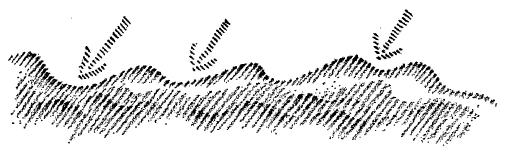
[ 23 ] So sind wir nüchtern geworden und abstrakt mit Bezug auf Raum und Zeit, und ein anderes muß an die Stelle von Raum und Zeit treten, das wir wiederum erleben müssen, das verinnerlichter werden muß, verinnerlichter sein muß. Wir müssen lernen, jenen Dualismus, jenen Gegensatz in der Welt zu empfinden, von dem ich in der letzten Woche gesprochen habe. Denken Sie sich einmal, jemand würde nur die sich kräuselnde Wasseroberfläche sehen. Diese sich kräuselnde Wasseroberfläche ist im Grunde eine abstrakte Linie. Was ist das Konkrete? Da unten das Wasser, und da oben die Luft. Und aus der Zweiheit Luft und Wasser, in dem Zusammenwirken ihrer Kräfte, entsteht die Maja, die sich kräuselnde Oberfläche. So ist aber unsere Welt die sich kräuselnde Oberfläche, und so sind wir als Menschen, wenn wir uns nur so anschauen, wie wir uns innerhalb der Maja anschauen. Schauen wir uns in Wirklichkeit an, so müssen wir uns hier auch sehen: unten das Wasser, oben die Luft. Unten das Wasser — wir sehen es, indem wir die vergängliche Entwickelung beobachten, wie ich sie in der letzten Woche Ihnen vorgeführt habe, wo der Mensch sich so entwickelt, daß er dasjenige, was er als Kind vorstellen kann, erst als Greis begreifen würde. Was er in der Zeit der Geschlechtsreife vorstellt, weiß er etwas früher, aber doch auch erst gegen die Greisenhaftigkeit zu und so weiter, wie ich den menschlichen Lebenslauf dargestellt habe, wo man erst im Alter dasjenige an sich selber begreift, was man in der Kindheit und Jugend gewesen ist. Es verläuft das Leben nicht scheinbar, sondern in Wirklichkeit so an der Oberfläche. Ich habe gesagt: Solch eine Übersicht brauche man vielleicht zum Leben auch heute an der Oberfläche nicht, aber zum Sterben braucht man sie. — Das ist die Vorstellung vom Unteren; dazu gehört die Vorstellung des realen Oberen, der Region der Dauer, von der ich Ihnen am letzten Sonntag gesprochen habe, wo der Mensch nicht sich entwickelt, sondern das, was der Dauer angehört, auch sein ganzes Leben hindurch von der Geburt bis zum Tode hat. Aber heute können wir nicht betrachten, wie das Untere und das Obere sich verweben, wenn wir nicht das Untere da erfassen, wo es droht, starr zu werden, wo es droht, sich zu verhärten; und wenn wir nicht das Obere da erfassen, wo es droht, sich zu verflüchtigen, sich zu vergeistigen; wenn wir nicht die Empfindung entwickeln für den Gegensatz: Göttliches Luziferisches — Ahrimanisches. Der alte Mensch hatte etwas Lebendiges in seiner Seele, wenn er von seinem Raumerlebnis, von seinem Zeiterlebnis sprach; der Mensch der Erdenzukunft muß innerliche Begriffe, innerliche Vorstellungsimpulse entwickeln: Göttliches — Ahrimanisches — Luziferisches.
[ 23 ] Thus we have become detached and abstract in relation to space and time, and something else must take the place of space and time—something we must in turn experience, something that must become more internalized, that must be more internalized. We must learn to perceive that dualism, that contrast in the world, of which I spoke last week. Imagine, for a moment, that someone were to see only the rippling surface of the water. This rippling surface of the water is, in essence, an abstract line. What is the concrete reality? Down below is the water, and up above is the air. And from the duality of air and water, through the interplay of their forces, arises Maya—the rippling surface. But our world is this rippling surface, and so are we as human beings when we view ourselves only as we see ourselves within Maya. If we look at reality, we must see ourselves here as well: water below, air above. Water below—we see it by observing the transitory development, as I demonstrated to you last week, where a person develops in such a way that what they can imagine as a child they would only come to understand as an old person. What a person imagines during puberty, they come to know somewhat earlier, but still only as they approach old age, and so on, as I have described the course of human life, where it is only in old age that one comprehends in oneself what one was in childhood and youth. Life does not merely appear to unfold this way on the surface; it actually does. I have said: Perhaps one does not need such an overview for life even today on the surface, but one needs it for dying. — That is the concept of the lower; this includes the concept of the real upper, the realm of duration, of which I spoke to you last Sunday, where the human being does not develop, but rather possesses that which belongs to duration throughout his entire life, from birth to death. But today we cannot contemplate how the Lower and the Upper interweave unless we grasp the Lower where it threatens to become rigid, where it threatens to harden; and unless we grasp the Upper where it threatens to evaporate, to become spiritualized; unless we develop a sense of the contrast: the Divine, the Luciferic, and the Ahrimanic. The ancient human being had something alive in his soul when he spoke of his experience of space and time; the human being of the Earth’s future must develop inner concepts, inner impulses of imagination: the Divine, the Ahrimanic, and the Luciferic.