

The Social Question as a
Question of Consciousness
GA 191
5 October 1919, Dornach
Translate the original German text into any language:
Versions Available:
The Social Question as a Question of Consciousness, tr. SOL
Dritter Vortrag
Third Lecture
[ 1 ] Ich habe in diesen Tagen davon gesprochen, wie der Mensch vorrücken kann von dem jetzigen Erdenbewußtsein zu einem Weltenbewußtsein, so wie er vorgerückt ist vom alten Griechen- und Römertum zu dem Mittelalter und dem Ende des Mittelalters, indem sich verwandelt hat sein Landbewußtsein in ein Erdenbewußtsein. Diese Dinge nehmen wir nicht abstrakt, sondern wir versuchen in diese Dinge wirklich so einzudringen, daß sie uns konkrete Glieder unseres Bewußtseins werden.
[ 1 ] I have been speaking these past few days about how humanity can progress from its present Earth consciousness to a world consciousness, just as it progressed from ancient Greece and Rome to the Middle Ages and the end of the Middle Ages, through the transformation of its national consciousness into an Earth consciousness. We do not approach these things abstractly, but rather we try to truly penetrate them so that they become concrete elements of our consciousness.
[ 2 ] Im Zusammenhang mit dieser Idee von der Erweiterung des Bewußtseins habe ich zu Ihnen gesagt, daß der Mensch in den drei ersten Epochen seines Lebens unter dem Einfluß von Kräften steht, die wir eigentlich als untersinnliche Kräfte bezeichnen können. Der Mensch steht von seiner Geburt bis zum siebenten Jahr im Zusammenhang mit Kräften des Erdenplaneten selbst. Die Gestaltungskräfte, die da im menschlichen Organismus wirken, sind im wesentlichen diejenigen, die verankert sind im Erdenplaneten selbst, im Inneren dieses Erdenplaneten. Und was dann wirkt, organisierend den Menschen, durchlebend den Menschen vom siebenten bis vierzehnten Lebensjahr, das sind die Kräfte des Luftkreises, die dann namentlich auf dem Umwege der Atmung den Menschen durchwellen, durchdringen, und durch die er die in den ersten sieben Lebensjahren veranlagten Gestaltungen und Formen eben durchlebt. Dann beginnt für den Menschen die Zeit, in der er, aber ohne daß das in sein Bewußtsein heraufdringt, ausgesetzt ist den Kräften, die von dem Planetensystem auf den Menschen mittelbar durch die Erde wirken.
[ 2 ] In connection with this idea of the expansion of consciousness, I told you that during the first three epochs of life, human beings are under the influence of forces that we can actually describe as subsensible forces. From birth until the age of seven, human beings are connected to forces of the Earth itself. The formative forces at work in the human organism are essentially those anchored in the Earth itself, within the very core of the Earth. And what then acts to organize the human being—permeating the human being from the seventh to the fourteenth year of life—are the forces of the air realm, which then, specifically through the medium of breathing, flow through and permeate the human being, and through which the human being lives out the forms and structures laid down during the first seven years of life. Then begins the period in which the human being—without this fact rising to consciousness—is exposed to the forces that act upon him from the planetary system indirectly through the Earth.
[ 3 ] Der Mensch ist also tatsächlich so organisiert, daß die in ihm organisierenden Kräfte nicht bloß solche sind, die er in seinem Leibe oder innerhalb der Grenzen seines Leibes trägt, sondern es sind Kräfte, die ihre Ausstrahlungen nehmen von dem Erdenplaneten und später von dem ganzen Planetensystem. Und zu einem Bewußtsein davon, daß der Mensch eine Einheit bildet mit der ganzen Erde, müssen wir allmählich durch solche Erwägungen durchdringen.
[ 3 ] Human beings are thus indeed organized in such a way that the forces organizing them are not merely those they carry within their bodies or within the limits of their bodies, but are forces that draw their influence from the Earth and, later, from the entire planetary system. And through such considerations, we must gradually come to realize that human beings form a unity with the entire Earth.
[ 4 ] Ich habe in früheren Zeiten öfter einen Vergleich gebraucht, um von einem anderen Gesichtspunkte aus dieses Bewußtsein zu charakterisieren. Ich habe gesagt: Ein menschlicher Finger ist ein menschlicher Finger aber nur, solange er in Verknüpfung ist mit dem menschlichen Leibe. In dem Augenblick, wo wir ihn abschneiden, verdorrt er. — Geradeso wie der Finger, so sagte ich öfter, zu unserem Leibe steht, so steht der Mensch zu der ganzen Erde, ja zu unserem ganzen Planetensystem. Wenn Sie den Menschen wegheben würden von der Erde und von dem ganzen Planetensystem, er würde verdorren, er würde absterben wie der Finger, wenn man ihn weghebt von dem menschlichen Leib. Es handelt sich darum, daß man allmählich im menschlichen Leben dazu aufrückt, von der Wahrnehmung des Teiles zu der Wahrnehmung eines größeren Ganzen zu kommen. Der Mensch, so wie er sich selbst betrachten kann, ist wirklich eine Teilwesenheit, insofern er ein physischer Organismus ist und auch insofern er ein Ätherleib ist. Er wird nur als ein Organismus betrachtet, wenn er im Zusammenhang mit der Erde und sogar mit dem ganzen Planetensystem ist. Wenn man aber das ganz lebendig in sein Bewußtsein aufnimmt, so weiß man sich als zugehörig mehr zu der Welt als zu der bloßen Erde, denn die Erde hat ihre Kräfte vom Weltenall, und indem wir zuerst nur abhängig sind von der Erde, gehen wir allmählich über zu der Abhängigkeit von dem Weltenall.
[ 4 ] In the past, I have often used a comparison to characterize this consciousness from a different perspective. I have said: A human finger is a human finger only as long as it is connected to the human body. The moment we cut it off, it withers. — Just as the finger, I have often said, relates to our body, so does the human being relate to the entire Earth—indeed, to our entire planetary system. If you were to remove the human being from the Earth and from the entire planetary system, he would wither away; he would die just as the finger does when it is removed from the human body. The point is that in human life we gradually progress from perceiving the part to perceiving a greater whole. Human beings, as they can view themselves, are truly partial beings, insofar as they are physical organisms and also insofar as they are etheric bodies. They are regarded as organisms only when they are in connection with the Earth and even with the entire planetary system. But when one takes this fully to heart, one realizes that one belongs more to the world than to the Earth alone, for the Earth derives its forces from the universe, and while we are initially dependent only on the Earth, we gradually transition to dependence on the universe.
[ 5 ] Aber man kann diese Dinge noch vertiefen. Unter denjenigen Sternen, die als Planetensystem die Erde umgeben, sind die vornehmlichsten, wie Sie ja wissen, die Sonne und der Mond. Und indem wir nach und nach vom vierzehnten Lebensjahre an, also in der dritten Lebensepoche des Menschen hineinwachsen in einen Zustand, durch den wir abhängig werden vom Planetensystem, werden wir zwar auch abhängig von den anderen Gliedern des Planetensystems, von Merkur, Mars und so weiter, aber wir werden vorzugsweise abhängig von Sonne und Mond. Die Abhängigkeit des Menschen von Sonne und Mond kann man aber nur richtig beurteilen, wenn man nicht nur von der äußeren Beobachtung her weiß, was Sonne und Mond vorstellen. Die äußere Beobachtung zeigt dem Menschen den Mond, Voll- und Neumond, erstes, letztes Viertel als eine Scheibe, von der er annimmt, sie sei an sich dunkel, werde von der Sonne bestrahlt und wende ihm daher einen Teil ihres Wesens in Beleuchtung zu. Aber das erschöpft nicht das Wesen des Mondes. Dasjenige, was im Weltenall ist, lernt man eigentlich nur erkennen, wenn man es immer als eine Summe von Kräften, einen Zusammenhang von Kräften sieht. Und man muß sich fragen: Welche Art von Kräften ist denn eigentlich im Monde konzentriert? — Im Monde sind vorzugsweise konzentriert menschliche Willenskräfte, besser gesagt Kräfte, welche verwandt sind den menschlichen Willenskräften, Kräfte, welche verwandt sind alledem, was aus dem Untersinnlichen auf den Menschen wirkt. Also vom Monde strahlen aus diejenigen Kräfte, die mit dem Untersinnlichen des Menschenwesens verwandt sind. Der Physiker erzählt einem sehr schön, daß der Mond eine Art Schlacke sei, daß die Sonne irgend etwas wie ein glühender, brennender Weltenkörper sei, der eine Korona hat, der Strahlungen seines Feuers hinaussendet in die Welt; so daß ungefähr der Mensch die Vorstellung hat, wenn er da so wandern könnte langsam oder schnell und an die Sonne herankäme, so würde er in einen Glutkörper hineinkommen. Ich habe Ihnen schon öfter gesagt, das ist nicht der Fall; sondern die Wahrheit ist, daß dort, wo die Sonne ist, ein Hohlraum ist, ein Nichts ist, und daß nur von der Oberfläche der Sonne aus das Licht strahlt. In Wahrheit ist dort nichts, wo man vermutet, daß etwas Physisches ist; denn das Sonnenwesen ist durchaus übersinnlich, wie das Mondenwesen untersinnlich ist. Dieses Übersinnliche und Untersinnliche des Planetensystems, wie sie konzentriert sind in Sonne und Mond, die beginnen also zu wirken auf die menschliche Organisation von dem vierzehnten Lebensjahr an ungefähr. Sie wirken erstens auf die Organisation des Menschen insofern, als das Mondenhafte mehr verwandt ist dem weiblichen Elemente, allem Weiblichen in der Welt, das Sonnenhafte mehr verwandt ist dem Männlichen in der Welt. Aber sie wirken auch so, daß der Mensch in alledem, was er erkenntnismäßig entwickelt, in alledem, was er so entwickelt, daß er denkt, ein Sonnenhaftes hat, in alledem, was er »zJ), in allen Impulsen des Wollens, ein Mondenhaftes hat. Sonne und Mond sind nicht nur da draußen im kosmischen Raume, Sonne und Mond sind in uns. Und insofern wir denken, sind wir Sonnenwesen, insofern wir wollen, sind wir Mondenwesen. Besser gesagt: Insofern wir in uns Organe ausbilden, die die Vermittler des Denkens sind, wirken zur Ausbildung dieser Organe von unserem vierzehnten Jahre an die Sonnenkräfte, das Übersinnliche; insofern wir Organe ausbilden, die das Wollen vermitteln, wirken in uns vom vierzehnten Jahre an die Mondenkräfte, das Untersinnliche.
[ 5 ] But we can explore these things in greater depth. Among the celestial bodies that surround the Earth as part of the planetary system, the most prominent, as you know, are the Sun and the Moon. And as we gradually grow, beginning at the age of fourteen—that is, during the third stage of human life—into a state in which we become dependent on the planetary system, we do indeed become dependent on the other members of the planetary system—Mercury, Mars, and so on—but we become primarily dependent on the Sun and the Moon. However, one can only properly assess human dependence on the Sun and the Moon if one knows more than just what the Sun and the Moon appear to be based on external observation. External observation shows humanity the Moon—the full moon, the new moon, the first and last quarters—as a disk, which they assume is dark in itself, illuminated by the Sun, and thus turns a part of its being toward them in the form of light. But that does not exhaust the essence of the Moon. One can truly come to recognize what exists in the universe only by always viewing it as a sum of forces, a interplay of forces. And one must ask: What kind of forces are actually concentrated in the Moon? — The Moon primarily concentrates human forces of will—or rather, forces related to human forces of will—forces related to everything that acts upon human beings from the sub-sensory realm. Thus, the forces radiating from the Moon are those related to the sub-sensory aspect of the human being. The physicist explains very nicely that the Moon is a kind of slag, that the Sun is something like a glowing, burning celestial body that has a corona and sends out the rays of its fire into the world; so that a person might imagine that if they could wander there—slowly or quickly—and approach the Sun, they would enter a body of intense heat. I have told you many times before that this is not the case; rather, the truth is that where the Sun is, there is a void, a nothingness, and that light radiates only from the Sun’s surface. In truth, there is nothing there where one might expect to find something physical; for the solar being is entirely supersensible, just as the lunar being is subsensible. These supersensible and subsensible aspects of the planetary system, as they are concentrated in the Sun and the Moon, thus begin to influence the human constitution from about the age of fourteen. First, they influence the human constitution insofar as the lunar aspect is more closely related to the feminine element—to all that is feminine in the world—while the solar aspect is more closely related to the masculine in the world. But they also act in such a way that in everything a person develops through knowledge—in everything they develop through thinking—they possess a solar quality, and in everything they “feel,” in all impulses of the will, they possess a lunar quality. The sun and the moon are not only out there in cosmic space; the sun and the moon are within us. And to the extent that we think, we are solar beings; to the extent that we will, we are lunar beings. To put it better: To the extent that we develop within ourselves organs that mediate thought, the solar forces—the supersensible—work toward the development of these organs from the age of fourteen onward; to the extent that we develop organs that mediate volition, the lunar forces—the subsensible—work within us from the age of fourteen onward.
[ 6 ] So können wir, wenn wir eine solche Erkenntnis in lebendiges Wesen verwandeln, in uns fühlen: Du Mensch, du bist so, daß in dir lebt nicht nur, was hier auf der Erde ist, daß in dir lebt, was Sonne und Mond konstituiert. Sonne und Mond sind in dir. Du bist ein Weltenbürger. Du wärest nicht, was du bist als Mensch, wenn nicht das Weltenall in dir wirkte.
[ 6 ] Thus, when we transform such an insight into a living being, we can feel within ourselves: You, human being, are such that within you lives not only what is here on Earth, but also what constitutes the sun and the moon. The sun and the moon are within you. You are a citizen of the world. You would not be what you are as a human being if the universe were not at work within you.
[ 7 ] Abstrakt solche Dinge zu wissen, hat keinen großen Wert; aber in sich fühlen, man sei ein solches Wesen, in dem Sonne und Mond wirken, das gibt innerliches Leben. Zu fühlen alles, was man übersinnlich erdenken kann und untersinnlich wollen kann, das kommt von Sonne und Mond, das läßt den Menschen zu sich sagen: Ich wandle zwar auf der Erde herum, aber bei jedem Schritt, den ich auf der Erde mache, lebt in mir nicht nur das, was auf der Erde sprießt und sproßt, und was auf der Erde sich freut und auf der Erde leidet, sondern bei jedem Schritt, den ich auf der Erde mache, leben in mir Sonne und Mond. Ich bin nicht bloß Erdenbürger, ich bin Weltenbürger. — Wenn das als lebendiges Leben im Menschen wellt und kraftet, dann kommt über sein Denken eine gewisse Kraft, die er ohne dieses Bewußtsein nicht hat. Die Menschen sollten besonders in der Gegenwart fühlen lernen, wenn sie eben auf der Erde wandeln, daß in ihnen das Weltenall lebt. Das sollte Gefühl, das sollte Empfindung werden. Gleichsam sollte der Mensch, indem er zur Sonne hinaufblickt, sich sagen: Ich bin auch von deinem Wesen, o Sonne! — Indem er zum Monde hinaufblickt, sollte er sagen: Ich bin auch von deinem Wesen, o Mond!
[ 7 ] Knowing such things in the abstract is of little value; but to feel within oneself that one is such a being in whom the sun and moon are at work—that gives inner life. To feel everything one can conceive of supersensually and will sub-sensually—that comes from the sun and moon; it allows a person to say to themselves: “I may walk upon the earth, but with every step I take upon the earth, it is not only that which sprouts and grows on the earth, and that which rejoices and suffers on the earth, that lives within me; but with every step I take upon the earth, the sun and the moon live within me. I am not merely a citizen of the earth; I am a citizen of the world.” — When this surges and pulsates as living life within a person, a certain power descends upon their thinking—a power they would not possess without this awareness. People should learn to feel—especially in the present moment, as they walk upon the earth—that the entire universe lives within them. This should become a feeling, a sensation. As it were, when a person looks up at the sun, they should say to themselves: I, too, am of your essence, O Sun! — And when they look up at the moon, they should say: I, too, am of your essence, O Moon!
[ 8 ] Wenn dies der Mensch als Empfindung, als Gefühl in sich trägt, dann wird er erst reif, soziale Ideen zu fassen. Sonst trägt sein Denken eine gewisse Erdenschwere. Gewiß, man kann in abstracto gewisse Ideen fassen, aber man kann sie nicht im Konkreten innerlich in sich beleben. Das Soziale ist etwas, worin der Mensch als Mensch tätig ist. Naturwissenschaft begreift nur dasjenige, bei dem der Mensch nicht dabei ist. Nach dem Muster naturwissenschaftlicher Vorstellungen kann man niemals soziale Kräfte, soziale Betätigungen verstehen. Soziale Betätigung kann man nur mit jenem leichten Denken verstehen, welches man erhält aus einem solchen Gefühle heraus, das uns als Weltbürger uns erfühlen läßt. Es ist einfach so, daß ein solches weltbürgerliches Bewußtsein aus der Verwandtschaft mit Sonne und Mond entspringen muß. Erst wenn der Mensch nicht mehr sich so fühlt, daß er gewissermaßen auf die Erde angewiesen ist, wenn er sich so fühlt, als ob er ein vorübergehender Bewohner der Erde sei, der hereinträgt in dieses Erdendasein Sonnen- und Mondenkräfte, erst dann wird sein Denken so kraftvoll und zu gleicher Zeit so leicht, daß er die sozialen Begriffe wirklich so auffassen kann, wie sie im sozialen Dasein leben. Denn sehen Sie, gar mancher nationalökonomische Denker denkt, er könne mit der gewöhnlichen, der Naturwissenschaft nachgebildeten Vorstellungsart auch soziale Begriffe fassen. Sie können heute in nationalökonomischen Werken viele Begriffe lesen, viele Interpretationen lesen über den Begriff der Ware, über den Begriff der Arbeit — ich habe darüber auch schon einige Andeutungen gemacht — und über den Begriff des Kapitals. Aber alle diese Begriffe sind eigentlich gewöhnlich nicht zu gebrauchen. Sie treffen nicht das, was wirklich lebt im sozialen Leben. Wenn Sie versuchen wollen, einen Begriff zu schaffen von dem, was in dem Wirtschaftsleben als Ware zirkuliert, und Sie schaffen diesen Begriff so, wie Sie den Begriff eines Kristalles oder einer Pflanze oder eines Tieres oder selbst des physischen Menschen erzeugen, so wird nichts daraus. Sie können nicht nach dem Muster naturwissenschaftlicher Vorstellung den Begriff der Ware fassen. Wollen Sie ihn im lebendigen Leben erhaschen, wie er im sozialen Leben drinnensteht, dann brauchen Sie im Grunde doch eine Imagination; denn der Ware haftet etwas an, das untrennbar ist vom Menschen. Es ist jeder Ware etwas vom Menschen mitgegeben, ob die Ware nun besteht in einem genähten Rock oder in einem Gemälde — denn nationalökonomisch ist ein Gemälde auch nur eine Ware —, oder ob sie besteht in einer Untertichtsstunde. Auch eine Unterrichtsstunde ist ja nationalökonomisch genommen nur Ware. Aber dasjenige, was den Waren-Begriff. ausmacht, das hängt zusammen mit der Leistung des Menschen, Und nicht das gewöhnliche, voll bewußte Leben geht in die Ware hinein, sondern in die Ware geht hinein vielfach etwas von dem unterbewußten Leben. Daher brauchen Sie eine Imagination, um den WarenBegriff richtig zu fassen. Und Sie brauchen eine Inspiration, um den Arbeits-Begriff zu fassen, und Sie brauchen eine Intuition, um den Begriff des Kapitals zu fassen. Denn der Begriff des Kapitals ist ein sehr geistiger Begriff, nur ein umgekehrt geistiger Begriff. Daher bezeichnet die Bibel dasjenige, was mit dem Kapitalismus zusammenhängt, ganz richtig als Mammon, als etwas, was mit dem Geistigen zu tun hat; nur ist es nicht gerade der allerbeste Geist, der damit zu tun hat. Aber man dringt in die höchsten Regionen des geistigen Erkennens hinauf, wenn man das, was eigentlich Kapital im wirtschaftlichen Leben tut, erfassen will.
[ 8 ] When a person carries this within themselves as a sensation, as a feeling, only then do they become mature enough to grasp social ideas. Otherwise, their thinking is weighed down by a certain earthly heaviness. Certainly, one can grasp certain ideas in the abstract, but one cannot bring them to life internally in concrete terms. The social realm is something in which a person acts as a human being. Natural science comprehends only that in which the human being is not involved. Social forces and social activities can never be understood according to the model of scientific concepts. Social activity can only be understood with that lightness of thought which arises from a feeling that allows us to experience ourselves as citizens of the world. It is simply the case that such a consciousness of being a citizen of the world must spring from a kinship with the sun and the moon. Only when a person no longer feels that he is, so to speak, dependent on the Earth—when he feels as though he were a temporary inhabitant of the Earth who brings the forces of the sun and moon into this earthly existence—only then does his thinking become so powerful and at the same time so light that he can truly grasp social concepts as they live in social existence. For you see, quite a few economists believe they can grasp social concepts using the same conventional mode of thought modeled on the natural sciences. Today, in works on economics, you can read many concepts and interpretations regarding the concept of a commodity, the concept of labor—I have already made some remarks on this—and the concept of capital. But all these concepts are, in fact, generally of no use. They do not capture what truly lives in social life. If you want to try to create a concept of what circulates as a commodity in economic life, and you create this concept in the same way you would create the concept of a crystal, a plant, an animal, or even a physical human being, nothing will come of it. You cannot grasp the concept of a commodity according to the model of scientific thought. If you want to capture it in living reality, as it exists within social life, then you fundamentally need imagination; for there is something inherent in a commodity that is inseparable from human beings. Every commodity is imbued with something human, whether the commodity consists of a sewn skirt or a painting—for in economic terms, a painting is also merely a commodity—or whether it consists of a class period. Even a lesson is, from an economic standpoint, merely a commodity. But what defines the concept of a commodity is linked to human labor. And it is not ordinary, fully conscious life that goes into the commodity, but rather, in many cases, something of the subconscious life. Therefore, you need imagination to grasp the concept of a commodity correctly. And you need inspiration to grasp the concept of labor, and you need intuition to grasp the concept of capital. For the concept of capital is a very spiritual concept—only a concept that is spiritual in reverse. That is why the Bible quite correctly refers to what is associated with capitalism as Mammon—as something related to the spiritual; only it is not exactly the very best kind of spirit that is involved. But one ascends to the highest realms of spiritual understanding when one seeks to grasp what capital actually does in economic life.
[ 9 ] Da tritt uns das ganz Kuriose entgegen, die Notwendigkeit tritt uns entgegen: Um richtige nationalökonomische Begriffe zu bekommen, muß man eine Idee haben von übersinnlichen Erkenntnissen. Daher sind alle nationalökonomischen Begriffe, die heute zutage gefördert werden, so dilettantisch, weil die Leute keine übersinnlichen Erkenntnisse haben und daher diese Begriffe falsch fassen.
[ 9 ] Here we encounter something quite curious—we are confronted with a necessity: In order to grasp correct economic concepts, one must have an idea of supersensible knowledge. That is why all economic concepts put forward today are so amateurish—because people lack supersensible insights and therefore misunderstand these concepts.
[ 10 ] Nun, mißverstehen Sie mich aber nicht. Wenn Sie in meinen «Kernpunkten der sozialen Frage» nachlesen, so werden Sie sagen: Das ist aber keine Imagination, die du da gibst, wenn du von Ware redest; es ist keine Inspiration, die du da gibst, wenn du von Arbeit redest, und keine Intuition, die du da gibst, wenn du vom Kapital redest. — Ganz gewiß nicht. Man braucht nicht in die höheren Welten hinaufzusteigen, um Ware, Arbeit und Kapital zu sehen, obwohl das auch sehr interessant ist, die Spiegelbilder der Ware, der Arbeit und des Kapitals in den höheren Welten zu sehen. Aber man braucht nicht hinaufzusteigen. Man muß aber nur bekannt sein mit dem, was Imagination, Inspiration und Intuition sind, damit man das Richtige sagt über das Kapital. Das ist es, um was es sich handelt. Derjenige, der nicht bekannt ist mit Imagination, Inspiration und Intuition, der sagt eben nicht das Richtige über Ware, Arbeit und Kapital. So hängen innerlich zusammen Geisteswissenschaft und die heutige soziale Wissenschaft, und es gibt für den heutigen Menschen keinen anderen Weg als den, aufzusteigen aus dem Erdenbewußtsein zum Weltenbewußtsein so, damit er die Leichtigkeit und auch das Kraftvolle des Denkens bekommt, das ihn befähigt, das soziale Leben zu erfassen. Solange der Mensch nur so hinkriecht auf der Erde und im Grunde genommen glaubt, er sei nichts anderes als dasjenige, was er aus Pflanze, Tier und Mineralien aufnimmt, das sich nur ein bißchen anders zusammensetzt in ihm, so lange weiß sich der Mensch nicht als das richtige Wesen, das er ist. Erst dann, wenn er sich sagt: Sonne und Mond wirken in mir — dann weiß sich der Mensch als das richtige Wesen, das er ist. Das Weltenbewußtsein muß eben auf geistige Art errungen werden; auf geistige Art muß der Mensch erkennen, wie er einem größeren Weltenteil angehört, als die Erde ist.
[ 10 ] Well, don’t get me wrong. If you read my “Key Points of the Social Question,” you’ll say: That’s not exactly imagination you’re offering when you talk about commodities; it’s not inspiration you’re offering when you talk about labor, and it’s not intuition you’re offering when you talk about capital.”—Certainly not. You don’t need to ascend to the higher worlds to see commodities, labor, and capital, although it is also very interesting to see the reflections of commodities, labor, and capital in the higher worlds. But one need not ascend. One need only be familiar with what imagination, inspiration, and intuition are in order to speak correctly about capital. That is what this is all about. Anyone who is not familiar with imagination, inspiration, and intuition simply does not speak correctly about commodities, labor, and capital. This is how spiritual science and contemporary social science are intrinsically connected, and there is no other path for people today than to ascend from earthly consciousness to world consciousness, so that they may attain the lightness and also the power of thought that enables them to grasp social life. As long as human beings merely crawl along on the earth and, deep down, believe they are nothing more than what they absorb from plants, animals, and minerals—merely arranged a little differently within them—they will not recognize themselves as the true beings they are. Only when a person says to himself, “The sun and moon are at work within me”—only then does he recognize himself as the true being that he is. World consciousness must be attained in a spiritual way; in a spiritual way, a person must recognize how he belongs to a part of the world greater than the Earth itself.
[ 11 ] Nun handelt es sich darum, daß man wirklich erfasse, wie man über die gewöhnlichen Alltagsbegriffe hinauskommen muß, um zu solchem Denken zu kommen, das hier gemeint ist. Sie wissen, es gibt in der Welt materialistische Denker. Heute ist die Zahl der materialistischen Denker sehr groß, und Sie alle sind ja wahrscheinlich in Ihrem innersten Wesen überzeugt, daß man kein materialistischer Denker sein dürfe. Wenigstens waren Sie bis zu einem gewissen Grade überzeugt und sind deshalb zu einem mehr spirituellen Denken gekommen, haben sich hingezogen gefühlt zu dem spirituellen Denken, das gepflegt wird in dieser anthroposophischen Bewegung. Wir wollen also von uns selbst hier absehen. Aber es gibt ja auch andere Leute, die den Geist vertreten, und zahlreiche solche Menschen in der Welt, die sagen: Nun, da läuft all das Menschenzeug herum, welches nur alles für materielle Vorgänge und materielle Wesenheiten hält. Diesen materialistisch Denkenden, materialistisch Fühlenden, stehen die spirituell Denkenden und spitrituell Fühlenden gegenüber. — Die letzteren glauben an den Geist und werden dafür von den materialistisch Denkenden oftmals als Phantasten verachtet. Sie nehmen diese Verachtung aber hin, weil sie glauben, daß die Materialisten nicht einsehen, wie recht sie, die Phantasten, haben, wenn sie an dem Spirituellen festhalten. Man macht diesen Unterschied und bemerkt diesen Unterschied in der Welt zwischen materialistischem Denken und spirituellem Denken, und man streitet viel untereinander, wer Recht hat, der materialistische Denker oder der spirituelle Denker. Aus manchem, das hier besprochen worden ist, sollten Sie erkennen, daß im Grunde genommen der noch nicht in den Sinn der Geisteswissenschaft eingedrungen ist, der über solche Dinge streitet, sondern erst der ist richtig in den Sinn der Geisteswissenschaft eingedrungen, der sagt: Du bist Materialist; das kann man sein, das geht ganz gut. Du bist Spiritualist, das kann man auch sein, das geht auch sehr gut. — Gerade so, wie man einen Baum photographieren kann von der einen Seite und photographieren kann von der anderen Seite: er schaut von den verschiedenen Seiten verschieden aus, aber es ist immer derselbe Baum. Wenn man materiell die Welt erfaßt, so ist das nur die Photographie von der einen Seite. Wenn man spirituell die Welt erfaßt, so ist das die Photographie von einer anderen Seite. Der Materialismus sieht ganz anders aus als der Spiritualismus. Aber das Geheimnis besteht darin, daß man weder in dem Materialismus noch in dem Spiritualismus die Welt hat, sondern daß das eigentlich nur zwei Photographien von verschiedenen Standpunkten aus sind. Im Grunde genommen hat der Materialist ebenso Recht wie der Spiritualist und der Spiritualist ebenso wie der Materialist. Denn diese Begriffe, Spiritualität und Materialität, haben nur auf dem physischen Plane ihre Gültigkeit. Sobald man über den physischen Plan hinauskommt, sind diese Begriffe überwunden. Da streitet man nicht mehr, ob die Welt materiell oder spiritueil ist, weil man weiß, daß das zwei verschiedene Aspekte sind. Aber, warum streitet denn eigentlich der Mensch darüber, ob der Mensch materiell oder spirituell ist? Warum streitet denn der Mensch darüber, ob einer ein bloß leibliches Wesen oder ein bloß seelisches Wesen hat? Warum sehen die einen in dem Menschen bloß, ich möchte sagen, physische Körperlichkeit, die anderen neben der physischen Körperlichkeit auch SeelischGeistiges? Weil der Mensch beides ist! Und das Geheimnis des Lebens besteht eigentlich darin, daß der Mensch beides ist. Wenn Sie sagen: Ein Gedanke, der ist bloß eine geistige Entität, der ist bloß etwas Geistiges —, so haben Sie recht, denn der Gedanke ist bloß etwas Geistiges. Aber niemals ist der Gedanke als Geistig-Seelisches in Ihnen, ohne daß er einen physischen Abdruck hat, so daß Sie eigentlich immer auch den physischen Abdruck nachweisen können; der ist da. So daß jeder Gedanke auch etwas Materielles ist. Man möchte sagen: Das Weltenall, das hat unparteiisch dafür gesorgt, daß man sowohl Spiritualist wie Materialist sein kann. Denn man ist in der Tat seelisch-geistig; faßt man das auf, so kann man Spiritualist sein. Man ist aber durchaus auch ein materieller Abdruck des Seelisch-Geistigen, faßt man das auf und läßt das andere aus dem Auge, so kann man Materialist sein, weil der Mensch beides ist, und weil das eine nur ein Abdruck des anderen ist, weil das eine dem anderen gleich ist. Deshalb handelt es sich wirklich nur darum, ob der Mensch mehr sich setzt in sein physisches Wesen, dann wird er Materialist; oder ob er sich mehr setzt in sein seelisch-geistiges Wesen, dann wird er Spiritualist.
[ 11 ] The point is to truly grasp how one must move beyond ordinary, everyday concepts in order to arrive at the kind of thinking referred to here. As you know, there are materialist thinkers in the world. Today, the number of materialist thinkers is very large, and all of you are probably, in your innermost being, convinced that one should not be a materialist thinker. At least you were convinced to a certain degree and have therefore come to a more spiritual way of thinking; you have felt drawn to the spiritual thinking cultivated in this anthroposophical movement. So let us set ourselves aside for the moment. But there are also other people who represent the spirit, and numerous such people in the world who say: “Well, there are all these people running around who regard everything as merely material processes and material entities.” Opposite these materialistically thinking and feeling people stand the spiritually thinking and feeling people. — The latter believe in the spirit and are often despised as dreamers by the materialists. They accept this contempt, however, because they believe that the materialists fail to realize how right they—the dreamers—are when they hold fast to the spiritual. People make this distinction and observe this difference in the world between materialistic thinking and spiritual thinking, and they argue a great deal among themselves about who is right—the materialist or the spiritualist. From much of what has been discussed here, you should recognize that, fundamentally, those who argue about such things have not yet truly grasped the essence of spiritual science; rather, only those who say, “You are a materialist; that’s fine, that works just fine. You are a spiritualist; that’s fine too, that works very well as well,” have truly grasped the essence of spiritual science. — Just as one can photograph a tree from one side and photograph it from the other: it looks different from the various sides, but it is always the same tree. When one perceives the world materially, that is merely a photograph from one side. When one perceives the world spiritually, that is a photograph from another side. Materialism looks quite different from spiritualism. But the secret lies in the fact that the world is found neither in materialism nor in spiritualism; rather, these are actually just two photographs taken from different vantage points. Basically, the materialist is just as right as the spiritualist, and the spiritualist just as right as the materialist. For these concepts—spirituality and materiality—are valid only on the physical plane. As soon as one goes beyond the physical plane, these concepts are transcended. There, one no longer argues about whether the world is material or spiritual, because one knows that these are two different aspects. But why, in fact, do people argue about whether human beings are material or spiritual? Why do people argue about whether a person is merely a physical being or merely a spiritual being? Why do some people see in human beings merely—I would say—physical corporeality, while others see, in addition to physical corporeality, a soul-spiritual aspect as well? Because human beings are both! And the mystery of life actually lies in the fact that human beings are both. If you say, “A thought is merely a spiritual entity; it is merely something spiritual”—then you are right, for a thought is merely something spiritual. But a thought is never present within you as a spiritual-soul aspect without also having a physical imprint, so that you can actually always detect that physical imprint as well; it is there. Thus, every thought is also something material. One might say: The universe has impartially ensured that one can be both a spiritualist and a materialist. For one is, in fact, spiritual and soulful; if one grasps this, one can be a spiritualist. But one is also, without a doubt, a material imprint of the spiritual and soulful; if one grasps this and loses sight of the other, one can be a materialist, because human beings are both, and because one is merely an imprint of the other, because one is equal to the other. Therefore, it really comes down to whether a person identifies more with their physical being—in which case they become a materialist—or whether they identify more with their soul-spiritual being—in which case they become a spiritualist.
[ 12 ] Dem, was damit vorliegt, entkommt man eigentlich nicht, solange man in den Vorstellungen des gewöhnlichen alltäglichen Lebens oder auch in den Vorstellungen der gewöhnlichen Wissenschaft bleibt. Man kann allerlei Theorien erfinden. Was gibt es nicht alles für Theorien über das Seelisch-Leibliche und über die Wechselbeziehung oder den Parallelismus und was noch alles! Aber das sind alles ausgedachte Dinge, das ist nicht irgend etwas, was im Realen wurzelt. Denn die Menschen haben verlernt — ich habe auch das schon öfter hervorgehoben —, über diese Dinge richtig vorzustellen, weil es ihnen im Laufe der geschichtlichen Entwickelung ja verboten worden ist, wie ich gesagt habe. Im Jahre 869 war in Konstantinopel das achte allgemeine Konzil, und das hat ja den Geist abgeschafft, das hat das Dogma aufgestellt, daß der Mensch nicht besteht, wie bis an hin eine gnostische Wissenschaft gewußt hat, aus Leib, Seele und Geist, sondern das achte ökumenische Konzil hat bestimmt, daß der Mensch nur besteht aus Leib und Seele, und daß die Seele einige geistige Eigenschaften hat, daher die mittelalterlichen Scholastiker eine furchtbare Scheu hatten, von der sogenannten Trichotomie zu sprechen, von Leib, Seele und Geist; denn, das war verboten. Die heutigen Philosophieprofessoren haben zwar keine Scheu, denn sie haben sich die Scheu abgewöhnt; aber sie haben das römische Gebot noch nicht überwunden. Sie reden auch nur von Leib und Seele, von einer Zweiheit, und glauben, unbefangene vorurteilslose Wissenschaft zu tradieren, während sie nur römisch-katholische Dogmatik des achten allgemeinen Konzils von Konstantinopel eigentlich lehren. Sie glauben, es folgt aus ihrem unbefangenen Forschen, was sie aber nur sagen, weil sie in der Historie drinnenstecken.
[ 12 ] One cannot really escape what is presented here as long as one remains within the concepts of ordinary everyday life or even within the concepts of conventional science. One can come up with all sorts of theories. There are all kinds of theories about the relationship between the soul and the body, about their interdependence or parallelism, and so on! But these are all contrived notions; they are not rooted in reality. For people have forgotten—as I have often emphasized—how to conceive of these things correctly, because, as I have said, they were forbidden to do so in the course of historical development. In the year 869, the Eighth Ecumenical Council was held in Constantinople, and that council abolished the concept of the spirit; it established the dogma that human beings do not consist—as Gnostic science had previously held—of body, soul, and spirit, but rather the Eighth Ecumenical Council determined that human beings consist only of body and soul, and that the soul possesses certain spiritual qualities, which is why the medieval scholastics were terribly reluctant to speak of the so-called trichotomy—of body, soul, and spirit—for that was forbidden. Today’s philosophy professors, however, have no such reluctance, for they have outgrown it; yet they have not yet overcome the Roman edict. They, too, speak only of body and soul—of a duality—and believe they are imparting unbiased, unprejudiced science, whereas in reality they are merely teaching Roman Catholic dogma as defined by the Eighth Ecumenical Council of Constantinople. They believe this follows from their unbiased research, but they say this only because they are mired in history.
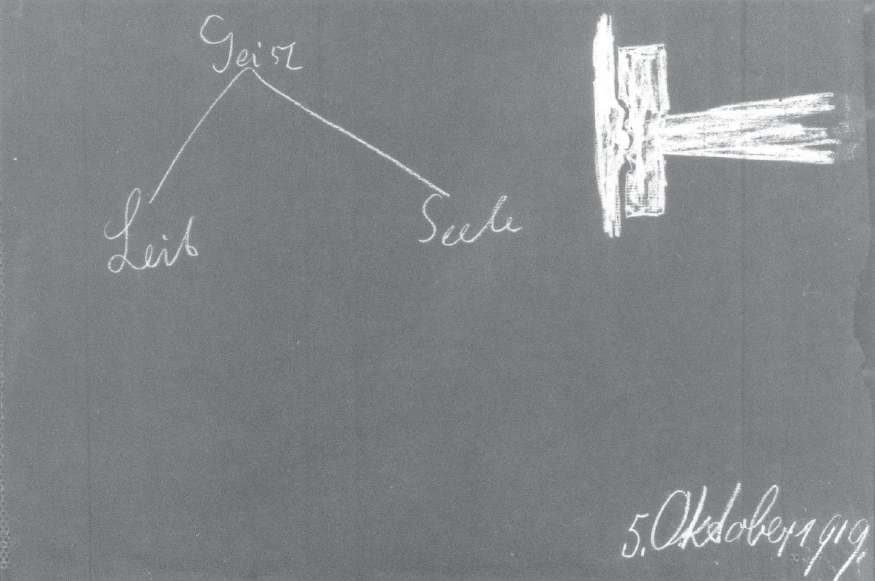
[ 13 ] Heute haben wir die Aufgabe, wiederum zurückzukehren zu der Anerkenntnis von Leib, Seele und Geist. Denn betrachten wir die äußere Welt und unsere menschliche Organisation, insofern sie so wahrgenommen wird wie die äußere Welt, so nehmen wir ein Leibliches wahr. Schauen wir dann in unser Inneres hinein, mögen wir unser Denken, Wollen, unser Fühlen in einer äußeren, oberflächlichen Selbsterkenntnis betrachten, oder mögen wir mystisch tief hinuntersteigen: Wir erleben ein Seelisches — außen Leibliches, innen Seelisches. Aber die Verbindung, das Ineinanderschauen der beiden, das fortwährende Ineinanderschauen von Geistig-Seelischem und Leiblich-Physischem, das bewirkt das Dritte — wir haben nicht einmal ein ordentliches Wort, wir müssen das Wort von der einen Seite her nehmen —, das bewirkt der Geist. So daß wir sagen können: Zwei verschiedene Aspekte sind Leib, Seele, aber die Verbindung bildet der Geist. Wir müssen wiederum zu der gesunden Vorstellung von Leib, Seele und Geist zurückkehren, sonst werden uns immer Leib und Seele auseinanderfallen. Man kann in dem Seelischen nichts Leibliches, in dem Leiblichen nichts Seelisches finden, solange man nicht den Geist in ihnen, in ihrer Mitte hat.
[ 13 ] Today, our task is to return once again to the recognition of body, soul, and spirit. For when we observe the external world and our human constitution—insofar as it is perceived in the same way as the external world—we perceive something physical. When we then look within ourselves—whether we observe our thinking, willing, and feeling through an external, superficial self-knowledge, or whether we descend mystically into the depths—we experience the soul: physical on the outside, soul on the inside. But the connection, the interpenetration of the two—the constant interpenetration of the spiritual-soul and the physical-bodily—is brought about by the third—we don’t even have a proper word for it; we have to borrow the word from one side—it is brought about by the spirit. So that we can say: Body and soul are two different aspects, but the connection is formed by the spirit. We must return once again to the healthy conception of body, soul, and spirit; otherwise, body and soul will always fall apart for us. One cannot find anything physical in the soul, nor anything soulful in the body, as long as one does not have the spirit within them, at their center.
[ 14 ] Ich habe vor vielen Jahren, um Ihnen dieses klarzumachen, einen Vergleich gebraucht. Nehmen Sie an, hier sei ein Petschaft, und da sei eingraviert in das Petschaft, sagen wir, damit es ein recht «seltener» ist, der Name Müller. Und jetzt nehme ich hier Siegellack, etwa auf einen Brief, da kann ich den Namen Müller in den Siegellack hineindrücken.
[ 14 ] Many years ago, to make this clear to you, I used an analogy. Suppose there is a seal here, and engraved on it—let’s say, to make it a rather “rare” one—is the name Müller. And now I take some sealing wax, say for a letter, and I can press the name Müller into the sealing wax.
[ 15 ] Nun könnten die Kantianer und die Physiologen kommen und sagen: Es gibt keine Beziehung zwischen dem Petschaft, das vielleicht aus Bronze ist, und dem, was aus Siegellack ist. — Gewiß, das ist ganz Bronze, das andere ist ganz Siegellack. Niemals geht aus der Bronze etwas über in den Siegellack und niemals aus dem Siegellack etwas in die Bronze. Die beiden sind durchaus zweierlei. So ist es mit Leib und Seele. Das eine drückt sich im anderen ab, aber es geht nichts von dem einen in das andere über, jedes hat seine eigene Substantialität, und nichts, gar nichts, geht von dem einen in das andere über. Und dennoch, wenn Sie abgedruckt haben, dann haben Sie da im Siegellack «Müller» stehen und auf dem Petschaft auch «Müller» stehen, ein und dasselbe. Aber die Vermittlung ist nicht dadurch geschehen, daß irgend etwas sehr Feines herübergeronnen oder herübergeträufelt wäre vom Petschaft in den Siegellack; das ist nicht geschehen, sondern es ist etwas geschehen, was weder Siegellack noch Bronze ist, was aber in beiden das gleiche ist. Und daß das gerade «Müller» ist, das hängt wahrlich weder zusammen mit der Bronze noch mit all dem, was da in der Bronze ist, sondern das ist im Lebendigen. Daß irgendeiner den Namen Müller erhalten hat, das hängt mit dem Leben zusammen, das weist hin auf die ganze Breite des Lebens. So haben wir das Geistig-Seelische, so haben wir das Leibliche. Das Geistig-Seelische drückt sich im Leiblichen ab. Aber dasjenige, was da in beiden dasselbe ist, der Geist, das ist eine ganze weite Welt. Aber wir erfassen den Geist nicht, wenn wir bloß immer das Seelische ansehen, geradesowenig wie wir den Müller erkennen lernen, wenn wir nur das Petschaft anschauen. Wir erfassen den Geist auch nicht, wenn wir bloß hineinschauen in die materielle Welt, geradesowenig wie wir den Müller erkennen können, wenn wir auf den Siegellack schauen.
[ 15 ] Now the Kantians and the physiologists might come along and say: There is no relationship between the seal, which may be made of bronze, and that which is made of sealing wax. — Certainly, one is entirely bronze, the other is entirely sealing wax. Nothing ever passes from the bronze into the sealing wax, and nothing ever passes from the sealing wax into the bronze. The two are entirely distinct. So it is with the body and the soul. One leaves an impression on the other, but nothing passes from one into the other; each has its own substance, and nothing—absolutely nothing—passes from one into the other. And yet, once you have made the impression, you will see “Müller” written in the sealing wax and “Müller” on the seal itself—one and the same. But the transfer did not occur because some very fine substance seeped or dripped from the seal into the sealing wax; that did not happen; rather, something happened that is neither sealing wax nor bronze, but which is the same in both. And the fact that it is precisely “Müller” has truly nothing to do with the bronze or with anything contained within the bronze, but it lies in the living. The fact that someone has been given the name Müller has to do with life; it points to the full breadth of life. Thus we have the spiritual-soul aspect, and thus we have the physical aspect. The spiritual-soul aspect is imprinted in the physical. But that which is the same in both—the spirit—is a whole, vast world. Yet we do not grasp the spirit if we merely look at the soul aspect, any more than we come to recognize the miller if we look only at the seal. Nor do we grasp the spirit if we look only into the material world, any more than we can recognize the miller by looking at the seal.
[ 16 ] Also es handelt sich darum, daß uns der Geist vermittelt dasjenige, was als Beziehung ist zwischen dem Seelischen und dem Leiblichen. Und wir leben in unserem Zeitalter in einer Entwikkelungsphase der Menschheit, in der wir gerade diesen Tatbestand ordentlich durchschauen müssen.
[ 16 ] The point is that the spirit conveys to us what constitutes the relationship between the soul and the body. And in our time, we are living in a phase of human development in which we must gain a clear understanding of precisely this fact.
[ 17 ] Wenn Sie die neuere naturwissenschaftliche Wissenschaft ansehen, dann werden Sie finden, daß sie Ihnen allerlei Leibliches, eigentlich nur Leibliches vermittelt. Wenn Sie manche aus den älteren Zeiten stammende psychologische Begriffe nehmen, sie vermitteln Ihnen Seelisches. Mit beiden kommen wir nur zurecht, wenn wir uns zum Geiste aufschwingen, denn nur durch die geistige Erfassung unseres Wesens werden wir Weltenbürger, im Gegensatze zu den Erdenbürgern, die wir waren bis in die heutige Zeit. Wir müssen, wie Sie daraus erkennen können, nicht bloß dasjenige, was Leib ist an dem Menschen, so erfassen, wie wir die äußere Leiblichkeit erfassen können, sondern wir müssen den Menschen in weiteren Beziehungen überschauen. Ich will Ihnen einen solchen Fall sagen, damit uns dieser Fall als Beispiel dienen kann.
[ 17 ] If you look at modern natural science, you will find that it conveys all sorts of physical, indeed purely physical, aspects to you. If you take certain psychological concepts from earlier times, they convey psychological aspects to you. We can only come to terms with both if we rise to the spiritual level, for only through a spiritual understanding of our nature do we become citizens of the world—in contrast to the citizens of the earth that we have been up until the present day. As you can see from this, we must not merely grasp what is physical in the human being—as we can grasp external physicality—but we must view the human being in broader contexts. I will describe such a case to you so that it may serve as an example.
[ 18 ] Die gewöhnliche Naturwissenschaft, die sieht den Menschen allein bis zu seinem Tode. Dann verfolgt sie das Übriggebliebene, das hier auf der Erde Übriggebliebene, den Leib, verfolgt ihn, wie er verbrannt wird oder wie er der Erde mitgeteilt wird, zu Staub wird. Nun könnten Sie untersuchen, welche Bestandteile in diesem Menschenstaube sind, der zurückgeblieben ist von einem menschlichen Organismus. Dann wird die Naturwissenschaft sagen: Da zerfällt die menschliche Substanz, teilt sich der Erde mit. — Ja, das ist nicht einmal eine Viertels-, nicht einmal eine Achtelswahrheit, das ist gar keine Wahrheit, wenn man das ausspricht. Denn das, was da der Erde mitgeteilt ist, gleichgültig ob durch das Verbrennen oder durch das Beerdigen, das hat menschliche Form gehabt, menschliche Form auch dadurch gehabt, daß vor der Geburt beziehungsweise vor der Konzeption ein geistig-seelisches Wesen heruntergestiegen ist aus den geistigen Welten, gearbeitet hat bis zum Tode hin in diesem physischen Leibe. Dann teilen Sie diesen physischen Leib der Erde mit. Da arbeitet das, was Menschenform ist, in der Erde weiter, ganz gleichgültig, ob es verbrannt oder beerdigt worden ist, es arbeitet an der Erde mit. Die Erde bekommt fortwährend dasjenige mitgeteilt, was sie nicht haben würde, wenn ihr nicht Menschenleiber nach dem Tode der Menschen mitgeteilt würden. Das ist etwas für die Erde, daß ihr Menschenleiber nach dem Tode mitgeteilt werden. Die Erde hätte sonst nur Substanzen, die irdisch sind, wenn ihr nicht Menschenleiber mitgeteilt würden.
[ 18 ] Conventional natural science views human beings only up to the moment of their death. Then it observes what remains—what is left here on Earth, the body—and follows it as it is cremated or returned to the earth, turning to dust. Now you could examine what components are in this human dust that remains after a human organism has passed away. Then natural science will say: There, the human substance decays and is returned to the earth. — Yes, that is not even a quarter, not even an eighth of the truth; it is no truth at all when you put it that way. For what is returned to the earth—whether through cremation or burial—once had a human form; it had a human form precisely because, before birth or rather before conception, a spiritual-soul being descended from the spiritual worlds and worked within this physical body until death. Then this physical body is imparted to the Earth. What is human in form continues to work within the Earth, regardless of whether it was cremated or buried; it contributes to the Earth. The Earth continually receives what it would not have if human bodies were not bestowed upon it after people’s deaths. It is beneficial for the Earth that human bodies are bestowed upon it after death. Otherwise, the Earth would have only earthly substances if human bodies were not bestowed upon it.
[ 19 ] Aber diesen Menschenleib hat bewohnt ein seelisch-geistiges Wesen, das vor der Geburt beziehungsweise vor der Konzeption herabgestiegen ist aus seelisch-geistigen Welten und die Struktur verliehen hat diesem Menschenleibe. Diese Struktur bleibt als ein Wesentliches in jedem Stäubchen, geht in die Erde oder in die Atmosphäre beim Verbrennen, gleichgültig wie, eben über, und die Erde empfängt mit diesem Menschenleib dasjenige, was heruntergestiegen ist aus den geistigen Welten. Das ist nicht ohne Bedeutung. Das ist nicht etwa bloß eine gewöhnliche Wahrheit, sondern das hat sogar eine sehr, sehr große Bedeutung. Denn unsere Erde ist nicht mehr in Entwickelung, und es wäre längst so, daß kein Mensch sie heute mehr, vielleicht auch keine Tiere — die Tiere vielleicht — bewohnen könnten, wenn ihr nicht fortwährend Auffrischungskräfte geistig-seelischer Art durch die Menschenleiber zukämen. Daß die Erde heute noch ein für Menschen bewohnbarer Weltenort ist, das ist dem Umstande verdankt, daß ihr fortwährend Menschenleiber mitgeteilt werden. Diese frischen die Erdenkräfte immer wiederum auf. Seit der Mitte der atlantischen Zeit ist die Erde bereits im Verdorren. Sie hat keine Aufgangskräfte mehr; die hatte sie in der alten polarischen, lemurischen und so weiter Zeit. Aber seit der Mitte der atlantischen Zeit hat die Erde aus sich selbst nur verdorrende Kräfte und wird nur aufgefrischt für weiteres Bestehen dadurch, daß ihr die Formkräfte der Menschenleiber mitgeteilt werden. Die wirken in der Erde weiter. Die nur machen die Erde noch für die Menschen bewohnbar.
[ 19 ] But this human body is inhabited by a soul-spiritual being that descended from the soul-spiritual worlds before birth—or rather, before conception—and imparted its structure to this human body. This structure remains as an essential element in every speck of dust; it passes into the earth or into the atmosphere upon burning—regardless of how—and the earth receives, through this human body, that which has descended from the spiritual worlds. This is not without significance. This is not merely an ordinary truth; rather, it has a very, very great significance. For our Earth is no longer evolving, and it would have long since reached a point where no human—and perhaps no animals either, though animals might still be able to—could inhabit it today if it were not continually receiving revitalizing forces of a spiritual-soul nature through human bodies. The fact that the Earth is still a place habitable for human beings today is due to the fact that human bodies are continually bestowed upon it. These bodies constantly renew the Earth’s forces. Since the middle of the Atlantean epoch, the Earth has already been withering away. It no longer possesses any ascending forces; it had these in the ancient Polar, Lemurian, and subsequent epochs. But since the middle of the Atlantean epoch, the Earth has possessed only withering forces of its own and is sustained for its continued existence solely through the imparting of the formative forces of human bodies. These forces continue to work within the Earth. They alone make the Earth habitable for human beings.
[ 20 ] Daraus können Sie erkennen, daß der Mensch auf der einen Seite, wie ich Ihnen erzählt habe, die inneren Kräfte des Planeten in sich wirksam hat, die Kräfte der Atmosphäre. Aber er gibt wiederum geistig-seelische Kräfte an die Erde zurück, er versorgt auch die Erde mit geistig-seelischen Kräften. Er trägt, indem er geboren wird, die geistig-seelischen Kräfte aus dem geistigen Weltenall in die Erde herein, braucht sie so lange, als er sie nötig hat, bis zu seinem Tode, übergibt sie dann in Formkräften der Erde und ist so der Mitbauer der zukünftigen Erde. Die äußere naturwissenschaftliche Weltanschauung würde, wenn sie gefragt würde, was der Mensch für die Erde bedeutet, etwa sagen: Nun, wenn der Mensch niemals auf der Erde entstanden wäre, so wäre alles auch so gekommen, wie es ist; der Mensch wäre nur nicht da. Die Häuser wären natürlich auch nicht da. Städte wären nicht da und so weiter, also dasjenige, was der Mensch durch seine Kultur hervorbringt, das wäre nicht da; aber sonst wäre alles da, nur der Mensch wäre nicht da. — Geistige Wissenschaft lehrt uns, daß der Mensch nicht bloß ein Zuschauer hier auf der Erde ist, sondern daß er durch sein Dasein ein Mitbauer, ein Mitgestalter der Erde ist, und daß noch durch den Leib, den er der Erde übergibt, er der Erde ein Vermittler wird zwischen der geistigen Welt und dieser physischen Erdenwelt.
[ 20 ] From this you can see that, on the one hand—as I have told you—human beings have within them the inner forces of the planet, the forces of the atmosphere. But in turn, they give spiritual-soul forces back to the Earth; they also supply the Earth with spiritual-soul forces. By being born, human beings bring spiritual-soul forces from the spiritual universe into the Earth; they draw upon these forces for as long as they need them—until their death—and then hand them over to the Earth in the form of formative forces, thus becoming co-builders of the future Earth. If asked what human beings mean for the Earth, the external, scientific worldview would say something like this: Well, if human beings had never come into being on Earth, everything would still have turned out as it is; human beings simply would not be here. Houses, of course, would not be here either. Cities would not be here, and so on—in other words, the things that human beings bring forth through their culture would not be here; but otherwise, everything would be here, only human beings would not be here. — Spiritual science teaches us that human beings are not merely spectators here on Earth, but that through their very existence they are co-builders and co-creators of the Earth, and that through the body they surrender to the Earth, they become mediators between the spiritual world and this physical earthly world.
[ 21 ] Auch das gehört dazu, wenn man allmählich das Bewußtsein bekommen soll, man sei nicht bloß Erdenbürger, sondern Weltenbürger. Der Erdenbürger, der ist von Mutter und Vater geboren, trägt in sich die Vererbungsmerkmale, erwirbt einiges, das er als Erbschaft hinterläßt seinen physischen Erben, hat Kinder und so weiter. Derjenige Mensch, der sich als Weltenbürger weiß, der sagt sich: Indem ich durch die Geburt ins Dasein trete, trage ich herein in diese Welt ein Seelisch-Geistiges. Damit baue ich an dem künftigen Erdendasein mit, auch noch, nachdem ich mich entfernt habe durch den Tod von dieser Erde. — Der Mensch wird dadurch, daß er Weltenbürger ist, sich erst recht bewußt, wie sein Dasein mit dem irdischen Dasein zusammenhängt, wie er mit der Erde ein Wesen ist, aber ein Wesen, das der Erde im Grunde genommen erst ihre Geistigkeit gibt.
[ 21 ] This, too, is part of the process of gradually coming to realize that one is not merely a citizen of the Earth, but a citizen of the universe. The citizen of the Earth, born of a mother and father, carries within himself hereditary traits, acquires certain things that he leaves as an inheritance to his physical heirs, has children, and so on. The person who knows himself to be a citizen of the world says to himself: By entering into existence through birth, I bring into this world something soul-spiritual. In this way, I help to build the future existence of the Earth, even after I have departed from this Earth through death. — By being a citizen of the world, a person becomes all the more aware of how their existence is connected to earthly existence, how they are one with the Earth—but a being who, in essence, is what gives the Earth its spirituality.
[ 22 ] Alle diese Begriffe, die man sich so aneignet aus der Geisteswissenschaft, sollte man sich nicht aneignen wie ein gewöhnliches Wissen. Ich möchte sagen, obwohl das vielleicht ein wenig paradox gesprochen ist: Wissen ist überhaupt nichts besonders Wertvolles. Erst das ist wertvoll, was wir durch das Wissen werden. Das gilt auch für die Erziehung. Daß wir dem Kinde Geographie beibringen, hat ja äußerlich eine gewisse Bedeutung, aber nicht eigentlich eine seelische Bedeutung. Äußerlich hat es die Bedeutung, daß es später, wenn es von Dornach, sagen wir, nach Zürich reisen will, nicht verwechselt Zürich mit Bern und dergleichen. Äußerlich hat das also eine gewisse Bedeutung, daß man Geographie lernt. Aber eine innerliche Bedeutung hat das, was aus der Seele wird, indem die Seele Geographie lernt. Man wird in der Seele so, daß man sich orientieren kann in der Welt. Man löst los aus den Tiefen, aus den Wurzeln der Seele gewisse geistige Kräfte, und auf die Loslösung dieser geistigen Kräfte kommt es an.
[ 22 ] All these concepts that one acquires through the humanities should not be treated as ordinary knowledge. I would like to say—though this may sound a bit paradoxical—that knowledge is not particularly valuable at all. What is truly valuable is what we become through that knowledge. This also applies to education. Teaching a child geography has, outwardly, a certain significance, but not really a spiritual one. Outwardly, it means that later, if the child wants to travel from Dornach to Zurich, for example, they won’t confuse Zurich with Bern or anything like that. Outwardly, then, learning geography has a certain significance. But what has inner significance is what the soul becomes as it learns geography. One becomes, in one’s soul, capable of orienting oneself in the world. One releases certain spiritual forces from the depths, from the roots of the soul, and it is the release of these spiritual forces that matters.
[ 23 ] Wenn wir die Zeit nehmen seit der Mitte des 15. Jahrhunderts, so ist das die Zeit, in der die Menschen am wenigsten geneigt waren, geistig-seelische Kräfte loszulösen in sich. Sie haben sich mehr an den Abdruck gehalten, an den Siegellack. Die Menschen sind tatsächlich in das materielle Zeitalter übergegangen seit der Mitte des 15. Jahrhunderts. Aber jetzt sind wir in dem Zeitpunkt, in welchem wir uns dessen bewußt werden müssen und in welchem wir wiederum zum Spirituellen zurückkehren und das Spirituelle verbinden mit dem Materiellen.
[ 23 ] If we consider the period since the mid-15th century, this is the time when people were least inclined to unleash their spiritual and soul forces within themselves. They clung more to the imprint, to the sealing wax. People have indeed entered the material age since the mid-15th century. But now we have reached the point at which we must become aware of this and at which we must return to the spiritual and connect the spiritual with the material.
[ 24 ] Warum ist denn das eigentlich alles geschehen? Oberflächliche Denker könnten sagen: Ja, der Herrgott hätte es sich bequemer machen können. Er hätte einfach den Menschen das spirituelle Leben gleich im 15. Jahrhundert geben können, dann hätten sie nicht den ganzen Umweg durchzumachen brauchen durch das materialistische Ringen. — Vielleicht hätte er es gekonnt. Man beleidigt das evangelische Bewußtsein, wenn man sagt, er habe es nicht gekonnt. Aber das ist ja etwas, das uns hier weniger interessiert. Aber er hat es eben nicht getan, sondern er hat die Menschen sich durchringen lassen durch den Materialismus. Und so waren sie im 19. Jahrhundert im Tiefpunkt des Materialismus angekommen. Sollten sie sich jetzt zur Spiritualität durchwinden, so brauchten sie einen starken inneren Ruck; dieser starke innere Ruck, der ist der Erlöser der Freiheit, der ist der Erlöser dazu, daß der Mensch aus sich selbst, nicht durch göttliche Einimpfung, zur Spiritualität sich hinwendet. Wäre der Mensch nicht vertieft worden in das Materielle, dann könnte er nicht aus seiner eigenen Freiheit sich durchringen zum Spirituellen. Um den Menschen auf der Erde zur Selbständigkeit aufzurufen, war dieses Durchringen, dieses Durchringen durch das Materielle so stark, daß selbst noch die Religionen und die Theologie materiell geworden sind. Sehen Sie, irgend etwas Geistiges begreift selbst der heutige Theologe schwer, manchmal am schwersten, wirklich am schwersten. Ich habe neulich einmal eine Probe machen können, indem ich mit einem katholischen Theologen etwas besprach, und es schickte sich gerade so, daß ich mit diesem katholischen Theologen diese Besprechung hatte unter dem bekannten Raffaelischen Bilde, der sogenannten «Disputa». Das Gespräch brachte es mit sich, daß ich versuchte, etwas zu exemplifizieren von der «Disputa» aus. Ich sagte: Wir müssen wiederum dazu kommen — alle diejenigen, die sich um das spirituelle Leben bemühen wollen —, daß verstanden werden kann, warum eigentlich Raffael diese «Disputa» aus seinem Zeitbewußtsein heraus gemalt hat. Da oben sind die himmlischen Welten mit der Dreifaltigkeit, unten das Sanctissimum auf dem Altar und die Kirchenväter und Theologen. Das alles ist aber nicht das Wesentliche in dem Bilde, sondern das Wesentliche ist, daß ein Theologe, der nicht ein Frivolling war — das waren ja allerdings dazumal schon viele —, der es noch ernst meinte mit seiner Theologie und aus dessen Seele heraus Raffael malte, das Bewußtsein hatte: Wenn die Hostie, das Sanctissimum, konsekriert ist und man durch sie hindurchschaut, dann schaut man auf die Welt, die Raffael im oberen Teil der «Disputa» gemalt hat. — Es ist wirklich die konsekrierte Hostie das Mittel, um durchzuschauen und in die geistige Welt hineinzuschauen. Deshalb hat Raffael die Sache gemalt. Das wollte ich exemplifizieren. Ich wollte sagen: Wir müssen wiederum den Weg zurückfinden, um ein solches Bild, das noch aus einem anderen Bewußtsein heraus gemalt ist, wiederum mit seinem richtigen Inhalt zu verstehen. — Ich kann Ihnen nicht jetzt im Augenblick das Bild vormalen von dem Gesicht, das dieser Theologe gemacht hat, indem ihm zugemutet worden ist, sein Allerheiligstes in solchem spirituellem Sinne zu sehen. Die Theologie ist eben auch durchaus vermaterialisiert, die Theologie vielleicht am meisten. Sie knüpft nicht mehr an an wirklich Spirituelles, daher die Christologie selbst materialistisch geworden ist. Denn das Hauptaugenmerk hinzuwenden auf den «schlichten Mann aus Nazareth», das wäre für den Theologen des 15. Jahrhunderts noch eine Unmöglichkeit gewesen. In dem war noch lebendig das Innewohnen des Christus in dem Jesus von Nazareth. Es ist aus dem Bewußtsein verschwunden. Nur ein etwas höherer Mensch als Sokrates und Plato oder Aristoteles ist der schlichte Mann aus Nazareth. Aber er wird selbst von Theologen als der schlichte Mann aus Nazareth definiert und angesehen. Die Theologie selbst ist vermaterialisiert.
[ 24 ] Why did all this actually happen? Superficial thinkers might say: Yes, God could have made things easier for Himself. He could simply have given people spiritual life right back in the 15th century; then they wouldn’t have had to go through the whole detour of materialistic struggle. — Perhaps He could have. It is an insult to the Protestant consciousness to say that He could not have done so. But that is something that concerns us less here. Yet He did not do it; instead, He allowed people to struggle their way through materialism. And so, by the 19th century, they had reached the nadir of materialism. If they were now to force their way toward spirituality, they would need a powerful inner jolt; this powerful inner jolt is the liberator of freedom—it is what enables human beings to turn toward spirituality of their own accord, not through divine indoctrination. Had human beings not become immersed in the material, they would not be able to force their way toward the spiritual out of their own free will. In order to call humanity on Earth to independence, this struggle—this struggle through the material world—was so intense that even religions and theology have become materialistic. You see, even today’s theologians find it difficult to grasp anything spiritual—sometimes extremely difficult, truly the most difficult thing of all. I recently had the opportunity to test this by discussing something with a Catholic theologian, and it so happened that I had this discussion with him beneath the famous Raphael painting, the so-called “Disputa.” The conversation led me to try to illustrate a point using the “Disputa” as an example. I said: We must once again come to understand—all of us who wish to strive for the spiritual life—why Raphael actually painted this “Disputa” out of his sense of the times. Up above are the heavenly realms with the Trinity; below, the Most Holy Sacrament on the altar and the Church Fathers and theologians. But all of that is not the essential point of the painting; rather, the essential point is that a theologian—who was not a frivolous person (though there were certainly many of those at the time)—who was still serious about his theology and from whose soul Raphael painted, had this awareness: When the Host, the Most Holy Sacrament, is consecrated and one looks through it, one gazes upon the world that Raphael painted in the upper part of the “Disputa.” — It is truly the consecrated Host that serves as the means to see through it and into the spiritual world. That is why Raphael painted this scene. That is what I wanted to illustrate. I wanted to say: We must once again find our way back to understanding such a painting—which was painted from a different state of consciousness—with its true meaning. — I cannot at this very moment paint a picture for you of the expression on this theologian’s face when he was expected to view his Most Holy in such a spiritual sense. Theology, too, has become thoroughly materialized—theology, perhaps, more than anything else. It no longer connects to what is truly spiritual; hence, Christology itself has become materialistic. For the theologian of the fifteenth century, turning one’s primary attention to the “simple man from Nazareth” would still have been an impossibility. In their minds, the indwelling of Christ in Jesus of Nazareth was still alive. It has vanished from consciousness. The simple man from Nazareth is merely a person of somewhat higher stature than Socrates, Plato, or Aristotle. Yet even theologians define and regard him as the simple man from Nazareth. Theology itself has become materialized.
[ 25 ] Wir haben nötig, den Ruck zu vollziehen, aus der innersten Erfassung unseres Menschentums selbst in Freiheit zum Spirituellen zu kommen. Das können wir nicht dadurch, daß wir spirituelle Phrasen drechseln, daß wir vom Geiste reden, wir können es nur dadurch, daß wir geistig denken. Und geistig gedacht ist es, wenn wir sagen: Erkenntnis hängt zusammen mit den Sonnenkräften, Wille mit den Mondenkräften. Indem hier auf der Erde sich durch die Vererbungsströmung Menschenleiber bilden, wirkt nicht ein Irdisches, es wirkt ein Sonnenhaftes in der männlichen Kraft, es wirkt ein Mondenhaftes in der weiblichen Kraft. Die Erde übersät und bedeckt sich mit Sonnen-Mondenkraft auch in der Menschheits-Fortpflanzung, und diese Menschheits-Fortpflanzung ist wiederum verwandt mit Erkenntnis- und Willenskräften. Das Geistige durchdringt das Physische, das Physische drückt sich geistig ab. Die Synthesis, die Zusammenfassung des Seelischen und des Leiblichen, das ist erst dasjenige, was heute gesucht werden muß, unbedingt gesucht werden muß. Dazu gehören nicht jene Schattenbegriffe, die die neuere Zeit seit der Mitte des 15. Jahrhunderts ausgebildet hat — es sind ja nur Gedanken, die die neuere Zeit seit dem 15. Jahrhundert ausgebildet hat —, dazu gehören nicht innerlich erdachte Begriffe, dazu gehört innerlich erlebtes Geistesleben. Aber erlebtes Geistesleben ist nur dasjenige, das auch zugleich praktisch wirken kann. Wir haben lange genug ein im Grunde unpraktisches Geistesleben gehabt. Die Menschen haben, wie ich Ihnen schon sagte, durch lange Zeiten viel gesprochen darüber, wie man gut ist, wie man brüderlich ist, wie man Nächstenliebe übt. Aber das waren Begriffe, die in einer gewissen Sphäre geblieben sind, die nicht Stoßkraft ins praktische Leben hinein gehabt haben. Denken Sie nur einmal: So ein richtiger moderner Kaufmann, ein richtiger moderner Industrieller oder, sagen wir, ein Staatsbeamter — damit wir alle drei Sorten haben —, er kann, das kommt ja auch vor, sogar ein frommer Mann sein. Aber es ist ja doch ein erheblicher Unterschied zwischen dem, was ein Kaufmann vielleicht als sein religiöses Bekenntnis innerlich in der Seele erlebt, und jener Lebensbetätigung, die ihren Ausdruck in seinen Kontobüchern findet! Dasjenige, was in seinem religiösen Leben lebt, das hat keine Stoßkraft, hineinzudringen in die Kontobücher. Und der Staatsbeamte, er wird vorbereitet nicht zum Menschen, sondern eben zum Beamten. Das, was er als Beamter gelernt hat, was hat das zu tun mit dem, was er vielleicht innerlich religiös bekennt? — Das religiöse Leben ist eine Strömung, die sogenannte Lebenspraxis ist die zweite Strömung. Weil die Begriffe, die Ideen schwach geworden sind und nicht hinunterstoßen können in die Lebenspraxis, deshalb können wir heute keine so lebendigen, so starken Begriffe finden, die ins soziale Leben hineinführen. Dazu bedarf es der Auffrischung durch die Geisteswissenschaft, damit die Begriffe stark genug werden, damit sie nicht nur so weit dringen wie die Predigerbegriffe eines Sonntagnachmittag-Predigers, die warmes Gefühl im Herzen hervorrufen, innerliche Seelenwollust hervorrufen, aber die nicht hineindringen in die Betätigung, die im Kontobuch ihren Ausdruck findet. Weiter hineinstoßen in das praktische Leben müssen die Begriffe, die aus dem Geistigsten hervorgeholt sind. Denn die Begriffe sind nicht geistig, die nicht durch ihre innere Kraft bis in das tiefste Wesen der Materie herunterdringen. Das ist gerade die Geistigkeit der Begriffe, daß die Begriffe stark sind und bis in das tiefste Wesen der Materie hinunterdringen.
[ 25 ] We need to make the leap from the innermost grasp of our own humanity—even in freedom—to the spiritual. We cannot do this by spinning spiritual platitudes or by talking about the spirit; we can only do it by thinking spiritually. And it is spiritual thinking when we say: Knowledge is connected with the forces of the Sun, and will with the forces of the Moon. As human bodies are formed here on Earth through the currents of heredity, it is not an earthly force at work—a solar force is at work in the male principle, and a lunar force is at work in the female principle. The Earth is permeated and covered by solar-lunar forces even in human procreation, and this human procreation is in turn related to the forces of knowledge and will. The spiritual permeates the physical; the physical expresses itself spiritually. The synthesis—the unification of the soul and the body—is precisely what must be sought today, what must be sought at all costs. This does not include those shadow concepts that modern times have developed since the mid-15th century—for they are, after all, merely thoughts that modern times have developed since the 15th century—nor does it include concepts conceived internally; rather, it includes a spiritual life experienced from within. But a spiritual life that is experienced is only that which can also have a practical effect at the same time. We have had a spiritual life that is, at its core, impractical for long enough. As I have already told you, people have, over long periods of time, spoken at length about how to be good, how to be brotherly, and how to practice love for one’s neighbor. But these were concepts that remained within a certain sphere and lacked the momentum to penetrate practical life. Just think about it: a typical modern businessman, a typical modern industrialist, or, let’s say, a government official—so we have all three types—he may even be a devout man; after all, that does happen. But there is, after all, a considerable difference between what a businessman may experience inwardly in his soul as his religious conviction, and the way he conducts his life, which finds its expression in his ledgers! What lives in his religious life has no momentum to penetrate into the ledgers. And the government official—he is trained not to be a human being, but precisely to be an official. What he has learned as a civil servant—what does that have to do with what he may inwardly profess as his religious belief? — Religious life is one current; so-called “practical life” is the second current. Because concepts and ideas have grown weak and cannot penetrate into practical life, we cannot find such vivid, such powerful concepts today that lead into social life. This requires revitalization through spiritual science, so that the concepts become strong enough—so that they do not merely penetrate as far as the sermons of a Sunday afternoon preacher, which evoke warm feelings in the heart and stir inner spiritual delight, but which do not penetrate into the activity that finds its expression in the checkbook. The concepts drawn from the most spiritual realm must penetrate deeper into practical life. For concepts are not spiritual unless they penetrate, through their inner power, down into the deepest essence of matter. This is precisely the spirituality of concepts: that they are strong and penetrate down into the deepest essence of matter.
[ 26 ] Das brauchen wir, wenn wir überhaupt über die Kluft hinwegkommen wollen, die aufgerichtet ist zwischen der heutigen Menschheit, die alle möglichen Erbschaften aus der früheren Zeit noch hat, und der künftigen Menschheit, die wirklich die Synthesis, die Zusammenfassung vollziehen muß zwischen dem Materiellen und dem Spirituellen. Es ist durchaus ein Rückfall in frühere menschliche Empfindungsweisen, wenn man auf der einen Seite Materialist, auf der anderen Seite Spiritualist ist. Und wenn man beides sein kann, so daß beides sich ineinanderlebt, dann ist man erst den gegenwärtigen Menschheitsforderungen gewachsen.
[ 26 ] This is what we need if we are to bridge the gap that has arisen between today’s humanity—which still possesses all manner of legacies from earlier times—and the humanity of the future, which must truly achieve the synthesis, the unification, between the material and the spiritual. It is certainly a regression to earlier ways of human perception to be a materialist on the one hand and a spiritualist on the other. And only when one can be both—so that the two intertwine—can one truly meet the demands of humanity today.