

Michael's Message
The True Mysteries of Human Natur
GA 194
30 November 1919, Dornach
Translate the original German text into any language:
Versions Available:
The Mission of the Archangel Michael, tr. Monges
Sechster Vortrag
6. The Ancient Yoga Culture and the New Yoga Will. The Michael Culture of the Future
[ 1 ] Sie haben gesehen aus den Darstellungen der letzten Tage, wie zum völligen Verständnis der menschlichen Wesenheit notwendig ist, einzugehen auf die Gliederung des Menschen, vor allen Dingen zu unterscheiden, welch tiefgreifender Unterschied besteht zwischen dem, was wir nennen können menschliche Hauptesorganisation, menschliche Kopforganisation, und dem, was wir nennen können die Organisation des übrigen Menschen. Zwar wissen Sie ja, daß wir auch diesen übrigen Menschen wiederum gliedern, so daß wir im Ganzen auch da eine Dreigliederung bekommen, aber zunächst ist für das Verständnis der bedeutsamen Impulse in der Menschheitsentwickelung, denen wir gegenwärtig und in der nächsten Zukunft gegenüberstehen, die Unterscheidung in Kopfmenschen und in die Organisation des übrigen Menschen wichtig.
[ 1 ] You have seen from my lectures of the last few days that it is necessary, for a complete understanding of the human being, to distinguish the various members of the human organism and to realize the incisive difference between that which we may call the human head organization and that which constitutes the rest of the human organization. As you know, the rest of the human organization consists of two members, so that on the whole we obtain a three-fold membering, but for the comprehension of the significant impulses in mankind's evolution with which we are faced at the present time and in the immediate future the differentiation between head man and the organization of the rest of man is primarily important.
[ 2 ] Nun, wenn wir geisteswissenschaftlich so über den Menschen sprechen, daß wir sagen: Kopfmensch, übriger Mensch, dann sind uns die Kopfes- oder Hauptesorganisation und die Organisation des übrigen Menschen zunächst mehr Bilder, von der Natur selbst geschaffene Bilder für das Seelische, für das Geistige, dessen Ausdruck, dessen Offenbarung sie sind. Der Mensch steht in der gesamten Erdenmenschheitsentwickelung in einer Weise darinnen, die man eigentlich nur verstehen kann, wenn man das verschiedene Darinnenstehen der Kopfesorganisation und der übrigen Organisation des Menschen betrachtet. Dasjenige, was an die Hauptesorganisation geknüpft ist, was also namentlich als das Vorstellungsleben des Menschen durch das Haupt sich offenbart, das ist ja etwas, was — wenn wir zunächst nur bleiben in der Zeit der nachatlantischen Menschheitsentwickelung — weit zurückgeht in dieser nachatlantischen Menschheitsentwickelung. Wenn wir die Zeit ins Auge fassen, die unmittelbar auf die große atlantische Katastrophe folgte, das ist also im 6., 7., 8. Jahrtausend vor der christlichen Zeitrechnung, dann kommen wir allerdings zurück für die Gegenden, die damals für die zivilisierte Welt in Betracht kommen, zu einer Seelenstimmung der Menschheit, die sich kaum mehr mit der unsrigen vergleichen läßt. Dasjenige, was dazumal der Mensch in seinem Bewußtsein hatte, was des Menschen Auffassung der Welt charakterisierte, das ist schwer mit dem zu vergleichen, was jetzt unsere Sinnesanschauung, unsere Gedankenauffassung der Welt charakterisiert. In meiner «Geheimwissenschaft im Umriß» habe ich diese Kultur, die in so alte Zeiten zurückreicht, die urindische genannt. Wir können sagen: Bis zu dem Grade war die Menschheitsorganisation, die dazumal vorzugsweise an das Haupt gebunden war, von der unsrigen verschieden, daß eigentlich das Rechnen mit Raum und Zeit, wie es uns eigen ist, dieser alten Bevölkerung gar nicht eigen war. Es war im Überschauen der Welt mehr ein Überblick über unermeßliche Raumesweiten, und es war auch ein Ineinanderschauen der verschiedenen Zeitmomente. Dieses starke Betonen von Raum und Zeit in der Weltauffassung, das war in dieser alten Zeit nicht vorhanden.
[ 2 ] Now, if we speak spiritual-scientifically about the human being by differentiating between head man and the rest of man, then these two organizations are, at the outset, pictures for us, pictures created by nature herself for the soul element, for the spiritual element, whose expression and manifestation they are. Man is placed in the whole evolution of earth humanity in a way which becomes comprehensible only if one considers how different is the position of the head organization in this evolution from that of the rest of the human organization. Everything connected with the head organization, which chiefly manifests as man's life of thought, is something that reaches far back in the post-Atlantean evolution of mankind. When we focus our attention upon the time which followed immediately after the great Atlantean catastrophe, that is, the time of the sixth, seventh, eighth millennium before the Christian era, we shall find a soul mood holding sway in the regions of the civilized world of that period which can hardly be compared with our soul mood. The consciousness and whole conception of the world of the human being of that time can scarcely be compared with that which characterizes our sense perception and conceptual view of the world. In my Occult Science, an Outline {Anthroposophic Press, New York} I have called this culture which reaches back into such ancient times, the primeval Indian culture. We may say: the human head organism of that time was different from our present head organism to a great degree and the reckoning with space and time was not characteristic of this ancient people as it is of us. In surveying the world, they experienced a survey of immeasurable spatial distances, and they had a simultaneous experience of the various moments of time. The strong emphasis on space and time in world conception was not present in that ancient period.
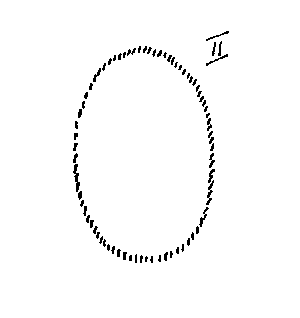
[ 3 ] Davon finden wir die ersten Anklänge erst gegen das 5., 4. Jahrtausend, namentlich in der Zeit, die wir bezeichnen als die urpersische Zeit. Da ist aber auch noch die ganze Stimmung des seelischen Lebens eine solche, die sich schwer mit dem vergleichen läßt, was in unserer Zeit des Menschen Seelen- und Weltenstimmung ist. Da ist vor allen Dingen der Mensch immer darauf aus in dieser alten Zeit, alle Dinge so sich zu interpretieren, daß er Abstimmungen eines Lichten, Hellen und eines Finsteren, Dunklen überall erblickt. Jene Abstraktionen, in denen wir heute leben, die sind jener alten Erdenbevölkerung noch völlig fremd. Es ist noch etwas von einer universellen Gesamtanschauung vorhanden, ein Bewußtsein des Durchdrungenseins alles Anschaubaren vom Lichte und seines Abschattierens in Dunkelheiten. So sah man auch die moralische Weltordnung an. Man empfand einen Menschen, der wohlwollend war, gütig war, als licht, als hell, einen Menschen, der mißtrauisch war, eigensüchtig war, als einen dunklen Menschen. Man sah gewissermaßen noch aurisch um den Menschen herum dasjenige, was seine moralische Individualität war. Und wenn man zu einem Menschen dieser alten urpersischen Zeit gesprochen hätte von dem, was wir heute Naturordnung nennen, da hätte er gar nichts davon verstanden. Naturordnung in unserem Sinne gab es in seiner Licht- und Schattenwelt nicht. Denn für ihn war Licht- und Schattenwelt da, und er nannte zum Beispiel in der Tonwelt auch eine gewisse Nuance des Tönens hell, licht, eine gewisse Nuance des Tönens dunkel, schattig. Für ihn war die Welt eine Licht- und Schattenwelt. Und das, was sich ausdrückte durch dieses Hell-Dunkel, das waren ihm geistige und zugleich Naturgewalten. Es war für ihn kein Unterschied zwischen geistigen und Naturgewalten. So etwas, wie wir heute unterscheiden zwischen Naturnotwendigkeit und menschlicher Freiheit, das wäre ihm als Wahnsinn erschienen, denn für ihn gab es diese Zweiheit nicht, menschliche Willkür und Naturnotwendigkeit. Für ihn war gewissermaßen alles zu umfassen unter einer geistig-physischen Einheit. Soll ich bildlich Ihnen etwas aufzeichnen — die Bedeutung wird es erst erhalten durch das, was folgen wird —, wie der Charakter dieser urpersischen Weltanschauung war, so müßte ich ungefähr solch eine Linie hinzeichnen, wie die Weltenschlange, das Symbol des Alls, die einheitlich die Menschheitsanschauung umfaßte.
[ 3 ] The first indications of this we find toward the fifth and fourth millennium in the period we designate the primeval Persian period. But even then the whole mood of soul life is such that it can hardly be compared with the soul and world mood of the human being of our age. In that ancient time, the main concern of the human being is to interpret the things of the world as various shades of light, brilliancy, and darkness, obscurity. The abstractions in which we live today are completely foreign to that ancient earth population. There still exists a universal, all-embracing perception, a consciousness of the permeation of everything perceptible with light and its adumbration, shading, with various degrees of darkness. This was also the way the moral world order was conceived of. A human being who was benevolent and kind was experienced as a light, bright human being, one who was distrustful and selfish was experienced as a dark man. Man's moral individuality was, as it were, aurically perceived around him. And if we had talked to a man of this ancient, primeval Persian time about that which we call today the order of nature, he would not have understood a word of it. An order of nature in our sense did not exist in his world of light and shadow. For him, the world was a world of light and shadow; and in the world of tones, certain timbres of sounding he designated as light, bright, and certain other timbres of sounding he designated as dark, shadowy. And that which thus expressed itself through this element of light and darkness constituted for him the spiritual as well as the nature powers. For him, there existed no difference between spiritual and natural powers. Our present-day distinction between natural necessity and human freedom would have appeared to him as mere folly, for this duality of human arbitrary will and the necessity of nature did not exist for him. Everything was to be included for him in one spiritual—physical unity. If I were to give you a pictorial interpretation of the character of this primeval-Persian world conception, I would have to draw the following line. (It will receive its full meaning only through that which will follow.)

[ 4 ] Dann, nachdem etwas über zwei Jahrtausende die Seelenstimmung der Menschen so war, trat ja dasjenige auf, dessen Nachklänge wir noch wahrnehmen in der chaldäischen Weltanschauung, in der ägyptischen Weltanschauung und in einer besonderen Form in derjenigen Weltanschauung, deren Abglanz uns im Alten Testamente erhalten ist. Da tritt in einer gewissen Weise schon etwas auf, was näher ist unserer gegenwärtigen Weltanschauung. Da bekommt man schon die Nuance von einer gewissen Naturnotwendigkeit herein in das menschliche Vorstellen. Aber diese Naturnotwendigkeit ist noch weit entfernt von dem, was wir heute die mechanische oder auch nur die vitale Naturordnung nennen. Es fällt noch zusammen für diese Zeit das Naturgeschehen mit dem göttlichen Wollen, mit der Vorsehung. Vorsehung und Naturgeschehen ist noch eines. Der Mensch wußte: Wenn er seine Hand bewegt, so ist es das Göttliche eigentlich in ihm, das ihn durchdringt, das seine Hand bewegt, seinen Arm bewegt. Wenn ein Baum durch den Wind geschüttelt wurde, so war ihm die Anschauung dieses sich schüttelnden Baumes nicht anders als die Anschauung des bewegten Armes. Er sah dieselbe göttliche Macht als Vorsehung in seinen eigenen Bewegungen und in den Bewegungen des Baumes. Aber man unterschied schon den Gott außerhalb und den Gott innerhalb; nur dachte man ihn als einheitlich, den Gott in der Natur, den Gott im Menschen, nur war er derselbe. Und man war sich klar in dieser Zeit, daß allerdings im Menschen etwas ist, womit gewissermaßen die Vorsehung, die außen in der Natur ist, und die Vorsehung, die innen im Menschen ist, einander begegnen.
[ 4 ] Then after this soul mood of man had held sway for somewhat more than two thousand years, there appeared a soul mood, the echoes of which we can still perceive in the Chaldean, in the Egyptian world conception, and in a special form in the world conception whose reflection is preserved for us in the Old Testament. There something appears which is closer to our own world conception. There the first inkling of a certain necessity of nature enters human thoughts. But this necessity of nature is still far removed from that which we call today the mechanical or even the vital order of nature; at that time, natural events are conceived of as identical with Divine willing, with Providence. Providence and nature events are still one. Man knew that if he moved his hand it was the Divine within him, permeating him, that moved his hand, that moved his arm. When a tree was shaken by the wind, the perception of the shaking tree was no different for him from the perception of the moving arm. He saw the same divine power, as Providence, in his own movements and in the movements of the tree. But a distinction was made between the God without and the God within; he was, however, conceived of as unitary, the God in nature, the God in man; he was the same. And it was clear to human beings of that time that there is something in man whereby Providence that is outside in nature and Providence that is inside in man meet one another.
[ 5 ] So empfand man in dieser Zeit den Atmungsprozeß des Menschen. Man sagte, wenn ein Baum sich schüttelt, das ist der Gott außerhalb, und wenn ich meinen Arm bewege, das ist der Gott innerhalb. Wenn ich die Luft einziehe, innerlich verarbeite und wiederum nach außen lasse, dann ist das der Gott von außen, der hereingeht und wiederum hinausgeht. So empfand man dasselbe Göttliche draußen, drinnen, aber in einem Punkt zugleich draußen, drinnen. Man sagte sich: Indem ich Atmungswesen bin, bin ich zugleich ein Wesen der Natur draußen, zu gleicher Zeit ich selbst.
[ 5 ] At that time, man's process of breathing was sensed in this way. People said: If a tree is shaking, this is the God outside, and if I move my arm, it is the God inside; if I inhale the air, work it over within me, and again exhale it, then it is the God from outside who enters me and again leaves me. Thus the same divine element was sensed as being outside and inside, but simultaneously, in one point, outside and inside; people said to themselves: By being a breathing being, I am a being of nature outside and at the same time I am myself.
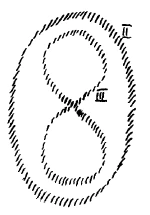
[ 6 ] Soll ich ebenso, wie ich die urpersische Weltanschauung Ihnen charakterisiert habe durch diese Linie (vorhergehende Zeichnung), soll ich Ihnen die des dritten Zeitalters charakterisieren, so müßte ich sie durch diese Linie charakterisieren (in das Oval wird eine Lemniskate gezeichnet, siehe S. 106 oben).
[ 6 ] If I am to characterize the world conception of the third culture period by a line, as I have done for the primeval Persian world conception by the line of the preceding drawing, I shall have to characterize it through the following line:
[ 7 ] Diese Linie würde darstellen auf der einen Seite draußen das Naturdasein, auf der anderen Seite das Menschendasein, aber in dem einen Punkt, im Atmungsprozesse, sich überkreuzend.
[ 7 ] This line represents, on the one hand, the existence of nature outside, on the other hand, human existence, crossing over into the other at the one point, in the breathing process.
[ 8 ] Das wird anders im vierten Zeitalter, in dem griechisch-lateinischen Zeitalter. Da tritt vor die Menschen schroff hin der Gegensatz des Außen und des Innen, des Naturdaseins und des menschlichen Daseins. Da beginnt der Mensch sich im Gegensatz zu fühlen gegen die Natur. Und wenn ich Ihnen wiederum charakteristisch bezeichnen soll, wie jetzt der Mensch beginnt zu fühlen im griechischen Zeitalter, so müßte ich das so zeichnen (es wird in die Lemniskate hineingezeichnet):
[ 8 ] Matters become different in the fourth age, in the Graeco-Latin age. Here the human being is abruptly confronted by the contrast outside-inside, of nature existence and human existence. Man begins to feel the contrast between himself and nature. And if I am again to draw characteristically how man begins to feel in the Greek age, I will have to draw it this way:
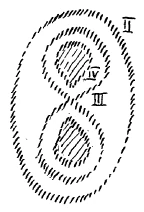
[ 9 ] Auf der einen Seite empfindet er das Äußere, auf der anderen Seite das Innere, und zwischen beiden ist nicht mehr der überkreuzende Punkt.
[ 9 ] On the one hand he senses the external and on the other the internal; between the two there is no longer the crossing point.
[ 10 ] Es bleibt gewissermaßen dieses, was der Mensch mit der Natur gemeinsam hat, außerhalb des Bewußtseins. Es fällt schon aus dem Bewußtsein hinaus. In der indischen Jogakultur versucht man es wieder hereinzubekommen. Daher ist die indische Jogakultur ein atavistisches Zurückgehen auf frühere Entwickelungsstufen der Menschheit, weil man wieder hereinzubekommen sucht ins Bewußtsein den Atmungsprozeß, den man im dritten Zeitalter naturgemäß als das empfand, worinnen man sich zugleich draußen und zugleich drinnen fühlte. Dieses vierte Zeitalter beginnt ja im 8. vorchristlichen Jahrhundert. Und da begannen dann auch jene spätindischen Jogaübungen, die wiederum zurückzurufen suchten atavistisch dasjenige, was man früher gehabt hatte, insbesondere auch in der indischen Kultur hatte, was aber verlorengegangen war.
[ 10 ] What man has in common with nature remains outside his consciousness. It falls away from consciousness. In Indian Yoga an attempt is made to bring it into consciousness again. Therefore Indian Yoga culture is an atavistic returning to previous evolutionary stages of mankind, because an attempt is made again to bring into consciousness the process of breathing, which in the third age was felt in a natural way as that in which one existed outside and inside simultaneously. The fourth age begins in the eighth pre-Christian century. At that time the late-Indian Yoga exercises were developed which tried to call back, atavistically, that which mankind had possessed at earlier times, quite particularly in the Indian culture, but which had been lost.
[ 11 ] Also dieses Bewußtsein des Atmungsprozesses, das ging verloren. Und wenn man sich frägt: Warum versuchte es die indische Jogakultur wiederum zurückzurufen, was glaubte sie eigentlich dadurch zu erringen? — so muß man sagen: Ja, was dadurch errungen werden sollte, das war ein wirkliches Verständnis der Außenwelt. Denn dadurch, daß der Atmungsprozeß verstanden wurde im dritten Kulturzeitalter, dadurch verstand man innerlich in sich etwas, was zu gleicher Zeit ein ÄAußerliches war.
[ 11 ] Thus, this consciousness of the breathing process was lost. And if one asks: Why did Indian Yoga culture try to call it back, what did it believe it would gain thereby? one has to answer: What was intended to be gained thereby was a real understanding of the outer world. For through the fact that the breathing process was understood in the third cultural age, something was understood within man that at the same time was something external.
[ 12 ] Das ist es, was auf einem anderen Wege wiederum errungen werden muß. Denn wir leben noch — das vierte Zeitalter hört ja erst auf etwa mit dem Jahre 1413, also überhaupt erst in der Mitte des 15. Jahrhunderts — unter den Nachwirkungen dieser Kultur, die durchaus in der menschlichen Seelenstimmung ein Zwiefaches hat. Wir haben durch unsere Hauptesorganisation eine unvollständige Naturanschauung, das, was wir die Außenwelt nennen, und wir haben durch unsere Innenorganisation, durch die Organisation des übrigen Menschen, ein unvollständiges Wissen von uns selbst. (Es werden zwei voneinander getrennte Gebilde skizziert.) Dazwischen bleibt uns dasjenige aus, fällt uns hinweg, in dem wir zugleich einen Prozeß der Welt und einen Prozeß von uns selbst sehen würden.
[ 12 ] This must again be attained; on another path, however. We live still under the after-effects of the culture in which a twofold element is present in the human soul mood, for the fourth period ends only around the year 1413, really only about the middle of the fifteenth century. We have, through our head organization, an incomplete nature conception, that which we call the external world; and we have through our inner organization, through the organization of the rest of man, an incomplete knowledge of ourselves.
[ 13 ] Nun handelt es sich darum, daß wiederum errungen werden muß, aber jetzt in bewußter Weise wiederum errungen werden muß dasjenige, was verlorengegangen ist. Das heißt, wir müssen wiederum zum Erfassen von etwas kommen, was im Inneren des Menschen ist, was zu gleicher Zeit der Außenwelt und dem Inneren angehört, was sich wie rechts derum übergreift. (Um die beiden Gebilde wird eine Lemniskate gezogen.)
[ 13 ] That in which we could perceive a process of the world and at the same time a process of ourselves is eliminated; it does not exist for us. It is now a question of consciously regaining that which has been lost. That means, we have to acquire the ability of taking hold of something that is in our inner being, that belongs to the outer and the inner world simultaneously, and which reaches into both.
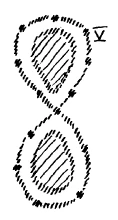
[ 14 ] Das muß das Bestreben des fünften nachatlantischen Zeitraums sein. Das Bestreben des fünften nachatlantischen Zeitraums muß sein, wiederum etwas im Menscheninneren zu finden, wo sich in dem, was wir in uns finden, zu gleicher Zeit ein äußerer Prozeß abspielt.
[ 14 ] This must be the endeavor of the fifth post-Atlantean period; namely, the endeavor to find something in the human inner life in which an outer process takes place at the same time.
[ 15 ] Sie werden sich wohl erinnern, daß ich auf dieses wichtige Faktum bereits hingedeutet habe; daß ich hingedeutet habe in meinem letzten Aufsatz der «Sozialen Zukunft», wo ich scheinbar die Bedeutung dieser Dinge für das soziale Leben behandelt habe, wo aber deutlich gerade darauf hingedeutet ist, daß etwas gefunden werden muß, wo der Mensch zu gleicher Zeit etwas in sich ergreift, was er erkennt als einen Prozeß der Welt. Wir können als Menschen der Gegenwart dies nicht etwa dadurch erreichen, daß wir zurückgreifen auf die Jogakultur; die ist etwas Vergangenes. Denn, sehen Sie, der Atmungsprozeß selbst hat sich verändert. Das können Sie natürlich heute nicht auf der Klinik nachweisen. Aber der Atmungsprozeß des Menschen ist seit dem dritten nachatlantischen Kulturzeitalter ein anderer geworden. Grob gesprochen könnte man sagen: Im dritten nachatlantischen Kulturzeitalter atmete der Mensch noch Seele, jetzt atmet er Luft. Nicht bloß etwa unsere Vorstellungen sind materialistisch geworden, die Realität selber hat ihre Seele verloren.
[ 15 ] You will remember that I have pointed to this important fact; I have pointed to it in my last article in Soziale Zukunft (The Social Future) {Soziale Zukunft, Vol. III: Geistesleben, Rechtsordnung, Wirtschaft (Spiritual Life, Rights order, Economy), Vol. IV: Dreigliederung und soziales Vertrauen (The Threefold Social Order and Social Confidence) (not translated into English) where I seemingly dealt with these things in their importance for social life, but where I clearly pointed to the very necessity of finding something which the human being lays hold of within himself and which he, at the same time, recognizes as a process of the world. We as modern human beings cannot attain this by going back to Yoga culture; that has passed. For the breathing process itself has changed. This, of course, you cannot prove clinically; but the breathing process has become a different one since the third post-Atlantean cultural period. Roughly speaking, we might say: In the third post-Atlantean cultural epoch the human being breathed soul; today he breathes air. Not only our thoughts have become materialistic; reality itself has lost its soul.
[ 16 ] Ich bitte Sie, in dem, was ich jetzt sage, nicht etwas Unerhebliches zu sehen. Denn denken Sie, was das bedeutet, daß sich die Realität, in der die Menschheit lebt, selber so umgewandelt hat, daß unsere Atemluft etwas anderes ist, als sie etwa vor vier Jahrtausenden war. Nicht etwa bloß das Bewußtsein der Menschheit hat sich verändert, o nein, in der Atmosphäre der Erde war Seele. Die Luft war die Seele. Das ist sie heute nicht mehr, beziehungsweise sie ist es in anderer Art. Die geistigen Wesenheiten elementarer Natur, von denen ich gestern gesprochen habe, die dringen wiederum in sie ein, die kann man atmen, wenn man heute Jogaatmen treibt. Aber dasjenige, was in der normalen Atmung vor drei Jahrtausenden erlangbar war, das kann nicht auf künstliche Weise zurückgebracht werden. Daß das zurückgebracht werden könne, ist die große Illusion der Orientalen. Das, was ich jetzt sage, ist etwas, was durchaus eine Realität beschreibt. Jene Beseelung der Luft, die zu dem Menschen gehört, die ist nicht mehr da. Und deshalb können die Wesen, ich möchte sie die antimichaelischen Wesen nennen, von denen ich gestern gesprochen habe, in die Luft eindringen und durch die Luft in den Menschen, und auf diese Weise gelangen sie in die Menschheit, so wie ich das gestern beschrieben habe. Und wir können sie nur vertreiben, wenn wir an die Stelle des Jogamäßigen das Richtige setzen von heute. Wir müssen uns klarwerden darüber, daß dieses Richtige angestrebt werden muß. Dieses Richtige kann nur angestrebt werden, wenn wir uns einer viel feineren Beziehung des Menschen zur Außenwelt bewußt werden, so daß mit Bezug auf unseren Ätherleib etwas stattfindet, das immer mehr und mehr in unser Bewußtsein hereinkommen muß, ähnlich wie der Atmungsprozeß. Wie wir beim Atmungsprozeß frische Sauerstoffluft einatmen und unbrauchbare Kohlenstoffluft ausatmen, so ist ein ähnlicher Prozeß vorhanden in allen unseren Sinneswahrnehmungen. Denken Sie einmal, Sie sehen etwas. Nehmen wir einen radikalen Fall. Nehmen wir an, Sie sehen eine Flamme an, Sie schauen auf eine Flamme hin. Da geschieht etwas, was sich vergleichen läßt, nur viel feiner ist es, mit dem Einatmen. Machen Sie dann das Auge zu — und Sie können ähnliche Dinge mit jedem der Sinne machen —, machen Sie dann das Auge zu, so haben Sie das Nachbild der Flamme, das sich sogar nach und nach verändert, wie Goethe sagt, abklingt. An diesem Prozeß des Aufnehmens des Lichteindruckes und des nachherigen Abklingens ist im wesentlichen außer dem, was rein physiologisch ist, der menschliche Ätherleib sehr beteiligt. Aber in diesem Prozeß steckt etwas sehr, sehr Bedeutsames. Da drinnen ist nunmehr das Seelische, das vor drei Jahrtausenden mit der Luft ein- und ausgeatmet worden ist. Und wir müssen lernen, in einer ähnlichen Weise den Sinnesprozeß in seiner Durchseelung einzusehen, wie man vor drei Jahrtausenden den Atmungsprozeß eingesehen hat.
[ 16 ] I beg you, my dear friends, not to see something negligible in what I am now saying. For just consider what it means that reality itself, in which mankind lives, has been transformed so that the air we breathe is something different from what it was four millennia ago. Not only the consciousness of mankind has changed, oh no! there was soul in the atmosphere of the earth. The air was the soul. This is no longer the case today, or rather, it is soul in a different way. The spiritual beings of elemental nature of whom I have spoken yesterday, they penetrate into you, they can be breathed if one practices Yoga breathing today. But that which was attainable in normal breathing three millennia ago cannot be brought back artificially. That it may be brought back is the great illusion of the Orientals. What I am stating here describes a reality. The ensouling of the air which belongs to the human being no longer exists. And therefore the beings of whom I spoke yesterday—I should like to call them the anti-Michaelic beings—are able to penetrate into the air and, through the air, into the human being, and in this way they enter into mankind, as I have described it yesterday. We are only able to drive them away if we put in the place of Yoga that which is the right thing for today. We must strive for this. We can only strive for that which is the right thing for today if we become conscious of a much more subtle relation of man to the external world, so that in regard to our ether body something takes place which must enter our consciousness more and more, similar to the breathing process. In the breathing process, we inhale fresh oxygen and exhale unusable carbon. A similar process takes place in all our sense perceptions. Just think, my dear friends, that you see something—let us take a radical case—suppose you see a flame. There a process takes place that may be compared with inhalation, only it is much finer. If you then close your eyes—and you can make similar experiments with every one of your senses—you have the after-image of the flame which gradually changes—dies down, as Goethe said. Apart from the purely physical aspect, the human ether body is essentially engaged in this process of reception of the light impression and its eventual dying down. Something very significant is contained in this process: it contains the soul element which, three millennia ago, was breathed in and out with the air. And we must learn to realize the sense process, permeated by the soul element in a similar way we have realized the breathing process three millennia ago.
[ 17 ] Das hängt zusammen damit, daß man sagen kann, der Mensch lebte vor drei Jahrtausenden in einer Art Nachtkultur. Jahve gab sich durch seine Propheten kund aus den Träumen der Nacht heraus. Wir aber müssen die Feinheiten unseres Verkehres mit der Welt ausbilden so, daß wir in unserem Aufnehmen der Welt nicht bloß sinnliche Wahrnehmungen haben, sondern Geistiges haben. Wir müssen uns gewiß werden, daß wir mit jedem Lichtstrahl, mit jedem Ton, mit jeder Wärmeempfindung und deren Abklingen in seelischen Wechselverkehr mit der Welt treten, und dieser seelische Wechselverkehr muß für uns etwas Bedeutsames werden. Aber wir können uns auch unterstützen, so daß es so mit uns werde.
[ 17 ] You see, my dear friends, this is connected with the fact that man, three millennia ago, lived in a night culture. Yahve revealed himself through his prophets out of the dreams of the night. But we must endeavor to receive in our intimate intercourse with the world not merely sense perceptions, but also the spiritual element. It must become a certainty for us that with every ray of light, with every tone, with every sensation of heat and its dying down we enter into a soul-intercourse with the world, and this soul-intercourse must become significant for us. We can help ourselves to bring this about.
[ 18 ] Ich habe Ihnen ja dargestellt, daß das Mysterium von Golgatha hereingefallen ist in den vierten nachatlantischen Zeitraum, der etwa, wenn wir genau rechnen wollen, beginnt mit dem Jahre 747 vor Christus, und schließt mit dem Jahre 1413 nach Christus. In das erste Drittel dieses Zeitraumes fällt das Mysterium von Golgatha. Dasjenige aber, wodurch die Menschen zunächst dieses Mysterium von Golgatha begriffen haben, das waren noch die Nachklänge der alten Denkweise, der alten Kultur. Die Art des Begreifens des Mysteriums von Golgatha, die muß eine durchaus neue werden. Denn die alte Art, das Mysterium von Golgatha zu begreifen, ist abgebraucht. Sie ist nicht mehr gewachsen dem Mysterium von Golgatha. Und viele Versuche, die gemacht worden sind, das menschliche Denken fähig zu machen, das Mysterium von Golgatha zu begreifen, haben sich als nicht mehr geeignet erwiesen, heraufzureichen zu dem Mysterium von Golgatha.
[ 18 ] I have described to you the occurrence of the Mystery of Golgotha in the fourth post-Atlantean period which, if we wish to be accurate, begins with the year 747 B.C. and ends with the year 1413 A.D. The Mystery of Golgotha occurred in the first third of this period, and it was comprehended at the outset, with the remnants of the ancient mode of thought and culture. This ancient way of comprehending the Mystery of Golgotha is exhausted and a new way of comprehension must take its place. The ancient way does no longer suffice, and many attempts that have been made to enable human thinking to grasp the Mystery of Golgotha have proved unsuitable to reach up to it.
[ 19 ] Sehen Sie, alle die Dinge, die äußerlich materiell auftreten, sie haben auch ihre geistig-seelische Seite. Und alle die Dinge, die geistig-seelisch auftreten, sie haben auch ihre äußerlich materielle Seite. Daß die Luft der Erde entseelt worden ist, so daß der Mensch nicht mehr die ursprünglich beseelte Luft atmet, das hatte eine bedeutsame geistige Wirkung in der Entwickelung der Menschheit. Denn der Mensch hatte, indem er hereinbekam mit der Atmung die Seele, mit der er selber ursprünglich verwandt war, wie es am Beginne des Alten Testamentes steht: Und der Gott blies dem Menschen den Odem ein als lebendige Seele —, er hatte durch dieses Einatmen des Seelischen eine Möglichkeit: er bekam ein Bewußtsein von der Präexistenz des Seelischen, von dem Bestehen der Seele, bevor sie heruntergestiegen ist in den physischen Leib durch die Geburt oder durch die Empfängnis. Und in demselben Maße, in dem der Atmungsprozeß aufhörte beseelt zu sein, verlor der Mensch das Bewußtsein der Präexistenz des Seelischen. Und schon sogar als Aristoteles auftrat in diesem vierten nachatlantischen Zeitraum, da war keine Möglichkeit mehr vorhanden, mit menschlicher Fassungskraft die seelische Präexistenz zu durchschauen. Keine Möglichkeit war dafür mehr vorhanden.
[ 19 ] You see, dear friends, all external-material things have their spiritual-soul aspect, and all things that appear in the spiritual-soul sphere have their external-material aspect. The fact that the air of the earth has become soul-void, making it impossible for man to breathe the originally ensouled air, had a significant spiritual effect in the evolution of mankind. For through being able to breathe in the soul to which he was originally related, as is stated at the beginning of the Old Testament: “And God breathed into man the breath as living soul,” man had the possibility of becoming conscious of the pre-existence of the soul, of the existence of the soul before it had descended into the physical body through birth or through conception. To the degree the breathing process ceased to be ensouled the human being lost the consciousness of the pre-existence of the soul. Even at the time of Aristotle in the fourth post-Atlantean period it was no longer possible to understand, with the human power of comprehension, the pre-existence of the soul. It was utterly impossible.
[ 20 ] Wir stehen eben historisch vor dem merkwürdigen Faktum, daß das größte Ereignis hereinbricht in die Erdenentwickelung, das ChristusEreignis, daß aber die Menschheit erst heranreifen muß, um es zu verstehen. Sie ist noch fähig, mit den alten Resten des Fassungsvermögens, das aus der Urkultur herrührt, aufzufangen die Strahlen des Mysteriums von Golgatha. Dann aber verliert sich diese Fassungskraft, und die Dogmatik entfernt sich immer mehr und mehr vom Verständnis des Mysteriums von Golgatha. Die Kirche verbietet an die Präexistenz zu glauben nicht deshalb, weil die Präexistenz nicht mit dem Mysterium von Golgatha vereinbar wäre, sondern weil die menschliche Fassungskraft durch die Entseelung der Luft aufhörte, das Bewußtsein in die Seele als Kraft hereinzubekommen, das Bewußtsein von der Präexistenz. Aus all dem, was Kopfbewußtsein wurde, verschwindet die Präexistenz. Wenn wir das Beseeltsein unserer Sinnesempfindungen wieder haben werden, dann werden wir wiederum einen Kreuzungspunkt haben, und in diesem Punkt werden wir den menschlichen Willen, der heraufströmt aus der dritten Bewußtseinsschichte, wie ich es Ihnen in diesen Tagen charakterisiert habe, erfassen. Da werden wir zu gleicher Zeit etwas Subjektiv-Objektives haben, wonach Goethe so lechzte. Da werden wir wiederum die Möglichkeit haben, in feiner Art zuerst zu erfassen, wie merkwürdig eigentlich dieser Sinnesprozeß des Menschen im Verhältnis zur Außenwelt ist. Das sind ja alles grobe Vorstellungen, als wenn die Außenwelt auf uns bloß wirkte und wir dann bloß reagierten darauf. All das Zeug, das da geredet wird, das sind ja bloß grobklotzige Vorstellungen. Die Wirklichkeit ist vielmehr diese, daß ein seelischer Prozeß vor sich geht von außen nach innen, der erfaßt wird durch den tief unterbewußten, inneren seelischen Prozeß, so daß die Prozesse sich übergreifen. Von außen wirken die Weltgedanken in uns herein, von innen wirkt der Menschheitswille hinaus. Und es durchkreuzen sich Menschheitswillen und Weltengedanken in diesem Kreuzungspunkte, wie sich im Atem das Objektive mit dem Subjektiven einstmals überkreuzt hat. Wir müssen fühlen lernen, wie durch unsere Augen unser Wille wirkt, und wie in der Tat die Aktivität der Sinne leise sich hineinmischt in die Passivität, wodurch sich Weltengedanken mit Menschheitswille kreuzen. Diesen neuen Jogawillen, den müssen wir entwickeln. Damit wird uns wiederum etwas Ähnliches vermittelt, wie vor drei Jahrtausenden den Menschen in dem Atmungsprozeß vermittelt wurde. Unsere Auffassung muß eine viel seelischere, eine viel geistigere werden.
[ 20 ] We are faced with the strange historical fact that the greatest event, the Christ Event, breaks in upon the evolution of the earth, yet mankind must first become mature in order to comprehend it. At the outset, it is still capable of catching the rays of the Mystery of Golgotha with the remnants of the power of comprehension originating in primeval culture. But this power of comprehension is gradually lost, and dogmatism moves further and further away from an understanding of the Mystery of Golgotha. The Church forbids the belief in the pre-existence of the soul—not because pre-existence is incompatible with the Mystery of Golgotha, but because the human power of comprehension ceased to experience the consciousness of pre-existence as a force, the air having become soul-void. Pre-existence vanishes from head-consciousness. When our sense processes will become ensouled again, we shall have established a crossing point, and in this crossing point we shall take hold of the human will that streams up, out of the third stratum of consciousness, as I have described it to you recently. Then we shall, at the same time, have the subjective-objective element for which Goethe was longing so very much. We shall have the possibility of grasping, in a sensitive way, the peculiar nature of the sense process of man in its relation to the outer world. Man's conceptions are very coarse and clumsy, indeed, which maintain that the outer world merely acts upon us and we, in turn, merely react upon it. In reality, there takes place a soul process from the outside toward the inside, which is taken hold of by the deeply subconscious, inner soul process, so that the two processes overlap. From outside, cosmic thoughts work into us, from inside, humanity's will works outward. Humanity's will and cosmic thought cross in this crossing point, just as the objective and the subjective element once crossed in the breath. We must learn to feel how our will works through our eyes and how the activity of the senses delicately mingles with the passivity, bringing about the crossing of cosmic thoughts and humanity's will. We must develop this new Yoga will. Then something will be imparted to us that of like nature to that which was imparted to human beings in the breathing process three millennia ago. Our comprehension must become much more soul-like, much more spiritual.
[ 21 ] Nach solchen Dingen strebte die Goethesche Weltanschauung. Goethe wollte das reine Phänomen erkennen, was er das Urphänomen nannte, wo er nur zusammenstellte dasjenige, was in der Außenwelt auf den Menschen wirkt, wo sich nicht hineinmischt der luziferische Gedanke, der aus dem Kopf des Menschen selbst kommt. Dieser Gedanke sollte nur zur Zusammenstellung der Phänomene dienen. Goethe strebte nicht nach dem Naturgesetz, sondern nach dem Urphänomen. Das ist das Bedeutsame bei ihm. Kommen wir aber zu diesem reinen Phänomen, zu diesem Urphänomen, dann haben wir in der Außenwelt etwas, was uns möglich macht, auch die Entfaltung unseres Willens im Anschauen der Außenwelt zu verspüren, und dann werden wir uns aufschwingen wiederum zu etwas Objektiv-Subjektivem, wie es zum Beispiel die alte hebräische Lehre noch hatte. Wir müssen lernen, nicht immer nur von dem Gegensatz zu sprechen zwischen dem Materiellen und dem Geistigen, sondern wir müssen das Ineinanderspiel des Materiellen und des Geistigen in einer Einheit gerade im sinnlichen Auffassen erkennen. Geradeso wie das, was vor drei Jahrtausenden die Jahve-Kultur war, so wird für uns dasjenige sein, was eintritt, wenn wir die Natur nicht mehr materiell sehen, und auch nicht wie etwa Gustav Theodor Fechner in die Natur etwas Seelisches hineinphantasieren. Wenn wir in der Natur das Seelische mitempfangen lernen mit der Sinnesanschauung, dann werden wir das Christus-Verhältnis zu der äußeren Natur haben. Da wird das Christus-Verhältnis zur äußeren Natur etwas sein wie eine Art geistigen Atmungsprozesses.
[ 21 ] Goethe's world conception strove in this direction. Goethe endeavored to recognize the pure phenomenon, which he called the primal phenomenon, by arranging the phenomena which work upon man in the external world, without the interference of the Luciferic thought which stems from the head of man himself; this thought was only to serve in the arranging of the phenomena. Goethe did not strive for the law of nature, but for the primal phenomenon; this is what is significant with him. If, however, we arrive at this pure phenomenon, this primal phenomenon, we have something in the outer world which makes it possible for us to sense the unfolding of our will in the perception of the outer world, and then we shall lift ourselves to something objective-subjective, as it still was contained, for instance, in the ancient Hebrew doctrine. We must learn not merely to speak of the contrast between the material and the spiritual, but we must recognize the interplay of the material and the spiritual in a unity precisely in sense perception. If we no longer look at nature merely materially and, further, if we do not “think into it” a soul element, as Gustave Theodore Fechner did, then something will arise which will signify for us what the Yahve culture signified for mankind three millennia ago. If we learn, in nature, to receive the soul element together with sense perception, then we shall have the Christ relationship to outer nature. This Christ relationship to outer nature will be something like a kind of spiritual breathing process.
[ 22 ] Wir können uns dadurch unterstützen, daß wir immer mehr einsehen, aber jetzt einsehen durch den gesunden Menschenverstand: Ja, Präexistenz ist etwas, was unserem Seelendasein zugrunde liegt. Und wir müssen die rein egoistische Vorstellung von der Postexistenz, die eine rein egoistische ist, die nur aus unserem Bedürfnis, nach dem Tode da zu sein, entspringt, wir müssen diese egoistische Postexistenzvorstellung ergänzen durch das Wissen von der Präexistenz des Seelischen. Wir müssen uns auf eine andere Art wiederum aufschwingen zu der Anschauung der wirklichen Ewigkeit der Seele. Das ist dasjenige, was man die Michael-Kultur nennen kann. Wenn wir durch die Welt schreiten in dem Bewußtsein, mit jedem Blick, mit jedem Ton, den wir hören, strömt Geistiges, Seelisches wenigstens in uns ein, und zu gleicher Zeit strömen wir in die Welt Seelisches hinaus, dann, dann haben wir das Bewußtsein errungen, das die Menschheit für die Zukunft braucht.
[ 22 ] We shall be aided by realizing more and more, with our sound common sense, that pre-existence lies at the basis of our soul existence. We must supplement the purely egotistical conception of post-existence, which springs merely from our longing to exist after death, by the knowledge of the pre-existence of the soul. We must again rise to the conception of the real eternity of the soul. This is what may be called Michael culture. If we move through the world with the consciousness that with every look we direct outward, with every tone we hear, something spiritual, something of the nature of the soul element stream out into the world, we have gained the consciousness which mankind needs for the future.
[ 23 ] Ich komme noch einmal auf das Bild zurück. Sie sehen eine Flamme. Sie schließen die Augen, haben das Nachbild, das abklingt. Ist das bloß ein subjektiver Prozeß? Der heutige Physiologe sagt so. Es ist nicht wahr. In dem Weltenäther bedeutet das einen objektiven Prozeß, wie in der Luft die Anwesenheit der Kohlensäure, die Sie ausatmen, einen objektiven Prozeß bedeutet. Sie prägen dem Weltenäther ein das Bild, das Sie nur wie ein abklingendes Nachbild empfinden. Das ist nicht bloß subjektiv, das ist ein objektiver Vorgang. Hier haben Sie das Objektive. Hier haben Sie die Möglichkeit, zu erkennen, wie etwas, was sich in Ihnen abspielt, in feiner Art zu gleicher Zeit ein Weltenvorgang ist, wenn Sie sich nur bewußt werden: Sehe ich eine Flamme an, mache die Augen zu, lasse sie abklingen — es klingt ja auch ab, wenn Sie die Augen offen lassen, nur bemerken Sie es dann nicht —, dann ist das etwas, was nicht bloß in mir vorgeht, das ist etwas, was in der Welt vorgeht. Das ist aber nicht bloß bei der Flamme so. Trete ich einem Menschen gegenüber und sage: Dieser Mensch hat das oder jenes gesagt, was wahr oder nicht wahr sein kann —, so ist das eine Beurteilung, eine moralische oder eine intellektuelle Handlung im Inneren. Das klingt ebenso ab wie die Flamme. Das ist ein objektiver Weltenvorgang. Wenn Sie über Ihren Nebenmenschen Gutes denken: es klingt ab, ist im Weltenäther als ein objektiver Vorgang; wenn Sie Böses denken: es klingt ab als ein objektiver Vorgang. Sie können nicht etwa in Ihrem Kämmerchen abschließen dasjenige, was Sie über die Welt wahrnehmen oder urteilen. Sie machen es zwar scheinbar für Ihre Auffassung in sich, aber es ist zu gleicher Zeit ein objektiver Weltenvorgang. Wie sich das dritte Zeitalter bewußt war, daß der Atmungsprozeß zu gleicher Zeit etwas ist, was im Menschen vorgeht und was ein objektiver Prozeß ist, so muß die Menschheit sich in der Zukunft bewußt werden, daß das Seelische, von dem ich gesprochen habe, zu gleicher Zeit ein objektiver Weltenvorgang ist.
[ 23 ] I return once more to the image: You see a flame. You shut your eyes and have the after-image which ebbs away. Is that merely a subjective process? Yes, says the modern physiologist. But this is not true. In the cosmic ether this signifies an objective process, just as in the air the presence of carbonic acid which you exhale signifies an objective process. You are dealing here with the objective element; you have the possibility of knowing that something which takes place within you is at the same time a delicate cosmic process, if you become but conscious of it. If I look at a flame, close my eyes, let it ebb away—it will ebb away even though I keep my eyes open, only then I will not notice it—then I experience a process which does not merely take place within me, but which takes place in the world. But this is not only the case in regard to the flame, if I confront a human being and say: this man has said this or that, which may be true or untrue, this then constitutes a judgment, a moral or intellectual act of my inner nature. This ebbs away like a flame. It is an objective world process. If you think something good about your fellow-man: it ebbs away and is an objective process in the cosmic ether; if you think something evil: it ebbs away as an objective process. You are unable to conceal your perceptions and judgments about the world. You seemingly carry them on in your own being, but they are at the same time an objective world process. Just as people of the third period were conscious of the fact that the breathing process is a process that takes place simultaneously within man and in the objective world, so mankind must become aware in the future that the soul element of which I spoke is at the same time an objective world process.
[ 24 ] Diese Wandlung des Bewußtseins, das ist etwas, was fordert, daß größere Stärke in der menschlichen Seelenstimmung Platz greife, als sie heute der Mensch gewöhnt ist. Das ist das Einlassen der MichaelKultur: das Sich-Durchdringen mit diesem Bewußtsein. Wir müssen gewissermaßen, wenn wir das Licht als den allgemeinen Repräsentanten der Sinneswahrnehmung hinstellen, uns dazu aufschwingen, das Licht beseelt zu denken, so wie es selbstverständlich war für den Menschen des 2., des 3. vorchristlichen Jahrtausends, die Luft beseelt zu denken, weil sie das auch war. Wir müssen uns gründlich abgewöhnen, dasjenige in dem Lichte zu sehen, was das materialistische Zeitalter gewöhnt ist, in dem Lichte zu sehen. Wir müssen uns gründlich abgewöhnen zu glauben, daß von der Sonne ausstrahlen bloß jene Schwingungen, von denen uns unsere Physik und das allgemeine Menschheitsbewußtsein heute redet. Wir müssen uns klarwerden darüber, daß da Seele durch den Weltenraum dringt auf den Schwingen des Lichtes. Und zu gleicher Zeit müssen wir einsehen, daß das so nicht war in der Zeit, die unserem Zeitalter vorangegangen ist. In der Zeit, die unserem Zeitalter vorangegangen ist, ist dasselbe an die Menschheit durch die Luft herangekommen, was jetzt an uns herankommt durch das Licht. Sehen Sie, das ist ein objektiver Unterschied in dem Erdenprozeß. Und wenn wir im Großen denken, so können wir sagen: Luftseelenprozeß, Lichtseelenprozeß. (Es wird an die Tafel geschrieben:)
[ 24 ] This transformation of consciousness demands greater strength of soul than is ordinarily developed by the human being of today. To permeate oneself with this consciousness means to permit the Michael culture to enter. Just as it was self-evident for the man of the second and third pre-Christian millennium to think of the air as ensouled—so must it become self-evident for us to think of light as ensouled; we must arouse this ability in us when we consider light the general representative of sense perception We must thoroughly do away with the habit of seeing in light that which our materialistic age is accustomed to see in it. We must entirely cease to believe that merely those vibrations emanate from the sun of which, out of the modern consciousness, physics and people in general speak. We must become clear about the fact that the soul element penetrates through cosmic space upon the pinions of light; and we must realize, at the same time, that this was not the case in the period preceding our age. That which approaches mankind today through light approached mankind of that former period through the air. You see here an objective difference in the earth process. Expressing this in a comprehensive concept, we may say, Air-soul-process, Light-soul-process. This is what may be observed in the evolution of the earth. The Mystery of Golgotha signifies the transition from the one period to the other.
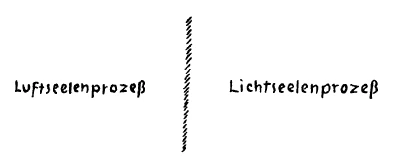
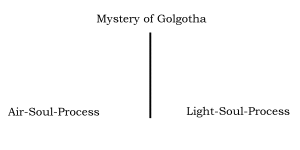
[ 25 ] Und das ist etwa dasjenige, was wir in der Entwickelung der Erde beobachten können. Und mitten hinein fällt, den Übergang des einen in das andere bedeutend, das Mysterium von Golgatha. Es genügt nicht für die Gegenwart und für die Zukunft der Menschheit, daß man in Abstraktionen von dem Geistigen fabelt, daß man in irgendeinen nebulosen Pantheismus oder dergleichen verfällt, sondern es handelt sich darum, daß man dasjenige, was die heutige Menschheit eigentlich nur empfindet wie einen materiellen Prozeß, daß man das anfängt auch in seiner Beseeltheit zu erkennen.
[ 25 ] My dear friends, it does not suffice, for the present age nor for the future age of mankind, to speak in abstractions about the spiritual, to fall into some sort of nebulous pantheism; on the contrary, we must begin to recognize that that which today is sensed as a merely material process is permeated by soul.
[ 26 ] Es handelt sich darum, daß man anfangen lerne zu sprechen: Es gab eine Zeit vor dem Mysterium von Golgatha, da hatte die Erde eine Atmosphäre. In dieser Atmosphäre war die Seele, die zum Seelischen des Menschen gehörte. Jetzt hat die Erde eine Atmosphäre, die ist entleert des Seelischen, das zum Seelischen des Menschen gehört. Dafür ist in das Licht, das uns vom Morgen bis zum Abend umfaßt, eingezogen dasselbe Seelische, das vorher in der Luft war. Daß der Christus sich mit der Erde verbunden hat, das gab die Möglichkeit dazu. So daß Luft und Licht auch geistig-seelisch etwas anderes geworden sind im Laufe der Erdenentwickelung.
[ 26 ] It is a question of learning to say the following: there was a time prior to the Mystery of Golgotha when the earth had an atmosphere which contained the soul element that belongs to the soul of man. Today, the earth has an atmosphere which is devoid of this soul element. The same soul element that was previously in the air has now entered the light which embraces us from morning to evening. This was made possible through the fact that the Christ has united Himself with the earth. Thus, also from the soul-spiritual aspect, air and light underwent a change in the course of the Earth evolution.
[ 27 ] Es ist eine kindsköpfige Darstellung, wenn man Luft und Licht in gleicher Weise rein materiell beschreibt für die Jahrtausende, in denen sich die Erdenentwickelung abgespielt hat. Luft und Licht sind innerlich etwas anderes geworden. Wir leben in einer anderen Atmosphäre, in einem anderen Lichtkreis, als unsere Seelen in früheren Erdenverkörperungen gelebt haben. Erkennen lernen dasjenige, was äußerlich materiell ist, als Geistig-Seelisches, darauf kommt es an. Das wird nicht eine wirkliche Geisteswissenschaft geben, wenn die Leute auf der einen Seite das rein materielle Dasein beschreiben, so wie man es heute gewohnt ist, und dann — ja, so wie eine Dekoration — nebenher sagen: Aber in diesem Materiellen ist überall auch Geistiges! Ja, in dieser Beziehung sind die Menschen ganz merkwürdig, in dieser Beziehung wollen sie heute durchaus sich auf das Abstrakte zurückziehen. Dasjenige aber, was notwendig ist, das ist: in der Zukunft nicht in abstrakter Weise ein Materielles und ein Geistiges zu unterscheiden, sondern in dem Materiellen selber das Geistige zu suchen, daß man es beschreiben könne als das Geistige zugleich, und in dem Geistigen den Übergang ins Materielle, die Wirkungsweise im Materiellen zu erkennen. Dann erst werden wir auch wirklich wiederum, wenn wir das haben, eine Erkenntnis des Menschen selbst erringen. «Blut ist ein ganz besonderer Saft», aber das, wovon man heute redet in der Physiologie, das ist kein ganz besonderer Saft, das ist halt ein Saft, dessen chemische Zusammensetzung man versucht ebenso anzugeben wie irgendeine andere Stoffzusammensetzung. Das ist ja nichts Besonderes. Aber wenn man den Ausgangspunkt erst gewinnt, die Metamorphose von Luft und Licht seelisch richtig einsehen zu können, dann wird man allmählich aufsteigen können, auch den Menschen selber wiederum in allen seinen einzelnen Gliedern geist-seelisch zu begreifen, dann wird man nicht abstrakten Stoff und abstrakten Geist haben, sondern Geist, Seele und Leib ineinanderwirkend. Das wird Michael-Kultur sein.
[ 27 ] My dear friends, it is a childish presentation that describes air and light in the same manner, purely materially, throughout the millennia in which Earth evolution unfolded. Air and light have changed inwardly. We live in an atmosphere and in a light sphere that are different from those in which our souls lived in previous earthly incarnations. To learn to recognize the externally-material as a soul-spirited element: this is what matters. If we describe purely material existence in the customary manner and then add, as a kind of decoration: this material existence contains everywhere the spiritual! This will not produce genuine spiritual science. My dear friends, people are very strange in this respect; they are intent on withdrawing to the abstract. But what is necessary is the following: in the future we must cease to differentiate abstractly between the material and the spiritual, but we must look for the spiritual in the material itself and describe it as such; and we must recognize in the spiritual the transition into the material and its mode of action in the material. Only if we have attained this shall we be able to gain a true knowledge of man himself. “Blood is quite a special fluid,” but the fluid physiology speaks about today is not a “special fluid,” it is merely a fluid whose chemical composition one attempts to analyze in the same way any other substance is analyzed; it is nothing special. But if we have gained the starting point of being able to understand the metamorphosis of air and light from the soul aspect, we shall gradually advance to the soul-spiritual comprehension of the human being himself, in every respect; then we shall not have abstract matter and abstract spirit, but spirit, soul, and body working into one another. This will be Michael-culture.
[ 28 ] Das ist etwas, was unsere Zeit fordert. Das ist etwas, das mit allen Fasern des seelischen Lebens von den Menschen, die heute die Zeit verstehen wollen, aufgefaßt werden sollte. Es ist seit langer Zeit immer Widerstand geleistet worden gegen alles dasjenige, was als ein Ungewohntes in die menschliche Weltanschauung hereingetragen werden mußte. Ich habe ja öfter das niedliche Beispiel, das an etwas Grobklotziges sich gewendet hat, angeführt: 1835 — also wir sind noch nicht ein Jahrhundert drüber hinaus — ist das gelehrte Medizinalkollegium in Bayern gefragt worden, als man die erste Eisenbahn von Fürth nach Nürnberg bauen wollte, ob es hygienisch ist, solch eine Eisenbahn zu bauen? Da sagte das Medizinalkollegium — das Dokument ist vorhanden, es ist kein Märchen —, man solle keine Eisenbahn bauen, denn die Leute würden nervös werden, die in dieser Weise sich über den Erdboden bewegen würden. — Aber dann setzte man noch hinzu: Wenn es schon solche Menschen geben würde, die durchaus wollten Eisenbahnen fordern, dann müsse man links und rechts hohe Bretterwände aufführen, damit diejenigen, an denen die Eisenbahnen vorbeifahren, nicht Gehirnerschütterung kriegen. — Ja, sehen Sie: Eines ist ein solches Urteil, das man fällt, ein anderes ist der Entwickelungsgang der Menschheit. Wir lächeln heute über ein solches Dokument, wie es das bayerische Medizinalkollegium 1835 geliefert hat. Aber nun, nicht wahr, so ohne weiteres haben wir kein Recht zu lachen: trifft uns heute etwas ähnliches, verhalten wir uns wieder geradeso. Denn so absolut unrecht können wir auch nicht wiederum dem bayerischen Medizinalkollegium geben. Wenn man den Nervenzustand der gegenwärtigen Menschheit vergleicht mit dem Nervenzustande derjenigen Menschheit, die vor zwei Jahrhunderten da war, so sind die Leute nervös geworden. Vielleicht hat das Medizinalkollegium bloß etwas übertrieben, aber nervös geworden sind die Leute. Nur handelt es sich bei der Fortentwickelung der Menschheit nicht um solche Dinge, sondern darum, daß gewisse Impulse, die herein wollen, wirklich hereinkommen in die Erdenentwickelung, daß sie nicht zurückgewiesen werden. Und es ist schon etwas gegen die Bequemlichkeit der Menschen, was da herein will von Zeit zu Zeit in die menschliche Kulturentwickelung, und man muß ablesen dasjenige, was Pflicht ist in bezug auf die menschliche Kulturentwickelung aus der Objektivität, nicht aus der menschlichen Bequemlichkeit heraus, nicht einmal aus der besseren menschlichen Bequemlichkeit heraus. Und ich schließe heute aus dem Grunde mit diesen Worten, weil ja es ganz zweifellos ist, von allen Seiten kündigt es sich an, daß ein gewisser, schon recht stark anschwellender Kampf gerade zwischen dem anthroposophischen Erkennen und den verschiedenen Bekenntnissen eintreten wird. Die Bekenntnisse, die in altgewohnten Geleisen bleiben wollen, die sich nicht aufschwingen wollen zu einer Neuerkenntnis des Mysteriums von Golgatha, sie werden die starke Kampf "position, die sie bereits eingenommen haben, immer mehr verstärken, und es wäre sehr, sehr leichtsinnig, wenn wir uns nicht bewußt würden, daß dieser Kampf losgeht.
[ 28 ] This is what our time demands. This is what ought to be grasped with all the fibers of the soul life by those human beings who wish to understand the present time. Whenever something out of the ordinary had to be introduced into human world conception it met with resistance. I have often quoted the following neat example: In 1837 (not even a century ago), the learned Medical College of Bavaria was asked, when the construction of the first railroad from Fuerth to Nuremberg was proposed, whether it was hygienically safe to build such a railroad. The Medical College answered (I am not telling a fairy tale, the documents concerning it exist): Such a railroad should not be built, for people who would use such a means of transportation would become nervously ill. And they added: Should there be such people who insist on such railroads, then, it is absolutely necessary to erect, on the right and left side of the tracks, high plank walls to prevent the people whom the train passes from getting concussion of the brain. Here you see, my dear friends, such a judgment is one thing; quite another is the course which the evolution of mankind takes. Today we smile about such a document as that of the Bavarian Medical College of 1837; but we are not altogether justified in smiling; for, if something similar occurs today, we behave in quite the same manner. And, after all, the Bavarian Medical College was not entirely wrong. It we compare the state of nerves of modern mankind with that of mankind two centuries ago, then we must say that people have become nervous. Perhaps the Medical College has exaggerated the matter a bit, but people did become nervous. Now, in regard to the evolution of mankind it is imperative that certain impulses which try to enter Earth evolution really should enter and not be rejected. That which from time to time wishes to enter human cultural development is often very inconvenient for people, it does not agree with their indolence, and what is duty in regard to human cultural development must be recognized by learning to read the objective facts, and must not be derived from human indolence, not even from a refined kind of indolence. I am concluding today's lecture with these words because there is no doubt that a strongly increasing battle will take place between anthroposophical cognition and the various creeds. We can see the signs for this on all sides. The creeds who wish to remain in the old beaten tracks, who do not wish to arouse themselves to a new knowledge of the Mystery of Golgotha, will reinforce their strong fighting position which they already have taken up, and it would be very frivolous, my dear friends, if we would remain unconscious of the fact that this battle has started.
[ 29 ] Nun, sehen Sie, ich bin durchaus gar nicht erpicht auf einen solchen Kampf, insbesondere nicht auf den Kampf mit der katholischen Kirche, der, wie es scheint, von der anderen Seite jetzt in solcher Heftigkeit aufgedrängt wird. Derjenige, der auch die tieferen historischen Impulse der heutigen Bekenntnisse schließlich gut kennt, der wird sehr unwillig das Altehrwürdige bekämpfen. Aber wenn der Kampf aufgedrängt wird, dann ist er eben nicht zu vermeiden. Und das heutige Priestertum ist durchaus nicht geneigt, irgendwie hereinkommen zu lassen dasjenige, was hereinkommen muß: das Geisteswissenschaftliche. Man kann auch voraussehen, daß der notwendige Kampf gegen so etwas, wie ich es Ihnen neulich vorgelesen habe, ja eigentlich grotesk ist: daß also gesagt wird, man solle sich unterrichten über anthroposophisch orientierte Geisteswissenschaft aus den mir gegnerischen Schriften, denn meine eigenen Schriften seien ja durch den Papst verboten für die Katholiken. Das ist gar nicht lächerlich, das ist eine tiefernste Sache! Ein Kampf, der in dieser Weise grotesk auftritt, der fähig ist, solches Urteil in die Welt zu senden, ein solcher Kampf ist nicht leichthin zu nehmen. Und insbesondere ist er dann nicht leichthin zu nehmen, wenn man ihn gar nicht gern eingeht. Denn sehen Sie, nehmen wir das Beispiel der katholischen Kirche. Mit der evangelischen ist es ja nicht anders, die katholische ist nur mächtiger, da haben wir die altehrwürdigen Einrichtungen. Man braucht nur dasjenige, was den Priester umhüllt, wenn er Messe liest, jedes einzelne Stück des Meßgewandes, man braucht nur jeden einzelnen Akt der Messe zu verstehen, dann hat man uraltheilige, ehrwürdige Einrichtungen, Einrichtungen, die sogar älter sind als das Christentum, denn das Meßopfer ist nur im christlichen Sinne umgewandelter, uralter Mysterienkultus. Darinnen steckt das heutige Priestertum, das sich solcher Kampfmittel bedient! Wenn man also auf der einen Seite die allertiefste Verehrung hat sowohl für Kultus wie für Symbolik desjenigen, was da ist, und auf der anderen Seite sieht, mit welch schlechten Mitteln verteidigt wird dasjenige, was da ist, und mit welch schlechten Mitteln angegriffen wird dasjenige, was in die Menschheitsentwickelung herein will, dann sieht man erst, welcher Ernst heute notwendig ist, um zu diesen Dingen Stellung zu nehmen. Es ist ganz wahrhaftig etwas, was wohl studiert, was wohl durchdrungen werden muß. Und dasjenige, was von dieser Seite angekündigt ist, es ist erst im Anfange. Und es ist nicht an der Zeit, nicht richtig, dem gegenüber zu schlafen, sondern durchaus die Augen dafür zu schärfen! Nicht wahr, wir konnten uns lange, durch zwei Jahrzehnte hindurch, durch die ja nahezu die anthroposophische Bewegung in Mitteleuropa getrieben wird, das sektiererisch Schläfrige gönnen, das so schwer in. unseren eigenen Kreisen zu bekämpfen war, und das noch so tief im Gemüte der Menschen drinnensteckt, die in der anthroposophischen Bewegung drinnenstehen. Aber die Zeit ist vorüber, wo wir uns gönnen könnten, schläfriges Sektierertum zu treiben. Das ist tief wahr, was ich öfter hier betont habe, daß wir nötig haben, die weltgeschichtliche Bedeutung der anthroposophischen Bewegung wirklich ins Auge zu fassen und über Kleinigkeiten hinwegzusehen, aber auch die kleinen Impulse ernst und groß zu nehmen.
[ 29 ] I myself, you can be sure, am not at all eager for such a battle, particularly not for a battle with the Roman Catholic Church which, it seems, is forced upon us from the other side with such violence. He who, after all, thoroughly knows the deeper historical impulses of the creeds of our time will be very unwilling to fight time-honored institutions. But if the battle is forced upon us, it is not to be avoided! And the clergy of our day is not in the least inclined to open its doors to that which has to enter: the spiritual-scientific world conception. Remember the grotesque quotations I read to you recently where it was said that people should inform themselves about anthroposophically-oriented spiritual science through the writings of my opponents, since Roman-Catholics are forbidden by the Pope to read my own writings. This is not a light matter, my dear friends; it is a very serious matter! A battle which arises in such a manner, which is capable of disseminating such a judgment in the world, such a battle is not to be taken lightly. And what is more; it is not to be taken lightly since we do not enter it willingly. Let us take the example of the Roman-Catholic Church, my dear friends; matters are not different in regard to the Protestant Church, but the Roman-Catholic church is more powerful—and we have to consider time-honored institutions: if one understands the significance of the vestments of the priest when he reads the Holy Mass, the meaning of every single piece of his priestly garments, if one understands every single act of the Holy Mass, then one knows that they are sacred, time-honored establishments; they are establishments more ancient than Christianity for the Holy Mass is a ritual of the ancient Mystery culture, transformed in the Christian sense. And modern clergy who uses such weapons as described above lives in these rituals! Thus, if one has, on the one hand, the deepest veneration for the existing rituals and symbolism, and sees, on the other hand, how insufficient is the defense of and how serious are the attacks against that which wishes to enter mankind's evolution, then one becomes aware of the earnestness that is necessary in taking a stand in these matters. It is truly something worth deep study and consideration. What is thus heralded from that side is only at its beginnings; and it is not right to sleep in regard to it; on the contrary, we have to sharpen our perception for it. During the two decades in which the Anthroposophical Movement has been fostered in Middle Europe, we could indulge in sectarian somnolence which was so hard to combat in our own ranks and which still today sits so deeply embedded in the souls of the human beings who have entered the Anthroposophical Movement. But the time has passed in which we might have been allowed to indulge in sectarian somnolence. That which I have often emphasized here is deeply true, namely, that it is necessary that we should grasp the world-historical significance of the Anthroposophical Movement and overlook trifles, but that we should also consider the small impulses as serious and great.