

Spiritual Scientific Insight into the
Fundamental Impulses of Social Organization
GA 199
6 August 1920, Dornach
Translate the original German text into any language:
Versions Available:
Spiritual Scientific Insight into the Fundamental Impulses of Social Organization, tr. SOL
Erster Vortrag
First Lecture
[ 1 ] Ich habe auszugehen von der ja sehr erfreulichen Tatsache, daß ich bei meiner Ankunft hier eine große Anzahl von Freunden finden konnte, die neu hier angekommen sind, um sich zu informieren über das, was hier geschehen ist und was von hier aus beabsichtigt wird in unserer anthroposophischen Bewegung. Ich begrüße auf das herzlichste alle die angekommenen Freunde und hoffe, daß sie allerlei Anregungen von ihrem diesmaligen Aufenthalte mitnehmen werden. Es ist ja unter den Freunden, die wir hier wieder sehen können, eine Anzahl solcher, die wir seit Jahren nicht gesehen haben. Und das alles, daß wir seit Jahren manche Freunde nicht sehen konnten, das — mit vielem andern — weist ja hin auf die Schwierigkeiten der Zeit, in der wir leben. Ich selbst komme zurück von einem Stuttgarter Aufenthalte, der mit den mannigfaltigsten, innerhalb unserer anthroposophischen Bewegung gelegenen Aufgaben erfüllt war, der in sich geschlossen hat unter anderem auch den Schluß des ersten Schuljahres der in Stuttgart gegründeten «Waldorfschule». Diese Waldorfschule gehört ja zu denjenigen Einrichtungen, welche im eminentesten Sinne aus unserer anthroposophischen Geistesbewegung heraus gedacht sind. Und was der Abschluß des ersten Schuljahres gezeigt hat, das ist, wie ich glaube, auch dann, wenn man durchaus große Anforderungen stellt, immerhin als etwas Befriedigendes zu bezeichnen. Ich darf das hier aussprechen aus dem Grunde, weil man ja auch wohl solchen Dingen gegenüber objektiv sein kann, auch wenn man mit dem ganzen Herzen daran hängt, und auch dann, wenn man in einer gewissen Weise die Sache selber eingerichtet hat.
[ 1 ] I must begin with the very gratifying fact that, upon my arrival here, I found a large number of friends who have recently arrived to learn about what has been happening here and what is planned from here onward in our anthroposophical movement. I extend my warmest welcome to all the friends who have arrived and hope that they will take away all sorts of inspiration from their stay here. Among the friends we are able to see here again, there are a number whom we have not seen for years. And the very fact that we have not been able to see some friends for years—along with many other things—points to the difficulties of the times in which we live. I myself have just returned from a stay in Stuttgart, which was filled with a wide variety of tasks within our anthroposophical movement, including, among other things, the conclusion of the first school year at the “Waldorf School” founded in Stuttgart. This Waldorf School is, after all, one of those institutions that have been conceived in the most eminent sense out of our anthroposophical spiritual movement. And what the conclusion of the first school year has shown is, I believe, something that can be described as satisfying—even when one sets very high standards. I may say this here because one can indeed be objective about such matters, even when one is wholeheartedly committed to them, and even when one has, in a certain sense, organized the endeavor oneself.
[ 2 ] Als befriedigend ist vor allen Dingen mit Bezug auf diese Waldorfschule anzusehen, daß die Lehrerschaft es durchaus verstanden hat, erstens sich völlig, so wie es gewollt worden ist, auf anthroposophischen Boden zu stellen. Es sollte dieses Sich-auf-anthroposophischen-Boden-Stellen so sein, daß — und aus den gegenwärtigen Zeitverhältnissen heraus mußte das sein — die Waldorfschule ja nicht etwa eine Weltanschauungsschule sein sollte, nicht eine Schule, in der man etwa Anthroposophie lehrt. Das war ja nicht die Absicht. Wir haben deshalb absichtlich den Religionsunterricht so eingerichtet, daß diejenigen Kinder, deren Eltern wollten, daß sie den evangelischen Unterricht besuchen, von dem evangelischen Pfarrer unterrichtet werden konnten, die katholischen von dem katholischen Pfarrer und nur für diejenigen, welche sich keiner der bestehenden Konfessionen zuzählen wollten, wurde abgesondert von dem übrigen Unterricht eine Art anthroposophischer Religionsunterricht gegeben. Aber außer dem war es durchaus nicht die Absicht, eine Weltanschauungsschule zu begründen, sondern es war die Absicht, was sich an praktischen, pädagogisch-didaktischen Impulsen ergeben kann aus unserer geisteswissenschaftlichen Anschauung und aus unserem geisteswissenschaftlichen Wollen heraus, daß das einmal in Erziehung und im Unterricht der Jugend wirklich angewendet werde. Also in der Handhabung des Unterrichts, in der Handhabung des ganzen Schulwesens, nicht im Inhalte, sollte das Anthroposophische zum Ausdrucke kommen in der besonderen Artung der Pädagogik und Didaktik und der verschiedenen Unterrichtsmethoden. Allerdings, wenn dann der Anthroposoph aus seinem anthroposophischen Wollen heraus den Unterricht befruchter hat, dann zeigt es sich gerade bei dieser Befruchtung des Unterrichtes, wie belebend Anthroposophie wirkt, wenn sie eben wirklich Tat wird. Ich habe ja immer Gelegenheit gehabt, die Fortschritte während des ersten Schuljahres in der Waldorfschule zu beobachten; ich war ab und zu immer wiederum ein oder zwei Wochen da, konnte den Unterricht kontrollieren, konnte auch sehen, wie die einzelnen Klassen sich entwickeln. Ich konnte zum Beispiel bemerken, wie es unserem Freunde Dr. Stein gelungen war, den Geschichtsunterricht dadurch zu beleben, daß er anthroposophische Impulse in dasjenige hineingebracht hat, was eben schon Geschichtsunterricht für die älteren Schüler ist. Man konnte sehen, wie die Menschenkunde, der anthropologische Unterricht in der fünften Volksschulklasse befruchtet wurde von Fräulein Dr. von Heydebrand dadurch, daß sie nicht jene öde Menschenkunde den Kindern vorbrachte, wie das gewöhnlich in unseren Schulen der Fall ist, sondern daß sie wirklich diese Anthropologie befruchtete aus anthroposophischem Wollen. Und so könnte ich vieles im einzelnen anführen, aus dem Sie ersehen würden, wie, ohne daß man auch nur im entferntesten abstrakt Anthroposophie lehrt, gerade die Methodik, die Art der Behandlungsweise von Anthroposophie befruchtet werden kann und wie gerade diese praktische Anwendung anthroposophischen Wollens zeigt, daß tatsächlich Anthroposophie nicht eine abgezogene, abstrakte Weltanschauung bleiben muß, sondern daß sie unmittelbar eingreifen kann in das menschliche Tun, wenn es uns auch leider nur so wenig gestattet ist, in dieses menschliche Tun einzugreifen, sondern immer nur in so eingeschränkten Gebieten und auch eigentlich nur in solchen Gebieten, wie es eben die Waldorfschule ist. Und als wir dann das erste Schuljahr schlossen, da trat etwas auf, was, ich möchte sagen, zunächst auf scheinbar rein Äußerliches deutete, das aber in Wirklichkeit auf etwas sehr Innerliches deutet, wie ich gleich ausführen werde: eine völlige Neuerung trat auf, das waren die Zeugnisse.
[ 2 ] What is particularly satisfying with regard to this Waldorf school is that the teaching staff has fully understood, first of all, how to ground themselves completely in anthroposophy, just as was intended. This grounding in anthroposophy was to be such that—and given the circumstances of the time, this had to be the case—the Waldorf School was not meant to be a school based on a particular worldview, nor a school where anthroposophy was simply taught. That was not the intention. We therefore deliberately structured religious instruction so that children whose parents wanted them to attend Protestant classes could be taught by the Protestant pastor, Catholic children by the Catholic pastor, and only for those who did not wish to affiliate with any of the existing denominations was a kind of anthroposophical religious instruction provided separately from the rest of the curriculum. But apart from that, it was by no means the intention to establish a school based on a particular worldview; rather, the intention was to take the practical, pedagogical, and didactic impulses that arise from our spiritual-scientific perspective and our spiritual-scientific aspirations, and to ensure that these are truly applied in the education and instruction of young people. Thus, it was in the conduct of instruction—in the management of the entire school system, not in the content—that anthroposophy was to find expression in the distinctive character of pedagogy and didactics and in the various teaching methods. However, when the anthroposophist, acting out of his or her anthroposophical intent, has enriched the teaching, it is precisely in this enrichment of the teaching that it becomes evident how invigorating anthroposophy is when it truly becomes a reality. I have always had the opportunity to observe the progress made during the first school year at the Waldorf School; I would be there from time to time for a week or two at a time, was able to observe the lessons, and could also see how the individual classes were developing. For example, I noticed how our friend Dr. Stein had succeeded in enlivening history lessons by incorporating anthroposophical impulses into what is already history instruction for the older students. One could see how the anthropology lessons in the fifth grade were enriched by Dr. von Heydebrand, not by presenting the children with that dry, uninspiring anthropology as is usually the case in our schools, but by truly infusing these lessons with an anthroposophical spirit. And so I could cite many specific examples from which you would see how, without teaching anthroposophy in even the most remote abstract sense, it is precisely the methodology—the way anthroposophy is approached—that can be enriched, and how this practical application of anthroposophical intent demonstrates that anthroposophy need not remain a detached, abstract worldview, but that it can intervene directly in human activity—even if, unfortunately, we are permitted to intervene in this human activity only to such a limited extent, and always only in such restricted areas, and really only in areas such as the Waldorf school itself. And when we concluded the first school year, something occurred that, I would say, at first seemed to point to something purely external, but which in reality points to something very internal, as I will explain shortly: a complete innovation took place—the report cards.
[ 3 ] Dieses Zeugniswesen ist ja wirklich das Elendeste in unserem Schulwesen, dieses äußerliche Herumtappen der Lehrer, um da die Note i, 2, 3, 4, 5 und so weiter in die Zeugnisse hineinzuschreiben, das ist im Grunde genommen doch etwas, was in der fürchterlichsten Weise ertötend auf das Schulwesen wirkt. Unsere Zeugnisse sind hervorgegangen aus einer wirklichen Schulpsychologie, aus einer absoluten praktischen Anwendung der menschlichen Seelenkunde. Unsere Lehrer waren am Ende des ersten Schuljahres annähernd so weit, daß sie jedem Kinde ein den Charakterfähigkeiten entsprechendes, die Aussichten für das weitere Fortschreiten individuell bezeichnendes Zeugnis geben konnten. Kein Zeugnis glich dem andern. Keine Ziffernote war darin, sondern aus der individuellen Erkenntnis des Lehrers heraus gegenüber seinem Schüler wurde dem Schüler sein Wesen charakterisiert. Und so intim hatten sich bereits im Laufe des ersten Schuljahres die Lehrer in die Seele des Kindes zu vertiefen gesucht, daß sie jedem Kinde auf dem Zeugnis einen Geleitspruch mitgeben konnten, angemessen dem individuellen Charakter des einzelnen Kindes.
[ 3 ] This grading system is truly the most deplorable aspect of our school system—this superficial fumbling on the part of teachers as they write the grades 1, 2, 3, 4, 5, and so on into the report cards. At its core, this is something that has a terribly stifling effect on the school system. Our report cards emerged from genuine educational psychology, from the absolute practical application of the study of the human soul. By the end of the first school year, our teachers had reached a point where they could give each child a report card that corresponded to the child’s character traits and individually indicated the prospects for further progress. No two report cards were alike. They contained no numerical grades; rather, based on the teacher’s individual understanding of the student, the student’s nature was characterized. And the teachers had already sought to delve so deeply into the child’s soul over the course of the first school year that they were able to provide each child with a personal message on the report card, appropriate to the individual character of that child.
[ 4 ] Diese Zeugnisse bilden eine Neuerung. Aber schließen Sie nicht daraus, daß man so etwas ohne weiteres irgendwo einführen kann, daß man es ohne weiteres irgendwo nachmachen kann, sondern das beruht tatsächlich auf dem ganzen Geiste der Waldorfschule, beruht darauf, daß in der Waldorfschule im ersten Schuljahr in der intensivsten Weise Schulpsychologie getrieben worden ist. Sorgfältig wurde von uns studiert, woher gewisse intime Erscheinungen in dem schnelleren oder langsameren Vorwärtskommen einer Klasse kommen. Und man kam schon im Laufe des ersten Schuljahres auf Dinge, die in gewisser Beziehung überraschend sind. So zum Beispiel stellte sich heraus, daß die ganze Konfiguration der Klasse eine ganz bestimmte ist, wenn der Zahl nach gleichviel Knaben und gleichviel Mädchen in der Klasse sind. Ganz anders stellt sich die Konfiguration, wenn die Majorität Knaben, die Minorität Mädchen sind, und umgekehrt wiederum, wenn die Majorität Mädchen, die Minorität Knaben sind. Wir haben alle Beispiele in unseren Klassen gehabt. Diese Imponderabilien, die man sonst gar nicht berücksichtigt, die sind in vieler Beziehung das Wesentliche.
[ 4 ] These certificates represent an innovation. But do not conclude from this that something like this can simply be introduced anywhere, or that it can simply be copied elsewhere; rather, it is in fact based on the entire spirit of the Waldorf school, on the fact that in the Waldorf school, educational psychology has been practiced in the most intensive way during the first school year. We carefully studied the origins of certain subtle phenomena affecting a class’s faster or slower progress. And already in the course of the first school year, we came across things that are surprising in a certain respect. For example, it turned out that the entire configuration of the class is quite specific when there are an equal number of boys and girls in the class. The configuration is entirely different when boys are in the majority and girls in the minority, and conversely, when girls are in the majority and boys in the minority. We have seen all these examples in our own classes. These intangible factors, which are otherwise completely overlooked, are in many respects the most essential elements.
[ 5 ] Wenn man gewisse Dinge der Psychologie ausspricht, definieren will, dann sind sie im Grunde genommen schon gar nicht mehr das, um was es sich eigentlich handelt. Und das ist gerade ein großer Unfug in unserer Zeit, daß man die Dinge zu sehr in strammen Wortfolgen zum Ausdruck bringen will. Man kann die Dinge nicht ordentlich studieren, wenn man sie in strammen Wortfolgen zum Ausdruck bringen will. Man muß sich nur bewußt sein, daß dadurch, daß man die Dinge ausdrückt, sie eigentlich immer nur annäherungsweise bezeichnet werden.
[ 5 ] When one tries to articulate or define certain aspects of psychology, they are, in essence, no longer what they actually are. And that is precisely a great folly of our time—the tendency to try to express things too rigidly in set phrases. You cannot study things properly if you try to express them in rigid sequences of words. You just have to be aware that, by expressing things, you are actually only ever describing them approximately.
[ 6 ] Allerdings, wir sind ja immer in einer eigentümlichen Lage, wenn wir von den Ergebnissen unserer anthroposophisch orientierten geisteswissenschaftlichen Bewegung reden. Diese Waldorfschule, deren Lehrerschaft sich im eminentesten Sinne bewährt hat, konnte sich ja nur dadurch bewähren, daß wirklich zunächst die tüchtigsten, für die Pädagogik geeignetsten Menschen zusammengezogen worden sind. Man stößt ja heute leider, wenn man irgend etwas praktisch durchführen will, immer viel mehr als irgend jemand denkt, auf das eine große Hindernis, das ich nur so bezeichnen kann: die Welt ist heute arm an solchen Menschen, die für irgendwelche wirklichen Lebensaufgaben geeignet sind, und die Schwierigkeit würde wesentlich größer, wenn eine zweite Waldorfschule gegründet werden sollte. Da würde die Frage nach den geeigneten, wirklich tüchtigen Persönlichkeiten, die so aus dem Geiste anthroposophisch orientierter Geisteswissenschaft heraus wirken könnten,schon wesentlich schwieriger werden, weil man zu der einen [Schule] selbstverständlich alle diejenigen, die wirklich ernsthaft in Betracht kommen, zusammenziehen mußte. Dennoch, es ist einmal auf einem bestimmten Gebiete ganz zweifellos etwas erreicht worden. Aber ich möchte sagen, man sieht da eine Insel. Auf dieser Insel spielte sich ab im Laufe des ersten Schuljahres ein wirklich aus den Fundamenten der Anthroposophie herausgeholtes Unterrichts-Geisteswesen. Aber diese Insel hat Ufer, ist äußerlich begrenzt, und außerhalb dieser Ufer, da liegt die Finanzierung der Schule, da liegen die wirtschaftlichen Verhältnisse der Schule, die selbstverständlich drinnenstehen in dem niedergehenden wirtschaftlich-staatlichen Leben der Gegenwart. Und da beginnt bereits etwas, von dem man sagen muß: da sind die Aussichten nicht so, wie sie sein sollten, deshalb sein sollten, weil man doch solch einer Sache Verständnis entgegenbringen sollte. Aber steht man eigentlich dem, was schließlich die Waldorfschule aus dem Geiste heraus geleistet hat, in gewissem Grade verständnisvoll gegenüber? Zunächst ist von unserem Freunde Molt die Waldorfschule begründet worden, um den WaldorfKindern, den Kindern der Waldorf-Astoria-Fabrik, Unterricht zu geben. Nun waren schon im ersten Jahre viele fremde Kinder, die nicht der Waldorf-Astoria-Fabrik angehörten, in dieser Schule; so um zweihundertachtzig werden es gewesen sein. Jetzt sind bereits viele neue angemeldet; natürlich aus der Waldorf-Astoria-Fabrik nicht mehr als schon waren, höchstens diejenigen, die in dem entsprechenden Jahre geboren worden sind, und das sind nicht viele, also nur der Nachwuchs. Aber wenn alles wirklich gut geht, das heißt, wenn außer den andern auch die wirtschaftlichen Verhältnisse geordnet werden können, dann werden wir nach den jetzigen Anmeldungen schon über vierhundert Kinder in der Waldorfschule haben. Dazu muß gebaut werden, dazu müssen neue Lehrer angestellt werden, es müssen Parallelklassen begründet werden. All das muß geschehen, und es wird in gewissem Sinne eine Art von Kreuzprobe sein, ob das finanzielle Verständnis der Menschen nachkommen wird jenem Verständnisse, das immerhin schon dadurch bekundet worden ist, daß uns so viele Menschen von außen her ihre Kinder bringen. Ich darf wohl betonen, daß es mir immerhin niedlich vorkam, als auf dem Korridor mir eine Mutter eines in der Waldorfschule vorhandenen Kindes vorgestellt wurde als die Frau Minister Soundso. Also immerhin auch diejenigen, die mit dem gegenwärtigen Staatswesen so liiert sind, und ähnliche andere Leute, bringen uns ihre Kinder in die Waldorfschule.
[ 6 ] However, we are always in a peculiar situation when we speak of the results of our anthroposophically oriented spiritual science movement. This Waldorf school, whose teaching staff has proven itself in the most eminent sense, was only able to prove itself because, from the very beginning, the most capable people—those best suited to education—were brought together. Unfortunately, today, whenever one wants to carry out anything in practice, one encounters—far more often than anyone realizes—that one major obstacle, which I can only describe as follows: the world today is lacking in people who are suited for any real life tasks, and the difficulty would be considerably greater if a second Waldorf school were to be founded. The question of finding suitable, truly capable individuals who could work in the spirit of anthroposophically oriented spiritual science would then become considerably more difficult, because, of course, all those who are truly serious candidates had to be brought together at that one [school]. Nevertheless, something has undoubtedly been achieved in a specific area. But I would like to say that what we see there is an island. On this island, over the course of the first school year, a spirit of teaching truly drawn from the foundations of anthroposophy took shape. But this island has shores; it is externally bounded, and beyond these shores lie the school’s finances and its economic circumstances, which are, of course, embedded in the declining economic and political life of the present. And here something is already beginning about which one must say: the prospects are not as they should be—and should be so because such an endeavor deserves our understanding. But do we actually approach what the Waldorf School has ultimately achieved out of the spirit with a certain degree of understanding? To begin with, our friend Molt founded the Waldorf School to provide education for the Waldorf children—the children of the Waldorf-Astoria factory. Yet even in the very first year, there were many children from outside the Waldorf-Astoria factory attending this school; there must have been around two hundred eighty of them. Many new students have already been enrolled; of course, no more from the Waldorf-Astoria factory than there were before—at most those born in the relevant year, and there aren’t many of them, so just the next generation. But if everything really goes well—that is, if, in addition to other matters, the financial situation can be sorted out—then, based on current enrollments, we will already have over four hundred children at the Waldorf School. This will require construction, the hiring of new teachers, and the establishment of parallel classes. All of this must happen, and in a certain sense it will be a test of whether people’s financial commitment will match the understanding they have already demonstrated by sending their children to us from outside the school. I must say that I found it rather charming when, in the hallway, I was introduced to the mother of a child attending the Waldorf School as “Mrs. So-and-so, the Minister.” So even those who are so closely connected to the current government, and other similar people, are sending their children to the Waldorf School.
[ 7 ] Die Dinge sollte man eigentlich auch in sozialer Beziehung einmal eingehender studieren. Man würde vielleicht gerade an solchen Erscheinungen, wie die Waldorfschule eine ist, merken können, was wirklich unserer Zeit not tut.
[ 7 ] We should really take a closer look at these matters from a social perspective as well. It is perhaps precisely through phenomena such as the Waldorf School that we might come to realize what our time truly needs.
[ 8 ] Das, was sich so handgreiflich in der Waldorfschule geltend machte, das war das Auftreten einer gewissen Oberflächlichkeit, die ja, wie ich oftmals hier ausgeführt habe, ein Charakteristikum gerade unserer Zeit ist. Auch an die Leitung der Waldorfschule ist es selbstverständlich herangetreten, daß da oder dort sich Leute fanden, die nun einmal ein bißchen hospitieren wollten, das heißt, etwas hineinriechen wollten in die Waldorfschule. Aber da kann man nicht viel sehen, denn auf die Einzelheiten kommt es dabei nicht an, sondern es kommt auf den ganzen Geist an, der in der Waldorfschule waltet, und der ist einfach der anthroposophische. Und statt daß die Leute, denen es zu langweilig ist, sich mit anthroposophischen Büchern zu befassen, hineingehen und sich einmal ansehen wollen, wie es in der Waldorfschule zugeht, sollten sie lieber sich in Anthroposophie vertiefen. Denn das, was der Waldorfschule den Geist gibt, die eigentliche Grundlage, das kann man lediglich an dem sehen, was an spirituellen Impulsen dem anthroposophischen Geistesleben zugrunde liegt. Dieses anthroposophische Geistesleben ist ja heute, wie ich für diejenigen, die länger hier sitzen, oftmals ausgeführt habe, eben nicht nur etwas, was sich an den einzelnen wendet, wenn er aus den Lebensnöten und aus den Seelennöten heraus den Aufblick zu den geistigen Kräften der Welt sucht, sondern diese Geisteswissenschaft ist etwas, was heute zu der Not unserer Zeit, zu dem ganzen Niedergang unserer Zeit sprechen muß. Da steht dann allerdings dem Verständnis dessen, was Geisteswissenschaft zu sprechen hat, die besondere Art des Verständnisses entgegen, die ein heutiger Mensch durchschnittlich allem entgegenbringen kann, was vor ihm in geistiger Beziehung auftritt. Es ist ja vielfach notwendig, daß, wenn geisteswissenschaftlich gesprochen wird, im Grunde genommen in einer ganz andern Sprache gesprochen werden muß als sonst. Man möchte sagen: Durch die Geisteswissenschaft erhalten die Worte in einer gewissen Beziehung eine neue Bedeutung.
[ 8 ] What became so strikingly apparent in the Waldorf School was the emergence of a certain superficiality, which, as I have often explained here, is a characteristic of our time in particular. Of course, the Waldorf school administration has also had to deal with the fact that here and there people turned up who simply wanted to sit in on a class—that is, to get a glimpse of what goes on at the Waldorf school. But there isn’t much to see there, because it’s not the details that matter; rather, it’s the overall spirit that prevails in the Waldorf school—and that is simply the anthroposophical spirit. And instead of people who find it too tedious to engage with anthroposophical books going in to see what goes on at a Waldorf school, they would do better to immerse themselves in anthroposophy. For what gives the Waldorf school its spirit—its very foundation—can only be seen in the spiritual impulses that underlie anthroposophical spiritual life. This anthroposophical spiritual life is, as I have often explained to those of you who have been sitting here for some time, not merely something that addresses the individual when, out of the hardships of life and the distress of the soul, he looks up to the spiritual forces of the world; rather, this spiritual science is something that must speak today to the distress of our time, to the entire decline of our age. However, the understanding of what spiritual science has to say is hindered by the particular kind of understanding that the average person today brings to everything that presents itself to them in a spiritual context. It is often necessary that, when speaking from a spiritual-scientific perspective, one must essentially speak in a language quite different from the usual one. One might say: Through spiritual science, words take on a new meaning in a certain sense.
[ 9 ] Das zu fühlen, das zu empfinden, das ist durchaus notwendig. Und ich möchte Ihnen heute einiges von dem zeigen, welches Ihnen ersichtlich machen kann, wie notwendig es ist, nicht nur in alten Worten eine etwas andere Weltanschauung hören zu wollen, sondern mit dem Empfinden die Worte anders aufnehmen zu lernen.
[ 9 ] To feel that, to sense that—that is absolutely necessary. And today I would like to show you a few things that may help you see how necessary it is not only to be willing to hear a slightly different worldview in old words, but also to learn to perceive those words differently through your feelings.
[ 10 ] Gehen wir von einem bestimmten Falle aus. Wenn heute geredet wird über irgendeine Weltanschauung, so bezeichnet man sie mit einem abstrakten Namen: Materialismus, Idealismus, Realismus, Spiritualismus und so weiter, und man ist einfach der Anschauung, daß man sagen kann: das eine oder das andere ist richtig oder unrichtig. Sagen wir, es ist heute einer Spiritualist. Ein Materialist kommt zu ihm und setzt ihm auseinander, wie er denkt, wie er zum Beispiel sich vorstellt, daß des Menschen Gedanken und Empfindungen ein Produkt des Gehirns sind. Dann wird der Spiritualist sagen: Du denkst unrichtig, ich werde dich logisch widerlegen, oder er wird sagen: Ich werde dich aus den Tatsachen heraus widerlegen. — Kurz, dasjenige, was in Frage kommt, wenn Menschen heute über Weltanschauungsfragen reden, das ist, daß sie das eine als richtig, das andere als unrichtig bezeichnen, daß also etwa der Spiritualist den Materialisten widerlegen will, das heißt, ihm beweisen will, daß er unrecht hat und daß es gut ist, wenn er die richtige Anschauung bekommt, so wie sie der Spiritualist zu haben vermeint.
[ 10 ] Let’s take a specific case as an example. When people talk today about any worldview, they refer to it by an abstract name: materialism, idealism, realism, spiritualism, and so on, and they simply hold the view that one can say: one or the other is right or wrong. Let’s say there is a spiritualist today. A materialist comes to him and explains his way of thinking—for example, how he conceives of human thoughts and feelings as a product of the brain. Then the spiritualist will say: “You are wrong; I will refute you logically,” or he will say: “I will refute you based on the facts.” — In short, what is at stake when people today discuss questions of worldview is that they designate one view as correct and the other as incorrect; that is, the spiritualist, for example, wants to refute the materialist—that is, to prove to him that he is wrong and that it would be good for him to adopt the correct view, as the spiritualist supposes he holds.
[ 11 ] In einer bloß solchen Lage ist Geisteswissenschaft nicht. Geisteswissenschaft will nicht nur zu einer andern logischen Erkenntnis führen als andere Weltanschauungen, Geisteswissenschaft muß werden, wenn sie ihre Aufgabe erfüllt, Taterkenntnis. Die Erkenntnis muß in ihr zur Tat werden, zur Tat im ganzen kosmischen Weltzusammenhange. Ich will Ihnen das an bestimmten Beispielen darlegen. Wenn die Menschen, die heute die Welt naiv, aber mit ein wenig materialistischer Empfindung betrachten, die Augen, die Ohren nach außen wenden, Töne hören, Farben wahrnehmen, Wärmeempfindungen haben und dergleichen, dann sehen sie die äußere Sinneswelt. Werden sie dann Wissenschafter oder nehmen sie auch nur in populärer Weise in sich auf, was Wissenschaft sein will, dann werden sie sich gewisse Vorstellungen, gewisse Begriffe ausbilden oder auch einfach nur aufnehmen, die durch die Kombination dieser in der Außenwelt gesehenen Farbenelemente, Tonelemente, Wärmeelemente und so weiter entstanden sind. Es gibt ja Leute, die sagen, daß alles, was man zunächst sieht, äußere Erscheinung ist. Aber diese Anschauung, daß alles äußere Erscheinung ist, nehmen die Menschen nicht tief genug. Sie sehen zum Beispiel den Regenbogen. Allerdings, wenn sie den Regenbogen betrachten, sind sie schon durch das, was sie nun einmal schulmäßig gelernt haben, davon überzeugt, daß der Regenbogen nur eine Erscheinung ist, daß man zum Beispiel nicht dahin gehen kann, wo der Regenbogen ist und hübsch das eine Bein zunächst auf die Brücke setzen und so über den Regenbogen als einen festen Gegenstand hinwegmarschieren kann. Die Menschen sind überzeugt, daß sie das nicht können, daß der Regenbogen nur eine Erscheinung, ein Phänomen ist, das aufsteigt und das wiederum abflutet. Aber nur so lange sind sie davon überzeugt, daß sie es da draußen in der Außenwelt mit Erscheinungen zu tun haben, solange sie mit dieser Außenwelt nicht durch ihren Tastsinn, durch ihren Gefühlssinn in Berührung kommen. Sobald sie etwas in der Außenwelt greifen können, dann ist es ihrer Empfindung gemäß nicht mehr in demselben Grade eine Erscheinung, wenn auch die neuere Philosophie das vielfach behauptet hat, aber es ist nicht für die Menschen der Empfindung gemäß eine Erscheinung. Mindestens gelten gefühlsmäßig die Eindrücke des Tastsinnes zum Beispiel als etwas, was eine andere äußere Wirklichkeit verbürgt als zum Beispiel die Erscheinungswirklichkeiten des Regenbogens.
[ 11 ] Spiritual science is not merely in such a position. Spiritual science does not merely seek to lead to a different kind of logical understanding than other worldviews; if it is to fulfill its task, spiritual science must become practical knowledge. Knowledge must become action within it—action within the entire cosmic context of the world. I would like to illustrate this to you with specific examples. When people today view the world naively, yet with a touch of materialistic sensibility—when they turn their eyes and ears outward, hear sounds, perceive colors, feel warmth, and so on—they are seeing the external sensory world. If they then become scientists—or even if they merely take in, in a popular sense, what science purports to be—they will form or simply absorb certain ideas and concepts that have arisen through the combination of these elements of color, sound, warmth, and so on, as perceived in the external world. There are, of course, people who say that everything one sees at first glance is merely an external appearance. But people do not take this view—that everything is an external appearance—deeply enough. They see, for example, the rainbow. However, when they look at the rainbow, they are already convinced—based on what they have learned in school—that the rainbow is merely an appearance; that, for example, one cannot go to where the rainbow is and, say, first set one foot on the bridge and then march right across the rainbow as if it were a solid object. People are convinced that they cannot do this, that the rainbow is merely an illusion, a phenomenon that rises and then fades away. But they are convinced that they are dealing with illusions out there in the external world only as long as they do not come into contact with this external world through their sense of touch or their sense of feeling. As soon as they can grasp something in the external world, then—according to their perception—it is no longer an illusion to the same degree, even though modern philosophy has often claimed otherwise; but to people, based on their perception, it is not an illusion. At the very least, on an emotional level, the impressions of the sense of touch, for example, are regarded as something that attests to a different external reality than, for example, the phenomenal realities of the rainbow.
[ 12 ] Und dennoch, alles, was wir mit den äußeren Sinnen wahrnehmen, enthält nur Erscheinungswelt, modifiziert vielleicht gegenüber den Erscheinungen des Regenbogens, aber doch nur Erscheinungswelt: Wie weit wir auch den Blick richten, wie weit wir auch hören, was wir auch hören können, was wir auch sonst wahrnehmen können, in der Außenwelt haben wir es überall mit Erscheinungen zu tun, mit Phänomenen. Das habe ich ja schon in meiner Einleitung zum dritten Bande von Goethes naturwissenschaftlichen Schriften darzustellen versucht. In der Außenwelt haben wir es mit einem Gewebe von Erscheinungen zu tun. Und wer es versucht, sei es durch das Experiment, sei es durch irgendwelche Kombinationen verstandesmäßiger Art, da draußen im Reiche der Erscheinungen etwas von Materie zu finden, so wie man sich Materie vorstellt, der ist auf dem Holzwege. Es gibt da draußen nichts, was man als Materie auffinden könnte. Da hat man es mit Erscheinungswelt zu tun.
[ 12 ] And yet, everything we perceive with our external senses consists solely of the world of appearances—perhaps modified in comparison to the appearances of a rainbow, but still only the world of appearances: No matter how far we cast our gaze, no matter how far our hearing extends, no matter what we can hear, no matter what else we can perceive—in the external world, we are dealing everywhere with appearances, with phenomena. I have already attempted to illustrate this in my introduction to the third volume of Goethe’s scientific writings. In the external world, we are dealing with a web of appearances. And anyone who attempts—whether through experimentation or through any kind of intellectual speculation—to find something out there in the realm of appearances that corresponds to the concept of matter, as we imagine it, is on the wrong track. There is nothing out there that could be identified as matter. What we are dealing with is the world of appearances.
[ 13 ] Das ist etwas, was ja, wenn ich den Ausdruck gebrauchen darf, aus dem ganzen Geiste der Geisteswissenschaft hervorgeht. Man hat es da draußen mit Erscheinungswelt zu tun. Nun wird derjenige, der heute auf dem Boden einer geläufigen Weltanschauung steht, kommen und sagen: Also ist es unrichtig, daß man die Materie draußen im Reiche der Erscheinungen suchen sollte. — Diese Redeweise kann Anthroposophie nicht teilen. Sie muß anders sagen. Sie muß sagen: Der Mensch kann durch das ganze Gefüge seines Geistes dazu kommen, in dem Gewebe, in dem Wogen der Phänomene, der Erscheinungen Materie suchen zu wollen, da draußen irgend etwas suchen zu wollen von Atomen, Molekülen und so weiter, welche Ruhepunkte sind in der Erscheinung. Die einen stellen sie wie kleine Schrotkörner vor, wenn auch nur ganz kleine, die andern stellen sie vor wie Kraftpunkte und sind sehr stolz darauf, sie so vorzustellen, wieder andere stellen sie vor als mathematische Fiktionen und sind noch stolzer darauf. Darauf kommt es nicht an, ob man sie sich als kleine Schrotkörner oder als Kraftpunkte oder als mathematische Fiktionen denkt, es kommt darauf an, ob man sich die Außenwelt atomistisch denkt. Darauf kommt es an. Es ist aber für den Geisteswissenschafter nicht bloß unrichtig, atomistisch zu denken. Ein solcher Begriff von richtig und unrichtig ist logisch, ist abstrakt, und Geisteswissenschaft hat es mit Realitäten zu tun. Ich bitte Sie, das sehr ernst aufzufassen, wenn ich sage: Geisteswissenschaft hat es mit Realitäten zu tun. — Daher müssen gewisse Begriffe, die für die gewöhnliche, heute so abstrakt gewordene Weltanschauung bloße logische Kategorien sind, durch Reales ersetzt werden. Daher sprechen wir in der Geisteswissenschaft nicht bloß davon, daß derjenige etwas Unrichtiges denkt, der in der Außenwelt Atome und Moleküle sucht, sondern wir müssen das Denken, das so vorgeht, als ein ungesundes, als ein krankes Denken auffassen. Den bloß logischen Begriff des Unrichtigen müssen wir ersetzen durch den realen Begriff des Kranken, des Ungesunden. Und wir müssen hindeuten auf eine ganz bestimmte Seelenerkrankung — wenn sie auch noch so viele Menschen ergriffen hat —,, die sich dadurch ausspricht, daß man atomistisch denkt. Und diese Seelenverfassung ist diejenige des Schwachsinns. Es ist für uns nicht bloß logisch unrichtig, atomistisch zu denken, es ist der Ausdruck eines schwachsinnigen Geistes, bloß atomistisch zu denken, das heißt, in der Außenwelt etwas anderes zu suchen als dasjenige, was Phänomene sind, was schließlich gleichwertig ist mit der Erscheinung des Regenbogens. Man hat es verhältnismäßig leicht in andern Weltanschauungen, die Dinge zurechtzurücken: man widerlegt. Man glaubt, etwas getan zu haben, wenn man widerlegt hat. Geisteswissenschaftlich ist damit nicht alles getan, wenn man widerlegt hat, sondern da kommt es darauf an, daß man auf das gesunde und kranke Seelenleben hinweist, auf reale Prozesse, die sich im ganzen Menschen, im Körperlichen, Seelischen und Geistigen darleben. Und atomistisch denken, ist krank denken, ist nicht bloß unrichtig denken. Es ist ein realer ungesunder Prozeß, der sich abspielt im menschlichen Organismus, wenn wir atomistisch denken. Das ist das eine, worüber wir uns klar werden müssen bezüglich der Phänomene der Außenwelt, bezüglich des Erscheinungscharakters der Außenwelt.
[ 13 ] This is something that, if I may use the expression, emerges from the very spirit of spiritual science. We are dealing here with the world of phenomena. Now, someone who today stands on the ground of a common worldview will come and say: So it is incorrect to seek matter out there in the realm of phenomena. — Anthroposophy cannot share this line of reasoning. It must put it differently. It must say: Through the entire structure of their mind, human beings may come to want to seek matter in the fabric, in the surging of phenomena and appearances—to want to seek out there something consisting of atoms, molecules, and so on, which are points of stillness within the phenomenon. Some imagine them as tiny grains of shot, albeit very small ones; others imagine them as points of force and take great pride in conceiving of them that way; still others imagine them as mathematical fictions and take even greater pride in that. It does not matter whether one conceives of them as tiny grains of shot, as points of force, or as mathematical fictions; what matters is whether one conceives of the external world in atomistic terms. That is what matters. But for the spiritual scientist, it is not merely incorrect to think atomistically. Such a concept of right and wrong is logical, is abstract, and spiritual science deals with realities. I ask you to take this very seriously when I say: Spiritual science deals with realities. — Therefore, certain concepts—which are mere logical categories for the ordinary worldview that has become so abstract today—must be replaced by reality. That is why, in spiritual science, we do not merely say that someone who seeks atoms and molecules in the external world is thinking incorrectly; rather, we must regard such thinking as unhealthy, as diseased thinking. We must replace the purely logical concept of “incorrect” with the real concept of “sick” or “unhealthy.” And we must point to a very specific mental illness—no matter how many people it may have afflicted—that manifests itself in atomistic thinking. And this mental state is that of mental deficiency. For us, thinking atomistically is not merely logically incorrect; it is the expression of a feeble-minded spirit to think merely atomistically—that is, to seek in the external world something other than what phenomena are, which is ultimately equivalent to the appearance of a rainbow. In other worldviews, it is relatively easy to set things straight: one refutes. One believes one has accomplished something once one has refuted a claim. From a spiritual scientific perspective, however, refutation alone is not enough; what matters is pointing out the healthy and unhealthy aspects of the soul life—the real processes that unfold within the whole human being, in the physical, soul, and spiritual realms. And atomistic thinking is unhealthy thinking; it is not merely incorrect thinking. It is a real, unhealthy process that takes place within the human organism when we think atomistically. This is the one thing we must become clear about with regard to the phenomena of the external world, with regard to the nature of appearances in the external world.
[ 14 ] Auch in bezug auf unser Inneres müssen wir uns klar werden. Viele Menschen suchen das Geistige im Innern. Zunächst findet man das Geistige im menschlichen Inneren nicht. Die wirklich objektive Betrachtung jeder abstrakten Mystik zeigt das. Was man manchmal Mystik nennt, ja vielleicht nicht manchmal, sondern was man in unserer Zeit sehr häufig Mystik nennt, besteht darin, daß man in sein Inneres hineinbrütet, daß man, wie man sagt, Selbsterkenntnis durch dieses In-sein-Inneres-Hineinbrüten sucht. Was findet man, wenn man solche einseitige Mystik treibt? Gewiß, man findet interessante Dinge. Aber wenn man in den Menschen hineinschaut und einem da jene innerlich so wohlgefälligen Erlebnisse aufsteigen, die man als mystischen Inhalt bezeichnet, was sind sie eigentlich? Nun, das sind gerade die Dinge, welche uns auf das materielle Dasein hinweisen. Materie finden wir nicht in der Außenwelt, wo die Erscheinungen der Sinne sind, Materie finden wir in unserem Inneren. Wir sind jetzt so weit, daß wir diese Dinge in der richtigen Weise charakterisieren können. Da brodelt und kocht im menschlichen Inneren der Stoffwechsel im weitesten Umfange; und die Flamme, die der Stoffwechsel schafft, wenn sie ins Bewußtsein heraufschlägt, das ist die einseitige Mystik, von der viele glauben, daß es der Geist ist, den man im Inneren finden kann. Es ist nicht der Geist, es sind die Flammen des Stoffwechsels im Inneren des Menschen. Nicht in der Außenwelt finden wir die Materie, in uns selbst finden wir sie, und gerade durch einseitige Mystik finden wir sie. Daher täuschen sich viele, die nicht materialistisch sein möchten und die aber dieses Nicht-materialistisch-sein-Wollen begleiten mit den Worten, die sie etwa so aussprechen: Da draußen ist die niedere Materie; über die erhebe ich mich und wende mich dem eigenen Inneren zu, da finde ich den Geist. — Nichts vom Geiste zunächst ist weder draußen noch innen. Draußen sind die Erscheinungen, die ineinanderwebenden Erscheinungen, und in unserem Inneren ist die Materie, da ist das Kochen und Brodeln der Materie. Und dieses Kochen und Brodeln der Materie läßt die Flammen aufflackern, die ins Bewußtsein hereinschlagen und die Mystik bilden. Mystik ist die innerlich wahrgenommene Körpermaterie des Stoffwechsels. Und diese Mystik ist wiederum nicht etwas, was man logisch widerlegen kann, sondern was man zurückführen muß auf reale Prozesse, wenn der Mensch sich dem Stoffwechsel in einseitiger Weise hingibt. So wie der Glaube, daß man in der äußeren Welt etwas von Materie finden kann, auf Schwachsinn hinweist, also auf eine reale Erkrankung des Geistig-Seelisch-Körperlichen des Menschen, so weist auf eine körperliche Ungesundheit das einseitige Weben in der Mystik hin. Es weist hin auf etwas, das sich ja ein bißchen beleidigend ausnimmt, wenn man es so einfach ausspricht. Aber es muß da ein Ausdruck angewendet werden, der gewissermaßen von jenseits des Hüters der Schwelle gesprochen ist, und dann heißt der Ausdruck «Kindsköpfigkeit». So wie man schwachsinnig wird durch atomistisches Denken über die Außenwelt, so wird man kindsköpfig, wenn man sich einer Mystik hingibt, die den Geist in dem Brodeln des inneren Stoffwechsels spüren will.
[ 14 ] We must also gain clarity regarding our inner selves. Many people seek the spiritual within themselves. To begin with, the spiritual cannot be found within the human being. A truly objective examination of any form of abstract mysticism demonstrates this. What is sometimes called mysticism—or perhaps not just sometimes, but what is very frequently called mysticism in our time—consists of brooding over one’s inner self, of seeking, as they say, self-knowledge through this brooding over one’s inner self. What does one find when one engages in such one-sided mysticism? Certainly, one finds interesting things. But when one looks into the human being and those experiences arise within—experiences that are so pleasing to the soul and are described as mystical content—what are they, actually? Well, these are precisely the things that point us toward material existence. We do not find matter in the external world, where the phenomena of the senses are; we find matter within ourselves. We have now reached the point where we can characterize these things correctly. Within the human being, metabolism is seething and boiling on a vast scale; and the flame that metabolism creates, when it flares up into consciousness—that is the one-sided mysticism that many believe to be the spirit one can find within. It is not the spirit; it is the flames of metabolism within the human being. We do not find matter in the external world; we find it within ourselves, and it is precisely through one-sided mysticism that we find it. Therefore, many are mistaken—those who do not wish to be materialistic but who accompany this desire not to be materialistic with words they express something like this: “Out there is the lower matter; I rise above it and turn to my own inner self; there I find the spirit.” — At first, nothing of the spirit is either outside or inside. Outside are the phenomena, the interwoven phenomena, and within us is matter; there is the boiling and bubbling of matter. And this boiling and bubbling of matter causes the flames to flare up, which burst into consciousness and form mysticism. Mysticism is the bodily matter of metabolism perceived inwardly. And this mysticism, in turn, is not something that can be logically refuted, but rather something that must be traced back to real processes when a person devotes themselves to metabolism in a one-sided manner. Just as the belief that one can find something of matter in the external world points to mental deficiency—that is, to a real illness of the human being’s spiritual, soul, and physical nature—so does one-sided immersion in mysticism point to physical unhealthiness. It points to something that does indeed sound a bit offensive when expressed so simply. But a term must be used here that is, so to speak, spoken from beyond the Keeper of the Threshold, and that term is “childishness.” Just as one becomes mentally deficient through atomistic thinking about the external world, so one becomes childish when one devotes oneself to a form of mysticism that seeks to sense the spirit in the seething of the inner metabolism.
[ 15 ] Kindsköpfigkeit hat natürlich auch eine gute Seite, denn wenn wir das Kind betrachten, so ist in dem Kinde sehr viel Geist, und Genialität besteht vielfach darin, daß sich der Mensch bis ins spätere Alter den kindlichen Geist bewahrt. Und wenn wir von jenseits der Schwelle die Welt betrachten, so sehen wir, wie der Geist es ist, der im Kinde zum Beispiel das Gehirn formt, jener Geist, der schon herauskommt aus der geistigen Welt, wenn wir durch die Konzeption oder Geburt in die physische Welt einziehen. Dieser Geist, der da aus der geistigen Welt herauskommt, der ist im Kinde am meisten tätig, verliert sich später. Und da ist dann kindsköpfig nicht etwa ein Schimpfwort, sondern da bedeutet es nur, daß es eben der Geist ist, der aus einem fast chaotischen Klumpen heraus das Gehirn formt, der heruntergestiegen ist durch die Tat des Geistes aus der geistigen Welt in die physische Welt. Aber wenn dieser Geist, der eigentlich das Gehirn des Kindes formen soll, später nicht so wirkt, daß er sich hineinergießt in die Logizität, in die Erfahrung, in die Erlebnisse, sondern wenn er dann einseitig wirkt und die einzelnen materiellen Erlebnisse ausschließt, wenn er so weiter wirken will, wie er in den ersten sieben Lebensjahren gewirkt hat, dann wird man statt genial kindsköpfig. Und Kindsköpfigkeit ist ein Charakteristikum einer großen Anzahl von oftmals sehr hochmütigen Mystikern. Sie wollen weben und leben in dem Geist, der eigentlich im kindlichen Organismus tätig sein sollte, der ihnen aber verblieben ist, und den sie nun im Bewußtsein, indem sie sich selber außerordentlich viel darauf zugute tun, anstaunen, und während sie die bloße Materie des Stoffwechsels wahrnehmen, glauben sie, eine höhere Geistigkeit in ihrer einseitigen abstrakten Mystik wahrzunehmen.
[ 15 ] Childishness, of course, also has a positive side, for when we look at a child, we see that there is a great deal of spirit within the child, and genius often consists in a person retaining that childlike spirit well into old age. And when we look at the world from beyond the threshold, we see how it is the spirit that shapes the brain in the child, for example—that spirit which already emerges from the spiritual world when we enter the physical world through conception or birth. This spirit, which emerges from the spiritual world, is most active in the child but is later lost. And so “childish” is not a term of abuse, but simply means that it is the spirit itself that shapes the brain out of an almost chaotic mass—the spirit that has descended from the spiritual world into the physical world through the act of the spirit. But if this spirit—which is actually meant to shape the child’s brain—does not later act in such a way that it pours itself into logic, into experience, and into lived experiences, but instead acts one-sidedly and excludes individual material experiences—if it continues to act as it did during the first seven years of life—then instead of becoming a genius, one becomes childish. And childishness is a characteristic of a large number of often very haughty mystics. They wish to weave and live within the spirit that should actually be active in the childlike organism, but which has remained with them; and they now marvel at it in their consciousness, taking extraordinary pride in it, and while they perceive the mere matter of metabolism, they believe they are perceiving a higher spirituality in their one-sided, abstract mysticism.
[ 16 ] Wiederum wollen wir nicht bloß den einseitigen Mystiker widerlegen, wenn wir wirklich auf dem Boden einer anthroposophisch orientierten Geisteswissenschaft stehen, sondern wir müssen zeigen, daß es auf einer kranken Konstitution des Geistes, der Seele, des Leibes beruht, wenn der Mensch, einseitig in sein Inneres hineinbrütend, den Geist finden will.
[ 16 ] Once again, if we truly stand on the ground of an anthroposophically oriented spiritual science, we do not merely wish to refute the one-sided mystic; rather, we must show that it stems from a diseased constitution of the spirit, the soul, and the body when a person, brooding one-sidedly within themselves, seeks to find the spirit.
[ 17 ] Ich habe Ihnen diese beiden Beispiele, die Ihnen ja hinlänglich aus der anthroposophischen Literatur bekannt sind, hier von einem gewissen Gesichtspunkte angeführt, um Ihnen zu zeigen, wie die Dinge ernst werden, wenn man aus dem gewöhnlichen heutigen Geistesleben hineintaucht in das anthroposophische. Da hat man es nicht zu tun mit etwas so Leichtwiegendem wie «falsch» oder «richtig», sondern um «gesund» oder «krank» in den organischen Funktionen. So muß man auf einer höheren Stufe das, was nach einer gewissen Richtung hin geht, als gesund, oder das, was nach einer andern Richtung geht, als krank bezeichnen. Und ich möchte, daß Sie aus diesen Andeutungen verstehen, wie Geisteswissenschaft Taterkenntnis ist, wie sie nicht stehenbleiben kann bei dem Charakter der gewöhnlichen Erkenntnis, sondern wie sie wird dasjenige, was Realität ist. Der Erkenntnisprozeß, insofern er sich in der Geisteswissenschaft ausspricht, ist etwas, was real sich vollzieht im menschlichen Organismus.
[ 17 ] I have cited these two examples here—which you are, of course, well acquainted with from anthroposophical literature—from a certain perspective in order to show you how serious things become when one plunges from today’s ordinary spiritual life into the anthroposophical one. Here one is not dealing with something as trivial as “wrong” or “right,” but rather with “healthy” or “unhealthy” in organic functions. Thus, on a higher level, one must describe that which moves in a certain direction as healthy, and that which moves in another direction as unhealthy. And I would like you to understand from these hints how spiritual science is knowledge of the act itself, how it cannot remain confined to the nature of ordinary knowledge, but rather how it becomes that which is reality. The process of cognition, insofar as it expresses itself in spiritual science, is something that actually takes place within the human organism.
[ 18 ] In einer ähnlichen Weise muß charakterisiert werden dasjenige, was auf dem Gebiete des Willens lebt. Wenn wir vom Gebiete des Willens sprechen in unserem Zeitalter, das diesen grandiosen Niedergang enthält, über den wir oftmals gesprochen haben, wenn wir von dem sprechen, was sich als menschliche Willensimpulse ausbildet, und vom Charakter dieser Willensimpulse, dann sagen wir: Der Mensch ist gut oder böse. — Und es sind uns wiederum gut und böse sittliche Kategorien, die selbstverständlich ebenso notwendig sind wie die logischen Kategorien. Aber für dasjenige, was als Impulse aus der Geisteswissenschaft herausfließt, handelt es sich nicht allein um das, was man meint, wenn man irgendeine Handlung des Menschen als gut, eine andere als böse bezeichnet. Da handelt es sich darum, daß man — selbst im karmischen Zusammenhange —, wenn man eine Handlung als gut bezeichnet, sagen will: Der Mensch muß das Gute mit dem Bösen in irgendeiner Weise ausgleichen. Man meint etwas, was zur sittlichen Beurteilung des Menschen gehört. In dem Augenblicke, wo wir in die Gebiete hineinsteigen, welche die geisteswissenschaftlichen sind, handelt es sich um mehr, da handelt es sich darum, daß es eine gewisse Art und Weise des Denkens, Fühlens und Wollens für die Menschen gibt, die zum Aufstieg führt, die zu einer fruchtbaren Entwickelung führt, zu einem Vorwärtskommen in der Entwickelung. Auf der einen Seite haben wir das abstrakte Gute, das sittlich-abstrakte, außerordentlich wertvolle, aber eben sittlich-abstrakte Gute; wenn es sich aber um die Impulse der Geisteswissenschaft handelt, hat der Mensch nicht nur das Gute zu tun, oder wird der Mensch nicht nur das Gute tun, das ihn als einen sittlich guten Menschen erscheinen läßt, sondern er kann dasjenige tun oder denken oder fühlen, was die Welt in ihrer Entwickelung bloß in der äußeren Sinneswelt weiterbringt, oder er kann etwas tun, was nicht bloß böse ist und zur sittlichen Beurteilung beiträgt, sondern was auf die Weltenkräfte zerstörerisch wirkt. Das sollte schon in der «Pforte der Einweihung» angedeutet werden, da wo Strader und Capesius sprechen und darauf hingedeutet wird: Was hier in der sinnlichen Welt getan wird, was hier der sittlichen Beurteilung von Gut und Böse unterliegt, das sind hinter den Kulissen des Daseins Erscheinungen, die vorwärtswirkend-aufbauend oder niedergehend-zerstörend sind. Versuchen Sie nur zu fühlen diese ganze Szene, wo es blitzt und donnert, wo es in der Seelenwelt in einer sehr realen Weise hergeht, während Capesius und Strader dieses oder jenes besprechen, versuchen Sie diese Szene nachzufühlen, dann werden Sie sehen, wie sich da zur Realität steigert, was wir als die sittliche Welt hier auf dem physischen Plane erleben.
[ 18 ] In a similar way, we must characterize that which lives in the realm of the will. When we speak of the realm of the will in our age—an age marked by that magnificent decline we have often discussed—and when we speak of what takes shape as human impulses of the will and of the character of these impulses, we say: A person is good or evil. — And here again, good and evil are moral categories that are, of course, just as necessary as the logical categories. But for what flows forth as impulses from spiritual science, it is not merely a matter of what one means when one describes one human action as good and another as evil. It is a matter of the fact that—even in a karmic context—when one describes an action as good, one intends to say: The human being must in some way balance the good against the evil. One is referring to something that pertains to the moral judgment of human beings. The moment we enter the realms of spiritual science, however, the matter is more complex; it concerns the fact that there is a certain way of thinking, feeling, and willing for human beings that leads to ascent, to fruitful development, and to progress in evolution. On the one hand, we have the abstract good—the morally abstract, extraordinarily valuable, yet precisely morally abstract good; but when it comes to the impulses of spiritual science, a person must not only do good, or will a person not only do the good that makes them appear to be a morally good person, but they can also do, think, or feel whatever advances the world in its development—even if only in the outer sensory world—or they can do something that is not merely evil and subject to moral judgment, but that has a destructive effect on the forces of the world. This was already hinted at in *The Gate of Initiation*, where Strader and Capesius are speaking and it is pointed out: What is done here in the sensory world—what is subject here to moral judgment of good and evil—are phenomena behind the scenes of existence that are either forward-moving and constructive or downward-moving and destructive. Just try to feel this entire scene—where there is lightning and thunder, where events unfold in the world of the soul in a very real way while Capesius and Strader discuss this or that—try to sense this scene, and you will see how what we experience here on the physical plane as the moral world rises to the level of reality.
[ 19 ] Das alles soll Ihnen zeigen, wie es beginnt, mit der Welt ernst zu werden in dem Augenblicke, wo man von der bloßen heute gewohnten Beurteilung nach logischen oder nach bloß äußerlich-menschlichen Kategorien zu den Realitäten aufsteigt, die uns entgegentreten, wenn wir die Welt geisteswissenschaftlich betrachten. Die Dinge werden ernst, aber sie müssen heute ausgesprochen werden, denn die Welt fordert heute ein neues Geistesleben. Heute gehen die Dinge in der Welt vor, die ein jeder sieht, die aber niemand eigentlich in ihrer realen Bedeutung verstehen will, weil man den Schritt nicht machen kann von der äußerlichen Abstraktheit zur Realität. Ich will Sie auf noch andere Beispiele hinweisen.
[ 19 ] All of this is meant to show you how one begins to take the world seriously the moment one moves beyond the mere judgments we are accustomed to today—based on logical or purely external, human categories—and ascends to the realities that confront us when we view the world through the lens of spiritual science. Things are getting serious, but they must be spoken of today, for the world today demands a new spiritual life. Today, events are unfolding in the world that everyone sees, but which no one really wants to understand in their true significance, because people cannot take the step from external abstractness to reality. I would like to point out some other examples to you.
[ 20 ] Sie erleben es heute, daß Sie hineinwachsen in eine Welt, in der es unter vielem andern, auf sozialem Felde zum Beispiel, Parteien gibt, liberale, konservative und alle möglichen andern Parteien. Die Menschen schlafen gegenüber dem, was diese Parteien sind. Wenn sie Wahlzettel erhalten, so bekennen sie sich zu einer oder der andern Partei, denken nicht viel darüber nach, was eigentlich das ist, was im ganzen öffentlichen Leben, dieses Leben durchwühlend, als Parteimeinung existiert. Man kann eben die Dinge nicht ernst nehmen. Da ist eine ganze Menge von Leuten, die plappern in der schönsten Weise alle möglichen Orientalismen von Maja in der Außenwelt nach; aber sobald sie einen Schritt in dieser Außenwelt machen wollen, dann bleiben sie nicht bei dem, was sie abstrakt nachplappern. Denn sonst würden sie zum Beispiel fragen: Maja? Also sind auch die Parteien Maja? Was ist denn die Wirklichkeit, auf die diese Maja hinweist?
[ 20 ] You are experiencing today that you are growing up in a world where, among many other things—in the social sphere, for example—there are political parties: liberal, conservative, and all sorts of other parties. People are oblivious to what these parties actually are. When they receive their ballots, they declare their allegiance to one party or another without giving much thought to what it actually is that exists as “party opinion,” permeating all of public life. One simply cannot take these things seriously. There is a whole crowd of people who parrot all sorts of “Maya” concepts from the outer world in the most eloquent way; but as soon as they want to take a step into that outer world, they no longer stick to what they are parroting in the abstract. For otherwise they would ask, for example: “Maya? So are the parties also Maya? What, then, is the reality to which this Maya points?”
[ 21 ] Geht man geisteswissenschaftlich — und wir werden uns morgen genauer über diese Sache aussprechen — genauer auf diese Sache ein, dann findet man, daß Parteien in der äußeren physischen Welt da sind, indem sie Programme haben, Grundsätze haben, das heißt, indem sie abstrakten Ideen nachjagen. Aber alles, was äußerlich in der physischen Welt lebt, ist immer das Abbild, der Abglanz dessen, was in der geistigen Welt eine Realität intensiverer Art ist. Da haben wir immer die physische Welt (siehe Zeichnung, waagrechte Linie). Aber alles hier in der physischen Welt weist hin auf Geistiges. Und da oben in der geistigen Welt sind für diese physischen Dinge erst die eigentlichen Realitäten (siehe Zeichnung, rot). Da unten sind zum Beispiel die Parteien (weiß); wovon sind sie Abglanz? Auf der Erde bekämpfen sich diese Parteien; da suchen sie eine Menge von Menschen unter einem abstrakten Programm zusammenzuhalten. Wovon sind denn diese Parteien der Abglanz? Was ist denn da oben in der geistigen Welt, wenn hier in der Maja die Parteien sind? In der geistigen Welt gibt es keine Abstraktionen, und die Parteien stehen unter Abstraktionen. Da oben gibt es nur Wesen. Da oben kann man sich nicht zu einem Parteiprogramm bekennen, sondern da kann man Anhänger dieses oder jenes Wesens, dieser oder jener Hierarchie sein. Man kann dort nicht bloß mit seinem Intellekt einem Programm anhängen, das gibt es da nicht; man muß mit seinem ganzen Menschen einem andern Wesen nachgehen. Was hier abstrakt ist, ist da oben wesenhaft, das heißt, das Abstrakte ist hier nur Schatten des Wesenhaften da oben. Und wenn Sie die beiden Hauptkategorien der Parteien, konservativ und liberal, nehmen, so ist es so, daß die konservative Partei ein Programm hat, die liberale Partei ein Programm hat; aber wenn man hinaufsieht, wovon das der Abglanz ist, dann zeigt sich: Ahrimanisches Wesen schattet sich hier (siehe Zeichnung, unterer Teil) im Konservativen ab, luziferisches Wesen schattet sich hier ab im Liberalen. Hier läuft man einem konservativen oder einem liberalen Programm nach, oben ist man Anhänger von einem ahrimanischen Wesen irgendeiner Hierarchie oder einem luziferischen Wesen irgendeiner Hierarchie.
[ 21 ] If we examine this matter more closely from a spiritual-scientific perspective—and we will discuss this in greater detail tomorrow—we find that political parties exist in the outer physical world because they have programs and principles; that is, because they pursue abstract ideas. But everything that exists externally in the physical world is always the image, the reflection of what is a reality of a more intense nature in the spiritual world. There we always have the physical world (see drawing, horizontal line). But everything here in the physical world points to the spiritual. And up there in the spiritual world lie the true realities corresponding to these physical things (see diagram, red). Down here, for example, are the political parties (white); what are they a reflection of? On Earth, these parties fight one another; there they seek to unite a multitude of people under an abstract program. What, then, are these parties a reflection of? What is it up there in the spiritual world if here in Maya there are political parties? In the spiritual world there are no abstractions, and political parties are subject to abstractions. Up there, there are only beings. Up there, one cannot commit to a party platform; rather, one can be a follower of this or that being, of this or that hierarchy. One cannot simply adhere to a platform with one’s intellect—that does not exist there; one must follow another being with one’s whole being. What is abstract here is essential up there; that is to say, the abstract here is merely a shadow of the essential up there. And if you take the two main categories of political parties—conservative and liberal—it is true that the conservative party has a platform and the liberal party has a platform; but when one looks up to see what these are reflections of, it becomes clear: The Ahrimanic being is reflected here (see drawing, lower part) in the conservative, while the Luciferic being is reflected here in the liberal. Here, one pursues a conservative or a liberal program; up above, one is a follower of an Ahrimanic being of some hierarchy or a Luciferic being of some hierarchy.
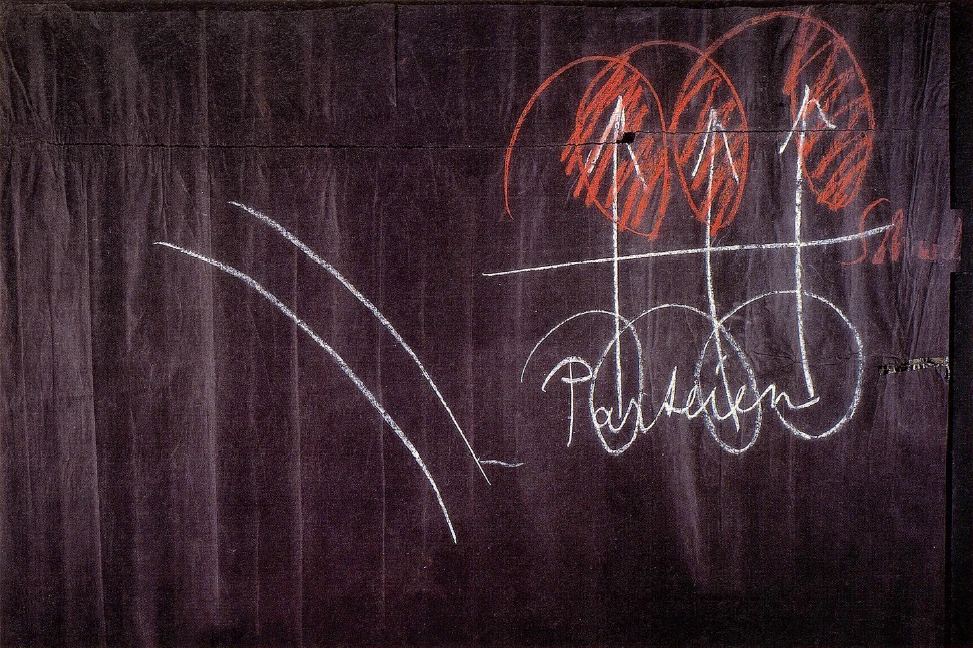
[ 22 ] Dabei kann es aber vorkommen, daß man in dem Augenblicke, wo man die Schwelle überschreitet (das Wort «Schwelle» wird an die Tafel geschrieben), nötig hat, sich wirklich klar darüber zu sein, daß man sich nicht durch Worte täuschen läßt, sich keinen Illusionen hingibt. Man kann sehr leicht glauben, man gehöre zu irgendeinem guten Wesen. Aber damit, daß man irgendein Wesen mit einem guten Namen bezeichnet, ist es noch nicht ein gutes. Es kann zum Beispiel irgend jemand sagen: Ich bekenne mich zu Jesus, dem Christus. — In der geistigen Welt kann man sich nicht zu einem Programm bekennen, aber nach der ganzen Art und Weise, wie die Vorstellungen, die Begriffe von diesem Jesus, dem Christus, in seiner Seele leben, ist es nur der Name des Jesus, des Christus, in Wirklichkeit hängt er dann Luzifer oder Ahriman an und ergibt nur Luzifer oder Ahriman den Namen Jesus oder Christus.
[ 22 ] However, it may happen that at the very moment one crosses the threshold (the word “threshold” is written on the board), one must be truly clear that one is not deceived by words and does not give in to illusions. It is very easy to believe that one belongs to some kind of good being. But just because one gives a being a good name does not make it a good one. For example, someone might say: “I profess my faith in Jesus, the Christ.” — In the spiritual world, one cannot profess allegiance to a program; but judging by the very way in which the ideas and concepts of this Jesus, the Christ, live in one’s soul, it is only the name of Jesus, the Christ—in reality, one is then attached to Lucifer or Ahriman and merely gives the name Jesus or Christ to Lucifer or Ahriman.
[ 23 ] Aber ich frage Sie: Wie viele Menschen wissen heute davon, daß Parteimeinungen Abschattungen sind von Wesenhaftem in der geistigen Welt? Manche wissen es, und die richten dann das, was sie tun, nach diesem Wissen ein. Ich kann Sie hinweisen auf solche, die so etwas wissen. Nehmen Sie die Jesuiten, die wissen das. Glauben Sie nicht, daß die Jesuiten meinen, wenn sie zum Beispiel in ihren Blättern jetzt gegen Anthroposophie schreiben, daß sie mit ihren Gründen da irgend etwas besonders träfen, was nicht widerlegt werden könnte. Aber auf Widerlegungen kommt es dabei nicht an. Und was man schließlich einwenden kann gegen solche Widerlegungen, das wissen die Jesuiten sehr gut, denn den Jesuiten kommt es nicht darauf an, mit Gründen für oder wider zu fechten, sondern ihnen kommt es darauf an, Anhänger zu sein eines gewissen Wesens, das ich aber heute noch nicht bezeichnen will, das sie aber ihren Anführer Jesus nennen, dem sie zugehören. Mag dieses Wesen sein, was immer, sie nennen es Jesus. Ich will nicht auf den Tatbestand genauer hinweisen; aber sie bezeichnen sich als Soldaten, ihn als den Anführer, und sie kämpfen nicht, um zu widerlegen, sie kämpfen, um Anhänger zu werben für die Kompanien, für das Heer des Jesus, das heißt desjenigen Wesens, das sie Jesus nennen. Und sie wissen ganz genau, daß, sobald man über die Schwelle hinaufschaut, es nicht auf abstrakte Kategorien, nicht auf logische Zusagen oder Widerlegungen ankommt, sondern daß es da ankommt auf die Heerfolge des einen oder des andern Wesens, während es unten auf der Erde sich um Redensarten handelt. Das ist aber dasjenige, was die Menschen heute so schwer begreifen wollen, daß, wenn wir heraus wollen aus dem Niedergang der Zeit, es sich nicht mehr handeln darf um bloße Abstraktionen, nicht bloß um das, was man sich denken kann, sondern daß es sich um Realitäten handeln muß, Wir beginnen zu Realitäten aufzusteigen, wenn wir nicht mehr bloß von richtig oder unrichtig, sondern von gesund oder krank sprechen. Wir beginnen zu Realitäten aufzusteigen, wenn wir nicht von Parteiprogrammen oder Weltanschauungsprogrammen sprechen, sondern von der Gefolgschaft irgend welcher realer Wesenheiten, die uns sogleich begegnen, wenn wir auf die Dinge hindeuten, die jenseits der Schwelle liegen. Es handelt sich heute darum, wirklich jenen ernsten Schritt zu machen von der Abstraktion zur Realität, von der bloß logischen Erkenntnis zur Erkenntnis als Tat. Und nur das kann herausführen aus all der Verwirrung, in der die Welt heute steckt.
[ 23 ] But I ask you: How many people today are aware that party opinions are reflections of essential realities in the spiritual world? Some know this, and they then base their actions on this knowledge. I can point you to those who know such things. Take the Jesuits, for example; they know this. Do not believe that when the Jesuits, for instance, write against anthroposophy in their journals, they think their arguments strike at something specific that cannot be refuted. But refutations are not the point here. And the Jesuits know very well what one can ultimately object to regarding such refutations, for the Jesuits are not concerned with debating for or against with arguments; rather, they are concerned with being followers of a certain being—one I do not wish to name today—whom they call their leader, Jesus, to whom they belong. Whatever this being may be, they call it Jesus. I do not wish to go into the details of the matter; but they describe themselves as soldiers, him as the leader, and they do not fight to refute—they fight to recruit followers for the companies, for the army of Jesus—that is, of the being they call Jesus. And they know full well that, as soon as one looks beyond the threshold, it is not a matter of abstract categories, nor of logical assertions or refutations, but rather of which being’s army one follows, whereas down here on earth it is all a matter of rhetoric. But this is precisely what people today find so difficult to grasp: that if we want to emerge from the decline of our age, we can no longer deal with mere abstractions, not merely with what one can conceive of, but must deal with realities. We begin to ascend to realities when we no longer speak merely of right or wrong, but of healthy or sick. We begin to ascend to realities when we speak not of party platforms or ideological programs, but of the following of certain real entities that immediately meet us when we point to the things that lie beyond the threshold. The task today is to truly take that serious step from abstraction to reality, from merely logical knowledge to knowledge as action. And only that can lead us out of all the confusion in which the world finds itself today.
[ 24 ] Die Weltenlage — wir werden gerade in diesen Tagen, morgen und übermorgen, von dieser Weltenlage sprechen — kann heute nur derjenige gesund beurteilen, der sie mit Hilfe dessen betrachtet, was ihm Geisteswissenschaft an die Hand zu geben in der Lage ist. Sonst wird man die bedeutungsvollen Gegensätze, die heute zwischen Westen und Osten bestehen, nicht im richtigen Lichte sehen können. Aber was da äußerlich an schaubaren Realitäten auftritt, was ist es denn anderes als der in sich absurde Ausdruck von dem, was heute in den Köpfen der Menschen an Gedanken lebt? Wie treten uns denn diese Gedanken entgegen? — Ich möchte zum Schluß wiederum auf ein naheliegendes Beispiel hinweisen. Ich habe ja schon verschiedentlich darauf hingewiesen, was jetzt von katholischer, klerikaler Seite gegen Geisteswissenschaft, namentlich auch hier in der Schweiz, an Lügenhaftigkeit geleistet wird, damit man diese Geisteswissenschaft vernichten könne. Und Sie haben — diejenigen, die hier waren — schon manches Beispiel gesehen von dem, was da alles gerade von katholisch-jesuitischer Seite aufgefahren wird, um diese Geisteswissenschaft zu vernichten. Bedenken Sie, da bäumen sich diejenigen auf, allerdings mit nicht schönen Waffen, die die Schüler des katholischen Jesuitismus sind, und das brauche ich Ihnen nicht zu charakterisieren; diejenigen, die noch nicht sich informiert haben, können es ja leicht tun. Aber sehen Sie, die Schweiz gehört doch auch, und Mitteleuropa, wo dasselbe geschieht, das alles gehört doch eigentlich auch zur Welt, nicht wahr, und Amerika gehört auch zur Welt. Es wurde mir nun eine Zeitschrift gegeben, die in Amerika erscheint und in welcher auch anthroposophisch orientierte Geisteswissenschaft charakterisiert wird zur selben Zeit, als sie hier von jesuitischer Seite in der schlimmsten Weise charakterisiert wurde als etwas, was gegen die katholische Kirche, was gegen das Christentum gerichtet sei. Sie wissen ja, Pfarrer Kully hat gesagt, es gibt drei schlimme Dinge in der Welt, das eine ist das Judentum, das zweite ist die Freimaurerei, aber das Schlimmste alles Schlimmen, schlimmer als irgendein Bolschewismus, sei das, was hier in Dornach gelehrt werde. — Das stammt von katholischer Seite. So charakterisiert die katholische Seite die Anthroposophie. Wie Amerika nun? Ich möchte Ihnen eine kleine Stelle vorlesen, die zu der gleichen Zeit geschrieben ist wie das, was die katholischen Blätter hier geschrieben haben: «Wie die römisch-katholische Hierarchie immer darauf bestanden hat, daß die römische Kirche die einzige mit Autorität ausgerüstete ist», die protestantischen Sekten kommen für sie nicht in Betracht; nach der Meinung der römischen Kirche stehen sie außerhalb der Tore, sie werden nur als eine Menge von Häretikern angesehen, «so ist es selbstverständlich, daß die Kirche, auf die Steiner durch sein Mundwerk hinweist, keine andere sein kann als die römisch-katholische. Diese Voraussetzung ist bekräftigt, und jeder Zweifel über die Sache hört auf, wenn man die anderen okkulten Bücher Steiners durchgeht. Sie alle deuten auf dasselbe hin, nämlich seine Schriften sind rein irreführend, Schafhaut eines oberflächlichen Okkultismus überdeckt den Wolf des Jesuitismus.»
[ 24 ] The state of the world—we will be discussing this very topic in the coming days, tomorrow and the day after tomorrow—can be soundly assessed today only by those who view it through the lens of what spiritual science is able to provide. Otherwise, one will not be able to see the significant contrasts that exist today between the West and the East in their proper light. But what appears outwardly as observable realities—what is it other than the inherently absurd expression of the thoughts that live in people’s minds today? How do these thoughts present themselves to us? — In conclusion, I would like to point out an obvious example once again. I have already pointed out on various occasions the mendacious campaign currently being waged by Catholic and clerical circles against spiritual science—particularly here in Switzerland—with the aim of destroying it. And you—those of you who were here—have already seen many examples of what is being brought to bear, especially by Catholic-Jesuit circles, to destroy this spiritual science. Consider this: the disciples of Catholic Jesuitism are rising up—albeit with unsavory weapons—and I need not describe them to you; those who have not yet informed themselves can easily do so. But you see, Switzerland is also part of the world, as is Central Europe, where the same thing is happening—all of this is actually part of the world, isn’t it? And America is also part of the world. I was recently given a magazine published in America in which anthroposophically oriented spiritual science is portrayed in a positive light—at the very same time that it was being portrayed here by Jesuit circles in the worst possible light as something directed against the Catholic Church and against Christianity. As you know, Father Kully said there are three evil things in the world: the first is Judaism, the second is Freemasonry, but the worst of all evils—worse than any form of Bolshevism—is what is taught here in Dornach. — That comes from the Catholic side. This is how the Catholic side characterizes anthroposophy. And what about America? I’d like to read you a short passage written at the same time as what the Catholic newspapers here have published: “Just as the Roman Catholic hierarchy has always insisted that the Roman Church is the only one endowed with authority”—the Protestant sects are out of the question for them; in the opinion of the Roman Church, they stand outside the gates; they are regarded merely as a crowd of heretics, “so it goes without saying that the Church to which Steiner refers in his writings can be none other than the Roman Catholic Church. This premise is confirmed, and any doubt on the matter ceases when one examines Steiner’s other occult books. They all point to the same thing: namely, that his writings are purely misleading; the sheep’s clothing of superficial occultism conceals the wolf of Jesuitism.”
[ 25 ] Also Sie sehen, in Amerika hält man die Anthroposophie für Jesuitismus, in Europa wendet sich der Jesuitismus in schärfster Weise gegen die Anthroposophie als den größten Feind der katholischen Kirche. So denkt man heute in der Welt. So ungefähr denken aber auch die Leute, wenn sie in Europa nebeneinander stehen; sie merken es nur nicht. Dann kommen noch einzelne schöne Sätze, die diesen Artikel beschließen: «Steiner beansprucht, Initiat zu sein. Mag sein. Aber ob er von der weißen Loge oder von den Brüdern der Schatten ist, kann man ahnen, wenn man erfährt, daß er auf seiten der «Blut- und Eisen»-Männer stand... ., und daß eine Anzahl seiner Schüler hier (in Amerika) interniert waren als deutsche Spione.»
[ 25 ] So you see, in America, anthroposophy is regarded as Jesuitism, while in Europe, Jesuitism is fiercely opposed to anthroposophy as the greatest enemy of the Catholic Church. That is how people think in the world today. But that’s more or less how people think even when they stand side by side in Europe; they just don’t realize it. Then there are a few beautiful sentences that conclude this article: “Steiner claims to be an initiate. That may be so. But whether he belongs to the White Lodge or to the Brothers of the Shadows can be surmised when one learns that he sided with the ‘Blood and Iron’ men... and that a number of his students here (in America) were interned as German spies.”
[ 26 ] Nun, Sie sehen, bald tönt es aus römisch-katholischem Horn, bald tönt es aus amerikanischem Horn! Aber all das kann Sie hinweisen darauf, wie es in den Köpfen unserer Zeitgenossen aussieht. Aus dem aber, was in den Köpfen gedacht wurde, hat sich das entwickelt, was in den Niedergang der Gegenwart hineingeführt hat, und der Aufgang muß wahrhaftig ganz woanders gesucht werden, als wo ihn viele Leute heute suchen. Davon wollen wir dann morgen weitersprechen.
[ 26 ] Well, you see, sometimes the message comes from the Roman Catholic camp, and sometimes from the American camp! But all of this can give you an idea of what is going on in the minds of our contemporaries. But what was conceived in people’s minds has developed into what has led to the decline of the present, and the rise must truly be sought somewhere entirely different from where many people are looking for it today. We’ll continue talking about this tomorrow.