

Spiritual Scientific Insight into the
Fundamental Impulses of Social Organization
GA 199
29 August 1920, Dornach
Translate the original German text into any language:
Versions Available:
Spiritual Scientific Insight into the Fundamental Impulses of Social Organization, tr. SOL
Elfter Vortrag
Eleventh Lecture
[ 1 ] Eine Vorstellung versuchte ich durch die gestrigen Betrachtungen hervorzurufen von der Stellung des Menschen im Kosmos. Wenn der Mensch betrachtet wird von dem Gesichtspunkte jenseits der Schwelle, die zwischen den sinnlichen und den übersinnlichen Welten liegt, dann ergibt sich ja das Wesen des Menschen so, daß es sich darstellt als im ganzen Kosmos als ein Glied darinnenstehend. Und ich habe gestern zunächst versucht zu zeigen, wie gewissermaßen äußerlich der Mensch im Kosmos drinnensteht, indem ich darauf hingewiesen habe, wie ja hinter dem Teppich, der sich um uns herum ausbreitet und der die sämtlichen Sinneseindrücke enthält, eine geistige Welt ist. Ich habe betont, diese geistige Welt ist eine fröstelnde, eine kalte Welt. Es ist diejenige Welt, in der wir allerdings, wie Sie wissen, unbewußt sind zwischen dem Einschlafen und Aufwachen, in der wir uns aber in Wirklichkeit aufhalten, allerdings dann ihren eigentlichen Charakter nicht empfinden, sondern im Gegenteile den Verkehr der geistigen Welt mit ihr dadurch vermitteln, daß wir wärmende Liebe gerade in diese Welt hineintragen. Wir haben damit gegeben ein geistiges Gebiet. Jenes geistige Gebiet aber, das unsere eigentliche Umgebung ist, ist ein anderes geistiges Gebiet — ich habe gestern schon darauf hingewiesen —, ist dasjenige, was unterhalb jenes Spiegels liegt, der in uns die Erinnerungen zurückwirft. Dasjenige geistige Gebiet, aus dem aufsteigt die Gliederung namentlich unseres Gliedmaßenorganismus mit alledem, was zu diesem Gliedmaßenorganismus gehört, dieses geistige Gebiet ist es, nach dem allerdings der gewöhnliche Mystiker hinstrebt. Er findet es aber nicht, weil es erst dann aufgefunden wird, wenn der Mensch durch die Geheimnisse seines physischen und ätherischen Organismus durchdringt, um dann eben das zu entdecken, was diesen physischen und ätherischen Organismus formt, gestaltet, mit Bewegung durchdringt. Dieses Gebiet hat einen wesentlich andern Charakter, als das für die Außenwelt zu beschreibende geistige Gebiet. Dieses Gebiet braucht nicht erst durch den Menschen erwärmt zu werden. Dieses Gebiet ist gewissermaßen ein in sich den Eindruck der Wärme machendes Gebiet. Es ist das Gebiet, welches mit den entgegengesetzten Kräften ausgerüstet ist wie das vorige. Ich sagte, das vorige Gebiet ist ausgerüstet mit den Kräften, die den geistigen Kosmos zusammenhalten, mit den zentripetalen Kräften; dieses andere Gebiet, aus dem die Kräfte stammen, welche unsere Gliedmaßen bewegen, das ist mit den entgegengesetzten Kräften durchsetzt, mit den zentrifugalen Kräften, mit denjenigen Kräften, die fortwährend dadurch tätig sind, daß sie gewissermaßen das geistige Weltenall ins Weite auseinanderbreiten. Es sind die zentrifugalen Kräfte. Nur dürfen Sie sich unter diesen Kräften nicht physische Kräfte vorstellen, sondern geistige Wesenheiten. Wir sehen da gewissermaßen in die Konstitution des Weltenalls hinein. Wir bringen das, was das Weltenall konstituiert, in Zusammenhang mit dem, was in uns selbst ist. Wir verfolgen die Kräfte, die in unseren Augen, in unseren Ohren, kurz, in unserem Sinnesapparat leben, und wir erkennen sie als die Kräfte, die die Welt zusammenhalten. Wir finden in uns die Kräfte, durch die wir unsere Arme bewegen, unsere Beine bewegen, durch die noch manches andere in unserem Gliedmaßenorganismus geschieht, und wir müssen sie ansprechen als diejenigen Kräfte, die, wenn sie sich selbst überlassen wären, das Weltenall ins Weite zerstreuen würden. In diesen Kräftezusammenhang sind wir hineingestellt als Menschen. Innerhalb dieses Kräftezusammenhanges findet sich die Welt der verschiedensten Wesenheiten, jener Wesenheiten, mit denen jene neun Hierarchien, von denen wir ab und zu gesprochen haben, gerade durch den Menschen in Beziehung stehen. Der Mensch ist der Vermittler zwischen Götterwelten. Man möchte sagen: Die Götter begegnen sich durch den Menschen.
[ 1 ] Through yesterday’s reflections, I attempted to evoke an idea of humanity’s place in the cosmos. When humanity is viewed from the perspective beyond the threshold that lies between the sensory and supersensory worlds, the nature of humanity reveals itself as being embedded within the entire cosmos as a constituent part. And yesterday I first attempted to show how, in a sense, humanity is situated externally within the cosmos by pointing out that behind the veil that spreads out around us—and which contains all sensory impressions—there is a spiritual world. I emphasized that this spiritual world is a chilling, cold world. It is the world in which, as you know, we are unconscious between falling asleep and waking up—a world in which we actually dwell, though we do not perceive its true nature at that time; rather, we mediate the spiritual world’s interaction with it by bringing warming love into this very world. We have thus described one spiritual realm. But that spiritual realm which is our actual environment is a different spiritual realm—as I already pointed out yesterday—it is the one that lies beneath that mirror which reflects memories back to us. That spiritual realm from which arises the structure of our limb system in particular, along with everything that belongs to this limb system—it is this spiritual realm that the ordinary mystic strives toward. But he does not find it, because it can only be discovered when a person penetrates the mysteries of his physical and etheric organism in order to then discover precisely what forms, shapes, and permeates these physical and etheric organisms with movement. This realm has a fundamentally different character than the spiritual realm that can be described in relation to the external world. This realm does not first need to be warmed by human beings. This realm is, so to speak, a realm that creates the sensation of warmth within itself. It is the realm that is endowed with forces opposite to those of the previous one. I said that the previous realm is endowed with the forces that hold the spiritual cosmos together—the centripetal forces; this other realm, from which the forces that move our limbs originate, is permeated by the opposing forces—the centrifugal forces—those forces that are constantly at work, so to speak, spreading the spiritual cosmos out into the vastness. These are the centrifugal forces. But you must not imagine these forces as physical forces, but rather as spiritual entities. We are, so to speak, looking into the constitution of the universe. We connect what constitutes the universe with what is within ourselves. We trace the forces that live in our eyes, in our ears—in short, in our sensory apparatus—and we recognize them as the forces that hold the world together. We find within ourselves the forces through which we move our arms, our legs, and through which many other things occur in our limb system; and we must regard them as the very forces that, if left to their own devices, would scatter the universe into the vastness of space. As human beings, we are placed within this interplay of forces. Within this interplay of forces lies the world of the most diverse beings—those beings with whom the nine hierarchies, of which we have spoken from time to time, are connected precisely through the human being. The human being is the mediator between the worlds of the gods. One might say: The gods meet through the human being.
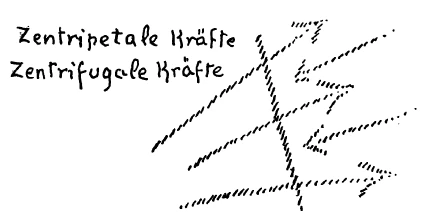
[ 2 ] Man sieht da hinein in das Weltenall und sieht den Menschen in einer gewissen Beziehung als den Vermittler von Götterwelten. Man möchte, daß solches Bewußtsein die Menschenseelen durchdringe; denn aus diesem Bewußtsein allein können die egoistischen Elemente der alten Religionen überwunden werden. Diese Elemente der alten Religionen sind ja zum großen Teile durchaus auf den Egoismus aufgebaut. Wenn aus den bestehenden Konfessionen heraus den Menschen gepredigt wird, so geschieht es, um zu appellieren an ihre egoistischen Instinkte der Unsterblichkeit und dergleichen. Man redet, indem man aus den traditionellen Konfessionen heraus spricht, zu diesen egoistischen Instinkten. Man muß nur ein Gefühl dafür haben, wie auf diese egoistischen Instinkte spekuliert wird. Geisteswissenschaft wird den Menschen so darstellen, daß er ein Bewußtsein bekommt, welche Rolle er im ganzen Kosmos spielt, wie zusammenhängen durch ihn eine Welt der zentripetalen Kräfte und eine Welt der zentrifugalen Kräfte, die sich im Grunde genommen nur im Menschen selbst begegnen (siehe Zeichnung).
[ 2 ] One looks out into the universe and, in a certain sense, sees human beings as mediators between the worlds of the gods. One hopes that such an awareness will permeate human souls; for it is only through this awareness that the egoistic elements of the old religions can be overcome. These elements of the old religions are, after all, largely based on selfishness. When people are preached to from within the existing denominations, it is done to appeal to their selfish instincts regarding immortality and the like. Speaking from within the traditional denominations, one addresses these selfish instincts. One need only have a sense of how these selfish instincts are exploited. Spiritual science will present humanity in such a way that people gain an awareness of the role they play in the entire cosmos, and how, through them, a world of centripetal forces and a world of centrifugal forces are interconnected—forces that, in essence, meet only within the human being itself (see diagram).
[ 3 ] Wenn das, was ich jetzt gesagt habe, nicht eine graue Theorie bleibt, sondern wenn es übergeht in die ganze Gefühls- und Empfindungswelt des Menschen, dann fühlt er sich im Weltenall drinnenstehend und sagt sich: Ich bin um der Entwickelung des Weltenalls willen da, durch mich hindurch geht der Strom des kosmischen Geschehens. Dieses Gefühl eines Befestigtseins im Weltenall, das ist dasjenige, was das Bewußtsein der Gegenwart und der nächsten Zukunft durchziehen muß. Denken Sie nur einmal, wie dieses Gefühl entgegengestellt wird einem andern Gefühl, das durch die Kultur der letzten drei bis vier Jahrhunderte an die Oberfläche der menschlichen Entwickelung getrieben worden ist. Haben denn diese letzten drei bis vier Jahrhunderte aus sich selbst heraus irgend etwas von einem solchen Bewußtsein des Menschen getrieben? Nein, es wurde ja wissenschaftlich überhaupt nicht nachgedacht, was der Mensch im Weltenall ist und bedeutet. Es wurde der Blick geworfen auf die Tierreihe. Man lernte erkennen, wie eine Tierform aus der andern sich entwickelt, und man sagte dann: Nun, der Mensch ist die höchste der Tierformen. Man stückelte ihn gleichsam an als das höchste Tier an die niederen Tiere. Man lernte den Menschen in seiner Tierheit kennen. Man sprach gar nicht über das Wesen des Menschen. Das ist der Umschwung, der sich im Seelenhaften von heute ab in der Menschheit voll-ziehen muß, daß der Mensch sich wieder bewußt wird, wie er einen Durchgangspunkt für Götterkräfte bildet, wie er gewissermaßen der Platz ist, an dem sich Hierarchien begegnen, damit sie im Weltenall zusammenwirken können. Und wissen soll der Mensch: Wenn er niedrig von sich denkt und niedrig handelt und sein Menschheitsbewußtsein herabdrückt, dann wird er kein Vermittler sein zwischen den höheren und den niederen Welten. Sich fühlen als ein Wesen, das dem Kosmos angehört, das muß der Mensch lernen. Götterwesen, die den zentrifugalen Triebkräften dienen, Götterwesen, die den zentripetalen Kräften dienen, sie begegnen sich im Menschen.
[ 3 ] If what I have just said does not remain a dry theory, but instead permeates the entire world of human feelings and sensations, then a person feels themselves to be at the very heart of the universe and says to themselves: I am here for the sake of the universe’s evolution; the current of cosmic events flows through me. This feeling of being firmly rooted in the universe is precisely what must permeate our consciousness of the present and the immediate future. Just think for a moment how this feeling is contrasted with another feeling that has been brought to the surface of human development by the culture of the last three to four centuries. Have these last three to four centuries, of their own accord, fostered anything of such a human consciousness? No, for there has been no scientific reflection whatsoever on what the human being is and means within the universe. The focus was placed on the animal kingdom. People learned to recognize how one animal form develops from another, and then they said: Well, the human being is the highest of the animal forms. They pieced the human being, as it were, together as the highest animal from the lower animals. They came to know the human being in terms of his animal nature. There was no discussion at all of the essence of the human being. This is the transformation that must now take place in the soul life of humanity: that the human being once again becomes aware of how he forms a point of passage for divine forces, how he is, so to speak, the place where hierarchies meet so that they can work together in the universe. And human beings must know: If they think lowly of themselves, act in a lowly manner, and suppress their sense of humanity, then they will not be mediators between the higher and lower worlds. Human beings must learn to feel themselves as beings who belong to the cosmos. Divine beings who serve the centrifugal driving forces and divine beings who serve the centripetal forces meet within the human being.
[ 4 ] Und wo finden sie ihren Ausgleich? Die zentripetalen Kräfte wirken vorzugsweise durch das menschliche Haupt, die zentrifugalen vorzugsweise durch den Gliedmaßenmenschen. Der mittlere Mensch, der rhythmische Mensch, er ist dasjenige Wesen, welches den Ausgleich, den Gleichklang, die Harmonie bewirken soll zwischen den zentripetalen und den zentrifugalen Weltenkräften. Bedenken Sie, was das bedeutet. Das bedeutet, wenn der Mensch eine gewisse Seelenverfassung in sich entwickelt, wenn der Mensch eine gewisse innere Gesinnung entwickelt, die ihm selbstverständlich, wie wir aus dem Verschiedensten gesehen haben, nur aus der Geisteswissenschaft heraus werden kann, dann gibt er seinem ganzen inneren Erleben eine gewisse Färbung, dann verläuft dieses innere Erleben in einer gewissen Weise. Und das drückt sich bis ins Organische hinein, bis in den Herz- und Atmungsrhythmus aus. Das heißt mit andern Worten: Wie der Mensch atmet, wie des Menschen Herz schlägt, das hat eine Bedeutung nicht nur innerhalb der menschlichen Wesenheit, das hat eine Bedeutung innerhalb des ganzen Kosmos. Und wenn wahrgenommen wird der menschliche Herzschlag, so bedeutet dies das Zusammenwirken verschiedener Götter- oder Geisterwelten. Das alte Wahrwort, daß der Mensch ein Tempel für das Göttliche ist, es steigt wiederum auf aus den neueren Erkenntnissen der Initiationswissenschaft.
[ 4 ] And where do they find their balance? The centripetal forces act primarily through the human head, while the centrifugal forces act primarily through the human limbs. The balanced human being, the rhythmic human being, is the being who is meant to bring about balance, harmony, and unity between the centripetal and centrifugal forces of the world. Consider what this means. It means that when a person develops a certain state of mind within themselves, when a person develops a certain inner disposition—which, as we have seen in various contexts, can naturally come to them only through spiritual science—then they imbue their entire inner experience with a certain character, and this inner experience unfolds in a certain way. And this extends into the organic realm, right down to the rhythms of the heart and breathing. In other words: the way a person breathes, the way a person’s heart beats—this has significance not only within the human being, but also within the entire cosmos. And when the human heartbeat is perceived, this signifies the interplay of various divine or spiritual worlds. The ancient truth that the human being is a temple for the divine is once again emerging from the newer insights of initiatory science.
[ 5 ] Und so wird denn, was aus diesen Erkenntnissen der Initiationswissenschaft aufsteigt, einen andern Charakter tragen müssen als das, was die alten traditionellen Konfessionen dem Menschen bringen können. Die rechnen mit seinem Egoismus. Womit rechnet dasjenige, was als Weltempfindung durch die Geisteswissenschaft kommen kann? Es rechnet mit der Verantwortung des Menschen gegenüber der Welt. Es appelliert vorzugsweise an die Verantwortungsgefühle. Es erhöht den Menschen, indem es ihm zeigt, wie er als ein wesentliches Glied im ganzen Weltenall drinnensteht.
[ 5 ] And so what emerges from these insights of the science of initiation will necessarily have a different character than what the old traditional denominations can offer people. The latter rely on human selfishness. What does that which can emerge as a worldview through spiritual science rely on? It relies on human responsibility toward the world. It appeals primarily to a sense of responsibility. It elevates the human being by showing him how he stands as an essential link within the entire universe.
[ 6 ] Dieses Erringen eines gewissen Menschheitsbewußtseins, das ist es, was so dringend notwendig ist. Denn worauf beruht es denn, daß die Menschen heute in dieses Chaos kamen, in dem unsere soziale Ordnung über die ganze zivilisierte Welt hin zum Teil schon zerfallen ist, zum Teil zu zerfallen droht, worauf beruht es denn? Es beruht darauf, daß der Mensch vergessen hat dieses sein Stehen im Kosmos drinnen, daß der Mensch nichts wissen will von diesem seinem Stehen im Kosmos. Wer so sich im Kosmos darinnen fühlt, der wird begreifen, daß die Weltentwickelung nicht beschrieben werden darf bloß von dem ausgehend, was außerhalb des Menschen ist, sondern daß vorzugsweise im Menschen selbst die Kräfte sind, welche unserer Erde den Ursprung gegeben haben, welche unserer Erde ihr Ende geben werden und sie in andere Metamorphosen der Weltgestaltung überführen werden. Im Menschen müssen wir vorzugsweise dasjenige suchen, was wir wissen, was wir fühlen sollen, woraus wir unser Wollen gestalten sollen.
[ 6 ] This attainment of a certain sense of humanity—that is what is so urgently needed. For what is the reason that people today have fallen into this chaos, in which our social order throughout the entire civilized world has, in part, already collapsed and, in part, is threatening to collapse? What is the reason for this? It is because human beings have forgotten their place within the cosmos, because they want nothing to do with their place within the cosmos. Whoever feels this way within the cosmos will understand that the development of the world must not be described solely on the basis of what lies outside of human beings, but that the forces that gave our Earth its origin, that will bring about its end, and that will transform it into other metamorphoses of the world’s structure lie primarily within human beings themselves. It is within human beings that we must primarily seek what we should know, what we should feel, and from which we should shape our will.
[ 7 ] Was sind es für Kräfte, die vorzugsweise im menschlichen Haupte wirken und die ja verwandt sind den zentripetalen, den zusammenpressenden Kräften des Kosmos, was sind es für Kräfte? Es sind diejenigen Kräfte, die die ältesten Kräfte unseres Weltenalls sind. Erinnern Sie sich an meine Darstellungen in der «Geheimwissenschaft im Umriß», wie ich die alte Saturnentwickelung beschrieben habe, wie ich da hinweisen mußte darauf, daß sich herausgerungen hat aus dieser Saturnentwickelung das menschliche Sinnesleben. Was da zurückgeblieben ist aus dieser Saturnentwickelung, es liegt hinter unserem Sinnesteppich als die kalte, fröstelnde Welt, die sich eben aus dem Wärmezustand des Anfanges heraus entwickelt hat, in die wir heute Wärme hineinzutragen haben. Das, was da hinter dem Sinnesteppich liegt, ist gewissermaßen die älteste der Welten. Wir betreten sie unbewußt in der Zeit vom Einschlafen bis zum Aufwachen. Wir wandeln aber eigentlich immerfort in ihr herum. Sie gibt uns alles dasjenige, was mit unseren Sinnen zusammenhängt. Die zentripetalen Kräfte wirken, gleichsam die Sinne von außen bildend, in unsere Sinne hinein, in unsere Augen, in unsere Ohren, und von da aus in unseren physischen Verstand, in dasjenige, was wir denken. Und indem wir durch die Welt denkend gehen, gehen wir eigentlich mit demjenigen menschlichen Besitz durch die Welt, der uns aus dieser Umgebung heraus gebildet wird, das heißt, mit den ältesten Kräften, die nun schon angekommen sind beim Zerfall. Das dürfen wir nie vergessen, daß dies die Kräfte sind, die eigentlich schon beim Zerfall angekommen sind.
[ 7 ] What are these forces that act primarily in the human head and are, after all, related to the centripetal, compressing forces of the cosmos? What are these forces? They are the oldest forces in our universe. Do you recall my descriptions in *An Outline of Esoteric Science*, where I described the ancient Saturn evolution, and how I had to point out that human sensory life emerged from this Saturn evolution? What remains from this Saturn evolution lies behind the tapestry of our senses as the cold, shivering world that has developed out of the state of warmth of the beginning—a world into which we must now bring warmth. What lies behind the tapestry of our senses is, in a sense, the oldest of the worlds. We enter it unconsciously during the time between falling asleep and waking up. But in reality, we are constantly moving about within it. It provides us with everything connected to our senses. The centripetal forces act—as it were, forming the senses from the outside—into our senses, into our eyes, into our ears, and from there into our physical intellect, into what we think. And as we walk through the world thinking, we are actually walking through the world with that human possession which is formed for us from this environment—that is, with the oldest forces that have now already reached the point of decay. We must never forget that these are the forces that have, in fact, already reached the point of decay.
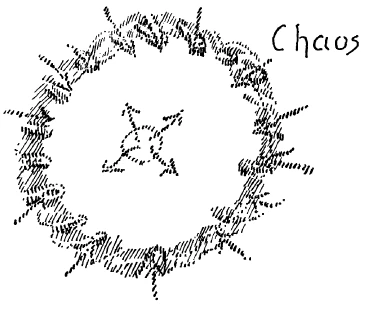
[ 8 ] Man möchte sagen, die Sache ist so: Wenn man schematisch darstellt das Weltenall, auseinander, ins Weite strebend, aber an dieser Grenze zentripetal zusammengehalten werdend, es sind die ältesten Kräfte des Weltenalis (siehe Zeichnung). Sie zerbröckeln in einer gewissen Weise. Und aus diesen zerbröckelnden Kräften, aus diesen in den Tod schon übergehenden Kräften, aus diesen zum Chaos gewordenen Kräften steigt dasjenige auf, was unser Verstand ist, was unser menschlicher Intellekt ist.
[ 8 ] One might say that the situation is as follows: If one depicts the universe schematically—spreading apart, striving into the vastness, yet held together centripetally at this boundary—these are the oldest forces of the universe (see drawing). They are crumbling in a certain way. And from these crumbling forces, from these forces already passing into death, from these forces that have become chaos, arises that which is our mind, that which is our human intellect.
[ 9 ] Es war das Schicksal der neueren Menschheit, daß seit den letzten drei bis vier Jahrhunderten dieser Intellekt besonders entwickelt werden mußte. Aber dieser Intellekt, er steigt auf gewissermaßen aus dem sterbenden Chaos, das von der alten Saturnentwickelung geblieben ist. Die Menschen haben nun bis in diese Zeit herein, bis in das soziale Leben hinein reformierend wirken wollen aus diesen Kräften heraus. Aber diese Kräfte sind diejenigen Kräfte, die gerade dann normal wirken, wenn sie zerstörend sind. Wir könnten nicht denken, wenn wir diese Kräfte nicht hätten. Wir könnten unseren Intellekt nicht entwickeln, wenn wir diese Kräfte nicht hätten. Wir zerstören die soziale Ordnung, wenn wir sie durchsetzen wollten mit dem, was aus diesem unserem Intellekt heraus folgt.
[ 9 ] It was the destiny of modern humanity that, over the last three to four centuries, this intellect had to be developed in a special way. But this intellect, in a sense, rises out of the dying chaos that remains from the old Saturn evolution. Up to the present time, people have sought to bring about reform—even in social life—by drawing on these forces. But these are precisely the forces that function normally only when they are destructive. We could not think if we did not have these forces. We could not develop our intellect if we did not have these forces. We destroy the social order when we try to enforce it with what follows from our intellect.
[ 10 ] Alles, wobei Gedanken tätig sein müssen, ist angewiesen darauf, daß es an diesen Intellekt appelliert, an den Intellekt, der aus dem Chaos aufsteigt. Aber wir dürfen das, was da aus dem Chaos aufsteigt, nicht zu sozialen Reformen verwenden. Im Osten Europas ist es jetzt so, daß die äußersten Ausläufer des europäischen Intellektualismus sozial-reformatorisch auftreten. Was da im Osten Europas entstanden ist, es breitet sich über Asien, über Europa, über den Westen herüber aus, wenn nicht zeitig genug eine, aber jetzt nicht wieder intellektualistische, sondern, wie wir gleich sehen werden, eine andere Gegenwirkung zustande kommt. Wir brauchen zu unserem Geistesleben, zu unserem freien Geistesleben diese Kräfte. Wir brauchen sie, weil dasjenige, was vom menschlichen Intellekt getragen sein soll, nur aus dem Chaos aufsteigen kann. Aber sie sind nicht brauchbar, diese Kräfte, wenn sie sich vermählen mit den sozial wirkenden Kräften. Da ist jene Intelligenz schädlich, welche im engeren Geistesleben nützlich und fruchtbar ist. Dasjenige, was Erfindungen macht, was geistvolle Dichtungen formt, das muß aufsteigen aus dem Chaos, aus dem reifen Materiellen des menschlichen Organismus, das darf niemals glauben, daß es soziale Impulse geben kann in bezug auf das äußere Leben. Es ist wichtig, daß die Menschheit jetzt anfängt, in diese Dinge klar hineinzusehen. Sie wird nicht klar in sie hineinsehen, wenn sie immer wiederum ablehnt, Geisteswissenschaft zu berücksichtigen. Alles das aber, was das eigentliche Geistesleben groß macht, es muß aus diesem Chaos aufsteigen. Es muß dieses Geistesleben aus chaotischen Untergründen der Individualität des Menschen aufsteigen.
[ 10 ] Everything that requires thought to be active depends on appealing to this intellect—the intellect that rises from chaos. But we must not use what rises from chaos for social reforms. In Eastern Europe, the situation is such that the outermost extensions of European intellectualism are now manifesting themselves in the form of social reform. What has arisen there in Eastern Europe is spreading across Asia, across Europe, and over to the West—unless a counterforce—not another intellectualist one, but, as we shall soon see, a different kind of counterforce—is brought into play soon enough. We need these forces for our spiritual life, for our free spiritual life. We need them because that which is to be borne by the human intellect can arise only from chaos. But these forces are of no use if they unite with the forces that act upon society. That intelligence which is useful and fruitful in the more intimate spiritual life is harmful in this context. That which gives rise to inventions, that which shapes inspired works of poetry, must arise from chaos, from the mature materiality of the human organism; it must never believe that there can be social impulses with regard to external life. It is important that humanity now begin to see clearly into these matters. It will not see clearly into them if it continues to refuse to take spiritual science into account. But everything that makes the true spiritual life great must rise from this chaos. This spiritual life must rise from the chaotic depths of the human individual.
[ 11 ] Da gliedert sich die Erziehungsfrage zusammen mit der allgemeinen Kulturfrage. Denn was auf diese Art der Menschheit gebracht werden soll, es muß ja aus dem Chaos aufsteigen, das der Mensch sich mitbringt, indem er durch die Geburt heruntersteigt aus höheren Welten. Er bringt sich den zerfallenden Gehirnorganismus mit. Und aus diesem chaotischen Gehirnorganismus steigt dasjenige auf, was das Geistesleben konstituieren kann. Am entgegengesetzten Ende der Menschheitsorganisation müssen sich entwickeln diejenigen Kräfte, die zugrunde liegen können den sozialen Ideen.
[ 11 ] The question of education is thus intertwined with the general question of culture. For whatever is to be brought to humanity in this way must, after all, arise from the chaos that the human being brings with him when he descends from higher worlds through birth. He brings with him a disintegrating brain organism. And from this chaotic brain organism arises that which can constitute spiritual life. At the opposite end of the human organization, the forces that can underlie social ideas must develop.
[ 12 ] Da berühre ich allerdings etwas, das für die gegenwärtige Menschheit mit ihren furchtbaren Vorurteilen noch ganz unverständlich ist. Die gegenwärtige Menschheit glaubt, sie denkt bloß mit dem Kopfe. Das ist ein Unsinn. Man denkt und fühlt und will nicht bloß mit dem Kopfe, sondern mit dem ganzen Menschen. Arme und Beine sind ebensolche Seelenorgane wie der Kopf. Das ist eines der schlimmsten Vorurteile, daß das Seelenleben organisch einseitig dem Nervenleben zugeteilt worden ist. Nur das intellektualistische Leben ist dem Nervenleben zugeteilt. So daß also gerade aus den zentrifugalen Kräften heraus, aus den frischen organischen Kräften, die nicht das Chaos repräsentieren, sondern die gerade in der Gliedmaßenorganisation des Menschen und allem, was dazu gehört, leben, dasjenige sich entwickeln muß, was soziale Impulse abgeben kann, vorzugsweise soziale Impulse des äußeren Lebens, besonders des dritten Gliedes des sozialen Organismus, des wirtschaftlichen Lebens. Hier hat der Mensch es zu tun mit den jüngsten Bildungen. In seiner Hauptesorganisation, die der Geistesorganisation zugrunde liegt, hat man es zu tun mit den ältesten Bildungen. Hier in alledem, was zugrunde liegt der wirtschaftlichen Organisation, hat man es zu tun mit den jüngsten Bildungen, mit denjenigen Bildungen, die Träger des Menschenwillens sind, die beim Menschen heute im normalen Bewußtseinszustande durchaus im Unbewußten liegen, die aber heraufgeholt werden müssen durch Initiationswissenschaft, durch Mysterienwissenschaft aus dem Unbewußten. Und wie können sie heraufgeholt werden? Ich brauche Ihnen ja nicht zu schildern, wie das eigentliche freie Geistesleben zustande zu kommen hat. Das freie Geistesleben beginnt mit der Erziehung des Kindes, holt dasjenige heraus aus der kindlichen Individualität, was durch die Götter heruntergeschickt wird aus den geistigen Welten, wenn die Kinder durch die Geburt ins physische Dasein eintreten. Da arbeiten wir aus dem Chaos, aus der dunklen, nebeligen Tiefe heraus, um die menschlichen Genialitäten, um die menschlichen Veranlagungen aus dem Geiste heraus durch das Chaos der Materie in das physische Dasein hereinzuführen.
[ 12 ] Here, however, I am touching on something that is still completely incomprehensible to present-day humanity with its terrible prejudices. Present-day humanity believes that it thinks solely with its head. That is nonsense. We do not think, feel, and will merely with our heads, but with our whole being. Arms and legs are just as much organs of the soul as the head. One of the worst prejudices is that the life of the soul has been organically assigned one-sidedly to the nervous system. Only intellectual life is assigned to the nervous system. Thus, it is precisely from the centrifugal forces—from the fresh organic forces that do not represent chaos but rather live within the organization of the human limbs and all that pertains to them—that what can generate social impulses must develop, preferably social impulses of external life, especially those of the third member of the social organism: economic life. Here, human beings are dealing with the most recent formations. In the organization of the head, which underlies the spiritual organization, we are dealing with the oldest formations. Here, in all that underlies the economic organization, we are dealing with the most recent formations—those formations that are the bearers of the human will, which in people today, in the normal state of consciousness, lie entirely in the unconscious, but which must be brought up from the unconscious through initiatory science, through the science of the mysteries. And how can they be brought up? I need not describe to you how true free spiritual life is to come about. Free spiritual life begins with the education of the child, drawing out of the child’s individuality that which is sent down by the gods from the spiritual worlds when children enter physical existence through birth. There we work out of the chaos, out of the dark, misty depths, to bring human genius and human predispositions from the spirit through the chaos of matter into physical existence.
[ 13 ] Anders steht die Sache, wenn wir appellieren müssen an das, was im Menschen das jüngste Glied seiner Organisation ist, wo er im normalen Bewußtsein völlig unbewußt ist, wo die Initiationswissenschaft alles heraufholen muß aus diesen unbewußten Tiefen. Wie geschieht das? Nun, beim sozialen Denken ist es anders als beim Denken aus dem Geistigen heraus. Beim Geistigen beruht alles auf der Entwickelung der Individualität. Beim sozialen Denken ist es so, daß man zum Beispiel statistisch ausrechnen kann, wieviel Menschen, sagen wir, von tausend Zwanzigjährigen sechzig Jahre alt werden. Man kann gut darüber Zahlen bekommen, indem man über ein gewisses Gebiet Tausende von Zwanzigjährigen annimmt; von diesen Tausenden Zwanzigjährigen, von denen sind nach zehn Jahren so und so viel Dreißigjährige, nach weiteren zehn Jahren so viel Vierzigjährige, wieder nach zehn Jahren so viel Fünfzigjährige, dann so viel Sechzigjährige da. Eine gewisse Rechnungsart, die Wahrscheinlichkeitsrechnung, stützt sich auf dasjenige, was man auf diese Weise aus dem zahlenmäßigen Gang von Menschengruppen-Entwickelung entnehmen kann. Und man kann sich mit sozialen Einrichtungen auf diese Rechnung verlassen. Die Versicherungseinrichtungen beruhen ja auf diesen Berechnungen. Wenn ich als Zwanzigjähriger mein Leben versichere, so habe ich zu zahlen nach dem Maße, das herauskommt, wenn man berechnet, wieviel von tausend Zwanzigjährigen zum Beispiel noch sechzig Jahre alt werden, also sagen wir, wieviel man auszuzahlen hat im sechzigsten Jahre. Und indem man die Sache sozial nimmt, indem man die Sache gruppenweise nimmt, stimmt die Sache, sonst würden ja alle Versicherungsgesellschaften zugrunde gehen müssen. Sie beruhen auf solchen Gruppierungen von Fakten in der Menschheitsentwickelung. Hat diese Berechnung für den einzelnen einen Wert? Und aus dieser Berechnung, bekommt man da heraus, wenn man ein Zwanzigjähriger ist, wie groß für einen die wahrscheinliche Lebensdauer noch ist? Niemand wird sich sagen: Also lebe ich nur so und so lange —, jene wahrscheinliche Lebensdauer, nach der man sein Leben versichert, ist eine andere als diejenige, mit der man rechnet als einzelner Mensch, als Individualität. Das steht auf ganz verschiedenen Gebieten des Denkens, des Urteilbildens. Man muß ganz anders über den Menschen denken, wenn man ihn versichern will, also eine soziale Einrichtung treffen will, als wenn man als Mensch, als einzelner Mensch über sein Leben denkt,
[ 13 ] The situation is different when we must appeal to that part of the human being which is the youngest link in his organization—a part that is completely unconscious in normal consciousness, and from which the science of initiation must draw everything up from these unconscious depths. How does this happen? Well, social thinking is different from thinking that arises from the spiritual realm. In the spiritual realm, everything is based on the development of individuality. In social thinking, it is the case that one can, for example, calculate statistically how many people—say, out of a thousand twenty-year-olds—will reach the age of sixty. One can easily obtain figures for this by taking a sample of thousands of twenty-year-olds from a certain region; of these thousands of twenty-year-olds, after ten years there will be a certain number of thirty-year-olds, after another ten years a certain number of forty-year-olds, after yet another ten years a certain number of fifty-year-olds, and then a certain number of sixty-year-olds. A certain method of calculation—probability theory—is based on what can be deduced in this way from the numerical trends in the development of human groups. And social institutions can rely on these calculations. Insurance companies, after all, are based on these calculations. If, as a twenty-year-old, I take out life insurance, I have to pay a premium based on the figure that results from calculating how many out of a thousand twenty-year-olds, for example, will still be sixty years old—that is, how much will need to be paid out in their sixtieth year. And by approaching the matter from a social perspective—by considering it in terms of groups—the system works; otherwise, all insurance companies would have to go out of business. They are based on such groupings of facts in human development. Does this calculation have any value for the individual? And from this calculation, can a twenty-year-old determine how long their probable life expectancy is? No one will say to themselves: “So I’ll only live this long”—that probable life expectancy, on the basis of which one insures one’s life, is different from the one one calculates as a single human being, as an individual. This lies in entirely different realms of thought and judgment. One must think about human beings in a completely different way when one wants to insure them—that is, when one wants to establish a social institution—than when one, as a human being, as an individual, thinks about one’s own life,
[ 14 ] Und wenn man überhaupt zu sozialen Einrichtungen, namentlich denjenigen, die wirtschaftlicher Art sind, kommen will, was muß man dann tun? Man muß ganz nach Art dieser Versicherungsstatistik überhaupt Statistik treiben, man muß zusammenstellen dasjenige, was sich ergibt. Daraus bekommt man niemals jene Weisheit, die aufsteigt aus dem Inneren des Menschen, aus dem Chaos, sondern man bekommt etwas, was sich zahlenmäßig ausdrücken läßt. Sehen Sie sich doch um in alle dem, wozu die Menschen gekommen sind, namentlich diejenigen der westlichen Wissenschaft. Sie finden doch überall Statistik, und aus der Statistik wird erschlossen, wieviel man Zoll zahlen soll auf diesen oder jenen Artikel, wieviel man zu diesem oder jenem braucht und so weiter. Das ist eine ganz ähnliche Berechnung wie die Versicherungsberechnung. Indem man auf das eine hinschaut, auf das, was schöpferisch im Geistesleben steht, unterliegt man einer ganz andern Urteilsbildung, als indem man auf dasjenige hinschaut, was sozial sich in Menschengruppen einrichtet. Aber das, was sozial sich in Menschengruppen einrichtet, was man auf diese Weise berechnen kann, das hängt eben zusammen mit diesen zentrifugalen Kräften, das hängt zusammen mit den jüngsten Organisationskräften des Menschen, die es noch nicht bis zum Bewußtsein gebracht haben, deren Inhalt daher geschlossen werden muß aus der Statistik.
[ 14 ] And if one wants to address social institutions at all—namely those of an economic nature—what must one do? One must compile statistics in the very manner of these insurance statistics; one must compile the data that emerges. From this, one never gains the wisdom that arises from within the human being, from chaos, but rather one obtains something that can be expressed in numerical terms. Just look around at everything people have come to do, especially those in Western science. You’ll find statistics everywhere, and from these statistics, conclusions are drawn about how much duty to pay on this or that item, how much of this or that is needed, and so on. This is a calculation very similar to that used in insurance. When one looks at one aspect—that which is creative in spiritual life—one arrives at a completely different judgment than when one looks at that which is socially established within human groups. But what takes shape socially within human groups—what can be calculated in this way—is precisely connected to these centrifugal forces; it is connected to the most recent organizational forces within human beings, which have not yet reached the level of consciousness, and whose content must therefore be inferred from statistics.
[ 15 ] Diejenigen Menschen, die einen ganz besonderen Enthusiasmus haben, einen zynischen Enthusiasmus, wie ihn Nietzsche hatte, für alles das, was aus dem Inneren des Menschen, aus dem Chaos des Menschen entspringt und sich herausarbeitet aus diesem Chaos, die finden, daß eigentlich nur das einen Wert hat, was so aus diesem innersten Chaos heraus sich arbeitet, und alles Gruppenmäßige verachten sie. Nietzsche hat furchtbar verachtet alles dasjenige, was gruppenmäßig in der Welt ist. Daher hat Nietzsche auch insbesondere in seiner frühen Epoche die ganze Entwickelung der Menschheit so betrachtet, daß für ihn, für seine Weltbetrachtung nur einen Wert hatten die einzelnen auserlesenen Individuen. Die Weltgeschichte betrachtete Nietzsche so, daß sie eigentlich nur der Weg ist, damit die andern, Nichtsbedeutenden, den Umweg bilden zu den paar hervorragenden Individuen. Das war für Nietzsche Grundlage seiner ersten Weltbetrachtung. Er wollte überhaupt nur den Blick richten auf die paar Genies, welche die Menschheitsentwickelung hat. Das übrige, von dem sagte Nietzsche, es hole sichs der Teufel oder die Statistik. Das war ungefähr für ihn dasselbe. Aber auf diese Statistik wird ja heute dasjenige gebaut, muß gebaut werden, was sich bezieht auf die wirtschaftliche Gestaltung, auf die wirtschaftliche Urteilsbildung, die mit den zentrifugalen Kräften, mit den jüngsten Kräften der Menschheitsorganisation zu tun haben.
[ 15 ] Those people who possess a very special kind of enthusiasm—a cynical enthusiasm, such as Nietzsche had—for everything that springs from the innermost depths of the human being, from the chaos within, and works its way out of that chaos, find that, in fact, only that which emerges from this innermost chaos has any value, and they despise everything that is group-oriented. Nietzsche deeply despised everything in the world that was group-oriented. That is why, especially in his early period, Nietzsche viewed the entire development of humanity in such a way that, for him and his worldview, only a select few individuals had any value. Nietzsche viewed world history as nothing more than the path by which the others—the insignificant ones—form a detour leading to the few outstanding individuals. This was the foundation of Nietzsche’s initial worldview. He wanted to focus his attention solely on the few geniuses that human development has produced. As for the rest, Nietzsche said, let the devil or statistics take it. To him, that was more or less the same thing. But today, these statistics are—and must be—the foundation for everything related to economic organization and economic decision-making, which have to do with the centrifugal forces, with the most recent forces shaping human society.
[ 16 ] Aber aus dieser Statistik kann eigentlich etwas Heilsames doch nicht folgen. Trotzkij und Lenin haben aus solchen Statistiken ihre hauptsächlichste Wahrheit, und in dem rein wirtschaftlichen Denken des Westens spielt die Statistik eine große Rolle. Aber diese ganze Statistik hat eigentlich einen unmittelbaren Wert nicht. Ich möchte Sie doch darauf verweisen, versuchen Sie es einmal in einer, ich will sagen, noch so genialen Weise, sich Statistiken zusammenzustellen, Sie werden kaum sehr viel herausbekommen, und man muß schon sagen, was mit Statistik auch als Sozialwissenschaft getrieben worden ist, es ist ein ziemlich schlimmes Ding. Es kommt nicht viel dabei heraus und ist nicht viel dabei herausgekommen. Im Grunde genommen gruppieren die einen so die Zahlen, die andern gruppieren sie anders, und darnach kommen dann die verschiedensten Ratschläge in der Sozialwissenschaft heraus.
[ 16 ] But nothing truly beneficial can actually come from these statistics. Trotsky and Lenin derived their most fundamental truths from such statistics, and statistics play a major role in the purely economic thinking of the West. But all these statistics actually have no direct value. I would like to point out to you that no matter how ingeniously you try to compile statistics, you will hardly gain much insight from them, and it must be said that what has been done with statistics—even as a social science—is a rather terrible thing. Not much comes of it, and not much has come of it. Basically, some people group the numbers one way, others group them another way, and that leads to a wide variety of recommendations in the social sciences.
[ 17 ] Woher rührt das? Das rührt davon her, daß eben die Kräfte, auf die sich das bezieht, die zentrifugalen Kräfte, eben doch die jüngsten Kräfte im Menschen sind, diejenigen Kräfte, die überhaupt noch zu keinem Bewußtsein heraufgekommen sind. Da irrt der Mensch noch kindlich herum in dieser Region. So daß wir sagen müßten: Wenn man auf dasjenige, was im Normalbewußtsein der Menschheit heute vorhanden ist, Sozialwissenschaft, soziale Impulse gründen wollte, so käme überhaupt nichts heraus. Ehe man sich nicht gesteht, daß die Wissenschaft und das Bewußtsein der Gegenwart impotent sind in bezug auf die Bildung eines sozialen Urteiles, so wie diese Wissenschaft, so wie dieses gewöhnliche Bewußtsein ist, ehe man sich das nicht zugesteht, eher gibt es keine klare Einsicht in dasjenige, was notwendig ist. — Denn was ist notwendig? Zu wissen, daß der einzelne überhaupt mit den Zahlen nichts machen kann, daß nur Assoziationen mit den Zahlen etwas machen können, Gruppen von Menschen, die diese Erfahrungen, gegenseitig einander ergänzend, verwerten. Aber solche Assoziationen, sie werden trotzdem nichts Besonderes ausrichten, wenn sie nicht Richtkräfte haben, und welches müssen diese Richtkräfte sein? Diejenigen, die aus dem imaginativen Erkennen kommen, die aufsteigen aus der Initiationswissenschaft. Es müssen Leute kommen, die in einem gewissen Sinne initiiert sind, und müssen die Erfahrungen der Assoziationen gerade im wirtschaftlichen Leben in die richtigen Bahnen bringen.
[ 17 ] Where does this come from? It stems from the fact that the forces to which this refers—the centrifugal forces—are, in fact, the most recent forces in human beings, those forces that have not yet risen to any level of consciousness at all. Humanity is still wandering about like a child in this realm. So we would have to say: If one were to base social science and social impulses on what currently exists in humanity’s normal consciousness, nothing at all would come of it. Until we admit to ourselves that contemporary science and consciousness are powerless when it comes to forming a social judgment—as this science and this ordinary consciousness currently stand—until we admit that to ourselves, there can be no clear insight into what is necessary. — For what is necessary? To know that the individual cannot do anything with numbers at all, that only associations with numbers can achieve anything—groups of people who make use of these experiences, complementing one another. But such associations will nevertheless accomplish nothing of significance if they lack guiding forces, and what must these guiding forces be? Those that arise from imaginative cognition, those that emerge from the science of initiation. People must come forward who are, in a certain sense, initiated, and they must steer the experiences of these associations—particularly in economic life—onto the right course.
[ 18 ] Wo wird man zuerst geisteswissenschaftliche Richtkräfte brauchen, wenn man die Bedürfnisse der Menschheit in der Gegenwart und in der nächsten Zukunft richtig versteht? Man wird sie brauchen gerade auf dem Boden des Wirtschaftslebens. Da müssen sich Assoziationen bilden, da müssen diejenigen Erfahrungen, die die Assoziationen in ihren Zahlen zusammenstellen, ihre Richtkräfte erfahren durch jene Wirkungen, die einzig und allein aus der inneren Erfahrung in den höheren Welten gewonnen werden können. Das Geistesleben, das das Leben der Genies ist, das muß aus dem Chaos der natürlichen Organisation in der Erziehung herausgeholt werden. Dasjenige, was dem Wirtschaftsleben zugrunde liegt, das muß in seinen Richtkräften geholt werden aus der Initiationswissenschaft, und diese Initiationsrichtkräftemüssen ordnen, was gesammelt wird von den einzelnen Assoziationen aus diesem oder jenem Berufskreise, aus diesem oder jenem Industrie-, Ackerbaukreise und so weiter. Gerade das Wirtschaftsleben macht den Einfluß des Geisteslebens am allermeisten notwendig, und gerade im Wirtschaftsleben wird man nicht weiterkommen ohne dieses, denn im Wirtschaftsleben wird alles instinktiv bleiben, wenn es nicht dadurch zur Bewußtheit gebracht wird, daß es in dieser Weise sich entwickelt, wie ich gesagt habe. Daher müßte man sagen: Zunächst einen Besen her und alles das aus dem Wirtschaftsleben heraus, was den Geist negiert! Davon hängt das Heil der zukünftigen Menschheit ab. Alles, was nicht den Geist will, heraus aus dem Wirtschaftsleben, gerade aus dem Wirtschaftsleben! Da ist es am allernotwendigsten, sonst kommt das wirtschaftliche Chaos und damit überhaupt das zivilisatorische Chaos. Und das zeigt sich ja, ich möchte sagen, klar und deutlich genug.
[ 18 ] Where will the guiding forces of the humanities be needed first if we are to properly understand the needs of humanity in the present and in the near future? They will be needed precisely in the realm of economic life. There, associations must be formed; there, the experiences that these associations compile in their statistics must derive their guiding forces from those effects that can be gained solely and exclusively from inner experience in the higher worlds. Spiritual life—which is the life of geniuses—must be extracted from the chaos of natural organization in education. The guiding forces underlying economic life must be drawn from the science of initiation, and these guiding forces of initiation must organize what is gathered by the individual associations from this or that professional circle, from this or that industrial or agricultural circle, and so on. Economic life, in particular, makes the influence of spiritual life most necessary, and it is precisely in economic life that one will not make any progress without it; for in economic life, everything will remain instinctive unless it is brought to consciousness through developing in the way I have described. Therefore, one must say: First, bring a broom and sweep out of economic life everything that negates the spirit! The salvation of future humanity depends on this. Everything that does not will the spirit must be removed from economic life—precisely from economic life! That is where it is most necessary; otherwise, economic chaos will ensue, and with it, the collapse of civilization as a whole. And this, I would say, is evident enough.
[ 19 ] Es ist merkwürdig, wie das Denken der Menschen in diesem katastrophalen weltgeschichtlichen Augenblicke war. DieMenschen haben hereinbrechen sehen seit 1914 die Weltkatastrophe. Was haben sie sich gedacht? Sie haben sich gedacht: Nun, wenn nur nächstes Jahr Friede kommt, dann sind wir doch wiederum in Ordnung. — Und als der Friede nicht gekommen war: Nun, wenn er nur nächstes Jahr kommt! —und so weiter. Dann kam ein Friede, der aber nur Ausgangspunkt für eigentlich noch größere Konflikte war. Nun schlafen die Menschen weiter. Sie sehen nicht, wie von Monat zu Monat die Niedergangskräfte sich häufen, stärker werden. Sie wollen es nicht sehen. Warum wollen sie es nicht sehen? Weil sie den Geist nicht haben wollen, weil sie dasjenige nicht haben wollen, was einzig und allein der Welt wirklich aufhelfen kann. Es nützt nichts, heute zu glauben, man könne mit dem oder jenem, was herausragt aus dem Alten, Kompromisse schließen. Das geht nicht. Die Welt will neu gebaut sein, die Welt will aus neuen Quellen heraus neue Kräfte haben. Was als Initiationswissenschaft geltend gemacht werden muß, und aus dem solche Impulse kommen sollen, die ich charakterisiert habe, das ist das, was neu herein will in die Welt, und was man aufnehmen muß, weil vor allen Dingen dasjenige, was zu einem Aufstieg führen soll, ohne das verfallen muß, nicht weiterkommen kann. Es handelt sich darum, daß von diesen Dingen ein starkes Bewußtsein, namentlich in denjenigen Menschen sich festsetzt, welche gewissermaßen die größte Verantwortlichkeit haben in der nächsten Zeit — ich habe schon einmal von diesen Tatsachen hier gesprochen —, das ist die anglo-amerikanische Bevölkerung. Diejenigen Bevölkerungen, die in Mittel- und Osteuropa sind, sie liegen auf dem Boden. Die anglo-amerikanische Bevölkerung hat damit, daß sie dasteht als diejenige, deren Macht sich ausbreitet, deren Einfluß vor allen Dingen sich ausbreitet, die unbedingte Verantwortung, dem Geistesleben sich zuzuwenden.
[ 19 ] It is strange to consider how people thought during this catastrophic moment in world history. People had seen the global catastrophe looming since 1914. What did they think? They thought: Well, if only peace comes next year, then we’ll be all right again. — And when peace did not come: “Well, if only it comes next year!” —and so on. Then peace did come, but it was only the starting point for even greater conflicts. Now people continue to sleep. They do not see how, month by month, the forces of decline are accumulating and growing stronger. They do not want to see it. Why don’t they want to see it? Because they don’t want the Spirit, because they don’t want the very thing that alone can truly help the world. It’s no use believing today that one can make compromises with this or that element that stands out from the old. That won’t work. The world needs to be rebuilt; the world needs new forces to spring from new sources. What must be established as the science of initiation—and from which the impulses I have described are to arise—is precisely what seeks to enter the world anew, and what must be embraced; for, above all, that which is to lead to an ascent must have this, without which it is bound to decay and cannot move forward. The point is that a strong awareness of these things must take root, particularly in those people who, in a sense, bear the greatest responsibility in the coming period—I have spoken of these facts here before—namely, the Anglo-American population. The populations of Central and Eastern Europe are lying prostrate. The Anglo-American population, by virtue of standing as the one whose power is expanding, whose influence is spreading above all else, bears the absolute responsibility to turn toward the spiritual life.
[ 20 ] Und man möchte sagen, deshalb war es von einer so großen Wichtigkeit, daß auf neutralem Boden der Repräsentant unserer Geistesbewegung während der katastrophalen Jahre stand. Hier in Dornach gab es einen neutralen Boden, auf dem sich aus allen Nationen finden konnten diejenigen Menschen, die kommen wollten, wo niemandem ein Hindernis in den Weg gelegt worden ist von dem, was im Boden der Geisteswissenschaft selbst wurzelt. Es ist, ich möchte sagen, herausgestellt worden aus Mitteleuropa dasjenige, was jetzt hier steht. Es sind wahrhaftig nicht die schlechtesten Kräfte dieses Mitteleuropas, die auch in materieller Beziehung das hingestellt haben, das jetzt dasteht, und was dasteht so, daß es frägt: Bringt ihm die Welt Verständnis entgegen? — Mitteleuropa kann so nicht gefragt werden: Bringt ihm die Welt Verständnis entgegen? — denn es liegt am Boden, das geht seiner geistigen, seiner wirtschaftlichen Entwertung entgegen. Daß es Werte in sich gehabt hat, mag daraus hervorgehen, daß es hierher stellen konnte diesen Bau. Jetzt steht er als Frage da, ob man ihm Verständnis entgegenbringt. Und es ist schon eine Weltfrage, eine Frage, die in die Welt hinaus gerichtet wird: Wird dieser Bau einstmals unvollendet dastehen, wie es ja heute mehr scheinen kann, wird er einmal unvollendet dastehen, wird er nur so viel gebaut sein, als von Mitteleuropa an ihm gebaut worden ist und als von neutralen Gebieten hinzugefügt worden ist? Oder wird von der anglo-amerikanischen Welt Verständnis entgegengebracht werden dieser Frage an die Menschheitszukunft? Man sollte diese Frage als eine tief bedeutungsvolle empfinden. Denn entweder wird man zum Geiste ja sagen, dann wird man auch die Mittel und Wege finden, das, was sonst unvollendet bleiben muß, fertig zu machen, oder man wird zum Geiste nein sagen, dann wird hier ein unvollendeter Bau stehen, zum Zeichen dafür, daß man dasjenige, was die Aufsteigekräfte sind, nicht verstehen wollte. Dann aber auch wird man die Frage verneint haben, ob man es mit dem Fortschritt der Menschheit ernst nehmen will.
[ 20 ] And one might say that this is why it was of such great importance that the representative of our spiritual movement stood on neutral ground during those catastrophic years. Here in Dornach there was neutral ground where people from all nations who wished to come could gather, and where no obstacle was placed in anyone’s path that stemmed from the very foundations of spiritual science itself. I would say that what now stands here has been brought forth from Central Europe. It is truly not the worst forces of this Central Europe that have brought about—even in material terms—what now stands here, and what stands there in such a way that it asks: Does the world show it understanding? — Central Europe cannot be asked in this way: “Does the world offer it understanding?” — for it lies at the very foundation, and this runs counter to its spiritual and economic devaluation. That it possessed values within itself may be evident from the fact that it was able to erect this building here. Now it stands as a question: Will the world offer it understanding? And it is already a question for the world, a question directed out into the world: Will this structure one day remain unfinished—as it may indeed seem more likely today—will it one day remain unfinished, will it be built only to the extent that Central Europe has built it and to the extent that neutral territories have added to it? Or will the Anglo-American world show understanding toward this question concerning the future of humanity? One should regard this question as deeply significant. For either one will say “yes” to the Spirit—in which case one will also find the means and ways to complete what would otherwise have to remain unfinished—or one will say “no” to the Spirit, in which case an unfinished structure will stand here as a sign that one did not wish to understand the forces of ascent. But then, too, one will have effectively answered “no” to the question of whether one is serious about the progress of humanity.