

The Spiritual Backgrounds of the Outer World
The Fall of the Spirits of Darkness
GA 201
23 April 1920, Dornach
Translate the original German text into any language:
Versions Available:
Correspondences Between the Microcosm and the Macrocosm, tr. SOL
Siebenter Vortrag
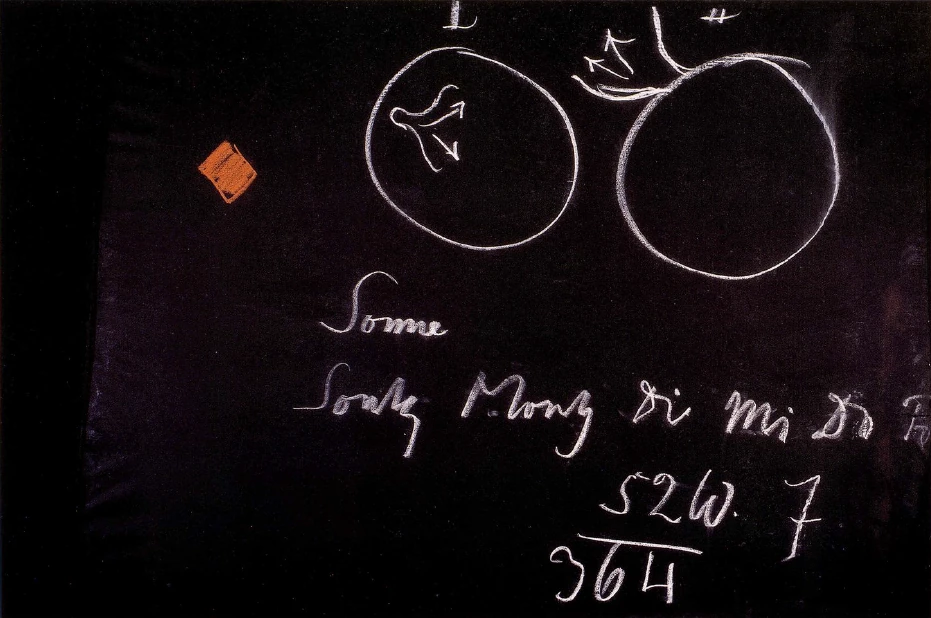
Seventh Lecture
[ 1 ] Die letzten Betrachtungen hier waren gewidmet einem Wege, der entsprechend begangen dazu führt, eine Anschauung zu gewinnen über unser Weltenall und seine Organisation. Sie haben gesehen, daß dieser Weg notwendig macht, immerfort den Einklang aufzusuchen zwischen dem, was im Menschen selbst vor sich geht, und dem, was im großen Weltenall vor sich geht. Ich werde die folgenden Betrachtungen morgen und übermorgen so anzulegen haben, daß auch unsere von auswärts zur Generalversammlung gekommenen Freunde einiges von diesen Dingen werden haben können. Daher werde ich morgen von dem, was gesagt worden ist, kurz einiges zu wiederholen haben, das Wesentliche, um daran dann anderes anzuknüpfen. Heute will ich aber in den Gang unserer Betrachtungen einiges einfügen, das gerade geeignet sein kann, des Näheren auf den wahren Weg, das Weltall kennen zu lernen, hinzuweisen.
[ 1 ] The previous reflections here were devoted to a path that, when followed appropriately, leads to gaining an understanding of our universe and its organization. You have seen that this path requires us to continually seek harmony between what takes place within human beings themselves and what takes place in the vast universe. I will have to structure the following reflections tomorrow and the day after tomorrow in such a way that our friends who have come from out of town for the General Assembly will also be able to grasp some of these things. Therefore, tomorrow I will have to briefly repeat some of what has been said—the essentials—in order to then build on them. Today, however, I would like to insert into the course of our reflections something that may be particularly suitable for pointing more specifically toward the true path to understanding the universe.
[ 2 ] Wenn Sie meine «Geheimwissenschaft» durchgehen, so werden Sie sehen, daß bei dieser skizzenhaften Darstellung der Entwickelung des uns bekannten Weltenalls, wie sie gegeben ist in dieser «Geheimwissenschaft», überall die Beziehung zum Menschen festgehalten ist. Wenn Sie ausgehen von der Saturnentwickelung, um dann bis zu unserer Erdenentwickelung fortzuschreiten durch die Sonnen- und Mondenentwickelung, so wissen Sie ja, daß diese Saturnentwickelung dadurch charakterisiert wird, mitcharakterisiert wird, daß durch diese Saturnentwickelung die erste Anlage gemacht worden ist für die menschliche Sinnenhaftigkeit. Und so geht es dann weiter. Überall werden die Zustände des Weltenalls so verfolgt, daß man zu gleicher Zeit damit die Entwickelung des Menschen hat. Also, der Mensch wird nicht so gedacht im Weltenall stehend, wie das in der äußeren Naturwissenschaft heute geschieht, daß man das Weltenall auf der einen Seite betrachtet, und dann den Menschen auf der andern Seite, wie zwei nicht recht zueinander gehörige Wesenheiten, sondern beides wird ineinander gedacht, wird in seiner Entwickelung miteinander verfolgt. Dies muß auch durchaus berücksichtigt werden, wenn man von dem spricht, was gegenwärtig Eigenschaften, Kräfte, Bewegungen und so weiter des Weltenalls sind. Man kann nicht auf der einen Seite im kopernikanisch-galileischen Sinne das Weltenall rein räumlich abstrakt betrachten und daneben gewissermaßen dann den Menschen, sondern man muß beide ineinanderfließen lassen während der Betrachtung.
[ 2 ] If you go through my *Secret Science*, you will see that in this sketchy account of the evolution of the universe as we know it—as presented in *Secret Science*—the connection to human beings is emphasized throughout. If you start with the Saturn evolution and then proceed through the Sun and Moon evolutions to our Earth evolution, you know that this Saturn evolution is characterized—or rather, co-characterized—by the fact that it laid the first foundation for human sensibility. And so it continues. Throughout this process, the states of the universe are traced in such a way that the development of the human being is simultaneously revealed. Thus, human beings are not conceived of as standing apart in the universe, as is the case in modern natural science, where the universe is viewed on one side and human beings on the other—as two entities that do not truly belong together—but rather both are conceived of as intertwined, and their development is traced in tandem. This must also be taken fully into account when speaking of what currently constitute the properties, forces, movements, and so on of the universe. One cannot, on the one hand, view the universe in a purely spatial and abstract sense—in the Copernican-Galilean sense—and then, as it were, consider humanity separately; rather, one must allow both to flow into one another during the examination.
[ 3 ] Das ist aber nur dann möglich, wenn man eine gehörige Vorstellung von dem Menschen selbst erst gewonnen hat. Ich habe Sie schon darauf aufmerksam gemacht, wie wenig eingentlich die gegenwärtige naturwissenschaftliche Anschauung geeignet ist, Aufschlüsse über den Menschen selbst zu geben. Was tut sie denn eigentlich gerade da, wo sie aus ihren heutigen Voraussetzungen heraus am größten ist, diese Naturwissenschaft? Betrachten Sie sie nur. Sie stellt in einer Großartigkeit dar, wie der Mensch aus anderen Formen körperlich nach und nach sich entwickelt hat. Sie verfolgt, wie dann während der Embryonalzeit diese Formen wie in einer kurzen Wiederholung noch einmal durchgemacht werden. Das heißt, sie betrachtet den Menschen als das oberste der Tiere. Sie betrachtet die Tierheit, und dann setzt sie den Menschen zusammen aus alledem, was sie an der Tierheit gefunden hat. Das heißt, sie betrachtet alles Außermenschliche, um dann gewissermaßen zu sagen: So, hier Schlußpunkt, da endet das Außermenschliche, da kommt es beim Menschen an. — Es wird nicht der Mensch selbst als solcher betrachtet. Das ist dasjenige, was der heutigen Naturwissenschaft gar nicht gelegen ist, den Menschen als solchen zu betrachten, und daher gewinnt sie gar keine Anschauung von der menschlichen Wirklichkeit.
[ 3 ] But this is only possible once one has first gained a proper understanding of human beings themselves. I have already pointed out to you how little the current scientific worldview is actually suited to providing insights into human beings themselves. What, in fact, does this natural science do precisely in the area where it is at its greatest, based on its current premises? Just consider it. It magnificently illustrates how human beings have gradually developed physically from other forms. It traces how, during the embryonic period, these forms are then passed through once more, as in a brief recapitulation. In other words, it regards human beings as the highest of the animals. It examines the animal realm, and then constructs human beings from everything it has found in that realm. In other words, it examines everything non-human in order to then, so to speak, say: “Here is the final point; this is where the non-human ends, and this is where humanity begins.” — It does not consider the human being as such. This is precisely what modern natural science is entirely unwilling to do—to consider the human being as such—and therefore it gains no insight whatsoever into human reality.
[ 4 ] Sehen Sie, ich möchte hier ausgehen von etwas, was ich gestern an ganz anderem Orte und in ganz anderem Zusammenhange vor anderem Publikum entwickelt habe, was aber auch hier aufklärend in unserem jetzigen Zusammenhange wirken kann. Es wäre wirklich heute sehr vonnöten, daß die Menschen, die sachverständig auf diesem Gebiete sein wollen, zur Goetheschen naturwissenschaftlichen Betrachtung, insbesondere zur Betrachtung seiner Farbenlehre ein wenig ihre Zuflucht nehmen würden. In dieser Farbenlehre ist eigentlich eine ganz andere Methode der naturwissenschaftlichen Betrachtung eingeschlagen, als man sie heute gewohnt ist. Gleich im Beginne ist die Rede von den sogenannten subjektiven Farben, von den physiologischen Farben, und da wird sehr sorgfältig untersucht, wie das menschliche Auge als ein Lebendiges Erlebnisse hat an der Umgebung, wie diese Erlebnisse durchaus nicht einfach nur so lange dauern, als das Auge der Außenwelt exponiert ist, ausgesetzt Ist, sondern wie eine Nachwirkung da ist. Sie kennen ja alle die einfachste Erscheinung auf diesem Gebiete: Sie sehen auf eine begrenzte, sagen wir zum Beispiel rote Fläche (Tafel 13, Rhombus links, Pfirsichblüt), wenden dann das Auge rasch ab und sehen auf eine weiße Fläche: Sie sehen das Rot in der grünen Nachfarbe. Das heißt, das Auge steht noch in einem gewissen Sinne unter dem Eindrucke desjenigen, was es erlebt hat. Nun, wir wollen jetzt nicht die Gründe untersuchen, warum gerade eine grüne Nachfarbe erscheint, sondern wir wollen nur an der mehr allgemeinen Tatsache festhalten, daß das Auge nachher das Erlebnis noch nachklingen läßt.
[ 4 ] You see, I would like to start here with something I discussed yesterday in a completely different place and context, before a different audience, but which can also serve to clarify our current discussion. It would really be very necessary today for people who wish to be experts in this field to turn, at least to some extent, to Goethe’s scientific approach—in particular, to his theory of colors. This theory of colors actually employs a method of scientific inquiry quite different from what we are accustomed to today. Right from the start, it discusses so-called subjective colors and physiological colors, and it examines very carefully how the human eye—as a living entity—experiences its surroundings, how these experiences do not simply last as long as the eye is exposed to the external world, but rather how an aftereffect persists. You are all familiar with the simplest phenomenon in this area: You look at a limited area—let’s say, for example, a red surface (Plate 13, left rhombus, peach blossom)—then quickly turn your gaze away and look at a white surface: You see the red as a green afterimage. This means that, in a certain sense, the eye is still under the impression of what it has experienced. Now, we do not wish to investigate the reasons why a green afterimage appears in particular; rather, we simply want to note the more general fact that the eye allows the experience to linger afterward.
[ 5 ] Da haben wir es zu tun mit einem Erlebnis an der Peripherie unseres menschlichen Leibes. Das Auge liegt an der Peripherie des menschlichen Leibes. Wir finden, wenn wir auf das Erlebnis des Auges hinschauen, daß durch eine gewisse begrenzte Zeit das Auge dieses Erlebnis noch ausklingen läßt. Dann ist das Erlebnis ganz abgeklungen. Dann kann das Auge unbeeinflußt durch das, was es erlebt hat, sich anderen Erlebnissen zuwenden. Betrachten wir rein anschauungsgemäß zunächst einmal eine Erscheinung, die nun nicht an ein einzelnes lokalisiertes Organ unseres Organismus gebunden ist, sondern an den ganzen Menschen gebunden ist, und wir werden, wenn wir uns unbefangener Beobachtung hingeben, nicht verkennen können, wie eben schon vor dieser Beobachtung dieses Erlebnis verwandt ist mit dem Erlebnis an dem lokalisierten Auge. Sie setzen sich einer Erscheinung, einem Erlebnis aus, Sie exponieren sich als ganzer Mensch diesem Erlebnis. Indem Sie sich als ganzer Mensch diesem Erlebnis exponieren, nehmen Sie es auf, so wie das Auge das Erlebnis der Farbe aufnimmt, gegenüber welcher es exponiert ist. Und jetzt können Sie erleben, daß noch nach Monaten, nach Jahren das Nacherlebnis, das Nachbild, in Form des Gedächtnisbildes aus Ihnen herauskommt. Es ist die ganze Erscheinung etwas anders, aber Sie werden das Verwandte des Erinnerungsbildes mit einem Nachbilde des Erlebnisses, das auf kurze, beschränkte Zeit das Auge hat, nicht verkennen können.
[ 5 ] Here we are dealing with an experience at the periphery of our human body. The eye is located at the periphery of the human body. When we look at the experience of the eye, we find that for a certain limited time, the eye allows this experience to fade away. Then the experience has completely faded. Then the eye, uninfluenced by what it has experienced, can turn to other experiences. Let us first consider, purely intuitively, a phenomenon that is not bound to a single localized organ of our organism, but rather to the whole human being; and if we engage in unbiased observation, we will not fail to recognize how, even before this observation, this experience is related to the experience of the localized eye. You expose yourself to a phenomenon, to an experience; you expose yourself as a whole person to this experience. By exposing yourself as a whole person to this experience, you take it in, just as the eye takes in the experience of color to which it is exposed. And now you can experience that even months or years later, the aftereffect, the afterimage, emerges from within you in the form of a memory image. The entire phenomenon is somewhat different, but you will not fail to recognize the similarity between the memory image and the afterimage of the experience that the eye has for a brief, limited time.
[ 6 ] So werden Fragen vor den Menschen in Richtigkeit hingestellt, und der Mensch kann ja nur etwas über die Welt erfahren, indem er in der richtigen Weise fragen lernt. Fragen wir uns einmal: Wie hängen diese beiden Erscheinungen zusammen, das Nachbild des Auges und das Erinnerungsbild an ein bestimmtes Erlebnis, das — wir wollen es ganz unbestimmt lassen woher — aus uns aufsteigt? — Sehen Sie, wenn man solche Fragen aufwirft und nach einer sachgemäßen Antwort sucht, so versagt sogleich die ganze Methode der gegenwärtigen naturwissenschaftlichen Betrachtung. Sie versagt aus dem Grunde, weil ja diese Betrachtung eines nicht weiß: sie weiß nicht die universelle Bedeutung der Metamorphose. Die ganze universelle Bedeutung der Metamorphose, die kennt die gegenwärtige Naturwissenschaft nicht. Diese Metamorphose ist etwas, was eben beim Menschen in dem einen Leben nicht abgeschlossen ist, was beim Menschen sich erst abschließt in den aufeinanderfolgenden Erdenleben.
[ 6 ] Thus, questions are presented to people in a correct manner, and people can only learn about the world by learning to ask questions in the right way. Let us ask ourselves: How are these two phenomena connected—the afterimage of the eye and the memory of a specific experience that arises within us—let us leave its origin entirely undefined?—You see, when one raises such questions and seeks an appropriate answer, the entire method of contemporary scientific inquiry immediately fails. It fails for the reason that this approach does not know one thing: it does not know the universal significance of metamorphosis. Contemporary natural science does not know the full universal significance of metamorphosis. This metamorphosis is something that is not completed in a single human life, but is only brought to completion in successive earthly lives.
[ 7 ] Sie wissen, wir unterscheiden zunächst einmal, um eine Ansicht gewinnen zu können über den ganzen Menschen — wenn wir von der Dreigliedrigkeit absehen, nur auf zwei Glieder sehen, wobei wir das zweite und dritte zusammenfassen —, wir unterscheiden zunächst die menschliche Kopforganisation und den übrigen Menschen. Wir müssen, wenn wir die menschliche Kopforganisation studieren wollen, verstehen können, wie diese Kopforganisation mit der ganzen Entwickelung des Menschen zusammenhängt. Sie ist eine spätere Metamorphose, sie ist die Umbildung des ganzen übrigen Menschen hinsichtlich seiner Kräfte. Was Sie, indem Sie sich kopflos denken natürlich mit alledem, was vom Kopf in den übrigen Organismus hineingehört und zum Kopf eigentlich gehört —, was Sie da im übrigen Menschen sind, das fassen Sie ja natürlich zunächst substantiell auf. Aber dieses Substantielle kommt nicht in Betracht, sondern der Kräftezusammenhang dieser Substanz metamorphosiert sich im All zwischen dem Tode und einer neuen Geburt und wird im nächsten Erdenleben Kopforganisation. Das heißt, was Sie jetzt in Ihrem außer dem Kopf befindlichen Menschen an sich tragen, ist eine frühere Metamorphose der späteren Kopforganisation. Wenn Sie aber verstehen wollen, wie diese Metamorphose zusammenhängt, dann müssen Sie das Folgende ins Auge fassen.
[ 7 ] As you know, in order to gain an understanding of the whole human being—if we set aside the threefold nature and focus only on two aspects, combining the second and third—we first distinguish between the human head organization and the rest of the human being. If we want to study the human head organization, we must be able to understand how this head organization is connected to the entire development of the human being. It is a later metamorphosis; it is the transformation of the rest of the human being with regard to its powers. What you are—when you think of yourself as headless, naturally including everything that belongs from the head into the rest of the organism and actually belongs to the head—what you are in the rest of the human being, you naturally conceive of as substantial at first. But this substantial aspect is not what matters; rather, the interplay of forces within this substance undergoes a metamorphosis in the cosmos between death and a new birth, and becomes the head organization in the next earthly life. This means that what you now carry within the part of your being outside the head is an earlier metamorphosis of the later head organization. But if you want to understand how this metamorphosis works, then you must consider the following:
[ 8 ] Nehmen Sie einmal irgendein Organ — Leber oder Niere — Ihres übrigen Menschen und vergleichen Sie das mit Ihrer Kopforganisation, so finden Sie einen wesentlichen, durchgreifenden Unterschied. Sie finden nämlich den Unterschied, daß die ganze Tätigkeit der Organe Ihres außerkopflichen Menschen nach innen gerichtet ist. Wenn Sie zum Beispiel das Nierenorgan nehmen, so ist die ganze Tätigkeit nach dem Innern der Körperhöhle gerichtet. Dorthin ist die Tätigkeit des Nierensystems gerichtet. Und es ist diese Tätigkeit sogar auf Ausscheidung berechnet. Wenn Sie dieses Organ vergleichen mit irgendeinem Organ, das gerade für das Haupt, für den Kopf des Menschen charakteristisch ist, so können Sie das Auge nehmen. Das ist genau entgegengesetzt konstruiert, das ist ganz nach außen gerichtet. Und was es als Wechselbeziehung nach außen hat, das gibt es nach dem Innern des Menschen, nach dem Verständnis, nach dem Verstande ab. Sie haben in einem Organe des Hauptes das volle polarische Gegenbild eines Organes des übrigen Menschen. Der übrige Mensch hat seine Organe ganz nach dem Innern der Organisation des Organismus gerichtet. Das Haupt hat seine wesentlichen Organe nach außen geöffnet. Daher kann ich schematisch folgendes zeichnen (Tafel 13, oben):
[ 8 ] Take any organ—the liver or a kidney—from the rest of your human body and compare it with the organization of your head; you will find a significant, fundamental difference. Namely, you will find that the entire activity of the organs in the part of your body outside the head is directed inward. If, for example, you take the kidney, its entire activity is directed toward the interior of the body cavity. That is where the activity of the renal system is directed. And this activity is even geared toward excretion. If you compare this organ with any organ that is characteristic of the head, you can take the eye, for instance. It is constructed exactly the opposite way; it is directed entirely outward. And whatever interaction it has with the outside world, it transmits inward to the human being—to understanding, to the mind. In one organ of the head, you have the complete polar opposite of an organ of the rest of the human body. The rest of the human body has its organs directed entirely toward the interior of the organism’s structure. The head has its essential organs open to the outside. Therefore, I can sketch the following schematically (Plate 13, top):
[ 9 ] Nehmen wir einmal an, das wäre die eine Metamorphose, das wäre die andere Metamorphose, die hier in Betracht kommt, so müssen Sie sich vorstellen: erstes Leben, zweites Leben; dazwischen ist dann das Leben zwischen dem Tode und einer neuen Geburt. Wir haben ein inneres Organ. Dieses innere Organ ist nach innen geöffnet. Indem die Metamorphose wirksam ist zwischen dem Tode und einer neuen Geburt, kehrt sich die ganze Stellung und alles, was an dieses Organ geknüpft wird, um. Das Organ wird nach außen geöffnet. Es ist also so, wie wenn dasjenige, was da nach innen seine Tätigkeit entfaltet, in der nächsten Inkarnation nach außen seine Tätigkeit entfaltet. Sie müssen sich also vorstellen, daß da etwas vorgegangen ist zwischen den zwei Inkarnationen, was man nur vergleichen kann damit, daß Sie sich denken, Sie haben hier einen Handschuh, den ziehen sie an; und nunmehr nehmen Sie ihn und drehen ihn um, so daß dasjenige, was an die Hand anliegt, nach außen kommt und das, was früher nach außen, nach der Luft zu lag, nach innen kommt. Also die Metamorphose hat sich nicht nur so vollzogen, daß dasjenige, was da die übrigen Organe sind, sich etwa bloß umgebildet hat, nein, es hat sich auch umgestülpt. Es ist das Innere, das nach innen Gewendete zum Äußeren, zum nach außen Gewendeten geworden. So daß wir sagen können: Die Organe — ich werde jetzt sprechen von Körper und Kopf als dem Gegensatze —, die Organe des Körpers metamorphosieren sich, indem sie sich umstülpen. Also unsere Augen wären in unserer vorhergehenden Inkarnation irgend etwas in unserem Bauche gewesen, wenn ich den Ausdruck eben gebrauchen darf. Das hat sich umgestülpt in seinen Kräften und ist jetzt Augen geworden, und die haben die Fähigkeit erlangt, Nachbilder zu erzeugen. Diese Fähigkeit, Nachbilder an der Außenwelt zu erzeugen, die muß auch von etwas herkommen. Wovon kommt diese Fähigkeit, Nachbilder zu erzeugen, her?
[ 9 ] Let us assume that this is one metamorphosis and that is the other metamorphosis under consideration here; then you must imagine it this way: first life, second life; in between lies the life between death and a new birth. We have an internal organ. This internal organ opens inward. As the metamorphosis takes effect between death and a new birth, the entire orientation—and everything connected to this organ—is reversed. The organ then opens outward. It is, in other words, as if that which carries out its activity inwardly in this life were to carry it out outwardly in the next incarnation. So you must imagine that something has taken place between the two incarnations that can only be compared to this: imagine you have a glove here, which you put on; and now you take it and turn it inside out, so that what was against the hand comes to the outside, and what was previously on the outside, facing the air, comes to the inside. So the metamorphosis did not merely take place in such a way that the other organs were simply transformed; no, they were also turned inside out. What was inside—what was turned inward—has become the outside, the part turned outward. So we can say: The organs—I will now speak of the body and the head as opposites—the organs of the body undergo metamorphosis by turning inside out. So our eyes would have been something in our abdomen in our previous incarnation, if I may use that expression. That has turned itself inside out in its powers and has now become eyes, and they have acquired the ability to produce afterimages. This ability to produce afterimages of the external world must also come from somewhere. Where does this ability to produce afterimages come from?
[ 10 ] Nun, betrachten wir einmal die Augen, die Aufgabe der Lebenstätigkeit des Auges, betrachten wir das einmal ganz unbefangen. Die Nachbilder beweisen uns ja nur, daß das Auge etwas Lebendiges ist, die Nachbilder beweisen uns ja nur, daß das Auge die Tätigkeit ein wenig festhält. Warum hält das Auge die Tätigkeit ein wenig fest? Lassen Sie uns von etwas Einfacherem ausgehen. Nehmen Sie einmal an, Sie greifen Seide an. Greife ich Seide an, so bleibt mir im Organ, im Gefühlsorgan eine Nachwirkung der Seidenglätte. Wenn ich wiederum an die Seide herankomme, so erkenne ich Seide wiederum an dem, was es in mir bewirkt hat. So ist es auch beim Auge. Das Nachbild hat etwas zu tun mit dem Wiedererkennen. Die innere Lebendigkeit, die da in Betracht kommt, damit das Nachbild entsteht, die hat etwas zu tun mit dem Wiedererkennen. Aber da draußen, wenn es sich um das Wiedererkennen handelt, da bleiben die Dinge. Sie bleiben draußen. Wenn ich jetzt jemanden von Ihnen sehe und ihn morgen wieder treffe und ihn wieder erkenne, da steht er leibhaftig da.
[ 10 ] Well, let’s take a look at the eyes, at the function of the eye’s vital activity—let’s examine this completely objectively. Afterimages merely prove to us that the eye is a living thing; afterimages merely prove to us that the eye retains the activity for a short while. Why does the eye retain the activity for a moment? Let’s start with something simpler. Suppose you touch silk. When I touch silk, a residual sensation of its smoothness remains in my sensory organ. When I touch the silk again, I recognize it by the effect it has produced within me. It is the same with the eye. The afterimage has something to do with recognition. The inner vitality that comes into play so that the afterimage arises has something to do with recognition. But out there, when it comes to recognition, things remain where they are. They remain outside. If I see one of you now and meet you again tomorrow and recognize you, there you stand in the flesh.
[ 11 ] Vergleichen wir das jetzt einmal mit dem, woraus das Auge als Metamorphose sich entwickelt hat in bezug auf die Tätigkeit. Sehen wir auf das Organ in unserem inneren Organismus, aus dem sich das Auge entwickelt hat. Da muß in einer gewissen Weise veranlagt sein dasjenige, was als die Fähigkeit des Nachbildens, als die Lebendigkeit des Auges erscheint, nur muß es nach innen gewendet sein. Da muß auch das etwas zu tun haben mit dem Wiedererkennen. Aber ein Erlebnis wiedererkennen heißt, sich daran erinnern. Suchen Sie also die ursprüngliche Metamorphose für die Tätigkeit des Auges in einem früheren Leben, so müssen Sie fragen nach der Tätigkeit des Organs, die wirkt für die Erinnerung. Diese Dinge lassen sich natürlich nicht so bequem und einfach darlegen, wie man es heute liebt; aber sie lassen sich eben dem Wege nach andeuten. Und verfolgen Sie den Weg, dann werden Sie finden: alle unsere Sinnesorgane, die nach außen gerichtet sind, haben ihre Gegenbilder in unseren inneren Organen. Und diese inneren Organe sind ja zu gleicher Zeit die Organe der Erinnerung. Mit dem Auge sehen Sie dasjenige, was im äußeren Leben wiederkehrt; mit dem, was in Ihrer Leibeshöhle entspricht der früheren Metamorphose des Auges, erinnern Sie sich an die Bilder, die Ihnen das Auge vermittelt. Mit dem Ohre hören Sie die Töne; mit demjenigen, was in Ihrer Leibeshöhle dem Ohr entspricht, erinnern Sie sich an die Töne. Und so wird der ganze Mensch, indem er seine Organe nach dem Innern öffnet, zum Erinnerungsorgan. Der ganze Mensch ist Erinnerungsorgan. Und wir stellen uns dem äußeren Leben gegenüber, wir nehmen dieses äußere Leben auf. Die materialistische Naturwissenschaft sagt, wir nehmen zum Beispiel Augenbilder auf; ihre Wirkungen übertragen sich auf den Augennerv. Damit ist es aber aus. Der ganze übrige Organismus ist für den Erkenntnisprozeß das fünfte Rad am Wagen. Das ist aber nicht wahr. Dasjenige, was wir wahrnehmen, geht in den übrigen Organismus über, und die Nerven haben mit der Erinnerung unmittelbar gar nichts zu tun, sondern die übrigen Organe, die Organe, welche ihre Tätigkeit nach innen öffnen. Der ganze Mensch ist Erinnerungswerkzeug, nur spezialisiert nach den verschiedenen Organen. Der Materialismus erlebt die furchtbare Tragik — ich habe darauf schon aufmerksam gemacht —, daß er gerade das Materielle nicht erkennen kann, denn er bleibt in Abstraktionen stecken. Und der Materialismus wird immer abstrakter, das heißt filtrierter, geistiger, und er kann nicht in das Wesen der materiellen Erscheinungen eindringen. Er begreift nicht die Geistigkeit der materiellen Erscheinungen. Zum Beispiel begreift er nicht, daß mit unserem Gedächtnisse unsere inneren Leibesorgane viel mehr zu tun haben als das Gehirn, das nur die Vorstellungen vorbereitet, damit sie von den übrigen Leibesorganen aufgenommen werden. In dieser Beziehung ist unsere Wissenschaft — was denn eigentlich? — die fortgesetzte Askese, das fortgesetzte einseitige Asketentum. Worin besteht denn dieses einseitige Asketentum? Darinnen, daß man nicht die materielle Welt in ihrer Geistigkeit begreifen, sondern sie verachten, sie überwinden will, mit ihr nichts zu tun haben will. Unsere Wissenschaft hat schon von der Askese das gelernt, daß sie überhaupt nichts mehr begreift von der Welt; daß sie ausdenkt, die Augen und die übrigen Sinnesorgane nehmen die Wahrnehmungen auf, übertragen sie aufs Nervensystem und dann auf irgend etwas, was man im Unbestimmten läßt. Nein, dann geht das über in den übrigen Organismus. Da entstehen zunächst die Erinnerungen durch das Zurückschwingen der Organe.
[ 11 ] Let us now compare this with the process through which the eye developed as a metamorphosis in terms of its function. Let us look at the organ within our inner organism from which the eye developed. What appears as the ability to form afterimages—the liveliness of the eye—must be present there in a certain way, though it must be turned inward. This must also have something to do with recognition. But to recognize an experience means to remember it. So if you seek the original metamorphosis for the activity of the eye in a previous life, you must inquire into the activity of the organ that works for memory. Of course, these things cannot be explained as conveniently and simply as people like to have them today; but they can be hinted at along this path. And if you follow this path, you will find: all our sense organs, which are directed outward, have their counterparts in our internal organs. And these internal organs are, at the same time, the organs of memory. With the eye, you see what recurs in external life; with that part of your body cavity corresponding to the eye’s earlier metamorphosis, you recall the images conveyed to you by the eye. With the ear, you hear sounds; with that part of your abdominal cavity that corresponds to the ear, you recall the sounds. And so the whole human being, by opening its organs inward, becomes an organ of memory. The whole human being is an organ of memory. And we face external life; we take in this external life. Materialistic natural science says, for example, that we take in visual images; their effects are transmitted to the optic nerve. But that is all. The rest of the organism is, for the process of cognition, the fifth wheel on the wagon. But that is not true. What we perceive passes into the rest of the organism, and the nerves have absolutely nothing to do with memory directly; rather, it is the other organs—the organs that open their activity inward—that are involved. The whole human being is an instrument of memory, merely specialized according to the various organs. Materialism faces the terrible tragedy—as I have already pointed out—that it is precisely unable to recognize the material, for it remains stuck in abstractions. And materialism becomes ever more abstract—that is, more filtered, more spiritual—and it cannot penetrate the essence of material phenomena. It fails to grasp the spiritual nature of material phenomena. For example, it fails to grasp that our inner bodily organs have far more to do with our memory than the brain, which merely prepares the mental images so that they can be received by the other bodily organs. In this respect, our science—what is it, really?—is continued asceticism, continued one-sided asceticism. What does this one-sided asceticism consist of? It consists in not wanting to comprehend the material world in its spirituality, but rather in wanting to despise it, to overcome it, and to have nothing to do with it. Our science has already learned from asceticism that it no longer comprehends anything at all about the world; that it imagines the eyes and the other sense organs take in perceptions, transmit them to the nervous system, and then to something that is left undefined. No, then this passes into the rest of the organism. There, memories arise first through the reverberation of the organs.
[ 12 ] Das hat man in Zeiten, in denen eine falsche Askese nicht auf die Menschenanschauungen gedrückt hat, sehr wohl gewußt. Daher haben die Alten, wenn sie zum Beispiel von «Hypochondrie» gesprochen haben, nicht so gesprochen wie oftmals der moderne Mensch oder gar die Psychoanalytiker, daß die Hypochondrie nur etwas Seelisches sei, das da in der Seele wurzelt. Nein, Hypochondrie heißt ja Unterleibsknorpeligkeit. Die Alten haben ganz gut gewußt, daß das, was Hypochondrie ist, in einer Versteifung, in einer Verhärtung des Unterleibssystems seinen Grund hat. Und die englische Sprache, die noch auf einer Etappe steht, die gegenüber den andern europäischen Sprachen eine weniger vorgerückte Stufe darstellt, die hat in sich noch eine Erinnerung von diesem Zusammenklang des Materiellen mit dem Geistigen. Ich erinnere nur an das eine. Man nennt im Englischen seelisch etwas «spleen», aber es ist nicht bloß seelisch. Die Milz heißt auch «spleen». Und der «spleen» hat mit der Milz sehr viel zu tun. Das ist nämlich nicht etwas, was man bloß aus dem Nervensystem zu erklären hat, sondern was man aus der Milz zu erklären hat. Und so könnte sehr vieles gefunden werden. Der Genius der Sprache hat ja sehr vieles erhalten, und wenn auch die Worte etwas umgebildet sind für den seelischen Gebrauch, weisen sie doch auf dasjenige hin, was als eine Uranschauung der Menschheit gut funktioniert hat.
[ 12 ] People were well aware of this in times when a false asceticism had not yet imposed itself on their views of humanity. That is why the ancients, when they spoke of “hypochondria,” for example, did not speak of it as modern people—or even psychoanalysts—often do, as if hypochondria were merely a psychological condition rooted in the soul. No, hypochondria literally means “abdominal cartilaginousness.” The ancients knew quite well that what constitutes hypochondria has its root in a stiffening, a hardening of the abdominal system. And the English language—which is still at a stage that represents a less advanced level compared to the other European languages—still retains within itself a memory of this harmony between the material and the spiritual. I’ll mention just one example. In English, something emotional is called “spleen,” but it’s not merely emotional. The spleen is also called “spleen.” And “spleen” has a great deal to do with the spleen itself. For this is not something that can be explained solely in terms of the nervous system, but rather in terms of the spleen. And so many more examples could be found. The genius of language has indeed preserved a great deal, and even if the words have been somewhat adapted for psychological use, they still point to what has functioned well as a primordial insight of humanity.
[ 13 ] Sie sehen sich also die Welt an, nehmen sie als ganzer Mensch wahr, und indem Sie sie als ganzer Mensch wahrnehmen, wirkt sie auf Ihre Organe. Diese Organe passen sich den Erlebnissen, der Erlebnisart an. Auf der Klinik, wenn man Anatomie treibt, ist Leber Leber; Leber eines Fünfzigjährigen, Leber eines Fünfundzwanzigjähtigen, Leber eines Musikers ist Leber; Leber eines, der von der Musik so viel versteht, wie der Ochs vom Sonntag, wenn er die ganze Woche Gras gefressen hat, ist auch Leber. Aber das Bedeutsame besteht darinnen, daß ein gewichtiger Unterschied ist zwischen der Leber eines Musikers und der Leber eines Nichtmusikers, weil die Leber sehr, sehr viel zu tun hat mit dem, was widerklingt im Menschen von musikalischen Vorstellungen. Ja, es nützt nichts, in asketischer Erkenntnis die Leber als ein geringes Organ zu betrachten. Diese Leber, die scheinbar ein so geringes Organ ist, ist der Sitz alles dessen, was in der schönen Folge der Melodien lebt, und die Leber hat sehr viel mit dem Anhören einer Symphonie zu tun. Nur muß man natürlich sich klar sein, daß diese Leber auch noch ein Ätherorgan hat und daß das in erster Linie damit zu tun hat. Aber die äußere physische Leber ist eben gewissermaßen das Exsudat der Ätherleber und ist so gestaltet, wie diese Ätherleber gestaltet ist. Ja, da bereiten Sie sich Ihre Organe zu, und wenn Sie nun ganz selbst sich überlassen wären, und insofern Sie sich selbst überlassen sind, würde ganz genau Ihr Sinnesapparat in der nächsten Inkarnation ein Abbild Ihrer Erlebnisse gegenüber der Umwelt sein. Er ist es in gewisser Beziehung, nur ist er es nicht ausschließlich, denn es kommen uns in dem Leben zwischen dem Tode und neuer Geburt Wesen der höheren Hierarchien zu Hilfe, welche bewirken, daß nicht immer alle jene Ungezogenheiten, die wir begehen gegenüber unseren Organen, auch wirklich von uns schicksalsmäßig getragen werden müssen. Es wird uns geholfen zwischen Tod und neuer Geburt. Wir sind in bezug auf diesen Teil unserer Organisation nicht auf uns allein angewiesen.
[ 13 ] So you look at the world, perceive it as a whole person, and as you perceive it as a whole person, it affects your organs. These organs adapt to the experiences and the nature of those experiences. In the clinic, when you’re studying anatomy, a liver is a liver; the liver of a fifty-year-old, the liver of a twenty-five-year-old, the liver of a musician—it’s all a liver; the liver of someone who understands as much about music as an ox on Sunday after eating nothing but grass all week—that’s also a liver. But the significant point is that there is a crucial difference between the liver of a musician and that of a non-musician, because the liver has a great, great deal to do with what resonates within a person from musical experiences. Yes, it does no good to regard the liver as an insignificant organ out of ascetic conviction. This liver, which appears to be such a minor organ, is the seat of everything that lives in the beautiful sequence of melodies, and the liver has a great deal to do with listening to a symphony. Of course, one must be clear that this liver also has an etheric organ and that this is primarily what it has to do with. But the outer physical liver is, so to speak, the exudate of the etheric liver and is shaped just as this etheric liver is shaped. Yes, this is where you prepare your organs, and if you were now entirely left to your own devices—and to the extent that you are left to your own devices—your sensory apparatus in the next incarnation would be an exact reflection of your experiences in relation to the environment. It is so in a certain sense, but not exclusively, for in the life between death and rebirth, beings from the higher hierarchies come to our aid, ensuring that not all the mistreatment we inflict upon our organs must necessarily be borne by us as a matter of fate. We are helped between death and rebirth. With regard to this part of our organization, we are not left to our own devices.
[ 14 ] Aber Sie sehen daraus, daß ein solcher Zusammenhang besteht zwischen dem ganzen übrigen Menschen und seinen Organen und seiner Kopforganisation. Der Körper wird Kopf, und den Kopf verlieren wir in bezug auf seine Kräftebildung mit dem Tod. Daher ist er auch wesentlich knöcherig in seiner Form und erhält sich länger als der übrige Organismus hier auf der Erde. Das ist nur das äußere Zeichen dafür, daß er uns verlorengeht für unsere folgende Inkarnation, für alles das, was wir durchzumachen haben zwischen dem Tod und einer neuen Geburt.
[ 14 ] But you can see from this that such a connection exists between the rest of the human being and his organs and the structure of his head. The body becomes the head, and with death we lose the head in terms of its development of powers. That is why it is essentially bony in form and persists longer than the rest of the organism here on Earth. This is merely the outward sign that we lose it for our next incarnation, for everything we must go through between death and a new birth.
[ 15 ] Diese Dinge, die wurden von der alten atavistischen Weisheit wohl gefühlt, und sie wurden auch dann gefühlt, wenn jener große Zusammenhang des Menschen mit dem Makrokosmos gesucht wurde, der in den alten Beschreibungen über die Himmelsbewegungen zum Ausdrucke kam. Der Genius der Sprache hat auch in dieser Beziehung manches erhalten. Sehen Sie, der Mensch — ich habe es Ihnen das letzte Mal ausgeführt — macht innerlich den Tageskteislauf mit. Sie machen Anspruch darauf, jeden Tag zu frühstücken, nicht bloß am Sonntag. Sie machen Anspruch darauf, jeden Tag zu Mittag zu essen und Abendbrot zu essen, nicht bloß, daß Sie frühstücken am Sonntag, Mittagessen am Mittwoch und Abendessen am Sonnabend; das tun Sie nicht. Sie unterliegen in bezug auf dasjenige, was Stoffwechsel mit der Außenwelt ist, dem Tageskreislauf. Diesen macht der Mensch innerlich mit. Dieser Tageskreislauf des Inneren, der entspricht im Menschen dem Tageskreislauf der Erde um ihre Achse. Solche Dinge wurden lebendig gefühlt in der Urweisheit. Da hat der Mensch gewußt, er ist nicht abgesondert von der Erde, er macht das mit, was die Erde macht. Und er wußte auch hinzudeuten auf dasjenige, was er da mitmacht. Wer Sinn hat für alte Kunstwerke, obwohl wir in den erhaltenen Kunstwerken sehr wenig Gelegenheit haben, diese Dinge uns noch anzuschauen, der kann selbst aus den alten Kunstwerken noch herausfühlen, wie eine lebendige Empfindung da war bei den Alten vom Zusammenhange des Mikrokosmos, des Menschen, mit dem Makrokosmos, aus der Stellung gewisser Figuren, aus der beginnenden Bewegung gewisser Figuren und so weiter; in denen sind zumeist kosmische Bewegungen nachgeahmt. Aber in etwas anderem liegt noch mehr.
[ 15 ] These things were intuitively sensed by ancient, atavistic wisdom, and they were also sensed when people sought that great connection between human beings and the macrocosm, which found expression in the ancient descriptions of the movements of the heavens. The genius of language has also preserved much in this regard. You see, human beings—as I explained to you last time—internally follow the daily cycle. You expect to have breakfast every day, not just on Sunday. You expect to have lunch and dinner every day, not just breakfast on Sunday, lunch on Wednesday, and dinner on Saturday; you don’t do that. With regard to what constitutes metabolism in relation to the outside world, you are subject to the daily cycle. Human beings participate in this cycle internally. This inner daily cycle corresponds in human beings to the Earth’s daily rotation on its axis. Such things were vividly felt in ancient wisdom. Back then, people knew they were not separate from the Earth; they participated in what the Earth does. And they also knew how to point to what they were participating in. Anyone with an appreciation for ancient works of art—even though the surviving artworks offer us very few opportunities to observe these things for ourselves—can still sense, even from these ancient works, the vivid perception the ancients had of the connection between the microcosm (the human being) and the macrocosm, as revealed in the positioning of certain figures, the initial movements of certain figures, and so on; in which cosmic movements are mostly imitated. But there is even more to it than that.
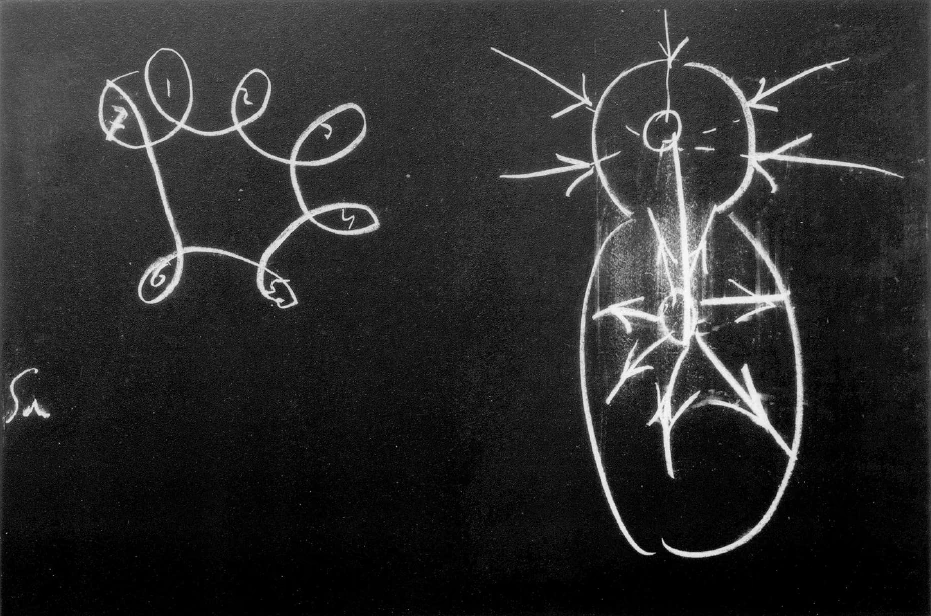
[ 16 ] Sehen Sie, bei allen oder bei den meisten Völkern finden Sie dem Tag die Woche gegenübergestellt. Sie haben auf der einen Seite, wenn ich so sagen darf, den Kreislauf des Stoffwechsels, was sich darin ausdrückt, daß Sie jeden Tag essen müssen zu denselben Mahlzeiten. Aber der Mensch war niemals so, daß er nur nach diesem Kreislauf des Stoffwechsels gerechnet hat. Er hat hinzugefügt zu dem Tageskteislauf den Wochenkteislauf. Er hat unterschieden erstens Sonne, Auf- und Untergang, dem Tageskreislauf entsprechend; aber er hat hinzugefügt: Sonntag, Montag, Dienstag, Mittwoch, Donnerstag, Freitag, Samstag — einen siebenfach so langen Zeitraum. Dann ist er wiederum zurückgekommen zum Sonntag. Gewissermaßen kommen wir nach 7 Kreisläufen wiederum zurück (Tafel 14, links). Das ist gefühlt in dem Gegensatze zwischen Tag und Woche. Aber mit diesem Gegensatz zwischen Tag und Woche wollte der Mensch noch viel mehr ausdrücken. Er wollte ausdrücken: der Tageskreislauf hängt mit der Sonne zusammen, mit dem Sonnenumgang. Wir nennen ihn heute scheinbar; das geht uns augenblicklich nichts an.
[ 16 ] You see, among all or most peoples, the day is contrasted with the week. On the one hand, if I may put it that way, there is the cycle of metabolism, which is expressed in the fact that you must eat at the same mealtimes every day. But human beings have never been the kind to organize their lives solely according to this metabolic cycle. They have added the weekly cycle to the daily cycle. First, they distinguished between the sun’s rising and setting, corresponding to the daily cycle; but they added: Sunday, Monday, Tuesday, Wednesday, Thursday, Friday, Saturday—a period seven times as long. Then they returned once more to Sunday. In a sense, we return again after seven cycles (Plate 14, left). This is sensed in the contrast between the day and the week. But with this contrast between the day and the week, human beings wanted to express much more. They wanted to express that the daily cycle is connected to the sun, to the sun’s course. We call it “apparent” today; that is of no concern to us at the moment.
[ 17 ] Nun haben wir einen siebenmal so großen Zeitraum, der wiederum zur Sonne zurückkehrt, aber der alle Planeten in sich aufnimmt, . Sonne, Mond, Mars, Merkur, Jupiter, Venus und Saturn. Der Wochenumgang nimmt alle Planeten in sich auf. Dadurch sollte gesagt werden: Wir haben einen Kreislauf, der dem Tag entspricht, einen andern Kreislauf, der einem siebenmal so großen Zeitraum entspricht, und der die Planeten in sich aufnimmt. Es sollte darauf hingedeutet werden: Nicht bloß dreht sich die Erde um ihre Achse, oder die Sonne geht herum, sondern das ganze System hat in sich auch eine Bewegung. Diese Bewegung könnte noch in manchem anderen gesehen werden. Nehmen Sie einmal den Jahreskreislauf, so bekommen Sie im Jahr, wie Sie wissen, 52 Wochen. Das ist ungefähr das Siebentel der Zahl nach, der Tage im Jahreskreislauf. Das heißt, die Wochen, von dem Jahresanfangs- zum Jahresendpunkt gedacht, machen notwendig zu denken, daß dasjenige, was von den Wochen geschieht, in einer anderen Geschwindigkeit geschieht, als was vom Tageskreislauf geschieht.
[ 17 ] Now we have a period seven times as long, which in turn returns to the Sun, but which encompasses all the planets: the Sun, the Moon, Mars, Mercury, Jupiter, Venus, and Saturn. The weekly cycle encompasses all the planets. This is meant to convey: We have a cycle corresponding to the day, and another cycle corresponding to a period seven times as long, which encompasses the planets. The point being made is this: It is not merely that the Earth rotates on its axis, or that the Sun moves in its orbit, but that the entire system also has an internal motion. This motion can be observed in many other ways as well. Take, for example, the annual cycle: as you know, there are 52 weeks in a year. This is approximately one-seventh of the number of days in the annual cycle. In other words, when considering the weeks from the beginning to the end of the year, one must conclude that the events of the weeks occur at a different pace than those of the daily cycle.
[ 18 ] Woher rührte denn das Gefühl, das eine Mal zu rechnen mit einem Tageskreislauf, das andere Mal zu rechnen mit einem Wochenkreislauf? Woher rührte denn dieses Gefühl? Das rührte von der Empfindung des Gegensatzes zwischen der menschlichen Hauptesentwickelung und der Entwickelung des ganzen übrigen Menschen her. Die menschliche Hauptesentwickelung, wir sehen sie in etwas repräsentiert, worauf ich Sie auch schon aufmerksam gemacht habe, wir sehen sie repräsentiert in dem, was im Haupte sich herausbildet ungefähr in einem Jahreskreislauf: in der Zahnbildung, der ersten Zahnbildung, der Milchzahnbildung.
[ 18 ] Where, then, did this feeling come from—the feeling of sometimes basing calculations on a daily cycle and other times on a weekly cycle? Where did this feeling come from? It stemmed from the perception of the contrast between the development of the human head and the development of the rest of the human being. The development of the human head—we see it represented in something I have already drawn your attention to—we see it represented in what takes shape in the head over the course of roughly one year: in tooth formation, the first tooth formation, the formation of the baby teeth.
[ 19 ] Wenn Sie den Zahnwechsel ins Auge fassen, so tritt er nach einem siebenmal so großen Zeitraume ein, um das 7. Lebensjahr herum. Man kann sagen: wie sich der einzelne Jahreskreislauf in bezug auf die Zahnbildung verhält zu dem Kreislauf in der Menschenentwickelung, der bis zum Zahnwechsel hin wirkt, so verhält sich der Tag zur Woche. Das wurde gefühlt. Und es wurde deshalb gefühlt, weil man das andere richtig empfand: Zahnbildung, insofern die Milchzähne entstehen, ist vorzugsweise ein Ergebnis der Vererbung. Sie brauchen nur den Embryo anzuschauen, wie er sich eigentlich aus der Kopfbildung heraus entwickelt und das andere anschließt, so werden Sie auch verstehen, daß die Empfindung der Alten richtig war, die Milchzahnbildung mehr mit dem Kopf, die spätere Zahnbildung mehr mit dem ganzen menschlichen Organismus in Zusammenhang zu bringen. Das ist ein Ergebnis, das sich allerdings heute auch wiederum einstellt, wenn wir sachgemäß die Sache betrachten. Die Milchzähne sind an die Kräfte des menschlichen Hauptes gebunden. Die anderen Zähne sind an die Kräfte gebunden, die aus dem übrigen Organismus in das Haupt hereinschießen.
[ 19 ] If you consider the process of tooth replacement, it occurs after a period seven times as long, around the age of 7. One could say: just as the individual annual cycle relates to tooth formation in the same way that the cycle of human development—which continues until the change of teeth—relates to it, so does the day relate to the week. This was intuitively understood. And it was understood because people correctly perceived the other aspect: tooth formation, insofar as baby teeth develop, is primarily a result of heredity. You need only look at the embryo, how it actually develops from the formation of the head and then integrates the rest of the body, and you will also understand that the intuition of the ancients was correct: to associate the formation of baby teeth more with the head, and the formation of permanent teeth more with the entire human organism. This is a conclusion that, however, is also being reached again today when we examine the matter properly. The baby teeth are linked to the forces of the human head. The other teeth are linked to the forces that surge into the head from the rest of the organism.
[ 20 ] Damit aber haben Sie an einem besonderen Falle hingedeutet auf einen wichtigen Gegensatz des Hauptes und des übrigen menschlichen Organismus. Dieser Gegensatz ist zunächst ein zeitlicher. Dasjenige, was im menschlichen Kopf vor sich geht, geht siebenmal so schnell vor sich wie das, was im übrigen menschlichen Organismus vor sich geht. Übersetzen wir uns das einmal in eine vernünftige Sprache — wir haben es eben in einer realen Sprache ausgedrückt —, jetzt übersetzen wir uns das in eine vernünftige Sprache. Denken Sie sich einmal, Sie essen heute, Sie haben heute die entsprechenden Mahlzeiten gegessen, ordnungsgemäß gegessen. Aber was Sie da gegessen haben — Ihr Organismus verlangt, daß Sie es morgen wiederholen. Aber Ihr Haupt, das hält ein anderes Tempo ein. Das Haupt muß 7 Tage lang warten, bis dasjenige, was heute von Ihrem übrigen Organismus aufgenommen worden ist, so weit ist, daß es vom Haupte verarbeitet werden kann. Wenn morgen Sonntag ist und Sie essen, dann muß Ihr Haupt bis zum nächsten Sonntag warten, um die Früchte dieses Essens zu haben. Da geschieht nach einer 7-tägigen Periode eine Wiederholung dessen, was Sie 7 Tage vorher in Ihrem Organismus vollbracht haben. Das fühlte man und drückte gleichsam das dadurch aus, daß man sagte: die Woche hindurch braucht man, bis das Physisch-Leibliche geistig-seelisch wird.
[ 20 ] But in doing so, you have used a specific example to illustrate an important contrast between the head and the rest of the human organism. This contrast is, first and foremost, a temporal one. What takes place in the human head occurs seven times as fast as what takes place in the rest of the human organism. Let’s translate that into plain language—we just expressed it in concrete terms—now let’s translate it into plain language. Imagine this: you’re eating today; you’ve eaten the appropriate meals today, as you should. But what you’ve eaten—your body demands that you repeat it tomorrow. But your head operates at a different pace. The head must wait seven days until what was absorbed today by the rest of your body is ready to be processed by the head. If tomorrow is Sunday and you eat, then your head must wait until the following Sunday to reap the benefits of that meal. After a seven-day period, there is a repetition of what you accomplished in your organism seven days earlier. People sensed this and expressed it, as it were, by saying: “It takes a week for the physical to become spiritual and soulful.”
[ 21 ] Sie sehen, die Metamorphose besteht auch darinnen, daß dasjenige, was eine siebenmal so lange Zeit braucht, in der einfachen Zeit wiederholt wird, wenn das nächste Leben folgt auf dieses Leben. Wir haben es also zu tun mit einer räumlichen Metamorphose dadurch, daß unser übriger Organismus, unser Körper, nicht bloß sich umwandelt, sondern umstülpt; und wir haben es zu tun mit einer zeitlichen Metamorphose, indem unsere Hauptesorganisation um 7 zurückgeblieben ist.
[ 21 ] You see, the metamorphosis also consists in the fact that what takes seven times as long is repeated in simple time when the next life follows this one. We are thus dealing with a spatial metamorphosis in that the rest of our organism—our body—is not merely transformed but turned inside out; and we are dealing with a temporal metamorphosis in that our head organization has been set back by 7.
[ 22 ] Es ist in der Tat diese menschliche Organisation nicht so einfach, als man es haben möchte im Sinne der heutigen bequemen Wissenschaft. Man muß sich schon darauf einlassen, diese Menschheitsorganisation komplizierter zu denken. Und studiert man den Menschen nicht, so kann man auch nicht studieren, an welchen Bewegungen des Weltenalls der Mensch teilnimmt. Deshalb sind die seit dem Beginn der Neuzeit beschriebenen Bewegungen des Weltenalls eben Abstraktionen, sind beschrieben mit Ausschluß von Menschenkenntnis.
[ 22 ] In fact, this human organization is not as simple as one might like it to be, in the sense of today’s convenient science. One must be willing to consider this organization of humanity in more complex terms. And if one does not study human beings, one cannot study the movements of the universe in which human beings participate. That is why the movements of the universe described since the beginning of the modern era are merely abstractions, described without any knowledge of human nature.
[ 23 ] Das ist die Reform, die vor allen Dingen der Astronomie bevorsteht, daß wiederum der Mensch einbezogen werden muß, indem die Bewegungen des Weltenalls studiert werden. Natürlich werden dadurch die Studien etwas schwieriger als sie sonst sind.
[ 23 ] This is the reform that astronomy, above all, faces: that humans must once again be included in the study of the movements of the universe. Of course, this makes the studies somewhat more difficult than they would otherwise be.
[ 24 ] Sehen Sie, Goethe hat aus einer großartigen Intuition heraus die Metamorphose des Menschenschädels aus dem Rückgrat, aus dem Wirbelknochen des Rückgrats in sich gefühlt, als er einmal in Venedig am Juden-Kirchhof einen glücklich gespalteten Schöpsenschädel fand. Der war so schön in seine einzelnen Stücke auseinandergefallen, daß Goethe an diesem Schöpsenschädel die Umwandlung der menschlichen Rückgratswirbelknochen in Schädelknochen studieren konnte. Goethe hat dann das im einzelnen verfolgt. Die Wissenschaft hat sich auch in einer gewissen Weise dieser Sache angenommen. Sie finden interessante Beobachtungen, die der vergleichende Anatom Gar Gegenbaur darüber gemacht hat, und Hypothesen, die er darüber aufgestellt hat — sehr schöne Dinge; aber eigentlich konnte Gegenbaur der Goetheschen Intuition nur Schwierigkeiten machen. Er findet nicht, daß man den richtigen Parallelismus der Wirbelknochen des Rückgrates mit den einzelnen Gebilden am Schädel angeben könne.
[ 24 ] You see, driven by a remarkable intuition, Goethe sensed within himself the metamorphosis of the human skull from the spine—from the vertebrae of the spine—when he once found a sheep skull that had been neatly split open at the Jewish cemetery in Venice. It had fallen apart so beautifully into its individual pieces that Goethe was able to study the transformation of the human spinal vertebrae into skull bones using this sheep skull. Goethe then investigated this in detail. Science has also, in a certain way, taken up this subject. You will find interesting observations made on this subject by the comparative anatomist Gar Gegenbaur, as well as hypotheses he formulated—very beautiful insights; but in reality, Gegenbaur could only complicate Goethe’s intuition. He does not believe that one can establish a precise parallelism between the vertebrae of the spine and the individual structures of the skull.
[ 25 ] Ja, sehen Sie, warum das? Weil die Leute nicht ans Umstülpen denken, weil nicht bloß an ein Umwandeln zu denken ist, sondern an eine Umstülpung; daher kann nur annähernd eine Zusammenfassung von Schädelknochen ähnlich sein dem Rückgratwirbel. Denn in Wirklichkeit werden ja die Schädelknochen in ihrer Form gebildet als das Ergebnis jener Kräfte, die auf den Menschen wirken zwischen dem Tode und einer neuen Geburt und müssen daher wesentlich anders ausschauen, als bloß umgewandelte andere Knochen. Umgestülpt sind sie. Dieses Umstülpen, das ist dasjenige, was in Betracht kommt. Und jetzt werden Sie eines vor allen Dingen begreifen.
[ 25 ] Yes, you see, why is that? Because people don’t think of an inversion; because one must not merely think of a transformation, but of an inversion; therefore, only a rough approximation of a cluster of skull bones can resemble the vertebrae of the spine. For in reality, the bones of the skull are formed as the result of those forces acting upon the human being between death and a new birth, and must therefore look fundamentally different from merely transformed other bones. They are turned inside out. This turning inside out is what matters. And now you will understand one thing above all else.
[ 26 ] Nehmen Sie einmal an, das wäre gewissermaßen schematisch der obere Mensch, der Kopfmensch. Alle Wirkungen gehen von außen nach innen. Das wäre der übrige Mensch (Tafel 14, rechts). Alle Wirkungen gehen von innen nach außen, aber sie bleiben in dem organischen Inneren des Menschen. So daß wir sagen können: Der Mensch steht durch seinen Kopf mit der Umwelt in Beziehung, durch seinen übrigen Organismus mit dem, was in ihm selbst vor sich geht. Der abstrakte Mystiker sagt: Schaue in dein Inneres, dann findest du das Wesen der Außenwelt. — Das ist aber nur sehr abstrakt gedacht, denn so stimmt es nicht. Das Wesen der Außenwelt finden wir nicht, wenn wir alles dasjenige innerlich betrachten, was von außen auf uns einwirkt, sondern erst dann, wenn wir tiefer gehen, wenn wir erst uns als eine Dualität betrachten und aus einem ganz anderen Teile unseres Wesens die Welt wieder erstehen lassen. Das ist der Grund, warum bei der abstrakten Mystik so wenig herauskommt und warum es notwendig ist, auch hier an einen inneren Prozeß zu denken, nicht bloß an ein abstraktes Umwandeln der äußeren Anschauung.
[ 26 ] Suppose, for the sake of simplicity, that this were, in a sense, the “upper human being,” the “head-human.” All effects move from the outside to the inside. That would be the rest of the human being (Plate 14, right). All influences move from the inside out, but they remain within the human being’s organic interior. So we can say: Through the head, the human being relates to the external world; through the rest of the organism, to what is taking place within the human being itself. The abstract mystic says: Look within yourself, and you will find the essence of the external world. — But this is only a very abstract way of thinking, for it is not true. We do not find the essence of the external world by contemplating inwardly everything that affects us from the outside, but only when we go deeper—when we first regard ourselves as a duality and allow the world to emerge anew from a completely different part of our being. This is why abstract mysticism yields so little, and why it is necessary to consider an inner process here as well, rather than merely an abstract transformation of external perception.
[ 27 ] Sehen Sie, ich möchte ja keinem von Ihnen zumuten, das Mittagessen vor sich stehen zu lassen und durch den schönen Anblick gesättigt sein zu sollen. Das geht nicht, nicht wahr. Es würde das Leben nicht unterhalten werden können. Wir müssen den Prozeß herbeiführen, der zunächst in 24 Stunden abläuft, und wenn wir den ganzen Menschen, den Hauptesmenschen dazugenommen, ins Auge fassen, nach 7 Tagen erst abläuft. Dasjenige aber, was geistig aufgenommen wird, das muß ebenso wirklich aufgenommen werden, kann nicht bloß angeschaut werden, muß innerlich verarbeitet werden, braucht auch eine siebenmal so lange Periode. Daher ist es notwendig, zunächst das, was aufgenommen wird, intellektuell zu verarbeiten. Aber damit es wiedergeboren werden kann, haben wir 7 Jahre verlaufen zu lassen. Dann taucht es erst wiederum auf. Dann wird es erst dasjenige, was es werden soll. Das war ja der Grund, warum, nachdem angefangen worden ist so um 1901 mit der Anthroposophischen Gesellschaft, geduldig 7 Jahre, dann sogar 14 Jahre gewartet worden ist auf das, was da herauskommt.
[ 27 ] Look, I certainly don’t want to expect any of you to leave your lunch untouched and be satisfied simply by the beautiful sight of it. That’s not possible, is it? Life wouldn’t be sustainable that way. We must bring about the process that initially takes 24 hours to complete, and—if we consider the whole person, including the head—takes 7 days to complete. But what is taken in spiritually must be assimilated just as truly; it cannot merely be observed—it must be processed internally and also requires a period seven times as long. Therefore, it is necessary to first process what is taken in intellectually. But for it to be reborn, we must allow seven years to pass. Only then does it resurface. Only then does it become what it is meant to be. That was, after all, the reason why, after the Anthroposophical Society was founded around 1901, we patiently waited seven years—and then even fourteen years—for what would emerge from it.
[ 28 ] Nun, an diesem Punkte will ich heute lieber schließen! Wir werden morgen dann davon weiter reden.
[ 28 ] Well, I think I'll wrap things up here for today! We'll talk more about this tomorrow.