The Bridge Between the Spiritual and
Physical Realms of Human Beings
GA 202
4 December 1920, Dornach
Translate the original German text into any language:
Versions Available:
The Bridge Between the Spiritual and Physical Realms of Human Beings, tr. SOL
Vierter Vortrag
Fourth Lecture
[ 1 ] Es wird in der nächsten Zeit hier meine Aufgabe sein, Ihnen einige Gesichtspunkte vorzubringen, die das Verhältnis betreffen zwischen dem Menschen und der kosmischen Welt auf der einen Seite, dem Menschen und der geschichtlichen Entwickelung der Menschheit auf der anderen Seite. Betrachtungen sollen das sein, welche vieles von dem, was wir schon vor unserer Seele haben vorüberziehen lassen, ergänzen können. Ich will heute zu den Betrachtungen der nächsten Stunden gewissermaßen eine Art Einleitung voranschicken, die vielleicht manchem etwas entlegen scheinen könnte, deren Notwendigkeit aber aus den folgenden Stunden schon wird eingesehen werden. Ich möchte Sie nämlich heute darauf aufmerksam machen, daß in der mitteleuropäisch-deutschen Gedankenentwickelung der ersten Hälfte des 19. Jahrhunderts außer den Tatsachen, auf die wir schon hingewiesen haben, noch eine andere, außerordentlich bezeichnende Tatsache vorliegt. Ich habe ja vor kurzer Zeit einmal hingewiesen auf jenen Gegensatz, der sich einem ergibt, wenn man einerseits Schillers Ästhetische Briefe und auf der anderen Seite Goethes Märchen von der grünen Schlange und der schönen Lilie betrachtet. Heute möchte ich hinweisen auf einen ähnlichen Gegensatz, der ja hervortrat in dieser Gedankenentwickelung aus der ersten Hälfte des 19. Jahrhunderts in Hegel auf der einen Seite, in Schopenhauer auf der anderen Seite. Wir haben es bei Goethe und Schiller mit zwei Persönlichkeiten zu tun, die in einer gewissen Zeit ihres Lebens dasjenige, was als ein, man kann sagen, bleibender Gegensatz gerade in der mitteleuropäischen Gedankenentwickelung vorhanden ist, was aber auch in dieser Gedankenentwickelung fortwährend nach Ausgleich strebt, in einer innigen Freundschaft zum Ausgleich gebracht haben, nachdem sie einander vorher abgestoßen hatten.
[ 1 ] In the coming days, my task here will be to present to you some perspectives concerning the relationship between human beings and the cosmic world on the one hand, and between human beings and the historical development of humanity on the other. These will be reflections intended to complement much of what we have already allowed to pass before our minds’ eyes. Today I would like to preface the reflections of the coming hours with a sort of introduction, which may seem somewhat remote to some, but whose necessity will become apparent in the hours that follow. I would like to draw your attention today to the fact that, in the development of Central European-German thought during the first half of the 19th century, there is another, extraordinarily significant fact in addition to those we have already pointed out. I did, in fact, recently point out the contrast that emerges when one considers, on the one hand, Schiller’s Aesthetic Letters and, on the other, Goethe’s fairy tale of the Green Snake and the Beautiful Lily. Today I would like to point out a similar contrast that emerged in this intellectual development of the first half of the 19th century—in Hegel on the one hand, and in Schopenhauer on the other. In the case of Goethe and Schiller, we are dealing with two personalities who, at a certain point in their lives, reconciled—through a deep friendship—what might be called a lasting contrast present specifically in the development of Central European thought—a contrast that nevertheless continually strives for reconciliation within that very development—after they had previously been at odds with one another.
[ 2 ] Zwei andere Persönlichkeiten stellen die beiden polarischen Gegensätze auch dar, ohne daß man sagen kann, daß es bei ihnen zu irgendeinem Ausgleich gekommen ist: Hegel auf der einen Seite, Schopenhauer auf der anderen Seite. Man braucht nur ins Auge zu fassen, was ich selber in meinen «Rätseln der Philosophie» dargestellt habe, und man wird den tiefgehenden Gegensatz zwischen Schopenhauer und Hegel merken. Er tritt einem ja auch dadurch zutage, daß Schopenhauer wahrhaftig keine Schimpfworte gespart hat, um seinen Gegenpart Hegel in der Weise, wie er es für richtig gehalten hat, zu charakterisieren. Vieles in Schopenhauers Werken ist ja das wüsteste Geschimpfe auf Hegel, den Hegelianismus und alles, was irgendwie damit verwandt ist. Hegel hatte weniger Veranlassung, über Schopenhauer zu schimpfen, weil ja, ehe Hegel starb, Schopenhauer eigentlich ohne Einfluß geblieben war, also eigentlich nicht unter denjenigen Philosophen war, die bemerkt worden wären. Der Gegensatz zwischen diesen beiden Persönlichkeiten kann ja einfach dadurch charakterisiert werden, daß man hinweist darauf, wie Hegel den Urgrund der Welt und der Weltenentwickelung und alles dessen, was dazu gehört, in dem realen Gedankenelemente sieht. Hegel hält die Idee, den Gedanken für dasjenige, was allem zugrunde liegt. Und Hegels Philosophie zerfällt ja in drei Teile: Erstens in die Logik, die aber nicht die subjektive menschliche Logik ist, sondern die das System der Gedanken ist, die der Welt zugrunde liegen sollen. Dann verzeichnet Hegel als zweiten Teil seiner Philosophie die Natur. Aber die Natur ist ihm auch nichts anderes als Idee, nur eben die Idee in ihrem Anderssein, wie er sagt: die Idee in ihrem Außer-sich-Sein. Also auch die Natur ist Idee, aber die Idee in einer anderen Form, in der Form, in der man sie anschauen kann, mit den Sinnen betrachten kann, Idee in ihrem Anderssein. Die Idee, indem sie dann wiederum zurückkommt zu sich, sie ist ihm der Geist des Menschen, der sich entwickelt von den einfachsten menschlich-geistigen Betätigungen bis zur Weltgeschichte und bis zum Aufgang dieses menschlichen subjektiven Geistes in Religion, Kunst und Wissenschaft. Wenn man also Hegels Philosophie studieren will, so muß man sich einlassen in eine Entwickelung der Weltgedanken, so wie Hegel diese Weltgedanken eben für sich erklären konnte.
[ 2 ] Two other figures also represent these polar opposites, without it being possible to say that any balance has been achieved between them: Hegel on the one hand, Schopenhauer on the other. One need only consider what I myself have presented in my Riddles of Philosophy to realize the profound contrast between Schopenhauer and Hegel. This contrast is also evident in the fact that Schopenhauer truly spared no harsh words in characterizing his counterpart Hegel in the way he deemed appropriate. Much of Schopenhauer’s work consists, in fact, of the most vitriolic tirades against Hegel, Hegelianism, and everything remotely related to it. Hegel had less reason to rail against Schopenhauer, because, before Hegel’s death, Schopenhauer had remained virtually without influence—that is, he was not among the philosophers who had been noticed. The contrast between these two figures can be characterized simply by pointing out how Hegel sees the source of the world, the development of the world, and everything associated with it in the real elements of thought. Hegel regards the idea, the thought, as that which underlies everything. And Hegel’s philosophy is indeed divided into three parts: First, logic—not, however, subjective human logic, but rather the system of thoughts that are supposed to underlie the world. Then, as the second part of his philosophy, Hegel identifies nature. But for him, nature is nothing other than the Idea—merely the Idea in its otherness, as he puts it: the Idea in its being outside itself. So nature, too, is an idea—but an idea in a different form, in the form in which it can be observed, perceived with the senses: the idea in its otherness. The Idea, as it then returns to itself, is for him the human spirit, which develops from the simplest human-spiritual activities through world history and up to the emergence of this human subjective spirit in religion, art, and science. So if one wishes to study Hegel’s philosophy, one must engage with a development of the world’s ideas, just as Hegel was able to explain these world ideas for himself.
[ 3 ] Schopenhauer ist der Gegenpol. Während für Hegel die Gedanken, die Weltgedanken, das Schöpferische sind, also das eigentliche Reale in den Dingen, ist für Schopenhauer jedes Gedankenelement nur ein Subjektives, und auch als Subjektives nur ein Bild, nur etwas Unreales, während ihm das einzig Reale der Wille ist. Und ebenso wie Hegel im mineralischen, im tierischen, im pflanzlichen, im menschlichen Reiche den Gedanken verfolgt, so verfolgt Schopenhauer in allen diesen Reichen den Willen. Und die reizvollste Abhandlung Schopenhauers ist ja eigentlich diejenige «Über den Willen in der Natur». So daß man sagen kann: Hegel ist der Gedankenphilosoph, Schopenhauer ist der Willensphilosoph.
[ 3 ] Schopenhauer is the polar opposite. While for Hegel, thoughts—the thoughts of the world—are the creative force, that is, the true reality within things, for Schopenhauer every element of thought is merely subjective, and even as something subjective, it is merely an image, merely something unreal; for him, the only reality is the will. And just as Hegel traces thought through the mineral, animal, plant, and human kingdoms, so Schopenhauer traces the will through all these kingdoms. And Schopenhauer’s most fascinating treatise is, in fact, the one titled “On the Will in Nature.” So one can say: Hegel is the philosopher of thought; Schopenhauer is the philosopher of the will.
[ 4 ] Damit stehen in diesen beiden Persönlichkeiten zwei Elemente einander gegenüber. Denn, was haben wir eigentlich gegeben auf der einen Seite in dem Gedanken, auf der anderen Seite in dem Willen? Wir werden diesen polarischen Gegensatz zunächst einmal einleitend zu unserem nächsten Vortrage am besten vor unsere Seele treten lassen, wenn wir ihn am Menschen betrachten. Wir sehen jetzt für einen Augenblick ganz ab von Hegelischer Philosophie, von Schopenhauerscher Philosophie und sehen auf die Wirklichkeit des Menschen. Wir wissen ja schon: Im Menschen ist zunächst hervorstechend ein intellektuelles, das heißt, ein Gedankenelement vorhanden, und dann ein Willenselement. Das Gedankenelement ist vorzugsweise zugeordnet dem menschlichen Haupte, das Willenselement vorzugsweise dem menschlichen Gliedmaßenorganismus. Damit ist aber schon hingewiesen darauf, daß das intellektuelle Element eigentlich dasjenige ist, was aus unserem vorgeburtlichen Dasein aus geistigen Welten, die für uns zwischen dem Tod und einer neuen Geburt verfließen, sich einkörpert und aus dem vorgeburtlichen Leben sich herüberlebt in dieses Erdenleben, im wesentlichen. Das Willenselement aber ist dasjenige, das, ich möchte sagen, gegenüber dem Gedankenelement das Junge im Menschen ist, das, was durch die Pforte des Todes geht, dann eintritt in die Welt zwischen dem Tod und einer neuen Geburt, sich da umwandelt, metamorphosiert und das intellektuelle Element des nächsten Lebens bildet. Im wesentlichsten, im hervorstechendsten haben wir in unserer seelischen Organisation unser intellektuelles, unser Gedankenelement, das in die Vorzeit verweist; wir haben unser Willenselement, das in die Zukunft verweist. Damit haben wir am Menschen diesen polarischen Gegensatz zwischen Gedanke und Wille betrachtet.
[ 4 ] Thus, two elements stand in opposition to one another in these two personalities. For what, after all, have we placed on the one hand in thought, and on the other hand in the will? As an introduction to our next lecture, we would do well to first bring this polar opposition to the forefront of our minds by considering it in relation to human beings. Let us now, for a moment, set aside Hegelian philosophy and Schopenhauerian philosophy and look at the reality of the human being. We already know that what is most prominent in the human being is, first of all, an intellectual—that is, a thought—element, and then an element of will. The thought element is primarily associated with the human head, while the element of will is primarily associated with the human limbs. This already points to the fact that the intellectual element is essentially that which incarnates from our prenatal existence in spiritual worlds—which pass between death and a new birth for us—and essentially carries over from prenatal life into this earthly life. The volitional element, however, is that which—I might say—is, in relation to the thinking element, the “young” part of the human being; it is that which passes through the gate of death, then enters the world between death and a new birth, where it transforms and metamorphoses to form the intellectual element of the next life. In the most essential and striking sense, our soul organization contains our intellectual, or thought, element, which points to the past; and our will element, which points to the future. Thus, we have considered this polar opposition between thought and will in the human being.
[ 5 ] Natürlich dürfen wir, wenn wir an die Wirklichkeit herantreten, diese Dinge niemals so betrachten, daß wir schematisieren. Es wäre natürlich schematisiert, wenn man sagen würde: Alles gedankliche Element weist uns in unsere Vorzeit hin, und alles Willenselement weist uns in unsere Nachzeit hin. So ist es nicht; sondern hervorstechend, sagte ich, ist das im Menschen, daß das Gedankenelement in die Vorzeit, das Willenselement in die Nachzeit weist. Aber hinzuorganisiert wird bei dem Menschen an das hervorstechende, an das nach rückwärts weisende Gedankenelement ein willensmäßiges Element, und hinzuorganisiert wird wiederum zu dem Willenselement, das in uns braust, das durch den Tod hinaus in die Zukunft geht, ein Gedankenelement. Man darf, wenn man mit seinem Erkennen in die Wirklichkeit hineingehen will, niemals schematisieren, niemals die Ideen nur nebeneinander setzen, sondern man muß sich klar sein, daß in der Wirklichkeit alles nur so betrachtet werden kann, daß irgendwo etwas als das Hervorstechende erscheint, daß aber die übrigen Elemente der Wirklichkeit darinnen leben, und daß überall, was sonst im Hintergrunde sich hält, wiederum an einem anderen Orte der Wirklichkeit das Hervorstechendste ist und das andere sich im Hintergrunde hält.
[ 5 ] Of course, when we approach reality, we must never view these things in a way that reduces them to a schematic. It would, of course, be a simplification to say: Every element of thought points us toward our past, and every element of will points us toward our future. That is not the case; rather, as I said, what is striking about human beings is that the element of thought points toward the past, while the element of will points toward the future. But in human beings, an element of will is organized alongside this striking, backward-pointing element of thought, and in turn, an element of thought is organized alongside the element of will that surges within us and extends beyond death into the future. If one wishes to enter into reality with one’s understanding, one must never reduce things to a formula; never simply place ideas side by side; rather, one must be clear that in reality everything can only be viewed in such a way that something appears as the prominent feature in one place, but that the other elements of reality live within it, and that everywhere, what otherwise remains in the background is, in turn, the most prominent feature in another part of reality, while the other remains in the background.
[ 6 ] Wenn dann Philosophen kommen und von ihrem besonderen Gesichtspunkte aus das eine oder das andere betrachten, so kommen sie eben zu ihren einseitigen Philosophien. Nun ist aber das, was ich Ihnen eben charakterisiert habe als das Gedankenelement beim Menschen, nicht bloß im Menschen vorhanden und da an die Hauptesorganisation gebunden, sondern es ist der Gedanke wirklich im ganzen Kosmos ausgebreitet. Der ganze Kosmos ist durchzogen von kosmischen Gedanken. Indem Hegel ein starker Geist war, der, ich möchte sagen, das Ergebnis vieler verflossener Erdenleben fühlte, richtete er die Aufmerksamkeit besonders auf den kosmischen Gedanken.
[ 6 ] When philosophers then come along and view one thing or another from their particular perspective, they inevitably arrive at their one-sided philosophies. But what I have just described to you as the element of thought in human beings is not merely present in human beings and bound there to the main organism; rather, thought is truly spread throughout the entire cosmos. The entire cosmos is permeated by cosmic thoughts. Because Hegel was a powerful spirit who, I would say, sensed the result of many past earthly lives, he focused his attention particularly on cosmic thought.
[ 7 ] Schopenhauer fühlte in sich weniger das Ergebnis früherer Erdenleben, sondern richtete seine Aufmerksamkeit mehr auf den kosmischen Willen. Denn ebenso wie im Menschen Wille und Gedanke leben, so lebt auch im Kosmos Gedanke und Wille. Was bedeutet aber für den Kosmos der Gedanke, den Hegel besonders betrachtete, was bedeutet für den Kosmos der Wille, den Schopenhauer besonders betrachtete? Hegel hatte ja nicht den Gedanken im Auge, der sich im Menschen ausbildet. Die ganze Welt war ihm im Grunde genommen nur eine Offenbarung der Gedanken. Also er hatte den kosmischen Gedanken im Auge. Sieht man hin auf die besondere Geistesformierung Hegels, so muß man sagen: Diese Geistesformierung Hegels weist nach dem Erdenwesten hin. Nur daß Hegel das, was im Westen, zum Beispiel in der materialistischen Entwickelungslehre des Westens, in der materialistisch gedachten Physik des Westens zum Ausdrucke kommt, zum Element des Gedankens heraufhob. Man findet bei Darwin eine Entwickelungslehre, man findet bei Hegel eine Entwickelungslehre. Bei Darwin ist es eine materialistische Entwickelungslehre, indem alles sich so abspielt, als wenn nur grobe Natursubstanzen in die Entwickelung eintreten würden und diese vollführten; bei Hegel sehen wir, wie alles, was in Entwickelung ist, vom Gedanken durchpulst ist, wie der Gedanke in seinen besonderen Konfigurationen, in seinen konkreten Ausgestaltungen eigentlich das sich Entwickelnde ist.
[ 7 ] Schopenhauer saw himself less as the result of previous earthly lives and focused his attention more on the cosmic will. For just as will and thought live within human beings, so too do thought and will live within the cosmos. But what does the thought—which Hegel particularly focused on—mean for the cosmos? What does the will—which Schopenhauer particularly focused on—mean for the cosmos? Hegel, after all, was not concerned with the thought that develops within human beings. For him, the entire world was, in essence, merely a revelation of thoughts. Thus, he had the cosmic thought in mind. If one considers Hegel’s particular conception of the spirit, one must say: Hegel’s intellectual framework points toward the West. Except that Hegel elevated to the level of an element of thought that which finds expression in the West—for example, in the West’s materialistic theory of evolution and in the West’s materialistically conceived physics. One finds a theory of evolution in Darwin; one finds a theory of evolution in Hegel. In Darwin’s case, it is a materialist theory of evolution, in which everything unfolds as if only coarse natural substances were entering into the process of evolution and carrying it out; in Hegel, we see how everything that is evolving is permeated by thought, how thought, in its particular configurations and concrete manifestations, is in fact the very thing that is evolving.
[ 8 ] So daß wir sagen können: Im Westen betrachten die Geister die Welt vom Standpunkte des Gedankens, aber sie materialisieren den Gedanken. Hegel idealisiert den Gedanken, und er kommt daher zum kosmischen Gedanken.
[ 8 ] So we can say: In the West, spirits view the world from the standpoint of thought, but they materialize thought. Hegel idealizes thought, and thus arrives at the cosmic idea.
[ 9 ] Hegel redet in seiner Philosophie vom Gedanken und meint eigentlich den kosmischen Gedanken. Hegel sagt: Wenn wir irgendwo hinsehen in der äußeren Welt, sei es, daß wir einen Stern in seiner Bahn, ein Tier, eine Pflanze, ein Mineral betrachten, sehen wir eigentlich überall Gedanken, nur daß diese Art Gedanken in der äußeren Welt eben in einer anderen Form als in der Gedankenform vorhanden sind. Man kann nicht sagen, daß Hegel gerade bestrebt war, diese Lehre von den Gedanken der Welt esoterisch zu halten. Sie ist esoterisch geblieben, denn Hegels Werke wurden wenig gelesen; aber es war nicht Hegels Absicht, die Lehre von dem kosmischen Inhalt der Welt esoterisch zu halten. Aber es ist doch außerordentlich interessant, daß, wenn man zu den Geheimgesellschaften des Westens kommt, dann in einer gewissen Beziehung es als eine Lehre der tiefsten Esoterik angesehen wird, daß die Welt eigentlich aus Gedanken gebildet wird. Man möchte sagen: Das, was Hegel so naiv hinsagte von der Welt, das betrachten die Geheimgesellschaften des Westens, der anglo-amerikanischen Menschheit nun als den Inhalt ihrer Geheimlehre, und sie sind der Ansicht, daß man eigentlich diese Geheimlehre nicht popularisieren solle. — So grotesk sich das auch zunächst ausnimmt, man könnte sagen: Hegels Philosophie ist in einer gewissen Weise der Grundnerv der Geheimlehre des Westens.
[ 9 ] In his philosophy, Hegel speaks of “thought” and actually means “cosmic thought.” Hegel says: Whenever we look at anything in the external world—whether we are observing a star in its orbit, an animal, a plant, or a mineral—we actually see thought everywhere; it is just that this kind of thought exists in the external world in a form different from that of pure thought. One cannot say that Hegel specifically sought to keep this doctrine of the world’s thoughts esoteric. It has remained esoteric because Hegel’s works were little read; but it was not Hegel’s intention to keep the doctrine of the world’s cosmic content esoteric. Yet it is extraordinarily interesting that, when one turns to the secret societies of the West, the idea that the world is actually formed from thought is regarded, in a certain sense, as a doctrine of the deepest esotericism. One might say: What Hegel so naively stated about the world is now regarded by the secret societies of the West—of Anglo-American humanity—as the content of their secret doctrine, and they are of the opinion that this secret doctrine should not, in fact, be popularized. — As grotesque as this may seem at first, one could say: Hegel’s philosophy is, in a certain sense, the lifeblood of the secret teachings of the West.
[ 10 ] Sehen Sie, hier liegt ein bedeutsames Problem vor. Sie können wirklich, wenn Sie bekannt werden mit den alleresoterischsten Lehren der Geheimgesellschaften der anglo-amerikanischen Bevölkerung, inhaltlich kaum etwas anderes finden als Hegelsche Philosophie. Aber es ist ein Unterschied, der liegt gar nicht im Inhalte, der liegt in der Behandlung. Der liegt darinnen, daß Hegel die Sache als etwas ganz Offenbares betrachtet, und die Geheimgesellschaften des Westens sorgsam darüber wachen, daß dasjenige, was Hegel vor die Welt hingestellt hat, ja nicht allgemein bekannt werde, daß das eine esoterische Geheimlehre bleibe.
[ 10 ] You see, there is a significant problem here. If you familiarize yourself with the most esoteric teachings of the secret societies of the Anglo-American population, you will find that, in terms of content, they are virtually indistinguishable from Hegelian philosophy. But there is a difference; it does not lie in the content at all, but in the treatment of it. It lies in the fact that Hegel regards the matter as something entirely obvious, whereas the secret societies of the West carefully ensure that what Hegel presented to the world does not become common knowledge—that it remains an esoteric secret teaching.
[ 11 ] Was liegt da eigentlich zugrunde? Das ist ein sehr wichtiges Problem. Es liegt das zugrunde, daß wenn man irgendeinen solchen Inhalt, der aus dem Geiste heraus geboren ist, als Geheimbesitz betrachtet, dann gibt er Macht, während wenn er popularisiert wird, er nicht mehr diese Macht gibt. Und das bitte ich Sie nun wirklich einmal ganz gehörig ins Auge zu fassen: Irgendein Inhalt, den man als Erkenntnisinhalt hat, wird zu einer Machtkraft, wenn man ihn geheim hält. Daher sind diejenigen, die gewisse Lehren geheimhalten wollen, sehr unangenehm berührt, wenn die Dinge popularisiert werden. Das ist gegeradezu ein Weltgesetz, daß dasjenige, was popularisiert einfach Erkenntnis gibt, Macht gibt, wenn es sekretiert wird.
[ 11 ] What is actually underlying this? This is a very important issue. The underlying principle is that if one regards any such content—born of the spirit—as a secret possession, then it confers power; whereas if it is made public, it no longer confers that power. And I really ask you to take this to heart: Any content that one possesses as knowledge becomes a source of power when kept secret. That is why those who wish to keep certain teachings secret are deeply upset when these things are made widely known. It is practically a universal law that what is made widely known simply imparts knowledge, whereas it imparts power when kept secret.
[ 12 ] Ich habe Ihnen im Verlauf der letzten Jahre verschiedentlich von jenen Kräften gesprochen, die vom Westen ausgegangen sind. Daß diese Kräfte vom Westen ausgegangen sind, rührte nicht davon her, daß da etwa ein Wissen vorhanden gewesen wäre, welches in Mitteleuropa nicht bekannt gewesen wäre; aber dieses Wissen wurde anders behandelt. Denken Sie sich nun, was für eine merkwürdige Tragik da vorliegt! Es hätte sogar in einer bedeutsamen Weise pariert werden können, was an weltgeschichtlichen Ereignissen aus der Macht westlicher Geheimgesellschaften hervorgegangen ist, wenn man in Mitteleuropa nur die eigenen Leute studiert hätte, wenn man in Mitteleuropa nicht gar so sehr das getan hätte, was man wirklich sehr gründlich konstatieren konnte: In den achtziger Jahren — ich habe das öfters erwähnt — hat Eduard von Hartmann öffentlich drucken lassen, daß es überhaupt an den sämtlichen mitteleuropäischen Fakultäten nur zwei Philosophen gab, welche Hegel gelesen hatten. Über Hegel geredet und Vorträge gehalten hatten natürlich sehr viele, aber nachweislich gab es nur zwei an Hegel gebildete Philosophieprofessoren. Und derjenige, der für solche Sachen einige Empfänglichkeit hatte, der konnte das Folgende erleben: Wenn er sich einen Band von Hegels Werken aus irgendeiner Bibliothek geben ließ, dann konnte er wirklich recht genau konstatieren, daß der nicht sehr zerlesen war! Da war manchmal eine Seite von der anderen — ich kenne das aus der eigenen Erfahrung — sehr schwer loszubringen, weil das Exemplar noch gar so neu war. Und «Auflagen» erlebt ja Hegel erst seit sehr kurzer Zeit.
[ 12 ] Over the past few years, I have spoken to you on several occasions about those forces that originated in the West. The fact that these forces originated in the West was not because there was any knowledge there that was unknown in Central Europe; rather, this knowledge was treated differently. Now imagine what a strange tragedy this represents! It would even have been possible to counter in a significant way the world-historical events that arose from the power of Western secret societies, if only Central Europe had studied its own people, if only Central Europe had not done to such a great extent what could really be stated quite thoroughly: In the 1880s—as I have often mentioned—Eduard von Hartmann had it published that, across all Central European universities, there were only two philosophers who had read Hegel. Of course, many people had talked about Hegel and given lectures on him, but verifiably there were only two philosophy professors who were educated in Hegel. And anyone who was somewhat receptive to such matters could experience the following: If they borrowed a volume of Hegel’s works from any library, they could really quite clearly see that it wasn’t very well-thumbed! Sometimes—and I know this from my own experience—it was very difficult to separate one page from another because the copy was still so new. And Hegel has only been experiencing “editions” for a very short time.
[ 13 ] Nun, ich habe Ihnen das nicht aus dem Grunde hingestellt, weil ich auf diese Tatsachen besonders hinweisen möchte, die ich zuletzt charakterisiert habe, sondern weil ich zeigen wollte, wie das, was in Hegel idealistisch lebt, dennoch nach dem Westen hinüberweist, indem es auf der einen Seite wieder erscheint in den grobklotzigen materialistischen Gedanken des Darwinismus, des Spencerismus und so weiter, andererseits in der Esoterik der Geheimgesellschaften.
[ 13 ] Well, I did not present this to you because I wanted to draw particular attention to the facts I just described, but rather because I wanted to show how what lives as idealism in Hegel nevertheless points toward the West—reappearing, on the one hand, in the crude, clunky materialistic ideas of Darwinism, Spencerism, and so on, and, on the other hand, in the esotericism of secret societies.
[ 14 ] Und nun nehmen wir Schopenhauer. Schopenhauer ist, ich möchte sagen, der Anbeter des Willens. Und daß er den kosmischen Willen im Auge hat, das geht ja eigentlich aus jeder Seite der Schopenhauerschen Werke hervor, insbesondere eben aus der reizvollen Abhandlung «Über den Willen in der Natur», wo er alles, was in der Natur leibt und lebt, als den zugrunde liegenden Willen, als die Urkraft der Natur darstellt. So daß wir sagen können: Schopenhauer materialisiert geradezu den kosmischen Willen.
[ 14 ] And now let’s consider Schopenhauer. Schopenhauer is, I would say, a worshipper of the will. And the fact that he has the cosmic will in mind is evident from virtually every page of Schopenhauer’s works, particularly from the fascinating essay “On the Will in Nature,” in which he portrays everything that lives and breathes in nature as the underlying will, as the primal force of nature. So we can say: Schopenhauer virtually materializes the cosmic will.
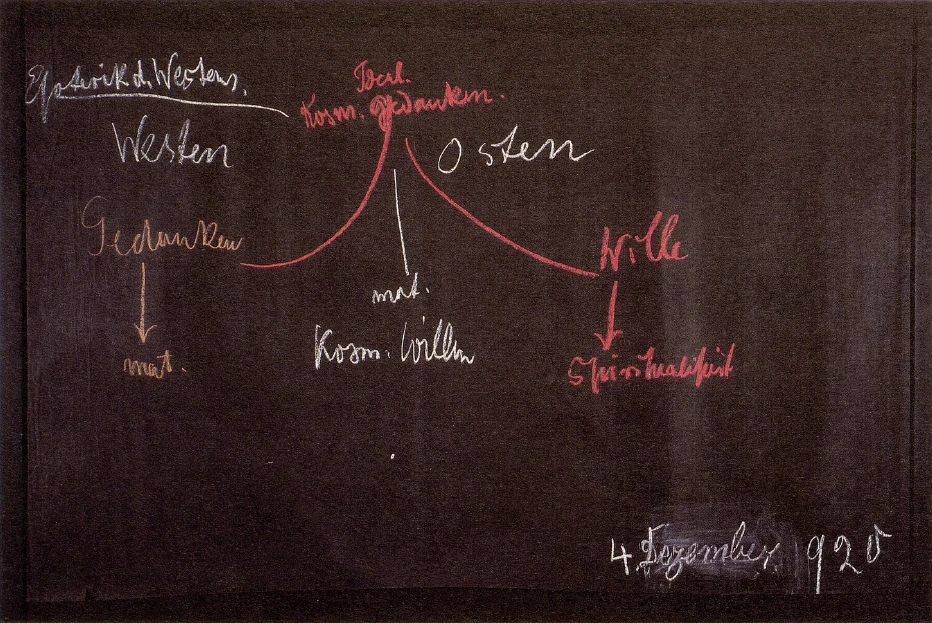
[ 15 ] Wohin weist denn nun diese ganze Seelenverfassung Schopenhauers, wenn Hegels Seelenverfassung nach dem Westen weist? Das können Sie aus Schopenhauer selber sehen, denn Sie finden sehr bald, wenn Sie ihn studieren, welche tiefe Neigung Schopenhauer für den Orient hat. Das steigt aus seinem Gemüte herauf, man weiß eigentlich nicht wie. Diese Vorliebe Schopenhauers für das Nirwana und für alles das, was orientalisch ist, diese Hinneigung zum Indertum, sie ist irrational wie seine ganze Willensphilosophie, sie steigt gewissermaßen aus seinen subjektiven Neigungen herauf. Aber es liegt darinnen eine gewisse Notwendigkeit. Das, was Schopenhauer darstellt als seine Philosophie, ist eine Willensphilosophie. Er stellt allerdings diese Willensphilosophie, wie es sich für Mitteleuropa gehört, dialektisch dar, er stellt sie in Gedanken dar, er rationalisiert den Willen selber; er spricht eigentlich in Gedanken, aber er spricht vom Willen. Aber während er so spricht vom Willen, also eigentlich den kosmischen Willen materialisiert, geht ihm aus den Tiefen seiner Seele herauf in sein Bewußtsein die Hinneigung zum Orient. Er schwärmt geradezu für alles, was Indertum ist. Ebenso wie wir gesehen haben, daß Hegel mehr objektiv hinweist nach dem Westen, so sehen wir, wie Schopenhauer hinweist nach dem Osten. Im Osten finden wir aber nicht, daß das, was Willenselement ist und was Schopenhauer wirklich fühlt als das eigentliche Element des Ostens, materialisiert und in den Gedanken hereingepreßt, also intellektualisiert wird. Die ganze Form der Darstellung des kosmischen Willens, der ja dem östlichen Seelenleben zugrunde liegt, ist eine nicht nach dem Intellekt hin erscheinende, es ist eine zum Teil poetische, zum Teil aus der unmittelbaren Anschauung heraus sprechende Darstellung. Schopenhauer hat das, was der Orient in Bildform gesagt haben würde, in mitteleuropäischer Art intellektualisiert; aber dasjenige, auf das er hinweist: der kosmische Wille, der ist doch das Element, von dem der Orient her seine Seelenanschauung genommen hat. Er ist das Element, in dem die orientalische Weltanschauung lebte. Wenn die orientalische Weltanschauung die alldurchdringende Liebe besonders betont, so ist ja das Element der Liebe auch nichts anderes als ein gewisser Aspekt des kosmischen Willens, nur eben aus dem Intellekt herausgehoben. So daß wir sagen können: Hier wird der Wille spiritualisiert. Wie im Westen der Gedanke materialisiert wird, ist im Osten der Wille spiritualisiert gewesen.
[ 15 ] Where, then, does Schopenhauer’s entire mindset point, if Hegel’s mindset points toward the West? You can see this from Schopenhauer himself, for you will very soon discover, as you study him, the deep affinity Schopenhauer has for the East. It wells up from his mind; one doesn’t really know how. Schopenhauer’s preference for Nirvana and for everything that is Eastern, this inclination toward Indian culture—it is as irrational as his entire philosophy of the will; it wells up, so to speak, from his subjective inclinations. But there is a certain necessity to it. What Schopenhauer presents as his philosophy is a philosophy of the will. He does, however, present this philosophy of the will dialectically—as is customary in Central Europe—he presents it in thought, he rationalizes the will itself; he actually speaks in thought, but he speaks of the will. But while he speaks in this way of the will—that is, while he is in effect materializing the cosmic will—a tendency toward the East rises from the depths of his soul into his consciousness. He is downright enamored with everything that is Indian. Just as we have seen that Hegel points more objectively toward the West, so we see how Schopenhauer points toward the East. In the East, however, we do not find that what is an element of will—and what Schopenhauer truly perceives as the very essence of the East—is materialized and forced into thought, that is, intellectualized. The entire form of the representation of the cosmic will—which, after all, underlies Eastern spiritual life—is one that does not appear in an intellectual form; it is a representation that is partly poetic and partly expressed through immediate intuition. Schopenhauer has intellectualized, in a Central European manner, what the East would have expressed in imagery; but that to which he points—the cosmic will—is, after all, the element from which the East derived its spiritual worldview. It is the element in which the Eastern worldview lived. If the Eastern worldview places particular emphasis on all-pervading love, then the element of love is, after all, nothing other than a certain aspect of the cosmic will, merely extracted from the intellect. So that we can say: Here, the will is spiritualized. Just as thought is materialized in the West, so has the will been spiritualized in the East.
[ 16 ] In dem mitteleuropäischen Elemente sehen wir, daß in dem idealisierten kosmischen Gedanken, in dem materialisierten kosmischen Willen, der aber auch gedankenhaft behandelt wird, diese zwei Welten auch in dieser Weise ineinanderspielen, daß wir in dem Hinweis des Hegelianismus auf die Geheimgesellschaften des Westens etwas haben wie eine tiefe Verwandtschaft des Hegelschen kosmischen Gedankensystems mit diesem Westen, daß wir in der Hinneigung, in der subjektiven Hinneigung Schopenhauers zum Orient etwas haben, was auch etwas wie eine Verwandtschaft Schopenhauers mit der Esoterik des Ostens zum Ausdruck bringt.
[ 16 ] In the Central European element, we see that in the idealized cosmic thought—in the materialized cosmic will, which is, however, also treated as a concept—these two worlds interact in this way as well, so that in Hegelianism’s reference to the secret societies of the West, we find something akin to a deep kinship between Hegel’s cosmic system of thought and the West; and in Schopenhauer’s inclination—his subjective inclination—toward the East, we find something that also expresses a kind of kinship between Schopenhauer and the esotericism of the East.
[ 17 ] Es ist ja merkwürdig, wenn man diese Schopenhauersche Philosophie auf sich wirken läßt, wie sie eigentlich in bezug auf das gedankliche Element etwas Plattes hat; die Schopenhauersche Philosophie ist ja nicht tief, aber sie hat zugleich etwas Trunkenes, etwas Willenhaftes, das in ihr pulst. Schopenhauer wird am anziehendsten und reizvollsten dann, wenn er eigentlich flache Gedanken mit seinem Willenselement durchdringt. Da sprüht dann gewissermaßen das Feuer des Willens durch seine Sätze. Dadurch ist er auch für ein im Grunde genommen flaches Zeitalter der Salonphilosoph geworden. Als ein gedankenvolles Zeitalter, wie es die erste Hälfte des 19. Jahrhunderts war, vorüberging, als die Menschen gedankenarm wurden, da wurde Schopenhauer der Salonphilosoph. Man brauchte nicht viel zu denken, man konnte aber das Prickelnde des durch die Gedanken pulsierenden Willens auf sich wirken lassen, insbesondere wenn man so etwas wie die «Parerga und Paralipomena» durchnahm, wo dieses Prickeln der Gedanken geradezu mit Raffinement wirkt.
[ 17 ] It is indeed strange, when one allows Schopenhauer’s philosophy to sink in, how it actually has something rather shallow about it in terms of the intellectual element; Schopenhauer’s philosophy is, after all, not profound, but at the same time it has something intoxicating, something volitional, pulsing within it. Schopenhauer becomes most appealing and captivating when he infuses what are essentially shallow thoughts with his element of will. Then, in a sense, the fire of the will sparks through his sentences. This is also why he became a “salon philosopher” in what was, at its core, a shallow age. As a thoughtful age—such as the first half of the 19th century—came to an end, and as people grew poor in thought, Schopenhauer became the salon philosopher. One did not need to think much, but one could let the thrill of the will pulsing through the thoughts take effect, especially when reading something like the Parerga and Paralipomena, where this thrill of thought comes across as nothing short of sophisticated.
[ 18 ] Und so hat man gerade in dem Gegensatze Hegel-Schopenhauer in dem mittleren Gebiete unserer Zivilisationsentwickelung die beiden entgegengesetzten Pole, von denen der eine seine besondere Ausbildung im Westen, der andere seine besondere Ausbildung im Osten erhalten hat. In Mitteleuropa stehen sie bis zu einem Ausgleich sich fördernd nebeneinander und haben in dem unvergleichlichen Freundschaftsbund zwischen Schiller und Goethe einen harmonischen, in dem Nebeneinanderstehen Hegels und Schopenhauers einen disharmonischen Ausgleich gefunden. Denn Schopenhauer wurde ja Privatdozent an der Universität zu Berlin in derselben Zeit, in der Hegel dort glanzvoll seine Philosophie vertrat. Schopenhauer konnte kaum Zuhörer finden, sein Auditorium blieb leer. Und wahrscheinlich, wenn Hegel irgendwie gefragt worden ist über die Schopenhauersche Philosophie — er konnte es sich damals leisten, denn er war ein eindrucksvoller, angesehener Philosoph —, dann hatte er dafür ein Achselzucken. Wenn irgendeiner mehr aus diesem Willenselement heraus sprach und dieses Element des Willens besonders betonte wie Schleiermacher, aber dann neben Hegel noch etwas bedeutete, dann wurde Hegel schon auch ungemütlicher. Und als Schleiermacher aus diesem gedankenlosen Elemente heraus das Christentum erklären wollte und sagte: Das Christentum würde nicht erfaßt in einem gedanklichen Elemente, wenn man die Gedanken des Weltenalls, gewissermaßen die göttlichen Gedanken anders umfaßte, als indem man sich abhängig fühlte von Gott, indem man ein Abhängigkeitsgefühl zum Universum entwickelte —, da erwiderte Hegel: Dann ist der Hund der beste Christ, denn der kennt das Abhängigkeitsgefühl am besten! — So würde selbstverständlich Hegel auch Schopenhauer heimgeleuchtet haben, wie er Schleiermacher heimgeleuchtet hat, wenn es sich gelohnt hätte. Denn Hegel hat überall zu Paaren getrieben jeden, der sich nicht hinaufschwang zum Begreifen der Realität der Gedanken. Für Schopenhauer waren aber die Gedanken gar nichts anderes als die Schaumblasen, die aufstiegen aus den Wellenschlägen des kosmischen Weltenwillens. Und Schopenhauer, der allerdings aus der eben gekennzeichneten Lage mehr Veranlassung dazu hatte, er schimpft ja in seinen Werken über Hegel wie ein Waschweib.
[ 18 ] And so, precisely in the contrast between Hegel and Schopenhauer, we find—in the middle stage of our civilization’s development—the two opposing poles, one of which has taken on its distinctive form in the West, the other in the East. In Central Europe, they coexist in a mutually reinforcing balance and have found a harmonious equilibrium in the incomparable friendship between Schiller and Goethe, and a disharmonious one in the coexistence of Hegel and Schopenhauer. For Schopenhauer became a private lecturer at the University of Berlin at the very same time that Hegel was brilliantly expounding his philosophy there. Schopenhauer could hardly find an audience; his lecture hall remained empty. And it is likely that if Hegel had ever been asked about Schopenhauer’s philosophy—he could afford to be asked at the time, for he was an impressive, respected philosopher—he would have merely shrugged it off. If anyone spoke more from this element of will and emphasized this element of will particularly strongly, as Schleiermacher did, yet still held some significance alongside Hegel, then Hegel would certainly have become more uncomfortable. And when Schleiermacher sought to explain Christianity from this “thoughtless” element and said: “Christianity would not be grasped in a ‘thoughtful’ element if one were to comprehend the thoughts of the universe—the divine thoughts, so to speak—in any way other than by feeling dependent on God, by developing a sense of dependence on the universe”—Hegel replied: “Then the dog is the best Christian, for it knows that sense of dependence best!”—So, of course, Hegel would have set Schopenhauer straight just as he set Schleiermacher straight, if it had been worth his while. For Hegel consistently set against one another anyone who did not rise to the level of grasping the reality of thought. For Schopenhauer, however, thoughts were nothing more than the soap bubbles rising from the surges of the cosmic world-will. And Schopenhauer—who, admittedly, had more reason to do so given the situation just described—rants about Hegel in his works like a gossiping old woman.
[ 19 ] Wir sehen also, da ist der Gegensatz, der geradezu die Lebensrätsel der Zivilisationsmitte ausmacht, nicht zu einem harmonischen Abschlusse gekommen. Beiden aber, Schopenhauer wie Hegel, fehlt ja eines, es fehlt ihnen das eigentliche Begreifen des Menschen. Hegel lebt in dem kosmischen Gedanken, und es hat etwas, was gerade Hegel unpopulär macht, daß er in diesem kosmischen Gedanken lebt. Denn im allgemeinen lieben es doch die Menschen nicht, sich zu kosmischen Gedanken aufzuschwingen. Sie haben ja ein gewisses Gefühl, dem sie sich aus Bequemlichkeit gerne hingeben, das Gefühl: Warum sollen wir uns die Köpfe zerbrechen mit kosmischen Gedanken? Das tun ja für uns die Götter, oder Gott. Wenn man ein Evangelischer ist, sagt man: der eine Gott tut das. Wenn sich schon die Götter um die kosmischen Gedanken bemühen, warum sollten wir uns noch besonders bemühen? — Und es hat wirklich das, was in Hegels Gedankenoffenbarungen zutage tritt, etwas außerordentlich Unpersönliches. Die Geschichte zum Beispiel, wie sie uns bei Hegel entgegentritt, hat etwas durch und durch Unpersönliches. Da haben wir eigentlich seit dem Beginn der Erdenentwickelung bis zum Ende der Erdenentwickelung den sich entfaltenden Gedanken.
[ 19 ] We see, then, that the contradiction—which constitutes the very enigma of life at the heart of civilization—has not been resolved harmoniously. But both Schopenhauer and Hegel lack one thing: they lack a true understanding of humanity. Hegel lives within the cosmic idea, and there is something—which is precisely what makes Hegel unpopular—about the fact that he lives within this cosmic idea. For, in general, people do not like to elevate themselves to cosmic ideas. They have a certain sentiment to which they gladly surrender out of convenience—the sentiment: Why should we rack our brains over cosmic ideas? After all, the gods—or God—do that for us. If one is a Protestant, one says: the one God does that. If even the gods concern themselves with cosmic ideas, why should we make a special effort? — And there is indeed something extraordinarily impersonal about what comes to light in Hegel’s revelations of thought. History, for example, as it presents itself to us in Hegel, has something thoroughly impersonal about it. There we have, in fact, the unfolding thought from the beginning of Earth’s development to its end.
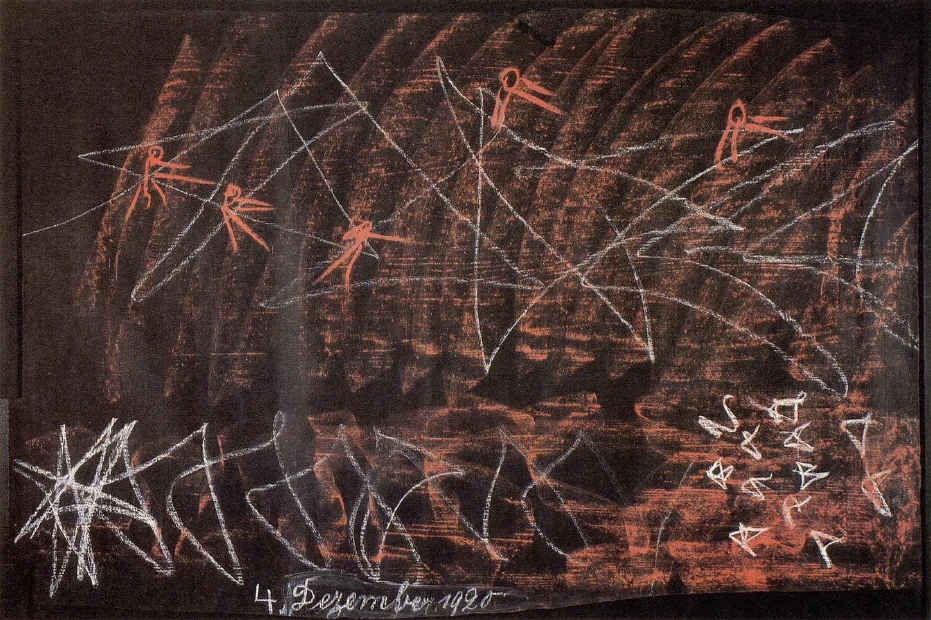
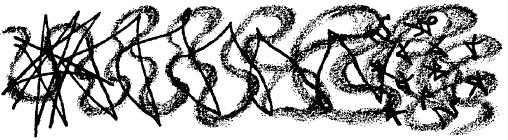
[ 20 ] Wollte man diese Hegelsche Geschichtsphilosophie schematisch zeichnen, so müßte man sagen: Da steigen die Gedanken auf (es wird gezeichnet), steigen ab, verfilzen sich gegenseitig und gehen so durch die geschichtliche Entwickelung, und in diesen Gedankenspinnennetzen sind überall die Menschen eingespannt, werden von den Gedanken fortgerissen.So daß eigentlich für Hegel die geschichtliche Entwickelung diese hinfließenden, sich verfilzenden Gedanken sind, die den Menschen in sich einspannen wie einen Automaten, der da in diesen Spinnennetzen der weltgeschichtlichen Gedanken sich auch mit diesem Gedankensystem entwickeln muß. Für Schopenhauer ist ja der menschliche Gedanke nichts anderes als eine Schaumblase. Er richtet seinen Blick auf den kosmischen Willen, ich möchte sagen, auf dieses kosmische Willensmeer. Der Mensch ist eigentlich nur so ein Reservoir, wo auch ein bißchen von diesem kosmischen Willen drinnen aufgefangen ist. Die Schopenhauersche Philosophie hat nichts von dieser sich fortentwickelnden Vernunft oder dem sich fortentwickelnden Gedanken, sondern es ist das ungedankliche, das unrationale, das unvernünftige Willenselement, das fortfließt. Und da tauchen drinnen die Menschen auf, und in ihnen spiegelt sich, wie wenn es Vernunft wäre, das sich eigentlich fortdauernd entwickelnde Unvernünftige. Für Hegel ist die Welt die Offenbarung weisester Vernunft. Für Schopenhauer, ja, was ist die Welt für Schopenhauer? Es ist eine merkwürdige Sache, wenn man die Frage beantworten will: Was ist die Welt für Schopenhauer? — Sie trat mir einmal, diese merkwürdige Sache, besonders deutlich vor Augen, als ich einen Aufsatz über Eduard von Hartmann schrieb, wo man Schopenhauer berücksichtigen, besprechen muß, weil Eduard von Hartmann ja auf der einen Seite von Hegel, auf der anderen Seite von Schopenhauer ausgegangen ist, mehr aber von Schopenhauer. Ich wollte in diesem Aufsatze, der ein rein philosophischer Aufsatz über die Philosophie Eduard von Hartmanns war, andeuten, daß für Schopenhauer die Lösung des Welträtsels darinnen bestünde, daß man sagen müßte: Die Welt ist eine große Dummheit Gottes. — Ich habe das geschrieben, weil ich das für wahr hielt. Der Redakteur der Zeitschrift, die in Österreich erschien, antwortete mir, das müsse er herausstreichen, denn es würde ihm das ganze Heft konfisziert, wenn das in einer österreichischen Zeitschrift gedruckt würde; er könne einfach nicht schreiben, die Welt sei eine Dummheit Gottes. Nun, ich habe mich nicht weiter darauf versteift, sondern habe dem Manne, der dazumal der Redakteur dieser «Deutschen Worte» war, geschrieben: Streichen Sie die «Dummheit Gottes» heraus; aber ich erinnere Sie an einen anderen Fall: Als ich die «Deutsche Wochenschrift» redigierte, da schrieben Sie zwar nicht, daß die Welt eine Dummheit Gottes, aber daß das österreichische Schulwesen eine Dummheit der Unterrichtsverwaltung ist, und ich habe es stehen lassen. — Allerdings ist mir die Wochenschrift dazumal konfisziert worden. Ich wollte den Mann wenigstens daran erinnern, daß ihm etwas Ähnliches passiert ist wie mir, nur mir mit dem lieben Gott, ihm mit dem österreichischen Unterrichtsminister, dem Freiherrn von Gautsch.
[ 20 ] If one were to sketch this Hegelian philosophy of history schematically, one would have to say: Ideas rise up (they are sketched out), descend, become entangled with one another, and thus proceed through historical development; and within these webs of thought, people are caught up everywhere, swept away by the ideas. So that, for Hegel, historical development is actually these flowing, intertwining thoughts that ensnare human beings within themselves like an automaton, which must also develop within this system of thought as it is caught in these webs of world-historical thought. For Schopenhauer, after all, human thought is nothing more than a bubble of foam. He turns his gaze to the cosmic will—I would say, to this cosmic sea of will. Human beings are, in fact, merely a reservoir in which a little of this cosmic will is also contained. Schopenhauer’s philosophy has nothing to do with this ever-evolving reason or ever-evolving thought; rather, it is the unthinking, the irrational, the unreasonable element of will that flows on. And within it, human beings appear, and in them is reflected—as if it were reason—the actually ever-evolving irrational. For Hegel, the world is the revelation of the wisest reason. For Schopenhauer—well, what is the world for Schopenhauer? It is a curious matter when one tries to answer the question: What is the world for Schopenhauer? — This strange thing once became particularly clear to me when I was writing an essay on Eduard von Hartmann, in which one must take Schopenhauer into account and discuss him, because Eduard von Hartmann drew on Hegel on the one hand and Schopenhauer on the other—though more so on Schopenhauer. In that essay—which was a purely philosophical treatise on Eduard von Hartmann’s philosophy—I wanted to suggest that, for Schopenhauer, the solution to the riddle of the world lay in saying: The world is a great folly of God. — I wrote that because I believed it to be true. The editor of the journal, which was published in Austria, replied that he would have to strike that out, for the entire issue would be confiscated if it were printed in an Austrian journal; he simply could not write that the world was a folly of God. Well, I didn’t insist on it any further, but wrote to the man who was then the editor of Deutsche Worte: “Strike out ‘God’s folly’; but I remind you of another case: When I was editing the Deutsche Wochenschrift, you didn’t write that the world is a folly of God, but that the Austrian school system is a folly of the education administration, and I let it stand. — Admittedly, the Wochenschrift was confiscated from me at that time. I wanted at least to remind the man that something similar had happened to him as had happened to me—only to me with the good Lord, and to him with the Austrian Minister of Education, Baron von Gautsch.
[ 21 ] Wenn man so hinblickt auf das Wesentlichste des Welträtsels, sieht man so recht wie in Hegel und Schopenhauer die beiden entgegengesetzten Pole dastehen, und sie erscheinen tatsächlich in ihrer Größe, in ihrer bewunderungswürdigen Größe. Ich weiß ja allerdings, daß manche Leute es sonderbar finden, daß, wenn jemand ein solcher Hegel-Verehrer ist wie ich, er auch eine solche Zeichnung hinsetzen kann, weil sich manche Leute nicht vorstellen können, daß gegenüber dem, was man als groß empfindet, man auch den Humor beibehalten kann, weil sich die Leute vorstellen, man müsse unbedingt, wenn man irgend etwas als groß empfindet, immer das lange Gesicht bekommen, das bekannte.
[ 21 ] When one looks at the very essence of the mystery of the world in this way, one can truly see how Hegel and Schopenhauer stand as two opposing poles, and they do indeed appear in all their grandeur—in their admirable grandeur. I do know, of course, that some people find it strange that someone who is such a devotee of Hegel as I am could also produce a drawing like this, because some people cannot imagine that one can maintain a sense of humor in the face of what one perceives as great; they imagine that if one perceives something as great, one must inevitably put on that familiar long face.
[ 22 ] Also die zwei entgegengesetzten Pole stehen da vor uns, die in diesem Falle nicht wie bei Schiller und Goethe zu einem harmonischen Ausgleich gekommen sind. Und wir werden etwas zur Erklärung dieser Disharmonie finden können, wenn wir sehen, daß für Hegel der Mensch eben solch ein im Spinnennetz der Begriffe der Weltgeschichte sich fortentwickelndes Wesen ist, und daß für Schopenhauer eigentlich der Mensch nichts anderes ist als ein kleines Schäffchen, also ein kleines Gefäß, wo ein Teil des Weltenwillens hineingeschüttet ist, also im Grunde genommen nur ein Ausschnitt aus dem kosmischen Weltenwillen. Beide können also nicht auf das eigentliche Individuelle, Persönliche des Menschen hinsehen. Aber sie können auch nicht hinsehen auf das eigentliche Wesen dessen, was sie im Kosmos sehen.
[ 22 ] So these two opposing poles stand before us, which in this case have not reached a harmonious balance, as they did with Schiller and Goethe. And we will be able to find some explanation for this disharmony when we see that, for Hegel, man is precisely such a being that continues to develop within the spider’s web of the concepts of world history, and that, for Schopenhauer, man is actually nothing more than a little sheep, that is, a small vessel into which a portion of the world-will has been poured—in essence, merely a fragment of the cosmic world-will. Neither of them, therefore, can focus on the true individuality and personality of the human being. Nor can they focus on the true essence of what they perceive in the cosmos.
[ 23 ] Hegel schaut auf den Kosmos und sieht in der Geschichte dieses Spinnennetz von Begriffen. Schopenhauer schaut auf den Kosmos und sieht nicht dieses Spinnennetz von Begriffen — das ist bloß das Spiegelbild für ihn —, aber er sieht dafür das Meer des waltenden Willens, und da wird gewissermaßen abgezapft in diese Gefäße dasjenige, was als Menschen da fortschwimmt in diesem unrationalen, unvernünftigen Willensmeer (es wird gezeichnet). Die Menschen werden nur geäfft, indem sich in ihnen der unvernünftige Wille spiegelt, als wenn er Vernunft, Vorstellung, Gedanke wäre. Aber wir haben diese zwei Elemente im Kosmos drinnen. Was Hegel sieht, ist schon im Kosmos drinnen. Die Gedanken sind im Kosmos. Hegel und der Westen betrachten den Kosmos und sehen die Weltgedanken. Schopenhauer und der Osten betrachten den Kosmos und sehen den Weltenwillen. Beides ist drinnen. Und eine in bezug auf den Kosmos dienliche Weltanschauung wäre zustande gekommen, wenn das Paradoxon hätte eintreten können, daß das Geschimpfe des Schopenhauer ihn endlich so weit gebracht hätte, daß er aus seiner Haut gefahren wäre, und, trotzdem Hegels Seele in Hegel geblieben wäre, er in Hegel hineingefahren wäre, so daß Schopenhauer in Hegel drinnen gewesen wäre. Dann hätte der den Weltgedanken und den Weltenwillen gesehen, der da aus Schopenhauer und aus Hegel zusammengewachsen wäre! Das ist in der Tat dasjenige, was in der Welt ist: Weltgedanke und Weltenwille. Und sie sind in sehr verschiedenen Gestalten vorhanden.
[ 23 ] Hegel looks at the cosmos and sees in history this spider’s web of concepts. Schopenhauer looks at the cosmos and does not see this spiderweb of concepts—that is merely a reflection for him—but instead he sees the sea of the ruling will, and from it, as it were, is drawn into these vessels that which, as human beings, floats along in this irrational, unreasonable sea of will (it is depicted). Human beings are merely mocked by the fact that the irrational will is reflected within them, as if it were reason, perception, or thought. But we have these two elements within the cosmos. What Hegel sees is already within the cosmos. Thoughts are in the cosmos. Hegel and the West contemplate the cosmos and see the world’s thoughts. Schopenhauer and the East contemplate the cosmos and see the world’s will. Both are present. And a worldview beneficial to the cosmos would have come into being if the paradox could have occurred—that Schopenhauer’s ranting would finally have driven him so far that he would have lost his mind, and, even though Hegel’s soul would have remained within Hegel, he would have entered into Hegel, so that Schopenhauer would have been inside Hegel. Then he would have seen the World-Idea and the World-Will that would have grown out of Schopenhauer and Hegel together! That is, in fact, what exists in the world: the World-Idea and the World-Will. And they exist in very different forms.
[ 24 ] Was sagt uns nun die wirkliche geisteswissenschaftliche Untersuchung in bezug auf diese Kosmologie? Sie sagt uns: Blicken wir hinein in die Welt, um die Weltgedanken auf uns wirken zu lassen, was sehen wir? Wir sehen, indem wir die Weltgedanken auf uns wirken lassen, die Gedanken der Vorzeit, alles das, was gewirkt hat in der Vorzeit bis zu diesem gegenwärtigen Augenblicke. Das sehen wir, indem wir die Weltgedanken sehen, denn der Weltgedanke erscheint uns in seinem Absterben, wenn wir in die Welt hinausblicken. Daher kommt das Starre, Tote der Naturgesetze, und daß wir fast nur die Mathematik brauchen können, die vom Toten handelt, wenn wir die Natur gesetzmäßig überschauen wollen. In dem aber, was zu unseren Sinnen spricht, was uns entzückt im Lichte, was wir hören im Ton, in dem, was uns wärmt, in all dem, was an uns sinnlich herantritt, wirkt der Weltenwille. Das ist es, was aus dem toten Element der Weltgedanken aufgeht, und was im Grunde genommen in die Zukunft hinüberweist. Etwas von, ich möchte sagen, Chaotischem, Undifferenziertem hat der Weltenwille; aber er lebt im gegenwärtigen Weltenmomente doch als der Keim dessen, was in die Zukunft hinübergeht. Überlassen wir uns aber dem Gedankenelemente der Welt, so haben wir das, was aus der grauesten Vorzeit in die Gegenwart herüberspielt. Nur im menschlichen Haupte, da ist es anders. Im menschlichen Haupte ist der Gedanke, aber er ist abgesondert von dem äußeren Weltengedanken, und er ist innerhalb der menschlichen Persönlichkeit an ein individuelles Willenselement gebunden, das ja meinetwillen zunächst nur angesehen werden mag wie das in ein kleines Reservoir, in ein Schäffchen abgezapfte kosmische Willenselement. Aber das, was der Mensch in seiner Intellektualität hat, weist nach rückwärts. Wir haben es im Grunde genommen dem Keime nach entwickelt in dem vorigen Erdenleben. Da war es Wille. Jetzt ist es Gedanke geworden, ist gebunden an unsere Hauptesorganisation, ist herausgeboren wie ein lebendiges Nachbild des Kosmos in unserer Hauptesorganisation. Wir verbinden es mit dem Willen, wir verjüngen es in dem Willen. Und indem wir es verjüngen in dem Willen, schicken wir es hinüber in unser nächstes Erdenleben, in unsere nächste Erdeninkarnation.
[ 24 ] What, then, does genuine spiritual scientific research tell us about this cosmology? It tells us: When we look into the world to allow the world-thoughts to take effect upon us, what do we see? As we allow the world-thoughts to take effect upon us, we see the thoughts of the past—everything that has taken effect in the past up to this very moment. This is what we see when we perceive the world-thoughts, for the world-thought appears to us in its passing away when we look out into the world. Hence the rigidity and lifelessness of the laws of nature, and the fact that we can rely almost exclusively on mathematics—which deals with the lifeless—if we wish to survey nature in accordance with its laws. But in what speaks to our senses—what delights us in the light, what we hear in sound, what warms us, in all that approaches us sensually—the world will is at work. This is what arises from the dead element of the world’s thoughts, and what, in essence, points toward the future. The world will has something—I would say—chaotic and undifferentiated about it; yet it lives in the present moment of the world as the seed of what passes into the future. But if we surrender ourselves to the thought element of the world, we have that which carries over from the grayest prehistory into the present. Only in the human mind is it different. In the human head there is thought, but it is separate from the outer world-thought, and within the human personality it is bound to an individual element of will—which, for my part, may at first be regarded merely as a cosmic element of will tapped into a small reservoir, a little jar. But what the human being possesses in his intellectuality points backward. We have, in essence, developed it from its embryonic stage in our previous earthly life. There it was will. Now it has become thought, is bound to our brain organization, and has been born forth as a living image of the cosmos within our brain organization. We connect it to the will; we rejuvenate it within the will. And by rejuvenating it within the will, we send it over into our next earthly life, into our next earthly incarnation.
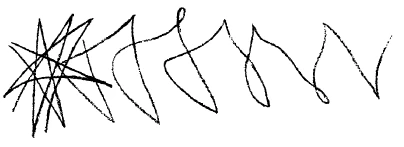
[ 25 ] Dieses Weltenbild, wir müßten es eigentlich noch anders zeichnen. Wir müßten so zeichnen, daß das äußere Kosmische in alten Zeiten besonders reich an Gedankenelementen ist, daß es immer schütterer und schütterer wird, indem wir in die Gegenwart hereinkommen, daß der Gedanke, wie er im Kosmos ist, nach und nach erstirbt. Das Willens element müssen wir zunächst fein zeichnen. Je weiter wir zurückgehen, desto mehr überwiegt der Gedanke in den Akasha-Bildern; je mehr wir vorwärtsschreiten, wird das Willenselement dichter und immer dichter. Wir müßten, wenn wir diese Entwickelung durchblicken würden, auf ein lichtvolles Gedankenelement der grauesten Vorzeit hinschauen, und auf das unvernünftige Willenselement der Zukunft.
[ 25 ] We really ought to depict this worldview differently. We should depict it in such a way that the outer cosmos is particularly rich in elements of thought in ancient times, that it becomes increasingly sparse as we approach the present, and that thought, as it exists in the cosmos, gradually dies out. We must first depict the element of will in a subtle way. The further back we go, the more thought predominates in the Akashic images; the further forward we proceed, the denser and ever denser the element of will becomes. If we were to grasp this development, we would look upon a luminous element of thought from the grayest antiquity, and upon the irrational element of will of the future.
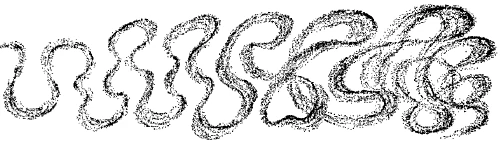
[ 26 ] Aber das bleibt nicht so, denn da hinein trägt der Mensch nun die Gedanken, die er in seinem Kopfe bewahrt hat. Die schickt er hinüber in die Zukunft. Und während die kosmischen Gedanken immer mehr und mehr absterben, keimen auf die menschlichen Gedanken; aus ihrem Quellpunkt heraus durchdringen sie in der Zukunft das kosmische Element des Willens.
[ 26 ] But this does not remain so, for into it man now brings the thoughts he has kept in his mind. He sends them onward into the future. And while the cosmic thoughts die away more and more, human thoughts begin to sprout; from their source, they penetrate the cosmic element of will in the future.
[ 27 ] So ist der Mensch der Bewahrer des kosmischen Gedankens, so trägt der Mensch aus sich heraus den kosmischen Gedanken in die Welt hinaus. Auf dem Umwege durch den Menschen pflanzt sich der kosmische Gedanke von der Urzeit in die Zukunft hinein fort. Der Mensch gehört zu dem, was Kosmos ist. Aber er gehört nicht so dazu, wie ihn etwa der Materialist denkt, daß der Mensch auch so etwas ist, was sich aus dem Kosmos herausentwickelt hat und ein Stück des Kosmos ist, sondern der Mensch gehört auch zu dem schöpferischen Elemente des Kosmos. Er trägt den Gedanken hinüber aus der Vergangenheit in die Zukunft.
[ 27 ] Thus, human beings are the custodians of the cosmic thought; thus, human beings carry the cosmic thought out into the world from within themselves. Through the detour of human beings, the cosmic thought propagates itself from primeval times into the future. Humanity is part of the cosmos. But it is not part of it in the way a materialist might think—that humanity is simply something that evolved from the cosmos and is a part of it—but rather, humanity is also part of the creative element of the cosmos. It carries the thought forward from the past into the future.
[ 28 ] Sehen Sie, da kommt man in das Konkrete hinein. Wenn man den Menschen wirklich versteht, kommt man hinein in das, was Schopenhauer und Hegel einseitig gebracht haben. Und Sie sehen daraus, wie auch im philosophischen Elemente auf einer höheren Stufe zusammengefaßt werden muß dasjenige, was dreigegliedert ist, wie der Mensch erfaßt werden muß im Kosmos.
[ 28 ] You see, this is where we get into the concrete. If one truly understands human beings, one enters into what Schopenhauer and Hegel presented in a one-sided way. And you can see from this that, just as in philosophy, what is threefold must be synthesized at a higher level—just as human beings must be understood within the cosmos.
[ 29 ] Nun, wir werden dann morgen in einer anschaulicheren Weise in diesen Zusammenhang des Menschen mit dem Kosmos hineinblicken. Ich wollte Ihnen heute dieses als eine Einleitung geben, wie gesagt, deren Notwendigkeit schon im weiteren Fortgange wird erkannt werden können.
[ 29 ] Well, tomorrow we will take a closer look at this connection between human beings and the cosmos. I wanted to offer this to you today as an introduction—as I said, the necessity of which will become clear as we proceed.