The Bridge Between the Spiritual and
Physical Realms of Human Beings
GA 202
4 December 1920, Dornach
Translated by Steiner Online Library
Fourth Lecture
[ 1 ] In the coming days, my task here will be to present to you some perspectives concerning the relationship between human beings and the cosmic world on the one hand, and between human beings and the historical development of humanity on the other. These will be reflections intended to complement much of what we have already allowed to pass before our minds’ eyes. Today I would like to preface the reflections of the coming hours with a sort of introduction, which may seem somewhat remote to some, but whose necessity will become apparent in the hours that follow. I would like to draw your attention today to the fact that, in the development of Central European-German thought during the first half of the 19th century, there is another, extraordinarily significant fact in addition to those we have already pointed out. I did, in fact, recently point out the contrast that emerges when one considers, on the one hand, Schiller’s Aesthetic Letters and, on the other, Goethe’s fairy tale of the Green Snake and the Beautiful Lily. Today I would like to point out a similar contrast that emerged in this intellectual development of the first half of the 19th century—in Hegel on the one hand, and in Schopenhauer on the other. In the case of Goethe and Schiller, we are dealing with two personalities who, at a certain point in their lives, reconciled—through a deep friendship—what might be called a lasting contrast present specifically in the development of Central European thought—a contrast that nevertheless continually strives for reconciliation within that very development—after they had previously been at odds with one another.
[ 2 ] Two other figures also represent these polar opposites, without it being possible to say that any balance has been achieved between them: Hegel on the one hand, Schopenhauer on the other. One need only consider what I myself have presented in my Riddles of Philosophy to realize the profound contrast between Schopenhauer and Hegel. This contrast is also evident in the fact that Schopenhauer truly spared no harsh words in characterizing his counterpart Hegel in the way he deemed appropriate. Much of Schopenhauer’s work consists, in fact, of the most vitriolic tirades against Hegel, Hegelianism, and everything remotely related to it. Hegel had less reason to rail against Schopenhauer, because, before Hegel’s death, Schopenhauer had remained virtually without influence—that is, he was not among the philosophers who had been noticed. The contrast between these two figures can be characterized simply by pointing out how Hegel sees the source of the world, the development of the world, and everything associated with it in the real elements of thought. Hegel regards the idea, the thought, as that which underlies everything. And Hegel’s philosophy is indeed divided into three parts: First, logic—not, however, subjective human logic, but rather the system of thoughts that are supposed to underlie the world. Then, as the second part of his philosophy, Hegel identifies nature. But for him, nature is nothing other than the Idea—merely the Idea in its otherness, as he puts it: the Idea in its being outside itself. So nature, too, is an idea—but an idea in a different form, in the form in which it can be observed, perceived with the senses: the idea in its otherness. The Idea, as it then returns to itself, is for him the human spirit, which develops from the simplest human-spiritual activities through world history and up to the emergence of this human subjective spirit in religion, art, and science. So if one wishes to study Hegel’s philosophy, one must engage with a development of the world’s ideas, just as Hegel was able to explain these world ideas for himself.
[ 3 ] Schopenhauer is the polar opposite. While for Hegel, thoughts—the thoughts of the world—are the creative force, that is, the true reality within things, for Schopenhauer every element of thought is merely subjective, and even as something subjective, it is merely an image, merely something unreal; for him, the only reality is the will. And just as Hegel traces thought through the mineral, animal, plant, and human kingdoms, so Schopenhauer traces the will through all these kingdoms. And Schopenhauer’s most fascinating treatise is, in fact, the one titled “On the Will in Nature.” So one can say: Hegel is the philosopher of thought; Schopenhauer is the philosopher of the will.
[ 4 ] Thus, two elements stand in opposition to one another in these two personalities. For what, after all, have we placed on the one hand in thought, and on the other hand in the will? As an introduction to our next lecture, we would do well to first bring this polar opposition to the forefront of our minds by considering it in relation to human beings. Let us now, for a moment, set aside Hegelian philosophy and Schopenhauerian philosophy and look at the reality of the human being. We already know that what is most prominent in the human being is, first of all, an intellectual—that is, a thought—element, and then an element of will. The thought element is primarily associated with the human head, while the element of will is primarily associated with the human limbs. This already points to the fact that the intellectual element is essentially that which incarnates from our prenatal existence in spiritual worlds—which pass between death and a new birth for us—and essentially carries over from prenatal life into this earthly life. The volitional element, however, is that which—I might say—is, in relation to the thinking element, the “young” part of the human being; it is that which passes through the gate of death, then enters the world between death and a new birth, where it transforms and metamorphoses to form the intellectual element of the next life. In the most essential and striking sense, our soul organization contains our intellectual, or thought, element, which points to the past; and our will element, which points to the future. Thus, we have considered this polar opposition between thought and will in the human being.
[ 5 ] Of course, when we approach reality, we must never view these things in a way that reduces them to a schematic. It would, of course, be a simplification to say: Every element of thought points us toward our past, and every element of will points us toward our future. That is not the case; rather, as I said, what is striking about human beings is that the element of thought points toward the past, while the element of will points toward the future. But in human beings, an element of will is organized alongside this striking, backward-pointing element of thought, and in turn, an element of thought is organized alongside the element of will that surges within us and extends beyond death into the future. If one wishes to enter into reality with one’s understanding, one must never reduce things to a formula; never simply place ideas side by side; rather, one must be clear that in reality everything can only be viewed in such a way that something appears as the prominent feature in one place, but that the other elements of reality live within it, and that everywhere, what otherwise remains in the background is, in turn, the most prominent feature in another part of reality, while the other remains in the background.
[ 6 ] When philosophers then come along and view one thing or another from their particular perspective, they inevitably arrive at their one-sided philosophies. But what I have just described to you as the element of thought in human beings is not merely present in human beings and bound there to the main organism; rather, thought is truly spread throughout the entire cosmos. The entire cosmos is permeated by cosmic thoughts. Because Hegel was a powerful spirit who, I would say, sensed the result of many past earthly lives, he focused his attention particularly on cosmic thought.
[ 7 ] Schopenhauer saw himself less as the result of previous earthly lives and focused his attention more on the cosmic will. For just as will and thought live within human beings, so too do thought and will live within the cosmos. But what does the thought—which Hegel particularly focused on—mean for the cosmos? What does the will—which Schopenhauer particularly focused on—mean for the cosmos? Hegel, after all, was not concerned with the thought that develops within human beings. For him, the entire world was, in essence, merely a revelation of thoughts. Thus, he had the cosmic thought in mind. If one considers Hegel’s particular conception of the spirit, one must say: Hegel’s intellectual framework points toward the West. Except that Hegel elevated to the level of an element of thought that which finds expression in the West—for example, in the West’s materialistic theory of evolution and in the West’s materialistically conceived physics. One finds a theory of evolution in Darwin; one finds a theory of evolution in Hegel. In Darwin’s case, it is a materialist theory of evolution, in which everything unfolds as if only coarse natural substances were entering into the process of evolution and carrying it out; in Hegel, we see how everything that is evolving is permeated by thought, how thought, in its particular configurations and concrete manifestations, is in fact the very thing that is evolving.
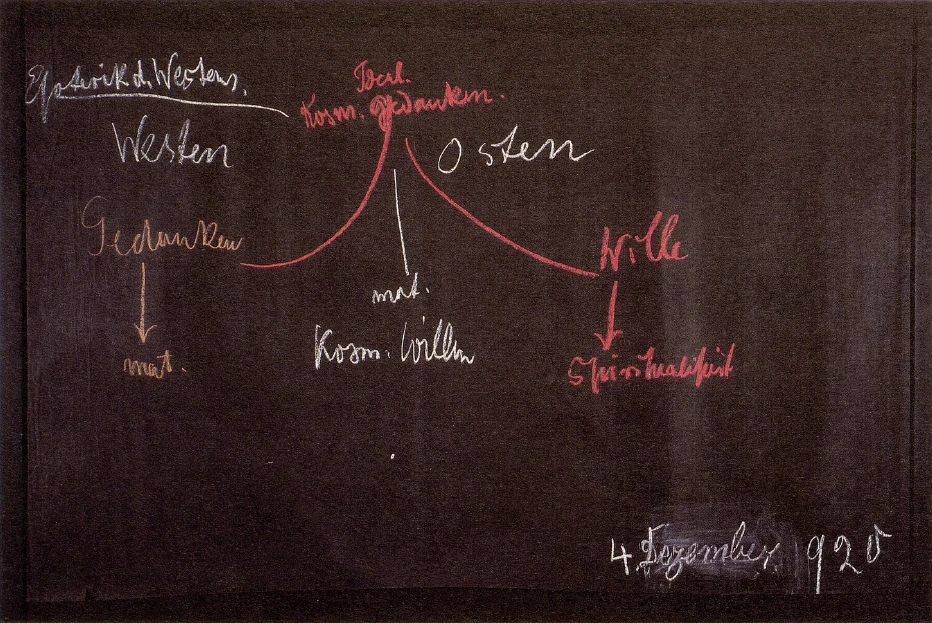
[ 8 ] So we can say: In the West, spirits view the world from the standpoint of thought, but they materialize thought. Hegel idealizes thought, and thus arrives at the cosmic idea.
[ 9 ] In his philosophy, Hegel speaks of “thought” and actually means “cosmic thought.” Hegel says: Whenever we look at anything in the external world—whether we are observing a star in its orbit, an animal, a plant, or a mineral—we actually see thought everywhere; it is just that this kind of thought exists in the external world in a form different from that of pure thought. One cannot say that Hegel specifically sought to keep this doctrine of the world’s thoughts esoteric. It has remained esoteric because Hegel’s works were little read; but it was not Hegel’s intention to keep the doctrine of the world’s cosmic content esoteric. Yet it is extraordinarily interesting that, when one turns to the secret societies of the West, the idea that the world is actually formed from thought is regarded, in a certain sense, as a doctrine of the deepest esotericism. One might say: What Hegel so naively stated about the world is now regarded by the secret societies of the West—of Anglo-American humanity—as the content of their secret doctrine, and they are of the opinion that this secret doctrine should not, in fact, be popularized. — As grotesque as this may seem at first, one could say: Hegel’s philosophy is, in a certain sense, the lifeblood of the secret teachings of the West.
[ 10 ] You see, there is a significant problem here. If you familiarize yourself with the most esoteric teachings of the secret societies of the Anglo-American population, you will find that, in terms of content, they are virtually indistinguishable from Hegelian philosophy. But there is a difference; it does not lie in the content at all, but in the treatment of it. It lies in the fact that Hegel regards the matter as something entirely obvious, whereas the secret societies of the West carefully ensure that what Hegel presented to the world does not become common knowledge—that it remains an esoteric secret teaching.
[ 11 ] What is actually underlying this? This is a very important issue. The underlying principle is that if one regards any such content—born of the spirit—as a secret possession, then it confers power; whereas if it is made public, it no longer confers that power. And I really ask you to take this to heart: Any content that one possesses as knowledge becomes a source of power when kept secret. That is why those who wish to keep certain teachings secret are deeply upset when these things are made widely known. It is practically a universal law that what is made widely known simply imparts knowledge, whereas it imparts power when kept secret.
[ 12 ] Over the past few years, I have spoken to you on several occasions about those forces that originated in the West. The fact that these forces originated in the West was not because there was any knowledge there that was unknown in Central Europe; rather, this knowledge was treated differently. Now imagine what a strange tragedy this represents! It would even have been possible to counter in a significant way the world-historical events that arose from the power of Western secret societies, if only Central Europe had studied its own people, if only Central Europe had not done to such a great extent what could really be stated quite thoroughly: In the 1880s—as I have often mentioned—Eduard von Hartmann had it published that, across all Central European universities, there were only two philosophers who had read Hegel. Of course, many people had talked about Hegel and given lectures on him, but verifiably there were only two philosophy professors who were educated in Hegel. And anyone who was somewhat receptive to such matters could experience the following: If they borrowed a volume of Hegel’s works from any library, they could really quite clearly see that it wasn’t very well-thumbed! Sometimes—and I know this from my own experience—it was very difficult to separate one page from another because the copy was still so new. And Hegel has only been experiencing “editions” for a very short time.
[ 13 ] Well, I did not present this to you because I wanted to draw particular attention to the facts I just described, but rather because I wanted to show how what lives as idealism in Hegel nevertheless points toward the West—reappearing, on the one hand, in the crude, clunky materialistic ideas of Darwinism, Spencerism, and so on, and, on the other hand, in the esotericism of secret societies.
[ 14 ] And now let’s consider Schopenhauer. Schopenhauer is, I would say, a worshipper of the will. And the fact that he has the cosmic will in mind is evident from virtually every page of Schopenhauer’s works, particularly from the fascinating essay “On the Will in Nature,” in which he portrays everything that lives and breathes in nature as the underlying will, as the primal force of nature. So we can say: Schopenhauer virtually materializes the cosmic will.
[ 15 ] Where, then, does Schopenhauer’s entire mindset point, if Hegel’s mindset points toward the West? You can see this from Schopenhauer himself, for you will very soon discover, as you study him, the deep affinity Schopenhauer has for the East. It wells up from his mind; one doesn’t really know how. Schopenhauer’s preference for Nirvana and for everything that is Eastern, this inclination toward Indian culture—it is as irrational as his entire philosophy of the will; it wells up, so to speak, from his subjective inclinations. But there is a certain necessity to it. What Schopenhauer presents as his philosophy is a philosophy of the will. He does, however, present this philosophy of the will dialectically—as is customary in Central Europe—he presents it in thought, he rationalizes the will itself; he actually speaks in thought, but he speaks of the will. But while he speaks in this way of the will—that is, while he is in effect materializing the cosmic will—a tendency toward the East rises from the depths of his soul into his consciousness. He is downright enamored with everything that is Indian. Just as we have seen that Hegel points more objectively toward the West, so we see how Schopenhauer points toward the East. In the East, however, we do not find that what is an element of will—and what Schopenhauer truly perceives as the very essence of the East—is materialized and forced into thought, that is, intellectualized. The entire form of the representation of the cosmic will—which, after all, underlies Eastern spiritual life—is one that does not appear in an intellectual form; it is a representation that is partly poetic and partly expressed through immediate intuition. Schopenhauer has intellectualized, in a Central European manner, what the East would have expressed in imagery; but that to which he points—the cosmic will—is, after all, the element from which the East derived its spiritual worldview. It is the element in which the Eastern worldview lived. If the Eastern worldview places particular emphasis on all-pervading love, then the element of love is, after all, nothing other than a certain aspect of the cosmic will, merely extracted from the intellect. So that we can say: Here, the will is spiritualized. Just as thought is materialized in the West, so has the will been spiritualized in the East.
[ 16 ] In the Central European element, we see that in the idealized cosmic thought—in the materialized cosmic will, which is, however, also treated as a concept—these two worlds interact in this way as well, so that in Hegelianism’s reference to the secret societies of the West, we find something akin to a deep kinship between Hegel’s cosmic system of thought and the West; and in Schopenhauer’s inclination—his subjective inclination—toward the East, we find something that also expresses a kind of kinship between Schopenhauer and the esotericism of the East.
[ 17 ] It is indeed strange, when one allows Schopenhauer’s philosophy to sink in, how it actually has something rather shallow about it in terms of the intellectual element; Schopenhauer’s philosophy is, after all, not profound, but at the same time it has something intoxicating, something volitional, pulsing within it. Schopenhauer becomes most appealing and captivating when he infuses what are essentially shallow thoughts with his element of will. Then, in a sense, the fire of the will sparks through his sentences. This is also why he became a “salon philosopher” in what was, at its core, a shallow age. As a thoughtful age—such as the first half of the 19th century—came to an end, and as people grew poor in thought, Schopenhauer became the salon philosopher. One did not need to think much, but one could let the thrill of the will pulsing through the thoughts take effect, especially when reading something like the Parerga and Paralipomena, where this thrill of thought comes across as nothing short of sophisticated.
[ 18 ] And so, precisely in the contrast between Hegel and Schopenhauer, we find—in the middle stage of our civilization’s development—the two opposing poles, one of which has taken on its distinctive form in the West, the other in the East. In Central Europe, they coexist in a mutually reinforcing balance and have found a harmonious equilibrium in the incomparable friendship between Schiller and Goethe, and a disharmonious one in the coexistence of Hegel and Schopenhauer. For Schopenhauer became a private lecturer at the University of Berlin at the very same time that Hegel was brilliantly expounding his philosophy there. Schopenhauer could hardly find an audience; his lecture hall remained empty. And it is likely that if Hegel had ever been asked about Schopenhauer’s philosophy—he could afford to be asked at the time, for he was an impressive, respected philosopher—he would have merely shrugged it off. If anyone spoke more from this element of will and emphasized this element of will particularly strongly, as Schleiermacher did, yet still held some significance alongside Hegel, then Hegel would certainly have become more uncomfortable. And when Schleiermacher sought to explain Christianity from this “thoughtless” element and said: “Christianity would not be grasped in a ‘thoughtful’ element if one were to comprehend the thoughts of the universe—the divine thoughts, so to speak—in any way other than by feeling dependent on God, by developing a sense of dependence on the universe”—Hegel replied: “Then the dog is the best Christian, for it knows that sense of dependence best!”—So, of course, Hegel would have set Schopenhauer straight just as he set Schleiermacher straight, if it had been worth his while. For Hegel consistently set against one another anyone who did not rise to the level of grasping the reality of thought. For Schopenhauer, however, thoughts were nothing more than the soap bubbles rising from the surges of the cosmic world-will. And Schopenhauer—who, admittedly, had more reason to do so given the situation just described—rants about Hegel in his works like a gossiping old woman.
[ 19 ] We see, then, that the contradiction—which constitutes the very enigma of life at the heart of civilization—has not been resolved harmoniously. But both Schopenhauer and Hegel lack one thing: they lack a true understanding of humanity. Hegel lives within the cosmic idea, and there is something—which is precisely what makes Hegel unpopular—about the fact that he lives within this cosmic idea. For, in general, people do not like to elevate themselves to cosmic ideas. They have a certain sentiment to which they gladly surrender out of convenience—the sentiment: Why should we rack our brains over cosmic ideas? After all, the gods—or God—do that for us. If one is a Protestant, one says: the one God does that. If even the gods concern themselves with cosmic ideas, why should we make a special effort? — And there is indeed something extraordinarily impersonal about what comes to light in Hegel’s revelations of thought. History, for example, as it presents itself to us in Hegel, has something thoroughly impersonal about it. There we have, in fact, the unfolding thought from the beginning of Earth’s development to its end.
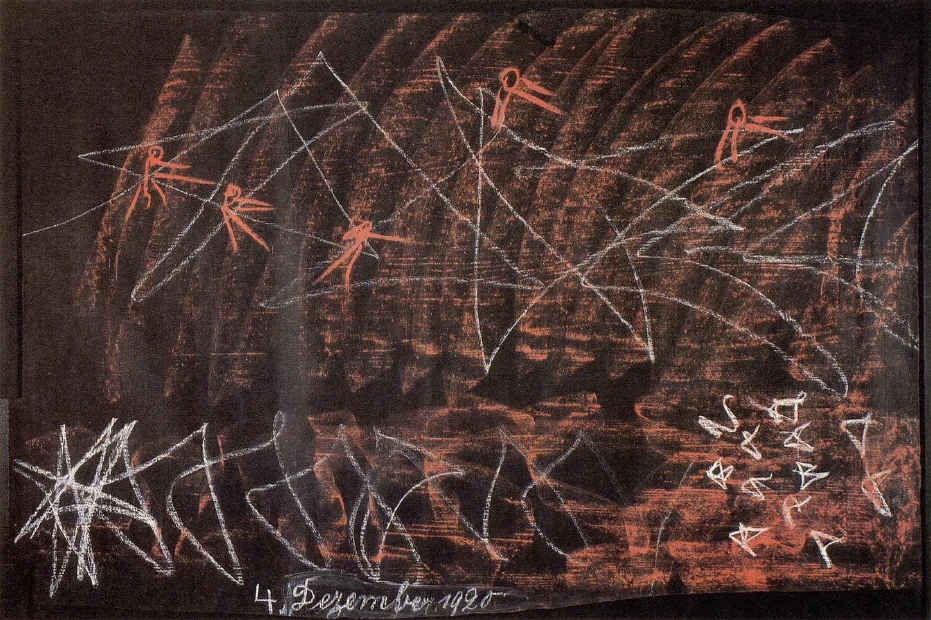
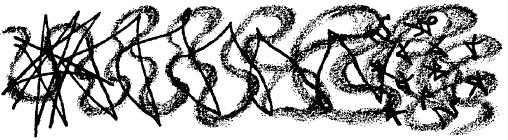
[ 20 ] If one were to sketch this Hegelian philosophy of history schematically, one would have to say: Ideas rise up (they are sketched out), descend, become entangled with one another, and thus proceed through historical development; and within these webs of thought, people are caught up everywhere, swept away by the ideas. So that, for Hegel, historical development is actually these flowing, intertwining thoughts that ensnare human beings within themselves like an automaton, which must also develop within this system of thought as it is caught in these webs of world-historical thought. For Schopenhauer, after all, human thought is nothing more than a bubble of foam. He turns his gaze to the cosmic will—I would say, to this cosmic sea of will. Human beings are, in fact, merely a reservoir in which a little of this cosmic will is also contained. Schopenhauer’s philosophy has nothing to do with this ever-evolving reason or ever-evolving thought; rather, it is the unthinking, the irrational, the unreasonable element of will that flows on. And within it, human beings appear, and in them is reflected—as if it were reason—the actually ever-evolving irrational. For Hegel, the world is the revelation of the wisest reason. For Schopenhauer—well, what is the world for Schopenhauer? It is a curious matter when one tries to answer the question: What is the world for Schopenhauer? — This strange thing once became particularly clear to me when I was writing an essay on Eduard von Hartmann, in which one must take Schopenhauer into account and discuss him, because Eduard von Hartmann drew on Hegel on the one hand and Schopenhauer on the other—though more so on Schopenhauer. In that essay—which was a purely philosophical treatise on Eduard von Hartmann’s philosophy—I wanted to suggest that, for Schopenhauer, the solution to the riddle of the world lay in saying: The world is a great folly of God. — I wrote that because I believed it to be true. The editor of the journal, which was published in Austria, replied that he would have to strike that out, for the entire issue would be confiscated if it were printed in an Austrian journal; he simply could not write that the world was a folly of God. Well, I didn’t insist on it any further, but wrote to the man who was then the editor of Deutsche Worte: “Strike out ‘God’s folly’; but I remind you of another case: When I was editing the Deutsche Wochenschrift, you didn’t write that the world is a folly of God, but that the Austrian school system is a folly of the education administration, and I let it stand. — Admittedly, the Wochenschrift was confiscated from me at that time. I wanted at least to remind the man that something similar had happened to him as had happened to me—only to me with the good Lord, and to him with the Austrian Minister of Education, Baron von Gautsch.
[ 21 ] When one looks at the very essence of the mystery of the world in this way, one can truly see how Hegel and Schopenhauer stand as two opposing poles, and they do indeed appear in all their grandeur—in their admirable grandeur. I do know, of course, that some people find it strange that someone who is such a devotee of Hegel as I am could also produce a drawing like this, because some people cannot imagine that one can maintain a sense of humor in the face of what one perceives as great; they imagine that if one perceives something as great, one must inevitably put on that familiar long face.
[ 22 ] So these two opposing poles stand before us, which in this case have not reached a harmonious balance, as they did with Schiller and Goethe. And we will be able to find some explanation for this disharmony when we see that, for Hegel, man is precisely such a being that continues to develop within the spider’s web of the concepts of world history, and that, for Schopenhauer, man is actually nothing more than a little sheep, that is, a small vessel into which a portion of the world-will has been poured—in essence, merely a fragment of the cosmic world-will. Neither of them, therefore, can focus on the true individuality and personality of the human being. Nor can they focus on the true essence of what they perceive in the cosmos.
[ 23 ] Hegel looks at the cosmos and sees in history this spider’s web of concepts. Schopenhauer looks at the cosmos and does not see this spiderweb of concepts—that is merely a reflection for him—but instead he sees the sea of the ruling will, and from it, as it were, is drawn into these vessels that which, as human beings, floats along in this irrational, unreasonable sea of will (it is depicted). Human beings are merely mocked by the fact that the irrational will is reflected within them, as if it were reason, perception, or thought. But we have these two elements within the cosmos. What Hegel sees is already within the cosmos. Thoughts are in the cosmos. Hegel and the West contemplate the cosmos and see the world’s thoughts. Schopenhauer and the East contemplate the cosmos and see the world’s will. Both are present. And a worldview beneficial to the cosmos would have come into being if the paradox could have occurred—that Schopenhauer’s ranting would finally have driven him so far that he would have lost his mind, and, even though Hegel’s soul would have remained within Hegel, he would have entered into Hegel, so that Schopenhauer would have been inside Hegel. Then he would have seen the World-Idea and the World-Will that would have grown out of Schopenhauer and Hegel together! That is, in fact, what exists in the world: the World-Idea and the World-Will. And they exist in very different forms.
[ 24 ] What, then, does genuine spiritual scientific research tell us about this cosmology? It tells us: When we look into the world to allow the world-thoughts to take effect upon us, what do we see? As we allow the world-thoughts to take effect upon us, we see the thoughts of the past—everything that has taken effect in the past up to this very moment. This is what we see when we perceive the world-thoughts, for the world-thought appears to us in its passing away when we look out into the world. Hence the rigidity and lifelessness of the laws of nature, and the fact that we can rely almost exclusively on mathematics—which deals with the lifeless—if we wish to survey nature in accordance with its laws. But in what speaks to our senses—what delights us in the light, what we hear in sound, what warms us, in all that approaches us sensually—the world will is at work. This is what arises from the dead element of the world’s thoughts, and what, in essence, points toward the future. The world will has something—I would say—chaotic and undifferentiated about it; yet it lives in the present moment of the world as the seed of what passes into the future. But if we surrender ourselves to the thought element of the world, we have that which carries over from the grayest prehistory into the present. Only in the human mind is it different. In the human head there is thought, but it is separate from the outer world-thought, and within the human personality it is bound to an individual element of will—which, for my part, may at first be regarded merely as a cosmic element of will tapped into a small reservoir, a little jar. But what the human being possesses in his intellectuality points backward. We have, in essence, developed it from its embryonic stage in our previous earthly life. There it was will. Now it has become thought, is bound to our brain organization, and has been born forth as a living image of the cosmos within our brain organization. We connect it to the will; we rejuvenate it within the will. And by rejuvenating it within the will, we send it over into our next earthly life, into our next earthly incarnation.
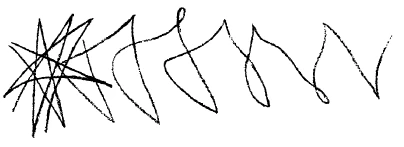
[ 25 ] We really ought to depict this worldview differently. We should depict it in such a way that the outer cosmos is particularly rich in elements of thought in ancient times, that it becomes increasingly sparse as we approach the present, and that thought, as it exists in the cosmos, gradually dies out. We must first depict the element of will in a subtle way. The further back we go, the more thought predominates in the Akashic images; the further forward we proceed, the denser and ever denser the element of will becomes. If we were to grasp this development, we would look upon a luminous element of thought from the grayest antiquity, and upon the irrational element of will of the future.
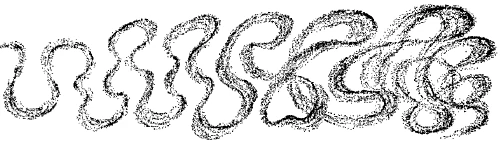
[ 26 ] But this does not remain so, for into it man now brings the thoughts he has kept in his mind. He sends them onward into the future. And while the cosmic thoughts die away more and more, human thoughts begin to sprout; from their source, they penetrate the cosmic element of will in the future.
[ 27 ] Thus, human beings are the custodians of the cosmic thought; thus, human beings carry the cosmic thought out into the world from within themselves. Through the detour of human beings, the cosmic thought propagates itself from primeval times into the future. Humanity is part of the cosmos. But it is not part of it in the way a materialist might think—that humanity is simply something that evolved from the cosmos and is a part of it—but rather, humanity is also part of the creative element of the cosmos. It carries the thought forward from the past into the future.
[ 28 ] You see, this is where we get into the concrete. If one truly understands human beings, one enters into what Schopenhauer and Hegel presented in a one-sided way. And you can see from this that, just as in philosophy, what is threefold must be synthesized at a higher level—just as human beings must be understood within the cosmos.
[ 29 ] Well, tomorrow we will take a closer look at this connection between human beings and the cosmos. I wanted to offer this to you today as an introduction—as I said, the necessity of which will become clear as we proceed.