Perspectives on Human Evolution
The Materialistic Impulse toward Knowledge
and the Task of Anthroposophy
GA 204
3 June 1921, Dornach
Translate the original German text into any language:
Versions Available:
The Spiritual Backgrounds of the Outer World, tr. SOL
Sechzehnter Vortrag
Sixteenth Lecture
[ 1 ] Wir haben gestern geschlossen mit zwei bedeutsamen Fragen, die sich ergeben haben aus der Betrachtung der Stellung einer solchen Persönlichkeit wie Johannes Scotus Erigena es war. Bei diesem Mann finden wir ja eine Anschauung, die herüberleuchtet aus den ersten christlichen Jahrhunderten in das 9. Jahrhundert hinein. Wir können sagen, aus allem dem, was sich im Laufe der letzten Zeit ergeben hat, sind die Vorstellungsarten, ist die ganze Art zu denken in den ersten christlichen Jahrhunderten noch anders als später. Und ein großer Umschwung hat stattgefunden, wie wir ja schon wissen, im 4. nachchristlichen Jahrhundert. Die Menschen haben einfach von der Mitte des 4. Jahrhunderts an viel verstandesmäßiger gedacht als vorher. Man möchte sagen: alles Erkennen, alles Vorstellungbilden war vorher viel mehr einer Art von Eingebung entsprungen als später, wo die Menschen sich immer mehr bewußt wurden, selber mit den Gedanken zu arbeiten. Und was sich als solches Bewußtsein für die Menschen vor dem 4. nachchristlichen Jahrhunderte herausgestellt hatte, das klingt nach noch in einem solchen Ausspruche wie dem des Scotus Erigena, daß der Mensch als Mensch urteilt und Schlüsse zieht, daß er aber als Engel erkennt. Was da Scotus Erigena, ich möchte sagen wie ein altes Erbstück, wie durch eine Reminiszenz noch heraufholt, das wurde von all denen angenommen vor dem 4. Jahrhundert, die überhaupt Gedanken hatten. Sie kamen gar nicht darauf, die Gedanken, die ein Wissen, ein Erkennen vermittelten, dem Menschen als solchem zuzuschreiben, sondern sie schrieben das dem in ihnen wirkenden Engel zu. Ein Engel bewohnte den Leib des Menschen, der erkannte, und an dieser Erkenntnis nahm der Mensch teil.
[ 1 ] Yesterday we concluded with two significant questions that arose from our examination of the position of a figure such as Johannes Scotus Erigena. In this man, we indeed find a perspective that shines through from the early Christian centuries into the 9th century. We can say that, based on everything that has emerged in recent times, the modes of perception—indeed, the entire way of thinking—in the early Christian centuries were still different from what they were later on. And a major shift took place, as we already know, in the 4th century A.D. From the middle of the 4th century onward, people simply thought in a much more rational way than before. One might say: all cognition, all formation of mental images, had previously sprung much more from a kind of inspiration than it did later, when people became increasingly conscious of working with their own thoughts. And what had emerged as such consciousness for people before the 4th century A.D. still resonates in a statement such as that of Scotus Erigena, that man judges and draws conclusions as a human being, but perceives as an angel. What Scotus Erigena brings up here—I would say like an old heirloom, as if through a reminiscence—was accepted by all those before the 4th century who had thoughts at all. It did not even occur to them to attribute the thoughts that conveyed knowledge and insight to human beings as such; rather, they attributed them to the angel acting within them. An angel dwelt within the body of the person who recognized, and the person participated in this recognition.
[ 2 ] Solch ein unmittelbares Bewußtsein war ganz verglommen seit dem 4. nachchristlichen Jahrhundert, und in solchen Geistern wie in Johannes Scotus leuchtete es wieder auf, wurde es gewissermaßen mit Mühe herausgeholt aus der Seele. Das beweist eben, daß die ganze Art des Weltenschauens anders geworden ist im Laufe dieser Jahrhunderte, und daher wird es so schwer für die Menschen der Gegenwart, sich zurückzuvetsetzen in die Denk- und Anschauungsweise der ersten christlichen Jahrhunderte. Erst mit Hilfe der Geisteswissenschaft muß das wiederum angestrebt werden. Man muß wiederum zu Vorstellungen kommen, die nun wirklich entsprechend sind dem, was in den ersten christlichen Jahrhunderten gedacht worden ist. Schon zur Zeit des Scotus Erigena begannen ja solche Dinge wie der sogenannte Abendmahlsstreit, wie der Streit über die Vorherbestimmung des Menschen. Es waren die Dinge, welche durchaus anzeigen, wie in die Sphäre des menschlichen Diskutierens dasjenige hereingezogen ist, was vorher mehr einer Inspiration, einer Eingebung entsprach, und über das man eigentlich nicht gestritten hat. Aber es wurden eben später viele Dinge ganz und gar nicht mehr verstanden.
[ 2 ] Such direct awareness had completely faded since the 4th century A.D., and in minds such as that of John Scotus it shone forth again, having been, so to speak, painstakingly drawn forth from the soul. This proves precisely that the entire way of viewing the world has changed over the course of these centuries, and that is why it is so difficult for people today to put themselves back into the mindset and worldview of the early Christian centuries. Only with the help of spiritual science can this be sought once again. We must once again arrive at concepts that truly correspond to what was thought in the early Christian centuries. Even in the time of Scotus Erigena, issues such as the so-called Eucharistic controversy and the dispute over human predestination had already begun. These were the issues that clearly indicate how what had previously been more a matter of inspiration or intuition—and about which there had actually been no dispute—had been drawn into the realm of human debate. But later on, many things were no longer understood at all.
[ 3 ] Zu den nicht mehr verstandenen Dingen gehört zum Beispiel der Anfang des Johannes-Evangeliums, so wie er einfach populär vorliegt. Wenn wir diesen Anfang des Johannes-Evangeliums ernst nehmen, so besagt er ja eigentlich etwas, was im allgemeinen Bewußtsein der christlichen Bekenner durch die späteren Jahrhunderte gar nicht mehr vorhanden ist. Bedenken Sie doch nur, daß im Anfang des Johannes-Evangeliums die Worte sind: Im Urbeginne war der Logos —, und daß es dann weiter heißt: Durch den Logos sind alle Dinge entstanden, ist alles dasjenige entstanden, was eben zu dem Entstandenen gehört, und außer durch den Logos ist nichts von dem Entstandenen geworden.
[ 3 ] Among the things that are no longer understood is, for example, the beginning of the Gospel of John, as it is commonly found. If we take this beginning of the Gospel of John seriously, it actually conveys something that has completely disappeared from the general consciousness of Christians over the course of later centuries. Just consider that the beginning of the Gospel of John contains the words: “In the beginning was the Logos—,” and that it goes on to say: “Through the Logos all things came into being—everything that has come into being—and apart from the Logos, nothing that has come into being came into being.”
[ 4 ] Wenn man diese Worte ernst nimmt, so muß man sich sagen: Sie bedeuten, daß durch den Logos die sichtbaren Dinge, die Weltendinge entstanden sind, und daß also der Logos der eigentliche Schöpfer der Weltendinge ist. Im christlichen Bewußtsein nach dem 4. Jahrhunderte wird ja der Logos, der im Sinne des JohannesEvangeliums ganz richtig mit dem Christus identifiziert wird, durchaus nicht als der Schöpfer der sichtbaren Dinge angesehen, sondern der Schöpfer wird dem Christus gegenübergestellt als der Vatergott, der Gottvater. Der Logos wird als der Sohn bezeichnet, aber nicht der Sohn wird zum Schöpfer gemacht, sondern der Vater wird zum Schöpfer gemacht. Das ist eine Lehre, die durch die Jahrhunderte gelebt hat, und die durchaus dem Johannes-Evangelium widerspricht. Man kann nicht das Johannes-Evangelium ernst nehmen und in dem Christus nicht den Schöpfer aller sichtbaren Dinge sehen, sondern in dem Vatergott den Schöpfer der sichtbaren Dinge sehen. Sie sehen, meine lieben Freunde, wie wenig ernst eigentlich das Evangelium in den späteren christlichen Zeiten genommen worden ist.
[ 4 ] If one takes these words seriously, one must conclude that they mean that visible things—the things of the world—came into being through the Logos, and that the Logos is therefore the true creator of the things of the world. In Christian consciousness after the 4th century, however, the Logos—who, in the sense of the Gospel of John, is quite correctly identified with Christ—is by no means regarded as the creator of visible things; rather, the creator is set in contrast to Christ as the Father God, God the Father. The Logos is designated as the Son, but it is not the Son who is made the Creator; rather, the Father is made the Creator. This is a doctrine that has persisted through the centuries and that thoroughly contradicts the Gospel of John. One cannot take the Gospel of John seriously and fail to see Christ as the Creator of all visible things, but instead see the Father God as the Creator of visible things. You see, my dear friends, how little the Gospel was actually taken seriously in later Christian times.
[ 5 ] Nun müssen wir uns schon zurückversetzen in die ganze Denkweise, die, wie gesagt, einen Umschwung in dem gekennzeichneten Zeitpunkte erfahren hat, und die diejenige der ersten christlichen Jahrhunderte war, die ja im Grunde genommen aufgebaut war wiederum auf demjenigen, was aus alten heidnischen Zeiten über die geistige Welt dageblieben war. Wir müssen uns namentlich klarwerden darüber, wie angesehen worden ist dasjenige, was sich ja dann in dem. christlichen Meßopfer fortsetzte, wie angesehen worden ist das Abendmahl, dessen wesentlicher Inhalt ja in dem Worte liegt: Dies ist mein Leib — wobei hingedeutet wird auf das Brot —, dies ist mein Blut — wobei hingedeutet wird auf den Wein. Dieser Inhalt des Abendmahles, er war wirklich in den ersten christlichen Jahrhunderten verstanden worden, sogar verstanden worden von Menschen, die gar nicht etwa gelehrte Naturen waren, sondern die sich einfach im Zeichen des Abendmahles zum Andenken an den Christus versammelten. Aber was meinte man denn damit eigentlich? Man meinte das Folgende.
[ 5 ] Now we must put ourselves back into the entire mindset that, as I said, underwent a shift at the point in time described, and which was that of the early Christian centuries—a mindset that was, after all, fundamentally built upon what had remained from ancient pagan times regarding the spiritual world. We must, in particular, clarify for ourselves how that which was then continued in the Christian Eucharistic sacrifice was viewed, how the Lord’s Supper was viewed, the essential content of which lies in the words: “This is my body”—pointing to the bread—“this is my blood”—pointing to the wine. This meaning of the Lord’s Supper was truly understood in the early Christian centuries, even by people who were by no means scholars, but who simply gathered under the sign of the Lord’s Supper in remembrance of Christ. But what did people actually mean by this? They meant the following.
[ 6 ] Man hatte im ganzen Altertum eine religiöse Weisheitslehre, und im Grunde genommen war diese religiöse Weisheitslehre um so mehr auf dem Wesen des Vatergottes aufgebaut, in je frühere Zeiten man zurückschaut. Wenn wir die religiösen Bekenntnisse sehr alter Zeiten betrachten, die sich dekadent dann erhalten haben in den späteren religiösen Bekenntnissen, wenn wir diese alten Bekenntnisse nehmen, so zeigen sie überall eine gewisse Verehrung desjenigen, was zurückgeblieben war von dem Ahnherrn eines Stammes, eines Volkes. Man verehrte gewissermaßen den Stammvater eines Stammes, eines Volkes. Sie wissen ja aus Tacitus’ «Germania», wie auch diejenigen Völkerschaften, die dann ins Römische Reich gedrungen sind und die neue Zivilisation möglich gemacht haben, durchaus noch Erinnerungen hatten an solche Stammesgottheiten, obwohl sie schon vielfach übergegangen waren, wie ich in den öffentlichen Vorträgen des letzten Kurses ausgeführt habe, zu einer anderen Form der Gottesverehrung, zu den Lokalgottheiten. Man hatte also die Meinung, Generation nach Generation ist verflossen, seitdem ein alter Ahne da war, der den Stamm, der das Volk begründet hat, und die Seele, das Geistig-Seelische dieses Stammvaters, das waltete noch bis in die spätesten Generationen hinein. Und dieses Walten ist an die physische Gemeinschaft der Leiber des Stammes gebunden. Diese Leiber sind ja alle miteinander verwandt. Sie sind eben gemeinsamer Abstammung. Durch ihre Adern fließt das gemeinsame Blut. Der Leib und das Blut sind eines. Und wie man hinauf sah zu dem Seelisch-Geistigen des Stammvaters, indem man sich religiös erhob, so fühlte man das Walten der Gottheit, zu der der Stammvater gegangen ist, von der der Stammvater nunmehr wirkte durch sein Seelisch-Geistiges auf den ganzen Stamm, auf das ganze Volk. Das Walten dieser Gottheit sah man in den Leibern, in dem Blute, das durch Generationen herunterrann, und etwas tief Geheimnisvolles sah man in den geheimnisvollen Kräften des Leibes und in den Kräften des Blutes.
[ 6 ] Throughout antiquity, there was a religious doctrine of wisdom, and essentially, the further back in time one looks, the more this religious doctrine of wisdom was based on the nature of God the Father. If we examine the religious creeds of very ancient times—which were later preserved in a decadent form within subsequent religious creeds—and if we consider these ancient creeds, they everywhere reveal a certain veneration for what remained of the ancestral progenitor of a tribe or a people. In a sense, people venerated the progenitor of a tribe or a people. As you know from Tacitus’s Germania, even those peoples who later penetrated the Roman Empire and made the new civilization possible still retained memories of such tribal deities, although, as I explained in the public lectures of the last course, they had in many cases already transitioned to a different form of divine worship—namely, that of local deities. So the belief was that generations had passed since the time of an ancient ancestor who founded the tribe and the people, and that the soul—the spiritual-soul aspect of this tribal ancestor—continued to reign even into the latest generations. And this reign is bound to the physical community of the tribe’s bodies. These bodies are, after all, all related to one another. They are, in fact, of common descent. The same blood flows through their veins. The body and the blood are one. And just as people looked up to the spiritual-soul aspect of the tribal ancestor by raising themselves in religious devotion, so they felt the influence of the deity to whom the tribal ancestor had gone—from whom the tribal ancestor now worked, through his spiritual-soul aspect, upon the entire tribe, upon the entire people. One saw the influence of this deity in the bodies, in the blood that flowed down through generations, and one perceived something deeply mysterious in the mysterious powers of the body and in the powers of the blood.
[ 7 ] Man sah wirklich in jenen alten heidnischen Zeiten in demjenigen, was im Leibe waltete und was durch das Blut rann, die Kräfte der Gottheit selber. Man kann daher schon sagen, daß wenn ein Bekenner jener alten Weltanschauung tierisches oder gar Menschenblut herausrinnen sah, er in diesem Blute den Leib der Gottheit selber erblickte, und er sah in dem, was sich aus dem Blute aufbaute, in den Leibern der Stammesverwandten, der Volksverwandten, die Gestalten der Gottheit, das Ebenbild der Gottheit. Wie da in dem Materiellen zu gleicher Zeit das Göttlich-Geistige verehrt wurde, davon können sich die Menschen heute eben keine Vorstellungen mehr machen.
[ 7 ] In those ancient pagan times, people truly saw in what reigned within the body and what flowed through the blood the very powers of the deity itself. One can therefore say that when a follower of that ancient worldview saw animal or even human blood flowing out, he beheld in that blood the very body of the deity, and he saw in what was formed from the blood—in the bodies of his kinsmen and fellow tribespeople—the forms of the deity, the very image of the deity. People today can no longer even begin to imagine how the divine-spiritual was worshiped in the material world at the same time.
[ 8 ] Durch das Blut der Generationen rann also die Kraft der Gottheit herunter; durch die Leiber der Generationen gestaltete die Gottheit ihr Ebenbild, und zu dieser Gottheit kam die Seele und der Geist des Ahnen und wirkte mit Götterkraft auf die Nachkommen, wurde verehrt als die Ahnengottheit. Nicht nur für diese alten Bekenntnisse, sondern vor allen Dingen auch für die wirkliche Wahrheit hängt dasjenige, was im menschlichen Leibe wirkt, von den Kräften der Erde ab. Seine Anlagen, das wissen Sie ja, sind aus viel älteren Zeiten; aber in dem menschlichen Leib, so wie er heute ist mit dem mineralischen Reiche in sich, und im Blute wirken die Kräfte der Erde.
[ 8 ] Thus, the power of the deity flowed down through the blood of the generations; through the bodies of the generations, the deity fashioned its image, and the soul and spirit of the ancestor joined this deity, exerting a divine influence on the descendants and being revered as the ancestral deity. Not only according to these ancient beliefs, but above all according to the actual truth, that which acts within the human body depends on the forces of the Earth. Its predispositions, as you know, date back to much earlier times; but in the human body as it is today—with the mineral kingdom within it—and in the blood, the forces of the Earth are at work.
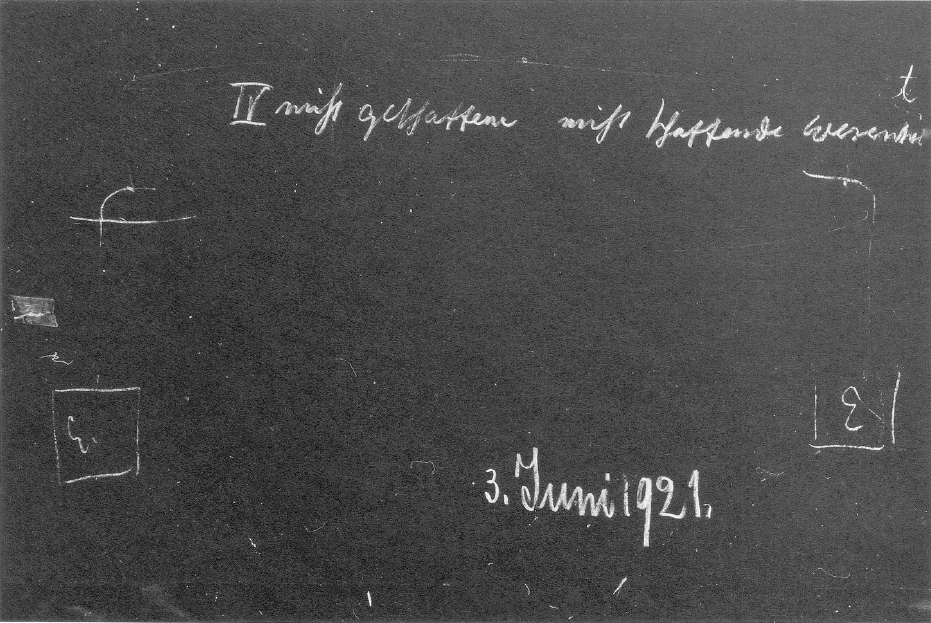
[ 9 ] Im menschlichen Blute zum Beispiel wirken nicht bloß diejenigen Kräfte, die durch Nahrungsmittel einziehen in den Menschen, sondern die Kräfte, die im ganzen Erdenplaneten tätig sind. Dadurch, daß zum Beispiel der Mensch in einer Gegend lebt, die sehr viel von roter Erde hat, also eine gewisse geologische Beschaffenheit, gewisse metallische Einschlüsse hat in der Erde, dadurch wird von der Erde auf das Blut gewirkt. Und wiederum, von der Erde ist die Gestaltung, ist der Leib des Menschen abhängig. Anders gestaltet sich der Leib in wärmeren, anders in kälteren Gegenden der Erde. Das Leibliche und das im Blute Wirkende hängt von dem ab, was in der Erde als Kräfte waltet. Diese Wahrheit, zu der wir heute erst wiederum kommen durch geisteswissenschaftliche Untersuchung, sie war aus ihrer instinktiven Erkenntnis heraus diesen alten Menschen noch ohne weiteres klar. Sie wußten, im Blute pulsieren die Erdenkräfte. Wir sagen uns heute, wenn wir den einen Telegraphenapparat von der Station A dutch einen Draht verbinden mit dem Telegraphenapparat der Station B, so verbinden wir nur einseitig die Apparate. Wir leiten durch den Draht den elektrischen Strom; aber der elektrische Strom muß sich schließen. Er schließt sich dadurch, daß wir die sogenannte Erdleitung bilden. Es ist Ihnen ja wohl bekannt, daß wenn wir auf der einen Station einen Telegraphenapparat haben, wir über die Telegraphenstangen den Draht führen; aber der Strom ist dann nicht geschlossen, der Strom muß geschlossen werden. Wir leiten ihn in die Platte, die wir in die Erde versenken, hinein, hier ebenfalls in die Platte [auf der anderen Seite], die wir in die Erde versenken, tun sonst gar nichts. Wir könnten auch einen anderen Draht hier legen, dann würde der Strom geschlossen sein, aber wir tun das nicht, wir bringen hier eine Erdleitungsplatte und hier eine Erdleitungsplatte an (es wird gezeichnet), und die Erde besorgt das andere selbst. Das wissen wir heute als ein Ergebnis der äußeren Wissenschaft. Wir müssen voraussetzen, daß die Elektrizität, der elektrische Strom in der Erde drinnen arbeitet. Nun, die alten Menschen wußten nichts von der Elektrizität und dem elektrischen Strom. Aber sie wußten dafür etwas von ihrem Blute. Sie standen auf der Erde und wußten, da ist etwas in der Erde drinnen, was im Blute auch lebt. Sie sahen die Sache anders an; sie sprachen nicht von Elektrizität, aber sie sprachen von etwas Irdischem, das in ihrem Blute lebt. Wir wissen nicht mehr, daß sie im Blute lebt, die Elektrizität der Erde. Wir reden nur, indem wir äußerlich dutch mathematisch-mechanische Vorstellungen die Sache zu umfassen trachten. Und so kam es, daß die Menschen mit dem Erdenkörper als solchem verbanden diese Gottesvorstellung, die sie hatten. Sie sagten sich: das Göttliche waltet im Blute, waltet im Leibe, es waltet durch die Erde. Das war dasjenige, was in der Gottvatervorstellung erschien. Die Gottvatervorstellung ist eine solche aus dem Grunde, weil man ja den Urvater des Stammes, des Volkes, als den Ausgangspunkt des Göttlichen ansah; aber als das Mittel, wodurch er wirkte, sah man die Erde an, und die Wirkungen der Erde im Blute, im ganzen Menschenleib sah man als dasjenige an, was eigentlich Wirkungen des Göttlichen sind.
[ 9 ] In human blood, for example, it is not only the forces that enter the human body through food that are at work, but also the forces active throughout the entire planet Earth. For example, when a person lives in a region with a great deal of red soil—that is, a certain geological composition with certain metallic inclusions in the earth—the earth exerts an influence on the blood. And in turn, the human form, the human body, depends on the earth. The body takes on a different form in warmer regions than in colder ones. The physical body and the forces at work in the blood depend on the forces at work within the earth. This truth, which we are only now rediscovering through spiritual scientific research, was readily apparent to those ancient people through their instinctive insight. They knew that the forces of the earth pulsate within the blood. We tell ourselves today that when we connect a telegraph machine at Station A to a telegraph machine at Station B via a wire, we are connecting the machines only on one side. We conduct the electric current through the wire; but the electric current must be closed. It is closed by forming what is called the ground connection. As you are well aware, when we have a telegraph machine at one station, we run the wire along the telegraph poles; but the circuit is not yet closed—it must be closed. We feed the current into the plate that we bury in the ground, and here as well into the plate [on the other side] that we bury in the ground; we do nothing else. We could also lay another wire here, and then the circuit would be closed, but we do not do that; instead, we install a grounding plate here and a grounding plate here (it is drawn), and the earth takes care of the rest on its own. We know this today as a result of external science. We must assume that electricity—the electric current—is at work inside the earth. Now, the people of old knew nothing about electricity or electric current. But they did know something about their own blood. They stood on the earth and knew that there was something inside the earth that also lives in the blood. They viewed the matter differently; they did not speak of electricity, but they spoke of something earthly that lives in their blood. We no longer realize that the earth’s electricity lives in the blood. We speak only by attempting to grasp the matter externally through mathematical-mechanical concepts. And so it came to pass that people associated this conception of God they held with the Earth’s body as such. They said to themselves: the divine reigns in the blood, reigns in the body, it reigns through the Earth. That was what appeared in the conception of God the Father. The concept of God the Father arose fundamentally because the ancestral father of the tribe or people was regarded as the starting point of the divine; but the Earth was seen as the medium through which he acted, and the effects of the Earth in the blood and throughout the human body were regarded as what are in fact the effects of the divine.
[ 10 ] Nun aber hatten alle diese alten Menschen noch eine andere Vorstellung. Sie sagten sich: Nicht allein das Irdische wirkt auf den Menschen. Es wäre ja gut, wenn bloß das Irdische auf den Menschen wirkte, aber das ist nicht der Fall, sondern es wirkt der Nachbar der Erde, der Mond, zusammen mit den Kräften der Erde. Und so sagten sie sich: Es wirkt eigentlich nicht die Erde allein, sondern Erde und Mond wirken zusammen, und mit dieser Mischung von Erden- und Mondenkräften verbanden sie die Vorstellungen von jetzt nicht nur einer einheitlichen Gottheit der Erde, sondern von vielen Untergottheiten, die eben dann in der heidnischen Welt da waren. Alles dasjenige, was als Gottesvorstellung da war, was auf den Menschen wirkte durch Leib und Blut, das also war der Urquell, der die Gottesvorstellung eigentlich speiste in dieser alten Zeit.
[ 10 ] But all these ancient people had another idea. They said to themselves: It is not only earthly forces that affect human beings. It would indeed be good if only earthly forces affected human beings, but that is not the case; rather, the Earth’s neighbor, the Moon, works together with the Earth’s forces. And so they said to themselves: It is not actually the Earth alone that exerts an influence, but rather the Earth and the Moon act together; and with this mixture of Earthly and Lunar forces, they associated not only the concept of a single, unified deity of the Earth, but also that of many lesser deities that existed in the pagan world at that time. Everything that existed as a conception of God—that which acted upon human beings through body and blood—that was the original source that actually nourished the conception of God in those ancient times.
[ 11 ] Es war nun kein Wunder, daß alles Erkennen in diesen alten Zeiten sich hinwandte zur Erde, sich hinwandte zum Monde, hinwandte zu den Wirkungen der Erde, daß man das dazu ergründen mußte, was auf die Erde wirkte. Da bildete man eine feine Wissenschaft aus. Diese Wissenschaft von der Vatergottheit, die wirkte nach in den drei ersten Büchern des Johannes Scotus Erigena, von denen ich Ihnen gestern gesprochen habe. Im Grunde genommen weiß er es nicht mehr recht, denn er lebte eben schon im 9. nachchristlichen Jahrhunderte; aber Erbstücke der Urweisheit waren vorhanden, die davon sprachen, daß in dem, was den Menschen irdisch umgibt, der Vatergott lebt, der nicht geschaffen, aber schaffend ist, die anderen Gottheiten leben, die geschaffen sind, aber schaffend sind. Das sind also die verschiedenen Wesenheiten der Hierarchien. Dann ist ausgebreitet um den Menschen dasjenige, was sichtbare Welt ist, das Geschaffene und Nichtschaffende, und erwarten soll der Mensch diejenige Welt, in welcher die Gottheit als eine nichtschaffende und nichtgeschaffene, also als eine ruhende waltet, die alles andere in ihrem Schoße aufnimmt. Dies das vierte Buch des Scotus Erigena.
[ 11 ] It was no wonder, then, that all knowledge in those ancient times turned toward the Earth, toward the Moon, and toward the effects of the Earth—that one had to investigate what influenced the Earth. A refined science was thus developed. This science of the Father-Godhead continued to influence the first three books of John Scotus Erigena, of which I spoke to you yesterday. Strictly speaking, he no longer knew it for certain, for he was already living in the 9th century A.D.; but there were remnants of primordial wisdom that spoke of how, within what surrounds human beings on earth, the Father God lives—who is uncreated yet creative—and the other deities live, who are created yet creative. These, then, are the various beings of the hierarchies. Then, spread out around human beings is what constitutes the visible world—the created and the uncreated—and human beings are to look forward to that world in which the Deity reigns as an uncreated and uncreating being, that is, as a being at rest, who embraces all else within her bosom. This is the fourth book of Scotus Erigena.
[ 12 ] Nun, in diesem vierten Buche, das habe ich Ihnen ja gesagt, ist vorzugsweise die Soteriologie und die Eschatologie behandelt. In diesem vierten Buche wird dargestellt die Geschichte des Christus Jesus, die Auferstehung, die Gnadengaben werden dargestellt, aber auch gewissermaßen das Weltenende, das Hineingehen in die ruhende Gottheit. Die drei ersten Kapitel des großen Buches des Scotus Erigena zeigen uns, ich möchte sagen, klar einen Nachklang alter Anschauungen, denn im Grunde genommen recht christlich wird erst das vierte Kapitel. Die drei ersten Kapitel, sie werden christlich durchsetzt mit allerlei Vorstellungen, aber dasjenige, was in ihnen eigentlich wirksam ist, ist im Grunde genommen noch aus der alten Heidenzeit, und wir finden es so, wie es in der Heidenzeit war, auch bei den Kirchenvätern der ersten christlichen Jahrhunderte. Wir können sagen: Durch die Natur, durch dasjenige, was der Mensch in den Wesen, die ihn umgaben, sah, sah er die Region des Vatergottes. Er sah eine Idealwelt hinter der Natur. Er sah gewisse Kräfte in der Natur. Er sah endlich in der Aufeinanderfolge der Generationen, in diesem Werden der Menschheit selber in den einzelnen Stämmen und Völkern das Walten des Vatergottes. In den ersten christlichen Jahrhunderten war zu dieser Erkenntnis nur eine andere noch hinzugetreten, die fast ganz verlorengegangen ist.
[ 12 ] Well, as I have already told you, this fourth book deals primarily with soteriology and eschatology. This fourth book presents the story of Christ Jesus, the Resurrection, and the gifts of grace, but also, in a sense, the end of the world and the entry into the resting Divinity. The first three chapters of Scotus Erigena’s great book show us, I would say, a clear echo of ancient views, for, strictly speaking, it is only the fourth chapter that becomes truly Christian. The first three chapters are interwoven with all manner of Christian ideas, but what is actually at work in them essentially still stems from the ancient pagan era, and we find it, just as it was in pagan times, among the Church Fathers of the first Christian centuries as well. We can say: Through nature, through what human beings saw in the beings that surrounded them, they perceived the realm of the Father God. They saw an ideal world behind nature. They saw certain forces in nature. Finally, they saw the rule of the Father God in the succession of generations, in the very development of humanity itself within the individual tribes and peoples. In the early Christian centuries, only one other insight had been added to this—one that has been almost entirely lost.
[ 13 ] Die ersten christlichen Kirchenväter — ihre spätchristlichen Kritiker haben ja das gründlich ausgerottet —, die sagten nämlich: In dem, was namentlich durch die Generationen hindurch durch das Blut geflossen ist, was sich in den Leibern ausgestaltet hat, da wirkte schon der Vatergott, aber in fortwährendem Kampf und in fortwährendem Zusammensein mit seinen gegnerischen Mächten, den Naturgeistern. Das war eine besonders lebendige Vorstellung in den ersten christlichen Jahrhunderten, daß es dem Vatergott eigentlich nie gelungen war, allein zu wirken, sondern daß er im steten Kampfe gelegen hatte mit den Naturgeistern, die in allem Möglichen der Außenwelt walteten. Und so sagten diese ersten christlichen Kirchenväter: Die Alten der vorchristlichen Zeit glaubten an den Vatergott, aber sie konnten ihn ja gar nicht unterscheiden von den Naturgeistern; sie glaubten eigentlich an dieses ganze Reich des Vatergottes mit dem Naturreich zusammen. Sie glaubten, daß von dem herrührte die ganze sichtbare Welt. Das ist aber nicht wahr, so sagten sie. Es wirken zusammen alle diese geistigen Wesenheiten, diese verschiedenen Naturgottheiten, sie wirken in der Natur, aber sie haben sich erst in die irdischen Dinge hineingeschlichen. Die irdischen Dinge aber, die wir mit den Sinnen sehen, die außer uns sind, die also geworden sind als irdische, die rühren nicht von diesen Naturgeistern und auch nicht vom Vatergotte her, der eigentlich nur in denjenigen Metamorphosen sein schaffendes Wesen hatte, die der Erde vorangegangen sind. Dasjenige, was Erde ist, dasjenige, was man sieht als Erde, das rührt nicht vom Vatergotte her und nicht von den Naturgeistern, das rührt von dem Sohne, von dem Logos her, den der Vatergott hat aus sich hervorgehen lassen, damit der Logos die Erde schaffe; und das Johannes-Evangelium ist aufgerichtet, ein großes, bedeutsames Monument, um anzudeuten: Nein, es ist nicht so, wie die Alten geglaubt haben, daß die Erde vom Vatergott geschaffen sei; der Vatergott hat den Sohn aus sich hervorgehen lassen, und der Sohn ist der Schöpfer der Erde.
[ 13 ] The early Christian Church Fathers—whose late-Christian critics, as we know, thoroughly eradicated this view—said, in fact: In what has flowed through the blood from generation to generation, in what has taken shape within the bodies, the Father God was already at work—but in constant struggle and in constant coexistence with his opposing forces, the nature spirits. This was a particularly vivid conception in the early Christian centuries: that God the Father had never actually succeeded in acting alone, but had been engaged in constant struggle with the nature spirits, who reigned over every aspect of the external world. And so these early Christian Church Fathers said: The ancients of pre-Christian times believed in the Father God, but they could not distinguish him at all from the nature spirits; they actually believed in this entire realm of the Father God together with the natural realm. They believed that the entire visible world originated from it. But that is not true, they said. All these spiritual beings, these various nature deities, work together; they are at work in nature, but they have only now crept into earthly things. But the earthly things that we perceive with our senses—those that exist outside of us, that have thus become earthly—do not originate from these nature spirits, nor from the Father God, whose creative essence was actually limited to those metamorphoses that preceded the Earth. That which is the Earth—that which is seen as the Earth—does not originate from the Father God nor from the nature spirits; it originates from the Son, from the Logos, whom the Father God brought forth from Himself so that the Logos might create the Earth; and the Gospel of John has been established as a great, significant monument to indicate: No, it is not as the ancients believed, that the Earth was created by God the Father; God the Father sent forth the Son from Himself, and the Son is the Creator of the Earth.
[ 14 ] Das sollte das Johannes-Evangelium sagen. Das war im Grunde genommen dasjenige, wofür die Kirchenväter der ersten christlichen Jahrhunderte gekämpft haben, was dann zu fassen dem menschlichen Verstande, der sich entwickelte, so schwer geworden ist, daß Dionysius der Areopagite vorgezogen hat, zu sagen: Alles dasjenige, was der Verstand schafft, ist positive Theologie und dringt nicht bis in die Regionen hinein, die die eigentlichen Geheimnisse der Welt enthalten. Dahinein kann man nur kommen, wenn man alle Prädikate negiert, wenn man spricht nicht von dem Sein Gottes, sondern von dem Übersein Gottes, wenn man nicht spricht von der Persönlichkeit, sondern von der Überpersönlichkeit, wenn man also alles ins Negative hinüberversetzt; dann kommt man dutch die negative Theologie dem eigentlichen Geheimnis des Daseins bei. Aber Dionysius und ein solcher Nachfolger wie Johannes Scotus Erigena, der aber schon ganz von dem Verstande durchsetzt war, die glaubten eben nicht, daß man mit dem menschlichen Verstande überhaupt noch fähig sei, diese Geheimnisse der Welt zu erklären.
[ 14 ] That is what the Gospel of John was meant to convey. That was, in essence, what the Church Fathers of the first Christian centuries fought for—something that subsequently became so difficult for the evolving human mind to grasp that Dionysius the Areopagite preferred to say: Everything that the intellect creates is positive theology and does not penetrate into the realms that contain the true mysteries of the world. One can enter there only by negating all predicates—by speaking not of God’s being but of God’s trans-being, not of personality but of trans-personality—that is, by transforming everything into the negative; then, through negative theology, one approaches the true mystery of existence. But Dionysius and a follower such as John Scotus Erigena—who, however, was already thoroughly permeated by reason—did not believe that human reason was capable of explaining these mysteries of the world at all.
[ 15 ] Nun, was ist denn damit aber gesagt, daß der Logos der Schöpfer von allem ist? Denken Sie an dasjenige, was ja im Grunde genommen, nur eben dann abgeschwächt gegen die Zeit des Mysteriums von Golgatha hin, aber was im Grunde genommen in allen alten vorchristlichen Zeiten vorhanden war. Die Menschen sagten sich: Durch das Blut, durch den Leib wirkt die Gottheit, und sie hatten damit die Vorstellung verbunden, daß wenn das Blut durch die Adern des Menschen oder der Tiere rinnt, dieses Blut dann eigentlich den Göttern weggenommen ist. Es ist der rechtmäßige Besitz der Götter. Man kann also den Göttern sich nähern, wenn man ihnen Blut zurückgibt. Sie wollen das Blut eigentlich für sich haben; die Menschen haben das Blut in Besitz genommen, man muß den Göttern wiederum das Blut zurückgeben. Daher die Blutopfer in jenen alten Zeiten.
[ 15 ] Well, what does it actually mean to say that the Logos is the creator of everything? Think of what, in essence, was present throughout all ancient pre-Christian times—though it had become somewhat diminished as the time of the Mystery of Golgotha approached. People used to say to themselves: The deity works through the blood, through the body, and they had linked this with the idea that when blood flows through the veins of humans or animals, that blood is actually taken away from the gods. It is the rightful possession of the gods. One can therefore draw closer to the gods by returning blood to them. They actually want the blood for themselves; humans have taken possession of the blood, so one must return the blood to the gods. Hence the blood sacrifices in those ancient times.
[ 16 ] Nun kam der Christus und sagte: Das ist nicht dasjenige, um was es sich handelt, da kommt man nicht an die irdischen Dinge heran. Die irdischen Dinge sind gar nicht von denjenigen Göttern, die das Blut haben wollen. Sehen wir auf dasjenige, was wirkt im Menschen, bevor die Erde auf ihn wirkt, nehmen wir das Brot, also dasjenige, wovon sich der Mensch ernährt, nehmen wir es so, wie es der Mensch zunächst aufnimmt. Er nimmt es auf durch seinen Geschmack. Es geht das Nahrungsmittel im Menschen bis zu einem gewissen Punkt, bevor es in Blut umgewandelt wird. Es wird ja erst in Blut umgewandelt, nachdem es durch die Darmwände in die Organisation übergegangen ist. Da beginnt erst die Erdenwirkung; solange das Nahrungsmittel noch nicht übernommen ist vom Blute, hat die Erdenwirkung noch nicht begonnen. Sehet also nicht in dem Blute dasjenige, was dem Gotte entspricht, sehet es in dem Brote, bevor das Brot zu Blut wird, und sehet es in dem Wein, bevor der Wein in das Blut hineingeht. Da ist das Göttliche, da ist die Verkörperung des Logos. Sehet nicht auf dasjenige, was im Blute rinnt, denn das, was im Blute rinnt, das ist bei den Menschen altes Erbstück der Mondenzeit, der vorirdischen Zeit. Dasjenige, was im Menschen irdisch ist, mit dem hat das Nahrungsmittel zu tun, bevor es Blut wird. Also weg mit den Vorstellungen von dem Blute und von dem Leibe, von dem Fleische, dagegen hingelenkt die Vorstellungen zu demjenigen, was noch nicht Blut geworden ist und noch nicht Fleisch geworden ist, hingelenkt die Vorstellungen auf dasjenige, was auf der Erde draußen bereitet wird, was irdisch ist, ohne daß der Mond einen Einfluß dabei hat, das heißt auf das, was vom Sonneneinfluß herkommt. Denn wir sehen die Dinge durch das Licht der Sonne, und wir essen das Brot und trinken den Wein, indem wir in ihnen die Sonnenkraft essen und trinken. Die sichtbaren Dinge sind nicht durch den Vatergott, die sichtbaren Dinge sind durch den Logos.
[ 16 ] Now the Christ came and said: That is not what this is about; that is not the way to approach earthly things. Earthly things do not come from those gods who demand blood. Let us look at what is at work within a person before the earth exerts its influence on them; let us take bread—that is, the very thing by which a person nourishes themselves—and consider it as a person first takes it in. A person takes it in through their sense of taste. The food travels through the human body to a certain point before it is transformed into blood. It is only transformed into blood after it has passed through the intestinal walls into the body’s system. That is where the earthly influence begins; as long as the food has not yet been absorbed into the blood, the earthly influence has not yet begun. So do not look to the blood for that which corresponds to God; look to the bread before the bread becomes blood, and look to the wine before the wine enters the blood. Therein lies the Divine; therein lies the embodiment of the Logos. Do not look to that which flows in the blood, for that which flows in the blood is, among humans, an ancient legacy of the lunar age, the pre-earthly age. That which is earthly in man is what the food has to do with before it becomes blood. So cast aside the notions of blood and the body, of the flesh; instead, direct your thoughts toward that which has not yet become blood and has not yet become flesh—direct your thoughts toward that which is prepared out on the earth, that which is earthly, without the moon having any influence on it—that is, toward that which comes from the influence of the sun. For we see things through the light of the sun, and we eat the bread and drink the wine by eating and drinking the power of the sun within them. The visible things are not through God the Father; the visible things are through the Logos.
[ 17 ] Denken Sie, da war die ganze Vorstellungswelt der Menschen hingelenkt auf dasjenige, was man nun nicht im Stile der Alten gewinnen konnte aus der ganzen Natur, was man nur dadurch gewinnen konnte, daß man hinsah auf dasjenige, was die Sonne erglänzen läßt auf der Erde. Es war auf etwas rein Geistiges hingewiesen. Man soll nicht heraussaugen aus den physischen Dingen der Erde dasjenige, was das Göttliche ist, man soll dieses Göttliche sehen in dem reinen Geistigen, in dem Logos. Es wurde der Logos entgegengesetzt den alten Gottvatervorstellungen, das heißt, es wurde der Menschen Sinn auf etwas rein Geistiges hingelenkt. Niemals hat in vorchristlichen Zeiten der Mensch durch etwas anderes als durch dasjenige, was in ihm gewissermaßen organisch gekocht worden ist, und in ihm dann innerlich als eine Vision oder dergleichen aufgegangen ist, das Göttliche gesehen. Er sah schon das Göttliche auch für ihn aufsteigen aus dem Blute. Jetzt suchte er es im reinen Geistigen zu erfassen. Jetzt sollte er aber auch die Dinge, die um ihn herum sichtbar sind, als ein Ergebnis des Logos ansehen, nicht desjenigen, was sich in die Dinge erst hineingeschlichen hat, als das Ergebnis eines Gottes, der im Vorirdischen geschaffen hat.
[ 17 ] Consider that the entire realm of human imagination was directed toward that which could no longer be derived from nature in the manner of the ancients—that which could only be attained by looking upon that which the sun causes to shine upon the earth. It pointed to something purely spiritual. One should not extract from the physical things of the earth that which is divine; one should see this divine in the purely spiritual, in the Logos. The Logos was set in opposition to the ancient conceptions of God the Father; that is to say, human consciousness was directed toward something purely spiritual. In pre-Christian times, human beings never perceived the divine through anything other than what had, so to speak, been organically brewed within them and then arose within them inwardly as a vision or the like. They had already seen the divine rising up for them from the blood. Now they sought to grasp it in the purely spiritual realm. But now they were also to regard the things visible around them as a result of the Logos—not of that which had only crept into things—but as the result of a God who created in the pre-earthly realm.
[ 18 ] Damit, wenn wir so denken, kommen wir den Vorstellungen der ersten christlichen Jahrhunderte eigentlich erst nahe. Aber damit war ja den Menschen zunächst etwas gegeben wie ein Hinweis, daß sie nicht irgendwelcher anderen Kraft, als der Kraft ihres Bewußtseins entnehmen sollen die Vorstellungen, um zum Göttlichen zu kommen. Die Menschen waren hingelenkt auf das Geistige. Was konnte man ihnen daher sagen? Man konnte ihnen sagen: Ehedem war die Erde so mächtig, daß sie euch die Vorstellung gegeben hat vom Göttlichen. Das hat aufgehört. Die Erde gibt nichts mehr her. Ihr müßt dutch euch selbst zum Logos und zum schöpferischen Prinzip kommen. Ihr habt im Grunde genommen bisher verehrt dasjenige, was im Vorirdischen schöpferisch war; jetzt sollt ihr dasjenige verehren, was im Irdischen schöpferisch ist. Das könnt ihr aber nur durch die Kraft eures Ich, eures Geistes erfassen.
[ 18 ] When we think this way, we are actually only beginning to approach the conceptions of the early Christian centuries. But this initially gave people something like a hint that they should not draw their conceptions from any power other than the power of their own consciousness in order to reach the Divine. People were directed toward the spiritual. What, then, could one say to them? One could say to them: Once upon a time, the Earth was so powerful that it gave you the concept of the Divine. That has ceased. The Earth no longer provides anything. You must come to the Logos and the creative principle through yourselves. Essentially, up until now you have worshiped that which was creative in the pre-earthly realm; now you are to worship that which is creative in the earthly realm. But you can grasp this only through the power of your “I,” your spirit.
[ 19 ] Und das drückte sich aus in dem, daß die ersten Christen sagten: der Weltuntergang ist nahe. Sie meinten, der Untergang derjenigen Erde, die dem Menschen Erkenntnis gibt, ohne daß er mit seinem Bewußtsein an diesen Erkenntnissen arbeitet. Und es ist in der Tat eine tiefe Wahrheit ausgesprochen mit diesem Weltuntergange, denn der Mensch war vorher ein Sohn der Erde. Der Mensch überließ sich den Erdenkräften. Er verließ sich darauf, daß sein Blut ihm seine Erkenntnisse gab. Damit war es aus. Die Reiche der Himmel sind nahe herangekommen, die Reiche der Erde haben aufgehört. Der Mensch kann fortan nicht mehr ein Sohn der Erde sein. Der Mensch muß sich zum Genossen eines geistigen Wesens machen, das von der geistigen Welt auf die Erde heruntergekommen ist, des Logos, des Christus.
[ 19 ] And this was expressed in the fact that the early Christians said: “The end of the world is near.” They meant the end of that earth which gives humanity knowledge without requiring them to work on that knowledge with their consciousness. And indeed, a profound truth is expressed in this “end of the world,” for human beings were previously sons of the earth. Human beings surrendered themselves to the forces of the earth. They relied on their blood to provide them with knowledge. That era has come to an end. The realms of heaven have drawn near; the realms of the earth have ceased to exist. From now on, human beings can no longer be sons of the earth. Humanity must make itself a partner of a spiritual being who has descended from the spiritual world to Earth—the Logos, the Christ.
[ 20 ] Der Weltuntergang wurde prophezeit für das 4. nachchristliche Jahrhundert: Erdenuntergang, der Anbruch eines neuen Reiches, der Anbruch desjenigen Reiches, wo der Mensch sich fühlen soll, wohnend als Geist unter Geistern. Das wird wohl dem Menschen der Gegenwart am schwierigsten sein, sich vorzustellen, daß tatsächlich unsere gegenwärtige Art, als Menschen zu wohnen, die Menschen der Christus-Zeit nicht als ein irdisches Wohnen angesehen haben würden, sondern als ein Wohnen schon im Geisterreiche, nachdem die Erde, wie sie war, als sie noch für den Menschen die Kräfte hergab, untergegangen ist. Jemand, der in der richtigen Weise die Denkweise der ersten Christen verstanden hätte, würde heute nicht sagen, die ersten Christen hätten abergläubisch an den Untergang der Welt geglaubt; er sei aber nicht gekommen. In dem Sinne, wie die ersten Christen das gesehen haben, ist dieser Untergang im 4. nachchristlichen Jahrhundert dagewesen, und diejenige Art, wie wir jetzt leben, würden eben diese ersten Christen schon als das neue Jerusalem angesehen haben, als das Reich, in dem der Mensch als Geist unter Geistern lebt. Nur würden sie gesagt haben: Nach unserer Anschauung ist eigentlich der Mensch in den Himmel eingezogen, aber er ist so schlecht, daß er das nicht erkennt; er glaubt, daß im Himmel drinnen nur alles von Milch und Honig überfließt, daß da nicht die bösen Geister seien, gegen die er sich zu wehren hat. — Die ersten Christen würden gesagt haben: vorher waren diese bösen Geister in den Naturdingen drinnen, nun sind sie losgelassen, schwirren unsichtbar herum; der Mensch muß sich ihrer erwehren.
[ 20 ] The end of the world was prophesied for the 4th century A.D.: the end of the earthly world, the dawn of a new kingdom, the dawn of that kingdom where human beings are to feel that they dwell as spirits among spirits. This is probably the most difficult thing for people today to imagine: that the people of Christ’s time would not have regarded our present way of living as human beings as an earthly existence, but rather as an existence already within the spiritual realm, after the earth—as it was when it still provided its resources for humanity—had come to an end. Someone who had truly understood the mindset of the early Christians would not say today that the early Christians had superstitiously believed in the end of the world—which, they claimed, had not come to pass. In the sense that the early Christians understood it, this end of the world did occur in the 4th century A.D., and the very way we live now is precisely what those early Christians would have regarded as the New Jerusalem—the kingdom in which human beings live as spirits among spirits. They would only have said: According to our view, humanity has actually entered heaven, but it is so wicked that it does not recognize this; it believes that in heaven everything simply flows with milk and honey, and that there are no evil spirits against which it must defend itself. — The early Christians would have said: Before, these evil spirits were contained within the elements of nature; now they have been set free and flit about invisibly; man must defend himself against them.
[ 21 ] Also Weltuntergang im Sinne der ersten christlichen Zeiten war eben durchaus da. Man hat es nur nicht verstanden. Man hat nicht verstanden, daß statt des in der Erde wohnenden Gottes, der also sich ankündigte durch die Erdenereignisse, daß statt dessen da war der übersinnliche Logos, den man im Übersinnlichen erkennen muß, an den man sich halten muß durch übersinnliche Kräfte. Und wenn man dies annimmt, dann wird man auch verstehen, wieso im 9., 10., 11. Jahrhundert wiederum Weltuntergangsstimmung da war im zivilisierten Europa. Wiederum erwartete man den Weltuntergang. Man wußte nicht, was die ersten Christen damit gemeint haben, aber aus dieser Weltuntergangsstimmung, die über das ganze zivilisierte Europa im 9., 10., 11. Jahrhundert verbreitet war, bildete sich dasjenige, was nun auch auf mehr materielle Art den Weg zu dem Christus hin suchte, als man ihn eigentlich hätte suchen sollen. Man sollte erkennen: im Geiste soll man den Logos finden, nicht aus den Naturerscheinungen heraus. Dieses den Logos im Geiste Suchen, das haben diese Menschen, die nun wiederum in die Weltuntergangsstimmung hineinkamen, nicht begriffen, sondern sie haben es auf mehr materielle Art gesucht. Und so entstand aus dieser Stimmung heraus die Stimmung der Kreuzzüge: den Christus materiell im Orient in seinem Grabe wenigstens noch zu suchen, sich zu halten an den Christus in der Weltuntergangsstimmung, man möchte sagen, in der mißverstandenen Weltuntergangsstimmung.
[ 21 ] So the end of the world, as understood in early Christian times, was indeed very much present. People simply did not understand it. People did not understand that instead of the God dwelling within the earth—who thus announced Himself through earthly events—there was, instead, the supersensible Logos, whom one must recognize in the supersensible realm and to whom one must cling through supersensible powers. And if one accepts this, then one will also understand why, in the 9th, 10th, and 11th centuries, a mood of doomsday once again prevailed in civilized Europe. Once again, people expected the end of the world. People did not know what the early Christians had meant by this, but out of this apocalyptic mood, which was widespread throughout civilized Europe in the 9th, 10th, and 11th centuries, there emerged a movement that sought the path to Christ in a more material way than one should actually have sought it. One should realize: the Logos is to be found in the spirit, not through natural phenomena. These people, who had once again fallen into this apocalyptic mood, did not grasp this search for the Logos in the spirit; instead, they sought it in a more material way. And so, out of this mood arose the spirit of the Crusades: to at least still seek Christ in a material sense in the East, in his tomb; to cling to Christ amid the apocalyptic mood—one might say, the misunderstood apocalyptic mood.
[ 22 ] Ja, man fand nicht den Christus drüben im Oriente. Man hat ungefähr diejenige Antwort bekommen, die auch dazumal die Leute bekommen haben, die den Christus im Grabe sichtbarlich suchten, die Antwort: Der, den ihr suchet, der ist nicht mehr hier —, der muß eben im Geiste gesucht werden.
[ 22 ] Yes, Christ was not found over there in the Orient. The response received was roughly the same as that given to the people back then who were visibly searching for Christ in the tomb: “The one you seek is no longer here”—he must simply be sought in the spirit.
[ 23 ] Und jetzt im 20. Jahrhundert, und die Dinge werden sich wieder vermehren, ist ja auch Weltuntergangsstimmung, wenn auch die Menschen so lethargisch und gleichgültig geworden sind, daß sie nicht einmal mehr diese Weltuntergangsstimmung merken. Aber es hat immerhin derjenige, der von dieser Weltuntergangsstimmung im «Untergang des Abendlandes» spricht, einen bedeutenden, weithin bemerkbaren Eindruck gemacht, und diese Weltuntergangsstimmung wird sich immer mehr und mehr verbreiten.
[ 23 ] And now, in the 20th century—and things will multiply once again—there is indeed a sense of impending doom, even though people have become so lethargic and indifferent that they no longer even notice this sense of impending doom. But at any rate, the person who speaks of this apocalyptic mood in The Decline of the West has made a significant, widely noticeable impression, and this apocalyptic mood will spread more and more.
[ 24 ] Eigentlich aber brauchte man nicht von dem Untergang der Welt zu reden. Sie ist in dem Sinne, daß man aus der Natur heraus das Geistige finden kann, untergegangen, und es handelt sich darum, daß man gewahr wird, man lebt in einer geistigen Welt. Dieser Irrtum der Menschen, nicht zu wissen, daß sie in einer geistigen Welt leben, das ist es, was das Unheil über die Welt heraufgebracht hat, das macht, daß die Kriege immer blutiger und blutiger werden, und daß immer deutlicher und deutlicher wird: die Menschen sind wie besessen. Sie sind auch von den bösen Mächten besessen, die sie durcheinanderführen, denn sie reden gar nicht mehr, als ob sie dasjenige aussprechen würden, was in ihrem Ich liegt. Sie sind wie von einer Psychose besessen. Diese Psychose ist ja etwas, von dem man viel redet, was aber wenig verstanden wird.
[ 24 ] But actually, there is no need to speak of the end of the world. In the sense that one can find the spiritual within nature, the world has already come to an end, and the point is to become aware that we live in a spiritual world. This error on the part of human beings—not knowing that they live in a spiritual world—is what has brought disaster upon the world; it is what causes wars to become ever bloodier and bloodier, and what makes it ever clearer and clearer that people are as if possessed. They are also possessed by evil forces that lead them astray, for they no longer speak as if they were expressing what lies within their own selves. They are as if possessed by a psychosis. This psychosis is, after all, something that is much talked about but little understood.
[ 25 ] Was die ersten Christen als Weltuntergang gemeint haben, was sie darunter verstanden haben, das ist dagewesen, und die neue Zeit ist da. Sie muß nur erkannt werden, es muß nur durchschaut werden, daß tatsächlich der Mensch, wenn er erkennt, erkennt als ein Engel, und wenn er seiner selbst bewußt wird, er seiner selbst bewußt wird als ein Erzengel. Daß also die geistige Welt bereits heruntergekommen ist, daß man sich ihrer nur bewußt werden muß, das ist das Wichtige. Viele haben gemeint, sie nehmen das Evangelium ernst. Aber obwohl es im Evangelium ganz deutlich steht, daß alle Dinge, die da entstanden sind, die also in Betracht kommen, nicht aus ihren irdischen Kräften erklärt werden sollen, sondern durch den Logos entstanden sind, trotzdem bekannten sich die Leute zum Vatergotte, der eben anzuerkennen ist zwar als eins mit dem Christus, aber eben als derjenige Aspekt der Dreieinigkeit, der gewirkt hat, bis die Erde sich gebildet hat; während der eigentliche Regent der Erde der Christus, der Logos ist.
[ 25 ] What the early Christians meant by the end of the world—what they understood by it—has come to pass, and the new era is here. It only needs to be recognized; one only needs to see through to the fact that, in truth, when a human being recognizes, they recognize as an angel, and when they become conscious of themselves, they become conscious of themselves as an archangel. That the spiritual world has already descended, and that one need only become conscious of it—that is what is important. Many have thought they take the Gospel seriously. But although it is stated quite clearly in the Gospel that all things that have come into being—that is, all things under consideration—are not to be explained by their earthly forces, but were brought into being through the Logos, people nevertheless professed faith in God the Father, who is indeed to be recognized as one with Christ, but precisely as that aspect of the Trinity who was at work until the Earth was formed; whereas the true ruler of the earth is Christ, the Logos.
[ 26 ] Diese Dinge konnten kaum mehr verstanden werden im 9. Jahrhundert, als Scotus Erigena wirkte. Daher ist auf der einen Seite dieses Buch über die Gliederung der Natur von Scotus Erigena groß und bedeutend, auf der anderen Seite, wie ich Ihnen eben gestern sagte, wiederum chaotisch, so daß man sich eigentlich erst anfängt auszukennen, wenn man es in dem Sinne geisteswissenschaftlich betrachtet, wie wir das gestern und heute getan haben.
[ 26 ] These concepts were hardly comprehensible in the 9th century, when Scotus Erigena was active. Therefore, on the one hand, this book by Scotus Erigena on the structure of nature is great and significant; on the other hand, as I told you just yesterday, it is also chaotic, so that one really only begins to understand it when one approaches it from a humanities perspective, as we have done yesterday and today.
[ 27 ] Nun, wie gesagt, im vierten Kapitel spricht Johannes der Schotte von der nichtgeschaffenen und nichtschaffenden Wesenheit. Durchschauen wir das, durchschauen wir den wirklichen Sinn desjenigen, was Scotus Erigena da schildert, die ruhende Gottheit, in der sich alles vereint, so ist der Schritt ja schon da. Die Welt, die in den früheren drei Kapiteln geschildert wird, ist untergegangen. Diese Welt der ruhenden Gottheit, der nichtgeschaffenen und nichtschaffenden Wesenheit, sie ist da. Die Erde ist im Niedergehen, insofern sie Natur ist. Ich habe öfter darauf aufmerksam gemacht, daß das so ist, indem ich Sie hingewiesen habe darauf, daß selbst der Geologe heute sagt: Im großen ganzen entsteht ja auf der Erde nichts mehr. Gewiß, als Nachklang bilden sich Pflanzen und so weiter, pflanzen sich Pflanzen, Tiere und Menschen fort; aber die Erde im großen und ganzen, sie ist ja etwas anderes geworden, als sie war. Sie zersplittert, sie zerschellt. Die Erde ist ja im ganzen in ihrem mineralischen Reiche bereits im Zerfall. — Der große Geologe Sueß drückt das in seinem Werk «Das Antlitz der Erde» aus, indem er sagt, wir gehen auf den auseinanderfallenden Schollen der Erde herum. Und er weist auf gewisse Gebiete dieser Erde hin, wo man das sehen kann, wie man bereits diese auseinanderfallenden Erdschollen hat. Er weist darauf hin, wie das früher anders war. Das, allerdings nicht aus Naturtatsachen, aber aus den moralischen Tatsachen der Menschheitsentwickelung heraus meint die Weltanschauung und Lebensauffassung der ersten christlichen Jahrhunderte.
[ 27 ] Well, as I said, in the fourth chapter John of Scotus speaks of the uncreated and uncreating essence. If we grasp this—if we grasp the true meaning of what Scotus Erigena describes there, the resting Divinity in which all things are united—then the step has already been taken. The world described in the first three chapters has come to an end. This world of the resting Divinity, the uncreated and uncreating essence—it is here. The earth is in decline, insofar as it is nature. I have often pointed this out by noting that even geologists today say: On the whole, nothing new is coming into being on earth anymore. Certainly, as an aftereffect, plants and so on continue to form; plants, animals, and humans reproduce; but the Earth, on the whole, has become something other than what it was. It is shattering, it is crumbling. The Earth, in its entirety, is already in a state of decay within its mineral realm. — The great geologist Süss expresses this in his work The Face of the Earth by saying that we walk upon the crumbling clods of the Earth. And he points to certain regions of the Earth where one can see that these crumbling clods of earth already exist. He points out how things used to be different. This is the worldview and outlook on life of the early Christian centuries—not based on natural facts, but on the moral realities of human development.
[ 28 ] Und tatsächlich, seit dem Beginn des 15. Jahrhunderts leben wir noch mehr, als das für Scotus Erigena der Fall war, in der ruhenden Gottheit darin, die da wartet, bis wir nun in unserer Aktivität dazu kommen, die Imagination, die Inspiration zu erlangen, um die Welt um uns herum als eine geistige anzusehen, um zu erkennen, daß wir ja in der geistigen Welt sind, die die irdische abgestoßen hat, daß wir nach dem Weltuntergang leben, daß wir angekommen sind bei dem neuen Jerusalem.
[ 28 ] And indeed, since the beginning of the 15th century, we have been living even more—than was the case for Scotus Erigena—in the dormant divinity within us, which waits until we, in our activity, come to gain the imagination and inspiration to view the world around us as a spiritual one, to recognize that we are, in fact, in the spiritual world that has cast off the earthly one, that we are living after the end of the world, that we have arrived at the New Jerusalem.
[ 29 ] Es ist in der Tat ein eigentümliches geistiges Schicksal der “Menschheit, daß sie in der geistigen Welt lebt und es nicht weiß und nicht wissen will. Alle Interpretationen, die darauf ausgehen, das wirkliche Christentum so darzustellen, als ob es verquickt wäre mit irgendwelchen unvollständigen Vorstellungen, wie von einem Weltuntergang, der doch nicht eingetreten ist und der nur symbolisch gemeint sein soll und so weiter, alle diese Auslegungen sind ein Nichts. Dasjenige, was da steht in den Schriften des Christentums, das muß nur eben im richtigen Sinne verstanden werden, das muß nur richtig aufgefaßt werden. Es muß Klarheit herrschen darüber, daß es sich handelt darum, daß allerdings die ersten christlichen Vorstellungen solche waren, daß man von einer Welt gesprochen hat, die schon anders war nach dem 4. nachchristlichen Jahrhunderte.
[ 29 ] It is indeed a peculiar spiritual fate of “humanity” that it lives in the spiritual world without knowing it and without wanting to know it. All interpretations that seek to portray true Christianity as if it were intertwined with some incomplete notions—such as an apocalypse that has not actually occurred and is supposed to be merely symbolic, and so on—all these interpretations amount to nothing. What is written in the Christian scriptures simply needs to be understood in the correct sense; it simply needs to be interpreted correctly. It must be made clear that the point is this: the early Christian conceptions were indeed such that they spoke of a world that was already different by the 4th century A.D.
[ 30 ] Solche Lehren, wie sie in den ersten christlichen Jahrhunderten vorhanden waren, solche Lehren bewunderten die Weistümer des Heidentums, und die christlichen Kirchenväter versuchten diese zu verbinden mit dem Geheimnis von Golgatha. Man sah tatsächlich die Dinge so an, wie ich sie heute geschildert habe. Aber man glaubte nicht daran, daß die Menschen sie zunächst verstehen können. Daher konservierte man in Dogmen, die nur geglaubt werden sollen, die nicht verstanden werden sollen, die Geheimnisse der alten Zeit. Die Dogmen sind nicht etwa Aberglaube oder Unwahrheit. Die Dogmen sind schon wahr, nur daß sie in der richtigen Weise verstanden werden müssen. Verstanden können sie aber nur werden, wenn durch dasjenige, was nun heraufgekommen ist mit dem Beginne des 15. Jahrhunderts, dieses Verständnis gesucht wird.
[ 30 ] Such teachings, as they existed in the early centuries of Christianity, were admired by the wisdom traditions of paganism, and the Christian Church Fathers sought to reconcile them with the mystery of Golgotha. People did indeed view things as I have described them today. But they did not believe that people could understand them right away. Therefore, they preserved the mysteries of ancient times in dogmas that are meant only to be believed, not understood. These dogmas are by no means superstition or falsehood. The dogmas are indeed true; it is just that they must be understood in the right way. But they can only be understood if this understanding is sought through what has now emerged with the beginning of the 15th century.
[ 31 ] Sehen Sie, als Scotus Erigena noch lebte, da war der menschliche Verstand noch eine Kraft. Scotus Erigena empfand noch, daß der Engel in ihm erkennt. Er war immerhin bei den Besten noch eine Kraft, dieser menschliche Verstand. Seit der Mitte des 15. Jahrhunderts haben wir ja nur noch den Schatten dieses Verstandes, dieses Intellektes. Wir entwickeln die Bewußtseinsseele seit der Mitte des 15. Jahrhunderts; aber wir haben noch den Schatten des Verstandes. Wenn der Mensch heute seine Begriffe entwickelt, nun, er ist wahrhaftig weit genug entfernt von der Vorstellung, daß da ein Engel in ihm erkennt. Er denkt sich nun halt: Ich denke da etwas aus über die Dinge, die ich erfahren habe. Er redet jedenfalls nicht davon, daß da eigentlich ein geistiges Wesen vorhanden ist, das da erkennt, oder gar ein noch höheres geistiges Wesen, das er ist durch sein Selbstbewußtsein. Dasjenige, womit der Mensch heute die Dinge zu erkennen versucht, das ist der Schatten des Intellektes, wie er sich für die Griechen, zum Beispiel für Plato und Aristoteles, wie er sich selbst für die Römer noch herausgebildet hat, wie er selbst noch lebendig war für Scotus Erigena im 9. nachchristlichen Jahrhundert.
[ 31 ] You see, when Scotus Erigena was still alive, the human intellect was still a force. Scotus Erigena still felt that the angel within him was aware. After all, even among the best, this human intellect was still a force. Since the middle of the 15th century, we have had nothing but the shadow of this intellect. We have been developing the conscious soul since the middle of the 15th century; but we still have the shadow of the intellect. When people today form their concepts, well, they are truly far removed from the idea that there is an angel within them who perceives. They simply think to themselves: I am devising something based on the things I have experienced. In any case, they do not speak of the fact that there is actually a spiritual being present who perceives, or even a higher spiritual being that they are through their self-consciousness. That with which people today attempt to perceive things is the shadow of the intellect, as it had developed for the Greeks—for Plato and Aristotle, for example—as it had developed even for the Romans, and as it was still alive for Scotus Erigena in the 9th century A.D.
[ 32 ] Aber gerade das, meine lieben Freunde, daß wir uns durch den Verstand nicht mehr zu beirren lassen brauchen, das kann uns weiterhelfen. Die Menschen laufen heute einem Schatten nach, dem Verstande in ihnen, dem Intellekt. Von dem lassen sie sich beirren, statt zu streben nach Imagination, nach Inspiration, nach Intuition, die nun wiederum in die geistige Welt, die eigentlich uns umgibt, hineinführen. Daß der Verstand schattenhaft geworden ist, das ist ja gerade gut. Aber wir haben zunächst mit diesem schattenhaften Verstande die äußere Naturwissenschaft gegründet. Wir müssen von ihm aus weiterarbeiten, und Gott ist zur Ruhe gekommen, damit er uns arbeiten lasse. Der vierte Zustand ist heute vollends da. Der Mensch muß sich nur dessen bewußt werden. Und ohne daß er sich dessen bewußt wird, kann nichts weiter sich bilden auf der Erde. Denn dasjenige, was die Erde als Erbstück empfangen hat, das ist dahin, das ist untergegangen. Neues muß gegründet werden.
[ 32 ] But it is precisely this, my dear friends—that we no longer need to let ourselves be led astray by reason—that can help us move forward. People today chase after a shadow—the mind within them, the intellect. They allow themselves to be led astray by it, instead of striving for imagination, inspiration, and intuition, which in turn lead us into the spiritual world that actually surrounds us. The fact that the mind has become shadow-like is, in fact, a good thing. But we first used this shadow-like mind to establish external natural science. We must continue our work from this point, and God has come to rest so that He may let us work. The fourth state is now fully present. Humanity need only become aware of it. And unless it becomes aware of this, nothing further can take shape on Earth. For that which the Earth received as an inheritance is gone; it has perished. Something new must be established.
[ 33 ] Solch ein Mensch wie Spengler schaut auf die Trümmer, die da sind noch von den alten Zivilisationen. Sie sind ja auch genügend zubereitet worden. Im 9., 10., 11. Jahrhundert war Weltuntergangsstimmung. Nachher kamen die Kreuzzüge. Sie haben nichts eigentlich gebracht, weil ja im Materiellen gesucht worden ist dasjenige, was im Geiste hätte gesucht werden sollen. Nun, da die Kreuzzüge nichts gebracht hatten, kam den Menschen, man möchte sagen, zunächst wie eine Aushilfe, die Renaissance. Das Griechentum wurde wieder erschlossen, dasjenige, was heute unter den Menschen als Bildung verbreitet wird, das Griechentum war wieder da, es war aber zunächst nicht da als ein Neues. Das Neue war nur in bezug auf die äußere Natur in mathematisch-mechanischen Vorstellungen da seit dem Beginn des 15. Jahrhunderts. Dafür aber waren da die Trümmer des Altertums. Unseren jungen Leuten werden die Trümmer des Altertums als Gymnasialbildung eingepfropft. Sie bilden dann die Grundlage der Zivilisation. Oswald Spengler hat diese Trümmer der Renaissance angetroffen. Wie erratische Blöcke schwimmen sie auf dem Meer, das weiteres erzeugen will. Aber schaut man nur hin auf diese Eisblöcke, die da schwimmen, dann sieht man den Untergang. Denn dasjenige, was da aus dem Alten sich erhalten hat, ist in Untergangsstimmung, und niemand kann galvanisieren dasjenige, was unsere heutige Bildung ist. Die geht zugrunde. Eine andere Zivilisation muß aus dem Geistigen heraus durch Urschöpfung geschaffen werden, denn der vierte Zustand ist da.
[ 33 ] A man like Spengler looks at the ruins that remain of the ancient civilizations. They have, after all, been sufficiently laid to waste. In the 9th, 10th, and 11th centuries, there was a mood of doomsday. Then came the Crusades. They didn’t really achieve anything, because people sought in the material realm what should have been sought in the spiritual realm. Well, since the Crusades had achieved nothing, the Renaissance came to people—one might say—initially as a stopgap. Greek culture was rediscovered—that which is today disseminated among people as education; Greek culture was back, but at first it was not present as something new. The new was present only in relation to external nature, in mathematical and mechanical concepts, from the beginning of the 15th century onward. Instead, however, there were the ruins of antiquity. These ruins of antiquity are instilled in our young people as part of their high school education. They then form the foundation of civilization. Oswald Spengler encountered these ruins of the Renaissance. Like erratic boulders, they float on the sea, which seeks to bring forth something new. But if one looks only at these ice blocks floating there, one sees decline. For what has been preserved from the past is in a state of decline, and no one can revitalize what our education is today. It is perishing. Another civilization must be created from the spiritual realm through primordial creation, for the fourth state is here.
[ 34 ] So muß Scotus Erigena verstanden werden, der sich seine Weisheit — ich möchte sagen, für ihn schon schwer verständlich — aus der Irischen Insel herübergebracht hatte, aus den Mysterien, die da auf der Irischen Insel gepflegt worden waren; das muß man heute aus dem Scotus Erigena herauslesen. Und so spricht nicht nur dasjenige, was man aus der Geisteswissenschaft als Urerkenntnis haben kann, sondern so sprechen auch die Dokumente der älteren Zeiten, wenn man sie wirklich verstehen will, wenn man endlich loskommen will von dem Alexandrinismus der neueren philosophischen Wissenschaft, welche sich Philologie nennt. Man muß schon sagen, so wie diese Dinge getrieben werden heute, merkt man weder viel von Philologie noch von Philosophie. Wenn man die Einpaukereien und die Examensordnungen in unseren Bildungsanstalten sich anschaut, dann ist von «Philo» außerordentlich wenig vorhanden, das muß schon aus einer anderen Ecke heraus kommen, aber wir brauchen es wiederum.
[ 34 ] This is how Scotus Erigena must be understood—he who had brought his wisdom—which, I would say, was already difficult for him to comprehend—from the island of Ireland, from the mysteries that had been cultivated there; this is what one must read into Scotus Erigena today. And this is not only what can be gleaned as primordial insight from the science of the spirit, but it is also what the documents of earlier times tell us, if one truly wishes to understand them, if one finally wishes to break free from the Alexandrianism of modern philosophical scholarship, which calls itself philology. One must say that, the way these things are handled today, one notices neither much of philology nor of philosophy. If one looks at the rote learning and the examination regulations in our educational institutions, then there is extremely little of “Philo” to be found; that must come from a different source, but we need it once again.
[ 35 ] Ich wollte Ihnen vorführen erstens die Gestalt des ScotusErigena, zweitens aber wollte ich zeigen, wie man die Wege erst suchen muß, um dasjenige, was verschüttet ist von der Urweisheit, in der richtigen Weise fassen zu können. Solche Tatsachen beachten ja die Menschen heute nicht, daß im Johannes-Evangelium klar ausgesprochen ist: Der Logos ist das Schöpferische, nicht der Vatergott.
[ 35 ] First, I wanted to introduce you to the figure of Scotus Erigena; second, I wanted to show how one must first seek the paths in order to properly grasp that which has been buried from primordial wisdom. People today do not take note of the fact that the Gospel of John clearly states: The Logos is the Creative Principle, not God the Father.