Perspectives on Human Evolution
The Materialistic Impulse toward Knowledge
and the Task of Anthroposophy
GA 204
3 June 1921, Dornach
Translated by Steiner Online Library
Sixteenth Lecture
[ 1 ] Yesterday we concluded with two significant questions that arose from our examination of the position of a figure such as Johannes Scotus Erigena. In this man, we indeed find a perspective that shines through from the early Christian centuries into the 9th century. We can say that, based on everything that has emerged in recent times, the modes of perception—indeed, the entire way of thinking—in the early Christian centuries were still different from what they were later on. And a major shift took place, as we already know, in the 4th century A.D. From the middle of the 4th century onward, people simply thought in a much more rational way than before. One might say: all cognition, all formation of mental images, had previously sprung much more from a kind of inspiration than it did later, when people became increasingly conscious of working with their own thoughts. And what had emerged as such consciousness for people before the 4th century A.D. still resonates in a statement such as that of Scotus Erigena, that man judges and draws conclusions as a human being, but perceives as an angel. What Scotus Erigena brings up here—I would say like an old heirloom, as if through a reminiscence—was accepted by all those before the 4th century who had thoughts at all. It did not even occur to them to attribute the thoughts that conveyed knowledge and insight to human beings as such; rather, they attributed them to the angel acting within them. An angel dwelt within the body of the person who recognized, and the person participated in this recognition.
[ 2 ] Such direct awareness had completely faded since the 4th century A.D., and in minds such as that of John Scotus it shone forth again, having been, so to speak, painstakingly drawn forth from the soul. This proves precisely that the entire way of viewing the world has changed over the course of these centuries, and that is why it is so difficult for people today to put themselves back into the mindset and worldview of the early Christian centuries. Only with the help of spiritual science can this be sought once again. We must once again arrive at concepts that truly correspond to what was thought in the early Christian centuries. Even in the time of Scotus Erigena, issues such as the so-called Eucharistic controversy and the dispute over human predestination had already begun. These were the issues that clearly indicate how what had previously been more a matter of inspiration or intuition—and about which there had actually been no dispute—had been drawn into the realm of human debate. But later on, many things were no longer understood at all.
[ 3 ] Among the things that are no longer understood is, for example, the beginning of the Gospel of John, as it is commonly found. If we take this beginning of the Gospel of John seriously, it actually conveys something that has completely disappeared from the general consciousness of Christians over the course of later centuries. Just consider that the beginning of the Gospel of John contains the words: “In the beginning was the Logos—,” and that it goes on to say: “Through the Logos all things came into being—everything that has come into being—and apart from the Logos, nothing that has come into being came into being.”
[ 4 ] If one takes these words seriously, one must conclude that they mean that visible things—the things of the world—came into being through the Logos, and that the Logos is therefore the true creator of the things of the world. In Christian consciousness after the 4th century, however, the Logos—who, in the sense of the Gospel of John, is quite correctly identified with Christ—is by no means regarded as the creator of visible things; rather, the creator is set in contrast to Christ as the Father God, God the Father. The Logos is designated as the Son, but it is not the Son who is made the Creator; rather, the Father is made the Creator. This is a doctrine that has persisted through the centuries and that thoroughly contradicts the Gospel of John. One cannot take the Gospel of John seriously and fail to see Christ as the Creator of all visible things, but instead see the Father God as the Creator of visible things. You see, my dear friends, how little the Gospel was actually taken seriously in later Christian times.
[ 5 ] Now we must put ourselves back into the entire mindset that, as I said, underwent a shift at the point in time described, and which was that of the early Christian centuries—a mindset that was, after all, fundamentally built upon what had remained from ancient pagan times regarding the spiritual world. We must, in particular, clarify for ourselves how that which was then continued in the Christian Eucharistic sacrifice was viewed, how the Lord’s Supper was viewed, the essential content of which lies in the words: “This is my body”—pointing to the bread—“this is my blood”—pointing to the wine. This meaning of the Lord’s Supper was truly understood in the early Christian centuries, even by people who were by no means scholars, but who simply gathered under the sign of the Lord’s Supper in remembrance of Christ. But what did people actually mean by this? They meant the following.
[ 6 ] Throughout antiquity, there was a religious doctrine of wisdom, and essentially, the further back in time one looks, the more this religious doctrine of wisdom was based on the nature of God the Father. If we examine the religious creeds of very ancient times—which were later preserved in a decadent form within subsequent religious creeds—and if we consider these ancient creeds, they everywhere reveal a certain veneration for what remained of the ancestral progenitor of a tribe or a people. In a sense, people venerated the progenitor of a tribe or a people. As you know from Tacitus’s Germania, even those peoples who later penetrated the Roman Empire and made the new civilization possible still retained memories of such tribal deities, although, as I explained in the public lectures of the last course, they had in many cases already transitioned to a different form of divine worship—namely, that of local deities. So the belief was that generations had passed since the time of an ancient ancestor who founded the tribe and the people, and that the soul—the spiritual-soul aspect of this tribal ancestor—continued to reign even into the latest generations. And this reign is bound to the physical community of the tribe’s bodies. These bodies are, after all, all related to one another. They are, in fact, of common descent. The same blood flows through their veins. The body and the blood are one. And just as people looked up to the spiritual-soul aspect of the tribal ancestor by raising themselves in religious devotion, so they felt the influence of the deity to whom the tribal ancestor had gone—from whom the tribal ancestor now worked, through his spiritual-soul aspect, upon the entire tribe, upon the entire people. One saw the influence of this deity in the bodies, in the blood that flowed down through generations, and one perceived something deeply mysterious in the mysterious powers of the body and in the powers of the blood.
[ 7 ] In those ancient pagan times, people truly saw in what reigned within the body and what flowed through the blood the very powers of the deity itself. One can therefore say that when a follower of that ancient worldview saw animal or even human blood flowing out, he beheld in that blood the very body of the deity, and he saw in what was formed from the blood—in the bodies of his kinsmen and fellow tribespeople—the forms of the deity, the very image of the deity. People today can no longer even begin to imagine how the divine-spiritual was worshiped in the material world at the same time.
[ 8 ] Thus, the power of the deity flowed down through the blood of the generations; through the bodies of the generations, the deity fashioned its image, and the soul and spirit of the ancestor joined this deity, exerting a divine influence on the descendants and being revered as the ancestral deity. Not only according to these ancient beliefs, but above all according to the actual truth, that which acts within the human body depends on the forces of the Earth. Its predispositions, as you know, date back to much earlier times; but in the human body as it is today—with the mineral kingdom within it—and in the blood, the forces of the Earth are at work.
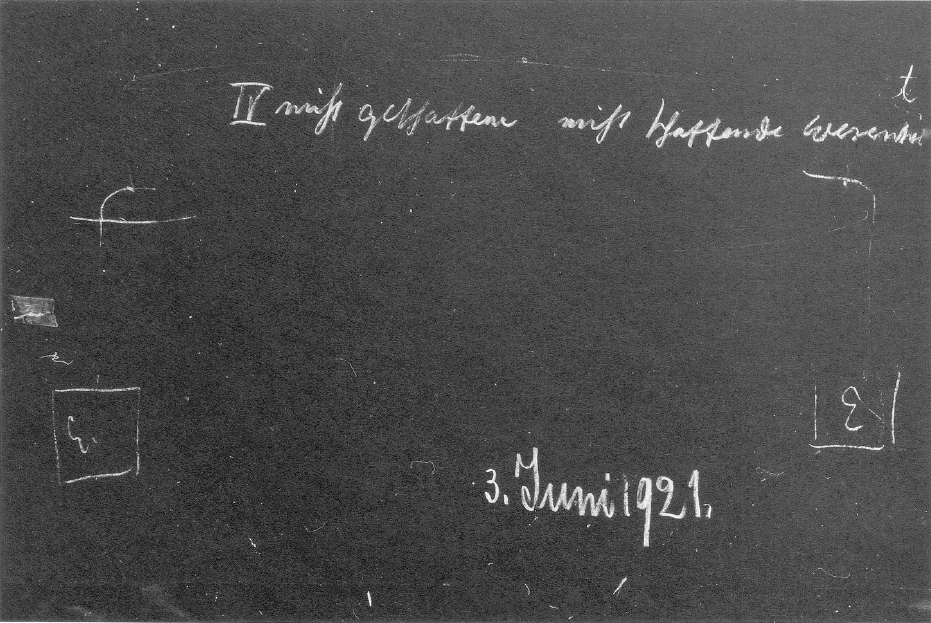
[ 9 ] In human blood, for example, it is not only the forces that enter the human body through food that are at work, but also the forces active throughout the entire planet Earth. For example, when a person lives in a region with a great deal of red soil—that is, a certain geological composition with certain metallic inclusions in the earth—the earth exerts an influence on the blood. And in turn, the human form, the human body, depends on the earth. The body takes on a different form in warmer regions than in colder ones. The physical body and the forces at work in the blood depend on the forces at work within the earth. This truth, which we are only now rediscovering through spiritual scientific research, was readily apparent to those ancient people through their instinctive insight. They knew that the forces of the earth pulsate within the blood. We tell ourselves today that when we connect a telegraph machine at Station A to a telegraph machine at Station B via a wire, we are connecting the machines only on one side. We conduct the electric current through the wire; but the electric current must be closed. It is closed by forming what is called the ground connection. As you are well aware, when we have a telegraph machine at one station, we run the wire along the telegraph poles; but the circuit is not yet closed—it must be closed. We feed the current into the plate that we bury in the ground, and here as well into the plate [on the other side] that we bury in the ground; we do nothing else. We could also lay another wire here, and then the circuit would be closed, but we do not do that; instead, we install a grounding plate here and a grounding plate here (it is drawn), and the earth takes care of the rest on its own. We know this today as a result of external science. We must assume that electricity—the electric current—is at work inside the earth. Now, the people of old knew nothing about electricity or electric current. But they did know something about their own blood. They stood on the earth and knew that there was something inside the earth that also lives in the blood. They viewed the matter differently; they did not speak of electricity, but they spoke of something earthly that lives in their blood. We no longer realize that the earth’s electricity lives in the blood. We speak only by attempting to grasp the matter externally through mathematical-mechanical concepts. And so it came to pass that people associated this conception of God they held with the Earth’s body as such. They said to themselves: the divine reigns in the blood, reigns in the body, it reigns through the Earth. That was what appeared in the conception of God the Father. The concept of God the Father arose fundamentally because the ancestral father of the tribe or people was regarded as the starting point of the divine; but the Earth was seen as the medium through which he acted, and the effects of the Earth in the blood and throughout the human body were regarded as what are in fact the effects of the divine.
[ 10 ] But all these ancient people had another idea. They said to themselves: It is not only earthly forces that affect human beings. It would indeed be good if only earthly forces affected human beings, but that is not the case; rather, the Earth’s neighbor, the Moon, works together with the Earth’s forces. And so they said to themselves: It is not actually the Earth alone that exerts an influence, but rather the Earth and the Moon act together; and with this mixture of Earthly and Lunar forces, they associated not only the concept of a single, unified deity of the Earth, but also that of many lesser deities that existed in the pagan world at that time. Everything that existed as a conception of God—that which acted upon human beings through body and blood—that was the original source that actually nourished the conception of God in those ancient times.
[ 11 ] It was no wonder, then, that all knowledge in those ancient times turned toward the Earth, toward the Moon, and toward the effects of the Earth—that one had to investigate what influenced the Earth. A refined science was thus developed. This science of the Father-Godhead continued to influence the first three books of John Scotus Erigena, of which I spoke to you yesterday. Strictly speaking, he no longer knew it for certain, for he was already living in the 9th century A.D.; but there were remnants of primordial wisdom that spoke of how, within what surrounds human beings on earth, the Father God lives—who is uncreated yet creative—and the other deities live, who are created yet creative. These, then, are the various beings of the hierarchies. Then, spread out around human beings is what constitutes the visible world—the created and the uncreated—and human beings are to look forward to that world in which the Deity reigns as an uncreated and uncreating being, that is, as a being at rest, who embraces all else within her bosom. This is the fourth book of Scotus Erigena.
[ 12 ] Well, as I have already told you, this fourth book deals primarily with soteriology and eschatology. This fourth book presents the story of Christ Jesus, the Resurrection, and the gifts of grace, but also, in a sense, the end of the world and the entry into the resting Divinity. The first three chapters of Scotus Erigena’s great book show us, I would say, a clear echo of ancient views, for, strictly speaking, it is only the fourth chapter that becomes truly Christian. The first three chapters are interwoven with all manner of Christian ideas, but what is actually at work in them essentially still stems from the ancient pagan era, and we find it, just as it was in pagan times, among the Church Fathers of the first Christian centuries as well. We can say: Through nature, through what human beings saw in the beings that surrounded them, they perceived the realm of the Father God. They saw an ideal world behind nature. They saw certain forces in nature. Finally, they saw the rule of the Father God in the succession of generations, in the very development of humanity itself within the individual tribes and peoples. In the early Christian centuries, only one other insight had been added to this—one that has been almost entirely lost.
[ 13 ] The early Christian Church Fathers—whose late-Christian critics, as we know, thoroughly eradicated this view—said, in fact: In what has flowed through the blood from generation to generation, in what has taken shape within the bodies, the Father God was already at work—but in constant struggle and in constant coexistence with his opposing forces, the nature spirits. This was a particularly vivid conception in the early Christian centuries: that God the Father had never actually succeeded in acting alone, but had been engaged in constant struggle with the nature spirits, who reigned over every aspect of the external world. And so these early Christian Church Fathers said: The ancients of pre-Christian times believed in the Father God, but they could not distinguish him at all from the nature spirits; they actually believed in this entire realm of the Father God together with the natural realm. They believed that the entire visible world originated from it. But that is not true, they said. All these spiritual beings, these various nature deities, work together; they are at work in nature, but they have only now crept into earthly things. But the earthly things that we perceive with our senses—those that exist outside of us, that have thus become earthly—do not originate from these nature spirits, nor from the Father God, whose creative essence was actually limited to those metamorphoses that preceded the Earth. That which is the Earth—that which is seen as the Earth—does not originate from the Father God nor from the nature spirits; it originates from the Son, from the Logos, whom the Father God brought forth from Himself so that the Logos might create the Earth; and the Gospel of John has been established as a great, significant monument to indicate: No, it is not as the ancients believed, that the Earth was created by God the Father; God the Father sent forth the Son from Himself, and the Son is the Creator of the Earth.
[ 14 ] That is what the Gospel of John was meant to convey. That was, in essence, what the Church Fathers of the first Christian centuries fought for—something that subsequently became so difficult for the evolving human mind to grasp that Dionysius the Areopagite preferred to say: Everything that the intellect creates is positive theology and does not penetrate into the realms that contain the true mysteries of the world. One can enter there only by negating all predicates—by speaking not of God’s being but of God’s trans-being, not of personality but of trans-personality—that is, by transforming everything into the negative; then, through negative theology, one approaches the true mystery of existence. But Dionysius and a follower such as John Scotus Erigena—who, however, was already thoroughly permeated by reason—did not believe that human reason was capable of explaining these mysteries of the world at all.
[ 15 ] Well, what does it actually mean to say that the Logos is the creator of everything? Think of what, in essence, was present throughout all ancient pre-Christian times—though it had become somewhat diminished as the time of the Mystery of Golgotha approached. People used to say to themselves: The deity works through the blood, through the body, and they had linked this with the idea that when blood flows through the veins of humans or animals, that blood is actually taken away from the gods. It is the rightful possession of the gods. One can therefore draw closer to the gods by returning blood to them. They actually want the blood for themselves; humans have taken possession of the blood, so one must return the blood to the gods. Hence the blood sacrifices in those ancient times.
[ 16 ] Now the Christ came and said: That is not what this is about; that is not the way to approach earthly things. Earthly things do not come from those gods who demand blood. Let us look at what is at work within a person before the earth exerts its influence on them; let us take bread—that is, the very thing by which a person nourishes themselves—and consider it as a person first takes it in. A person takes it in through their sense of taste. The food travels through the human body to a certain point before it is transformed into blood. It is only transformed into blood after it has passed through the intestinal walls into the body’s system. That is where the earthly influence begins; as long as the food has not yet been absorbed into the blood, the earthly influence has not yet begun. So do not look to the blood for that which corresponds to God; look to the bread before the bread becomes blood, and look to the wine before the wine enters the blood. Therein lies the Divine; therein lies the embodiment of the Logos. Do not look to that which flows in the blood, for that which flows in the blood is, among humans, an ancient legacy of the lunar age, the pre-earthly age. That which is earthly in man is what the food has to do with before it becomes blood. So cast aside the notions of blood and the body, of the flesh; instead, direct your thoughts toward that which has not yet become blood and has not yet become flesh—direct your thoughts toward that which is prepared out on the earth, that which is earthly, without the moon having any influence on it—that is, toward that which comes from the influence of the sun. For we see things through the light of the sun, and we eat the bread and drink the wine by eating and drinking the power of the sun within them. The visible things are not through God the Father; the visible things are through the Logos.
[ 17 ] Consider that the entire realm of human imagination was directed toward that which could no longer be derived from nature in the manner of the ancients—that which could only be attained by looking upon that which the sun causes to shine upon the earth. It pointed to something purely spiritual. One should not extract from the physical things of the earth that which is divine; one should see this divine in the purely spiritual, in the Logos. The Logos was set in opposition to the ancient conceptions of God the Father; that is to say, human consciousness was directed toward something purely spiritual. In pre-Christian times, human beings never perceived the divine through anything other than what had, so to speak, been organically brewed within them and then arose within them inwardly as a vision or the like. They had already seen the divine rising up for them from the blood. Now they sought to grasp it in the purely spiritual realm. But now they were also to regard the things visible around them as a result of the Logos—not of that which had only crept into things—but as the result of a God who created in the pre-earthly realm.
[ 18 ] When we think this way, we are actually only beginning to approach the conceptions of the early Christian centuries. But this initially gave people something like a hint that they should not draw their conceptions from any power other than the power of their own consciousness in order to reach the Divine. People were directed toward the spiritual. What, then, could one say to them? One could say to them: Once upon a time, the Earth was so powerful that it gave you the concept of the Divine. That has ceased. The Earth no longer provides anything. You must come to the Logos and the creative principle through yourselves. Essentially, up until now you have worshiped that which was creative in the pre-earthly realm; now you are to worship that which is creative in the earthly realm. But you can grasp this only through the power of your “I,” your spirit.
[ 19 ] And this was expressed in the fact that the early Christians said: “The end of the world is near.” They meant the end of that earth which gives humanity knowledge without requiring them to work on that knowledge with their consciousness. And indeed, a profound truth is expressed in this “end of the world,” for human beings were previously sons of the earth. Human beings surrendered themselves to the forces of the earth. They relied on their blood to provide them with knowledge. That era has come to an end. The realms of heaven have drawn near; the realms of the earth have ceased to exist. From now on, human beings can no longer be sons of the earth. Humanity must make itself a partner of a spiritual being who has descended from the spiritual world to Earth—the Logos, the Christ.
[ 20 ] The end of the world was prophesied for the 4th century A.D.: the end of the earthly world, the dawn of a new kingdom, the dawn of that kingdom where human beings are to feel that they dwell as spirits among spirits. This is probably the most difficult thing for people today to imagine: that the people of Christ’s time would not have regarded our present way of living as human beings as an earthly existence, but rather as an existence already within the spiritual realm, after the earth—as it was when it still provided its resources for humanity—had come to an end. Someone who had truly understood the mindset of the early Christians would not say today that the early Christians had superstitiously believed in the end of the world—which, they claimed, had not come to pass. In the sense that the early Christians understood it, this end of the world did occur in the 4th century A.D., and the very way we live now is precisely what those early Christians would have regarded as the New Jerusalem—the kingdom in which human beings live as spirits among spirits. They would only have said: According to our view, humanity has actually entered heaven, but it is so wicked that it does not recognize this; it believes that in heaven everything simply flows with milk and honey, and that there are no evil spirits against which it must defend itself. — The early Christians would have said: Before, these evil spirits were contained within the elements of nature; now they have been set free and flit about invisibly; man must defend himself against them.
[ 21 ] So the end of the world, as understood in early Christian times, was indeed very much present. People simply did not understand it. People did not understand that instead of the God dwelling within the earth—who thus announced Himself through earthly events—there was, instead, the supersensible Logos, whom one must recognize in the supersensible realm and to whom one must cling through supersensible powers. And if one accepts this, then one will also understand why, in the 9th, 10th, and 11th centuries, a mood of doomsday once again prevailed in civilized Europe. Once again, people expected the end of the world. People did not know what the early Christians had meant by this, but out of this apocalyptic mood, which was widespread throughout civilized Europe in the 9th, 10th, and 11th centuries, there emerged a movement that sought the path to Christ in a more material way than one should actually have sought it. One should realize: the Logos is to be found in the spirit, not through natural phenomena. These people, who had once again fallen into this apocalyptic mood, did not grasp this search for the Logos in the spirit; instead, they sought it in a more material way. And so, out of this mood arose the spirit of the Crusades: to at least still seek Christ in a material sense in the East, in his tomb; to cling to Christ amid the apocalyptic mood—one might say, the misunderstood apocalyptic mood.
[ 22 ] Yes, Christ was not found over there in the Orient. The response received was roughly the same as that given to the people back then who were visibly searching for Christ in the tomb: “The one you seek is no longer here”—he must simply be sought in the spirit.
[ 23 ] And now, in the 20th century—and things will multiply once again—there is indeed a sense of impending doom, even though people have become so lethargic and indifferent that they no longer even notice this sense of impending doom. But at any rate, the person who speaks of this apocalyptic mood in The Decline of the West has made a significant, widely noticeable impression, and this apocalyptic mood will spread more and more.
[ 24 ] But actually, there is no need to speak of the end of the world. In the sense that one can find the spiritual within nature, the world has already come to an end, and the point is to become aware that we live in a spiritual world. This error on the part of human beings—not knowing that they live in a spiritual world—is what has brought disaster upon the world; it is what causes wars to become ever bloodier and bloodier, and what makes it ever clearer and clearer that people are as if possessed. They are also possessed by evil forces that lead them astray, for they no longer speak as if they were expressing what lies within their own selves. They are as if possessed by a psychosis. This psychosis is, after all, something that is much talked about but little understood.
[ 25 ] What the early Christians meant by the end of the world—what they understood by it—has come to pass, and the new era is here. It only needs to be recognized; one only needs to see through to the fact that, in truth, when a human being recognizes, they recognize as an angel, and when they become conscious of themselves, they become conscious of themselves as an archangel. That the spiritual world has already descended, and that one need only become conscious of it—that is what is important. Many have thought they take the Gospel seriously. But although it is stated quite clearly in the Gospel that all things that have come into being—that is, all things under consideration—are not to be explained by their earthly forces, but were brought into being through the Logos, people nevertheless professed faith in God the Father, who is indeed to be recognized as one with Christ, but precisely as that aspect of the Trinity who was at work until the Earth was formed; whereas the true ruler of the earth is Christ, the Logos.
[ 26 ] These concepts were hardly comprehensible in the 9th century, when Scotus Erigena was active. Therefore, on the one hand, this book by Scotus Erigena on the structure of nature is great and significant; on the other hand, as I told you just yesterday, it is also chaotic, so that one really only begins to understand it when one approaches it from a humanities perspective, as we have done yesterday and today.
[ 27 ] Well, as I said, in the fourth chapter John of Scotus speaks of the uncreated and uncreating essence. If we grasp this—if we grasp the true meaning of what Scotus Erigena describes there, the resting Divinity in which all things are united—then the step has already been taken. The world described in the first three chapters has come to an end. This world of the resting Divinity, the uncreated and uncreating essence—it is here. The earth is in decline, insofar as it is nature. I have often pointed this out by noting that even geologists today say: On the whole, nothing new is coming into being on earth anymore. Certainly, as an aftereffect, plants and so on continue to form; plants, animals, and humans reproduce; but the Earth, on the whole, has become something other than what it was. It is shattering, it is crumbling. The Earth, in its entirety, is already in a state of decay within its mineral realm. — The great geologist Süss expresses this in his work The Face of the Earth by saying that we walk upon the crumbling clods of the Earth. And he points to certain regions of the Earth where one can see that these crumbling clods of earth already exist. He points out how things used to be different. This is the worldview and outlook on life of the early Christian centuries—not based on natural facts, but on the moral realities of human development.
[ 28 ] And indeed, since the beginning of the 15th century, we have been living even more—than was the case for Scotus Erigena—in the dormant divinity within us, which waits until we, in our activity, come to gain the imagination and inspiration to view the world around us as a spiritual one, to recognize that we are, in fact, in the spiritual world that has cast off the earthly one, that we are living after the end of the world, that we have arrived at the New Jerusalem.
[ 29 ] It is indeed a peculiar spiritual fate of “humanity” that it lives in the spiritual world without knowing it and without wanting to know it. All interpretations that seek to portray true Christianity as if it were intertwined with some incomplete notions—such as an apocalypse that has not actually occurred and is supposed to be merely symbolic, and so on—all these interpretations amount to nothing. What is written in the Christian scriptures simply needs to be understood in the correct sense; it simply needs to be interpreted correctly. It must be made clear that the point is this: the early Christian conceptions were indeed such that they spoke of a world that was already different by the 4th century A.D.
[ 30 ] Such teachings, as they existed in the early centuries of Christianity, were admired by the wisdom traditions of paganism, and the Christian Church Fathers sought to reconcile them with the mystery of Golgotha. People did indeed view things as I have described them today. But they did not believe that people could understand them right away. Therefore, they preserved the mysteries of ancient times in dogmas that are meant only to be believed, not understood. These dogmas are by no means superstition or falsehood. The dogmas are indeed true; it is just that they must be understood in the right way. But they can only be understood if this understanding is sought through what has now emerged with the beginning of the 15th century.
[ 31 ] You see, when Scotus Erigena was still alive, the human intellect was still a force. Scotus Erigena still felt that the angel within him was aware. After all, even among the best, this human intellect was still a force. Since the middle of the 15th century, we have had nothing but the shadow of this intellect. We have been developing the conscious soul since the middle of the 15th century; but we still have the shadow of the intellect. When people today form their concepts, well, they are truly far removed from the idea that there is an angel within them who perceives. They simply think to themselves: I am devising something based on the things I have experienced. In any case, they do not speak of the fact that there is actually a spiritual being present who perceives, or even a higher spiritual being that they are through their self-consciousness. That with which people today attempt to perceive things is the shadow of the intellect, as it had developed for the Greeks—for Plato and Aristotle, for example—as it had developed even for the Romans, and as it was still alive for Scotus Erigena in the 9th century A.D.
[ 32 ] But it is precisely this, my dear friends—that we no longer need to let ourselves be led astray by reason—that can help us move forward. People today chase after a shadow—the mind within them, the intellect. They allow themselves to be led astray by it, instead of striving for imagination, inspiration, and intuition, which in turn lead us into the spiritual world that actually surrounds us. The fact that the mind has become shadow-like is, in fact, a good thing. But we first used this shadow-like mind to establish external natural science. We must continue our work from this point, and God has come to rest so that He may let us work. The fourth state is now fully present. Humanity need only become aware of it. And unless it becomes aware of this, nothing further can take shape on Earth. For that which the Earth received as an inheritance is gone; it has perished. Something new must be established.
[ 33 ] A man like Spengler looks at the ruins that remain of the ancient civilizations. They have, after all, been sufficiently laid to waste. In the 9th, 10th, and 11th centuries, there was a mood of doomsday. Then came the Crusades. They didn’t really achieve anything, because people sought in the material realm what should have been sought in the spiritual realm. Well, since the Crusades had achieved nothing, the Renaissance came to people—one might say—initially as a stopgap. Greek culture was rediscovered—that which is today disseminated among people as education; Greek culture was back, but at first it was not present as something new. The new was present only in relation to external nature, in mathematical and mechanical concepts, from the beginning of the 15th century onward. Instead, however, there were the ruins of antiquity. These ruins of antiquity are instilled in our young people as part of their high school education. They then form the foundation of civilization. Oswald Spengler encountered these ruins of the Renaissance. Like erratic boulders, they float on the sea, which seeks to bring forth something new. But if one looks only at these ice blocks floating there, one sees decline. For what has been preserved from the past is in a state of decline, and no one can revitalize what our education is today. It is perishing. Another civilization must be created from the spiritual realm through primordial creation, for the fourth state is here.
[ 34 ] This is how Scotus Erigena must be understood—he who had brought his wisdom—which, I would say, was already difficult for him to comprehend—from the island of Ireland, from the mysteries that had been cultivated there; this is what one must read into Scotus Erigena today. And this is not only what can be gleaned as primordial insight from the science of the spirit, but it is also what the documents of earlier times tell us, if one truly wishes to understand them, if one finally wishes to break free from the Alexandrianism of modern philosophical scholarship, which calls itself philology. One must say that, the way these things are handled today, one notices neither much of philology nor of philosophy. If one looks at the rote learning and the examination regulations in our educational institutions, then there is extremely little of “Philo” to be found; that must come from a different source, but we need it once again.
[ 35 ] First, I wanted to introduce you to the figure of Scotus Erigena; second, I wanted to show how one must first seek the paths in order to properly grasp that which has been buried from primordial wisdom. People today do not take note of the fact that the Gospel of John clearly states: The Logos is the Creative Principle, not God the Father.