

Anthroposophy as Cosmosophy I
GA 207
1 October 1921, Dornach
Translate the original German text into any language:
Versions Available:
Anthroposophy as Cosmosophy I, tr. SOL
Vierter Vortrag
Fourth Lecture
[ 1 ] Wir haben gestern darauf hinweisen können, wie der Mensch in seinem Bewußtsein gewissermaßen nach zwei Seiten hin an die Welt herankommt: wenn er sich nach innen und wenn er sich nach außen betätigt. Für das gewöhnliche Bewußtsein allerdings wird das, was im Menschen da lebt, nicht erfaßbar, weil das Bewußtsein gerade daran anstößt. Aber wir haben eben doch gesehen, wie das Karma im Menschen auch zwischen Geburt und Tod nach zwei Seiten hin lebt: auf der einen Seite, wenn der Mensch beim Aufwachen untertaucht in seinen Ätherleib, wo er, während er untertaucht, auch im gewöhnlichen Bewußtsein die Reminiszenzen der Träume haben kann. Dann passiert er gewissermaßen den Zwischenraum zwischen Ätherleib und physischem Leib — im physischen Leib ist er ja erst, wenn er die volle Sinneswahrnehmung hat — und geht da durch die Region der in ihm befindlichen lebendig wirksamen Gedanken. Das sind dieselben Gedanken, die eigentlich an dem Aufbau seines Organismus teilgenommen haben, die er durch die Geburt ins Dasein mitgebracht hat und die, mit anderen Worten, sein verflossenes, sein fertiges Karma ausmachen. Dann aber stößt der Mensch beim Einschlafen an dasjenige, was nicht Handlung werden kann. Was aus unseren Gemüts- und Willensimpulsen in die Handlungen eintritt, das wird ja ausgelebt im Leben. Aber es bleibt immer etwas zurück, und das nimmt der Mensch in den Schlaf hinein. Das ist aber auch sonst vorhanden. Alles das, was aus dem Seelenleben nicht in die Handlung hineingeht, was gewissermaßen vor der Handlung stehenbleibt, ist das werdende Karma, das sich bildet und das wir dann weiter durch den Tod tragen. Kurz, ich habe gestern darauf hinweisen wollen, wie im Menschen die Kräfte des Karma leben.
[ 1 ] Yesterday we were able to point out how human beings, in their consciousness, approach the world in two ways, so to speak: when they turn inward and when they turn outward. For ordinary consciousness, however, what lives within the human being is not graspable, precisely because consciousness stumbles over it. But we have just seen how karma in the human being also lives in two ways between birth and death: on the one hand, when the human being, upon waking, sinks into their etheric body, where, while sinking in, they can also have reminiscences of dreams in ordinary consciousness. Then, in a sense, they pass through the space between the etheric body and the physical body—for they are not truly in the physical body until they have full sensory perception—and there they pass through the region of the thoughts that are alive and active within them. These are the very same thoughts that actually participated in the formation of his organism, that he brought into existence through birth, and which, in other words, constitute his past, his completed karma. But then, as the person falls asleep, they encounter that which cannot become action. What enters into our actions from our emotional and volitional impulses is, of course, lived out in life. But something always remains behind, and the person takes this with them into sleep. This is also present in other contexts. Everything from the soul life that does not enter into action—that, so to speak, stops short of action—is karma in the making, which takes shape and which we then carry on with us through death. In short, yesterday I wanted to point out how the forces of karma live within the human being.
[ 2 ] Wir werden heute nun, damit wir morgen dem Ganzen eine Art von Abschluß geben können, etwas die menschliche Umgebung betrachten, um zu zeigen, wie der Mensch nun eigentlich in der Welt drinnensteht. Wir haben uns gestern bemüht, das menschliche Seelenleben selber objektiv zu betrachten, haben also gefunden, daß das Denken sich entwickelt in derjenigen Region, welche ja eben diese objektive Gedankenregion ist zwischen dem physischen Leib und dem Ätherleib; daß dann das Fühlen sich entwickelt zwischen dem Ätherleib und dem Astralleib, und daß das Wollen sich entwickelt zwischen dem Astralleib und dem Ich. So daß also — ich sagte schon gestern, der Ausdruck ist ungeeignet, aber er ist doch verständlich — gewissermaßen in den Zwischenräumen, die wir annehmen müssen zwischen den vier Gliedern der menschlichen Natur, zwischen physischem Leib, Ätherleib, astralischem Leib und Ich, diese eigentliche seelische Betätigung sich entwickelt. Wollen wir sie objektiv anschauen, dann sind sie Wechseltätigkeiten zwischen den Gliedern der menschlichen Wesenheit.
[ 2 ] Today, so that we can bring this whole topic to a sort of conclusion tomorrow, we will take a look at the human environment to show how human beings actually relate to the world. Yesterday we endeavored to view the human soul life itself objectively, and thus found that thinking develops in that region which is precisely this objective region of thought between the physical body and the etheric body; that feeling then develops between the etheric body and the astral body; and that willing develops between the astral body and the “I.” So that—as I said yesterday, the expression is inappropriate, but it is nevertheless understandable—this actual soul activity develops, so to speak, in the interstices that we must assume exist between the four members of the human nature: the physical body, the etheric body, the astral body, and the “I.” If we view them objectively, they are reciprocal activities between the members of the human being.
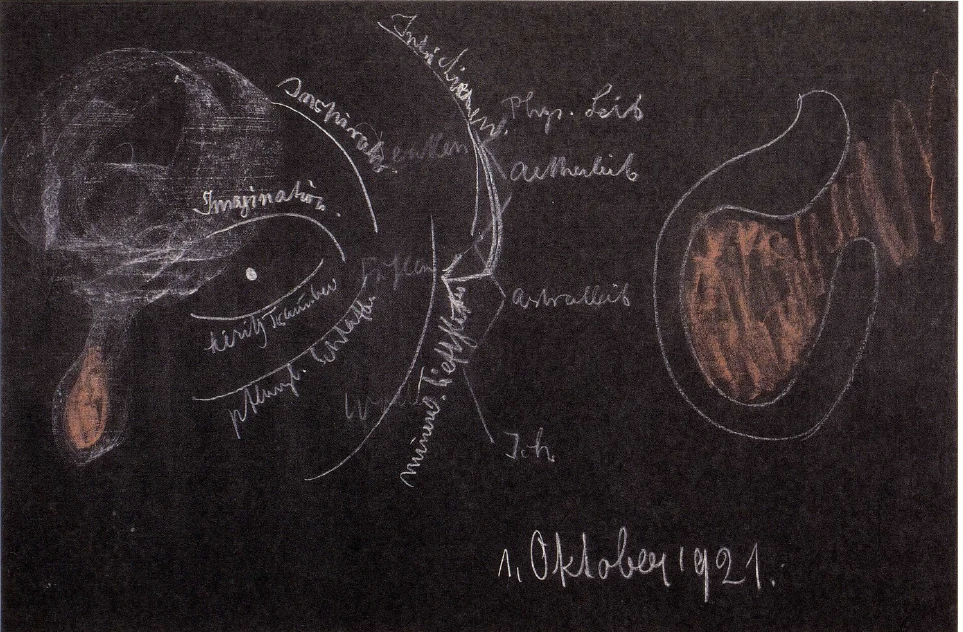
[ 3 ] Nun wollen wir heute etwas die menschliche Umgebung anschauen. Vergegenwärtigen wir uns da so recht, wie der Mensch in einem ganz lebendigen Traumleben ist, wie der Mensch Bilder durch das Traumleben schweifend hat. Ich habe nun gestern gesagt: Es kann das imaginative Bewußtsein wahrnehmen, wie diese Bilder in die Organisation hinuntergehen und wie das in diesen Bildern Wirkende unsere Gefühle zustande bringt. Unsere Gefühle sind also das, was eigentlich ergriffen würde, wenn man tiefer in das Innere des Menschen hineinschauen würde, für die Anschauung in Traumbildern. Gefühle sind die Wellen, die aus dem Tagestraumleben in unser Bewußtsein heraufschießen. Wir träumen, sagte ich gestern, unter der Oberfläche des Vorstellungslebens fortwährend fort, und dieses Traumleben, das lebt sich aus in den Gefühlen.
[ 3 ] Today, let’s take a closer look at the human environment. Let us really bring to mind how a person lives in a very vivid dream life, how a person has images that wander through this dream life. I said yesterday: The imaginative consciousness can perceive how these images descend into the organism and how what is at work in these images gives rise to our feelings. Our feelings, then, are what would actually be grasped if one were to look deeper into the innermost being of the human being, as perceived in dream images. Feelings are the waves that surge up into our consciousness from the life of daydreaming. We dream, as I said yesterday, continuously beneath the surface of our imaginative life, and this dream life plays itself out in our feelings.
[ 4 ] Wenn wir nun in die Umgebung des Menschen schauen, zunächst zur Tierwelt, dann haben wir in der Tierwelt ein Bewußtsein, welches nicht bis zu dem Denken, bis zu dem Gedankenleben heraufkommt, sondern welches sich eigentlich ausgestaltet in einer Art lebendigen Traumlebens. Wir können uns durch das Studium unseres eigenen Traumlebens eine Vorstellung davon bilden, wie es eigentlich im Seelenleben des Tieres aussieht. Es ist das Seelenleben des Tieres eben durchaus ein Träumen. Daher ist das Seelenleben des Tieres viel mehr tätig am Organismus als das Seelenleben des Menschen, das vom Organismus durch die Helligkeit des Vorstellungslebens viel mehr emanzipiert ist. Das Tier träumt eigentlich. Und so wie unsere Traumbilder, die Traumbilder, die wir uns bilden während des wachen Bewußtseins, als Gefühle heraufströmen, so ist ein solches gefühlsartiges Seelenleben dasjenige, was beim Tiere hauptsächlich zugrunde liegt. Ein vom hellen Gedankenlichte durchzogenes Seelenleben hat eigentlich das Tier nicht. Was also bei uns vorgeht zwischen dem Ätherleib und dem astralischen Leib, das ist das Wesentliche, was im Tiere vorgeht; das bildet das tierische Seelenleben. Und wir können das tierische Leben verstehen, wenn wir es also aus dem Seelenleben hervorgehend vorstellen.
[ 4 ] If we now look at the environment surrounding human beings—first at the animal world—we find that in the animal world there is a form of consciousness that does not rise to the level of thinking or a life of thought, but rather takes shape in a kind of living dream life. By studying our own dream life, we can form an idea of what the animal’s soul life is actually like. The animal’s soul life is, in fact, entirely a matter of dreaming. Therefore, the animal’s soul life is much more actively involved in the organism than the human soul life, which is much more emancipated from the organism through the clarity of the life of imagination. The animal actually dreams. And just as our dream images—the dream images we form during waking consciousness—well up as feelings, so too is such a feeling-like inner life what primarily underlies the animal’s existence. Animals do not actually possess a soul life permeated by the bright light of thought. What takes place in us between the etheric body and the astral body is, in essence, what takes place in animals; this constitutes the animal soul life. And we can understand animal life if we conceive of it as emerging from the soul life.
[ 5 ] Es ist wichtig, daß man sich eine gewisse Vorstellung verschafft von diesen Verhältnissen, denn man wird dann begreifen, was eigentlich vorgeht, sagen wir, wenn das Tier verdaut. Man wende nur einmal den Blick auf eine Herde, die in der Verdauung auf einer Weide liegt. Die ganze Stimmung, die in den Tieren ist, die kündigt ja an, was da durch Geistesforschung zutage tritt: daß tatsächlich die erregte Tätigkeit, die sich im wesentlichen abspielt zwischen Ätherleib und Astralleib des Tieres, in einem lebendigen Fühlen heraufdringt, und daß das Tier in diesem Fühlen lebt. Eine Steigerung und Herabminderung dieses Fühlens, das ist das Wesentliche des tierischen Erlebens, und das Teilnehmen an seinen Traumbildern, wenn es eben das Fühlen etwas dämpft und mehr das Bild an die Stelle des Fühlens tritt. Wir können also sagen: Das Tier lebt in einem Bewußtsein, das unserem Traumbewußtsein ähnlich ist.
[ 5 ] It is important to form a certain idea of these conditions, for then one will understand what is actually happening, let us say, when the animal is digesting. One need only cast a glance at a herd lying in a pasture during digestion. The entire atmosphere within the animals foreshadows what spiritual research brings to light: that the active process—which essentially takes place between the animal’s etheric body and astral body—manifests as a living feeling, and that the animal lives within this feeling. An intensification or attenuation of this feeling—that is the essence of the animal’s experience—and participation in its dream images, when feeling is somewhat subdued and the image takes the place of feeling. We can therefore say: The animal lives in a state of consciousness similar to our dream consciousness.
[ 6 ] Wenn wir bei ihm das Bewußtsein suchen, das wir selber als Menschen, als hier auf der Erde herumgehende Menschen haben, dann können wir es nicht innerhalb des Tieres suchen, dann müssen wir es suchen bei Wesen, die nicht zu einem unmittelbar physischen Dasein kommen. Wir nennen sie die tierischen Gattungsseelen, Seelen, die als solche nicht eine physische Körperlichkeit haben, sondern die sich durch die Tiere ausleben. Wir können sagen, daß alle Löwen zusammen eine solche Gattungsseele haben, die ein geistiges Dasein hat. Die hat dann ein solches Bewußtsein, wie wir Menschen es haben, nicht das einzelne Tier.
[ 6 ] If we seek in him the consciousness that we ourselves possess as human beings—as human beings walking here on Earth—then we cannot look for it within the animal; rather, we must seek it in beings that do not have an immediate physical existence. We call them the animal group souls—souls that, as such, do not possess a physical body but express themselves through the animals. We can say that all lions together possess such a group soul, which has a spiritual existence. It is this group soul that possesses the kind of consciousness that we humans have, not the individual animal.
[ 7 ] Gehen wir nun herunter in die Pflanzenwelt, dann haben wir nicht ein solches Bewußtsein wie bei den Tieren, sondern wir haben in der Pflanzenwelt selber ein solches Bewußtsein, wie wir es haben vom Einschlafen bis zum Aufwachen. Die Pflanze ist ein schlafendes Wesen. Wir entwickeln dieses Bewußtsein aber auch zwischen dem astralischen Leib und dem Ich im Wollen. Was da in der Pflanzenwelt tätig ist, das ist im wesentlichen gleichgeartet mit demjenigen, was in unserem Wollen lebt. In unserem Wollen schlafen wir eigentlich auch dann, wenn wir wach sind. Dieselbe Tätigkeit, die in unserem Wollen waltet, die waltet eigentlich über die ganze Pflanzenwelt hin.
[ 7 ] If we now descend into the plant world, we do not find a consciousness like that of animals; rather, we find in the plant world itself a consciousness similar to the one we experience from the moment we fall asleep until we wake up. The plant is a sleeping being. But we also develop this consciousness between the astral body and the “I” in our volition. What is at work in the plant world is essentially of the same nature as what lives in our volition. In our volition, we are actually asleep even when we are awake. The same activity that reigns in our volition actually reigns over the entire plant world.
[ 8 ] Das Bewußtsein, das wir entwickeln als Schlafbewußtsein, das ist ja etwas, was sich eigentlich fortwährend als Unbewußtes einschiebt in unser Bewußtes, was Lücken bildet, wie ich gestern sagte, in unserer Erinnerung. Aber geradeso wie unser Bewußtsein dumpf ist, für die meisten Menschen überhaupt ausgelöscht ist während des Schlafens, so ist das Pflanzenbewußtsein.
[ 8 ] The consciousness we develop as sleep consciousness is, in fact, something that constantly intrudes into our conscious mind as the unconscious, creating gaps—as I said yesterday—in our memory. But just as our consciousness is dull—and for most people, completely extinguished—during sleep, so too is plant consciousness.
[ 9 ] Wenn wir dann aufsuchen, was beim Pflanzenleben so ist wie beim tierischen Leben, dann können wir das nicht in der einzelnen Pflanze suchen, sondern dann müssen wir es eigentlich in der ganzen Erdenseele suchen. Die ganze Erdenseele führt ein träumendes Bewußtsein und schläft sich hinein in das Pflanzenbewußtsein. Und nur insoferne die Erde teilnimmt an dem kosmischen Werden, flackert sie so auf, daß sie solch ein völliges Bewußtsein entwickeln kann, wie wir Menschen es haben zwischen Geburt und Tod im wachenden Zustande. Das ist aber vorzugsweise dann der Fall, wenn die Winterszeit da ist: das ist eine Art Aufwachen der Erde, währenddem das dumpfe Traumbewußtsein während der Sommerszeit, während der warmen Zeit vorhanden ist. Es ist eben durchaus ein Fehlschluß, wie ich auch in früheren Vorträgen schon auseinandergesetzt habe, zu glauben, daß die Erde etwa im Sommer wacht und im Winter schläft. Das Umgekehrte ist der Fall. In der regen vegetativen Tätigkeit, die entwickelt wird während des Sommers, während der warmen Jahreszeit, ist gerade ein Schlafzustand der Erde, eigentlich ein 'Traumzustand der Erde vorhanden, währenddem ein Wachzustand der Erde vorhanden ist in der kalten Jahreszeit. Wenn wir aber nun zum mineralischen Reich hinuntersteigen, dann kommen wir dazu, uns sagen zu müssen: ein noch tieferes Bewußtsein ist da vorhanden als dasjenige unseres Schlafes, ein Bewußtsein, das unserer gewöhnlichen menschlichen Erfahrung durchaus schon ferne liegt, das also hinausgehen würde über das Wollen. Aber eigentlich liegt das, was da in den Mineralien lebt als Bewußtseinszustand, uns Menschen nur scheinbar, nur für das gewöhnliche Bewußtsein ferne. In Wirklichkeit liegt es uns gar nicht so ferne. Wenn wir nämlich übergehen vom Wollen zum wirklichen Tun, wenn wir etwas ausführen, dann sondert sich ja unser Wollen von uns ab. Und das, in dem wir dann, ich möchte sagen, drinnen schwimmen, in dem wir weben und leben, indem wir die Handlung ausführen, die wir ja nur vorstellen — wir stecken ja mit unserem Bewußtsein nicht drinnen in der Handlung, wir stellen sie nur vor —, aber das, was in der Handlung selber drinnensteckt, der Inhalt der Handlung, das ist schließlich dasselbe, was da jenseits der Oberfläche der Mineralien im Mineralischen drinnensteckt und das mineralische Bewußtsein konstituiert. Wir würden eigentlich, wenn wir noch tiefer hinuntersinken könnten in die Unbewußtheit, da ankommen, wo das mineralische Bewußtsein webt. Aber wir würden uns in keinen anderen Zustand hineinfinden als in denjenigen, in dem auch unser Tun selber sich vollzieht. Daher liegt uns das mineralische Bewußtsein gewissermaßen jenseits dessen, was wir als Menschen noch erleben können. Aber auch unser eigenes Handeln liegt jenseits dessen, was da von uns Menschen erlebt werden kann. Insofern also unser Handeln nicht von uns abhängt, nicht im Gebiete dessen liegt, was innerhalb unserer Freiheit eingeschlossen ist, ist unser Handeln genau ebenso Weltgeschehen wie das, was in den Mineralien drinnen geschieht. Wir gliedern unser Handeln in dieses Geschehen ein, und damit haben wir eigentlich die Beziehung des Menschen zu seiner Umgebung schon bis zu demjenigen getragen, wo dann der Mensch mit seinem Handeln sogar jenseits seines Schlafbewußtseins hinüberkommt. Indem der Mensch die Mineralwelt um sich herum gewahr wird, gerät er, indem er die Mineralien von außen anschaut, an dasjenige heran, was jenseits seines Erlebens liegt. Wir können sagen: Wenn das der Umkreis dessen sei, was wir innerhalb des Menschenreiches, des Tierreiches, des Pflanzenreiches sehen, und dann hier an das Mineralreich herankommen, so ist da das Mineralreich, indem es auf unsere Sinne wirkt, uns zuweisend seine äußere Seite; aber jenseits, da wo wir nicht mehr hineinkommen, da entwickelt das Mineralreich dann, gewissermaßen abgewendet von uns, sein Bewußtsein (siehe Zeichnung, rot). Und dieses Bewußtsein, das da entwickelt wird, das ist dasjenige, von dem auch aufgenommen werden die inneren Inhalte unserer Handlungen, die dann weiterwirken im Verlaufe unseres Karma.
[ 9 ] If we then seek to discover what in plant life is similar to animal life, we cannot look for it in the individual plant; rather, we must actually seek it in the entire soul of the Earth. The entire Earth soul possesses a dreamlike consciousness and slips into a state of sleep within the plant consciousness. And only to the extent that the Earth participates in cosmic becoming does it flicker to life in such a way that it can develop a consciousness as complete as the one we humans have between birth and death in our waking state. But this is primarily the case during the winter season: it is a kind of awakening of the Earth, whereas the dull dream-consciousness is present during the summer season, during the warm season. It is indeed a complete fallacy—as I have already explained in earlier lectures—to believe that the Earth is awake in summer and asleep in winter. The opposite is true. The intense vegetative activity that develops during the summer, during the warm season, is actually a state of sleep for the Earth—in fact, a “dream state” of the Earth—whereas a waking state of the Earth is present during the cold season. But when we now descend into the mineral kingdom, we are led to conclude that there exists a consciousness even deeper than that of our sleep—a consciousness that is already quite far removed from our ordinary human experience, one that would thus extend beyond the realm of volition. But in reality, what lives there in the minerals as a state of consciousness is only seemingly, only to ordinary consciousness, far removed from us humans. In reality, it is not so far removed from us at all. For when we pass from willing to actual action, when we carry out an action, our willing does indeed separate from us. And that in which we then—I might say—swim, in which we weave and live as we carry out the action that we merely imagine—for our consciousness is not actually inside the action, we merely imagine it—but what lies within the action itself, the content of the action, is ultimately the same thing that lies within the mineral realm beyond the surface of the minerals and constitutes mineral consciousness. In fact, if we could sink even deeper into the unconscious, we would arrive at the place where mineral consciousness weaves. But we would find ourselves in no other state than the one in which our own actions also take place. Therefore, mineral consciousness lies, so to speak, beyond what we as human beings can still experience. But our own actions, too, lie beyond what we as human beings can experience. Insofar as our actions do not depend on us—insofar as they do not lie within the realm of what is encompassed by our freedom—our actions are just as much a part of world events as what takes place within the minerals. We integrate our actions into this process, and in doing so we have in fact extended the relationship between human beings and their environment all the way to the point where human beings, through their actions, even transcend their waking consciousness. As human beings become aware of the mineral world around them—by observing the minerals from the outside—they come into contact with that which lies beyond their own experience. We can say: If this is the scope of what we see within the human kingdom, the animal kingdom, and the plant kingdom, and then as we approach the mineral kingdom here, the mineral kingdom—by acting upon our senses—presents its outer side to us; but beyond that, where we can no longer penetrate, the mineral kingdom then develops its consciousness, as it were, turned away from us (see drawing, red). And this consciousness that is developed there is the very one that also takes in the inner contents of our actions, which then continue to have an effect in the course of our karma.
[ 10 ] Und jetzt gehen wir zu Wesen, welche nun nicht unter den Menschen stehen in der Reihe der Naturreiche, sondern die über dem Menschen stehen. Wie können wir von diesen Wesen eine gewisse Vorstellung bekommen? Wie bildet sich überhaupt auch für das Bewußtsein, das wir begründen müssen durch Geistesforschung, durch Anthroposophie, wie bildet sich da eine Vorstellung von solchen höheren Wesen? Nun, Sie wissen aus der Darstellung meines Buches «Wie erlangt man Erkenntnisse der höheren Welten?» und aus dem, was ich über denselben Gegenstand in mündlichen Vorträgen gegeben habe, daß wir von dem Tagesbewußtsein, das wir das gegenständliche Bewußtsein nennen, aufwärtssteigen können zum imaginativen Bewußtsein. Wenn wir in gesunder Weise zum imaginativen Bewußtsein aufsteigen, dann werden wir ja zunächst von unserer Leiblichkeit frei. Wir weben im Ätherleben. Dadurch werden unsere Vorstellungen nicht scharf konturiert sein, sie werden ineinanderfließende Imaginationen sein, aber sie werden eben so sein, daß sie demjenigen Gedankenleben ähneln, das ich gestern charakterisierte, das wir beim Aufwachen finden zwischen Ätherleib und physischem Leib. Wir leben uns schon in ein solches Gedankenleben ein. Es ist nicht so, dieses Gedankenleben, in das wir uns in der Imagination einleben, daß wir in freier Willkür einen Gedanken zu dem anderen hinzugliedern, sondern die Gedanken gliedern sich selber ineinander. Es ist ein Gedankenorganismus, ein bildhafter Gedankenorganismus, in den wir uns hineinleben. Aber dieser bildhafte Gedankenorganismus hat Lebenskraft in sich. Er stellt sich uns so dar, daß er gedankenwesenhaft ist, aber daß er eigentlich lebt, daß er Eigenleben in sich hat; nicht das Eigenleben, das die physischirdischen Dinge haben, aber ein Eigenleben, das im Grunde genommen alles durchwebt und durchlebt. Wir leben uns hinein in eine Welt, die im Imaginieren lebt, deren Tätigkeit das Imaginieren ist.
[ 10 ] And now let us turn to beings who do not stand below human beings in the hierarchy of the natural kingdoms, but who stand above them. How can we form a certain conception of these beings? How, in general, does a conception of such higher beings arise even for the consciousness that we must establish through spiritual research, through anthroposophy? Well, you know from the exposition in my book *How Does One Attain Knowledge of the Higher Worlds?* and from what I have said on the same subject in lectures that we can ascend from everyday consciousness—which we call objective consciousness—to imaginative consciousness. When we ascend in a healthy way to imaginative consciousness, we are first freed from our physicality. We weave within the etheric life. As a result, our images will not be sharply defined; they will be flowing, intermingling imaginations, but they will be such that they resemble the life of thought I described yesterday—the one we experience upon waking, between the etheric body and the physical body. We are already immersing ourselves in such a life of thought. This life of thought, into which we immerse ourselves through imagination, is not one in which we arbitrarily link one thought to another; rather, the thoughts link themselves together. It is a thought organism, a pictorial thought organism, into which we immerse ourselves. But this pictorial organism of thought possesses a life force within itself. It presents itself to us as a being of thought, yet one that actually lives, that possesses a life of its own—not the kind of life that physical, earthly things possess, but a life that, in essence, interweaves with and permeates everything. We immerse ourselves in a world that lives through imagination, whose activity is imagination.
[ 11 ] Das ist die Welt, die wir zunächst über dem Menschen erleben: diese webende, sich imaginierende Welt. Und nur wie ein Stück, wie etwas, was herausgeschnitten ist aus dieser webenden, sich imaginierenden Welt finden wir dasjenige, was in uns selber eingesponnen ist zwischen unserem Ätherleib und unserem physischen Leib, das wir beim Aufwachen finden können und das wir identisch wissen mit demjenigen, was hereinkommt durch Konzeption und Geburt aus der geistigen Welt in diese physische Welt, wenn wir eben in diese physische Welt hereintreten. Diejenige Welt, welche die sich imaginierende Welt ist, sie entläßt uns gewissermaßen zuletzt, und sie arbeitet dann nach unserer Geburt noch weiter in unserem physischen Leib. Ein Gedankenweben, unabhängig von unserem eigenen subjektiven Gedankenweben findet da statt. Dieses Gedankenweben findet in unserem Wachstum statt. Dieses Gedankenweben ist auch tätig in unserer Ernährung. Dieses Gedankenweben ist herausgebildet aus dem allgemeinen Gedankenweben des Kosmos.
[ 11 ] This is the world we first experience as existing above the human being: this weaving, imagining world. And only as a fragment, as something cut out of this weaving, self-imagining world, do we find that which is woven within us between our etheric body and our physical body—that which we can find upon waking and which we know to be identical to that which enters through conception and birth from the spiritual world into this physical world when we first enter this physical world. That world, which is the world of imagination, releases us, so to speak, last of all, and it continues to work within our physical body even after our birth. A weaving of thought, independent of our own subjective weaving of thought, takes place there. This weaving of thought occurs as we grow. This weaving of thought is also at work in our nutrition. This weaving of thought is formed from the general weaving of thought of the cosmos.
[ 12 ] Wir können nicht unseren Ätherleib verstehen, wenn wir ihn nicht so verstehen, daß wir haben das allgemeine Gedankenweben der Welt siehe Zeichnung, hell), und unser eigener Ätherleib ist gewissermaßen herausgewoben durch unsere Geburt aus diesem Gedankenweben der Welt. Das Gedankenweben der Welt webt in uns hinein, bildet die Kräfte, die unserem Ätherleib zugrunde liegen und die eigentlich sich zeigen in dem Zwischenraum zwischen Ätherleib und physischem Leib. Durch den physischen Leib werden sie gewissermaßen hereingetragen, abgesondert von der äußeren Welt und wirken dann in uns mit Hilfe des Ätherleibes, des eigentlichen Bildekräfteleibes (unten).
[ 12 ] We cannot understand our etheric body unless we understand it in such a way that we perceive the general fabric of the world’s thoughts (see illustration, light), and our own etheric body is, so to speak, woven out of this fabric of the world’s thoughts through our birth. The world’s web of thought weaves itself into us, forming the forces that underlie our etheric body and that actually manifest in the space between the etheric body and the physical body. Through the physical body, they are, so to speak, carried in, separated from the outer world, and then work within us with the help of the etheric body—the body of formative forces (below).
[ 13 ] So können wir uns eine Vorstellung machen von dem, was hinter unserer Welt ist. Unsere nächste Erkenntnis ist die imaginative, und das nächste Wesenhafte, das in unserer Umgebung ist, ist das Sich-Imaginierende, das sich in lebendigen Bildern Auslebende. Und unserer eigenen Organisation liegt ein solches sich in lebendigen Bildern Auslebendes zugrunde. Wir sind unserem Ätherleib nach durchaus aus dem Kosmos herausgebildet, herausgestaltet. Wie wir also, indem wir in das Reich hinuntergehen, das unter uns liegt, unser Bewußtsein, wie wir es im Traume haben, dem Tiere zuzuschreiben haben, so haben wir, indem wir über uns hinaufgehen, das, was wir dann subjektiv erhalten in der Imagination. Was wir innerlich ausbilden als ein Gewebe von Imaginationen, das haben wir äußerlich vorhanden, das schauen wir gewissermaßen von außen an. Wir imaginieren nach innen. Die nächsten Wesen über dem Menschen imaginieren sich nach außen, offenbaren sich durch die nach außen getriebene Imagination, und wir selbst sind aus dieser Welt herausgegliedert durch eine solche nach außen getriebene Imagination. So daß unserer Welt tatsächlich ein Gedankenweben, ein Bildgedankenweben zugrunde liegt, daß wir finden, indem wir die geistige Welt suchen, ein Bildgedankenweben.
[ 13 ] This allows us to form a conception of what lies beyond our world. Our next insight is the imaginative one, and the next essential aspect in our environment is that which imagines itself, that which lives itself out in living images. And our own organization is based on such a living-out in living images. In terms of our etheric body, we are entirely formed and shaped out of the cosmos. Just as, when we descend into the realm that lies beneath us, we must attribute to animals the kind of consciousness we experience in dreams, so too, when we ascend above ourselves, we experience what we then subjectively receive through imagination. What we develop internally as a web of imaginations is present externally; we observe it, so to speak, from the outside. We imagine inwardly. The beings next above us imagine outwardly, revealing themselves through imagination directed outward, and we ourselves are set apart from this world by such outwardly directed imagination. Thus, our world is in fact based on a weaving of thoughts, a weaving of image-thoughts, which we discover when we seek the spiritual world—a weaving of image-thoughts.
[ 14 ] Sie wissen, daß dann als nächste Stufe die Stufe der Inspiration in der Entwickelung unserer Erkenntnisvermögen dasteht. Wir können die Imagination von innen erleben als einen Erkenntnisvorgang. Aber die nächste Welt nach der sich imaginierenden ist diejenige, die gewissermaßen in demselben Elemente webt und lebt, in das wir geraten bei der Inspiration. Nur ist es für diese Welt eine Exspiration, ein gewissermaßen aus sich Herausbreiten. Wir inspirieren uns beim Erkennen. Dasjenige aber, was die nächste Welt tut, das ist: sie exspiriert sich, sie treibt das nach außen, was wir nach innen treiben im inspirierten Erkennen.
[ 14 ] You know that the next stage in the development of our cognitive faculties is the stage of inspiration. We can experience imagination from within as a cognitive process. But the world that follows the world of imagination is the one that, so to speak, weaves and lives within the same element that we enter upon inspiration. Only, for this world, it is an expiration, a kind of spreading out from within itself. We inhale as we recognize. But what the next world does is this: it exhales itself; it drives outward what we drive inward in inspired cognition.
[ 15 ] So also gelangen wir, indem wir gewissermaßen das, was wir im Inspirieren von innen erleben, von der umgekehrten Seite anschauen, an die Objektivität der nächsthöheren Wesen heran. Und ebenso ist es beim Intuitieren, beim intuitiven Erkennen. Aber ich muß vorher noch sagen: Wenn wir als Mensch gewissermaßen bloß aus dem Gedankenweben der Welt herausgesponnen wären, dann würden wir nicht mitbringen in dieses Leben unser Seelisches, das sich durchgelebt hat durch das Leben vom letzten Tode bis zu dieser Geburt; denn was da herausgesponnen wird aus dem allgemeinen Gedankenweben der Welt, das ist eben aus dem Kosmos herausgesponnen, das ist uns zuteil geworden durch den Kosmos. Da hinein muß dann erst das Seelische kommen. Und dieses Seelische kommt da hinein durch eine solche Exspirationstätigkeit, durch eine zu der Inspiration umgekehrten Tätigkeit. Wir sind also gewissermaßen herausexspiriert aus dem seelisch-geistigen Weltenall. Indem uns der Kosmos mit seinem Gedankenweben umspinnt, durchdringt uns die geistig-seelische Welt exspirierend mit dem Seelischen. Aber sie muß dieses Seelische ja zuerst aufnehmen. Und da kommen wir an das heran, was nun wiederum nur vom Menschen aus richtig begriffen werden kann.
[ 15 ] Thus, by viewing—as it were—what we experience from within during inspiration from the opposite perspective, we approach the objectivity of the next higher beings. And the same is true of intuition, of intuitive cognition. But I must first say: If we as human beings had, so to speak, been spun out merely from the world’s web of thought, then we would not bring into this life our soul life, which has lived through the period from our last death to this birth; for what is spun out of the world’s general web of thought is spun out of the cosmos itself—it has been bestowed upon us by the cosmos. It is into this that the soul must first enter. And this soul enters through a process of exhalation, through an activity that is the reverse of inhalation. We have thus, so to speak, been exhaled from the soul-spiritual universe. As the cosmos envelops us with its web of thought, the spiritual-soul world permeates us, exhaling the soul into us. But it must first take in this soul. And here we come to what, in turn, can only be properly understood by human beings.
[ 16 ] Sehen Sie, indem wir als Menschen zwischen Geburt und Tod in der Welt leben, nehmen wir fortwährend durch unsere Sinneswahrnehmungen die Eindrücke von der Außenwelt auf. Wir bilden uns Vorstellungen davon, wir durchdringen diese Vorstellungen mit unseren Gefühlen. Wir gehen über zu unseren Willensimpulsen. Wir durchdringen das alles. Aber das bildet in uns eine Art abstrakten Lebens, eine Art Bildlebens zunächst. Und wenn Sie, ich möchte sagen, nach innen schauen, zu demjenigen, was sich da von den Sinnesorganen nach innen als seelisches Erleben der Außenwelt innerlich bildet, so ist das ja Ihr seelischer Inhalt. Es ist der seelische Inhalt des Menschen, der im höheren Wachbewußtsein darstellt zwischen Geburt und Tod, was ihm die Außenwelt gibt. Sein Inneres nimmt das gewissermaßen auf. Wenn ich schematisch dieses Innere so zeichne: Dann wird im Wahrnehmen die Welt gewissermaßen hereingeschickt (Zeichnung S. 73, rot) und wird von Gefühls- und Willenskräften innerlich durchzogene Welt, die sich da drinnen preßt in dem menschlichen Organismus. Wir tragen eigentlich eine Anschauung der Welt in uns; aber wir tragen eine Anschauung der Welt in uns dadurch, daß die Wirkungen, die Eindrücke der Welt in uns sich pressen. Und wir können im gewöhnlichen Bewußtsein das Schicksal dessen, was da eigentlich mit den Eindrücken der Welt in uns vorgeht, gar nicht völlig durchschauen. Was da in uns hineindringt und was in uns so lebt, daß es — in gewissen Grenzen — ein Bild des Kosmos ist, das ist so, daß es durchtränkt wird nicht nur von den Gefühlen und den innerlichen Willensimpulsen, die uns ins Bewußtsein kommen, sondern es wird überhaupt von alldem, was da im Menschen drinnen lebt, durchpulst. Dadurch bekommt es eine gewisse Tendenz. Es wird, solange wir leben bis zum Tode hin, zusammengehalten vom Leibe. Indem es durch die Pforte des Todes dringt, nimmt es vom Leibe mit, was man nennen kann einen Wunsch, fortzusetzen, was es im Leibe geworden ist: den Wunsch, Menschenwesenheit anzunehmen. Wenn wir unser inneres Seelenleben durch den Tod tragen, bekommt es den Wunsch, Menschenwesenheit anzunehmen.
[ 16 ] You see, as human beings living in the world between birth and death, we are constantly taking in impressions of the external world through our sensory perceptions. We form ideas about them; we infuse these ideas with our feelings. We move on to our impulses of will. We permeate all of this. But this forms within us a kind of abstract life, a kind of life of images at first. And if you, I would say, look inward—toward that which is formed there from the sense organs inward as a soul experience of the external world—then that is, in fact, your soul content. It is the soul content of the human being that, in higher waking consciousness between birth and death, represents what the external world gives him. His inner being absorbs this, so to speak. If I were to sketch this inner being schematically: then, in perception, the world is, so to speak, sent in (drawing on p. 73, red) and becomes a world permeated internally by the forces of feeling and will, which presses its way into the human organism. We actually carry a vision of the world within us; but we carry a vision of the world within us because the effects—the impressions of the world—press their way into us. And in ordinary consciousness, we cannot fully comprehend what actually happens within us with these impressions of the world. What penetrates within us and lives within us in such a way that it is—within certain limits—an image of the cosmos is permeated not only by the feelings and inner impulses of will that enter our consciousness, but is pulsed through by everything that lives within the human being. This gives it a certain tendency. As long as we live, until death, it is held together by the body. As it passes through the gate of death, it takes with it from the body what might be called a desire to continue what it has become within the body: the desire to assume human existence. When we carry our inner soul life through death, it acquires the desire to assume human existence.
[ 17 ] Das ist es, was unser Seelenleben durch den Tod trägt: die Sehnsucht nach Menschenwesenheit. Und diese Sehnsucht nach Menschenwesenheit, die ist insbesondere scharf ausgeprägt in alledem, was wie träumend und schlafend in den Untergründen unseres seelischen Lebens ist, was in unserem Willen ist. Unser Wille, wie er sich eingliedert dem Seelenleben, das aus den Eindrücken der Außenwelt entsteht, der trägt, indem er durch den Tod geht, in sich die tiefste Sehnsucht, nun in einer geistigen Welt, in einem geistigen Weltweben Mensch zu werden.
[ 17 ] This is what sustains our inner life through death: the longing for human existence. And this longing for human existence is particularly keenly felt in all that lies, as if dreaming and sleeping, in the depths of our inner life—in our will. Our will, as it integrates itself into the life of the soul that arises from impressions of the external world, carries within itself—as it passes through death—the deepest longing to become human in a spiritual world, in a spiritual fabric of the world.
[ 18 ] Unsere Gedankenwelt dagegen, diejenige Welt, die zum Beispiel in unseren Erinnerungen geschaut werden kann, die aus uns selber zurückgestrahlt ist in unser Bewußtsein hinein, die trägt die umgekehrte Sehnsucht in sich. Die ist ja eine Verwandtschaft eingegangen mit unserem Menschenwesen. Unsere Gedanken gehen eine starke Verwandtschaft ein mit unserem Menschenwesen. Die tragen dann, indem sie durch den Tod gehen, die eminenteste Sehnsucht in sich, sich auszubreiten in die Welt, Welt zu werden (siehe Zeichnung Seite 68).
[ 18 ] Our world of thoughts, on the other hand—the world that can be glimpsed, for example, in our memories, that is reflected back from within ourselves into our consciousness—carries within it the opposite longing. It has, after all, entered into a kinship with our human being. Our thoughts form a strong kinship with our human being. As they pass through death, they then carry within them the most profound longing to spread out into the world, to become the world (see drawing on page 68).
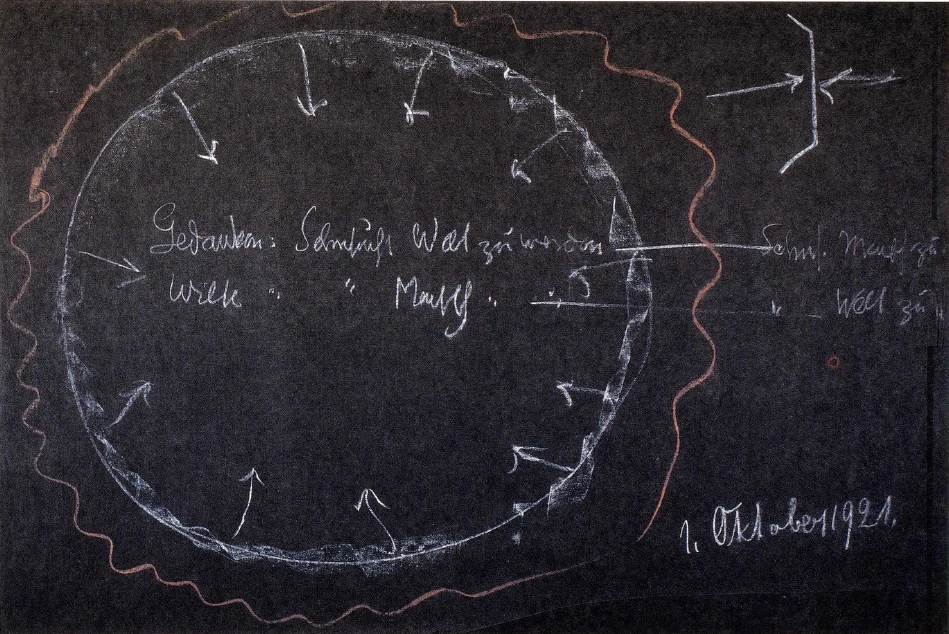
[ 19 ] Wir können also sagen: Indem wir Menschen durch den Tod gehen, tragen die Gedanken in sich die Sehnsucht, Welt zu werden. Der Wille dagegen, den wir entwickeln im Leben, er trägt in sich die Sehnsucht, Mensch zu werden.
[ 19 ] We can therefore say: As we humans pass through death, our thoughts carry within them the longing to become the world. The will, on the other hand—which we develop in life—carries within it the longing to become human.
Gedanken: Sehnsucht, Welt zu werden
Wille: Sehnsucht, Mensch zu werden
Thoughts: The Longing to Become the World
Will: The Longing to Become Human
[ 20 ] Das ist dasjenige, womit wir durch den Tod gehen. Alles das, was in den Tiefen unseres Wesens waltet als Wille, es trägt im tiefsten Inneren die Sehnsucht in sich, Mensch zu werden. Man kann das beobachten mit dem imaginativen Bewußtsein, wenn man den schlafenden Menschen beobachtet, der den Willen ja außer sich hat, in dem Ich den Willen außer sich hat. Da drückt sich schon deutlich in dem außerhalb des Menschenleibes Befindlichen die Sehnsucht aus, beim Aufwachen wiederum zurückzukehren, um menschenähnlich sich zu gestalten in der Ausbreitung des menschlichen physischen Leibes selbst. Aber diese Sehnsucht bleibt über den Tod hinaus. Was willensartiger Natur ist, das will Mensch werden, währenddem das, was gedankenhafter Natur ist und was sich verbinden muß gerade mit den Gedanken, die dem physischen Leben so nahe sind, mit den Gedanken, die eigentlich unser menschliches Gewebe bilden, die unsere menschliche Figur zwischen Geburt und Tod haben —, das nimmt die Sehnsucht an, sich wiederum zu zerstreuen, sich wiederum zu zerfluten, Welt zu werden. Und das dauert dann bis ungefähr in die Mitte der Zeit, die wir zubringen zwischen dem Tod und einer neuen Geburt.
[ 20 ] This is what we take with us through death. Everything that reigns in the depths of our being as will carries within its very core the longing to become human. One can observe this with imaginative consciousness when watching a sleeping person, whose will is indeed outside of them—in whom the “I” has the will outside of itself. There, in what lies outside the human body, the longing is already clearly expressed to return upon waking, in order to take on a human-like form within the expanse of the human physical body itself. But this longing persists beyond death. That which is of a volitional nature seeks to become human, whereas that which is of a thought-like nature—and which must connect precisely with the thoughts so close to physical life, with the thoughts that actually form our human fabric, that give us our human form between birth and death—takes on the longing to disperse once more, to dissolve once more, to become the world. And this then lasts until roughly the middle of the time we spend between death and a new birth.
[ 21 ] Da ist das Gedankenhafte in seiner Sehnsucht, Welt zu werden, gewissermaßen bis ans Ende gekommen. Es hat sich eingegliedert in den ganzen Kosmos. Die Sehnsucht Welt zu werden, ist erreicht, und es findet eine Umkehr statt. In der Mitte zwischen dem Tod und einer neuen Geburt verwandelt sich diese Sehnsucht der Gedanken, Welt zu werden, langsam in die Sehnsucht, wiederum Mensch zu werden, wiederum sich so zu verweben, wie das dann wird, wenn es eben unser Gedankengewebe wird, das wir beim Aufwachen gegen den Leib hin wahrnehmen können. So daß wir sagen können — ich nenne ja das, was da in der Mitte zwischen dem Tod und einer neuen Geburt liegt, wie Sie aus meinen Mysteriendramen wissen, die Mitternachtsstunde des Daseins —, daß wir in dieser Mitternachtsstunde des Daseins eine rhythmische Umkehrung haben von der Gedankensehnsucht unseres Wesens, Welt zu werden, nachdem sie erfüllt ist, in die Sehnsucht, wiederum Mensch zu werden, nach und nach herunterzusteigen, um wiederum Mensch zu werden.
[ 21 ] Here, the realm of thought, in its longing to become the world, has, in a sense, reached its end. It has integrated itself into the entire cosmos. The longing to become the world has been fulfilled, and a reversal takes place. Midway between death and a new birth, this longing of thought to become the world slowly transforms into the longing to become human once more, to interweave itself once more in the way it does when it becomes our very fabric of thought—which we can perceive against our body upon waking. So that we can say—I call what lies there in the middle between death and a new birth, as you know from my Mystery Dramas, the midnight hour of existence—that in this midnight hour of existence we experience a rhythmic reversal of our being’s mental longing to become the world, once it has been fulfilled, into the longing to become human again, to descend little by little in order to become human once more.
[ 22 ] In demselben Augenblicke, wo die Gedanken die Sehnsucht bekommen, wiederum Mensch zu werden, tritt bei dem Willen das Umgekehrte ein. Der Wille entwickelt ja zunächst die Sehnsucht, Mensch zu werden in dem geistigen Elemente, das wir durchleben zwischen dem Tod und einer neuen Geburt. Diese Sehnsucht ist es, die den Willen am meisten erfüllt. Es hat da draußen zwischen dem Tode und einer neuen Geburt gewissermaßen ein geistiges Abbild des Menschen erlebt; darinnen entsteht jetzt die lebhafteste Sehnsucht, wieder Welt zu werden. Gewissermaßen breitet sich der Wille aus; er wird Welt, er wird kosmisch. Dadurch, daß er sich ausbreitet, gelangt er auch eben in die Nähe derjenigen Naturströmung, die dann durch die Vererbungslinie gebildet wird im Fortgang der Generationen. So daß das, was als Wille wirkt im geistig-physischen Kosmos, was als Wille beginnt, um die Mitternachtsstunde des Daseins die Sehnsucht zu haben, Welt zu werden, daß das eigentlich schon in der Generationenfolge lebt. Wenn wir dann in der anderen Strömung, die die Sehnsucht hat, Mensch zu werden, uns einkörpern, ist uns vorangegangen der Wille im Weltwerden. Er lebt schon in der Fortpflanzung der Generation, in die wir dann untertauchen. In dem, was wir von den Vorfahren bekommen, lebt schon der Wille, der da Welt werden wollte von der Mitternachtsstunde des Daseins an, und mit diesem Welt-werden-Wollenden Willen kommen wir zusammen, indem das, was seit der Mitternachtsstunde des Daseins in den Gedanken von uns Mensch werden will, sich dann in das eingliedert.
[ 22 ] At the very moment when thoughts begin to yearn to become human again, the opposite occurs in the will. For the will first develops the yearning to become human within the spiritual realm that we experience between death and a new birth. It is this longing that fulfills the will most of all. Out there, between death and a new birth, it has, so to speak, experienced a spiritual image of the human being; within this image, the most vivid longing to become the world again now arises. In a sense, the will expands; it becomes the world; it becomes cosmic. By expanding in this way, it also comes into proximity with that natural current which is then formed through the line of heredity as generations succeed one another. So that what acts as will in the spiritual-physical cosmos—what begins as will, at the midnight hour of existence, with the longing to become the world—actually already lives within the succession of generations. When we then incarnate into the other current—the one that yearns to become human—the will to become a world has already preceded us. It already lives in the succession of generations into which we then immerse ourselves. In what we receive from our ancestors, the will that sought to become the world from the midnight hour of existence already lives, and we unite with this will that seeks to become the world, as that which, since the midnight hour of existence, has sought to become human in our thoughts then integrates itself into it.
Gedanken: Sehnsucht, Welt zu werden — Sehnsucht, Mensch zu werden
Thoughts: The Longing to Become the World — The Longing to Become Human
Wille: Sehnsucht, Mensch zuwerden — Sehnsucht, Welt zu werden
Will: The longing to become human — the longing to become the world
[ 23 ] Sie sehen also, wenn wir so mit geistigem Blick verfolgen, was auf der einen Seite im Physischen lebt, was auf der anderen Seite im Geistigen lebt, dann stellt sich uns das Bild des Menschenwerdens wirklich vor die Seele hin. Wir sind aber auch, indem wir durch das Gedankengewebe, das die Sehnsucht hat, Mensch zu werden, sich zu unserem physischen Dasein herunterzuneigen, wir sind da verwandt mit all den Wesen, die in der nächsten Sphäre über den Menschen leben, die sich imaginieren. Wir passieren gewissermaßen die Sphäre der sich imaginierenden Wesen. Und gerade in dem Augenblicke, wo diese Umkehrung stattfindet, da findet auch unsere Ich-durchdrungene Seele die Möglichkeit, nun fortzuleben in den beiden Strömungen, die ja divergieren, aber mit denen die Seele lebt, kosmisch lebt, bis sie sich wiederum nach der vollen Erfüllung der Menschwerde-Sehnsucht einkörpert und eben ein einzelner Mensch wird. Die Seele lebt im Grunde genommen sehr kompliziert, und hier in der Mitternachtsstunde des Daseins geht sie über den Abgrund. Sie wird gewissermaßen aus unserer Vergangenheit selber, jener Vergangenheit zunächst, die zwischen unserem letzten Tode und der Mitternachtsstunde des Daseins liegt, hereininspiriert. Die Mitternachtsstunde des Daseins passieren wir durch eine Tätigkeit, die dem Inspirieren, wenn man es innerlich erlebt, ähnlich ist, und die äußerlich ein Exspirieren ist, herrührend aus früherem Dasein. Ist die Seele über die Mitternachtsstunde des Daseins hinweg, da kommen wir zusammen mit denjenigen Wesen, die in zweiter Stufe über dem Menschen stehen und die im Exspirieren leben, wie ich gesagt habe.
[ 23 ] So you see, when we observe with spiritual insight what lives in the physical realm on the one hand and what lives in the spiritual realm on the other, the image of becoming human truly unfolds before our soul. But we are also—as we pass through the web of thought that yearns to become human and to descend into our physical existence—connected to all the beings who live in the sphere immediately above humanity, those who imagine themselves. We pass, as it were, through the sphere of the imagining beings. And precisely at the moment when this reversal takes place, our soul—imbued with the “I”—also finds the possibility to continue living within the two currents, which do indeed diverge, but with which the soul lives—cosmically lives—until, upon the full fulfillment of the longing to become human, it incarnates once more and becomes a single human being. The soul’s life is, in essence, very complex, and here, at the midnight hour of existence, it crosses the abyss. It is, so to speak, inspired from within our own past—specifically, the past that lies between our last death and the midnight hour of existence. We pass through the midnight hour of existence through an activity that, when experienced inwardly, is similar to inhalation, and which outwardly is an exhalation, originating from a previous existence. Once the soul has passed through the midnight hour of existence, we come together with those beings who stand a second level above human beings and who live in exhalation, as I have said.
[ 24 ] Aber als dritte Stufe haben wir im höheren Erkennen die intuitive Erkenntnis. Erleben wir sie nach innen, dann haben wir sie gewissermaßen von der einen Seite, erleben wir sie von außen, so haben wir ein Intuitieren, ein Sich-Hingeben, ein richtiges Sich-Hingeben. Dieses Sich-Hingeben, dieses sich in die Außenwelt-Ergießen, das ist das Wesen derjenigen Hierarchie, die als dritte Stufe über dem Menschen steht, das Intuitieren. Und dieses Intuitieren ist jene Tätigkeit, durch die der Inhalt unserer früheren Erdenleben herüber intuitiert wird in unser gegenwärtiges Erdenleben, herüberströmt, sich herüberergießt in unser gegenwärtiges Erdenleben. Diese Tätigkeit üben wir allerdings fortwährend aus, sowohl auf dem Wege bis zur Mitternachtsstunde des Daseins wie auch weiter darüber hinaus. Diese Tätigkeit durchdringt alles andere, und wir sind durch sie, also indem wir durch die wiederholten Erdenleben gehen, Teilnehmer an jener Welt, in welcher die im realen Intuitieren lebenden Wesen sind, die sich hingebenden Wesen sind. Wir geben uns ja auch eben an jedes folgende Erdendasein hin aus unserem früheren Erdenleben heraus.
[ 24 ] But as a third stage in higher cognition, we have intuitive knowledge. If we experience it inwardly, then we have it, so to speak, from one side; if we experience it from the outside, then we have intuition, a surrender, a true surrender. This surrender, this pouring out into the outer world—that is the essence of the hierarchy that stands as the third level above the human being: intuition. And this intuition is the activity through which the content of our previous earthly lives is intuitively brought over into our present earthly life—it flows over, pours over into our present earthly life. We do, however, practice this activity continuously, both on the path leading up to the midnight hour of existence and beyond. This activity permeates everything else, and through it—that is, as we pass through our repeated earthly lives—we become participants in that world inhabited by beings who live in true intuition, the self-surrendering beings. For we, too, surrender ourselves to each successive earthly life from within our previous earthly life.
[ 25 ] So können wir auch Vorstellungen gewinnen, wie nun unser Leben verläuft zwischen dem Tod und einer neuen Geburt in der Umgebung dieser drei Welten.
[ 25 ] In this way, we can also gain an understanding of how our life unfolds between death and a new birth within the realm of these three worlds.
[ 26 ] Wie wir hier zwischen Geburt und Tod in der Umgebung der tierischen, der pflanzlichen und der mineralischen Welt leben, so leben wir zwischen dem Tod und einer neuen Geburt in derjenigen Welt, wo das, was wir sonst in der Imagination erfassen, in Bildern gestaltet nach außen lebt. Dasjenige also, was wir aus dem geistigen Kosmos in unsere Leibgestaltung hineintragen, das können wir daher auch durch Imagination erfassen. Das, was wir von unserem Seelischen durch die Mitternachtsstunde des Daseins hindurchtragen, was in uns dann vorzugsweise als Gefühlstätigkeit lebt, aber ins Traumhafte eben abgestumpft, das können wir erfassen durch inspirierende Erkenntnis, und das ist auch, wenn es auftritt als unser Gefühlsleben, durchsetzt von solchen Wesenheiten.
[ 26 ] Just as we live here between birth and death in the midst of the animal, plant, and mineral worlds, so do we live between death and a new birth in that world where what we otherwise perceive in our imagination takes on form in images and lives outwardly. Therefore, what we carry from the spiritual cosmos into our physical form is something we can also grasp through imagination. That which we carry forward from our soul life through the midnight hour of existence—which then lives within us primarily as emotional activity but is dulled into the realm of dreams—we can grasp through inspiring insight; and even when it manifests as our emotional life, it is permeated by such beings.
[ 27 ] Wir leben nämlich als Menschen in Wahrheit nur völlig in unserer äußeren Sinneswahrnehmung. Schon wenn wir zum Denken vordringen, dann ist objektiv dieses Denken etwas, was für die Imagination gegeben wird, was in einem Bildgestalten besteht. Wir heben nur die abstrakten Gedanken in unserem Bewußtsein aus dem Bildgestalten heraus. Hinter unserem Bewußtsein liegt dann gleich das Bildweben der Gedanken. Dadurch, daß wir die abstrakten Gedanken herausheben können aus diesem Bildweben, kommen wir als Menschen zwischen Geburt und Tod zur Freiheit. Die Welt der imaginativen Notwendigkeit liegt dahinter. Da sind wir aber auch nicht mehr in derselben Weise allein wie hier. Da sind wir verwoben mit den sich durch Imagination offenbarenden Wesen, so wie wir dann in unserem Fühlen verwoben sind mit den durch Exspiration, mit den das Inspirieren nach außen offenbarenden Wesen. Und indem wir von Erdenleben zu Erdenleben gehen, sind wir verwoben mit denjenigen Wesenheiten, die im Intuitieren leben.
[ 27 ] For as human beings, we actually live fully only within our external sensory perception. Even when we move on to thinking, this thinking is, objectively speaking, something that is given to the imagination—something that consists of the formation of images. We extract only the abstract thoughts from this formation of images into our consciousness. Behind our consciousness lies the very weaving of images that constitutes thought. It is precisely because we can extract these abstract thoughts from this weaving of images that we, as human beings between birth and death, attain freedom. The world of imaginative necessity lies beyond this. Yet there, too, we are no longer alone in the same way as we are here. There we are interwoven with the beings who reveal themselves through imagination, just as we are then interwoven in our feeling with the beings who reveal themselves outwardly through exhalation and inhalation. And as we pass from one earthly life to the next, we are interwoven with those beings who live in intuition.
[ 28 ] Unser menschliches Leben reicht also hinunter in die drei Reiche der Natur und reicht hinauf in die drei Reiche des göttlich-geistig-seelischen Dasein. Das zeigt uns, daß wir ja hier im Anschauen des Menschen nur die Außenseite des Menschen haben. In dem Augenblicke, wo wir nach dem Inneren schauen, setzt sich uns der Mensch fort nach den höheren Welten hinauf, verrät er uns, offenbart er uns seinen Zusammenhang nach den höheren Welten hinauf, und wir leben uns durch Imagination, Inspiration und Intuition in diese höheren Welten hinein.
[ 28 ] Our human life thus extends down into the three realms of nature and up into the three realms of divine, spiritual, and soul existence. This shows us that, when we look at a human being, we are seeing only the outer aspect of that person. The moment we look inward, the human being extends upward into the higher worlds; he reveals to us his connection to those higher worlds, and through imagination, inspiration, and intuition, we enter into these higher worlds.
[ 29 ] Damit haben wir einmal einen Blick geworfen auf die menschliche Umgebung. Wir haben aber damit zu gleicher Zeit diejenige Welt entdeckt, die als eine Welt geistiger Notwendigkeiten hinter der Welt physischer Notwendigkeiten steht, und wir lernen dann um so mehr das, was in der Mitte drinnen liegt, würdigen: die Welt unseres gewöhnlichen Bewußtseins, das wir durchmachen in wachendem Zustande zwischen der Geburt und dem Tode. Da einverleiben wir unserem eigentlichen menschlichen Wesen das, was in der Freiheit leben kann. Unter uns und über uns ist nicht Freiheit. Freiheit tragen wir durch die Todespforte dadurch, daß wir mitnehmen den wesentlichsten Inhalt des Bewußtseins, den wir da haben zwischen der Geburt und dem Tode. Der Mensch verdankt eben dem Erdendasein die Eroberung dessen, was in ihm das Freiheitsleben ist. Dann allerdings kann es ihm nicht mehr genommen werden, wenn er es sich erobert hat dadurch, daß er das Leben zwischen Geburt und Tod durchgemacht hat, dann kann es ihm nicht mehr genommen werden, wenn er dieses Leben weiterträgt in die Welt der geistigen Notwendigkeiten hinein. Dieses Erdenleben bekommt gerade seinen tiefen Sinn dadurch, daß wir es hineinzustellen vermögen zwischen das, was unter uns und über uns liegt. Und so leben wir uns hinauf zu der Erfassung dessen, was im Menschen als das Geistige erfaßt werden kann.
[ 29 ] We have thus taken a look at the human environment. But in doing so, we have also discovered the world that, as a world of spiritual necessities, lies behind the world of physical necessities, and we come to appreciate all the more what lies in the middle: the world of our ordinary consciousness, which we experience in the waking state between birth and death. There we incorporate into our true human being that which can live in freedom. There is no freedom beneath us or above us. We carry freedom through the gate of death by taking with us the most essential content of consciousness that we possess between birth and death. It is precisely to earthly existence that the human being owes the attainment of that which constitutes the life of freedom within him. Then, however, it can no longer be taken from him; once he has attained it by living through the life between birth and death, it can no longer be taken from him as he carries this life forward into the world of spiritual necessities. This earthly life derives its profound meaning precisely from our ability to place it between what lies beneath us and what lies above us. And so we live our way upward toward an understanding of what can be grasped in the human being as the spiritual.
[ 30 ] Wenn wir das Seelische erkennen wollen, so müssen wir gewissermaßen in die Zwischenräume zwischen physischem Leib, Ätherleib, Astralleib und Ich hineinschauen; dann müssen wir in das hineinschauen, was da webt zwischen den Gliedern unserer menschlichen Wesenheit. Wenn wir den Menschen als geistiges Wesen kennenlernen wollen, dann müssen wir danach fragen, was der Mensch erlebt mit sich imaginierenden Wesenheiten, mit Wesenheiten, die sich außen durch Inspiration oder eigentlich Exspiration offenbaren, mit Wesenheiten, die sich durch Intuitieren offenbaren. Wie wir also gewissermaßen aufsuchen müssen, was unsere menschlichen Wesensglieder miteinander für Wechseltätigkeit entwickeln, wenn wir das Seelenleben prüfen wollen, so müssen wir den Verkehr mit den Wesenheiten der höheren Hierarchien aufsuchen, wenn wir den Menschen als geistiges Wesen betrachten wollen.
[ 30 ] If we want to recognize the soul, we must, so to speak, look into the spaces between the physical body, the etheric body, the astral body, and the I; then we must look into what weaves there between the members of our human being. If we wish to come to know the human being as a spiritual being, then we must ask what the human being experiences in relation to imaginative beings, to beings that reveal themselves externally through inspiration or, more precisely, expiration, and to beings that reveal themselves through intuition. Just as we must, so to speak, investigate the reciprocal interactions that develop among the members of our human being if we wish to examine the life of the soul, so too must we explore the interaction with the beings of the higher hierarchies if we wish to regard the human being as a spiritual being.
[ 31 ] Wenn wir hinunterschauen in die Natur und den Menschen vollständig anschauen wollen, dann enthüllt sich uns dieser Mensch für das geistige Anschauen in dem Augenblicke, wo wir aus innerer Erkenntnis heraus sagen können: Der Mensch, so wie er heute ist, trägt in sich physischen Leib, Ätherleib, astralischen Leib und Ich. — Jetzt hat man erkennen gelernt, was der Mensch innerhalb der Natur ist. Nun werden wir gewahr, zunächst auf subjektive Art durch inneres Erleben, das Seelenweben. Wir schauen es ja nicht an, wir stehen darinnen. Indem wir uns zur Anschauung aufschwingen, müssen wir es suchen zwischen den Gliedern, die wir also als die Wesensglieder des Menschen im natürlichen Dasein entdeckt haben. Was diese Glieder miteinander tun nach innen hin, das enthüllt sich uns als die objektive Anschauung des Seelenlebens.
[ 31 ] If we look down into nature and wish to view the human being in its entirety, then this human being reveals itself to us for spiritual contemplation at the very moment when, out of inner knowledge, we can say: The human being, as it is today, carries within itself a physical body, an etheric body, an astral body, and an “I.” — Now we have come to recognize what the human being is within nature. Now we become aware—initially in a subjective way through inner experience—of the weaving of the soul. After all, we do not merely observe it; we stand within it. As we rise to the level of contemplation, we must seek it among the members that we have thus discovered as the essential members of the human being in natural existence. What these members do with one another inwardly is revealed to us as the objective contemplation of the life of the soul.
[ 32 ] Dann aber müssen wir weitergehen und müssen nun nicht nur die Wesensglieder des Menschen und die Wirksamkeit dieser Wesensglieder aufeinander suchen, sondern wir müssen den ganzen Menschen nehmen und ihn in Wechseltätigkeit mit demjenigen sehen, was in seiner im weitesten Umfange aufgefaßten Weltenumgebung lebt: unter ihm und über ihm. Da entdecken wir, wie unter ihm dasjenige lebt, was gegenüber dem, was über ihm ist und was sich als die eigentliche Geistigkeit des Menschen erweist — Geistigkeit als Erlebnis unserer Tätigkeit mit den Wesen der höheren Hierarchien —, wie schlafend ist. Das, was sich als die eigentliche Geistigkeit da oben erlebt und das, was unten in der Natur erlebt wird, wird wie ein Wechseln, ein rhythmisches Wechseln zwischen Wachen und Schlafen erlebt. Gehen wir vom menschlichen Bewußtsein, das das wachende Bewußtsein ist, hinunter zum tierischen Bewußtsein, das das träumende Bewußtsein ist, gehen wir bis zum Pflanzenreich: schlafend; gehen wir noch tiefer hinunter: tiefer als das Schlafen; gehen wir hinauf: wir finden zunächst das Imaginieren als Realität erfüllt. Also ein weiteres Aufwachen ergibt sich gegenüber unserem gewöhnlichen Bewußtsein, ein noch weiteres Aufwachen bei den höheren Wesen, durch Inspiration; ein völliges Erwachtsein im Intuitieren, ein solches Erwachtsein, daß es ein Hingeben ist an die Welt.
[ 32 ] But then we must go further and not only seek the interrelationships between the constituent elements of the human being and the effects of these elements on one another; rather, we must take the whole human being and view him in reciprocal interaction with that which lives in his worldly environment, understood in its broadest sense: below him and above him. There we discover how, beneath us, that which stands in contrast to what is above us—and which proves to be the true spirituality of the human being—spirituality as the experience of our interaction with the beings of the higher hierarchies—lies dormant. What is experienced as true spirituality up above and what is experienced down below in nature is perceived as an alternation, a rhythmic alternation between waking and sleeping. If we descend from human consciousness—which is waking consciousness—to animal consciousness, which is dreaming consciousness; if we go on to the plant kingdom—which is in a state of sleep; if we descend even deeper—deeper than sleep; and if we ascend again, we first find imagination fulfilled as reality. Thus, a further awakening arises in contrast to our ordinary consciousness; an even further awakening among the higher beings, through inspiration; a complete state of wakefulness in intuition—a state of wakefulness such that it is a surrender to the world.
[ 33 ] Und jetzt verfolgen Sie bitte das, was ich nun hier schematisch zeichne, was aber zum Welt- und Menschenverständnis von größter Bedeutung ist. Nehmen Sie hier gewissermaßen als den Zentralpunkt das gewöhnliche menschliche Bewußtsein. Es geht zunächst herunter, findet das tierische Traumbewußtsein; geht weiter herunter, findet das pflanzliche Schlafbewußtsein; geht weiter herunter und findet das mineralische Tiefschlafbewußtsein.
[ 33 ] And now, please follow what I am about to sketch out here schematically, which is of the utmost importance for understanding the world and humanity. Take ordinary human consciousness, so to speak, as the central point here. It descends first, encountering the animalic dream consciousness; descends further, encountering the plant-like sleep consciousness; descends still further and encounters the mineral deep-sleep consciousness.
[ 34 ] Nun aber geht der Mensch über sich hinauf, findet die Wesenheiten, welche in Imaginationen sich offenbaren; geht weiter hinauf, findet die Wesenheiten, welche in Inspirationen sich offenbaren, eigentlich durch ein exspirierendes Wesen; findet endlich die Wesenheiten, welche sich durch Intuitieren offenbaren, die sich ausgießen. Wohin ergießen sie sich? Das höchste Bewußtsein ergießt sich in das Tiefschlafbewußtsein des Mineralreiches hinein. Das Mineralreich ist um uns herum ausgebreitet, zeigt uns seine eine Seite. Würden Sie, indem Sie an diese eine Seite des Mineralreiches herankommen, nicht durch Zerbröckeln bis in die Atome, sondern wirklich durchkönnen, so würden Sie auf der anderen Seite sich entgegenstrahlen finden dasjenige, was im intuitierenden Bewußtsein in das Tiefschlafbewußtsein des Mineralreiches hineinströmt. Und diesen Prozeß, den wir da im Raume finden können, wir machen ihn als Menschen selbst im Werdegang durch die verschiedenen Erdenleben in der Zeit durch.
[ 34 ] But now the human being rises above himself, finds the beings that reveal themselves in imaginations; rises further, finds the beings that reveal themselves in inspirations—actually through an exhaling being; and finally finds the beings that reveal themselves through intuition, which pour themselves out. Where do they pour out? The highest consciousness pours out into the deep-sleep consciousness of the mineral kingdom. The mineral kingdom is spread out around us, showing us one side of itself. If, as you approach this one side of the mineral kingdom, you were to pass through it—not by crumbling down to the atoms, but by truly passing through—you would find, on the other side, that which flows from intuitive consciousness into the deep-sleep consciousness of the mineral kingdom. And this process, which we can find there in space, we ourselves as human beings undergo in the course of our development through our various earthly lives over time.
[ 35 ] Nun, wir wollen morgen über diese Verhältnisse weiter sprechen.
[ 35 ] Well, let's talk more about these circumstances tomorrow.