

Anthroposophy as Cosmosophy I
Human Traits in the Earthly and Cosmic Realms
GA 207
23 September 1921, Dornach
Translated by Steiner Online Library
First Lecture
[ 1 ] On Sunday, in the lecture I will be giving, I will provide you here with an overview of what has taken place in recent weeks as a result of the Stuttgart Congress and other developments within the anthroposophical movement in Germany. Today we want to discuss a few things that follow on from various topics we have already considered here, and through which we can establish a connection between the coming days and what we covered here before I left for Germany.
[ 2 ] If an Eastern sage of ancient times—we would have to go back, in order to consider what I am about to say here, admittedly, go back to very ancient times of Eastern culture—if such an Eastern sage, initiated into the mysteries of the ancient Orient, were to turn his gaze toward today’s Western civilization—Western civilization in general—then, in assessing this civilization, he might say to the members of this Western civilization: You actually live entirely on fear. Your entire state of mind is dominated by fear. Everything you do, but also everything you feel, is permeated by fear at the most crucial moments of life and in its repercussions; and since fear is closely related to hatred, hatred plays a major role in your entire civilization.
[ 3 ] Let’s be clear, my dear friends. I mean, if a sage from the ancient Eastern cultural world were to stand among Western people today with the same level of education and the same state of mind, he would speak in this way; and if he were to address these matters, he would point out that, in his time and in his region, civilization was indeed founded on entirely different foundations. He would probably say: In my time, fear actually played no role in the life of civilization. In my time—when it came to bringing a worldview out into the world and turning it into action and social life—the main factor was desire, which could intensify into complete devotion to the world, which could intensify into love.
[ 4 ] That is how he would perceive it, and thus, if he were properly understood, he would point out—from his own perspective—the most crucial elements and the most crucial impulses in the life of today’s civilization. And if we were able to listen to him in the right way, we would thereby be given much of what we actually need to find the starting point from which we must begin to grasp contemporary life.
[ 5 ] Essentially, the situation over in Asia is this: even though strong European influences have been absorbed into religious, aesthetic, scientific, and social life, the echoes of the ancient civilization still prevail. This ancient civilization is, after all, in a state of decadence and decline, and when the old Oriental sage says, “Love was the fundamental force of ancient Oriental civilization,” it must certainly be noted that there is little immediate evidence of this in the present. But those who are able to see will discern, even in the signs of decline in Asian culture, this influence of an original element of pleasure, joy, and love for the world and toward the world.
[ 6 ] In the East, there was little in ancient times of what was later demanded of people once the call had gone out—a call that found its most radical expression in the Greek maxim: “Know thyself!” This “Know thyself!” actually entered human historical life only during the period of the early Greek cultural development. The comprehensive, luminous ancient Eastern worldview had not yet been permeated by this kind of self-knowledge; it was not, in fact, directed at turning one’s gaze toward the inner life of the human being. In this regard, human beings are, after all, dependent on the conditions prevailing in their environment. Ancient Eastern culture was simply founded under a different influence of sunlight on the Earth, under a different influence of earthly conditions themselves than later Western culture. In the ancient East, one might say, the inner gaze of human beings was captivated by what surrounded them as the world, and they had a special reason to devote their entire inner being to the world. It was knowledge of the world that flourished in ancient Eastern wisdom and in the conception of the world through this ancient Eastern wisdom. And even in what lived within the mysteries themselves in the ancient East—as you can gather from all that has been spoken to you in this regard over many years—there was no actual adherence to the imperative “Know thyself!” “Turn your gaze toward the world; try to allow what is hidden in the depths of worldly phenomena to reach you!”—that is what one could much more readily present as a demand of ancient Eastern culture. But as Asian civilization spread further westward, the teachers and students of the Mysteries were compelled to direct their gaze toward the inner being of the human being. Even as the mystery colonies were being established in Egypt and throughout North Africa, but especially as the mysteries then spread further westward—a notable site being ancient Ireland—and took root in mystery colonies, the mystery teachers and students who had come from Asia were confronted—simply by the geographical conditions of the West and thus by the entirely different elemental constitution of the Western world—with the necessity of seeking self-knowledge and true introspection. And through what these mystery students had already attained in Asia—knowledge of the external world and an understanding of the spiritual facts and beings underlying the external world—simply through this, they were now able to penetrate deeply into that which actually exists within the human being.
[ 7 ] One would not have been able to observe this at all over in Asia. In a sense, the inward gaze would have been paralyzed. But with what was brought back to the Western mystery colonies through the outward gaze that penetrated the spiritual world, it was now possible to look into the human inner being. And in fact, only the strongest souls were truly able—one might say—to initially endure what could be beheld within the human inner being. The inner essence of the human being actually first came to the consciousness of humanity in these mystery colonies, which originated in the East and were established in Western regions. One can actually sense the impact this self-knowledge of the human being had on these Eastern mystery teachers and students when one repeats a phrase that was repeatedly addressed to the students by the teachers—who had already cast this gaze into the inner being of the human being—and through which it was intended to make clear to them the state of mind in which human self-knowledge should actually be understood.
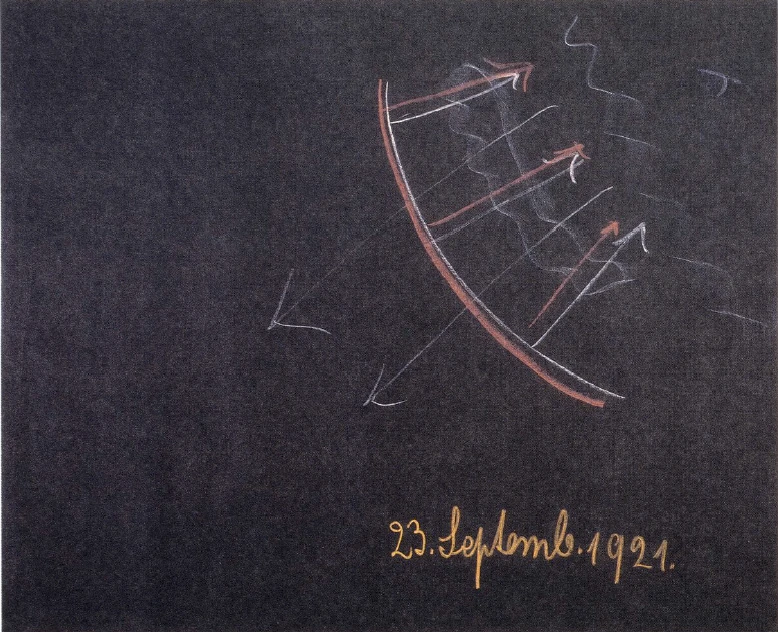
[ 8 ] The saying I am referring to is often quoted. However, it was only spoken with its full significance in the ancient mystery colonies of Egypt, North Africa, and Ireland—as preparation for the student and as a reminder to the initiate in general regarding inner human experiences. The word that was spoken there is this: No one who is not initiated into the sacred mysteries should learn the secrets of the human inner being, for it is impermissible to utter these secrets before an uninitiated person; the mouth that utters these secrets then becomes sinful, and the ear that hears these secrets becomes sinful!
[ 9 ] This word has often been spoken out of inner experience—out of what a person prepared by Eastern wisdom could experience when he advanced toward an understanding of humanity through the earthly conditions of the West. This word has been preserved through tradition, and today it is repeated time and again—albeit without an understanding of its innermost essence—in the secret orders and societies of the West, which, however, actually exert great influence outwardly. But it is repeated simply out of tradition. It is not spoken with the necessary weight, for people do not really know what they are supposed to mean by it. “But even now it is certainly the case that in the secret orders of the West—of which I have often spoken in this very place—this phrase is used as a motto: There are mysteries concerning the human inner being that may only be communicated to people within the secret societies; for otherwise, the mouth that utters them is sinful, and the ear that hears them is sinful.”
[ 10 ] It must be said: As times have changed, some people—not in Central European countries, but in Western countries—are learning various things in their secret societies that have been preserved as traditions stemming from ancient wisdom traditions. It is received without understanding, even though it actually often permeates action as an impulse. It was indeed the case that in recent centuries—actually, since the mid-15th century—the human constitution had become such that it made it impossible to see these things in their original form. One could only grasp them intellectually. One could form concepts of them, but one could not penetrate to the actual experience. Only a few individuals have had intuitions. Through these intuitions, however, some people have then penetrated into those regions of experience that are at issue here. And such people have sometimes adopted peculiar outward ways of life, such as Lord Bulwer, who wrote *Zanoni*. The way he became in his later years can only be understood if one knows how he initially embraced the tradition of human self-knowledge, yet how, through his particular individual constitution, he was capable of penetrating certain mysteries. Through this, however, he distanced himself from the naturalness of life. It is precisely in his case that one can see how a person relates to life when, inwardly, he takes in this different kind of spiritual world not merely in concepts, but into his entire state of mind—into his inner experience. One must then judge many things differently than one would according to the standards of ordinary philistinism. It is, of course, something quite extraordinary when Bulwer went about speaking of his inner experiences with a certain emphasis, yet was accompanied by a young woman who played a harp-like instrument, and always required the playing of this harp-like instrument between the individual passages of his speech. He would appear here and there in social circles where, otherwise, things were conducted in a thoroughly philistine, formal manner; yet he never appeared alone. There he would appear in his somewhat peculiar attire, take a seat, and his “harp girl,” so to speak, would sit at his feet; and when he spoke, he would utter a few sentences, then the girl would play again, then he would continue, and then the girl would play once more. In this way, he introduced something—in a higher sense, something coquettish, as one must first put it—into the ordinary world of human philistinism, that philistinism into which humanity was, after all, growing more and more, especially since the middle of the 15th century.
[ 11 ] Humanity does not know much about the degree of philistinism into which it has grown, and it knows less and less about it because this is becoming a natural state of affairs. People regard as reasonable only what is currently considered “proper behavior.” But the things in life are interconnected, and modern dryness and lethargy—the modern way of behaving toward one another—are a consequence of the intellectualist development of the last few centuries. Both things go hand in hand. A man like Bulwer, of course, does not fit into this picture. One can certainly imagine it as a possibility that older people walk about in the world while the younger ones accompany them with pleasant music. One need only view the distance between one state of mind and another in the proper light; then such a thing will also be able to appear in the proper light. But it was so with Bulwer because something shone forth in him that could not be present so directly in the modern intellectualistic age, but only as tradition.
[ 12 ] But one must, in turn, come to understand what human knowledge was like in the mystery colonies to which I have referred. The average person today perceives the world around them through external physical sensory impressions. They combine what they see with their intellect. And they also look inward. Essentially, this is the world that human beings survey, and from which they also act. The sensory impressions they receive from the outside, what they develop from these sensory impressions as concepts, and what is then transformed from these concepts inward through emotional impulses, impulses of will, and what then in turn radiates back into consciousness as memories of life—that is the content of the soul’s state, the content of the life in which a person weaves in the present, and from which they act. People today, at most, ask—with a kind of false mysticism—what is actually inside? What does self-knowledge reveal? — By posing such a question, they seek to answer it from within their ordinary consciousness. But nothing comes from this ordinary consciousness other than what has actually arisen from external sensory impressions and been transformed by feeling and will. One finds the reflections, the mirror images of external life, when looking inward in the manner of ordinary consciousness. And even though these external impressions have been transformed by feeling and will—since human beings do not know how feeling and will actually work—they very often perceive what they see within themselves, precisely because it has been transformed, not as a reflection of the external world, but as a special revelation of a divine world, an eternal world, and the like. But that is not what it is. What appears to the ordinary consciousness of modern human beings as self-knowledge is merely the transformed external world, reflected into their consciousness from within themselves. If human beings truly wanted to look into their inner selves, then they would have to—I have used this image here many times before—shatter what serves as the inner mirror.
[ 13 ] Our inner self is truly like a mirror. We look at the outside world. Here are the external sensory impressions. We form ideas based on them. Then these ideas are reflected by our inner self. By looking inward, we arrive only at this mirror within (see drawing on page 20, red). We see what is reflected back in the mirror of memory (red arrows). With this ordinary consciousness, we can no more look into the inner being of a person than one can look behind a mirror without breaking it.
[ 14 ] It was precisely through the preparation provided by the ancient Eastern wisdom traditions that these teachers and students of the mystery colonies carried to the West were able to look keenly beyond mere memories into the innermost being of the human person. And based on what they saw there, they spoke these words, which indicated that they actually wanted to make it clear how well one had to be prepared—especially in those ancient times—if one wished to direct one’s gaze into the innermost being of the human being.
[ 15 ] What, then, can one see within the human being? One sees how, indeed, something from the power of perception and thought—which develops before the mirror of memory—penetrates all the way beneath the mirror of memory. Thoughts penetrate beneath this mirror of memory and take effect in the human etheric body—in that part of the human etheric body that underlies growth, but also the emergence of the forces of will. As we look out into the sunlit space, as we survey everything that comes to us through our sensory impressions, something radiates into our inner being—something that, on the one hand, becomes memories, yet also seeps through the mirror of memory; which permeates us just as, let us say, the processes of nutrition, growth, and so on do. The powers of thought first permeate the etheric body, and this etheric body, permeated by the powers of thought, now acts in a very special way upon the physical body. This gives rise to a complete transformation of the material existence within the human physical body. In the external world, matter is never completely destroyed. That is why modern philosophy and natural science speak of the conservation of matter in relation to the external world. But this law of the conservation of matter applies only to the external world. Within the human being, matter is completely transformed back into nothingness. There, matter is completely destroyed in its very essence. Our human nature is based precisely on the fact that we are capable of casting matter back into chaos—of completely destroying it—deeper than the memory reflected within it.
[ 16 ] This was what was pointed out to the student of the mysteries who had been led from the East to the mystery colonies, namely those of Ireland and the West in general: Within yourself, beneath your power of memory, you as a human being carry something that tends toward destruction; and if you did not have this within you, you would not have been able to develop your thinking, for you must develop your thinking by allowing the powers of thought to penetrate the etheric body. But an etheric body permeated by the powers of thought acts upon the physical body in such a way that it hurls its matter back into chaos, destroying it.
[ 17 ] If, therefore, a person approaches this inner human realm with the same mindset with which they delve into memory, they enter the realm where the human being seeks to destroy, where the human being seeks to wipe out what is there. We all carry within us, beneath the mirror of our memory—precisely for the sake of the development of the human, thinking “I”—a rage for destruction and a rage for the dissolution of matter. There is no human self-knowledge that does not point with the utmost intensity to this inner human fact.
[ 18 ] Therefore, anyone who is to be made aware of this source of destruction within the human being must have an interest in the development of the spirit. He must be able to say to himself with all intensity: The spirit must endure, and for the sake of the spirit’s endurance, the material must be eradicated. — Only after humanity has once again been speaking for years about the interests connected with spiritual scientific research can attention be drawn to what actually lies within the human being. But attention must be drawn to this even today, for without it, human beings would always consider themselves to be something other than what they actually are within Western civilization. Within Western civilization, the human being is the shell surrounding a source of destruction, and in truth, the forces of decline can be transformed into forces of ascent only when the human being becomes aware that he or she is the shell surrounding a source of destruction.
[ 19 ] What would happen if human beings were not guided toward this consciousness through spiritual science? Well, we can already see in the developments of our time what would happen. That which is, so to speak, isolated and set apart within the human being—and which should act only within the human being, having this one place where matter is cast back into chaos—that forces its way out and penetrates the human being’s outer instincts. This is what Western and earthly civilization will ultimately become. This is evident in all the destructive forces that are at work today, for example, in Eastern Europe and elsewhere. This is the destructive fury hurled from the inner to the outer world, and in the future, human beings will be able to come to terms with what is actually passing into their instincts only through something that must be within them—when genuine human insight returns, when we are once again made aware of this inner human source of destruction, which must, however, exist for the sake of the development of human thought. For that strength of thought that human beings must possess in order to have a worldview appropriate to the present age—this strength of thought, which must be present before the mirror of memory—is what brings about the continuation of thought into the etheric body; and this etheric body, permeated by thought, exerts a destructive influence on the physical body in precisely this way. This source of destruction exists within modern Western man. Insight merely draws attention to it. And it is far worse when this source is present without the individual being able to point it out with his consciousness than when the individual takes full conscious note of this source of destruction and enters into the development of modern civilization from this perspective.
[ 20 ] The first thing that struck the students who first heard about these mysteries in the mystery colonies I mentioned was fear. They came to know it thoroughly. They came to know thoroughly the feeling that looking into the human inner being—not dishonestly in the sense of a nebulous mysticism, but looking in honestly—must instill fear, is terrifying. And this fear was dispelled among the ancient mystery students of the West only by pointing out to them the full weight of the facts. Then, through consciousness, they overcame what was bound to arise as fear.
[ 21 ] When the age of intellectualism dawned, this fear became unconscious, and as such, it continues to exert its influence. It manifests in outer life in all manner of disguises. Yet it was simply fitting for the modern age to look into the human inner being. “Know thyself!” became a genuine demand. The initiates were guided in the right way toward self-knowledge precisely by the evocation of fear, which could then be followed by the overcoming of that fear. The intellectualist era clouded the view of what lies within the human soul; but it could not dispel the fear. And so it came to pass that human beings themselves were—and remain—so deeply under the influence of this unconscious fear that they said, and continue to say: There is absolutely nothing within the human being that lies beyond birth and death. They are afraid to look deeper than into this life of memory, into this ordinary life of thought, which, after all, has its validity only between birth and death. He is afraid to look down into the true eternity of the human soul, and out of this fear he establishes the doctrine: There is absolutely nothing but this life between birth and death. — Modern materialism arose out of fear, without having the slightest inkling of it. This modern materialistic worldview is itself a product of fear and anxiety.
[ 22 ] Thus, this fear has been present in people’s outward actions, in social structures, and in historical developments since the mid-15th century; in the 19th century, in particular, it manifested itself in the materialist worldview. Why did people become materialists—that is, why did they want to accept only the external, only what is given in material existence? Because they were afraid to descend into the depths of the human soul.
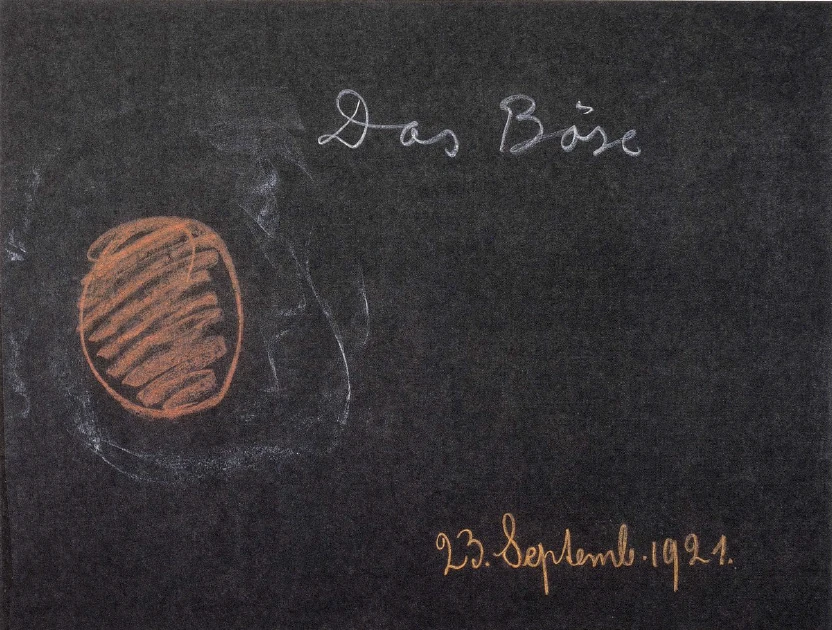
[ 23 ] Based on his insight, the ancient Eastern sage would have expressed this by saying: You Westerners of the present day live entirely out of fear. You base your social orders on fear; you pursue your arts out of fear. You have born your materialistic worldview out of fear. You and the successors of those who—even if they have fallen into decadence—once established the ancient Eastern worldview in my time; you and these people of Asia—you will never be able to understand one another, for among Asians, after all, everything springs from love; among you, everything arises from fear, which is akin to hatred.
[ 24 ] Certainly, this sounds radical, but I am trying to convey it precisely by putting these words into the mouth of an ancient Eastern sage. One might believe that he could speak this way if he were to rise again, whereas one might regard people of the present as foolish if they were to present these things so radically. But it is precisely from this radical characterization of these things that we can learn what we must learn today for the healthy progress of civilization. Humanity will have to realize once again that what constitutes the very highest achievement of modern times—rational thinking—could not exist at all if the inner life of imagination did not rise from a source of destruction that must be recognized so that it can be kept within, lest it spill over into the outer instincts and become social impulses.
[ 25 ] When one surveys these things, one can gain a deep insight into the interconnections of life in modern times. The world, then, which announces itself as such a source of destruction, lies within, beyond the mirror of memory. But the life of modern human beings unfolds between what this mirror of memory provides and external sensory perception. And just as human beings cannot look down into their own inner being beyond the mirror of memory, neither can they penetrate what spreads out there on the outside as sensory perceptions. They invent a material, atomistic world—which is precisely a fantasy world—because they cannot penetrate these sensory images.
[ 26 ] But human beings are not strangers to this world beyond external sensory perceptions. Every night, between falling asleep and waking up, they enter this world. When you sleep, you are inside this world. What you experience there lies beyond sensory perceptions—it is not the atomistic world posited by the fantasists of natural science. But what lies beyond the sphere of the senses is precisely what the ancient Eastern sages experienced in their mysteries. Yet this can only be experienced if one has devotion to the world, if one has the urge and the impulse to surrender oneself completely to the world. Love must prevail in one’s understanding if one wishes to go beyond sensory impressions.
[ 27 ] This love rooted in knowledge was particularly characteristic of ancient Eastern civilization. And why must one have this devotion? One must have this devotion because, if one were to enter the world beyond the senses with the ordinary human ego, one would suffer harm. One must give up one’s ego, as one usually possesses it, if one wishes to penetrate this world beyond the senses. This ego—how does it arise? It arises because the human being is capable of plunging into a chaos of destruction. This ego must be steeled and hardened in that world which, within the human being, is the world of a focus of destruction. With this “I,” one cannot live beyond the sphere of the external sensory world.
[ 28 ] Let us imagine, schematically, the source of destruction within the human being (see drawing, red). It is spread throughout the entire human organism. What I am describing here should be understood as intensive, not extensive, but I will draw it schematically. There is the source of destruction; there is the human shell. If what is inside were to be spread throughout the entire world, what would live in the world through human beings? Evil! Evil is nothing other than the chaos—necessary within the human being—that is projected outward. And within this chaos—that which must exist within the human being but must also remain within him as a source of evil—the human “I,” the human ego, must be strengthened. This human ego cannot exist in the external world beyond the sphere of human senses. That is why ego-consciousness disappears during sleep, and when it appears in dreams, it often seems foreign or weakened. The ego, which is actually hardened within that inner hearth of evil, cannot penetrate beyond the sphere of sensory phenomena. Hence the view of the ancient Eastern sages that one can penetrate there only through devotion, through love, through the surrender of the “I,” and that, when one penetrates fully, one does not live in a world of Vana—the weaving of the familiar—but in the world where this familiar existence has blown away: Nirvana. Such an ancient Eastern sage—as I have hypothetically presented him speaking before your soul—would allude to this conception of Nirvana, the highest form of self-surrender, as it exists in sleep, as it existed in fully conscious realization for the disciples of ancient Eastern civilization. And he would say: “For you, everything is based on fear, because you had to develop egoism. For us, because we had to suppress egoism, everything was based on love. For you, it is the ‘I’ that speaks, seeking to assert itself. For us, it was Nirvana that spoke, as the ‘I’ lovingly poured itself out into the whole world.”
[ 29 ] If one expresses these things in concepts, they are preserved in a certain way, but they live in the world of humanity as fluctuating sensations and feelings, and they permeate human existence. And in such feelings and sensations, they constitute what lives today in the East on the one hand, and in the West on the other. In the West, people have blood and lymph that are steeped in egoism, which has hardened into the inner hearth of evil. In the East, people have blood and lymph in which the echoes of the longing for Nirvana live on.
[ 30 ] In their consciousness, people in the East and West overlook these things in their crude, modern conception of them, for the intellect’s conception has something crude about it. Intellectual imagination strives, as it were, to draw blood from the living organism, to turn it into a specimen, to examine it under a microscope, and then to observe it in order to form ideas. The ideas one gains in this way are already infinitely crude even for ordinary experience. That is all that can be said at all in this manner. Do you believe that this captures the subtle nuances of difference between the people who, living in close proximity, are sitting here side by side? Of course, the microscope provides only a rough understanding of blood and lymph. Subtle differences do exist even among people who have emerged from the same social milieu. But these nuances are, of course, present in the most intense way between people of the East and the West—something the mind today can only conceive of in very broad terms.
[ 31 ] This is how it lives within the bodies of the people of Asia, Europe, and America, and the way they relate to one another is how it manifests itself in external social life. With that crude intellect that has served to understand external nature over the past few centuries, we will not be able to meet the demands of modern social life; in particular, we will not be able to find a balance between the East and the West. But that balance must be found.
[ 32 ] In late fall, people will attend the Washington Conference, where negotiations will focus on what—I would say—General Smuts, Britain’s Minister for South Africa, expressed out of an instinctive genius: The development of modern humanity is characterized by the fact that the focal point of cultural interests—which until now has been in the North Sea and the Atlantic Ocean—is shifting to the Pacific Ocean. The culture of the regions surrounding the North Sea, which has gradually expanded westward, is becoming a world culture. The center of gravity of this world culture is shifting from the North Sea to the Pacific Ocean.
[ 33 ] Humanity stands on the threshold of this change. But people today still speak in such a way that their speech is rooted in old, crude concepts and fails to grasp the essential nature of things—a nature that must be grasped if we truly wish to move forward. The signs of the times stand before us, ominous and significant, telling us: Until now, only a limited degree of trust was needed among people who, in secret, actually all feared one another. This fear merely masked itself in all sorts of other feelings. But now we need a state of mind capable of encompassing a global culture. We need a trust that can bridge the contrasts between the East and the West. This opens up significant prospects; we need them. People today believe they are only allowed to negotiate economic issues—such as the position Japan will hold in the Pacific Ocean, or the way in which China must be shaped so that an open door is created for all other commercial, trading nations of the world, and so on.
[ 34 ] My dear friends, these questions will not be resolved at any conference on Earth until people realize that economic activity requires trust from one person to another. And this trust can only be achieved in the future through spiritual means. Outward culture will need spiritual deepening. Today I wanted to shed light once again, from a different angle, on what has often been emphasized here in this regard. We will continue our discussion in this vein tomorrow.