Old and New Initiation Methods
Drama and Poetry in the Shift
of Consciousness in the Modern Era
GA 210
1 January 1922, Dornach
Translate the original German text into any language:
Versions Available:
Old and New Initiation Methods, tr. SOL
1. Neujahrsbetrachtung
1. New Year's Reflection
[ 1 ] Meine sehr verehrten Anwesenden, meine lieben Freunde! Gestern habe ich von der Initiationswissenschaft nach verschiedenen Richtungen hin gesprochen. Heute will ich einiges charakterisieren, was in einem gewissen Sinne zu den gegenwärtigen Ausdrucksformen der Initiationswissenschaft gehört. Wenn wir in der Gegenwart in bezug auf alles Zivilisationsleben einen tiefen Riß wahrnehmen müssen und als Menschen der Gegenwart, wenn wir ein volles Bewußtsein entwickeln, mit einem gewissen tragischen Gefühl diesen tiefen Riß mit seinen chaotischen Wirkungen in der Welt empfinden müssen, so drückt sich nach einer gewissen Seite hin dieser Riß wohl dadurch ganz besonders aus, daß der heutige Mensch keine Vermittelung erkennen kann zu derjenigen Welt, zu der er aufschauen muß, wenn er seinen eigentlichen Menschenwert und seine eigentliche menschliche . Würde ins Auge faßt: zu der moralischen Welt, zu der Welt auch, welche die religiösen Empfindungen und die religiösen Versenkungen und Erhebungen der Menschenseele bringt.
[ 1 ] Ladies and gentlemen, my dear friends! Yesterday I spoke about the science of initiation from various perspectives. Today I would like to characterize certain aspects that, in a certain sense, belong to the current forms of expression of the science of initiation. If we must perceive a deep rift in all aspects of civilized life today, and if, as people of the present, we must—as we develop full consciousness—feel this deep rift with its chaotic effects in the world with a certain sense of tragedy, then, in a certain respect, this rift is expressed most particularly in the fact that modern human beings cannot perceive any connection to the world toward which they must look if they are to grasp their true human worth and their true human dignity: to the moral world, and also to the world that brings about the religious feelings, contemplations, and exaltations of the human soul.
[ 2 ] Auf der andern Seite schaut der Mensch zu demjenigen, was das Naturdasein ausmacht, zu dem er ja auch gehört. Das Naturdasein stellte sich im Laufe der letzten Jahrhunderte so vor die menschliche Seele hin, daß es gewissermaßen alle Realität, alles wirkliche Sein verschlungen hat. Das Naturdasein mit seinen gegenüber dem Moralischen gleichgültigen Gesetzen läuft ab in äußerlicher Notwendigkeit, und der Mensch ist seinem alltäglichen Dasein nach in diese Notwendigkeit eingespannt. Wie man auch Anfang und Ende dieser Notwendigkeit begrenzt, es ist unmöglich, daß der Mensch, wenn er sich selbst innerhalb dieser Notwendigkeit empfindet, zu seinem eigentlichen Menschlichen kommt. Er muß vom Naturdasein aufblicken zu dem moralischen Welteninhalte. Er muß die moralischen Welteninhalte auffassen als dasjenige, was sein soll, was von ihm als Ideal betrachtet werden soll. Aber keine Erkenntnis von der heutigen Art zeigt ihm, wie die moralischen Ideale etwa einlaufen können in die Naturgesetze und das Notwendige in den Dienst des Moralischen gestellt werden kann.
[ 2 ] On the other hand, human beings look to that which constitutes natural existence—to which they, after all, also belong. Over the course of the last few centuries, natural existence has presented itself to the human soul in such a way that it has, so to speak, swallowed up all reality, all true being. Natural existence, with its laws indifferent to the moral, boils down to external necessity, and human beings are bound up in this necessity in their everyday lives. No matter how one defines the beginning and end of this necessity, it is impossible for a person, when they perceive themselves as existing within this necessity, to attain their true humanity. He must look up from natural existence to the moral content of the world. He must grasp the moral content of the world as that which ought to be, that which he should regard as an ideal. But no knowledge of the kind prevalent today shows him how moral ideals might, for example, be integrated into the laws of nature, or how necessity might be placed in the service of morality.
[ 3 ] Für den heutigen Menschen zerfällt einmal die Welt in diese zwei für das Gegenwartsbewußtsein unvereinbaren Glieder: die moralische Welt und die materielle Welt. Der Mensch schaut hin auf Geburt und Tod, findet von ihnen eingesäumt dasjenige Dasein, von dem ihm allein die heute anerkannte Erkenntnis sprechen will. Der Mensch muß andererseits aufblicken zu einer Welt, die sich über Geburt und Tod erhebt, die gegenüber der stetig wandelbaren, eigentlichen materiellen Welt, eine ewige Bedeutung hat, und er muß verbunden denken sein seelisches Sein mit dieser ewigen Bedeutung der moralischen Welt. Aber die platonische Weltanschauung, welche noch den letzten Rest des Orientalismus enthalten hat, dahingehend, daß die äußere Sinneswelt ein Schein, eine Illusion ist, und die Ideenwelt die wahre, die wirkliche Welt ist, diese platonische Weltanschauung findet für den heutigen Menschen, wenn er im Gegenwartsbewußtsein stehenbleibt, keine Antwort.
[ 3 ] For people today, the world breaks down into these two elements, which are incompatible with contemporary consciousness: the moral world and the material world. People look at birth and death and find, framed by them, the existence of which the knowledge recognized today seeks to speak to them. On the other hand, human beings must look up to a world that rises above birth and death, a world that, in contrast to the ever-changing, actual material world, possesses eternal significance; and they must conceive of their spiritual being as connected to this eternal significance of the moral world. But the Platonic worldview—which still contained the last remnants of Orientalism in the sense that the external sensory world is an appearance, an illusion, and the world of ideas is the true, real world—this Platonic worldview offers no answer for modern man if he remains confined to his present-day consciousness.
[ 4 ] Hinstellen will sich die Initiationswissenschaft wiederum in die menschliche Zivilisation, will die Menschen wiederum darauf hinweisen, daß hinter derjenigen Welt, welche die Sinne wahrnehmen, eine geistige Welt steht, daß in dieser geistigen Welt, zu der der Mensch aufschaut als zu der moralischen, eine mächtige, eine kraftvolle, eine reale Welt steht. Die Initiationswissenschaft muß gewissermaßen dem Naturdasein die angemaßte absolute Realität wegnehmen und der moralischen Welt wiederum Realität geben. Das kann sie nur, wenn sie zu andern Ausdrucksmitteln greift als diejenigen sind, die aus dem Umfange der heutigen Sprachen, aus dem Umfange der heutigen Ideen- und Begriffswelt gegeben sind.
[ 4 ] The science of initiation, in turn, seeks to reestablish itself within human civilization; it seeks to remind people once again that behind the world perceived by the senses lies a spiritual world, and that within this spiritual world—which humanity looks up to as the moral realm—there exists a powerful, dynamic, and real world. The science of initiation must, so to speak, strip natural existence of the absolute reality it has usurped and restore reality to the moral world. It can do this only by resorting to means of expression other than those provided by the scope of today’s languages and the scope of today’s world of ideas and concepts.
[ 5 ] Es erscheint die Sprache der Initiationswissenschaft dem Menschen der Gegenwart noch als etwas Fremdes, als etwas Illusorisches, weil er nicht ahnt, daß hinter den Ausdrucksformen reale Kräfte stehen und daß der Mensch, ob er sich nun der äußeren Lautsprache oder einer gestalteten Sprache bedient, eben immer genötigt ist, in der Sprache nicht einen vollständig adäquaten Ausdruck zu haben von dem, was er schaut, was er wahrnimmt. Was ist denn schließlich das Wort «Mensch», wenn wir seinen Lautinhalt nehmen, gegenüber dem reichen Inhalte, der sich uns darbietet an Geistigem, Seelischem und Leiblichem, wenn wir einem wirklichen Menschen gegenüberstehen! So auch stürmt, flutet und wirkt in mannigfaltiger Weise eine hinter der Sinneswelt und in der moralischen Welt lebende übersinnliche Welt in der Initiationswissenschaft. Und diese Initiationswissenschaft muß mannigfaltige Ausdrucksformen wählen, um dasjenige auszudrücken, was allerdings viel reicher erscheint als es die Ausdrucksmittel geben können.
[ 5 ] To people today, the language of initiatory science still seems like something foreign, something illusory, because they have no inkling that real forces lie behind these forms of expression and that human beings—whether they use spoken language or a structured language—are always compelled to recognize that language cannot provide a fully adequate expression of what they see and perceive. After all, what is the word “human being,” if we consider its sound alone, compared to the rich content that presents itself to us in terms of the spiritual, the soul, and the physical, when we stand before a real human being! In the same way, a supersensible world—living beyond the sensory world and within the moral world—rages, surges, and works in manifold ways within the science of initiation. And this science of initiation must choose diverse forms of expression to convey that which, admittedly, appears far richer than any means of expression can convey.
[ 6 ] Für den Menschen selbst in seinem unmittelbaren Dasein möchte ich von einigen solchen Ausdrucksmitteln heute sprechen, von Ausdrucksmitteln, die ja schon in diesen Tagen hier von der einen oder der andern Seite genannt worden sind und die denjenigen von Ihnen gut bekannt sind, die sich längere Zeit mit der anthroposophischen Geisteswissenschaft befaßt haben.
[ 6 ] Today I would like to speak about some of these means of expression as they relate to human beings in their immediate existence—means of expression that have already been mentioned here in recent days by one side or the other, and which are well known to those of you who have been engaged in anthroposophical spiritual science for some time.
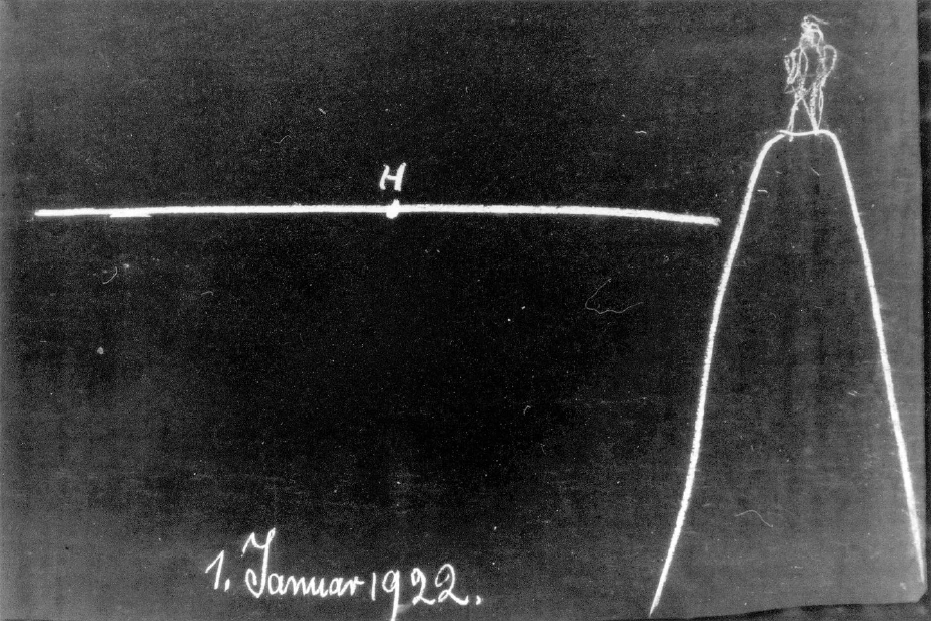
[ 7 ] Man sagt mit Recht und auch mit Unrecht, das eigentliche wahre Wesen des Menschen entziehe sich der Erkenntnis. Man kann das auch in einem gewissen Sinne sagen, aber nicht in dem Sinne, wie es in der Gegenwart sehr häufig gesagt wird. Das eigentliche Wesen des Menschen enthüllt sich für die Initiationswissenschaft allerdings so, daß man es in unmittelbarer Weise nicht in Definitionen, in Beschreibungen, in Erklärungen fassen kann. Wenn ich mich eines Vergleiches bedienen darf, so ist es für das Erfassen des menschlichen Wesens so, wie wenn man bei einem Waagebalken den Punkt, um den er sich dreht, zeichnen wollte. Man kann ihn nicht zeichnen. Ich kann das linke und das rechte Stück des Waagebalkens zeichnen, ich kann aber nicht den Punkt zeichnen, um den sich der Waagebalken drehen wird. Der ist etwas, was bestimmt ist dadurch, daß eben der linke Waagebalken von links nach rechts bis zu diesem Punkte geht und bei diesem Punkt der rechte Waagebalken beginnt und von ihm weitergeht.
[ 7 ] It is said—both rightly and wrongly—that the true essence of the human being eludes knowledge. One can say this in a certain sense, but not in the sense in which it is very often said today. For the science of initiation, however, the true nature of the human being reveals itself in such a way that it cannot be grasped directly through definitions, descriptions, or explanations. If I may use a comparison, grasping the human nature is like trying to draw the point around which a balance beam pivots. You cannot draw it. I can draw the left and right sections of the balance beam, but I cannot draw the point around which the balance beam pivots. That point is determined by the fact that the left section of the balance beam extends from left to right up to that point, and at that point the right section begins and continues from there.
[ 8 ] In einer ähnlichen Weise läßt sich nicht in adäquaten Begriffen und Ideen das menschliche tiefste Wesen fassen. Aber es läßt sich fassen, wenn man zu schauen versucht die Abirrungen von diesem Wesen. Das menschliche Wesen stellt gewissermaßen einen Gleichgewichtszustand dar zwischen einer Abweichung, die nach der einen Seite fortwährend gehen will und einer solchen, die nach der andern Seite fortwährend gehen will. Der Mensch ist, so wie er im Leben dasteht, im irdischen Dasein fortwährend zwei Gefahren ausgesetzt: dem Abirren nach der einen oder nach der andern Seite — wie wir es mit technischen Ausdrücken nennen können —, nach der luziferischen und der ahrimanischen Seite.
[ 8 ] In a similar way, the deepest essence of the human being cannot be grasped in adequate terms and ideas. But it can be grasped if one tries to observe the deviations from this nature. Human nature represents, so to speak, a state of equilibrium between a deviation that constantly seeks to move in one direction and one that constantly seeks to move in the other. Human beings, as they stand in life, are constantly exposed to two dangers in their earthly existence: straying toward one side or the other—as we might call it in technical terms—toward the Luciferic and the Ahrimanic sides.
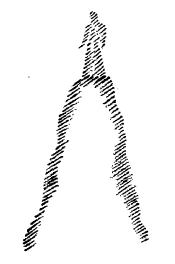
[ 9 ] Im gewöhnlichen Dasein ist zunächst für den Menschen sein Gleichgewichtszustand dadurch hervorgebracht, daß sein ganzes, volles Wesen nur zu einem Teil in die Leibesgestalt eingespannt ist, und daß diese Leibesgestalt im ganzen Weltenzusammenhange nicht er im Gleichgewichtszustande zu erhalten braucht, sondern daß geistige Wesenheiten, die hinter ihm stehen, diesen Gleichgewichtszustand bewirken. So nimmt der Mensch im gewöhnlichen Erdendasein heute für das gewöhnliche Bewußtsein die beiden Gefahren nicht wahr, durch die er nach der einen oder nach der andern Seite, nach der luziferischen oder nach der ahrimanischen Seite, von seinem Gleichgewichtszustande abweichen kann. Das ist gerade das Eigentümliche der Initiationswissenschaft, daß man sich wie auf einem hohen Felsen fühlt als Mensch, wenn man beginnt, die Welt in ihrer Wesenheit zu durchschauen, auf einem hohen Felsen, links und rechts Abgrund. Der Abgrund ist immer da, aber für das gewöhnliche Leben sieht der Mensch den Abgrund beziehungsweise die beiden Abgründe nicht. Will er sich vollständig kennenlernen, so muß er die Abgründe wahrnehmen, muß er wenigstens von den Abgründen wissen lernen. Nach der einen Seite wird der Mensch nach dem Luziferischen, nach der andern Seite von dem Ahrimanischen gezogen. Und man kann das Ahrimanische und das Luziferische charakterisieren, indem man den Menschen nach Leib, Seele und Geist betrachtet.
[ 9 ] In ordinary life, a person’s state of equilibrium is initially brought about by the fact that only a part of their entire, full being is engaged in the physical form, and that within the overall context of the world, they do not need to maintain this state of equilibrium themselves, but rather that spiritual beings standing behind them bring about this state of equilibrium. Thus, in ordinary earthly life today, from the perspective of ordinary consciousness, human beings do not perceive the two dangers through which they can deviate from their state of balance—either toward the Luciferic side or toward the Ahrimanic side. This is precisely what is distinctive about the science of initiation: that as a human being, one feels as if standing on a high cliff when one begins to see through to the essence of the world—on a high cliff, with an abyss to the left and right. The abyss is always there, but in ordinary life, human beings do not see the abyss—or rather, the two abysses. If one wishes to come to know oneself fully, one must perceive the abysses; one must at least learn to recognize them. On the one hand, the human being is drawn toward the Luciferic; on the other, toward the Ahrimanic. And one can characterize the Ahrimanic and the Luciferic by considering the human being in terms of body, soul, and spirit.
[ 10 ] Nehmen wir zunächst eine Betrachtung, die vom Gesichtspunkte des leiblichen Wesens des Menschen ausgeht. Dieses leibliche Wesen des Menschen ist nur äußerlich scheinbar für die Sinneswahrnehmung ein Einheitliches. In Wahrheit ist der Mensch fortwährend eingespannt zwischen den Kräften, die ihn verjüngen und den Kräften, die ihn greisenhaft machen, zwischen den Kräften der Geburt und den Kräften des "Todes. In keinem einzigen Augenblicke des Lebens ist in unserem Leib bloß die eine Art von Kräften vorhanden; immer sind sie beide da.
[ 10 ] Let us first consider a perspective that takes as its starting point the physical nature of the human being. This physical nature of the human being is only outwardly and seemingly a unified whole to the senses. In truth, human beings are constantly caught between the forces that rejuvenate them and the forces that cause them to age, between the forces of birth and the forces of “death.” Not a single moment of life passes in which only one kind of force is present in our bodies; both are always there.
[ 11 ] Wenn wir Kind sind, meinetwillen ganz kleines Kind, so überwiegen in uns die jungmachenden, die luziferischen Kräfte; aber tief zurückgezogen sind in der menschlichen Natur auch schon die greisenhaften Kräfte, diejenigen Kräfte, die zuletzt das Verkalken, das Sklerotisieren des Leibes hervorrufen, diejenigen Kräfte, die uns dann zum Tode führen. Und beide Arten von Kräften müssen im menschlichen Leibe sein. Durch die luziferischen Kräfte, die in ihm sind, hat er eine fortwährende Möglichkeit, ich möchte sagen nach dem Phosphorischen hin, nach der Wärme hin sich zu entwickeln. Im extremen Fall, im Krankheitsfall, wirken diese Kräfte so, daß der Mensch in das Fieber, in die Pleuritis hineinkommt, in entzündliche Zustände. Aber diese Neigung für Fieber, für entzündliche Zustände ist immer in ihm. Sie wird nur in Schach gehalten, im Gleichgewichte gehalten durch die andern Kräfte, die ihn verfestigen wollen, die ihn verkalken, die ihn mineralisieren. Und darinnen besteht das Wesen des Menschen, daß ein Gleichgewichtszustand da ist zwischen diesen beiden polarisch einander entgegengesetzten Kräftearten.
[ 11 ] When we are children—very young children, for my part—the rejuvenating, Luciferic forces predominate within us; but deeply hidden within human nature are also the senile forces, those forces that ultimately cause the calcification and sclerosis of the body, those forces that then lead us to death. And both kinds of forces must be present in the human body. Through the Luciferic forces within it, the body has a constant potential—I might say—to develop toward the phosphoric, toward warmth. In extreme cases, such as illness, these forces act in such a way that the person develops a fever, pleurisy, or inflammatory conditions. But this tendency toward fever and inflammatory conditions is always present within him. It is merely kept in check, held in balance by the other forces that seek to solidify him, to calcify him, to mineralize him. And therein lies the essence of the human being: that there is a state of equilibrium between these two polar, oppositely directed types of forces.
[ 12 ] Man wird eine gültige Physiologie, eine gültige Biologie erst dann haben, wenn man jedes einzelne Organ des Menschen und den ganzen Menschen so betrachtet, daß Herz, Lunge, Leber und so weiter polarische Gegensätze in sich enthalten, daß sie hintendieren auf der einen Seite zur Auflösung in die Wärme, auf der andern Seite zur Verfestigung im Mineralischen. Man wird auch das Funktionieren der Organe erst richtig verstehen, wenn man den ganzen Menschen und wiederum jedes einzelne Organ von diesem Gesichtspunkte aus zu betrachten vermag. Die Gesundheits- und Krankheitslehre des Menschen wird erst auf einen gesunden Boden gestellt werden können, wenn diese Polaritäten im physischen Menschen überall werden gesehen werden können. Man wird dann zum Beispiel wissen, daß im Menschen, wenn er dem Zahnwechsel unterliegt um das siebente Jahr herum, nach der Kopfseite hin die ahrimanischen Kräfte wirksam werden; daß, wenn der Mensch bei der Geschlechtsreife seine physische Natur nach der Wärmeseite hin entwickelt, daß dann die luziferischen Kräfte tätig sind und daß der Mensch eigentlich in seinem rhythmischen Wesen fortwährend hin und her Pendelschläge ausführt, auch in physischer Beziehung, zwischen dem luziferischen und dem ahrimanischen Wesen. Erst wenn man lernen wird, ohne Aberglauben, so mit wissenschaftlicher Exaktheit von dem Luziferischen und Ahrimanischen in der menschlichen Natur zu sprechen, wie man heute ohne Aberglauben, ohne Mystik von positivem und negativem Magnetismus spricht, von positiver und negativer Elektrizität, von Licht und Finsternis spricht, erst dann wird man in der Lage sein, eine solche Erkenntnis vom Menschen zu gewinnen, welche gewachsen ist der abstrakten Erkenntnis von der unorganischen Natur, die wir uns errungen haben im Laufe der letzten Jahrhunderte.
[ 12 ] We will only have a valid physiology and a valid biology when we view every single organ of the human being and the human being as a whole in such a way that the heart, lungs, liver, and so on contain polar opposites within themselves—tending, on the one hand, toward dissolution into heat and, on the other hand, toward solidification into the mineral realm. Nor will we truly understand the functioning of the organs until we are able to view the whole human being—and, in turn, each individual organ—from this perspective. The study of human health and disease can only be placed on a sound foundation when these polarities can be recognized everywhere within the physical human being. One will then know, for example, that in human beings, when they undergo the change of teeth around the age of seven, the Ahrimanic forces become active toward the head; that when a person reaches sexual maturity and their physical nature develops toward the warm side, the Luciferic forces are at work; and that the human being, in their rhythmic nature, is actually constantly swinging back and forth—even in a physical sense—between the Luciferic and the Ahrimanic principles. Only when we learn to speak of the Luciferic and Ahrimanic aspects of human nature without superstition, with scientific precision—just as we speak today, without superstition or mysticism, of positive and negative magnetism, of positive and negative electricity, of light and darkness— only then will we be able to gain an understanding of the human being that is on a par with the abstract understanding of inorganic nature that we have attained over the course of the last few centuries.
[ 13 ] In abstrakter Art sprechen auch heute schon viele von allerlei Polaritäten im Menschen. Es gibt mystisch-nebulose Veröffentlichungen, Publikationen, die allerlei Positives und Negatives in den Menschen hineinbringen. Sie scheuen sich davor, den Aufstieg zu vollführen zu einem viel Konkreteren, Geistigeren, aber geistig wirklich Konkreten, und reden daher ebenso abstrakt von dem Menschlichen in seiner Polarität, von Positivem und Negativem, wie sie in der unorganischen Natur von der Polarität sprechen. Erst das kann Wissenschaft vom Menschen sein, das Aufsteigen von den armen Begriffen des Positiven und Negativen, von den armen Begriffen der Polarität, wie wir sie in der unorganischen Natur finden, zu den erfüllten Begriffen des Luziferischen und Ahrimanischen im Menschen.
[ 13 ] Even today, many people speak in abstract terms about all kinds of polarities within human beings. There are mystical, nebulous writings—publications that attribute all manner of positive and negative qualities to human beings. They shy away from making the ascent to something much more concrete, more spiritual, yet spiritually concrete in the truest sense, and therefore speak just as abstractly about the human being in its polarity—about the positive and the negative—as they speak of polarity in inorganic nature. Only this can be the science of the human being: the ascent from the meager concepts of positive and negative, from the meager concepts of polarity as we find them in inorganic nature, to the fulfilled concepts of the Luciferic and Ahrimanic in the human being.
[ 14 ] Wenn wir zu dem Seelischen gehen, das sich als das zweite Glied im höheren Sinne der menschlichen Wesenheit entfaltet, dann sehen wir das Ahrimanische wirksam in allem, was die Menschenseele nach dem rein verstandesmäßig-intellektuell Gesetzmäßigen hintreibt. Unsere Naturwissenschaft ist heute fast ganz ahrimanisch. Der Mensch streift, indem er nach dem ahrimanisch Seelischen sich hinentwickelt, alles ab, was die Begriffe, die Ideen mit Wärme durchglüht; er gibt sich nur dem hin, was die Begriffe, die Ideen eiskalt und trocken macht, und er fühlt sich dann ganz besonders im heutigen wissenschaftlichen Denken befriedigt, wenn er also ahrimanisch ist, wenn er sich in trockenen und kalten Begriffen bewegt, wenn er alles, was Welterklärung ist, so machen kann, daß es nach dem Muster gestaltet ist, wie man die unorganische, die leblose Natur erkennt. Und indem die Seele mit dem Moralischen sich durchdringt, erscheint in ihr das Ahrimanische in alledem, was hinneigt zu dem Pedantischen, zu dem Steifen, zu dem Philiströsen auf der einen Seite; dann aber auch wiederum zu dem Freien, zu dem Unabhängigen, zu dem, was die vollen Früchte des materiellen Daseins aus diesem materiellen Dasein herausziehen will, was sich ganz dadurch vollkommen machen will, daß es das materielle Dasein durchdringt.
[ 14 ] When we turn to the soul, which unfolds as the second member of the human being in the higher sense, we see the Ahrimanic at work in everything that drives the human soul toward what is purely rational and intellectual. Our natural science today is almost entirely Ahrimanic. As a person develops toward the Ahrimanic aspect of the soul, they cast aside everything that infuses concepts and ideas with warmth; he devotes himself only to what renders concepts and ideas ice-cold and dry, and he feels particularly satisfied in today’s scientific thinking when he is thus Ahrimanic—when he moves within dry and cold concepts, when he can shape every explanation of the world in such a way that it follows the pattern by which we perceive inorganic, lifeless nature. And as the soul becomes imbued with the moral, the Ahrimanic appears within it in everything that tends toward the pedantic, the rigid, and the philistine on the one hand; but also, on the other hand, toward the free, the independent, and that which seeks to draw the full fruits of material existence from this very material existence—that which seeks to perfect itself entirely by permeating material existence.
[ 15 ] Es erscheint eigentlich sowohl das Ahrimanische wie das Luziferische immer von zwei Seiten. Auf der einen Seite stellt es etwas dar, was ein Abweg ist. Das Ahrimanische stellt als einen Abweg das Pedantische dar, das Philiströse, das einseitig Verstandesmäßige. Es stellt auf der andern Seite eben dasjenige dar, was durchaus in einer notwendigen Entwickelungslinie des Menschen nach vorwärts liegt, was den Willen zur Befreiung, den Willen zum Benützen des materiellen Daseins, zur Menschenbefreiung und so weiter entwickelt.
[ 15 ] In fact, both the Ahrimanic and the Luciferic always appear from two sides. On the one hand, they represent something that is a deviation. As a deviation, the Ahrimanic represents pedantry, philistinism, and one-sided intellectualism. On the other hand, it represents precisely that which lies entirely within a necessary line of human development moving forward—that which develops the will to liberation, the will to make use of material existence, the will to liberate humanity, and so on.
[ 16 ] Das Luziferische in der menschlichen Seele stellt alles dasjenige dar, wodurch der Mensch nach oben gewissermaßen über sich hinaus will. Er kann dadurch ins nebulos Mystische geraten. Er kann dadurch in Regionen geraten, in denen ihm alles Denken über das Materielle unvornehm, niedrig erscheint, so daß er verleitet, verführt wird dazu, dieses materielle Dasein ganz zu verachten und sich nur zu ergehen in dem, was über dem Materiellen liegt, in alledem, was den Menschen dazu verführt, Flügel haben zu wollen, um über sein Erdendasein wenigstens mit der Seele hinauszukommen. Das stellt ihm seelisch das Luziferische dar. Neben dem Ahrimanischen, der nüchternen, trockenen, kalten Wissenschaft, tritt die schwüle Mystik auf, tritt auf dasjenige, was in religiösen Bekenntnissen asketische Erdenverachtung und so weiter wird.
[ 16 ] The Luciferic element in the human soul represents everything through which a person seeks, as it were, to rise above themselves. This can lead them into the nebulous realm of the mystical. It can lead them into realms where all thinking about the material world seems vulgar and base, so that they are led astray and tempted to utterly despise this material existence and to lose themselves entirely in what lies beyond the material—in everything that tempts human beings to wish they had wings, so they might at least escape their earthly existence with their soul. This represents the Luciferic aspect to him in a spiritual sense. Alongside the Ahrimanic—sober, dry, cold science—there arises sultry mysticism, that which manifests in religious creeds as ascetic contempt for the earth and so on.
[ 17 ] Indem man das Ahrimanische und das Luziferische der Seele charakterisiert, sieht man, wie auch das menschliche Seelische in einem Gleichgewichtszustande sein muß zwischen zwei polarischen Gegensätzen. Man kann sagen, auch das Luziferische zeigt die Möglichkeit eines Irrweges, aber auch die Möglichkeit einer notwendigen Fortentwickelung des richtigen menschlichen Wesens. Der Abweg ist die verschwommene, verschwimmelnde, nebulos werdende Mystik, welche alle klaren Begriffe in ein unbestimmtes, nebelhaftes Helldunkel zerflattert und dadurch den Menschen über sich selber hinausführen will. Dasjenige aber, was nicht nur ein berechtigtes, sondern geradezu im notwendigen Fortschritt der Menschheit liegendes luziferisches Wirken ist, das zeigt sich dann, wenn der Mensch so schafft, daß er nicht das materielle Dasein mit den heute realen Lebensprinzipien durchdringt, um die Impulse dieses materiellen Daseins voll auszunützen, wie das im Ahrimanischen der Fall ist, sondern wenn er das materielle Dasein bis zur Scheinhaftigkeit ablähmt und es in dieser Scheinhaftigkeit benützt, um ein Übersinnliches darzustellen, um etwas darzustellen, was geistig wirklich ist, aber in dieser geistigen Wirklichkeit nicht auch sinnlich wirklich sein kann durch das bloße Naturdasein.
[ 17 ] By characterizing the Ahrimanic and Luciferic aspects of the soul, one sees how the human soul, too, must exist in a state of balance between two polar opposites. One can say that the Luciferic aspect, too, points to the possibility of a wrong path, but also to the possibility of a necessary further development of the true human being. The aberration is the vague, hazy, nebulous mysticism that dissolves all clear concepts into an indeterminate, misty twilight and thereby seeks to lead the human being beyond themselves. But that which is not merely a legitimate Luciferic influence, but one that lies at the very heart of humanity’s necessary progress, reveals itself when a person creates in such a way that they do not permeate material existence with the life principles that are real today in order to fully exploit the impulses of this material existence, as is the case with the Ahrimanic, but rather when he dulls material existence to the point of illusory appearance and uses it in this illusory state to represent something supersensory—to represent something that is spiritually real but, within this spiritual reality, cannot also be sensually real through mere natural existence.
[ 18 ] Die luziferischen Kräfte geben so dem Menschen die Möglichkeit, im sinnlichen Scheinesdasein das Geistige auszudrücken. Und das ist das Bestreben aller Kunst, aller Schönheit. Luzifer wird damit auch der Protektor der Schönheit, des Künstlerischen. Und wenn der Mensch nun sucht das richtige Gleichgewicht zwischen dem Luziferischen und Ahrimanischen, dann darf er in dieses Gleichgewicht hineinwirken lassen in der Form der Schönheit das Künstlerische, das Luziferische. Es kommt nicht darauf an, daß man in einseitiger Weise sagt, der Mensch müsse sich vor dem Ahrimanischen, vor dem Luziferischen hüten. Es handelt sich darum, daß der Mensch die richtige Stellung zu dem Ahrimanischen, zu dem Luziferischen finde, daß er zwischen beiden immer seinen Gleichgewichtszustand behält. Behält er diesen Gleichgewichtszustand, dann darf das Luziferische ins Leben hereinscheinen in Form der Schönheit, in Form des Künstlerischen, indem dadurch in das Leben ein Unwirkliches hereingezaubert wird, das aber durch des Menschen Kraft selber in eine Scheinwirklichkeit umgewandelt wird.
[ 18 ] The Luciferic forces thus give human beings the ability to express the spiritual within the illusory realm of the senses. And this is the aspiration of all art, of all beauty. Lucifer thereby also becomes the protector of beauty and of the artistic. And when human beings seek the right balance between the Luciferic and the Ahrimanic, they may allow the artistic—the Luciferic—to work into this balance in the form of beauty. It is not a matter of saying, in a one-sided way, that human beings must guard against the Ahrimanic or the Luciferic. The point is that human beings find the right relationship to the Ahrimanic and the Luciferic, that they always maintain a state of balance between the two. If they maintain this state of balance, then the Luciferic may shine into life in the form of beauty, in the form of the artistic, by conjuring into life something unreal, which is then transformed by the human being’s own power into a semblance of reality.
[ 19 ] Die luziferischen Kräfte streben, in das gegenwärtige Dasein dasjenige hereinzutragen, was im Weltendasein längst vergangen ist, was daher im gegenwärtigen Dasein nach den Daseinsgesetzen nicht wirklich sein kann. Wenn der Mensch das kosmisch Konservative verfolgt, wenn er das, was für Vorzeiten richtige Daseinsgestaltungen waren, in die Gegenwart hereinstellen will, dann verfällt er in falscher Weise dem Luziferischen. Wenn er also zum Beispiel jene Anschauung der Welt, welche in verschwommenen Bildern lebt, die nur in alten kosmischen Zeitaltern voll berechtigt waren, wenn er alles ineinander verschwimmen läßt, was in seiner Seele lebt, dann ergibt er sich in falscher Weise dem luziferischen Dasein. Wenn er dem äußerlichen materiellen Dasein eine solche Gestalt gibt, daß es etwas ausdrückt, was es durch seine eigenen Naturgesetze nicht ausdrücken kann — der Marmor kann nur die mineralogischen Gesetze ausdrücken —, wenn der Mensch dem Marmor aufzwingt dasjenige, was dieser durch die eigene Naturkraft des Marmors niemals ausdrücken kann, dann entsteht die plastische Kunst. Dann wird dasjenige, was in einem solchen Sinnlichen keine Wirklichkeit sein kann, dann wird Unwirklichkeit in das Dasein hereingezaubert. Und das ist ja gerade das Bestreben Luzifers, daß er den Menschen von der Wirklichkeit, in der er sich nun einmal befindet zwischen Geburt und Tod, hinwegführen will zu einer Wirklichkeit, die allerdings für andere Zeitalter direkte Wirklichkeit war, die aber für dieses Zeitalter nicht die rechte Wirklichkeit sein kann.
[ 19 ] The Luciferic forces strive to bring into present-day existence that which has long since passed in the world of the past—and which, therefore, according to the laws of existence, cannot truly be part of present-day existence. When a person pursues the cosmically conservative, when they seek to bring into the present what were once appropriate forms of existence, they fall into the influence of the Luciferic in a false way. So, for example, if they adopt a worldview that lives in vague images—images that were fully justified only in ancient cosmic ages—and if they allow everything that lives in their soul to blur into one another, then they surrender themselves in a false way to the Luciferic realm. When a person gives external, material existence a form such that it expresses something it cannot express through its own natural laws—marble can express only the laws of mineralogy—when a person imposes upon marble that which it can never express through its own natural power, then plastic art arises. Then what cannot be reality in such a sensory context—then unreality is conjured into existence. And this is precisely Lucifer’s aim: he wants to lead human beings away from the reality in which they find themselves—between birth and death—toward a reality that was, admittedly, direct reality for other ages, but which cannot be the true reality for this age.
[ 20 ] Wenn man den Menschen nun geistig ins Auge faßt, dann kann auch für das Geistige das Luziferische und das Ahrimanische in Anspruch genommen werden. Es äußert sich hier für das Erdendasein zunächst das menschliche Wesen in geistiger Beziehung durch die Wechselzustände zwischen Wachen und Schlafen. Im Wachzustande sind wir mit unserem geistigen Teil ganz dem Materiellen hingegeben. Man muß in dieser Beziehung folgendes sagen: Wenn der Mensch einschläft, so ist er vom Einschlafen bis zum Aufwachen in einem Zustande, den man als geistig-seelisches Dasein bezeichnen kann. Der Mensch geht mit seinem geistig-seelischen Dasein beim Einschlafen aus dem physischen und ätherischen Leibe heraus und taucht wiederum unter in den physischen und ätherischen Leib mit seinem Geistig-Seelischen beim Aufwachen. So trägt der Mensch gewissermaßen im Schlafzustande seinen geistig-seelischen Zustand in sich; aber den seelischen Zustand, den behält er beim Aufwachen fast ganz als seelisches Leben zurück. Nur mit dem Geiste taucht er vollständig auch in den Leib unter. So daß wir im Wachen mit unserem Geiste in der Periode der heutigen Menschheitsentwickelung eben ganz Leib werden, in das Leibliche untertauchen, wenigstens bis zu einem hohen Grade. Da verfallen wir dann aus einem Dasein, wie wir es eben im Schlafe haben, in das Dasein des wachen Zustandes. Wir werden herübergetragen aus dem einen Zustand in den andern. Und diesen Übergang den bewirken Kräfte, die wir zu den ahrimanischen zu zählen haben.
[ 20 ] If we now consider human beings from a spiritual perspective, then the Luciferic and the Ahrimanic can also be applied to the spiritual realm. In earthly existence, the human being initially expresses itself spiritually through the alternating states of waking and sleeping. In the waking state, our spiritual part is entirely devoted to the material world. In this regard, the following must be said: When a person falls asleep, from the moment of falling asleep until waking up, they are in a state that can be described as a spiritual-soul existence. When falling asleep, a person steps out of the physical and etheric body with their spiritual-soul existence, and upon waking, they re-enter the physical and etheric body with their spiritual-soul existence. Thus, in a sense, a person carries their spiritual-soul state within themselves during sleep; but the soul state—that is retained almost entirely as soul life upon waking. Only with the spirit does the human being fully re-enter the body. Thus, in the waking state, with our spirit, we become entirely physical—we immerse ourselves in the physical—at least to a high degree, during the current period of human development. We then pass from a state of existence such as we have in sleep into the state of wakefulness. We are carried over from one state into the other. And this transition is brought about by forces that we must count among the Ahrimanic forces.
[ 21 ] Wenn wir den Menschen in bezug auf sein Geistiges betrachten, das heißt in bezug auf jenen Wechselzustand zwischen Wachen und Schlafen, der ja für das physische Erdendasein das Geistige des Menschen offenbart, so müssen wir sagen, beim Aufwachen wirkt am meisten das Ahrimanische; umgekehrt beim Einschlafen wirkt am meisten das Luziferische. Der Mensch wird aus dem Untergetauchtsein in das Physisch-Leibliche in den freien geistig-seelischen Zustand hinübergetragen. Er wird in einen Zustand hinübergetragen, in dem er nicht mehr in ahrimanischen Begriffen denkt, sondern nur in den Bildern, welche die scharfen, ahrimanischen Begriffskonturen auflösen, welche alles verweben und verschwimmen lassen. Er wird in einen Zustand versetzt, wo dieses In-Bildern-Verschwimmen das Normale ist. Kurz, wir können sagen: Es trägt uns von dem Schlafzustande in den Wachzustand hinein in berechtigter Weise das Ahrimanische, es trägt uns aus dem Wachzustand in den Schlafzustand hinein in berechtigter Weise das Luziferische.
[ 21 ] When we consider human beings in terms of their spiritual nature—that is, in terms of that state of transition between waking and sleeping, which indeed reveals the human spirit in relation to physical life on Earth—we must say that upon waking, the Ahrimanic force is most active; conversely, when falling asleep, the Luciferic force is most active. Human beings are carried from their immersion in the physical-bodily realm into the free spiritual-soul state. They are carried into a state in which they no longer think in Ahrimanic concepts, but only in images that dissolve the sharp, Ahrimanic contours of concepts, causing everything to interweave and blur. They are brought into a state where this blurring of images is the norm. In short, we can say: It is the Ahrimanic that rightly carries us from the state of sleep into the waking state, and it is the Luciferic that rightly carries us from the waking state into the state of sleep.
[ 22 ] Abwege entstehen erst dann, wenn in den Wachzustand zu wenig hineingetragen wird von dem luziferischen Impuls, so daß während des Wachzustandes zu stark der ahrimanische Impuls wirkt. Dann wird der ahrimanische Impuls den Menschen zu stark in das Leibliche hinunterdrücken, wird ihn nicht stehenlassen bei den seelischen Empfindungen von Gut und Böse, bei den moralischen Impulsen. Er wird ihn hinuntertauchen in das Emotionelle, in das Leidenschaftliche. Er wird ihn hinuntertauchen in das Instinktleben, in das Animalische. Er wird den Menschen seinem Ich nach zu gründlich mit dem Leiblichen vereinigen.
[ 22 ] Deviations arise only when too little of the Luciferic impulse is carried into the waking state, so that the Ahrimanic impulse exerts too strong an influence during the waking state. Then the Ahrimanic impulse will push the human being too strongly down into the physical realm, will not allow him to remain at the level of the soul’s feelings of good and evil, at the level of moral impulses. It will plunge them into the emotional and the passionate. It will plunge them into the instinctual life, into the animalistic. It will unite the human being, in terms of their “I,” too thoroughly with the physical body.
[ 23 ] Und wiederum: Wenn das Luziferische in unberechtigter Weise im Menschen wirkt, so wird der Mensch zu viel von seinem Wachleben in das Schlafleben hineintragen. Es werden im Schlafesleben Träume auftauchen, die zu viel Reminiszenzen an das Tagesleben sind. Diese werden wiederum zurückwirken auf das Wachleben und dieses in eine ungesunde Mystik hineintreiben. Man sieht, überall ist es im Leben so, daß der Gleichgewichtszustand des Menschen durch die beiden Polaritäten, durch das Luziferische und das Ahrimanische, hervorgebracht werden muß, daß aber Abirrungen stattfinden können. Man wird erst eine Leibeslehre — wie ich schon angedeutet habe — mit einer richtigen Gesundheits- und Krankheitslehre haben, wenn man überall diese Polarität im Leibesleben finden kann. Man wird erst eine Psychologie haben, wenn man in der Lage sein wird, im Seelischen diese Polarität zu sehen.
[ 23 ] And again: When the Luciferic principle acts inhumanly within a person, that person will carry too much of their waking life into their sleep life. Dreams will appear in the sleep life that are too reminiscent of daily life. These, in turn, will have a retroactive effect on the waking life and drive it into an unhealthy mysticism. One sees that everywhere in life, the human being’s state of balance must be brought about by the two polarities—the Luciferic and the Ahrimanic—but that deviations can occur. As I have already indicated, we will only have a proper science of the human body—including a correct understanding of health and disease—when we can identify this polarity throughout bodily life. We will only have a true psychology when we are able to perceive this polarity in the soul.
[ 24 ] Man redet heute in denjenigen Wissenschaften, die man als Psychologie, als Seelenkunde ansieht, in chaotischer Weise herum von Denken, Fühlen und Wollen. Im Seelenleben fließen auch Denken, Fühlen und Wollen ineinander über. Wir können noch so reine Gedanken fassen —, indem wir die Gedanken verbinden und trennen, wirkt der Wille in den Gedanken. Und selbst, wenn wir nur instinktive Bewegungen ausführen, so wirken unsere Gedankenimpulse doch in die Willensbetätigung hinein. Nirgends sind im Seelenleben getrennt Denken, Fühlen und Wollen, überall wirken sie ineinander. Und wenn man sie in der heute gewohnten Weise trennt, so ist die Trennung eine abstrakte Trennung, so ist da das Sprechen von Denken, Fühlen und Wollen nur in drei Abstraktionen bestehend. Was wir da Denken, Fühlen und Wollen nennen, wir können es unterscheiden, wir können es als abstrakte Begriffe hinstellen, aber als solche abstrakte Begriffe mag es uns dienen für unsere unterscheidende Erkenntnis; ein richtiges Bild der Wirklichkeit gibt es uns nicht.
[ 24 ] Today, in those sciences that are regarded as psychology—the study of the soul—people talk haphazardly about thinking, feeling, and willing. In the life of the soul, thinking, feeling, and willing also flow into one another. No matter how pure our thoughts may be—by connecting and separating them, the will is at work within them. And even when we perform only instinctive movements, our thought impulses still influence the exercise of the will. Nowhere in the life of the soul are thinking, feeling, and willing separate; everywhere they interact with one another. And if one separates them in the way that is customary today, the separation is an abstract one; thus, speaking of thinking, feeling, and willing consists only of three abstractions. What we call thinking, feeling, and willing—we can distinguish them; we can present them as abstract concepts—but as such abstract concepts, they may serve us for our discriminating cognition; they do not give us a true picture of reality.
[ 25 ] Ein richtiges Bild der Wirklichkeit bekommen wir nur, wenn wir in jedes Denken das Fühlen und Wollen auch hineinschauen, in jedes Fühlen das Denken und Wollen, in jedes Wollen das Denken und Fühlen. Damit wir aber dann doch statt dieses abstrakten Denkens, Fühlens und Wollens das konkrete Leben und Wogen des Seelischen durchschauen, müssen wir uns vergegenwärtigen, wie das Seelenleben nach der einen Polarität hin ausschlägt und nach der andern Polarität, wie es hinschlägt nach der ahrimanischen Polarität und da in Gedanken sich auslebt. In diesen Gedanken mögen nun Willensimpulse so viel als möglich sein. Lernen wir erkennen auf einer höheren Stufe des Erkennens die besondere Eigenart des Ahrimanischen, dann fühlen wir die Polarität des Denkens in der Seele; sehen wir nach der andern Seite die Seele ausschlagen, nach dem Wollen, dann mögen noch so viele Denkinhalte in den Willensbetätigungen sein —, wenn wir den luziferischen Charakter des Wollens erfassen, dann haben wir die lebendige Natur des Wollens in der Seele begriffen. Es muß sich in uns verwandeln dasjenige, was Abstraktionen sind, Begriffe sind, Ideen sind, in lebendige Anschauung. Diese gewinnen wir aber nicht, wenn wir uns nicht entschließen, aufzusteigen zu so etwas, wie es die Anschauungen des Luziferischen und Ahrimanischen sind.
[ 25 ] We can only gain a true picture of reality if we look into feeling and willing within every thought, into thinking and willing within every feeling, and into thinking and feeling within every willing. But in order to see through this abstract thinking, feeling, and willing to the concrete life and surging of the soul, we must bring to mind how the life of the soul swings toward one polarity and then toward the other—how it swings toward the Ahrimanic polarity and expresses itself there in thought. In these thoughts, impulses of will should be present as much as possible. If we learn to recognize, on a higher level of understanding, the distinctive nature of the Ahrimanic, then we feel the polarity of thinking in the soul; and when we see the soul swinging in the other direction, toward willing, then no matter how many thought-contents may be present in the acts of willing—if we grasp the Luciferic character of willing, then we have grasped the living nature of willing in the soul. What are abstractions, concepts, and ideas must be transformed within us into living intuition. But we do not gain this unless we resolve to ascend to something like the intuitions of the Luciferic and the Ahrimanic.
[ 26 ] Auch gegenüber dem geschichtlichen Leben der Menschheit bringen wir nur Wirklichkeit in unser Vorstellen hinein, wenn wir in den einzelnen Geschichtsperioden das Walten und Wogen des Luziferischen und Ahrimanischen wahrzunehmen in der Lage sind. Betrachten wir die Geschichtsperiode, sagen wir, von Augustinus bis in die Zeit des endenden Mittelalters, der aufsteigenden Neuzeit, bis zum 15. Jahrhundert hin, betrachten wir sie, wie der Mensch vorzugsweise im äußeren Leben jene Impulse wirksam sein läßt, die aus seinem tiefsten Inneren, aus dem emotionellen Leben herkommen, betrachten wir, wie der Mensch in dieser Zeit selbst das äußere staatlich-soziale Leben so gestalten will, wie er den im Inneren erkannten göttlichen Impuls glaubt wahrnehmen zu können: Wir fühlen deutlich das luziferische Walten in diesem Geschichtsabschnitt.
[ 26 ] Even when it comes to the historical life of humanity, we can only bring reality into our imagination if we are able to perceive the influence and ebb and flow of the Luciferic and Ahrimanic forces in the individual historical periods. If we consider the historical period, say, from Augustine to the end of the Middle Ages and the dawn of the modern era, up to the 15th century—if we observe how people, especially in their outer lives, allow those impulses to take effect that arise from their deepest inner selves, from their emotional lives; if we observe how people in this era sought to shape even their outer political and social lives in accordance with what they believed they could perceive as the divine impulse recognized within themselves: We clearly sense the Luciferic influence at work in this period of history.
[ 27 ] Und wenn wir heraufgehen in die neuere Zeit, wenn wir sehen, wie der Mensch den Blick nach außen richtet auf das Mechanisch-Physikalische der Welt, das adäquat nur in der richtigen Weise erfaßt werden kann durch das Denken, durch den Umgang mit der äußeren Welt, so sehen wir deutlich walten das Ahrimanische in diesem Zeitraume. Das darf uns aber nicht bloß zu der Aussage nötigen, die Zeit von Augustinus bis zu Galilei wäre luziferisch, die Zeit von Galilei bis zu uns wäre ahrimanisch. Das wäre wiederum selber ein ahrimanisches Urteil, das wäre ein selber intellektualistisches Auslegen. Will man von einem solchen intellektualistischen Auslegen in ein Lebendiges hineinkommen, in ein miterlebendes Erkennen des Daseins, in das der Mensch hineingestellt ist, dann muß man das Ausdrucksmittel anders wenden. Dann muß man sagen: In der Zeit von Augustinus bis zu Galilei hatte der Mensch, um seinen Gleichgewichtszustand anzustreben, sich gegen das Luziferische zu wehren. In der neueren Zeit hat der Mensch, um seinen Gleichgewichtszustand anzustreben, sich gegen das Ahrimanische zu wehren.
[ 27 ] And when we move on to more recent times, when we see how human beings turn their gaze outward toward the mechanical and physical aspects of the world—which can be adequately grasped only in the right way through thinking, through engagement with the external world—we clearly see the Ahrimanic force at work in this period. However, this must not lead us merely to the conclusion that the period from Augustine to Galileo was Luciferic, and the period from Galileo to the present day was Ahrimanic. That, in turn, would itself be an Ahrimanic judgment; it would be an intellectualistic interpretation. If one wishes to move from such an intellectualistic interpretation toward something living—toward a participatory understanding of existence in which the human being is situated—then one must use different means of expression. Then one must say: In the period from Augustine to Galileo, in order to strive for a state of equilibrium, the human being had to defend himself against the Luciferic. In more recent times, in order to strive for a state of equilibrium, human beings have had to defend themselves against the Ahrimanic.
[ 28 ] Es kommt nicht nur darauf an — das muß immer klarer und klarer eingesehen werden —, daß wir in unserer fortschreitenden Zivilisation das oder jenes sagen, sondern es kommt darauf an, daß wir entscheiden können, ob gegenüber einer Situation das oder jenes gesagt werden kann. Es mag noch so wahr sein im abstrakten Sinne, daß das Mittelalter luziferisch, die neuere Zeit ahrimanisch ist; diese abstrakte Wahrheit hat keine wirkliche Impulsivität. Die wirkliche Impulsivität tritt auf, wenn wir sagen: Der Mensch konnte sich aufrechterhalten im Mittelalter durch den Kampf gegen das Luziferische, der Mensch kann sich aufrechterhalten in der Neuzeit durch den Kampf gegen das Ahrimanische. Wahr sein kann auch im äußeren abstrakten Sinne das, was gegenüber der Wirklichkeit lediglich Phrase ist: Richtig wirklich im Vorstellungsleben ist nur dasjenige, was in bezug auf die Situation des Menschendaseins, auf die es ankommt, wirklich innerlich vorhanden ist. Wovor sich der moderne Mensch am meisten zu hüten hat, das ist das Fallen in die Phrase. Man erlebt es immer wieder und wiederum, daß Menschen, die dann schon glauben, im anthroposophischen Leben drinnenzustehen, sagen, dieser oder jener habe etwas gesagt, was ganz mit dem Anthroposophischen übereinstimme. — Auf das äußere Zustimmen in Worten kommt es nicht an, sondern auf den Geist, auf den lebendigen Geist, auf den lebendigen, wirklichen Zusammenhang, in dem etwas drinnen steht. Wenn wir heute bloß auf den äußerlich logischen Inhalt der menschlichen Aussage sehen, so entgehen wir der Gefahr der Phrase nicht.
[ 28 ] It is not merely a matter—and this must be recognized more and more clearly—of saying this or that in our advancing civilization, but rather of being able to decide whether this or that can be said in response to a given situation. It may be true in an abstract sense that the Middle Ages were Luciferic and modern times are Ahrimanic; but this abstract truth lacks real impetus. Real impetus arises when we say: Human beings were able to sustain themselves in the Middle Ages through the struggle against the Luciferic, and human beings can sustain themselves in modern times through the struggle against the Ahrimanic. What is merely a cliché in relation to reality can also be true in an external, abstract sense: what is truly valid in the life of the imagination is only that which is genuinely present within us in relation to the situation of human existence that really matters. What modern human beings must guard against most of all is falling into clichés. Time and again, we see that people who already believe themselves to be part of the anthroposophical movement say that this or that person has said something that is entirely in accord with anthroposophy. — What matters is not outward agreement in words, but the spirit—the living spirit—and the living, real context in which something is embedded. If we look today merely at the outwardly logical content of human statements, we do not escape the danger of empty phrases.
[ 29 ] Ich habe in der letzten Zeit ein paarmal vor diesem oder jenem Kreise meiner Zuhörer ein eklatantes Beispiel angeführt, wie an sich ganz richtige Sachen, die gesagt werden, sich merkwürdig ausnehmen vor dem Wirklichkeitssinn. Ich habe das Beispiel angeführt, daß 1884 der Fürst Bismarck im deutschen Reichstag, als er die sozialdemokratische Gefahr herannahen fühlte, einen merkwürdigen Ausspruch tat. Er wollte die Mehrheit der arbeitenden Bevölkerung davon ablenken, den sozialdemokratischen radikalen Führern zu folgen, und aus diesem Impuls heraus sagte Bismarck, es stehe jedem Menschen das Recht auf Arbeit zu. «Gestehen Sie jedem Menschen das Recht auf Arbeit zu, verschaffen Sie ihm von Staats wegen Arbeit, solange er arbeiten kann, versorgen Sie ihn» — so sprach er, der deutsche Reichskanzler —, «versorgen Sie ihn, wenn er alt geworden ist und nicht mehr arbeiten kann und in Krankheitsfällen mit dem, was er zum Leben nötig hat, und Sie werden sehen, daß die breiten Scharen der Arbeitermassen fortstürmen von den Versprechungen der Arbeiterführer.»— 1884 hat der Fürst Bismarck diesen Satz im Deutschen Reichstag gesagt.
[ 29 ] I have recently cited a striking example a few times to various groups of my listeners, showing how statements that are, in and of themselves, entirely correct can seem strange when viewed through the lens of a sense of reality. I cited the example of how, in 1884, Prince Bismarck made a remarkable statement in the German Reichstag when he sensed the social democratic threat approaching. He wanted to dissuade the majority of the working population from following the radical social democratic leaders, and, acting on this impulse, Bismarck said that every person has the right to work. “Grant every person the right to work; provide them with work through the state as long as they are able to work; provide for them”— —so spoke he, the German Chancellor—“provide for them when they grow old and can no longer work, and in times of illness, with what they need to live, and you will see that the broad masses of workers will turn away from the promises of the labor leaders.”—In 1884, Prince Bismarck uttered these words in the German Reichstag.
[ 30 ] Kurioserweise kann man etwas zurückgehen, fast ein Jahrhundert zurückgehen, und ein anderer hat, man kann fast sagen wörtlich, denselben Satz ausgesprochen, hat ausgesprochen den Satz: «Es ist Menschenpflicht, jedem das Recht auf Arbeit zuzugestehen, ihm von Staats wegen Arbeit zu verschaffen, solange er arbeiten kann, ihn von Staats wegen zu versorgen, wenn er krank oder invalide ist und nicht mehr arbeiten kann.» — Und dieser andere, das war Robespierre. 1792 hat er diesen Satz seinem «Menschenrechte» einverleibt. Merkwürdig, wörtlich genau dasselbe sagten der radikale Robespierre 1792 und der Fürst Bismarck, der ganz gewiß kein Robespierre sein wollte, 1884 im Deutschen Reichstag. Sie sehen, zwei Leute können genau dasselbe sagen und es ist nicht dasselbe. Und kurioserweise berief sich dazumal 1884 der Fürst Bismarck darauf, daß das Recht auf Arbeit jedem im preußischen Lande befindlichen Arbeiter garantiert sei, denn das sei 1794 im Preußischen Landrechte enthalten. Kurioserweise also sagt der Fürst Bismarck nicht nur dasselbe, sondern er sagt, was Robespierre forderte, stehe im Preußischen Landrecht. Aber die Wirklichkeit verläuft so, daß dazumal diese Worte von Bismarck nur ausgesprochen wurden, weil er herannahen fühlte eine Gefahr, welche gerade dadurch entsteht, daß das eben nicht da ist, was da wortwörtlich im Preußischen Landrecht steht.
[ 30 ] Curiously, if you go back a bit—almost a century—you’ll find that someone else said, almost word for word, the exact same sentence: “It is the duty of humanity to grant everyone the right to work, to provide them with work through the state as long as they are able to work, and to provide for them through the state if they are sick or disabled and can no longer work.” — And this other person was Robespierre. In 1792, he incorporated this sentence into his “Declaration of the Rights of Man.” It is curious that the radical Robespierre said exactly the same thing in 1792 as Prince Bismarck—who certainly did not want to be a Robespierre—did in 1884 in the German Reichstag. You see, two people can say exactly the same thing, and yet it is not the same. And curiously enough, back in 1884, Prince Bismarck invoked the fact that the right to work was guaranteed to every worker in Prussia, since this had been enshrined in the Prussian Landrecht in 1794. Curiously, then, Prince Bismarck not only says the same thing, but he also claims that what Robespierre demanded was already contained in the Prussian Landrecht. But the reality is that, back then, Bismarck uttered these words only because he sensed an impending danger arising precisely from the fact that what is literally written in the Prussian Landrecht is not actually there.
[ 31 ] Ich führe dieses Beispiel an, nicht weil es ein politisches ist, sondern aus dem Grunde, weil es gerade eklatant zeigt: Zwei Menschen können ganz genau wörtlich dasselbe sagen, und doch entspricht es einer entgegengesetzten Wirklichkeit. Ich möchte dadurch darauf aufmerksam machen, daß wir in eine Zeit eintreten müssen, wo es uns weniger auf den Wortlaut ankommt und mehr auf das Erleben der Wirklichkeit. Sonst verfallen wir gerade in dem Gebiete des geistigen Lebens in die Phrase, die eine so große Rolle spielt in unserem gegenwärtigen geistigen Dasein. Gerade dieser Übergang von dem bloß inhaltlich Richtigen zu dem lebendig erlebten Wahren, dieser Übergang soll bewirkt werden durch das Eintreten der Initiationswissenschaft, die vom bloß logischen Inhalt zu dem Erleben der geistigen Welt geht, in die Zivilisation der Menschheit. Und derjenige, der richtig die äußeren Symptome des geschichtlichen Werdens in der Gegenwart für die nächste Zukunft hinein betrachtet, der wird sich aus diesen Symptomen heraus ein Gefühl und eine Empfindung für den berechtigten, für den notwendigen Eintritt der Initiationswissenschaft in die Weltzivilisation erringen können. Das, meine verehrten Anwesenden, meine lieben Freunde, wollte ich heute noch als eine Art Neujahrsbetrachtung vor Ihre Seele hinstellen.
[ 31 ] I cite this example not because it is a political one, but because it so strikingly illustrates that two people can say exactly the same thing word for word, and yet it corresponds to opposite realities. I wish to draw attention to the fact that we must enter an era in which we focus less on the wording and more on the experience of reality. Otherwise, we will fall into the trap of empty phrases—precisely in the realm of spiritual life—which play such a major role in our current spiritual existence. It is precisely this transition from what is merely correct in content to what is vividly experienced as true—this transition—that is to be brought about by the introduction of initiatory science into human civilization, a science that moves from mere logical content to the experience of the spiritual world. And whoever correctly observes the outward symptoms of historical development in the present, looking ahead to the near future, will be able to gain from these symptoms a feeling and a sense of the justified, indeed necessary, entry of the science of initiation into world civilization. That, my esteemed audience, my dear friends, is what I wanted to present to your souls today as a kind of New Year’s reflection.
[ 32 ] Der nächste Abendvortrag wird am Samstag um 8 Uhr stattfinden.
[ 32 ] The next evening lecture will take place on Saturday at 8:00 p.m.