

Fundamental Impulses of Humanity's Development Throughout World History
GA 216
29 September 1922, Dornach
Translated by Steiner Online Library
Sixth Lecture
[ 1 ] I have recently spoken to you about the mystery of the mummy and the mystery of the cult, insofar as—as we have seen—entire mysteries are contained within the mummy and the cult: in the mummy, the mysteries of the waning antiquity preceding the Mystery of Golgotha; and in the cult, the mysteries that will only reveal their full significance in the future—namely, the mysteries of the time to come. Today and tomorrow I would like to add a few things to what has already been discussed. First of all, today I would like to paint a picture for your souls in a more narrative form. If you had been able to overhear certain mystery scenes during a particular era of Egyptian development—the era in which the mummification of corpses was at its peak—you would have learned the following. The teaching mystery priest would first have tried to make it clear to his pupils how all the secrets of the world are actually hidden within the human head. But they are hidden in a very special way, he would have said. He would have said: Look at the Earth; just as it is the dwelling place of human beings, it is actually a mirror, a reflection of the entire cosmos.
[ 2 ] In fact, everything you find in the cosmos can also be found within the Earth itself. You need only look at the following. As you know, when we look out into the world of the stars, the Moon is, first and foremost, our Earth’s neighbor among the celestial bodies. If we imagine this as the Earth, with the Moon orbiting the Earth (see drawing), we can visualize the path along which the Moon moves around the Earth, and we can then designate the area between the Earth and the Moon’s orbit with this red area, for example.
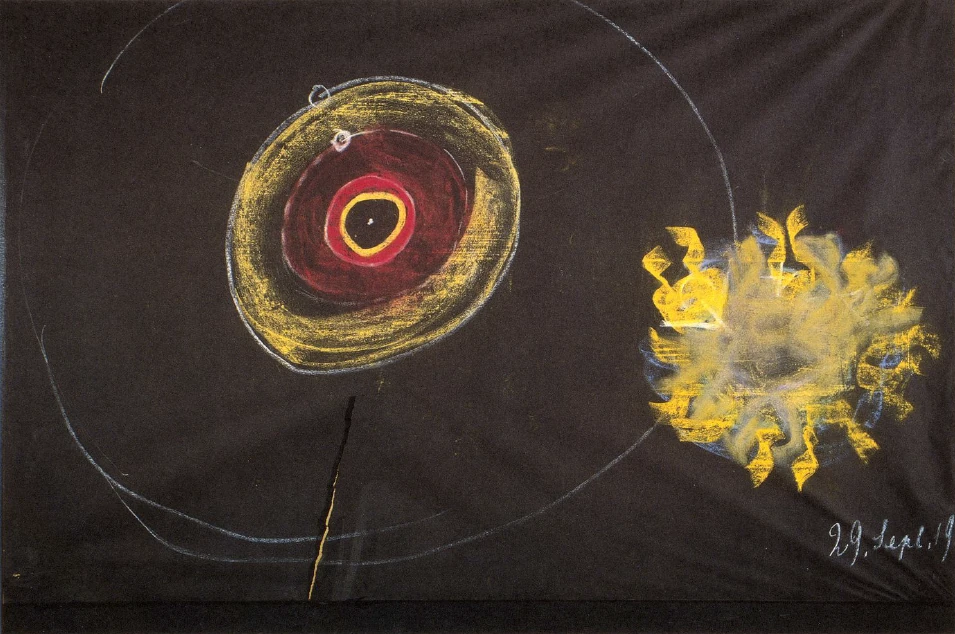
[ 3 ] Anyone who truly understands how to interpret the phenomena that confront him when he digs into the earth must indeed say to himself: What is present in the surrounding environment is reflected—but only in a condensed form—in an outer layer of the earth itself.
[ 4 ] If we now turn to the next planet orbiting the Sun along with Earth, we can schematically—though this is, of course, an approximation—visualize this planet, Venus, in its orbit, and we can again designate what is enclosed in space in an air-like, ethereal, more subtle form in this way (yellow), and when we draw the next layer of the Earth, we would have to depict this layer as a reflection of what is out there (yellow). And so we would see the entire Earth as a mirror image of the universe, except that as we dig deeper into the Earth, we would always find what is out there—in ethereal dilution, in ethereal volatility—compressed and condensed. And if we were then to reach the outermost circumference of the universe, this outermost circumference of the universe would be completely condensed into a single point at the center of the Earth.
[ 5 ] What I have just outlined for you in very general terms is also what the Egyptian initiate spoke of to his students during the period I am referring to. But he told them: If one wishes to understand how the universe, the cosmos, and its reflection, the Earth, interact with one another, then one should look at the human head. — The human head is, in fact, formed within the mother’s womb through the interplay of the entire universe and the Earth. But—as this initiate went on to say to his students—no observation of the human head can reveal what is actually at work there, for the human head does not reveal its secrets of its own accord. — This human head contains infinite mysteries, but it does not reveal its secrets to any observation, however one may go about it. For this human head is indeed active from the very beginning of human gestation in the mother’s womb until death on Earth; but it does not actually contain within itself the effects of all that it does. That is the mystery of the human head: that it does an infinite amount, but everything it does does not take place in the head itself, but rather in the rest of the organism.
[ 6 ] Just as I am speaking to you now, so too would this initiate have spoken to his students—only using the forms of expression common at that time. He would have made it clear to them: When a color is perceived by the human eye, and when the act of perceiving this color brings about a change in the human brain, then what is brought about in the human eye—that is, this change in the brain—is an action of the external world. What happens within the brain itself are actions of the external world. But the brain itself also does something. When the brain receives the color impression from the outside and thereby experiences a nervous process internally as a result, the brain does something within its astral body and within its I-being. But this does not manifest in the brain itself. The effect of this is in the rest of the organism. And while the effect of the external world manifests as a change in the brain, the brain, for its part, acts, for example, on the heart or on some other organ of the human body. What the human head does, you can only observe—as this initiate would have said to his students—if you know exactly everything that takes place in the human physical body.
[ 7 ] The Egyptians knew this, but because they no longer had the methods of ancient times, they had to resort to different methods than, for example, the ancient Persian or ancient Indian initiates. The ancient Indian initiates had their students perform yoga exercises; they had them breathe in a specific way. By transforming the act of breathing into a sensory experience, the students came to understand the human physical body. How did this take place?
[ 8 ] Well, we know how the human organism functions in this regard. When we inhale, the breath flows through the lungs into the body and travels through the spinal canal to the brain. In the brain, it connects with the other processes taking place there, pushes back, and it was specifically this recoil that the yoga student observed. So for him, it was as if he received the breath that first went into the lungs, then through the spinal canal into the brain, where it spread out. It then pushed back again, passing through the various organs into the chest, and so on. It was this recoil, then, that the yoga student observed most closely. What could he conclude from this? By observing the breath impulse as it returned to the organism through his special breathing technique, he observed, in the downward action of the breath, what the brain does in his chest, in his abdominal organs, and so on. As the breath flowed back through the spinal canal and spread throughout the entire body, the yoga student observed what the brain was causing to happen within his organism.
[ 9 ] That was the art of breathing, back when it still existed in such a way that the act of breathing itself was transformed into a sensory experience, so that through the medium of breathing, human beings answered the question: What is the purpose of my head within my organism? — Now, I have already made it clear to you on previous occasions that this form of clairvoyance was lost during a specific epoch of the Egyptian era, and that the Egyptians had to resort to other means. And so the initiates of that Egyptian era presented the mummy to their students, taught them how to mummify the human organism, and through this visual demonstration taught them what had previously been learned in an inner way by observing the breathing process.
[ 10 ] But I also told you that even though these Egyptian disciples of the initiates could no longer follow the spiritual processes internally — for that was what mattered — which reveal themselves as acts of the brain upon the human organism, then, when the ancient Egyptian initiates spoke with their students, the spiritual beings associated with the Moon and the lunar sphere came to their aid. And these spiritual beings, who would otherwise have wandered homelessly upon the earth, found their shelter, their home, their dwelling in the mummies. It was these beings that could still be observed, whose language was even understood in this era of Egyptian development, and from whom the first natural science was learned—by teaching what the yoga student had already perceived inwardly through the cultivated breathing process, so that it was said: “Look at the human head! It is, in fact, in a state of constant decay.” — The human head is, in essence, in a state of constant dying, and every night the human organism must strive to counteract this dying of the human head. But what it accomplishes during this dying process between birth and death is a revitalization of the remaining bodily organs, so that these, by sending their forces—not their matter, of course, but their forces—into the future through the interval between death and a new birth, become the head in the next earthly incarnation. But—as the initiate said to his students—you must understand what lies within the forms of the organs. — That is why such care was taken to preserve the mummy, so that the lunar spirits mentioned above could reveal, through the forms of the mummy’s organs, what the secrets of these organs are, how they relate to the human head, and how they carry within themselves the germinative forces to become heads themselves in the next earthly life. The Egyptian initiate imparted this teaching to his students using the mummy as a model.
[ 11 ] Thus, during a certain era, it became necessary to teach in an external manner what had been taught in an internal manner during the heyday of yoga philosophy and the yoga religion. This was the immense transition that took place from the ancient Indian and ancient Persian cultures to Egyptian culture: that which had previously been taught in an inner way was now taught in an outer way. And so, with what I might call a magnificent climax, the Egyptian initiate concluded this lesson by saying: “And now immerse yourselves completely in what you see before you in the form of the mummy. In the form of the mummy, you have before you—albeit very indistinctly—what is in a state of constant decay in the life of a human being on Earth: the interior of the human head. But you have before you, with great clarity, what is present in the rest of the organism in the form of organs. Not the life processes, not the sensory processes—you cannot study any of that in the mummy—but you can study the physical form of the heart, the liver, the kidneys, the stomach, and all that the human body carries within itself. And now imagine: when, during life, you draw your breath into your head and then radiate it back into the organism, this breath contains the plasticizing power to become a mummy.
[ 12 ] The breath that flows from the head to the body seeks to form itself into a mummy (see illustration on p. 92). And it is only because the body counteracts this and in turn brings about exhalation that this mummy is transformed back. What one sees forming there from the human head toward the rest of the human organism as the breath surges forward—this form that rapidly takes shape like a mummy but immediately dissolves again as the breath is exhaled (white)—this remains only as an almost continuous appearance of the etheric body (red), particularly during wakefulness. When one observes the etheric body, one gets the feeling that, starting from the head, it constantly seeks to form itself into a mummy and then dissolve back into a kind of resemblance to the human physical organism (blue). This is the inner, dynamic plasticity—this tendency of the human etheric body to assume the form of a mummy and then return, so that it once again becomes similar to the human physical organism.
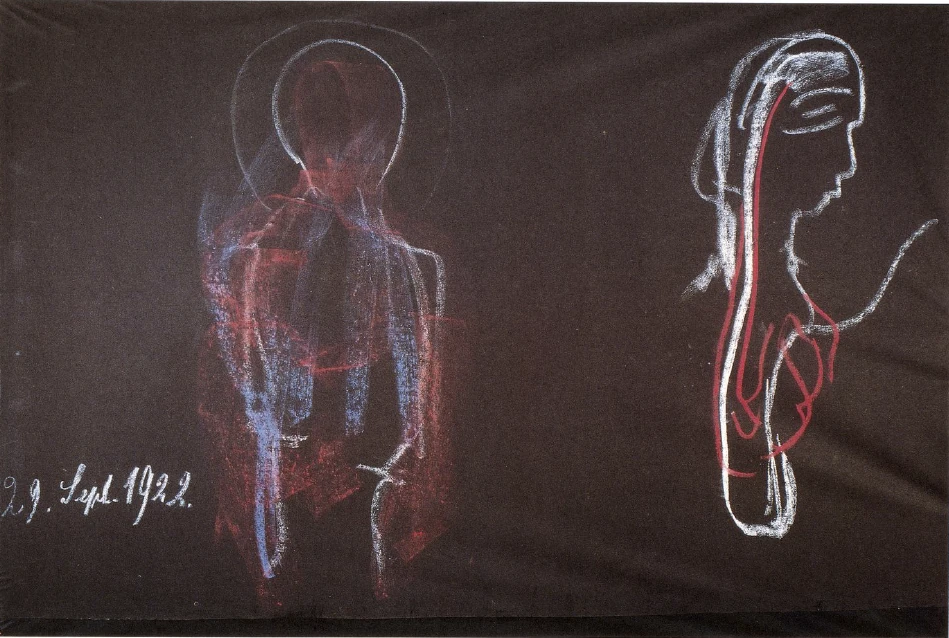
[ 13 ] This peculiarity of human nature was first taught, as I said, as the grand culmination of all the various and multifaceted teachings that the Egyptian initiate imparted to his students with the help of supersensory, elemental beings, who can be addressed as moon spirits.
[ 14 ] What, then, did this initiate point out to his students? He pointed out to his students what people had experienced inwardly in earlier times: the past. That was indeed the distinctive feature of this Egyptian culture, which stands before us today as such a mystery when we picture the sphinxes, pyramids, and mummies. It stands before us as a mystery. But it reveals itself to the spiritual-scientific gaze when we realize that the sphinxes point back to the forms that were fully visible on Earth during the Atlantean epoch to the eyes of the people of that time, and when we consider that the teachings the Egyptian initiate could impart to his students about the mummy there was an echo of what, for example, the ancient Indian initiate could easily teach his yoga students, because in those ancient earthly times, even a slight impulse was enough to enable every human being to perceive what I would like to call: the moment of the formation of the etheric mummy and its reconstitution into a human physical organism.
[ 15 ] It is extraordinarily interesting to delve into the manner in which these mysteries were revealed in the Egyptian schools of instruction, which established such a close connection with human death precisely because human death, when treated as it was in Egypt, retains these forms, forms that elude observation during life but which, in essence, must nevertheless be recognized if one truly wishes to penetrate the human being.
[ 16 ] Now I have told you that what has been preserved as a cult in many ways since the Mystery of Golgotha contains something similar to what the Egyptians found in the mummy. I have told you how, in the era when it was needed—beginning as early as the 4th and 5th centuries A.D.—a process began, quietly at first but later becoming ever clearer and clearer, to essentially mummify ancient forms of worship. For when we look at the way rituals are observed in certain occult and other brotherhoods, we see in these rituals nothing new anywhere, but rather old forms—old ritual forms—preserved everywhere. We even see how those individuals who are responsible for preserving such rituals and ceremonies—and for guiding what is performed within them—place the greatest emphasis on the fact that these ceremonies trace their origins back to ancient times; in other words, they are, so to speak, preserved customs from ancient times. And we also see everywhere how the true significance of these ceremonies—the efficacy of these ritual forms—is no longer understood. For what does it actually mean to understand such ceremonies? What does it mean to understand the actions that take place within the rite? If we wish to answer this question, we must consider how actions associated with rituals were understood in ancient times, for example, in the early Persian and early Indian periods.
[ 17 ] Today, a person perceives a difference when, say, he touches a papier-mâché rose and a real rose with his hand. After all, he also perceives this difference when he brings his nose close to the rose. And they describe this difference by calling the papier-mâché rose something dead and the rose they picked from the rosebush something alive. Someone who viewed the world correctly in those ancient times—dating back to the 4th and 5th millennia B.C.—would have described, for example, what someone does when cutting wood with a machine and the like as a dead process, for they saw— even when looking with their spiritual vision, not the physical matter but something like a lifeless shadow. But in an act performed as a ritual, in a ceremony, he saw how, in what was taking place there, spiritual entities immediately drew near from the surrounding elemental world and passed through all the forms that were manifested in the ritual act. He saw spirituality in these acts.
[ 18 ] Today, you can ask around anywhere where any ritual-based practice is performed—in lodges or even in churches—whether people still perceive spiritual beings in such ritual acts, beings that flow through and pulse through these acts. This is not the case. There is just as little spiritual life in these acts today as there was in the Egyptian mummy the life of the one who had been mummified. These rituals have now been preserved. In a sense, just as the human body in an Egyptian mummy has been preserved in its form, human actions and human activities have been traditionally preserved and, by performing them today, are in a sense also being preserved; for something has been preserved within them that can be resurrected—and will indeed be resurrected—once we have found the way to reintroduce the power emanating from the Mystery of Golgotha into all human activity.
[ 19 ] People today actually understand very little about this infusion of the power of the Mystery of Golgotha. Throughout the ages, there have still been individual people who had some sense of this—even if that sense was no longer as clear as in ancient times—but there have still been individual people who understood how that which can live within a human being as a spiritual impulse can be channeled into all human actions, and how a human being can serve as a mediator between the spirit and what happens externally through him or her. Of course, one must have the right inner impulse for this. One need only point to a figure such as Paracelsus. There is still such a solitary figure who at least had a sense that the spiritual must live among human beings in such a way that it truly flows out from them and enters into their actions. There is a great difference between what people accept today and what, for example, Paracelsus intuitively sought. Today, people separate what they do in certain areas of life. They practice medicine, for example; but it is practiced according to a materialistic view. Now, as a physician, one can also be a religiously devout man or woman in the modern sense. But they keep the two separate. They practice medicine outwardly according to materialistic principles and then seek what they need for their soul in a separate religion. This gives religion an extraordinarily selfish character, for in reality, people turn to religion only when they want to know what will happen to them after death or how their actions relate to what a god makes of them.
[ 20 ] Paracelsus was different in his entire outlook. As a physician, Paracelsus wanted to be a devoutly religious person. The individual medical act—the therapeutic act—was to be a religious act. For him, what he did for the patient was, in a sense, a fusion of the external, physical human act with a religious ritual. Essentially, for him, healing was still a ritual act. And it was his ideal to make it a ritual act.
[ 21 ] His contemporaries understood this very little, and today it is understood even less. It always breaks one’s heart to come to Salzburg and hear how the tradition persists that Paracelsus was a drunkard, that he once walked home late at night while drunk, fell off a cliff, and smashed his skull, and that this is how he met his end. If the true story were told, one would naturally point out what his enemies did; for it was not Paracelsus’s drunkenness that caused his skull to be shattered, but rather those who later spread the rumor of his drunkenness.
[ 22 ] Well, today’s customs are more lenient in this regard—not exactly very different, but more lenient. The point is that the time is already approaching when a deeper understanding of all worship and all ritual acts will take hold. And then the right teachers will be able to make something similar clear to the right students, just as the Egyptian initiate was able to make it clear to his students through the mummies. Just as the Egyptian initiate was once able to make clear to his students that they were seeing in the mummy something that in ancient times was experienced inwardly through the process of breathing, which had been transformed into a sensory process, so too, when the cult can once again be understood in the right way, the initiate will be able to make it clear to his students that the ritual act is something that, in comparison to the external deeds that people otherwise perform with the aid of tools—and tools do, after all, play a role in ritual acts as well—has an immensely greater significance in connection with the cosmos, with the universe.
[ 23 ] One day, the initiate will be able to explain the following to his students regarding the ritual practices—which, however, will not be conducted in the modern sense, but will have been restored to their proper form. He will be able to tell them: When you perform a ritual, it is an appeal to the spiritual powers of the universe, an appeal to those powers that are meant to connect with the Earth precisely through what human beings do. — Such an act, performed according to a specific rite, differs fundamentally from a merely technical act. An action that is merely technical accomplishes something. With a machine, one does something. What one does is used in life. Today, for example, one uses a sewing machine to make clothes; one wears those clothes, and they eventually wear out. But with that, what is accomplished by the machine is also complete. This is not the case with a ritual act. Last time I showed you how, when the ritual act is understood in the right way, a person gains the ability to communicate with other spiritual beings—beings as close to the Earth as the spirits who spoke to the Egyptians from the mummies were close to the Moon. Through machines, through external technology, one interacts with the physical forces of nature on Earth; through ritual practices, one interacts with the spiritual-elemental forces of the Earth. One interacts with those forces of the Earth that point toward the future.
[ 24 ] And so the initiate will be able to say to his students: As you immerse yourselves in a ritual, as you follow what is happening there, you are following something about which the materialistic fantasist says: “That’s not real at all!” — or even, if he is cynical, says: “That’s just a game!” — That may be so, but everything performed according to the proper rite contains something spiritual within it. The spiritual-elemental beings who are summoned into the present when a ritual is performed need this ritual, for from it they draw their nourishment and their forces of growth.
[ 25 ] A time will come when the Earth will no longer exist. The fact is that everything surrounding our physical senses—everything we see in today’s mineral, plant, and animal kingdoms; everything in the air and the clouds; even the radiance of the stars—all of that will pass away. Then the Earth will have set out to become what I have described in the outline of Occult Science. The Earth will have to prepare itself to transition, at some point in the future, into a Jupiter-like existence. This Jupiter will be just as much a subsequent incarnation of the Earth as our own future earthly life will be a reincarnation of our present earthly existence, only the time spans are considerably greater. Not a single speck of the matter that is today found in minerals, plants, animals, the wind, and the clouds—not a single speck of this Earth—will, in a certain sense, still exist in the future. All processes that take place in an outwardly technical manner, carried out by technical machines, will have fulfilled their purpose. All of that will be a thing of the past.
[ 26 ] But within what was there—within what constituted human external technological culture—something else will be taking shape. Let’s sketch this out schematically (see drawing). Let’s assume this is our Earth today. Within it, a wide variety of natural processes are taking place (green); vegetation and so on, clouds surround the Earth (light), machines are there, through which all sorts of things happen on Earth (purple); animals roam about, physical human bodies (reddish). All of that will be gone. But on this Earth, cultural acts will be performed in the future that arise from a true understanding of the spiritual world. Within everything that is there, cultural acts will be performed.
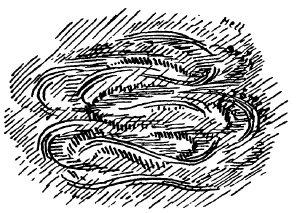
[ 27 ] I will depict them here schematically in various ways (see drawing). Through the performance of these ritual acts, elemental-spiritual beings are summoned into the sphere of these ritual acts. I will depict them here in yellow. They are invisible to the physical eye. But a time will come when everything that today fills the material world—the minerals, the plants, the animals, the clouds—and everything that acts in the wind and weather, will be gone. All vegetation will be gone, scattered throughout the cosmos, including, of course, the implements used to perform the ritual acts. But the elemental spiritual beings that have been summoned into the sphere of the ritual acts will remain there; when this Earth approaches its completion, they will be present within the Earth in their fully developed form, just as the plant seed for the following year lies hidden within the plant in the fall. And just as the withered, dry leaves fall from the plant, so will everything in the mineral, plant, and animal kingdoms disintegrate into the cosmos. And like a seed for the future, the elemental beings—who will then have perfected themselves—will be there, living on into the Jupiter existence.
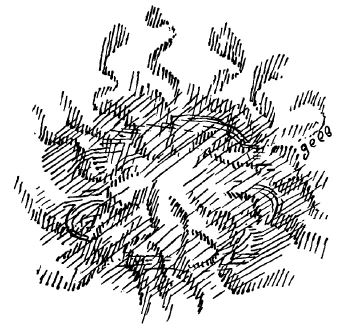
[ 28 ] And then, in turn, I would say, what such an initiate has to say to his students can be summed up in a magnificent punchline. He can say: Just as the Egyptian initiate was able to make clear to his students, through the mummy, all the mysteries of the human head—and thus all the mysteries of the Earth and its cosmic surroundings—so I can make clear to you how the Earth, in its destruction, will rise again from the elemental beings that are experiencing themselves and that, within the correctly understood cult, will develop into the future. — And in the course of our times, there is a magnificent beginning for this understanding. This beginning can present itself to the soul in this way: People have satisfied their hunger and thirst by having before them on their table what satisfies hunger and thirst. But then the Being who dwelt in the body of Jesus of Nazareth gathered his closest disciples around him and said to them: “Here is the bread; here is the wine.” Do not now look at what your physical eyes see in the bread and wine, what your palates taste, or what your physical body can digest. Whatever is on earth carries within it the seed of destruction. But if you have the right impulse within you, you can fill it with what is the Spirit of the earth. For then it is no longer bread, it is no longer wine; it is what can live as the deepest essence within the human being itself; it is what lives and dwells in the human body, what the human being can spiritualize, and what will be carried over into the future when all that lives here on earth has passed away. — Christ has entered into the body of Jesus of Nazareth; everything became spiritual in this Jesus of Nazareth. He could point to the bread and the wine and say: This is not the true form of bread and wine; the true form is this, which dwells within the human being. “This is my body, this is my blood.” The words take on their true meaning when interpreted through the other words of Christ.
[ 29 ] I have had to tell you today—and many times before—that everything on Earth—the plant kingdom, the animal kingdom, the mineral kingdom; everything that lives in the wind and weather, in the clouds, and so on; even that which lives in the starlight—all of that will be scattered. Nothing of it will remain—not even a speck of dust. It will be scattered throughout the universe. But what human beings prepare spiritually—that will remain.
[ 30 ] People today believe that we move the air with our speech organs, and that this creates vibrations in the air which then drum on the eardrum—which is named for this very reason; otherwise, it wouldn’t be called the eardrum if it weren’t for the drumming on it—and that this is then converted into nerve impulses, and that’s where it ends. There was a time in human evolution when people still knew how the elemental spirits moved in response to words, when they still knew that, for example, when a person utters a word during a ritual act, what is expressed in the word flows into the external action, permeates the external action, and that the spirit living within the human being unites with the external action, and through this, everything happens that I described as follows: elemental spirits, which are perfecting themselves into the future, will be present in the sphere of the ritual act. — Anyone who follows this line of thought can also understand what was once meant when people spoke of the “word.” Today, people mean mere sound and smoke. That is why Goethe could, with a certain degree of justification, have the “Word” speak of sound and smoke. But in former times, the “Word” did not mean sound and smoke, but rather that which lives as spirit within the Word—not the abstract, conceptual, or imaginary, but the truly spiritual that lives in the Word. And there was indeed much that was spiritual living in the Word. Christ drew attention to the fact that what human beings thus allow to live in the word is precisely contained in what arises through ritual action as a perfection of elemental spirits, and he was able to say: “Heaven and earth will pass away, but my words will not pass away.”
[ 31 ] And now consider the opening of the Gospel of John: In the beginning was the Logos, the Word. — Imagine how the Logos is one with Christ; what, then, are the bread and wine at the institution of the Lord’s Supper? The body and blood of the Logos. And we have observed how the Logos leaves behind what is passing away, embraces what is coming to be, and seeks to prepare the future.
[ 32 ] From this perspective, the Mystery of Golgotha can be highlighted just as magnificently as the image of the etheric body—once described as a mummy-like figure—and its immediate transformation back into a form similar to the human physical body was once described. But human beings—as I have already emphasized in all sorts of contexts—will once again have to reestablish their connection with the spiritual world if the Earth is to reach its goal. Just as those who preceded the Egyptians inwardly experienced this process of becoming a mummy—which immediately dissolves again and represented the perception of the breath spreading throughout the organism—so, in the future, it will be necessary to perceive the process of exhalation, the exhaled air stepping out into outer space, the communication of what is forming within the human organism, and the vision of the spiritualization of our surroundings by human beings themselves. The Egyptians said to themselves: With every breath, the mummy represents a form that the human being seeks to become spiritually within. — Future initiates will say: Every exhalation represents how the human being seeks to become a whole cosmos, a whole world. When the inhaled air flows from the head into the organism, then the human being is understood. When the air flows out again from the human being into the world, then the cosmos is understood in the air’s contact with the world. — One will come to understand the cosmos again by embracing the world in one’s imagination. And one will recognize in one’s imagination that which the human being himself projects into the outer world with his breath. But it will be nothing other than what he is preparing in this way for the future.
[ 33 ] Thus, what human beings do historically is linked to what happens in the cosmos. Without being able to link these things together, one cannot arrive at an understanding of the world, for human beings must, in turn, understand history cosmically and the cosmos historically.