

The Relationship of Man to the Starry World
The Spiritual Communion of Mankind
GA 219
31 December 1922, Dornach
Translate the original German text into any language:
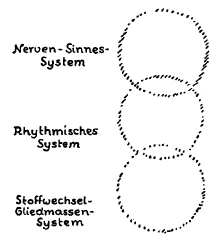
Versions Available:
The Relationship of Man to the Starry World, tr. SOL
Zwölfter Vortrag
Twelfth Lecture
[ 1 ] Ich habe vorgestern davon gesprochen, wie man den Jahreskreislauf _ auch im Menschen finden kann. Ich habe aufmerksam darauf gemacht, wie die Naturwirkungen, die um uns herum sind, sich gewissermaßen in einem zeitlichen Organismus während eines Jahreskreislaufes abspielen, so daß man eine Art Zusammenwirken, Ineinanderwirken desjenigen schauen kann, was man sonst als einzelne Naturvorgänge, Naturtatsachen sich im Laufe eines Jahres abspielen sieht. Nun ist aber zwischen diesem Naturkreislaufe und seiner Abspiegelung im Menschen der wesentliche Unterschied, daß dasjenige, was für ein gewisses Erdengebiet sich nacheinander abspielt, im Menschen gleichzeitig ist. Zwar ist der Mensch als Ganzes dem Erdenganzen auch dadurch gleich, daß, wenn auf der einen Erdenhälfte Sommer ist, auf der andern Winter ist und so weiter. Aber bei der Erde ist es so, daß die entsprechenden Winterwirkungen einer Gegend und die Sommerwirkungen einer andern Gegend gewissermaßen dem weiten Weltenraume gegenüber voneinander getrennt stehen, so daß, wenn wir die Winterwirkungen einer Gegend, die Sommerwirkungen einer andern Gegend in ihrer Gleichzeitigkeit nehmen, sie auseinanderfließen, sich also gegenseitig in ihrem Dasein nicht irgendwie abschwächen, nicht stören.
[ 1 ] The day before yesterday, I spoke about how the annual cycle can be found _ even within human beings. I drew attention to how the natural phenomena around us unfold, as it were, within a temporal organism over the course of the annual cycle, so that one can observe a kind of interplay and mutual influence among what are otherwise seen as individual natural processes and phenomena occurring throughout the year. However, the essential difference between this natural cycle and its reflection in human beings is that what unfolds sequentially for a particular region of the Earth occurs simultaneously within the human being. It is true that human beings as a whole are similar to the Earth as a whole in that, when it is summer on one half of the Earth, it is winter on the other, and so on. But with the Earth, the winter effects of one region and the summer effects of another are, so to speak, separated from one another across the vast expanse of space; so that when we consider the winter effects of one region and the summer effects of another simultaneously, they flow apart from one another—that is, they do not in any way weaken or interfere with one another’s existence.
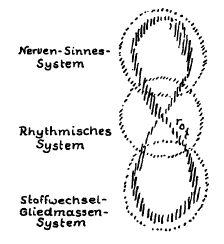
[ 2 ] Beim Menschen ist es aber so, daß, wenn er schlafend ist, sein physischer Leib und auch sein Ätherleib in einer Art Sommerzustand, in einem sprießenden, sprossenden Leben sind. Das geistige Schauen zeigt uns für den Schlaf, wenn das Ich und der astralische Leib getrennt sind vom physischen und vom Ätherleibe, diesen sprießenden, sprossenden Sommerzustand des physischen und Ätherleibes. Man kann schon sagen, während der Mensch schläft, ist in seinem zurückgelassenen physischen und Ätherorganismus aufeinanderfolgend eine Art Frühlings- und Sommerzustand. Aber sein nun doch mit diesem gesamten Menschenorganismus in Wechselwirkung stehender astralischer Leib und sein Ich sind zu derselben Zeit in einer Art Winterzustand. So daß hier gleichzeitig Sommer- und Winterzustand sind, daß sie aber ineinanderwirken, nicht also voneinander abgewendet sind, sondern ineinanderwirken. Ebenso ist es aber auch beim menschlichen Wachzustand. Wenn der Mensch wacht, sind sein physischer und sein ätherischer Leib in einer Art Herbst- und Winterzustand. Dagegen sind, angeregt durch die Eindrücke der Außenwelt, angeregt durch die Gedanken, die sich der Mensch über diese Außenwelt macht, der astralische Leib und die Ich-Organisation in einem vollen Sommer- oder vollen Frühlingszustand. Wiederum wirken da der innere Frühling, der innere Sommer und der innere Winter im Menschen zusammen, sind nicht voneinander abgewendet, sondern durchstrahlen sich.
[ 2 ] In the case of human beings, however, when they are asleep, their physical body and also their etheric body are in a kind of summer state, in a state of sprouting and budding life. Spiritual insight reveals to us that during sleep—when the “I” and the astral body are separated from the physical and etheric bodies—the physical and etheric bodies are in this sprouting, budding summer state. One could even say that while a person sleeps, their physical and etheric organisms, left behind, successively experience a sort of spring and summer state. But the astral body—which is, after all, in interaction with this entire human organism—and the “I” are at the same time in a sort of winter state. Thus, summer and winter states coexist here; yet they interact with one another—they are not turned away from each other, but rather work together. The same is true, however, of the human waking state. When a person is awake, their physical and etheric bodies are in a sort of autumn and winter state. In contrast, stimulated by impressions from the external world and by the thoughts the person forms about this external world, the astral body and the “I” organization are in a full summer or full spring state. Here, too, the inner spring, the inner summer, and the inner winter interact within the human being; they are not turned away from one another, but rather interpenetrate one another.
[ 3 ] Das ergibt sich tatsächlich der geisteswissenschaftlichen Forschung, daß gewissermaßen, wenn wir die Gesamterde voll mit dem Menschen vergleichen wollten mit Bezug auf die Vorgänge des Winters und des Sommers, wir die einander entgegengesetzten Erdenhälften umwenden müßten. Beim Menschen ist es so, wie wenn wir bei der Erde den Sommer der einen Hälfte durch Umwendung der Erde unmittelbar auffallen lassen würden auf den Winter der andern Hälfte. Dadurch aber würde tatsächlich etwas entstehen, was damit charakterisiert werden kann, daß man sagt: Die Winterwirkungen heben die Sommerwirkungen, die Sommerwirkungen die Winterwirkungen zu einer Art von Gleichgewichtszustand auf. Das ist ein wichtiges Ergebnis, zu dem bis heute die äußere Wissenschaft nicht gekommen ist und wodurch sie eigentlich die im Menschen wesende Natur ganz verkennen muß. Im Menschen ist das Naturwirken in der Tat so, daß Winter und Sommer — wenn ich dieser Ausdrücke mich bedienen darf, denn sie beziehen sich wirklich auf ein sie rechtfertigendes Geschehen —, daß Sommer- und Winterzustand einander aufheben.
[ 3 ] This is indeed what emerges from research in the humanities: that, in a sense, if we wanted to compare the entire Earth—with all its human inhabitants—to the processes of winter and summer, we would have to flip the two opposing hemispheres. In the case of human beings, it is as if, with the Earth, we were to make the summer of one hemisphere immediately coincide with the winter of the other by turning the Earth upside down. This, however, would in fact give rise to something that can be characterized by saying: The effects of winter counteract the effects of summer, and the effects of summer counteract the effects of winter, creating a kind of state of equilibrium. This is an important conclusion that conventional science has not yet reached, and as a result, it is bound to completely misunderstand the nature inherent in human beings. In human beings, the workings of nature are indeed such that winter and summer—if I may use these terms, for they truly refer to a process that justifies their use—that is, the summer and winter states cancel each other out.
[ 4 ] Der Mensch trägt allerdings die ihn umgebende Natur in sich, aber die Wirkungen heben sich gegenseitig auf, und es tritt ein Zustand ein, der wirklich im Grunde genommen das Naturwirken im Menschen zur Ruhe bringt. Geradeso wie bei einer Waage, wenn sie an beiden Seiten mit Gewichten beschwert wird, in der Mitte des Waagebalkens ein Ruhepunkt ist, auf den weder die rechte noch die linke Kraftentwickelung wirkt, ein Gleichgewichtszustand in bezug auf das ist, was sonst auf den Waagebalken herunterziehend wirkt, so ist tatsächlich im Menschen eine Ausgeglichenheit entgegengesetzter Naturwirkungen.
[ 4 ] Human beings do, however, carry the nature that surrounds them within themselves, but the effects cancel each other out, and a state arises that, in essence, truly brings the workings of nature within the human being to rest. Just as with a scale, when weights are placed on both sides and there is a point of rest in the middle of the beam—a point on which neither the force on the right nor that on the left acts, a state of equilibrium in relation to what would otherwise pull down on the beam—so, in fact, there is a balance of opposing natural forces within human beings.
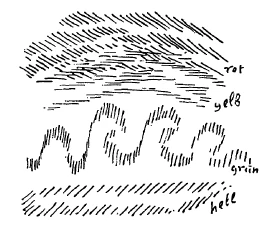
[ 5 ] Wer den dreigliedrigen Menschen betrachtet, so wie ich ihn im Anhange zu meinem Buche «Von Seelenrätseln» skizziert habe, wirklich richtig betrachtet, wie man es heute noch nicht gewöhnt ist, wird in der Tat folgendes finden. Wir gliedern den Menschen in eine NervenSinnesorganisation, in eine rhythmische Organisation und in eine Stoffwechsel-Gliedmaßenorganisation. Diese drei Organisationen wirken ineinander. Man kann sagen, die Nerven-Sinnesorganisation wirkt hauptsächlich im Kopfe; aber der ganze Mensch ist in gewisser Beziehung funktionell wieder Kopf. Ebenso ist es mit den andern Systemen, der rhythmischen Organisation, der Gliedmaßen-Stoffwechselorganisation.
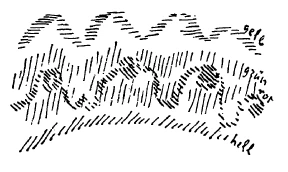
[ 5 ] Anyone who truly and correctly considers the threefold human being—as I have outlined it in the appendix to my book Riddles of the Soul, in a way that people are not yet accustomed to today—will indeed find the following. We divide the human being into a nervous-sensory organization, a rhythmic organization, and a metabolic-limb organization. These three organizations interact with one another. One can say that the nervous-sensory organization acts primarily in the head; but in a certain sense, the whole human being is functionally the head once again. The same is true of the other systems: the rhythmic organization and the metabolic-limb organization.
[ 6 ] Nun können wir schematisch den Menschen etwa in folgender Art darstellen, wenn wir auf seine dreigliedrige Wesenheit Rücksicht nehmen. Wir haben also die Nerven-Sinnesorganisation, die rhythmische Organisation und die Gliedmaßen-Stoffwechselorganisation.
[ 6 ] Now, taking into account the threefold nature of the human being, we can schematically represent the human being in roughly the following way. We thus have the nervous-sensory organization, the rhythmic organization, and the limb-metabolic organization.
[ 7 ] Nun ist in der Tat, wenn wir die beiden äußeren Organisationssysteme des Menschen nehmen, die Nerven-Sinnesorganisation und die Stoffwechsel-Gliedmaßenorganisation, ein Gegensatz zwischen beiden vorhanden, der sich für eine geisteswissenschaftliche Anatomie und Physiologie sehr deutlich zeigt. Wenn wir zum Beispiel gehen, so haben wir in unserem Gliedmaßenorganismus eine Bewegung, die sogar eine Bewegung im Raume ist. Dieser Bewegung entspricht in einem gewissen Teil unserer Nerven-Sinnesorganisation, in einem gewissen Teil unserer Kopforganisation eine Ruhe in demselben Maße, in dem die Gliedmaßenorganisation in Bewegung ist. Ich bitte Sie, den Versuch zu machen, die Sache richtig zu verstehen. Ich habe gesagt «in demselben Maße in Ruhe ist». Ruhe nimmt man gewöhnlich als einen absoluten Begriff. Wer sitzt, der sitzt, und man unterscheidet nicht, ob man mit mehr Intensität sitzt oder mit weniger Intensität. Man hat auch für das gewöhnliche Leben in einer gewissen Beziehung recht damit. Da unterscheiden sich diese Dinge nicht sehr stark voneinander.
[ 7 ] Now, in fact, if we consider the two outer organizational systems of the human being—the nervous-sensory system and the metabolic-limb system—there is a contrast between them that is very clearly evident in spiritual-scientific anatomy and physiology. When we walk, for example, we have a movement in our limb system that is actually a movement through space. This movement corresponds, in a certain part of our nervous-sensory system and in a certain part of our head system, to a state of rest to the same degree that the limb system is in motion. I ask you to try to understand this correctly. I said “is at rest to the same degree.” Rest is usually taken as an absolute concept. When one sits, one sits, and one does not distinguish whether one is sitting with greater or lesser intensity. In a certain sense, this is also true for everyday life. In that context, these things do not differ greatly from one another.
[ 8 ] Aber mit unserer Nerven-Sinnesorganisation ist es anders. Wenn wir schneller laufen, wenn wir mit unserer Gliedmaßenorganisation schneller laufen, so ist eine gewisse Ruhetendenz in unserer NervenSinnesorganisation, die als Ruhetendenz, als Ruhigbleibenwollen, stärker ist, als wenn wir langsam gehen. Und allem, was mit unserer Gliedmaßenorganisation vor sich geht, auch was mit unserer Stoffwechselorganisation vor sich geht, wenn zum Beispiel die Nahrungssäfte ihren Weg durch die Bewegung der Gedärme machen, entspricht eine Ruhetendenz in unserem Nerven-Sinnesorganismus. Es drückt sich das auch äußerlich aus.
[ 8 ] But it is different with our nervous-sensory system. When we run faster—when we run faster using our limbs—there is a certain tendency toward rest in our nervous-sensory system, a tendency to remain at rest that is stronger than when we walk slowly. And everything that takes place in our limb system—as well as in our metabolic system, for example, when digestive juices make their way through the movement of the intestines—is accompanied by a tendency toward rest in our nervous-sensory system. This is also expressed outwardly.
[ 9 ] Der Kopf, welcher der hauptsächlichste Sitz des Nerven-Sinnesorganismus ist, ist eigentlich in bezug auf unseren Gliedmaßenorganismus ein Faulpelz. Er benimmt sich ungefähr so, wie einer, der sich bequem in eine Droschke setzt und vom Pferde fahren läßt. Der bleibt ruhig. So ist unser Kopf fortwährend ruhig sitzend auf unserem übrigen Organismus. Es interessiert ihn nicht einmal, wenn ich zum Beispiel mit den Armen fuchtele. Da bewirkt das Fuchteln mit meinem linken Arm eine ruhige Tendenz in meiner rechten Kopfhälfte, wenn ich mit dem rechten Arme fuchtele, bewirkt das eine ruhige Tendenz in meiner linken Kopfhälfte. Und durch diese ruhige Tendenz ist es möglich, daß wir unsere Bewegungen mit Gedanken, mit Vorstellungen begleiten.
[ 9 ] The head, which is the primary seat of the nervous-sensory system, is actually a slacker when it comes to our limb system. It behaves much like someone who sits comfortably in a horse-drawn carriage and lets the horse do the driving. It remains still. In the same way, our head sits calmly atop the rest of our body at all times. It isn’t even interested when, for example, I wave my arms about. When I wave my left arm, it creates a tendency toward stillness in the right half of my head; when I wave my right arm, it creates a tendency toward stillness in the left half of my head. And because of this tendency toward stillness, it is possible for us to accompany our movements with thoughts and mental images.
[ 10 ] Es ist ganz unrichtig, wenn etwa eine materialistische Weltanschauung meint, Vorstellungen beruhen auf Nervenbewegungen. Sie beruhen im Gegenteil, wenn sie Vorstellungen von irgendeiner Bewegung im Raume sind, auf ruhigen Tendenzen des Nervensystems. Das Nervensystem beruhigt sich, und dadurch, daß sich das Nervensystem beruhigt, sich sogar in seiner Lebenstätigkeit abdämpft, dringen in diese Ruhe die Gedanken ein, werden wirklich. Wer am Menschen geisteswissenschaftlich zu beobachten vermag, was sich beim Denken, beim Vorstellen abspielt, der kann unmöglich Materialist werden, weil er weiß, daß in demselben Maße die Gedanken regsam und tätig wirken als geist-seelische Substanz, in dem gerade die Nerven ruhig werden und sogar an Lebensintensität verlieren, sogar abgelähmt werden. Das Nervensystem muß durch Aufhören seiner materiellen Tätigkeit dem Geist-Seelischen der Gedanken erst Platz machen. Gerade an solchen Dingen sehen wit, warum wir einen Materialismus haben. Wir haben einen Materialismus seit der Zeit, wo die . Wissenschaft die Materie nicht kennt. Das ist gerade das Charakteristische der materialistischen Wissenschaft, daß sie keine Ahnung hat von dem Wesen der materiellen Vorgänge und ihnen daher allerlei Dinge andichtet, die nicht da sind.
[ 10 ] It is entirely incorrect for a materialistic worldview, for example, to claim that perceptions are based on nerve impulses. On the contrary, if these perceptions involve any kind of movement in space, they are based on stable tendencies of the nervous system. The nervous system calms down, and as it does so—and as its vital activity itself subsides—thoughts penetrate this calm and become real. Anyone who is able to observe, from a spiritual-scientific perspective, what takes place in a human being during thinking and imagination cannot possibly become a materialist, because they know that to the very extent that thoughts act vigorously and actively as a spiritual-psychic substance, to that very extent the nerves become calm and even lose their vital intensity—indeed, they are even numbed. The nervous system must first make way for the spiritual-psychic nature of thoughts by ceasing its material activity. It is precisely in such matters that we see why we have materialism. We have had materialism since the time when science did not know matter. This is precisely the characteristic of materialistic science: that it has no inkling of the nature of material processes and therefore attributes all sorts of things to them that are not there.
[ 11 ] Da sehen Sie schon, wie entgegengesetzte Zustände, die aber nach einem Gleichgewichte tendieren, im Menschen vorhanden sind. Geradeso wie im Hochsommer entgegengesetzte Naturwirkungen im Verhältnisse zum Tiefwinter vorhanden sind, so verteilen sich auch auf den menschlichen Organismus entgegengesetzte Wirkungen, die aber einander das Gleichgewicht halten. Wir werden aber nur dann richtig über diese einander entgegengesetzten, einander das Gleichgewicht haltenden Wirkungen denken, wenn wir den Menschen noch in folgender Weise gliedern. Wenn wir sein mittleres System, sein rhythmisches System in zwei Teile gliedern, so unterscheiden wir im wesentlichen — es ist nicht ganz genau, aber im wesentlichen — den Atmungsrhythmus und den Blutzirkulationsrhythmus, und dann sprechen wir von einem oberen mittleren rhythmischen System und einem unteren mittleren rhythmischen System. Dann aber ist in der Mitte dieses rhythmischen Systems zwischen dem Oben und Unten diejenige Partie des Menschen, die am meisten zum Gleichgewicht strebt, weil sie von oben und unten in entgegengesetzter Weise von Naturwirkungen durchzogen, beeinflußt, beeindruckt wird.
[ 11 ] There you can already see how opposing states—which nevertheless tend toward equilibrium—are present in human beings. Just as opposing natural forces exist in midsummer in relation to midwinter, so too are opposing forces distributed throughout the human organism, forces that nevertheless maintain a balance with one another. However, we will only be able to think correctly about these opposing forces that maintain a balance with one another if we further subdivide the human being in the following way. If we divide the human being’s middle system—its rhythmic system—into two parts, we essentially distinguish—it is not entirely precise, but essentially—between the respiratory rhythm and the blood circulation rhythm; and then we speak of an upper middle rhythmic system and a lower middle rhythmic system. But then, in the middle of this rhythmic system, between the upper and lower parts, lies the part of the human being that strives most toward balance, because it is permeated, influenced, and affected by natural forces from above and below in opposite ways.
[ 12 ] Will ich daher in meine schematische Zeichnung hier diesen Tatbestand von den entgegengesetzten Naturwirkungen im Menschen einfügen, so muß ich diese schematische Zeichnung in der folgenden Weise (rot) ergänzen: ich habe in dem oberen Teil dieser Achterlinie schematisch umgrenzt die Naturwirkungen, welche in entgegengesetzter Art gerichtet sind als diejenigen Naturwirkungen, die ich umgrenzt habe mit dem unteren Teil der Achterlinie.
[ 12 ] If, therefore, I wish to incorporate this fact—the opposing natural forces within human beings—into my schematic diagram here, I must supplement this diagram in the following manner (in red): In the upper part of this figure-eight line, I have schematically outlined the natural effects that are directed in a manner opposite to those natural effects that I have outlined with the lower part of the figure-eight line.
[ 13 ] So zerfällt der Mensch gewissermaßen in zwei Hälften, in ein Oberes und in ein Unteres. Das Obere umfaßt das Nerven-Sinnessystem, das sich natürlich über den ganzen Menschen ausdehnt. Die Zeichnung ist schematisch. Manchmal muß man hier das «Oben» in der großen Zehe suchen, weil dort auch Nerven-Sinnesorgane sind. Also die Zeichnung ist schematisch, aber Sie werden sich leicht diese schematische Zeichnung auf die Wirklichkeit angewendet denken können. Ich habe also mir vorzustellen, wie auf der einen Seite das Nerven-Sinnessystem und dazugehörig im wesentlichen das Atmungssystem, auf der andern Seite das Blutzirkulationssystem und das Stoffwechsel-Gliedmaßensystem entgegengesetzte Naturwirkungen haben. Die heben sich gegenseitig auf.
[ 13 ] In a sense, the human being is divided into two halves: an upper and a lower half. The upper half comprises the nervous and sensory system, which naturally extends throughout the entire body. The diagram is schematic. Sometimes one must look for the “upper” part in the big toe, because there are also nervous and sensory organs there. So the diagram is schematic, but you will easily be able to imagine this schematic diagram applied to reality. So I have to imagine how, on the one hand, the nervous-sensory system—and essentially the respiratory system associated with it—and, on the other hand, the circulatory system and the metabolic-limb system have opposing natural effects. They cancel each other out.
[ 14 ] Dasjenige Organ im Menschen, in dem der Ausgleich stattfindet, in dem eigentlich von unten nach oben und von oben nach unten fortwährend nach Gleichgewicht gestrebt wird, das ist das menschliche Herz, das nicht etwa im Sinne der heutigen Physiologie eine Pumpe ist, die das Blut durch den Leib pumpt, sondern welches darstellt das Gleichgewichtsorgan für das obere und untere System des Menschen. So daß sich auch im äußeren physischen Organismus des Menschen das, was geistig in ihm bewirkt wird, dadurch ausdrückt, daß immer gleichzeitig in ihm sich Sommer- und Winterwirkungen aufheben.
[ 14 ] The organ in the human being in which this balancing takes place—in which there is a constant striving for equilibrium, both from the bottom up and from the top down—is the human heart. This heart is not, as modern physiology conceives it, merely a pump that circulates blood through the body, but rather it serves as the organ of equilibrium for the upper and lower systems of the human being. Thus, even in the human being’s external physical organism, what is brought about spiritually within him is expressed by the fact that summer and winter influences are always simultaneously counteracting one another within him.
[ 15 ] Auf irgendeinem Erdengebiete kann nur dadurch Winter sein, daß nicht gleichzeitig Sommer ist, sonst würde der Sommer den Winter in einen Gleichgewichtszustand bringen, das heißt, es wäre kein Sommer und kein Winter da, sondern ein Gleichgewichtszustand. So ist es aber wirklich im Menschen. Der Mensch ist in sich ein Stück Natur, aber weil die Naturwirkungen im menschlichen Organismus einander entgegengesetzt gerichtet sind, heben sie sich auf, und der Mensch ist so, wie wenn er gar nicht Natur wäre. Dadurch ist der Mensch aber ein freies Wesen. Man darf auf ihn nicht die Gesetze der Naturnotwendigkeit anwenden, denn es gibt nicht eine Naturnotwendigkeit, sondern zwei einander entgegengesetzt orientierte Naturwirkungen, und die heben sich im Menschen auf. Und in diesem Gebiete sich aufhebender Naturwirkungen ist nun das Geist-Seelische des Menschen, unbeeinflußt von den Naturwirkungen, und muß aus seiner eigenen Gesetzlichkeit heraus erkannt werden. Sie sehen daraus, wie wir zu fundamentaler umfassender Beobachtung gehen müssen, wenn wir den Menschen verstehen wollen, und wie eigentlich die bloße Anwendung der äußeren Naturgesetze, die immer nur nach einer Richtung orientiert sind, auf den Menschen nicht angängig ist.
[ 15 ] In any region of the Earth, winter can exist only because summer is not occurring at the same time; otherwise, summer would bring winter into a state of equilibrium—that is, there would be neither summer nor winter, but rather a state of equilibrium. Yet this is indeed the case within human beings. Human beings are, in themselves, a part of nature, but because the forces of nature within the human organism are directed in opposite directions, they cancel each other out, and human beings are thus as if they were not part of nature at all. This, however, makes human beings free beings. One must not apply the laws of natural necessity to human beings, for there is not one natural necessity, but rather two natural forces oriented in opposite directions, and these cancel each other out within the human being. And within this realm of canceling natural forces lies the human spirit and soul, unaffected by natural forces, and must be understood according to its own laws. From this you can see how we must proceed to a fundamental and comprehensive observation if we wish to understand human beings, and how the mere application of external natural laws—which are always oriented in only one direction—is actually not applicable to human beings.
[ 16 ] Nun aber, nachdem wir uns auf der einen Seite die eigentliche menschliche Wesenheit vor die Seele gestellt haben, betrachten wir einmal, was das für eine Konsequenz hat. Man lernt den Menschen erst kennen, wenn man ihn so betrachtet: er trägt ein Stück Natur in sich, so daß sich die entgegengesetzten Naturwirkungen aufheben. Lernt man aber nun dieses Stück Natur durch geisteswissenschaftliche Anschauung kennen, so zeigt es sich für den Schlafzustand des Menschen in bezug auf den physischen und den Ätherleib als in sich durchdrungen von mineralischen und pflanzlichen Wirkungsweisen, die, wenn wir nur auf das hinschauen, was beim schlafenden Menschen im Bette zurückgeblieben ist, den sommerlichen Zustand darstellen. Aber jetzt lernt man dadurch, daß man in der richtigen Weise dieses sprieBende, sprossende Leben betrachten kann, es erst in seiner wahren Bedeutung kennen. Wann sprießt es, wann sproßt es? Wenn das Ich und der astralische Leib nicht dabei sind, wenn das Ich und der astralische Leib während des Schlafens draußen sind. Und woher kommt denn das Sprießen und Sprossen? Das zeigt sich gerade durch geisteswissenschaftliche Betrachtung.
[ 16 ] Now, however, having set before our minds the true nature of the human being, let us consider what consequences this has. One comes to know the human being only when one views him in this way: he carries a part of nature within himself, so that the opposing natural forces cancel each other out. But if one comes to know this element of nature through spiritual scientific insight, it reveals itself—in relation to the human sleep state as it pertains to the physical and etheric bodies—as permeated by mineral and plant forces which, if we look only at what remains in the bed of the sleeping person, represent the summer state. But now, by learning to observe this sprouting, budding life in the proper way, we come to know it for the first time in its true significance. When does it sprout, when does it bud? When the “I” and the astral body are not present—when the “I” and the astral body are outside the body during sleep. And where does this sprouting and budding come from? This is revealed precisely through spiritual scientific observation.
[ 17 ] Wenn ich Ihnen dies schematisch zeichnen wollte, so müßte ich es in folgender Art tun. Das wäre das Schema des schlafenden Menschen (hell, grün, gelb, rot). Die untere hell-grüne Linie ist der im Bette liegende physische Leib und der Ätherleib, der sich für die geisteswissenschaftliche Anschauung zeigt wie Erdboden, Mineralisches, aus dem heraussprießt das pflanzliche Leben, natürlich in anderer Form, aber erkennbar für die geisteswissenschaftliche Anschauung. Darüber glimmen wie eine Flamme, die sich nicht nähern kann, das Ich und der astralische Leib, dargestellt in der rot-gelben Linie, die darüber ist. Man hat also gewissermaßen, wenn man den Menschen im Schlafe betrachtet, sprießendes, sprossendes Erdenstück im Bette und zu ihm gehörendes, abgesondertes glimmendes Astral-Ichliches.
[ 17 ] If I were to draw this for you schematically, I would have to do so in the following way. This would be the diagram of a sleeping person (light, green, yellow, red). The lower light-green line represents the physical body lying in bed and the etheric body, which, from the perspective of spiritual science, appears like the earth’s surface—the mineral realm—from which plant life sprouts, naturally in a different form, but recognizable to the spiritual-scientific perspective. Above it, glowing like a flame that cannot draw near, are the “I” and the astral body, represented by the red-yellow line above. Thus, when one observes a person asleep, one sees, as it were, a sprouting, budding piece of earth in the bed and, belonging to it, a separate, glowing astral “I.”
[ 18 ] Wie ist es im Wachen? Nun, da müßte ich das Schema in folgender Weise (hell, rot, grün, gelb) gestalten: welkendes, untenliegendes Mineralisches, Pflanzliches, und gleichsam dieses Mineralische, Pflanzliche verbrennend, in es hineinglimmend, das AstralischIchliche. Da haben wir also den wachenden Menschen mit in sich zerbröckelndem Mineralischen. Es zerbröckelt das Mineralische während des Tagwachens im Menschen. Das vegetabilische Wirken macht gleichsam überall einen solchen Eindruck — wenn es auch ganz anders ausschaut — wie die Bäume im Herbste, wie die niederhängenden, welkenden Pflanzenblätter, alles ersterbend, abnehmend, aber wie von Flammen, von Flämmchen durchglüht und durchglimmt. Diese Flammen und Flämmchen, die das durchglühen und durchglimmen, sind der im physischen Leibe und Ätherleib lebende astralische Leib und das Ich. Und die Frage taucht auf: Ja, wie ist es denn nun eigentlich mit dem flammenden Glimmen während des Schlafes, wo es abgesondert ist im Ich und astralischen Leib von dem physischen und Ätherleibe?
[ 18 ] What is it like to be awake? Well, I would have to depict the schema in the following way (light, red, green, yellow): the withering, lower mineral and plant aspects, and—as it were—the astral-ego aspect, which burns these mineral and plant aspects and smolders within them. So there we have the waking human being with the mineral element crumbling within. The mineral element crumbles within the human being during waking hours. The vegetative process makes an impression, as it were, everywhere—even if it looks quite different—like the trees in autumn, like the drooping, withering plant leaves, everything dying off, diminishing, yet glowing and smoldering as if from flames or little flames. These flames and little flames, which cause this glowing and smoldering, are the astral body and the “I” living within the physical and etheric bodies. And the question arises: Well, what exactly is the nature of this flaming glow during sleep, when it is separated in the “I” and the astral body from the physical and etheric bodies?
[ 19 ] Wenn man dem nun mit geisteswissenschaftlicher Forschung zu Leibe rückt — und das können Sie aus der Zusammenhaltung verschiedener Darstellungen, die ich im Laufe der Zeit gegeben habe, gewissermaßen sich selber als Konsequenz bilden —, so kommt man auf das Folgende. Dasjenige, was da zunächst vor allen Dingen das Flammen und Glimmen des Ich und astralischen Leibes herausstößt und was dann das sprießende, sprossende, vegetabilische Leben des sommerlichen, schlafenden physischen Leibes und dieses in sich auch eine Art Leben entwickelnde Mineralische anregt, was da bewirkt, daß die Bröselchen, möchte ich sagen, die Teilchen, das Atomisierende des Mineralischen im physischen Leibe wiederum so ausschaut, als ob sich die Atome auflösen würden, als ob sich aus dem Ganzen eine kontinuierliche, in sich bewegliche, überall regsame, mineralflüssigluftförmige Masse bildete, die überall von sprossendem Leben durchzogen ist — diese innere Kraft, die das bewirkt, was ist sie? Nun, das, was dadrinnen vibriert, während wir schlafen, im physischen und im Ätherleibe, das ist die noch nachklingende Welle unseres Lebens vom vorirdischen Dasein. Die bringen wir während unseres wachen Erdenlebens zum Stillstand.
[ 19 ] If one now tackles this with research in the humanities—and you can, in a sense, draw this conclusion for yourselves by considering the coherence of various descriptions I have given over time—one arrives at the following. That which first and foremost propels forth the flaming and glowing of the “I” and the astral body, and which then stimulates the sprouting, budding, vegetative life of the summery, sleeping physical body—and the mineral element within it that also develops a kind of life—that which causes the little crumbs, so to speak, the particles—the atomizing aspect of the mineral in the physical body—appear, in turn, as if the atoms were dissolving, as if a continuous, internally moving, universally active, mineral-fluid-air-like mass were forming from the whole, a mass permeated everywhere by sprouting life—this inner force that brings this about, what is it? Well, what vibrates within us while we sleep, in both the physical and etheric bodies, is the lingering wave of our life from our pre-earthly existence. We bring this to a standstill during our waking life on earth.
[ 20 ] Wenn dieses flammende Flimmern des astralischen Leibes und des Ichs eins sind mit dem physischen und Ätherleib, dann bringen wir jene Anregungen, die während des Schlafes aus dem vorirdischen Leben vorhanden sind, zur Ruhe. Und jetzt lernen wir erst aus dem, was wir an uns selber lernen, in richtiger Weise auf die äußere Natur hinzuschauen, lernen hinzuschauen auf diese äußere Natur so, daß wir uns sagen: Alles, was in der äußeren Natur regsam ist an Naturgesetzen, an Naturkräften im mineralischen und im vegetabilischen Leben, das ist gleich demjenigen, was in uns während des Schlafes mineralisches und vegetabilisches Leben ist, sommerliches, sprießendes, sprossendes Leben. — Das heißt, gerade so, wie wir, wenn wir unseren schlafenden physischen und Ätherleib betrachten, auf unsere Vergangenheit gewiesen werden, auf das Geistleben, das wir im vorirdischen Dasein gehabt haben, so weist uns die äußere Natur, insofern sie mineralisch und vegetabilisch ist, hin auf die Vergangenheit.
[ 20 ] When this fiery flickering of the astral body and the “I” are one with the physical and etheric bodies, we bring to rest those impulses that are present during sleep from our pre-earthly life. And now, for the first time, through what we learn about ourselves, we learn to look at the external natural world in the right way; we learn to look at this external natural world in such a way that we say to ourselves: Everything that is active in outer nature—in the laws of nature, in the natural forces of mineral and plant life—is equivalent to that which, within us during sleep, constitutes mineral and plant life: summery, sprouting, and budding life. — That is to say, just as when we observe our sleeping physical and etheric bodies we are pointed toward our past—toward the spiritual life we had in our pre-earthly existence—so too does external nature, insofar as it is mineral and vegetative, point us toward the past.
[ 21 ] Wenn wir richtig verstehen wollen die wirksamen Naturkräfte und Naturgesetze in der uns umgebenden Natur, mit Ausnahme des Tierischen und des Physisch-Menschlichen, dann müssen wir uns sagen: In den Naturgesetzen und Naturkräften werden wir hingewiesen auf die Vergangenheit der Erde, auf das Ersterben der Erde. — Wenn wir uns also Gedanken über die äußere Natur machen, so sind diese Gedanken gewidmet dem ersterbenden Elemente des Erdendaseins. Soll dieses ersterbende Erdendasein wiederum belebt werden, Zukunftsimpulse in sich haben, dann kann es nur auf dieselbe Weise geschehen, wie es beim Menschen geschieht, dadurch, daß sich in das Mineralische und Vegetabilische Seelisches und Geistiges hineinschieben. Seelisches schiebt sich bei den Tieren hinein, Geistiges dann beim Menschen.
[ 21 ] If we wish to truly understand the active forces and laws of nature in the natural world around us—with the exception of the animal and physical-human realms—then we must recognize that the laws and forces of nature point us to the Earth’s past, to the Earth’s decline. — So when we reflect on the external natural world, these reflections are devoted to the dying element of earthly existence. If this dying earthly existence is to be revived, to contain impulses for the future, then this can only happen in the same way as it does with human beings—through the infusion of the soul and spirit into the mineral and plant realms. The soul enters the animal realm, and the spirit enters the human realm.
[ 22 ] Dadurch aber teilt sich uns das gesamte Weltenwesen eigentlich in zwei Glieder. Wir schauen in die äußere Natur hinaus, und insofern sie — und das ist die Hauptsache in der äußeren Natur — mineralischer und pflanzlicher Art ist, dürfen wir sie nur vergleichen mit unserem schlafenden physischen und ätherischen Organismus. Wenn wir auf die äußeren physischen Wirkungen sehen, so müssen wir uns auch sagen: Von diesen Wirkungen der äußeren Natur im Mineralischen und Vegetabilischen hängen auch alle andern physischen Wirkungen ab. — Denn wenn Sie die physischen Wirkungen ansehen, die sich an die Ernährung der Wesen knüpfen, so müssen Sie sagen: Es beginnt die Ernährung mit der Aufnahme der mineralischen und pflanzlichen Stoffe. Das Tier verarbeitet sie dann weiter mit der Ernährung für den Menschen. — Aber zunächst hängt alles, was äußere Natur ist, in ihren äußeren physischen und auch ätherischen Wirkungen von solcher Wesenheit ab, die wir in unserem schlafenden physischen und ätherischen Organismus finden. Was wir aber in uns tragen als das Ich und den astralischen Organismus, was zum Beispiel während des Wachzustandes — wo der physische und ätherische Organismus in ihrem Winterschlafe sind, wenn ich mich so ausdrücken darf, es ist natürlich paradox zu der Wirklichkeit, wie Sie verspüren — in dem Sommerzustand ist, angeregt durch die äußeren Sinneswirkungen und durch die sich bildenden Gedanken, das bildet mit dem Winterzustand des physischen und ätherischen Leibes ein Gleichgewicht.
[ 22 ] As a result, however, the entire structure of the world is essentially divided into two parts. We look out at external nature, and insofar as it—and this is the main feature of external nature—is of a mineral and plant nature, we can only compare it to our sleeping physical and etheric organism. When we look at the external physical effects, we must also say to ourselves: All other physical effects also depend on these effects of external nature in the mineral and plant realms. — For when you consider the physical effects associated with the nourishment of living beings, you must say: Nourishment begins with the intake of mineral and plant substances. Animals then further process these substances to provide nourishment for humans. — But first and foremost, everything that constitutes external nature—in its external physical and also etheric effects—depends on the very essence that we find in our dormant physical and etheric organisms. But what we carry within us as the “I” and the astral organism—which, for example, during the waking state—when the physical and etheric organisms are in their “winter sleep,” if I may put it that way— it is, of course, a paradox in relation to reality, as you sense—is in a summer-like state, stimulated by external sensory impressions and by the thoughts that arise; this creates a balance with the winter-like state of the physical and etheric bodies.
[ 23 ] Aber wer nun geisteswissenschaftlich zu Werke geht, findet, wenn auch das, was er beim Menschen in Gleichzeitigkeit zu denken hat, für den Zeitenjahreslauf getrennt ist, immer doch zu dem Winterzustand der Erde einen geistigen Sommerzustand dazugehörig, zu dem Sommerzustand einen geistigen Winterzustand. Nur daß diese auf der Erde nicht einen Gleichgewichtszustand bilden, sondern sich an entgegengesetzten Erdenhälften geltend machen, so daß bei der Erde es so ist, daß der physische Winterzustand gestärkt wird durch den seelisch-geistigen Winterzustand, der physische Sommerzustand verstärkt wird durch den geistigen Sommerzustand. Damit aber ist darauf hingedeutet, daß so, wie der Mensch seine Vergangenheit und seine Gegenwart in sich trägt, auch die ganze uns umgebende Natur ihre Vergangenheit und ihre Gegenwart in sich trägt.
[ 23 ] But anyone who approaches the matter from a spiritual-scientific perspective will find that, even though what one must conceive of as occurring simultaneously in human beings is separated by the course of the year, there is always a spiritual summer state associated with the Earth’s winter state, and a spiritual winter state associated with the Earth’s summer state. The only difference is that these do not form a state of equilibrium on Earth, but rather manifest themselves on opposite hemispheres, so that on Earth, the physical winter state is strengthened by the soul-spiritual winter state, and the physical summer state is reinforced by the spiritual summer state. This, however, points to the fact that just as human beings carry their past and present within themselves, so too does the entire natural world surrounding us carry its past and present within itself.
[ 24 ] Wir haben Gegenwart eigentlich nur in unserem physischen Leibe in bezug auf die ihn durchdringende Tätigkeit und Gesetzmäßigkeit, wenn wir wachen. Wir haben das Hereinwirken der Vergangenheit, und zwar einer Vergangenheit, die im Geistigen zugebracht worden ist, für den physischen und ätherischen Organismus im Schlafzustand. Das Entsprechende finden wir auch in der uns vorliegenden, auf uns wirkenden mineralischen und vegetabilischen Natur: sie sind im Grunde genommen die Ergebnisse vergangenen Daseins, und Gegenwart werden sie nur dadurch, daß die Erde ebenso umhüllt wird von Geistig-Seelischem, wie der Mensch durchdrungen wird von GeistigSeelischem. Und in der Gegenwatt ist bereits der Keim zur Zukunft.
[ 24 ] We actually experience the present only in our physical body—in relation to the activity and laws that permeate it—when we are awake. During sleep, the physical and etheric organisms are influenced by the past—specifically, a past that was lived out in the spiritual realm. We find the corresponding phenomenon in the mineral and plant worlds that surround us and influence us: they are, in essence, the results of past existence, and they become present only because the Earth is enveloped by the spiritual-soul realm just as the human being is permeated by it. And in the present moment lies the seed of the future.
[ 25 ] Aber wenn es wahr ist — und es ist wahr, was ich Ihnen dargestellt habe —, daß wir im physischen und im ätherischen Organismus, gerade wenn sie unabhängig von geistig-seelischer Tätigkeit sind, Wirkungen der Vergangenheit in uns haben, dann dürfen wir das Hinüberwirken in die Zukunft nur in unserem Ich und in unserem astralischen Leibe suchen, dürfen aber auch für die Erde die Zukunft nur im Geistigen suchen.
[ 25 ] But if it is true—and what I have described to you is true—that we carry within us effects of the past in our physical and etheric organisms, precisely when these are independent of spiritual and soul activity, then we may seek the influence extending into the future only in our “I” and in our astral body; likewise, we may seek the future for the Earth only in the spiritual realm.
[ 26 ] Der Mensch ist heute so weit, daß er durch selbstverständliche elementarische Gewalten das Ich und den astralischen Leib hinzugesellt hat zum physischen und ätherischen Organismus. Die mineralische und pflanzliche Erdenwelt hat das noch nicht hinzugesellt. Sie umhüllen geistig und seelisch die Erde, aber sie durchdringen nicht die mineralische und vegetabilische Wirkungsweise der Erde. Die mineralische Wesenheit der Erde zeigt sich, so wie wit sie vor uns haben, wie etwas, das den Geist und die Seele nicht in sich hineinläßt, sondern sich nur umglimmen und umhüllen läßt von Geist und Seele.
[ 26 ] Humanity has now reached the point where, through natural elemental forces, it has added the “I” and the astral body to the physical and etheric organisms. The mineral and plant realms of the Earth have not yet done so. They envelop the Earth spiritually and psychically, but they do not permeate the Earth’s mineral and vegetative modes of action. The mineral essence of the Earth, as we see it before us, appears as something that does not allow the spirit and the soul to enter within it, but only allows itself to be surrounded and enveloped by the spirit and the soul.
[ 27 ] Die pflanzliche Natur zeigt sich so, daß sie das Seelische auch nicht in sich hineinläßt, aber sich in ihren obersten Partien in gewisser Weise, ich möchte sagen, berührt mit dem Geistig-Seelischen. Denn für die geisteswissenschaftliche Forschung zeigt sich bei der Pflanze das Folgende: Wenn ich unten die Wurzel, in der Mitte den Stengel und oben die Blüte der Pflanze habe, so habe ich diese Blüte so anzusehen, daß sich in der Blüte die nach oben strebende Pflanze mit dem Astralischen berührt, das nicht in sie eindringt, aber sie berührt. Dadurch entsteht die Blüte, daß eine Berührung zwischen dem obersten Teil der Pflanze und dem Astralischen, das die Erde umhüllt, eintritt. Ich habe das öfters ausgesprochen in einem Vergleiche, der aber natürlich entsprechend dezent genommen werden muß, daß das Blühen der Pflanze im wesentlichen der Kuß ist, den die Sonne, das Sonnenlicht, mit der Pflanze selber austauscht. Das ist eine Astralwirkung, die aber ein bloßes Berühren ist.
[ 27 ] The nature of the plant reveals itself in such a way that it, too, does not allow the soul into itself, but in its uppermost parts it comes into contact, in a certain sense—I would say—with the spiritual-soul aspect. For spiritual scientific research reveals the following about the plant: If I have the root at the bottom, the stem in the middle, and the flower at the top of the plant, then I must view this flower in such a way that, within the flower, the plant striving upward comes into contact with the astral realm, which does not penetrate it but touches it. The flower comes into being through this contact between the uppermost part of the plant and the astral realm that envelops the Earth. I have often expressed this using a comparison—which, of course, must be taken with due discretion—that the flowering of the plant is essentially the kiss that the sun, the sunlight, exchanges with the plant itself. This is an astral effect, but it is merely a touch.
[ 28 ] Wenn wir also hinausschauen in die uns umgebende Natur, dann sehen wir nicht unmittelbar in dem Mineralischen, in dem Pflanzlichen dasselbe, was wir in uns als Menschen sehen. In uns als Menschen sehen wir zusammmengehörig eine mineralische Natur, eine pflanzliche Natur, eine astralische Natur, eine Ich-Natur. Die Tiere müssen wir jetzt abrechnen. Wir werden in der Zukunft noch über sie sprechen. Aber das, wovon die physischen Wirkungen im wesentlichen abhängen, müssen wir in der mineralischen und pflanzlichen Welt finden. Die zeigt sich uns, ich möchte sagen, in der äußeren Natur entblößt vom Astralgedanklichen und von dem, was Erlebnis des Ichs ist: dem selbstbewußten Geistsinn. Die sind nicht draußen, nicht im Mineralischen, nicht im Pflanzlichen. Das Mineralische und Pflanzliche sind im Grunde genommen Ergebnisse der Vergangenheit.
[ 28 ] So when we look out at the natural world around us, we do not immediately see in the mineral and plant kingdoms the same things we see within ourselves as human beings. Within ourselves as human beings, we see, as a unified whole, a mineral nature, a plant nature, an astral nature, and an “I” nature. We must now set aside the animals for the moment. We will speak of them again in the future. But what the physical effects essentially depend on, we must find in the mineral and plant worlds. This reveals itself to us—I would say—in external nature, stripped of the astral-mental and of what constitutes the experience of the “I”: the self-conscious spiritual sense. These are not out there, not in the mineral realm, not in the plant realm. The mineral and plant realms are, in essence, results of the past.
[ 29 ] Wer richtig den mineralischen Boden, die heraussprießenden Pflanzen auf der Erde betrachtet, muß sich eigentlich gegenüber dem Erdenleben sagen: In euch Kristallformen, in euch Bergesgebilden, in euch sprießenden und sprossenden Pflanzen schaue ich die Denkmäler des einstmals Schaffenden, Lebenschaflenden, das ersterbend ist. Aber im Menschen selber — wenn wir in der richtigen Weise dieses Ersterbende zu gliedern verstehen, dieses aus dem vorirdischen Dasein Hereinkraftende und im physischen und ätherischen Leibe sich Ablähmende, Ersterbende — sehen wir den physischen und ätherischen Organismus von demjenigen durchsetzt, was in die Zukunft hinüberleuchtet von dem astralischen und Ich-Wesen, was als gedanklich vorstellungsgemäßes Leben sich auf der Gleichgewichtslage der Naturwirkungen in freier Weise im Menschen entfaltet.
[ 29 ] Anyone who truly observes the mineral soil and the plants sprouting from the earth must, when considering earthly life, say to themselves: In you, crystal forms; in you, mountain formations; in you, sprouting and growing plants—I see the monuments of that which once created and gave life, and which is now passing away. But in human beings themselves—if we understand how to properly structure this fading force, this power flowing in from pre-earthly existence and becoming enfeebled in the physical and etheric bodies, that which is dying away—we see the physical and etheric organism permeated by that which shines into the future from the astral and I-being, which, as a life of thought and imagination, unfolds freely within the human being on the plane of equilibrium of natural forces.
[ 30 ] Wir sehen gewissermaßen im Menschen nebeneinander Vergangenheit und Zukunft. Wenn wir in die Natur hineinschauen, insofern sie mineralisch und vegetabilisch ist, sehen wir bloße Vergangenheit. Dasjenige, was im Menschen schon in der Gegenwart als Zukunft wirkt, das gibt ihm gerade das Wesen der Freiheit. Dieses Wesen der Freiheit ist in der äußeren Natur nicht vorhanden. Wäre die äußere Natur dazu verurteilt, so zu bleiben, wie sie durch ihr mineralisches und pflanzliches Reich ist, so wäre sie auch dazu verurteilt, zu sterben, so wie der bloß physische und ätherische Organismus des Menschen stirbt im Weltenall. Der physische und der ätherische Organismus sterben, der Mensch stirbt nicht, weil die astralische Wesenheit und die Ich-Wesenheit in ihm nicht den Tod, sondern das Werden, das Entstehen in sich tragen.
[ 30 ] In a sense, we see both the past and the future coexisting within the human being. When we look into nature—insofar as it consists of the mineral and plant kingdoms—we see only the past. That which already acts as the future within the human being in the present is precisely what gives the human being the essence of freedom. This essence of freedom does not exist in external nature. If external nature were condemned to remain as it is through its mineral and plant kingdoms, it would also be condemned to die, just as the purely physical and etheric organism of the human being dies in the universe. The physical and etheric organisms die, but the human being does not die, because the astral entity and the “I” entity within him do not carry death within themselves, but rather becoming and coming into being.
[ 31 ] Soll daher die äußere Natur nicht ersterben, dann muß ihr das gegeben werden, was der Mensch durch seinen astralischen und durch seinen Ich-Leib hat. Das heißt, da er durch seinen astralischen Leib und durch seinen Ich-Leib selbstbewußte Vorstellungen hat, so muß der Mensch, wenn er der sonst ersterbenden Erde die Zukunft sichern will, dasselbe in sie hineinstellen, was in ihm übersinnlich-unsichtbar ist. So wie er erwarten muß von dem, was in ihm übersinnlich und unsichtbar ist, die Wiederverkörperung in einem nächsten Erdendasein, dieses_nicht erwarten kann von seinem absterbenden physischen und ätherischen Leibe, so kann auch nicht von dem, was mineralische und pflanzliche Erdkugel ist und als solche uns umgibt, eine Zukunft der Erde entstehen. Einzig und allein, wenn wir in diese Erde hineinzustellen vermögen etwas, was sie nicht hat, kann eine Zukunfterde entstehen. Das, was nicht von selbst da ist auf der Erde, das sind die wirksamen Gedanken des Menschen, die in seinem durch den Gleichgewichtszustand von der äußeren Natur unabhängigen Organismus leben und weben. Verwirklicht er diese selbständigen Gedanken, dann gibt er der Erde Zukunft. Aber dazu muß er sie erst selber haben, diese selbständigen Gedanken, denn alle Gedanken, wie wir uns machen über das, was ersterbend in der gewöhnlichen Naturerkenntnis ist, sind Spiegelgedanken, sind keine Wirklichkeiten. Die Gedanken, die wir aufnehmen aus der Geistesforschung, werden belebt in Imagination, Inspiration, Intuition. Nehmen wir sie auf, dann sind sie selbständig im Erdenleben existierende Gebilde.
[ 31 ] If, therefore, the outer natural world is not to perish, it must be given what human beings possess through their astral body and their “I”-body. That is to say, since human beings have self-conscious perceptions through their astral body and their I-body, if they wish to secure the future of the Earth—which would otherwise perish—they must instill into it that which is supersensible and invisible within them. Just as human beings must expect reincarnation in a future earthly existence from what is supersensible and invisible within them—but cannot expect this from their dying physical and etheric bodies—so, too, can no future for the Earth arise from what constitutes the mineral and plant spheres of the Earth and surrounds us as such. Only and exclusively if we are able to place within this Earth something it does not possess can a future Earth come into being. That which is not present on Earth of its own accord is the active thoughts of human beings, which live and weave within their organism—an organism independent of external nature due to its state of equilibrium. If human beings realize these independent thoughts, then they give the Earth a future. But to do so, he must first possess these independent thoughts himself, for all thoughts we form about what is fading away in ordinary knowledge of nature are mirror-images; they are not realities. The thoughts we draw from spiritual research are brought to life through imagination, inspiration, and intuition. When we take them in, they become independent entities existing within earthly life.
[ 32 ] Von diesen schöpferischen Gedanken konnte ich einstmals in meinem kleinen Büchelchen über die Erkenntnistheorie der Goetheschen Weltanschauung sagen: Dieses Denken stellt dar die geistige Form des Kommunizierens der Menschheit. — Denn indem der Mensch sich überläßt seinen Spiegelgedanken über die äußere Natur, wiederholt er nur die Vergangenheit, lebt er in Leichnamen des Göttlichen. Indem er seine Gedanken selber belebt, verbindet er sich durch seine eigene Wesenheit, kommunizierend, die Kommunion empfangend, mit dem die Weltdurchdringenden, ihre Zukunft sichernden Göttlich-Geistigen.
[ 32 ] I once wrote the following about these creative thoughts in my little book on the epistemology of Goethe’s worldview: This way of thinking represents the spiritual form of humanity’s communication. — For when a person abandons himself to his reflective thoughts about external nature, he merely repeats the past; he lives in the corpses of the Divine. By enlivening his thoughts himself, he connects—through his own being, communicating and receiving communion—with the Divine-Spiritual that permeates the world and secures its future.
[ 33 ] So ist spirituelle Erkenntnis eine wirkliche Kommunion, der Beginn eines der Menschheit der Gegenwart gemäßen kosmischen Kultus, der dann wachsen kann dadurch, daß der Mensch nun gewahr wird, wie er seinen physisch-mineralischen und seinen vegetabilischen Organismus mit seinem astralischen und Ich-Organismus durchzieht, wie er dadurch, daß er in sich selber den Geist lebendig macht, nun auch in das, was sonst als Tootes, als Ersterbendes ihn umgibt, den Geist hineinbannt.
[ 33 ] Thus, spiritual insight is a true communion, the beginning of a cosmic cult appropriate to present-day humanity, which can then grow as human beings become aware of how they interweave their physical -mineral and vegetative organisms permeate his astral and ego organisms; and how, by bringing the spirit to life within himself, he now also imbues with spirit that which otherwise surrounds him as “Tootes,” as that which is dying.
[ 34 ] Da erlebt es dann der Mensch, daß, wenn er auf seinen in festem Zustand wirkenden Organismus hinsieht, er sich in diesem verbunden fühlt mit der Sternenwelt, insofern sie ruhendes Wesen ist. Insofern die Sternenwelt ruhendes Wesen ist, zum Beispiel sich in den Bildern des 'Tierkreises ruhig im Weltenraum zur Erde verhält, insofern ist der Mensch zusammenhängend mit seinem physischen Organismus mit diesen Formgebilden des Weltenraumes. Aber indem er in sie, in diese Formgebilde, einströmen läßt sein Geistig-Seelisches, wandelt er selber die Welt.
[ 34 ] Then the human being experiences that, when he looks at his organism—which functions in a solid state—he feels connected within it to the world of the stars, insofar as it is a resting entity. Insofar as the world of the stars is a resting entity—for example, as it relates calmly to the Earth in the images of the ‘zodiac’ within the cosmos—insofar is the human being, through his physical organism, connected to these formative structures of the cosmos. But by allowing his spiritual and soul life to flow into them—into these formative structures—he himself transforms the world.
[ 35 ] Ebenso ist der Mensch durchzogen von seinem Säftestrom. Im Säftestrom lebt schon der ätherische Organismus. Dasjenige, was das Blut in uns kreisen läßt, was die andern Säfte in uns in Bewegung bringt, ist der ätherische Organismus. Mit diesem ätherischen Organismus steht der Mensch nun in Verbindung, ich möchte sagen, mit den Sternentaten, mit der Bewegung der Planeten. Geradeso wie die ruhenden Bilder des Fixsternhimmels auf die in sich fixe Form des menschlichen Organismus wirken oder mit ihr in Beziehung stehen, so mit dem Säftestrom die Planetenbewegungen des Planetensystems, zu dem wir gehören.
[ 35 ] Likewise, the human being is permeated by the flow of his bodily fluids. The etheric organism already lives within this flow of fluids. That which causes the blood to circulate within us, that which sets the other bodily fluids in motion, is the etheric organism. Through this etheric organism, the human being is now connected—I would say—to the celestial events, to the movement of the planets. Just as the stationary images of the fixed-star sky act upon or are related to the fixed form of the human organism, so too do the planetary movements of the planetary system to which we belong interact with the flow of bodily fluids.
[ 36 ] Aber so, wie es im unmittelbaren Anblicke ist, ist das eine tote Welt. Der Mensch wandelt sie von seinem eigenen Geistigen aus, wenn er von seinem Geistigen der Welt mitteilt, indem er die Gedanken belebt zur Imagination, Inspiration, Intuition, indem er die geistige Kommunion der Menschheit vollführt.
[ 36 ] But as it appears at first glance, this is a lifeless world. Human beings transform it through their own spiritual nature when they share their spirituality with the world by enlivening thoughts into imagination, inspiration, and intuition, and by bringing about the spiritual communion of humanity.
[ 37 ] Davon muß der Mensch zuerst ein Bewußtsein haben. Dieses Bewußtsein muß immer lebendiger und immer reger erhalten werden, dann findet der Mensch immer mehr und mehr den Weg zu dieser geistigen Kommunion.
[ 37 ] First, a person must become aware of this. This awareness must be kept ever more alive and ever more active; then the person will find the path to this spiritual communion more and more.
[ 38 ] Ich möchte Ihnen heute nur eine kleine Grundlage dafür geben, indem ich Ihnen zunächst mitteile jene Worte, die, wenn man sie richtig auf die Seele wirken läßt, wenn man sie immer wiederum in der Seele lebendig macht, so daß man ihren vollen Sinn, ihren beweglichen Sinn in der Seele erlebt, etwas in der Menschenseele entstehen lassen, wodurch das Tote in der Welt, mit dem der Mensch in Beziehung steht, sich in ein Lebendiges umwandelt, wodurch die Vergangenheit belebt wird, damit sie aus ihrer Totheit das Leben der Zukunft werden kann. Das kann nur geschehen, wenn man in folgender Weise sich seiner Zusammengehörigkeit mit dem Kosmos bewußt wird. Ich werde eine erste Formel aufschreiben nach dieser Richtung:
[ 38 ] Today I would like to give you just a small foundation for this by first sharing with you those words which, if you allow them to take effect properly on your soul—if you continually bring them to life within your soul so that you experience their full meaning, their dynamic meaning— give rise to something in the human soul that transforms the dead aspects of the world with which we interact into something living, thereby enlivening the past so that it can emerge from its lifelessness to become the life of the future. This can only happen if we become aware of our oneness with the cosmos in the following way. I will write down an initial formula along these lines:
[ 39 ] Es nahet mir im Erdenwirken
[ 39 ] It draws near to me in my earthly life
[ 40 ] — ich stelle mir vor den Erdenstoff, den ich aufnehme mit demjenigen, was das feste Gebilde meines Organismus bildet
[ 40 ] — I imagine the earthly matter that I take in as being one with that which forms the solid structure of my organism
[ 41 ] Es nahet mir im Erdenwirken,
In Stoffes Abbild mir gegeben,
Der Sterne Himmelswesen
[ 41 ] It draws near to me in my earthly life,
Given to me in the image of matter,
The celestial beings of the stars
[ 42 ] Es ist ja so, daß, wenn wir hinschauen auf irgendein Gebilde der Erde, das wir als unsere Nahrung in uns aufnehmen, wir in ihm dann ein Abbild haben der ruhigen Sterngruppierungen. Das nehmen wir auf. Wir nehmen das Sternenwesen, das Himmelswesen in uns auf mit dem Stoff der Erde, der im Erdenwirken enthalten ist. Aber wir müssen uns bewußt sein, daß wir als Menschen in unserem Wollen, in unserem von Liebe durchzogenen Wollen dasjenige, was Stoff geworden ist, in Geist zurückwandeln, eine wirkliche Transsubstantiation vollziehen, wenn wir uns unseres Darinnenstehens in der Welt bewußt werden, so daß das gedanklich-geistige Leben in uns lebendig wird.
[ 42 ] The fact is that when we look at any earthly substance that we take into our bodies as food, we find in it a reflection of the tranquil constellations. We take that in. We take in the stellar being, the celestial being, along with the substance of the earth that is contained in the earth’s workings. But we must be aware that we, as human beings, through our will—our will imbued with love—transform that which has become matter back into spirit, accomplishing a true transubstantiation, when we become conscious of our inner presence in the world, so that the intellectual and spiritual life within us comes alive.
[ 43 ] Es nahet mir im Erdenwirken,
In Stoffes Abbild mir gegeben,
Der Sterne Himmelswesen:
Ich seh’ im Wollen sie sich liebend wandeln.
[ 43 ] It draws near to me in my earthly existence,
Given to me in the image of matter,
The celestial beings of the stars:
I see them moving lovingly as they will.
[ 44 ] Und wenn wir an dasjenige denken, was wir so aufnehmen, daß es unseren flüssigen Teil des Organismus durchdringt, die Säftewirkung, die Blutzirkulation, dann ist das, insofern es von der Erde herrührt, ein Abbild jetzt nicht des Himmels Wesen oder der Sterne Wesen, sondern der Sterne Taten, das heißt der Bewegungen der Planeten. Und ich kann mir bewußt werden, wie ich das vergeistige, wenn ich. richtig in der Welt darinnenstehe, durch folgende Formel:
[ 44 ] And when we think of what we take in in such a way that it permeates the fluid part of our organism—the action of the humors, the circulation of the blood—then, insofar as it originates from the Earth, this is now a reflection not of the nature of the heavens or the nature of the stars, but of the deeds of the stars, that is, the movements of the planets. And I can become aware of how I spiritualize this—when I am properly situated within the world—through the following formula:
[ 45 ] Es dringen in mich im Wasserleben,
In Stoffes Kraftgewalt mich bildend,
Der Sterne Himmelstaten —
[ 45 ] They penetrate me in the watery realm,
Shaping me through the mighty power of matter,
The celestial deeds of the stars —
[ 46 ] Das heißt die Taten der Planetenbewegungen. Und jetzt:
[ 46 ] That is, the actions of the planetary movements. And now:
[ 47 ] Ich seh’ im Fühlen sie sich weise wandeln.
[ 47 ] I see them walking wisely in their feelings.
[ 48 ] Während ich der Sterne Wesen und Weben im Wollen sehen kann, wie es sich liebend wandelt in den spirituellen Gehalt der Zukunft, so sehe ich im Fühlen sich weise wandeln dasjenige, was mir hier auf der Erde gegeben wird, indem ich in dem, was meinen Säfteorganismus durchdringt, aufnehme das Abbild der Himmelstaten. So hineingestellt, kann der Mensch wollend und fühlend sich erleben. Hingegeben an das Allwalten des ihn umgebenden Weltendaseins, des kosmischen Daseins, kann er erleben dasjenige, was durch ihn ausgeführt wird in dem großen Tempel des Kosmos als Transsubstantiation, indem er opfernd darinnensteht in rein geistiger Art.
[ 48 ] Just as I can see the beings and the weaving of the stars in my will, as they lovingly transform into the spiritual substance of the future, so too do I see, in my feeling, a wise transformation of that which is given to me here on Earth, as I absorb the image of the heavenly deeds in that which permeates my vital organism. Placed within this context, human beings can experience themselves through their will and their feeling. Surrendered to the universal governance of the world existence surrounding him—the cosmic existence—he can experience that which is carried out through him in the great temple of the cosmos as transubstantiation, standing within it in a purely spiritual manner as a sacrifice.
[ 49 ] Was sonst nur abstrakte Erkenntnis wäre, wird zu einem fühlenden und wollenden Verhältnis zur Welt. Die Welt wird zum Tempel, die Welt wird zum Gotteshaus. Der erkennende Mensch, sich aufraffend im Fühlen und Wollen, er wird zum opfernden Wesen. Das Grundverhältnis des Menschen zur Welt steigt auf vom Erkennen zum Weltenkultus, zum kosmischen Kultus. Daß all dasjenige, was unser Verhältnis zur Welt ist, zunächst sich als kosmischer Kultus erkennt im Menscher;, das ist der erste Anfang dessen, was geschehen muß, wenn Anthroposophie ihre Mission in der Welt vollziehen soll.
[ 49 ] What would otherwise be merely abstract knowledge becomes a relationship with the world characterized by feeling and will. The world becomes a temple; the world becomes a house of God. The thinking human being, rousing himself through feeling and will, becomes a being who offers sacrifice. Humanity’s fundamental relationship to the world rises from cognition to a worship of the world, to a cosmic cult. The fact that everything that constitutes our relationship to the world is first recognized within the human being as a cosmic cult—this is the very beginning of what must happen if anthroposophy is to fulfill its mission in the world.
[ 50 ] Das wollte ich Ihnen zunächst als einen Anfang sagen. Fortsetzen dieses, was das Wesen des Kultischen im Verhältnis zum Naturerkennen ist, werde ich am nächsten Freitag. Heute wollte ich dies insbesondere sagen. Ich habe diesen Vortrag auf diesen Tag aus dem Grunde hintendiert, damit gerade heute dieser Inhalt herauskomme, weil ich meine, daß dann, wenn uns wiederum einmal jenes Wesen der Zeit vor die Seele tritt, das im Jahreskreislauf gegeben ist, wenn ein solcher Jahreskreislauf wenigstens für das äußere Anschauen, für das äußere Erleben sich vollendet, uns da zum Bewußtsein kommen soll, wie unser Verhältnis zur Zeit sich gestalten soll, wie wir aus der Vergangenheit heraus suchen sollen die Zukunft, wie wir wissen sollen, für die Zukunft zu schaffen, um das Geistige zu schöpfen.
[ 50 ] That is what I wanted to tell you first, as a starting point. I will continue discussing the nature of the cultic in relation to the understanding of nature next Friday. Today I wanted to say this in particular. I scheduled this lecture for this day specifically so that this content would come to the fore today, because I believe that when the very nature of time once again presents itself to our souls, which is present in the cycle of the year—when such a cycle is completed, at least as far as external observation and external experience are concerned—we should become aware of how our relationship to time should take shape, how we should seek the future from the past, and how we should know how to create for the future in order to bring forth the spiritual.
[ 51 ] Heute nachmittag fing eines der Gedichte, die rezitiert wurden, damit an: Jedes neue Jahr trifft neue Gräber. — Tief wahr ist es! Aber ebenso wahr ist es: Jedes neue Jahr trifft neue Wiegen. — Wie es Vergangenheit trifft, so trifft es Zukunft. Heute ist es vor allen Dingen an den Menschen, diese Zukunft zu erfassen, daran zu denken, daß das sprießende und sprossende Leben, wie es uns äußerlich entgegentritt, den Tod in sich enthält, daß wir aber das Leben aus unserer eigenen Tatkraft suchen müssen. Und jedes Jahres Erneuerung ist uns Symbolum dafür. Schauen wir, wenn wir auch mit Recht auf der einen Seite auf die Gräber schauen, auf der andern Seite auf das sich erneuernde Leben, das wartet, den Keim in die Zukunft in sich zu empfangen.
[ 51 ] This afternoon, one of the poems that was recited began with these words: “Every new year brings new graves.” — How profoundly true that is! But it is just as true that every new year brings new cradles. — Just as it touches the past, so it touches the future. Today, it is above all up to us to grasp this future, to remember that the sprouting and blossoming life, as it appears to us outwardly, contains death within itself, but that we must seek life through our own energy. And the renewal of each year is a symbol of this for us. Let us look—even as we rightly gaze upon the graves on one side—to the other side, toward the renewing life that waits to receive the seed of the future within itself.
[ 52 ] Das ist heute unsere große Aufgabe: zu bemerken, wie in der Welt Silvesterstimmung, Hingehendes, Absterbendes ist, wie aber im Herzen derjenigen Menschen, die sich ihres wahren Menschentums, ihres Gottesmenschentums bewußt werden, Neujahrsstimmung sein muß, Neuzeitstimmung, Auflebestimmung. Richten wir unsere Gedanken nicht nur in trivial-festlich philiströser Weise von dem symbolischen Silvester zu dem symbolischen Neujahr, richten wir sie, damit sie tatkräftig und schaffend werden, wie die Erdenentwickelung sie braucht, von dem, was uns jetzt überall im Zivilisationsleben als Absterbendes, als alte Gräber entgegentritt, vom Silvester hin zum Neujahr, zum Weltenneujahr! Das wird aber nur kommen, wenn der Mensch sich entschließt dazu, daran zu schaffen.
[ 52 ] That is our great task today: to recognize how the world is filled with a New Year’s Eve atmosphere—one of passing away and dying—but how, in the hearts of those who become aware of their true humanity, their divine-human nature, there must be a New Year’s spirit, a spirit of the new age, a spirit of renewal. Let us not direct our thoughts merely in a trivial, festive, philistine manner from the symbolic New Year’s Eve to the symbolic New Year; let us direct them—so that they may become active and creative, as the evolution of the Earth requires—from what now confronts us everywhere in the life of civilization as something dying, as ancient graves, from New Year’s Eve toward the New Year, toward the New Year of the World! But this will only come about if humanity resolves to work toward it.
Es nahet mir im Erdenwirken,
In Stoffes Abbild mir gegeben,
Der Sterne Himmelswesen:
Ich seh’ im Wollen sie sich liebend wandeln.Es dringen in mich im Wasserleben,
In Stoffes Kraftgewalt mich bildend,
Der Sterne Himmelstaten:
Ich seh’ im Fühlen sie sich weise wandeln.
It draws near to me in my earthly existence,
Given to me in the image of matter,
The celestial beings of the stars:
I see them moving lovingly as they will.They penetrate me in the watery realm,
Shaping me through the mighty power of matter,
The celestial deeds of the stars:
I see them moving wisely within my senses.