Three Perspectives of Anthroposophy
Cultural Phenomena
from the Perspective of Spiritual Science
GA 225
5 May 1923, Dornach
Translate the original German text into any language:
Versions Available:
Anthroposophy as Cosmosophy I, tr. SOL
1. Das Wesen der Geistigen Krisis des Neunzehnten Jahrhunderts
1. The Nature of the Spiritual Crisis of the Nineteenth Century
[ 1 ] Heute möchte ich etwas von einer ganz anderen Seite aus beleuchten, was uns in den letzten Zeiten hier viel beschäftigt hat. Ich möchte heute von einer, man kann sagen, historischen Seite aus nämlich die Tatsache beleuchten, daß im letzten Drittel des 19. Jahrhunderts in der Tat eine entscheidende Wendung vorhanden war für das menschliche Geistesleben. Diese entscheidende Wendung hat sich in den verschiedensten Tatsachen ausgelebt. Und diese Tatsachen sind ja im wesentlichen die Untergründe für all, ich möchte sagen, den Jammer, der die Menschheit im 20. Jahrhundert ergriffen hat, denn die Untergründe für all diesen Jammer liegen dennoch im Geistigen.
[ 1 ] Today I would like to shed light on something from a completely different perspective—something that has been occupying us a great deal here recently. Specifically, I would like to examine, from what one might call a historical perspective, the fact that the last third of the 19th century did indeed mark a decisive turning point for human spiritual life. This decisive turning point manifested itself in a wide variety of ways. And these events are, in essence, the underlying causes of all—I would say—the misery that gripped humanity in the 20th century, for the underlying causes of all this misery lie, after all, in the spiritual realm.
[ 2 ] Nun möchte ich aber vorausschicken eine kurze Charakteristik über das eigentliche Wesen der geistigen Krisis vom letzten Drittel des 19. Jahrhunderts. Es ist ja in dieser Zeit so gewesen, daß auf der einen Seite stand der Materialismus, der Materialismus des äußeren Lebens, und hinter ihm der Materialismus der Weltanschauung. Und man möchte sagen, wie verschämt und allmählich die Position vollständig aufgebend war der Idealismus als Weltanschauung. Ich habe gerade auf diesen Gegensatz zwischen dem Materialismus, der oftmals keiner sein wollte und doch einer war, und dem Idealismus im vorletzten Hefte des «Goetheanum» hinzuweisen versucht. Da habe ich mit ein paar Strichen angedeutet, wie in dieses letzte Drittel des 19. Jahrhunderts hineinragten idealistische Geister, gewisse Geister, welche den Idealismus von der ersten Hälfte des 19. Jahrhunderts fortsetzten, wie aber diese Geister, diese Denker gerade deshalb, weil sie das geistige Leben nur in der Idee kannten, nicht durchdringen konnten gegen alles das, was sich geltend machen konnte auf jener Grundlage, die die Naturwissenschaft gewissermaßen souverän erklärte, die die Naturwissenschaft, gegen die ja gar nichts eingewendet werden kann, über ihren Geltungsbereich hinausführte, so, als ob über alle Weltangelegenheiten durch reine Naturwissenschaft entschieden werden könne. Diese Naturwissenschaft hatte ja in der charakterisierten Zeit ihre großen Erfolge, Erfolge in bezug auf die Erkenntnis, Erfolge in bezug auf das äußerlich praktisch-technische Leben. Auf diese Erfolge konnten diejenigen hinweisen, die alles das zurückweisen wollten, was eben nicht nach ihrer Ansicht aus den Ergebnissen dieser Naturwissenschaft folgte.
[ 2 ] But first, I would like to offer a brief characterization of the true nature of the spiritual crisis of the last third of the 19th century. During this period, on the one hand, there was materialism—the materialism of external life—and, behind it, the materialism of worldview. And one might say how timidly and gradually idealism, as a worldview, completely abandoned its position. I have just attempted to point out this contrast between materialism—which often did not want to be materialism and yet was—and idealism in the penultimate issue of Goetheanum. There I briefly outlined how idealistic minds—certain minds that continued the idealism of the first half of the 19th century—extended into this final third of the 19th century, but how these minds, precisely because they knew spiritual life only in the realm of ideas, could not penetrate all that asserted itself on the basis that natural science, in a sense, declared sovereign—a basis that led natural science, against which nothing can be objected, beyond its own sphere of validity, as if all world affairs could be decided by pure natural science alone. This natural science did, after all, achieve great successes during the period in question—successes in terms of knowledge, successes in terms of external, practical, and technical life. Those who wished to reject everything that, in their view, did not follow from the findings of this natural science were able to point to these successes.
[ 3 ] Und so standen einander gegenüber, ich möchte sagen, die Erfolgreichen, welche die Naturwissenschaft souverän erklärten und die doch nichts anderes vertraten und bis heute nichts anderes vertreten als einen Materialismus, und auf der andern Seite standen diejenigen Denker, die Behüter des Idealismus sein wollten. Aber sie kannten das geistige Leben nur in den Ideen. Sie sahen sozusagen hinter dem materiellen Wesen der Welt nur Ideen, und hinter den Ideen nichts weiter, keinen wirkenden Geist. Die Ideen waren ihnen Abschluß, das Letzte, zu dem sie kommen konnten. Aber diese Ideen sind eben abstrakt. Sie waren so, wie sie in der ersten Hälfte des 19. Jahrhunderts von diesen Denkern gepflegt worden sind, abstrakt und blieben abstrakt, so wie sie von den Idealisten in dem letzten Drittel des 19. Jahrhunderts noch ausgesponnen wurden. Und so konnten sich diese Idealisten mit den abstrakten Ideen, was für sie der einzige Geist war, eben nicht halten gegenüber den, ich möchte sagen, handfesten Resultaten der naturwissenschaftlichen Weltanschauung.
[ 3 ] And so, on one side stood—I might say—the successful ones, who explained the natural sciences with such authority and yet advocated nothing other than materialism, and continue to advocate nothing other than that to this day; and on the other side stood those thinkers who sought to be the guardians of idealism. But they knew spiritual life only through ideas. They saw, so to speak, only ideas behind the material essence of the world, and behind the ideas nothing more—no active spirit. For them, the ideas were the end, the ultimate point they could reach. But these ideas are, after all, abstract. As they were cultivated by these thinkers in the first half of the 19th century, they were abstract and remained abstract, just as they were further elaborated by the idealists in the last third of the 19th century. And so these idealists, with their abstract ideas—which for them constituted the sole spirit—simply could not hold their ground against the, I might say, tangible results of the scientific worldview.
[ 4 ] Das ist das äußere Historische. Aber das innere Historische, das dahinter liegt, ist noch etwas anderes. Das ist, daß der Materialismus, wenn er nur konsequent bleibt und Geist hat — wenn er auch den Geist ableugnet, kann der Materialismus sehr viel Geist haben —, eigentlich nicht zu widerlegen ist. Der Materialismus kann nicht widerlegt werden. Es ist ganz vergeblich, zu glauben, daß der Materialismus eine Weltanschauung ist, die widerlegt werden kann. Es gibt keine Gründe, mit denen man beweisen kann, daß der Materialismus unrichtig ist. Daher das ganz überflüssige Reden derjenigen, die immer mit irgendwelchen theoretischen Gründen den Materialismus widerlegen wollen.
[ 4 ] That is the external aspect of history. But the internal aspect of history, which lies behind it, is something else entirely. It is this: that materialism, provided it remains consistent and possesses a spirit—even though it denies the existence of the spirit, materialism can still possess a great deal of spirit—cannot actually be refuted. Materialism cannot be refuted. It is entirely futile to believe that materialism is a worldview that can be refuted. There are no grounds on which one can prove that materialism is incorrect. Hence the entirely superfluous talk of those who always seek to refute materialism with some theoretical argument.
[ 5 ] Warum kann der Materialismus nicht widerlegt werden? Nun, sehen Sie, aus dem folgenden Grunde kann er nicht widerlegt werden. Nehmen wir dasjenige Stück der Materie, welches im Menschen selber die Grundlage für die geistige Tätigkeit abgibt, nehmen wir das Gehirn oder im weiteren Umfange das Nervensystem. Dieses Gehirn, im weiteren Umfange das Nervensystem, ist richtig ein Abbild des Geistes. Alles, was im Geiste des Menschen vorkommt, kann man auch in irgendeiner Form, in irgendeinem Vorgang des Gehirns beziehungsweise des Nervensystems nachweisen. So daß alles, was man geistig anführen kann als Äußerung des Menschen, sich einfach in seiner Abbildung, in seinem materiellen Gegenbilde, im Gehirn, im Nervensystem findet.
[ 5 ] Why can’t materialism be refuted? Well, you see, it cannot be refuted for the following reason. Let’s take that part of matter which, within the human being, serves as the basis for mental activity—let’s take the brain, or, more broadly, the nervous system. This brain—or, more broadly, the nervous system—is truly a reflection of the mind. Everything that occurs in the human mind can also be demonstrated in some form or another as a process within the brain or the nervous system. Thus, everything that can be cited as a mental expression of a human being is simply found in its reflection, in its material counterpart—in the brain and the nervous system.
[ 6 ] Wie sollte also jemand, der auf dieses Nervensystem hinweist, nicht sagen können: Nun seht ihr, alles das, was ihr von der Seele, was ihr vom Geiste redet, das ist ja im Nervensystem enthalten. Wenn jemand ein Porträt ansieht und sagen würde: Dies ist das einzige vom Menschen, was da abgebildet ist, es gibt überhaupt kein Original — und man könnte den Menschen nicht auftreiben, von dem das Porträt ist, so könnte man vielleicht auch da nicht nachweisen, daß es ein Original gibt. Man kann gar nicht aus dem Porträt den Beweis liefern, daß es das Original gibt. Ebensowenig kann man aus der materiellen Nachbildung der geistigen Welt den Beweis liefern, daß es Geist gibt. Es gibt keine Widerlegung des Materialismus. Es gibt nur einen Weg, hinzuweisen auf den Willen, wie man den Geist als solchen findet. Man muß den Geist ganz unabhängig von dem Materiellen finden, dann findet man ihn allerdings auch schöpferisch wirksam im Materiellen. Aber durch irgendwelche Beschreibungen des Materiellen, durch irgendwelche Schlüsse aus dem Materiellen kann nie auf den Geist hin geschlossen werden, weil im Materiellen alles im Abbild ist, was im Geiste ist.
[ 6 ] So how could anyone who points to this nervous system fail to say: “Now you see, everything you speak of as the soul, everything you speak of as the spirit—all of that is contained within the nervous system.” If someone were to look at a portrait and say, “This is the only thing of the person that is depicted here; there is no original at all”—and if one could not track down the person the portrait is of—then perhaps one could not prove in that case either that an original exists. One cannot at all provide proof from the portrait that the original exists. Nor can one provide proof from the material representation of the spiritual world that the spirit exists. There is no refutation of materialism. There is only one way to point to the will—how to find the spirit as such. One must find the spirit entirely independently of the material world; then one will indeed find it creatively at work within the material world. But no descriptions of the material world, nor any conclusions drawn from it, can ever lead to the spirit, because everything in the material world is a reflection of what exists in the spirit.
[ 7 ] Das ist das Geheimnis, warum in einer Zeit wie dem letzten Drittel des 19. Jahrhunderts, wo die Menschen nicht den direkten Zugang zum Geiste hatten, der Materialismus eben unwiderlegt, unwiderleglich dastand, und warum diejenigen, die nun nicht auf den Geist, sondern nur auf das abstrakte tote Restgebilde des Geistes, auf die Ideen im Menschen hinweisen konnten, warum diese idealistischen Denker nicht aufkommen konnten in dieser Zeit gegen die materialistischen Denker. Der Streit konnte sich eben durchaus nicht abspielen in Beweis und Gegenbeweis. Er spielte sich sozusagen unter dem Einflusse der sich gegenüberstehenden größeren oder geringeren Macht der streitenden Parteien ab. Und im letzten Drittel des 19. Jahrhunderts hatten eben diejenigen die größere Macht, die hinweisen konnten auf die ja leicht einzusehenden, weil handfest daliegenden Fortschritte und Erfolge der Naturwissenschaft mit ihren technischen Ergebnissen.
[ 7 ] This is the secret behind why, in a period such as the last third of the 19th century—when people did not have direct access to the Spirit—materialism stood there unchallenged and irrefutable, and why those who could point not to the Spirit itself, but only to the abstract, lifeless remnant of the Spirit—the ideas within human beings—why these idealist thinkers could not prevail against the materialist thinkers during that era. The dispute simply could not be played out in terms of proof and counterproof. It unfolded, so to speak, under the influence of the opposing, greater or lesser power of the contending parties. And in the last third of the 19th century, it was precisely those who could point to the easily comprehensible—because tangibly evident—advances and successes of the natural sciences, with their technical achievements, who held the greater power.
[ 8 ] Gewiß, jene Menschen, die als Idealisten, als idealistische Denker, wie ich es charakterisiert habe in der vorletzten Nummer des «Goetheanum», die Traditionen von der ersten Hälfte des 19. Jahrhunderts bewahrten, sie waren die geistvolleren, die tieferen Denker, sie waren diejenigen, deren Ausführungen den Menschen viel mehr ins Gemüt gehen konnten als die Ausführungen der Materialisten; aber die Materialisten waren die Mächtigeren. Und der Streit entschied sich nicht durch Beweise, er entschied sich damals als eine Machtfrage. Dem muß man nur ganz ohne Illusion ins Auge schauen. Man muß sich klar sein darüber, daß zum Geiste gelangen die Notwendigkeit voraussetzt, direkt einen Weg zu ihm zu suchen, nicht um ihn zu erschließen, ihn beweisen wollen aus den materiellen Erscheinungen. Denn alles, was im Geiste ist, findet sich auch in der Materie. Wenn also jemand keinen direkten Weg zum Geistigen hat, so findet er irgendwo in der Materie alles, was er in der Welt konstatieren kann.
[ 8 ] Certainly, those people who, as idealists—as idealistic thinkers, as I characterized them in the penultimate issue of Goetheanum—preserved the traditions of the first half of the 19th century were the more spirited, the deeper thinkers; they were the ones whose arguments could touch people’s hearts far more deeply than those of the materialists; but the materialists were the more powerful ones. And the dispute was not decided by evidence; it was decided at that time as a question of power. One must simply face this fact without any illusions. One must be clear about the fact that attaining the spiritual requires seeking a direct path to it, not attempting to deduce it or prove it from material phenomena. For everything that is in the spiritual is also found in matter. So if someone has no direct path to the spiritual, they will find everything they can observe in the world somewhere within matter.
[ 9 ] Da nun selbst die edelsten Geister im letzten Drittel des 19. Jahrhunderts nicht einen Zugang zum Geiste eröffnen konnten, so kamen sie, weil in ihnen doch noch die Bedürfnisse und Sehnsuchten nach dem Geistigen lebten, geradezu in eine Unsicherheit der ganzen menschlichen Seelenverfassung hinein. Und hinter mancher wirklich außerordentlich bedeutsamen Persönlichkeit vom letzten Drittel des 19. Jahrhunderts steht wie ein Hintergrund eigentlich die Haltlosigkeit, steht das, daß sich die Leute sagten, die, trotzdem sie außerordentlich intellektualistisch sind, oftmals außerordentlich gemütvoll sind: Ja, da ist die materielle Welt, da sind die Ideen. Die Ideen sind das einzige, das man finden kann hinter den Natur- und Menschheitserscheinungen, hinter Natur und Geschichte. — Aber dann fühlten doch wieder diese Menschen: Die Ideen sind etwas Abstraktes, etwas Totes. Und da kamen sie in die Unsicherheit, in die Haltlosigkeit hinein.
[ 9 ] Since even the noblest minds of the last third of the 19th century were unable to open a path to the spiritual, they—because the needs and longings for the spiritual still lived within them—found themselves plunged into a state of uncertainty regarding the entire constitution of the human soul. And behind many truly extraordinary personalities of the last third of the 19th century lies, as it were, a sense of instability—the fact that people, who despite being exceptionally intellectual were often exceptionally warm-hearted, would say to themselves: Yes, there is the material world; there are the ideas. Ideas are the only thing one can find behind the phenomena of nature and humanity, behind nature and history. — But then these people felt once again: Ideas are something abstract, something dead. And that is when they slipped into uncertainty, into a sense of instability.
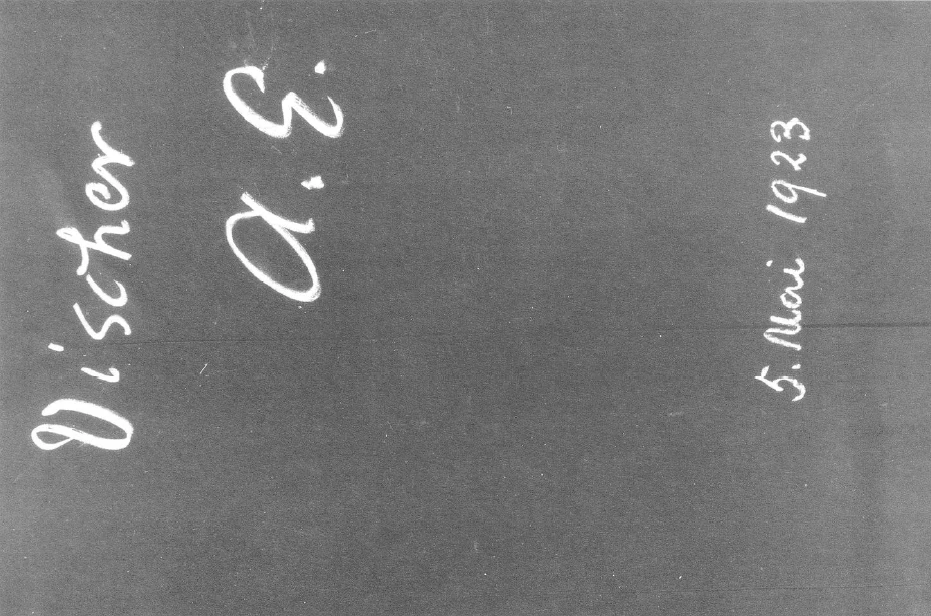
[ 10 ] Ein Beispiel möchte ich Ihnen sehr empfehlen, eine eigentlich recht bedeutende Persönlichkeit möchte ich heute vorführen, damit Sie auch im einzelnen darauf hingewiesen werden, wie diese Geistesentwickelung, die endlich zu unserer Gegenwart geführt hat, eigentlich war. Ich möchte heute auf den sogenannten Schwaben-Vischer hinweisen, den man auch den V-Vischer nennt, weil er sich ja so schreibt, im Unterschiede zu den andern gelehrten Fischern. Auf den Schwaben-Vischer, auf den Ästhetiker möchte ich Sie heute hinweisen.
[ 10 ] I would like to highly recommend one example to you; today I would like to present a figure who is actually quite significant, so that you may also be shown in detail what this spiritual development—which ultimately led to our present time—was actually like. Today I would like to draw your attention to the so-called Schwaben-Vischer, who is also called V-Vischer because that is how he spells his name, in contrast to the other learned Fischers. Today I would like to draw your attention to Schwaben-Vischer, the aesthete.
[ 11 ] Sehen Sie, er war ganz herausgewachsen aus dem Idealismus der ersten Hälfte des 19. Jahrhunderts. Er konnte sich zu dem groben Materialismus nicht bekennen. Er sah hinter den materiellen Wesenheiten und hinter den materiellen Vorgängen überall Ideen, sah auch im Grunde genommen in der moralischen Weltordnung eine Summe von Ideen. Er beschäftigte sich namentlich damit, das Wesen des Schönen zu finden. Ganz im hegelschen Sinne suchte er das Wesen des Schönen in dem Herausscheinen der Idee aus der sinnlichen Materie.
[ 11 ] You see, he had completely outgrown the idealism of the first half of the 19th century. He could not bring himself to embrace crude materialism. He saw ideas everywhere behind material entities and material processes; indeed, he saw the moral order of the world, at its core, as a sum of ideas. He was particularly concerned with discovering the essence of beauty. Entirely in the Hegelian sense, he sought the essence of beauty in the emergence of the idea from sensory matter.
[ 12 ] Wenn der Künstler irgendeinen Stoff in eine solche Form bringt, daß durch diese Form hindurch ein Ideelles erscheint, daß man also nicht nur ein Produkt der Natur vor sich hat, das nicht ein Ideelles offenbart, sondern wenn der Künstler die Materie, sei es die Materie des Erzes, sei es die Materie der musikalischen Töne, sei es die Materie der Worte, so anordnet, daß man ein Ideelles verspürt aus seiner Anordnung, dann ist es eben die Erscheinung der Idee in einer sinnlichen Form, in einer sinnlichen Gestalt, und das ist das Schöne. Es kann dabei so sein, daß die Idee sich als so mächtig zeigt, daß man die sinnliche Erscheinung als zy ohnmächtig empfindet, die Größe der Idee auszudrücken. Wenn etwa der Bildhauer etwas so Gewaltiges in seiner Idee hat, daß kein sinnlicher Stoff hinreicht, um die Idee zu gestalten, so daß man die Idee nur als etwas unermeßlich Großes hinter dem Stoff ahnen kann, so wird das Schöne zum Erhabenen. Ist die Idee klein, so daß man mit dem Stoffe spielen kann, und die Idee kommt in der spielerischen Behandlung des Stoffes überall in liebenswürdiger Weise zum Ausdruck, so wird das Schöne zum Anmutigen.
[ 12 ] When the artist shapes any material in such a way that something ideal emerges through this form—so that one is not merely faced with a product of nature that reveals nothing ideal—but rather when the artist arranges the material—be it the material of ore, the material of musical tones, or the material of words— arranges it in such a way that one senses an ideal emerging from its arrangement, then this is precisely the manifestation of the idea in a sensory form, in a sensory shape, and that is beauty. It may be the case that the idea proves so powerful that one perceives the sensory manifestation as too feeble to express the greatness of the idea. If, for example, a sculptor has something so immense in his idea that no material substance is sufficient to give form to the idea—so that one can only sense the idea as something immeasurably great behind the material—then the beautiful becomes the sublime. If the idea is small, so that one can play with the material, and the idea is expressed everywhere in a charming way through the playful treatment of the material, then the beautiful becomes the graceful.
[ 13 ] So sind Anmutiges und Erhabenes verschiedene Formen des Schönen. Dann, wenn der Mensch die Weltenharmonie empfindet in dem, was künstlerisch gestaltet wird, dann kann er sich entweder zu einem Erhabenen wenden oder zu einem Anmutigen, je nachdem der Künstler es darstellt. Dann aber kann man sehen, wie es etwa bei Jean Paul so sehr häufig geschehen ist, wie die Weltenereignisse so dargestellt werden, daß man nirgends eine Harmonie sieht, daß man überall nur sieht, wie Widersprüche da sind in der Welt, daß eigentlich die Harmonie als etwas Unerreichbares hinter allem steckt, wie aber doch wiederum die Welterscheinungen einem als das Nächstangehende vorkommen. Man sieht zum Beispiel, wie etwa, sagen wir, ein kleiner Schulmeister da ist, der einen ungeheuer idealistischen Sinn hat, der eine große Sehnsucht hat nach Wissen, aber kein Geld hat, sich Bücher zu kaufen, und statt der Bücher sich nur Bücherkataloge in den Antiquariaten geben läßt und da wenigstens nun die Büchertitel hat statt der Bücher. Weißes Papier kann er sich noch kaufen, er schreibt sich nun die Bücher selber zu all diesen Titeln, die er da in dem Antiquariatskataloge hat. Ja, aber dann merkt er an dem Stoff, den der Dichter behandelt, da ist trotzdem eine Harmonie wiederum vorhanden, es ist schön harmonisch, wie der sich die Disharmonie, die durch das Geld eintritt, ausgleicht. Und dann sind doch wiederum die Bücher, die er sich selber schreibt, nicht so gescheit wie diejenigen, die in den Katalogen stehen. Der Widerspruch bleibt bestehen. Man wird hin und her geworfen zwischen dem, was sein soll, und dem, was da ist und was nicht sein soll.
[ 13 ] Thus, the graceful and the sublime are different forms of beauty. When a person perceives the harmony of the world in what is artistically created, they can turn either toward the sublime or toward the graceful, depending on how the artist portrays it. But then one can see, as has so often happened with Jean Paul, for example, how world events are depicted in such a way that one sees no harmony anywhere, that one sees only contradictions everywhere in the world, that harmony actually lies behind everything as something unattainable, yet at the same time the phenomena of the world appear to one as the most immediate reality. One sees, for example, how there is, say, a small-town schoolteacher who has an immensely idealistic spirit, who has a great longing for knowledge but no money to buy books, and instead of books, he has only book catalogs sent to him from used-bookstores, so that at least now he has the book titles instead of the books themselves. He can still afford white paper, so he now writes the books himself based on all these titles he has in the used bookstore catalog. Yes, but then he notices in the material the poet deals with that there is, after all, a harmony present once again; it is beautifully harmonious how he compensates for the disharmony caused by money. And yet, the books he writes for himself are not as clever as those listed in the catalogs. The contradiction remains. One is tossed back and forth between what ought to be, and what is there—and what ought not to be.
[ 14 ] Wenn man sich nun im Gemüte zurechtfindet mit diesem Widerspruch, der nicht zu lösen ist, wo immer ein Widersprechendes das andere ablöst, wo man gar nicht über den Widerspruch hinauskommen würde, sondern sich selbst in Staub auflösen müßte, wenn man so hinschlenkert von Widerspruch zu Widerspruch, wenn man sich dann im Gemüte dennoch zu beruhigen weiß, so ist das die Stimmung desjenigen Schönen, das man genießt im Humor.
[ 14 ] If one can now come to terms in one’s mind with this contradiction—which cannot be resolved, where one contradiction replaces another, where one could never move beyond the contradiction but would have to dissolve into dust oneself—if, while lurching from contradiction to contradiction, one nevertheless knows how to find peace of mind, that is the mood of the beauty one savors in humor.
[ 15 ] Ja, bei dem Schwaben-Vischer, dem V-Vischer, war es eben so, daß er geradezu den Humor als Ästhetiker verherrlicht hat, daß er, weil er eben in dem Zeitalter lebte, wo man ratlos den Widersprüchen gegenüberstand, ratlos dem Gegensatz zwischen Geist und Materie gegenüberstand, daß er, weil es ein Durchdringen der Weltenharmonien eigentlich für die menschliche Einsicht nicht als etwas Erreichbares gab, sich durch den Humor hinweghelfen wollte über das alles. Und so verherrlichte er gerade den Humor. Aber wiederum, es ist ja der Humor so, daß hinter ihm dennoch irgendwo eine Harmonisierung stecken muß, sonst kommt doch wiederum kein Humor zustande, sonst sieht man ja zuletzt, daß man sich durch das Gemüt beruhigt bei etwas, wobei man sich eigentlich nicht beruhigen sollte, wenn man nicht ein Wischi-Waschi-Mensch werden will. Und so steckt hinter all dem, wie der Schwaben-Vischer die Welt genießen wollte — er ist ja für die zweite Hälfte des 19. Jahrhunderts eine tonangebende Persönlichkeit —, hinter all dem steckt ein Streben, weil man nicht hineinkommen kann in das Geistige der Welt, sondern nur in die Ideen, ein Streben, das doch wiederum etwas furchtbar Philiströses hat. Ein lachender Humor, hinter dem aber eigentlich nicht die Ausgeglichenheit des Gemütes, sondern etwas Krampfhaftes steckt, ein Humor, der leicht, wenn er die Gegensätze erkundet, die in der Welt sind, statt des humoristischen Ausgleiches nur das närrische Nebeneinanderstellen findet,
[ 15 ] Yes, in the case of Schwaben-Vischer—V-Vischer—it was precisely the case that he virtually glorified humor as an aesthetic principle; that, because he lived in an age when people were at a loss in the face of contradictions, and was at a loss in the face of the opposition between spirit and matter; and because human insight could not actually grasp the interpenetration of the world’s harmonies as something attainable, he sought to use humor as a way to transcend all of that. And so he glorified humor in particular. But then again, the nature of humor is such that there must still be some kind of harmonization behind it; otherwise, humor simply cannot arise—otherwise, one ultimately realizes that one is being soothed by something that one really shouldn’t be soothed by, unless one wants to become a wishy-washy person. And so behind all of this—the way Schwaben-Vischer wanted to enjoy the world (he was, after all, a leading figure in the second half of the 19th century)—behind all of this lies a striving, because one cannot penetrate the spiritual essence of the world, but only its ideas; a striving that, in turn, has something terribly philistine about it. A cheerful sense of humor, behind which, however, lies not a balanced state of mind but something convulsive—a humor that, when exploring the contrasts that exist in the world, finds only a foolish juxtaposition instead of a humorous balance,
[ 16 ] Das alles hängt damit zusammen, daß eben edlere Geister in dieser zweiten Hälfte des 19. Jahrhunderts gar nicht dasjenige finden konnten, was eigentlich geistig hinter der Welt steckt, daß sie daher nach Auskunftsmitteln suchten, die sie aber zuletzt in eine gewisse Haltlosigkeit, in etwas Krampfhaftes hineinführten. Und aus diesen Krämpfen vom letzten Drittel des 19. Jahrhunderts konnte dennoch nur das Tragische, das Ungesunde vom Beginn, von der ersten Hälfe des 20. Jahrhunderts hervorgehen.
[ 16 ] All of this stems from the fact that, in this second half of the 19th century, the nobler minds were simply unable to find what actually lies behind the world in spiritual terms; they therefore sought sources of insight, but these ultimately led them into a certain instability, into something convulsive. And yet, from these struggles of the last third of the 19th century, only the tragic and the unhealthy elements of the beginning—of the first half—of the 20th century could emerge.
[ 17 ] Nun, als dieser Schwaben-Vischer, man möchte sagen, obwohl er sich dagegen gewehrt hat, sein eigenes Selbst — es ist doch sein eigenes Selbst — einmal so hinstellen wollte vor die Welt, da schrieb er den Roman «Auch Einer». Man kann sagen, der «Held» dieses Romans, wie man das ja in der Ästhetik so philiströs, wollte sagen, wissenschaftlich nennt, der Held dieses Romans — in Wirklichkeit heißt er Albert Einhart, aber V-Vischer kürzt ihn ab: A. E., nennt ihn eben «Auch Einer», und so heißt auch der Titel des Romans — nun, dieser «Auch Einer», in ihm steckt ja etwas. Er möchte gerne eine Eins sein als Mensch, eine richtige Eins. «Einer» möchte er sein, so eine Individualität, die etwas für sich ist. Aber nun wird er trotz großartiger, gewaltiger Anlagen nur «Auch Einer», nicht «Einer», sondern «Auch Einer», so wie vielleicht nicht gerade zwölf, aber wovon doch immerhin eine erkleckliche Anzahl auf ein Dutzend kommen! Ja, wie gesagt, Vischer hat sich dagegen gewehrt, daß etwa der «Auch Einer» ein Porträt seines eigenen Wesens ist. Das ist er auch nicht, aber dennoch hat Vischer dasjenige, was als innere Disharmonie in ihm lebte, in diesen «Auch Einer» hineingeheimnißt. Es sind zugleich die Diskrepanzen der Seele vom letzten Drittel des 19. Jahrhunderts.
[ 17 ] Well, when this Swabian Vischer—one might say, even though he resisted it—wanted to present his own self—for it is, after all, his own self—to the world in this way, he wrote the novel Auch Einer. One could say that the “hero” of this novel—as they call it in aesthetics, in such a philistine, one might say, scientific way—the hero of this novel—his real name is Albert Einhart, but V-Vischer shortens it to: A. E.—calls him simply “Auch Einer,” which is also the title of the novel—well, this “Auch Einer,” there’s something to him. He would like to be a “one” as a human being, a true “one.” He wants to be “One”—an individual who stands on his own. But now, despite his magnificent, formidable talents, he becomes merely “Just Another One”—not “One,” but “Just Another One,” just as perhaps not exactly twelve, but still a considerable number that adds up to a dozen! Yes, as I said, Vischer resisted the idea that the “Auch Einer” might be a portrait of his own nature. It isn’t, but nevertheless, Vischer has enshrined in this “Auch Einer” that which lived within him as inner disharmony. These are, at the same time, the discrepancies of the soul from the last third of the 19th century.
[ 18 ] Dieser Roman «Auch Einer» besteht eigentlich aus drei Teilen. Der erste schildert uns, wie V-Vischer bekannt wird mit dem Albert Einhart, mit dem «Auch Einer». Es ist eine interessante Reisebekanntschaft, wie sie nicht gerade alltäglich vorkommt.
[ 18 ] This novel, Auch Einer, actually consists of three parts. The first describes how V-Vischer meets Albert Einhart, the “Auch Einer.” It is an interesting acquaintance made while traveling—the kind that doesn’t happen every day.
[ 19 ] Sehen Sie, dieser V-Vischer hat ja zuletzt auch, sagen wir, in dem Herankommen des Mysteriums von Golgatha an die Erdenentwikkelung nichts anderes sehen können als eine Ideenentwickelung. Der Christus war eigentlich eine abstrakte Idee für ihn, die so die Menschheitsentwickelung durchzogen hat. Und auf Golgatha, in dem Leibe des Jesus von Nazareth, ist eigentlich eine abstrakte Idee — Christus — gekreuzigt worden. Nicht wahr, das atmet wenig Wirklichkeit. Das führt ja schon zurück in die David-Friedrich-Strauß-Zeit und so weiter, wo man den eigentlichen Inhalt der Religion nur so aufgefaßt hat, als ob die Religion nur Bilder enthalten würde für etwas, was eigentlich ideell, abstrakt gemeint ist. Also Christus und die Geschichte vom Christus würden nur aufzufassen sein als Bilder, sind das Einziehen der höchsten Ideen in die Erdenentwickelung, die Kreuzigung nur die Erscheinung der Idee in einer besonders hervorragenden sinnlichen Menschengestalt und so weiter. Das alles hat ja den Gegenstand großer intellektualistischer Anstrengungen im 19. Jahrhundert gebildet und hat den Gegenstand ungeheuer bitterer Enttäuschungen der tieferen Gemüter in diesem 19. Jahrhundert gebildet, weil eben da hinter all dem Ideellen ein wirklich Geistiges nicht gefunden werden konnte. Und die Menschen dürsteten natürlich nach dem Geistigen, wie sie immer nach dem Geistigen dürsten, und am meisten, wenn sie es nicht haben. Und am meisten dürsten darnach diejenigen Denker, welche glauben beweisen zu können, daß es ein Geistiges gar nicht gibt, sondern nur Materie oder nur Ideen. Man könnte sagen: Am Ende des 19. Jahrhunderts und am Beginne des 20. Jahrhunderts waren eigentlich die hervorragenderen Geister schon müde geworden über diesem intellektualistischen Streben nach der Beantwortung der Frage: Wie wirken die Ideen eigentlich in der Natur? Wie wirken die Abstraktionen eigentlich in der Geschichte? Nur höchstens so quecksilberne Flächlinge wie Arthur Drews, die haben dann wieder dasjenige gebracht, was längst etwas Abgetanes war unter denen, die wirklich denken konnten. Daher ragt eben in der Persönlichkeit dieses quecksilbernen Nicht-Denkers in das 20. Jahrhundert noch etwas herein von diesem: eine Idee sei gekreuzigt worden, nicht eine wirkliche Geistwesenheit.
[ 19 ] You see, this V-Vischer, too, could ultimately see nothing more than the development of an idea in, let’s say, the way the Mystery of Golgotha relates to the development of the Earth. Christ was actually an abstract idea for him, one that had thus permeated the development of humanity. And on Golgotha, in the body of Jesus of Nazareth, it was actually an abstract idea—Christ—that was crucified. Isn’t that so? That has little sense of reality. It takes us right back to the time of David Friedrich Strauss and so on, when the actual content of religion was understood as if religion contained only images for something that was actually meant to be ideal and abstract. So Christ and the story of Christ would be understood merely as images—the incorporation of the highest ideas into earthly evolution—and the crucifixion merely as the manifestation of the idea in a particularly outstanding, physical human form, and so on. All of this was, of course, the subject of great intellectual endeavors in the nineteenth century and the source of immensely bitter disappointments for the deeper minds of that century, precisely because nothing truly spiritual could be found behind all that idealism. And people naturally thirsted for the spiritual, just as they always thirst for the spiritual—and most of all when they lack it. And those thinkers who believe they can prove that the spiritual does not exist at all—but only matter or only ideas—thirst for it most of all. One might say: By the end of the 19th century and the beginning of the 20th century, the more outstanding minds had actually grown weary of this intellectualistic quest to answer the question: How do ideas actually operate in nature? How do abstractions actually operate in history? Only superficial, mercurial figures like Arthur Drews, at most, brought back what had long since been dismissed among those who were truly capable of thinking. That is why something of this nature still extends into the 20th century through the personality of this mercurial non-thinker: an idea has been crucified, not a real spiritual being.
[ 20 ] Aber aus dem, was ich sage, können Sie entnehmen, daß schließlich auch für einen solchen Denker wie den Schwaben-Vischer zuletzt alles, was geistig war, sich in Ideen auflöste. Die Ideen, die waren zuletzt in ihrer Abstraktheit dasjenige, was da als Gespinst durch die Welt hindurch wirkte. Und alles, was in den Mythologien erzählt wurde, in den Religionen bis herauf in die christliche Religion, das war, nur in Materielles gekleidet, etwas, was höchstens Bild war für die Idee. Und zuletzt mußte ja den Leuten aus diesem Streben, überall nur die Idee im sinnlichen Bilde zu sehen, die Anschauung hervorgehen, daß es eigentlich gleichgültig ist, in welchem sinnlichen Bilde man das Weben und Spinnen der Idee in der Materie ausdrückt.
[ 20 ] But from what I am saying, you can infer that, ultimately, even for a thinker such as Schwaben-Vischer, everything of an intellectual nature eventually dissolved into ideas. In the end, these ideas, in their abstractness, were what worked its way through the world like a web. And everything recounted in the mythologies, in the religions all the way up to the Christian religion—that was, merely clothed in material form, something that was at most an image of the idea. And ultimately, this striving to see only the idea in sensory images everywhere must have led people to the conclusion that it is actually irrelevant in which sensory image one expresses the weaving and spinning of the idea within matter.
[ 21 ] Und für einen solchen Kauz wie Albert Einhart, der «Auch Einer» ist, für den macht sich nun die Materie in einer ganz merkwürdigen Weise geltend. Es passiert nämlich dem Albert Einhart bei jeder möglichen Gelegenheit, daß er ins Erhabene steigen will. Wenn er zu den höchsten Höhen des Geistigen, das bei ihm also nur das Ideelle ist, hinaufsteigen will, dann kriegt er einen Katarrh, dann muß er furchtbar niesen, oder er muß sich furchtbar räuspern. Da macht sich die Materie geltend, nicht wahr, das ist die Materie. Er spürt sonst die Materie nicht so stark als dann, wenn er einen Katarrh kriegt oder wenn er ein Hühnerauge hat. Man weiß schließlich nicht, wenn man so ein Denker von der zweiten Hälfte des 19. Jahrhunderts ist, an welchem Ende man anfassen soll den Materialismus, der eben die Ideen abbildet. Man wird ja am besten da anfassen, wo die Materie sich am meisten geltend macht, wo sie immer so auftritt, daß sie sogar den Geist bezwingt. Und zuletzt wird man sogar wie der Albert Einhart, der «Auch Einer», zu einem Kritiker dessen, was schon da ist.
[ 21 ] And for an eccentric like Albert Einhart—who is “just another one”—matter now asserts itself in a most peculiar way. For Albert Einhart, at every possible opportunity, finds himself wanting to ascend to the sublime. Whenever he wants to ascend to the highest heights of the spiritual—which for him is, of course, only the ideal—he comes down with a cold, he has to sneeze terribly, or he has to clear his throat terribly. That’s when matter makes itself felt, isn’t it? That’s matter. He doesn’t usually feel matter as strongly as when he gets a cold or when he has a corn. After all, when you’re a thinker from the second half of the 19th century, you don’t know where to begin tackling materialism, which is precisely what ideas represent. It’s best to start where matter makes itself felt the most, where it always appears in such a way that it even subdues the spirit. And in the end, one even becomes, like Albert Einhart, “Auch Einer,” a critic of what already exists.
[ 22 ] Denn dem Albert Einhart kommt einmal doch die Idee: Diejenigen, die die Materie nur so mehr neutral angefaßt haben, die haben sich eigentlich einem Irrtum hingegeben. Schiller hat den Tell ganz falsch dargestellt, denn so kann es nicht sein, die Materie wird da auf einem viel zu hohen Niveau erfaßt. Man muß tiefer hinein. Man muß in das Katarrhalische hinein, wenn man will, daß man die Materie wirklich erfaßt. Und daher müßte die richtige Komposition des Tell diese sein, daß er, wie er mit dem Schifflein da abstößt, nicht einfach gleich hinüberkommt, sondern kentert, herausfällt und von den Mannen des Geßler aufgefangen wird, ordentlich durchgewichst wird, aber wieder entkommt, ein zweites Mal ins Wasser fällt und sich dabei erkältet. Nun bekommt er einen furchtbaren Schnupfen, und gerade in dem Moment, wo er die Armbrust anlegt, muß er niesen. Und der Landvogt kann nicht sagen: Das ist Tells Geschoß — sondern: Das ist Tells Niesen ! So müßte eigentlich Tell sein, meint der Albert Einhart, der «Auch Einer». Nicht wahr, man muß tiefer, gründlicher in den Materialismus hinein, wenn man schon konsequent sein will.
[ 22 ] For Albert Einhart does eventually come to realize: Those who have approached the subject in such a neutral manner have, in fact, succumbed to an error. Schiller portrayed Tell entirely incorrectly, for it cannot be that way; the subject is treated there at a level that is far too high. One must delve deeper. One must delve into the catarrhal realm if one wishes to truly grasp the subject matter. And so the correct composition of Tell would be this: as he pushes off in his little boat, he doesn’t simply cross over right away, but capsizes, falls out, and is caught by Gessler’s men, gets thoroughly soaked, but escapes again, falls into the water a second time, and catches a cold in the process. Now he catches a terrible cold, and just as he’s raising the crossbow, he has to sneeze. And the bailiff can’t say, “That’s Tell’s shot”—but rather, “That’s Tell’s sneeze!” That’s how Tell should actually be, says Albert Einhart, “Auch Einer.” Isn’t that right? One must delve deeper, more thoroughly into materialism if one wants to be consistent.
[ 23 ] Da hat es alle möglichen Auslegungen, Erklärungen gegeben für den Othello, psychologische Erklärungen; aber man soll doch einmal sehen, meint der Einhart, daß der Othello fortwährend um ein Schnupftuch sich bemüht, daß er einen Stockschnupfen hat, der ihn so in Verzweiflung bringt, daß er endlich die Desdemona erwürgt. Nichts anderes als ein Stockschnupfen! Man muß eben tiefer in die Materie hineingehen, in das eigentlich Materielle. Man muß es an dem richtigen Punkte finden.
[ 23 ] There have been all sorts of interpretations and explanations for Othello—psychological explanations, among them—but, Einhart argues, one should consider that Othello is constantly preoccupied with a handkerchief, that he has a common cold that drives him into such despair that he ultimately strangles Desdemona. Nothing but a bad cold! One simply has to delve deeper into the matter, into what is actually material. One has to find it at the right point.
[ 24 ] Das ist es, was Vischer durch die gemütvolle, humorvolle Auffassung sucht. Er kann über den Materialismus nicht hinauskommen. Er kann ihn nicht wegbeweisen, und so will er sich wenigstens im Gemüt darüber hinwegsetzen. Er kann sich doch nicht über Wasserstoff und Sauerstoff gemütvoll hinwegsetzen; nun, über Katarrhe muß man sich doch gemütvoll hinwegsetzen. Und das ist doch eben ein Standpunkt, den man einnehmen kann gegenüber der Materialität.
[ 24 ] This is what Vischer seeks through his cheerful, humorous perspective. He cannot transcend materialism. He cannot disprove it, and so he wants to at least set it aside in his mind. After all, he cannot simply set aside hydrogen and oxygen with a lighthearted attitude; well, one must at least set aside catarrh with a lighthearted attitude. And that is precisely a standpoint one can take toward materiality.
[ 25 ] Die Sache hat ja auch dazu geführt, daß Vischer darauf aufmerksam machen konnte, wie er eigentlich die Bekanntschaft dieses sonderbaren Kauzes macht. Der ist da in einem Hotel, das — nach den verschiedensten Umständen kann man es annehmen — gar nicht so weit von hier sein muß, allerdings in den Hochbergen drinnen, und er gerät, weil nun schon der Katarrh in ihm steckt, in Zwiespalt mit dem Hotelbedienten, wird etwas tätlich, und da kommen ihm nun aus dieser materiellen Affäre alle Skrupel des Lebens vor die Seele. Und es kommt so weit, daß er sogar seinem Leben ein Ende machen will. Er stürzt sich herunter. Aber bei dieser Gelegenheit sieht ihn der Schwaben-Vischer und schickt sich an, ihn zu retten, und kollert dabei hinunter über den Abhang. Das sieht wieder der andere, der vergißt, daß er eigentlich selbst sich hat morden wollen und kommt dem Schwaben-Vischer zu Hilfe. So machen sie ihre Bekanntschaft. Das ist nicht eine alltägliche Bekanntschaft. So kollern sie beide hinunter. Und da hört man noch die Flüche dieses «Auch Einer», der nun seine Weltanschauung kundgibt. Man hört es eigentlich nicht, weil von allen möglichen Gewässern da ein Getöse ist; es ist nicht still, nur einzelne Teile hört man wie: Welt — eine Erkältung des Absoluten — in der Einsamkeit — spuckte aus und die Welt war — die Welt vom Ewigen gehustet, geräuspert — Schandgallert — Brütnest der Plagteufel — und so weiter, das hört man so durch. Er wird viel mehr gesagt haben, natürlich!
[ 25 ] This whole affair also gave Vischer the opportunity to explain how he actually came to know this peculiar eccentric. The man is staying at a hotel that—given the various circumstances, one can assume—must not be all that far from here, though it is deep in the high mountains, and because he is already suffering from a cold, he gets into a dispute with the hotel clerk, becomes somewhat violent, and as a result of this physical altercation, all of life’s scruples come flooding into his mind. And it gets to the point where he even wants to end his life. He throws himself off the cliff. But at that moment, the Swabian fisherman sees him and sets out to save him, tumbling down the slope in the process. The other man sees this, forgets that he had actually intended to kill himself, and comes to the Swabian fisherman’s aid. That’s how they meet. It’s not an everyday encounter. So they both tumble down. And there you can still hear the curses of this “Another One,” who is now proclaiming his worldview. You don’t actually hear it, because there’s a roar from all kinds of bodies of water; it’s not quiet, but you catch individual fragments like: “The world—a chill of the Absolute—in solitude—spat out, and the world was—the world coughed up by the Eternal, cleared its throat—a cesspool of shame—a breeding ground for plaguing devils”—and so on; you hear it faintly in the background. He must have said much more, of course!
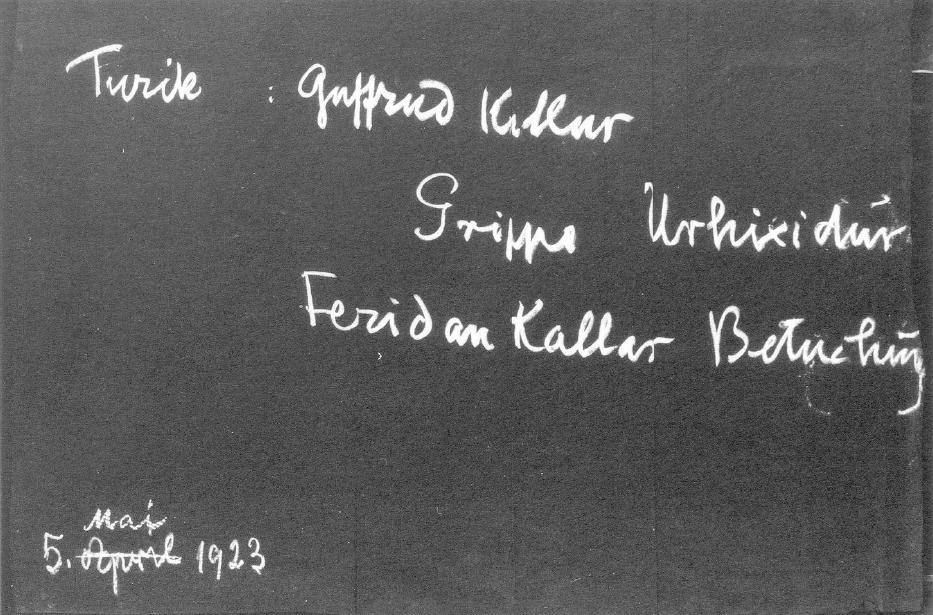
[ 26 ] Nun haben sie Bekanntschaft gemacht auf diese Weise, der Schwaben-Vischer und der «Auch Einer». Aber sie können sich nicht gleich verständigen, weil sie beide nämlich einen Katarrh kriegen und furchtbar niesen müssen. Und so dauert es mit der Verständigung etwas länger. In solcher Art, wie man auf nicht ganz gewöhnliche, alltägliche Weise Reisebekanntschaft macht, verläuft der erste Teil. Der zweite Teil ist ein Werk des «Auch Einer», das eingeschoben ist, eine Pfahldorfgeschichte. Da wird das Leben und Treiben in einem Pfahldorf geschildert. Nicht wahr, man könnte sich ja nun lange unterhalten über das Zeitalter, in dem dieses Pfahldorf existiert hat und so weiter, aber manches steht auch da drinnen, woraus man entnehmen kann, daß er dieses Pfahldorf des «Auch Einer» in der Nähe der Stadt Turik sein läßt. Diese Stadt liegt in der Nähe. Und über die Zeit- ja nun, da müssen die Pfahldörfler einmal einen rufen, einen Bardenknaben aus Turik. Und dieser Bardenknabe aus Turik, der heißt Guffrud Kullur. Ja, man kann nicht so recht diskutieren über die Zeit, in der dieses Pfahldorf existiert hat.
[ 26 ] So they made each other’s acquaintance in this way, the Swabian fisherman and the “Just Another Guy.” But they can’t communicate right away, because they both catch a cold and have to sneeze terribly. And so it takes a little longer for them to understand each other. The first part unfolds in the sort of way one makes acquaintances while traveling—in a manner that’s not quite ordinary or everyday. The second part is a story by “Auch Einer” that’s inserted into the narrative: a story about a pile-dwelling village. It depicts the life and goings-on in a pile-dwelling village. Of course, one could talk at length about the era in which this pile-dwelling village existed and so on, but there are also details in the text from which one can infer that the author sets “Auch Einer’s” pile-dwelling village near the city of Turik. This city is located nearby. And as for the time—well, the pile-dwelling villagers have to call on someone, a bard from Turik. And this bard from Turik is named Guffrud Kullur. Yes, it’s hard to say for sure exactly when this pile-dwelling village existed.
[ 27 ] Es wird nun diese Pfahldorfgeschichte in ihren Einzelheiten entwickelt in der Erzählung von dem «Auch Einer», und wir werden da eingeführt in die Art und Weise, wie zum Beispiel die Pfahldörfler ihre religiösen Bedürfnisse besorgen. Da kommt eben das heraus, was für den Schwaben-Vischer und sein Abbild, den Albert Einhart, in den Religionen geschildert wird: Das ist überall der materiellbildhafte Ausdruck für das Walten der Ideen gewesen. Und so ist halt auch diese Religion bei den Pfahldörflern eine solche, daß sie eine Zeit angenommen haben, in der alles noch keinen Schnupfen kriegen konnte. Es war eine ganz paradiesische Zeit, wo man keinen Schnupfen kriegen konnte. Aber es wurde diesen Paradies-Pfahldörflern doch nicht so wohl dabei. Es stachelte sie etwas in dieser ganz schnupfenlosen unkatarrhalischen Zeit, und so verfielen sie der Versuchung des großen Gottes Grippo. Dieser Grippo, der eigentlich im Kalten west, schafft und wirkt aber durch Feuer, durch Erhitzung. Und so kam es, daß sie der Versuchung des Gottes Grippo verfielen, die Pfahldörfler-Paradiesesmenschen! Und sie kriegten Schnupfen, mußten immer niesen, und da ergaben sie sich der Weltenspinnerin, die oftmals als weiße Kuh den Leuten erscheint. Sie sehen: materiellbildhafte Ausprägung, Ausgestaltung des Geistigen. Die Weltenspinnerin rät ihnen, sie sollen ihr Dorf auf dem See begründen, da schickt der See immerfort feucht-kaltliche Nebel. Der Schnupfen wird ordentlich ausgetrieben. Die Ergebnisse des Gottes Grippo, die kommen heraus und werden endlich geheilt. Das kann nur in Pfahldörfern geschehen.
[ 27 ] This story of the pile-dwelling village is now developed in detail in the tale of the “Auch Einer,” and we are introduced to the ways in which, for example, the pile-dwelling villagers satisfy their religious needs. This reveals precisely what is described in Die Religionen regarding Schwaben-Vischer and his counterpart, Albert Einhart: everywhere, this has been the material, pictorial expression of the reign of ideas. And so this religion among the pile-dwelling villagers is also such that they lived in a time when no one could catch a cold. It was a truly paradisiacal time when no one could catch a cold. But these paradisiacal pile-dwelling people did not feel entirely at ease in it. Something gnawed at them during this completely cold-free, catarrh-free time, and so they succumbed to the temptation of the great god Grippo. This Grippo, who actually dwells in the Cold West, creates and works through fire, through heat. And so it came to pass that they succumbed to the temptation of the god Grippo, the people of the paradise stilt village! And they caught colds, had to sneeze constantly, and so they surrendered to the Spinner of Worlds, who often appears to people as a white cow. You see: a material, image-like manifestation, a form given to the spiritual. The World Spinner advises them to establish their village on the lake, where the lake constantly sends out damp, chilly mists. The cold is thoroughly driven out. The effects of the god Grippo emerge and are finally healed. This can only happen in pile-dwelling villages.
[ 28 ] Da kommt auch so eine Art Ketzer einmal in dieses Pfahldorf hinein. Aber die Pfahldörfler sind in einer außerordentlich guten Weise geführt von einem Druiden. Ein Druide, der eigentlich nicht besonders viel gescheiter ist als die anderen Pfahldörfler, der aber gelernt hat, die Katarrh-Religion ordentlich zu lehren, der beherrscht ganz diese Pfahldörfler. Und da ist nur das eine: Die Druiden müssen ehelos leben, er hat also nicht eine Ehegattin, sondern eine Hauserin, Urhixidur, die beherrscht wieder ihn und von der geht sehr vieles aus in diesem Pfahldorfe. Da kommt nun also so ein Ketzer dahin, der die Pfahldörfler eine Art aufgeklärter Religion lehren will, so eine Religion ohne Gott. Die Pfahldörfler haben aber nicht nur die guten Götter, sondern auch den Grippo und alles mögliche kennengelernt. Und der Druide, noch dazu aufgestachelt von der Urhixidur, stellt ein Ketzergericht an. Ein bißchen werden ja die Pfahldörfler irre an dem Druiden, denn man gräbt da noch ein tieferes Pfahldorf heraus, und nun kann er das nicht erklären. Und nun beruft man von der benachbarten Stadt den Guffrud Kullur und noch einen anderen Gelehrten, Feridan Kallar. Aber da ist wiederum das Merkwürdige, daß, als man nicht in Turik, aber einer anderen schweizerischen Stadt Pfahldörfer ausgegraben hat, einer der Erklärer Ferdinand Keller war, der da nicht von einer Stadt mit jetzigem Namen, sondern von Turik berufen wird, so wie natürlich selbstverständlich nicht auf Gottfried Keller hingewiesen ist, sondern auf Guffrud Kullur. Nun, es spielen sich da die Kämpfe ab zwischen den Menschen mit einer ursprünglichen Religion, mit der Religion der katarrhalischen Zustände, und einem Ketzer, der nun eine Religion ohne Gott lehren will, eine Religion der moralischen Weltordnung. Es sind interessante Kämpfe. Die spitzen sich insbesondere zu, als von den Pfahldörflern ein Fest gefeiert wird, das der katholischen Firmung und der protestantischen Konfirmation entspricht, das ist nämlich das Fest der Betuchung. Da werden die Kinder eingeführt in die Gemeinde. Aber natürlich, den Ereignissen angemessen bekommen sie ein Schnupftuch, nicht die Dinge, die bei der Firmung sonst vor sich gehen, sondern sie müssen ein ordentliches Schnupftuch auf den Weg für das Leben bekommen.
[ 28 ] Then a sort of heretic comes into this pile-dwelling village. But the pile-dwellers are led in an exceptionally good way by a druid. A druid who isn’t actually much smarter than the other stake villagers, but who has learned to teach the Catarrh religion properly—he completely controls these stake villagers. And there’s just one thing: Druids must live unmarried, so he doesn’t have a wife, but rather a housekeeper, Urhixidur, who in turn controls him, and through whom a great deal of influence flows in this pile-dwelling village. So now this heretic arrives, wanting to teach the pile-dwellers a kind of enlightened religion—a religion without God. But the pile-dwelling villagers have come to know not only the good gods, but also Grippo and all sorts of other things. And the druid, goaded on by Urhixidur, sets up a heresy trial. The Pfahldorfers do get a little confused by the druid, because an even deeper Pfahldorf is being excavated there, and now he can’t explain it. And so they summon Guffrud Kullur from the neighboring town, along with another scholar, Feridan Kallar. But here again is the curious thing: when pile-dwelling villages were excavated—not in Turik, but in another Swiss city—one of the explainers was Ferdinand Keller, who was summoned not from a city bearing its present name, but from Turik; just as, of course, the reference is not to Gottfried Keller, but to Guffrud Kullur. Now, conflicts are unfolding there between people adhering to a primal religion—the religion of catarrhal states—and a heretic who now seeks to teach a religion without God, a religion of the moral world order. These are interesting struggles. They come to a head in particular when the people of Pfahldorf celebrate a festival corresponding to Catholic Confirmation and Protestant Confirmation—namely, the Festival of Betuchung. This is when the children are inducted into the community. But of course, in keeping with the occasion, they receive a handkerchief—not the items that are usually given at Confirmation—but rather, they must be given a proper handkerchief to set them on their way through life.
[ 29 ] Da spielen sich noch allerlei Kulturkämpfe ab. Die Kulturkämpfe waren ja, wie es scheint nach «Auch Einer», nicht nur äußerlich in der Welt überall in dieser Zeit sichtbar, sondern sie scheinen auch in die Pfahldörfer hineingespielt zu haben.
[ 29 ] All sorts of cultural struggles are still taking place there. According to Auch Einer, it seems that these cultural struggles were not only visible externally throughout the world at that time, but also appear to have played out within the stake villages.
[ 30 ] Ja, so möchte ich sagen, krampft der Schwaben-Vischer einen Humor heran, um in diesem Kauz das Nicht-zu-Rande-Kommen mit dem Materialismus darzustellen. Ob man nun schließlich — so meinte wahrscheinlich in seinem Herzen der Schwaben-Vischer diejenigen Begriffe nimmt, welche von den matersalistischen Kunsthistorikern ausgehen, die ja an so neutrale Materie anknüpfen, oder andere, die die Materie deutlicher zeigen: da kommt es vielleicht doch nur darauf an, daß man eben die deutlicheren Begriffe nimmt.
[ 30 ] Yes, I would say that Schwaben-Vischer forces a sense of humor upon us in order to portray this eccentric’s inability to come to terms with materialism. Whether one ultimately—as Schwaben-Vischer probably thought in his heart—adopts the concepts derived from materialist art historians, who, after all, draw on such neutral material, or others that illustrate the material more clearly: perhaps it really just comes down to choosing the clearer concepts.
[ 31 ] So ein Mann wie Gottfried Semper, der macht geltend die Bearbeitung der Steine, die Bearbeitbarkeit des Holzes, wenn man diesen oder jenen Baustil erklären will. Ja, warum soll man denn darüber sprechen, inwieweit das Holz oder der Stein bearbeitbar ist? Warum soll man denn von dieser Seite der Materie ausgehen? Es ist ja viel gescheiter, wenn man einmal prüft, wie die Menschen von den verschiedenen Baustilen berührt wurden, dann hat man den Zusammenhang dieser Baustile mit der menschlichen Wesenheit und mit der menschlichen Entwickelung. Bei den Griechen wird es wohl so gewesen sein, weil ihre Bauart eine nach allen Seiten offene war, daß, wenn man sich eine gehörige Zeit da in den Bauten aufgehalten hat, man halt einen ordentlichen vehementen Schnupfen kriegte. Das sind die rein katarrhalischen Baustile, die antiken Baustile. Und die gotischen Baustile, da war man mehr geschützt, da kriegte man nur ab und zu den Schnupfen, wenn man Fenster aufmachte: Das sind also die gemischt-katarrhalischen Baustile. Und das Ideal ist erst in ferner Zukunft: Das sind dann diejenigen Bauten, in denen man gar keinen Schnupfen kriegt. Man kann sehr schön unterscheiden — so macht man es ja in gelehrten Schriften — Baustil A: rein-katarrhalisch, Baustil B: gemischt-katarrhalisch, und Baustil C: wo man gar keinen Schnupfen mehr kriegt. Das ist die Einteilung der Baustile von «Auch Einer».
[ 31 ] A man like Gottfried Semper emphasizes the workability of stone and the workability of wood when seeking to explain this or that architectural style. Yes, why should one even discuss the extent to which wood or stone can be worked? Why should one approach the matter from this angle? It is far wiser to examine how people were affected by the various architectural styles; then one grasps the connection between these styles and the human being and human development. In the case of the Greeks, it was probably because their architectural style was open on all sides that, if you spent a fair amount of time inside those buildings, you’d end up catching a pretty severe cold. These are the purely catarrhal architectural styles—the ancient ones. And with the Gothic architectural styles, one was more protected; one only caught a cold now and then when opening the windows: these, then, are the mixed-catarrhal architectural styles. And the ideal lies in the distant future: these will be the buildings in which one doesn’t catch a cold at all. You can distinguish them very clearly—as is done in scholarly writings—Architectural Style A: purely catarrhal; Architectural Style B: mixed-catarrhal; and Architectural Style C: where you no longer catch a cold at all. This is “Auch Einer’s” classification of architectural styles.
[ 32 ] Sie sehen, V-Vischer wußte nicht, wie er sich eigentlich gegenüber dem Materialismus stellen sollte. Er wollte sich mit Humor stellen, und da nahm er halt diese Seite des Materialismus heraus, wo der Mensch die Materie in sich so oder so verspürt. Das ist ja dasjenige, was wirklich doch diesem Roman «Auch Einer» zugrunde liegt.
[ 32 ] As you can see, V-Vischer didn’t know how he should actually approach materialism. He wanted to tackle it with humor, so he simply highlighted that aspect of materialism where people sense matter within themselves in one way or another. That is, after all, what really underlies the novel Auch Einer.
[ 33 ] In einem dritten Teil hat man dann noch Sentenzen des Albert Einhart. Man lernt ihn sozusagen näher kennen. Man lernt seinen Kampf gegen die Natur, man lernt seinen Kampf mit dem Geiste, mit der moralischen Weltordnung, mit dem reinen Idealismus kennen; sehr geistreiche Ausführungen, die in Aphorismen vorgetragen werden. Man hat manchmal das Gefühl, daß der etwas philiströse Schwaben-Vischer schon die geistreichen Einfälle von Friedrich Nietzsche vorausgenommen hat. Es ist wirklich manchmal etwas außerordentlich Geistreiches in diesem dritten Teil der Aphorismen des Albert Einhart.
[ 33 ] The third part then contains aphorisms by Albert Einhart. One gets to know him better, so to speak. One learns about his struggle against nature, his struggle with the spirit, with the moral world order, and with pure idealism; these are very witty reflections presented in the form of aphorisms. One sometimes gets the feeling that the somewhat philistine Schwaben-Vischer had already anticipated the witty insights of Friedrich Nietzsche. There really is, at times, something extraordinarily witty in this third part of Albert Einhart’s aphorisms.
[ 34 ] Und Albert Einhart ist auch eine ganz originelle Persönlichkeit. Er ist, als man ihn im Romane kennenlernt, pensioniert selbstverständlich, denn er war so etwas wie ein Polizeidirektor, aber da auch schon eigentlich eine bedeutende Persönlichkeit. Also offenbar will der Schwaben-Vischer darauf hindeuten, daß das schon an sich mit Humor aufgefaßt werden muß: ein bedeutender Polizeidirektor. Aber weil er eben bedeutend war, wählte man ihn auch einmal zum Abgeordneten für die Kammer, und da hielt er eine außerordentlich bedeutende Rede. In dieser bedeutenden Rede wirkte zündend ein Satz, dann ein zweiter Satz wieder zündend. Aber der zweite zündende Satz wirkte auf den ersten so, wie wenn man den ersten mit schauderhaft kaltem Wasser begossen hätte. Merkwürdig, das Zündende wirkte, wie wenn die erste Feuerflamme ausgelöscht werden sollte: Nun sind wiederum die Menschen da, welche der alten furchtbaren, barbarischen Zeit angehören und beim Militär und in der Schule die Prügelstrafen in den verschiedensten Formen einführen möchten. Das ist ja etwas, was uns in der schreiendsten Form in die Zeit führt, wo es noch keinen Idealismus gab, wo man noch in keinen bildhaften Religionen lebte, wo man noch die rein moralische Anschauung hatte, die Religion ohne Gott. Dem dürfen wir uns nicht aussetzen in unserer Zeit. In unserer Zeit darf nicht geprügelt werden, das Prügeln muß gründlich ausgemerzt werden. In unserer Zeit müssen noch manche andere Schäden ausgemerzt werden. Wir sehen, wie in unsere Zeit doch noch viel Barbarei hineinragt. Denn da sehen wir zum Beispiel, wie auf der Straße von rohen Leuten die Tiere gequält werden, wie diese armen Pferde, die nicht dafür veranlagt sind, mit den Peitschen geschlagen werden. Oder da sehen wir, wie die Hunde, die ja nicht Hufe, sondern andere Organe an den Füßen haben, die nicht für das Ziehen von Wagen angetan sind, Wagen ziehen müssen. Kurz, wir sehen, wie die Tiere gequält werden, und ich möchte den Antrag stellen hier in der Kammer, daß alle Tierquäler öffentlich ausgepeitscht werden!
[ 34 ] And Albert Einhart is also a truly original character. When we first meet him in the novel, he is, of course, retired—he used to be something like a police chief—but even then he was already quite a prominent figure. So apparently, Schwaben-Vischer wants to suggest that this in itself must be taken with a grain of humor: a prominent police chief. But precisely because he was prominent, he was once elected to the Chamber of Deputies, where he delivered an extraordinarily significant speech. In this significant speech, one sentence had a electrifying effect, then a second sentence had a similarly electrifying effect. But the second electrifying sentence had the same effect on the first as if the first had been doused with horrifically cold water. Strangely, the electrifying effect seemed as if the first flame were to be extinguished: Now, once again, there are people who belong to that old, terrible, barbaric era and who would like to introduce corporal punishment in its various forms in the military and in schools. This is something that takes us, in the most glaring way, back to a time when there was no idealism, when people did not yet live in pictorial religions, when they still held the purely moral view—religion without God. We must not expose ourselves to that in our time. Corporal punishment must not be allowed in our time; it must be thoroughly eradicated. In our time, many other evils must also be eradicated. We see how much barbarism still permeates our time. For example, we see how animals are tormented on the streets by cruel people, how these poor horses—which are not built for it—are beaten with whips. Or we see dogs—which, after all, do not have hooves but other organs on their feet, and are not suited for pulling carts—being forced to pull carts. In short, we see animals being tortured, and I would like to propose here in this chamber that all animal torturers be publicly flogged!
[ 35 ] Das sind wiederum die Dinge, über die man sich, wenn so der zweite zündende Feuerfunke auf den ersten wie ein kalter Wasserstrahl sich ergießt, nur mit einem gewissen Humor hinweghelfen kann. Ja, dieser Albert Einhart, dieser «Auch Einer», ist wirklich so ein richtiges Geschöpf vom letzten Drittel des 19. Jahrhunderts! Und vieles von dem, was der V-Vischer an eigenen Diskrepanzen der Seele fühlte, brachte er in diesem «Auch Einer» zum Vorschein. Man darf aber nicht wiederum den V-Vischer mit dem «Auch Einer» identifizieren, auch nicht mit demjenigen, der da als ein Ketzer etwa in das Pfahldorf hineingekommen war und über den ein Ketzergericht veranstaltet worden ist, sonst würde man zu sonderbaren Kommentaren kommen.
[ 35 ] These, in turn, are the kinds of things that—when the second spark of fire pours down on the first like a cold jet of water—can only be dealt with using a certain sense of humor. Yes, this Albert Einhart, this “Auch Einer,” is truly a creature of the last third of the 19th century! And much of what V-Vischer felt in his own inner conflicts, he brought to light in this “Auch Einer.” However, one must not, in turn, identify V-Vischer with “Auch Einer,” nor with the character who entered the village of Pfahldorf as a heretic, for example, and against whom a heresy trial was held—otherwise, one would arrive at some rather strange conclusions.
[ 36 ] Nicht wahr, der Schwaben-Vischer hat ja, zwar nicht in Turik, aber in einer anderen Stadt, eine Zeitlang eine Art Ketzerprotektorat versehen, und es ist ihm schlecht bekommen. Aber man käme in eine allzu humorvolle Stellung zu dem V-Vischer selber, wenn man solche Dinge deuten wollte. Denn der V-Vischer wollte nicht einmal den zweiten Teil des Goetheschen «Faust» gelten lassen und verspottete die Kommentäre, die Deuter, indem er sich selbst in einem dritten Teil des «Faust», den er schrieb, mit Anspielung an all diejenigen, die so viel geistreiche Dinge im zweiten Teil des «Faust» finden, Deutobold Allegoriowitsch Mystifizinsky nannte; Deutobold Symbolizetti Allegoriowitsch Mystifizinsky und so weiter nannte er sich. Und als solcher schrieb er den dritten Teil des Goetheschen «Faust», um die Kommentäre zu verspotten, die eine tiefere Weisheit im Goetheschen «Faust» sehen wollten. — Man will doch nicht auch so ein Allegoriowitsch werden und da die eigenen Schicksale des SchwabenVischer in seinem «Auch Einer» etwa ausgesprochen oder irgendwie angedeutet finden.
[ 36 ] Isn’t it true that Schwaben-Vischer, though not in Turik but in another city, served for a time as a sort of protector of heretics, and it didn’t end well for him? But one would find oneself in an all too humorous position vis-à-vis V-Vischer himself if one were to interpret such things. For V-Vischer wouldn’t even accept the second part of Goethe’s Faust and mocked the commentaries and the interpreters by naming himself—in a third part of Faust that he wrote, alluding to all those who find so many witty things in the second part of Faust—Deutobold Allegoriowitsch Mystifizinsky; Deutobold Symbolizetti Allegoriovich Mystifizinsky and so on—that’s what he called himself. And as such, he wrote the third part of Goethe’s Faust to mock the commentators who wanted to see a deeper wisdom in Goethe’s Faust. — Surely one doesn’t want to become such an Allegoriovich oneself and find one’s own fate—that of SchwabenVischer—explicitly stated or somehow hinted at in his Auch Einer.
[ 37 ] Man möchte sagen, es ist schon bemerkenswert, wie in diesem letzten Drittel des 19. Jahrhunderts dastehen auf der einen Seite der so tief tragisch zu nehmende Nietzsche, der an den Diskrepanzen, die in seiner Seele sich abgespielt haben, zugrunde gegangen ist, und dieser Schwaben-Vischer, der nicht anders konnte, als die Haltlosigkeit der Weltanschauungen seiner Zeit in einer solchen Weise zum Ausdruck zu bringen, wie er das getan hat in dem Roman «Auch Einer». Man kann nur sagen, es ist eine gewisse Einheit sogar in diesem Romane, wie in gewissen naturwissenschaftlichen materialistischen Anschauungen eine gewisse Einheit ist. Schließlich, wenn man auf den Wasserstoff schaut, auf den Sauerstoff schaut, auf das Zink schaut, auf das Gold schaut, es sind ja so verschiedene Dinge, aber zusammen findet man überall die eine atomistische Einheit. Es sind überall die Atome, sie sind nur ein bißchen anders zusammengekollert, so daß sie sich ein bißchen anders ausnehmen. Und hier in diesem Roman herrscht auch eine ganz merkwürdige Einheit.
[ 37 ] One might say it is truly remarkable how, in this final third of the 19th century, we find, on the one hand, Nietzsche—whose fate is so profoundly tragic, having been consumed by the inner conflicts that raged within his soul— and, on the other, this Schwaben-Vischer, who could do nothing but express the instability of the worldviews of his time in the way he did in the novel Auch Einer. One can only say that there is a certain unity even in this novel, just as there is a certain unity in certain scientific, materialistic views. After all, when you look at hydrogen, at oxygen, at zinc, at gold—they are such different things, but taken together, you find that one atomistic unity everywhere. Atoms are everywhere; they’re just arranged a little differently, so that they appear a little different. And here, in this novel, there is also a very remarkable unity.
[ 38 ] So findet zum Beispiel der «Auch Einer» die Persönlichkeit, die weibliche Persönlichkeit, die ihm wirklich einen großen Respekt eingeflößt hat im Leben, nun als Witwe wiederum. Es ist für ihn ein großer Moment. Dem Manne ist er zu tiefem Dank verpflichtet, der ist gestorben. Er findet die von ihm tief verehrte Persönlichkeit als Witwe wieder in einem Hotel. Sie kommt mit ihm in ein Gespräch. Und dieses Gespräch wird unterbrochen, weil eben der «Auch Einer» in einen furchtbaren Nieskrampf verfällt. Dieses Gespräch geht nicht zu Ende. Es ist immer die Materie, was da vernichtend wirkt, was in dieser Suche nach einer Weltanschauung, nach dem Geist sich auflehnt, es ist immer die Materie, die da eingreift und die zum Schlusse eben alles materiell macht. Man kann ja schon gar nicht anders als alles dem Materialismus zuschreiben, wenn man die erhabensten Offenbarungen der Menschenseele gerade äußern will, und nun, nicht wahr, kommt nicht einmal das Wort «Ideal» zustande, sondern «Ide-», und dann kommt ein langer Nieser! Man sieht ja, wie sich die Materie überall geltend macht und wie das Ideale eben verschwindet gegenüber der Materie.
[ 38 ] For example, “Auch Einer” finds the woman—the woman who truly inspired great respect in him during his lifetime—now a widow once again. It is a momentous occasion for him. He owes a deep debt of gratitude to the man who has died. He encounters the person he deeply revered, now a widow, in a hotel. She strikes up a conversation with him. And this conversation is interrupted because “Auch Einer” suddenly falls into a terrible sneezing fit. The conversation is left unfinished. It is always matter that has a devastating effect here, that rebels against this search for a worldview, for the spirit; it is always matter that intervenes and ultimately reduces everything to the material. One really has no choice but to attribute everything to materialism when one wants to express the most sublime revelations of the human soul—and now, isn’t it true, not even the word “Ideal” comes out, but rather “Ide-,” and then comes a long sneeze! One can see how matter asserts itself everywhere and how the ideal simply vanishes in the face of matter.
[ 39 ] Er ist schon eine außerordentlich bedeutsame kulturhistorische Erscheinung, dieser Roman «Auch Einer» von dem Schwaben-Vischer, wenn man natürlich auch sagen muß, daß da vieles Philiströse drinnen ist. Aber dadurch ist er gerade wiederum ein besonderer Ausdruck für die Zeit. Und er drückt eben das aus, daß man schließlich als ein geistig veranlagter Mensch sich für die Bedürfnisse der menschlichen Seele nicht mehr zurechtfand in dem, was geworden war aus Geist, aus Materie, so daß man eben, wie der «Auch Einer», mit dem Geist auf die abstraktesten Ideen kommen konnte, die einander so totschlugen wie die Abschaffung der Prügelstrafen und die öffentliche Auspeitschung der Tierquäler. So schlägt eine Idee die andere tot. Und wendete man sich nun zur Materie, so bekam man die Materie da, wo sie einem am wahrnehmbarsten wurde: in dem Nasenschleim.
[ 39 ] This novel, Auch Einer, by the Swabian Vischer, is indeed an extraordinarily significant cultural-historical phenomenon—though, of course, one must also acknowledge that it contains a great deal of philistinism. But precisely because of this, it is a unique expression of its time. And it expresses precisely the fact that, ultimately, an intellectually inclined person could no longer find fulfillment for the needs of the human soul in what had become of spirit and matter—so that, just like the “Auch Einer,” one could, through the spirit, arrive at the most abstract ideas, which canceled each other out just as much as the abolition of corporal punishment and the public flogging of animal abusers. Thus, one idea cancels out the other. And if one now turned to matter, one encountered matter where it became most perceptible: in nasal mucus.
[ 40 ] Das war nicht gerade fein, möchte man sagen, aber der SchwabenVischer hat ja auch ein sehr interessantes Buch geschrieben über Frivolität und Zynismus. Er wollte niemals frivol werden, haßte daher furchtbar die ausgeschnittenen Taillen der Damen, aber er fand in dem Zynismus etwas außerordentlich Richtiges, was man überall anwenden müsse, wo man das oder jenes ordentlich darstellen wollte. Und deshalb schreckte er auch nicht zurück, man möchte sagen, nicht frivol, aber manchmal etwas unappetitlich, die Weltenereignisse im materialistischen Sinne, aber humoristisch, wie er meinte, darzustellen.
[ 40 ] That wasn’t exactly tasteful, one might say, but SchwabenVischer has, after all, written a very interesting book on frivolity and cynicism. He never wanted to be frivolous, which is why he hated the low-cut waists on women so much, but he found something extraordinarily true in cynicism—something that had to be applied wherever one wanted to portray this or that properly. And that is why he did not shy away from—one might say, not frivolously, but sometimes somewhat distastefully—depicting world events in a materialistic sense, though humorously, as he saw it.
[ 41 ] Man muß schon das, was in den Zeiten lebt, nicht nur durch abstrakte Gedanken begreifen wollen und auch nicht bloß durch Sentimentalität erfassen wollen, sondern man muß es in Stimmungen erfassen wollen. Und ich meine wirklich, daß etwas von der Stimmung des letzten Drittels des 19. Jahrhunderts in jenen Empfindungen lag, die diese Schwabenseele durchdrungen haben, die Vischersche, als er den Roman «Auch Einer» geschrieben hat.
[ 41 ] One must not seek to understand what is alive in the times merely through abstract thought, nor must one seek to grasp it merely through sentimentality; rather, one must seek to grasp it through moods. And I truly believe that something of the mood of the last third of the 19th century lay in those feelings that permeated this Swabian soul—that of Vischer—when he wrote the novel Auch Einer.