Three Perspectives of Anthroposophy
Cultural Phenomena
from the Perspective of Spiritual Science
GA 225
6 May 1923, Dornach
Translate the original German text into any language:
Versions Available:
Anthroposophy as Cosmosophy I, tr. SOL
2. Das Mysterium des Kopfes und das des Unteren Menschen
2. The Mystery of the Head and That of the Lower Man
[ 1 ] Wenn wir eine solche Erscheinung ins Auge fassen wie die, von der wir gestern gesprochen haben, dann tritt uns ja so klar wie möglich eigentlich entgegen, daß nicht nur im letzten Drittel des 19. Jahrhunderts der Materialismus heraufgekommen ist in der geistigen Menschheitsentwickelung, sondern etwas, was im Grunde genommen noch schlimmer ist als der Materialismus, daß heraufgekommen ist eine gewisse Unsicherheit und Haltlosigkeit gerade derjenigen Geister und Denker, die nicht so bedingungslos mit dem Materialismus gehen konnten. Wir finden ja eigentlich in diesem letzten Drittel des 19. Jahrhunderts den folgenden Tatbestand. Wir finden, daß die eigentlichen materialistisch gesinnten und gestimmten Menschen gerade damals eine gewisse innere Sicherheit schon hatten. Man braucht ja nur einen Blick zu werfen auf all diejenigen Menschen, welche aus ihrem, man möchte sagen, Erkenntnis-Machtbewußtsein heraus die naturwissenschaftlichen Ergebnisse für souverän erklärten, von da aus eine Weltanschauung begründeten. Sie traten mit einer gewissen ungeheuren Sicherheit auf. Und nicht eigentlich der Inhalt desjenigen, was sie gaben, sondern die Sicherheit ihres Auftretens hat dazumal die zahlreiche materialistische Anhängerschaft hervorgebracht. Dagegen alle diejenigen, die, wie ich gestern auseinandergesetzt habe, ja nur mit den abstrakten Ideen noch zum Geiste hielten, die fühlten sich mehr oder weniger so unsicher wie eben der Schwaben-Vischer, von dem ich gestern gesprochen habe. Sie konnten an dem Geiste nur noch so festhalten, daß sie sagten: Da sind eben hinter den Erscheinungen der äußeren Sinneswelt wirkende Ideen. — Aber diese Ideen konnten sie nur abstrakt darstellen. Sie konnten nicht ein wirkliches geistiges Leben hinter diesen Ideen den Menschen vor Augen rücken. Sie konnten nicht sprechen von einem wirklichen geistigen Leben. Daher hatten die abstrakten Ideen für sie selber nicht eine richtunggebende Kraft. Und daher war schon in den neunziger Jahren eigentlich im öffentlichen Leben nichts mehr da von jenem Idealismus, der ja in der ersten Hälfte des 19. Jahrhunderts durchaus noch Geltung hatte, der dann von vereinzelten Menschen vertreten worden ist, wie ich ja in der vorletzten Nummer des «Goetheanum» angedeutet habe, der aber eben doch versiegt war, als die Wende des Jahrhunderts da war.
[ 1 ] When we consider a phenomenon such as the one we discussed yesterday, it becomes as clear as can be that it was not only in the last third of the 19th century that materialism emerged in the spiritual development of humanity, but that something that is, in essence, even worse than materialism has arisen: a certain uncertainty and lack of stability, particularly among those minds and thinkers who could not go along with materialism so unconditionally. In fact, we find the following situation in this last third of the 19th century. We find that the truly materialistically minded and inclined people already possessed a certain inner certainty at that very time. One need only cast a glance at all those people who, out of their—one might say—awareness of their power of knowledge, declared the findings of the natural sciences to be supreme and, on that basis, established a worldview. They presented themselves with a certain immense confidence. And it was not so much the content of what they presented, but rather the confidence in their demeanor that attracted a large materialist following at that time. In contrast, all those who, as I explained yesterday, clung to the spirit only through abstract ideas felt more or less as insecure as the Swabian Vischer, of whom I spoke yesterday. They could only hold on to the spirit by saying: “There are indeed ideas at work behind the phenomena of the external sensory world.” — But they could only present these ideas in the abstract. They could not bring a real spiritual life behind these ideas before people’s eyes. They could not speak of a real spiritual life. Therefore, the abstract ideas did not possess a guiding force for them themselves. And that is why, as early as the 1890s, there was actually nothing left in public life of that idealism which had certainly still held sway in the first half of the 19th century, which had then been championed by isolated individuals—as I indicated in the penultimate issue of Goetheanum—but which had indeed dried up by the turn of the century.
[ 2 ] Charakteristisch ist ja, daß eingeleitet wurde das letzte Drittel des 19. Jahrhunderts durch ein sehr wirksames Buch, die «Geschichte des Materialismus» von Friedrich Albert Lange. Diese «Geschichte des Materialismus» hat einen außerordentlich tiefen Eindruck gemacht. Sie ist 1866 zuerst erschienen, leitet also eigentlich das letzte Drittel des 19. Jahrhunderts ein. Diese «Geschichte des Materialismus» kann so recht als ein Symptom für die Seelenverfassung, der die Menschheit nunmehr entgegenging, aufgefaßt werden. Denn was ist enthalten gerade in dieser «Geschichte des Materialismus» ?
[ 2 ] It is characteristic, after all, that the final third of the 19th century was ushered in by a highly influential book, Friedrich Albert Lange’s History of Materialism. This History of Materialism made an extraordinarily deep impression. It was first published in 1866, thus effectively marking the beginning of the last third of the 19th century. This History of Materialism can truly be understood as a symptom of the state of mind toward which humanity was now heading. For what exactly is contained in this History of Materialism?
[ 3 ] Friedrich Albert Lange stellt ungefähr dar, daß der Mensch zu keiner anderen vernünftigen Weltanschauung kommen könne als zum Materialismus, daß er eigentlich nicht anders könne, wenn er sich nicht Illusionen hingeben will, als die atomistisch angeordnete Materie für dasjenige zu erklären, von dem man ausgehen müsse für eine Welterkenntnis. Also man müsse für die Wirklichkeit zugrunde legen diese den Raum erfüllende, materielle Atomenwelt.
[ 3 ] Friedrich Albert Lange argues, in essence, that human beings cannot arrive at any other rational worldview than materialism; that, if they do not wish to succumb to illusions, they have no choice but to regard atomistically arranged matter as the starting point for understanding the world. Therefore, one must take as the basis of reality this material world of atoms that fills space.
[ 4 ] Friedrich Albert Lange fiel es ja allerdings auf, daß man sich Begriffe machen müsse über diese Welt und daß diese Begriffe, Ideen, doch etwas anderes seien als dasjenige, was in Atomen lebt. Aber er sagte: Nun ja, die Begriffe sind eben eine Erdichtung. — Von ihm kam ja gerade der Ausdruck Begriffs-Dichtung. Und so dichtet der Mensch sich seine Begriffe zusammen. Nur tritt die außerordentlich merkwürdige Tatsache ein, daß sich nicht jeder Mensch seine eigenen Begriffe dichtet; sondern damit man sich so ein bißchen versteht, kommt zustande, daß die Menschen gemeinsame Begriffe erdichten. Aber erdichtet sind die Begriffe. Real ist eben nur die in den Raum gestreute atomische Materie.
[ 4 ] Friedrich Albert Lange did, however, notice that one must form concepts about this world and that these concepts—these ideas—are, after all, something other than what exists in atoms. But he said: “Well, concepts are simply a figment of the imagination.” — It was he, in fact, who coined the term “conceptual fiction.” And so human beings invent their concepts. Yet an extraordinarily curious fact arises: not every person invents their own concepts; rather, in order to understand one another to some extent, people end up inventing common concepts. But these concepts are invented. The only thing that is real is the atomic matter scattered throughout space.
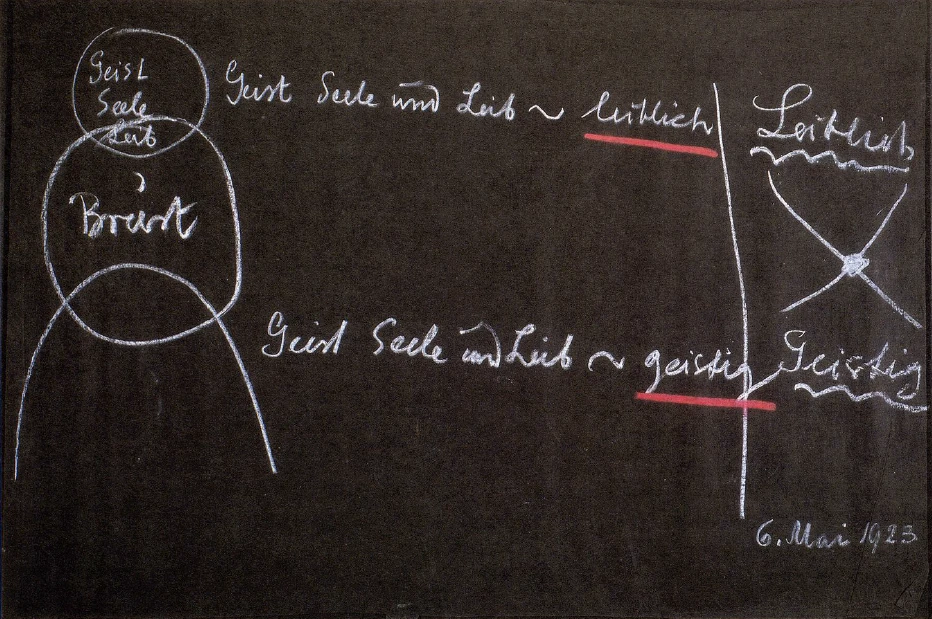
[ 5 ] Sehen Sie, das wäre krasser Materialismus, der alles, was über den Materialismus hinausgeht, als Dichtung erklärt. Und man könnte sagen: Wenigstens ein konsequenter Standpunkt! Allein das ist die Sache nicht in Friedrich Albert Langes Buch. Wenn er nur so weit ginge, wie ich Ihnen bis jetzt erzählt habe, so wäre er eben ein konsequenter Materialist. Schön. Ich habe Ihnen ja gestern gesagt, der konsequente Materialismus ist gar nicht zu widerlegen. Und wenn jemand nun keinen Zugang zur geistigen Welt hat — Friedrich Albert Lange hatte ganz gewiß keinen —, dann kann er eigentlich nichts anderes, als eben den Materialismus aufstellen als die einzig gültige Weltansicht.
[ 5 ] You see, that would be extreme materialism—declaring everything that goes beyond materialism to be fiction. And one might say: At least it’s a consistent position! But that’s not the point in Friedrich Albert Lange’s book. If he went only as far as I have described to you so far, he would simply be a consistent materialist. Fine. As I told you yesterday, consistent materialism cannot be refuted at all. And if someone has no access to the spiritual world—Friedrich Albert Lange certainly did not—then he can really do nothing else but posit materialism as the only valid worldview.
[ 6 ] Aber das tut er nämlich nicht, sondern Friedrich Albert Lange sagt noch etwas anderes, was, ich möchte sagen, wie der rote Faden durch alle Ausführungen seines Buches hindurchgeht. Er sagt: Das ist schon richtig, man kann nur die materielle Atomenwelt als real annehmen. Aber wenn man das annimmt, wenn man nun hergeht und sagt, da wirkt im Raume die materielle Atomenwelt, so und so angeordnet im Wasserstoff, im Stickstoff, so und so zusammenwirkend, wenn Vorstellungen im Gehirn ausgekocht werden, und so weiter — wenn man das alles annimmt, so ist das zuletzt auch nur eine Begriffs-Dichtung. Also der Materialismus, zu dem man sich notwendig bekennen muß, der ist selbst eigentlich nur ein Idealismus, denn man erdichtet ja wiederum nur die Atomenwelt.
[ 6 ] But that is not what he does; rather, Friedrich Albert Lange says something else entirely, which, I would say, runs like a common thread through all the arguments in his book. He says: It is true that one can only assume the material atomic world to be real. But if one accepts that—if one goes on to say that the material atomic world is at work in space, arranged in such and such a way in hydrogen and nitrogen, interacting in such and such a way, that ideas are concocted in the brain, and so on—if one accepts all of that, then ultimately it is nothing more than conceptual fiction. So materialism, to which one must necessarily adhere, is itself actually nothing more than idealism, for one is, after all, merely inventing the atomic world.
[ 7 ] Es gibt ein viel einfacheres Bild, um dasjenige auszudrücken, was da Friedrich Albert Lange in seinem weltberühmten Buche zum Ausdruck gebracht hat; mit Bezug auf die logische Form gibt es ein viel einfacheres Bild. Das ist nämlich die berühmte Münchhausensche Persönlichkeit, die sich an dem eigenen Haarschopf anfaßt und sich nun da in die Höhe zieht. Der Idealist nimmt sich beim iidealistischen Haarschopf und zieht sich in den Materialismus hinein.
[ 7 ] There is a much simpler image to express what Friedrich Albert Lange articulated in his world-famous book; with regard to logical form, there is a much simpler image. Namely, the famous Münchhausen character, who grabs hold of his own head of hair and pulls himself up. The idealist grabs hold of his idealistic head of hair and pulls himself into materialism.
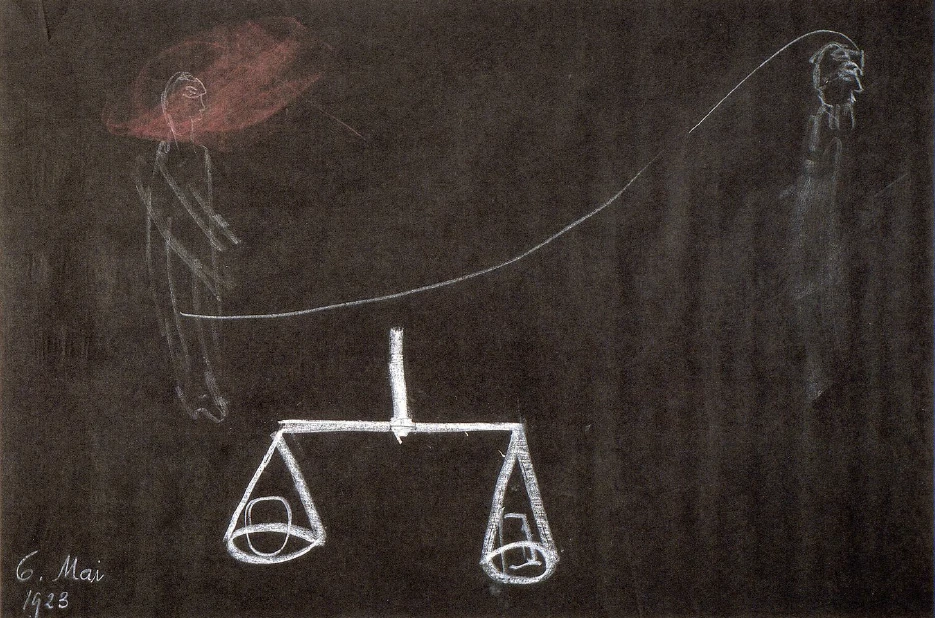
[ 8 ] Wir sehen, schon eines der weltberühmtesten Werke im Beginne des letzten Drittels des 19. Jahrhunderts ist eigentlich nichts anderes als ein ganz gewöhnlicher Unsinn, man kann gar nicht anders sagen, es ist eigentlich ein ganz gewöhnlicher Unsinn. Nicht wahr, wenn es Materialismus wäre, diese «Geschichte des Materialismus», dann wäre es wenigstens neu. Aber daß es ein materialistischer Materialismus ist, ein erdichteter Materialismus ist, ja, das ist der reine Unsinn. Aber was geschieht in diesem naturwissenschaftlich so erfolgreichen letzten Drittel des 19. Jahrhunderts? Diese historische Tatsache muß man ja vor die Seele hinstellen. Was geschieht? Friedrich Albert Langes Buch wird weltberühmt, denn es ist so ziemlich in alle Kultursprachen übersetzt worden, und die hervorragendsten, erleuchtetsten Geister haben es als eine erlösende Tat aufgefaßt.
[ 8 ] We see that even one of the world’s most famous works from the beginning of the last third of the 19th century is actually nothing more than utter nonsense; there’s simply no other way to put it—it really is utter nonsense. Isn’t that right? If it were materialism—this “History of Materialism”—then at least it would be something new. But the fact that it is a materialistic materialism, a fabricated materialism—well, that is pure nonsense. But what is happening in this last third of the 19th century, which was so successful in the natural sciences? One must, after all, hold this historical fact before one’s mind. What is happening? Friedrich Albert Lange’s book becomes world-famous, for it has been translated into virtually all major languages, and the most outstanding, most enlightened minds have regarded it as a redemptive act.
[ 9 ] Sie kennen ja die Sache, die jetzt so häufig in der Eurythmie aufgeführt worden ist: «Bim, Bam, Bum», wo der eine Ton, Bam, hinter dem Tone Bim dahinfliegt; aber Bim hat sich dem Bum ergeben:
[ 9 ] You are familiar with the piece that has been performed so often in eurythmy: “Bim, Bam, Bum,” where the note “Bam” flies after the note “Bim”; but “Bim” has surrendered to “Bum”:
«der ist zwar auch ein guter Christ,
allein das ist es eben».
“He’s a good Christian, too,
but that’s just it.”
[ 10 ] Ich muß Sie daran erinnern: Alle diejenigen, die dann ihre Weisheit aus Friedrich Albert Lange gesogen haben und die wiederum die Ausgangspunkte dafür gebildet haben, daß ja im Grunde genommen unser ganzes öffentliches Denken von dieser Sache durchsetzt ist, es waren ja alle erleuchtete Geister — allein das ist es eben: für das letzte Drittel des 19. Jahrhunderts! Und diejenigen, die bloß Publikum waren, die haben von alledem nichts gemerkt. Und so ist ja wirklich mit Bezug auf die tiefsten Interessenfragen der Menschheit ein ungeheuer intensiver Schlafzustand heraufgezogen.
[ 10 ] I must remind you: All those who drew their wisdom from Friedrich Albert Lange—and who, in turn, laid the groundwork for the fact that, fundamentally, our entire public thinking is permeated by this idea—were, after all, enlightened minds—but that is precisely the point: this was true only for the last third of the 19th century! And those who were merely part of the general public took no notice of any of this. And so, when it comes to the deepest questions concerning humanity’s interests, an incredibly deep state of slumber has indeed set in.
[ 11 ] Sie werden sagen: Die Dinge sind übertrieben. — Sie sind eben nicht übertrieben! Bloß die Tiefe des Schlafzustandes, der die Menschheit befallen hat in bezug auf die größten Fragen des geistigen Lebens, die Tiefe dieses Schlafzustandes ist eben untertrieben, nicht ist das, was ich gesagt habe, übertrieben, sondern die allgemeine Anschauung über diese Dinge ist eben untertrieben. Und man muß, wenn überhaupt ein gesundes Fundament entstehen soll für ein zukünftiges Geistesleben, diese ganze schwerwiegende Tatsache, wie ich sie eben charakterisiert habe, sich vor die Seele rücken, mit aller Intensität sich vor die Seele rücken. Denn dadurch ist ja überhaupt das Interesse der Menschheit für die geistige Welt ausgeschaltet worden aus der Entwickelung dieser Menschheit. Und nach und nach wurde die Sache so, daß man jemanden um so mehr für einen großen Wissenschafter gehalten hat, je weniger er geistige Probleme nur überhaupt berührt hat. Das war die Situation um die Jahrhundertwende.
[ 11 ] You will say: These things are exaggerated. — But they are not exaggerated at all! It is simply that the depth of the slumber that has overtaken humanity with regard to the greatest questions of spiritual life—the depth of this slumber—is, in fact, underestimated. It is not what I have said that is exaggerated, but rather the general view of these matters that is underestimated. And if a sound foundation is to be laid at all for a future spiritual life, one must bring this entire grave reality—as I have just characterized it—before one’s soul, bring it before one’s soul with all intensity. For it is precisely this that has eliminated humanity’s interest in the spiritual world from the very course of human development. And gradually, the situation came to be such that the less a person even touched upon spiritual problems, the more he was regarded as a great scientist. That was the situation at the turn of the century.
[ 12 ] In diese Situation hinein versetzt war dann dasjenige, was Anthroposophie sein wollte. Und so muß, wenn ich mich so ausdrücken darf, die Aufgabe der Anthroposophie aufgefaßt werden. Sie muß so aufgefaßt werden, daß sie tatsächlich aus dem Fundamente heraus arbeiten muß, nicht anknüpfen darf an dies oder jenes, das bei der einen oder anderen Richtung schon da ist. Es ist eben nichts da, und man muß aus dem Fundamente heraus das Wesen des Anthroposophischen verstehen. Dann, wenn man aus dem Fundamente heraus das Wesen des Anthroposophischen versteht, wird man finden, daß die Tatsachen, die gerade durch die Naturwissenschaften vorliegen, überall im höchsten Maße brauchbar sind für anthroposophische Forschung und daß diese Tatsachen der Naturwissenschaft erst ihre richtige Beleuchtung finden durch anthroposophische Forschung. So muß die Situation aufgefaßt werden. Aber dazu ist notwendig, daß sich wirklich ein gewisser Teil der Menschheit entschließt, den Intellektualismus ins Spirituelle hinüberzuführen.
[ 12 ] It was into this situation that what sought to be anthroposophy found itself. And so, if I may put it this way, the task of anthroposophy must be understood in this way. It must be understood in such a way that it actually works from the foundation up; it must not build upon this or that which already exists in one school of thought or another. There is simply nothing there, and one must understand the essence of anthroposophy from the foundation up. Then, when one understands the essence of anthroposophy from the very foundation, one will find that the facts provided by the natural sciences are, everywhere, of the greatest use for anthroposophical research, and that these facts of the natural sciences only find their proper illumination through anthroposophical research. This is how the situation must be understood. But for this to happen, it is necessary that a certain portion of humanity truly resolve to lead intellectualism over into the spiritual realm.
[ 13 ] Gewiß, die Menschen, die sich der anthroposophischen Bewegung anschließen, sind ja alle tief erfüllt von einem gewissen Drang und Hang nach der geistigen Welt. Aber die wenigsten lieben es, auch die Ideenwelt der Gegenwart hinüberzuführen ins Spirituelle. Man möchte mit Ausschaltung der Ideenwelt Anthroposophie sozusagen wie eine Art Gemütstrost in sich aufnehmen. Das aber wird nicht genügen, um der Anthroposophie ihre impulsive Kraft im geistigen Leben zu geben. Sehen Sie, was da in Betracht kommt, das muß wirklich im einzelnen, Konkreten erfaßt werden, und da will ich Ihnen heute gerade ein einzelnes konkretes Beispiel vorführen.
[ 13 ] Certainly, the people who join the anthroposophical movement are all deeply filled with a certain urge and inclination toward the spiritual world. But very few of them love to carry the world of ideas of the present over into the spiritual realm. People would like to embrace anthroposophy—so to speak—as a kind of solace for the soul, while setting aside the world of ideas. But that will not be enough to give anthroposophy its impetus in spiritual life. You see, what is at stake here must truly be grasped in its particular, concrete details, and today I would like to present just one specific, concrete example to you.
[ 14 ] Ich habe es Ihnen ja öfter gesagt: Dasjenige, was Sie heute als Kopf aufgesetzt haben, das ist der umgewandelte Organismus des vorigen Lebens. Nur muß man von diesem Organismus des vorigen Erdenlebens den Kopf wegdenken. Es ist wirklich so. Da war man im vorigen Erdenleben, den Kopf muß man wegdenken, der löst sich auf im Weltenall. Dasjenige aber, was der übrige Organismus ist, das wird nun der Kopf des nächsten Erdenlebens. Und aus diesem Organismus wird wiederum der Kopf des nächsten Erdenlebens und so weiter. So ist die Sache.
[ 14 ] I’ve told you this many times before: What you have on your head today is the transformed organism from your previous life. You just have to mentally set aside the head from this organism of your previous earthly life. It really is true. There you were in your previous earthly life—you have to mentally set aside the head, for it dissolves into the cosmos. But what remains of the organism becomes the head of your next earthly life. And from this organism, in turn, the head of the next earthly life is formed, and so on. That is how it is.
[ 15 ] Nun kann ja heute wiederum jemand sagen: Aber nicht nur mein Kopf ist begraben worden im vorigen Erdenleben, sondern auch mein übriger Organismus. Der hat ja gar keine Gelegenheit gehabt, sich zu verwandeln in den Kopf meines diesmaligen Erdenlebens. — Ja, das ist ja eine ganz oberflächliche Auffassung. Da sehen Sie nicht hin auf Ihren Kopf und auf den übrigen Organismus, sondern da sehen Sie hin auf die physische Materie, die heute Ihren Kopf ausfüllt. Ja, die ändert sich auch während des Erdenlebens ungefähr alle sieben Jahre. Was Sie heute als Ihre Materie in sich tragen, das haben Sie vor acht Jahren noch nicht gehabt. Dasjenige, was durch das Erdenleben durchgeht, das ist ja die durchaus unsichtbare übersinnliche Form.
[ 15 ] Now, of course, someone might say today: “But it wasn’t just my head that was buried in my previous earthly life—my entire organism was as well.” It didn’t have any opportunity at all to transform into the head of my present earthly life.” — Yes, that is a very superficial view. You are not looking at your head and the rest of your body, but rather at the physical matter that fills your head today. Yes, that, too, changes roughly every seven years during an earthly life. What you carry within you today as your physical matter is something you did not have eight years ago. What passes through the earthly life is, after all, the completely invisible, supersensible form.
[ 16 ] Die Materie, die Ihren Kopf ausfüllt, die haben Sie natürlich erst in diesem Erdenleben aufgenommen. Aber die Form, die übersinnlichen Kräfte, die sich heute zu den Augen runden, die die Nase aufstülpen, sind dieselben Kräfte, die im vorigen Erdenleben Arme und Beine und den übrigen Organismus eben gebildet haben. Daß Sie mit physischen Sinnen von den anderen Menschen gesehen werden, das rührt davon her, daß ganz gestaltlose Materie Ihre Gestalt ausfüllt. Es ist ja nicht die Materie, die Ihnen die Gestalt gibt. Wenn Sie Salz essen, so will ja das Salz würfelförmig sein, es will nicht nasenförmig sein, auch nicht augenförmig, es will würfelförmig sein und so weiter. Daß Sie die Gestalt haben, als die Sie als Mensch erscheinen, das haben Sie ja nicht von der Materie, die der Grund Ihrer physischen Sichtbarkeit ist; aber die Gestalt Ihres gegenwärtigen Kopfes, die ist wirklich durch Metamorphosen hindurchgegangen, durch die Gestalt Ihres Organismus außer dem Kopfe des vorigen Erdenlebens. Dadurch aber war ja Ihr Kopf wirklich in einer außerordentlich günstigen Situation. Weil er so gut behandelt worden ist im Weltenall, deshalb ist er auch zuerst, als ein richtig gestalteter Kopf, im Embryonalleben aufgetreten. Denken Sie sich nur, der Kopf ist ja zuerst sehr schön ausgebildet, das andere hängt im ersten Embryonalleben wirklich nur wie Nebenorgane daran. Das muß erst von außen gestaltet werden, sieht eigentlich furchtbar aus im Verhältnis zur Menschengestalt, wenn man es betrachtet, während der Kopf von Anfang an eigentlich sehr schön schon ausgebildet ist. Wer allerdings nur den ausgewachsenen Menschen gelten läßt, für den wird ja auch der Kopf des Embryos etwas Unsympathisches haben, aber eigentlich ist er schon schön ausgebildet. Das ist, weil er sich seine Gestaltungskräfte aus dem vorigen Leben mitbringt.
[ 16 ] The matter that fills your head is, of course, something you have only taken in during this earthly life. But the form—the supersensible forces that today shape your eyes into their rounded form and give your nose its shape—are the same forces that formed your arms, legs, and the rest of your organism in your previous earthly life. The fact that you are seen by other people with their physical senses stems from the fact that completely formless matter fills your form. It is not, after all, the matter that gives you your form. When you eat salt, the salt wants to be cube-shaped; it does not want to be nose-shaped, nor eye-shaped—it wants to be cube-shaped, and so on. The fact that you have the form in which you appear as a human being does not come from the matter that is the basis of your physical visibility; but the form of your present head has indeed undergone metamorphoses through the form of your organism outside the head of your previous earthly life. As a result, however, your head was truly in an extraordinarily favorable situation. Because it had been treated so well in the cosmos, it was the first to appear—as a properly formed head—during embryonic life. Just imagine: the head is, in fact, very beautifully formed from the start, while the rest of the body in the early embryonic stage really hangs on to it only as accessory organs. The rest must first be shaped from the outside; it actually looks quite terrible in relation to the human form when you look at it, whereas the head is, in fact, already very beautifully formed from the very beginning. However, for those who consider only the fully grown human being, the embryo’s head will seem somewhat unappealing, but in reality it is already beautifully formed. This is because it brings its formative powers with it from its previous life.
[ 17 ] An diesem Kopfe ist also eigentlich so gearbeitet worden zwischen dem Tod und der jetzigen Geburt, wie ich das in den Vorträgen über Kosmologie, Religion und Philosophie vor längerer Zeit im Goetheanum drüben aufgestellt habe. Dieses Arbeiten zwischen Tod und neuer Geburt bezieht sich eben auf die Ausgestaltung der Formkräfte des menschlichen Hauptes.
[ 17 ] So, in this head, the work that took place between death and the present birth was actually carried out in the way I described some time ago in the lectures on cosmology, religion, and philosophy at the Goetheanum. This work between death and new birth relates precisely to the shaping of the formative forces of the human head.
[ 18 ] Deshalb aber ist das Haupt des Menschen gegenüber dem Kosmos etwas außerordentlich Vollkommenes. Das Haupt des Menschen enthält eigentlich materiell das Abbild des Geistes, der Seele und des Leibes des Menschen. Wenn man also das Haupt ins Auge faßt, so hat man da auf materielle Art, indem sie in der gestalteten Materie erscheinen, zusammenwirkend Geist, Seele und Leib. Man könnte sagen: Für das Haupt des Menschen ist Geist, Seele und Leib noch leiblich. Sehen Sie, das ist das Geheimnis des menschlichen Hauptes, daß auf leibliche Art da der Geist auftritt, daß wir an dem Wunderbau des Gehirns materiell aufzeigen können: dieser Wunderbau ist ein Bild des Geistes. Wie der Siegellack das ausdrückt, was auf dem Petschaft ist, so haben wir durch das Haupt materiell Geist, Seele und Leib gegeben.
[ 18 ] That is why, in relation to the cosmos, the human head is something extraordinarily perfect. The human head actually contains, in a material sense, the image of the human spirit, soul, and body. So when one looks at the head, one sees—in a material way, as they appear in shaped matter—the spirit, soul, and body working together. One could say: For the human head, the spirit, soul, and body are still physical. You see, this is the mystery of the human head: that the spirit appears there in a physical form, so that we can point to the marvelous structure of the brain as a material manifestation: this marvelous structure is an image of the spirit. Just as sealing wax expresses what is on the seal, so too are spirit, soul, and body given to us in a material form through the head.
[ 19 ] Bei dem Stoffwechsel-Gliedmaßen-Menschen ist es so, daß Sie sagen können: Da ist eigentlich alles mehr oder weniger physisch vorhanden. Die Beine, diese zwei Säulen, haben ja noch nichts von dem Wunderbau des menschlichen Hauptes. Sie werden erst eine Metamorphose durchmachen. Sie werden als Unterkiefer mit seiner wunderbaren Funktion und Beweglichkeit im nächsten Erdenleben erscheinen, während die Arme nach der Umwandlung im nächsten Leben hineingeheimnißt sind in den Oberkiefer und so weiter. So daß man sagen kann: In dem Bewegungssystem — es sind allerdings schon die Arme etwas umgestaltet, nachdem der Mensch seinen aufrechten Gang sich angeeignet hat —, da ist im wesentlichen das Umgekehrte der Fall, da ist Geist, Seele und Leib eigentlich geistig. Da sind Geist, Seele und Leib durchaus ein Geistiges.
[ 19 ] With the Metabolic-Limb-Human, you can say: Everything is actually more or less physically present. The legs, these two pillars, do not yet possess any of the marvelous structure of the human head. They will first undergo a metamorphosis. In the next earthly life, they will appear as the lower jaw with its marvelous function and mobility, while the arms, after their transformation in the next life, will be incorporated into the upper jaw, and so on. So one can say: In the musculoskeletal system—although the arms have already been somewhat reshaped since humans acquired their upright gait—the opposite is essentially true; there, the spirit, soul, and body are actually spiritual. There, the spirit, soul, and body are thoroughly spiritual.
[ 20 ] Man möchte sagen, so wie der Mensch materiell aussieht in bezug auf seine Beine und alles dasjenige, was da dran hängt, so ist das nicht wahr. Es wird erst in seiner wahren materiellen Gestalt sich im nächsten Erdenleben zeigen, wenn es Kopf geworden ist. Jetzt ist es ganz im Anfange, ist eigentlich in dem, als was es materiell erscheint, ganz unwesentlich. Das Wesentliche daran ist dasjenige, was es erst durch den Willen wird: die Bewegung, die Dynamik, die Statik, alles dasjenige, was der Mensch von seinem Bewegungssystem in den Willen überführt. Also was geistig ungreifbar, was geistig übersinnlich ist, das ist dasjenige, was dieser übrige Mensch ist. Während also der Kopf bei jedem materiellen Wesen ein Abbild des Geistes ist und der Geist selbst da leiblich erscheint, ist beim Bewegungssystem der Leib kaum leiblich. Man muß überall, wenn man überhaupt in dem ganzen Bewegungssystem einen Sinn finden will, aufsuchen: Inwiefern taugt das Leibliche zum Geistigen, zur geistigen Offenbarung des Menschen? So daß man sagen kann: Das ist das ganz großartige Mysterium des Kopfes, daß Geist, Seele und Leib leiblich sind. Daß Geist, Seele und Leib geistig sind, das ist das großartige Mysterium des unteren Menschen.
[ 20 ] One might be tempted to say that, just as a human being appears physically in terms of their legs and everything attached to them, that is not the truth. It will only reveal itself in its true physical form in the next earthly life, when it has become a head. Right now it is still in its very early stages; in fact, in its material appearance, it is entirely insignificant. What is essential about it is what it becomes only through the will: the movement, the dynamics, the statics—everything that a person transfers from their motor system into the will. So what is spiritually intangible, what is spiritually supersensible, is what constitutes the rest of the human being. Whereas the head is a reflection of the spirit in every material being—and the spirit itself appears physically there—in the case of the motor system, the body is scarcely physical at all. If one wishes to find any meaning at all in the entire motor system, one must ask everywhere: To what extent is the physical suitable for the spiritual, for the spiritual revelation of the human being? So that one can say: This is the truly magnificent mystery of the head—that spirit, soul, and body are physical. That spirit, soul, and body are spiritual—that is the magnificent mystery of the lower human being.
[ 21 ] Sehen Sie, das Alte Testament hat aus dem instinktiven Hellsehen viel besser über diese Dinge Bescheid gewußt als der heutige Mensch. Der heutige Mensch überschätzt eigentlich den Kopf. Ich habe das ja von verschiedenen Gesichtspunkten aus schon auseinandergesetzt. Im Alten Testament werden Sie niemals die Illusion hingestellt finden, als ob das Gehirn Träume aushecke! Es wird davon geredet: Jahve peinigte den Menschen im Schlafe in bezug auf seine Nieren. Da wußte man, daß im Stoffwechselsystem dasjenige liegt, was sich im Träumen darstellt. Da schrieb man nicht alles dem Kopfe zu. Warum schreibt man denn heute eigentlich alles dem Kopfe zu? Das will ich Ihnen sagen: An den Geist glaubt man nicht, deshalb schaut man auf dasjenige am Menschen nicht hin, wo selbst der Leib noch geistig ist. Auf den unteren Menschen schaut man eigentlich nicht hin, da ist man nicht stolz darauf. Aber man schaut auf das, wo selbst der Geist leiblich-materiell ist, auf den Kopf: Auf das ist man stolz, weil da der Geist materiell-leiblich wird.
[ 21 ] You see, the Old Testament understood these things much better—based on instinctive clairvoyance—than people do today. People today actually overestimate the role of the mind. I have already discussed this from various perspectives. In the Old Testament, you will never find the illusion presented that the brain concocts dreams! It speaks of how Yahweh tormented people in their sleep through their kidneys. Back then, people knew that what manifests in dreams lies within the metabolic system. They did not attribute everything to the head. Why, then, do people today attribute everything to the head? I’ll tell you why: People do not believe in the spirit, so they do not look at that part of the human being where even the body is still spiritual. They do not really look at the lower part of the human being; they are not proud of it. But they look at that part where even the spirit is physical and material—the head: They are proud of that, because that is where the spirit becomes physical and material.
[ 22 ] Also Überschätzung des Kopfes, das ist schon Materialismus. Man will bloß die Materie und will auch den Geist bloß als Materie haben. Deshalb findet man heute in unseren physiologischen, in unseren wissenschaftlichen Darstellungen den Kopf so beschrieben, wie er beschrieben wird, weil man den Geist nur materiell haben will. Das ist er, aber im Kopfe. Nur natürlich weiß man nichts davon, daß, bevor dieser Kopf den Geist bis zur leiblichen, das heißt materiellen Bildhaftigkeit herunterbringen konnte, er durchgehen mußte durch das ganze Leben zwischen dem Tod und einer neuen Geburt. Daß überhaupt dieses materielle Abbild des Geistes des Menschen im Kopf hat entstehen können, dem mußte eine lange geistige Entwikkelung vorangehen. Diese materielle Wunderbildung des menschlichen Gehirns ist der Abschluß einer wunderbaren Geistesentwikkelung. Aber man will bloß auf das Materielle sehen, will auch bloß den Geist in seiner materiellen Form gelten lassen.
[ 22 ] So, overestimating the head—that is already materialism. One wants only matter and wants the spirit, too, to be nothing but matter. That is why, in our physiological and scientific descriptions today, the head is described the way it is: because one wants the spirit to be only material. That is what it is, but within the head. Of course, people are unaware that before this head could bring the spirit down to a physical—that is, material—form, it had to pass through the entire life between death and a new birth. For this material image of the human spirit to have come into being in the head at all, it had to be preceded by a long spiritual development. This miraculous material formation of the human brain is the culmination of a wondrous spiritual development. But people want to focus solely on the material; they also want to acknowledge the spirit only in its material form.
[ 23 ] Nun, jetzt wollen wir einmal uns entschließen, meine lieben Freunde, recht achtzugeben. Man kann ja auch, wenn man schon über das vierzehnte Jahr hinaus ist, trotzdem noch recht achtgeben. Nicht wahr, da haben wir oben eine Region im Menschen, die ist ganz leiblich, und da haben wir unten eine Region im Menschen, die ist ganz geistig. Ja, muß es da nicht einen Zwischenpunkt geben, der weder ganz leiblich noch ganz geistig ist, der beides ist, folglich keines von beiden? Es muß also da in der Mitte einen neutralen Punkt geben, wo das Geistige ins Leibliche und das Leibliche ins Geistige übergeht, wo keines von beiden da ist, wo der Mensch weder abhängig von oben, noch abhängig von unten ist, wo er unabhängig von beiden ist. Das muf3 es da irgendwo in der Mitte geben.
[ 23 ] Well, let’s resolve, my dear friends, to pay close attention. Even if one is already past the age of fourteen, one can still pay close attention. Isn’t that right? Up above, we have a region within the human being that is entirely physical, and down below, we have a region within the human being that is entirely spiritual. Yes, mustn’t there be a middle point that is neither entirely physical nor entirely spiritual—that is both, and therefore neither? So there must be a neutral point in the middle where the spiritual transitions into the physical and the physical into the spiritual, where neither is present, where the human being is neither dependent on what is above nor on what is below, where he is independent of both. That must exist somewhere in the middle.
[ 24 ] Wollen wir uns die Bedeutung dieses Punktes, der also im mittleren Menschen, im Brust-Menschen, liegen muß, einmal klarmachen. Denken Sie sich, Sie haben hier eine Waage. Denken Sie sich hier eine Last, auf der anderen Seite Gewichte; nun bringen Sie ein Gleichgewicht hervor. Ich darf nicht hier ein Übergewicht geben, sonst geht das herunter, ich darf auch nicht dort ein Übergewicht geben, sonst geht das herunter, ich darf auch nichts wegnehmen, sonst bewegt sich das Ganze. Aber sehen Sie, hier ist ein Punkt, ein neutraler Punkt. In diesen Punkt könnten Sie hineinbringen so viel Sie wollten, nichts würde geändert im Gleichgewicht der Waage. Sie könnten auch die Waage da nehmen, und wenn Sie vermeiden, daß irgendwo ein Übergewicht entsteht durch irgendeinen Schwung oder so etwas, so können Sie die Waage überall herumbewegen, das Gleichgewicht bleibt dasselbe. Sie können während der Bewegung richtig das Wägen ausführen. Das ist ein Punkt, der überhaupt das ganze System der Waage nichts angeht, ein Gleichgewichtspunkt. An dem können Sie ausführen, was Sie wollen, so ändert sich für die übrigen Verhältnisse der Waage gar nichts. Da hat zum Beispiel einer hier eine Last darauf, auf der anderen Seite Gewichte. Jetzt fällt ihm ein: Der Waagebalken ist von Eisen, das gefällt mir nicht, ich mache ihn aus Gold. — Nun braucht er nur den Mittelpunkt etwas zu vergrößern, denn eigentlich ist der Ruhepunkt ein mathematischer Punkt, aber man wird ihn etwas vergrößern können. Man kann ganz gut Gold hier hereinbringen in den Ruhepunkt: Das Gleichgewicht wird nicht geändert. Wenn Sie das Gold hier irgendwo hinbringen — außerhalb des Mittelpunktes —, dann ändert sich gleich das Gleichgewicht. Aber wenn einer da einen hohlen Raum erzeugen und Fleisch hineinbringen will, so kann er das auch, es ändert sich das Gleichgewicht dadurch nicht. Ein anderer bringt Butter hinein: Die Butter schmilzt in der Sonne, das Gleichgewicht der Waage ändert sich nicht. Kurz, es ist eben hier ein Punkt, ganz unabhängig von dem ganzen System der Waage, wo Sie machen können, was Sie wollen.
[ 24 ] Let us try to clarify the significance of this point, which must therefore lie within the middle human being, the chest-human. Imagine you have a set of scales here. Imagine a load on one side and weights on the other; now bring them into balance. I must not add too much weight here, or it will tip down; nor must I add too much weight there, or it will tip down; nor must I remove anything, or the whole thing will shift. But look, here is a point—a neutral point. You could add as much as you wanted to this point, and nothing would change in the balance of the scale. You could also take the scale there, and as long as you avoid creating an imbalance anywhere—due to a swing or something like that—you can move the scale around anywhere, and the balance remains the same. You can actually weigh things accurately while it’s moving. This is a point that has absolutely nothing to do with the entire system of the scale—a point of equilibrium. You can do whatever you want at that point, and it won’t change the balance of the scale in any way. For example, suppose someone has a load on one side here and weights on the other. Now it occurs to him: “The balance beam is made of iron; I don’t like that—I’ll make it out of gold.” — Now he just needs to enlarge the center point slightly, because the center of balance is actually a mathematical point, but it’s possible to enlarge it somewhat. You can easily place gold right here at the center of balance: the equilibrium won’t change. If you place the gold somewhere else here—outside the center point—then the equilibrium changes immediately. But if someone wants to create a hollow space there and put meat inside, they can do that too; it won’t change the balance. Someone else puts butter in there: the butter melts in the sun, but the balance of the scale doesn’t change. In short, there’s simply a point here—completely independent of the entire scale system—where you can do whatever you want.
[ 25 ] In derselben Lage ist der Punkt, der da zwischen dem Leiblichen und Geistigen als ein Ausgleichspunkt drinnen liegt. Der ist weder vom Leiblichen noch vom Geistigen irgendwie abhängig. Da kann der Mensch aus diesem Punkt heraus machen, was er will.
[ 25 ] The point that lies there between the physical and the spiritual, serving as a point of balance, is in the same position. It is not dependent in any way on either the physical or the spiritual. From this point, a person can do whatever they want.
[ 26 ] Wenn man sich einfach vorstellt, der Mensch ist ein leibliches Wesen und alles hängt einseitig nach Ursache und Wirkung zusammen, da findet man diesen Punkt nicht. Wenn man sich vorstellt, der Mensch ist nur ein geistiges Wesen und alles ist von oben herunter durch göttliche Welten determiniert, dann ist wiederum nichts zu machen, denn dann muß der Mensch das ausführen, was von den Göttern determiniert ist. Wenn man aber weiß: Da ist ein Gleichgewichtspunkt, da ist der Mensch gottbestimmt nach oben, materiebestimmt nach unten, und mit dem einen Punkt, der nun nachweisbar ist in seinem mittleren Menschen, mit dem kann er anfangen in der Welt, was er nur aus sich heraus anfangen will — wenn Sie diese dreifache Konstitution des Menschen haben, dann finden Sie in dem mittleren Teil wissenschaftlich streng nachweisbar die Tatsache der menschlichen Freiheit. Das kann man so sagen, das ist so wissenschaftlich, wie irgendeine quadratische Gleichung gelöst werden kann oder ein Differentialquotient gesucht werden kann oder irgend etwas. Es ist etwas, was nach den strengen Regeln der Wissenschaft behandelt werden kann. Also Freiheit ist das Ergebnis einer wirklichen Kenntnis der Konstitution des Menschen, weil es im Menschen einen Punkt gibt, der nach oben hin und nach unten so unabhängig ist, wie von der Last rechts und links das Hypomochlion der Waage unabhängig ist. Sie können die Waage überall herumtragen, können diesen Punkt ersetzen, wie ich Ihnen erzählt habe, durch was Sie wollen. So können Sie auch einen Punkt im Menschen finden, wo die Naturkausalität, die Ursachen- und Wirkungszusammenhänge aufhören, wo auch die Zusammenhänge von oben aufhören, die Determination durch die geistige Welt, wo sich beide das Gleichgewicht halten. Da, in diesem Hypomochlion der menschlichen Natur ist verbürgt die menschliche Freiheit. Und sie ist wissenschaftlich streng nachweisbar, wenn man eine wahre Physiologie und eine wahre Psychologie hat, nicht dasjenige, was man heute hat und was ja, wie ich Ihnen schon gezeigt habe, sich zum Dilettantismus im Quadrat zusammensetzt in der Psychoanalyse.
[ 26 ] If one simply imagines that human beings are physical beings and that everything is connected solely through cause and effect, then one will not find this point. If one imagines that human beings are merely spiritual beings and that everything is determined from above through divine worlds, then again there is nothing to be done, for then human beings must carry out what has been determined by the gods. But if one knows: There is a point of equilibrium, where the human being is divinely determined above and materially determined below, and with that one point—which is now verifiable in the human being’s middle realm—one can begin in the world whatever one wishes to begin from within oneself—if you have this threefold constitution of the human being, then you will find, in the middle realm, the fact of human freedom, which is scientifically verifiable. You could put it that way; it is just as scientific as solving any quadratic equation, finding a differential quotient, or anything else. It is something that can be treated according to the strict rules of science. So freedom is the result of a true understanding of the human constitution, because there is a point within the human being that is as independent upward and downward as the hypomochlion of a balance is independent of the weights on the right and left. You can carry the balance anywhere; you can replace this point, as I have told you, with whatever you want. In the same way, you can also find a point within the human being where natural causality—the relationships between cause and effect—ceases, where the influences from above also cease, including determination by the spiritual world, and where both maintain a balance. There, in this hypomochlion of human nature, human freedom is guaranteed. And it is scientifically verifiable with strict rigor, provided one has a true physiology and a true psychology—not what we have today, which, as I have already shown you, amounts to dilettantism squared in psychoanalysis.
[ 27 ] Das sind die Dinge, die den Menschen, die davon erfahren, zu denken geben sollten, indem sie folgendes ins Auge fassen. Sie können sich ja die ganze Literatur und Philosophie hernehmen, können überall nachlesen von dem Problem der Freiheit — keiner kommt mit dem Problem der Freiheit zurecht. Warum? Weil er ja gar keine wirkliche Anschauung vom Menschen hat. Die gibt es eben heute nicht außer in der Anthroposophie. Und die Tatsache, daß man mit dem Freiheitsproblem nicht zurechtkommt, die weist wiederum zurück auf die andere Tatsache, die ich Ihnen gestern, allerdings mehr mit einem humoristischen Tone, zu beleuchten versucht habe. Aber das, was ich gestern versuchte, aus einer wenigstens angeblich humoristischen Schöpfung heraus, auf humoristische Weise zu charakterisieren, das läßt sich eben durchaus auch mit allem Ernste darstellen.
[ 27 ] These are the things that should give people who learn about them pause for thought, as they consider the following. You can, of course, turn to all of literature and philosophy; you can read about the problem of freedom everywhere—yet no one can come to terms with the problem of freedom. Why? Because they have no real understanding of the human being. Such a view simply does not exist today except in anthroposophy. And the fact that people cannot come to terms with the problem of freedom points back, in turn, to the other fact that I tried to shed light on yesterday—albeit in a more humorous tone. But what I tried to characterize yesterday—in a humorous way, based on what was at least ostensibly a humorous creation—can certainly also be presented in all seriousness.
[ 28 ] Und mit Ernst muß man diese Dinge behandeln, wenn man sich auch im Ernste zur Anthroposophie bekennen will. Dann handelt es sich wirklich darum, daß man auf die echten Realitäten losgeht und diese aber auch in der entsprechenden Weise verwendet. Nicht wahr, wenn man doch nicht recht weiß: Soll man sich zum Geist bekennen, weil man den Geist nur in abstrakten Ideen kennt, oder soll man sich zum Materialismus bekennen, ja, dann wird man eben ein solcher Humorist wie der Schwaben-Vischer, dann denkt man als ein solcher Humorist ein humoristisches Weltensystem aus, das gar nicht für einen feineren Geschmack, möchte ich sagen, ist, das katarrhalische Weltensystem. Gewiß, man kann ja darüber lachen aber so mit absoluter Gewißheit kann man ja auch nicht sagen, daß das nun nicht stimmt, die Welt sei entstanden durch einen «Nieser des Absoluten». Da ist eben wiederum ein Materielles nicht in der richtigen Weise verwendet. Es handelt sich nur darum, das Materielle immer in der richtigen Weise zu verwenden. Man muß — ob man es nur erkennen will oder ob man es gebrauchen will — dieses Materielle in der richtigen Weise verwenden. Ich habe Ihnen ja davon gestern ein Beispiel gegeben, ich habe Ihnen dargestellt die Anschauung des Schwaben-Vischers, wie er tatsächlich aus dem Katarrh als aus einer zwingenden, überwältigenden Realität heraus ein ganzes Weltensystem schafft. Ja, auf dem Gebiete der Anthroposophie tut man das nicht! Da hat man auch einen Katarrh wie ich gestern, aber ich habe ihn immer nur ab und zu zur Illustration verwendet: Ab und zu kam das Katarrhalische, das Husten heraus; das war nur zur Illustration verwendet, nicht um gleich irgendwie die Grundlage zu einer Weltanschauung zu gewinnen, sondern nur um Anschauungsunterricht zu geben.
[ 28 ] And one must treat these matters seriously if one wishes to commit oneself to anthroposophy in earnest. Then it is truly a matter of engaging with genuine realities and applying them in the appropriate way. Isn’t it true that if one isn’t quite sure—should one profess faith in the spirit, since one knows the spirit only through abstract ideas, or should one profess materialism? Well, then one simply becomes a humorist like Schwaben-Vischer; as such a humorist, one devises a humorous world system that, I would say, is not at all suited to a more refined taste—the catarrhal world system. Certainly, one can laugh at it, but one cannot say with absolute certainty that it is not true—that the world came into being through a “sneeze of the Absolute.” Here, once again, the material is not being used in the right way. It is simply a matter of always using the material in the right way. Whether one merely wishes to recognize it or to make use of it, one must use this material element in the right way. I gave you an example of this yesterday; I described to you the perspective of the Swabian fisherman, who actually creates an entire world system out of catarrh as a compelling, overwhelming reality. Yes, in the field of anthroposophy, one does not do that! There, too, one has a cold, as I did yesterday, but I have always used it only occasionally for illustration: now and then the cold symptoms, the cough, would come up; that was used only for illustration, not to immediately establish some kind of foundation for a worldview, but only to provide illustrative instruction.
[ 29 ] Nicht wahr, wenn man so haltlos hinwankt zwischen der katarrhalen Materie und dem bloß ideellen Geiste, dann kommt man darauf, von der Verführung und Versuchung durch den Gott Grippo zu sprechen. Das ist ja auch nicht mehr auf dem Boden der Anthroposophie möglich. Da propagiert man ein Grippemittel, um eben der Versuchung nicht ausgesetzt zu sein, eine ganze Sündenfallmythe an den Gott Grippo anzuknüpfen! Es handelt sich darum, daß man auch das Materielle an der richtigen Ecke erfaßt und es an seinen richtigen Platz stellt.
[ 29 ] Isn’t it true that when one wavers so aimlessly between the catarrhal matter and the purely ideal spirit, one ends up speaking of seduction and temptation by the god Grippo? After all, that is no longer possible within the framework of anthroposophy. So they’re promoting a flu remedy precisely to avoid being tempted to attach an entire myth of the Fall to the god Grippo! The point is to grasp the material aspect from the right angle and place it in its proper place.
[ 30 ] Also die Dinge müssen sich wesentlich ändern. Wenn man ein solcher Geist war wie der Schwaben-Vischer im letzten Drittel des 19. Jahrhunderts, da ärgerte man sich und spuckte und räusperte sich und fand schließlich die Farce von dem Gotte Grippo. Wenn man Anthroposoph ist, so versucht man die Grippe mit unserem ja sehr wirksamen Grippemittel einfach zu bekämpfen! Das sind die Dinge, die Sie hinweisen auf den richtigen Unterschied, wie man aus dem Geiste heraus das Materielle behandelt.
[ 30 ] So things really need to change. If you were a man of the same spirit as Schwaben-Vischer in the last third of the 19th century, you would have gotten annoyed, spat, cleared your throat, and finally come up with the farce of the god Grippo. If you’re an anthroposophist, you simply try to fight the flu with our very effective flu remedy! These are the things that point to the real difference in how one approaches the material world from a spiritual perspective.
[ 31 ] Schon an der ganzen Art, wie man heute das menschliche Haupt, den menschlichen Kopf erkenntnismäßig betrachtet, sieht man, daß eigentlich die gesamte heutige Weltanschauung eine tiefe Sympathie für den Materialismus hat. Und an der Tatsache, daß man dem Freiheitsproblem ratlos gegenübersteht, drückt sich das aus, daß man eben nicht weiß, daß zwei ganz verschiedene Weltenimpulse an dem oberen Menschen und an dem unteren Menschen tätig sind. Und diejenigen, die in alten Zeiten bloß nach dem oberen Menschen geschaut haben, die haben gefunden: Der Mensch kann nicht frei sein, denn er ist überall determiniert aus der geistigen Welt heraus. Diejenigen, die heute nach dem Menschen hinschauen, die schreiben alle dem, was sich am Menschen äußert, einfach eine Naturkausalität zu. Von beiden Gesichtspunkten aus kann der Mensch nicht frei sein. Aber die geistige Kausalität gilt für den Kopf, die Naturkausalität gilt für den Stoffwechsel-Gliedmaßen-Menschen. Dazwischen liegt die rhythmische Organisation, die eben deshalb rhythmisch ist, weil sich in ihr die Dinge rhythmisch ausgleichen. In der rhythmischen Organisation liegt etwas, was weder im geistigen noch im materiellen Sinne determiniert ist, was weder determiniert noch kausaliisiert ist, was darstellt den Punkt, aus dem heraus der Freiheitsimpuls beim Menschen kommt.
[ 31 ] Just from the very way in which the human head is viewed today from a scientific perspective, one can see that, in fact, the entire contemporary worldview harbors a deep affinity for materialism. And the fact that we are at a loss when it comes to the problem of freedom reflects our failure to recognize that two entirely different cosmic forces are at work in the higher human being and the lower human being. Those who, in ancient times, looked only to the higher human being concluded: Human beings cannot be free, for they are determined in every respect by the spiritual world. Those who look at human beings today all simply attribute what manifests in human beings to natural causality. From both of these perspectives, human beings cannot be free. But spiritual causality applies to the head, while natural causality applies to the metabolic-limb aspect of the human being. In between lies the rhythmic organization, which is rhythmic precisely because things balance each other out rhythmically within it. Within the rhythmic organization lies something that is determined neither in a spiritual nor in a material sense, something that is neither determined nor subject to causality—this represents the point from which the impulse toward freedom arises in human beings.
[ 32 ] Sie sehen, an solchen konkreten Punkten kann man aufzeigen, wie Anthroposophie gerade hineinleuchtend wirkt in die tiefsten Probleme des Menschendaseins. In demselben Augenblicke, in dem aufgestellt worden ist in meinem Buche «Von Seelenrätseln» die dreigliedrige Menschennatur: Nerven-Sinnes-Mensch, rhythmischer Mensch, Stoffwechsel-Gliedmaßen-Mensch, in demselben Augenblicke war eben zurückgeleuchtet auf die «Philosophie der Freiheit», in der die Freiheit einfach als eine Tatsache hingestellt worden ist. Es war hingeleuchtet auf diese Tatsache der Freiheit, so daß man sagen konnte: Betrachtet ihr den Menschen seiner wahren Wesenheit nach als eine solche dreigliedrige Organisation, dann könnt ihr ganz wissenschaftlich exakt zur Darstellung der Freiheit im Menschen kommen, wie man zur Darstellung des Hypomochlions bei der Waage kommt oder irgendwo bei einem Kräftesystem eben zur Darstellung eines Gleichgewichtspunktes kommt, der dann da ist, unabhängig von dem übrigen Spiel der betreffenden Kräfte des Kräftesystems. Aber Sie werden daraus auch sehen, wie Sie eigentlich heute überall hinschauen können: Nirgends finden Sie ja die Wahrheit über diese Dinge vertreten. Und aus jenen mangelhaften Begriffen heraus, die ganz fernestehen der wahren Organisation des Menschen, werden die Menschen heute erzogen, bilden daraus moralische Systeme, Religionssysteme, bilden daraus namentlich soziale Systeme. Ja, kein Wunder, daß diese sozialen Systeme in solchen Ausgeburten des Denkens sich darleben, wie das an dem Beispiel so deutlich zutage tritt, das neulich von Leinhas im «Goetheanum» charakterisiert wurde, wo einer zugeben muß, daß ja die Anschauungen, die an den Marxismus anknüpfen, sich im Leben selber widerlegt haben, das Leben zeigt, daß sie nicht gelten können. Aber das ist nicht ausschlaggebend, man muß erst abwarten, bis einer wissenschaftlich beweist, daß sie nichts gelten können. Man kann eigentlich, wie es ja durch Leinhas geschehen ist, solche Dinge nur noch in Gänsefüßchen mit den eigenen Worten der Autorität anführen, denn will man sie wiederholen, dann glaubt man, es zerspringt einem der Kopf. Es dreht sich nicht nur ein Mühlrad im Kopf herum, sondern man glaubt überhaupt, es zerspringt einem der Kopf, wenn man solche Dinge nur nachdenken soll.
[ 32 ] As you can see, it is through such concrete examples that one can demonstrate how anthroposophy sheds light on the deepest problems of human existence. At the very moment when the threefold nature of the human being was presented in my book On the Mysteries of the Soul: the nervous-sensory human, the rhythmic human, and the metabolic-limb human—at that very moment, light was shed on the Philosophy of Freedom, in which freedom is simply presented as a fact. Light was shed on this fact of freedom in such a way that one could say: If you consider the human being, in terms of his true nature, as such a threefold organization, then you can arrive at a scientifically precise description of freedom in the human being, just as one arrives at a description of the hypomochlion in a balance or, in any system of forces, at a description of a point of equilibrium that exists there, independent of the rest of the interplay of the forces in that system. But you will also see from this that, no matter where you look today, you will find nowhere that the truth about these matters is represented. And based on those flawed concepts—which are entirely divorced from the true organization of the human being—people today are educated; they construct moral systems, religious systems, and, in particular, social systems from them. Indeed, it is no wonder that these social systems manifest themselves in such monstrosities of thought, as is so clearly evident from the example recently characterized by Leinhas in The Goetheanum, where one must admit that the views associated with Marxism have been refuted by life itself; life shows that they cannot hold true. But that is not decisive; one must first wait until someone scientifically proves that they cannot hold true. In fact, as Leinhas has done, one can only cite such things in quotation marks using the authority’s own words; for if one were to repeat them, one feels as though one’s head would explode. It is not merely a millwheel turning in one’s head, but one actually feels as though one’s head would explode just from having to think about such things.
[ 33 ] Das ist notwendig, daß man nicht bloß innerhalb der anthroposophischen Bewegung sich mitbewegt und draußen alles grad und krumm gehen läßt, sondern daß man sich interessiert zunächst dafür, wie chaotisch allmählich unsere Erkenntnis und dasjenige, was aus dieser Erkenntnis in der Welt vielfach geschöpft worden ist, sich eigentlich ausnimmit.
[ 33 ] It is necessary not merely to go along with the anthroposophical movement while letting everything outside it take its own course, but rather to take an interest, first and foremost, in how chaotic our knowledge—and the many things that have been created in the world as a result of this knowledge—actually are.