

Three Perspectives on Anthroposophy
Cultural Phenomena
from the Perspective of Spiritual Science
GA 225
15 July 1923, Dornach
Translated by Steiner Online Library
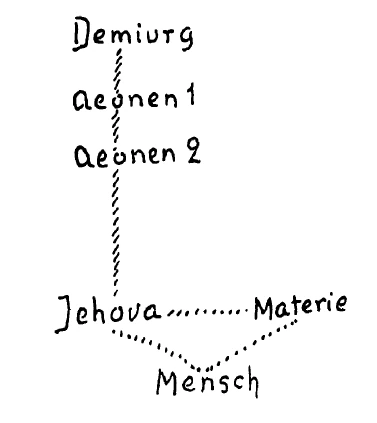
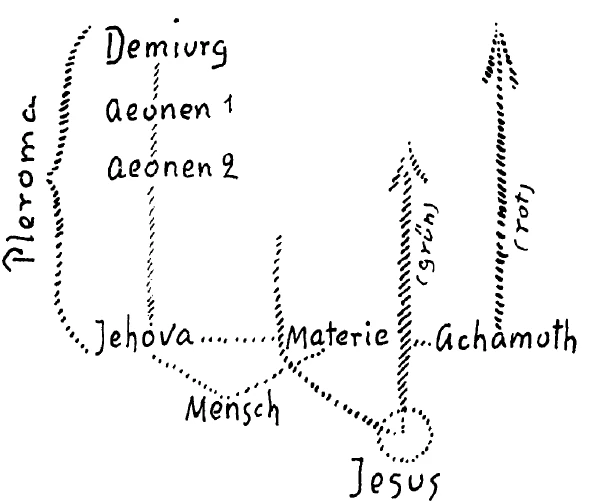
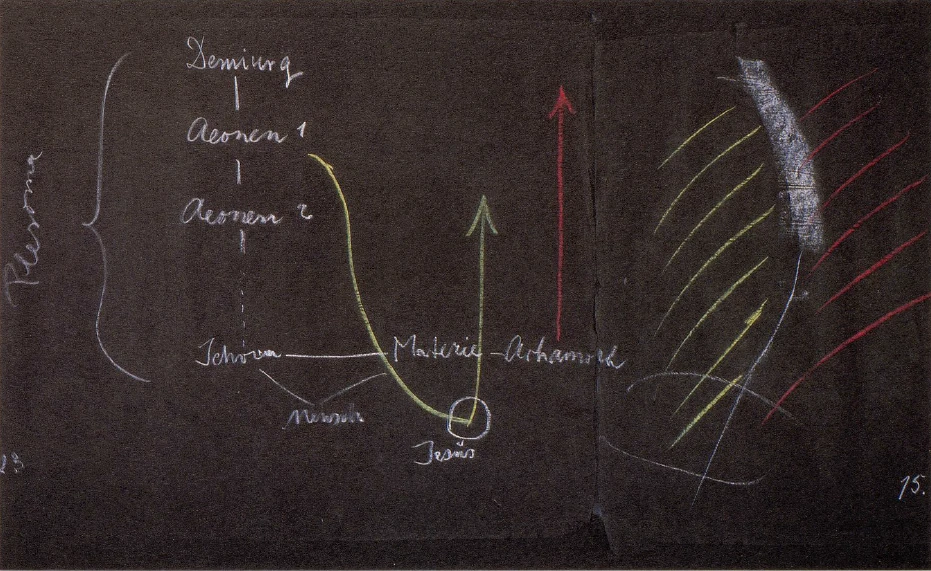
7. The Gnostic Foundations of Pre-Christianity: An Imagination of Europe
[ 1 ] In the present age, when so much is at stake and when humanity faces very profound questions, it is necessary to rise to the spiritual level even when considering contemporary phenomena. For the spiritual is by no means an abstraction, but rather something that rises above the physical and exerts its influence upon the physical. And the person who sees only the physical—or, for my part, even the physical imbued with spirit—observes, after all, only a part of the world in which human beings are engaged through their thinking and actions. For centuries, this view had a certain validity. However, this validity no longer applies to the present and the near future. And so today you see that we have begun to point out events of our present in their direct connection with events taking place in the spiritual world and with the physical events occurring on Earth.
[ 2 ] But before this is possible, we must bring to mind some of what has existed spiritually in the development of humanity and has led to the present historical moment. Throughout long periods of time, only one phase of world development has actually been decisive for Western civilization and for everything that has grown out of it. This was justifiably the case. It was entirely justified that, in the times when the Bible with its Old Testament was a necessity, the starting point was taken from that moment in world history when the creation of humankind is depicted through the intervention of Yahweh or Jehovah.
[ 3 ] In an earlier era of human thought and worldview, this moment in the world’s development—when Yahweh or Jehovah intervened in it—was merely a later moment, not the one that was looked back upon as the truly decisive one. Rather, in earlier times, what might be called the creation of the world by Yahweh or Jehovah—according to the Old Testament—was thought to have been preceded by a different development, a development whose content was conceived of as far more spiritual than anything that was later presented in connection with the Bible, as it was commonly understood. The moment recorded in the Bible—the creation of humankind by Yahweh or Jehovah—was, for earlier times, a later moment, and it was preceded by a different development that presented Yahweh or Jehovah himself as the being who intervened in the development of the world later than other beings.
[ 4 ] Even in ancient Greece, when reflecting on the earliest stages of the world’s development, people looked back to an older being—one whose comprehension required a far more spiritual understanding than is found in the Old Testament—and they referred to the very being who, in Greece, was conceived as the true creator of the world, the Demiurge. The Demiurge was conceived as a being existing in spheres of the highest spirituality—spheres of such supreme spirituality that there was yet no need to conceive of any material existence connected with the kind of humanity whose creator, according to the Bible, is regarded as Yahweh or Jehovah.
[ 5 ] We are thus dealing with a very sublime being in the Demiurge, a being as the creator of the world whose creative power essentially consists in, if I may put it this way, bringing forth spiritual beings from within himself. Step by step, in a sense increasingly lower—the expression is certainly not entirely accurate, but we have no other—step by step, the beings that the Demiurge brought forth from himself became increasingly lower; yet these were beings far removed from being subject to earthly birth or earthly death.
[ 6 ] In Greece, this was indicated by the fact that they were called “aeons,” and a distinction was made—I would say—between aeons of the first kind, aeons of the second kind, and so on (see diagram). These Aeons were the beings that had emerged from the Demiurge. Then, in the hierarchy of these Aeons, there was a relatively subordinate Aeonic being—that is, an Aeon of a subordinate kind—Yahweh or Jehovah. And Yahweh or Jehovah united—and here comes what was expounded, for example, in the early Christian centuries by the so-called Gnostics, though there was always a gap in their understanding—what was presented as a kind of renewal of the biblical content, but, as I said, there was always a gap in their understanding—Yahweh or Jehovah, so it was assumed, united with matter. And from this union, humanity emerged.
[ 7 ] Thus, the creation of Yahweh or Jehovah consisted—always in accordance with these ideas, which persisted well into the early Christian centuries—in his own union with matter, as a being of a lower order descending from the more exalted Aeons all the way up to the Demiurge, thereby bringing forth humankind. All that now emerges, so to speak—entirely comprehensible to earlier humanity, but no longer comprehensible to later humanity—all that which arises on the basis of what sensually surrounds us in earthly life—all of this was summarized under the term Pleroma (see diagram). The Pleroma is thus a world populated by individualized beings that rises above the physical world. In a sense, at the lowest level of this world—the world of the Pleroma—appears the human being called into existence by Yahweh or Jehovah. On the lowest level of this Pleroma, a being arises that does not actually dwell within the individual human being, nor even within a particular ethnic group, but within all of humanity; yet this being retains a memory of its descent from the Pleroma, from the Demiurge, and in turn strives back toward the spiritual. This is the entity Achamoth, with whom the Greeks symbolized humanity’s aspiration toward the spiritual. Thus, through Achamoth, there is a striving back toward the spiritual (red arrow).
[ 8 ] This worldview was then supplemented by another: that the Demiurge responded to Achamoth’s yearning and sent down a very early Aeon, who united with the man Jesus so that Achamoth’s yearning might be fulfilled. Thus, within the man Jesus lies a being from the evolution of the Aeons, conceived as having a much higher spiritual nature and a higher spiritual essence than Yahweh or Jehovah (green arrow).
[ 9 ] And among those who held this view in the early centuries of Christianity—and there were indeed many people who looked upon the mystery of Golgotha with deep fervor and sincerity— in connection with this idea, the view developed that a great mystery surrounds the man Jesus, who is indwelt by an ancient and thus primal-holy Aeon.
[ 10 ] The exploration of this mystery was pursued in a wide variety of ways. Today, it is no longer very important to reflect deeply on the individual forms in which, during the first centuries of Christianity throughout Greece—but especially in Asia Minor and the neighboring regions—it was conceived how this Aeonic being dwelt within the human being Jesus. For the concepts through which people in those days sought to approach such a mystery have long since disappeared from the realm of human thought. Within the realm of what people think today lies what surrounds them sensually, what is connected to the human being between birth and death; and at most, the human being infers from what surrounds them between birth and death what might spiritually underlie this physical-natural world. That direct relationship, that intimate connection between the human soul and the Pleroma, which once existed and was expressed in the same way as the relationship between human beings and the spiritual world—just as today the relationship between human beings and trees and shrubs, clouds and waves is expressed—all that which was present in human conceptions to form an overview, a picture of the connection between human beings and that spiritual world—which interested people far more back then than the physical world—all of that has, after all, disappeared. The direct relationship is no longer there. And we can say: The last centuries in which such conceptions were still to be found in the civilization on which European, Western civilization subsequently came to depend were the 1st, 2nd, and 3rd centuries, and a large part of the 4th century A.D. Then, from the realm of human knowledge, the possibility of rising to the world of the Pleroma disappears, and a new era begins.
[ 11 ] This marks the beginning of an era that produced thinkers such as Augustine—one of the first among them—or Scotus Erigena; it marks the beginning of the era of the Scholastics, the era in which European mysticism flourished, a time when, on the basis of knowledge, people spoke quite differently than in those ancient times. People spoke on the basis of knowledge in such a way that they turned to the sensory-physical world and attempted to extract concepts and ideas about the supersensible from this physical-sensory world.
[ 12 ] But what humanity of earlier times possessed—that direct sense of connection to the spiritual world, to the Pleroma—was no longer there. For humanity was about to enter an entirely different stage of its development. The point is not at all to define the earlier era or the era of medieval human development in terms of values, but rather to recognize what tasks humanity—insofar as it was civilized humanity—had in the various ages. One might say: That earlier era had, after all, developed a direct relationship with the Pleroma. Its task was to redevelop those spiritual powers of cognition residing within the human soul—the powers of cognition that lead toward the Spirit.
[ 13 ] Then there had to come a time—as we have often spoken of—rising from the depths of humanity, when the Pleromatic world was darkened, when human beings began to exercise abilities they had not possessed before, when human beings began to develop their own reason, their rationalism, and their thinking. In those earlier times, when there was a direct relationship with the Pleroma, people did not develop their own thinking. Everything had been attained through enlightenment, inspiration, and an instinctive, supersensory attitude; the thoughts that people held were thoughts revealed to them. That welling up and sprouting of thought, that formation of one’s own thoughts and logical connections, only emerged in later times. Aristotle had a premonition of it, but it was not fully developed until the second half of the 4th century CE. During the Middle Ages, however, every effort was made to cultivate thinking as such, so to speak, and to develop everything related to thinking.
[ 14 ] The Middle Ages, and specifically medieval scholasticism, made an immense contribution to the overall development of humanity in this regard. It developed the practice of thinking through the formation of ideas and the interconnection of ideas. It cultivated a pure technique of thinking—a technique that has since been lost.
[ 15 ] People should once again make their own what was contained in Scholasticism as a technique of thinking. But people are reluctant to do so today, because in the present day everything is geared toward passively receiving knowledge, rather than actively acquiring it, actively conquering it. Inner activity and the drive toward inner activity are lacking today; Scholasticism possessed these in the most magnificent way. Therefore, anyone who understands Scholasticism is still able today to think much better, much more incisively, and much more coherently than, say, the way people think in the natural sciences today. This way of thinking in the natural sciences is schematic, short-sighted, and incoherent.
[ 16 ] And people today should actually learn from scholasticism’s techniques and practices of thought. But this learning would have to be different from what is favored today; it would have to be a learning of action, of activity, and not merely consist in the acquisition of what has already been preformed or deduced from experimentation. And so the Middle Ages were the era in which human beings were meant to develop themselves inwardly, spiritually, and intellectually. One might say: The gods set aside the Pleroma, set aside their own revelation, because if they had continued to influence European humanity, that European humanity would not have developed the magnificent inner activity of thinking practice that emerged during the Middle Ages. And in turn, from this thinking practice emerged what modern mathematics and similar fields are—which are of direct scholastic origin.
[ 17 ] So one should imagine it this way: Over many centuries, as if by a grace from above, the spiritual world bestowed upon humanity the revelation of the Pleroma. Humanity beheld this luminous world, which revealed itself in and through light as ideas. A veil was drawn over this world, so to speak. Over in Asia, the decadent remnants of what lay behind the veil remained in human consciousness. Europe, so to speak, had a veil that rose vertically from the earth toward the heavens—one that, I might say, had its foundation below in the Ural Mountains, along the Volga River, across the Black Sea, and on toward the Mediterranean Sea. Imagine that a gigantic wall of wallpaper had been erected for Europe along the line I have just described—a wall through which one cannot see, behind which, in Asia, the last decadent remnants of the vision of the Pleroma were developing, while in Europe none of this was seen, and thus the inner practice of thought developed without any prospect of the spiritual world. Then you will have an idea of the development of medieval civilization, which brought forth such greatness from within humanity, yet failed to see anything beyond the wall of wallpaper that stretched along the Urals, along the Volga, through the Black Sea, and on to the Mediterranean—a civilization that could not see through this wall of wallpaper and for which the East was, at most, a longing, but not a reality.
[ 18 ] They were not merely alluding to it symbolically, but in very real terms, to what the European world actually was—how, under the influence, as it were, of Giordano Bruno, Copernicus, and Galileo, people told themselves that they now wanted at least to get to know the Earth; they wanted to get to know the ground, the lower realm. And then they discovered an astronomy modeled on geography, whereas the ancient geography had been modeled on astronomy with its pleromatic content. And so, in a sense, in the darkness—for the light was blocked by the world-wallpaper described above—the newer knowledge and the newer life of humanity arose.
[ 19 ] It is a common feature of human development that, during certain epochs when something specific is to emerge from humanity, other aspects of what is connected to human beings are veiled or obscured. And, essentially, it was only the decadent Eastern culture that developed on the earth’s surface behind the ‘wall of wallpaper’ for the earthly realm. In Europe, Western culture developed, remaining stuck in its earliest stages.
[ 20 ] And this is essentially the state in which the European world still finds itself today, except that it attempts, through all manner of external, historical means, to gain insight into that which—excluding any understanding of the Pleroma—has been acquired in the world of dark existence as a science, as a form of knowledge, though it is none. One gains the ability to see through these things in terms of their significance for the present when one realizes how, so to speak, to the east behind the wall of wallpaper, the former insight into the Pleroma has become increasingly decadent and has declined—that is, that a lofty yet instinctive spiritual culture acquired by humanity has taken on decadent forms over in Asia; that in Europe, the weaving and life of the human soul in the spirit have been brought down into the sphere of the physical-sensual, which, after all, was initially accessible only to people in the medieval centuries. And so, beyond the veil in the Orient, a culture arose that is not really a culture at all—one that seeks to magically replicate in earthly, physical forms what was meant to be experienced pleromatically in the weaving of the spirit. The activity and weaving of the spiritual beings in the Pleroma were to be, so to speak, brought down to Earth in stone, in a block of wood, and in their interaction with one another, one was to seek something of those spiritual effects which, if I may put it this way, are adapted to the weaving and nature of spiritual beings in the Pleroma. What is actually done only among gods was conceived as the deeds of physically-sensual idols. Idolatry took the place of the worship of the gods. And what can now be called Oriental or North-Asian-Oriental magic, which has a detrimental effect, is the factual world of the Pleroma—which was once the focus of the soul’s gaze—transposed into the sensory realm in an illegitimate manner. The magical sorcery of the shamans and its echoes in Central and North Asia—the south of Asia was also infected, but has remained relatively free of it—is the decadent form of the ancient Pleroma conception. Physical-sensory sorcery took the place of the participation of human soul forces in the divine worlds of the Pleroma. What the soul was meant to do—and had once done—was attempted with the aid of physical-sensory magical means. A thoroughly Ahrimanized Pleroma activity became, so to speak, what was being carried out on Earth—and what was being carried out in particular by the nearest spiritual beings adjacent to Earth—but from which human beings were infected.
[ 21 ] If, then, one travels eastward from the Urals and the Volga into Asia, we find—particularly in the astral world that adjoins the human earthly world—that during the centuries of the Second Middle Ages, through the centuries of the modern era up to the present day, an Ahrimanic magic has been at work—one that is practiced, in particular, by certain spiritual beings who, while standing above human beings in their etheric-astral constitution, have remained behind human beings in the development of their soul and spirit. Throughout all of Siberia, through Central Asia, and across the Caucasus—everywhere in the world immediately adjacent to the earthly realm—terrible Ahrimanic, etheric-astral beings roam, practicing Ahrimanic sorcery that has been brought down into the astral and earthly realms. And this has a contagious effect on human beings, who, after all, cannot do everything themselves, who are unskilled in such matters, but who, as I said, are infected by it, influenced by it, and thus stand under the influence of the world bordering on the Earth, which in turn borders directly on the astral realm. When something like this is described, one must be clear that what in ancient times was called a myth or the like is always based on magnificent spiritual views of nature. And when people in Greece spoke of fauns and satyrs who wove themselves into earthly events through their activities, people did not, as fanciful scholars of today imagine, construct beings in their imagination; rather, in their spiritual view of nature, they knew of those real beings who populated the astral realm—which borders directly on the earthly world—everywhere as fauns and satyrs. Around the turn of the 3rd and 4th centuries A.D., all of those fauns and satyrs migrated to the regions east of the Ural Mountains and the Volga River, toward the Caucasus. That became their home. There they underwent their further development. Before this tapestry—this cosmic tapestry—arose that which developed from the human soul as thinking and so on, as a certain dialectic. When people held fast to the inner, rigorous, and pure forms of thought—to what one must truly develop within oneself if one wishes to cultivate the pure forms of thought of Scholasticism—they cultivated precisely what needed to be cultivated according to the counsel of the spiritual forces guiding the earthly realm; then they have worked preparatively for what must come in our present and in the near future. But that purity was not present everywhere. While in the East, beyond the “wall of wallpaper,” if I may put it that way, the impulse had arisen to draw down into the earthly realm the deeds of the Pleroma, to transform the events of the Pleroma into earthly sorcery and Ahrimanized magic, to the west of the “wall of wallpaper” this impulse mingled with the striving for reason, toward dialectics, toward logic, toward the ideal comprehension of the earthly world—all that which constitutes human feelings of pleasure, all that which constitutes human feelings of well-being in sensory existence. Earthly-human, Luciferic impulses intermingled with the pure use of reason that had been developed.
[ 22 ] As a result, however, alongside what was developing there as a striving for reason and ideal practice, another astral world emerged in direct proximity to the earthly world: An astral world developed that was, so to speak, right in the midst of those who, as purely as Giordano Bruno or Galileo—or even those who came later—sought to cultivate earthly thinking, an earthly maxim of thought, and a technique of thought. In a sense, the beings of an astral world arose in between, beings who now absorb all of this into themselves—including, notably, into religious life—namely, the sensory feelings to which the rationalistic striving was to be made subservient. And so, gradually, the pure striving for thought took on a sensory-physical character.
[ 23 ] And much of what developed as such a mode of thinking as early as the second half of the 18th century—but especially in the 19th century—is permeated and interwoven with what exists in the astral world, which now permeates this rationalistic world. Human beings’ earthly desires—which were to be interpreted and recognized in a sophisticated manner through a degenerate mode of thinking—developed within them an element that served as nourishment for certain astral beings, who set out to use this thinking, which had been honed to such a high degree of acuity, solely for the purpose of penetrating the earthly world.
[ 24 ] Theories such as Marxist ones emerged that, rather than elevating thought to the spiritual realm, limited it to the mere interweaving of sensory-physical entities and sensory-physical impulses.
[ 25 ] This was something that made it increasingly possible for certain Luciferic entities, which dwell in this astral sphere, to intervene in human thought. Human thought became completely permeated by the thoughts of certain astral beings, by whom the Western world became just as possessed as the descendants of the shamans in the East.
[ 26 ] And so, at last, beings came into being who were possessed by such astral entities that had introduced human desires into acute, earthly thinking. And beings such as those who then, from the astral plane, possessed Lenin and his comrades came into being.
[ 27 ] And so we have set two worlds in contrast to one another: one to the east of the Urals, the Volga, and the Caucasus, and the other to the west of them, which, I would say, form a self-contained astral region. We have the Ural region, the adjoining Volga region, and the Black Sea, where the former wall of tapestries once stood. To the east and west of the Urals and the Volga, we have an astral territory of the Earth in which, today, beings whose life-breath is the Luciferic thinking of the West and those beings to the east of the Urals and the Volga, in the adjoining astral territory, whose life-element is the earthbound magic of the former Pleroma acts. These beings of the Ahrimanic and Luciferic kinds are drawn together. And we have there on Earth a very special astral territory in which human beings now live, with the task of seeing through it. And when they fulfill this task, they accomplish something that has been entrusted to them in the overall development of humanity in a magnificent way. But if they turn their gaze away from it, then they become inwardly permeated and possessed by all of this — possessed by that passionate union that is to be consummated, in a cosmic sense, between the Ahrimanized Asian beings and the Luciferized European beings, who strive toward one another with all cosmic lust, creating a terribly sultry astral atmosphere that, in turn, makes human beings obsessed with them. And so, gradually, to the east and west of the Urals and the Volga, an astral region has arisen, rising directly above the earth’s surface, which constitutes the earthly astral realm for beings who are the metamorphosed fauns and the metamorphosed satyrs.
[ 28 ] When we look out toward this eastern part of Europe today, we see not merely people—when we perceive reality in its entirety—but we see, in a sense, that which, over the course of the Middle Ages and the modern era, has become a kind of paradise for fauns and satyrs, who have, after all, undergone their metamorphosis, their evolution. And if one understands correctly what the Greeks envisioned in fauns and satyrs, one can also look at that development, at that metamorphosis, which the fauns and satyrs have undergone there. These beings—who, I might say, are always moving among human beings, carrying out their lustful craft in the astral realm, driven by Asian Ahrimanic magic and European Luciferic rationalism, yet infecting human beings with it—these transformed, metamorphosed satyrs and fauns are thus perceived that, toward the lower physical realm, the goat-like form has become particularly wild in them; that they possess a goat-like form that outwardly glows with a lustful radiance, while upward they have an extraordinarily intelligent head—a head that possesses a certain radiance but is the very image of every conceivable Luciferic, rationalistic refinement. These beings, who inhabit the paradise of the satyrs and fauns, are figures halfway between bears and goats, with a human physiognomy that has been subtly transformed into something both voluptuous and, at the same time, extraordinarily intelligent. For this region in the astral realm has become a paradise of satyrs and fauns during the final centuries of the Middle Ages and the first centuries of the modern era—a paradise of transformed satyrs and fauns who inhabit it today.
[ 29 ] Amid all that is happening, I would say, the humanity that has been left behind is now dancing about with its dulled concepts, describing only the earthly, while into the earthly realm there enter those things that truly belong to reality no less than those which can be seen with the physical eyes and grasped by the physical mind.
[ 30 ] What is now unfolding between Asia and Europe can only be understood when viewed in its astral -spiritual aspect; it can only be understood when one can observe what has remained as a reality over in Central and North Asia in the form of decadent shamanism—that which is now lustfully striving to cross over from there as today’s decadent magism, in order to unite, as it were, in a cosmic marriage with that which, for external reasons, has been given the name Bolshevism. There, to the east and west of the Ural and Volga regions, a union is being sought between magism and Bolshevism. What is taking place there seems so incomprehensible to humanity because it unfolds in a strange mythical form, because the Luciferic-spiritual aspect of Bolshevism is uniting with the forms of shamanism that have become utterly decadent, which are approaching the Urals and the Volga and crossing into this region. From west to east, from east to west, events intertwine in this way—events that are precisely those of the paradise of the satyrs and fauns. And what flows in from the spiritual realm into the human world is the result of this lustful interplay between the satyrs and fauns who migrated here from ancient times and that which, in a sense, the Western spirits—who develop only the intellectual, that which belongs to the head—have formed within themselves, and who then seek to unite with the satyrs and fauns who have come over from Asia.
[ 31 ] I would say that, viewed from the outside, it looks as if those cloud-like spiritual formations are clustering together the farther they advance eastward toward the Urals and the Volga, while the other body remains indistinct—as if these formations were clustering together to form one might even say, voluptuous-looking, refined-looking heads; as if they were constantly turning into heads and losing their remaining physicality. Then, coming from the east toward the Ural and Volga regions, are the metamorphosed satyrs and fauns, whose goat-like nature has almost become bear-like; and the further west they come, the more they lose their heads. In a kind of marriage—a cosmic marriage—such a headless being encounters a being moving over from Europe, which offers it a head. And so these metamorphosed beings, endowed with a superhuman head, come into being; thus these metamorphosed satyrs and fauns arise in the astral realm. They are inhabitants of the Earth just as much as physical humanity. They move within the world in which physical human beings also move. They are the seducers and tempters of physical human beings, because they can make people obsessed with them; because they need not merely convince them through speech, but can make them obsessed with them. Then it happens that people believe what they do is done by themselves, by their own being, whereas in truth, what people do in such a realm is often done solely because they are inwardly permeated in their very blood by such a being that has attained, in the East, the goat’s body transformed into that of a bear, and in the West, the European human head metamorphosed into the superhuman.
[ 32 ] Today, we must grasp these things with the same intensity with which myths were once formed. For only if we can consciously ascend into the realm of the imaginative can we understand today what we must understand if we are to consciously place ourselves within the course of human evolution.