

Anthroposophy as Cosmosophy I
Human Traits in the Earthly and Cosmic Realms
GA 231
18 November 1923, The Hague
Translated by Steiner Online Library
Fifth Lecture
[ 1 ] As best as was possible in just a few hours, an attempt was made to grasp the human journey through the supersensible world. The supersensible world is, after all, the one in which a human being dwells directly when he or she is in the state of life between death and a new birth. But it is also the supersensible world into which a human being’s forces extend—albeit unconsciously to ordinary consciousness—while he or she dwells here on Earth within the physical world through his or her physical and etheric bodies. While a person dwells within this physical world, they perceive their supersensible existence more or less as a riddle set before them—a riddle without at least a partial solution to which their soul cannot attain inner harmony, inner stability, inner security, nor, indeed, the ability to cope with life and genuine love for humanity.
[ 2 ] When we consider human beings here on Earth, a certain aspect emerges in relation to the supersensible human being that sheds light on the latter in such a way that, from this perspective, we can indeed understand why, in a sense, the divine-spiritual worlds have sent human beings down into this physical, sensory world. The fact is that human beings must first be addressed with insights from the supersensible world here in the physical-sensory world. One’s attitude toward the mysteries of the supersensible world would have to be quite different if one were, so to speak, speaking to the dead, to human beings between death and a new birth. Precisely for this reason, it will likely be appropriate if we round off this reflection today by allowing everything that has reached us in a suggestive way regarding the mysteries of the supersensible world to shine once more into our hearts in connection with humanity’s earthly sojourn. Let us take a look at human beings—at ourselves—as we stand here in earthly life. First of all, we have our senses—these senses that inform us of everything that surrounds us in earthly life, these senses that are, after all, the primary cause of everything that brings us earthly joys and happiness, but also earthly suffering and pain. We human beings do not always consider what all the impressions and experiences of our senses mean to us. And it is precisely such reflections, as we have been engaging in here over the past few days, that lead us beyond sensory life and into spiritual realms. And it might very easily seem as though such an anthroposophical spiritual science would lead people to underestimate sensory life, indeed to say outright: “Oh, this sensory life is so subordinate; it is precisely what a person should flee from while living on earth.”—But this impression cannot be the final one that follows from spiritual scientific reflection. This feeling can only tell us that a certain subordinate way of approaching sensory life cannot be properly reconciled with human value and human dignity, but that there must be a way to, in a certain sense, lose sensory life—as it approaches human beings, so to speak, as a lower form of sensory life— but to regain it—from a higher vantage point, from the supersensible vantage point—precisely in a deeper sense. We would indeed have to fear a spiritual contemplation if we had to tell ourselves that all the beauty that penetrates our souls through the contemplation of the wondrous plant world, the blooming, sprouting world of flowers and fruits—that everything that penetrates us through the beauty of the rest of nature, through the majesty of the starry sky, and so on— actually had so little significance for human life that one would have to set it aside as “lowly” in the face of spiritual-scientific knowledge.
[ 3 ] But that is not the case at all. If you look back at human evolution to what has been revealed—precisely through the initiates, the initiated masters of various eras—regarding the elevation of the value of human life, you will find: The words ever spoken by the Initiates do not underestimate the beauty, the splendor, or the majesty of earthly, sensory life. How wonderful are often the poetic, lyrical, and other artistic expressions that the Initiates themselves have used to describe the highest supersensible realms! You need only think of images such as that of the lotus flower and similar ones, and you will see that the initiates have never underestimated the power of expressing the unfolding of spiritual life through sensory images; that is to say, they were firmly of the opinion that there is something in the contemplation of the sensory world—or at least that something can be found there—that leads humanity to the highest.
[ 4 ] Well, just as a person initially perceives this sensory world through ordinary consciousness, so too can he not find satisfaction in it—if only because what enters through his eyes, his ears, and his other senses, while connected to his “I,” to the full unfolding of the “I,” and to the full life of the “I,” does not actually provide him with anything that ensures the inner security of this “I.” We turn our eyes outward to the beauty of the blossoms—there is an infinite variety. We then turn our gaze inward toward our “I,” and at first, to ordinary consciousness, it is almost as if this “I” were about to vanish. It appears to us as a spiritual point within us that says little more than the empty word “I” alone. This is hardly surprising: just consider that in order for the eye to see, it must deny itself. The senses, in particular, must surrender themselves to the world in order to be humanity’s true mediators to the world. The eye must become completely transparent if the splendor, grandeur, and beauty of the external sensory world are to appear through it in a colorful radiance and glow. And so it is with the other senses. We know nothing of our senses. Is there perhaps a way to know something about these senses? To do so, we must once again step into the world of the supersensible. Even to know anything about the senses, we must step into the world of the supersensible.
[ 5 ] You are familiar with the descriptions I have given of the paths leading into the higher worlds. Try to vividly imagine—through the eye of the soul—that which can become imaginative knowledge. In a sense, we take a step back from the sensory perception of the outer world when we enter into imaginative perception. But the most interesting thing about this path is the following; I want to describe it very vividly.
[ 6 ] When you approach the world of the imagination through meditation—in accordance with the exercises given in the well-known book—that is, when you begin to strive to form your etheric human being out of your physical human being, so that this etheric human being, the first supersensible human being within you, attains a kind of consciousness; then you can, so to speak, bridge the gap where you find yourself between ordinary sensory perception and imaginative perception—where you have not yet attained imaginative perception in its full form, but are on the path toward it. Now let me suppose that such a person, who is on the path from ordinary sensory perception to imaginative perception, sets out on a journey into a high mountain range where the primordial rock formations are particularly abundant—a region rich in the kind of rock we call quartz-rich siliceous rock. Such a person is particularly well-suited to developing spiritual powers in a high mountain range where there is an abundance of quartz-rich siliceous rock, if he is on this path toward imagination. The fact that they have, so to speak, begun to develop certain inner spiritual abilities right from the start stems from the fact that, of all that exists in their physical earthly environment, this quartz-rich siliceous rock in the high mountains makes a very special impression on them. The fact is that this quartz-rich siliceous rock in the high mountains is, at first, only very moderately transparent or translucent. But the moment we make some progress—the moment we have brought ourselves to the point of view I have described—the quartz-rich siliceous rock becomes completely transparent. We climb up into the high mountains, and the quartz-rich siliceous rock appears to us like transparent glass—but in such a way that we ourselves have the feeling that something within us is flowing out and uniting with this quartz-rich siliceous rock. Right at the very surface of the Earth, through a kind of natural surrender of our consciousness, we become one with the Earth’s surface. At that moment, we experience something as if our own eyes were sending out currents outward that penetrate deep into the quartz-rich siliceous rock, and at that very moment a kind of feeling begins to arise within us through which we feel at one with the entire existence of the Earth. But as we merge in this way with the quartz-rich gravel, while at the same time feeling at one with the entire universe, with the entire cosmos, we can attain a first true oneness with the cosmos—one that is not merely dreamed of, not merely grasped in abstract thought. In this way, one can arrive at a deep awareness of what I would like to express in these words: You, Earth, are not alone in the universe; you, Earth, are one with me and all other beings on Earth—one with the entire universe! — And through what one experiences precisely through this becoming one with the quartz-rich siliceous rock, one no longer views the Earth as separate from the rest of the universe, but rather sees the Earth as an etheric sphere formed out of the universal etheric sphere.
[ 7 ] That is a first impression. And you see, certain ancient songs and myths—with their wondrous insights into this or that—resound from the ancient literature of humanity’s instinctive, clairvoyant era—people read them today, and they may well convince themselves that they experience sublime feelings while doing so, but they do not possess the true essence that lies within them. One cannot even allow the true sentiment of, for example, the Bhagavad Gita or other passages of Indian or other Eastern literature to truly take effect on one’s soul unless, through spiritual insight, one gains some understanding of how truly a human being can become one with the Earth in the manner I have described—and thereby become one with the cosmos. For much of the mood in these ancient hymns stems from such a becoming-one with the cosmos, from such a becoming-one which is like a journey of consciousness with the light—with that light which penetrates the hard quartz—but by penetrating the hard quartz together with the human soul itself, it transforms this quartz into the eye of the world, through which the human being looks out into the vastness of the universe.
[ 8 ] And so we can already say: When we begin to describe, in concrete terms, the knowledge of the supersensible human being, we naturally feel compelled to move away from abstract, theoretical discussions; we are then quite naturally drawn into a way of speaking that connects ideas with the full emotional content of the human soul. That is precisely what should touch our hearts so deeply whenever we contemplate the supersensible human being: that one cannot express knowledge of the supersensible without connecting the whole human being to it, without uniting will and feeling with thoughts and ideas. Certainly, life must be endured; but when certain things are hard to bear—and hardest of all for those who know the full human aspect of supersensible knowledge—it is when certain people come along and cast this supersensible knowledge into purely theoretical formulas. Essentially, speaking theoretically about the supersensible world has exactly the same effect as physical pain—such as when one sticks a finger into a flame—has on that finger. One must also describe such things if one wishes to describe the supersensible human being.
[ 9 ] When a person then progresses a little further in supersensible knowledge, when they have mastered the imaginative and thereby come to know what lives supersensibly within the human being between birth and death, then they can also master that aspect of supersensible knowledge which corresponds to inspiration, through which they can look into what the human being was before birth, before descending into earthly existence, and what they will be after passing through the gate of death. One can look into all that which I have described to you in recent days as the passage through the various regions of human physiognomic formation—the human transformation from an earlier to a later earthly life. One can look into all that which I have described to you as the passage through the various stellar worlds.
[ 10 ] This insight, however, takes on a special nuance as we delve so deeply into our own inner being that we say to ourselves: What can be described there regarding the passage through life between death and a new birth—that also lives within us while we are here on this physical Earth. — Yes, it also lives within the human being when we stand here, I might say, in terms of space, as an insignificant human child within the physical body, enclosed by our skin, standing on Earth—all that which is grand, that which is cosmically majestic, which must be described when one describes the true essence of the human being, insofar as he belongs to the starry worlds and even higher worlds, the worlds of the higher hierarchies, lives within him. But when we penetrate, through knowledge, into that which lives within us—which one might call the earthly remnant of what our own being was between death and a new birth—to the very extent that we penetrate there, we can do something else with our Earth planet itself. We can do this by penetrating into its depths, where the metal veins are, where we reach the lead ores, the silver ores, the copper ores—all that which lives in the rock through the metallic element.
[ 11 ] When we observe this metallic element in the earth with our ordinary senses, it initially tells us nothing more than that it pertains to this or that type of earth. But when we penetrate the earth with a spiritually sharpened gaze that reveals the human-supernatural to us, then something quite special emerges from all that is metallic within the earth. Then everything coppery, everything silvery, everything golden within the earth begins to speak a manifold, mysterious language. Then, in our supersensible contemplation, something comes to meet us that makes us, as human beings walking upon the Earth, so truly connected to the entire living, soulful being of the Earth itself. The metal ores speak to us; they become cosmic memories for us. Truly, it is so. Think for a moment about yourself: When you cultivate the stillness of the soul—that inwardly active stillness of the soul—when you allow old memories to rise up, bringing a multitude of things into your soul, then you feel reunited with many experiences you have gone through, feel reunited with many people who have become dear to you in the course of your life, perhaps with many people who have long since passed away. You feel transported away from the present moment; you feel deeply connected to the sorrows and joys of past moments that you have experienced in your earthly life.
[ 12 ] Something very similar, only on a grand scale, takes place when you, inwardly imbued with spiritual insight—with spiritual insight experienced through feeling—become one with the Earth’s metal veins. Here, something does not open up to you as it does with quartz-rich siliceous rock—which transports you, as if gazing, into the vastness of the worlds—but rather, you become, in a sense, one with the Earth’s body. As you inwardly perceive the metal veins in their wondrous language, you say to yourself: Now I am one with the innermost beating of the Earth’s soul and heart; now I perceive memories that are not my own; resonating within me are the memories that the Earth itself holds from earlier earthly ages, when it was not yet our Earth, when it did not yet bear upon its surface or within its bosom the animal and plant life of today—and especially not the mineral world of today. Together with the Earth, I remember those ancient earthly ages when the Earth was one with the other planets of our solar system; I remember those times when one could not speak of the Earth as a separate entity, because it was not as densely condensed within itself as it is today. I recall the times when the entire planetary system was an animated, living organism, and human beings still lived within this living organism in a completely different form. — Thus, the Earth’s metallic nature leads us to the Earth’s own memories.
[ 13 ] But then, when we have this inner experience, we become quite clear about why we were actually sent down to Earth by the divine-spiritual beings of the world order. It is only now, as we live within the memories of the Earth itself, that we truly feel our own thinking. We feel our thinking—because we have taken hold of the Earth’s memories—connected to the Earth itself. And at this very moment, when we make the Earth’s memories our own, we are surrounded by the beings of the second hierarchy: the Kyriotetes, Exusiai, and Dynameis. This is the path to having around us in earthly life the very beings whom we will once again have around us when, between death and a new birth, we live once more in that period of time I have described to you. And we come to the conviction that we come into contact with these beings of the second hierarchy when we are incarnated human beings between birth and death. But these beings do not merely have the task of working with us on the transformation of the human being between death and a new birth; they also have a role in the overall shaping of the cosmos. We see how these beings of the second hierarchy are commissioned by the higher spiritual world order to bring about within the Earth all that arises through the impulses of the metal veins.
[ 14 ] And now we can look back once more. We will not have immediately grasped the fact I am about to mention as we ascend into the quartz-rich gravel, for it is not yet so clear. It is only that wonderful perception of the Earth’s memories from the metal veins that speaks clearly. But now we can go back again and understand something that we may not have understood at first. Now we become aware that, as we ascend into the entire universe through the light permeating the quartz-rich siliceous rock around us, the beings of the third hierarchy—the Angeloi, Archangeloi, and Archai—are present. And we learn something very special: we learn that what our ordinary sensory perception tells us is not actually true when we go into the high mountains, and that what our ordinary sensory perception tells us is not true when we descend into the depths of the earth toward the metal veins. We come to know the wondrous when we ascend into the high mountains, into the regions of quartz-rich siliceous rock, that there the rocky peaks are entwined and interwoven by the beings of the third hierarchy—the Angeloi, Archangeloi, and Archai. And when we descend to the Earth’s metal veins, we find that these metal veins are permeated along their paths and courses by the beings of the second hierarchy. And we say to ourselves: We are, in fact, also in the company of those beings that are connected to our own inner nature during our earthly existence, when we are between death and a new birth.
[ 15 ] When we pass through the gate of death, after a certain time we consciously enter the realm of the Angeloi, Archangeloi, and Archai. There, even in our disembodied state, we have attained a state of consciousness through which these beings of the third hierarchy surround us just as the beings of the three or four natural kingdoms surround us on Earth. But when, in this higher state of consciousness, we perceive the angels, archangels, and archai, what the senses can perceive has vanished from before us, for our senses, along with our body, have been surrendered to the elements of the earth. We can see nothing of what the senses can perceive; we see nothing in the state between death and new birth. But then—and I may use this expression, for it perfectly captures reality—the Angeloi, Archangeloi, and Archai “tell” us about what they do down on Earth. Then they tell us not only how they are engaged in the life in which they are now with us, but they also whisper to our soul: “We are also involved in the creation of the cosmos; we are the creative beings of the cosmos, and down in earthly existence we observe what the quartz-like pebbles and their kind do in their earthly forms—there you see our deeds.” — And there, precisely when the human being is among the Angeloi, Archangeloi, and Archai between death and a new birth, he realizes that he must return to Earth. For between death and a new birth, he comes to know these beings of the third hierarchy, but he also experiences how these beings speak in a wondrous way of their deeds on Earth. And he comes to know that he can only behold these deeds if he descends to Earth, clothes himself in a physical human body, and thereby partakes in sensory perception. Indeed, the deepest mysteries of sensory perception—not only the perceptions of the high mountains, but all sensory perceptions—are revealed to us in wondrous conversations by the beings with whom we are together between death and a new birth. And so beautiful, so magnificent are the beauties of sensory nature—though ordinary consciousness simply does not perceive them—that whatever memories of Earth may rise up in the human soul after it has passed through the gate of death only attain true illumination when the human being sees what his eyes behold, hears what his ears hear, and what their other senses were permitted to perceive on Earth—is described by the angels, the archangels, and the primordial forces.
[ 16 ] Such is the relationship between the physical and the supersensible. And such is the relationship between human physical life and human supersensible life. The world is indeed full of grandeur, and what we see here in life—in physical-sensory life as physical human beings—should bring us joy and lift our spirits. We come to know its true mysteries only after we have passed through the gate of death. And the more we have learned to take joy in the physical-sensory world, the more thoroughly we have engaged with all the joys the physical-sensory world can offer us, the greater our understanding of the angelic world, which seeks to tell us about what we do not yet understand on Earth—what we will only begin to understand when we pass over into this supersensible world.
[ 17 ] And it is similar with the second hierarchy—the Exusiai, Kyriotetes, and Dynameis beings—within which we, after all, also spend a certain period of time between death and a new birth, and with whom we develop a special relationship when, by shining our light onto the Earth’s metal veins, we reach the Earth’s memories themselves. But here, too, it is the case that if we experience the metallic realm here on Earth at all, we only truly come to understand what we experience in the metallic realm once we pass over into the region of the second hierarchy.
[ 18 ] You see, it is one of the most beautiful things one can experience—and I may well hope that the anthroposophical movement, in particular, will bring out the beauty of this field of knowledge as well—it is one of the most beautiful things one can experience when one is able to examine the various relationships between metals and human health. Every metal has a certain relationship to human health, and so does every metal compound. As a person moves through life—from health to illness—they continually enter into relationships with that which actually gives the Earth its memories: the metals and their compounds. And we must go beyond merely speaking in an abstract, theoretical manner about the healing effects of lead and lead compounds, copper and copper compounds, and other metals—for these are, after all, the most important remedies, provided one knows how to prepare them properly—; we must not only speak in a theoretical, abstract way about these wondrous relationships between the world of metals and human beings, over which a particularly elusive aura is cast when we trace the metal veins in the earth’s bosom—but one must also gain a deepened feeling, a deepened sense of this wondrous relationship between the metallic realm and human beings, which is revealed only when viewed from the perspective of the healthy and the sick human being.
[ 19 ] I said that we can hope that, through the anthroposophical movement in particular, some of these insights might be spread among people’s hearts, for they are important. In times past, it wasn’t so important because people had an instinctive sense of all this; they knew that the lead process was connected to this or that in the human mind, and the silver process to that or the other. People of old spoke a great deal about this. People of more recent times read about this, but they don’t understand a single word of it; for today, in the context of our conventional science, we speak of all this as if it were nothing but insubstantial, overblown abstractions. But if, through anthroposophical insight, human beings can once again attain that depth of feeling one can gain when speaking of this wondrous relationship between the metallic elements in the earthly world and human illness and health, then, upon passing through the gate of death, they will carry something into the spiritual world that will enable them to understand the language of the second hierarchy in a very special way. Then the greatest mysteries of the world will be able to reveal themselves to the human being precisely because he or she brings with them the necessary understanding, gained through such preparation on Earth. For this is indeed the case: One learns what one is meant to learn through anthroposophical spiritual knowledge not merely to satisfy human curiosity, but so that it may bear fruit once one has passed through the gate of death; for it is precisely through what is brought to one by spiritual science that one first attains the proper relationship to those beings between death and new birth with whom one must then be in connection by virtue of one’s entire human being, because they are our necessary worldly environment at that time.
[ 20 ] In this way, we can describe in concrete terms how we establish a relationship with these beings of the higher hierarchies between death and a new birth. But there is something else connected with this: when we pass through these regions—and if what has been hinted at here has prepared us well to understand them—we experience something else as well. When we are able to grasp this relationship between the metallic realm and healthy and sick human beings, the mysteries of nature are revealed to us—but there is something else living within these mysteries of nature. At first, we hear the beings of the second hierarchy speaking about the nature of this or that metal—about the nature of gold, silver, lead, copper, and so on. But our relationship to the great spiritual world is now like our situation here when we are just beginning to learn to read, and it dawns on us that by learning to read we acquire the ability to penetrate certain mysteries of the world—mysteries that can only become accessible to us through the very act of learning to read. Now, these are not special processes on Earth—I am using this merely as a comparison—for the language we come to know there, through which we learn to understand the beings of the second hierarchy in a specific region of the passage between death and new birth, this language concerning the metals and their relationship to healthy and sick human beings—only then does it become truly meaningful when we can, so to speak, elevate it in the spiritual cosmos from prose to cosmic poetry, or, to put it better, when we ourselves can rise to cosmic poetry. At first, we listen in the same way that someone who is a “Botokude” with regard to poetry listens to the recitation of a poem. But just as we—if we are not complete novices—learn to understand, in relation to the poetic, what lies in the sweep of the verses, in the rhythmic structure, and in the entire artistic form, and just as we thereby advance toward an understanding of the truly artistic and poetic, so too, when we ascend from the prosaic and sober to the poetic of the otherworld, from the language of the second hierarchy—which deals with the relationships of metals to healthy and sick human beings—to an understanding of the mysteries of moral existence in the universe, that moral existence which encompasses human souls, but also the souls of the gods of all hierarchies. And it is precisely in this region that the mysteries of the soul reveal themselves to us most clearly.
[ 21 ] And then we can go one step further. What I have told you, we can experience if we go into the mountains and then descend into the bosom of the earth, where everything remains still at first, as we observe the quiet metal veins and the dormant rock on the mountain ridge. But if we go further, if we try not to view things solely through the sober gaze of the utilitarian—and this sober gaze of the utilitarian should not be underestimated, for we must rest with both feet firmly on the ground precisely when we wish to enter the spiritual world as a person who is healthy in soul, spirit, and body—but if we do not stop at what is thus revealed to us, and when we see the metal melting in the intensely hot flame, as it transitions from a solid to a liquid state—many things are revealed in these processes—when we walk through factories where, in the blast furnace process, the iron flows glowing in its liquid state, when we participate especially in those processes where metal ores, antimony ores are transformed from a solid to a liquid state and gradually into other states, when we allow this fate of the metallic in fire to take effect within us, then something quite different forces its way into our spiritual insight, which has come alive within us—then we gain an immensely deep impression of the mysteries of our own existence.
[ 22 ] I have mentioned this on several occasions, saying that one should examine the relationship between humans and animals. By comparing the anatomy—bones, muscles, and, for my part, even the blood—of humans and animals, as is done in modern times, one will find a kinship. However, one finds the elevation of humans above animals only when one considers such things as the fact that, for the most part, the spinal column in animals runs parallel to the earth’s surface—horizontally—while in humans it is directed upward—and when one then turns to the marvel of human language, which animals cannot achieve, and to how thinking emerges from language. If we observe how, in a child, speech, thinking, and the entire orientation toward life begin with the upright posture of the body, then we see those marvelous forces through which the child dynamically finds its way into the world. There we see how the orientation of the child’s limbs finds expression in the melody and articulation of speech. If we look closely at how a human being actually develops and takes shape in the sensory world—there we see forces quietly taking form. Yes, it is wonderful to observe, over the course of the months, the developing child who transitions from crawling to upright walking, who moves toward the full orientation of their body and limbs within the dynamics of the world, and who then brings forth language and thought from the physical realm.
[ 23 ] When one looks at this in all its wonder, when one looks at it, on the one hand, in the majestic stillness with which it presents itself to those who are able to maintain that stillness while observing it—it is, after all, the most beautiful thing one can actually witness in human life: this development of the child as it learns to walk, learns to speak, learning to think—when one gains a sense of what is so beautiful in human life; and when, on the other hand, one is able to observe how metal melts in fire: then the spiritual form of that which leads the child to learn to walk and to speak appears to one. The spiritual form of this force becomes apparent as the flame seizes the metal, the metal melts, and the metal becomes liquid. The more fluid, the more volatile the metal becomes, the more the human being’s learning to walk, learning to speak, and learning to think emerges from the metal’s glowing, liquefying, and volatilizing in the fire; and one sees the intimate kinship between this metal, experiencing its destiny, and what, tempered by the fiery forces of the worlds, manifests in the child’s learning to speak, walking, and thinking of the child; and one tells oneself that the beings of the first hierarchy—Seraphim, Cherubim, and Thrones—have two aspects to their activity. One is that in which they can speak to us from the spiritual world—into which we enter, after all, in the middle of life, between death and new birth—and through them we then come to know the mysteries of planetary and other cosmic processes, as I have described in recent days. The other aspect is that in which they work into the visible world—on the one hand, in a child’s learning to speak, think, and walk; on the other hand, in everything that underlies our earthly process, in that fire plays a part in this earthly process, in that metals melt and burn up in fire.
[ 24 ] This globe was, after all, formed through the melting and burning of metals in the forces of fire. We look back into ancient times, when the Earth was formed: in the molten metal shaped by the forces of fire, we see one phase of the activities of the Seraphim, Cherubim, and Thrones within the earthly world. We see them there, these beings of the first hierarchy, as they undergo this course of action, supported primarily by the Thrones. We look back to ancient earthly times, when this process of metals becoming incandescent and molten through the forces of fire played a special role in the formation of the Earth’s body; there the Thrones were particularly active, while the Seraphim and Cherubim worked alongside them calmly. In contrast, when a child learns to think, walk, and speak, the Cherubim play the greatest, the leading role. But we always see the beings of the First Hierarchy working and weaving in harmony in one way or another.
[ 25 ] Such an insight does indeed link death in earthly life with resurrection in the afterlife. For through such an insight—where one perceives the kinship between the fiery forces that seize the metals and those forces that make a human being a human being—where one perceives these in their interconnectedness—the whole world becomes one. There is no longer any difference between earthly life and the life beyond, between life from birth to death and life in the spiritual world. There, life between death and rebirth is merely a transformation of earthly life; through such insight, a person comes to know how one passes into the other, how one is merely another form of the other.
[ 26 ] And when our soul is truly uplifted by such insights, other insights follow in their wake. Indeed, these other insights can also come about in a different way.
[ 27 ] If you truly take to heart what I have presented to you today—the wondrous connection between metals melting and evaporating in the forces of fire and a child’s process of learning to walk, speak, and think—if you bring these images to the forefront of your imagination, meditate on them, and thereby deepen your soul by summoning such images before it, then your soul will be seized by a power that allows you to see through things in such a way that a great mystery of life—one that promotes and enriches life—unfolds before you: the workings of karma, the workings of destiny within the human being. For between a child’s learning to walk, speak, and think, and the liquefaction and volatilization of metals in the forces of fire—between the sulfurous phosphorous glow, weaving, and volatilization of the metals in fire—between this testing of the metals in fire and the proper transition of the animal nature in the child to the human through learning to walk, speak, and think—lies the grasping of human destiny, lies the understanding penetration into karma. And karma is, after all, that which, as the supersensible, intervenes in the immediately active human life. As we advance in this way through meditation, we become acquainted with the mysteries of destiny that interweave our lives, in that we have, on the one hand, the image of the destiny of metals in fire, and on the other hand, the image of the destiny of primordial humanity, when the human being descends to Earth and learns to walk, speak, and think. In between, what we need from the mystery of destiny for human life in general is revealed.
[ 28 ] Thus we see how, even with regard to the question of destiny, the supersensible human being can resonate within the world in which the sensory human being lives. And that was what I still wanted to tell you as an element that belongs to the consideration of the supersensible human being.
[ 29 ] This contemplation of the supersensible human being cannot be confined to abstract theories; rather, it must reach out into all the mysteries of the world’s natural and spiritual essence in order to understand the human being, for the human being is intimately connected with all the natural and spiritual mysteries of the world. The human being is truly a microcosm. One must not, however, imagine that what unfolds out there in the great world happens in exactly the same way within the microcosm. What blazes majestically in fiery forces when metals melt radiates out to the very boundaries of the cosmos—to the spatial limits of the cosmos—for such limits do exist. Imagine you have the fiery forces in which metals melt and volatilize. What volatilizes within the metal radiates out into the vastness of the universe, but it returns in the form of light forces and radiant heat. And as it returns from the vastness of the cosmos, it transforms the child—who cannot yet speak or walk, who must still crawl—into a child who walks upright. Thus you have the upward currents that you can observe in the melting metals; when they extend far enough into the cosmos, they turn back, return, and then become the very same forces that raise the child to its feet. What you see on one side, you find again on the other. And so you gain a sense of the ascending and descending cosmic forces at work within the cosmic being, of the metamorphoses, the transformations of these cosmic forces.
[ 30 ] Then you will also come to know, in its true sense, that which in ancient times was associated with the science of that era: the ancient sacrifices. In the ancient sacrifices, the sacrificial flame, together with what was consumed within it, was that which was sent out into the vastness of the worlds to the gods, so that it might return to work in the human world. And the ancient priest stood before the sacrificial fire in such a way that he said: “To you, O flame, I entrust what I have here on earth, so that when the smoke rises upward, the gods may receive it.” May that which develops within the flame be transformed into divine blessing, which, working creatively and bearing fruit, descends once more to the earth! — Thus we also see the words of the ancient sacrificial priests as connected to the supersensible worlds and the mysteries of the universe in which human beings are immersed.
[ 31 ] That is what I wanted to tell you about the supersensible nature of the human being, insofar as it can be understood from an anthroposophical perspective. All that remains for me to do is following up on what I was able to share with you during this gathering from my insight into the spiritual worlds, and building on the events leading up to the founding of the Dutch Anthroposophical Society, to express my heartfelt wish and hope that something may now emerge from this conference that will kindle a fire in your hearts and minds.
[ 32 ] When we are able to take in anthroposophical knowledge not merely by reading or listening, but when, through lively anthroposophical contemplation, we come more and more to experience the content of anthroposophy with our hearts and our souls, then it will truly seem to us as if it were not merely the meaning of ideas that penetrates our souls when we are together in the anthroposophical groups and engage in anthroposophy with others, or when we remain in our solitary little room; rather, it will seem to us as if living beings from the worlds were moving into our souls. Then anthroposophy itself appears to us more and more as something living and essential. And we then become aware of how something is knocking at the door of our heart with anthroposophy and saying: Let me in, for I am you yourself; I am your true human being!
[ 33 ] Anthroposophy does not merely wish to speak of this true human essence; rather, it seeks to fill the human soul and the human mind with this true human essence. And you will best accomplish what you have set out to do today if, from time to time—whether on your way to a meeting, or when picking up a book, or beginning anything else that you believe should bear fruit within the anthroposophical movement— if you remind yourself more often of how, from a true anthroposophical contemplation of the world, the feeling and sense can radiate within us that Anthroposophy is actually knocking at our hearts, to bring us our true human being, our very essence, to bring us—ourselves—and thereby to bring forth within us that which in turn finds its way out in genuine love for our fellow human beings. Then, when we let anthroposophy into our hearts after it has knocked, anthroposophy brings us true love for humanity through what it itself is.
[ 34 ] Oh, in our present time it is absolutely essential that we consider the content of anthroposophy in this way. For just look around a little at the world: this is a time in which humanity is being severely tested. Why is humanity being put to such a severe test? Indeed, my dear friends, few look to see what is taking place in the depths of historical world events—where it is no longer human consciousness as we know it today that penetrates, but rather the unconscious. In fact, the vast majority of humanity today lives on quite thoughtlessly and sleepily in this ordinary state of consciousness. But while we have this ordinary consciousness in our heads, our deeper consciousness—which takes hold of the heart—is, historically speaking, just now crossing the threshold into the spiritual world for modern civilization. Up here (he draws on the blackboard) in the head, people live with everything they talk about today—namely, with all the lies they tell themselves about public affairs—and down below, all of humanity is crossing the threshold—without suspecting it, as if walking on a volcano. And on the other side, a person must either perish or, with good will, advance toward an understanding of the supersensible world. Anthroposophy is already intrinsically linked to the very progress of human civilization today. But the misery that can be seen within this civilization today should serve as a call to adopt a supersensible view of humanity and the world. We can do this, however, only if we keep our eyes open to everything that is happening in the world.
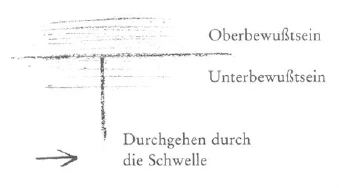
[ 35 ] And so consider today as the beginning of a process in which you truly do not merely gather together in your anthroposophical branches to, as it were, shut yourselves off from the world, but rather look out at what is happening in life. Take the word that I have used many times today [at the founding meeting of the Dutch Anthroposophical Society]—which I have, so to speak, “worn out”—the word “worldly” in the fullest sense: Try to grow together with the world! That will be the best, the most important “program.” You cannot enshrine this in bylaws; but we should be able to carry it into our hearts like a flame. It is not with program points that I can serve you best, but by guiding you toward the right sensibilities, the right feelings that should accompany the anthroposophical life. And if you feel a spark of inspiration toward these right sentiments, these right feelings, then some of what I actually wanted to achieve with the reflections I shared with you about the supersensible human being—as understood from an anthroposophical perspective—will have been fulfilled. And if you find yourselves repeatedly thinking that some of what you aim to achieve programmatically within the Anthroposophical Society is impossible, it will always be helpful to reflect on what was only hinted at in these—albeit few—lectures regarding the supersensible human being. For this will always remind you of the profound significance of anthroposophy. And we can do nothing better for the dissemination and proper presentation of anthroposophy to the world than to become more and more aware of the profound impulse that anthroposophy is meant to be for the further progress of our civilization.
[ 36 ] With that, my dear friends, I would like to conclude today’s session and these lectures, and to truly impress upon you what I actually intended to let flow through the words I have spoken to you these past few days about the supersensible human being. If we keep such thoughts alive and warm in our hearts, then we will always be able to be together, even when we are physically apart. Then we will be able to let the occasions when we are together again serve as starting points for further spiritual togetherness. Then such physical togetherness will be the occasion for true spiritual togetherness. May such a spiritual togetherness among all of us grow ever stronger as a result of what we have been privileged to experience together these past few days.