

World History from an Anthroposophical Perspective
and as the foundation of understanding the Spirit in Man
GA 233
30 December 1923, Dornach
Translated by Steiner Online Library
Seventh Lecture
[ 1 ] The last major turning point in the historical development of humanity is the one so often mentioned—occurring around the first third of the 15th century—when the transition took place from what is called the development of the intellectual or emotional soul into the conscious soul. We live, after all, in an age in which the development of the soul of consciousness is taking place primarily within humanity, and in this age a true understanding of the connection between human beings and the deeper impulses and forces of nature—that is, of the spirit in nature—has been lost. Today, even when we speak of human beings and their physical constitution, we speak, for example, of the chemical substances that chemists today identify as so-called elements. But for our understanding of the human being, knowing that a particular food contains carbon, nitrogen, and so on is of about as little value as it is for the mechanics of a watch to know that this watch consists of glass, and—for my sake—silver, and a few other substances. All of this—which reduces the substantial to this most extreme material abstraction: hydrogen, oxygen, and so on—fundamentally provides no real understanding of the human being. Just as the mechanism of a watch must be understood in terms of a system of forces, so the essence of the human being must be understood in terms of the way in which the various impulses of the world—which are distributed throughout the realms of nature and operate in other ways in the world—now come to the fore specifically in the human being. But that which still existed—albeit in a degenerated form—to such an extent that instinctively well-disposed individuals could make use of it as late as the 14th and 15th centuries has, with the exception of a few individuals such as Paracelsus, Jakob Böhme, and so on, gradually been lost entirely: a genuine insight into the connection between human beings and the world.
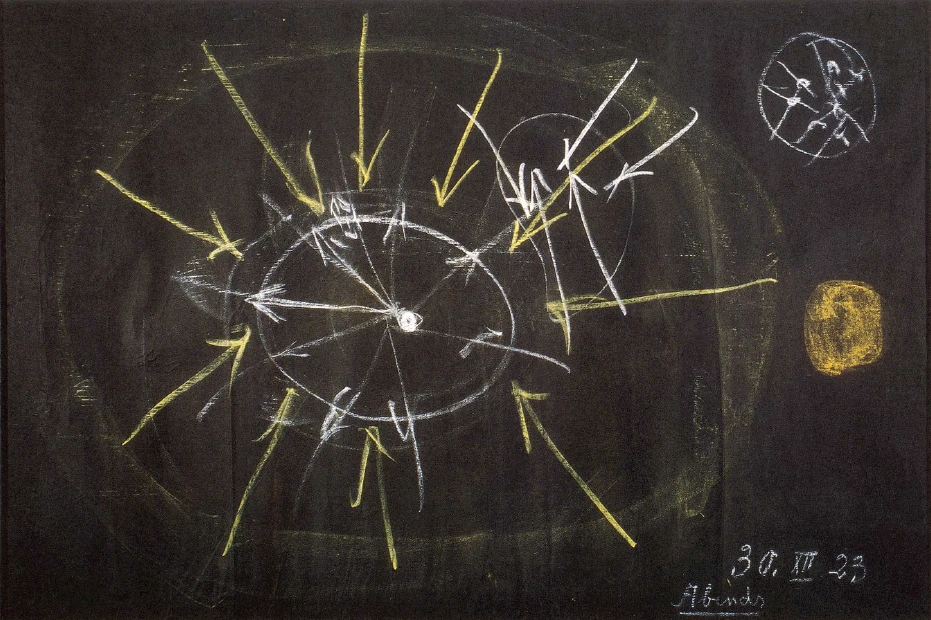
[ 2 ] What, for example, does modern science—which has gradually emerged since the 15th century—know about the relationship between, say, the plant and animal worlds and human beings? It simply examines plants for their chemical components and then attempts, in some way, to study the significance of these chemical components for human beings; it may then attempt—though more often than not it fails to do so—to form ideas about the effects of these substances on healthy and sick people. But all of this essentially only serves to shroud humanity in a veil of ignorance. Today, if one is inclined to advance our understanding of humanity on the basis of historical insight, the task at hand is to rediscover the relationships between human beings and the non-human natural world.
[ 3 ] Up until the last major turning point, well into the 15th century, people had a clear sense of the great difference that exists between metals in the external natural world and metals that manifest themselves in some way when one considers the substantial, the material aspect of the human being—for example, iron in its various compounds within the human organism, or magnesium, or the like. People had a deep, profound sense of this difference—between metals that are also present when one examines the human organism itself, and metals that exist in the external natural world but are not immediately found when examining the human organism—in the metallic nature of the Earth, right up until the 15th century. For people used to say to themselves: The human being is a microcosm. In some way, everything found out there in the world—in the macrocosm—is also found within him. — This is not merely some general, abstract principle, but for anyone who has ever come close to the science of initiation, it follows as a necessary connection between the essence of the human being and the essence of the world. For one can only arrive at a true understanding of the human being by bringing together the whole of nature with all its impulses and substantial contents; only then does one obtain an image, an imagination of the essence of the human being. And within this image, within this imagination, it would be jarring if there were anything in nature that could not be found within the human being itself. — This was the thinking of a figure who, let us say, was a natural scientist at the beginning of the 9th, 10th, or 11th century A.D. But even back then, it was known that what a person takes in through physical nourishment is only a part of what sustains a person’s physical organization—and indeed, their entire organization—and perhaps not even the most important part.
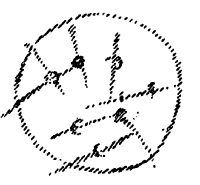
[ 4 ] Well, it seems obvious to move from physical nutrition to respiration, which is, after all, also a form of metabolism. But it does not occur to people today to go further. It was clear to natural scientists before the 15th century that when a person uses their eyes to perceive, they do not merely see with the eyes, but that during the process of perception, substantial elements from the universe are taken in through the eyes in an infinitely fine distribution. And just as this happens through the eye, so it happens through the ear, and likewise through other parts of the human organism. And what was regarded as most important was that human beings absorb—from the infinitely fine distribution in which it is present—substances that they do not physically contain within themselves, such as, for example, lead, in places where one would not initially suspect it to be found. Lead is a metal that humans do not, at first glance, demonstrably possess within themselves. But lead is a metal that is widespread—distributed in a very high degree of dilution—throughout the entire cosmos relevant to human beings. And human beings absorb lead from the cosmos through processes far finer than the process of breathing. Human beings are constantly shedding substance from their bodies in a peripheral direction. You don’t just cut your nails; you are constantly shedding substance from your skin. But this is not merely a process of shedding; as the substance is shed, other substance is absorbed.
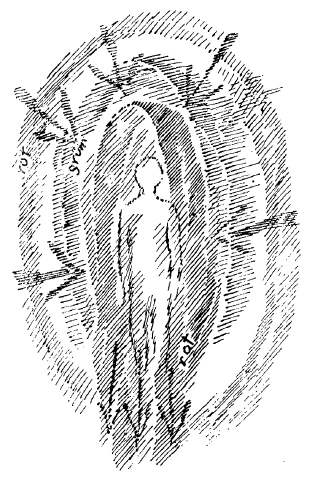
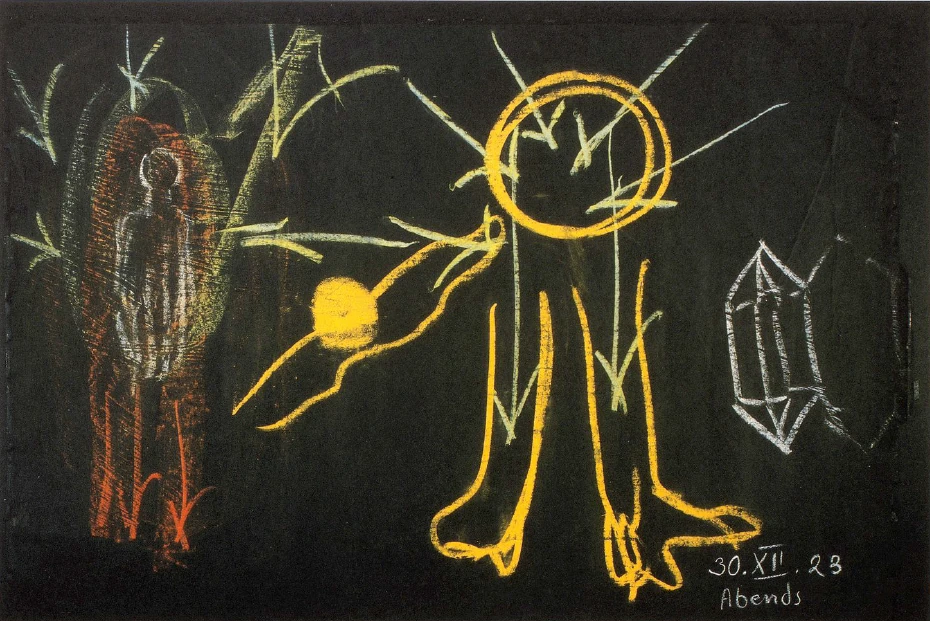
[ 5 ] You see, a natural scientist of the 9th, 10th, 11th, and 12th centuries was still living within this line of thought during the Middle Ages. For him, it was not yet a matter of the balance or the crude measuring instruments through which he determined how substances and forces act; rather, it was a response to the inner qualities of nature, to nature’s inner impulses, and to the connection between nature and humankind. As a result, people knew many things up until the 15th century that we will have to begin to know again, for, fundamentally speaking, we know absolutely nothing about human beings today.
[ 6 ] To begin with, as we explore the constitution of the human being in order to provide, I would say, a kind of classification, a kind of general outline: The human being is composed of the physical body, the etheric body, the astral body, and the “I” or the “I”-organization. — Well, these are just words at first. It is good to start with these words; everyone can picture something, at least to some extent, when they hear them. But if one wants to apply these concepts in practical life—and especially in medicine, which is, after all, the most important practical application that can arise from an understanding of the human being—then one cannot stop at the words alone; one must delve into what fills those words with real content. So we ask first: the physical body—how do we arrive at a conception of the physical body? —You will see shortly why I am developing this concept. How do we arrive at a conception of the physical body? Well, if we have any object on Earth other than a human being—let’s say a stone—it falls to the ground. We say it is heavy, it is attracted by the Earth, it has weight. We find other forces at work as well. When the stone forms into a crystal, formative forces are at work within it. But these are related to earthly forces. In short, when we look around us in the world, we see substances that are subject to earthly nature. Let us keep this in mind: We have substances that are subject to earthly nature.
[ 7 ] Anyone who doesn’t properly consider such things will come along and show you a piece of coal—black coal. What is that, really? This black coal exists only in the vicinity of the Earth, for the moment it were moved even a relatively short distance away from the Earth, it would no longer be that way. Everything that makes coal what it is comes from the forces of the Earth. So you can say: If I have the Earth here, then the Earth’s forces are present here in the earthly realm, but also in every object I have here on Earth. And although the human physical body is very complex, it is, at its core, also an object subject to these physical forces of the Earth—the forces that emanate from the Earth’s center. This is the human physical body, which is subject to the forces that come from the center of the Earth (arrows pointing outward). — But there are also other forces on Earth. These forces come from the surrounding space (arrows pointing inward). Imagine for a moment that I am going out into completely indefinite expanses. Then forces act from these indefinite expanses, exactly opposite to the forces of the Earth. They act in from all directions. Yes, there are such forces that act in from everywhere, that act in from all directions of the world toward the center of the Earth. One can form a very specific, concrete conception of these forces, namely in the following way.
[ 8 ] The most important substance underlying all organisms—plant, animal, and human—is protein. But protein also forms the basis of the germ of a new plant, animal, or human organism. It is from a germ cell—a fertilized germ cell—that what develops into a plant, animal, or human organism originates. The substance is protein. People today imagine—because they indulge in fantasy everywhere instead of pursuing real science—that protein is simply a complex compound consisting of, as they say, carbon, oxygen, hydrogen, nitrogen, sulfur, and a little phosphorus—a rather complex composition. So, in a sense, protein already embodies the ideal of a composition, as the atomist conceives it. One would have to draw the atoms and molecules into it in a very complicated way. And then, this complex protein molecule—or whatever one wishes to call it—forms within the mother animal or the mother plant; it then develops further, and the new animal emerges from it through pure heredity.
[ 9 ] But all of that is pure nonsense from an intellectual perspective. In reality, the mother’s protein is not complex in composition, but rather becomes completely corrupted and chaotic. The protein that the body normally contains is still somewhat ordered, but a protein that underlies reproduction is characterized precisely by the fact that it is internally shaken up into complete chaos, that the matter is completely reduced to chaos, no longer has any structure at all, but is simply a heap of substance which, because it is entirely torn apart, shredded, and destroyed within itself, is no longer subject to the Earth. As long as the protein still holds together internally in some way, it remains subject to the central forces of the Earth. The moment the protein is internally fractured, it comes under the influence of the entire cosmic sphere. Forces act upon it from all directions, and the tiny clump of protein that forms the basis of reproduction emerges as a microcosm of the entire universe, which is initially within our comprehension. Every single protein clump is a reflection of the entire universe, because the protein substance is fractured, destroyed, and transformed into chaos, thereby being rendered—precisely as “cosmic dust”—capable of being subjected to the entire cosmos. Today, we know nothing more about this.
[ 10 ] Today people believe: Well, the old chicken simply has that complex protein. It is deposited into the egg. Then the new chicken is formed—that is the continued, further-developed protein. This, in turn, becomes germ substance, and so it continues from chicken to chicken. — But that’s not how it works. Every time there is a transition from one generation to the next, the protein is exposed to the entire cosmos. So we must say: On the one hand, we have the earthly substances, which are subject to the central forces of the earth; but under certain conditions, we can also conceive of them as being subject to the forces that act in from all directions from the boundaries of the universe. These latter forces are the ones that act within the human etheric body; it is subject to the forces of the cosmos. — You see, now we have a realistic understanding of the physical body and the etheric body. Ask yourself this question: What is your physical body? — It is the one that is subject to the forces emanating from the center of the Earth. What is your etheric body? — It is that part of you which is subject to the forces that enter from all directions at the periphery. You can also draw it. Consider this: Here we have the human being. His physical body is the one that, as it extends toward the center of the Earth (red), is subject to the forces that radiate toward the center of the Earth. His etheric body is the one (green) that is subject to the forces entering from all directions at the edge of the universe. Now we have a system of forces within the human being: the forces that pull downward—which are actually present in all organs that stand vertically—and those forces that enter from the outside, which tend in this manner (see arrows). You can literally see this from the human form, where one type or the other is more prominent. If you study the legs, you will say: The legs naturally have their shape because they are more adapted to the forces of the Earth.
[ 11 ] The head is better adapted to the forces of the periphery. — You can study the arms in the same way. This is particularly interesting. Hold your arms pressed against your body: they are subject to the forces directed toward the center of the Earth. If you move your arms in a lively manner, then you yourself subject your arms to the forces coming in from all directions at the periphery.
[ 12 ] You see, that is the difference between the legs and the arms. The legs are clearly subject to the Earth’s central forces, while the arms are only conditionally subject to them when held in a certain posture. Human beings can lift them out of the Earth’s central forces and integrate them into the forces we call the etheric forces, which come from all around the periphery. In this way, however, one can also see—for each individual organ—how these organs are truly integrated into the universe.
[ 13 ] Now you have a physical body and an etheric body. But what about the astral body? After all, there is no longer a third kind of force in space. They no longer exist. The astral body derives its forces from outside of space. The etheric body receives them from all around its periphery, while the astral body receives them from outside of space.
[ 14 ] In certain places in nature, one can actually observe how the Earth’s physical forces interweave with the ethereal forces approaching from all sides. Just think about it: protein is initially present in the physical earth. As long as sulfur, carbon, oxygen, nitrogen, and hydrogen can be chemically detected in the protein, the protein remains subject to the physical forces of the earth. When the protein enters the sphere of reproduction, it is lifted out of the physical forces. The forces surrounding the entire universe begin to act upon the fragmented protein, and new protein arises as a reflection of the entire universe.
[ 15 ] But you see, sometimes the following turns out to be true: the cleavage cannot go far enough. There may be protein substance that, for example, is necessary for reproduction in some animal—substance that must be cleaved within the laid egg so that it can align itself with the forces of the entire universe. But the animal is somehow prevented from providing such protein substance for reproduction—substance that can simply integrate itself into the entire macrocosm. Reproductive protein must integrate into the entire macrocosm. The animal—let’s say, for example, the gall wasp—is prevented from readily producing reproductive protein. So what does the gall wasp do? The gall wasp lays its egg inside a part of a plant. You see these galls everywhere on oak trees and other trees where gall wasps lay their eggs. Then you see, for example, these strange galls on the leaf: inside there is a gall wasp egg. Why does this happen? Why is the gall wasp’s egg, so to speak, laid inside the oak leaf, so that this gall forms, within which the egg is contained and can now develop? It could not develop on its own. This is because the plant leaf possesses an etheric body within itself. This etheric body is attuned to the entire world ether, and it comes to the aid of the gall wasp’s egg. The gall wasp’s egg cannot help itself on its own. Therefore, the gall wasp lays it into a part of the plant where an etheric body is already present, one that is attuned to the entire world ether. Thus, the gall wasp approaches the oak tree to cause its egg white substance to fracture, so that the periphery of the world can act indirectly through the oak leaf and through the oak tree itself, whereas the gall wasp’s egg alone would perish, for it cannot be fractured—it holds too tightly together.
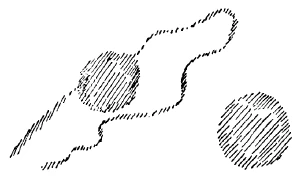
[ 16 ] You see, this offers an opportunity to gain insight into just how strangely nature works. But this process is also present elsewhere in nature. For suppose that an animal is not only incapable of producing germ substance that can be exposed to the world ether for reproduction, but is also unable to transform any substances within itself into internal nourishment for its own sustenance. The example of the bee immediately comes to mind. The bee cannot eat just anything. The bee can eat only what the plant has already provided for it. But now observe something very remarkable. The bee approaches the plant, seeks out the nectar, takes it in, processes it within itself, and builds what we so admire in the bee—the entire honeycomb structure, the cells in the beehive. We observe these two truly remarkable, wondrous processes: the bee sitting outside on the flower, sucking up the nectar, then entering the hive and, in collaboration with other bees, building the wax cells from within itself to fill them with honey. What is happening there? You see, you have to look at the shape of these cells. They are shaped like this (see drawing, right)—there’s one, then the next one, and so on. They are small cells whose cavities are shaped—though filled with substance—somewhat differently from the shape of quartz crystals, the silica crystals. If you go into the mountains and look at the quartz crystals, you can draw them this way, too. You’ll get a somewhat irregular pattern, but one similar to that of the honeycomb cells arranged side by side. The only difference is that the honeycomb cells are made of wax, while quartz is made of silica.
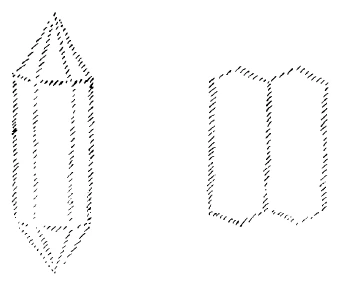
[ 17 ] If one investigates the matter closely, one finds that, under the influence of the general etheric and astral forces, quartz crystals were formed in the mountains during a specific period of Earth’s evolution with the aid of silicic acid. There you see forces approaching from the Earth’s surroundings, acting as etheric-astral forces that build up quartz crystals within the silica. You find them everywhere out in the mountains—wonderful quartz crystals, these hexagonal formations. These quartz crystals are, in essence, the hollow spaces of the honeycomb cells in beehives. For the bee extracts from the flower that which was once there to form the hexagonal quartz crystals. The bee extracts this from the flower and, through its own body, creates replicas of the quartz crystals. What takes place between the bee and the flower is similar to what once took place out there in the macrocosm.
[ 18 ] I mention these things so that you may see how necessary it is not merely to look at this utterly pitiful abstraction found in carbon, nitrogen, hydrogen, oxygen, and so on, but rather that it is necessary to look at the wondrous processes of formation, at the inner, intimate relationships within nature and in natural processes. And such an approach was once truly the instinctive foundation of science. This was lost in the course of humanity’s historical development around the 15th century. It must be reclaimed. Once again, we must penetrate the intimate relationships of natural existence and its connection to human beings. Only when such relationships are recognized once more will a true understanding of healthy and sick human beings be possible again. Otherwise, despite all the teachings on remedies, it will remain merely a matter of trial and error, without any insight into the inner connections.
[ 19 ] There has been a kind of barren period in the development of the human spirit, stretching from the 15th century to the present day. This barren period has weighed heavily on humanity. For this barren period—during which people looked at plants, animals, human beings, and minerals, yet actually knew nothing more about anything—this period has completely severed humanity from all connection with the world. And ultimately, humanity has entered into that chaos in which it lives today in relation to the world, no longer aware of any connection to it. In the time when such things were contemplated, humanity knew: Every time reproduction takes place, the entire macrocosm speaks. Within the germ or seed capable of reproduction, an image of the entire macrocosm arises. There is the great world out there, but within the tiniest germ lies a result of the influences coming from all over the great world.
[ 20 ] In human beings, the forces that are the Earth’s central physical forces are the first to interact; they are at work in all human organs; but counteracting them everywhere are the forces that come from all directions—the etheric forces. Take a look, for example, at the liver, the spleen, or the lungs; you can only begin to understand them if you realize that the forces originating from the center of the Earth are working together there with those coming from all around the world. — But then certain organs are permeated by the astral body and the ego-organization, while other organs are less permeated by these higher components, and in the sleeping state, a person does not possess their astral body or their ego-organization at all. Take any organ—the lungs (see illustration on page 119, top right): For some reason, the forces entering from all over the universe (arrows) are acting too strongly on the human lungs. They will cause the lungs to become diseased because a certain state of harmonious balance must exist between what acts upon the lungs from the center of the Earth and what comes from all sides of the surrounding space. If you can now determine how to find mineral substances that counterbalance the excessively strong etheric forces in the lungs, then you have the remedy that will eliminate these excessive etheric forces. And the reverse can also be true: the etheric forces may become too weak, while the physical forces acting from the center of the Earth become too strong. You will search within the plant kingdom for what can act upon the human being in such a way as to strengthen the etheric forces through some organ, and you will obtain the corresponding remedy.
[ 21 ] It is impossible to find even the slightest remedy by merely observing the physical body alone, for the physical human body, in and of itself, provides no basis for determining anything about its constitution. For the so-called normal process taking place within it is a natural process, but the disease process is also a natural process. If you have a so-called normal liver, you have a liver in which only natural processes are taking place. But if you have a liver with an ulcer, you also have a liver in which only natural processes are taking place. The difference can never be found in the physical body. From the physical body, one can only observe the fact that it looks different one time than another, but one cannot know anything about the cause. But if you have an ulcer in the liver, you will only discover the cause of the ulcer formation if you know that, in such a case, for example, the astral body is intervening in the liver much more powerfully than it should. You must, in turn, expel from the liver the astral body that is strongly intervening in it during the formation of a liver ulcer. And so there is no way at all to speak realistically about healthy and sick people unless one goes beyond the physical body into the higher members of human nature. Thus, one can actually say: A true science of remedies will only exist again when we go beyond the human physical body, for the nature of disease simply cannot be understood from within the physical human body alone.
[ 22 ] My sole intention this time is to present things in their historical context. But the fact is that, as more and more of what had been carried over from ancient times into the modern era faded away, all understanding of human nature was lost. And today we are faced with the necessity of regaining this understanding of human nature. This understanding can only be regained if we are once again able to grasp the relationship between human beings and the surrounding natural realms.
[ 23 ] Let us begin by considering the human ego-organization. If one first gains, let us say, through imaginative insight derived from the science of initiation, a conception of the human ego-organization, then one may ask: To what aspect of the modern human organism does this ego-organization bear a special relationship? - This “I” organization has a special relationship to the mineral aspect within the human being. Therefore, when you ingest something mineral—something essentially mineral—for example, when you place salt on your tongue—it is immediately the “I” organization that takes charge of this mineral substance. The mineral substance is then transported further and enters the stomach. The “I” organization remains with it, even when the salt is in the stomach; the “I” organization remains with it. The salt continues on its way, undergoing changes as it passes through the intestines and moves further along—but your salt is never abandoned by the “I” organization. They behave like things that truly belong together: the “I” organization and the salt that enters the human being.
[ 24 ] You see, it’s not like that when, for example, you eat a fried egg—it still retains some cohesion with the egg white substance. The “I” organization is only slightly involved when you have the fried egg on your tongue. Then the astral body pays very little attention to it as it slides down into the stomach. Then the process continues; first the etheric body acts intensively, then the physical body. These break down within you the protein substance that you’ve introduced into your organism with the fried egg. And now the fried egg is transformed into a completely mineral substance within you. It is broken down. All life is expelled from it. It is broken down within you. At the intestinal walls, this protein substance taken in from the outside ceases, in a sense, to be protein and becomes entirely mineral. From there, it now passes back into the “I”-organization, and from there, the mineralized protein is absorbed by the “I”-organization.
[ 25 ] And so we can always say: The “I” organization deals only with the mineral realm. But every mineral substance becomes, through the “I” organization within the human organism, something different from what it is outside of it. Nothing in the human organism may remain as it is outside of that human organism. The “I” organization must ensure this in a radical way. Not only are substances such as, say, table salt and the like taken up by the “I” organization and transformed internally into something entirely different from what they are externally, but even when a person is surrounded by a certain state of heat, that external state of heat must not penetrate the person in any way. Your fingers must not be filled with what spreads as external heat. The heat may act upon you only as a stimulus, and you must generate the heat you have within yourself. The moment you become merely an object—not generating your own warmth or cold, but allowing the warmth to continue acting within you as it does, for example, in some external object—that is when you become ill—from the external warmth itself, not merely from the substance, but from the external warmth. Imagine, for a moment, that there is a cloth or a sponge, and there is a stove. The heat from the stove may spread quite freely, passing through the cloth or the sponge. The cloth or the sponge merely continues what is spreading there as heat from the stove. The heat from the stove must not do this when it reaches the skin. When the heat from the stove stimulates the senses, the reaction must follow: the inner heat must be generated from within. Colds arise precisely because one does not simply allow oneself to be stimulated in order to generate one’s own inner heat, but instead allows the external cold to penetrate slightly beneath the skin, so that one does not present oneself to the world as a fully active human being who fills oneself with one’s own actions and impulses, but rather stands there like an object and allows the effects of the external world to pass through oneself. — This is the essence of ego-organization: that it takes in the mineral within itself but completely transforms it internally, turning it into something else.
[ 26 ] Only when we have died does the mineral element once again become part of the mineral realm of external nature. While we live on Earth, with the mineral element within our skin, the “I” organization is constantly transforming it. The plant matter we take in is constantly transformed by the astral organization, by the astral body. So that we can say: The human ego-organization thoroughly transforms everything mineral—not only the solid mineral, but also the aqueous, the airy, and the warmth-like. — Of course, speaking in general terms, one can say: There is water somewhere here. I drink. I now have the water inside me. — But the moment my organism absorbs the water, what I have inside me is, through my “I” organization, no longer the same as the external water. It becomes that again only when I sweat it out or convert it into water in some other way. Inside my skin, water is not water, but rather a living fluid.
[ 27 ] In this way, there is always an infinite amount that needs to be rethought. I could only give you a few brief hints today. But if you think this through—if you understand how the protein must be broken down to become part of the workings of the entire macrocosm; how the water I drink is, inwardly, a living fluid—no longer inorganic water, but water permeated by ego-organization; if you reflect on this while eating cabbage: Outwardly it is cabbage, but inwardly the astral body immediately absorbs the cabbage—at least the real, physical cabbage—and transforms it into something entirely different, thus we arrive at the consideration of extraordinarily significant processes, advancing to the insight that we have processes in our metabolism that differ only by a certain stage of development from the metabolic processes we have, for example, in the brain—which constitute the nervous system there—and so on. I will speak further on this tomorrow, in order to highlight, through these processes, the very radical difference between humanity in the 12th century A.D. and that of the 20th century, and from there to bring home the necessity of understanding how, in the course of further progress, new impulses must arise for both healthy and sick people, so that our entire understanding of human nature is not lost and we no longer know anything about either healthy or sick people. More on that tomorrow.