

World History from an Anthroposophical Perspective
GA 233
30 December 1923, Dornach
Translate the original German text into any language:
Versions Available:
World History from an Anthroposophical Perspective, tr. SOL
Siebenter Vortrag
Seventh Lecture
[ 1 ] Der letzte große Einschnitt in der geschichtlichen Entwickelung der Menschheit ist der ja oftmals erwähnte im ersten Drittel des 15. Jahrhunderts etwa, wo der Übergang stattfindet von dem, was man nennt die Entwickelung der Verstandes- oder Gemütsseele in die Bewußtseinsseele hinein. Wir leben ja in einem Zeitalter, in dem in der Menschheit vorzugsweise die Entwickelung der Bewußtseinsseele stattfindet, und in diesem Zeitalter ist verlorengegangen eine wirkliche Einsicht in den Zusammenhang des Menschen mit den tieferen Impulsen und Kräften der Natur, das heißt des Geistes in der Natur. Wir reden heute sogar, wenn wir vom Menschen und seiner physischen Konstitution reden, zum Beispiel von den chemischen Stoffen, wie sie der Chemiker heute feststellt als sogenannte Elemente. Aber es hat für die Erkenntnis des Menschen ungefähr nicht mehr Wert, zu wissen, daß irgendein Nahrungsmittel Kohlenstoff, Stickstoff und so weiter enthält, als für die Mechanik der Uhr, zu wissen, daß diese Uhr aus Glas und meinetwillen Silber und einigen anderen Stoffen noch besteht. All dieses, was das Substantielle zurückführt auf diese äußerste stoffliche Abstraktion, Wasserstoff, Sauerstoff und so weiter, liefert im Grunde genommen keine wirkliche Erkenntnis des Menschen. Geradeso wie der Mechanismus der Uhr erkannt werden muß aus einem Kräftesystem-Zusammenhange, so muß die Wesenheit des Menschen erkannt werden aus der Art und Weise, wie die verschiedenen Impulse der Welt, die in den Reichen der Natur verteilt sind, die in anderer Weise in der Welt wirken, nun im Menschen gerade zur Geltung kommen. Aber dasjenige, was verhältnismäßig noch, wenn auch schon degeneriert, doch so vorhanden war, daß instinktiv gut angelegte Naturen bis ins 14., 15. Jahrhundert etwas damit machen konnten, das ist, mit Ausnahme einiger Menschen wie Paracelsus, Jakob Böhme und so weiter, nach und nach völlig verlorengegangen: ein wirkliches Hineinblicken in den Zusammenhang des Menschen mit der Welt.
[ 1 ] The last major turning point in the historical development of humanity is the one so often mentioned—occurring around the first third of the 15th century—when the transition took place from what is called the development of the intellectual or emotional soul into the conscious soul. We live, after all, in an age in which the development of the soul of consciousness is taking place primarily within humanity, and in this age a true understanding of the connection between human beings and the deeper impulses and forces of nature—that is, of the spirit in nature—has been lost. Today, even when we speak of human beings and their physical constitution, we speak, for example, of the chemical substances that chemists today identify as so-called elements. But for our understanding of the human being, knowing that a particular food contains carbon, nitrogen, and so on is of about as little value as it is for the mechanics of a watch to know that this watch consists of glass, and—for my sake—silver, and a few other substances. All of this—which reduces the substantial to this most extreme material abstraction: hydrogen, oxygen, and so on—fundamentally provides no real understanding of the human being. Just as the mechanism of a watch must be understood in terms of a system of forces, so the essence of the human being must be understood in terms of the way in which the various impulses of the world—which are distributed throughout the realms of nature and operate in other ways in the world—now come to the fore specifically in the human being. But that which still existed—albeit in a degenerated form—to such an extent that instinctively well-disposed individuals could make use of it as late as the 14th and 15th centuries has, with the exception of a few individuals such as Paracelsus, Jakob Böhme, and so on, gradually been lost entirely: a genuine insight into the connection between human beings and the world.
[ 2 ] Was weiß zum Beispiel die neuere Wissenschaft, die sich allmählich seit dem 15. Jahrhundert herausgebildet hat, über die Beziehung, sagen wir, der pflanzlichen, der tierischen Welt zum Menschen! Sie untersucht eben die Pflanzen auf ihre chemischen Bestandteile und versucht dann irgendwie die Bedeutung dieser chemischen Bestandteile auf den Menschen zu studieren; versucht dann eventuell, sich Vorstellungen zu bilden — meistens unterläßt sie es auch — über die Wirkung der Substanzen auf den gesunden und kranken Menschen. Aber all dies liefert im Grunde nur Erkenntnisfinsternis um den Menschen. Es handelt sich heute durchaus darum, wenn man auf Grundlage geschichtlicher Einsicht in Menschenerkenntnis vorzurücken geneigt ist, die Beziehungen des Menschen zur außermenschlichen Natur wiederum kennenzulernen.
[ 2 ] What, for example, does modern science—which has gradually emerged since the 15th century—know about the relationship between, say, the plant and animal worlds and human beings? It simply examines plants for their chemical components and then attempts, in some way, to study the significance of these chemical components for human beings; it may then attempt—though more often than not it fails to do so—to form ideas about the effects of these substances on healthy and sick people. But all of this essentially only serves to shroud humanity in a veil of ignorance. Today, if one is inclined to advance our understanding of humanity on the basis of historical insight, the task at hand is to rediscover the relationships between human beings and the non-human natural world.
[ 3 ] Bis zu dem letzten großen Umschwung, bis ins 15. Jahrhundert herein, haben die Menschen ein deutliches Gefühl davon gehabt, welch großer Unterschied besteht zwischen Metallen in der äußeren Natur und Metallen, die in irgendeiner Weise zum Vorschein kommen, wenn man das Substantielle des Menschen, das Stoffliche des Menschen ins Auge faßt, sagen wir zum Beispiel das Eisen in seinen verschiedenen Bindungen im menschlichen Organismus oder die Magnesia oder dergleichen. Für dieses, daß es solche Metalle gibt, die sich auch zeigen, wenn man den menschlichen Organismus selber untersucht, und solche Metalle, die in der äußeren Natur vorhanden sind, die sich nicht finden zunächst, wenn man den menschlichen Organismus untersucht, für diesen Unterschied in der Metallität der Erde hatte man bis ins 15. Jahrhundert eine tiefe, gründliche Empfindung. Denn man sagte sich: Der Mensch ist ein Mikrokosmos. In irgendeiner Weise findet sich in ihm alles, was sich draußen in der Welt im Makrokosmos findet. — Dies ist ja nicht irgendein allgemeines abstraktes Prinzip, sondern es folgt für den, der irgendwie jemals der Initiationswissenschaft nahegetreten ist, als mit dem Wesen des Menschen und dem Wesen der Welt notwendig verbunden. Denn man kommt nur zu einer wirklichen Erkenntnis des Menschen, wenn man die ganze Natur mit allen ihren Impulsen und substantiellen Inhalten zusammenträgt; dann bekommt man ein Bild, eine Imagination vom Wesen des Menschen. Und in diesem Bilde, in dieser Imagination störte es, wenn man irgend etwas draußen in der Natur hätte, das im Menschen selber sich nicht finden könnte. — So dachte eine Persönlichkeit, die im Beginne, sagen wir, noch des 9., 10., 11. nachchristlichen Jahrhunderts Naturforscher war. Aber man wußte ja damals auch, daß dasjenige, was der Mensch aufnimmt durch seine physische Ernährung, nur ein Teil dessen ist, wodurch der Mensch seine physische Organisation und überhaupt seine Organisation unterhält, vielleicht gar nicht einmal der wichtigste.
[ 3 ] Up until the last major turning point, well into the 15th century, people had a clear sense of the great difference that exists between metals in the external natural world and metals that manifest themselves in some way when one considers the substantial, the material aspect of the human being—for example, iron in its various compounds within the human organism, or magnesium, or the like. People had a deep, profound sense of this difference—between metals that are also present when one examines the human organism itself, and metals that exist in the external natural world but are not immediately found when examining the human organism—in the metallic nature of the Earth, right up until the 15th century. For people used to say to themselves: The human being is a microcosm. In some way, everything found out there in the world—in the macrocosm—is also found within him. — This is not merely some general, abstract principle, but for anyone who has ever come close to the science of initiation, it follows as a necessary connection between the essence of the human being and the essence of the world. For one can only arrive at a true understanding of the human being by bringing together the whole of nature with all its impulses and substantial contents; only then does one obtain an image, an imagination of the essence of the human being. And within this image, within this imagination, it would be jarring if there were anything in nature that could not be found within the human being itself. — This was the thinking of a figure who, let us say, was a natural scientist at the beginning of the 9th, 10th, or 11th century A.D. But even back then, it was known that what a person takes in through physical nourishment is only a part of what sustains a person’s physical organization—and indeed, their entire organization—and perhaps not even the most important part.
[ 4 ] Nun, nahe liegt es ja, aufzusteigen von der physischen Ernährung zu der Atmung, die ja auch ein Stoffwechsel ist. Aber weiter aufzusteigen fällt dem heutigen Menschen nicht ein. Dem Naturforscher vor dem 15. Jahrhundert war es klar, daß der Mensch, wenn er sein Auge anwendet zum Wahrnehmen, nicht bloß sieht mit dem Auge, sondern daß durch das Auge während des Wahrnehmeprozesses in unendlich feiner Verteilung Substantielles aus dem Weltenall aufgenommen wird. Und so durch das Auge, so durch das Ohr, so aber auch durch andere Organisationsbestandteile des Menschen. Und als etwas Allerwichtigstes sah man an, daß der Mensch dasjenige, was er nicht in grober Weise in sich enthält, sagen wir zum Beispiel Blei, daß er das aufnimmt aus der unendlich feinen Verteilung, in der es vorhanden ist da, wo man es zunächst nicht vermutet. Blei ist ein Metall, das der Mensch zunächst nachweisbar nicht in sich hat. Aber Blei ist ein Metall, das ausgebreitet ist, in sehr großer Verdünnung ausgebreitet ist im ganzen, für den Menschen in Betracht kommenden Kosmos. Und das Blei nimmt der Mensch auf aus dem Kosmos durch viel feinere Prozesse, als es der Atmungsprozeß ist. Der Mensch sondert fortwährend in peripherischer Richtung von sich Substanz ab. Sie schneiden sich nicht nur die Nägel, sondern Sie sondern von der Haut fortwährend Substanz ab. Aber das ist nicht nur ein Fortgehen, sondern während die Substanz fortgeht, wird andere Substanz aufgenommen.
[ 4 ] Well, it seems obvious to move from physical nutrition to respiration, which is, after all, also a form of metabolism. But it does not occur to people today to go further. It was clear to natural scientists before the 15th century that when a person uses their eyes to perceive, they do not merely see with the eyes, but that during the process of perception, substantial elements from the universe are taken in through the eyes in an infinitely fine distribution. And just as this happens through the eye, so it happens through the ear, and likewise through other parts of the human organism. And what was regarded as most important was that human beings absorb—from the infinitely fine distribution in which it is present—substances that they do not physically contain within themselves, such as, for example, lead, in places where one would not initially suspect it to be found. Lead is a metal that humans do not, at first glance, demonstrably possess within themselves. But lead is a metal that is widespread—distributed in a very high degree of dilution—throughout the entire cosmos relevant to human beings. And human beings absorb lead from the cosmos through processes far finer than the process of breathing. Human beings are constantly shedding substance from their bodies in a peripheral direction. You don’t just cut your nails; you are constantly shedding substance from your skin. But this is not merely a process of shedding; as the substance is shed, other substance is absorbed.
[ 5 ] Sehen Sie, in diesen Gedankengängen lebte so ein Naturforscher des 9., 10., 11., 12. Jahrhunderts noch im Mittelalter. Für ihn war es ja noch nicht die Waage, waren es noch nicht die groben Meßinstrumente, durch die er bestimmte, wie die Substanzen, wie die Kräfte wirken, sondern es war ein Eingehen auf die inneren Qualitäten der Natur, auf die inneren Impulse der Natur und den Zusammenhang der Natur mit dem Menschen. Dadurch wußte man viele Dinge bis zu diesem 15. Jahrhundert, die man anfangen wird müssen wiederum zu wissen, denn im Grunde genommen weiß man heute über den Menschen gar nichts.
[ 5 ] You see, a natural scientist of the 9th, 10th, 11th, and 12th centuries was still living within this line of thought during the Middle Ages. For him, it was not yet a matter of the balance or the crude measuring instruments through which he determined how substances and forces act; rather, it was a response to the inner qualities of nature, to nature’s inner impulses, and to the connection between nature and humankind. As a result, people knew many things up until the 15th century that we will have to begin to know again, for, fundamentally speaking, we know absolutely nothing about human beings today.
[ 6 ] Wir sagen ja zunächst, indem wir die Konstitution des Menschen aufsuchen, um, ich möchte sagen, eine Art Klassifizierung, eine Art allgemeinen Plan zu geben: Der Mensch ist zusammengesetzt aus dem physischen Leib, dem ätherischen Leib, dem astralischen Leib, dem Ich oder der Ich-Organisation. — Gut, das sind ja zunächst Worte. Es ist gut, wenn man bei diesen Worten anfängt; ein bißchen etwas kann jeder sich darunter vorstellen. Aber will man diese Dinge gebrauchen in der Lebenspraxis, will man sie namentlich gebrauchen in der Heilkunde, die ja die wichtigste Lebenspraxis ist, die aus der Erkenntnis des Menschen folgen kann, dann kann man bei den Worten nicht stehenbleiben, dann muß man eingehen auf dasjenige, was die Worte mit einem wirklichen Inhalte ausfüllt. Da fragen wir zunächst: Physischer Leib, wie kommen wir zu einer Vorstellung des physischen Leibes? — Sie werden gleich nachher sehen, warum ich diesen Begriff entwickle. Wie kommen wir zu einer Vorstellung des physischen Leibes? Nun, wenn wir irgendeinen Gegenstand auf der Erde haben außer dem Menschen, sagen wir einen Stein: er fällt zur Erde. Wir sagen, er ist schwer, er wird von der Erde angezogen, er hat ein Gewicht. Wir finden noch andere Kräfte, die wirken. Wenn der Stein sich zum Kristall bildet, wirken in ihm formbildende Kräfte. Die sind aber verwandt den irdischen Kräften. Kurz, wir haben, indem wir um uns blicken in der Welt, Stoffe, die dem irdischen Wesen unterworfen sind. Halten wir das fest: Wir haben Stoffe, die dem irdischen Wesen unterworfen sind.
[ 6 ] To begin with, as we explore the constitution of the human being in order to provide, I would say, a kind of classification, a kind of general outline: The human being is composed of the physical body, the etheric body, the astral body, and the “I” or the “I”-organization. — Well, these are just words at first. It is good to start with these words; everyone can picture something, at least to some extent, when they hear them. But if one wants to apply these concepts in practical life—and especially in medicine, which is, after all, the most important practical application that can arise from an understanding of the human being—then one cannot stop at the words alone; one must delve into what fills those words with real content. So we ask first: the physical body—how do we arrive at a conception of the physical body? —You will see shortly why I am developing this concept. How do we arrive at a conception of the physical body? Well, if we have any object on Earth other than a human being—let’s say a stone—it falls to the ground. We say it is heavy, it is attracted by the Earth, it has weight. We find other forces at work as well. When the stone forms into a crystal, formative forces are at work within it. But these are related to earthly forces. In short, when we look around us in the world, we see substances that are subject to earthly nature. Let us keep this in mind: We have substances that are subject to earthly nature.
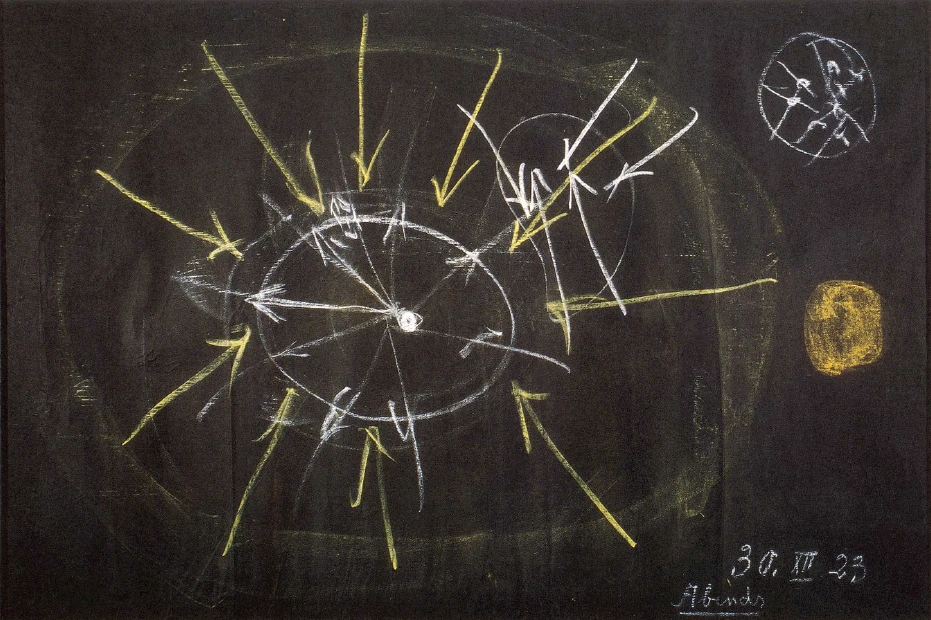
[ 7 ] Wer solche Dinge nicht ordentlich ins Auge faßt, der wird kommen und wird einem ein Stück Kohle zeigen, schwarze Kohle. Was ist das in Wirklichkeit? Es ist dies schwarze Kohle nur in der Nähe der Erde, denn in dem Augenblicke, wo man diese Kohle auch nur eine verhältnismäßig kurze Strecke von der Erde weg hätte, wäre sie nicht mehr so. Alles, was an ihr die Kohle zur Kohle macht, sind die Kräfte der Erde. Sie können also sagen: Wenn ich hier die Erde habe, dann sind die Kräfte der Erde hier im Irdischen, aber auch in jedem Gegenstande, den ich hier auf Erden habe. Und der physische Leib des Menschen ist zwar sehr zusammengesetzt, aber im Grunde genommen auch ein Gegenstand, der diesen physischen Kräften der Erde unterworfen ist, den Kräften, die vom Erdenmittelpunkte kommen. Das ist physischer Leib des Menschen, was unterworfen ist den Kräften, die vom Erdenmittelpunkte kommen (Pfeile nach auswärts). — Nun sind auf der Erde aber auch andere Kräfte. Diese Kräfte kommen vom Umkreis (Pfeile einwärts). Denken Sie sich einmal, ich gehe in ganz unbestimmte Weiten hinaus. Dann wirken von den unbestimmten Weiten her Kräfte, gerade umgekehrt den Kräften der Erde. Die wirken von überall herein. Ja, es gibt solche Kräfte, die von überall hereinwirken, die von allen Richtungen der Welt überall hereinwirken gegen den Mittelpunkt der Erde zu. Man kann eine ganz bestimmte konkrete Vorstellung von diesen Kräften bekommen, und zwar auf folgende Art.
[ 7 ] Anyone who doesn’t properly consider such things will come along and show you a piece of coal—black coal. What is that, really? This black coal exists only in the vicinity of the Earth, for the moment it were moved even a relatively short distance away from the Earth, it would no longer be that way. Everything that makes coal what it is comes from the forces of the Earth. So you can say: If I have the Earth here, then the Earth’s forces are present here in the earthly realm, but also in every object I have here on Earth. And although the human physical body is very complex, it is, at its core, also an object subject to these physical forces of the Earth—the forces that emanate from the Earth’s center. This is the human physical body, which is subject to the forces that come from the center of the Earth (arrows pointing outward). — But there are also other forces on Earth. These forces come from the surrounding space (arrows pointing inward). Imagine for a moment that I am going out into completely indefinite expanses. Then forces act from these indefinite expanses, exactly opposite to the forces of the Earth. They act in from all directions. Yes, there are such forces that act in from everywhere, that act in from all directions of the world toward the center of the Earth. One can form a very specific, concrete conception of these forces, namely in the following way.
[ 8 ] Die wichtigste Substanz, die dem Organismus zugrunde liegt, dem pflanzlichen, dem tierischen, dem menschlichen Organismus, ist das Eiweiß. Das Eiweiß liegt aber auch zugrunde dem Keim eines neuen pflanzlichen, tierischen, menschlichen Organismus. Von einer Keimzelle geht das aus, von einer befruchteten Keimzelle, was sich als pflanzlicher, tierischer, menschlicher Organismus entwickelt. Die Substanz ist das Eiweiß. Man stellt sich heute vor, weil man überall phantasiert, statt wirkliche Wissenschaft zu treiben: Das Eiweiß, das ist halt eine kompliziert zusammengesetzte Substanz aus, wie man sagt, Kohlenstoff, Sauerstoff, Wasserstoff, Stickstoff, Schwefel, etwas Phosphor — recht kompliziert zusammengesetzt. So dafl man eigentlich schon das Ideal einer Zusammensetzung, wie der Atomist denkt, im Eiweiß hat. Man müßte ganz kompliziert da die Atome und Moleküle hineinzeichnen. Und dann, dann bildet sich im Muttertier oder in der Mutterpflanze dieses komplizierte Eiweißmolekül, oder wie man es nennen will; das entwickelt sich dann weiter, und es entsteht das neue Tier daraus durch reine Vererbung.
[ 8 ] The most important substance underlying all organisms—plant, animal, and human—is protein. But protein also forms the basis of the germ of a new plant, animal, or human organism. It is from a germ cell—a fertilized germ cell—that what develops into a plant, animal, or human organism originates. The substance is protein. People today imagine—because they indulge in fantasy everywhere instead of pursuing real science—that protein is simply a complex compound consisting of, as they say, carbon, oxygen, hydrogen, nitrogen, sulfur, and a little phosphorus—a rather complex composition. So, in a sense, protein already embodies the ideal of a composition, as the atomist conceives it. One would have to draw the atoms and molecules into it in a very complicated way. And then, this complex protein molecule—or whatever one wishes to call it—forms within the mother animal or the mother plant; it then develops further, and the new animal emerges from it through pure heredity.
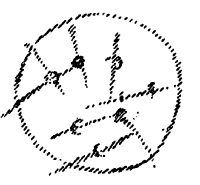
[ 9 ] Aber das ist ja alles vor dem geistigen Blicke der reine Unsinn. In Wirklichkeit ist es so, daß das Eiweiß des Muttertieres nicht kompliziert zusammengesetzt ist, sondern völlig korrumpiert wird und chaotisch wird. Das Eiweiß, das der Körper in sich sonst enthält, das ist noch einigermaßen geordnet, aber ein Eiweiß, das der Fortpflanzung zugrunde liegt, das ist gerade dadurch ausgezeichnet, daß es innerlich völlig chaotisch durcheinandergerüttelt ist, daß die Materie vollständig zurückgeführt wird ins Chaos, gar keine Struktur mehr hat, sondern eben ein Haufen von Substanz ist, die dadurch, daß sie ganz in sich zerschlissen, zerfetzt, zerstört ist, nicht mehr der Erde unterworfen ist. Solange das Eiweiß noch irgendwie innerlich zusammenhält, so lange ist es den zentralen Kräften der Erde unterworfen. In dem Augenblick, wo das Eiweiß innerlich zerklüftet wird, kommt es unter den Einfluß der ganzen Weltensphäre. Die Kräfte wirken von überallher herein, und es entsteht das kleine Eiweißklümpchen, das der Fortpflanzung zugrunde liegt, als ein Abbild des ganzen, zunächst uns überschaubaren Weltenalls. Jedes einzelne Eiweißklümpchen ist ein Abbild des ganzen Weltenalls, weil die Eiweißsubstanz zerklüftet, zerstört, ins Chaos übergeführt wird und dadurch gerade als Weltenstaub geeignet gemacht wird, dem ganzen Kosmos unterworfen zu werden. Davon weiß man heute nichts mehr.
[ 9 ] But all of that is pure nonsense from an intellectual perspective. In reality, the mother’s protein is not complex in composition, but rather becomes completely corrupted and chaotic. The protein that the body normally contains is still somewhat ordered, but a protein that underlies reproduction is characterized precisely by the fact that it is internally shaken up into complete chaos, that the matter is completely reduced to chaos, no longer has any structure at all, but is simply a heap of substance which, because it is entirely torn apart, shredded, and destroyed within itself, is no longer subject to the Earth. As long as the protein still holds together internally in some way, it remains subject to the central forces of the Earth. The moment the protein is internally fractured, it comes under the influence of the entire cosmic sphere. Forces act upon it from all directions, and the tiny clump of protein that forms the basis of reproduction emerges as a microcosm of the entire universe, which is initially within our comprehension. Every single protein clump is a reflection of the entire universe, because the protein substance is fractured, destroyed, and transformed into chaos, thereby being rendered—precisely as “cosmic dust”—capable of being subjected to the entire cosmos. Today, we know nothing more about this.
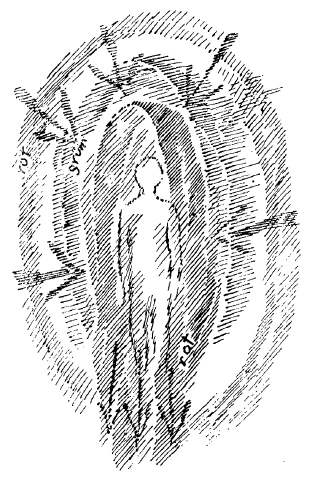
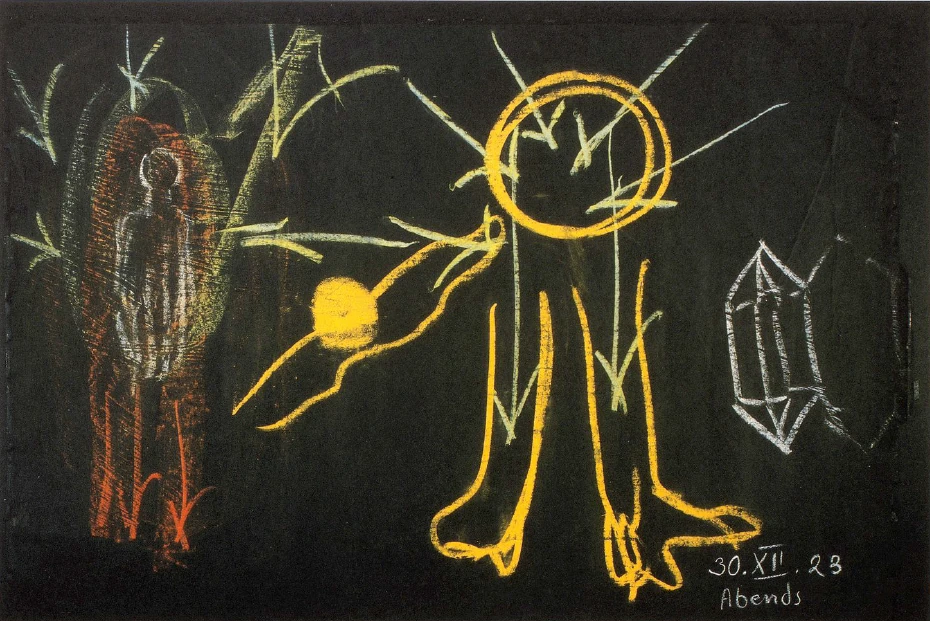
[ 10 ] Heute glaubt man: Nun ja, das alte Huhn, das hat eben das komplizierte Eiweiß. Es wird in das Ei hineingebtacht. Dann entsteht das neue Huhn, das ist das fortgesetzte, weiterentwickelte Eiweiß. Dann wird wiederum Keimsubstanz, und so geht das weiter von Huhn zu Huhn. — Aber so ist es eben nicht. Jedesmal, wenn der Übergang von einer Generation zu der nächsten ist, wird das Eiweiß ausgesetzt dem ganzen Kosmos. So daß wir sagen müssen: Wir haben auf der einen Seite die irdischen Substanzen, die unterworfen sind den irdischen zentralen Kräften, aber wir können sie in gewissen Verhältnissen auch unterworfen denken den Kräften, die von den Grenzen des Weltenalls her überall hereinwirken. Diese Kräfte, die letzteren, das sind nun diejenigen, die im menschlichen Ätherleib wirken; der ist unterworfen den Kräften des Kosmos. — Sehen Sie, jetzt haben wit reale Vorstellungen vom physischen Leib und Ätherleib. Stellen Sie sich jetzt die Frage: Was ist Ihr physischer Leib? — Er ist derjenige, der den Kräften unterworfen ist, die vom Mittelpunkt der Erde ausgehen. Was ist Ihr Ätherleib? — Es ist dasjenige an Ihnen, was den Kräften unterworfen ist, die von überall her aus der Peripherie hereinkommen. Sie können es auch zeichnen. Denken Sie einmal: Wir haben hier den Menschen. Sein physischer Leib ist derjenige, der, wenn es da dem Mittelpunkt der Erde zugeht (rot), den Kräften unterworfen ist, die nach dem Mittelpunkte der Erde gehen. Sein Ätherleib ist der (grün), welcher den Kräften unterworfen ist, die überall von dem Ende des Weltenalls hereinkommen. Jetzt haben wir ein Kräftesystem im Menschen: die Kräfte, die hinunterziehen, die eigentlich in allen Organen sind, welche senkrecht stehen, und diejenigen Kräfte, die von außen hereinkommen, die eigentlich in dieser Weise tendieren (siehe Pfeile). Das können Sie aus der Form des Menschen förmlich ablesen, wo die eine Art und die andere Art mehr vertreten ist. Wenn Sie die Beine studieren, so werden Sie sagen: Die Beine haben ihre Form selbstverständlich aus dem Grunde, weil sie den Erdenkräften mehr angepaßt sind.
[ 10 ] Today people believe: Well, the old chicken simply has that complex protein. It is deposited into the egg. Then the new chicken is formed—that is the continued, further-developed protein. This, in turn, becomes germ substance, and so it continues from chicken to chicken. — But that’s not how it works. Every time there is a transition from one generation to the next, the protein is exposed to the entire cosmos. So we must say: On the one hand, we have the earthly substances, which are subject to the central forces of the earth; but under certain conditions, we can also conceive of them as being subject to the forces that act in from all directions from the boundaries of the universe. These latter forces are the ones that act within the human etheric body; it is subject to the forces of the cosmos. — You see, now we have a realistic understanding of the physical body and the etheric body. Ask yourself this question: What is your physical body? — It is the one that is subject to the forces emanating from the center of the Earth. What is your etheric body? — It is that part of you which is subject to the forces that enter from all directions at the periphery. You can also draw it. Consider this: Here we have the human being. His physical body is the one that, as it extends toward the center of the Earth (red), is subject to the forces that radiate toward the center of the Earth. His etheric body is the one (green) that is subject to the forces entering from all directions at the edge of the universe. Now we have a system of forces within the human being: the forces that pull downward—which are actually present in all organs that stand vertically—and those forces that enter from the outside, which tend in this manner (see arrows). You can literally see this from the human form, where one type or the other is more prominent. If you study the legs, you will say: The legs naturally have their shape because they are more adapted to the forces of the Earth.
[ 11 ] Der Kopf ist mehr den Kräften der Peripherie angepaßt. — Ebenso können Sie die Arme studieren. Das ist ganz besonders interessant. Halten Sie die Arme an den Körper angedrückt: sie sind unterworfen den Kräften, die nach dem Mittelpunkte der Erde hingehen. Haben Sie die Arme in lebendiger Bewegung, dann unterwerfen Sie selber Ihre Arme den Kräften, die von überallher aus der Peripherie hereinkommen.
[ 11 ] The head is better adapted to the forces of the periphery. — You can study the arms in the same way. This is particularly interesting. Hold your arms pressed against your body: they are subject to the forces directed toward the center of the Earth. If you move your arms in a lively manner, then you yourself subject your arms to the forces coming in from all directions at the periphery.
[ 12 ] Sehen Sie, das ist der Unterschied zwischen Beinen und Armen. Die Beine sind eindeutig unterworfen den zentralen Kräften der Erde, die Arme sind nur bedingungsweise in einer gewissen Haltung unterworfen den zentralen Kräften der Erde. Der Mensch kann sie herausheben aus den zentralen Kräften der Erde und hineinfügen in die Kräfte, die wir die ätherischen nennen, die von der Peripherie überall herkommen. So kann man aber auch für die einzelnen Organe wirklich überall sehen, wie diese Organe eingefügt sind dem Weltenall.
[ 12 ] You see, that is the difference between the legs and the arms. The legs are clearly subject to the Earth’s central forces, while the arms are only conditionally subject to them when held in a certain posture. Human beings can lift them out of the Earth’s central forces and integrate them into the forces we call the etheric forces, which come from all around the periphery. In this way, however, one can also see—for each individual organ—how these organs are truly integrated into the universe.
[ 13 ] Nun haben Sie physischen Leib, Ätherleib. Was ist es aber mit dem astralischen Leib? Im Raume gibt es ja keine dritte Art von Kräften mehr. Die gibt es nicht mehr. Der astralische Leib, der hat seine Kräfte von außerhalb des Raumes. Der ätherische Leib hat sie von der Peripherie überall herein, der astralische Leib, der empfängt sie von außerhalb des Raumes.
[ 13 ] Now you have a physical body and an etheric body. But what about the astral body? After all, there is no longer a third kind of force in space. They no longer exist. The astral body derives its forces from outside of space. The etheric body receives them from all around its periphery, while the astral body receives them from outside of space.
[ 14 ] Man kann geradezu an gewissen Stellen der Natur aufsuchen, wie sich die physischen Kräfte der Erde hineinfügen in die ätherischen Kräfte, die von allen Seiten herankommen. Denken Sie einmal: Eiweiß, das ist zunächst in der physischen Erde vorhanden. Solange im Eiweiß chemisch irgendwie konstatierbar sind Schwefel, Kohlenstoff, Sauerstoff, Stickstoff, Wasserstoff, so lange ist das Eiweiß eben den physischen Erdenkräften unterworfen. Kommt das Eiweiß in die Sphäre der Fortpflanzung, dann wird es herausgehoben aus den physischen Kräften. Die Kräfte des Umfanges des Weltenalls beginnen auf das zerklüftete Eiweiß zu wirken, und es entsteht neues Eiweiß als Abbild des ganzen Weltenalls.
[ 14 ] In certain places in nature, one can actually observe how the Earth’s physical forces interweave with the ethereal forces approaching from all sides. Just think about it: protein is initially present in the physical earth. As long as sulfur, carbon, oxygen, nitrogen, and hydrogen can be chemically detected in the protein, the protein remains subject to the physical forces of the earth. When the protein enters the sphere of reproduction, it is lifted out of the physical forces. The forces surrounding the entire universe begin to act upon the fragmented protein, and new protein arises as a reflection of the entire universe.
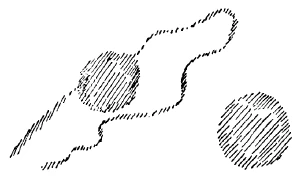
[ 15 ] Aber sehen Sie, manchmal stellt sich folgendes heraus: die Zerklüftung kann nicht weit genug gehen. Es kann Eiweißsubstanz da sein, die müßte, damit zum Beispiel bei irgendeinem Tiere Fortpflanzung geschehen kann, im abgelegten Ei zerklüftet werden können, damit sie sich fügen kann den Kräften des ganzen Weltenalls. Aber das Tier ist in irgendeiner Weise verhindert, solche Eiweißsubstanz zur Fortpflanzung zu liefern, die einfach sich einfügen kann in den ganzen Makrokosmos. Fortpflanzungsfähige Eiweißsubstanz muß sich in den ganzen Makrokosmos einfügen. Das Tier, sagen wir, ist verhindert, fortpflanzungsfähige Eiweißsubstanz ohne weiteres zu bilden, zum Beispiel die Gallwespe. Was tut daher die Gallwespe? Die Gallwespe legt ihr Ei in irgendeinen Pflanzenteil hinein. Sie haben überall diese Gallen an den Eichen, an anderen Bäumen, wo die Gallwespen ihre Eier ablegen. Dann sehen Sie an dem Blatt zum Beispiel diese merkwürdigen Gallen: da drinnen ist ein Gallwespen-Ei. Warum geschieht das so? Warum wird da das Ei der Gallwespe, sagen wit, in das Eichenblatt hineingelegt, so daß dieser entsteht, in welchem aber das Ei drinnen ist, das sich jetzt entwickeln kann? Frei könnte es sich nicht entwickeln. Das ist aus dem Grunde, weil das Pflanzenblatt in sich einen ätherischen Leib hat. Der ist angepaßt dem ganzen Weltenäther, und der kommt zu Hilfe dem Ei der Gallwespe. Das Ei der Gallwespe kann allein sich nicht helfen. Daher legt es die Gallwespe in einen Pflanzenteil hinein, wo schon Ätherleib drinnen ist, der sich einfügt dem ganzen Weltenäther. Also die Gallwespe kommt an die Eiche heran, um ihre Eiweißsubstanz zur Zerklüftung zu bringen, damit die Weltenperipherie auf dem Umwege durch das Eichenblatt, durch die Eiche, wirken kann, während das bloße Gallwespen-Ei zugrunde gehen müßte, denn es kann nicht zerklüftet werden, es hält zu fest zusammen.
[ 15 ] But you see, sometimes the following turns out to be true: the cleavage cannot go far enough. There may be protein substance that, for example, is necessary for reproduction in some animal—substance that must be cleaved within the laid egg so that it can align itself with the forces of the entire universe. But the animal is somehow prevented from providing such protein substance for reproduction—substance that can simply integrate itself into the entire macrocosm. Reproductive protein must integrate into the entire macrocosm. The animal—let’s say, for example, the gall wasp—is prevented from readily producing reproductive protein. So what does the gall wasp do? The gall wasp lays its egg inside a part of a plant. You see these galls everywhere on oak trees and other trees where gall wasps lay their eggs. Then you see, for example, these strange galls on the leaf: inside there is a gall wasp egg. Why does this happen? Why is the gall wasp’s egg, so to speak, laid inside the oak leaf, so that this gall forms, within which the egg is contained and can now develop? It could not develop on its own. This is because the plant leaf possesses an etheric body within itself. This etheric body is attuned to the entire world ether, and it comes to the aid of the gall wasp’s egg. The gall wasp’s egg cannot help itself on its own. Therefore, the gall wasp lays it into a part of the plant where an etheric body is already present, one that is attuned to the entire world ether. Thus, the gall wasp approaches the oak tree to cause its egg white substance to fracture, so that the periphery of the world can act indirectly through the oak leaf and through the oak tree itself, whereas the gall wasp’s egg alone would perish, for it cannot be fractured—it holds too tightly together.
[ 16 ] Sehen Sie, das gibt eine Möglichkeit, sogar hineinzusehen, wie merkwürdig in der Natur gearbeitet wird. Aber diese Arbeit, die ist auch sonst in der Natur vorhanden. Denn nehmen Sie an, das Tier sei nicht nur nicht fähig, Keimsubstanz zu liefern, die dem Weltenäther ausgesetzt werden kann zur Fortpflanzung, sondern das Tier sei nicht imstande, in sich selbst beliebige Stoffe in innere Nahrungsmittel zu verwandeln, zur inneren Ernährung zu verwenden. Naheliegend ist ja gleich das Beispiel der Biene. Die Biene kann nicht alles fressen. Die Biene kann nur dasjenige fressen, was ihr von der Pflanze schon zuerteilt wird. Nun aber sehen Sie sich etwas sehr Merkwürdiges an. Die Biene geht an die Pflanze heran, sucht sich den Honigsaft, nimmt ihn auf, verarbeitet ihn in sich, baut dasjenige auf, was wir so bewundern müssen bei der Biene, baut auf den ganzen Wabenbau, den Zellenbau im Bienenstock. Wir schauen auf diese zwei ganz merkwürdigen, wunderbaren Vorgänge hin, auf die Biene, die draußen auf der Blume sitzt, den Blumensaft saugt, dann hineingeht in den Bienenstock und aus sich heraus im Zusammenhange mit anderen Bienen die Wachszellen auferbaut, um sie mit Honig zu füllen. Was geschieht denn da? Sehen Sie, diese Zellen müssen Sie der Form nach ansehen. Sie sind so geformt (siehe Zeichnung, rechts), da ist die eine, die zweite daran und so weiter. Es sind kleine Zellen, deren Hohlräume so geformt sind, wie, ausgefüllt allerdings mit Substanz, etwas anders geformt, wie geformt sind die Quarzkristalle, die Kieselsäurekristalle. Wenn Sie ins Gebirge gehen und die Quarzkristalle ansehen, so können Sie sie auch so zeichnen. Sie kriegen zwar eine etwas unregelmäßige, aber eine ähnliche Zeichnung wie bei den Bienenzellen, die nebeneinander sind. Nur sind die Bienenzellen aus Wachs, der Quarz ist aus Kieselsäure.
[ 16 ] You see, this offers an opportunity to gain insight into just how strangely nature works. But this process is also present elsewhere in nature. For suppose that an animal is not only incapable of producing germ substance that can be exposed to the world ether for reproduction, but is also unable to transform any substances within itself into internal nourishment for its own sustenance. The example of the bee immediately comes to mind. The bee cannot eat just anything. The bee can eat only what the plant has already provided for it. But now observe something very remarkable. The bee approaches the plant, seeks out the nectar, takes it in, processes it within itself, and builds what we so admire in the bee—the entire honeycomb structure, the cells in the beehive. We observe these two truly remarkable, wondrous processes: the bee sitting outside on the flower, sucking up the nectar, then entering the hive and, in collaboration with other bees, building the wax cells from within itself to fill them with honey. What is happening there? You see, you have to look at the shape of these cells. They are shaped like this (see drawing, right)—there’s one, then the next one, and so on. They are small cells whose cavities are shaped—though filled with substance—somewhat differently from the shape of quartz crystals, the silica crystals. If you go into the mountains and look at the quartz crystals, you can draw them this way, too. You’ll get a somewhat irregular pattern, but one similar to that of the honeycomb cells arranged side by side. The only difference is that the honeycomb cells are made of wax, while quartz is made of silica.
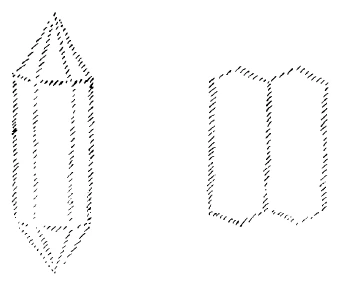
[ 17 ] Geht man der Sache nach, so findet man: Unter dem Einflusse des allgemeinen Ätherischen, Astralischen wurde in einer bestimmten Zeit der Erdenentwickelung mit Hilfe der Kieselsäure der Quarzkristall in den Gebirgen gebildet. Da sehen Sie einmal Kräfte, die aus dem Umkreis der Erde herankommen, die wirken als ätherisch-astralische Kräfte, die Quarzkristalle im Kiesel aufbauend. Sie finden sie überall draußen in den Gebirgen, finden ganz wunderbare Quarzkristalle, diese sechseckigen Gebilde. Das, was da diese Quarzkristalle sind, das sind als Hohlräume die Bienenzellen in den Bienenstöcken. Die Biene holt nämlich aus der Blume dasjenige heraus, was einstmals da war, um die sechseckigen Quarzkristalle zu machen. Das holt die Biene aus der Blume heraus und macht durch ihren eigenen Körper Nachbildungen der Quarzkristalle. Da geht zwischen der Biene und der Blume etwas Ähnliches vor wie das, was einstmals draußen im Makrokosmos vorgegangen ist.
[ 17 ] If one investigates the matter closely, one finds that, under the influence of the general etheric and astral forces, quartz crystals were formed in the mountains during a specific period of Earth’s evolution with the aid of silicic acid. There you see forces approaching from the Earth’s surroundings, acting as etheric-astral forces that build up quartz crystals within the silica. You find them everywhere out in the mountains—wonderful quartz crystals, these hexagonal formations. These quartz crystals are, in essence, the hollow spaces of the honeycomb cells in beehives. For the bee extracts from the flower that which was once there to form the hexagonal quartz crystals. The bee extracts this from the flower and, through its own body, creates replicas of the quartz crystals. What takes place between the bee and the flower is similar to what once took place out there in the macrocosm.
[ 18 ] Ich erwähne diese Dinge, damit Sie sehen, wie notwendig es ist, nicht bloß hinzuschauen auf dieses ganz jämmerlich Abstrakte, das in Kohlenstoff, Stickstoff, Wasserstoff, Sauerstoff und so weiter vorhanden ist, sondern daß es notwendig ist, hinzuschauen auf die wunderbaren Gestaltungsprozesse, auf die inneren intimen Beziehungen in der Natur und in den Naturvorgängen. Und solches lag wirklich einmal instinktiv der Wissenschaft zugrunde. Das ist verlorengegangen im Laufe der geschichtlichen Entwickelung der Menschheit gegen das 15. Jahrhundert hin. Das muß wiedererobert werden. Wieder müssen wir in die intimen Beziehungen des natürlichen Daseins und seines Verhältnisses zum Menschen hineingelangen. Nur dann, wenn wiederum solche Beziehungen erkannt werden, wird eine wirkliche Einsicht in den gesunden und kranken Menschen wiederum dasein können. Sonst bleibt es bei aller Heilmittellehre lediglich beim Probieren, ohne daß man den inneren Zusammenhang einsieht.
[ 18 ] I mention these things so that you may see how necessary it is not merely to look at this utterly pitiful abstraction found in carbon, nitrogen, hydrogen, oxygen, and so on, but rather that it is necessary to look at the wondrous processes of formation, at the inner, intimate relationships within nature and in natural processes. And such an approach was once truly the instinctive foundation of science. This was lost in the course of humanity’s historical development around the 15th century. It must be reclaimed. Once again, we must penetrate the intimate relationships of natural existence and its connection to human beings. Only when such relationships are recognized once more will a true understanding of healthy and sick human beings be possible again. Otherwise, despite all the teachings on remedies, it will remain merely a matter of trial and error, without any insight into the inner connections.
[ 19 ] Es ist eine Art unfruchtbarer Periode von dem 15. Jahrhundert bis heute in der Entwickelung des menschlichen Geistes dagewesen. Diese unfruchtbare Periode hat auf die Menschheit gedrückt. Denn diese unfruchtbare Periode, wo man Pflanzen anschaute, Tiere anschaute, Menschen anschaute, Mineralien anschaute und eigentlich von allem nichts mehr wußte, diese Periode hat den Menschen überhaupt herausgebracht aus allem Weltzusammenhang. Und schließlich ist er eingetreten in jenes Chaos, in dem er heute gegenüber der Welt lebt, wo er sich nicht mehr in irgendeinem Zusammenhang weiß mit der Welt. In det Zeit, in der solche Dinge überlegt wurden, wußte ja der Mensch: Jedesmal, wenn Fortpflanzung geschieht, spricht der ganze Makrokosmos. In dem fortpflanzungsfähigen Keim oder Samen entsteht ein Abbild des ganzen Makrokosmos. Da ist die große Welt draußen, aber im kleinsten Keim ist ein Ergebnis der Wirkungen, die von überallher von der großen Welt kommen.
[ 19 ] There has been a kind of barren period in the development of the human spirit, stretching from the 15th century to the present day. This barren period has weighed heavily on humanity. For this barren period—during which people looked at plants, animals, human beings, and minerals, yet actually knew nothing more about anything—this period has completely severed humanity from all connection with the world. And ultimately, humanity has entered into that chaos in which it lives today in relation to the world, no longer aware of any connection to it. In the time when such things were contemplated, humanity knew: Every time reproduction takes place, the entire macrocosm speaks. Within the germ or seed capable of reproduction, an image of the entire macrocosm arises. There is the great world out there, but within the tiniest germ lies a result of the influences coming from all over the great world.
[ 20 ] Im Menschen wirken nun zusammen zunächst diejenigen Kräfte, die die physisch-zentralen Kräfte der Erde sind; sie wirken in allen Menschenorganen; aber es wirken ihnen überall entgegen die Kräfte, die von überallher kommen, die ätherischen Kräfte. Sehen Sie sich irgendwie die Leber an, die Milz, die Lunge, Sie begreifen sie zunächst nur, wenn Sie wissen: Da wirken die Kräfte zusammen, die aus dem Mittelpunkt der Erde kommen, und jene, die überall aus dem Umkreis der Welt herkommen. — Dann aber werden gewisse Organe durchsetzt vom Astralleib, von der Ich-Organisation noch, während andere Organe weniger von diesen höheren Gliedern durchsetzt werden und der Mensch im schlafenden Zustande überhaupt in sich nicht seinen astralischen Leib und seine Ich-Organisation hat. Nehmen Sie einmal irgendein Organ - die Lunge (siehe Zeichnung Seite 119, rechts oben): Durch irgend etwas ist das eingetreten, daß die Kräfte, die überall aus dem Weltenall hereinkommen (Pfeile), zu stark auf die menschliche Lunge wirken. Sie werden die Lunge krank machen, weil ein gewisser harmonischer Gleichgewichtszustand bestehen muß zwischen dem, was in der Lunge wirkt vom Mittelpunkt der Erde aus, und dem, was von allen Seiten des Umkreises kommt. Gelingt es Ihnen nun, zu wissen, wie Sie mineralische Substanzen finden können, welche den zu stark wirkenden Ätherkräften ein Gegengewicht in der Lunge geben, dann haben Sie das Heilmittel, wodurch Sie die zu stark wirkenden ätherischen Kräfte eliminieren. Und so kann auch das Umgekehrte vorliegen: Die ätherischen Kräfte können zu schwach werden, die physischen Kräfte, die vom Mittelpunkte der Erde aus wirken, würden zu stark. Sie werden im Umkreise des Pflanzenreiches suchen, was auf den Menschen so wirken kann, daß es verstärkt die ätherischen Kräfte durch irgendein Organ, und Sie bekommen das entsprechende Heilmittel.
[ 20 ] In human beings, the forces that are the Earth’s central physical forces are the first to interact; they are at work in all human organs; but counteracting them everywhere are the forces that come from all directions—the etheric forces. Take a look, for example, at the liver, the spleen, or the lungs; you can only begin to understand them if you realize that the forces originating from the center of the Earth are working together there with those coming from all around the world. — But then certain organs are permeated by the astral body and the ego-organization, while other organs are less permeated by these higher components, and in the sleeping state, a person does not possess their astral body or their ego-organization at all. Take any organ—the lungs (see illustration on page 119, top right): For some reason, the forces entering from all over the universe (arrows) are acting too strongly on the human lungs. They will cause the lungs to become diseased because a certain state of harmonious balance must exist between what acts upon the lungs from the center of the Earth and what comes from all sides of the surrounding space. If you can now determine how to find mineral substances that counterbalance the excessively strong etheric forces in the lungs, then you have the remedy that will eliminate these excessive etheric forces. And the reverse can also be true: the etheric forces may become too weak, while the physical forces acting from the center of the Earth become too strong. You will search within the plant kingdom for what can act upon the human being in such a way as to strengthen the etheric forces through some organ, and you will obtain the corresponding remedy.
[ 21 ] Es ist unmöglich, durch die bloße Betrachtung des physischen Leibes allein irgendwie auch nur das geringste Heilmittel zu finden, denn der physische Menschenleib hat an sich gar keinen Grund, etwas zu sagen über seine Konstitution. Denn der sogenannte normale Prozeß, der in ihm vorgeht, ist ein Naturprozeß, aber der Krankheitsprozeß ist auch ein Naturprozeß. Wenn Sie eine sogenannte normale Leber haben, haben Sie eine Leber, in der nur Naturprozesse vor sich gehen. Wenn Sie aber eine Leber haben, in der ein Geschwür ist, haben Sie auch eine Leber, in der nur Naturptozesse vor sich gehen. Der Unterschied kann niemals aus dem physischen Leib gefunden werden. Aus dem physischen Leib kann man nur die Tatsache konstatieren, daß es das eine Mal anders ausschaut als das andere Mal, aber über die Ursache kann man nichts wissen. Aber haben Sie ein Geschwür in der Leber, so werden Sie nur dann die Ursache der Geschwürbildung finden, wenn Sie wissen, daß in einem solchen Fall zum Beispiel der astralische Leib viel mächtiger in die Leber eingreift, als er eingreifen sollte. Sie müssen den astralischen Leib, der bei einer Geschwürbildung der Leber stark eingreift in die Leber, wiederum aus ihr austreiben. Und so gibt es überhaupt keine Möglichkeit, real zu sprechen über den gesunden und kranken Menschen, wenn man nicht über den physischen Leib hinaus in die höheren Glieder der Menschennatur geht. So daß man eigentlich sagen kann: Eine Heilmittellehre wird es überhaupt wiederum erst geben, wenn man über den physischen Leib des Menschen hinausgehen wird, denn das Wesen der Krankheit ist einfach nicht einzusehen aus dem physischen Menschenleib heraus.
[ 21 ] It is impossible to find even the slightest remedy by merely observing the physical body alone, for the physical human body, in and of itself, provides no basis for determining anything about its constitution. For the so-called normal process taking place within it is a natural process, but the disease process is also a natural process. If you have a so-called normal liver, you have a liver in which only natural processes are taking place. But if you have a liver with an ulcer, you also have a liver in which only natural processes are taking place. The difference can never be found in the physical body. From the physical body, one can only observe the fact that it looks different one time than another, but one cannot know anything about the cause. But if you have an ulcer in the liver, you will only discover the cause of the ulcer formation if you know that, in such a case, for example, the astral body is intervening in the liver much more powerfully than it should. You must, in turn, expel from the liver the astral body that is strongly intervening in it during the formation of a liver ulcer. And so there is no way at all to speak realistically about healthy and sick people unless one goes beyond the physical body into the higher members of human nature. Thus, one can actually say: A true science of remedies will only exist again when we go beyond the human physical body, for the nature of disease simply cannot be understood from within the physical human body alone.
[ 22 ] Ich habe diesmal nur die Absicht, die Dinge in historischer Beziehung darzustellen. Aber es ist eben so, daß, als immer mehr und mehr verglommen ist, was aus alten Zeiten in die neuere heraufgetragen worden ist, überhaupt jegliche Menschenkenntnis verlorenging. Und heute stehen wir vor der Notwendigkeit, wiederum Menschenkenntnis zu erwerben. Diese Menschenkenntnis wird sich nur erwerben lassen,wenn man wiederum die Beziehung des Menschen zu den umliegenden Naturreichen zu fassen vermag.
[ 22 ] My sole intention this time is to present things in their historical context. But the fact is that, as more and more of what had been carried over from ancient times into the modern era faded away, all understanding of human nature was lost. And today we are faced with the necessity of regaining this understanding of human nature. This understanding can only be regained if we are once again able to grasp the relationship between human beings and the surrounding natural realms.
[ 23 ] Gehen wir einmal von der Ich-Organisation des Menschen aus. Hat man zunächst, sagen wir, durch imaginative Erkenntnis aus der Initiationswissenschaft eine Anschauung von der menschlichen IchOrganisation, dann kann man sich fragen: Zu was im heutigen menschlichen Organismus steht denn diese Ich-Organisation in besonderer Beziehung? - Diese Ich-Organisation steht in besonderer Beziehung zu demjenigen, was im Menschen mineralisch ist. Wenn Sie daher ein Mineralisches, ein wesentlich Mineralisches aufnehmen, zum Beispiel Salz auf die Zunge bringen, sogleich ist es die Ich-Organisation, die sich über dieses Mineralische hermacht. Dann wird das Mineralische weiterbefördert, kommt in den Magen. Die Ich-Organisation bleibt dabei, auch wenn die Salzsubstanz im Magen ist; die Ich-Organisation bleibt dabei. Das Salz geht weiter, macht ja allerdings Veränderungen durch, geht durch den Darm, geht weiter: aber niemals wird Ihr Salz von der Ich-Organisation verlassen. Die benehmen sich wie recht zusammengehörige Dinge, die Ich-Organisation und das Salz, das in den Menschen hineinkommt.
[ 23 ] Let us begin by considering the human ego-organization. If one first gains, let us say, through imaginative insight derived from the science of initiation, a conception of the human ego-organization, then one may ask: To what aspect of the modern human organism does this ego-organization bear a special relationship? - This “I” organization has a special relationship to the mineral aspect within the human being. Therefore, when you ingest something mineral—something essentially mineral—for example, when you place salt on your tongue—it is immediately the “I” organization that takes charge of this mineral substance. The mineral substance is then transported further and enters the stomach. The “I” organization remains with it, even when the salt is in the stomach; the “I” organization remains with it. The salt continues on its way, undergoing changes as it passes through the intestines and moves further along—but your salt is never abandoned by the “I” organization. They behave like things that truly belong together: the “I” organization and the salt that enters the human being.
[ 24 ] Sehen Sie, so ist es nicht, wenn Sie zum Beispiel ein Spiegelei essen, das hat noch etwas von Zusammenhalt mit der Eiweißsubstanz. Da kümmert sich nur ein wenig die Ich-Organisation, wenn Sie die Spiegeleisubstanz auf der Zunge haben. Dann kümmert sich schon sehr wenig der astralische Leib noch darum, während es hinunterschlüpft in den Magen. Dann geht es weiter; dann wirkt intensiv der Ätherleib, dann der physische Leib. Diese zerklüften inIhnen selber die Eiweißsubstanz, die Sie mit dem Spiegelei in Ihren Organismus hineinbekommen. Und jetzt wird das Spiegelei in Ihnen selber ganz mineralisch gemacht. Es wird zerklüftet. Alles Lebendige wird aus ihm ausgetrieben. Es wird in Ihnen zerklüftet. An den Darmwänden hört diese äußerlich aufgenommene Eiweißsubstanz auf, irgendwie noch Eiweiß zu sein, wird ganz mineralisch. Da geht es nun über jetzt wieder in die Ich-Organisation, und von da aus wird das mineralisierte Eiweiß von der Ich-Organisation aufgenommen.
[ 24 ] You see, it’s not like that when, for example, you eat a fried egg—it still retains some cohesion with the egg white substance. The “I” organization is only slightly involved when you have the fried egg on your tongue. Then the astral body pays very little attention to it as it slides down into the stomach. Then the process continues; first the etheric body acts intensively, then the physical body. These break down within you the protein substance that you’ve introduced into your organism with the fried egg. And now the fried egg is transformed into a completely mineral substance within you. It is broken down. All life is expelled from it. It is broken down within you. At the intestinal walls, this protein substance taken in from the outside ceases, in a sense, to be protein and becomes entirely mineral. From there, it now passes back into the “I”-organization, and from there, the mineralized protein is absorbed by the “I”-organization.
[ 25 ] Und so können wir immer sagen: Die Ich-Organisation gibt sich nur mit Mineralischem ab. Aber jedes Mineralische wird durch die Ich-Organisation im menschlichen Organismus etwas anderes, als es außerhalb ist. Es darf nichts im menschlichen Organismus so bleiben, wie es außerhalb dieses menschlichen Organismus ist. Dafür muß die Ich-Organisation in radikaler Weise sorgen. Nicht nur, daß solche Substanzen wie, sagen wir, Kochsalz und dergleichen, von der IchOrganisation erfaßt und innerlich zu etwas ganz anderem gemacht werden, als sie äußerlich sind, sondern es darf nicht einmal, wenn der Mensch von einem gewissen Wärmezustande umgeben ist, der äußere Wärmezustand den Menschen irgendwie durchdringen. Sie dürfen nicht Ihre Finger ausgefüllt haben von dem, was sich als äußere Wärme ausbreitet. Die Wärme darf auf Sie nur als Reiz wirken, und Sie müssen die Wärme, die Sie in sich haben, selber erzeugen. In dem Augenblick, wo Sie bloß Gegenstand sind, sich nicht Ihre Wärme oder Kälte selber erzeugen, sondern wo irgendwo in Ihnen die Wärme so weiterwirkt, wie zum Beispiel bei irgendeinem äußeren Gegenstande, da werden Sie krank — von der äußeren Wärme selbst, nicht einmal bloß von der Substanz, sondern von der äußeren Wärme. Denken Sie sich einmal, da wäre irgendein Tuch oder ein Schwamm, und da wäre ein Ofen. Die Ofenwärme, die darf ganz ruhig sich ausbreiten, durch das Tuch oder den Schwamm durchgehen. Das Tuch oder der Schwamm setzt nur fort, was da als Ofenwärme sich ausbreitet. Das darf die Ofenwärme nicht tun, wenn sie bis zur Haut kommt. Wenn die Ofenwärme den Sinnenreiz ausübt, dann muß die Reaktion kommen: die Innenwärme muß von innen aus erzeugt werden. Erkältungszustände beruhen gerade darauf, daß man nicht sich bloß reizen läßt, um seine innere Eigenwärme zu erzeugen, sondern daß man die äußere Kälte etwas unter die Haut kommen läßt, so daß man sich selber nicht in die Welt stellt als der voll tätige Mensch, der sich mit seinem Wirken, seinen Impulsen selbst ausfüllt, sondern der sich wie einen Gegenstand hinstellt und durch sich die Wirkungen der Außenwelt durchziehen läßt. — Das ist das Wesen der Ich-Organisation, daß es in sich aufnimmt das Mineralische, aber es innerlich ganz und gar ändert, in etwas anderes verwandelt.
[ 25 ] And so we can always say: The “I” organization deals only with the mineral realm. But every mineral substance becomes, through the “I” organization within the human organism, something different from what it is outside of it. Nothing in the human organism may remain as it is outside of that human organism. The “I” organization must ensure this in a radical way. Not only are substances such as, say, table salt and the like taken up by the “I” organization and transformed internally into something entirely different from what they are externally, but even when a person is surrounded by a certain state of heat, that external state of heat must not penetrate the person in any way. Your fingers must not be filled with what spreads as external heat. The heat may act upon you only as a stimulus, and you must generate the heat you have within yourself. The moment you become merely an object—not generating your own warmth or cold, but allowing the warmth to continue acting within you as it does, for example, in some external object—that is when you become ill—from the external warmth itself, not merely from the substance, but from the external warmth. Imagine, for a moment, that there is a cloth or a sponge, and there is a stove. The heat from the stove may spread quite freely, passing through the cloth or the sponge. The cloth or the sponge merely continues what is spreading there as heat from the stove. The heat from the stove must not do this when it reaches the skin. When the heat from the stove stimulates the senses, the reaction must follow: the inner heat must be generated from within. Colds arise precisely because one does not simply allow oneself to be stimulated in order to generate one’s own inner heat, but instead allows the external cold to penetrate slightly beneath the skin, so that one does not present oneself to the world as a fully active human being who fills oneself with one’s own actions and impulses, but rather stands there like an object and allows the effects of the external world to pass through oneself. — This is the essence of ego-organization: that it takes in the mineral within itself but completely transforms it internally, turning it into something else.
[ 26 ] Erst wenn wir gestorben sind, ist das Mineralische wiederum Mineralisches der äußeren Natur. Während wir auf der Erde leben, das Mineralische innerhalb unserer Haut haben, verändert die Ich-Organisation das Mineralische fortwährend. Das Pflanzliche, das wir aufnehmen, wird durch die astralische Organisation, durch den astralischen Leib fortwährend verändert. So daß wir sagen können: Die Ich-Organisation des Menschen metamorphosiert gründlich um alles Mineralische, nicht nur das fest Mineralische, auch das Wäßrige, auch das Luftförmige, auch das Wärmeartige. — Man kann ja natürlich, wenn man grob spricht, sagen: Hier irgendwo ist Wasser. Ich trinke. Ich habe das Wasser jetzt in mir. — Aber in dem Augenblicke, wo mein Organismus das Wasser aufnimmt, ist das, was ich in mir habe, durch meine Ich-Organisation nicht mehr dasselbe, was das äußere Wasser ist. Das ist es erst wiederum, wenn ich es ausschwitze oder auf eine andere Art zu Wasser mache. Innerhalb meiner Haut ist Wasser nicht Wasser, sondern ist etwas, was lebendige Flüssigkeit ist.
[ 26 ] Only when we have died does the mineral element once again become part of the mineral realm of external nature. While we live on Earth, with the mineral element within our skin, the “I” organization is constantly transforming it. The plant matter we take in is constantly transformed by the astral organization, by the astral body. So that we can say: The human ego-organization thoroughly transforms everything mineral—not only the solid mineral, but also the aqueous, the airy, and the warmth-like. — Of course, speaking in general terms, one can say: There is water somewhere here. I drink. I now have the water inside me. — But the moment my organism absorbs the water, what I have inside me is, through my “I” organization, no longer the same as the external water. It becomes that again only when I sweat it out or convert it into water in some other way. Inside my skin, water is not water, but rather a living fluid.
[ 27 ] In dieser Weise muß immer unendlich vieles umgedacht werden. Ich konnte Ihnen heute nur kleine Andeutungen geben. Aber wenn Sie das durchdenken, wenn Sie wissen, wie das Eiweiß zerklüftet werden muß, um in die Wirkung des ganzen Makrokosmos zu kommen, wie das Wasser, das ich trinke, innerlich lebendige Flüssigkeit ist, nicht mehr das unorganische Wasser, sondern von Ich-Organisation durchdrungenes Wasser ist, wenn Sie bedenken, indem Sie Kohl essen: Draußen ist es Kohl, innerlich nimmt der astralische Leib sogleich den Kohl in sich auf — wenigstens den wirklichen, den physischen Kohl — und verändert ihn in etwas ganz anderes, so kommen wir hier an die Betrachtung außerordentlich bedeutsamer Vorgänge, dringen vor bis zu der Anschauung, daß wir in unserem Stoffwechsel Vorgänge haben, die nur um eine gewisse Stufe der Entwickelung verschieden sind von den Stoffwechselprozessen, die wir zum Beispiel im Gehirn haben, die das Nervensystem da ausmachen und so weiter. Darüber werde ich dann morgen weiterreden, um an diesen Vorgängen nun den ganz radikalen Unterschied der Menschheit noch des 12. nachchristlichen Jahrhunderts und des 20. Jahrhunderts hervorzuheben, um davon her dann die Notwendigkeit zur Einsicht zu bringen, wie im weiteren Fortschritt für den gesunden und kranken Menschen neue Impulse kommen müssen, damit nicht alle Menschenkenntnis überhaupt verlorengehe und man nichts mehr wisse über den gesunden sowohl wie über den kranken Menschen. Davon also morgen dann weiter.
[ 27 ] In this way, there is always an infinite amount that needs to be rethought. I could only give you a few brief hints today. But if you think this through—if you understand how the protein must be broken down to become part of the workings of the entire macrocosm; how the water I drink is, inwardly, a living fluid—no longer inorganic water, but water permeated by ego-organization; if you reflect on this while eating cabbage: Outwardly it is cabbage, but inwardly the astral body immediately absorbs the cabbage—at least the real, physical cabbage—and transforms it into something entirely different, thus we arrive at the consideration of extraordinarily significant processes, advancing to the insight that we have processes in our metabolism that differ only by a certain stage of development from the metabolic processes we have, for example, in the brain—which constitute the nervous system there—and so on. I will speak further on this tomorrow, in order to highlight, through these processes, the very radical difference between humanity in the 12th century A.D. and that of the 20th century, and from there to bring home the necessity of understanding how, in the course of further progress, new impulses must arise for both healthy and sick people, so that our entire understanding of human nature is not lost and we no longer know anything about either healthy or sick people. More on that tomorrow.