

World History from an Anthroposophical Perspective
GA 233
29 December 1923, Dornach
Translate the original German text into any language:
Versions Available:
World History from an Anthroposophical Perspective, tr. SOL
Sechster Vortrag
Sixth Lecture
[ 1 ] Die Zeit drei bis vier Jahrhunderte vor dem Mysterium von Golgatha, drei bis vier Jahrhunderte nachher, was einen Zeitraum von sechs bis acht Jahrhunderten gibt, diese Zeit ist für das Verständnis der Geschichte des Abendlandes in ihrem Anschlusse an das Morgenland ganz besonders wichtig. Das Wesentliche der Ereignisse, von denen ich in den vergangenen Tagen gesprochen habe und die da gipfelten im Auftreten des Aristotelismus und in den Alexanderzügen von Makedonien nach Asien hinüber, das Wesentliche dieser Ereignisse ist, daß sie eine Art von Abschluß bilden für jene Zivilisation des Orients, die noch ganz und gar getaucht war in die Impulse des Mysterienwesens.
[ 1 ] The period spanning three to four centuries before the Mystery of Golgotha and three to four centuries afterward—a span of six to eight centuries—is of particular importance for understanding the history of the West in its connection to the East. The essence of the events I have spoken of in recent days—which culminated in the emergence of Aristotelianism and Alexander’s campaigns from Macedonia into Asia—is that they mark a kind of conclusion for that civilization of the East which was still entirely steeped in the impulses of the mystery traditions.
[ 2 ] Der letzte Abschluß sozusagen dieser noch echten, reinen Mysterienimpulse des Orients war ja der frevlerische Brand von Ephesus. Und wir haben es dann zu tun mit demjenigen, was sozusagen für Europa, für Griechenland, dann übrigbleibt an Mysterientradition, an Schattenbildern, möchte ich sagen, der alten gottdurchdrungenen Zivilisation. Und vier Jahrhunderte nach dem Mysterium von Golgatha können wir sozusagen sehen durch ein anderes Ereignis, was noch vorhanden war von den Trümmern des Mysterienwesens. Wir können es sehen an Julianus Apostata. Julianus Apostata, der römische Kaiser, wird im 4. Jahrhundert in dasjenige eingeweiht, in das man eben eingeweiht werden konnte, von einem der letzten Hierophanten der eleusinischen Mysterien. Das heißt, Julianus Apostata erfuhr ebensoviel von dem, was die älteren Göttergeheimnisse des Orients waren, als im 4. nachchristlichen Jahrhundert in den Eleusinien noch zu erfahren war.
[ 2 ] The final culmination, so to speak, of these still genuine, pure mystery impulses of the Orient was, of course, the sacrilegious burning of Ephesus. And we are then dealing with what remains, so to speak, for Europe, for Greece, of the mystery tradition—shadows, I would say, of the ancient, God-imbued civilization. And four centuries after the Mystery of Golgotha, we can see, so to speak, through another event, what still remained of the ruins of the mystery tradition. We can see this in Julian the Apostate. Julian the Apostate, the Roman emperor, was initiated in the 4th century into whatever it was possible to be initiated into at that time by one of the last hierophants of the Eleusinian Mysteries. This means that Julian the Apostate learned as much about the ancient divine mysteries of the East as could still be learned in the Eleusinian Mysteries in the 4th century A.D.
[ 3 ] Damit haben wir an einem Punkt, dem Ausgangspunkt eines gewissen Zeitalters, den Brand von Ephesus stehen. An dem Tage des Brandes von Ephesus ist der Geburtstag Alexanders des Großen. Wir haben am Ende dieser Epoche stehen, 363, den Todestag, den gewaltsamen Tod Julianus Apostatas drüben in Asien. Man möchte sagen: Mitten drinnen in diesem Zeitraume steht das Mysterium von Golgatha. Und nun sehen wir uns einmal an, wie sich dieser Zeitraum, den ich eben begrenzt habe, eigentlich ausnimmt in der ganzen Entwickelungsgeschichte der Menschheit. Wir haben ja jetzt die merkwürdige Tatsache vor uns liegen, daß, wenn wir zurückschauen wollen jenseits dieses Zeitraumes in die Entwickelung der Menschheit hinein, wir etwas tun müssen in unserem Anschauen, das sehr ähnlich ist einem anderen. Nur bringen wir die beiden Dinge oftmals nicht zusammen,
[ 3 ] This brings us to a specific point—the starting point of a certain era—the burning of Ephesus. The day of the burning of Ephesus is the birthday of Alexander the Great. At the end of this epoch, in the year 363, we find the day of the violent death of Julian the Apostate over in Asia. One might say: Right in the middle of this period lies the Mystery of Golgotha. And now let us take a look at how this period, which I have just defined, actually fits into the entire history of human development. We are now faced with the remarkable fact that, if we wish to look back beyond this period into the development of humanity, we must do something in our contemplation that is very similar to something else. Only, we often fail to bring the two things together,
[ 4 ] Erinnern Sie sich, wie ich genötigt war darzustellen in meiner «Theosophie» die Welten, die für uns in Betracht kommen: die physische Welt, daran grenzend eine Übergangswelt, die Seelenwelt, und dann als die Welt, in die nur Eintritt gewinnen kann der höchste Teil des Menschen, das Geisterland. Und wenn man absieht von den besonderen Eigentümlichkeiten dieses Geisterlandes, das gegenwärtig der Mensch durchmacht zwischen dem Tod und einer neuen Geburt, wenn man so auf die allgemeinen Eigentümlichkeiten des Geisterlandes sieht, dann ist es so, daß wir in ganz ähnlicher Weise, wie wir umorientieren müssen unsere Seelenverfassung, um dieses Geisterland zu begreifen, umorientieren müssen unsere Seelenverfassung, um dasjenige zu begreifen, was jenseits dieses Zeitpunktes liegt. Mit den Begriffen und Vorstellungen, die auf die heutige Welt anwendbar sind, sollen wir nur ja nicht glauben, dasjenige verstehen zu können, was hinter dem Brande von Ephesus liegt. Da muß man andere Begriffe und Vorstellungen ausbilden, die einem eben gestatten, hinzuschauen auf Menschen, die noch wußten, daß sie, so wie der Mensch im Atmungsprozesse mit der äußeren Luft, sie durch ihre Seele fortdauernd mit den Göttern zusammenhängen.
[ 4 ] Do you remember how, in my book *Theosophy*, I was compelled to describe the worlds that are relevant to us: the physical world, bordering on it a transitional world, the world of souls, and then, as the world into which only the highest part of the human being can enter, the spirit realm. And if one looks beyond the specific characteristics of this spirit realm—which human beings currently pass through between death and a new birth—and instead considers the general characteristics of the spirit realm, then it is the case that, just as we must reorient our spiritual disposition to comprehend this spirit realm, so too must we reorient our spiritual disposition to comprehend what lies beyond that point in time. We must certainly not believe that we can understand what lies beyond the Fire of Ephesus using the concepts and ideas applicable to the world of today. We must develop other concepts and ideas that allow us to look upon people who still knew that, just as human beings are connected to the external air through the process of breathing, they are constantly connected to the gods through their souls.
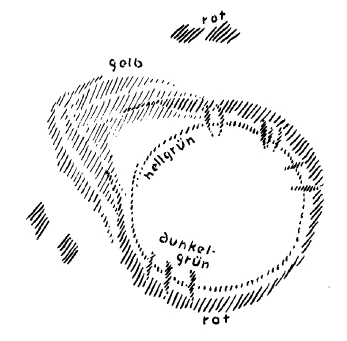
[ 5 ] Und nun, sehen wir uns an diese Welt, die gewissermaßen ein irdisches Devachan, ein irdisches Geisterland ist, denn die physische Welt nützt nichts für diese Welt. Dann haben wir jene Zwischenzeit von meinetwillen 356 vor Christus bis 363 nach Christus. Und was liegt nun jenseits davon? Jenseits davon gegen Asien hin, jenseits gegen Europa zu liegt die Welt, aus der die gegenwärtige Menschheit eben im Begriffe ist ebenso herauszukommen, wie die alte Menschheit aus der orientalischen Welt über die griechische ins Römerreich hineingekommen ist (siehe Zeichnung). Denn dasjenige, was durch die Jahrhunderte des Mittelalters bis in unsere Zeiten herein sich als Zivilisation entwickelt hat, das ist eine Zivilisation, welche sich gebildet, entfaltet hat, abgesehen von dem eigentlichen Inneren des Mysterienwesens, welche sich entwickelt hat auf der Grundlage dessen, was der Mensch mit seinen Begriffen und Vorstellungen ausbilden kann. In Griechenland hatte es sich schon vorbereitet seit Herodot, der in äußerlicher Weise die Tatsachen der Geschichte beschrieben hat und nicht mehr an das Geistige oder wenigstens nur höchst mangelhaft an das Geistige herangetreten ist. Dann bildet sich das immer mehr und mehr aus. Aber in Griechenland bleibt immer noch etwas von dem Hauche jener Schattenbilder, die an das geistige Leben erinnern sollten. In Rom dagegen beginnt jenes Zeitalter, dem die Menschheit der Gegenwart noch verwandt ist, jenes Zeitalter, das in einer ganz anderen Weise eine Seelenverfassung hat, als selbst diejenige Griechenlandes noch war. Nur solch eine Persönlichkeit wie Julianus Apostata empfindet etwas wie eine unbesiegliche Sehnsucht nach der alten Welt, und er läßt sich mit einer gewissen Ehrlichkeit in die eleusinischen Mysterien einweihen. Aber es hat keine Erkenntniskraft mehr, was er da bekommt. Und vor allen Dingen, er entstammt einer Welt, die mit dem Inneren der Seele nicht mehr voll ergreifen kann, was da an Traditionen aus dem Mysterienwesen des Orients vorhanden war.
[ 5 ] And now, let us look at this world, which is, so to speak, an earthly Devachan, an earthly realm of spirits, for the physical world is of no use to this world. Then we have that interim period, for my purposes, from 356 B.C. to 363 A.D. And what lies beyond that? Beyond that, toward Asia on one side and toward Europe on the other, lies the world from which present-day humanity is just now emerging, just as ancient humanity emerged from the Eastern world, passing through the Greek world, and entered the Roman Empire (see illustration). For what has developed as civilization through the centuries of the Middle Ages right up to our own time is a civilization that has formed and unfolded apart from the actual inner essence of the mystery tradition—a civilization that has developed on the basis of what human beings can form with their concepts and ideas. In Greece, the groundwork had already been laid since Herodotus, who described historical facts in an external manner and no longer approached the spiritual—or at least did so only very inadequately. Then this developed more and more. But in Greece, something of the spirit of those shadow images that were meant to remind people of spiritual life still remained. In Rome, on the other hand, there begins that era to which present-day humanity is still related—an era whose spiritual disposition is entirely different from even that of ancient Greece. Only a figure such as Julian the Apostate feels something like an invincible longing for the ancient world, and he allows himself to be initiated into the Eleusinian Mysteries with a certain sincerity. But what he receives there no longer possesses any power of insight. And above all, he comes from a world that can no longer fully grasp, in the innermost depths of the soul, the traditions that existed within the mystery cults of the Orient.
[ 6 ] Die heutige Menschheit wäre nimmermehr entstanden, wenn eben nicht auf Asien Griechenland, Rom gefolgt wäre. Die heutige Menschheit ist jene Menschheit, die auf Persönlichkeit, auf die individuelle Persönlichkeit des Einzelnen gebaut ist. Die orientalische Persönlichkeit, die orientalische Menschheit war nicht auf die individuelle Persönlichkeit des Einzelnen gebaut. Der einzelne fühlte sich als ein Glied des fortlaufenden göttlichen Prozesses. Die Götter hatten ihre Absichten mit der Erdenentwickelung, die Götter wollten dies oder jenes; daher geschah dies oder jenes hier unten auf der Erde. Im Willen der Menschen wirkten inspirierend die Götter. Alles dasjenige, was die machtvollen Persönlichkeiten, auf die ich Ihnen hingedeutet habe, im Orient getan haben, war Götterinspiration. Die Götter wollten, und die Menschen taten. Und die Mysterien waren gerade dazu angetan in den älteren Zeiten, dieses Götterwollen und Menschentun in die richtigen Geleise zu bringen.
[ 6 ] Humanity as we know it today would never have come into being if Greece and Rome had not followed in Asia’s footsteps. Today’s humanity is one built upon personality—upon the individual personality of each person. The Eastern personality—Eastern civilization—was not built upon the individual personality of each person. The individual felt himself to be a link in the ongoing divine process. The gods had their own purposes for the development of the Earth; the gods willed this or that; therefore, this or that came to pass here on Earth. The gods worked through the will of human beings as a source of inspiration. Everything that the powerful personalities I have referred to did in the East was inspired by the gods. The gods willed, and human beings acted. And the mysteries were precisely designed in earlier times to keep this divine will and human action on the right track.
[ 7 ] Erst in Ephesus war das anders geworden. Da waren, wie ich Ihnen sagte, die Mysterienschüler auf ihre eigene Reife, nicht mehr auf Jahreszeitenlauf angewiesen. Da war zuerst die erste Spur von Persönlichkeit aufgetreten. Da hatten auch Aristoteles und Alexander der Große in früheren Inkarnationen den Impuls der Persönlichkeit empfangen. Aber nun kam die Zeit, die ihre Morgendämmerung da hat, wo Julianus Apostata die letzte Sehnsucht bekommt, ein Mensch des Mysterienwesens des Orients zu sein. Nun kommt die Zeit, in der es in der menschlichen Seele ganz anders wird, als es selbst in Griechenland war.
[ 7 ] It was not until Ephesus that things had changed. There, as I told you, the initiates were no longer dependent on the cycle of the seasons but on their own maturity. There, the first glimmer of personality had appeared. It was also there that Aristotle and Alexander the Great, in earlier incarnations, had received the impulse of personality. But now came the era whose dawn is marked by the moment when Julian the Apostate felt his final longing to be a person of the mystery tradition of the Orient. Now comes the era in which the human soul undergoes a transformation quite different from what it was even in Greece.
[ 8 ] Stellen Sie sich noch solch einen Menschen vor, der in den ephesischen Mysterien etwa seine Schulung erlangt hat. Nicht durch die ephesischen Mysterien, sondern dadurch, daß er in jener Zeit lebte, war es so in seiner Seele. Sehen Sie, wenn heute ein Mensch sich besinnt, wie man sagt, auf was kann er sich besinnen? Er kann sich besinnen auf irgend etwas, was er persönlich seit seiner Geburt erlebt hat. Da ist ein Mensch von einem bestimmten Alter; er besinnt sich auf dasjenige, was er vor zwanzig, dreißig Jahren erlebt hat. Die innere Gedankenbesinnung führt nicht weiter als in das persönliche Leben. $o war es nicht bei den Menschen, die zum Beispiel noch die ephesische Zivilisation mitmachten. Wenn diese nur eine Spur jener Schulung hatten, die in Ephesus zu erlangen war, dann kam es, indem sie sich besannen, daß auftauchten in ihrer Seele, wie heute die Erinnerungen an das persönliche Leben auftauchen, die Ereignisse des vorirdischen Daseins und auch die Ereignisse, die der Erdenentwickelung in den einzelnen Reichen der Natur vorangegangen sind: Mondenentwickelung, Sonnenentwickelung. Da konnte man in sich hineinschauen, und man schaute Kosmisches, Verbindung des Menschen mit Kosmischem, gleichsam das Hängen des Menschen an dem Kosmischen. Das, was in der menschlichen Seele lebte, war Selbsterinnerung.
[ 8 ] Imagine another person like this, who received his training, for example, in the Ephesian Mysteries. It was not because of the Ephesian Mysteries, but because he lived in that era that his soul was like this. You see, when a person today reflects—as they say—on what can they reflect? They can reflect on anything they have personally experienced since birth. Here is a person of a certain age; he reflects on what he experienced twenty or thirty years ago. This inner reflection of thought leads no further than into personal life. It was not so with people who, for example, were still part of the Ephesian civilization. If they had even a trace of the training that could be attained in Ephesus, then—as they reflected—the events of their pre-earthly existence and also the events that preceded Earth’s development in the various kingdoms of nature—lunar development, solar development—would emerge in their souls, just as memories of personal life emerge today. Then one could look within oneself and see the cosmic—the connection of the human being with the cosmic, as it were, the human being’s attachment to the cosmic. What lived in the human soul was self-remembrance.
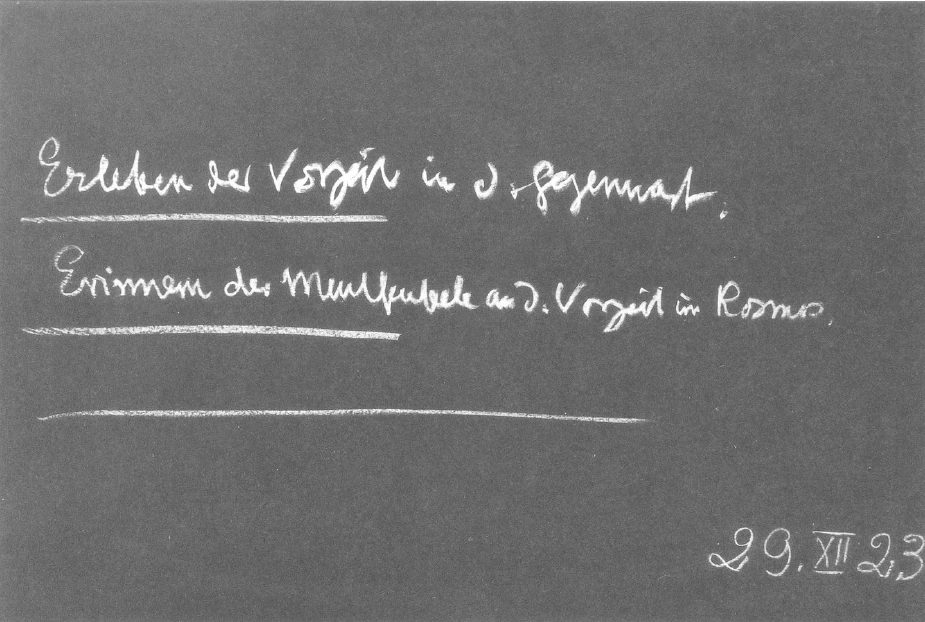
[ 9 ] Wir können also sagen: Wir haben da ein Zeitalter, jenes Zeitalter, in dem man in Ephesus erleben konnte die Weltgeheimnisse. Da war ein Erinnern der Menschenseele an die Vorzeit im Kosmos. Diesem Erinnern ging voran ein wirkliches Drinnenleben in der Vorzeit. Es blieb davon einfach ein Hineinschauen in die Vorzeit. In der Zeit, von der das Gilgamesch-Epos erzählt, da können wir nicht sagen: Erinnern der Menschenseele an die Vorzeit im Kosmos; da müssen wir sagen: ein Erleben der Vorzeit in der Gegenwart. — Nun kommt jener Zeitraum von Alexander bis Julianus Apostata. Wir wollen ihn zunächst auslassen. Und dann kommen wir zu dem Zeitalter, aus dem die abendländische Zivilisation des Mittelalters und der Neuzeit herausgewachsen ist. Da gab es nicht mehr ein Etinnern der Menschenseele an die Vorzeit im Kosmos, nicht mehr ein Erleben der Vorzeit in der Gegenwart, sondern da gab es nur noch Tradition.
[ 9 ] So we can say: We have here an age—that age—in which one could experience the mysteries of the world in Ephesus. There was a remembrance within the human soul of ancient times in the cosmos. This remembrance was preceded by a genuine inner life within those ancient times. What remained of this was simply a glimpse into the past. In the era described by the Epic of Gilgamesh, we cannot speak of the human soul’s recollection of the cosmos’s past; rather, we must speak of an experience of the past in the present. — Now comes the period from Alexander to Julian the Apostate. Let us leave that aside for now. And then we come to the age from which Western civilization of the Middle Ages and the modern era grew. There was no longer a recollection by the human soul of the prehistoric past in the cosmos, no longer an experience of the prehistoric past in the present, but there was only tradition.
Erstens: Erleben der Vorzeit in der Gegenwart.
Zweitens: Erinnern der Menschenseele an die Vorzeit im Kosmos.
Drittens: Tradition.
First: Experiencing the past in the present.
Second: The human soul’s recollection of the past in the cosmos.
Third: Tradition.
[ 10 ] Man konnte dasjenige aufschreiben, was geschehen ist. Geschichte entstand. Diese Geschichte beginnt mit dem römischen Zeitalter. Denken Sie sich den gewaltigen Unterschied! Denken Sie sich die Zeit, die mitgemacht wurde von den älteren ephesischen Schülern. Die brauchten keine Geschichtsbücher. Aufschreiben dasjenige, was geschehen ist, wäre ihnen lächerlich erschienen. Denn man mußte nachdenken, genügend tief nachdenken, dann kam herauf aus dem Untergrunde des Bewußtseins dasjenige, was geschehen ist. Und kein moderner Medikus war da, der das als Psychoanalyse darstellte, sondern es war gerade das Entzücken der Menschenseele, in dieser Weise heraufzuholen aus einem lebendigen Erinnern dasjenige, was einstmals da war.
[ 10 ] It was possible to write down what had happened. History came into being. This history begins with the Roman era. Just imagine the enormous difference! Imagine the era lived through by the older Ephesian students. They had no need for history books. Writing down what had happened would have seemed ridiculous to them. For one had to reflect—reflect deeply enough—and then what had happened would rise up from the depths of consciousness. And there was no modern physician there to present this as psychoanalysis; rather, it was precisely the delight of the human soul to bring forth in this way, from a living memory, what had once been there.
[ 11 ] Dann kam die Zeit, in der die Menschheit als solche vergessen hatte und notdürftig aufschreiben mußte dasjenige, was geschehen ist. Aber während die Menschheit das verkümmern lassen mußte, was früher in der Menschenseele kosmische Erinnerungskraft war, während die Menschheit stümperhaft anfangen mußte aufzuschreiben die Weltereignisse, Geschichte zu schreiben und so weiter, während der Zeit entwickelte sich im menschlichen Inneren das persönliche Gedächtnis, die persönliche Erinnerung. — Jedes Zeitalter hat seine besondere Mission, seine besondere Aufgabe. — Sie haben hier die andere Seite desjenigen, was ich schon in den allerersten Vorträgen so dargelegt habe, daß das Zeitengedächtnis auftrat. Dieses Zeitengedächtnis hatte seine erste Wiege in Griechenland, entwickelte sich aber dann eben durch die römisch-romanische Kultur in das Mittelalter herein bis in die Neuzeit herauf. Und daß zur Zeit des Julianus Apostata schon durchaus die Keime gelegt waren zu dieser Persönlichkeitskultur, dafür ist eben ein Beweis, daß es Julianus Apostata im Grunde genommen nichts mehr genützt hat, daß er sich in die eleusinischen Mysterien einweihen ließ.
[ 11 ] Then came the time when humanity as a whole had forgotten and was forced to make a makeshift record of what had happened. But while humanity had to allow what had once been a cosmic power of remembrance in the human soul to wither away, while humanity had to begin, in a rather amateurish way, to record world events, to write history, and so on, during that time personal memory—personal recollection—developed within the human being. — Every age has its own special mission, its own special task. — Here you have the other side of what I already outlined in the very first lectures: the emergence of historical memory. This historical memory had its earliest origins in Greece, but then developed through Roman-Latin culture into the Middle Ages and on into modern times. And the fact that the seeds of this culture of the individual had already been sown during the time of Julian the Apostate is evidenced by the fact that, fundamentally speaking, it was of no further use to Julian the Apostate that he had been initiated into the Eleusinian Mysteries.
[ 12 ] Nun kommt also die Zeit, in der der Mensch im Abendlande vom 3., 4. nachchristlichen Jahrhundert an bis in unsere Zeit herein während seines Erdenlebens ganz außerhalb der geistigen Welt lebt, die Zeit, in der er in bloßen Begriffen und Ideen, in Abstraktionen lebt. In Rom werden selbst die Götter zu Abstraktionen. Es kommt die Zeit, in der die Menschheit nichts mehr weiß von dem lebendigen Zusammenleben mit der geistigen Welt. Die Erde ist nicht mehr Asia, das unterste Gebiet der Himmel, die Erde ist eine Welt für sich, und die Himmel sind ferne, sind abgedämpft im menschlichen Anschauen. So daß man sagen kann: Die Persönlichkeit entwickelt der Mensch unter dem Einflusse desjenigen, was als römische Kultur über das Abendland gekommen ist.
[ 12 ] Now, then, comes the time when people in the West—from the 3rd and 4th centuries A.D. on through to the present day—live their earthly lives entirely outside the spiritual world; the time when they live in mere concepts and ideas, in abstractions. In Rome, even the gods become abstractions. A time arrives when humanity no longer knows anything of living in communion with the spiritual world. The Earth is no longer Asia, the lowest realm of the heavens; the Earth is a world unto itself, and the heavens are distant, dimmed in human perception. So that one can say: Human beings develop their personality under the influence of what came to the West as Roman culture.
[ 13 ] Geradeso wie an die Geisteswelt, das Geisterland, das oben ist, unten eine Seelenwelt angrenzt, so grenzt nun auch der Zeit nach dasjenige an diese geistige orientalische Welt an, was die Zivilisation des Abendlandes ist: eine Art Seelenwelt. Und diese Seelenwelt zeigt sich eigentlich direkt bis in unsere Tage herein. Aber die Menschheit merkt heute in ihren meisten Exemplaren noch nicht, daß tatsächlich ein mächtiger Umschwung im Gange ist. Einzelne der Freunde, die mich öfter hören, werden wissen, daß ich nicht gern davon spreche, daß ein Zeitalter ein Übergangszeitalter ist, denn es ist eben jedes Zeitalter ein Übergangszeitalter, nämlich vom Früheren zum Späteren. Es kommt nur darauf an, von was zu was der Übergang stattfindet. Aber gerade mit dem, was ich Ihnen gesagt habe, ist hingedeutet darauf, daß dieser Übergang so ist, wie wenn man vom Geisterland in die Seelenwelt und von da erst in die physische Welt kommt. Oh, es gab noch immer in der Zivilisation, die bisher sich entwickelt hat, gewisse geistige Anklänge! Selbst im Materialismus verrieten sich gewisse geistige Anklänge. Der eigentliche Materialismus auf allen Gebieten, er ist erst seit der Mitte des 19. Jahrhunderts da, und er wird noch von den wenigsten Menschen in seiner vollen Bedeutung verstanden. Aber er ist da mit einer riesigen Kraft, und es ist heute eine Übergangszeit zu einer dritten Welt, die wirklich von der vorhergehenden so verschieden ist, wie diese vorhergehende römische von der orientalischen verschieden ist.
[ 13 ] Just as the spiritual world—the realm of spirits that lies above—is bordered below by a world of souls, so too is this spiritual Eastern world bordered, in terms of time, by what constitutes Western civilization: a kind of world of souls. And this world of souls actually extends right into our own day. But most people today do not yet realize that a powerful transformation is indeed underway. Some of my friends who hear me speak often will know that I do not like to speak of an age as a transitional age, for every age is, in fact, a transitional age—namely, from what came before to what comes after. It simply depends on what the transition is from and to. But precisely what I have told you points to the fact that this transition is like moving from the spirit realm into the soul world, and only from there into the physical world. Oh, there have always been certain spiritual echoes in the civilization that has developed thus far! Even in materialism, certain spiritual echoes have revealed themselves. True materialism in all areas has only existed since the mid-19th century, and very few people yet understand its full significance. But it is present with immense force, and today we are in a transitional period toward a third world that is truly as different from the preceding one as the preceding Roman world was from the Oriental one.
[ 14 ] Nun, ich möchte sagen, es ist gewissermaßen ein Zeitraum ausgespart worden zwischen Alexander und Julianus, und in die Mitte dieses Zeitraumes hinein fällt das Mysterium von Golgatha. Dieses Mysterium von Golgatha wird von der Menschheit nicht mehr so empfangen wie zur Zeit, da die Menschen die Mysterien begriffen haben, sonst würde man ja ganz andere Vorstellungen von dem Christus gehabt haben, der in dem Menschen Jesus von Nazareth gelebt hat. Aber nur wenige Menschen, die in die Mysterien eingeweihten Zeitgenossen des Mysteriums von Golgatha, hatten noch solche Vorstellungen. Die weitaus größte Zahl der abendländischen Menschheit hatte keine Vorstellungen, um spirituell das Mysterium von Golgatha zu begreifen. Daher war die erste Art, wie das Mysterium von Golgatha auf Erden Platz gegriffen hat, die durch äußere Tradition, durch die äußere Überlieferung. Nur in Eingeweihtenkreisen in den allerersten Jahrhunderten war es so, daß man auch spirituell begreifen konnte, was mit dem Mysterium von Golgatha geschehen war.
[ 14 ] Well, I would say that, in a sense, a period of time has been omitted between Alexander and Julian, and the Mystery of Golgotha falls right in the middle of this period. This Mystery of Golgotha is no longer received by humanity in the same way as it was in the days when people understood the Mysteries; otherwise, people would have had entirely different conceptions of the Christ who lived in the human being Jesus of Nazareth. But only a few people—those contemporaries of the Mystery of Golgotha who were initiated into the Mysteries—still held such conceptions. The vast majority of Western humanity lacked the spiritual understanding necessary to grasp the Mystery of Golgotha. Therefore, the first way in which the Mystery of Golgotha took root on Earth was through external tradition, through oral transmission. Only in circles of initiates during the very earliest centuries was it possible to grasp spiritually what had taken place in the Mystery of Golgotha.
[ 15 ] Aber etwas anderes war noch da, wovon ich schon zu einigen von Ihnen in kurz vorangegangenen Vorträgen gesprochen habe. Drüben in Hybernia, in Irland, waren die Nachklänge der alten atlantischen Weisheit. In den Mysterien von Hybernia, die ich Ihnen vorgestern skizziert habe, waren für den Schüler in den zwei suggestiven Gestalten die Möglichkeiten vorhanden, scharf so die Welt zu sehen, wie sie die alten Atlantier gesehen haben. Und streng in sich abgeschlossen, in eine Atmosphäre von ungeheurem Ernst gehüllt, waren diese Mysterien von Hybernia. Sie waren da in den Jahrhunderten vor dem Mysterium von Golgatha, sie waren auch da zur Zeit des Mysteriums von Golgatha. Drüben in Asien ging vor sich das Mysterium von Golgatha, in Jerusalem spielte sich dasjenige ab, was dann traditionell historisch mitgeteilt wird in den Evangelien. Aber ohne daß irgendein menschlicher Mund eine Nachricht überbracht hätte, ohne daß irgendeine andere Verbindung dagewesen wäre, wußte man hellsichtig in den Mysterien von Hybernia in dem Momente, als das Mysterium von Golgatha sich tragisch vollzog, daß in Palästina das reale Mysterium von Golgatha vor sich ging. In den Mysterienstätten von Hybernia vollzog sich das symbolische Bild gleichzeitig. Man lernte dort nicht durch Tradition, man lernte dort kennen das Mysterium von Golgatha auf spirituelle Art. Und während sich das großartigste, majestätischste Ereignis in Palästina in äußerer physischer Tatsächlichkeit zugetragen hat, hatten sich in den Mysterien von Hybernia jene Kulthandlungen vollzogen, durch die dort im Astrallichte ein lebendes Bild des Mysteriums von Golgatha da war.
[ 15 ] But there was something else as well, which I have already mentioned to some of you in recent lectures. Over in Hybernia, in Ireland, there were echoes of the ancient Atlantean wisdom. In the Mysteries of Hybernia, which I outlined for you the day before yesterday, the two evocative figures offered the student the opportunity to perceive the world with the same clarity as the ancient Atlanteans did. And these Mysteries of Hybernia were strictly self-contained, shrouded in an atmosphere of immense solemnity. They existed in the centuries before the Mystery of Golgotha, and they also existed at the time of the Mystery of Golgotha. Over in Asia, the Mystery of Golgotha was taking place; in Jerusalem, the events unfolded that are traditionally recounted in the Gospels. But without any human mouth having conveyed a message, without any other connection having existed, the clairvoyants in the Mysteries of Hybernia knew, at the very moment the Mystery of Golgotha was tragically unfolding, that the actual Mystery of Golgotha was taking place in Palestine. In the mystery sites of Hybernia, the symbolic image unfolded simultaneously. There, people did not learn through tradition; there, they came to know the Mystery of Golgotha in a spiritual way. And while the greatest, most majestic event was taking place in Palestine in outward physical reality, those ritual acts had been performed in the Mysteries of Hybernia through which a living image of the Mystery of Golgotha existed there in the astral light.
[ 16 ] Sie sehen, wie die Dinge verkettet sind, wie tatsächlich, ich möchte sagen, eine Art Weltentales da ist, indem der alte Zusammenhang mit den Göttern schwindet.
[ 16 ] You can see how things are linked together, how, in fact, I would say, there is a kind of world narrative in which the ancient connection with the gods is fading.
[ 17 ] Im Morgenlande korrumpiert diese alte Götteranschauung nach dem Brande von Ephesus. In Hybernia ist sie vorhanden, bleibt sie vorhanden, bis sie, aber da erst in der nachchristlichen Zeit, auch da verschwindet. Und es entwickelt sich alles, was vom Mysterium von Golgatha ausstrahlt, durch Tradition, durch mündliche Überlieferung. Es entwickelt sich überhaupt im Abendlande eine Zivilisation, die nur auf mündliche Überlieferung rechnet oder aber später auf eine äußere Naturforschung, auf eine rein sinnliche Naturforschung, was ja auf dem Gebiete der Natur entspricht der bloßen Überlieferung, der schriftlichen oder mündlichen Überlieferung auf geschichtlichem Gebiete.
[ 17 ] In the Orient, this ancient conception of the gods became corrupted after the burning of Ephesus. In Hybernia, it persisted until—though only in the post-Christian era—it disappeared there as well. And everything that radiates from the Mystery of Golgotha develops through tradition, through oral transmission. In the West, a civilization develops that relies solely on oral tradition—or, later, on external natural science, on a purely sensory study of nature—which, in the realm of nature, corresponds to mere tradition, whether written or oral, in the realm of history.
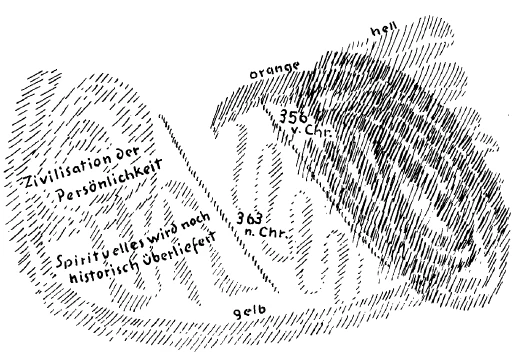
[ 18 ] So daß man sagen kann: Hier ist die Zivilisation der Persönlichkeit. Das Spiritualistische, das Mysterium von Golgatha wird noch historisch überliefert, nicht mehr geschaut (siehe Zeichnung, Seite 109). Man stelle sich das nur lebhaft vor, stelle sich vor, wie in der Zeit nach Julianus Apostata sich da eine Kultur mit Ausschluß des Spirituellen ausbreitet. Erst am Ende des 19. Jahrhunderts, vom Ende der siebziger Jahre an, kam sozusagen ein neuer Ruf aus geistigen Höhen an die Menschheit heran. Es begann jenes Zeitalter, das ich oftmals als das Michael-Zeitalter charakterisiert habe. Heute will ich es von dem Gesichtspunkte aus charakterisieren, daß ich sage: Es kam jenes Zeitalter, wo der Mensch, wenn er bleiben will beim alten Materialismus — und ein großer Teil der Menschheit will zunächst dabei bleiben —, dann aber in furchtbare Abgründe hineinkommen wird. Der Mensch, wenn er bleiben will beim alten Materialismus, kommt unbedingt ins Untermenschliche hinunter, kann sich nicht auf der menschlichen Höhe erhalten. Um sich aber auf der menschlichen Höhe zu erhalten, muß der Mensch seine Sinne eröffnen. Das ist unbedingte Notwendigkeit vom Ende des 19. Jahrhunderts ab, daß der Mensch eröffne seine Sinne den spirituellen Offenbarungen, die seither wiederum zu haben sind.
[ 18 ] So one can say: Here is the civilization of the personality. The spiritual aspect, the mystery of Golgotha, is still handed down historically, but is no longer perceived (see illustration, page 109). Just imagine this vividly—imagine how, in the period following Julian the Apostate, a culture spread that excluded the spiritual. It was not until the end of the 19th century, beginning in the late 1870s, that a new call, so to speak, reached humanity from spiritual heights. That era began which I have often characterized as the Michael Era. Today I wish to characterize it from the perspective that I say: That age has come in which human beings, if they wish to cling to the old materialism—and a large part of humanity wishes to cling to it for the time being—will then fall into terrible abysses. If human beings wish to cling to the old materialism, they will inevitably descend into the subhuman realm and will be unable to maintain themselves at the human level. But in order to maintain themselves at the human level, human beings must open their senses. It has been an absolute necessity since the end of the 19th century for human beings to open their senses to the spiritual revelations that have been available once again since then.
[ 19 ] Es waren gewisse geistige Mächte am Werke, die in der Persönlichkeit des Herostrat, ich möchte sagen, nur ihren äußeren Ausdruck gefunden haben. Herostrat war sozusagen der letzte Degen, den vorstreckten gewisse geistige Mächte von Asien. Und als Herostrat die Brandfackel in den Tempel von Ephesus hineinschleuderte, waren hinter ihm, gewissermaßen ihn nur haltend als das Schwert oder als die Fortsetzung der Brandfackel, dämonische Wesenheiten, welche im Grunde genommen vorhatten, kein Spirituelles hinüberzulassen in diese europäische Zivilisation.
[ 19 ] Certain spiritual forces were at work that found, I might say, only their outward expression in the personality of Herostratus. Herostratus was, so to speak, the final sword brandished by certain spiritual forces from Asia. And when Herostratus hurled the burning torch into the temple at Ephesus, behind him—in a sense merely holding him up as the sword or as the extension of the burning torch—were demonic entities who, in essence, intended to prevent anything spiritual from passing over into this European civilization.
[ 20 ] Dem, sehen Sie, widersetzen sich Aristoteles und Alexander der Große. Denn was geschah denn nun eigentlich? Durch die Alexanderzüge wurde nach Asien hinübergetragen dasjenige, was Naturwissen des Aristoteles war, und überall breitete sich aus ein gründliches Naturwissen. Alexander hatte überall, nicht nur in Alexandria, in Ägypten, sondern überall drüben in Asien Akademien gegründet, in denen er die alte Weisheit festsetzte, so daß diese alte Weisheit da war und lange Zeit gepflegt wurde. Immerzu konnten die griechischen Weisen kommen und fanden dort ihre Zufluchtstätte. Naturwissen wurde durch Alexander nach Asien getragen.
[ 20 ] Aristotle and Alexander the Great, you see, opposed this. For what actually happened? Through Alexander’s campaigns, what constituted Aristotle’s knowledge of nature was carried over to Asia, and a thorough understanding of nature spread everywhere. Alexander had founded academies everywhere—not only in Alexandria, in Egypt, but throughout Asia—where he established the ancient wisdom, so that this ancient wisdom was present there and was cultivated for a long time. Greek sages could come there at any time and found a place of refuge there. Natural science was carried to Asia by Alexander.
[ 21 ] Europa konnte dieses tiefere Naturwissen zunächst in aller Ehrlichkeit nicht vertragen. Es wollte nur äußeres Wissen, äußere Kultur, äußere Zivilisation. Daher nahm von dem, was im Aristotelismus war, sein Schüler Theophrast dasjenige, was man dem Abendlande übergeben konnte. Aber in dem steckte noch immer außerordentlich viel. Die mehr logischen Schriften des Aristoteles bekam das Abendland. Aber das ist nun eben das Eigentümliche des Aristoteles, daß er sich doch anders liest, selbst da, wo er abstrakt und logisch ist, als andere Schriftsteller. Man versuche es nur einmal mit innerer, spiritueller, auf Meditation gegründeter Erfahrung, den Unterschied herauszufinden zwischen dem Lesen des Plato und dem Lesen des Aristoteles. Wenn ein moderner Mensch mit einer wirklichen, richtigen geistigen Empfindung und Grundlage einer gewissen Meditation Plato liest, dann fühlt er nach einiger Zeit so, wie wenn sein Kopf etwas höher als der physische Kopf wäre, wie wenn er etwas herausgekommen wäre aus seinem physischen Organismus. Es ist das unbedingt bei demjenigen, der nicht nur ganz grob Plato liest, durchaus der Fall.
[ 21 ] At first, Europe could not, in all honesty, tolerate this deeper knowledge of nature. It wanted only external knowledge, external culture, external civilization. Therefore, from what was contained in Aristotelianism, his student Theophrastus selected what could be passed on to the West. But there was still an extraordinary amount contained therein. The West received Aristotle’s more logical writings. But this is precisely what is peculiar about Aristotle: even where he is abstract and logical, he reads differently than other writers. One need only try, through inner, spiritual experience grounded in meditation, to discern the difference between reading Plato and reading Aristotle. When a modern person with a genuine, true spiritual sensibility and a foundation of a certain kind of meditation reads Plato, after a while they feel as if their head were slightly higher than their physical head, as if they had stepped somewhat outside their physical organism. This is certainly the case for those who do not merely skim through Plato superficially.
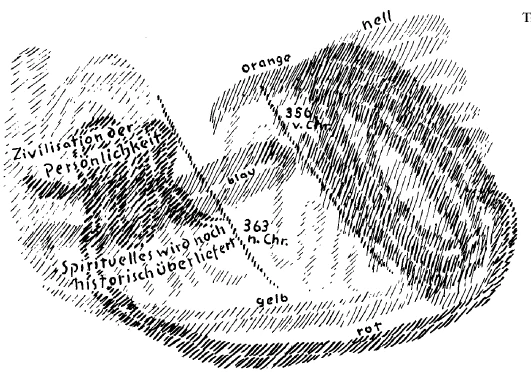
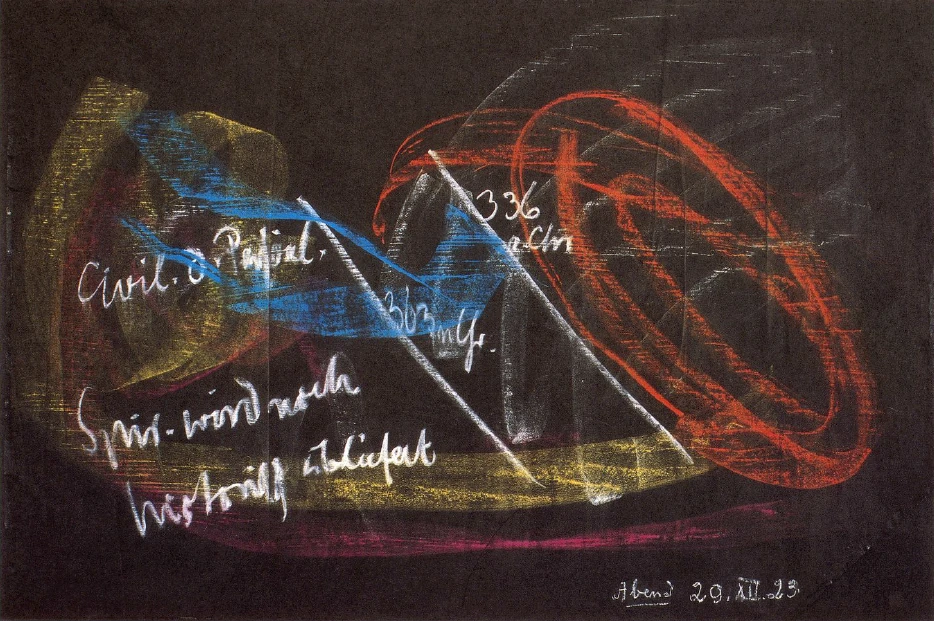
[ 22 ] Bei Aristoteles ist das anders. Bei Aristoteles wird man niemals die Empfindung gewinnen können, daß man durch die Lektüre ausser den Körper kommt. Aber wenn man den Aristoteles auf Grundlage einer gewissen meditativen Vorbereitung liest, dann wird man das Gefühl haben: er arbeitet gerade in dem physischen Menschen. Der physische Mensch kommt gerade dutch Aristoteles vorwärts. Es arbeitet. Es ist nicht eine Logik, die man bloß betrachtet, sondern es ist eine Logik, die innerlich arbeitet. Aristoteles ist doch noch um ein Stück höher als alle die Pedanten, die hinterher gekommen sind und Logik aus dem Aristoteles gebildet haben. Aristoteles’ logische Werke sind in einer gewissen Beziehung nur dann richtig aufgefaßt, wenn sie als Meditationsbücher aufgefaßt werden. So daß ein Merkwürdiges vorliegt. Denken Sie sich einmal: Wenn auf das Abendland einfach übergegangen wären von Makedonien nach dem Westen, nach Mitteleuropa und Südeuropa, die naturwissenschaftlichen Schriften des Aristoteles, sie würden in einer Weise aufgenommen worden sein, die unheilvoll geworden wäre. Gewiß, die Menschen hätten manches aufgenommen, aber es wäre unheilvoll geworden. Denn dasjenige, was naturwissenschaftlich — ich habe eine Probe davon gegeben — Aristoteles zum Beispiel dem Alexander zu überliefern hatte, das mußte aufgefaßt werden mit Seelen, die doch noch berührt worden waren von dem Wesen der ephesischen Zeit, der vor dem Brande von Ephesus liegenden Zeit. Die konnte man nur drüben in Asien finden oder im ägyptischen Afrika. So daß durch die Alexanderzüge hinübergegangen war nach Asien die Naturwesenheits-Erkenntnis und -Einsicht (es wurde am Tafelbild — siehe Tafel IV — weitergezeichnet; orange nach rechts), und in abgeschwächter Gestalt kam sie später durch alle möglichen Züge über Spanien herüber nach Europa, aber in einem sehr durchgesiebten, abgeschwächten Zustande (gelb von rechts nach links).
[ 22 ] With Aristotle, it is different. When reading Aristotle, one will never have the sensation of leaving one’s body. But if one reads Aristotle on the basis of a certain meditative preparation, then one will have the feeling that he is working directly within the physical human being. It is precisely through Aristotle that the physical human being makes progress. It is at work. It is not a logic that one merely observes, but a logic that works within. Aristotle is, after all, still a step above all the pedants who came after him and constructed logic out of Aristotle. Aristotle’s logical works are, in a certain sense, properly understood only when they are regarded as books for meditation. This gives rise to something remarkable. Just imagine: if Aristotle’s scientific writings had simply been transmitted from Macedonia to the West—to Central and Southern Europe—they would have been received in a way that would have been disastrous. Certainly, people would have absorbed some of it, but it would have had disastrous consequences. For what Aristotle—I have given an example of this—had to pass on to Alexander in the realm of natural science, for instance, had to be received by souls that had still been touched by the essence of the Ephesian era, the time preceding the burning of Ephesus. Such souls could only be found over in Asia or in Egyptian Africa. Thus, through Alexander’s campaigns, the knowledge and insight into the nature of being had passed over to Asia (it was further depicted in the illustration—see Plate IV; orange to the right), and in a weakened form it later came over to Europe via Spain through all manner of routes, but in a highly filtered, diluted state (yellow from right to left).
[ 23 ] Dasjenige aber, was direkt herübergekommen war, das waren die logischen Schriften des Aristoteles, war das Denkerische des Aristoteles. Und das lebte fort, lebte fort in der mittelalterlichen Scholastik.
[ 23 ] But what had come over directly were Aristotle’s logical writings—Aristotle’s philosophy. And that lived on, lived on in medieval scholasticism.
[ 24 ] Ja, und jetzt haben wir diese zwei Strömungen. Immer haben wir auf dem Grunde der mitteleuropäischen Einsichten dasjenige, was, ich möchte sagen, unansehnlich in weiten Kreisen von sogar etwas primitiven Menschen sich weiter fortpflanzt. Sehen Sie nur einmal, wie die Saat, die Alexander einstmals nach Asien hinübergetragen hat, die auf allen möglichen Wegen erst über Arabien und so weiter, dann aber auch auf den Landwegen durch die Kreuzfahrer nach Europa gekommen war, wie das überall lebt, aber unansehnlich, an verborgenen Stätten. Dahin kommen Leute wie Jakob Böhme, wie Paracelsus, wie zahlreiche andere, die das aufnehmen, was auf solchen Umwegen in die breiten primitiven Kreise Europas gekommen ist. Wir haben eine volkstümliche Weisheit hier übermittelt, viel mehr, als man gewöhnlich glaubt. Die lebt. Und sie rinnt manchmal in solche Reservoirs wie Valentin Weigel, wie Paracelsus, wie Jakob Böhme, wie viele andere, deren Namen viel weniger genannt wer Tafel 9 den; reichlich glänzt auf dasjenige, was da in Europa spät erst angekommener Alexandrinismus war oder ist, in Basilius Valentinus und so weiter. In Klöstern lebte eine wirkliche alchimistische Weisheit, die aber nicht bloß aufklärte über einige Verwandlungen der Stoffe, die aufklärte über innerste Eigentümlichkeiten der menschlichen Verwandlungen selber im Weltenall. Und die anerkannten Gelehrten beschäftigen sich mit einem allerdings entstellten, durchgesiebten, verlogisierten Aristoteles; aber dieser Aristoteles, mit dem sich die Scholastik und später die Wissenschaft beschäftigen als Philosophie, dieser Aristoteles wird doch dem Abendlande zum Segen. Denn erst im 19. Jahrhundert, als man nichts mehr verstand von Aristoteles, als man den Aristoteles nur noch studiert, als ob man ihn lesen sollte, als ob man nicht ihn üben sollte, als ob er nicht ein Meditationsbuch wäre, erst im 19. Jahrhundert kommt es dahin, daß die Menschen nichts mehr haben von Aristoteles, weil er nicht mehr in ihnen wirkt und lebt, sondern weil sie ihn bloß noch studieren, weil er nicht ein Übungsbuch ist, sondern ein Studienobjekt. Bis ins 19. Jahrhundert herein war er ein Übungsbuch. Aber sehen Sie, im 19. Jahrhundert geht ja alles so, daß dasjenige, was früher Übung war, was Können war, daß das sich umwandelt in abstraktes Wissen.
[ 24 ] Yes, and now we have these two currents. At the root of Central European thought, we always have that which—I would say—continues to spread, albeit in an unsightly manner, among broad circles of even somewhat primitive people. Just look at how the seed that Alexander once carried over to Asia—which came to Europe in all sorts of ways, first via Arabia and so on, but then also by land through the Crusaders—how that lives on everywhere, though in an unattractive form, in hidden places. This is where people like Jakob Böhme, Paracelsus, and numerous others come in—those who take up what has reached the broad, primitive circles of Europe through such roundabout routes. We have conveyed a folk wisdom here—far more than is commonly believed. It lives on. And it sometimes flows into reservoirs such as Valentin Weigel, Paracelsus, Jakob Böhme, and many others whose names are mentioned far less frequently; it shines abundantly on what was—or is—Alexandrianism, which arrived in Europe only late, as seen in Basilius Valentinus and so on. A true alchemical wisdom thrived in monasteries, one that shed light not merely on certain transformations of matter, but on the innermost characteristics of human transformations themselves within the cosmos. And the recognized scholars concern themselves with an Aristotle who is, admittedly, distorted, filtered, and falsified; but this Aristotle—with whom Scholasticism and later science engage as philosophy—this Aristotle nevertheless becomes a blessing to the West. For it was not until the 19th century, when people no longer understood Aristotle, when Aristotle was studied merely as if one were supposed to read him, as if one were not supposed to practice him, as if he were not a book for meditation, it was not until the 19th century that people came to derive nothing more from Aristotle—not because he no longer works and lives within them, but because they merely study him; not because he is not a book of practice, but because he is an object of study. Right up until the 19th century, he was a book of practice. But you see, in the 19th century, everything is such that what used to be practice, what used to be skill, is transformed into abstract knowledge.
[ 25 ] In Griechenland — nehmen wir diese andere Linie, dutch die sich die Sache auch charakterisiert —, in Griechenland hat man Vertrauen dazu, daß aus dem ganzen Menschen heraus noch das kommt, was der Mensch als Einsicht hat. Der Lehrer ist der Gymnast. Aus dem ganzen Menschen in seiner körperlichen Bewegung, in der die Götter wirken, kommt das zustande, was dann gewissermaßen heraufkommt und zu menschlicher Einsicht wird. Der Gymnast ist der Lehrer. In Rom tritt später an die Stelle des Gymnasten der Rhetor. Das ist schon etwas abstrahiert vom ganzen Menschen, aber es ist wenigstens noch etwas da, was zusammenhängt mit einem Tun des Menschen in einem Teil des Organismus. Was wird alles bewegt, wenn wir reden! Wie lebt das Reden in unserem Herzen, in unserer Lunge, wie in unserem Zwerchfell und weiter hinunter! Es lebt nicht mehr so intensiv im ganzen Menschen wie dasjenige, was der Gymnast getrieben hat, aber es lebt immerhin in einem großen Teil des Menschen. Und die Gedanken sind dann nur ein Extrakt aus dem, was im Reden lebt. Der Rhetor tritt an die Stelle des Gymnasten. Der Gymnast hat es mit dem ganzen Menschen zu tun. Der Rhetor hat es nur noch zu tun mit dem, was gewissermaßen die Gliedmaßen schon ausschließt und also aus einem Teil des Menschen herauf in den Kopf dasjenige schickt, was Einsicht ist. Und die dritte Stufe, die kommt erst in der Neuzeit herauf: das ist der Doktor, der nichts mehr abrichtet als den Kopf, der nur mehr auf die Gedanken sieht. Es ist ja so geworden, daß sozusagen noch im 19. Jahrhundert an einzelnen Hochschulen Professoren der Eloquenz ernannt worden sind, aber sie haben diese Professur nicht mehr ausüben können, weil es nicht mehr üblich war, etwas zu geben auf das Reden, weil alles nur noch denken wollte. Die Rhetoren starben aus. Diejenigen, die nur noch das Geringste am Menschen vertraten, die Doktoren, die nur noch den Kopf vertraten, die wurden die Führer der Bildung.
[ 25 ] In Greece—let us take this other line of thought, through which the matter is also characterized—in Greece, there is a belief that what a person possesses as insight still emerges from the whole human being. The teacher is the gymnast. From the whole human being in his physical movement—in which the gods are at work—arises what then, so to speak, wells up and becomes human insight. The gymnast is the teacher. In Rome, the rhetorician later takes the place of the gymnast. This is already somewhat abstracted from the whole human being, but at least there is still something there that is connected to a human activity in a part of the organism. How much is set in motion when we speak! How speech lives in our heart, in our lungs, in our diaphragm, and further down! It no longer lives as intensely throughout the whole human being as that which the gymnast brought about, but it does, after all, live in a large part of the human being. And thoughts are then merely an extract of what lives in speech. The rhetorician takes the place of the gymnast. The gymnast deals with the whole person. The rhetorician, however, deals only with that which, so to speak, already excludes the limbs and thus sends up from a part of the person into the head that which is insight. And the third stage, which only emerged in modern times, is the doctor, who trains nothing but the head and focuses solely on thoughts. It turned out that, even as late as the 19th century, professors of eloquence were still being appointed at certain universities, but they could no longer fulfill the duties of that professorship because it was no longer customary to place any value on speech—since everyone wanted only to think. The rhetoricians died out. Those who represented only the most trivial aspects of humanity—the doctors who represented nothing but the head—became the leaders of education.
[ 26 ] Und so war es wirklich, als der echte Aristoteles lebte, Übung, Askesis, Exerzitium, was aus dem Aristoteles folgte. Und diese zwei Strömungen verblieben sogar. Derjenige, der nicht ganz jung ist und der bewußt mitgemacht hat, was sich abspielte ab Mitte bis in die letzten Jahrzehnte des 19. Jahrhunderts, der weiß schon, wenn er etwas herumgekommen ist in der Art, wie etwa der Paracelsus unter dem Landvolke herumgegangen ist, der weiß schon, daß schließlich die letzten Überreste mittelalterlichen Volkswissens, aus dem Jakob Böhme, aus dem Paracelsus geschöpft hat, da waren bis in die siebziger, achtziger Jahre des 19. Jahrhunderts hinein. Und schließlich, auch das ist wahr: Namentlich innerhalb gewisser Orden und im Leben gewisser enger Kreise hat sich ein gewissser Aristotelismus der Praxis, der inneren Seelenpraxis auch noch erhalten bis in die letzten Jahrzehnte des 19. Jahrhunderts herein. Und man darf schon sagen: Man konnte noch kennenlernen auf der einen Seite die letzten Ausläufer desjenigen, was von Alexander vom Aristotelismus hinüber nach Asien getragen worden war, was auf der anderen Seite durch Vorderasien, Afrika, über Spanien herübergekommen ist und in solchen Leuten wie Basilius Valentinus und in Späteren auflebte als volkstümliche Weisheit, aus der ja auch Jakob Böhme, Paracelsus und zahlreiche andere geschöpft haben. Es ist auf anderem Wege auch wiederum zurückgekommen durch die Kreuzfahrer. Aber es war da in den breiten Massen des Volkes, und man konnte es noch finden. Man konnte noch in den letzten Jahrzehnten des 19. Jahrhunderts sagen: Gott sei Dank, daß da noch, wenn auch kaum erkennbar, wenn auch korrumpiert, die letzten Ausläufer desjenigen lebten, was als alte Naturwissenschaft durch die Alexanderzüge nach Asien hinübergetragen worden ist. Was da noch von alter Alchimie, von alter Erkenntnis und den Zusammenhängen der Natursubstanzen und Naturkräfte auf ganz merkwürdige Weise im primitiven Volkstume lebte, das waren die letzten Nachklänge. Heute sind sie erstorben, heute sind sie nicht mehr da, sind nicht mehr zu finden, ist in ihnen nichts mehr zu erkennen.
[ 26 ] And that is indeed how it was during the time the real Aristotle lived: practice, asceticism, and spiritual exercises—all of which stemmed from Aristotle. And these two currents have even endured. Anyone who is not quite young and who consciously experienced what took place from the mid-19th century through to its final decades already knows, if they have traveled about in the manner in which, for example, Paracelsus traveled among the rural people, they already know that the last remnants of medieval folk knowledge—from which Jakob Böhme and Paracelsus drew—persisted well into the 1870s and 1880s. And finally, this, too, is true: particularly within certain religious orders and in the life of certain close-knit circles, a certain Aristotelianism of practice—of inner spiritual practice—survived right up into the last decades of the 19th century. And it is fair to say: On the one hand, one could still encounter the last vestiges of what had been carried from Aristotelianism to Asia by Alexander; on the other hand, what had come via the Near East, Africa, and Spain, and was revived in figures such as Basilius Valentinus and later thinkers as folk wisdom—from which Jakob Böhme, Paracelsus, and numerous others also drew upon. It also returned by other routes through the Crusaders. But it was there among the broad masses of the people, and one could still find it. Even in the last decades of the 19th century, one could still say: Thank God that there still lived on—albeit barely recognizable, albeit corrupted—the last vestiges of what had been carried over to Asia as ancient natural science through the campaigns of Alexander. What still lived on in a most remarkable way in primitive folklore—of ancient alchemy, of ancient knowledge, and of the interrelationships between natural substances and natural forces—these were the last echoes. Today they have died out; today they are no longer there, can no longer be found, and nothing can be recognized in them.
[ 27 ] Ebenso war da bei gewissen einzelnen Leuten, die man kennenlernen konnte, aristotelische Geistesschulung. Heute ist sie nicht mehr da. Es war bewahrt dasjenige, was dazumal nach dem Osten hinübergetragen war (Fortsetzung der Tafelzeichnung; rot von rechts nach links), und dasjenige, was auf dem Umwege von Aristoteles’ Schüler Theophrastus nach dem Westen hinübergetragen war (blau von der Mitte nach links). Dasjenige aber, was nach dem Osten hinübergetragen war, das war wiederum zurückgekommen. Und man kann sagen: In den siebziger, achtziger Jahren des 19. Jahrhunderts konnte angeknüpft werden mit neuem, unmittelbarem spirituellem Erkennen an dasjenige, was in den letzten Ausläufern anknüpfte an jene Ereignisse, die ich Ihnen geschildert habe. Das ist ein wunderbarer Zusammenhang, denn man sieht daraus, daß die Alexanderzüge und der Aristotelismus da waren, um den Faden mit dem alten Spirituellen aufrechtzuerhalten, um Einschläge zu haben in dasjenige, was materielle Kultur werden sollte, Einschläge zu haben, die gerade reichen, bis neue spirituelle Offenbarungen kommen sollten.
[ 27 ] Likewise, among certain individuals one had the opportunity to meet, there was Aristotelian intellectual training. Today, it no longer exists. What had been preserved was that which had been transmitted to the East at that time (continuation of the diagram; red from right to left), and that which had been transmitted to the West via a detour through Aristotle’s student Theophrastus (blue from the center to the left). But that which had been transmitted to the East had, in turn, returned. And one can say: In the 1870s and 1880s, it became possible to reconnect, through new, direct spiritual insight, with that which, in its final stages, tied in with the events I have described to you. This is a wonderful connection, for it shows that the Alexandrian movements and Aristotelianism were there to maintain the thread with the ancient spiritual tradition, to provide influences on what was to become material culture—influences that would last just long enough until new spiritual revelations were to come.
[ 28 ] Sehen Sie, unter solchen Gesichtspunkten nimmt es sich ja wirklich so aus, und es ist dies wahr, daß scheinbare Unfruchtbarkeiten sich gerade als außerordentlich bedeutungsvoll im geschichtlichen Werden der Menschheit erweisen. Man kann leicht davon sprechen, daß die ganze Alexander-Expedition nach Asien und Ägypten hinüber dennoch verflutet wäre. Sie ist nicht verflutet. Man kann sagen, daß der Aristotelismus im 19. Jahrhundert aufgehört hat. Er hat nicht aufgehört. Beide Strömungen haben gereicht bis dahin, wo es möglich ist, ein neues spirituelles Leben zu beginnen.
[ 28 ] You see, from this perspective, it really does appear that way, and it is true that apparent barrenness turns out to be extraordinarily significant in the historical development of humanity. It is easy to say that Alexander’s entire expedition to Asia and Egypt has nevertheless been swept away. It has not been swept away. One might say that Aristotelianism came to an end in the 19th century. It has not come to an end. Both currents have extended as far as it is possible to begin a new spiritual life.
[ 29 ] Ich habe Ihnen ja an verschiedenen Orten öfter gesagt, daß dieses neue spirituelle Leben gerade am Ende der siebziger Jahre des 19. Jahrhunderts begonnen werden konnte in den ersten Andeutungen und dann mit dem Ende des Jahrhunderts immer mehr und mehr. Heute haben wir die Aufgabe, den vollen Strom des geistigen Lebens, der, ich möchte sagen, von den Höhen zu uns kommt, aufzufangen. Und so stehen wir heute drinnen in einem wirklichen Übergang der geistigen Menschheitsentfaltung. Und werden wir uns nicht bewußt dieser merkwürdigen Zusammenhänge und dieser Anknüpfung an Früheres, dann schlafen wir eigentlich gegenüber den wichtigsten Ereignissen, die sich um uns herum im geistigen Leben abspielen. Und wieviel wird eigentlich heute wirklich ge Tafel 9 schlafen gegenüber den allerwesentlichsten Ereignissen! Anthroposophie sollte aber dasein, um den Menschen zu erwecken.
[ 29 ] I have often told you in various places that this new spiritual life began to emerge in its earliest forms at the end of the 1870s and then grew more and more as the century drew to a close. Today we have the task of receiving the full flow of spiritual life, which, I would say, comes to us from on high. And so today we find ourselves in the midst of a true transition in humanity’s spiritual development. And if we do not become aware of these remarkable connections and this link to the past, then we are actually asleep in the face of the most important events unfolding around us in spiritual life. And how many people today are truly asleep in the face of the most essential events! But anthroposophy should exist to awaken people.
[ 30 ] Und ich glaube, für alle diejenigen, die jetzt hier bei dieser Weihnachtstagung versammelt sind, gibt es einen Impuls einer möglichen Erweckung. Sehen Sie, wir stehen ja unmittelbar vor dem Tage und werden uns in dieser Tagung eben bis zu dem Jähren dieses traurigen Ereignisses hindurchfinden müssen, wir stehen vor jenem Tage, da die furchtbaren Feuergarben aufloderten, die das Goetheanum verzehrten. Und mag nun die Welt denken, wie sie will, über dieses Feuerverzehren des Goetheanum, in der Entwickelung der anthroposophischen Bewegung bedeutet dieser Brand etwas Ungeheures. Aber man beurteilt ihn doch nicht in seiner vollen Tiefe, wenn man nicht hinschaut auf der einen Seite, wie diese physischen Feuerflammen dazumal aufschlugen, als in merkwürdiger Art — ich werde davon noch sprechen in den nächsten Tagen — von den Orgelpfeifen, von anderem Metallischem das sengende Metallische in die Flammen hineinloderte, so daß diese merkwürdigen Färbungen der Flammen entstanden. Dann mußte man die Erinnerung mit hinübernehmen in das verflossene Jahr. Aber in dieser Erinnerung muß leben die Tatsache, daß Physisches Maja ist, daß wir die Wahrheit aus den Feuerflammen in dem geistigen Feuer zu suchen haben, das wir nunmehr anzufachen haben in unseren Herzen, in unseren Seelen. Aufgehen sollte uns in dem physisch brennenden Goetheanum das geistig wirksame Goetheanum.
[ 30 ] And I believe that for all of you gathered here at this Christmas conference, there is a spark of a possible revival. You see, we are on the very eve of that day, and during this conference we will have to make our way right up to the anniversary of that sad event; we are on the eve of the day when the terrible flames blazed up and consumed the Goetheanum. And whatever the world may think about this fire that consumed the Goetheanum, in the development of the anthroposophical movement this fire signifies something immense. But one cannot fully grasp its depth unless one considers, on the one hand, how those physical flames flared up at that time, when, in a remarkable way —I will speak more about this in the coming days—the searing metallic elements from the organ pipes and other metallic objects blazed into the flames, giving rise to those remarkable hues of the flames. Then one had to carry that memory over into the past year. But this memory must be alive with the fact that the physical is Maya, that we must seek the truth from the physical flames in the spiritual fire that we must now kindle in our hearts and in our souls. The spiritually active Goetheanum should rise up within us in the physically burning Goetheanum.
[ 31 ] Ich glaube nicht, daß das in vollem weltgeschichtlichem Sinne geschehen kann, wenn man nicht sieht auf der einen Seite das uns teuer gewordene Goetheanum in der furchtbaren gigantischen Flamme auflodern und im Hintergrunde den anderen frevelhaften Brand von Ephesus, wo Herostrat die Brandfackel hineinwarf, geleitet von dämonischen Mächten. In dem Zusammenempfinden desjenigen, was da im Vordergrunde, und desjenigen, was im Hintergrunde steht, wird man vielleicht doch ein Bild gewinnen können, das tief genug in unser Herz hineinschreiben kann, was wir vor einem Jahre verloren haben und was wir mit allen Kräften wieder erbauen müssen.
[ 31 ] I do not believe that this can happen in the full sense of world history unless one sees, on the one hand, the Goetheanum—which has become so dear to us—blazing up in a terrible, gigantic flame, and in the background the other sacrilegious fire of Ephesus, where Herostratus threw in the torch, guided by demonic forces. By bringing together in our minds’ eye what is in the foreground and what is in the background, we may yet be able to form an image that can etch deeply enough into our hearts what we lost a year ago and what we must rebuild with all our strength.